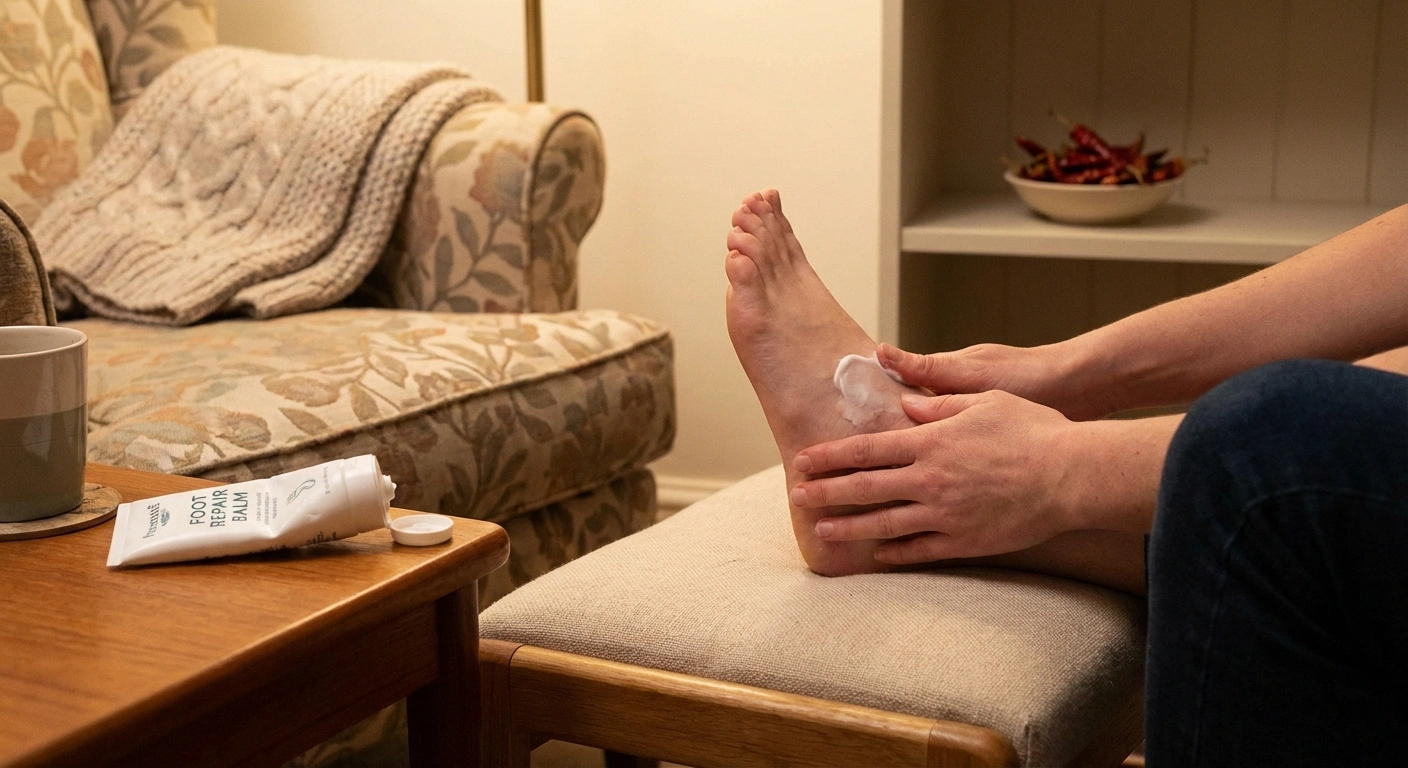
The first time someone in my support group told me she was rubbing hot pepper cream on her feet to relieve neuropathy pain, I thought she was joking. Using something that causes burning to treat a condition that already feels like fire? It sounded completely backwards.
But here’s the thing — she was getting real relief. And as I dug into the research, I understood why. Capsaicin — the compound that makes chili peppers hot — works through a genuinely fascinating mechanism that essentially teaches your pain nerves to stop sending so many signals. It’s one of those cases where the science is actually more interesting than you’d expect from something you can buy at the drugstore for under $10.
Capsaicin cream has become one of the most commonly discussed lidocaine patches for neuropathy treatments in our neuropathy community, and for good reason. It’s affordable, available over the counter, backed by real research, and for many people, it provides meaningful pain relief. But it’s also not for everyone, and there are some important things you need to know before you start using it.
Let me share what I’ve learned — from the published research, from my own experience, and from the hundreds of conversations I’ve had with fellow neuropathy patients who’ve tried it.
Browse all our natural remedies guides for more articles like this one.
What Is Capsaicin and How Does It Work on Nerve Pain?
Capsaicin (pronounced “cap-SAY-sin”) is a naturally occurring compound found in chili peppers — it’s the chemical responsible for that burning sensation when you eat spicy food. Its formal name is trans-8-methyl-N-vanillyl-6-nonenamide, but thankfully you don’t need to remember that.
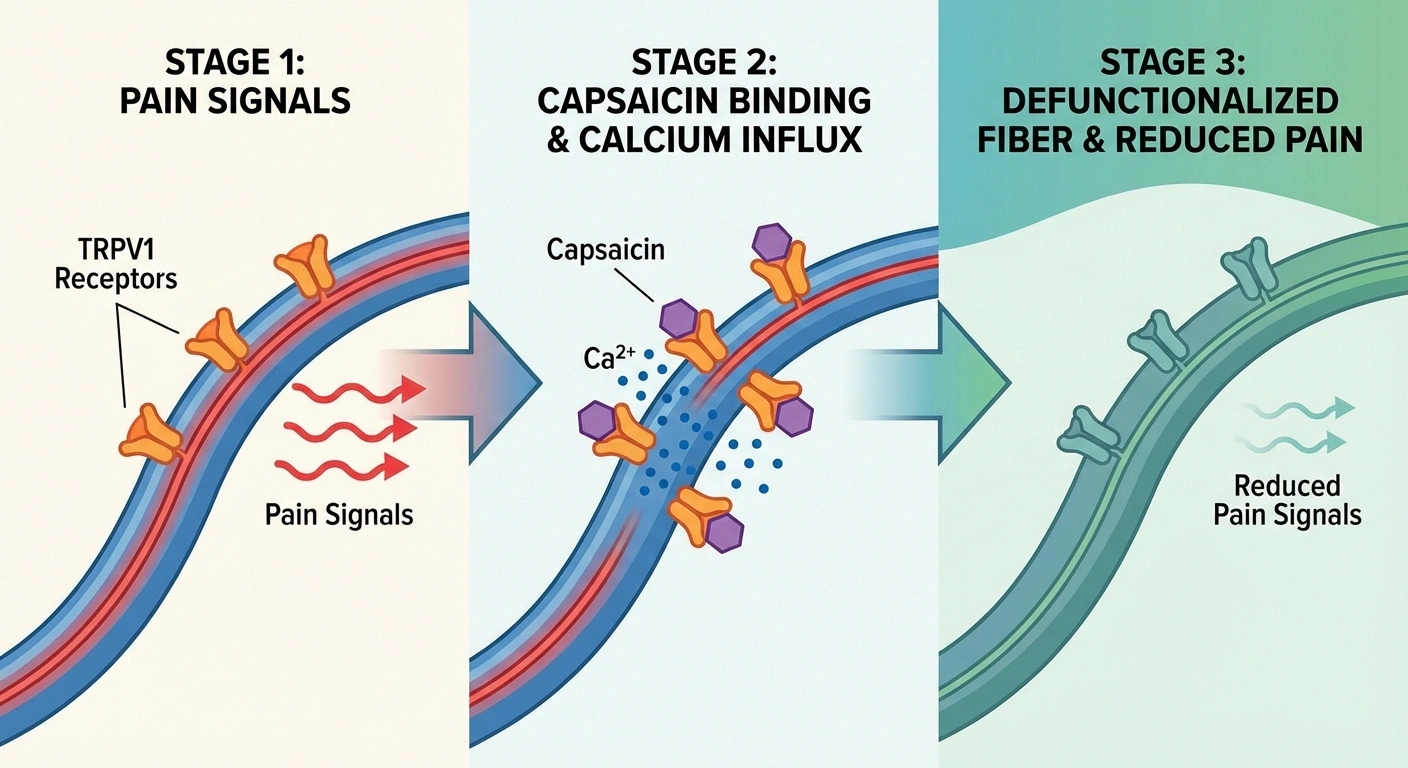
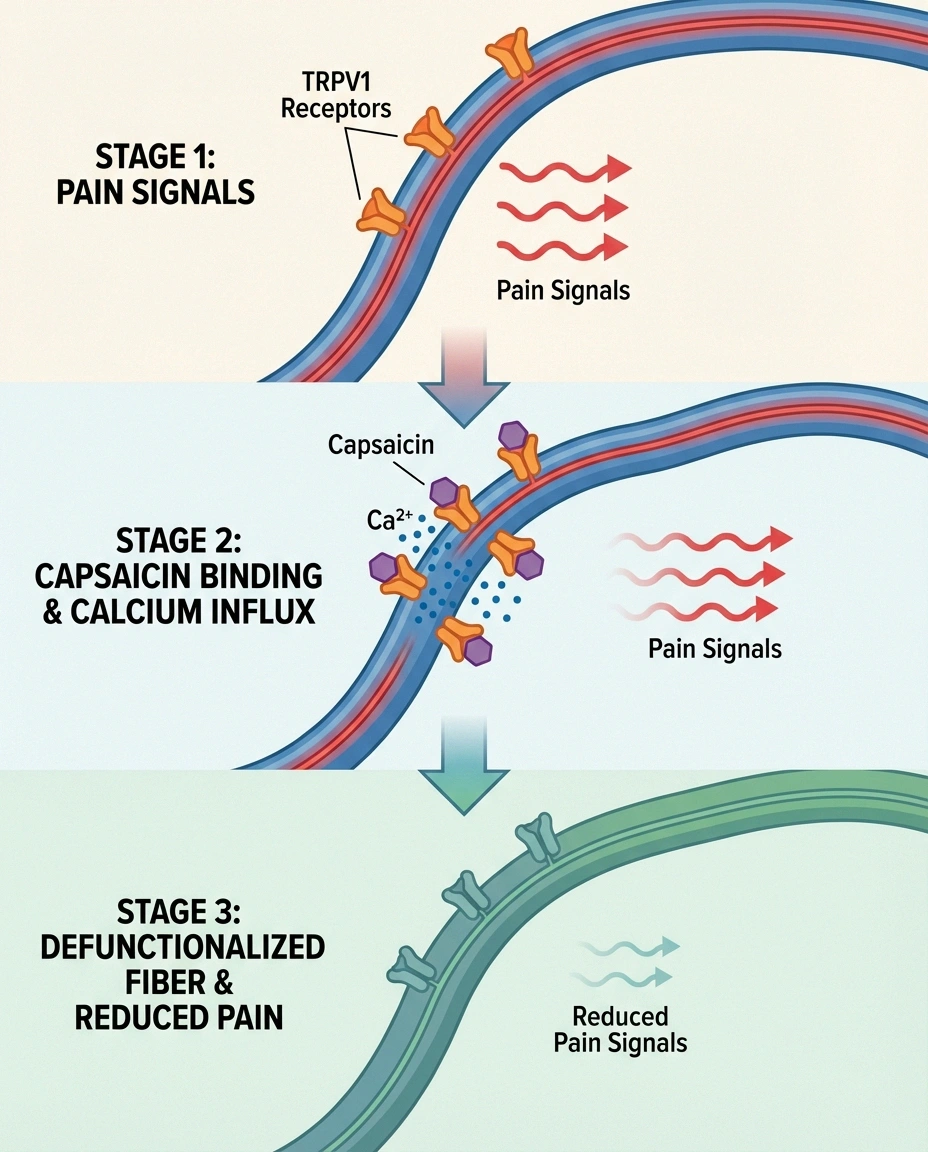
What makes capsaicin fascinating for neuropathy treatment is its interaction with a specific receptor on your pain nerve fibers called TRPV1 (transient receptor potential vanilloid 1). This receptor normally responds to heat and certain types of pain. When capsaicin activates TRPV1 receptors, it triggers a cascade of events in your nerve endings that initially causes burning and irritation — but with repeated or high-dose exposure, something remarkable happens.
According to a comprehensive review in Therapeutic Advances in Neurological Disorders, the process is called “defunctionalization.” The sustained activation of TRPV1 causes a massive influx of calcium into the nerve cells, which leads to several changes: voltage-gated ion channels become inactivated, the nerve’s ability to form pain signals is reduced, and eventually the nerve terminals in the skin actually retract.
In simpler terms: capsaicin overwhelms your pain nerves to the point where they temporarily stop sending pain signals. It doesn’t damage the nerves permanently — the nerve terminals grow back over weeks to months, which is why repeated applications are necessary.
How It Works
Capsaicin activates TRPV1 receptors on pain-sensing C-fibers. This initially causes burning, but repeated or high-dose exposure leads to “defunctionalization” — the pain nerve terminals become unable to transmit signals and temporarily retract from the skin. The result: reduced pain in the treated area for weeks to months.
Importantly, capsaicin only affects the small C-fibers that transmit pain and heat sensations. It doesn’t touch the larger nerve fibers responsible for motor function, touch, or vibration. This selectivity is one of its key advantages — you get pain relief without losing other sensations or muscle function.
The Two Types of Capsaicin Products
Not all capsaicin products are created equal, and understanding the difference is crucial for setting realistic expectations.
Low-Concentration OTC Creams (0.025% to 0.1%)
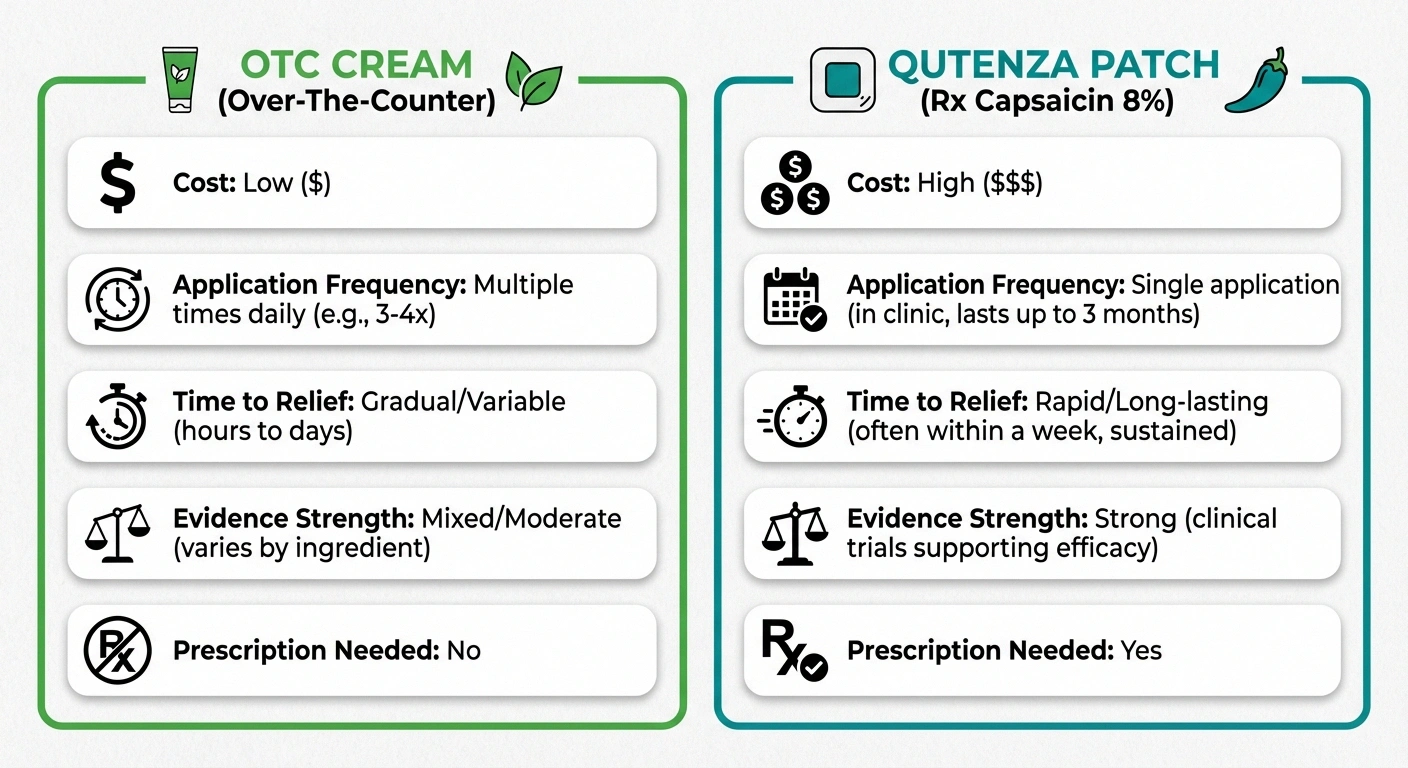
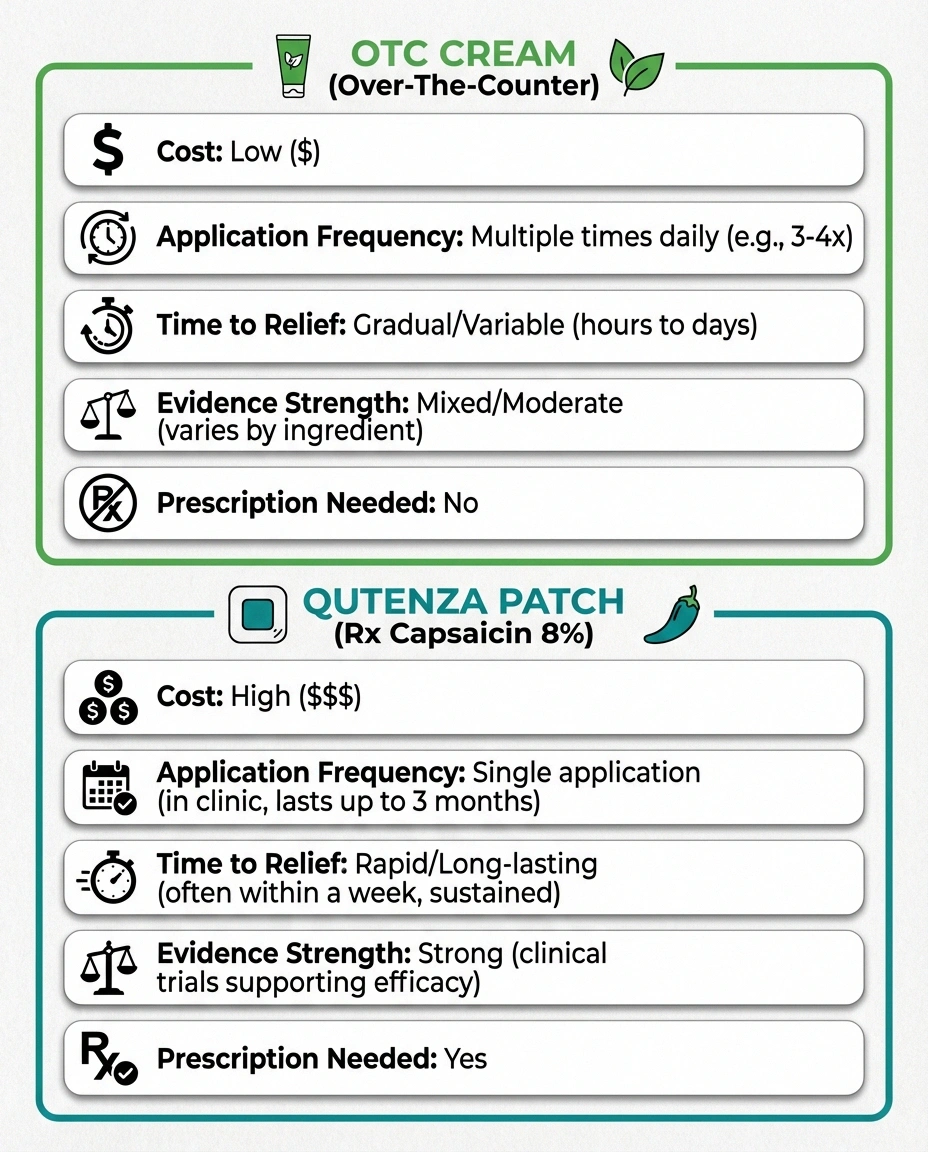
These are the products you’ll find at your local pharmacy — brands like Capzasin, Zostrix, and generic capsaicin creams. They typically contain 0.025%, 0.075%, or 0.1% capsaicin and cost roughly $8-15 per tube.
How to use them: Apply a thin layer to the affected area 3-4 times daily. The cream needs to be applied consistently for 2-4 weeks before you’ll feel the full pain-relieving effect. Many people give up too early because the initial burning is uncomfortable and the relief isn’t immediate.
The reality: The evidence for low-concentration capsaicin in neuropathic pain is mixed. According to a Cochrane Review on topical capsaicin, while low-dose capsaicin creams may provide some pain relief, the evidence is not as strong as for the high-concentration patch. The main issue is compliance — applying cream 3-4 times daily, enduring the burning each time, for weeks before seeing results, is something many people can’t sustain.
High-Concentration Prescription Patch (8% — Qutenza)
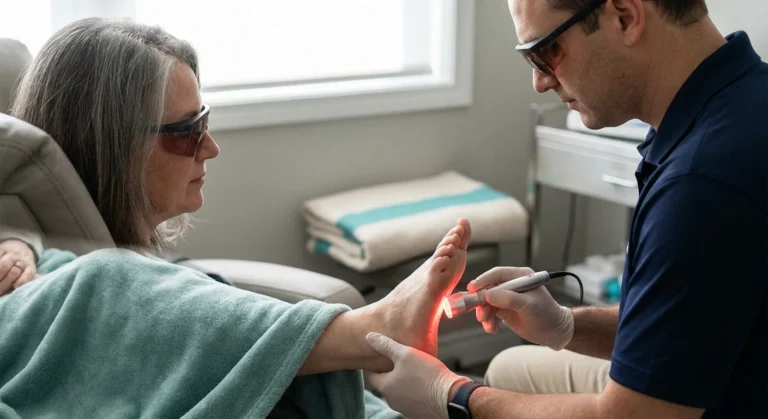
The 8% capsaicin patch (brand name Qutenza) is a completely different product. It contains 640 micrograms of capsaicin per square centimeter — dramatically more than OTC creams. It’s applied by a healthcare provider in a clinical setting, left on for 30-60 minutes (depending on the condition and body area), and the pain relief can last up to 12 weeks from a single application.
A narrative review in the British Journal of Pain describes the 8% patch as producing “defunctionalization” — the same process as OTC creams, but achieved in a single application rather than requiring weeks of daily use. The review reports that TRPV1-expressing nerve terminals retract from the skin after exposure, reducing pain transmission for an extended period.
The Cochrane Review found that a single application of the 8% capsaicin patch provided significant pain relief for up to 12 weeks in patients with post-herpetic neuralgia and HIV neuropathy, with a number needed to treat (NNT) of 6 to 9 — meaning roughly 1 in 6 to 1 in 9 patients experienced at least 30% pain reduction.
The downsides: The patch costs approximately $800 per application (plus clinician fees), requires a prescription and clinical administration, and the application itself is quite painful — the burning during the 30-60 minute treatment period is intense enough that pre-treatment with a topical cannabis compared to capsaicin anesthetic is standard. Blood pressure monitoring during application is also recommended due to the possibility of a transient increase.
OTC Cream (0.025-0.1%)
💲 Cost: $8-15/tube
📅 Application: 3-4x daily for weeks
⏱️ Time to relief: 2-4 weeks
📋 Prescription: No
📊 Evidence: Mixed
Qutenza Patch (8%)
💲 Cost: ~$800/application
📅 Application: Single, in clinic
⏱️ Duration of relief: Up to 12 weeks
📋 Prescription: Yes
📊 Evidence: Stronger (NNT 6-9)
What Conditions Does Capsaicin Work Best For?
Capsaicin has been studied for several types of neuropathic pain, with varying levels of evidence.
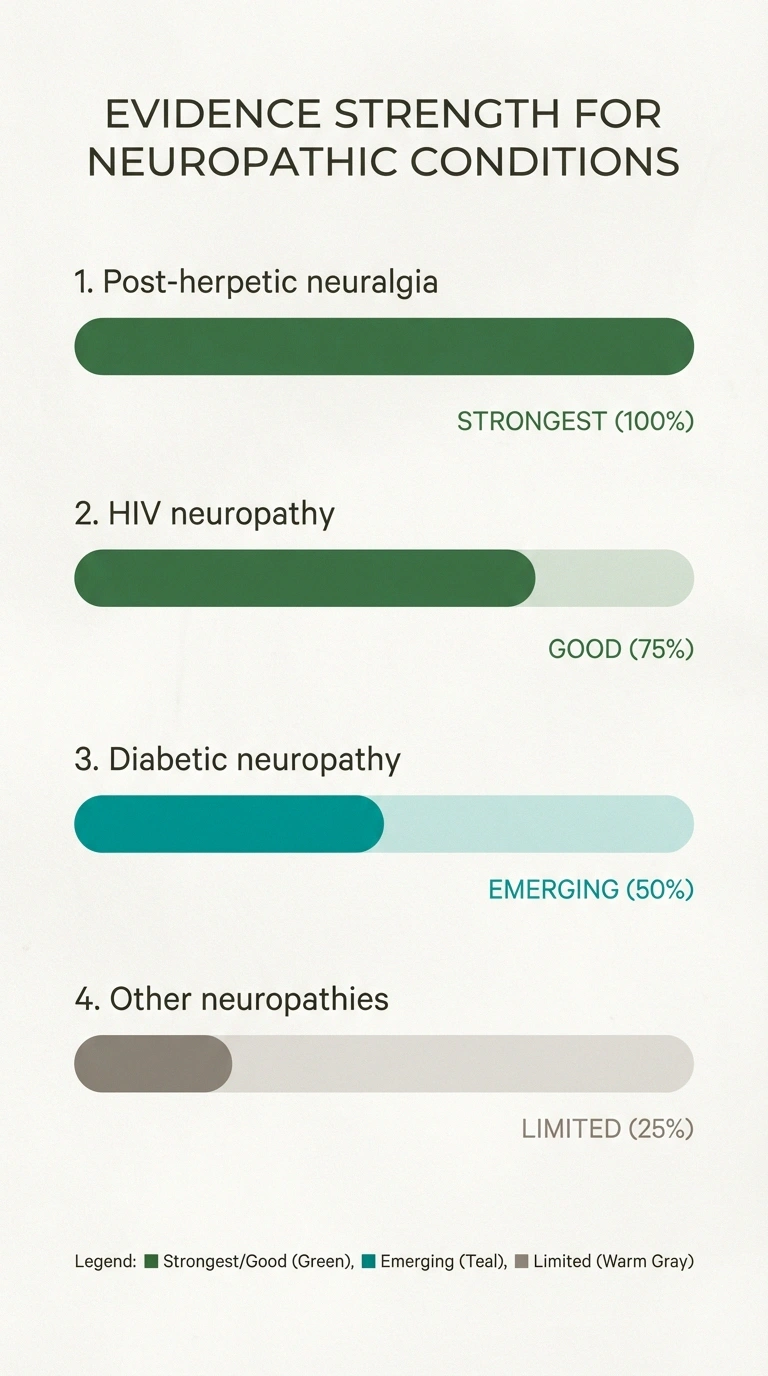
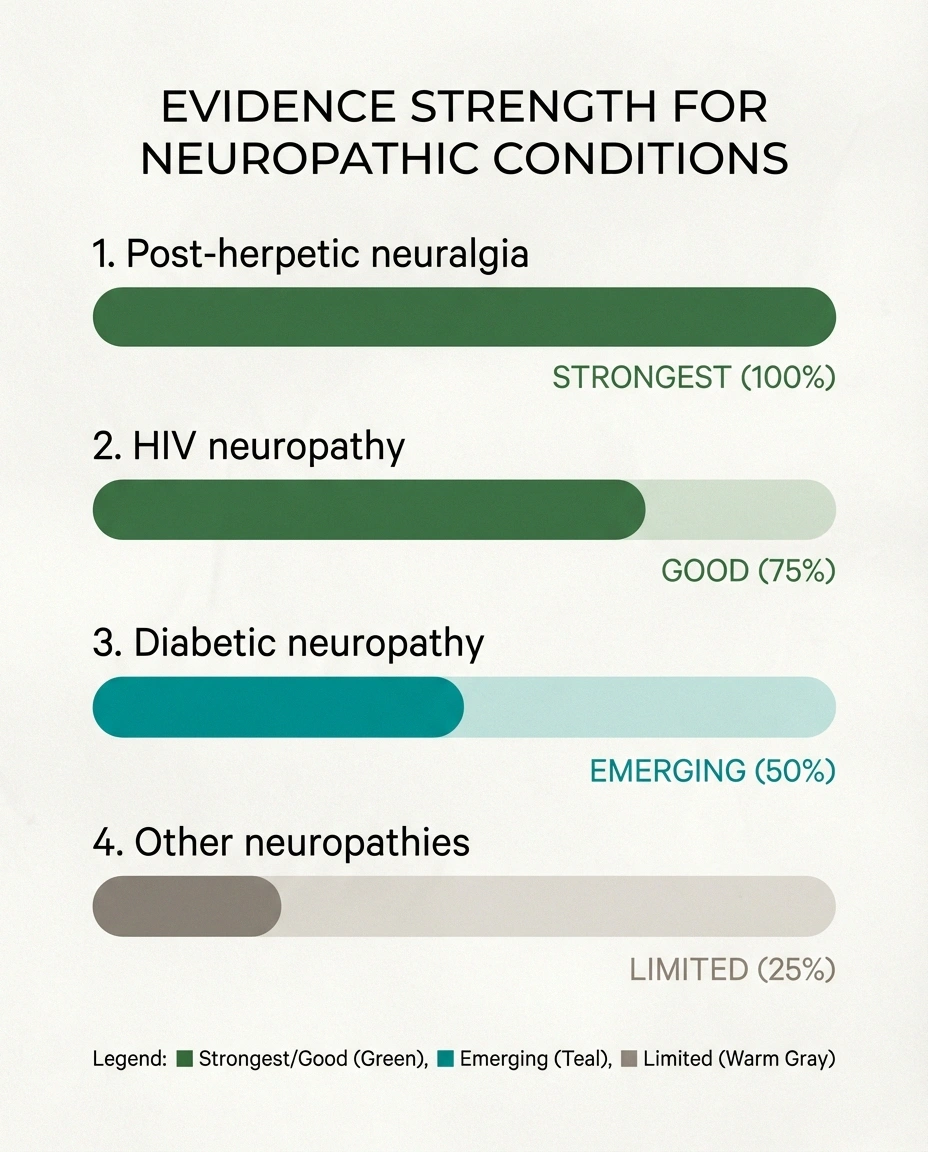
Post-Herpetic Neuralgia (Strongest Evidence)
The best research data for capsaicin is in post-herpetic neuralgia — the nerve pain that persists after a shingles outbreak. Four clinical trials with over 1,200 participants demonstrated significant pain relief from the 8% capsaicin patch. The recommended application time is 60 minutes for post-herpetic neuralgia, with treatment repeatable every 3 months.
HIV-Associated Neuropathy (Good Evidence)
Two clinical trials involving over 800 participants showed the 8% patch provided meaningful pain relief for HIV neuropathy. This is particularly significant because this type of neuropathy is often resistant to standard pain medications.
Diabetic Peripheral Neuropathy (Emerging Evidence)
For diabetic neuropathy, the evidence is more limited but promising. One clinical trial with 369 participants showed some benefit. The EU extended Qutenza’s license to include diabetic neuropathy patients in 2015. The recommended application for diabetic peripheral neuropathy is 30 minutes on the feet.
Other Peripheral Neuropathies
Many people with other types of neuropathy — including unexplained neuropathy, chemotherapy-induced neuropathy, and small fiber neuropathy — use capsaicin cream with varying degrees of success. While the clinical trial data for these specific conditions is limited, the underlying mechanism (TRPV1 defunctionalization) should theoretically work regardless of the neuropathy’s cause, as long as the pain is mediated by C-fibers.
How to Use OTC Capsaicin Cream for Neuropathy
If you want to try the over-the-counter approach, here’s what you need to know to give it a fair shot.

How to Apply Capsaicin Cream
Wash and Dry
Clean the affected area and dry thoroughly. Apply only to intact skin — never on open wounds, broken skin, or irritated areas.
Apply a Thin Layer
Use a pea-sized amount and rub it in completely. More is not better — a thin film is sufficient. Use gloves or wash hands immediately after.
Repeat 3-4 Times Daily
Consistency is crucial. Apply 3-4 times per day, every day. The burning sensation typically decreases after the first week of regular use.
Give It Time
Expect 2-4 weeks of consistent use before judging effectiveness. The defunctionalization process is gradual — don’t give up after a few days.
Choosing the Right Strength
For neuropathy, most practitioners recommend starting with the 0.075% concentration rather than the weaker 0.025%. The 0.025% strength was originally studied more for musculoskeletal pain (like arthritis) than neuropathic pain. If 0.075% is well-tolerated, some people move up to 0.1% formulations. Our guide to the best neuropathy creams covers several capsaicin options alongside other topical treatments.
Managing the Initial Burning
Let’s be honest — the burning during the first week or two of capsaicin cream use can be intense. Some tips from our community:
- Start with smaller areas — apply to one small area first to gauge your reaction
- Avoid heat after application — don’t cover the area with tight clothing, bandages, or heating pads, as heat intensifies the burning
- Use a fan or cool cloth — if the burning is uncomfortable, a fan or cool (not cold) cloth can help
- Never apply before bathing — hot water dramatically increases the burning sensation
- Wear gloves during application — or wash hands thoroughly afterward. Getting capsaicin in your eyes, nose, or other sensitive areas is extremely unpleasant
- Be patient — the burning typically decreases significantly after the first 1-2 weeks of regular use as the defunctionalization process progresses
Important Safety Warning
Never apply capsaicin cream to broken, damaged, or irritated skin. Avoid contact with eyes, nose, mouth, and other mucous membranes. If you have reduced sensation in your feet from neuropathy, inspect the area carefully before applying — you may have cuts or blisters you haven’t noticed. Stop use and consult your doctor if you develop severe skin irritation or blistering.
How Capsaicin Compares to Other Neuropathy Treatments
One of the most appealing things about capsaicin is what it doesn’t do. Unlike oral neuropathy medications like gabapentin or pregabalin, capsaicin doesn’t cause drowsiness, weight gain, dizziness, or cognitive fog. Unlike duloxetine, it doesn’t interact with other medications or require tapering to stop. Because capsaicin is barely absorbed into the bloodstream when applied topically, systemic side effects are virtually non-existent.
This makes capsaicin particularly valuable for people who:
- Can’t tolerate the side effects of oral medications
- Want to avoid adding another systemic drug to their regimen
- Have localized pain in a specific area (feet, hands, a specific dermatome)
- Want something they can use alongside other treatments
Capsaicin cream can also be used in combination with other natural remedies for neuropathy — it’s often part of a multi-layered pain management approach rather than a standalone solution. Some people alternate between capsaicin cream and lidocaine cream at different times of day, or use capsaicin on their feet while taking oral supplements like alpha-lipoic acid for broader nerve support.
What Real Users Say: Expectations vs. Reality
After years of discussing capsaicin in our support group, here are the patterns I’ve noticed:
People who do well with capsaicin tend to:
- Be consistent with application (the biggest predictor of success)
- Have burning or surface-level pain rather than deep aching
- Start with realistic expectations (pain reduction, not elimination)
- Push through the initial burning phase without giving up
People who struggle with capsaicin tend to:
- Apply inconsistently (once or twice a day instead of 3-4 times)
- Give up during the first week when the burning is worst
- Expect complete pain elimination rather than reduction
- Have primarily numbness rather than burning pain (capsaicin targets pain fibers, not sensation)
A realistic expectation for OTC capsaicin cream is a 20-40% reduction in pain intensity after 2-4 weeks of consistent use. That’s not a miracle, but when you’re dealing with daily neuropathy pain, a 30% reduction can be the difference between a manageable day and a miserable one.
A Brief History Worth Knowing
Capsaicin’s use in pain relief is ancient — the first recorded use of chili preparations for pain treatment dates back to approximately 4000 BC in Central and South America. Christopher Columbus brought chili peppers to Europe in the 1490s, and by 1850, Western medical literature was documenting the use of topical chili extract for burning and itching in the extremities — essentially, the same condition we now call neuropathy.
The compound was first isolated in its pure form by Thresh in 1846, and its chemical structure was determined by Nelson in 1919. But it wasn’t until the discovery of the TRPV1 receptor in the 1990s and 2000s that scientists truly understood why capsaicin works for pain. The development of the 8% capsaicin patch (Qutenza) was approved in the EU in 2009, marking a significant advance in topical neuropathy treatment.
When Capsaicin Might Not Be Right for You
While capsaicin is generally safe, there are situations where it may not be appropriate:
- Severe skin conditions: If you have eczema, psoriasis, or other skin conditions in the areas you’d apply capsaicin, the irritation could be problematic
- Open wounds or ulcers: People with diabetic foot complications including ulcers should avoid capsaicin on or near affected areas
- Numbness without pain: If your primary symptom is numbness rather than burning pain, capsaicin is unlikely to help — it works on pain pathways, not sensation restoration
- Severe heat sensitivity: Some neuropathy patients are hypersensitive to heat. Adding capsaicin’s burning sensation on top of that could be unbearable
- Autonomic neuropathy: If you have autonomic neuropathy affecting sweating in the areas you’d treat, discuss with your doctor first
Janet’s Tip
If you’re unsure whether capsaicin is worth trying, start with a small tube of 0.075% cream — it’s inexpensive enough that you’re only risking about $10 and a couple of weeks of your time. Apply it consistently for a full 3 weeks before deciding if it works for you. Many people in our group have found it to be a valuable addition to their pain management toolkit, even if it wasn’t a game-changer on its own.
Frequently Asked Questions
The Bottom Line
Capsaicin is one of the most interesting tools in the neuropathy pain management toolkit. It works through a unique mechanism that’s genuinely different from anything else available — not masking pain or altering brain chemistry, but actually changing how your pain nerve fibers function at the local level.
Is it a miracle cure? No. Is it worth trying? For many people with burning neuropathy pain, absolutely. A tube of 0.075% capsaicin cream costs less than a restaurant meal and could meaningfully improve your daily comfort. The only real investment is the patience to use it consistently for 2-4 weeks while the initial burning subsides.
If OTC capsaicin provides partial relief, talk to your doctor about the 8% Qutenza patch — the clinical data is stronger, and a single application can provide months of relief. And if capsaicin isn’t right for you, don’t be discouraged. It’s just one option among many, and the right approach to neuropathy management usually involves combining several strategies that work for your individual situation.
That friend in my support group who first told me about rubbing pepper cream on her feet? She’s still using it, years later. It didn’t eliminate her pain, but she says it takes the edge off enough to make her evenings comfortable again. For someone with neuropathy, that’s no small thing.
Key Takeaway
Capsaicin cream works by desensitizing pain nerve fibers through TRPV1 receptor activation. OTC creams (0.075%) need 2-4 weeks of consistent, 3-4x daily application. The prescription 8% patch provides stronger, longer-lasting relief from a single clinical application. Capsaicin is most effective for burning neuropathy pain and can be safely combined with other treatments.
About the Author