When I first suggested trying the pool to someone in my support group, she looked at me like I’d lost my mind. “Janet,” she said, “I can barely walk across my living room without stumbling. You want me to get in a pool?”
Three months later, she was doing water walking three times a week and telling anyone who’d listen that it was the best thing she’d done for her neuropathy since her diagnosis. Her balance improved. Her pain decreased. And for the first time in years, she had an exercise routine she actually looked forward to.
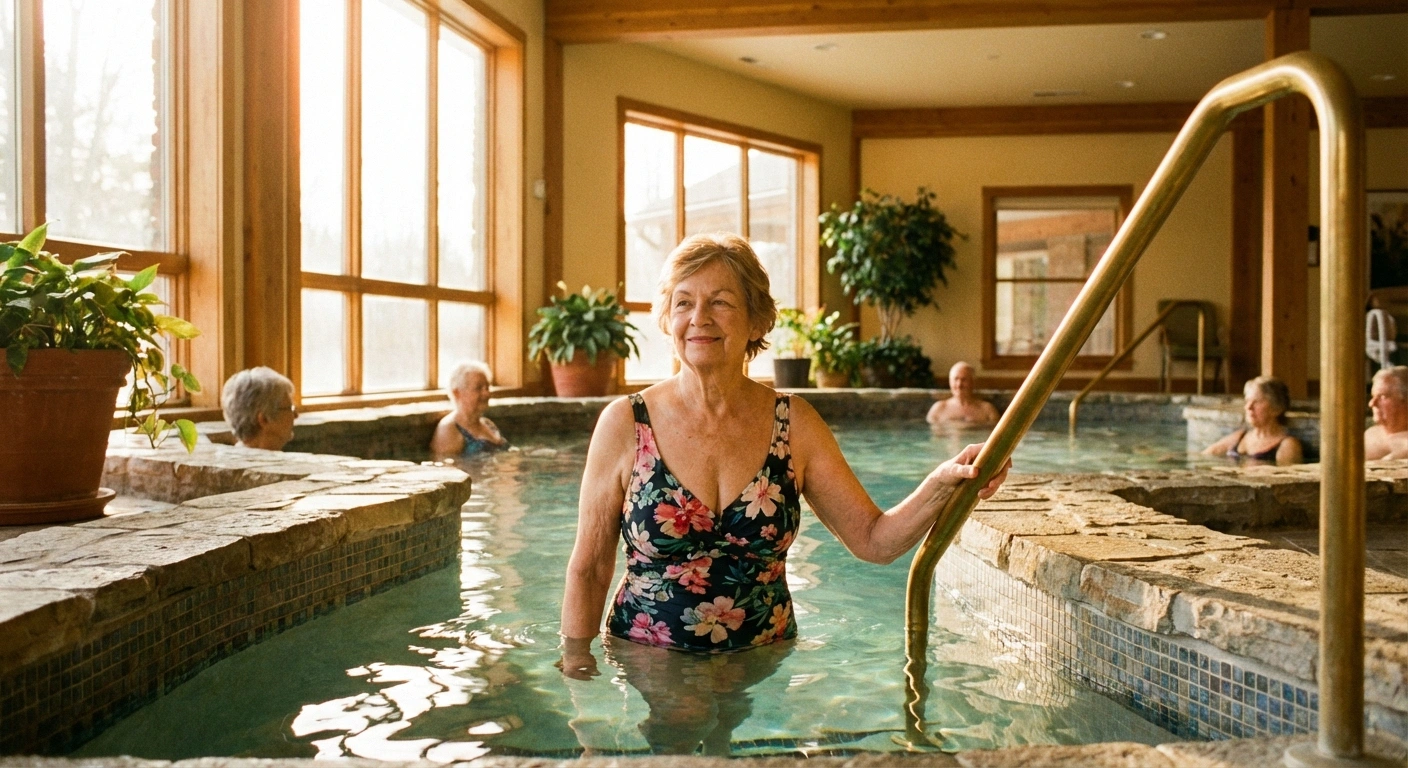
Her experience isn’t unusual. Of all the exercise options I’ve explored over my years living with peripheral neuropathy — and there have been many — water-based exercise holds a special place. There’s something almost magical about what happens when you put a neuropathy-damaged body in warm water. The pain eases, the fear of falling disappears, and movements that would be impossible on land suddenly become doable.
Let me walk you through why swimming and water therapy deserve a serious look if you’re living with neuropathy, what the research actually shows, and how to get started safely.
Browse all our exercise and movement guides for more articles like this one.
Why Water Is Different for Neuropathy Patients
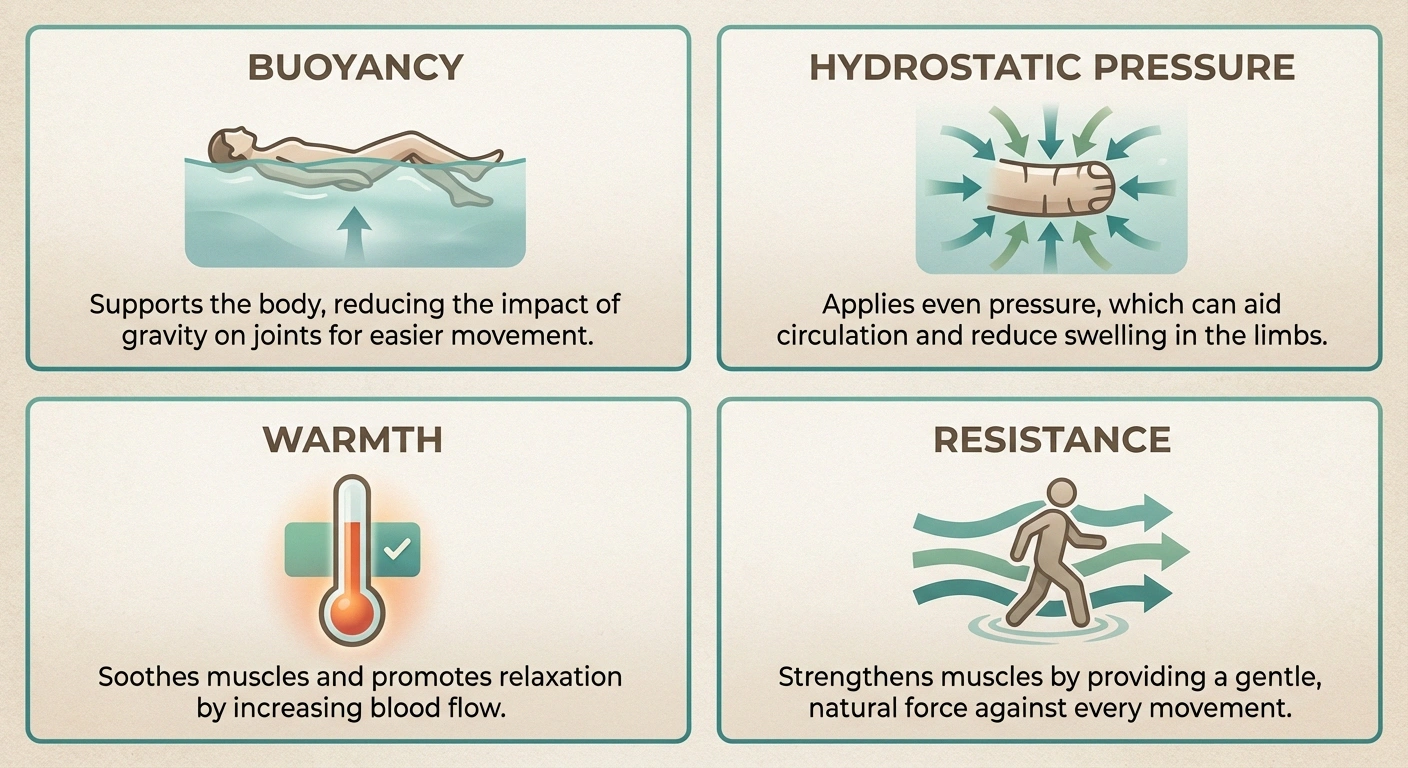
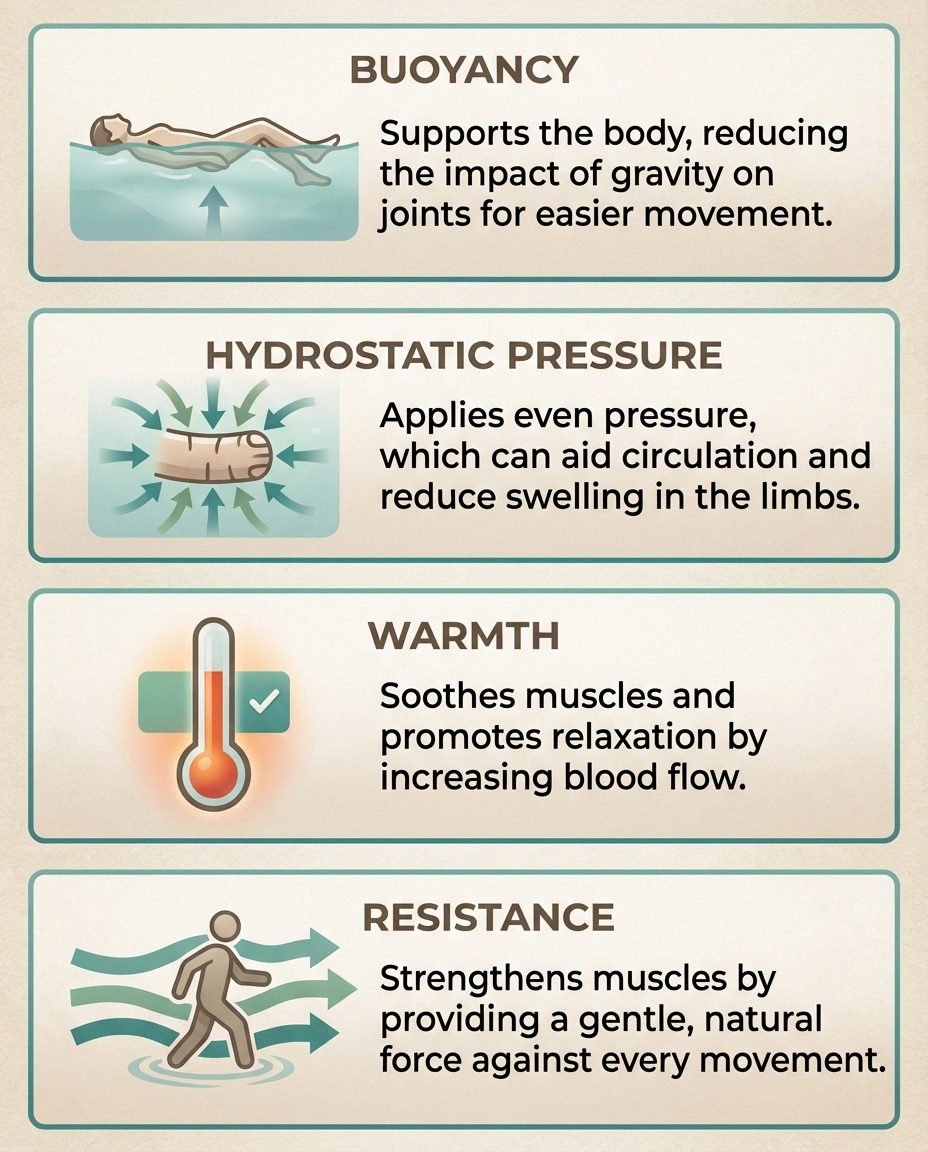
Water changes the rules. The properties of water — buoyancy, hydrostatic pressure, swimming to cool down neuropathy symptoms, and resistance — each address specific challenges that make land-based exercise difficult or painful for people with neuropathy.
Buoyancy Removes the Fall Risk
For many neuropathy patients, the biggest barrier to exercise isn’t pain — it’s fear. When you can’t feel your feet properly, every step on land carries the risk of a stumble or fall. Balance problems are one of the most debilitating aspects of neuropathy, and they make many people avoid exercise altogether.
In water, buoyancy reduces your effective body weight by up to 90%, depending on depth. Your joints are unloaded, the impact on your feet is virtually eliminated, and even if you do lose your balance, the water catches you. For someone whose neuropathy has progressed to the point where balance is compromised, this is genuinely life-changing.
Hydrostatic Pressure Supports Circulation
When you’re submerged in water, the hydrostatic pressure gently compresses your body from all directions. This has a similar effect to wearing compression socks — it helps push blood from your extremities back toward your heart, improving circulation to the very areas where neuropathy concentrates. Better blood flow means more oxygen and nutrients reaching your damaged nerves, which supports whatever healing capacity they have.
Warm Water Eases Nerve Pain
Most therapeutic pools are heated to between 83-88°F (28-31°C), and this warmth does several helpful things simultaneously. It relaxes tight muscles that may be compensating for nerve damage, increases blood flow to your extremities, and can directly reduce pain perception. Many people in our support group describe the sensation of getting into warm water as an almost immediate decrease in burning and tingling.
If you’ve explored heat therapy for neuropathy, warm water exercise gives you that thermal benefit plus the exercise benefits in one package.
Natural Resistance Without Impact
Water provides 12 times more resistance than air, which means every movement in the pool is strengthening your muscles — without the joint-jarring impact of land exercise. You control the intensity simply by moving faster or slower. This makes it ideal for building the muscle strength that helps compensate for nerve damage, particularly in your legs and core.
Buoyancy
Up to 90% body weight reduction — near-zero fall risk
Pressure
Hydrostatic compression boosts circulation to extremities
Warmth
83-88°F therapeutic temperature relaxes muscles, eases pain
Resistance
12x more than air — strengthens muscles without impact
What the Research Shows
The scientific evidence for water-based exercise in neuropathy patients is growing, and the results are encouraging.
A randomized controlled trial published in Clinical Rehabilitation compared aquatic physiotherapy with land-based physiotherapy for patients with peripheral neuropathies. The study found that aquatic therapy produced comparable improvements in strength and function, with the added benefit of better patient compliance — people were more likely to stick with the water-based program because it was more comfortable and less intimidating.
Animal studies have provided compelling biological evidence for why swimming is ideal retirement exercise for nerve pain helps. A study in the journal Pain Research and Management found that swim therapy significantly reduced both mechanical allodynia (pain from touch) and thermal hyperalgesia (pain from temperature) in subjects with nerve injuries. The researchers concluded that regular exercise including swim therapy may be an effective treatment for neuropathic pain.
More recently, a 2023 study in Neuroscience Letters demonstrated that swimming exercise not only reduced mechanical hypersensitivity in painful diabetic neuropathy but actually mitigated peripheral nerve fiber degeneration — suggesting that swimming may have a protective effect on the nerves themselves, not just the symptoms.
Another fascinating finding comes from research published in Medicine & Science in Sports & Exercise, which showed that swimming exercise inhibited neuroma formation after nerve transection and relieved pain behavior. These effects appeared to be linked to modulation of neurotrophins — proteins that support nerve growth and survival.
Research Says
Multiple studies show that swimming and aquatic therapy may reduce neuropathic pain, improve circulation, protect peripheral nerve fibers from degeneration, and modulate neurotrophins (nerve growth proteins). Aquatic therapy also shows better patient adherence compared to land-based exercise programs.
Swimming vs. Water Therapy: What’s the Difference?
When I say “water-based exercise,” I’m actually talking about a spectrum of activities — and not all of them require you to know how to swim.
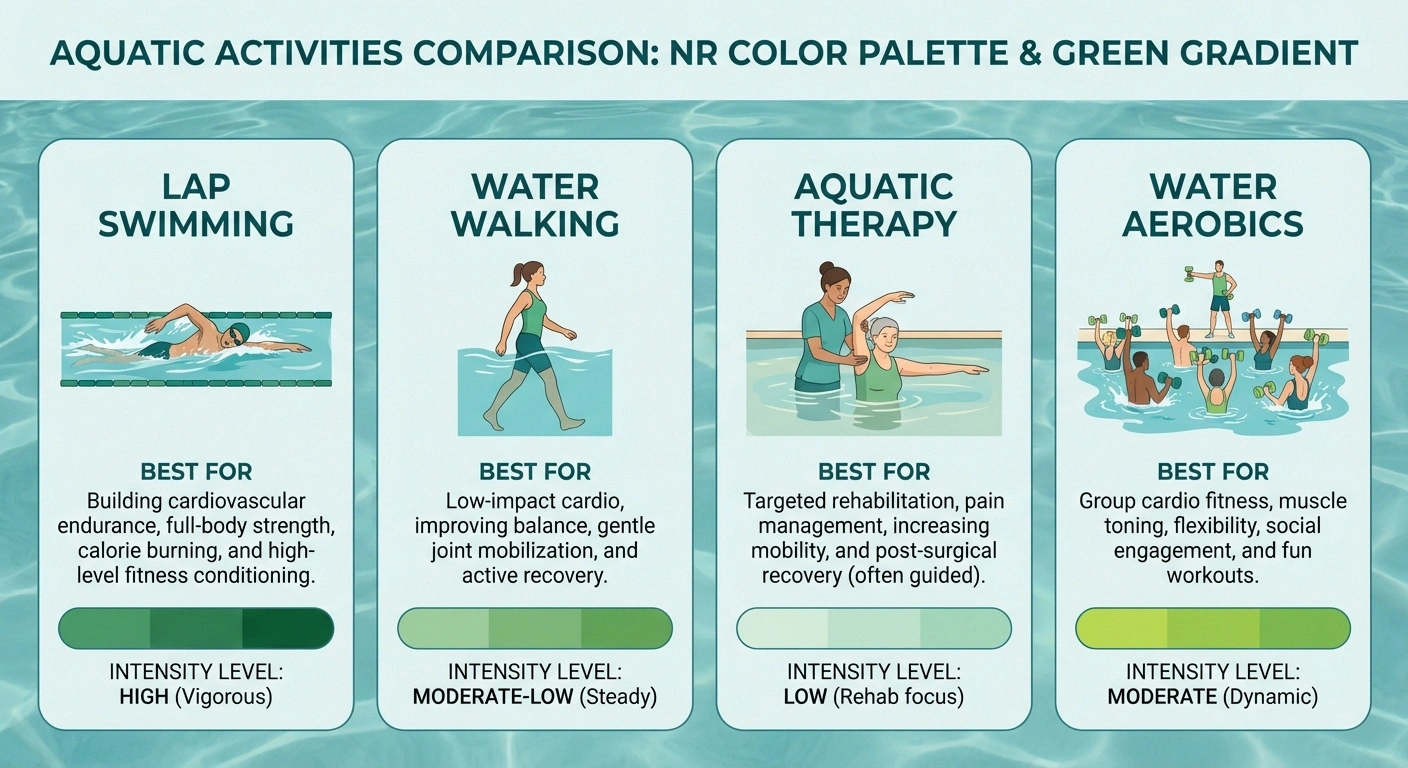
Lap Swimming
Traditional swimming — doing laps in freestyle, backstroke, or breaststroke — is excellent cardiovascular exercise that engages your whole body. It’s ideal for people with neuropathy who are still confident swimmers and want a challenging workout. The rhythmic, repetitive nature of swimming can also be meditative and stress-reducing.
Best for: People with mild to moderate neuropathy who are comfortable in deep water and want cardiovascular fitness.
Water Walking and Aqua Jogging
This is where many neuropathy patients find their sweet spot. Walking in chest-deep water provides all the circulatory and muscle-strengthening benefits without requiring swimming ability. The water supports your weight, the pool floor gives you a stable surface, and you can hold the pool edge or use a pool noodle for additional stability.
Best for: People with moderate neuropathy, balance concerns, or those new to water exercise. This is an excellent complement to land-based walking.
Aquatic Therapy (Hydrotherapy)
Formal aquatic therapy is conducted by a physical therapist in a therapeutic pool — usually warmer than a standard pool (92-96°F). Sessions are tailored to your specific needs and may include targeted exercises for balance, strength, range of motion, and pain management. Many insurance plans cover aquatic therapy when prescribed by a doctor.
Best for: People with significant balance problems, severe neuropathy, or those who want professional guidance to start safely.
Water Aerobics Classes
Group water aerobics classes offer structured exercise in a social setting. Many community pools and YMCAs offer classes specifically for older adults or people with chronic conditions. The social component shouldn’t be underestimated — isolation is a real problem for people living with chronic pain, and having a regular group activity can do wonders for your mental health.
Best for: People who are motivated by group exercise, want social connection, and prefer guided workouts.
Finding the Right Water Exercise for You
🏊 Mild Neuropathy
Lap swimming, water aerobics, or aqua jogging. You have good balance and can swim confidently.
🚶 Moderate Neuropathy
Water walking, gentle water aerobics, or pool exercises with the wall for support. Balance is a concern on land.
🩺 Severe Neuropathy
Formal aquatic therapy with a physical therapist. Personalized exercises, warmer water, professional supervision.
Pool Exercises Specifically Helpful for Neuropathy
Whether you’re working with a therapist or exercising on your own, these pool exercises target the specific issues that neuropathy creates. Always start gentle and progress gradually — the water will make everything feel easier, which is great, but don’t overdo it on your first session.
Water Walking (Forward, Backward, and Sideways)
Walk in chest-deep water, keeping your core engaged and posture upright. Start with forward walking, then progress to backward walking (challenges your balance differently) and sideways walking (strengthens hip stabilizers). Hold the pool wall if needed. Aim for 5-10 minutes to start, building up to 20-30 minutes.
Toe Raises and Heel Rocks
Standing in waist-to-chest-deep water (holding the pool wall if needed), rise onto your toes and hold for 3-5 seconds, then rock back onto your heels. This strengthens the muscles in your feet and calves that support balance. The water provides stability, making this much safer than on land. Start with 10 repetitions, building to 3 sets of 15.
Single-Leg Stands
The water provides enough support to practice balance exercises that might be too risky on land. Stand on one leg for 10-30 seconds, then switch. The water’s resistance and buoyancy give you a safety net while still challenging your proprioception — the nerve-based sense of where your body is in space.
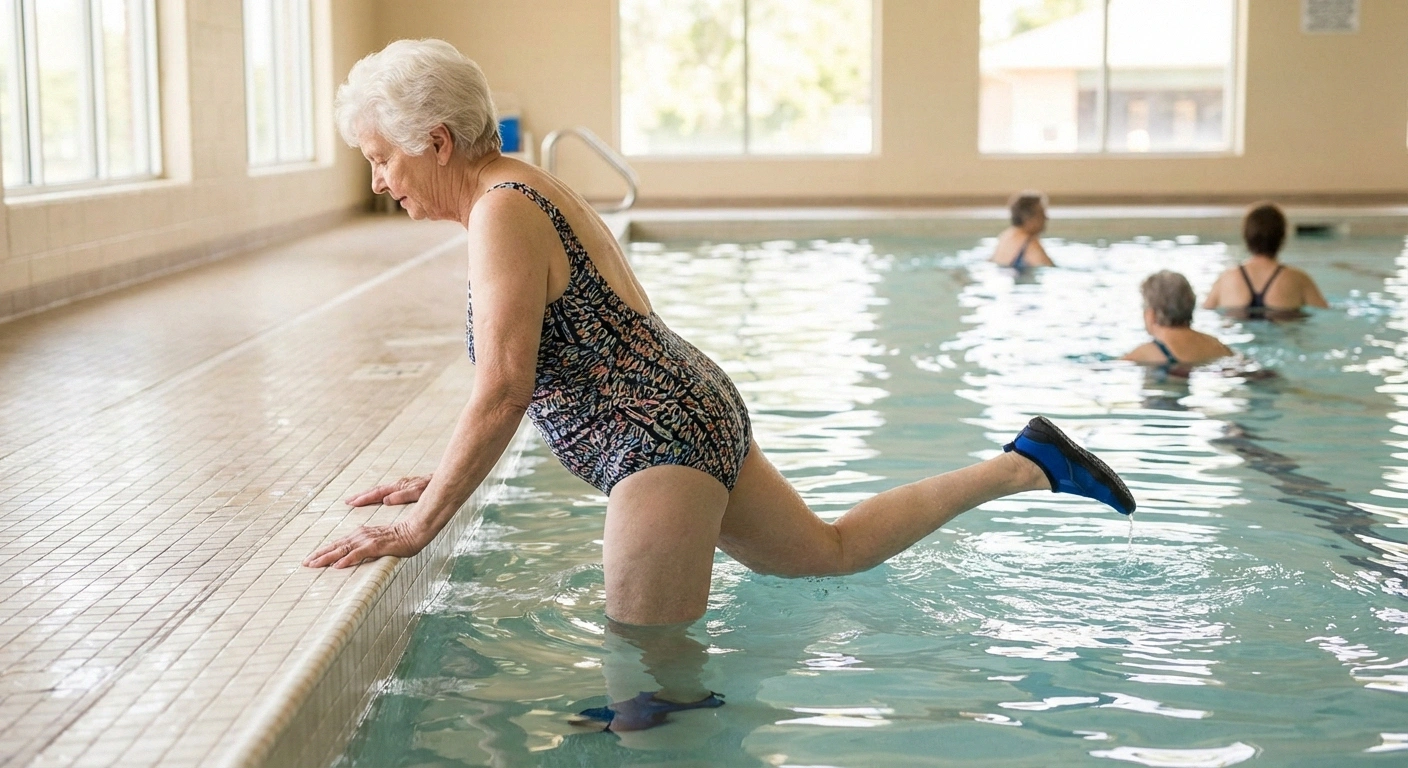
Leg Swings
Holding the pool wall, swing one leg forward and backward through the water. Then switch to side-to-side swings. The water resistance strengthens your hip and leg muscles while the buoyancy protects your joints. This is particularly helpful for maintaining mobility in your lower extremities.
Ankle Circles and Foot Flexes
Sitting on a pool step or holding the edge, draw circles with your feet and alternate between pointing and flexing your toes. These gentle movements promote circulation to your feet and help maintain range of motion in your ankles — critical for preventing the stiffness that compounds neuropathy-related balance problems.
Water Cycling
With your back against the pool wall and arms extended along the edge for support, bring your knees toward your chest and pedal as if riding a bicycle. This engages your core, improves hip flexibility, and boosts circulation to your legs — all without any weight on your feet.
Getting Started Safely
If you’re new to water exercise, here are the practical considerations that will help you get started safely and enjoyably.
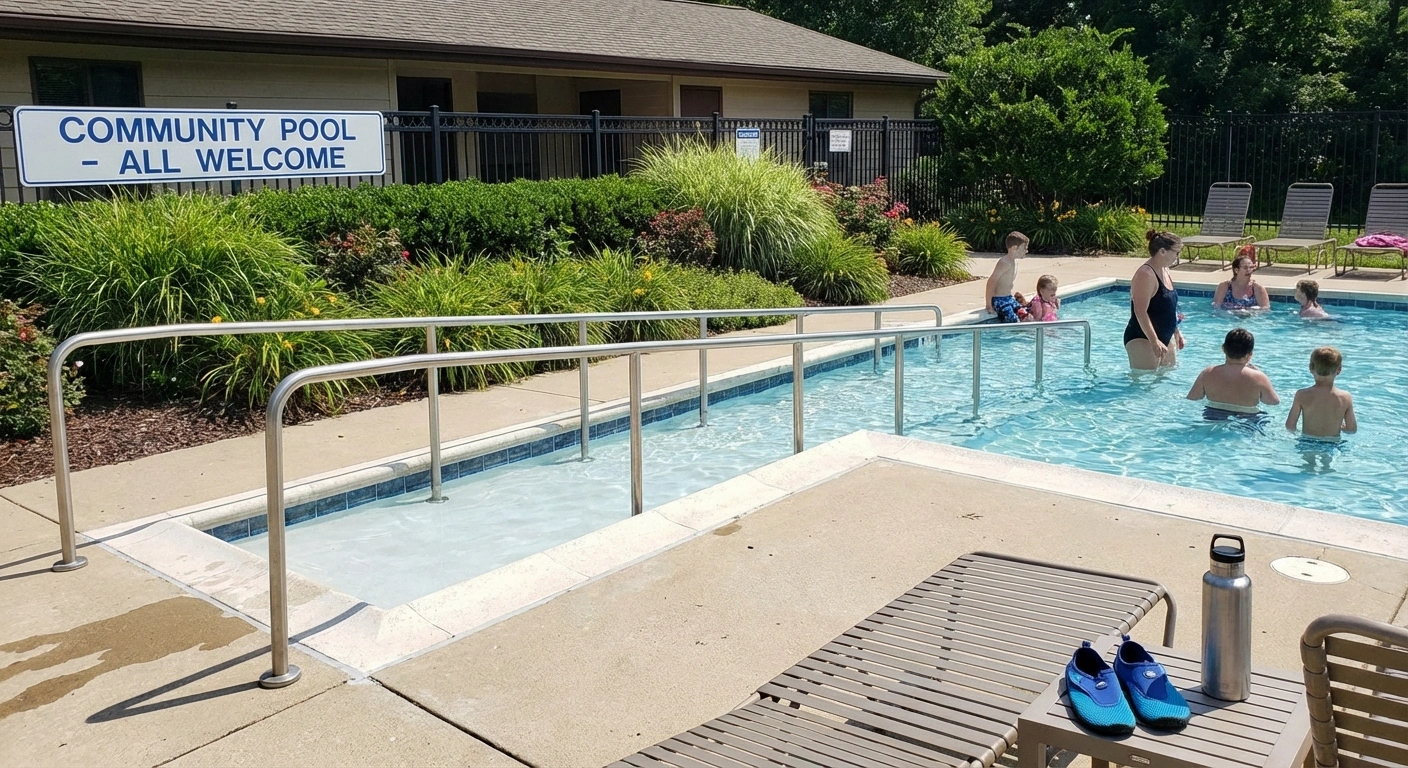
Finding the Right Pool
Look for pools with warm water (83°F or above), easy entry (ramps, lifts, or zero-depth entry are ideal), handrails, and staff who understand the needs of people with mobility challenges. Community pools, YMCAs, hospital wellness centers, and rehabilitation facilities are all worth exploring. Many offer free trial sessions.
Temperature Matters
Water that’s too cold can worsen neuropathy symptoms — cold reduces blood flow and can increase tingling and pain. Conversely, very hot water (like a hot tub above 104°F) can be dangerous if you have reduced temperature sensation, as you might not notice if the water is too hot. The sweet spot for most neuropathy patients is 83-92°F.
Safety Note
If you have reduced sensation in your feet, always check pool water temperature with a thermometer or your hand before entering. Use water shoes with good grip to protect your feet from rough pool surfaces and prevent slipping. And never swim alone — always have someone who can help if needed.
Protect Your Feet
Water shoes are essential for neuropathy patients in the pool. They protect your feet from rough pool surfaces (scrapes you might not feel), provide traction to prevent slipping, and protect against fungal infections. Look for shoes with drainage holes and non-slip soles. Good foot care extends to the pool — dry your feet thoroughly after swimming and inspect them for any injuries you might not have felt.
Start Slow
The water will make you feel like you can do more than you should — that’s the buoyancy effect. Start with 15-20 minute sessions and gradually build up. You may not feel the exertion in the water, but your muscles will let you know the next day. Two to three sessions per week is a good starting frequency.
Consider a Buddy System
Having a pool buddy isn’t just safer — it’s more fun. Many people in our support group have found swimming partners through local neuropathy support groups, aquatic therapy classes, or simply by chatting with regulars at their pool. Accountability and company make it much easier to stay consistent.
Your First Week in the Pool
Get Cleared
Talk to your doctor about starting water exercise. Ask about any restrictions based on your specific condition.
Gear Up
Get water shoes with grip, a comfortable swimsuit, and a towel for thorough foot drying afterward.
Session 1: Just Get Wet
15 minutes of gentle water walking. Use the wall for support. Focus on how the water feels, not performance.
Build Gradually
Add 5 minutes each session. Introduce new exercises one at a time. Aim for 2-3 sessions per week.
Special Considerations for Diabetic Neuropathy
If your neuropathy is related to diabetes, swimming and water therapy have some additional benefits — and cautions — worth noting.
On the benefit side, swimming is an excellent form of cardiovascular exercise that can help with blood sugar management — and better blood sugar control is the single most important factor in slowing diabetic neuropathy progression. Regular water exercise can also help with weight management, another key factor in diabetes control.
On the caution side, check your blood sugar before and after swimming. Exercise can cause blood sugar to drop, and you need to be prepared with a fast-acting carbohydrate snack. Always check your feet carefully after every pool session for any cuts, blisters, or irritation you might not have felt during your workout. And ensure any foot wounds are fully healed before entering a pool to prevent infection.
What About Cold Water Swimming?
Cold water swimming has become trendy for general health, but it’s generally not recommended for people with peripheral neuropathy. Cold water constricts blood vessels, reducing blood flow to your already-compromised extremities. It can intensify numbness, tingling, and pain. And perhaps most dangerously, if you have reduced temperature sensation, you may not accurately gauge how cold the water is, increasing the risk of hypothermia or cold injury.
Stick with warm therapeutic temperatures and save the cold plunges for people whose nerves are fully intact.
Making Water Exercise a Sustainable Habit
The best exercise program is one you actually do. Here are some strategies that have helped people in our community turn pool visits into a lasting habit:
- Same time, same days: Build pool visits into your weekly schedule at consistent times
- Prepare the night before: Pack your pool bag (swimsuit, water shoes, towel, water bottle, snack) so morning motivation isn’t an obstacle
- Track your progress: Note what exercises you did, how long you lasted, and how you felt afterward. Seeing improvement over weeks is powerfully motivating
- Combine with social time: Meet a friend at the pool, join a class, or chat with regulars. The social connection makes you more likely to show up
- Celebrate small wins: Walking 10 laps instead of 8? Standing on one leg for 20 seconds instead of 10? That’s real progress worth acknowledging
Many people pair their pool sessions with other helpful practices — a foot soak or gentle self-foot massage at home afterward can extend the pain relief benefits.
Frequently Asked Questions
The Bottom Line
Of all the exercise options available to people with neuropathy, water-based exercise may offer the best combination of benefits with the fewest barriers. The buoyancy removes the fear of falling, the warmth eases pain, the resistance builds strength, and the hydrostatic pressure supports circulation — all in one activity.
You don’t need to be a swimmer. You don’t need to be athletic. You just need access to a warm pool and the willingness to get in. Start with water walking, progress at your own pace, and don’t be surprised if the pool becomes your favorite part of the week.
That friend of mine who couldn’t believe I was suggesting the pool? She told me last month that she now considers the pool her “therapy room.” And honestly, after years of exploring every treatment and exercise option I can find, I couldn’t agree more.
Key Takeaway
Swimming and water therapy offer unique benefits for neuropathy patients: zero-impact exercise with built-in fall protection, pain relief from warm water, improved circulation from hydrostatic pressure, and muscle strengthening from natural resistance. Start with water walking 2-3 times per week, wear water shoes, and gradually build up your routine.
About the Author