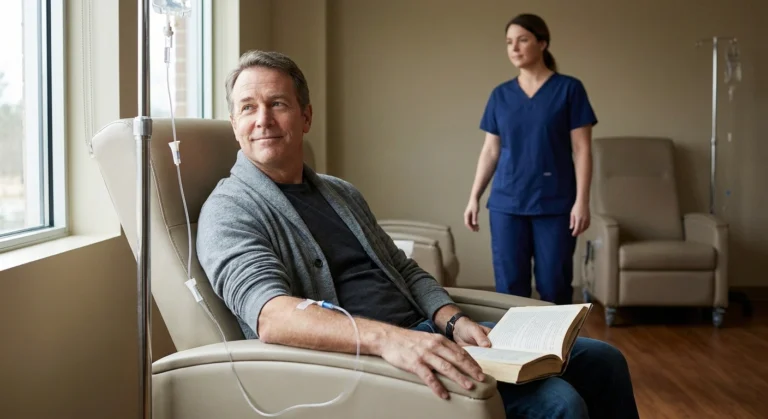
If you've exhausted the usual neuropathy treatments — the gabapentin, the pregabalin, the creams, the supplements — and you're still in pain, you may have come across something called Scrambler Therapy. The name sounds almost too casual for a medical treatment, but this FDA-cleared device has been generating cautious optimism among pain specialists for the past decade.
The promise is compelling: retrain your brain to stop interpreting certain nerve signals as pain — without drugs, without surgery, without side effects. But does it actually deliver? The honest answer is complicated, and I want to walk you through what the science really shows.
What Is Scrambler Therapy?
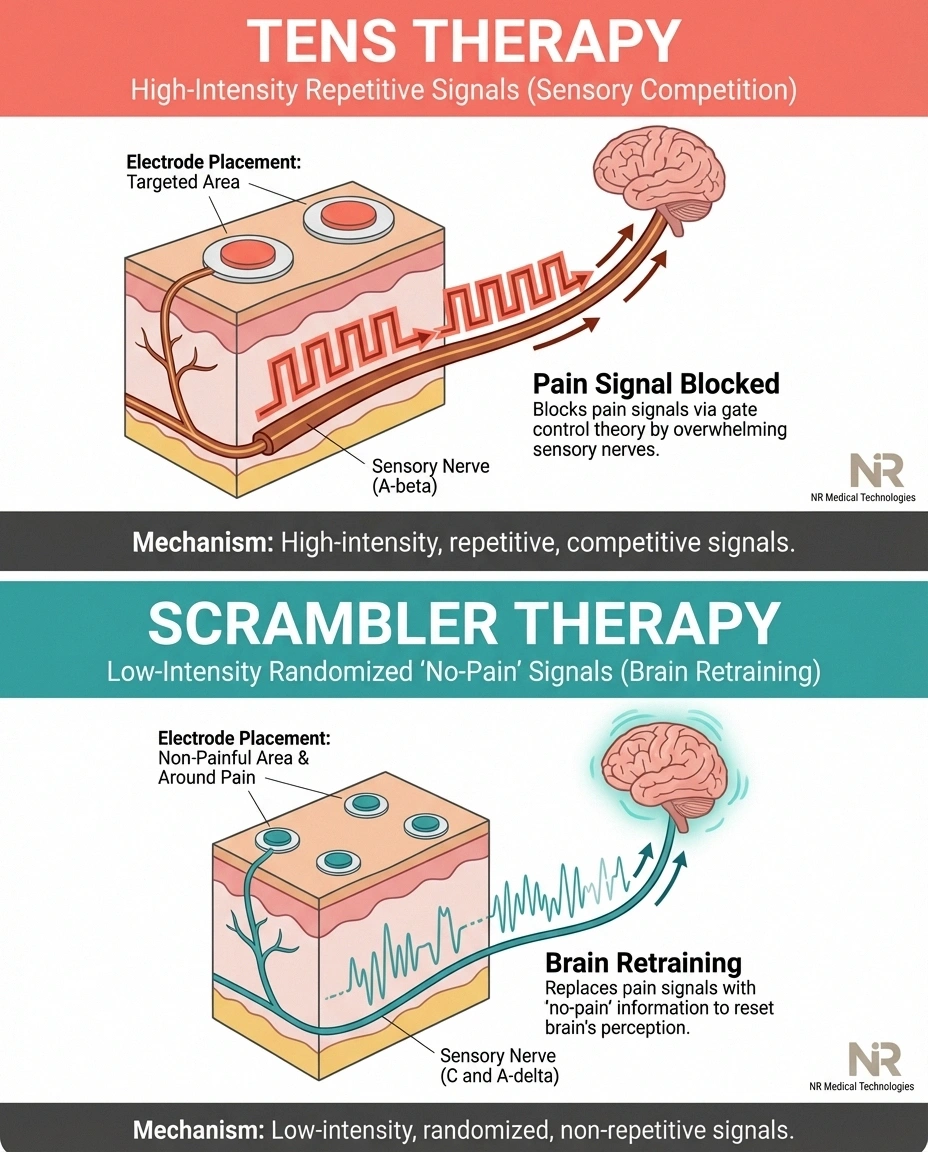
Scrambler Therapy (formally called Calmare Therapy, after the MC-5A Calmare device) is a form of electro-analgesia — meaning it uses electrical signals to treat pain. But it works through a fundamentally different mechanism than other electrical pain treatments you may know, like TENS units.
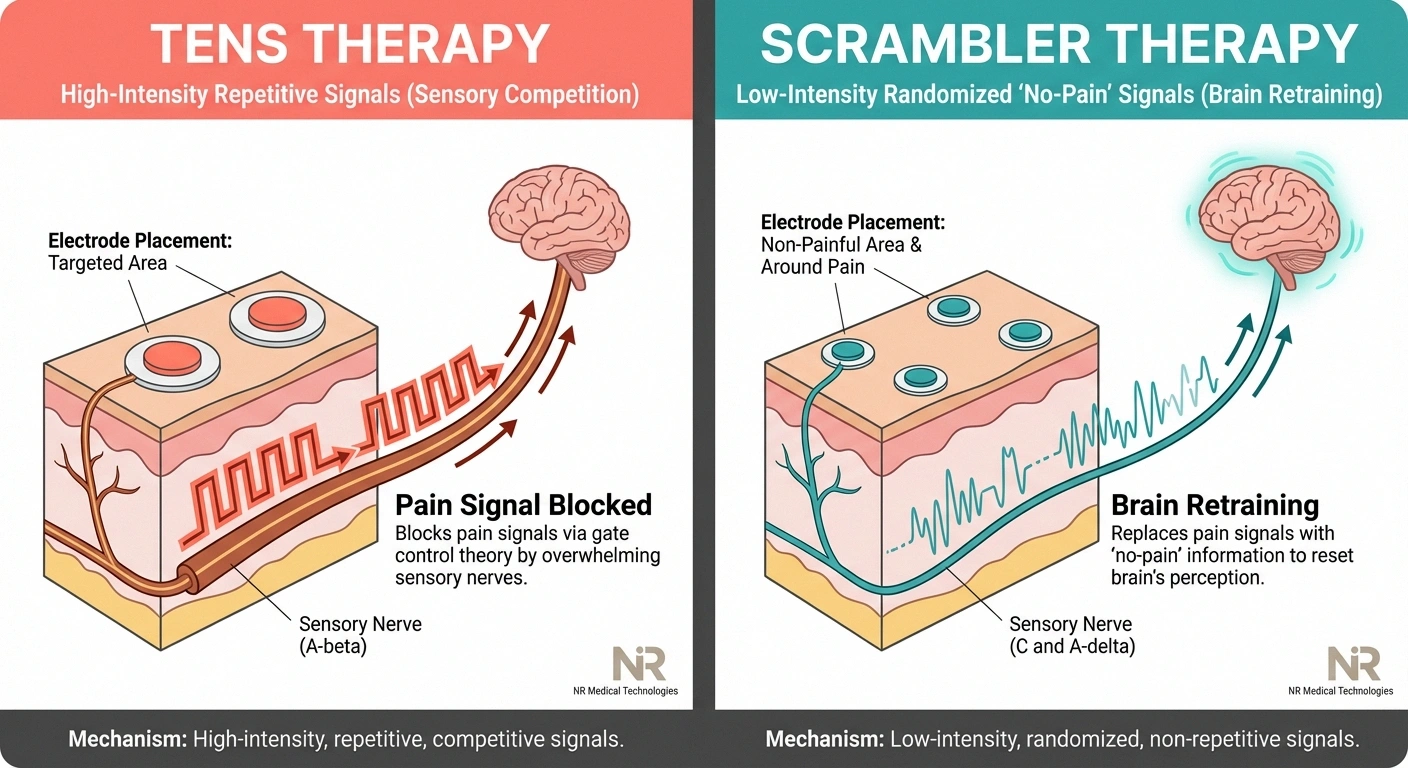
A TENS unit sends repetitive electrical pulses at high intensity (30-150 milliamps) to overwhelm pain signals through sensory distraction — the tingling sensation essentially competes with the pain signal. Scrambler Therapy takes the opposite approach. It sends low-intensity electrical impulses (about 5.5 milliamps) through the same C-fiber nerves that carry chronic pain signals, but delivers “no-pain” information instead.
Think of it this way: your damaged nerves are sending a persistent “this hurts” message to your brain. Scrambler Therapy essentially says “no, this doesn't hurt” through the same communication channel. It uses 16 different synthetic signal patterns, randomized to prevent your brain from adapting to and ignoring the message — a problem that limits TENS effectiveness over time.
The goal isn't to block pain or mask it with a competing sensation. It's to retrain the brain's interpretation of the nerve signals — replacing a pain message with a normalcy message. If it works as theorized, the effects should persist after treatment ends, because you've changed how the brain processes the signal, not just temporarily disrupted it.
How a Treatment Session Works
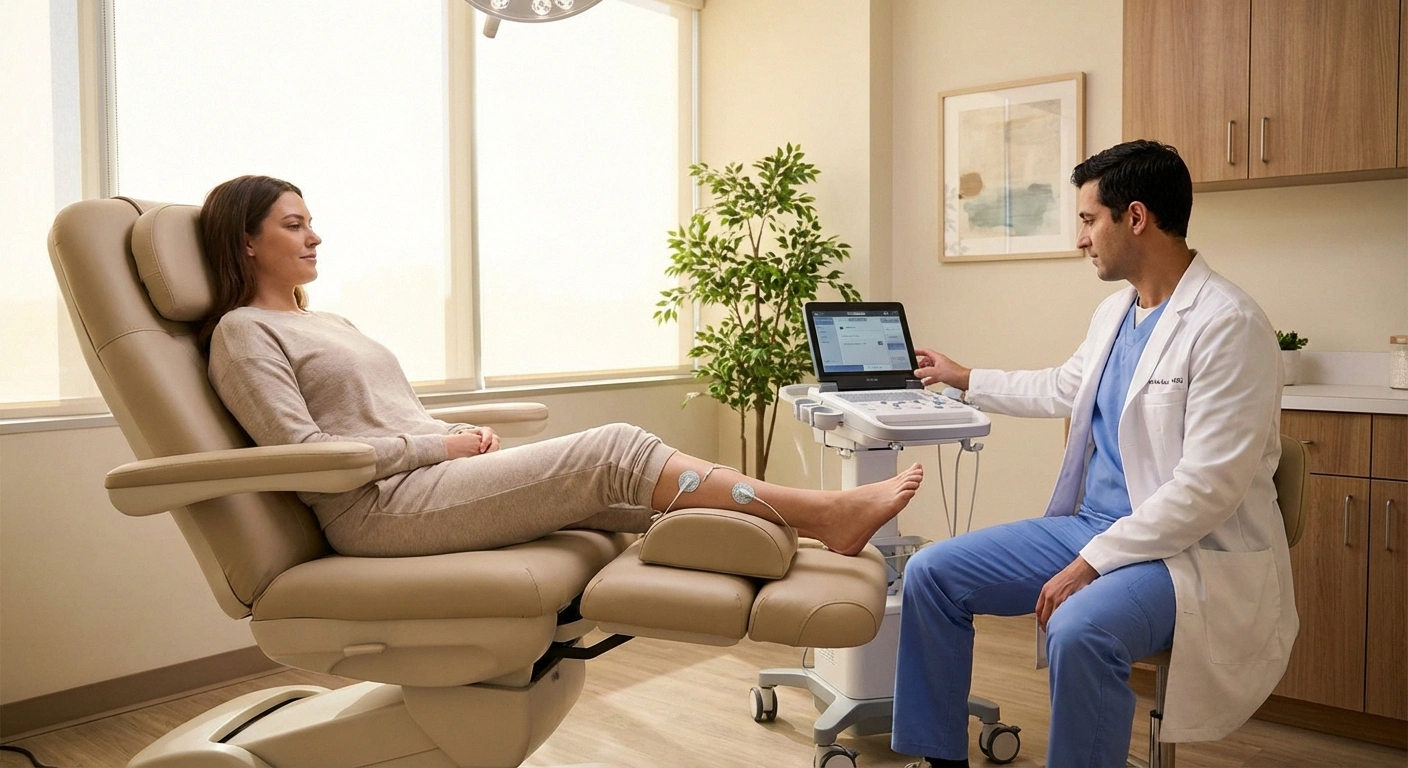
Unlike TENS, which you can use at home, Scrambler Therapy must be administered by a trained clinician. The device requires precise electrode placement and real-time adjustment based on patient feedback. Here's what a typical treatment course looks like:
Course: 10-12 sessions over 2-3 weeks
Sensation: Pleasant buzzing or gentle vibration (not painful)
Recovery: None — resume normal activities immediately
Administered by: Trained clinician (not self-administered like TENS)
Session structure: Each session lasts 30-45 minutes. The clinician places surface electrodes on your skin around (not directly on) the painful area. The device is turned on, and the intensity is gradually increased until you feel a comfortable buzzing or tingling sensation in the area where you normally feel pain.
Treatment course: A standard protocol is 10-12 sessions over 2-3 weeks, typically daily on weekdays. Some patients experience improvement within the first few sessions; for others, it takes the full course.
During treatment: You sit in a chair or recline comfortably. The clinician monitors your response and adjusts electrode placement and intensity as needed. Most patients describe the sensation as a pleasant buzzing or gentle vibration — distinctly different from the sharp tingling of a TENS unit. If you feel any pain during the session, the clinician repositions the electrodes.
After treatment: You can resume normal activities immediately. There's no recovery period, no grogginess, and no restrictions. Some patients notice pain relief that same day; others find it builds gradually over the treatment course.
What the Research Shows
The evidence for Scrambler Therapy is growing but still mixed — which is exactly what honest reporting looks like for an emerging treatment. Here's what the studies actually show:
The Positive Evidence
The overall body of research is encouraging. By 2024, over 90 published studies existed on Scrambler Therapy, with the majority reporting positive outcomes and minimal side effects.
A large trial with 226 patients reported that 80% experienced more than 50% pain reduction. Another study of 201 patients found average pain scores dropped from 7.41 to 1.6 on a 10-point scale — a dramatic reduction. Perhaps most telling: in one trial, 97% of patients said they'd do it again.
A pilot randomized trial published in the Journal of Pain and Symptom Management found that Scrambler Therapy appeared to relieve chronic neuropathic pain better than guideline-based drug management. The study specifically compared it against optimized pharmaceutical treatment — not placebo — and found superior outcomes.
For small fiber neuropathy specifically, a 2024 study in Pain Medicine documented its use with positive results, noting improvements in both pain and numbness/tingling symptoms.
The Cautionary Evidence
The most important study to understand is a 2020 sham-controlled randomized trial testing Scrambler Therapy specifically for chemotherapy-induced peripheral neuropathy (CIPN). This was a rigorous study design — participants didn't know whether they received real or fake treatment.
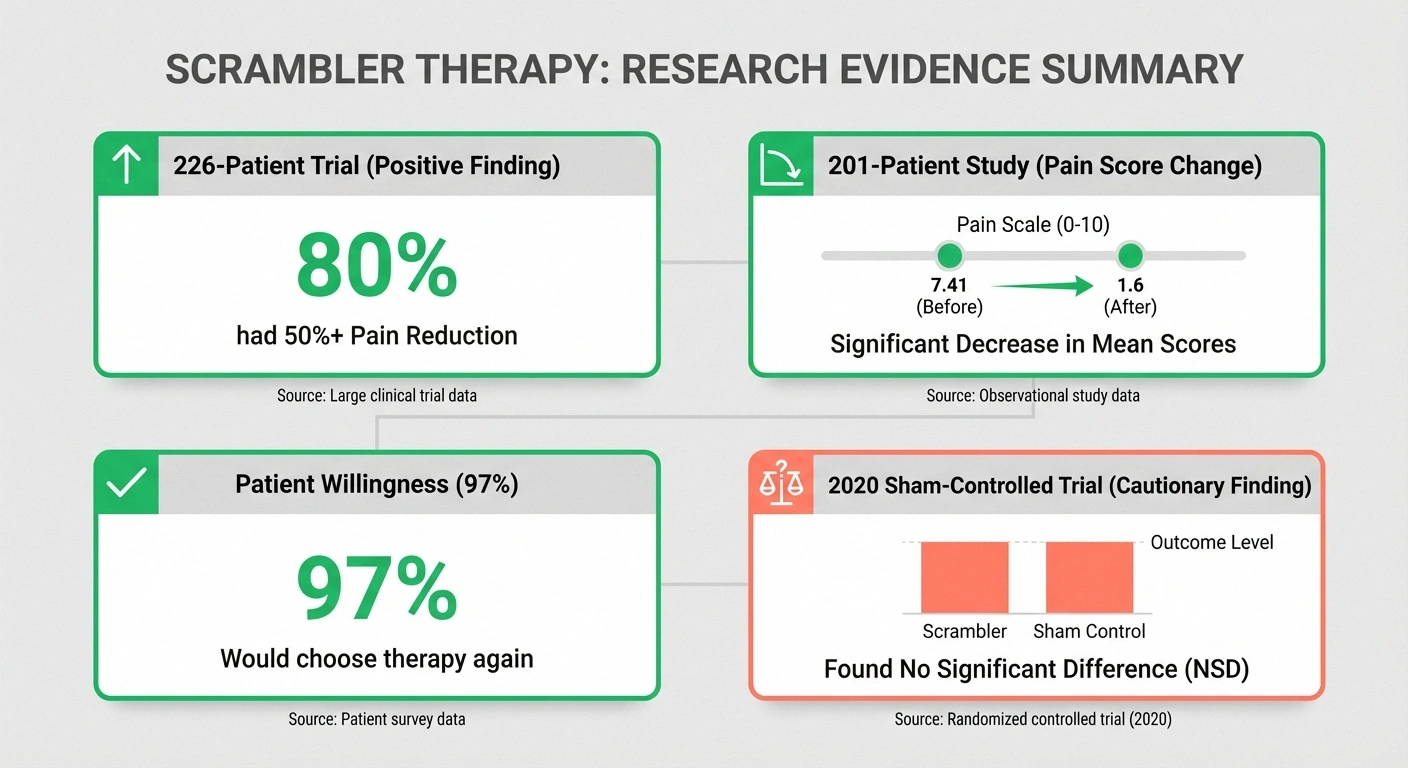
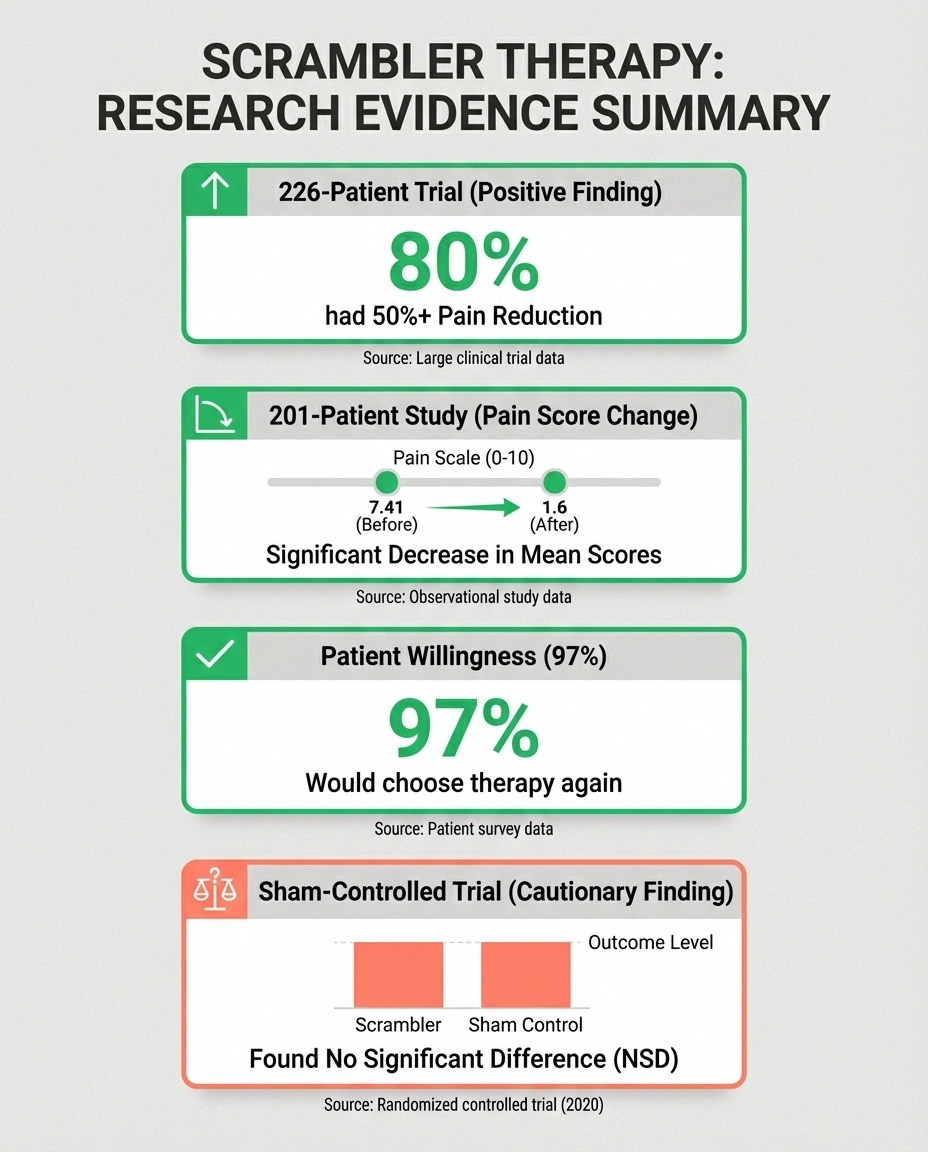
The result: no significant differences between the real Scrambler group and the sham group on pain or neuropathy scales. Both groups improved somewhat, suggesting the improvements in earlier, non-controlled studies may have been partially due to placebo effects, clinician attention, or natural symptom fluctuation.
However — and this matters — the study authors noted several limitations: small sample size, possible suboptimal electrode placement, and the inherent difficulty of creating a convincing sham for an electrical device. A McGill University analysis of the evidence acknowledged these nuances while emphasizing the need for more sham-controlled trials before drawing firm conclusions.
The bottom line: many patients experience real relief, but we can't yet be certain how much of that relief comes from the device's mechanism versus the therapeutic context (regular appointments, hands-on care, hope for improvement).
Scrambler Therapy vs. Other Electrical Treatments
If you're familiar with other electrical nerve stimulation treatments, here's how Scrambler Therapy compares:
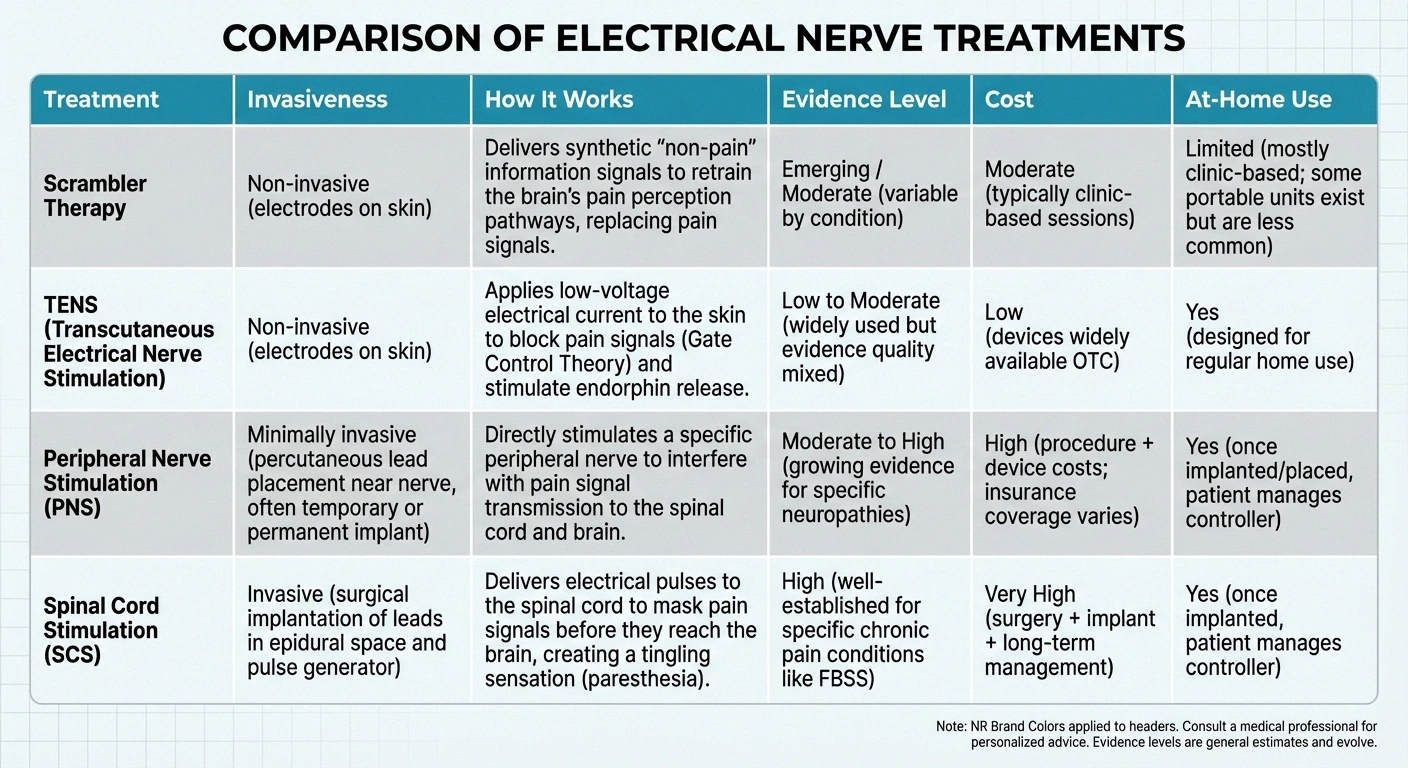
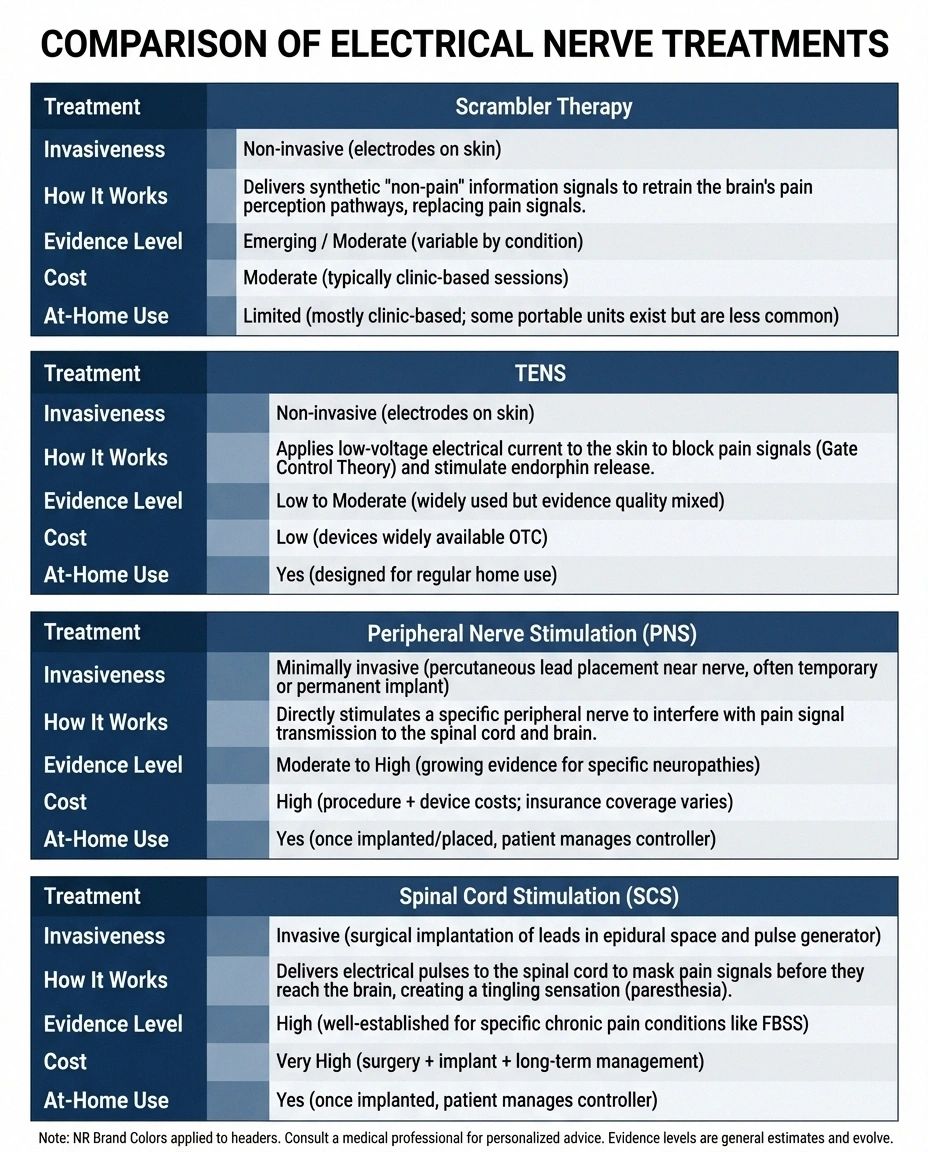
Scrambler Therapy vs. TENS: TENS sends high-intensity, repetitive signals to block pain through sensory competition. It's self-administered, inexpensive, and provides temporary relief during and shortly after use. Scrambler uses low-intensity, randomized signals to retrain pain processing, requires professional administration, and aims for lasting change. TENS is a pain blocker; Scrambler is a pain retrainer.
Scrambler Therapy vs. Peripheral Nerve Stimulation (PNS): PNS involves implanting electrodes near specific nerves — it's invasive, expensive, and typically reserved for severe cases that haven't responded to other treatments. Scrambler is non-invasive and external. PNS has stronger evidence for targeted nerve pain but requires a surgical procedure.
Scrambler Therapy vs. Spinal Cord Stimulation: Spinal cord stimulation involves surgically implanting a device along the spinal cord. It's well-established for severe neuropathic pain but is invasive, expensive, and carries surgical risks. Scrambler offers a non-invasive alternative worth trying before considering implantable devices.
Who Might Benefit from Scrambler Therapy?
Based on the available evidence, Scrambler Therapy appears most promising for:
Per session: $250 – $500
Insurance: Varies widely — some plans cover, many consider experimental
Availability: Limited — mostly pain clinics and academic medical centers
Booster sessions: 2-3 sessions every few months if initial course helps
- People with chronic neuropathic pain who haven't responded adequately to medications
- Patients looking for non-drug options due to medication side effects or interactions
- People with chemotherapy-induced neuropathy (though evidence is mixed for CIPN specifically)
- Patients with diabetic neuropathy who want to complement their medical treatment
- Anyone considering more invasive neuromodulation options — Scrambler is worth trying first
Scrambler Therapy may be less appropriate for people with pacemakers or other implanted electrical devices, pregnant women, or those with epilepsy. These are standard contraindications for electrical stimulation therapies.
Finding a Provider and What to Expect Cost-Wise
One of Scrambler Therapy's biggest limitations is availability. It's not offered everywhere, and finding a trained provider may require some searching.

How to find a provider: The Calmare Technologies website lists certified providers. Pain management clinics and cancer centers at academic medical centers are the most common settings. Some chiropractic offices and integrative medicine practices also offer it, though ensuring the practitioner has formal training on the device is important — research suggests provider experience significantly affects outcomes.
Cost: A full 10-session treatment course typically costs $3,000 to $5,000 out of pocket. Individual sessions run $250-$500. Insurance coverage varies widely — some plans cover it under pain management benefits, while others consider it experimental. The VA has been studying it for veterans with neuropathic pain, which may influence future coverage decisions.
What to ask a potential provider:
- How many Scrambler Therapy patients have you treated?
- What types of neuropathic pain have you treated with it?
- What response rates do you see in your practice?
- Do you offer any kind of trial session before committing to the full course?
- What's your policy if I don't respond to treatment?
For broader guidance on managing treatment costs, see our article on insurance and neuropathy treatment coverage.
What Patients Actually Report
Clinical data tells one story; patient experience tells another. Here's what I hear most often from people who've tried Scrambler Therapy:

The responders — who make up the majority in published studies — describe it as a gradual dimming of their pain. Not an on/off switch, but a slow reduction over the treatment course. Many describe the first few sessions as underwhelming, followed by noticeable improvement around sessions 5-7. The most common report: “The pain isn't gone, but it's turned way down.”
The non-responders describe completing the full course with minimal change. This is frustrating, especially given the cost. One consistent finding: response rates appear to correlate with provider experience. Practitioners who have treated many patients and are skilled at electrode placement tend to report better outcomes than those newer to the technology.
Duration of relief varies significantly. Some patients report months of sustained benefit after a single treatment course. Others find the effects begin fading after 4-6 weeks and return for periodic “booster” sessions — usually 2-3 sessions rather than a full 10-session course.
The Honest Assessment
Here's where I level with you. Scrambler Therapy has three things going for it: it's non-invasive, it has minimal side effects, and many patients report meaningful relief. Those are real advantages, especially in a field where most treatments involve drugs with significant side effect profiles or surgical procedures.

But it also has three limitations you need to consider: the sham-controlled evidence is weak, the cost is substantial, and access is limited. The 2020 sham-controlled CIPN trial — the most rigorous study to date — found no advantage over sham treatment. That doesn't mean Scrambler Therapy doesn't work, but it means we can't yet prove it works beyond placebo for that specific condition.
My view: Scrambler Therapy is worth considering if you've tried first-line treatments without adequate relief and you're not ready for invasive options. It's in the category of “promising but not proven” — which puts it in the same company as several treatments that eventually demonstrated clear efficacy once better trials were conducted. Go in with realistic expectations, find an experienced provider, and don't remortgage your house to pay for it. Browse all our treatment guides for a complete picture of your options.
Frequently Asked Questions
Does Scrambler Therapy hurt?
No. Most patients describe the sensation as a pleasant buzzing or gentle vibration. The intensity is gradually increased to a comfortable level and adjusted throughout the session. If you feel any pain during treatment, the clinician immediately repositions the electrodes. The treatment should never be painful.
How many sessions do you need?
The standard protocol is 10-12 sessions over 2-3 weeks. Some patients respond after fewer sessions, but researchers recommend completing the full course before evaluating effectiveness. If you see no improvement after 10 sessions, additional sessions are unlikely to help. Some patients who respond well return for periodic 2-3 session boosters every few months.
Is Scrambler Therapy FDA approved?
The MC-5A Calmare device is FDA-cleared for the treatment of chronic neuropathic and cancer pain. FDA clearance means the device has met safety standards and demonstrated reasonable effectiveness for its intended use. This is different from full FDA approval, which requires more extensive clinical evidence.
Can I use a TENS unit at home instead of Scrambler Therapy?
TENS and Scrambler Therapy work through entirely different mechanisms, so one is not a substitute for the other. TENS temporarily blocks pain signals and can be used at home for symptom management. Scrambler Therapy aims to retrain how the brain processes pain, which requires professional administration and specialized equipment. Many people use both — Scrambler for retraining, TENS for daily management.
Does insurance cover Scrambler Therapy?
Coverage varies significantly by insurer and plan. Some insurance companies cover it under pain management benefits, while others classify it as experimental or investigational. Check with your insurance provider before starting treatment. Some clinics offer payment plans, and if your provider submits it with appropriate diagnostic and procedure codes, you may have better luck with reimbursement.
Can Scrambler Therapy make neuropathy worse?
Serious adverse effects are extremely rare in published research. A small number of patients report temporary symptom aggravation during the treatment course, which typically resolves. If your pain increases during treatment, communicate this to your provider so they can adjust the electrode placement and intensity.
About the Author