The statistic stopped me cold when I first read it: the bathroom is where more falls happen than any other room in the home. For people living with peripheral neuropathy, that number isn’t abstract — it’s personal. When you can’t reliably feel your feet beneath you, when your balance is already compromised, when a wet floor or a dark middle-of-the-night trip to the toilet is just part of daily life, the bathroom becomes genuinely dangerous territory.
This isn’t about being fearful. It’s about being smart. The good news is that most bathroom falls are preventable, and the modifications that make the biggest difference aren’t expensive or complicated. Many of them you can do yourself in an afternoon. A few cost less than a single doctor’s co-pay.
This guide is specifically written for people with neuropathy — not just the general “aging in place” advice you’ll find everywhere else. Neuropathy creates specific, unique risks in the bathroom that standard fall prevention resources often miss. We’re going to cover all of them.
Why the Bathroom Is Extra Dangerous with Neuropathy
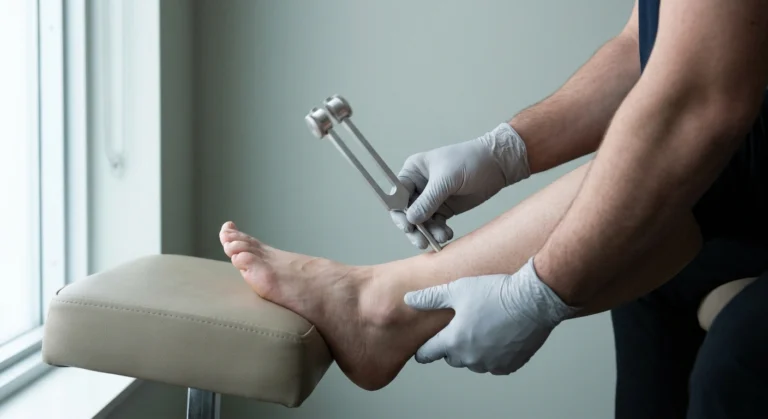
To understand why the bathroom is so risky, it helps to think about what neuropathy actually takes away from you. Peripheral neuropathy damages the nerves that carry information between your extremities and your brain. In the feet and legs, that means you may have reduced or absent sensation — you don’t feel the floor the way you used to. You may have impaired proprioception, meaning your brain gets incomplete information about where your body is positioned in space. And you may have muscle weakness that affects how reliably you can catch yourself if you start to tip.
Now put that person in a bathroom. The floor is often hard tile — unforgiving if you fall. Surfaces get wet. The toilet requires lowering and raising your body weight, which demands core and leg strength plus balance. The shower or tub involves stepping over a barrier onto a potentially slippery surface. Nighttime bathroom trips happen in low light, when you’re disoriented from sleep and your already-compromised balance system is at its worst.
The neuropathy-specific risks that standard fall prevention guides often skip:
- Reduced temperature sensation: You may not feel that shower water is scalding. Burns are a serious risk for anyone with neuropathy whose hot/cold sensation is impaired.
- You can’t rely on feedback from your feet: A non-slip mat that feels secure to someone with normal sensation may still be a hazard for you if you can’t feel the subtle warning signals that your footing is shifting.
- Towel rails and sink edges are NOT grab bars: People instinctively reach for the nearest thing when they lose balance. Towel bars are not designed to hold body weight and have been directly responsible for falls when they give way.
- Swollen feet and reduced sensation change shoe fit: Footwear that felt fine when you sat down may have shifted by the time you stand, creating an unseen tripping hazard.
Non-Slip Solutions That Actually Work
Let’s start with the floor, because that’s where falls end up. The goal is to eliminate every slippery surface in the bathroom, not just the obvious ones.
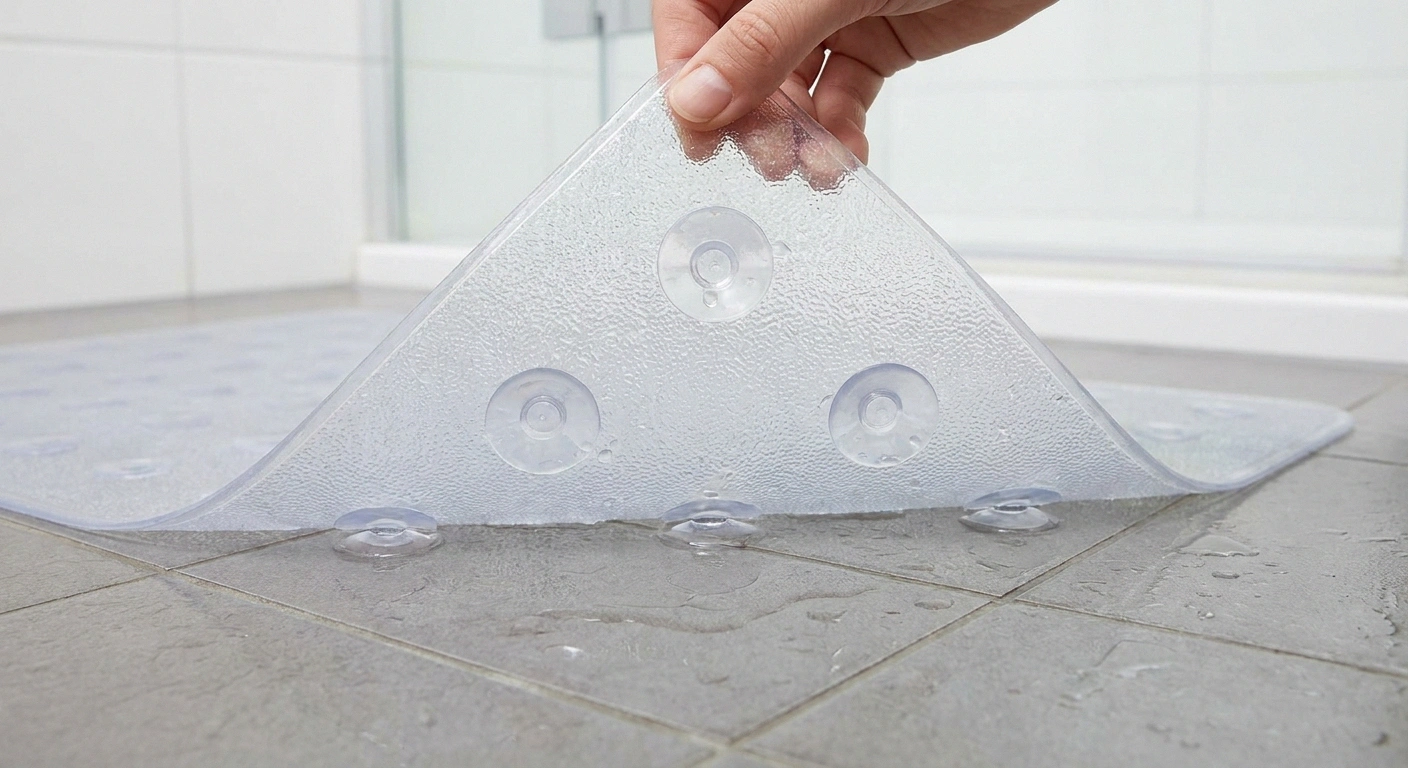
Inside the tub or shower: Non-slip adhesive strips are the minimum. Get the kind that cover substantial surface area — individual flower-shaped decals aren’t enough. A full non-slip mat that suctions to the tub floor is better. Replace it at the first sign of reduced suction. A mat that’s peeling at the edges is a trip hazard, not a safety feature.
On the bathroom floor: Place a non-slip bath mat right outside the tub or shower exit — exactly where you’ll be stepping out wet. This mat must have strong suction cups on the bottom and should be wide enough to step on without looking. No rugs with curling edges. No decorative bath runners. The rule is simple: if a mat isn’t specifically designed as a non-slip bath mat with suction backing, it doesn’t belong on your bathroom floor.
Research suggests that non-slip bath mats prevent approximately 38% of bathroom falls — a substantial reduction from one simple change. For context, that makes it one of the highest-impact, lowest-cost interventions available.
Texture your tile if you’re renovating: If you’re doing a bathroom remodel, choose textured tile rather than polished for the floor. Polished tile becomes a skating rink when wet. Once that choice is made, it’s made — but if the opportunity arises, it’s worth it.
Grab Bars: Your Most Important Safety Investment
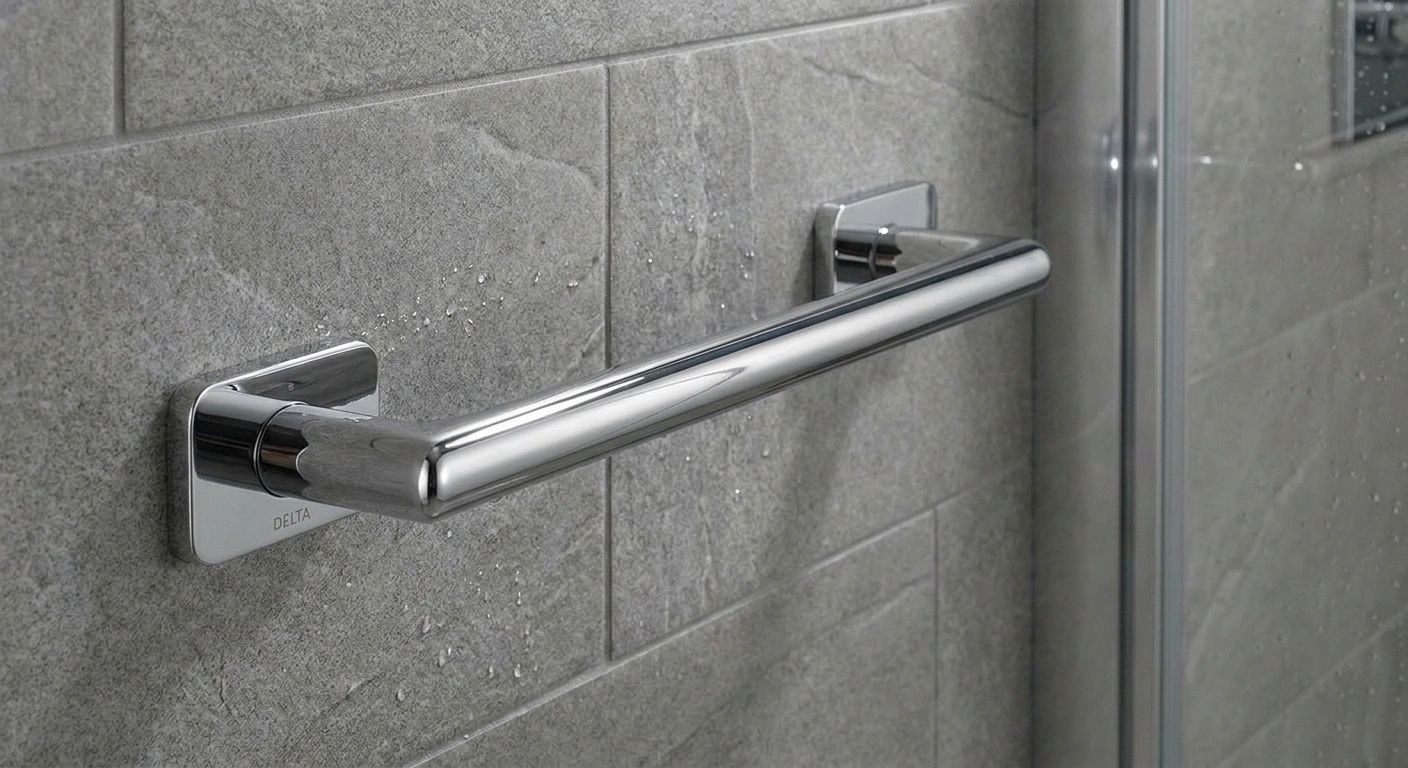
Properly installed grab bars are the single most impactful modification for bathroom fall prevention. The research is clear on this. But they only work if they’re installed correctly — in the right locations, into wall studs or with appropriate anchors, rated for the weight load they’ll experience.
Critical Distinction
Towel bars are NOT grab bars. Towel bars are not rated to hold body weight and have been directly responsible for serious falls when they give way. Never rely on a towel rail for support. Replace them with rated combination towel/grab bar products, or install dedicated grab bars away from towel rails.
The critical distinction: a grab bar is not a towel bar. Grab bars are rated for a minimum of 250 lbs of force and are installed into structural support. Towel bars are not. If someone with neuropathy or balance issues reaches for a towel bar in a moment of instability, the likely result is the bar pulling out of the wall, taking them with it. This has caused serious injuries. Remove decorative towel rails from positions where someone might grab them for support and replace them with combination towel/grab bar products that are properly rated.
Where to install grab bars for neuropathy:
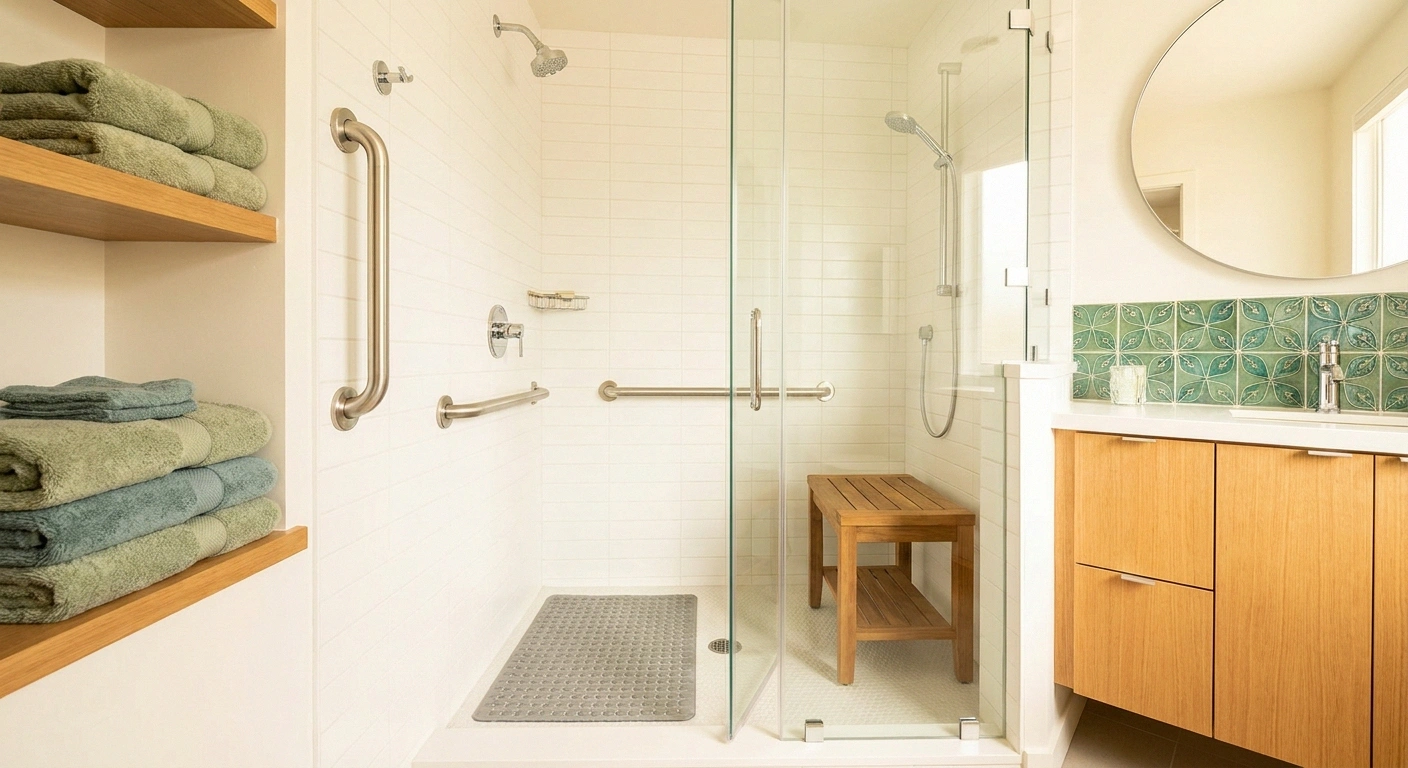
- Shower entry/exit: A vertical bar on the wall next to where you step in and out gives you something to grip while navigating the step-over. Vertical bars provide support for lowering and raising the body. Horizontal bars provide lateral stability. A combination of both is ideal.
- Inside the shower: A bar at hip or waist height on the shower wall nearest to your body position. You should be able to reach it from where you typically stand or sit while showering.
- Beside the toilet: Either a wall-mounted grab bar on the side wall (at the right height for your specific body — typically around the level of the toilet seat when you’re standing), or a toilet safety frame that attaches directly to the toilet. The toilet safety frame is a good option if you’re renting or don’t want to do wall installation.
If you own your home, professional installation is worth the cost for peace of mind about load ratings. A hardware store contractor or occupational therapist who does home safety assessments can advise on exact placement for your specific bathroom layout and your specific balance profile. The balance issues neuropathy creates may mean your optimal grab bar placement is different from the generic recommendation.
Shower and Bathing Safety: The Details That Matter
The decision about whether to use a tub or a shower, and how you use it, deserves real thought if you have neuropathy.
Temperature Safety for Neuropathy
If your hot/cold sensation is impaired, you can scald yourself without feeling it. Set your water heater to 120°F (49°C) maximum. Use a bath thermometer to check temperature before entering. Anti-scald faucet devices are a worthwhile addition for anyone with significant heat sensation loss.
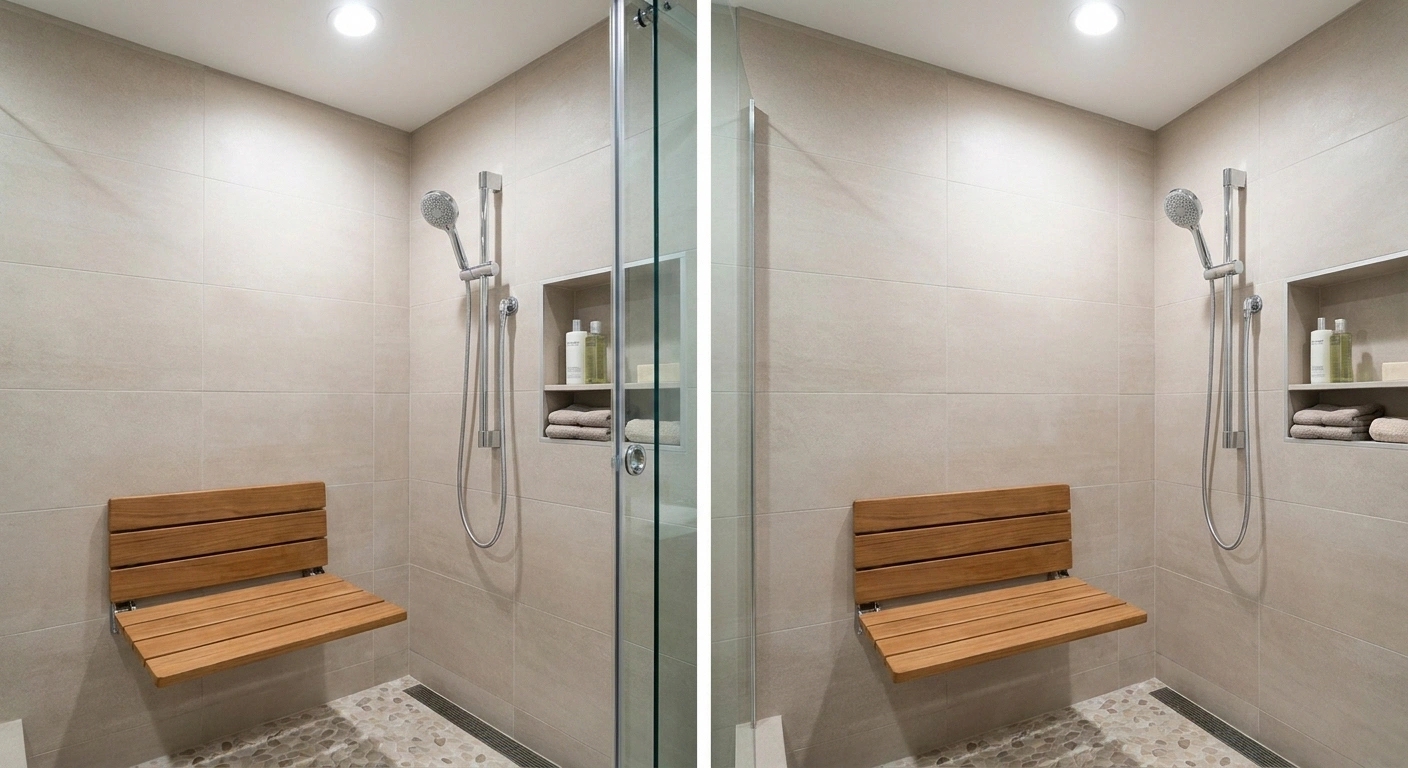
Walk-in showers vs. tub/shower combos: For anyone with significant lower extremity neuropathy, eliminating the step-over is a major safety upgrade. Walk-in showers with a low or zero threshold eliminate the most common point of bathroom entry falls. If a bathroom renovation is in your future, consider this a priority item — not a luxury upgrade.
Shower chairs and benches: These are game-changers for people with neuropathy, and the stigma around them is completely unwarranted. Standing in a shower for 10 minutes on feet that can’t feel the floor, on a wet surface, while your arms are occupied with washing — that’s a lot of risk stacked together. A shower chair or fold-down bench means you can bathe safely without the balancing act. Your feet are still touching a secure surface, your hands are free to grab supports if needed, and fatigue doesn’t become a fall risk.
Handheld showerhead: This should be considered non-optional if you’re using a shower chair. A fixed overhead showerhead doesn’t work well when you’re seated. A handheld showerhead on an adjustable slide bar means you control where the water goes — and it makes rinsing feet (which you should be doing with neuropathy, to check for injuries you might not feel) much easier.
Hot water temperature — this is critical for neuropathy: If your hot/cold sensation is impaired, you can scald yourself with water temperature that would stop a person with normal sensation immediately. Set your water heater to no higher than 120°F (49°C). Use a bath thermometer to check water temperature before getting in. This might feel overly cautious — but burns on feet that can’t feel pain are a genuine and underreported problem in neuropathy patients.
Toilet Safety: Often Overlooked, Critically Important
The toilet presents two specific physical challenges: lowering yourself down and pushing yourself back up. Both require core strength, leg strength, and balance. Neuropathy-related leg weakness makes both harder, and if your feet can’t feel the floor during the transition, the risk of tipping increases substantially.
Raised toilet seats: If getting down to and back up from a standard toilet height is difficult, a raised toilet seat attachment adds 2–4 inches of height, significantly reducing the range of motion required. Some models include armrests for pushing up from. These are inexpensive, don’t require installation, and can be removed when other household members use the bathroom.
Comfort height toilets: If you’re replacing a toilet, comfort height (also called ADA height) toilets sit 17–19 inches from the floor versus the standard 15 inches. That additional few inches makes a meaningful difference in ease of use for people with any lower body weakness or balance issue. Most plumbers consider this a standard upgrade request.
Toilet safety frames: These freestanding frames bracket the toilet and provide armrests for support. They work on any toilet without requiring wall installation. For someone in a rental or who doesn’t want permanent modifications, these are an excellent middle-ground solution.
Night-time trips: Many neuropathy patients experience worse symptoms at night, which means the nighttime bathroom trip is often the highest-risk moment. Consider a bedside commode or urinal if nighttime transfers are genuinely dangerous. This isn’t defeat — it’s pragmatic safety when the alternative is a fall on hard tile at 3 AM.
Lighting: The Underappreciated Safety Factor
Poor lighting contributes to an estimated 11% of bathroom falls. For someone with neuropathy who is already receiving reduced sensory feedback from their feet, inadequate visual input is particularly dangerous — you’re relying more on what you can see precisely because you can feel less.
Lighting Tip for Neuropathy
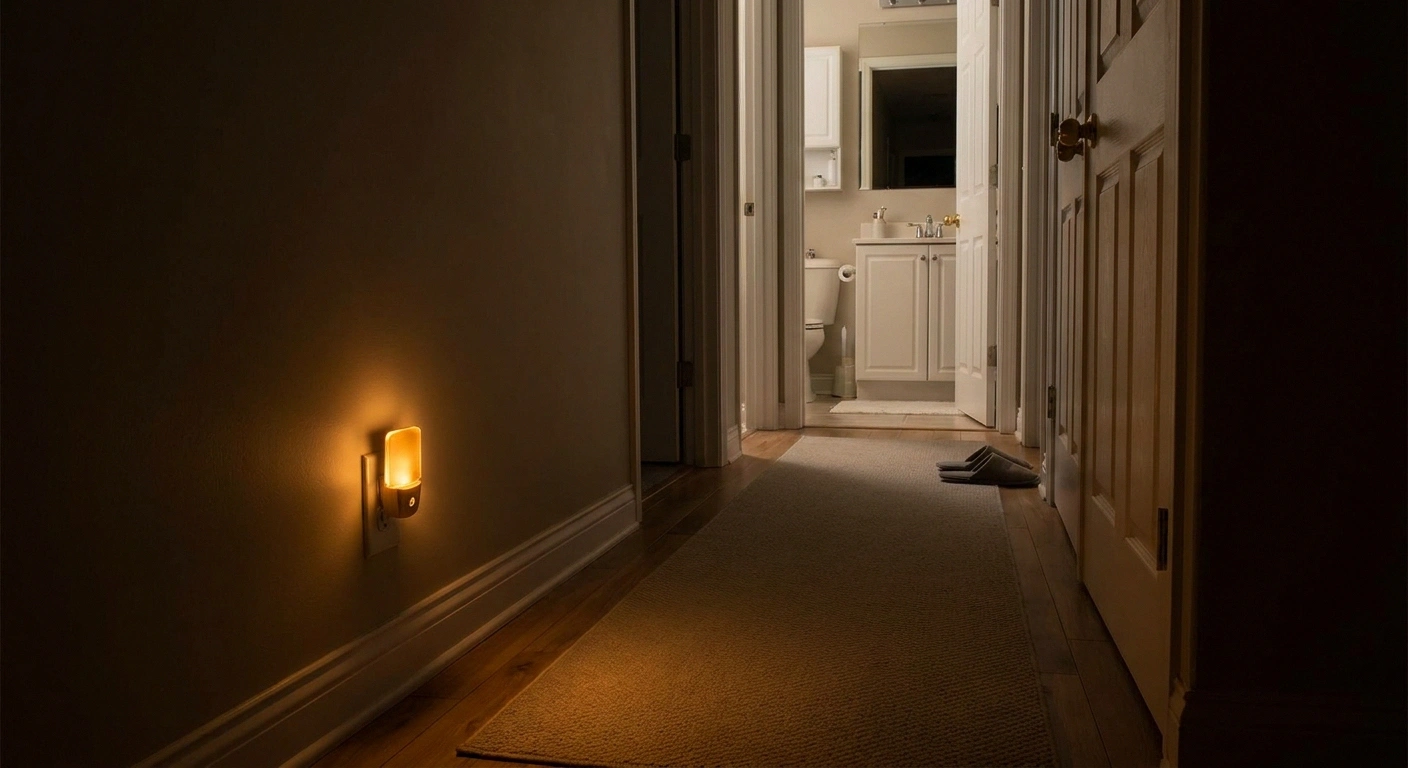
With reduced foot sensation, you rely more on visual input to judge your footing. A motion-sensor night light that activates automatically eliminates the dangerous moment of navigating in complete darkness. Place one in the bathroom AND one in the hallway between your bedroom and bathroom. Cost: under $15 each.
Upgrade your bathroom bulbs: Replace dim overhead fixtures with bright LED bulbs rated at 100-watt equivalent or higher. Bathroom lighting recommendations from decades ago were written for people with good vision and full sensation in their feet — what worked then is insufficient now.
Motion-sensor night lights: These are essential for nighttime bathroom trips. A plug-in night light that activates automatically when it detects movement eliminates the dangerous moment of navigating to the light switch in the dark. Place one in the bathroom and one in the hallway between your bedroom and the bathroom. Modern LED motion-sensor night lights cost under $15 and last for years.
Consider a lighted switch plate: These illuminate the switch location in the dark so you can find it immediately. Minor addition, disproportionate benefit for nighttime navigation.
Footwear in the Bathroom: A Surprisingly High-Stakes Decision
What you’re wearing on your feet in the bathroom matters more than most people realize — and neuropathy adds complexity to what would otherwise be a simple question.
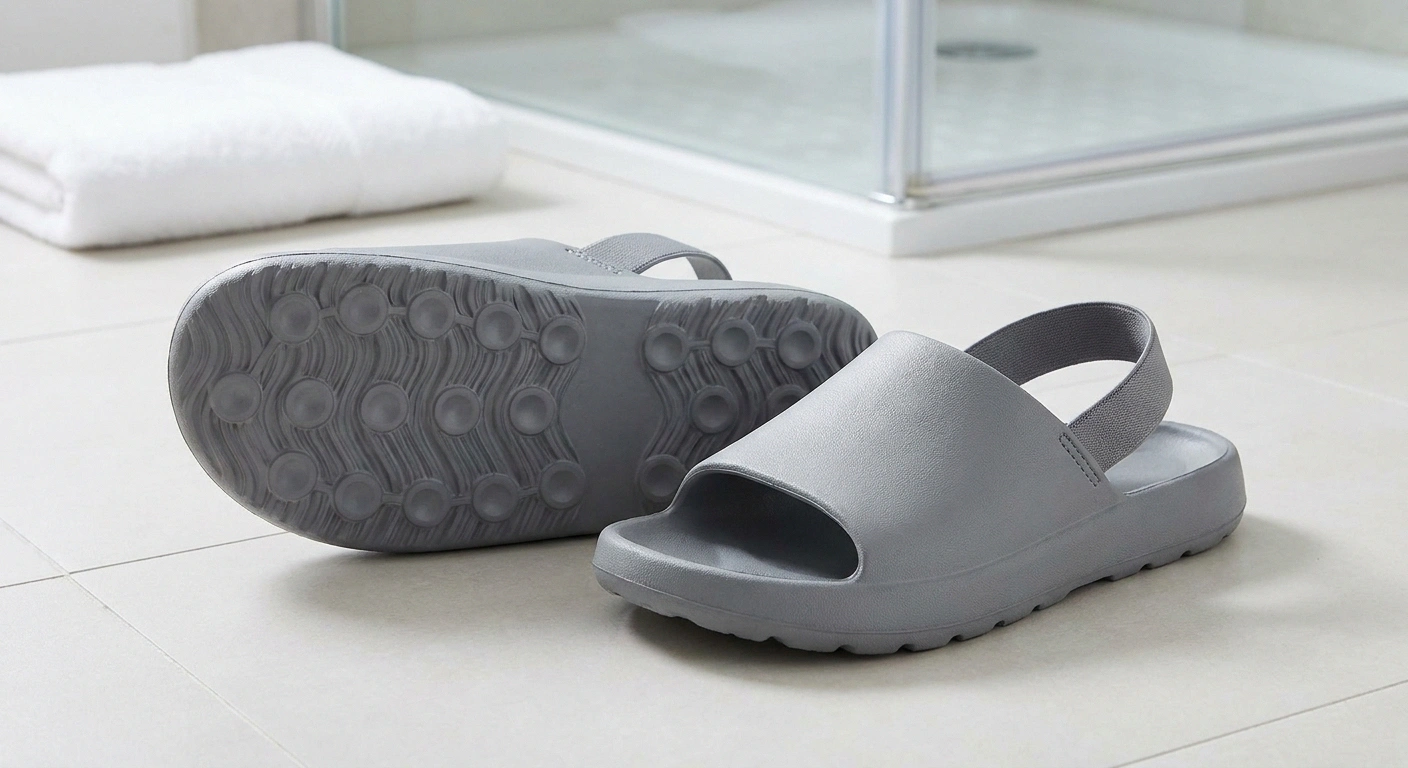
Bare feet on wet tile is a risk, but so is footwear you can’t feel: Many people with neuropathy have reduced sensation in their feet that means they can’t feel whether their footwear is sitting correctly or has shifted. Shoes that feel secure when seated can slip partly off when you stand, creating a trip hazard you won’t detect until you’re already falling.
Best bathroom footwear for neuropathy: Look for non-slip shower shoes or rubber-soled slippers that have a back strap or heel wrap — not backless slides that can fall off. The sole should have a pattern that grips wet tile, not a smooth flat bottom. Check every time you put them on that they’re seated correctly on your foot, since you may not feel if something is off.
Never go barefoot on cold tile: For people with autonomic neuropathy, cold extremities are common. Cold feet on cold tile reduces circulation further and increases numbness. Wear appropriate footwear whenever you’re in the bathroom.
This connects to a broader point about neuropathy foot care: reduced sensation means foot injuries go undetected. The bathroom is where people are most likely to bump a toe on the tub edge, step on something dropped, or sustain a burn from water temperature. These injuries require daily foot inspection because neuropathy removes the pain alarm that would otherwise alert you.
Full Bathroom Safety Checklist for Neuropathy
Use this checklist to assess your bathroom. Items checked “No” are your priorities.
Priority Order: Tackle These First
- Non-slip mat with suction backing inside tub/shower
- Non-slip mat outside tub/shower at exit point
- All loose rugs removed
- Grab bar properly installed at shower/tub entry
- Grab bar inside shower at body level
- Grab bar or safety frame beside toilet
- Towel bars removed or replaced with rated grab/towel combos
- Shower chair or bench available if needed
- Handheld showerhead installed
- Water heater set to 120°F or below
- Bright LED bulbs in bathroom fixture
- Motion-sensor night light in bathroom
- Motion-sensor night light in hallway to bathroom
- Raised toilet seat or comfort height toilet
- Non-slip bathroom footwear available
- Clear, unobstructed path from door to toilet and shower
- Daily foot inspection habit established
If you’re working through this list and finding multiple “No” answers, don’t feel overwhelmed. Prioritize in this order: grab bars first (highest fall-prevention impact), non-slip surfaces second, lighting third, then everything else. Each completed item meaningfully reduces your risk.
For a broader look at home safety beyond the bathroom, the principles here extend throughout the house — see the full guide to home safety modifications for neuropathy for room-by-room guidance.
When to Consult a Professional for Your Bathroom Assessment
For people with moderate to severe neuropathy, or anyone who has already had a near-fall or fall in the bathroom, a professional home safety assessment is worth considering. Occupational therapists who specialize in home modification can evaluate your specific bathroom, your specific functional limitations, and make tailored recommendations — including things that aren’t on any generic checklist.
Medicare will cover occupational therapy services when ordered by a physician, and some states have programs that subsidize home modification costs for older adults and people with disabilities. Your neurologist or primary care doctor can often point you toward local resources.
The bottom line: you don’t have to live with bathroom anxiety. The modifications in this guide are real, practical, and have been shown to reduce falls. Implementing even a few of them — especially the grab bars and non-slip surfaces — can make a meaningful difference in how safely you move through the most dangerous room in your home.
Frequently Asked Questions
What is the most important bathroom modification for someone with neuropathy?
Properly installed grab bars are the single most impactful bathroom safety modification. They need to be installed into wall studs or with appropriate anchors, rated for body weight, and placed in the right locations — at the shower entry and exit, inside the shower at body level, and beside the toilet. Grab bars provide a reliable grip point when balance fails, which is the critical moment in most falls. Non-slip mats are the second most important change and can be done immediately without any installation.
Are bathroom grab bars difficult to install?
Basic grab bar installation is a manageable DIY project for someone handy with basic tools who can locate wall studs. The key is securing into studs or using toggle anchors rated for the load. For anyone who is not confident about doing this correctly, hiring a handyman or contractor is worth the cost — an improperly installed grab bar that pulls out during use is more dangerous than no bar at all. Many home improvement stores offer installation services, and occupational therapists can provide installation guidance or referrals.
Should I use a shower chair even if I can still stand?
Yes, if your balance or foot sensation is significantly impaired, a shower chair is worth using even when you can technically stand. The risk is not whether you can stand on a good day — it is whether you can maintain your footing when wet, tired, first thing in the morning, or when reaching for something. A shower chair eliminates most of those variables. Using one when you don’t strictly need it costs you nothing. Falling when you thought you didn’t need it costs a great deal more.
How do I prevent scalding burns in the shower with neuropathy?
Set your water heater thermostat to no higher than 120 degrees Fahrenheit. Use a bath or shower thermometer to check water temperature before stepping in or placing neuropathic limbs under the flow. Ask a family member or caregiver to test water temperature by feel if you have significant heat sensation loss in your hands as well as your feet. Anti-scald devices can also be installed on faucets to automatically prevent water from exceeding a set temperature — these are available at most hardware stores.
What type of mat is best for neuropathy bathroom safety?
Look for bath mats specifically designed with multiple suction cups on the bottom that firmly grip a wet tub or shower floor. The top surface should have a texture pattern rather than being smooth. Replace mats when suction starts to fail or edges begin to curl. For the floor outside the tub, a mat with a rubber backing that prevents it from sliding is essential. Avoid decorative rugs without non-slip backing entirely. Test any mat by pressing it firmly onto the wet surface and attempting to shift it before relying on it for support.
Is there financial help available for bathroom safety modifications?
Several funding sources may be available depending on your situation. Medicare Part B may cover a home health assessment and some durable medical equipment when ordered by a physician. Many states have Medicaid waiver programs or Area Agency on Aging programs that fund home modifications for eligible individuals. Veterans with service-connected disabilities may qualify for home modification grants through the VA. The USDA Rural Development program offers home repair grants for eligible low-income homeowners. Calling your local Area Agency on Aging is often the most direct way to find out what programs exist in your area.
What footwear should I wear in the bathroom?
Choose non-slip shower shoes or slippers with a back strap so they stay securely on your foot. The sole should have a gripping tread pattern, not a smooth flat bottom. Backless slides and flip-flops are not appropriate for someone with neuropathy because they can slide partially off without you feeling it, creating a trip hazard. Always verify your footwear is seated correctly on your foot before standing, since reduced sensation may prevent you from feeling a misaligned shoe. Never go barefoot on wet tile.
About the Author