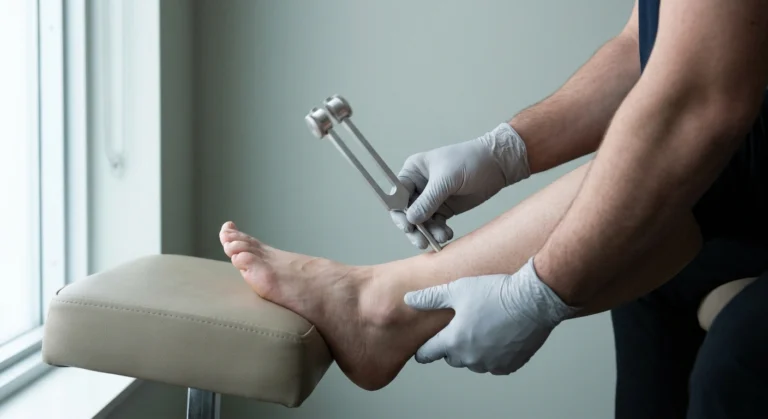
I started keeping a symptom diary about two years into my neuropathy journey, mostly out of desperation. My pain was all over the place — good days and terrible days that seemed to follow no pattern at all. I couldn’t figure out what I was doing differently on the bad days, and my neurologist kept asking questions I couldn’t answer. “Has anything changed?” “Are you more active?” “What did you eat?”
I didn’t know. I was just living through it, not tracking it.
The symptom diary changed that. Within about six weeks of consistent tracking, patterns started emerging that I genuinely hadn’t noticed — patterns that changed how I managed my days, what I brought to my doctor appointments, and honestly, how much control I felt over something that had felt completely random.
If you haven’t tried keeping a neuropathy symptom diary, I want to make the case for it — and give you a simple, practical template to get started without it feeling like homework.
Why a Symptom Diary Makes a Real Difference
Let me be direct: keeping a diary isn’t going to treat your neuropathy. But it will do several things that meaningfully improve how you manage it.
Within 4-6 weeks of consistent daily tracking, most people discover patterns they never noticed — patterns that change how they manage their symptoms and how productively they use their doctor appointments.
It helps you spot triggers you’d never notice otherwise. When you’re in pain, you’re living moment to moment. You’re not cross-referencing today’s flare with what you ate yesterday, how much you walked three days ago, or the weather shift that happened this morning. A written record does that cross-referencing for you, over time. Patterns that are invisible in the moment become obvious on paper over six weeks.
It makes your doctor appointments dramatically more productive. “How have you been feeling?” is a nearly impossible question to answer accurately based on memory alone. We tend to remember the most recent days and the very worst days. A symptom diary gives you and your doctor actual data — trend lines, patterns, medication timing correlations — rather than impressions. That changes the quality of the conversation.
It helps you evaluate whether treatments are working. If you start a new medication, can you actually tell if it’s helping? Pain perception is subjective and memory is unreliable. A diary with daily pain ratings gives you a real before-and-after picture that isn’t filtered through hope or recency bias.
It helps you identify what you can control. Some neuropathy triggers are fixed — the underlying nerve damage, the disease causing it. But many aggravating factors — sleep quality, stress, activity level, certain foods or alcohol — are things you can adjust. A diary helps you find your personal levers.
It gives you a sense of agency. This one is harder to quantify but it’s real. When you’re actively tracking something, you feel less passive. You’re doing something about your situation, gathering information, taking a scientist’s stance toward your own experience. Many people find this genuinely reduces the helplessness that comes with chronic illness.
What to Track: A Simple Daily Template
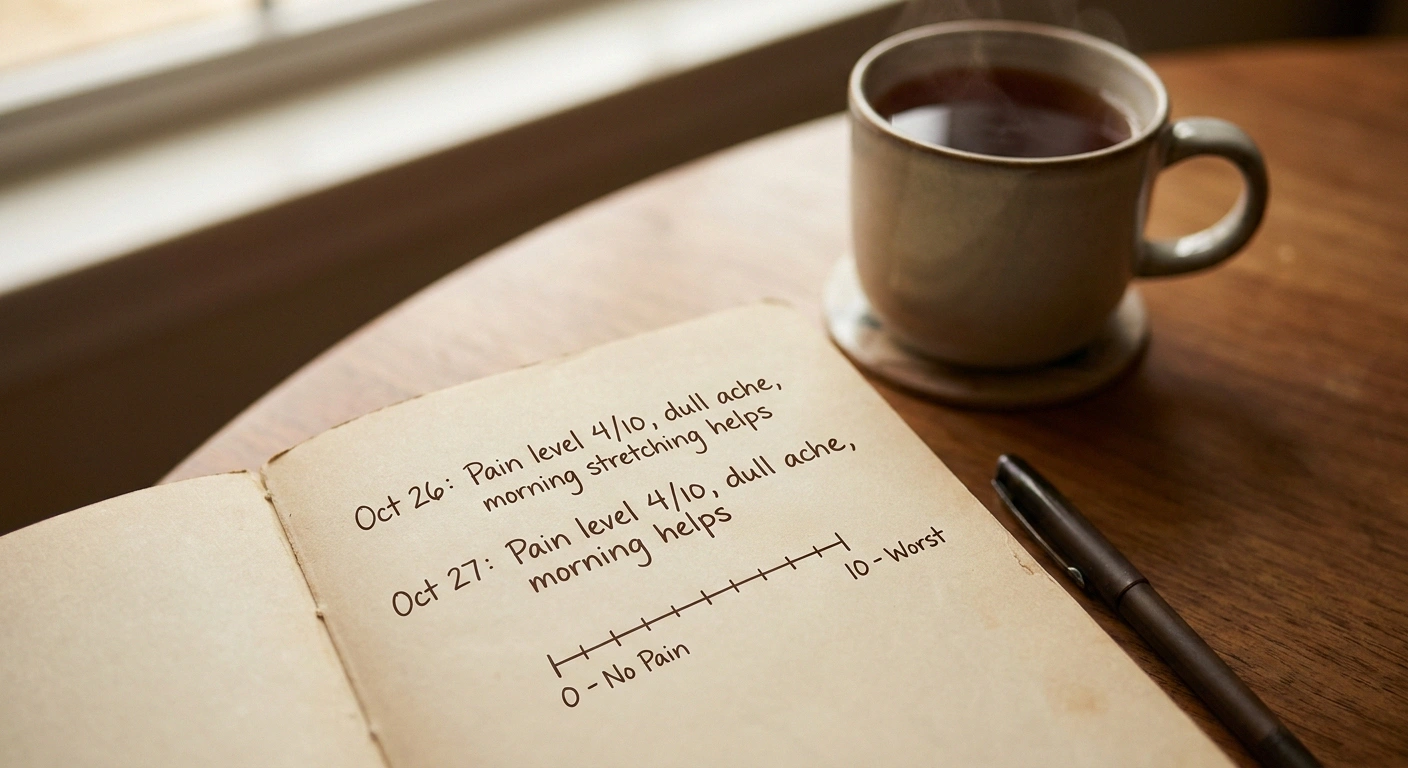
The goal is to capture enough information to spot patterns without making the diary a burden. I’ve found that 5-7 minutes per day is realistic and sustainable. Here’s what I’d recommend tracking:
- Pain intensity (0–10)
- Location & type
- Timing patterns
- Worst moment of day
- Mobility & balance
- Hand function
- Sleep quality (1–5)
- Activity level
- Stress level (1–5)
- Diet / alcohol
- Weather
- Unusual activities
- Mood (1–5)
- Medications taken
- Missed doses
- Any side effects
Pain and Sensory Symptoms
- Pain intensity: Rate your overall pain 0-10 at the same time each day (morning is helpful, as it gives you a consistent baseline)
- Pain location: Where is it today? Feet? Hands? Has it spread anywhere unusual?
- Pain character: Burning? Stabbing? Numbness? Tingling? Electric shock? Note which type dominates today — these can shift and matter for medication discussions
- Pain timing: Worse in the morning? Evening? After activity? At night trying to sleep?
- Worst moment: What was the peak today and what were you doing?
Function and Daily Life
- Mobility: How far did you walk? Did balance feel off today?
- Hand function: Any problems with grip, buttons, or fine motor tasks?
- Sleep: Rate last night’s sleep 1-5 and note if neuropathy disturbed it (the connection between neuropathy and sleep is bidirectional — poor sleep worsens pain, pain disrupts sleep)
- Activity level: General level of activity today — low, moderate, high
Potential Triggers and Context
- Stress level: Rate 1-5. Stress is one of the most consistent neuropathy flare triggers and one of the most commonly overlooked
- Significant foods or drinks: Notably high sugar, alcohol, or anything unusual
- Weather: Cold? Damp? Many neuropathy patients notice cold weather sensitivity — a diary will confirm whether this applies to you
- Medications taken: Note timing and any missed doses
- Anything unusual: A longer walk than normal, emotional upset, a new activity, a social event
Mood (Don’t Skip This)
Rate your mood 1-5 and note if it feels connected to your pain or separate from it. The relationship between neuropathy and mental health is well-established — low mood and anxiety can intensify pain, and high pain can tank mood. Tracking both helps you understand your personal pattern and gives your doctor important context.
A Week’s Worth of Sample Entries
Here’s what a realistic (not overly detailed, not too sparse) week of diary entries might look like:
Monday: Pain 6/10, mostly burning in both feet, worse by evening. Walked to the mailbox and back. Sleep last night: 3/5, woke twice. Stress 4/5 — difficult day. Mood 2/5. Rainy and cold.
Tuesday: Pain 4/10, tingling more than burning today. Slept better last night (5/5). Stress 2/5. Mood 3/5. Warmer today. Had a glass of wine with dinner.
Wednesday: Pain 7/10. Burning, also shooting pain in right foot. Walk felt harder — some balance wobble. Sleep 2/5. Stress 3/5. Mood 2/5. Note: two glasses of wine last night — wonder if there’s a connection?
Thursday: Pain 5/10. Feeling a bit better this afternoon. Stress 2/5. Sleep 4/5. No alcohol. Weather warmer. Mood 3/5.
After a few weeks of entries like these, you’ll start seeing things. In this example, you’d quickly notice that Tuesday’s wine correlated with Wednesday’s pain spike, and that cold weather and poor sleep tend to appear together with high pain ratings. That’s actionable information.
Tools: Paper vs. App vs. Template

There’s no single right tool — use whatever you’ll actually stick with.
Research on chronic pain management consistently shows that symptom tracking helps patients identify triggers, communicate more effectively with providers, and feel a greater sense of agency over their condition.
Pain perception is highly influenced by memory and recency bias. A written record gives you and your doctor an objective baseline — something to measure changes against that isn’t filtered by how you’re feeling the day of your appointment.
Paper journal: Simple, no battery required, easy to bring to appointments. A plain notebook with your own template, filled out at the same time each day, works perfectly. Keep it by your bed or on the kitchen table where you won’t forget it.
Smartphone apps: Several apps are designed specifically for chronic pain and symptom tracking. “Manage My Pain” and “CatchMyPain” are well-reviewed options with features like body maps for marking pain location and built-in graph views. Many people find the graphing features particularly helpful for seeing trends at a glance.
Printable template: If you prefer something more structured than a blank journal but simpler than an app, a simple one-page weekly template that you print and fill in daily can work well. Ask your neurologist’s office — many chronic pain clinics have templates they can provide.
Whatever tool you choose, the key habit is consistency. A diary filled out every day for four weeks is far more useful than a detailed diary filled out sporadically for three months.
How to Use Your Diary at Doctor Appointments

The diary does its most important work when you bring it to your appointments. Here’s how to make the most of it:
Review 4-6 weeks of entries for patterns — what consistently makes it worse or better?
Write a 2-3 sentence summary of your key observations to share verbally
Flag specific concerns — unusual symptoms, suspected medication side effects, unexplained spikes
Offer to share the full diary if your doctor wants it — most will appreciate the detail
Before your appointment: Review the past 4-6 weeks. Look for patterns — days/times that are consistently worse, things that reliably correlated with flares, any changes since your last medication adjustment.
Prepare a one-paragraph summary. Your doctor has limited time and can’t read six weeks of daily entries. Distill your key observations: “My pain has been averaging 5-6/10. I notice it’s consistently worse the day after poor sleep, and I’ve had two significant flares that both followed stressful weeks. My feet are worse in cold, damp weather. The morning pain has been my biggest problem — it takes about two hours to settle down.”
Flag specific concerns for discussion. Mark any days with unusual symptoms, any suspected medication side effects, or any patterns you’re not sure how to interpret. Your doctor can help you understand what’s medically significant and what’s probably normal variation.
Track medication changes. If your doctor adjusts a medication, note the start date in your diary. Four weeks later, you’ll have objective data on whether it helped — rather than relying on an impression that may be influenced by how you’re feeling that day.
You might also find it valuable to have a separate structured symptom journal with a more formal template for medical documentation, while keeping your diary as your daily personal record. The two serve slightly different purposes.
What If I Miss Days?
You will miss days. Everyone does. Don’t let a missed day derail the whole effort — just pick back up. If you miss several days in a row, try to note the approximate experience in retrospect (“rough week, pain around 7-8/10, several nights of poor sleep”) rather than leaving a gap.
What you’re building is a rough but real picture over time, not a perfect scientific dataset. Even an imperfect diary is vastly more useful than no diary at all.
Frequently Asked Questions
How long do I need to keep a symptom diary before it’s useful?
Most people start seeing meaningful patterns within four to six weeks of consistent daily tracking. That’s enough time to see how your symptoms vary with activity, sleep, weather, stress, and other factors — and to have a useful record for a doctor’s appointment.
What’s the most important thing to track?
If you can only track one thing consistently, track a daily pain score (0-10) and one potential trigger — sleep quality, stress level, or activity. Even this minimal record reveals more than memory alone.
Should I share my diary with my doctor even if they didn’t ask for it?
Yes. Bring a summary of your key observations, and offer to share the full record if they want it. Most doctors welcome objective data from patients who track their symptoms — it makes the appointment more efficient and the conversation more productive.
Is there a “right” time of day to do my diary entry?
Consistency matters more than the specific time. Many people prefer evening, when they can reflect on the whole day. Others prefer morning (rating yesterday). Either works — just pick a time you’ll stick to and attach it to an existing habit, like after dinner or before bed.
Give It Six Weeks
I know it can feel like one more thing to do when you’re already managing a lot. But a symptom diary is genuinely one of the highest-return investments of the small amounts of time and energy I’ve made in managing my neuropathy.
Six weeks. That’s all I’d ask you to try. At the end of six weeks, look back at what you’ve recorded. I’d be surprised if you didn’t see at least a few patterns that surprised you — and gave you a little more leverage over something that probably feels largely out of your control.
You deserve information about your own body. This is one of the simplest ways to get it.
About the Author