
When I first started tracking my neuropathy symptoms, I used the back of a grocery receipt and a stubby pencil. It wasn't elegant, but three weeks later, that crumpled receipt helped my neurologist spot a pattern I'd completely missed — my burning foot pain always spiked two days after I skipped my evening walk. That single observation changed my treatment plan more than any blood test ever had.
If you're living with peripheral neuropathy, keeping a symptom journal might be one of the most powerful — and most overlooked — tools in your self-care toolkit. It costs nothing, requires no prescription, and gives both you and your healthcare team the kind of detailed, real-world data that a 15-minute office visit simply can't capture.
This guide walks you through exactly what to track, how to set up your journal, and how to use the patterns you discover to have more productive conversations with your doctor. Whether you prefer a paper notebook, a phone app, or a simple spreadsheet, the principles are the same — and the insights can be genuinely life-changing.
Why Tracking Your Neuropathy Symptoms Matters
Neuropathy is a shape-shifter. Symptoms change hour to hour, day to day, and week to week. You might have a terrible burning night on Tuesday and feel almost normal by Thursday. Without a record, those fluctuations blur into a vague sense of “it's bad” — which doesn't give your doctor much to work with.
is all it takes to build a symptom record that transforms your doctor appointments
A symptom journal transforms subjective suffering into objective data. According to a 2015 review in Mayo Clinic Proceedings, systematic symptom tracking in neuropathic pain conditions helps clinicians identify specific pain phenotypes, which can lead to more targeted treatment selections. In plain language: the more precisely you can describe your pain patterns, the better your doctor can match you with treatments that actually work for your specific type of nerve pain.
Tracking also reveals your personal triggers — the specific activities, foods, weather conditions, or stress levels that make your symptoms worse (or better). Many people with neuropathy are surprised to discover consistent patterns they never noticed before. Maybe your numbness always worsens after sitting for more than 45 minutes. Maybe your tingling improves on days you do gentle stretching. These connections are invisible without a record.
Perhaps most importantly, a journal gives you something concrete to bring to medical appointments. Instead of saying “my feet have been bothering me,” you can say “I had burning pain rated 7 out of 10 on 18 of the last 30 days, primarily between 8 PM and midnight, and it improved by 2 points on days I took a 20-minute walk.” That level of detail changes the conversation entirely. It helps your doctor evaluate whether your current treatment plan is working, whether dosages need adjusting, and whether further testing might be warranted.
What to Track in Your Neuropathy Journal
The most effective symptom journals strike a balance between thoroughness and sustainability. Track too little and you miss important patterns. Track too much and the journal becomes a chore you abandon after a week. Here's what matters most for neuropathy specifically.
📋 Daily Tracking Checklist
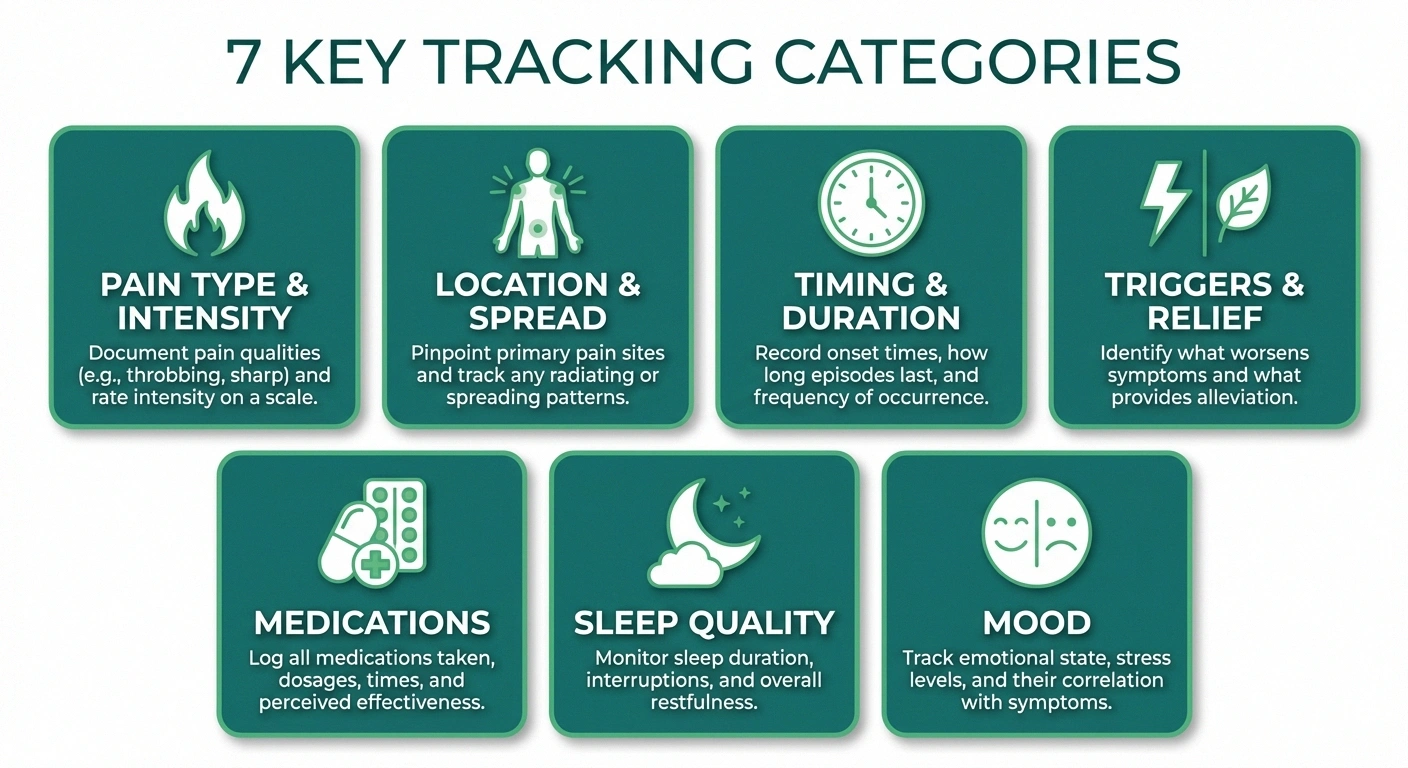
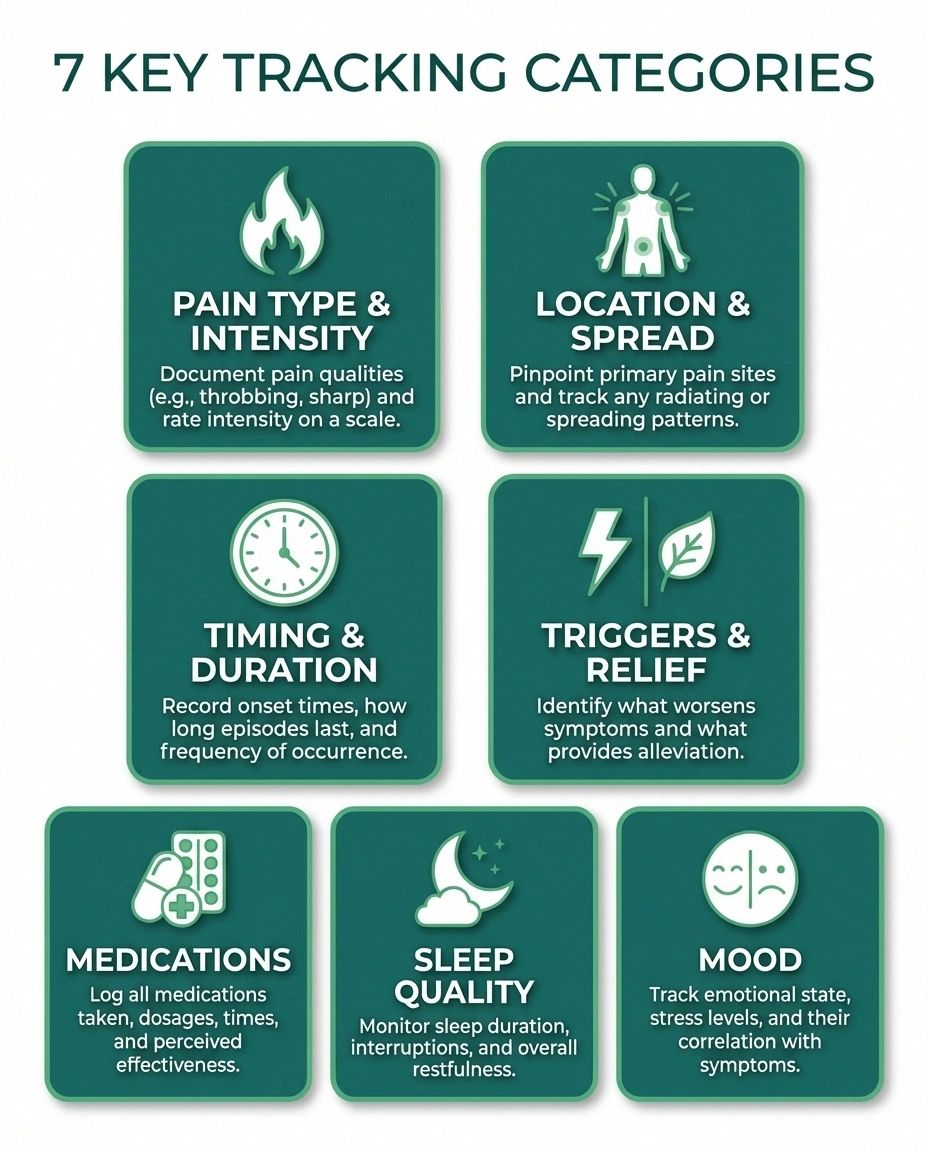
Pain type & intensity — Burning, stabbing, shooting? Rate 0-10.
Location & spread — Where exactly? Changing areas?
Timing & duration — When did it start? Peak? Ease?
Triggers & relief — What made it worse? Better?
Medications & supplements — Doses, timing, side effects
Sleep quality — Hours, disruptions, pain-related waking
Mood & activity — Emotional state, exercise done
Pain Type and Intensity
Neuropathy doesn't produce just one kind of pain. You might experience burning, stabbing, shooting, aching, throbbing, or electric-shock sensations — sometimes several types in the same day. Recording the specific type matters because different pain types can respond to different treatments. Burning pain, for instance, may respond well to topical capsaicin cream, while shooting or electric-shock pain might respond better to medications like gabapentin.
Rate your pain intensity on a simple 0-10 scale, where 0 is no pain and 10 is the worst pain you can imagine. Record your peak pain level for the day as well as your average — some days you might spike to 8 during a flare but average only a 4. Both numbers tell your doctor something useful.
Symptom Location and Spread
Note exactly where you feel symptoms each day. Neuropathy often starts in the toes and feet, but tracking whether it's spreading — to your ankles, calves, fingertips, or hands — is critical information. The progression pattern of neuropathy tells your neurologist a great deal about the underlying cause and whether your condition is stable or advancing.
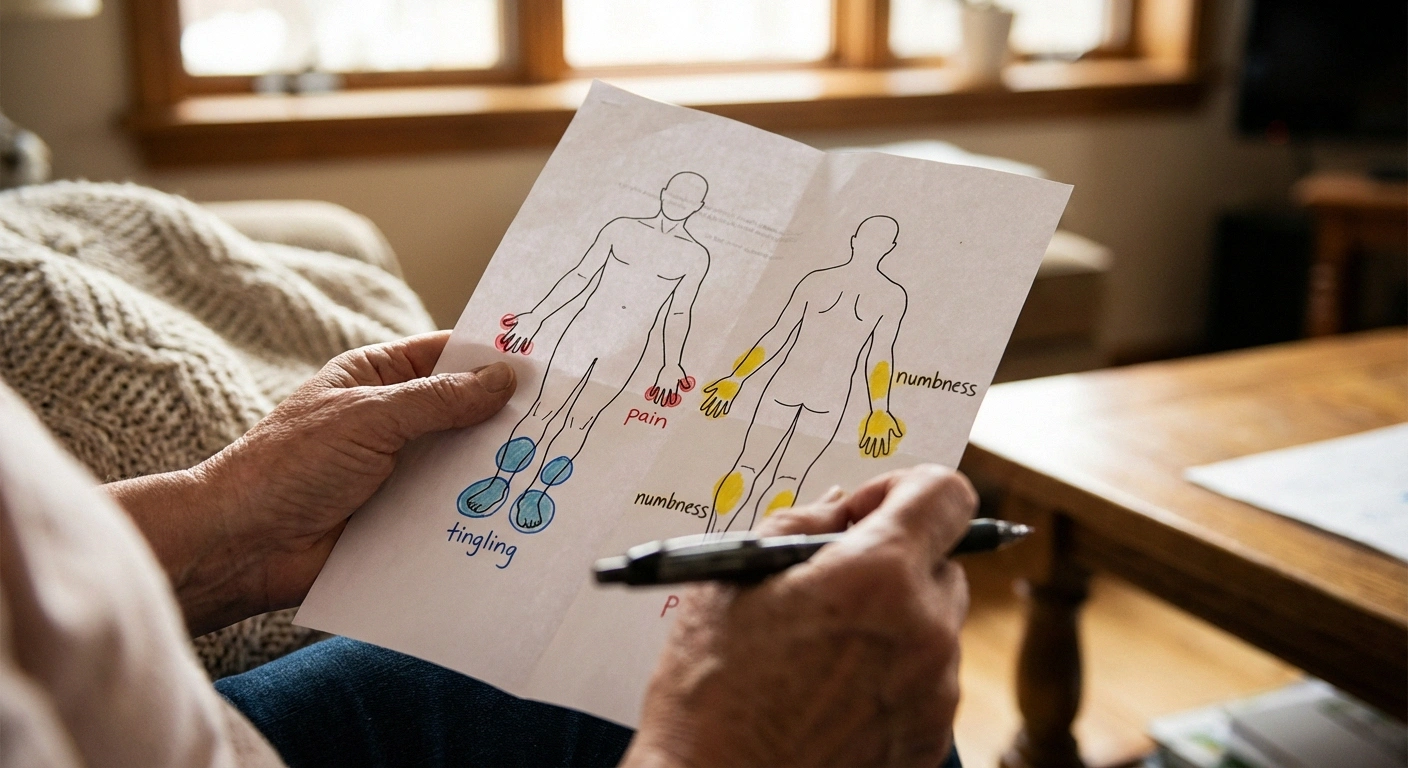
A simple body map sketch (even a stick figure) can be more informative than words. Mark the areas where you feel numbness, tingling, burning, or weakness. Over weeks and months, comparing these maps reveals whether your neuropathy is staying put or creeping to new territories.
Timing and Duration
When do your symptoms appear, peak, and ease? Many people with neuropathy notice that symptoms worsen at night, but the specific timing pattern varies from person to person. Record whether your pain is constant or comes in waves, what time of day it's worst, and how long flares typically last. This information helps distinguish between different types of nerve involvement and guides medication timing.
Potential Triggers and Relieving Factors
This is where the real detective work happens. Each day, make a brief note about anything that might have affected your symptoms — for better or worse. Common triggers to watch for include prolonged standing or sitting, specific foods (especially sugar and alcohol), temperature extremes, poor sleep, stress, and physical overexertion. Relieving factors might include gentle exercise, warm foot soaks, rest, specific medications, or relaxation techniques.
Key Takeaway
You won't identify every trigger immediately. The journal's power comes from accumulated data over weeks and months — patterns emerge that are invisible in the moment.
You won't identify every trigger immediately. That's normal. The journal's power comes from the accumulated data over weeks and months — patterns emerge that are invisible in the moment.
Medications and Supplements
Record every medication and supplement you take each day, including the dose and timing. This creates a reference your doctor can cross-check against your symptom patterns. Did your pain decrease after starting a new medication? Did a supplement change correlate with better or worse days? These correlations are nearly impossible to spot without written records. Also note any side effects — drowsiness, dizziness, stomach upset — as these factor into your doctor's prescribing decisions.

Sleep Quality
Poor sleep and neuropathy form a vicious cycle — pain disrupts sleep, and poor sleep amplifies pain. Tracking how many hours you slept, how often you woke up, and whether pain was the cause creates a data trail that helps your healthcare provider address both problems together. Sleep disorders are common comorbidities in neuropathy and often treatable once identified.
Mood and Emotional State
Living with chronic pain affects your emotional wellbeing, and emotional state affects pain perception. A simple daily mood rating (1-5, or using descriptors like “calm,” “anxious,” “frustrated,” “hopeful”) helps you and your provider see the full picture. Research consistently shows that addressing the emotional dimension of neuropathy improves overall pain outcomes. Your journal is evidence that supports getting that help.
Activity and Exercise
Note what physical activity you did each day — even if it was just a short walk or some gentle stretching. Tracking activity alongside pain levels often reveals a dose-response relationship: too little movement worsens stiffness, while too much aggravates nerve pain. Finding your personal sweet spot is one of the most valuable outcomes of consistent tracking. Activities like walking, swimming, and gentle yoga are commonly recommended for neuropathy — but the right amount is different for everyone.
Choosing Your Journal Format
The best format is the one you'll actually use consistently. There's no single right answer — what matters is that you can capture the information quickly and review it easily. Here are the main options.
Paper
Tactile, always ready. Best if you prefer writing by hand.
App
Auto-graphs, reminders, easy sharing with your doctor.
Spreadsheet
Maximum flexibility. Sort, filter, and chart your data.
Printable
Pre-built structure, no tech needed. Print and fill in daily.
Paper Notebook
A paper journal works well if you prefer writing by hand and like having a physical record you can flip through. Use a simple notebook and create a template for each day — a consistent layout makes it faster to fill out and easier to compare entries. The downsides: you can't search it easily, and handwriting may be challenging if neuropathy affects your hands. Several neuropathy-specific paper journals are available on Amazon with pre-printed tracking templates that save setup time.
Smartphone Apps
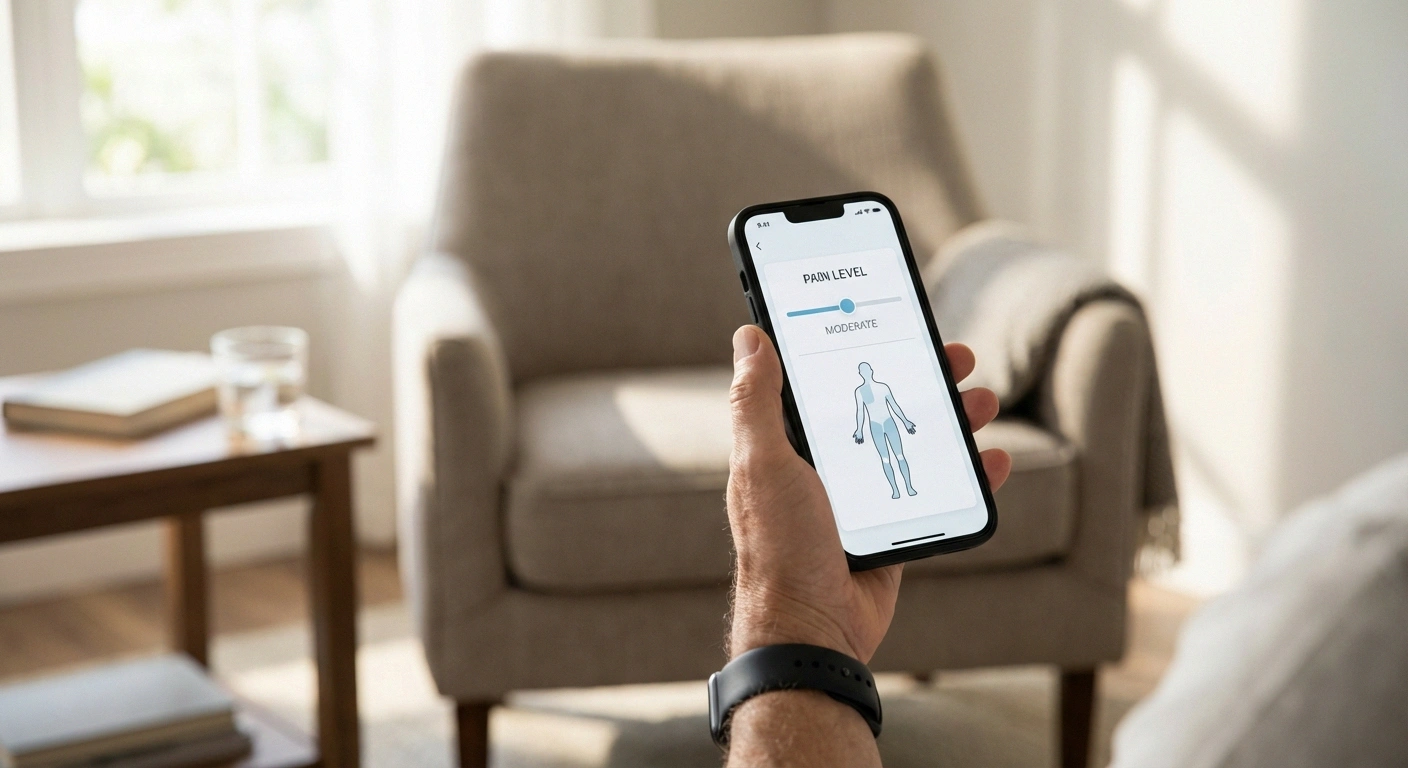
Apps like PainScale, MyPainDiary, and CatchMyPain offer structured tracking with built-in pain scales, body maps, and automatic graphing. They make it easy to spot trends over time and some can generate PDF reports for your doctor. The learning curve is minimal for most apps, and having your phone always nearby means you're more likely to log entries in real time rather than trying to remember at the end of the day.
Spreadsheet
A simple Google Sheets or Excel spreadsheet gives you maximum flexibility. Create columns for each tracking category (date, pain type, intensity, location, triggers, medications, sleep, mood, activity) and fill in one row per day. Spreadsheets shine for data analysis — you can sort, filter, create charts, and easily see averages over any time period. If you're comfortable with computers, this may be the most powerful option.
Printable Template
A daily printable template combines the benefits of paper (tactile, always ready) with pre-built structure. Print a week's worth at a time, keep them on your nightstand or kitchen table, and fill in each day. At your next appointment, simply bring the stack. Many people find this approach the most sustainable because it takes less than 5 minutes per day and requires zero technology.
Setting Up Your Daily Tracking Routine
Consistency matters more than perfection. Here's how to build a tracking habit that sticks.
Pick a specific time each day to complete your journal entry. Bedtime works well for most people because you can reflect on the entire day while it's still fresh. Some people prefer morning entries that cover the previous day — whatever works for your schedule. The key is making it automatic, like brushing your teeth.
Start with the basics and expand over time. In your first week, just track pain intensity and location. Once that feels routine, add triggers and medications. By week three, add sleep and mood. This gradual approach prevents the journal from feeling overwhelming on day one.
Keep your journal where you'll see it. If it's a notebook, leave it on your nightstand. If it's an app, put it on your phone's home screen. If it's a spreadsheet, bookmark the tab. Remove every possible friction point between you and the habit.
Aim for 5 minutes per entry. If it's taking longer than that, you're probably tracking too many things. Simplify. A brief, consistent daily entry is infinitely more valuable than a detailed entry you make once a week.
How to Read Your Own Data
After two to four weeks of consistent tracking, you'll have enough data to start spotting meaningful patterns. Here's how to make sense of what you've recorded.
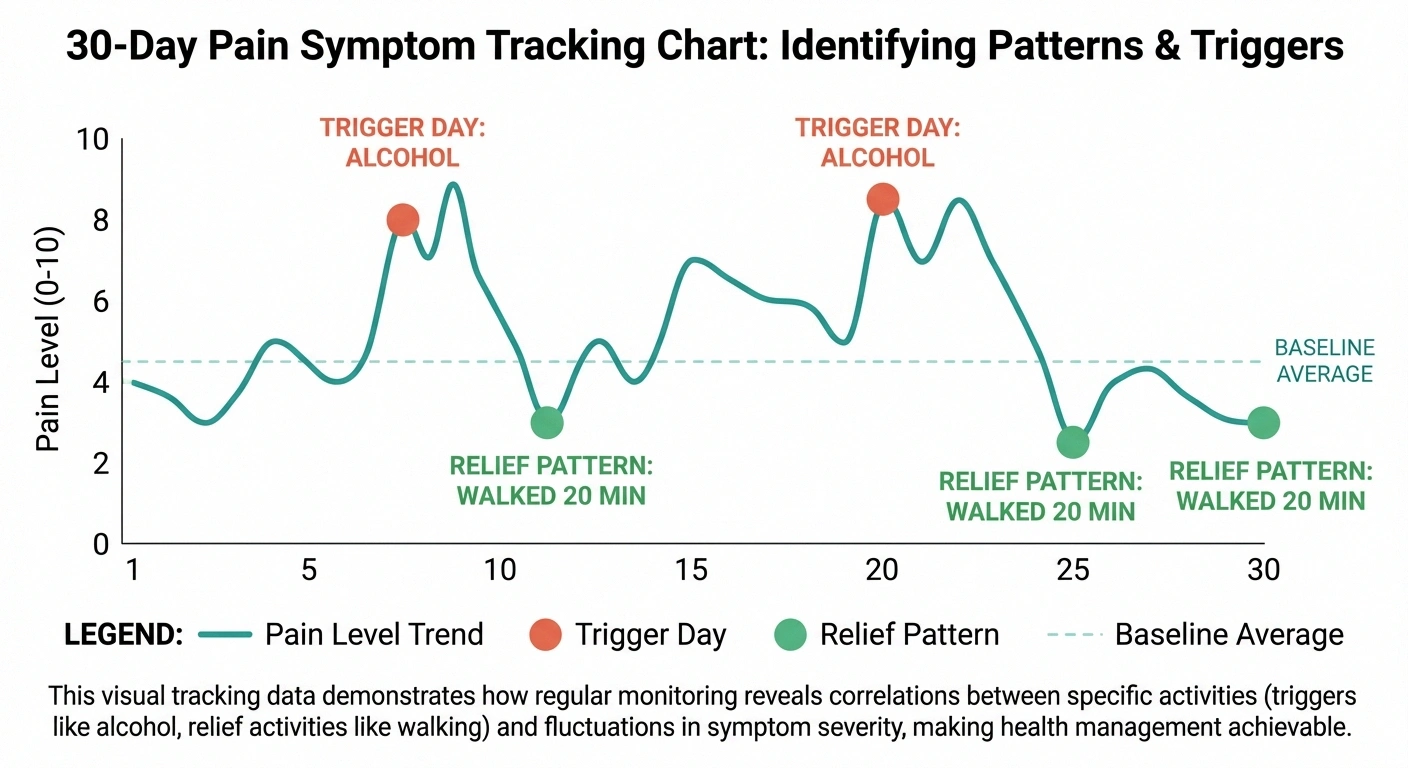
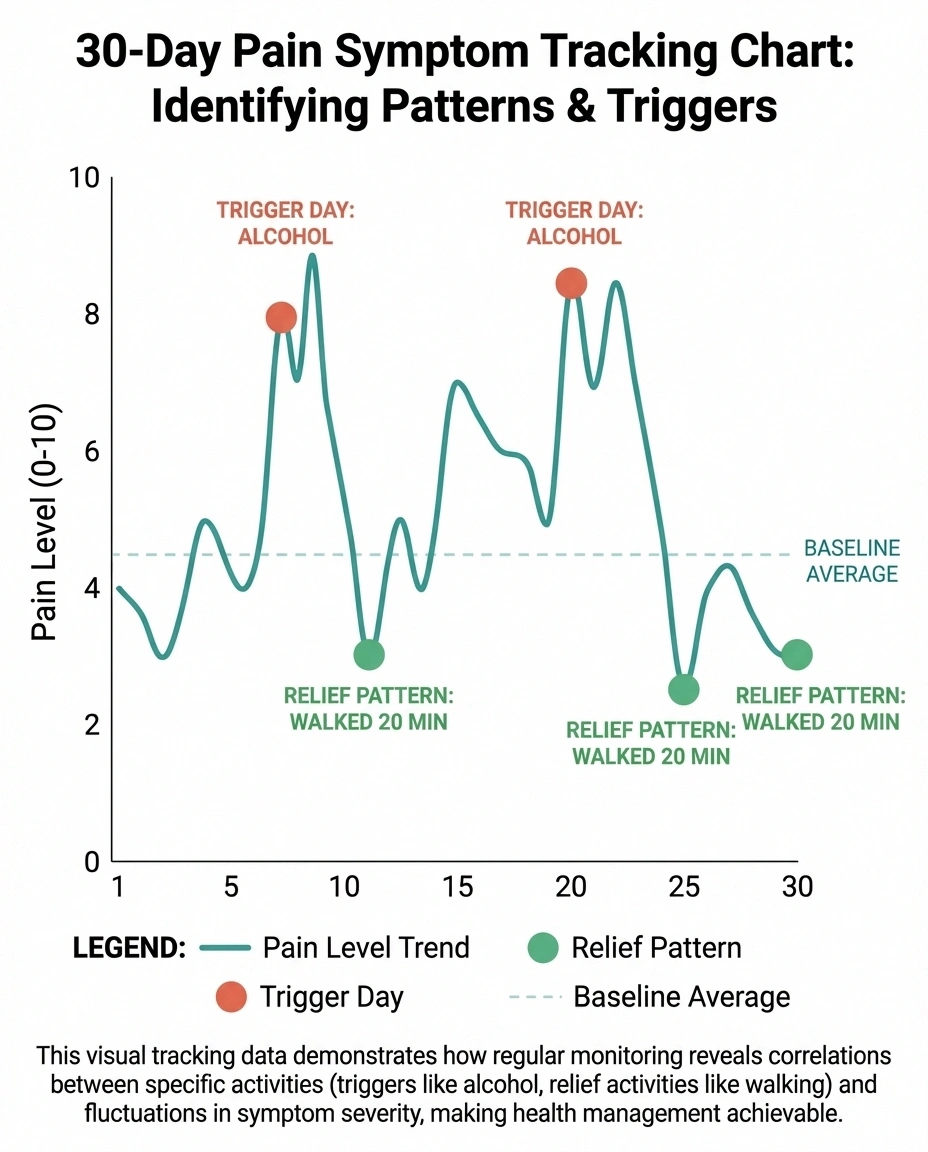
Look for correlations between your symptom intensity and specific activities, foods, or circumstances. Did your pain scores tend to be higher on days you consumed alcohol? Lower on days you exercised? Worse after nights with less than six hours of sleep? These aren't coincidences — they're your personal trigger and relief map.
Track your baseline. Calculate your average pain score over a two-week period. This becomes your reference point. When you start a new medication or lifestyle change, you'll know whether it's actually making a measurable difference or just feels different because of normal fluctuation.
Watch for progression. If you're noting symptom locations each day, compare your body maps from month to month. Stable neuropathy stays in the same areas at similar intensity. If symptoms are spreading to new areas or intensifying overall, that's important information for your neurologist — and it may prompt additional testing to identify the underlying cause. Our guide on neuropathy diagnosis explains the tests your doctor might recommend.
Note medication effectiveness windows. Many neuropathy medications take 2-4 weeks to reach full effect. Your journal can show whether a medication is genuinely working, needs more time, or should be reconsidered — rather than relying on memory, which tends to overweight the most recent few days.
Using Your Journal at Doctor Appointments
Your symptom journal is arguably most valuable in the exam room. Here's how to make the most of it.

Before your appointment, spend 10 minutes reviewing your journal and preparing a one-page summary. Include your average pain score over the tracking period, your worst and best days, any consistent triggers you've identified, medication effects (positive and negative), and whether symptoms have spread or changed character. This summary respects your doctor's limited time while giving them far more actionable information than a typical patient conversation.
Bring the full journal as backup. Your summary gives the big picture, but having the raw data available means your doctor can dig deeper if something catches their attention. Some doctors will want to look at specific weeks — perhaps the period right after a medication change — and your journal makes that review possible. Our article on how to talk to your doctor about neuropathy offers additional strategies for productive appointments.
Ask your doctor what specific things they'd like you to track going forward. Your healthcare provider may suggest adding specific data points based on your situation — blood sugar readings if diabetes is involved, for example, or specific functional tests like grip strength or walking distance. Customizing your journal to your doctor's priorities makes the data even more clinically useful.
Sample Daily Journal Entry
Here's what a complete daily entry might look like in practice. This took about four minutes to write and contains enough detail to be medically useful:
Date: Tuesday, March 15
Pain type: Burning (feet), tingling (hands)
Intensity: Average 5/10, peak 7/10 (10 PM)
Location: Both feet (soles), right hand (fingertips)
Timing: Mild all day, started building around 7 PM, peaked by 10 PM
Triggers: Sat at desk for 3+ hours without break. Ate pasta and bread at lunch (blood sugar may have spiked).
Relief: 20-minute walk after dinner brought pain down from 6 to 4. Warm foot soak before bed helped.
Medications: Gabapentin 300mg (8 AM, 2 PM, 8 PM). Alpha-lipoic acid 600mg (morning). No missed doses.
Sleep: 6.5 hours, woke twice from foot pain. Quality: 4/10.
Mood: Frustrated (pain interrupted sleep again). Hopeful after walk helped.
Activity: 20-minute neighborhood walk, 10 minutes gentle stretching.
Notes: Third night in a row with sleep disruption. Mention to Dr. Chen at Friday appointment.
Common Tracking Mistakes to Avoid
Over the years, I've seen people make the same tracking mistakes — including some I made myself early on. Knowing these pitfalls upfront can save you weeks of frustration.
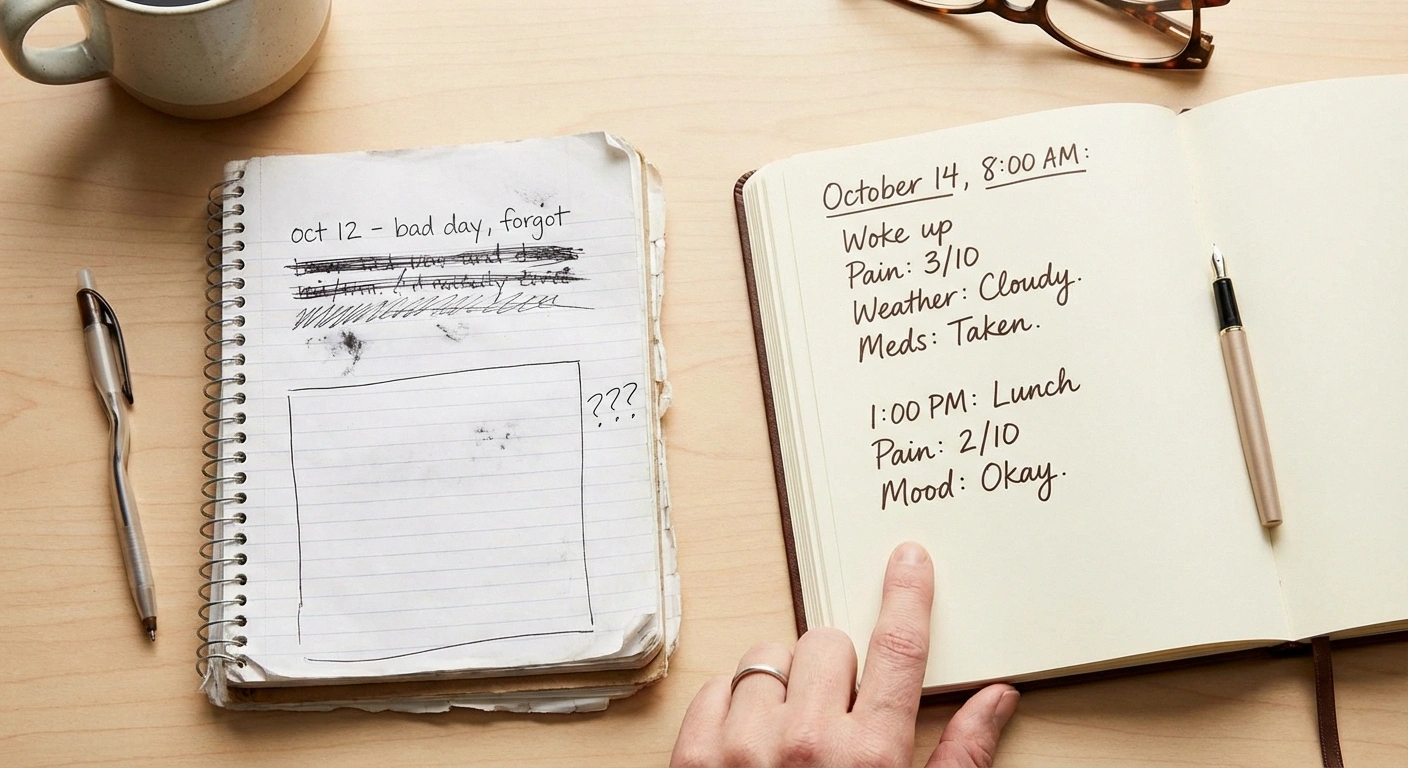
Starting too complex. The most common reason people abandon their journal is trying to track everything from day one. Start with just pain intensity and location. Add categories gradually. A simple journal you keep for six months beats a detailed one you abandon after ten days.
Only tracking bad days. It's tempting to skip entries on good days because there's “nothing to report.” But good days are data too — they show what works. If you only record bad days, your journal will make your condition look worse than it actually is, and you'll miss the factors that contribute to your better days.
Using vague descriptions. “My feet hurt” isn't useful data. “Burning pain in both soles, 6/10, from 8 PM to midnight” is. Be specific about type, location, intensity, and timing. That specificity is what transforms a diary into a diagnostic tool.
Not reviewing the data. A journal that sits in a drawer unread is just a diary. Schedule time every two weeks to read through your entries and look for patterns. Circle or highlight anything that repeats. This review step is where insights happen.
Expecting instant revelations. Most patterns don't emerge until you have at least three to four weeks of data. Some connections — like seasonal patterns or the delayed effects of dietary changes — may take months to become clear. Trust the process and keep going.
Digital Tools and Apps Worth Trying
If you prefer digital tracking, several apps are well-suited for neuropathy symptom management. While I can't endorse any specific product, here are some options that members of our community have found helpful:
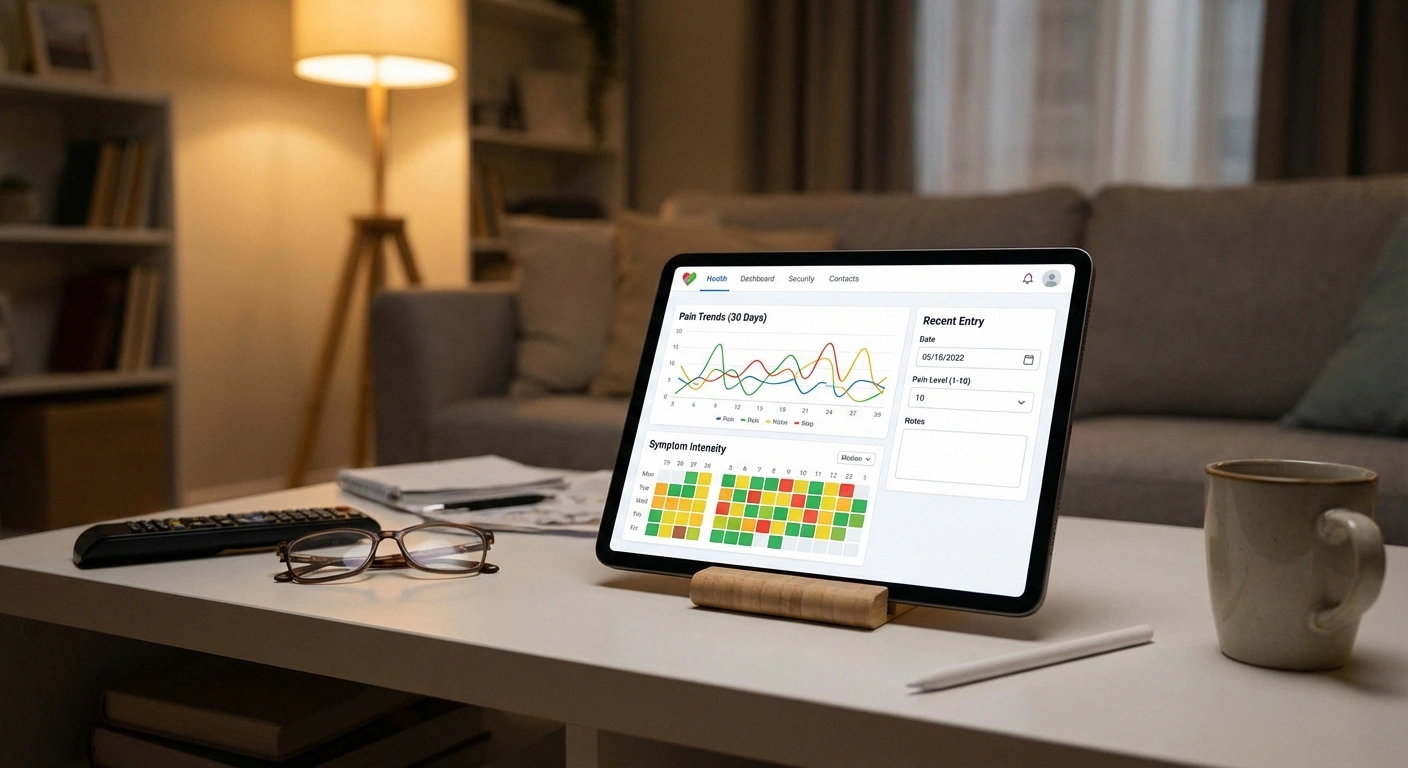
PainScale is a free app (iOS and Android) that includes pain tracking, medication logs, and body map marking. It generates reports you can share with your healthcare provider and includes educational content about chronic pain management.
MyPainDiary offers detailed symptom tracking with weather correlation features — useful since many people with neuropathy report that weather changes affect their symptoms. It tracks multiple conditions simultaneously and creates visual trend charts.
CatchMyPain features a 3D body model for precise pain mapping, which can be especially helpful for tracking whether neuropathy symptoms are spreading to new areas over time.
Bearable is a general health tracking app that lets you customize what you track. It's particularly strong for identifying correlations between different factors (sleep, diet, activity, mood) and symptom levels.
Whichever tool you choose, make sure it can export or print reports for your doctor visits. The best data in the world is useless if you can't share it with your healthcare team.
When Your Journal Reveals Something Concerning
Sometimes tracking reveals patterns that warrant medical attention sooner rather than later. Contact your healthcare provider if your journal shows any of the following trends:
Contact Your Doctor If Your Journal Shows
Symptoms spreading to new areas over weeks, sudden unexplained pain increases, new muscle weakness or balance problems, or worsening medication side effects. Your journal gives you the evidence to make these calls with confidence.
Symptoms spreading to new body areas over the course of weeks — especially if numbness or weakness is moving up your legs or appearing in your hands when it previously only affected your feet. This may indicate your neuropathy is progressing and should be evaluated. Our article on what neuropathy feels like can help you recognize new symptom journal for VA C&P exam preparation types.
A sudden, significant increase in pain intensity that doesn't correspond to any identifiable trigger. If your average daily pain jumps from 4/10 to 7/10 over a week without explanation, that's worth a call to your doctor.
New symptoms appearing that you haven't experienced before — such as muscle weakness, balance problems, or autonomic symptoms like dizziness upon standing, digestive changes, or unusual sweating patterns.
Medication side effects that appear to be worsening over time rather than improving, or new side effects emerging weeks after starting a treatment.
Your journal gives you the evidence to make these calls with confidence rather than second-guessing whether things are “bad enough” to contact your provider. If the data shows a concerning trend, it is.
Building a Long-Term Tracking Habit
The real value of symptom tracking compounds over time. A month of data is useful. Three months is revealing. A year of consistent tracking gives you and your medical team a genuinely comprehensive picture of your condition that no test or scan can replicate.

To sustain the habit long-term, keep it as simple as possible. On a quiet day with minimal symptoms, your entry might take 60 seconds: “Pain 2/10, no flare, walked 15 min, slept 7 hours, no notes.” That's a perfectly valid entry. It doesn't need to be detailed every single day — just consistent.
Review your journal together with your partner, caregiver, or a trusted friend occasionally. Sometimes an outside observer spots patterns that you've overlooked because you're too close to the data. This is also a way to help the people in your life understand your condition better — seeing the daily reality written down can build empathy and support.
Consider pairing your journal with other self-management strategies. Natural remedies, gentle exercise, dietary adjustments, and stress management techniques all become more effective when you can measure their impact. Your journal is the measuring tool that tells you what's actually helping.
Frequently Asked Questions
How long should I track my symptoms before showing my doctor?
Aim for at least two to four weeks of consistent tracking before your next appointment. This gives enough data to reveal meaningful patterns. However, if your journal shows sudden worsening or new symptoms, don't wait — contact your provider right away regardless of how much data you've collected.
What if I forget to make an entry for a day or two?
Skip the missed days and pick up where you left off. Don't try to fill them in from memory — inaccurate data is worse than missing data. A few gaps won't ruin the overall pattern. What matters is consistency over weeks and months, not perfection every single day.

Is a phone app better than a paper journal?
Neither is inherently better. Apps offer convenience, automatic graphing, and easy sharing. Paper journals are accessible to everyone and don't require technology comfort. Choose the format that you're most likely to use consistently. Many people start with paper and move to digital once the habit is established.
Should I track every single symptom or just pain?
Start with pain intensity and location, then add other categories gradually — numbness, tingling, sleep quality, medications, mood, and activity. Tracking multiple symptom types reveals connections you'd miss by focusing on pain alone. For example, poor sleep often predicts higher pain the following day.
Can a symptom journal help get a neuropathy diagnosis?
Absolutely. A detailed symptom journal can provide your doctor with key diagnostic clues — the pattern of symptom onset, the specific types and locations of pain, and what makes things better or worse. This information supplements diagnostic tests like EMG studies and blood work, giving your medical team a more complete picture.
What's the minimum I should track each day?
At minimum, record the date, your overall pain level on a 0-10 scale, and one sentence about what made the day better or worse. This takes 30 seconds and still provides useful data over time. You can always expand your tracking later as the habit becomes second nature.
Taking Control, One Entry at a Time
Neuropathy can feel unpredictable and overwhelming. A symptom journal doesn't cure anything — but it does something almost as valuable. It gives you back a sense of control. When you can see your patterns on paper, you stop being a passive bystander to your condition and start being an active participant in your care.

Start small. Pick up a notebook or download an app tonight. Track your pain level and location for one week. Then build from there. The first few entries might feel awkward, but within a couple of weeks, you'll start seeing your neuropathy with new clarity — and so will your healthcare team.
Your symptoms have a story to tell. The journal is how you listen. Browse all our guides for living with neuropathy for more practical strategies to manage your daily life.
About the Author