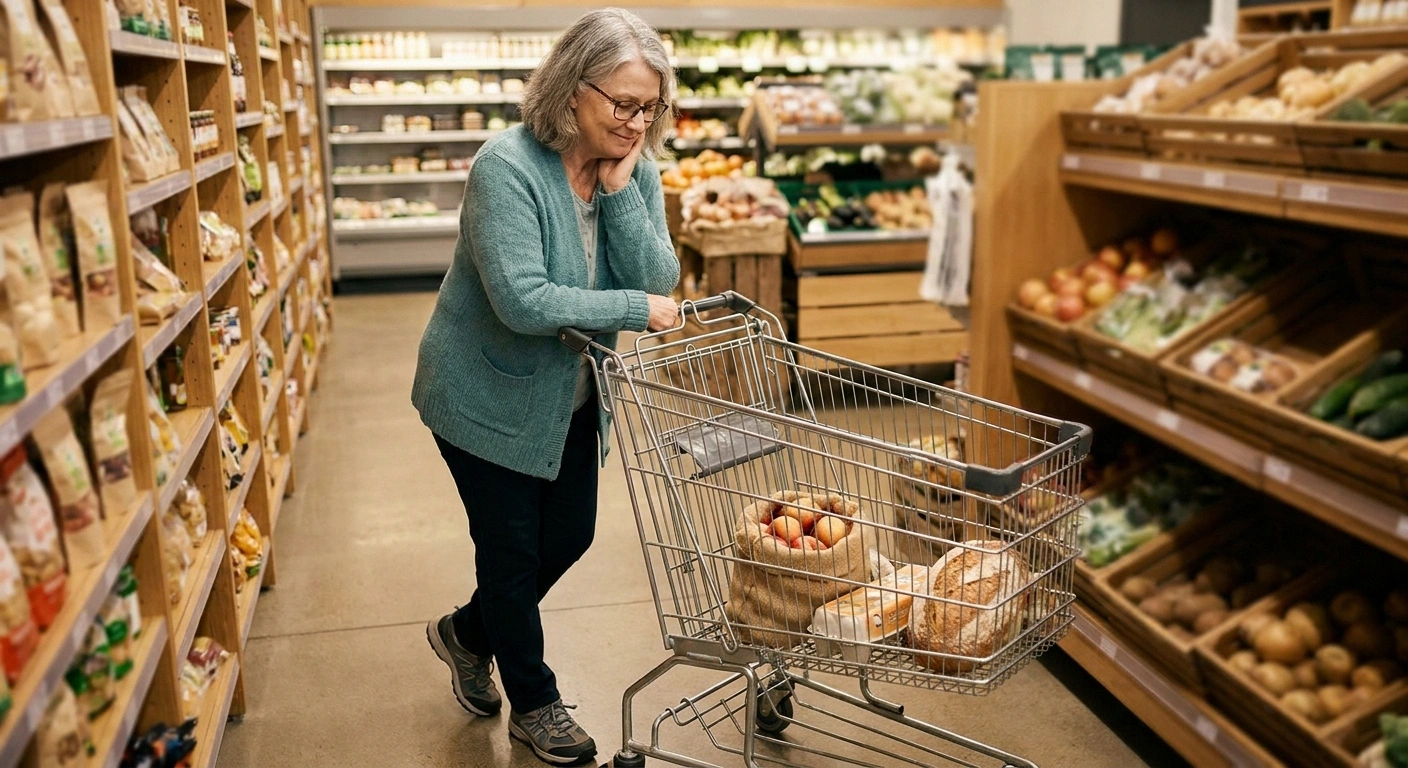
Last Tuesday I went to the grocery store, and it took me two hours to recover afterwards. Not because I bought too much — I bought a week’s worth of basics — but because of the standing, the walking, the waiting in line, and the unloading at the other end. If you have peripheral neuropathy, grocery shopping is one of those ordinary errands that stops being ordinary. The hard floors punish your feet. The fluorescent lighting wears you down. The line at checkout is a test of whether your legs can still hold you. And by the time you get the bags into the car, you already know the next hour is going to cost you.
I’m Janet Ellis, and I’ve been living with neuropathy long enough to have tried just about every version of the grocery run — the heroic “push through it” version, the “online only” version, and everything in between. What I’ve landed on is a set of practical tactics that let me shop in person when I want to and lean on alternatives when I don’t. This article is that toolkit. None of it requires a doctor’s note. All of it is learned the hard way.
Why Grocery Shopping Hits Neuropathy So Hard
If you’ve ever wondered why a seemingly simple errand leaves you wrecked, it helps to name the specific things that make stores rough on neuropathic feet and legs.
Grocery shopping with neuropathy is four pressures stacked — hard floors, static standing, long distance, and time pressure. Each one has a specific counter-move, and stacking the counter-moves changes the whole trip.
The flooring is the first problem. Grocery store floors are polished concrete or tile with minimal give. Every step sends shock through already-sensitized nerves. Twenty minutes of concrete walking does not equal twenty minutes of carpet or grass walking — not for neuropathy patients, and not even with the best cushioned shoes on.
The standing-still moments are the second problem. Pausing at a shelf to read a label, waiting in a checkout line, stopping at the deli counter — these are harder on neuropathy than walking, because walking at least cycles the blood and changes the pressure points. Static standing pools blood in the lower legs and concentrates pressure on the exact spots already complaining.
The distance is the third problem. Most grocery stores are larger than they appear. A full shop covers somewhere between a quarter mile and a half mile of walking — not including the parking lot and the trip back to the car with bags. If your flare threshold is around that much, you’ve already spent it before you get home.
The time pressure is the fourth. The longer you’re in the store, the more pain accumulates. So we rush. Rushing with neuropathy is how people fall, miss items, and make expensive impulse-buy mistakes that require a second trip. The math is against us.
Understanding these four pressures is useful because each one has a counter-move.
The Pre-Trip Setup That Cuts the Trip in Half
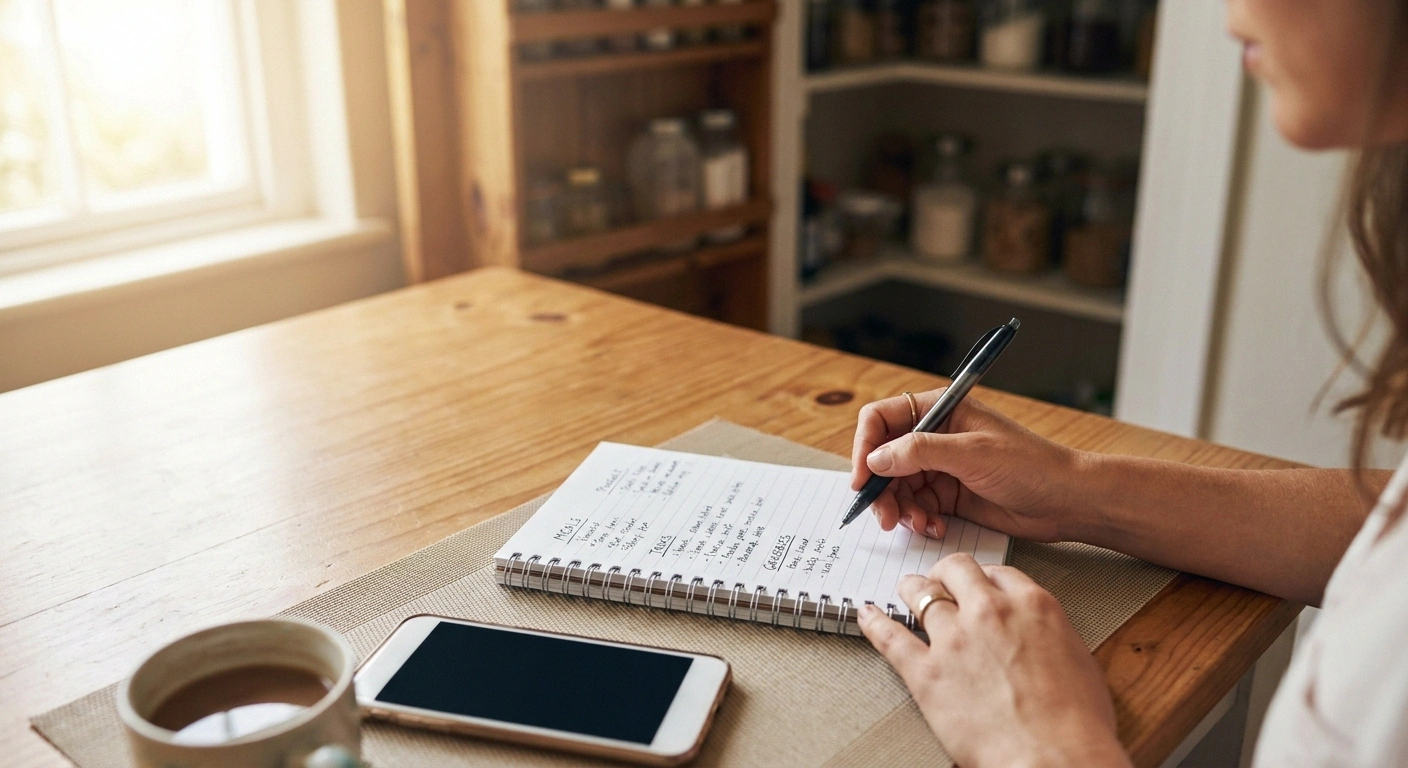
The single biggest lever in all of this is what happens before you leave the house. Ten minutes of planning at the kitchen table saves twenty minutes in the store and a significantly worse flare. Every time.
The 5-Minute Pre-Shop Checklist
- ☐Pantry + fridge sweep before listing
- ☐Write list in store-route order (perimeter first, then aisles)
- ☐Pick an off-peak time (Tue-Thu mid-morning is ideal)
- ☐Wear best supportive shoes + light layer for frozen aisles
- ☐Eat + hydrate before leaving the house
Make the list, and make it in store-route order. If you know the layout of your regular store — and after enough trips you do — group your list by aisle and by perimeter section. Produce, then dairy, then deli, then frozen, then center aisles in order, then bakery. This stops the doubling back that doubles your walking.
Check what you already have before you go. A quick pantry and fridge sweep before you write the list prevents the “I think we need…” guessing that leads to buying duplicates or coming home to discover you were out of something you didn’t list.
Plan the timing. Tuesday, Wednesday, and Thursday mid-mornings are the lightest times in most grocery stores. Saturday afternoons and Sunday afternoons are the heaviest. If you have flexibility, use it — an off-peak visit is measurably shorter and quieter, which means shorter checkout lines and less visual overload.
Dress the feet and the body for a long stand. This is not the day for fashion shoes. Wear your best cushioned, supportive shoes with a generous toe box — the ones that you’d wear on a long walking day. Compression socks can help if tolerated. Layer for the frozen-section cold. Bring a light jacket even in summer — the refrigerated aisles will find you.
Eat first and hydrate. Shopping hungry is a terrible idea for anyone, but for neuropathy patients it’s worse — low blood sugar and dehydration both aggravate nerve symptoms. A snack and a glass of water before you leave the driveway is cheap insurance.
The Parking-Lot-to-Entrance Problem
Most grocery-shopping advice ignores the parking lot entirely, but for neuropathy patients it’s its own chapter. The walk from the car to the entrance eats a chunk of your walking budget before you’ve even started shopping.
Use the accessible parking spots if you qualify. If you have a disability placard — and many neuropathy patients qualify even if they haven’t applied — this is what the placard is for. There’s no “I’m not disabled enough” threshold for what is a legitimate mobility limitation. If walking distance triggers flares, you qualify for the conversation with your doctor about a placard.
If you don’t have a placard, look for the rows closest to the cart corral rather than closest to the entrance. This lets you grab a cart immediately and use it for support the rest of the way in.
On rainy or icy days, call the shop in advance if possible and ask if someone can meet you at the entrance with a cart. Many stores will do this and it costs you nothing to ask.
The Cart Is a Mobility Aid, Full Stop
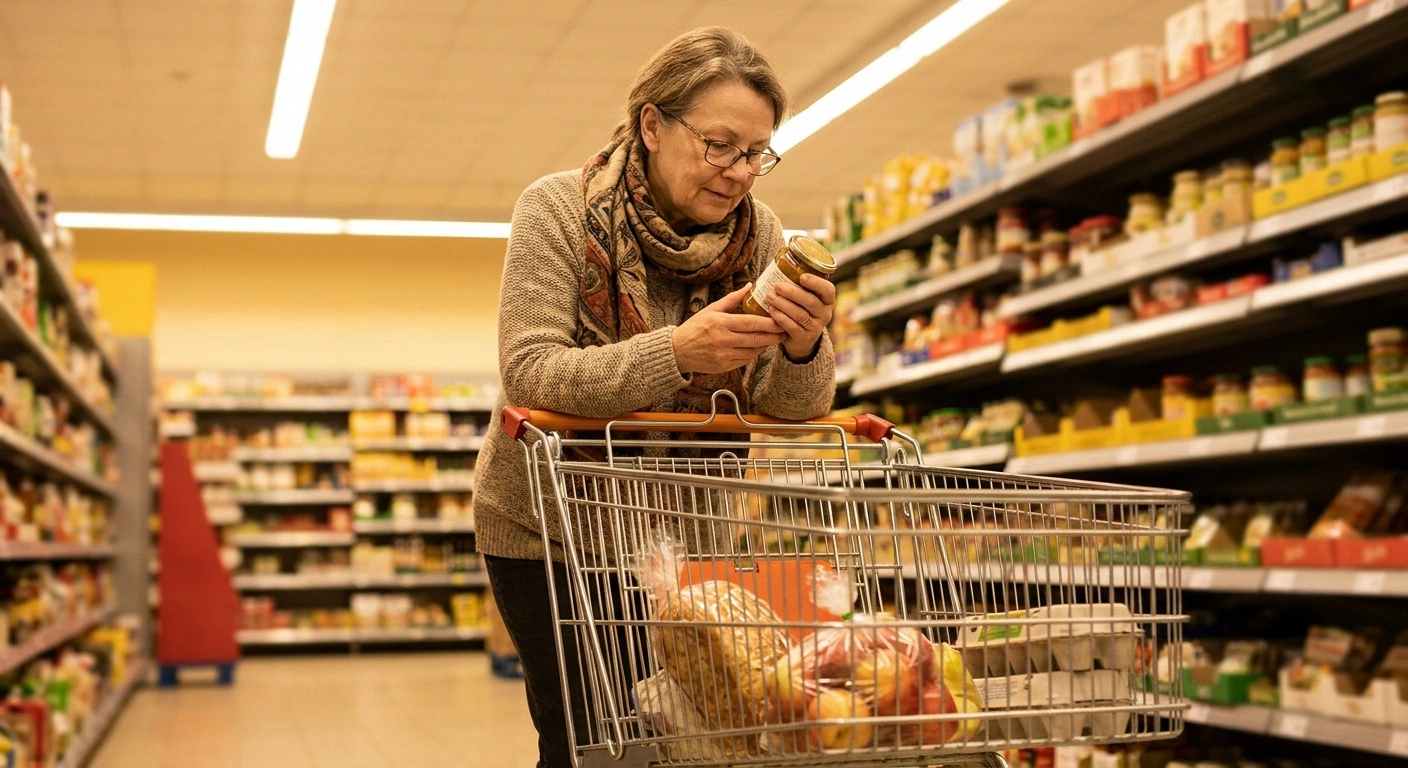
If you’ve been pushing a shopping cart for years, you may have noticed that it doubles as a walker. You lean on it, it takes some weight off your feet, and it gives you a stable four-wheeled base. This is not accidental. A shopping cart is a mobility aid by any meaningful definition, and treating it that way changes how you shop.
A shopping cart is a mobility aid.
A motorized cart is a tool, not a defeat.
The store stocks them because the store wants you to be able to buy groceries. Using one is exactly what it’s for.
Grab a cart immediately, even if you only need three items. Even a small cart or hand basket can end up in your hand for the whole trip, and a hand basket gets heavy fast. A wheeled cart never does.
Use the cart for weight transfer, not just cargo. When you’re reading a label, lean on the cart handle. When you’re waiting at the deli, lean on the cart handle. When the line moves, push the cart forward with a slight weight shift rather than lifting fully from your heels. Treat the cart as a support surface.
If the store has motorized carts and your feet genuinely can’t make the distance, use one. I know. I resisted this for years. It felt like giving up. It is not giving up — it is called doing the shopping I wanted to do instead of not doing it. A motorized cart is a tool. It is in the store because the store wants you to be able to buy groceries. Using it is exactly what it’s for. The people who judge you for using one are not grocery shopping with neuropathy.
Store Navigation That Minimizes Distance
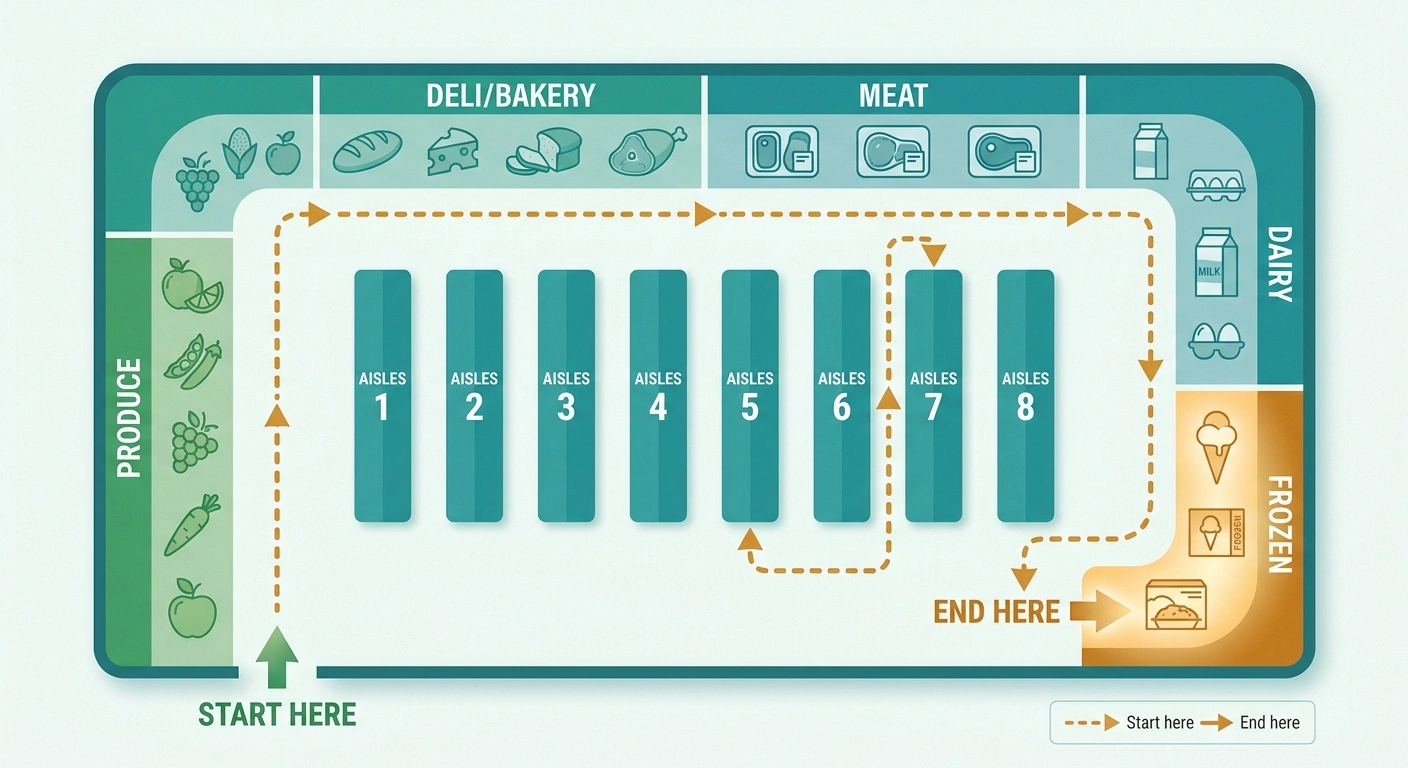
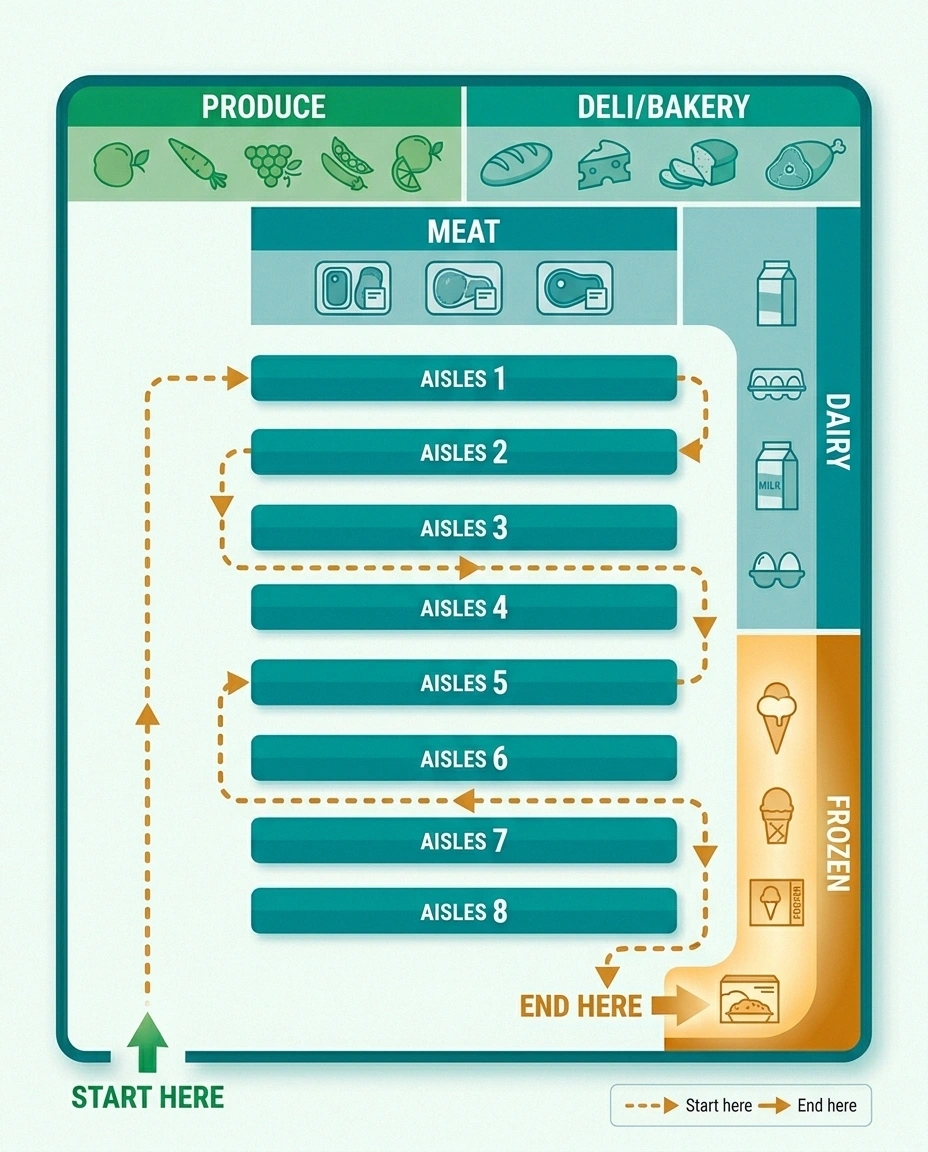
Most shoppers walk more than they need to because they don’t think about routes. The two main tricks are perimeter first and one-pass shopping.
The One-Pass Route
Perimeter first, center aisles in route order, frozen last. One loop, no doubling back.
Most grocery stores put produce, deli, dairy, meat, and bakery around the perimeter of the store, with packaged center aisles in the middle. Perimeter shopping — going around the outer edge first — gets you most of your items in a single loop. Then you target specific aisles in the middle for the few packaged items you need.
One-pass shopping means you pass each aisle once and don’t come back. This requires the aisle-order list we covered above, but it’s the payoff. If you’ve laid the list out in store order, you’re not zigzagging.
The frozen section is the last stop before checkout. Not because of any grocery-shopping law, but because you want those items in your cart for the shortest time possible. Frozen items sweat, cold items warm up, and if you’ve been walking for 25 minutes already, the ice cream doesn’t need another 15.
Surviving the Checkout Line
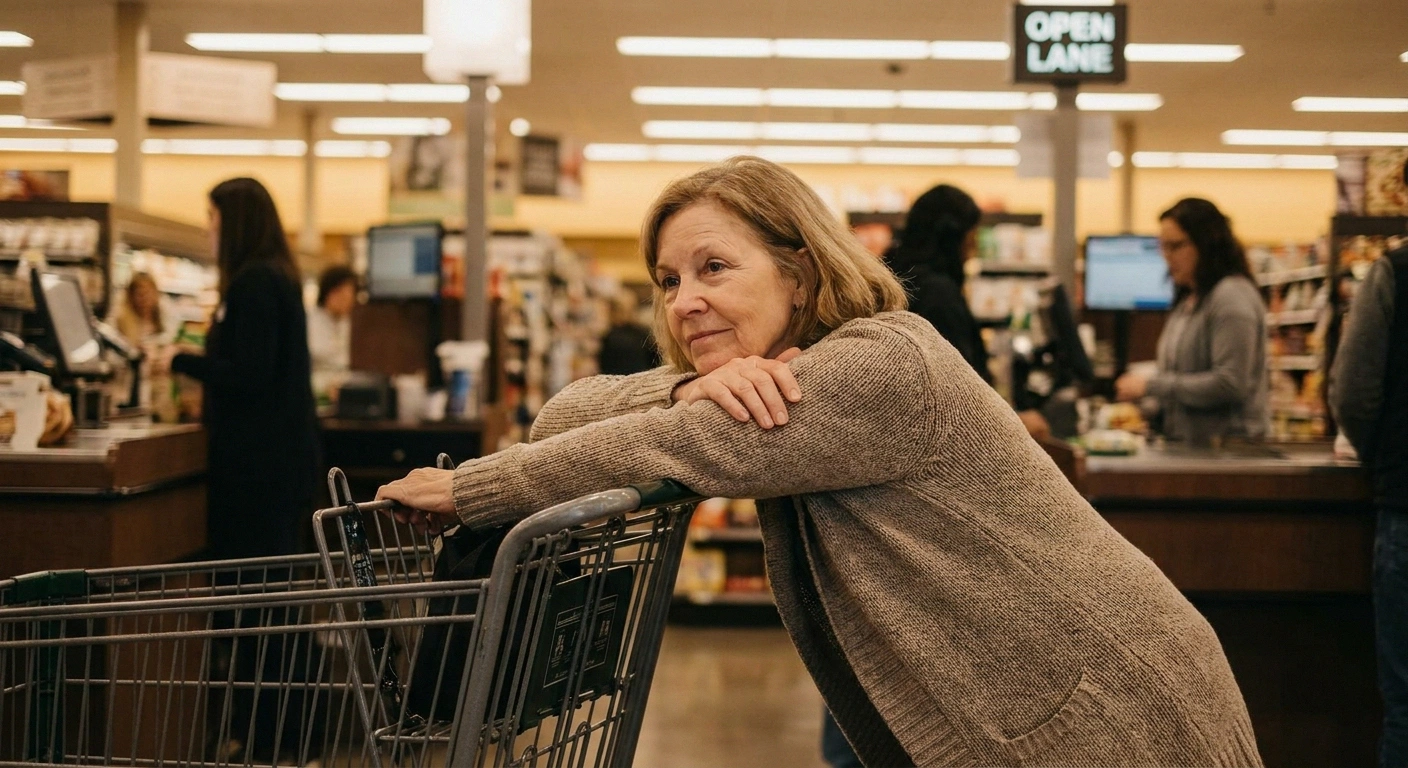
The checkout line is where a lot of neuropathy patients hit the wall. You’ve been walking, you’ve been pausing, you’re already at the edge, and now the line moves ten inches every two minutes. This is the hardest static standing of the trip.
- →Pick self-checkout if the line is shorter — you control the pace
- →Lean on the cart handle to transfer weight off your feet
- →Shift weight between legs every minute — don’t stand rigid
- →Ask the cashier if there’s a stool — some stores have them
- →Bail if a flare is building — cart stays, you go sit in the car
Self-checkout usually has shorter waits and moves faster. Not always — sometimes the self-checkout has its own line — but on an average day, it’s faster. It also lets you control the pace.
If the regular checkout line is your only option, ask the cashier if there’s a stool or a place you can sit while they ring up your items. At some stores this is an option. They won’t offer it — you’ll have to ask. If they say no, that’s fine, you’ve asked. If they say yes, you’ve just earned three minutes off your feet.
Lean on the cart handle while you wait. Not passively — actively transfer your weight forward onto the cart so your feet are less loaded. Shift which leg bears weight every minute or so. Staying perfectly still is worse than making small shifts.
If you feel a flare building while you’re in line, bail. Leave the cart, go sit in the car for ten minutes, come back. The store will not be upset. The cart will be there. Your feet will thank you.
Bagging and Loading Without a Flare
How the bags are packed and carried matters more than most people realize. The wrong bagging turns a manageable trip into a back-and-feet nightmare at the car.
Ask for more bags, not fewer. The bagger will pack your bags as heavy as they can get away with. Say, politely, “Could we use more bags so each one is a little lighter?” A 15-pound bag is twice as punishing as two 7-pound bags when you carry them.
Double-bag anything heavy like canned goods or gallon jugs. This is about handle pressure, not tear resistance. A single bag handle on an already-irritated hand is miserable. A doubled handle spreads the load.
Use reusable bags with wide handles or fabric straps. The thin plastic handles dig into the fingers. Wider fabric handles distribute the pressure. The difference on a walk across a parking lot is significant.
If you can get a bagger to take your groceries to the car for you, yes, take them up on it. Most stores offer this. Most people feel guilty using it. Don’t. That’s also what it’s for. A teenager earning a paycheck is not being imposed upon by helping you load groceries.
At the car, load the trunk by using the bumper as a prop point. Set the bag on the bumper, then slide it into the trunk — don’t lift from floor to trunk with the bag swinging. The swing is where backs go.
The Unloading-at-Home Step Most People Skip
The step that gets skipped most often is the one that actually prevents the worst flare — resting between arriving home and unloading the car.
Sit down for ten minutes when you get home. The cold groceries can sit in the car for ten minutes. The dry goods can sit in the trunk for an hour. What matters is that you give your nervous system a brief reset before the second round of walking and lifting starts. Put your feet up. Drink water. Breathe a few rounds of whatever calming routine you use.
When you unload, do it in smaller loads than feels efficient. A single trip with six bags is a recipe for dropping one or wrenching something. Two trips with three bags each, or three trips with two, are better investments of time than one extra-ambitious trip.
Put away only what needs to be put away immediately. Frozen and refrigerated go in. Everything else can sit on the counter for an hour while you sit down again. You are not being lazy — you are pacing, which is a clinical term for the thing that keeps neuropathy patients functional over a week.
When Online Grocery Shopping Is the Right Call
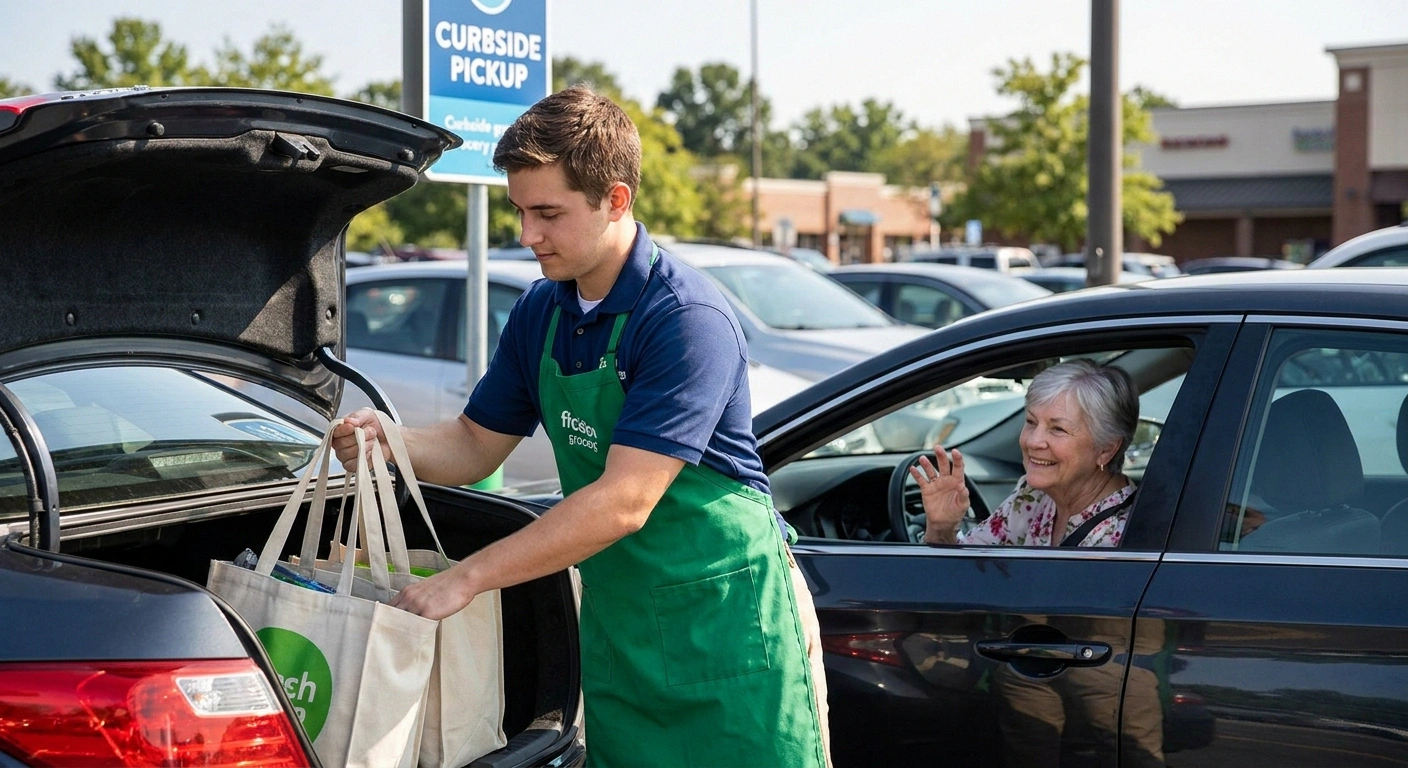
There are weeks when the in-store trip is the wrong call. Big flare, bad weather, a long workday, recovering from something. On those weeks, online grocery shopping with curbside pickup or delivery is the right move — not because in-store is beyond you, but because pacing means you choose where to spend your energy.
Three Valid Modes — Pick the One That Fits the Week
Curbside pickup is the sweet spot for most neuropathy shoppers. You order online, drive to the store, stay in the car, an employee brings the bags to you. You get all the groceries without any of the walking, standing, or line-waiting. Most chains now offer it for free above a minimum order.
Home delivery is the next step up in accessibility and often worth the delivery fee on bad-flare days. Apps like Instacart, Shipt, and the delivery arms of most major grocery chains make this a phone tap. The mental framing that helped me stop feeling guilty about it: the delivery fee is less than what a flare-induced lost day costs me in everything else I can’t do.
Alternating works. A lot of neuropathy patients I know do one in-store trip every two or three weeks for produce selection and fresh cuts, and use curbside pickup or delivery for the pantry staples in between. You don’t have to pick one mode.
When Asking for Help Is the Right Call
If you have family, a neighbor, or a friend who’s offered to help with errands, saying yes to that is not weakness. It’s efficient use of your support network. Most people who offer genuinely mean it and feel good doing it. Saying no to protect your independence is also protecting a flare that could have been avoided.
If you don’t have that informal network, there are paid options. Senior care services, errand-running services, and volunteer programs at many senior centers and faith communities can help. It’s worth one phone call to find out what’s available in your area.
Flare Prevention After a Long Trip
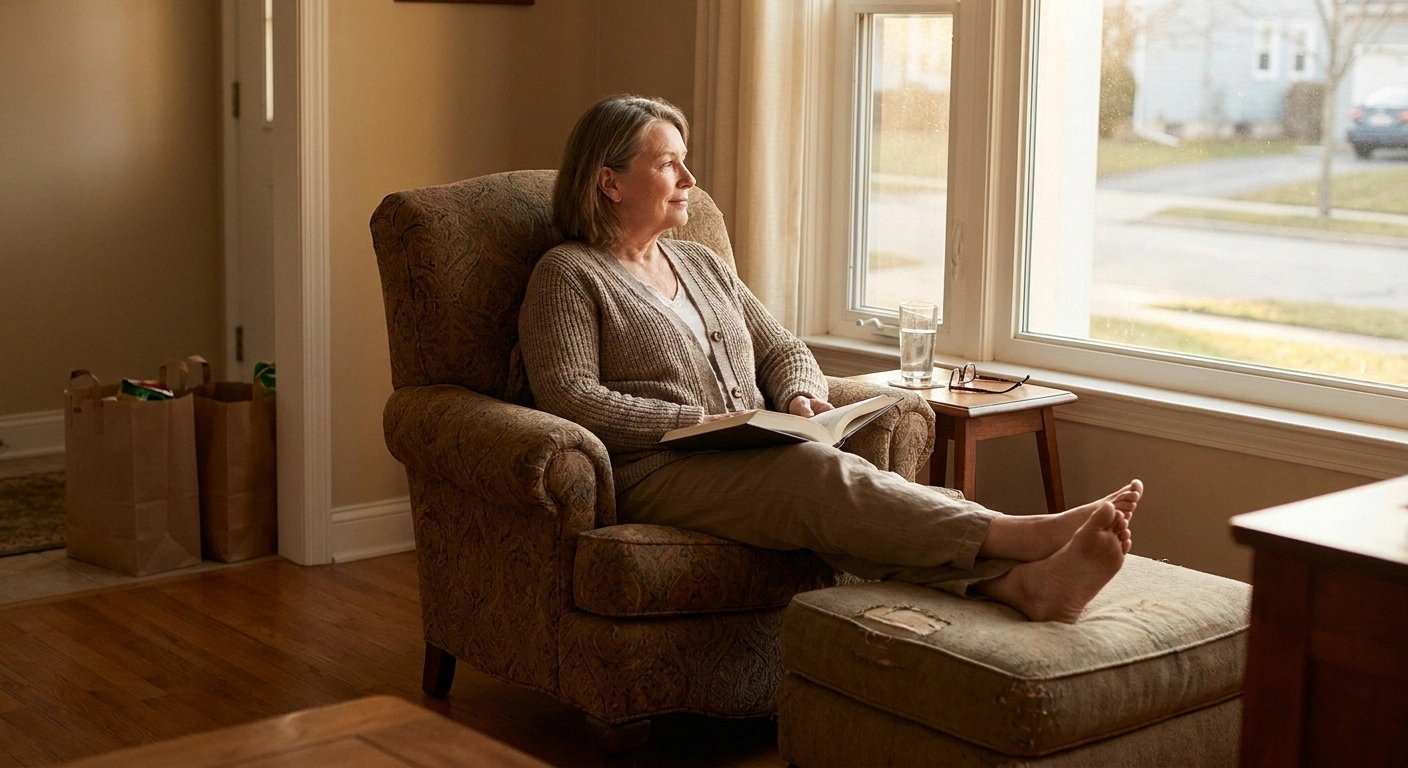
Sometimes despite all the planning, the trip runs long. Maybe the store was packed. Maybe you forgot two items and had to backtrack. Maybe you were feeling okay at the start and ran over your budget without noticing. When you get home from a trip that overshot, here’s the protocol I use.
If You Overshot: 4-Step Recovery Protocol
Rest, elevate, hydrate — in that order, immediately. Feet up above hip level for at least twenty minutes. A big glass of water. The feet-up part does real work for the circulation that static standing compressed.
A cool foot soak can help if the feet are burning. Not ice cold — cool. Ten to fifteen minutes. Some people prefer warm instead; listen to your own feet. Foot baths are among the simplest interventions that produce real relief for many neuropathy patients.
Gentle movement later — not right away. An hour or two after the rest, a slow five-minute walk around the house helps reset the circulation. A full “I should stretch” session is usually too much on a flare day. Pick one gentle movement — a calf stretch, some seated ankle circles — and do it without pushing.
Eat something. Flares burn through energy. A proper meal with protein and carbs rebuilds the resources the trip drained.
Give yourself permission to have a quiet evening. The shopping happened. The food is in the house. Your job for the next few hours is recovery, not productivity. That permission is part of the plan, not a lapse from it.
Frequently Asked Questions
What shoes are best for grocery shopping with neuropathy?
The best shoes for grocery shopping with neuropathy have firm arch support, generous cushioning under the ball of the foot and heel, a roomy toe box that doesn’t squeeze the toes, and a stable heel counter that locks the foot in place. Well-made walking shoes, stability running shoes, and some orthopedic styles all work. What doesn’t work: flat slip-ons, thin-soled ballet flats, worn-out sneakers, or shoes that force your toes together. If you have a favorite pair, save them specifically for long errand days.
Is it okay to use a motorized cart at the grocery store if I can walk a little?
Yes. Motorized carts exist so people with mobility limitations can complete their shopping. You don’t need to be unable to walk at all — you need the cart to make the shopping possible without triggering a flare, an injury, or complete exhaustion. If that’s you, the cart is doing exactly what it’s for. There’s no gatekeeping. A lot of neuropathy patients delay using one for years and then wonder why they waited, because it transformed grocery shopping from a dread task back into an ordinary errand.
What time of day is best to go grocery shopping with neuropathy?
Tuesday, Wednesday, and Thursday mid-mornings — roughly 9 to 11 AM — are the lightest at most stores. Weekday mid-afternoons, around 1 to 3 PM, are a close second. The heaviest times are Saturday and Sunday afternoons and weekday evenings between 5 and 7 PM. Shopping during off-peak times means shorter lines, quieter stores, less visual overload, and faster total trips. If you have schedule flexibility, use it.
How can I avoid standing too long in the checkout line?
Use self-checkout when possible — the lines are usually shorter and move faster. If you’re in a regular line, lean on the cart handle to transfer weight off your feet and shift which leg bears weight every minute. Ask the cashier if there’s a stool available — some stores do keep them for staff and may let you use one. If you feel a flare starting while you wait, it’s completely acceptable to leave your cart, go sit down for a few minutes, and come back when you feel steadier.
Should I use curbside pickup or home delivery instead of shopping in person?
Both are legitimate tools and most neuropathy patients benefit from using them at least some of the time. Curbside pickup is usually free above a minimum order and keeps you in the car while an employee loads the groceries — this eliminates all walking, standing, and line-waiting. Home delivery adds a fee but eliminates the drive too. Many patients alternate — an in-store trip every two or three weeks for produce selection, and curbside or delivery for pantry staples in between. Pick the mode that fits the week you’re having.
How do I recover if I overdid it at the grocery store?
Put your feet up above hip level for at least twenty minutes. Drink a big glass of water. A cool or warm foot soak for ten to fifteen minutes helps if the feet are burning. Eat a proper meal — flares burn through energy. An hour or two later, a slow five-minute walk around the house helps reset circulation. Skip the formal stretch session on a flare day — pick one gentle movement and stop there. Give yourself permission to have a quiet evening. Recovery is part of the plan, not a failure of it.
Is it worth asking the store to help carry my groceries to the car?
Yes, and most chain grocery stores offer this service at no charge. Just ask at the checkout — they’re set up for it. Many neuropathy patients feel guilty using this service and skip it, but that guilt costs them a flare. The teen or staff member is earning a paycheck for exactly this kind of help. You’re not imposing. If the store offers it, it’s part of the service.
About the Author