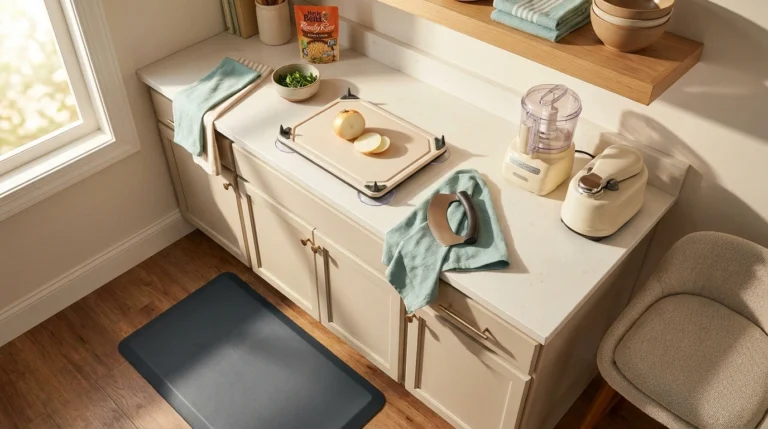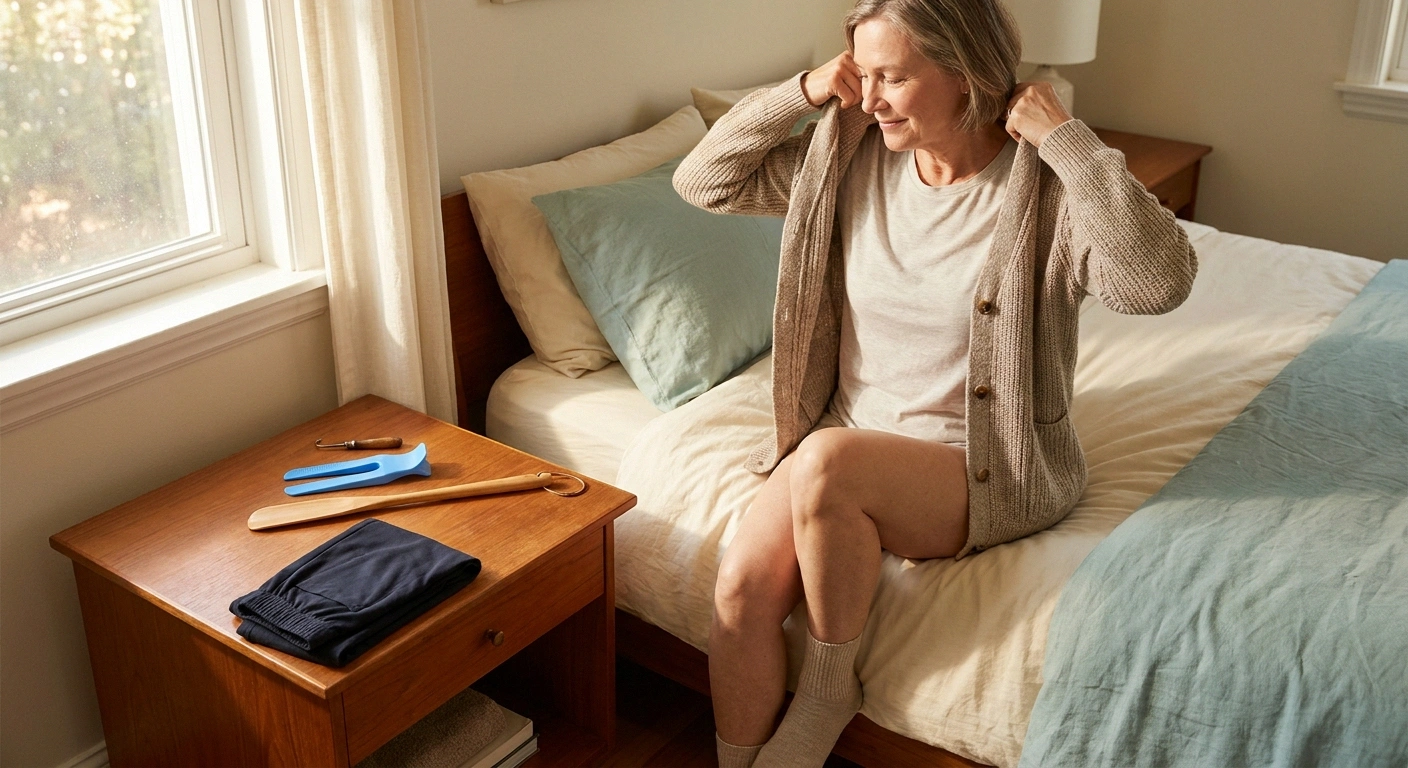
I used to lay out my Sunday-best clothes the night before, get up, take a shower, and be ready in twenty minutes. Now there's a stretch in the morning where I'm sitting on the edge of my bed, half-dressed, looking at a row of tiny shirt buttons that I'm pretty sure won't cooperate. The buttons aren't smaller than they used to be. My fingers are.
If you've found yourself avoiding certain shirts because of the buttons, swearing at zippers in the bathroom, or asking a spouse to “just help me with this one thing” more often than you'd like — welcome. You're not alone, and the answer isn't to wear pajamas. The answer is to change the clothes, change the tools, and change the workflow.
I'm Janet Ellis, a community advocate who lives with peripheral neuropathy myself. This is the dressing system I've worked out — the clothes that don't fight you, the small tools that do most of the work, and the morning workflow that gets you out the door without spending half your morning on it.
Why Getting Dressed Gets Hard
Neuropathy interferes with dressing in a handful of specific ways. Recognizing yours helps you target the right fixes.
6 Ways Neuropathy Disrupts Dressing
The fix for neuropathy dressing problems isn't tougher hands. It's smarter clothes and a few small tools. Pull-on pants, magnetic-closure shirts, slip-on shoes, a button hook, a sock aid, and the discipline to sit down for everything below the waist. About $40-60 for the basic dressing kit. Worth every dollar.
Numb fingers. If your fingertips can't feel small objects clearly, buttons, zippers, snaps, and small clasps become a guess-and-check exercise. You can do them; it just takes ten times longer than it used to.
Hand weakness. Pulling up tight pants, squeezing into a sports bra, gripping a zipper pull, fastening a stiff button — all require strength your hands may not reliably have.
Allodynia and skin sensitivity. Some patients can't tolerate seams, tags, tight elastics, or rough fabrics on their skin. Allodynia turns ordinary contact into pain, and clothing is in contact with your skin all day.
Foot numbness. If you can't feel your foot, you can't feel whether a sock is bunched up under your arch or whether your shoe is on right. Both can cause skin breakdown if you don't catch them.
Balance issues. Standing on one leg to step into pants, leaning over to put on socks, balancing on one foot to put on shoes — all higher-risk for falls when you have balance problems from neuropathy.
Foot drop. The inability to lift the front of the foot makes getting pants and socks over the foot harder, especially if you're trying to do it standing up.
You may have one of these, several, or all of them. The fixes overlap a lot, which is the good news.
Sit Down to Get Dressed
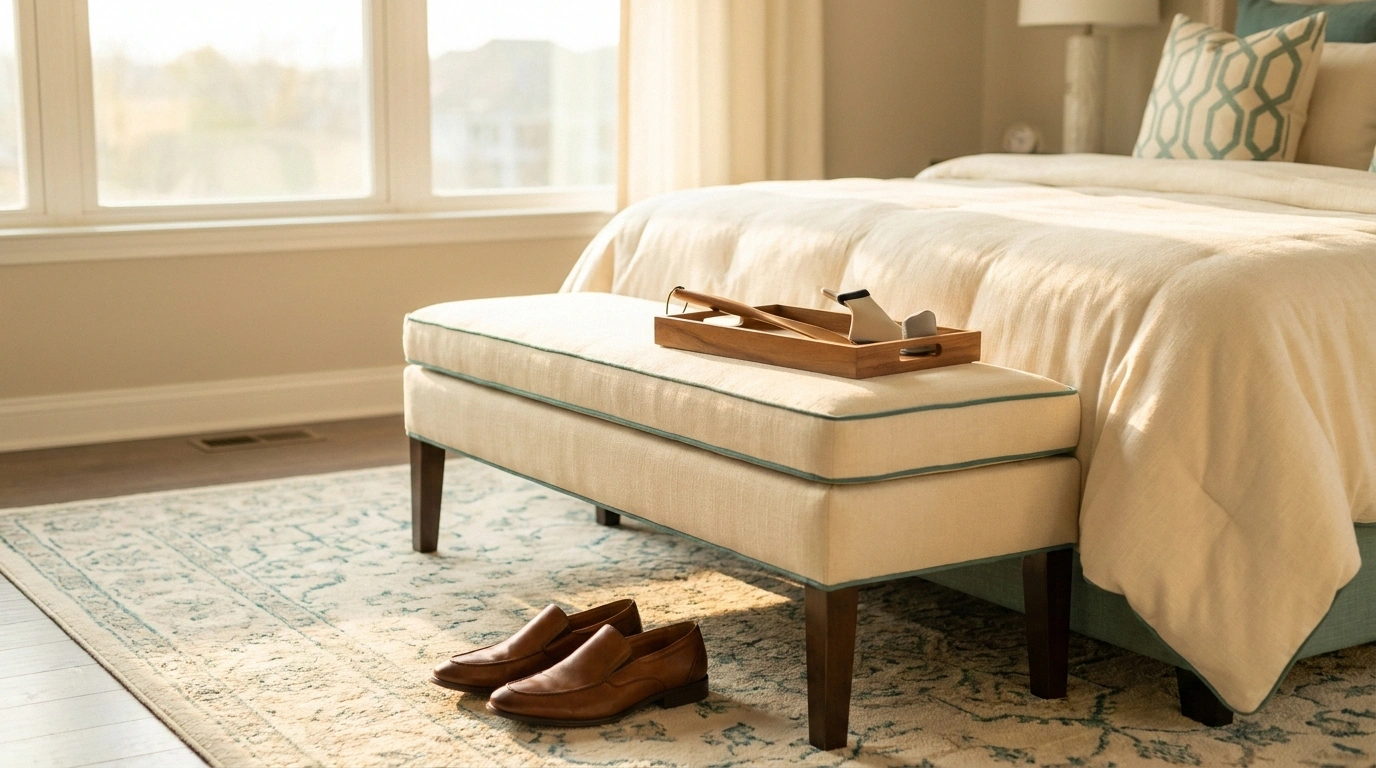
This is the single biggest change most patients should make, and the one most resist. Sitting cuts your fall risk by a lot, takes the foot pain out of the equation, and frees both hands for the actual dressing work.
The Single Highest-Leverage Change
Sit down for anything below the waist.
Use:
- The edge of the bed — usually firm enough, just be sure it doesn't give way under you when you put weight on one side.
- A dressing chair or bench at the foot of the bed — if you have room, a small bench dedicated to dressing is wonderful. You always know where your sock aid and shoe horn are.
- A chair with arms in the closet area — for hanging up clothes, putting on shirts, and any standing-balance task that you'd rather sit for.
- A shower bench — for dressing in the bathroom after a shower without standing on a damp floor.
You don't have to sit for everything. But for socks, shoes, pants, and anything that involves balancing on one leg, sitting is the right move.
The Adaptive Clothing That Helps Most
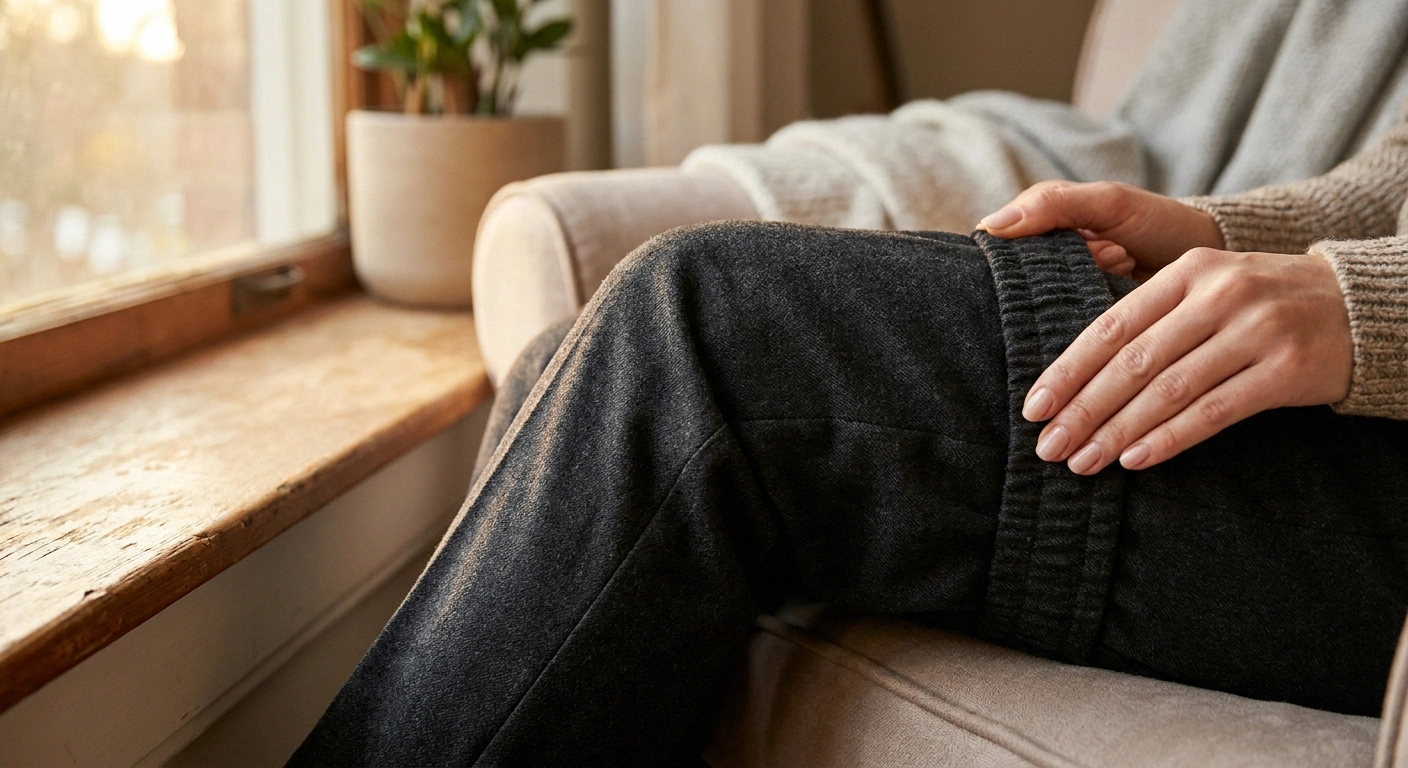
Adaptive clothing has come a long way. Twenty years ago “adaptive” meant medical-looking, ugly, and expensive. Now it's largely indistinguishable from regular clothing — same brands, same styles, just with smarter closures and softer fabrics.
The categories worth knowing:
Pull-On Pants
Elastic-waist pants are the single best dressing upgrade for neuropathy patients. No buttons, no zippers, no fly. Most look like nice trousers or jeans — the elastic is hidden in a wider waistband. You step in (sitting), pull up to your waist, done. Brands like Zella (Nordstrom), Vuori, Athleta, and many others make pull-on options that pass at the office.
Look for: wider elastic (more comfortable on numb skin), no scratchy interior tags, soft fabric, and a relaxed enough cut that you don't have to wrestle them up. Avoid: tight elastic that digs into your waist or hips, especially on bad pain days.
Magnetic-Closure Shirts
Brands like MagnaReady, IZ Adaptive, and (recently) Tommy Hilfiger Adaptive make button-down shirts that look completely normal — same buttons visible on the front — but the actual closure is magnetic underneath. You bring the panels close, the magnets snap together, you're done. Looks like you spent fifteen minutes buttoning. Took five seconds.
For dressier occasions or work, this is a transformation. Around $30 to $80 per shirt. The price comes down as the category grows.
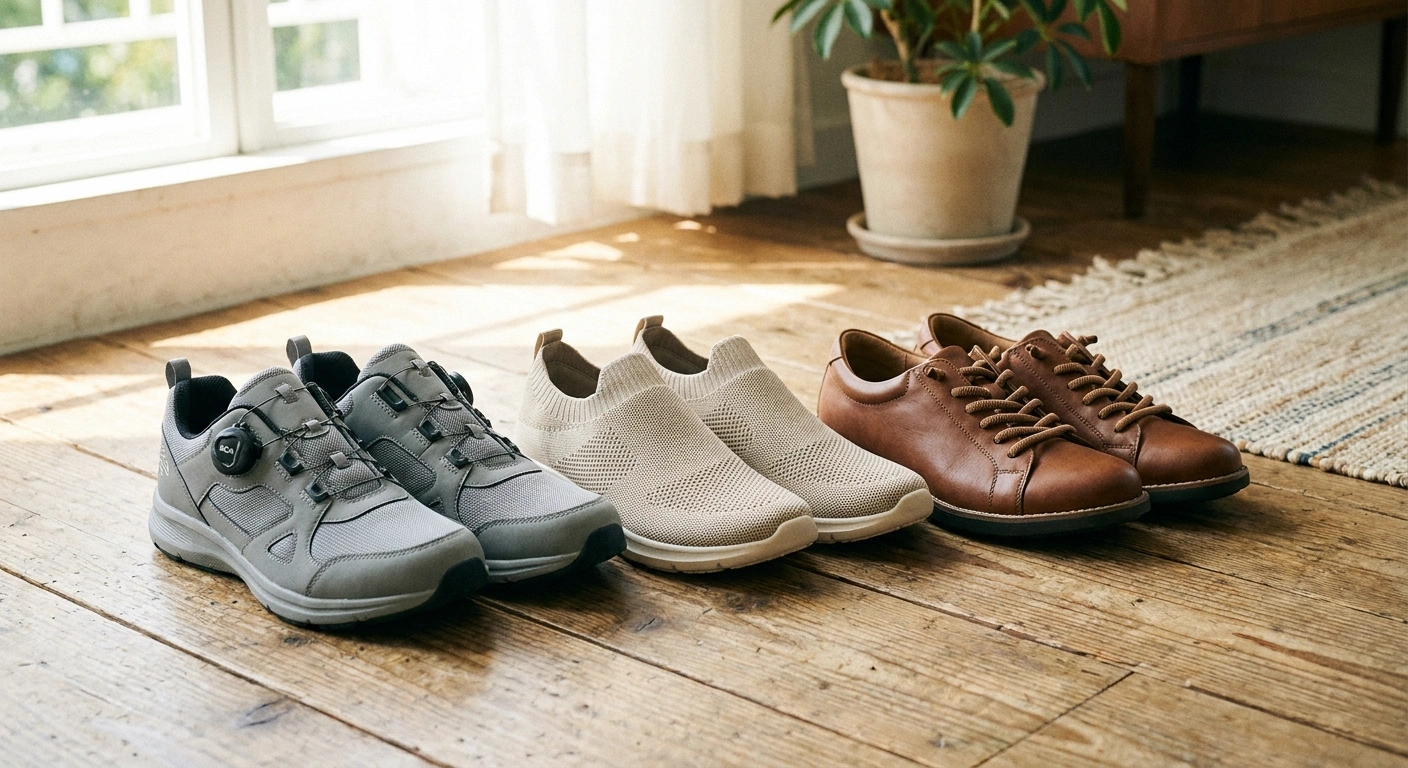
Slip-On and BOA Dial Shoes
Shoes were the next thing I figured out, and I wish I'd done it sooner. Three categories work well:
- BOA dial closure — a small dial on the side of the shoe replaces laces. You twist to tighten, lift to release. Common on athletic shoes, hiking shoes, and increasingly casual shoes. About $80 to $150 a pair.
- Slip-on shoes — no laces or fasteners at all. Best for walking, daily wear, and indoor shoes. Look for ones with a foam back panel that holds the foot in place.
- Elastic shoelaces — convert your existing lace-up shoes to slip-ons. Replace your laces with elastic ones (around $5–10 a pair) and the shoes pull on like slippers but still look laced. Best of both worlds.
For specific recommendations on shoes designed for neuropathy patients, see best shoes for neuropathy.
Tagless and Seamless Underwear
Worth the upgrade if you have skin sensitivity or allodynia. Tagless cotton or modal underwear (Hanes ComfortFit, Calvin Klein Cotton Comfort, many others) eliminates the scratchy tag at the back. Seamless socks (Smartwool, Bombas, Thorlos all have seamless or low-seam options) eliminate the toe seam that bunches against numb feet and can cause skin pressure.
Front-Closure Bras
If you've been struggling with reaching behind your back to fasten a hook-and-eye bra, switch to a front-closure design. Even better: a front-closure with magnetic clasp. Liberare, Springrose, and others make adaptive bras specifically for women with limited dexterity. Around $30 to $60.
Side-Opening Pants
For patients with significant leg weakness or who use mobility aids, side-opening pants (Velcro or zip closures along the side seam) are a category worth knowing. They let you put pants on while seated without lifting your legs over the waistband. Less common in mainstream stores but available from adaptive specialty retailers.
Small Tools, Big Difference
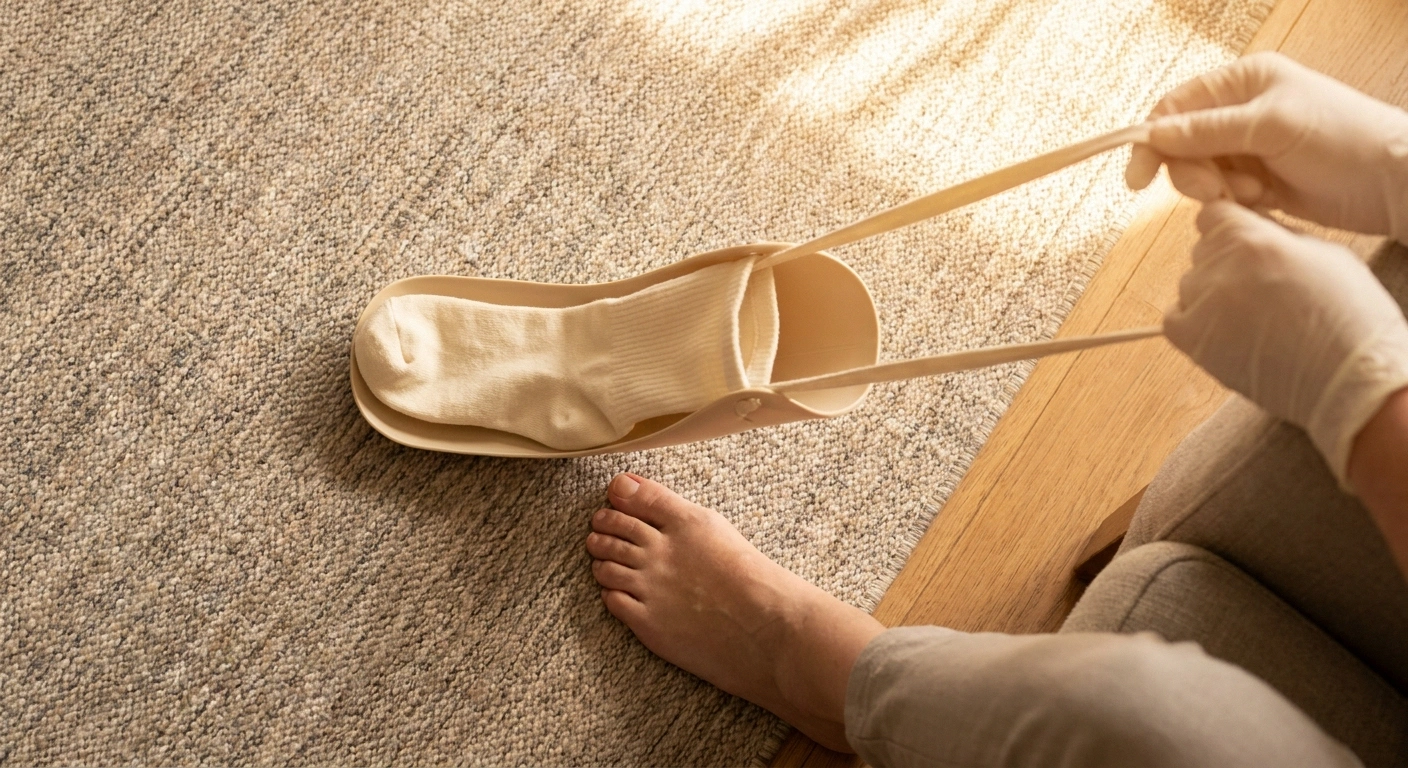
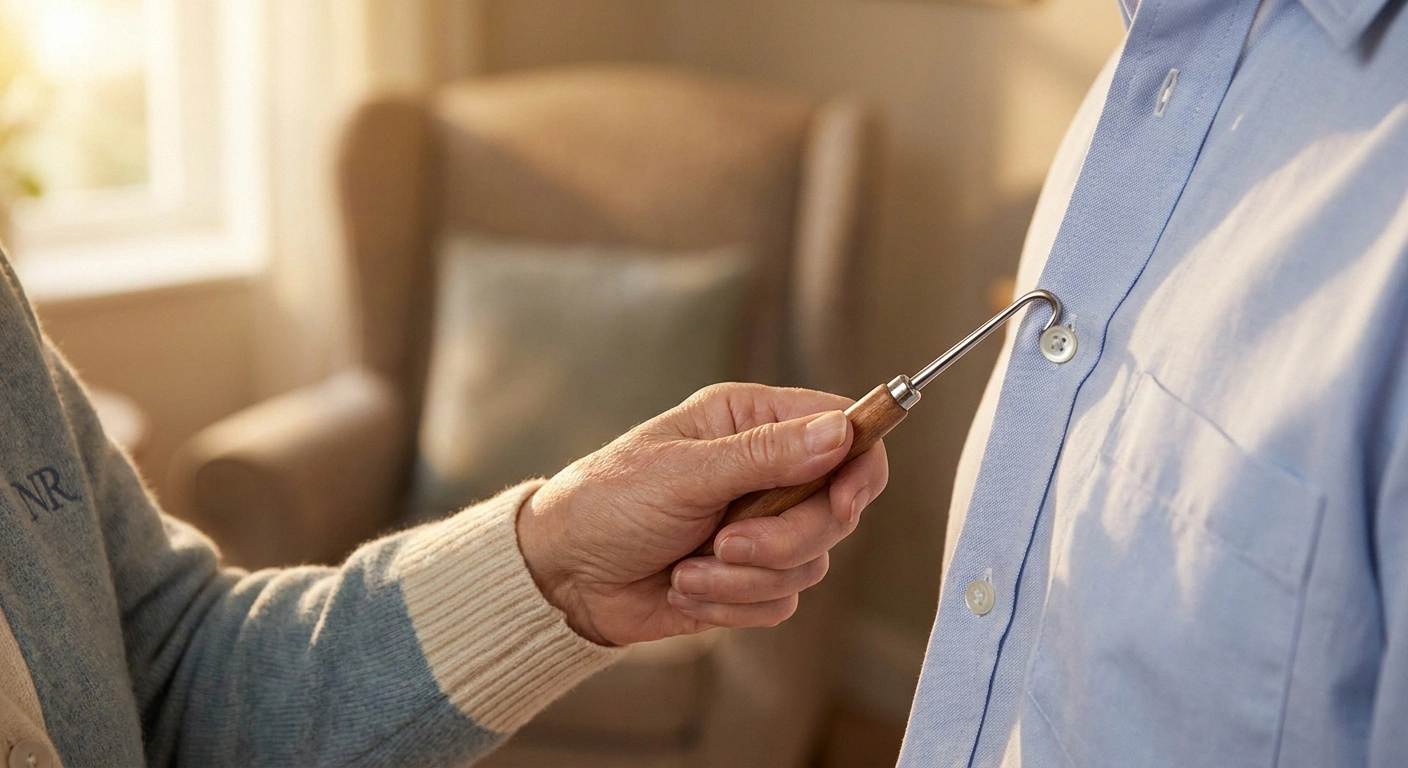
You don't have to overhaul your whole wardrobe. A handful of tools applied to your existing clothes does most of the work.
The Basic Dressing Kit (~$40–$60)
Button hook. A small wand with a hook on the end. You push the hook through the buttonhole, catch the button, and pull it through. Designed for stroke and arthritis patients but ideal for neuropathy hands. About $5 to $15. The button hook is the single highest-leverage dressing tool I own.
Zipper pulls. Small loops, rings, or clips that attach to a zipper tab. You hook a finger through, pull. Easier than pinching a small zipper tab. About $5 for a pack. You can also use a paperclip in a pinch — bend it through the zipper hole, you've got a pull.
Sock aid. A flexible plastic shell that holds the sock open. You drop it on the floor, slide your foot in, pull up by the cord handles. Sock goes on without bending or reaching. About $10 to $20. For a patient with foot drop or significant balance issues, this is a daily tool.
Long-handled shoehorn. Lets you slip your foot into shoes without bending all the way down. A long handle (18 to 24 inches) means you can stay upright. Stainless steel ones last forever; about $10 to $20.
Dressing stick. A stick with a hook on one end and a small foam pad on the other. Lets you pull pants up from the floor, push shirts off your shoulders, reach behind your back to grab clothing. About $10 to $25. Especially useful if reach is limited.
Reacher/grabber. Standard mobility tool with a trigger handle and grippers at the far end. Picks up dropped items, grabs hangers off high closet rods, retrieves socks from low drawers. About $10 to $20. Worth having one in the bedroom and one in the kitchen.
Compression sock applicator. If you wear compression socks for neuropathy, the applicator (a flexible cone or sleeve) makes them dramatically easier to put on. Compression socks are tight by design; getting them on with numb hands is an exercise that often results in defeat. The applicator solves it. About $25 to $50.
For a basic dressing kit, the button hook, sock aid, long-handled shoehorn, and a couple of zipper pulls cover most needs. Total cost: around $40 to $60. Worth every penny.
Fabrics That Don't Hurt
If your skin is sensitive, fabric choice matters more than most people realize.
Fabrics That Help vs Fabrics That Hurt
- Bamboo
- Modal
- Tencel
- Soft cotton
- Jersey knits
- Soft merino wool
- Fleece (the soft kind)
- Rough wool
- Scratchy synthetics
- Velvet/velour (creates friction, hard to slide on)
- Tight elastic on numb skin
- Prominent seams
- Sequins/beading inside
- Scratchy interior tags
Choose: bamboo, modal, Tencel, soft cotton, jersey knits, fleece (the soft kind), merino wool (yes — soft merino is different from rough wool). These are smooth, breathable, and don't stick to skin or create friction.
Avoid: rough wool, scratchy synthetics, fabrics with prominent seams, very tight elastic on numb skin, velvet/velour (creates friction that makes dressing harder, and tends to grip when you're trying to slide it on), and anything with sequins or beading inside that touches the skin.
Tags: Cut them out, or buy tagless. The little internal tag is a constant scratchy contact point for sensitive skin. If you can't remove a tag (some are sewn in), look for printed-on tags instead of fabric ones.
Seams: Some shirts and underwear use flat-locked or seamless construction. Worth seeking out for sensitive-skin folks.
The Morning Workflow
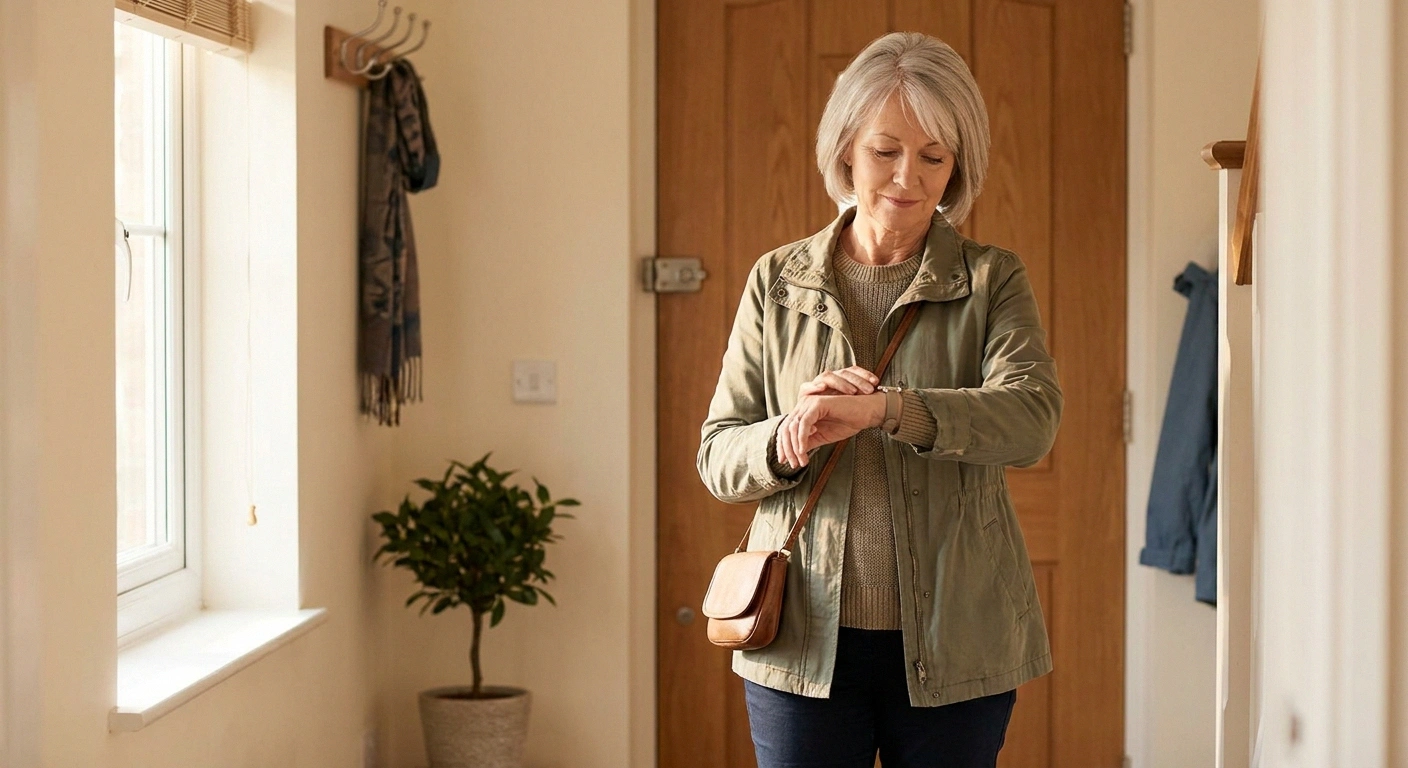
How you put it all together matters as much as the items themselves. Here's the workflow that works for me and most of the patients I talk with:
7-Step Morning Dressing Workflow
- Lay clothes out the night before. Decision-making in the morning fog is harder than it should be. Even better, build “outfit kits” — Sunday's clothes hanging together, Monday's clothes hanging together, so the morning decision is “grab the next hanger” not “what should I wear?”
- Time it with your medications. If you take a morning pain medication or anti-inflammatory, give it 30 to 45 minutes to start working before you tackle dressing. You'll be more comfortable and your hands will work better.
- Sit down for everything below the waist. Pants, socks, shoes — sitting. Use the bed or a chair.
- Do the affected/numb side first. If one hand is weaker or one foot is more affected, get that limb dressed first while you have the most energy and dexterity.
- Use the tools without apology. A button hook isn't a confession of weakness; it's smart. The only people who care that you use one are people who don't have neuropathy.
- Build the dressing kit. Keep your sock aid, button hook, shoehorn, and grabber in one spot — in the bedroom, ideally on a small table or chair beside where you sit to dress. Not scattered.
- Set a reasonable pace. Don't rush. Frustration with buttons leads to dropped items, which leads to more frustration. Slow and methodical is faster than fast and angry.
For the rest of the morning routine — pacing, pain management, getting moving on bad days — see the neuropathy morning routine guide.
If a Caregiver Is Helping
If your spouse or a family member helps you dress, a few principles make the process smoother and safer.
Affected side first. Whether putting clothing on or taking it off, the weaker or more numb limb goes through the sleeve or pant leg first. It's harder to maneuver — easier to do it before the other side is committed.
Don't pull on weak limbs. Pulling a hand or foot through a sleeve or pant leg should be gentle and gradual. A weak shoulder can dislocate, a fragile skin area can tear.
Sitting reduces fall risk. Always have the patient seated for the parts of dressing that involve balance — pants, socks, shoes.
Talk it through. The patient knows where their pain points and weak spots are; the helper doesn't always. A simple “I'm going to lift your foot now” before doing it prevents startles and bracing.
Be patient with the buttons. If you're helping with buttons or zippers, the patient may want to try first. Let them. It's their independence.
What I Want You to Take Away
Getting dressed used to be a thoughtless ten minutes. Now it's a different ten minutes — slower, more deliberate, with different tools — but it's still ten minutes, and you can still get to where you're going. The pajamas-all-day path is not the right path. The give-up path is not the right path. The right path is to change the clothes and the tools so that the morning works for the body you have now.
None of these changes are dramatic. A button hook, a few pull-on pants, a sock aid, a pair of slip-on shoes. The cumulative effect is that getting out the door stops being a daily defeat. That changes a lot.
And don't be embarrassed to use any of it. The first time I pulled a button hook out of my dressing kit at a hotel, my husband said, “Why didn't you start using that years ago?” I had no answer. I should have. Use the tools. Wear the pull-on pants. Sit down for socks. Get out the door.
Frequently Asked Questions
What is the easiest type of pants for someone with neuropathy?
Pull-on pants with a wide elastic waistband. No buttons, no zippers, no fly. Most major brands now make pull-on options that look like regular trousers or jeans. Brands like Zella, Vuori, Athleta, and many others have versions that work for both casual and dressier settings. The wider the elastic band, the more comfortable on numb or sensitive skin.
How can I button a shirt with numb fingers?
Two options. First, buy a small button hook tool (about $10) — push the hook through the buttonhole, catch the button, pull it through. It does the work your fingers can't. Second, switch to magnetic-closure shirts (brands like MagnaReady or IZ Adaptive) — they look like normal button-downs but the closure is magnetic underneath, snapping together in seconds. Either approach works. The magnetic shirts cost more upfront but are dramatically faster.
How do I put on socks if I cannot bend over or balance well?
Use a sock aid. It is a flexible plastic shell that holds the sock open while you slide your foot in, then you pull it up by two cord handles. No bending, no reaching, no balancing on one foot. About $10 to $20 from any medical supply store or online retailer. Particularly valuable for patients with foot drop, significant balance problems, or back pain that makes bending difficult.
What are the best shoes for someone with neuropathy who has trouble tying laces?
BOA dial closure shoes (a twist dial replaces laces) and slip-on shoes are the easiest options. If you love a particular pair of lace-up shoes, you can convert them to slip-ons by replacing the laces with elastic ones — about $5 to $10 for a pair of elastic laces. The shoes look laced but pull on like slippers. For full coverage of footwear options, see the best shoes for neuropathy guide on this site.
What fabrics should I avoid if my skin is sensitive?
Rough wool, scratchy synthetics, anything with prominent or scratchy seams, very tight elastic against numb skin, and velvet or velour (which creates friction and grips skin, making dressing harder). The fabrics that work best for sensitive-skin neuropathy patients are bamboo, modal, Tencel, soft cotton, jersey knits, and soft merino wool. Tagless construction or printed-on labels are worth seeking out.
Are adaptive clothes covered by insurance?
Generally no. Adaptive clothing is treated as regular apparel by most insurance plans, even though it serves a medical purpose. Some Medicaid waiver programs and certain disability benefit programs include clothing allowances that can be applied to adaptive items. Tax-deductible status under medical expenses may apply if a doctor specifically prescribes the adaptive clothing — talk to your tax professional about the specifics. Most patients pay out of pocket, but the prices have come down significantly as the category has grown.
How can I help a partner with neuropathy get dressed without hurting them?
Three principles. Dress the affected side first, whether putting clothes on or taking them off — the weaker limb goes through the sleeve or pant leg first because it is harder to maneuver. Do not pull on weak limbs; gentle and gradual is the rule. Have your partner seated for anything below the waist to reduce fall risk. Talk through what you are about to do before you do it so they can prepare. Let them try first when they want to. Help is help, not control.
Where can I buy a basic dressing kit?
Most basic dressing aids are available on Amazon, at large drugstores like Walgreens or CVS, and at medical supply stores. The starter kit most patients want includes a button hook, a sock aid, a long-handled shoehorn, a reacher/grabber, and a few zipper pulls. Total cost is usually $40 to $60. Specialty retailers like Vive Health, The Wright Stuff, and June Adaptive carry larger selections including adaptive clothing alongside the dressing aids.
About the Author