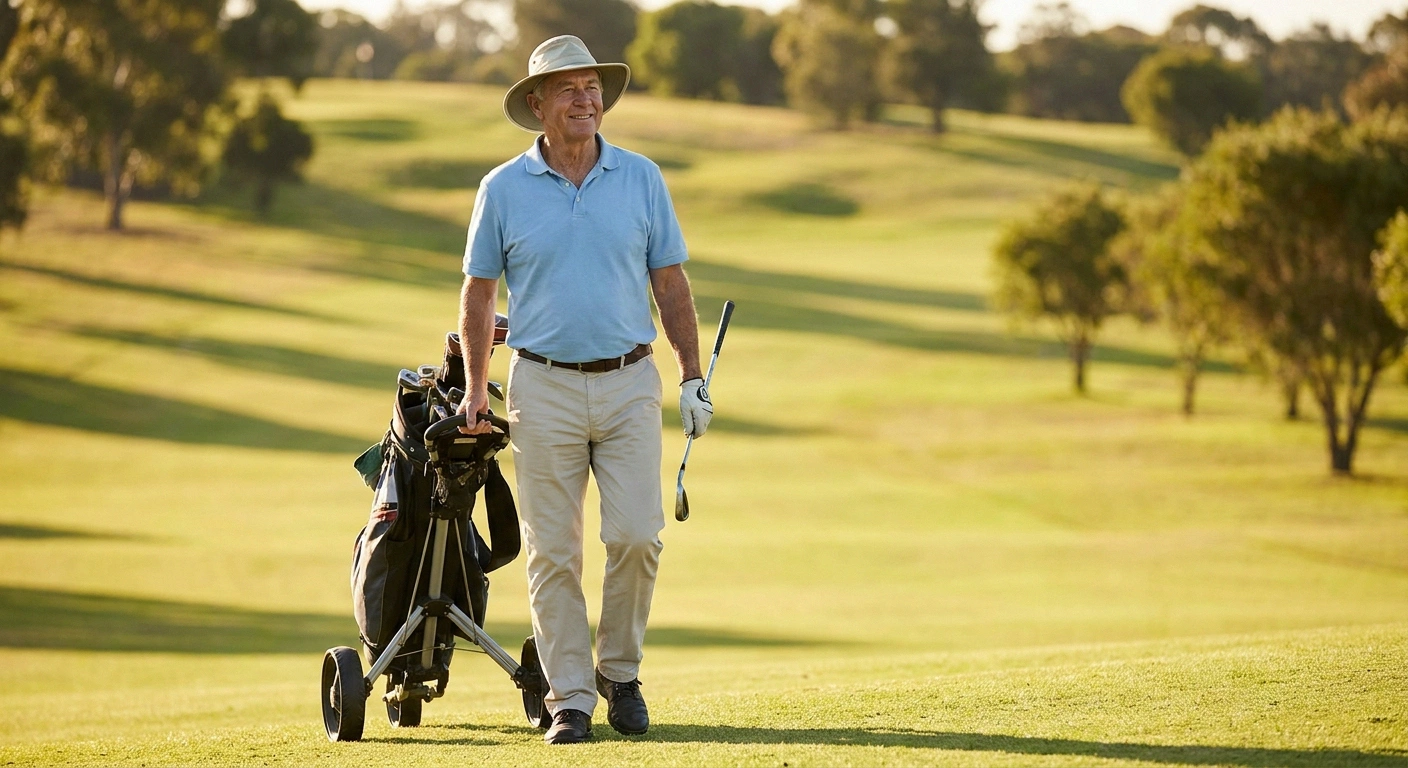
One of the gentlemen in my support group put it to me this way last spring: “Janet, I can live with the numbness. What I can’t live with is the idea that I’m done with golf.” He’d played every Saturday for forty years. The neuropathy in his feet had crept in, his balance felt unreliable, his hands didn’t grip the way they used to — and somewhere along the line he’d quietly decided the game was over. It wasn’t. A season later he was back out there, riding a cart, playing nine instead of eighteen, scoring about the same as always, and grinning about it.
I tell that story because the most common thing I hear from people who love this game isn’t a question about technique. It’s grief, dressed up as a shrug. So before we get into grips and shoes and balance, let me say the part that matters: for most people with peripheral neuropathy, golf is not off the table. It usually needs adapting, not abandoning. Let’s walk through how.
Why Golf and Neuropathy Aren’t Necessarily a Bad Pair
Here’s something that surprises people: gentle, regular movement is generally good for neuropathy, not bad for it. Staying active supports circulation to the small blood vessels that feed your nerves, helps with balance, and lifts the mood that chronic pain tends to flatten. Walking, in particular, has a real evidence base — we cover it in depth in our guide on whether walking helps neuropathy — and a round of golf, paced right, is a long, low-intensity walk wrapped around something you actually want to do.
Golf usually needs adapting, not abandoning
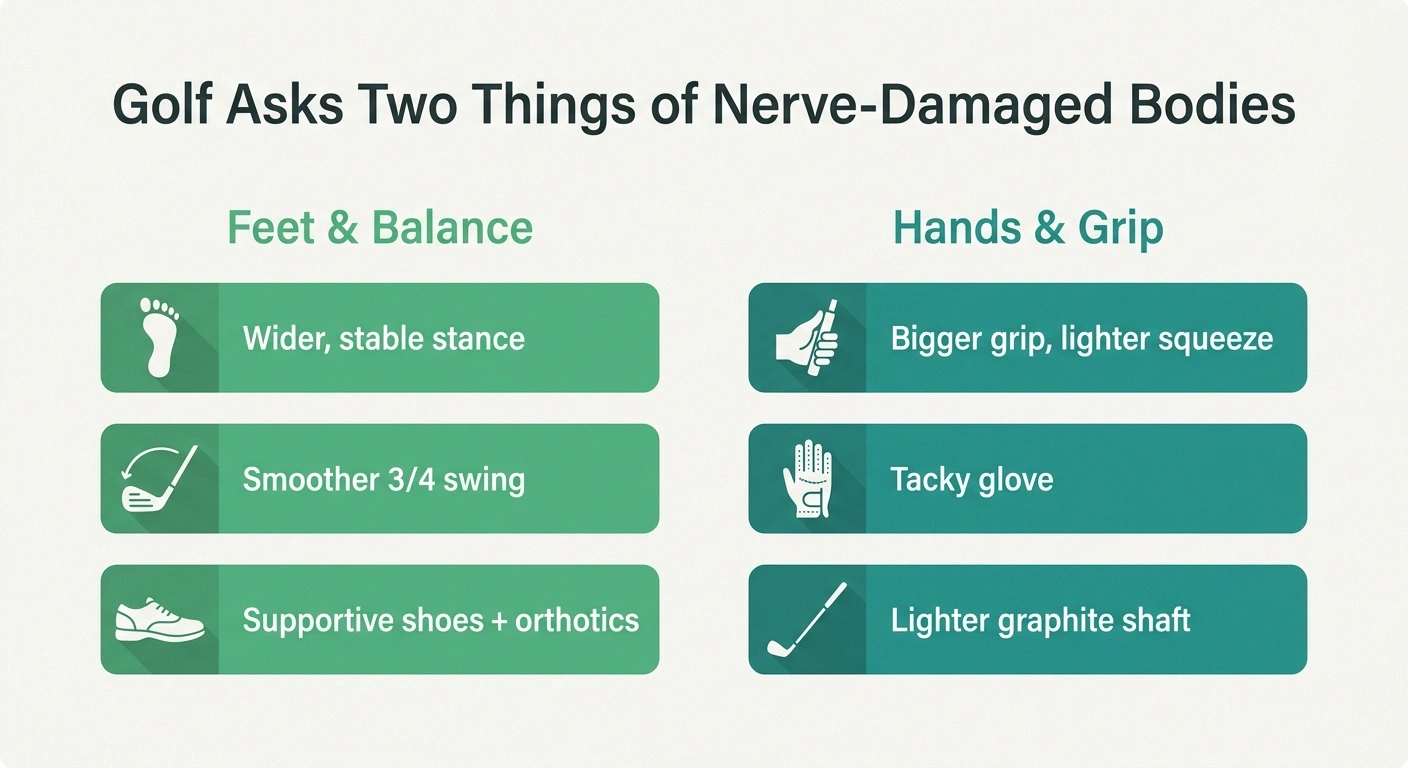
Solve for the two things golf asks of a body with nerve damage — balancing on your feet and gripping with your hands — and the rest of the game tends to follow. Most people keep playing for many more seasons.
The catch is that golf also asks two specific things of a body with nerve damage: it asks your feet to balance and load while you make a fast, twisting move, and it asks your hands to grip and control a club they may not fully feel. Almost every adaptation in this article is aimed at one of those two demands. Solve for the feet and the hands, and the rest of the game tends to follow.
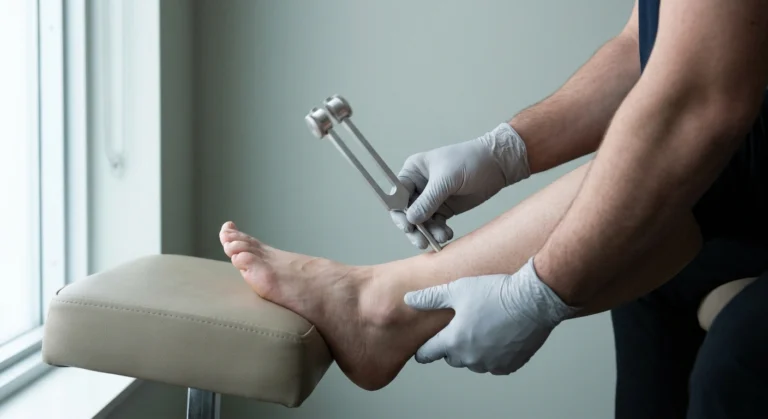
One honest caveat before we go further: this is general information from one patient to another, not medical advice. Nerve damage varies enormously from person to person, and balance problems in particular carry a real fall risk. It’s genuinely worth a conversation with your doctor, and ideally a podiatrist, before you change your activity level — they can look at your feet, your balance, and tell you what’s safe.
Footwear Is the First Fix, Not the Last
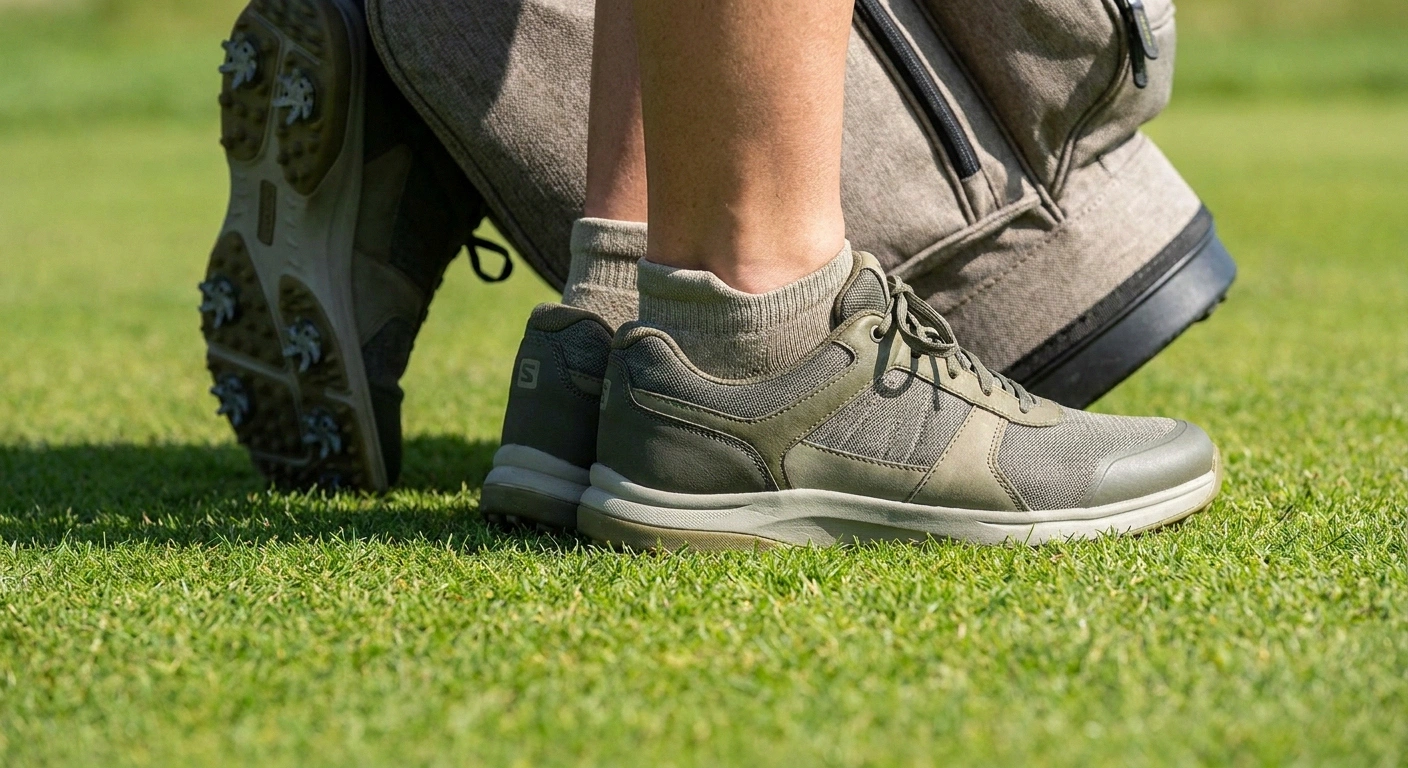
If you do one thing before your next round, make it your shoes. Golf is four-plus hours on your feet over uneven ground, and the wrong footwear can turn a manageable day into a three-day flare. The features that matter for neuropathy are the same ones that matter everywhere else, just more so: a wide, roomy toe box so nothing presses on sensitive nerves, real arch support, good cushioning under the ball and heel of the foot, and a stable, not-too-flexible sole that helps you feel grounded during the swing.
What to Look For in a Golf Shoe
- Wide, roomy toe box — nothing pressing on sensitive nerves
- Real arch support and cushioning under the ball and heel
- Stable, not-too-flexible sole for a grounded stance
- Spikeless design — supportive and forgiving for recreational play
- Broken in at home first; smooth, seam-light socks plus a spare pair
Stability-oriented orthotics often help more than any single feature.
Spikeless golf shoes are often a smart choice — they’re more like a supportive sneaker, the traction is plenty for a recreational player, and they’re far more forgiving than aggressive metal-spike stability shoes. Whatever you pick, break them in walking around the house first; opening day is not the day for stiff new leather. Our broader guide to choosing the best shoes for neuropathy walks through fit, sizing, and what to look for, and almost all of it transfers straight to the course.
Two add-ons are worth mentioning. First, custom or quality over-the-counter orthotics designed for stability can meaningfully steady your stance and your swing — many people find this is the single biggest improvement they make. Second, your socks matter more than you’d think; a smooth, seam-light, moisture-managing sock reduces the friction and hot spots that sensitive feet punish you for. Bring a spare pair in the bag for the back nine.
Lighten Your Grip — Then Build It Up If You Can’t Feel It
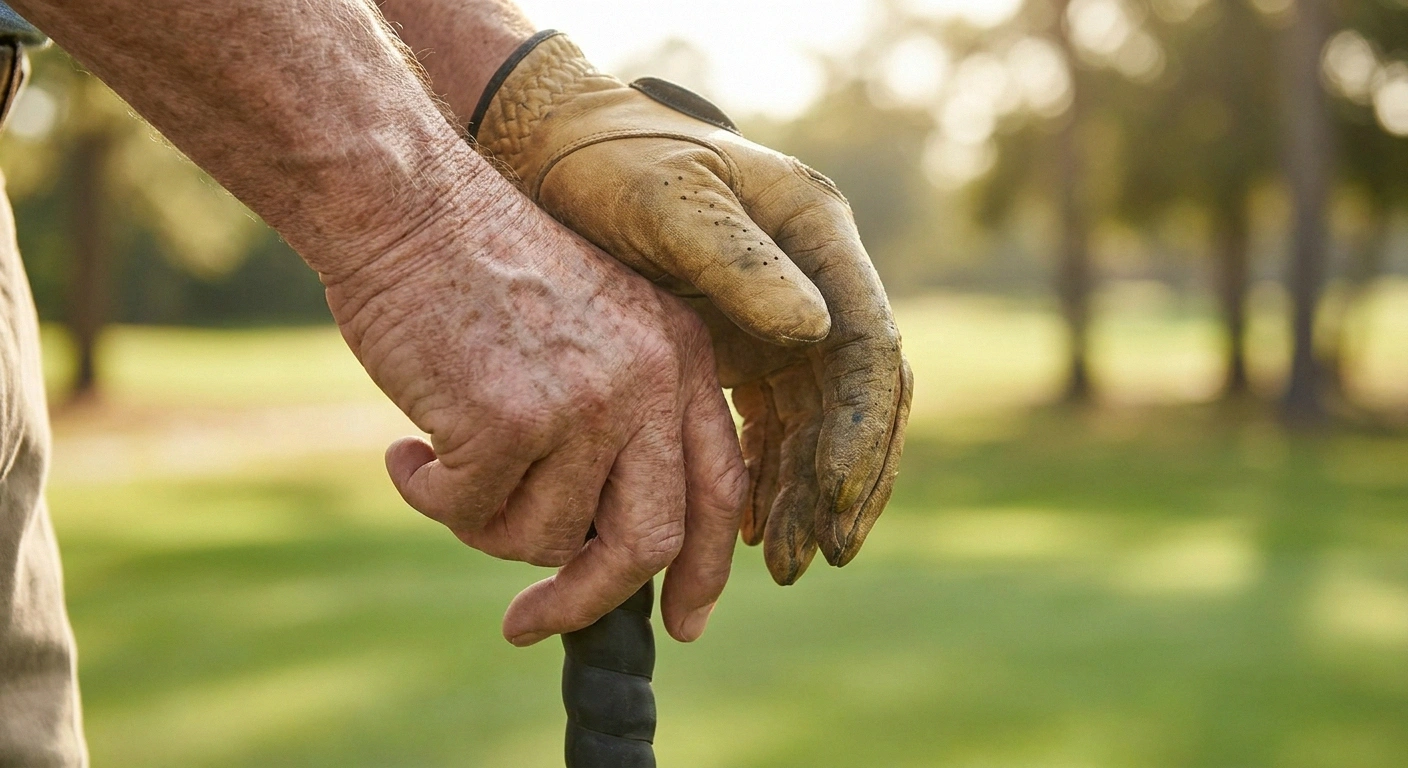
Now the hands. There’s a useful piece of medical knowledge here that doubles as good golf advice: gripping the club too tightly squeezes the nerves and tendons running through your wrist and palm. In golfers, this is a recognized way that wrist and hand entrapment problems get aggravated. A white-knuckle grip is bad for your nerves and bad for your golf swing — tension kills clubhead speed and feel. So the first adjustment is simply to grip more lightly. The old teaching image still works: hold the club as if it were a small bird you don’t want to crush but don’t want to let fly away.
When hands are numb, the instinct is to squeeze harder just to feel connected to the club — which strains the very nerves and tendons in the wrist. The fix is to make the grip bigger, not the squeeze tighter. An oversized or built-up grip lets a numb hand control the club with far less clamping force.
But if your hands are numb, “grip lightly” runs into a real problem — you can’t always feel how hard you’re holding on, so you over-grip just to feel connected to the club. The fix is counterintuitive: make the grip bigger, not the squeeze tighter. Oversized or “jumbo” grips, or building up a standard grip with extra wraps of grip tape, let a numb hand control the club with far less clamping force. Many people with hand neuropathy find this one change is the difference between playing and not. If numbness, tingling, or weakness in your hands is a daily issue beyond golf, our article on neuropathy in the hands goes deeper into what helps.
A few more hand-friendly tweaks: a good all-weather or arthritis-style golf glove adds tackiness so you can hold on without squeezing; some players use one on each hand. Graphite shafts are lighter and damp some of the vibration that sensitive hands hate. And if cold makes your hands worse — it does for most people — cart mitts or warm gloves between shots are not fussy, they’re smart. We cover thermal hand options in our piece on compression and support gloves for neuropathy.
Balance: The Golf Swing Is a One-Legged Move in Disguise
This is the part that quietly worries people the most, and rightly so. Neuropathy dulls the constant stream of position information your feet normally send your brain, which is exactly the information you rely on to stay upright while a golf swing throws your weight onto one foot and rotates hard. Add uneven lies, slopes, and a downhill bunker, and the course is essentially a balance test you didn’t sign up for.
Steadier From Setup to Finish
Take a slightly wider stance — more base, almost no lost distance at recreational speed.
Use a controlled three-quarter swing — easier to balance and often more accurate.
On slopes and awkward lies, club up and swing easier instead of fighting off one leg.
Use a club or push cart as a point of contact when walking off slopes or into bunkers.
You can stack the odds back in your favor. Take a slightly wider, more stable stance than the textbook shows — a little extra base width buys you a lot of steadiness and costs very little distance at recreational speed. Smooth out and shorten your swing; a controlled three-quarter swing is far easier to balance than a full lash, and it usually finds the middle of the clubface more often anyway. On sloped or awkward lies, club up and swing easier rather than fighting for a heroic shot off one leg on a hillside. And use the things around you: a club or a push cart can be a steadying point of contact when you’re walking off a slope or stepping into a bunker.
Off the course, balance training genuinely pays dividends here — it’s one of the few things shown to improve stability when nerve feedback is reduced. Even a few minutes a day of supported standing-balance and ankle work adds up. Our guide to balance and fall prevention with neuropathy has a simple at-home routine, and the gentle strength work in neuropathy exercises for seniors builds the leg and core stability a golf swing leans on. If your balance is genuinely shaky, there is no shame at all in using a cane or walking pole between shots — our overview of walking aids and canes can help you choose one. The goal is to stay playing, not to prove a point.
Walk or Ride? Make It a Strategy, Not an Ego Decision
Plenty of lifelong walkers feel a pang about taking a cart. I’d encourage you to reframe it. A cart is not a white flag — it’s a tool that converts the energy you would have spent trudging into energy you get to spend actually playing well and enjoying it, instead of limping home on the 14th. Many people find a hybrid works best: ride the long transitions, walk the short flat stretches when your feet are cooperating, and let the day’s symptoms — not pride — make the call hole by hole.
If you do want to walk, a push or electric trolley instead of a carry bag is a real game-changer for neuropathy. It takes the load off your shoulders and back and, usefully, gives you a stable thing to hold and steer across the course. The single best rule here is flexibility: decide based on how your body actually feels that morning, and give yourself full permission to switch plans on the turn.
Pace the Round So It Doesn’t Cost You the Next Three Days
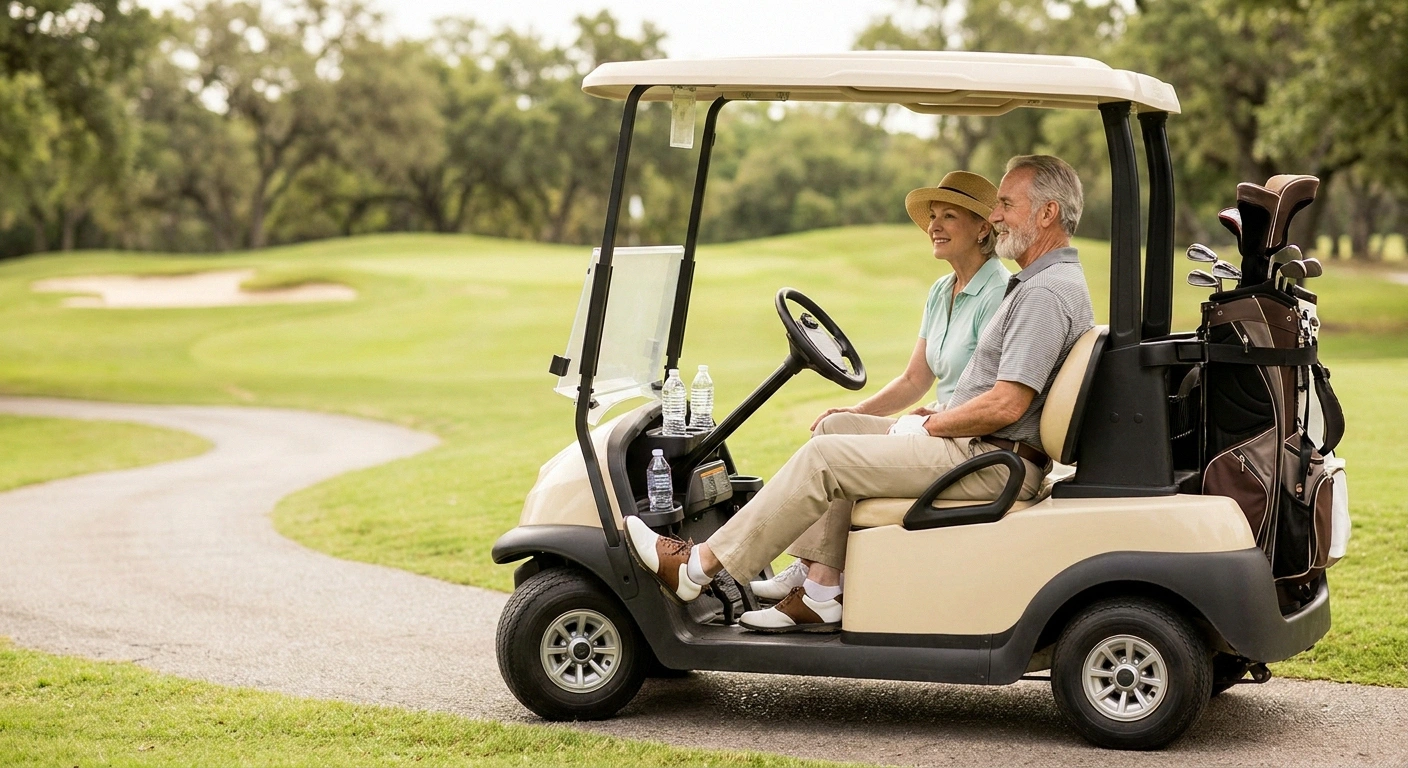
Neuropathy runs on a budget. Spend the whole reserve in one go and you pay it back with a multi-day flare. The fix is pacing, and golf is wonderfully suited to it because the breaks are built in. Nine holes instead of eighteen is not lesser golf — it’s sustainable golf, and you can play it far more often. Hydrate steadily; even mild dehydration makes nerve symptoms louder. Use the natural pauses — waiting on the tee, riding between shots — to do small, invisible foot movements: ankle circles, toe curls, gentle calf raises that keep blood moving instead of letting symptoms pool while you stand still.
Climbing numbness or a new wobble is a “stop now” signal
Increasing burning, numbness creeping higher, or instability that wasn’t there on the front nine is your body asking you to stop this hole — not after you finish. Honoring it once spares you the multi-day flare that would have cost you next Saturday too.
Pay attention to early warning signs, too. Increasing burning, climbing numbness, or a wobble that wasn’t there on the front nine is your body asking you to stop now, not after you finish the hole. Honoring that signal once spares you the flare that would have cost you next Saturday as well. If flares are a recurring problem for you, the triggers and management strategies in our guide to neuropathy flare-ups apply directly to a day on the course.
Weather on the Course Is Not a Side Issue
For most people with nerve damage, temperature is a real variable, not a footnote. Cold tends to amplify pain and stiffen hands until grip and feel evaporate; heat and the swelling that comes with a long hot round can make feet feel thick, tight, and miserable in the shoe. Play the forecast like it’s part of your strategy. On cold mornings, wait for the day to warm up, keep hands in mitts between shots, and layer so you can shed clothing rather than start cold. On hot days, go early or late, seek the shade between shots, and drink more than you think you need. None of this is being delicate — it’s the same smart adjusting you’d do for any chronic condition, and it’s the difference between finishing comfortable and finishing flared.
Recovering After You Play Is Part of Playing
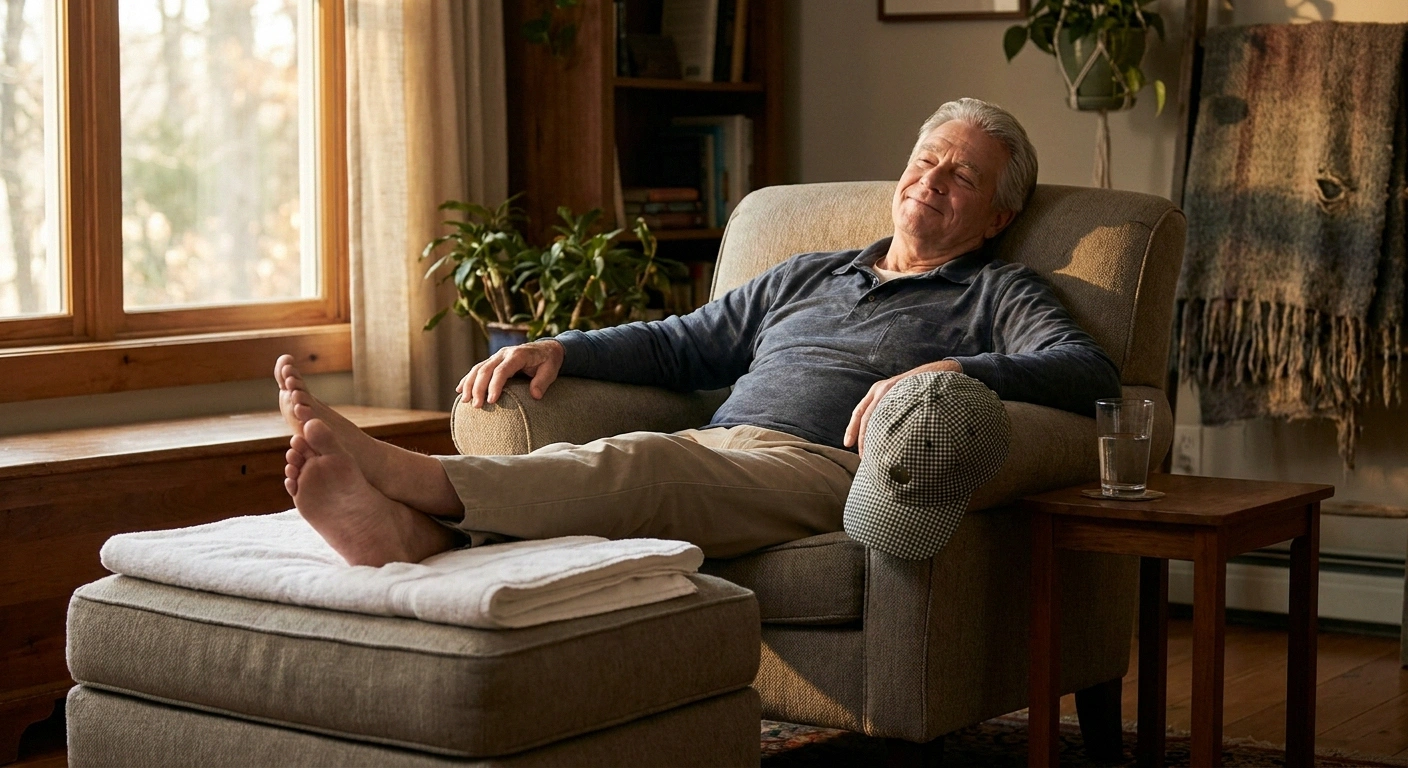
What you do in the hour after the last putt shapes how much that round costs you. Get off your feet, elevate them, and let things settle before you reward yourself with standing around the clubhouse. A cool or lukewarm foot soak can calm an irritated set of feet — our foot soak recipes are an easy place to start — and gentle self-massage helps move things along; the techniques in our foot massage for neuropathy guide are designed for exactly this. Treat recovery as the back nine of your golf routine, not an optional extra, and you’ll be able to do it all again far sooner.
When to Loop In Your Doctor
A few situations are worth a call rather than a wait-and-see. New or rapidly worsening numbness, weakness, or balance loss is always a reason to check in — that’s true on or off the course. A fall, even one you “got away with,” is worth mentioning, because a near-miss is information. And if hand symptoms spike specifically with gripping and swinging, that’s worth describing to your doctor; sometimes it points to an entrapment issue that has its own treatment path. Use the practical scripts in our guide on how to talk to your doctor about neuropathy pain so the conversation is productive. None of this is meant to scare you off the course. It’s meant to keep you on it for many more seasons.
Adapt the game, keep the game
Bigger grips held lightly, supportive shoes, a wider and smoother swing, a cart when you need it, and honest pacing. Check new or worsening symptoms with your doctor, then go enjoy the round you were told you had to give up.
Frequently Asked Questions
Can I still play golf with peripheral neuropathy in my feet?
For most people, yes, with adaptations. Supportive footwear with a wide toe box and good arch support, a slightly wider and more stable stance, a smoother shorter swing, and pacing the round are the core changes. Balance problems carry a real fall risk, so it is genuinely worth checking with your doctor and ideally a podiatrist before you change your activity level so they can assess your specific feet and balance.
How do I grip a golf club if my hands are numb?
Make the grip bigger rather than squeezing harder. Oversized grips or a standard grip built up with extra wraps of tape let a numb hand control the club with much less clamping force. A tacky all-weather or arthritis-style glove adds security without squeezing, and a lighter graphite shaft reduces the vibration sensitive hands dislike. Gripping too tightly can aggravate nerve and tendon irritation in the wrist, so a lighter, larger grip is better for both your hands and your swing.
Should I walk or ride a cart with neuropathy?
Let the day’s symptoms decide, not pride. A cart converts energy you would spend walking into energy for playing well and enjoying the round, which often means you can play more often. Many people use a hybrid approach, riding long transitions and walking short flat stretches when their feet cooperate. If you walk, a push or electric trolley removes the bag load and gives you a stable thing to hold across the course.
Does the golf swing make foot neuropathy worse?
A single well-paced round in supportive shoes does not typically worsen the underlying nerve damage, but overdoing it can trigger a symptom flare that lasts days. The protective approach is pacing: nine holes instead of eighteen, steady hydration, small foot movements during breaks, and stopping at the first sign of climbing numbness or new instability rather than pushing through.
What are the best golf shoes for neuropathy?
Look for a wide, roomy toe box, real arch support, cushioning under the ball and heel of the foot, and a stable sole. Spikeless shoes that feel like a supportive sneaker are often a good choice for recreational players. Adding stability-oriented orthotics frequently helps more than any single feature, and breaking shoes in at home before a round prevents hot spots and blisters that sensitive feet punish you for.
How can I keep my balance during the swing?
Widen your stance for a more stable base, use a controlled three-quarter swing instead of a full one, and club up and swing easier on slopes and awkward lies rather than fighting for a heroic shot off one leg. Off the course, a few minutes a day of balance and ankle work measurably improves steadiness when nerve feedback is reduced. Using a club or push cart as a point of contact on slopes is a smart habit, not a weakness.
Is golf good or bad exercise for someone with neuropathy?
Paced sensibly, golf is generally good exercise — it is a long, low-intensity walk attached to an activity you enjoy, and gentle regular movement supports circulation, balance, and mood. The risks are specific and manageable: balance demands during the swing and grip strain on the hands. Adapt for those two things, pace the round, and golf can be a sustainable part of living well with neuropathy.
About the Author