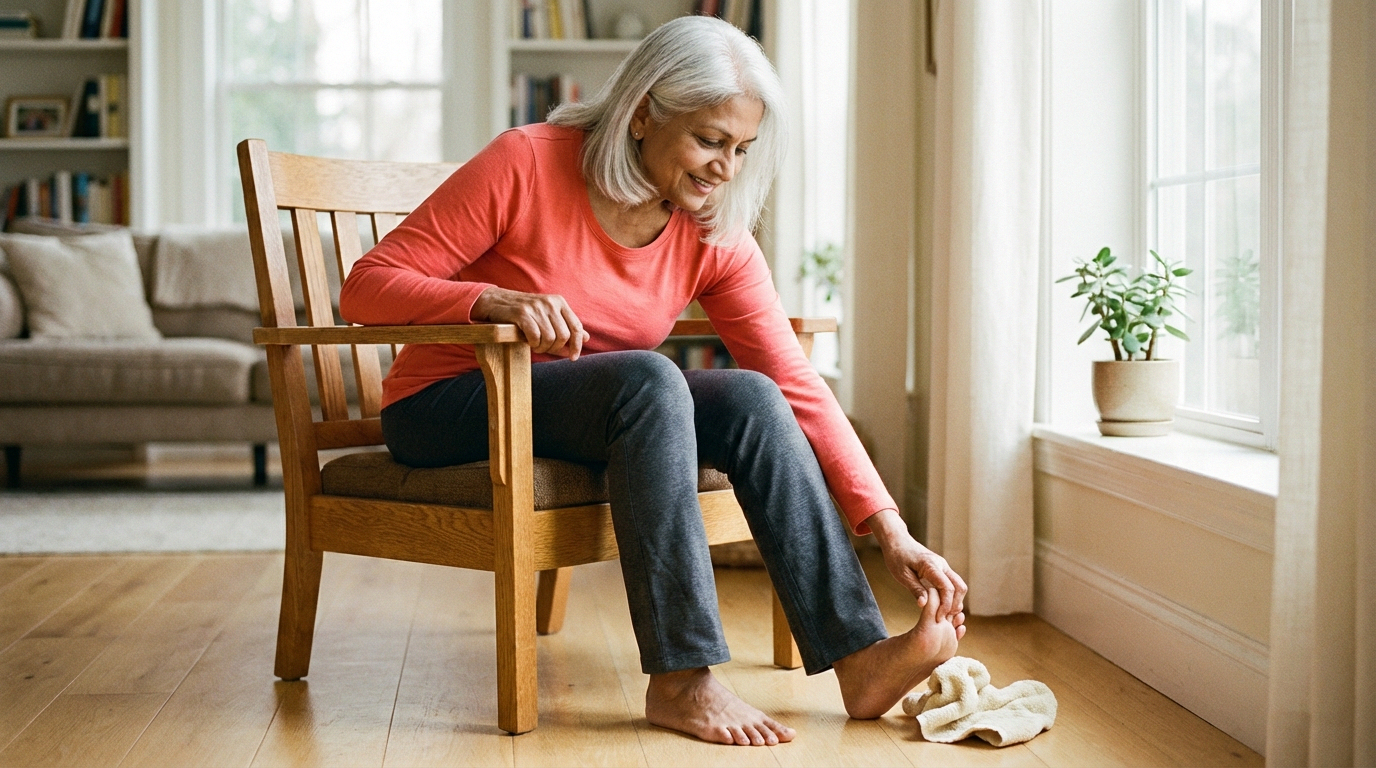
Simple seated exercises like toe curls can significantly improve neuropathy symptoms and circulation.
I almost stopped exercising entirely when my neuropathy got bad. For more, see our guide on the stage of neuropathy. For more, see our guide on nutrition to support nerve health.
Pair exercise supports proximal neuropathy recovery with proper daily foot care to keep your foot neuropathy exercises healthy and injury-free.
The pain in my feet made walking uncomfortable. My balance wasn't what it used to be, and I was terrified of falling. It seemed logical — if my feet hurt, I should stay off them, right?
That was one of the worst decisions I could have made.
My physical therapist was the one who set me straight. “Janet,” she said, “I understand the instinct to rest. But the less you move, the worse this gets. Your nerves need blood flow. Your muscles need engagement. And your brain needs the signals that movement provides.”
She was right. Within a month of starting a gentle, consistent exercises to maintain leg strength with neuropathy routine designed specifically for neuropathy, my symptoms hadn't disappeared — but they'd improved enough that I noticed. My balance was better. My nighttime pain decreased. And honestly, my mood lifted too. walking aids for safe neuropathy exercise also benefits your emotional health — read more in neuropathy and mental health.
If you're an older adult with neuropathy who's been avoiding exercise, or if you're not sure what's safe to do, this article is for you. Everything here can be done at home, most of it while sitting down.
Why Exercise Matters for Neuropathy (Even When It Hurts)
I know it seems counterintuitive. Your feet hurt, so why would you move them more? Here's the science:
Research Says
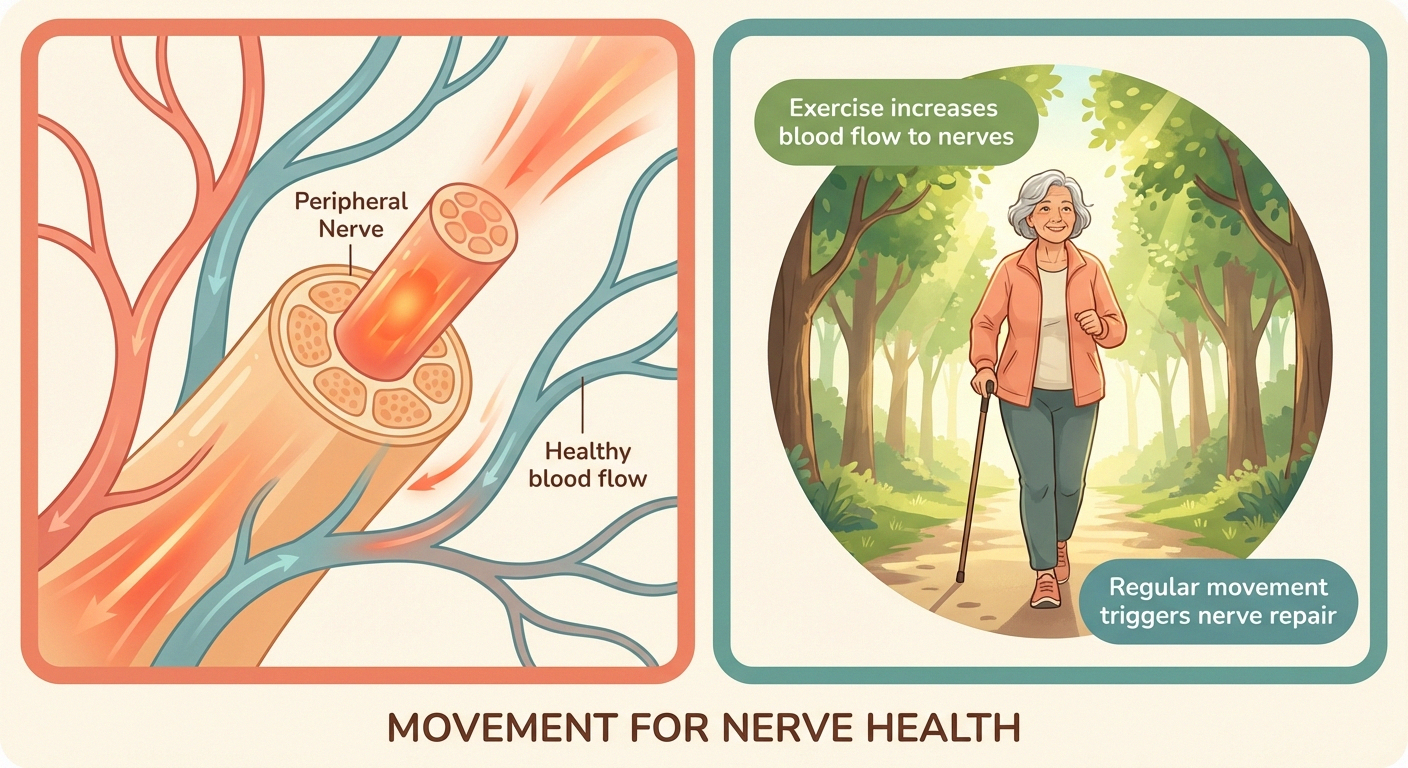
A 2012 study in the Journal of Peripheral Nervous System found that exercise actually promoted nerve fiber regeneration in people with diabetic neuropathy. Regular physical activity stimulates neurotrophic factors — the chemicals that signal damaged nerves to repair and regrow. Movement is literally medicine for your nerves.
Blood flow is everything for damaged nerves. Your peripheral nerves depend on a steady supply of oxygen and nutrients delivered through your bloodstream. Exercise increases that blood flow — not just while you're doing it, but for hours afterward. Better blood flow means better conditions for nerve repair.
Balance improves with practice. One of the most dangerous aspects of neuropathy is the increased fall risk. When you can't feel the ground properly, your body struggles to make the micro-adjustments that keep you upright. Balance exercises retrain your body to use other cues — visual, muscular, inner ear — to compensate.
Pain often decreases with regular movement. Exercise releases endorphins (your body's natural painkillers) and reduces the inflammatory chemicals that contribute to nerve pain. Many people find that their worst pain days are the days they don't move at all. For more, see our guide on a 7-day recovery protocol. A post-exercise foot massage can help with recovery and exercise to improve circulation and prevent ulcers. For more, see our guide on other natural approaches.
Blood sugar improves. If diabetes is a factor in your neuropathy, exercise is one of the most effective ways to improve blood sugar control — which directly protects your nerves from further damage.
❌ When You Stop Moving
Blood flow to nerves decreases. Pain and stiffness worsen. Balance deteriorates. Fall risk increases. Blood sugar rises (for diabetics). Muscles weaken — making everything harder.
✓ With Regular Gentle Exercise
Nerve blood flow improves. Endorphins reduce pain. Balance retrains. Blood sugar stabilizes. Neurotrophic factors support nerve repair. Mood and energy lift.
Safety First: Before You Start
I'm not going to skip this part, because it matters:
Talk to Your Doctor
Consult your doctor before starting any exercise program, especially if you have severe neuropathy, heart problems, or other health conditions.
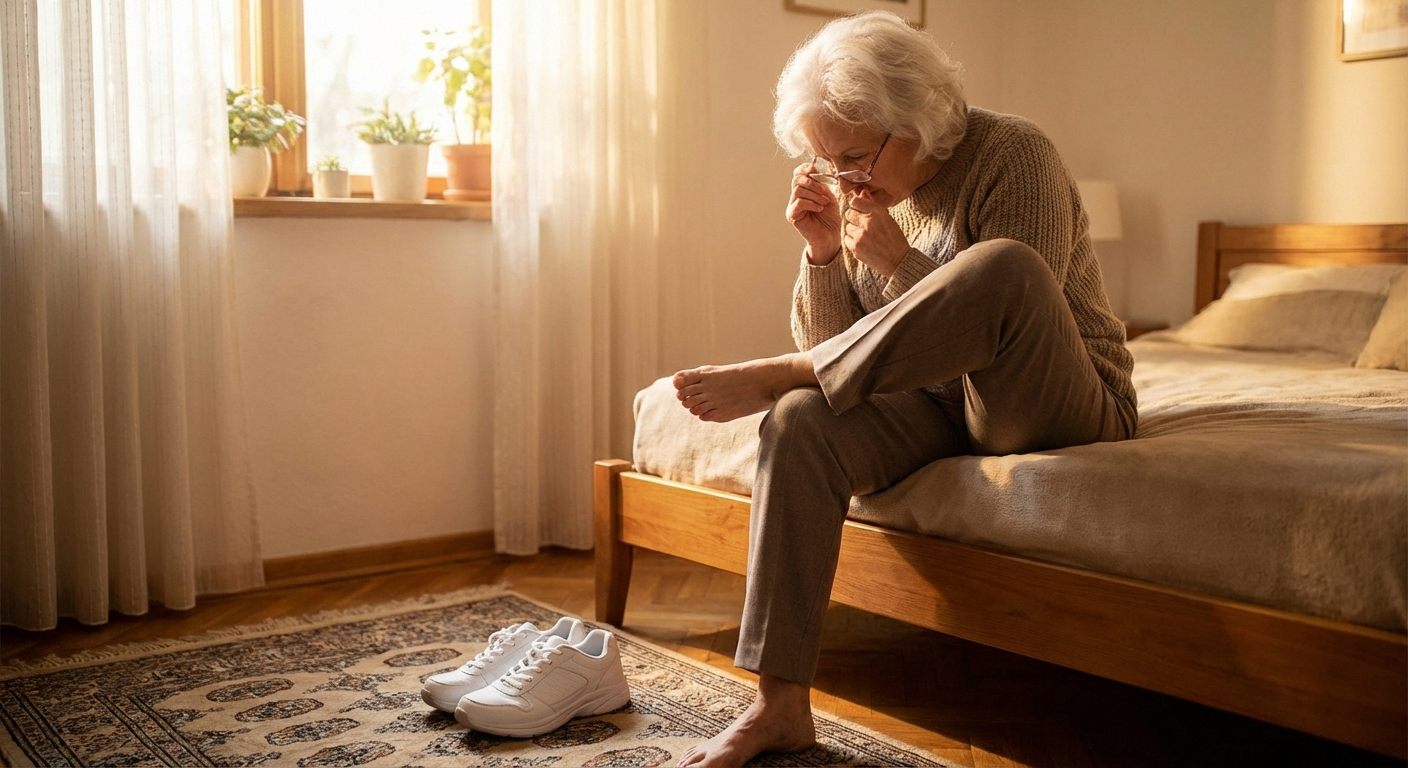
Check your feet before and after exercise. Look for redness, blisters, sores, or swelling. With reduced sensation, you might not feel an injury happening.
Wear proper shoes. Supportive, well-fitting shoes with cushioning protect your feet during any weight-bearing exercise. No barefoot exercise outdoors.
Keep something sturdy nearby. For standing exercises, always have a chair, counter, or wall within arm's reach for support.
Stop if you feel sharp pain, dizziness, or significant worsening of symptoms. Mild discomfort is normal. Sharp or unusual pain is a signal to stop.
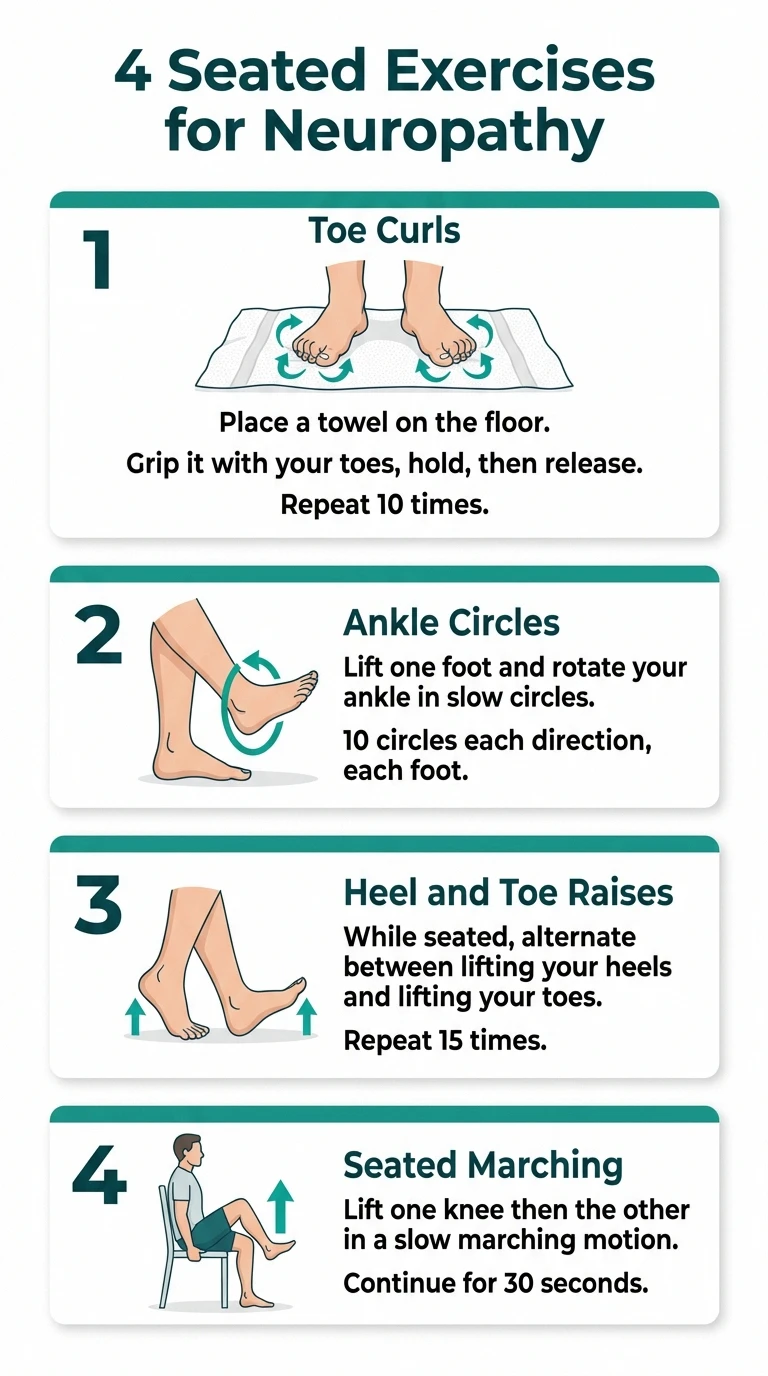
8 Seated Exercises for Neuropathy in Feet and Legs
These can all be done from a sturdy chair. They're gentle enough for nearly anyone and effective enough to make a real difference.
1. Toe Curls and Spreads
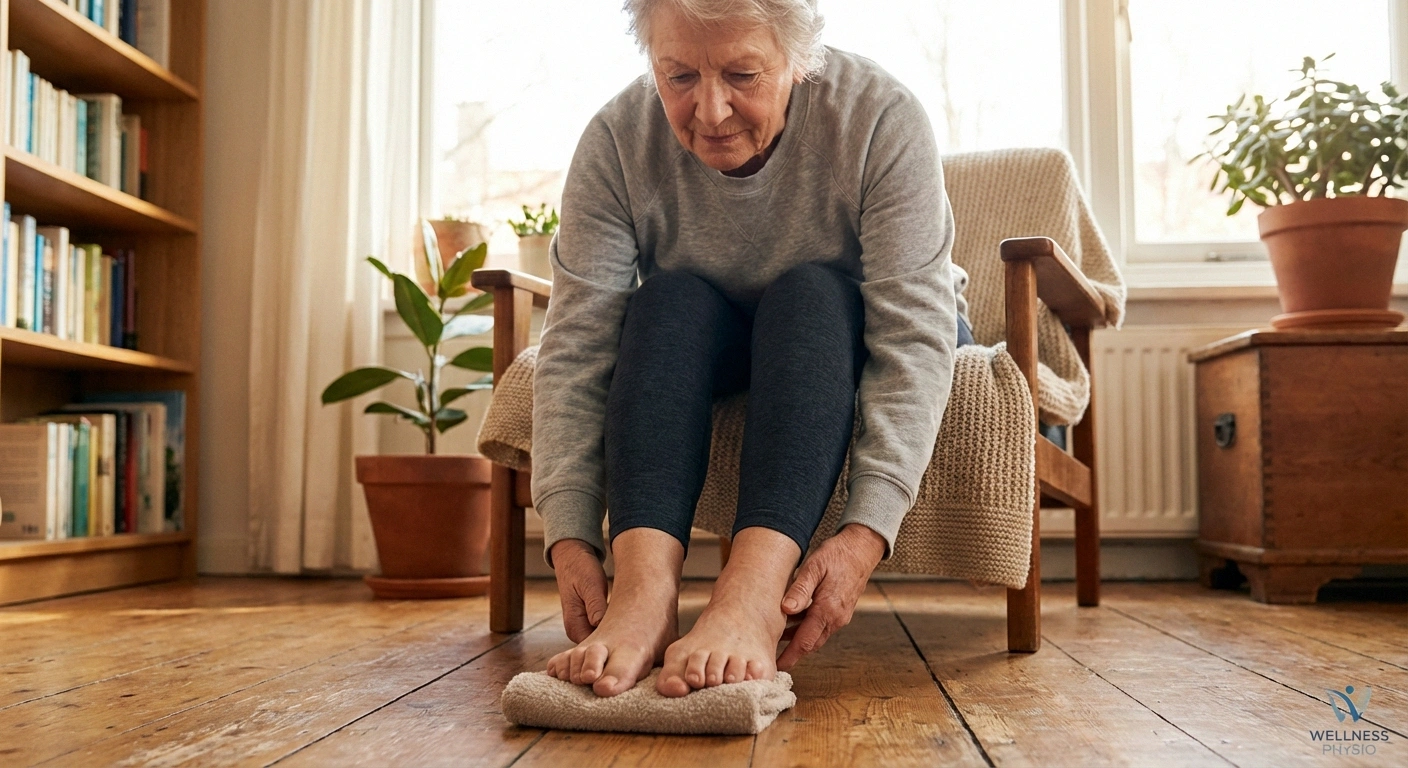
What it does: Strengthens the small muscles in your feet and improves circulation to your toes.
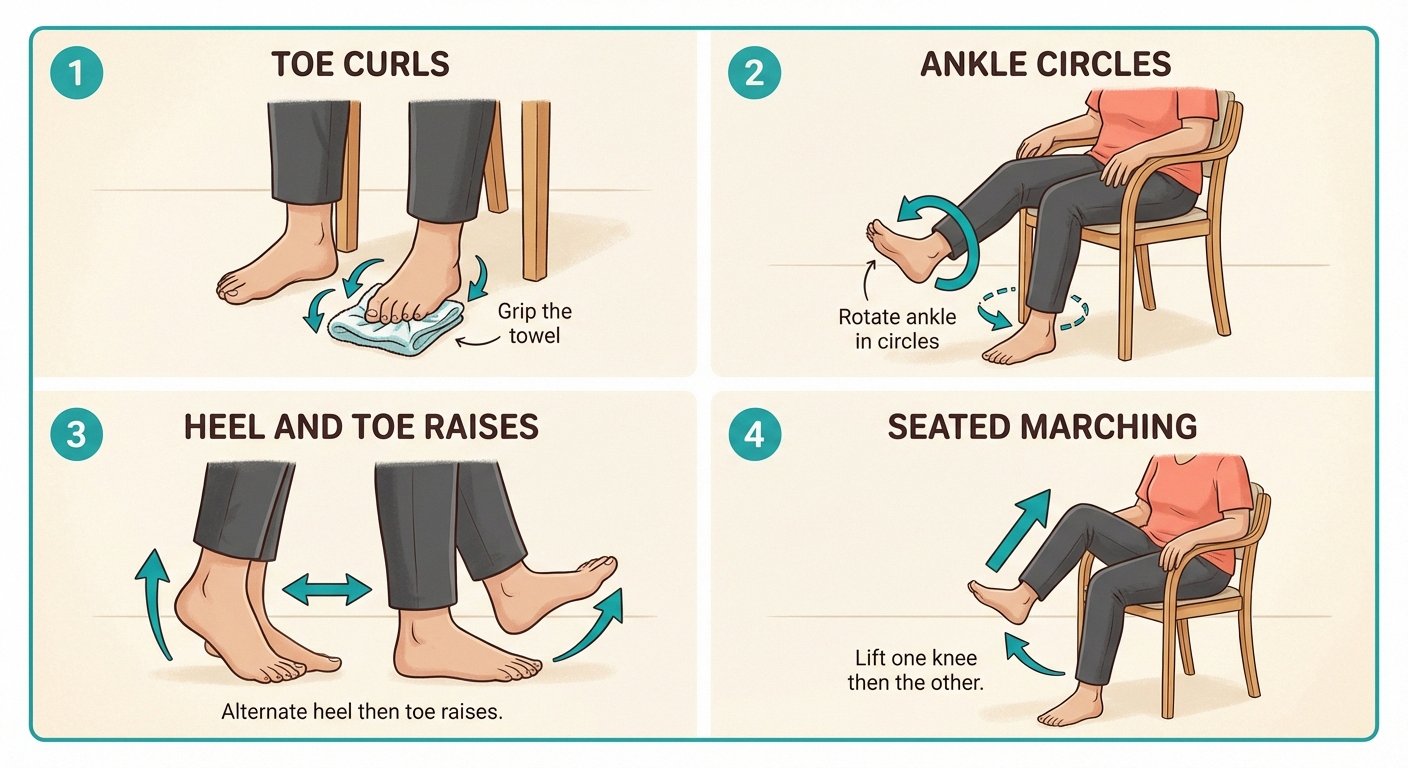
How to do it: Sit with your feet flat on the floor. Curl your toes tightly, like you're trying to grip the floor, and hold for 5 seconds. Release and spread your toes as wide as you can, hold for 5 seconds. Repeat 10 times.
Tip: Place a small towel on the floor and try to scrunch it toward you using only your toes. This is oddly satisfying and gives your foot muscles a real workout.
2. Ankle Circles
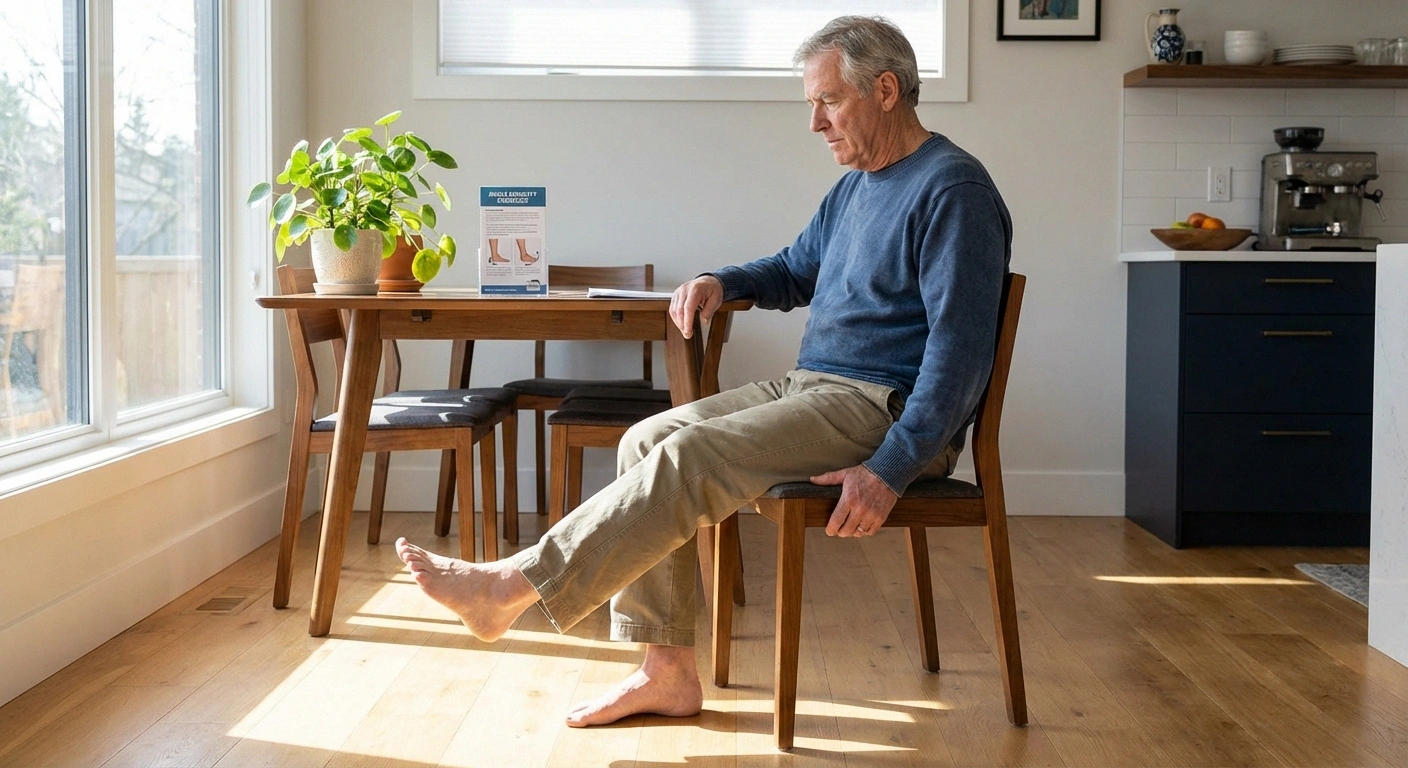
What it does: Improves ankle mobility and circulation to the feet and lower legs.
How to do it: Lift one foot slightly off the floor. Slowly rotate your ankle in a circle — 10 times clockwise, then 10 times counterclockwise. Switch feet and repeat.
Tip: Make the circles as large as your range of motion allows. Imagine you're drawing a big circle with your big toe.
3. Heel and Toe Raises
What it does: Strengthens the calves and shins while improving blood flow to the lower legs.
How to do it: Sit with feet flat on the floor, hip-width apart. Raise your heels off the floor while keeping your toes down, hold 3 seconds. Lower your heels and raise your toes off the floor while keeping your heels down, hold 3 seconds. Repeat 15 times.
Tip: This one also improves the “muscle pump” in your calves that pushes blood back up toward your heart.
4. Seated Leg Extensions
What it does: Strengthens the quadriceps (front of the thigh), which supports knee stability and walking confidence.
How to do it: Sit back in your chair with your back supported. Slowly straighten one leg out in front of you until it's parallel to the floor. Hold for 3-5 seconds, feeling the muscle working in the front of your thigh. Slowly lower back down. Repeat 10 times on each leg.
Tip: For extra challenge, add a light ankle weight (1-3 pounds) or a resistance band.
5. Seated Marching
What it does: Improves hip flexor strength, circulation, and cardiovascular fitness — all from your chair.
How to do it: Sit tall with feet flat on the floor. Lift one knee toward your chest as high as is comfortable. Lower it and lift the other knee. Continue alternating in a marching pattern for 1-2 minutes.
Tip: Start slowly and gradually increase your speed. Swing your arms gently for added benefit.
6. Ankle Pumps
What it does: One of the simplest exercises and one of the most effective for circulation. Especially good if you've been sitting for a long time.
How to do it: Extend one leg in front of you (or keep feet on the floor). Point your toes away from you (like pressing a gas pedal). Then flex your foot, pulling your toes back toward your shin. Repeat 20 times on each foot.
Tip: Do these every hour if you sit for long periods. They take 30 seconds and make a real difference in preventing that “dead feet” feeling.
7. Ball Rolling
What it does: Massages the bottom of the foot, stimulates nerve endings, and improves circulation.
How to do it: Place a tennis ball or textured massage ball under one foot. Roll it slowly from your heel to your toes, applying gentle pressure. Roll side to side across the ball of your foot. Continue for 2-3 minutes per foot.
Tip: This is wonderful first thing in the morning when feet are stiff. If a tennis ball is too firm, start with a softer ball or even a rolled-up washcloth.
8. Resistance Band Foot Exercises
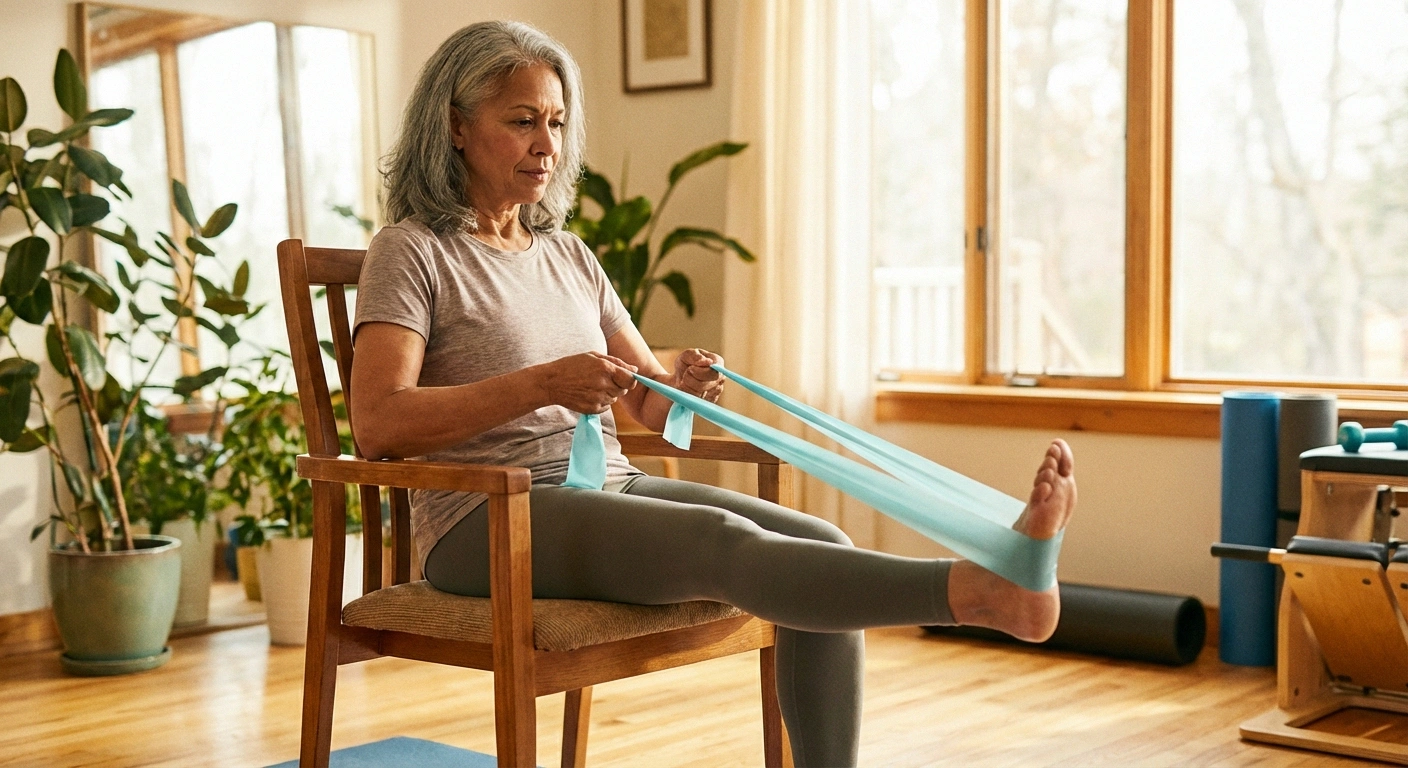
What it does: Strengthens all the muscles around the ankle and foot using gentle resistance.
How to do it: Loop a resistance band around the ball of one foot, holding the ends in your hands. Point your foot against the band's resistance (10 times). Flex your foot against the band (10 times). Turn your foot inward against resistance (10 times). Turn your foot outward against resistance (10 times). Switch feet.
Tip: Light resistance bands are inexpensive and available at most pharmacies. Start with the lightest resistance available.
Standing Balance Exercises (With Chair Support)
These are for when you're ready to progress beyond seated exercises. Always keep a sturdy chair or counter within reach.
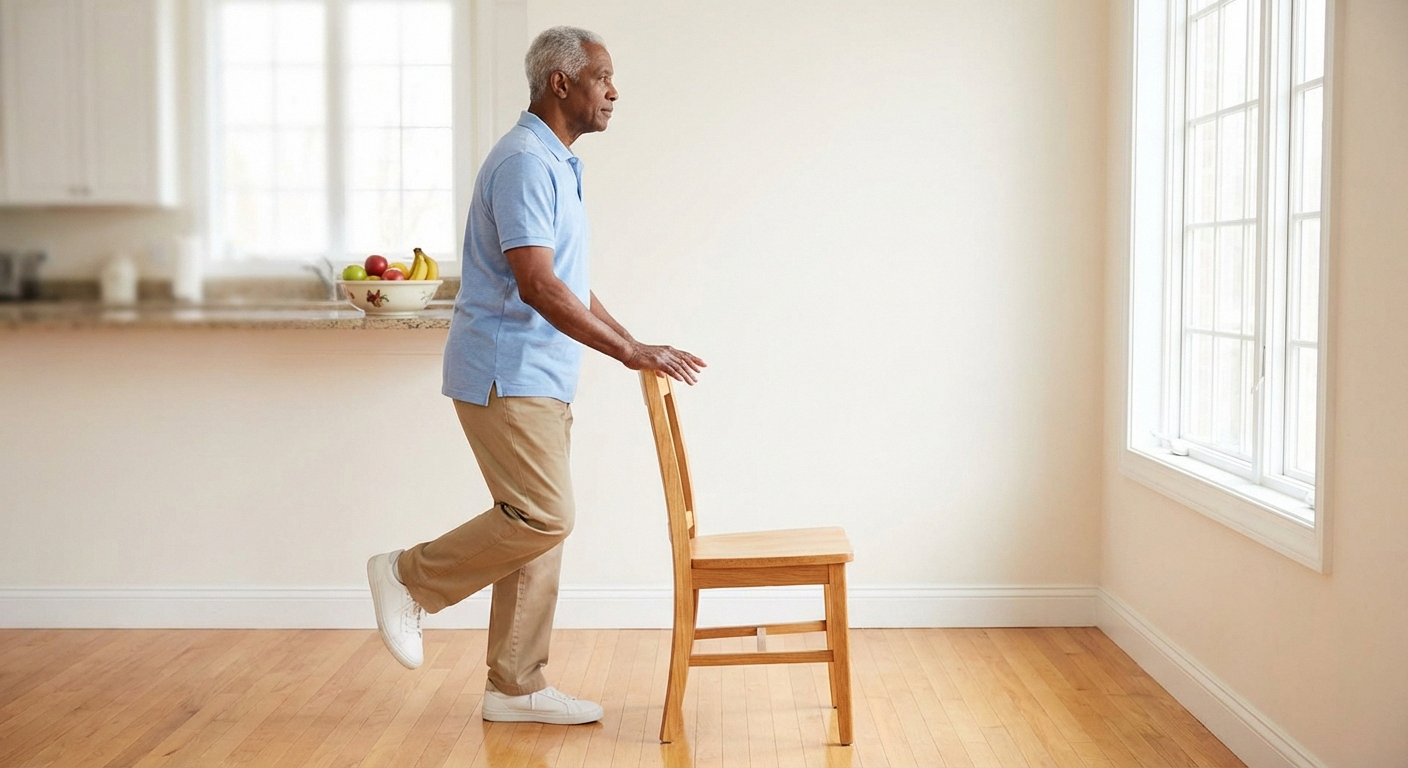
Single Leg Stand: Stand behind a chair with both hands on the back. Lift one foot slightly off the floor and hold for 10-30 seconds. Switch legs. As your balance improves, try using just one hand, then just your fingertips, then no hands.
Heel-to-Toe Walk: Place one foot directly in front of the other, heel touching toe, like walking a tightrope. Take 10-15 steps. Use a wall or counter for support. This exercise is specifically recommended by physical therapists for neuropathy-related balance issues.
Weight Shifts: Stand with feet hip-width apart, hands on a chair. Slowly shift your weight onto your right foot, lifting your left foot slightly. Hold 5 seconds. Shift to the left. Repeat 10 times each side.
Key Takeaway
Balance exercises are one of the highest-impact investments you can make with neuropathy. Falls are the leading cause of serious injury in seniors — and neuropathy significantly raises that risk. Even 5 minutes of balance work daily can measurably reduce your fall risk within weeks.
Hand and Finger Exercises
If neuropathy affects your hands too, don't neglect them:
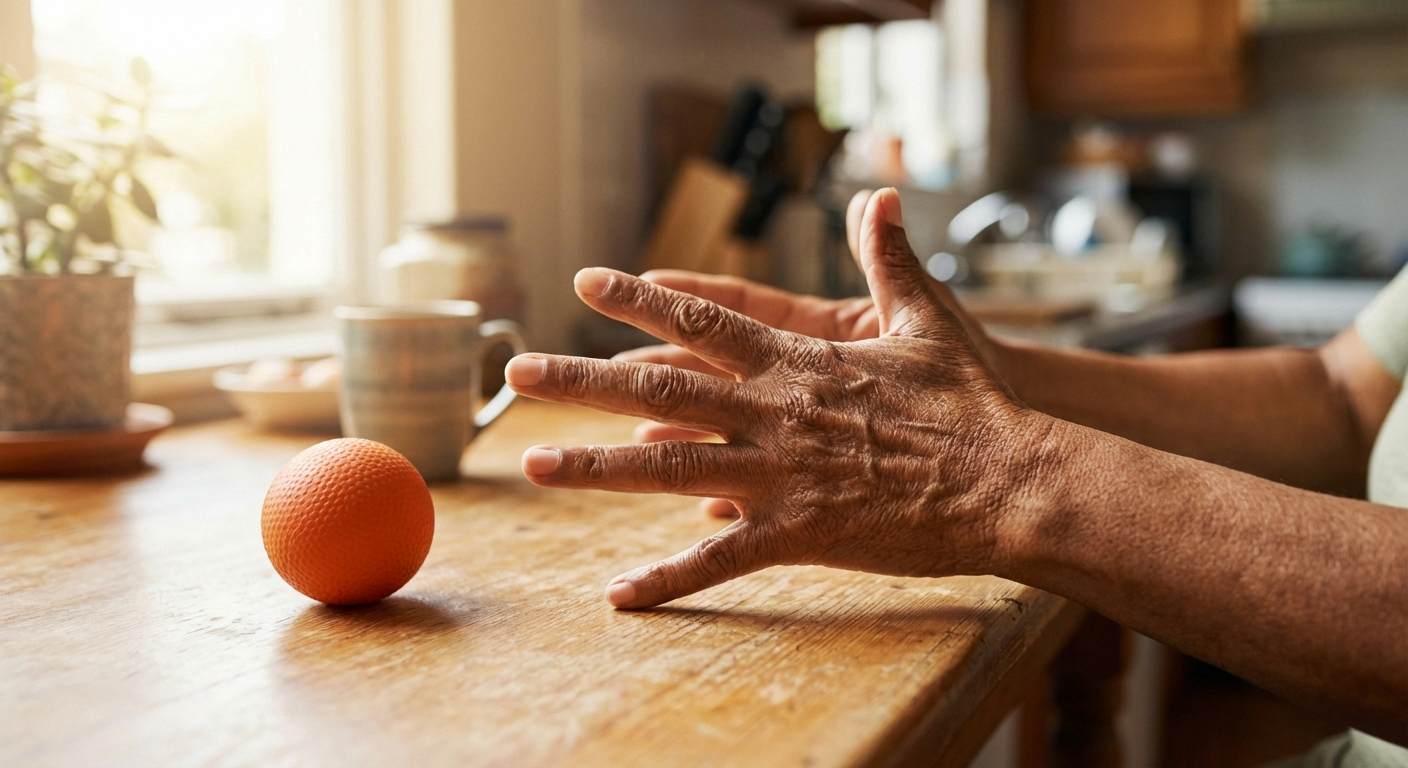
Finger spreads: Spread all fingers wide, hold 5 seconds, then make a fist. Repeat 10 times.
Finger touches: Touch your thumb to each fingertip one at a time, going forward and backward. Repeat 5 cycles.
Wrist circles: Rotate each wrist 10 times in each direction.
Stress ball squeezes: Squeeze a soft ball for 5 seconds, release. Repeat 10-15 times.
Rice bucket: Fill a deep bowl with rice and work your fingers through it for 2-3 minutes. The resistance and texture provide excellent nerve stimulation.
How Often Should You Exercise?
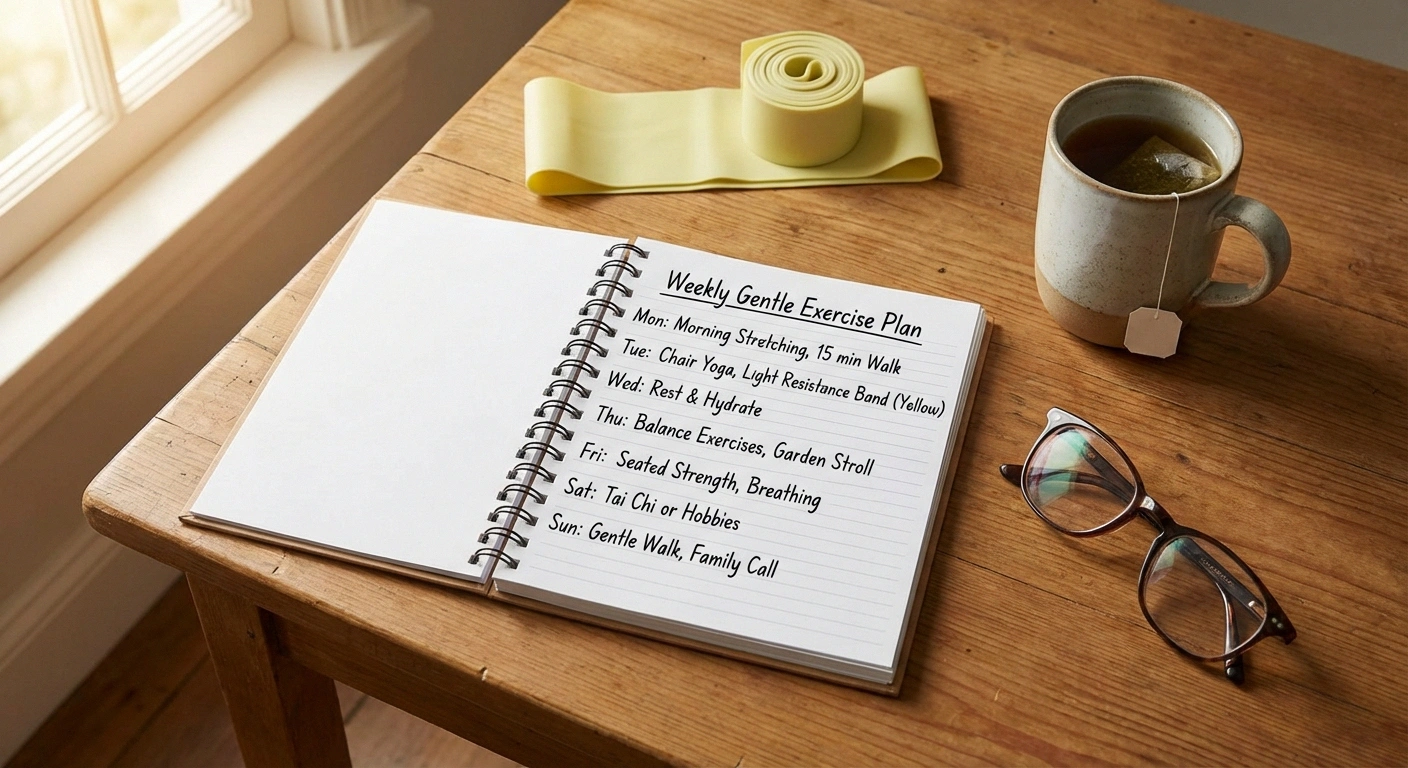
Aim for some form of exercise every day. It doesn't have to be long or intense:
Your Daily Neuropathy Exercise Plan
Seated Exercises — Daily
10-15 minutes every day. Do them while watching TV — consistency beats duration.
Balance Exercises — 3-5x Per Week
5-10 minutes with chair support. Work up gradually from both hands to fingertips only.
Walking (if tolerable) — Most Days
Start with 5-10 minutes on even surfaces with supportive shoes. Build up slowly over weeks.
Hand Exercises — Daily (if upper extremity symptoms)
5 minutes daily. Finger spreads, touches, wrist circles, stress ball squeezes.
Most people notice measurable improvements in pain and balance within 2-4 weeks of consistent daily exercise. Significant nerve changes develop over 2-3 months.
Consistency matters more than intensity. Ten minutes every day beats one hour once a week. Your nerves respond to regular, repeated stimulation — not occasional bursts.
When Exercise Makes Neuropathy Worse
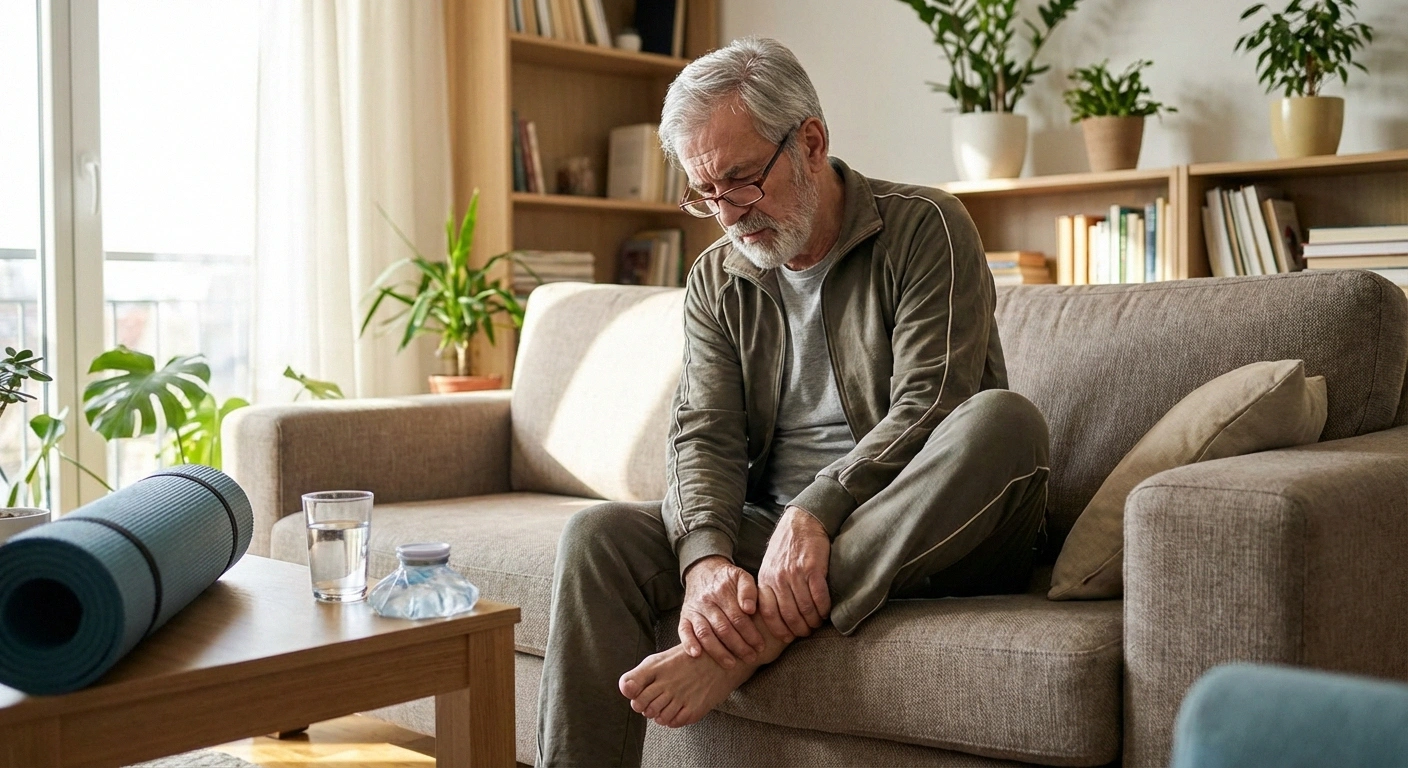
Usually it doesn't — but there are exceptions to watch for:
- Sharp, shooting pain during exercise (not just mild discomfort) — stop and rest
- Significantly increased pain for hours after exercise — you did too much; scale back next time
- New blisters, sores, or skin breakdown on your feet — check your footwear and reduce intensity
- Increased swelling — elevate your feet and consider lighter exercises
- Dizziness or feeling faint — sit down immediately; this may indicate a blood pressure or cardiovascular issue
The General Rule
Mild discomfort during exercise is okay. Pain that's sharp, new, or significantly worse than your baseline is a signal to stop and reassess. When in doubt, dial back the intensity — not the frequency. Keep moving, just more gently.
Your Nerves Are Waiting for You to Move
I won't pretend that exercising with neuropathy is easy. Some mornings my feet protest before I even start. But I've learned to push through the initial reluctance because I know what happens when I don't: the stiffness gets worse, the pain increases, and my mood drops.
Movement is medicine for your nerves. Not a metaphor — actual medicine. The research supports it. My experience confirms it. And I've watched dozens of people in my support group improve their symptoms through consistent, gentle exercise.
Start with the seated exercises. Do them while watching television if that helps. Add the balance work when you feel ready. And remember that you're not trying to train for anything — you're trying to give your nerves the blood flow, stimulation, and support they need to function as well as they can.
If you want help understanding your specific symptoms and what to prioritize, my neuropathy assessment takes about two minutes and can help focus your efforts.
You've got this.
Janet
Frequently Asked Questions
Browse all our exercise and movement guides for more articles like this one.
About the Author