I'll never forget the morning I couldn't open a jar of strawberry jam.
I'd been dealing with neuropathy in my feet for a while — the carpal tunnel vs neuropathy in hands, the burning, the whole routine. But my scalp neuropathy spreading from handss? Those were fine. At least, that's what I told myself. Until I stood in my kitchen, gripping that jar with everything I had, and my fingers just… wouldn't cooperate. They felt thick and clumsy, like I was wearing oven mitts I couldn't see.
That's when the fear hit me. Your feet — as much as you need them — your hands are how you do everything. How you cook, how you write, how you hold your grandchild's hand on a walk.
If you're here because you've noticed tingling, ulnar neuropathy as a cause of hand numbness, or pain in your hands, I want you to know two things. First: you're not imagining it. Second: there are real answers and real things you can do about it. I've spent years talking with people in my support groups who deal with hand neuropathy every day, and I've learned a lot about what helps and what doesn't.
Browse all our neuropathy symptoms guides for more articles like this one.
What Does Neuropathy in Hands Feel Like?
What does occupational therapy for hand neuropathy feel like?
This is the question I hear more than almost anything else, and the answer is that it's maddeningly inconsistent. It doesn't feel the same for everyone, and it doesn't always feel the same from day to day.
But here are the most common descriptions people share with me:
Do You Recognize These Symptoms?
Tingling or pins and needles — like your hand fell asleep and won't fully wake up
Numbness — especially in the fingertips, making it hard to feel textures or temperatures
Burning sensations — a deep heat that doesn't match anything happening on the outside
Sharp, shooting pain — sudden jolts that come without warning
Feeling like you're wearing gloves — even when your hands are bare
Hypersensitivity — where even light touch feels painful or uncomfortable
Weakness — dropping things, struggling with buttons, difficulty gripping
One woman in my group described it perfectly: “It's like my hands belong to someone else. They look normal, but they don't feel like mine anymore.”
The symptoms usually start in the fingertips and work their way inward toward the palms and wrists. This pattern — called a “stocking-and-glove” distribution — is one of the hallmarks of peripheral neuropathy. If you've also noticed similar symptoms in your feet, that pattern becomes even more telling. I've written about how neuropathy progresses through stages that might help you understand where things stand.
What Causes Neuropathy in Your Hands?

There are quite a few things that can damage the nerves in your hands. Some are common, some are less obvious, and some are frustratingly hard to pin down.
What triggers neuropathy in hands?
Diabetes is the most common culprit. Prolonged high blood sugar damages the small blood vessels that feed your nerves, and over time, those nerves start misfiring or going quiet altogether. Research published in Diabetes Care (2017) found that up to 50% of people with diabetes will develop some form of peripheral neuropathy, and the hands are frequently involved — especially as the condition progresses beyond the feet.
of people with diabetes will develop some form of peripheral neuropathy — often involving the hands
Source: Diabetes Care, 2017
Vitamin B12 deficiency is another major cause, and it's one that's more common than people realize — particularly in adults over 60, vegetarians, and people taking medications like metformin or long-term acid reflux drugs. B12 is essential for maintaining the protective coating around your nerves (the myelin sheath), and without enough of it, those nerves start to deteriorate. I've written a detailed piece on vitamin deficiency and neuropathy if you want to learn more.
Autoimmune conditions like rheumatoid arthritis, lupus, and Sjögren's syndrome can trigger nerve inflammation that hits the hands early and hard.
Chemotherapy drugs — especially platinum-based agents and taxanes — are notorious for causing neuropathy in both hands and feet. Studies show that 30-70% of chemo patients develop nerve symptoms.
pregnancy-related carpal tunnel syndrome syndrome isn't technically peripheral neuropathy (more on that below), but it compresses the median nerve in the wrist and produces very similar symptoms.
Alcohol use over time can directly damage nerves and deplete the B vitamins they need to function.
Idiopathic neuropathy — no identifiable cause — accounts for roughly 30-40% of all neuropathy cases. If your doctor has run the tests and come up empty, you're not alone, and it doesn't mean nothing can be done.
Is It Carpal Tunnel or Neuropathy? How to Tell the Difference
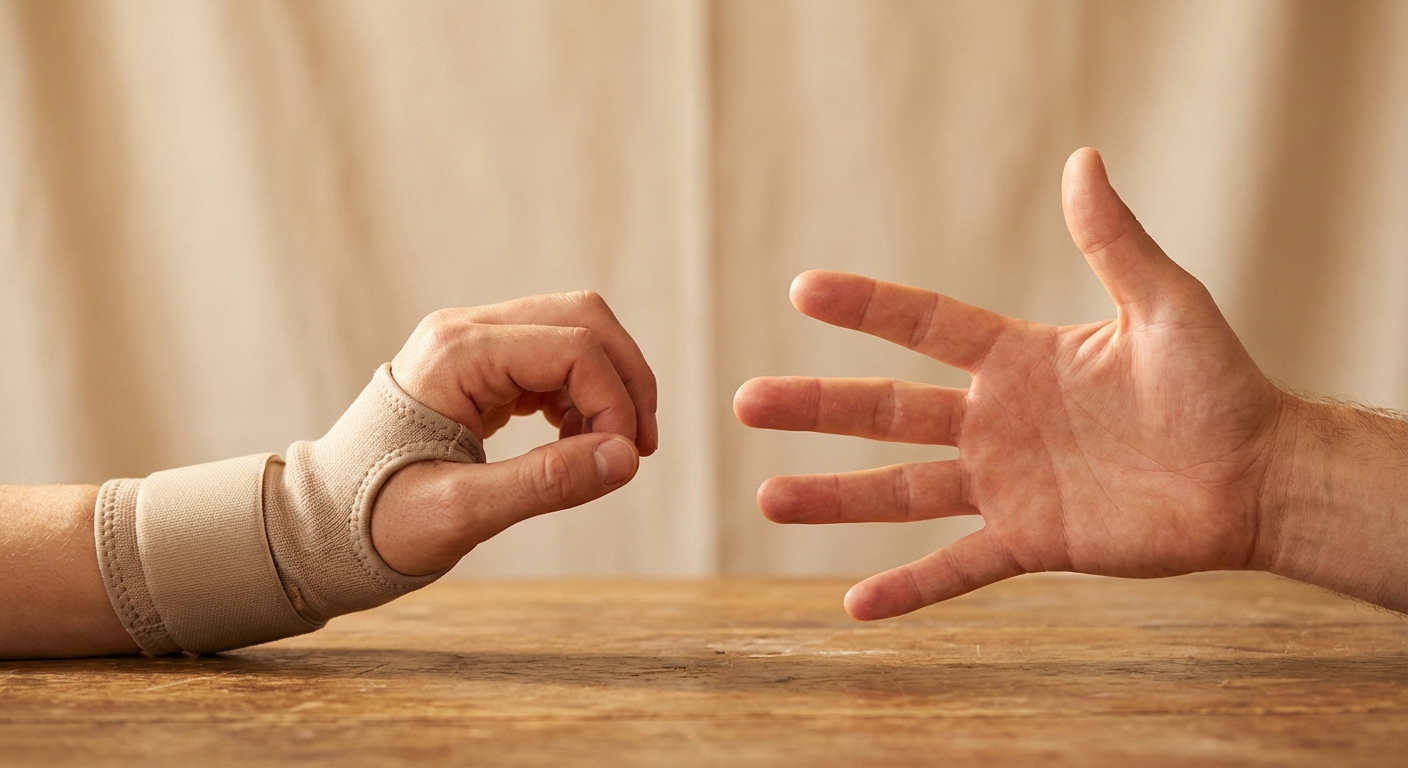
What is the difference between carpal tunnel and neuropathy?
This is one of the most common mix-ups I see, and honestly, I understand why. Both cause tingling, numbness, and pain in the hands. Both can wake you up at night. And both can make you feel like your hands aren't working the way they should.
But there are important differences:
Carpal tunnel syndrome involves compression of a single nerve — the median nerve — as it passes through the narrow tunnel in your wrist. It typically affects the thumb, index finger, middle finger, and half of the ring finger. The pinky is usually spared. Symptoms tend to be worse at night or when your wrist is bent.
Peripheral neuropathy involves widespread nerve damage, often affecting multiple nerves in both hands and frequently the feet too. All fingers are typically involved, and the numbness follows that “glove” pattern — spreading evenly rather than favoring certain fingers.
🔹 Carpal Tunnel Syndrome
- Fingers affected: Thumb, index, middle — pinky usually spared
- Pattern: Often one hand worse than the other
- Feet involved? No
- Wrist position matters? Yes — worse when wrist is bent
- Cause: Compression of a single nerve at the wrist
🔹 Peripheral Neuropathy
- Fingers affected: All fingers, glove-like distribution
- Pattern: Usually both hands, symmetric
- Feet involved? Often yes
- Wrist position matters? Not usually
- Cause: Widespread nerve damage (diabetes, B12, etc.)
That said, you can have both at the same time. A study in Muscle & Nerve (2014) found that people with diabetic neuropathy are significantly more likely to also develop carpal tunnel syndrome. So if something feels off, get it checked out.
How Is Hand Neuropathy Diagnosed?
Diagnosis starts with your doctor taking a thorough history and physical exam — testing grip strength, fingertip sensation, reflexes, and your ability to feel vibration and temperature.
Common tests include:
- Nerve conduction studies (NCS) — these measure how fast electrical signals travel through your nerves. Slow speeds indicate nerve damage.
- Electromyography (EMG) — this evaluates the electrical activity in your muscles to determine whether the nerve damage is affecting muscle function.
- Blood tests — to check for diabetes, vitamin deficiencies (especially B12, B1, and folate), thyroid problems, autoimmune markers, and kidney or liver issues.
- Skin biopsy — particularly useful for small fiber neuropathy, which standard nerve conduction tests can miss.
Is neuropathy in the hands serious?
It can be. The severity depends on what's causing it and how far it's progressed. Early-stage tingling from a B12 deficiency, for example, can often be fully reversed once the deficiency is corrected. But neuropathy from uncontrolled diabetes or certain autoimmune conditions can progress to significant loss of function if left untreated.
The biggest concern isn't just pain — it's what you lose. Fine motor skills, the ability to feel temperature, the confidence to carry a cup of coffee without worrying you'll drop it.
Talk to Your Doctor
If you're unsure where your symptoms fall, don't wait. New or worsening numbness, tingling, or burning in your hands deserves a prompt evaluation — especially if you have diabetes, take metformin, or have recently changed medications. Early diagnosis gives you the best chance of preserving nerve function. Our symptom assessment can help you organize your thoughts before you see your doctor.
What Helps Neuropathy in Hands?
How do you treat neuropathy in your hands naturally?
Let me be upfront: there's no single magic fix. But there are a lot of things that genuinely help, and most people get the best results by combining several approaches.
Address the root cause. This is always step one. If it's blood sugar, get it under control. If it's a B12 deficiency, supplement immediately (sublingual or injections, since absorption can be poor with oral pills alone). If it's a medication side effect, talk to your doctor about alternatives. Everything else you do will be less effective if the underlying damage is still happening.
Nutritional support for nerve health. Certain nutrients play critical roles in nerve repair:
- B vitamins (especially B12, B1/benfotiamine, and B6) — the building blocks of healthy nerve function
- Alpha-lipoic acid — a powerful antioxidant with solid clinical evidence for neuropathy. A meta-analysis in Journal of Diabetes Research (2018) showed significant symptom improvement at 600mg daily.
- Acetyl-L-carnitine — supports nerve fiber regeneration
Research Says
A 2018 meta-analysis in the Journal of Diabetes Research found that alpha-lipoic acid at 600mg daily produced significant reductions in neuropathic pain, burning, and numbness — making it one of the best-supported natural supplements for nerve health. I've done a deep dive on the best supplements for neuropathy with dosages and research behind each one.
Topical treatments. Capsaicin cream helps by depleting substance P, a pain-signaling chemical. It burns at first — ironically — but many people find relief after a few weeks of consistent use. Lidocaine patches can also provide localized relief.
Temperature therapy. Warm (not hot) water soaks improve circulation and ease stiffness. Be careful with temperature if your sensation is impaired — always test with your elbow first.
Stress management. Stress genuinely amplifies nerve pain — cortisol and inflammation go hand in hand (no pun intended). Even 10 minutes of meditation or deep breathing can turn the volume down on symptoms.
For a broader look at drug-free approaches, check out my article on natural remedies for neuropathy pain.
Hand Exercises for Neuropathy Relief
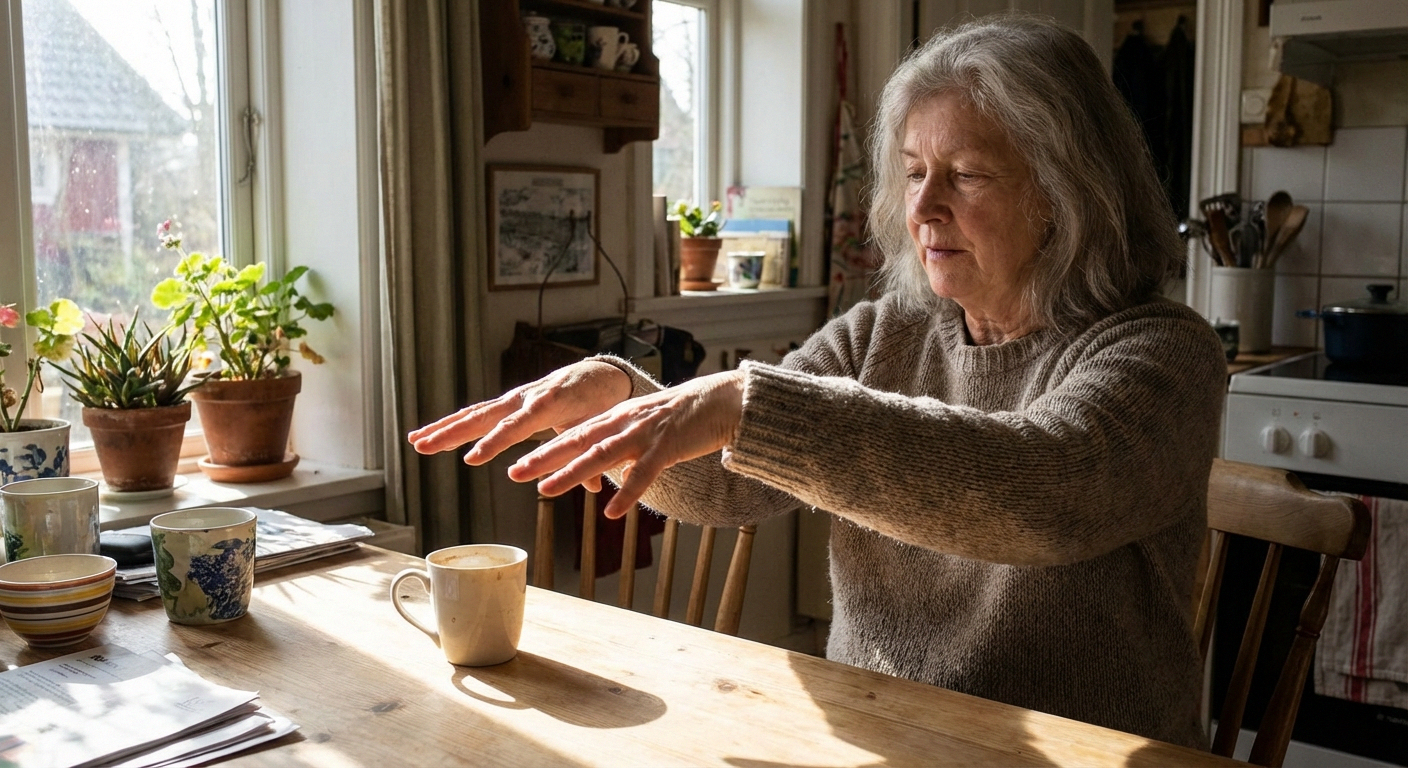
Regular hand exercises won't cure neuropathy, but they improve circulation, maintain flexibility, and help preserve the strength you still have. Here are exercises I've seen make a real difference:
Daily Hand Exercise Routine
Finger Spreads
Place your hand flat on a table. Spread fingers as wide as possible, hold 5 seconds, then bring them together. Repeat 10 times per hand.
Fist Squeezes
Make a gentle fist, hold 5 seconds, then open and stretch fingers out. Repeat 10 times. If gripping is painful, squeeze a soft stress ball instead.
Finger-to-Thumb Touches
Touch the tip of each finger to your thumb, one at a time, making an “O” shape. Go slowly — excellent for fine motor control.
Wrist Circles
Extend your arm and rotate your wrist in circles — 10 clockwise, 10 counterclockwise. Improves mobility and circulation.
Rubber Band Extensions
Place a rubber band around fingers and thumb, then spread them apart against the resistance. Strengthens extensor muscles weakened by neuropathy.
The Newspaper Crumple
Place a sheet of newspaper flat on a table. Using just one hand, crumple it into the smallest ball you can — then switch hands. Works grip strength, dexterity, and coordination all at once.
Try to do these two to three times a day — morning is especially good because hands tend to be stiffest after sleep. If any exercise causes sharp pain, stop. Mild discomfort is okay; pain is your body telling you to back off.
Can Neuropathy in Hands Be Reversed?

This is the question that keeps people up at night, and I want to give you an honest answer: it depends on the cause, how much damage has been done, and how quickly you act.
The encouraging news is that nerves can regenerate — slowly, roughly an inch per month, but the capacity is real. A study in Neurology (2019) confirmed that peripheral nerves retain regenerative potential even after significant damage, particularly when the underlying cause is removed.
Most likely to improve or reverse:
- Vitamin B12 deficiency — many people see significant improvement within 3-6 months once levels are restored
- Early-stage diabetic neuropathy — tight blood sugar control can halt progression and allow partial recovery
- Medication-induced neuropathy — symptoms often improve after the drug is stopped or changed
- Compression neuropathies — relieving compression through splinting, therapy, or surgery allows nerve recovery
Harder to reverse:
- Long-standing damage from uncontrolled diabetes
- Severe autoimmune nerve damage
- Advanced-stage neuropathy with significant nerve loss
But “harder to reverse” doesn't mean “impossible to improve.” Even when full reversal isn't realistic, slowing progression and managing symptoms can dramatically improve your quality of life.
Key Takeaway
Don't wait. Every day you spend addressing the cause and supporting your nerves is a day you're giving them the best chance to heal. The hands are rich with nerve endings and blood supply — which works in your favor for recovery. I've written an entire article about whether neuropathy can be reversed with more detail on what the research actually shows.
I've written an entire article about whether neuropathy can be reversed with more detail on what the research actually shows.
What I Want You to Know
Hand neuropathy is scary because it threatens things we take for granted — buttoning a coat, holding a pen, feeling your partner's hand in yours. I've been there, and I've sat with hundreds of people who've been there too.
But I've also watched people fight back. A man in my support group who couldn't hold a fork regained enough function to cook meals for his wife again. A retired teacher got her B12 levels sorted and noticed real improvement within months.
Start with your doctor, get the right tests, address what's causing the damage, support your nerves, and keep those hands moving. It's not a quick fix — but it's a real path forward.
Take care of yourself, Janet
Frequently Asked Questions
About the Author