
The first hypoglycemic event I ever saw up close was a man at our community center, a long-time Type 1 diabetic, who passed out on a bench during a regular Saturday morning gathering. He had been talking with friends a minute earlier and looked completely fine. His daughter, who was used to checking his glucose meter before they left the house, knelt down and found his number was 32. He never felt it coming. The shakiness, the sweating, the heart racing — the body's normal alarm bells that should have rung when his blood sugar started to fall — were silent. That silence has a name in medicine. It is called hypoglycemia unawareness, sometimes called impaired awareness of hypoglycemia, and for the patients who live with it, every low blood sugar is a potential emergency that arrives without warning.
Hypoglycemia unawareness sits at the crossroads of two conditions that I write about often in our community — long-standing diabetes and autonomic neuropathy. The relationship between them is complicated, and patients who learn about hypoglycemia unawareness from the standard diabetes literature sometimes leave thinking that all autonomic neuropathy causes unawareness, or that all unawareness comes from autonomic neuropathy. Neither is quite right. The story is more layered, and understanding the layers changes how patients and families respond. This article is a careful walk through what hypoglycemia unawareness actually is, why it happens, why it is dangerous, and what specifically works to manage it — including a strategy that can sometimes restore the warning signs that have gone silent.
What Should Happen When Blood Sugar Falls
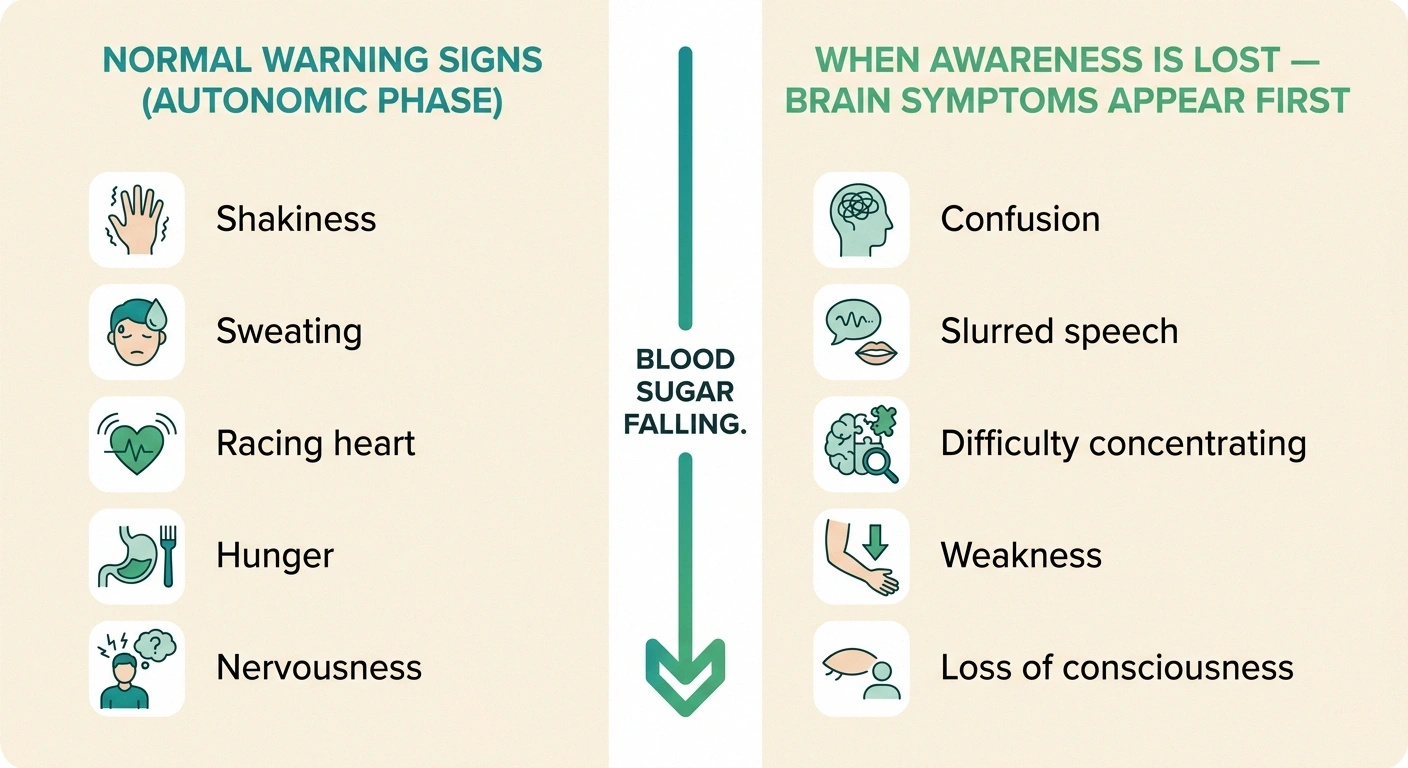
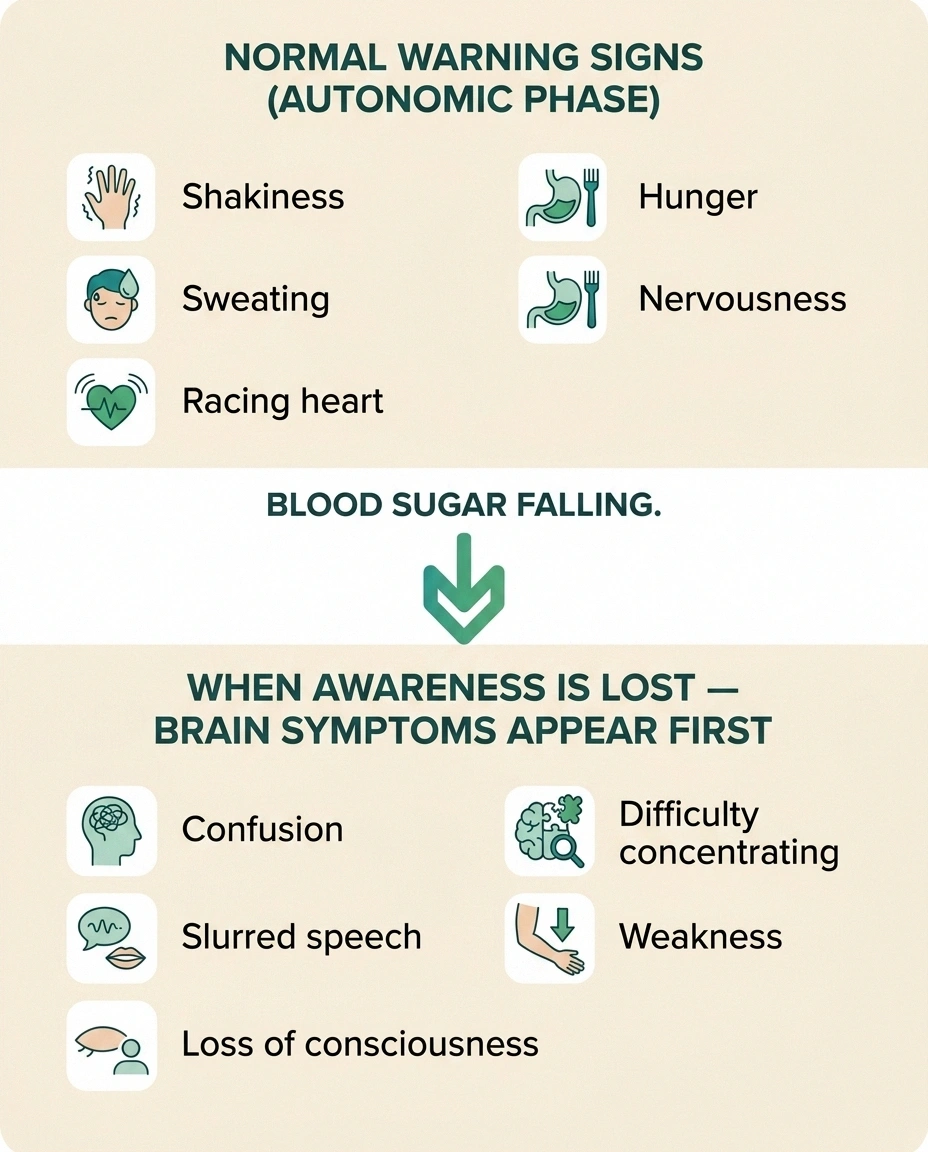
A healthy human body without diabetes has a layered defense system against low blood sugar. When glucose starts to fall, the first response is that insulin secretion shuts off. The second response is that glucagon, a hormone from the pancreas, kicks in and tells the liver to release stored glucose. The third response is that the adrenal glands pour out epinephrine, the same hormone that powers a fight-or-flight reaction. Epinephrine raises blood sugar by acting on the liver and other tissues, and it also produces the symptoms people associate with a low — the shakiness, the sweating, the racing heart, the sudden hunger, the nervous edge. Those symptoms are not just unpleasant side effects. They are the body's alarm system, designed to drive a person to eat carbohydrates before the brain runs out of fuel.
If a low is not corrected at the alarm stage, the next phase is neuroglycopenic — the brain itself begins to run out of glucose. Symptoms here include confusion, slurred speech, trouble concentrating, vision changes, weakness, sometimes mood or behavior changes that look surprisingly like intoxication. If the low continues, seizures and loss of consciousness can follow. The system is built so that the autonomic warning phase happens well before the brain-affecting phase. Healthy people feel the alarm and reach for the orange juice. Diabetic patients with intact alarm systems do the same. The catastrophic failure mode is when the alarm system stops working, the autonomic warning phase is silent, and a person goes from feeling fine to neuroglycopenia without an intervening warning.
What Hypoglycemia Unawareness Actually Is
Hypoglycemia unawareness, as the term is used in clinical practice, refers to the inability to perceive the body's autonomic warning symptoms until blood glucose has fallen to a dangerous level — typically below 55 mg/dL, sometimes lower. The condition is most common in Type 1 diabetes, where roughly 20 to 25 percent of patients are affected, particularly those with longer disease duration and tighter glycemic control. It is less common but not rare in Type 2 diabetics treated with insulin or with sulfonylurea-class oral medications like glipizide and glyburide. Patients with hypoglycemia unawareness have about six times the risk of severe hypoglycemic events compared to patients with intact awareness, where severe means an event requiring outside assistance to recover.
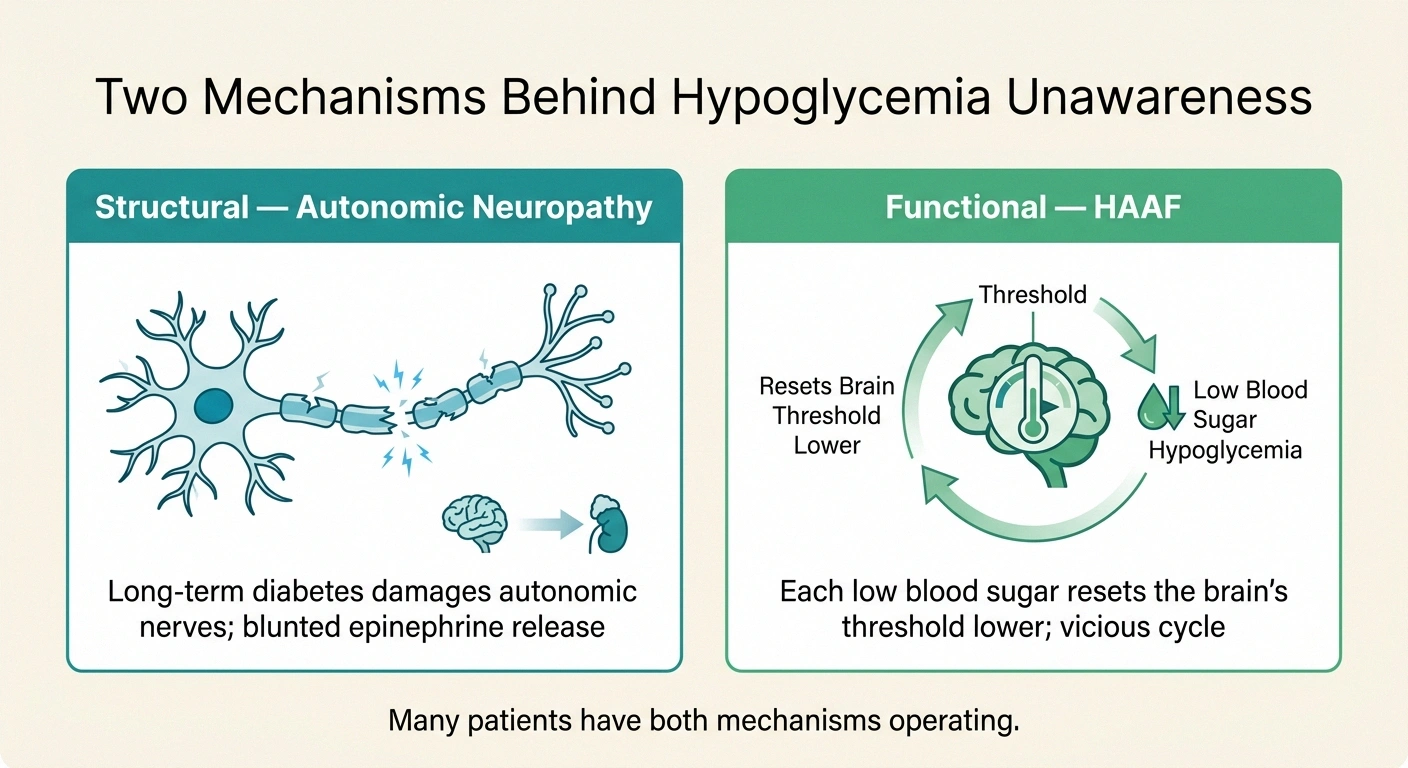
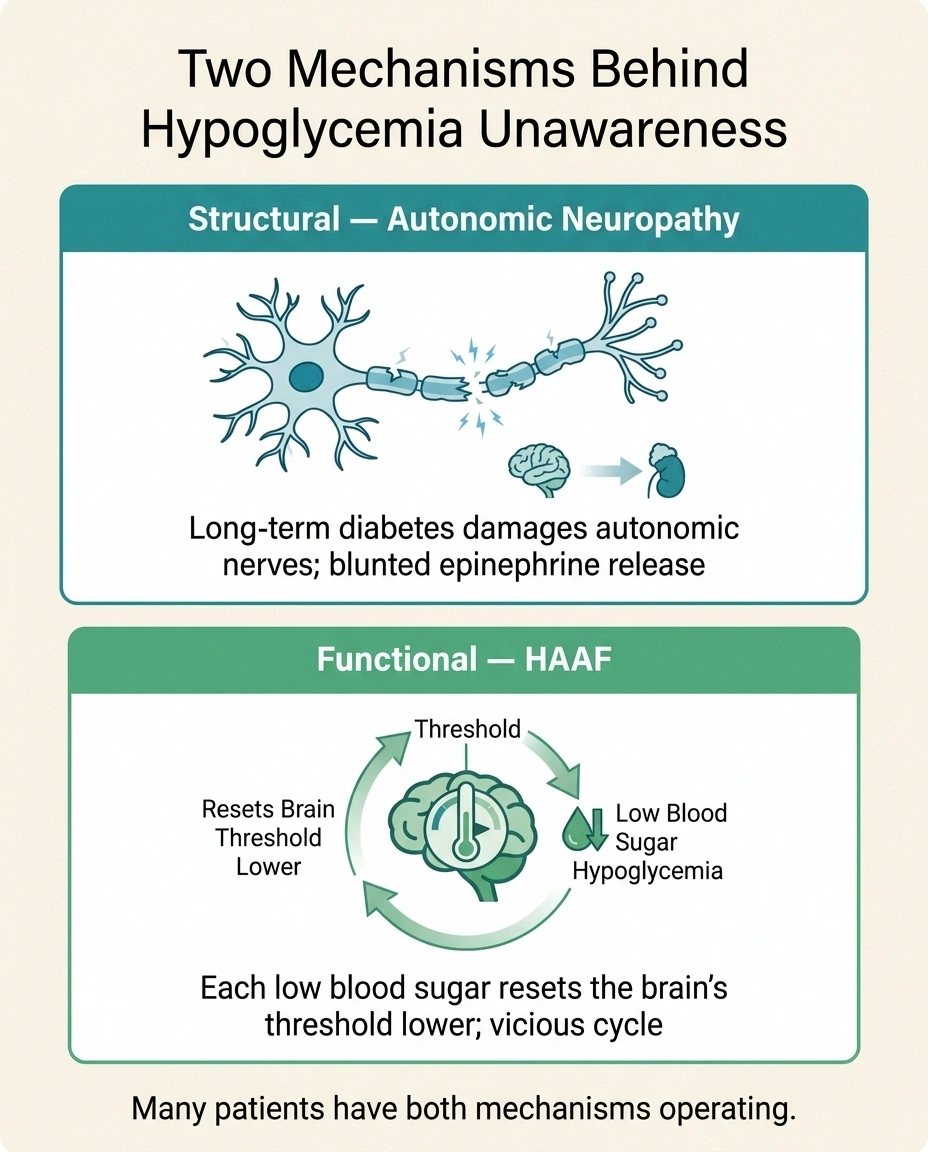
The mechanism is genuinely two-headed, which is what makes the topic confusing. The first mechanism is structural — diabetic autonomic neuropathy can damage the nerves and signaling pathways that normally drive epinephrine release in response to low glucose. Patients with established cardiovascular autonomic neuropathy, gastroparesis, or other autonomic features are at higher risk of having a blunted hormonal response to lows. The second mechanism is functional — repeated episodes of hypoglycemia themselves cause the brain to reset its threshold for triggering the counterregulatory hormone response. This is called hypoglycemia-associated autonomic failure, or HAAF, and it can happen even in patients without measurable structural autonomic neuropathy. Each low blood sugar event makes the next one slightly more dangerous, because the body's threshold for releasing epinephrine drops a little lower each time. Many patients with hypoglycemia unawareness have both mechanisms operating at once.
The Patterns Patients and Families Describe
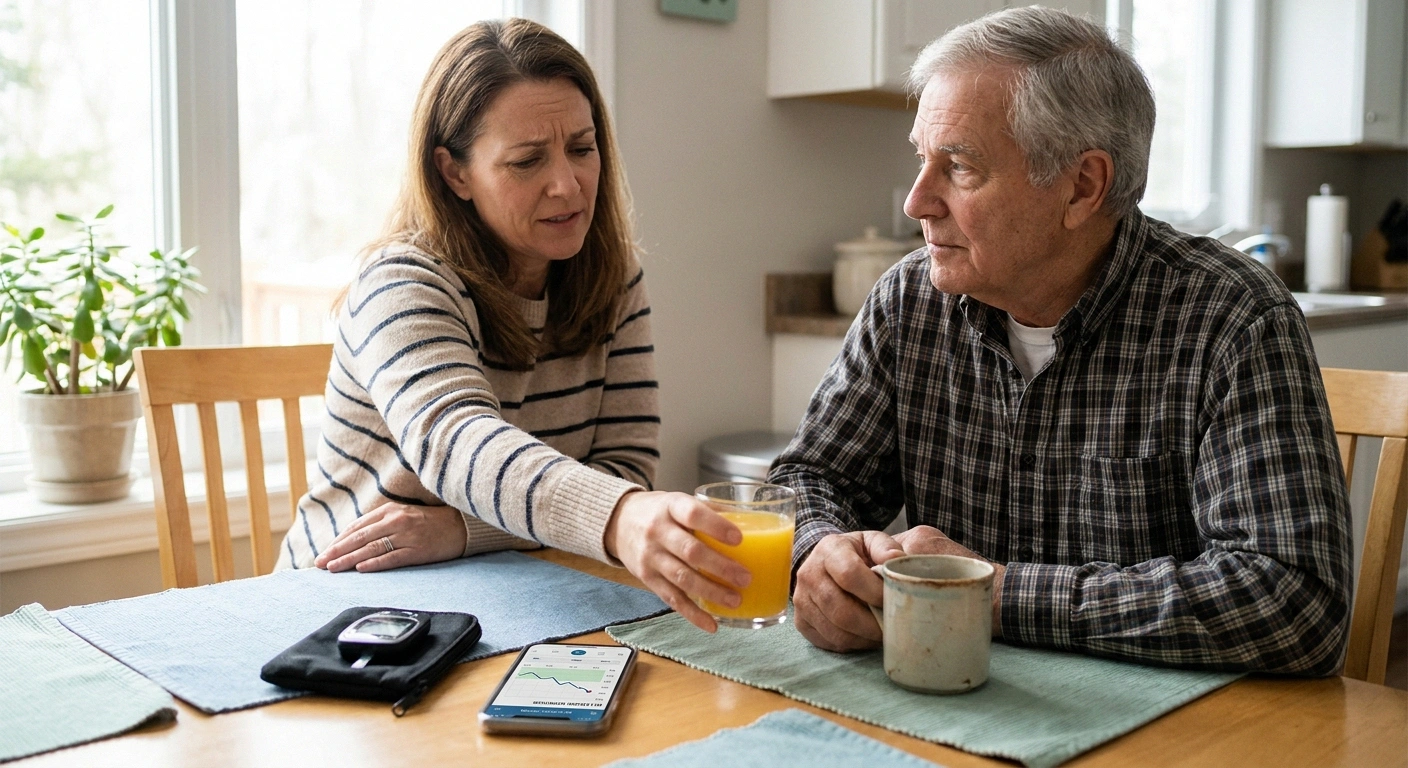
The pattern that scares family members most is the one where a low arrives at home and the patient does not realize it. Someone in the family notices first — a spouse hearing slurred speech across the breakfast table, an adult child watching their parent fumble buttoning a shirt in a way that is out of character, a coworker noticing the patient is responding strangely to questions. The patient genuinely does not feel anything wrong. The internal sensation of “I need to eat” or “something is off” is just not there. By the time the patient is asked directly to check their glucose, the number is often startlingly low. The family member knows the playbook by then — fast carbs, recheck in 15 minutes, repeat if needed — and the event passes, often without medical care being needed. But the absence of the patient's own internal alarm is the unsettling piece.
The pattern that is most physically dangerous is the one that happens overnight. Up to half of severe hypoglycemic events occur during sleep, and patients with hypoglycemia unawareness are at particularly high risk because the autonomic symptoms that might normally rouse a sleeper from their lows are absent. Most nocturnal hypoglycemia is non-fatal — the body has additional partial defenses, and the brain typically tolerates one short overnight low without lasting damage — but the rare and frightening pattern called “dead in bed” syndrome, where a young Type 1 diabetic is found deceased without obvious cause, is concentrated in this population. The pattern that is most operationally dangerous is hypoglycemia behind the wheel. A driver who passes from “feeling fine” to “confused” without an intermediate warning is a serious risk to themselves and to others on the road. Many states have driving rules tied to hypoglycemic events for diabetic patients, and patients with documented hypoglycemia unawareness sometimes face license restrictions until awareness is restored or compensatory monitoring is in place.
Why Long-Standing Diabetes Drives This
Hypoglycemia unawareness is overwhelmingly a complication of long-duration diabetes. It is rare in newly diagnosed Type 1 patients and rare in well-controlled Type 2 patients in their first few years. It becomes more common as the diabetes ages, particularly past the 10-year mark, and it is more common in patients who run tighter glycemic control. There is a real tradeoff at work here — patients who keep their A1C at 6.5 or 7 percent gain long-term protection against microvascular complications including diabetic neuropathy itself, but they spend more time near the low end of the safe range, accumulate more mild hypoglycemic events that the body resets to, and progressively reset their warning threshold downward. This is one of the unusual situations in medicine where good control of one parameter creates risk for a different complication. Modern thinking has moved toward individualized A1C targets — slightly higher targets for older patients, patients with hypoglycemia unawareness, and patients with serious comorbidities, because the tight-control benefit is partially offset by the hypoglycemia risk.
- Diabetes duration over 10 years
- Tight A1C target (6.5-7%) with frequent lows
- Established cardiovascular autonomic neuropathy
- Beta-blocker medication (masks adrenaline symptoms)
- Alcohol use (suppresses overnight liver glucose release)
- Chronic kidney disease (slows insulin clearance)
- Recent exercise without snack adjustment
The relationship to diabetic neuropathy matters for the structural piece. Patients with cardiac autonomic neuropathy — features like resting tachycardia, orthostatic hypotension, blunted heart rate response to standing — often have impaired hormonal response to hypoglycemia as well, because the autonomic nervous system that drives both is the same system. Patients with gastroparesis, the slowed stomach emptying that affects some long-standing diabetics, face a compounded risk because their food absorption is unpredictable. A meal that should have prevented a 2 p.m. low instead arrives in the bloodstream at 4 p.m. when the insulin has already peaked. The combination of unpredictable absorption and blunted warning symptoms is one of the more dangerous diabetic neuropathy patterns, and patients living with it often require specialized endocrinology care and sometimes specialized nutrition support.
The Strict Avoidance Protocol — Restoring Awareness
The most important piece of news in this article is that hypoglycemia unawareness is often partially reversible. The functional component — the HAAF mechanism where repeated lows reset the threshold — responds to a period of meticulous hypoglycemia avoidance. Two to three weeks of completely avoiding low blood sugar events can, in many patients, restore the warning symptoms that have been silent. The structural component from autonomic neuropathy does not reverse with this protocol — once the nerves are damaged, they generally stay damaged — but the functional reset is real, and for patients whose HU has more functional than structural cause, the gain in safety can be substantial.
Strict avoidance, as implemented in practice, looks like this. The endocrinology team loosens the A1C target temporarily, often to 7.5 or 8 percent rather than the usual 6.5 to 7 percent. Insulin doses are reduced, particularly mealtime and basal doses, with the goal of eliminating any blood sugar values below 70 mg/dL. Patients track every reading carefully, often with a continuous glucose monitor. Bedtime snacks with protein and a small amount of complex carbohydrate help prevent overnight lows. Exercise is timed to avoid the insulin peak. Alcohol is reduced or eliminated, particularly in the evening, because alcohol suppresses the liver's ability to release glucose overnight. The intent is two to three weeks with essentially zero hypoglycemic events. At the end of that window, most patients report some restoration of warning symptoms — not always to baseline, but meaningfully better than where they started.
The challenge with strict avoidance is that it is not easy to execute. The same patient who has hypoglycemia unawareness often has long-standing diabetic habits — meal timings, insulin doses, exercise patterns — that have produced occasional lows as a routine occurrence. Reworking the system to eliminate lows entirely takes intensive endocrinology engagement, often several visits in a short period, careful dose adjustment, and active patient participation. The CGM has made this dramatically more feasible than it was a decade ago, because the constant blood sugar data lets the team and patient see exactly where the lows are happening and adjust before each one.
The CGM as the Single Biggest Practical Change
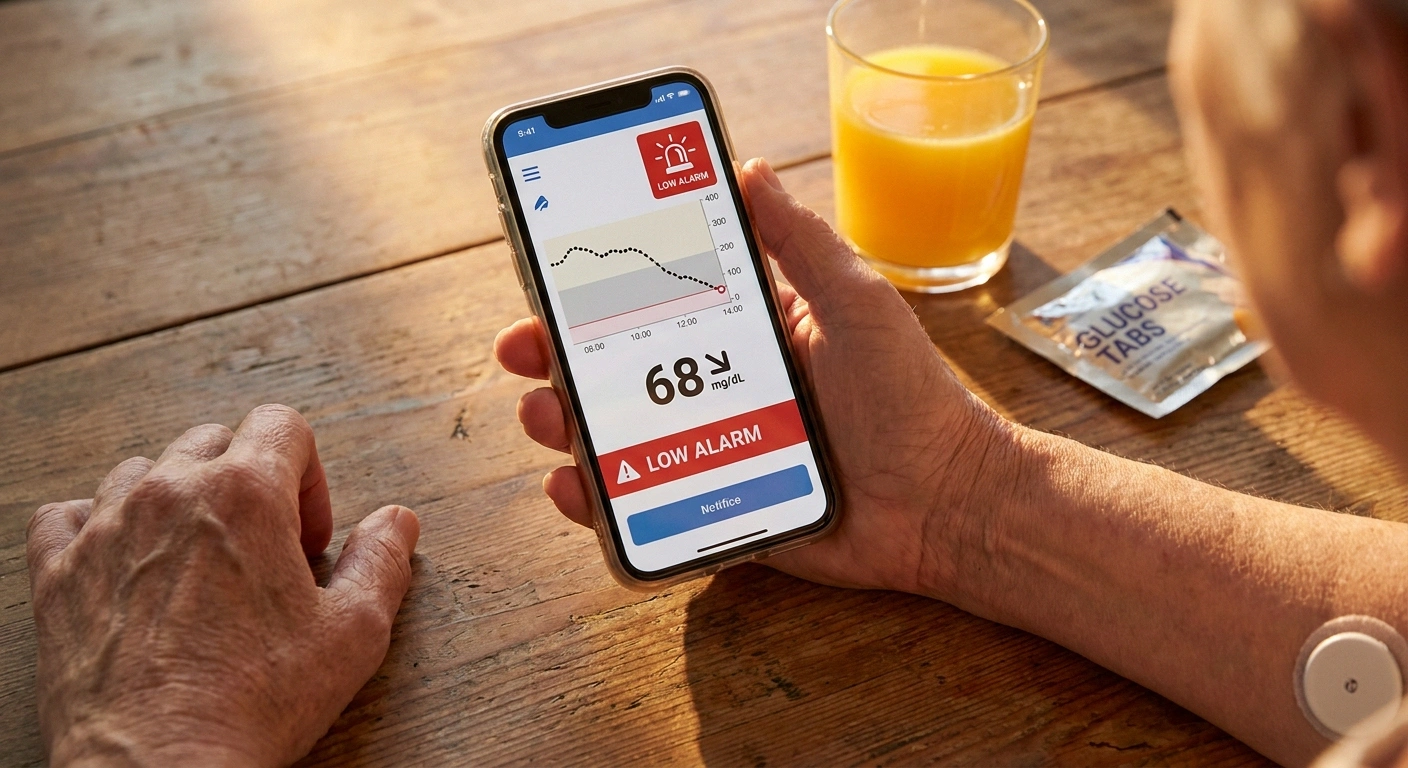
The single most important development for patients with hypoglycemia unawareness over the last 15 years has been the continuous glucose monitor. A CGM measures interstitial glucose every few minutes and transmits the data to a smartphone or pump. Alarms can be set to fire at any threshold — usually 70 or 80 mg/dL for the low alarm — and a downward-trending arrow tells the patient and family that a low is approaching before it has fully arrived. For patients who cannot feel the autonomic warning symptoms anymore, the CGM is, in effect, an external warning system that does not depend on the internal one. The randomized trials of CGM in hypoglycemia-unaware patients have shown roughly 40 percent reductions in severe hypoglycemic events compared to fingerstick monitoring alone, and the qualitative impact on quality of life — driving with confidence, sleeping without dread, exercising without fear — is often described by patients as transformative.
events with CGM
wear time
to restore awareness
The current 2026 generation of CGM devices — the Dexcom G7, the Abbott Libre 3, and the Medtronic Guardian among others — has 10 to 14 day wear time, slim profiles, and reliable accuracy for both treatment decisions and alarm triggering. Most insurers cover CGM for any patient with documented hypoglycemia unawareness, often without prior authorization hassles that older patients sometimes encountered. For Medicare patients on insulin, CGM coverage is available with relatively few hurdles. Patients who have not yet tried CGM and live with hypoglycemia unawareness are good candidates to ask their endocrinologist about it on the next visit.
The closed-loop or automated insulin delivery systems — Tandem Control-IQ, Omnipod 5, Medtronic 780G — combine a CGM with an insulin pump and an algorithm that automatically reduces or suspends insulin delivery when low blood sugar is approaching. These systems have further reduced hypoglycemic events in published studies, with some showing time-below-range improvements of 50 percent or more. For patients on insulin pump therapy who also have hypoglycemia unawareness, the closed-loop systems are a significant additional layer of safety. Cost and pump tolerance are still real barriers, but the technology has matured considerably.
The Glucagon Conversation
Every patient with hypoglycemia unawareness should have rescue glucagon at home, in the car, and at work, and family members should know how to use it. The current options are much friendlier than the older mix-and-inject kits that nobody used reliably. Glucagon is now available as a nasal spray (Baqsimi) and as ready-to-use auto-injectors and prefilled pens (Gvoke, Zegalogue). Cost is significant — these are expensive medications — but insurance often covers them, and the manufacturers offer patient assistance programs for those without coverage. Glucagon raises blood sugar within 10 to 15 minutes of administration and can buy time for a confused or unconscious patient until they wake up enough to eat carbohydrates or until emergency services arrive.
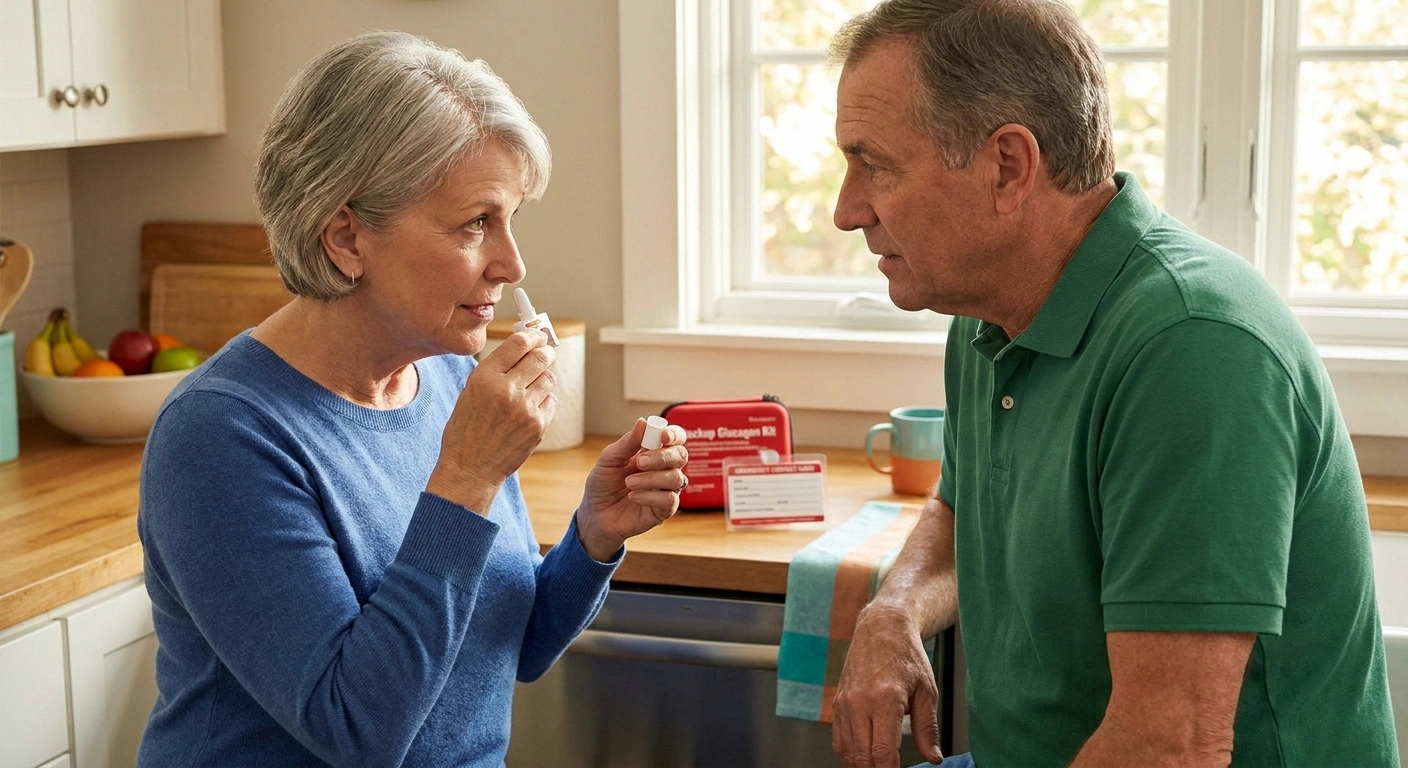
The point worth stressing is that the patient with severe hypoglycemia cannot reliably treat themselves. By the time blood sugar is in the 30s and 40s, judgment and motor function are compromised. The whole point of having glucagon is that someone else uses it on the patient. Family members, spouses, adult children, and trusted coworkers should know where the glucagon is, how to administer it, and when to call 911 alongside giving it. A simple practice run with the nasal spray — actually opening the device, demonstrating the technique — turns an abstract emergency plan into something a panicked family member can actually execute under pressure.
Driving, Working, and the Lifestyle Adjustments
Driving with hypoglycemia unawareness requires explicit adjustments. The American Diabetes Association recommends checking blood glucose before driving and treating any reading under 70 mg/dL before getting behind the wheel. For CGM users, a quick check of the current value and trend arrow before starting the car is standard practice. Driving any meaningful distance with insulin recently on board and no recent food is the situation to avoid. State rules vary considerably — some states require physician notification after a hypoglycemic event behind the wheel, some have restrictions tied to documented events, and some have effectively no rules. Patients with hypoglycemia unawareness who have had any driving-related event should have an explicit conversation with their endocrinologist about whether modifications are needed before they continue driving. The conversation is uncomfortable but it is one that family members often need to start, because patients who have lived independently for decades resist the implication that their driving might be limited.
At work, the same logic applies. Jobs that involve operating heavy machinery, climbing ladders, driving as part of the work, or providing patient care for others have special considerations when hypoglycemia unawareness is in the picture. A workplace conversation, often coordinated through human resources or occupational health, can put accommodations in place that allow continued work while reducing risk — scheduled breaks, allowance to keep CGM-enabled phones available, allowance to carry fast carbs, and so on. Disability disclosure is a personal decision, but in many cases the protections that come with formal accommodation are worth the disclosure.
The Co-existing Autonomic Picture
A patient who develops hypoglycemia unawareness should be evaluated for the full picture of autonomic neuropathy, because the same disease process that has affected the glucose counterregulation has often affected other autonomic functions as well. Cardiovascular autonomic neuropathy — checked with simple tests like blood pressure standing versus lying, heart rate variability with deep breathing, and 24-hour ambulatory blood pressure monitoring — can be silent and increases the risk of cardiac events. Gastroparesis is screened with symptoms and confirmed with gastric emptying studies. Bladder dysfunction, sexual dysfunction, sweating abnormalities, and orthostatic hypotension are other autonomic features that should be on the workup list. Many patients are surprised to learn that several mild issues they had attributed to aging or to medication side effects are actually part of a coherent autonomic picture that ties back to their diabetes.
The treatment for the broader autonomic picture is partly the same as the treatment for the hypoglycemia component — improved glycemic control without going so low that hypoglycemia worsens — and partly condition-specific. Gastroparesis has its own medications and dietary management. Orthostatic hypotension has compression and medication options. Cardiovascular autonomic neuropathy is managed in part by aggressive cardiovascular risk-factor control. Patients should expect that an endocrinology team treating hypoglycemia unawareness in a long-duration diabetic will also be paying attention to these other features.
Living Well With This Diagnosis
Hypoglycemia unawareness can sound frightening when explained for the first time, and there is a real anxiety that follows the first severe event. Patients sometimes develop a fear of hypoglycemia that is itself disabling — they run their blood sugar deliberately high to avoid lows, sacrificing long-term glycemic control for short-term safety. That trade is understandable but it is not the right end state. The right end state is a system where CGM monitoring, careful insulin dosing, glucagon in arm's reach, family training, and ideally a closed-loop pump together create a safety net that lets the patient run reasonable control without dreading every meal and every insulin dose. Reaching that state takes time, takes engagement with endocrinology, and takes honest conversation with the people in the household. It is reachable.
For the patient or family member reading this who has just experienced their first concerning event, the practical next steps are these: call your endocrinology team and explicitly use the words “hypoglycemia unawareness” so the conversation is appropriately framed; ask about CGM if you are not already using one; ask about closed-loop pump therapy if you are on insulin pump therapy and not using a hybrid closed-loop; fill or refill a glucagon prescription and train family members on its use; get a formal autonomic neuropathy assessment if one has not been done; and start a careful log of every low blood sugar event so the pattern is clear at the next endocrinology visit. The combination of medical adjustment and technology, applied carefully, has changed what living with hypoglycemia unawareness looks like over the last 10 years. Patients who once accepted unpredictable events as the cost of being on insulin now have real tools to push the risk down to a manageable level.
Frequently Asked Questions
What is hypoglycemia unawareness?
Hypoglycemia unawareness is the inability to perceive the body's normal warning symptoms of low blood sugar — shakiness, sweating, racing heart, hunger — until the blood glucose has fallen to a dangerously low level. Patients with hypoglycemia unawareness can go from feeling fine to confusion or loss of consciousness without an intervening warning. It affects roughly 20 to 25 percent of Type 1 diabetics and a smaller percentage of insulin-treated Type 2 diabetics, and it is more common in patients with longer-duration diabetes.
Is hypoglycemia unawareness the same as autonomic neuropathy?
Not exactly. Autonomic neuropathy can contribute to hypoglycemia unawareness by damaging the nerves that drive the hormonal warning response, but a separate mechanism called hypoglycemia-associated autonomic failure also contributes. HAAF is a functional reset of the body's threshold for releasing counterregulatory hormones, triggered by repeated hypoglycemic events. Many patients with hypoglycemia unawareness have both mechanisms operating, and some have only the functional mechanism without measurable autonomic neuropathy.
Can hypoglycemia unawareness be reversed?
Partially, in many patients. A protocol of strict hypoglycemia avoidance for two to three weeks — with loosened A1C targets, reduced insulin doses, CGM monitoring, bedtime snacks, and elimination of contributing factors like alcohol — can restore warning symptoms in patients whose unawareness has more functional than structural cause. The component caused by structural autonomic nerve damage generally does not reverse, but the functional component can. Even partial restoration of awareness is a meaningful safety gain.
What is the most important tool for managing hypoglycemia unawareness?
Continuous glucose monitoring is the single biggest practical change for patients with hypoglycemia unawareness. CGM provides external alarm-based warning of low blood sugar that does not depend on the patient's internal symptoms, and randomized trials show roughly 40 percent reductions in severe hypoglycemic events. Modern CGM systems like Dexcom G7, Libre 3, and Medtronic Guardian are widely covered by insurance for documented hypoglycemia unawareness. For patients on insulin pumps, hybrid closed-loop systems combining CGM and automated insulin delivery further reduce risk.
Should every patient with hypoglycemia unawareness have glucagon?
Yes. Severe hypoglycemic events require treatment that the affected patient cannot reliably administer to themselves. Modern glucagon options including nasal spray (Baqsimi) and prefilled auto-injectors (Gvoke, Zegalogue) are much easier for family members to use than the older mix-and-inject kits. Glucagon should be at home, in the car, and at work, and family members or coworkers should have practiced administration. Cost can be high but insurance often covers and manufacturer patient assistance programs are available.
Can I still drive with hypoglycemia unawareness?
It depends on the state and the individual situation, but patients with hypoglycemia unawareness should have explicit conversations with their endocrinologist about driving safety. The American Diabetes Association recommends checking blood glucose before driving and treating any reading below 70 mg/dL before getting behind the wheel. CGM monitoring with current reading checked before starting the car is standard practice. State rules vary considerably, with some requiring physician notification after hypoglycemic events behind the wheel. Patients who have had any driving-related hypoglycemic event need a formal medical conversation before continuing.
What blood sugar threshold counts as severe hypoglycemia?
Clinically, severe hypoglycemia is defined as a low blood sugar event severe enough that the patient requires assistance from another person to recover. The threshold blood glucose value varies, but blood sugar below 54 mg/dL is the level at which significant neurological symptoms typically appear, and values below 40 are clearly in the dangerous range. The functional definition matters more than the number — a patient confused enough that they cannot self-treat is in a severe event regardless of the meter reading.
Does tight A1C control cause hypoglycemia unawareness?
It contributes. Patients running A1C values at 6.5 or 7 percent spend more time near the low end of the safe range and accumulate more mild hypoglycemic events, which over years can reset the brain's threshold for releasing counterregulatory hormones. Modern endocrinology practice has moved toward individualized A1C targets — slightly higher targets are appropriate for patients with established hypoglycemia unawareness, older patients, and patients with serious comorbidities, where the trade between long-term complication prevention and short-term hypoglycemia risk favors slightly less aggressive control.
About the Author