The first time my daughter handed me her newborn and walked out of the room, I had a moment of pure terror. I'd held babies before — I'd held my own babies — but those hands had felt every wiggle and weight shift. The hands holding this newborn could feel her warmth and her gentle squirming, but the bottoms of my fingertips were numb in patches. The thought that flashed through my head, uninvited, was, what if I drop her?
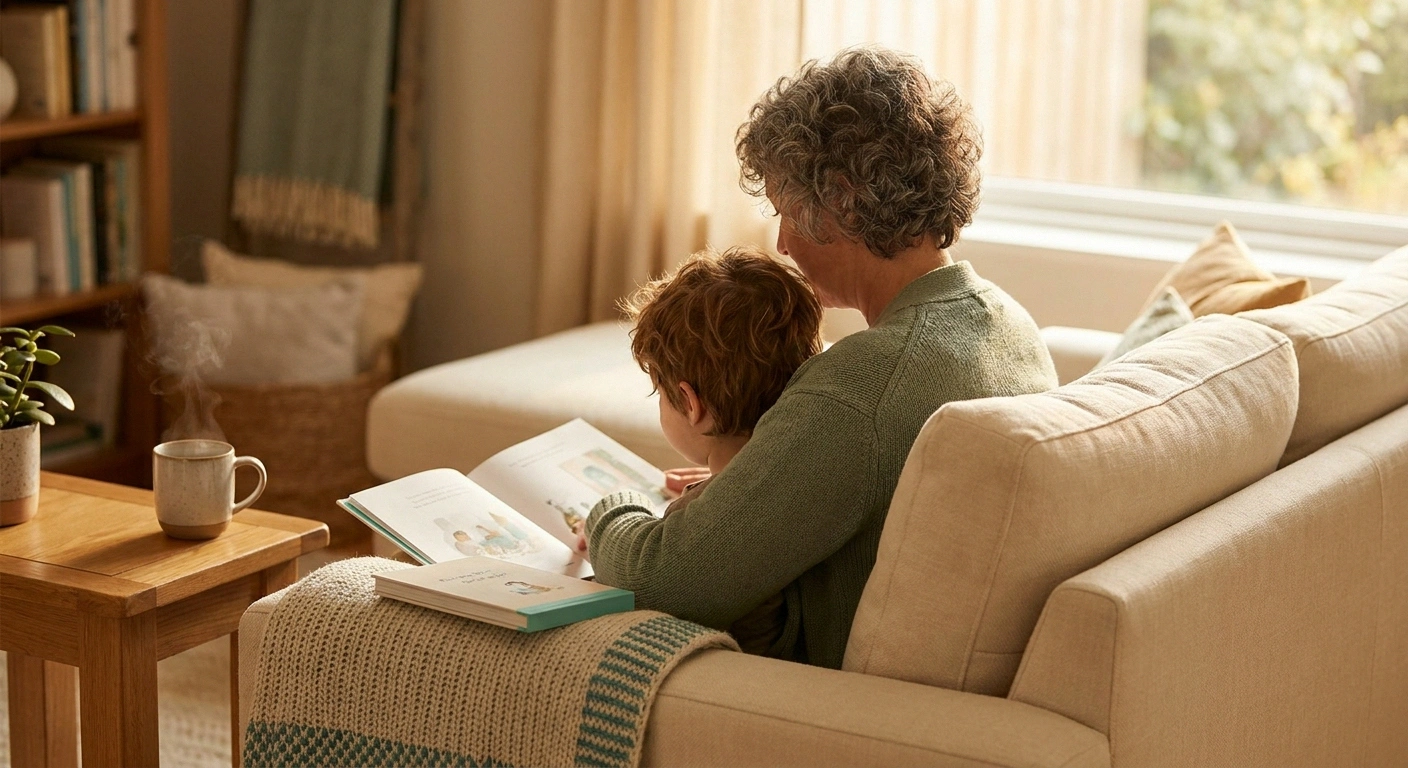
I didn't drop her. I sat down on the couch with armrests, I lowered her into the cradle of my elbows where my arm-skin still felt everything, and I read her three Goodnight Moons before her mother came back. But that quiet hour rearranged how I thought about grandparenting forever.
I'm Janet — a patient advocate, not a doctor — and if you're reading this because someone just put a grandchild's photo on your refrigerator and you're wondering how this is going to work with feet that don't always cooperate or hands that don't always grip, I want to sit down with you the way I wish someone had with me. You can still be the grandparent you want to be. We just adjust how.
The Most Important Reframe
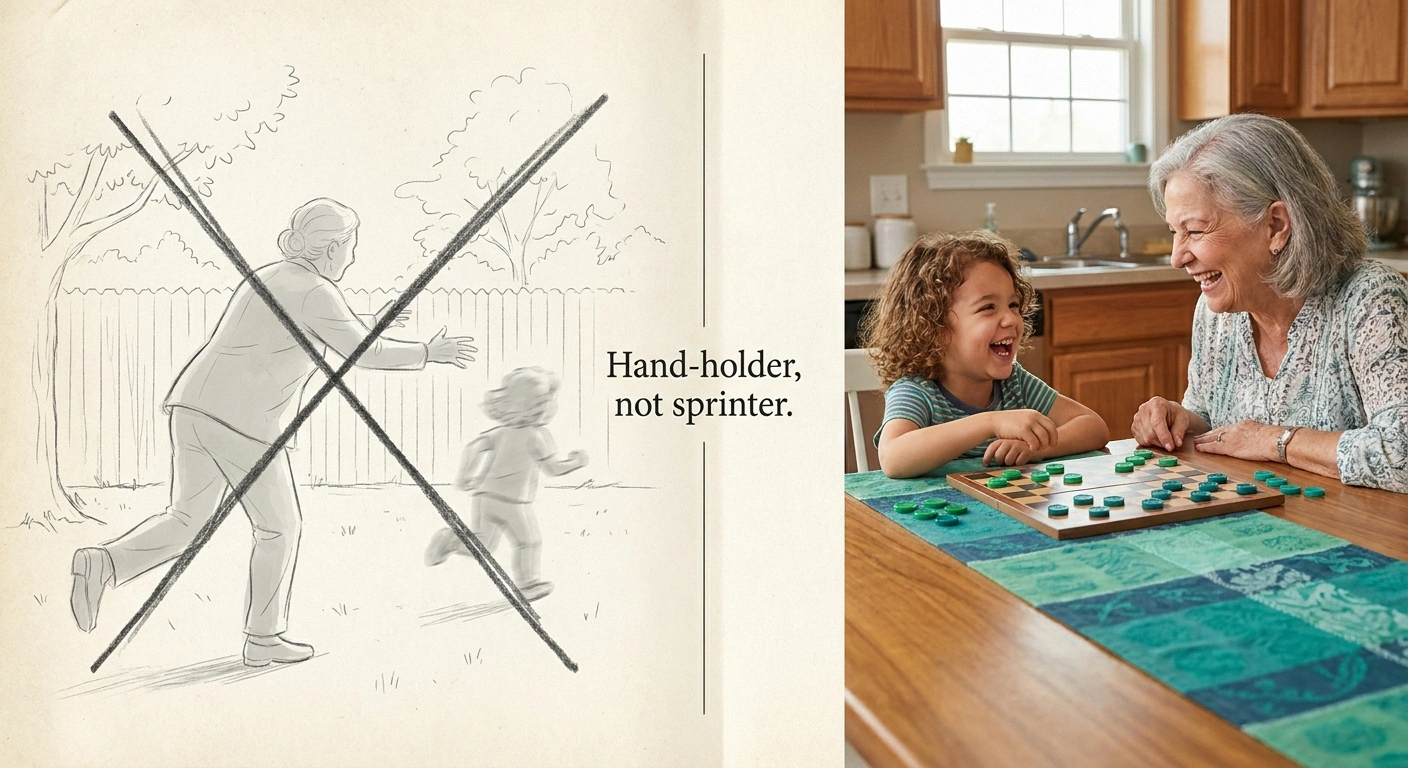
The grandparent of the storybook is a sprinter — chasing toddlers in the backyard, swinging them up onto shoulders, carrying them up two flights of stairs at bedtime. That image is real for some grandparents. For those of us managing neuropathy, it's the wrong yardstick. Holding ourselves to it is how we end up doing things we shouldn't, and then either getting hurt or pulling back from kids entirely out of fear.
Key Takeaway
You don't have to be the sprinting grandparent of the storybook to be the grandparent your grandchildren will remember. You're a hand-holder, not a sprinter. Almost every memory-making activity — reading, baking, gardening, music, story-telling — is fully available to you with a few practical adjustments.
Here's the better frame: I'm a hand-holder, not a sprinter. Grandparenting is mostly hours of presence — story time, baking, gardening, art, music, board games, watching a movie under a blanket, walking slowly through a park while telling stories about when their parent was small. Almost none of that requires the physical risk-taking we're afraid we can't deliver anymore. The kids will not remember the time you didn't carry them up the stairs. They'll remember that you were there.
Once that reframe is in place, the practical decisions get easier. We're not trying to do everything. We're trying to do the right things, safely, for as many years as our health and theirs allow.
Holding Babies and Toddlers Safely
The first practical question most grandparents ask: can I still hold the baby? Almost always yes — with a few adjustments.
The Sit-Cradle-Check Rule
- SIT down whenever holding for more than a minute
- CRADLE weight on the forearm, not fingertips (forearm sensation is more reliable)
- CHECK grip every 60 seconds — if uncertain, lower to lap or hand off
- Never lift a baby from a low position with your back — bend knees, get child to chest, then stand
- Never use a sling near stairs
- Sit down whenever you're holding for more than a minute. Standing-and-holding burns leg energy and balance reserve. A chair with sturdy armrests is your headquarters.
- Use the cradle of your forearm, not your fingertips, for the main weight. If hand neuropathy has dulled your fingertip sensation, the underside of your forearm is more reliable for sensing slipping or shifting.
- Do a quiet grip-check every minute or so. If your hands feel uncertain, lower the baby into your lap, the bassinet, or hand off to another adult. There's no shame in this — it's good grandparenting.
- Never lift a baby or toddler from a low position with your back. Bend the knees. Get the child closer to your chest first, then stand. If standing from a deep squat is unreliable, ask the parent or another adult to put the child into your arms while you're already seated.
- Slings and soft baby carriers can be a friend or a foe depending on your balance. They free your hands but they shift your center of gravity. If you use one, walk only on flat indoor surfaces, and never carry the child in a sling near stairs.
Diapers, Feeding, and the Floor
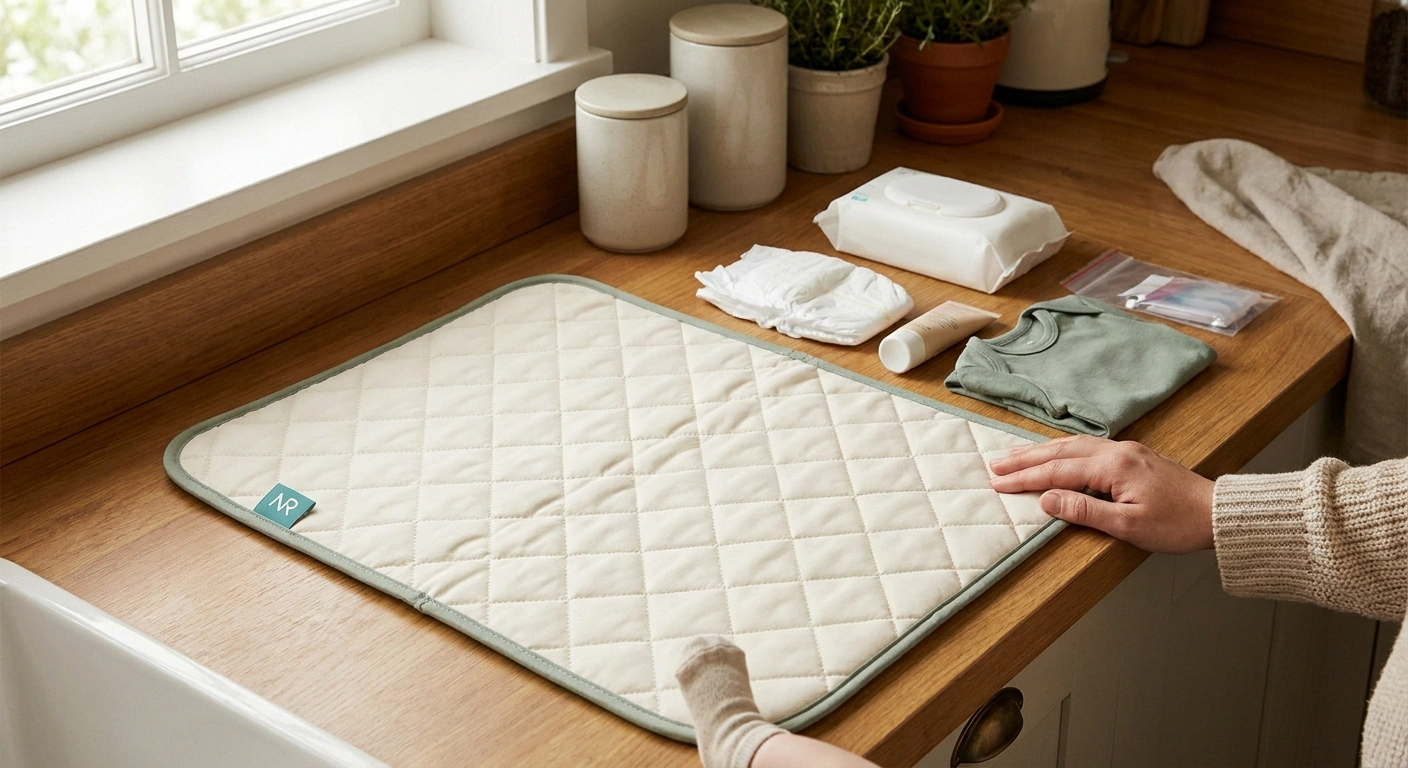
The floor is not your friend anymore. Many grandparenting tasks default to the floor — diaper changes, tummy time, scooting Legos around. Adapt by elevating.
- Diaper changes happen at counter or table height. A waterproof changing pad on the kitchen counter, the dining table, or a changing-table surface eliminates the floor-to-stand cycle that's hard on balance and joints.
- Pre-stage everything within arm's reach. Diaper, wipes, cream, fresh clothes, plastic bag — all laid out before the baby is on the surface. Never turn your back even briefly on a baby above the floor. One hand stays on the baby at all times.
- Bottle and meal feeding from a comfortable chair. Bring the baby to you. A swivel feeding chair or a glider helps if you have one. A small side table with the bottle, burp cloth, and a glass of water for you means no standing up mid-feed.
- Tummy time can happen on an elevated cushion — a soft floor cushion atop a couch beside you works, with the baby's body fully on the couch and you sitting next to her, one hand always touching.
- Designate a “play zone” — and walk around it, not through it. Toys are trip hazards. Encourage older toddlers to bring activities to you at the table or couch rather than playing in walkways.
The Activities That Are Still 100% Yours
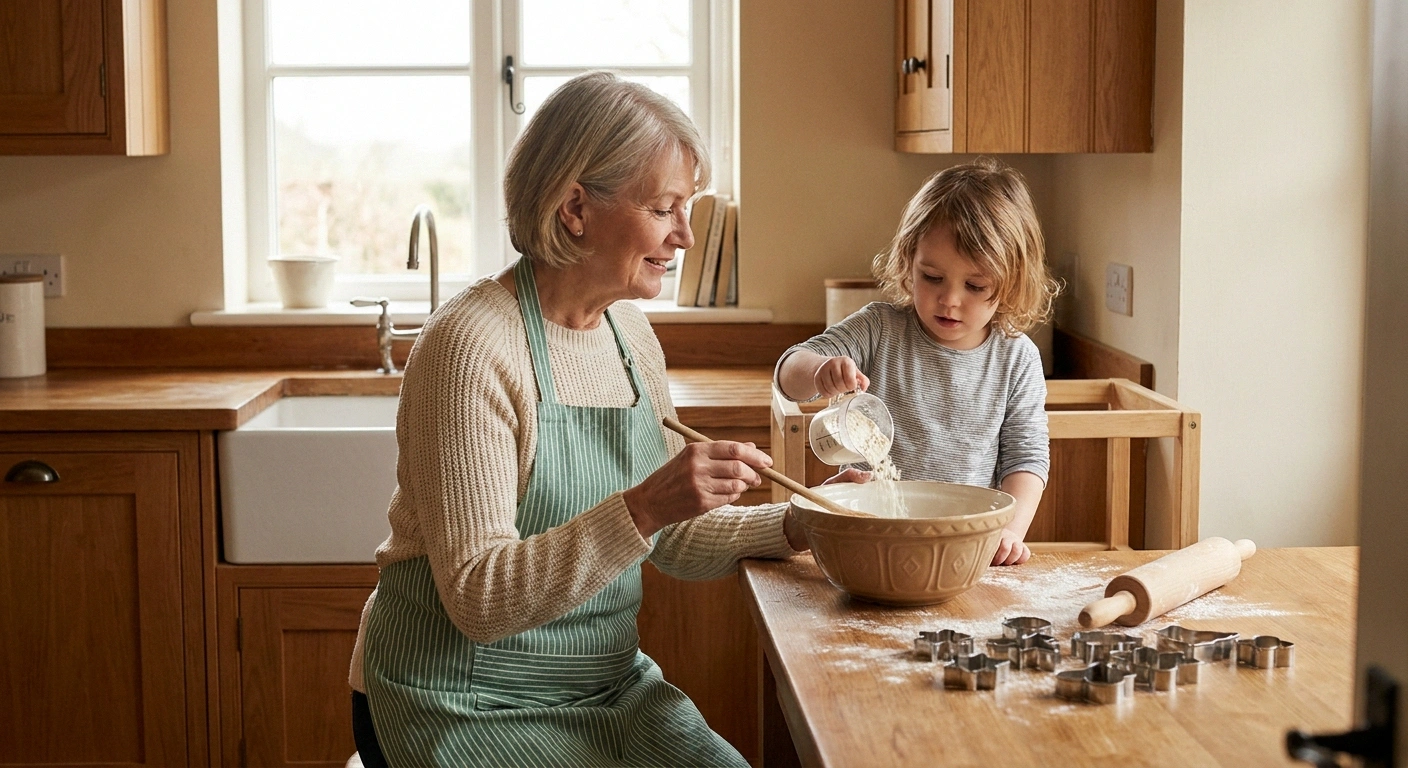
This is the longest section because it's the most important. Almost every memory-making activity is fully available to you with neuropathy. Lean into these.
Eight Activities That Are Still 100% Yours
- Reading aloud. The crown jewel of grandparenting. Couch, lap, soft blanket, book stack. Add voices. Read the same book twenty times. They love it. You're building a literacy gift that lasts a lifetime.
- Baking together. My favorite. A child standing on a stool at a kitchen counter beside a seated grandparent is one of the safest cooperative activities going. Mixing, pouring, decorating — they do the standing-up parts; you do the sitting-down parts. Cookies, muffins, biscuits, simple bread.
- Gardening from a seated position. Container gardens, raised beds, a small herb pot on the porch. Children love putting seeds in soil and checking on them daily. You don't have to kneel — pull a chair up to the raised bed.
- Art and crafts at the table. Coloring, collage, watercolor, beading for older kids, simple woodcraft. Cardboard, glue, markers, paper. No standing, no balance demand, infinite engagement.
- Music. Sing the old songs. Play piano if you played. Pull up videos on the iPad and dance from the couch while they dance in front of you. They will remember the songs forever.
- Board games and puzzles. Once they're old enough — usually around three — board games and puzzles open up. Played from a chair. Hands-on. Skill-building. Hours of engagement.
- Cooking and meal prep with older kids. By age 6 or 7, kids can do real cooking jobs with your seated supervision. Cracking eggs, measuring, washing produce.
- Storytelling. Just talking. Stories about when their parents were small. Stories about your own grandparents. Children are starved for the sound of an adult telling them anything that isn't an instruction.
Going Out: Parks, Errands, and Public Places
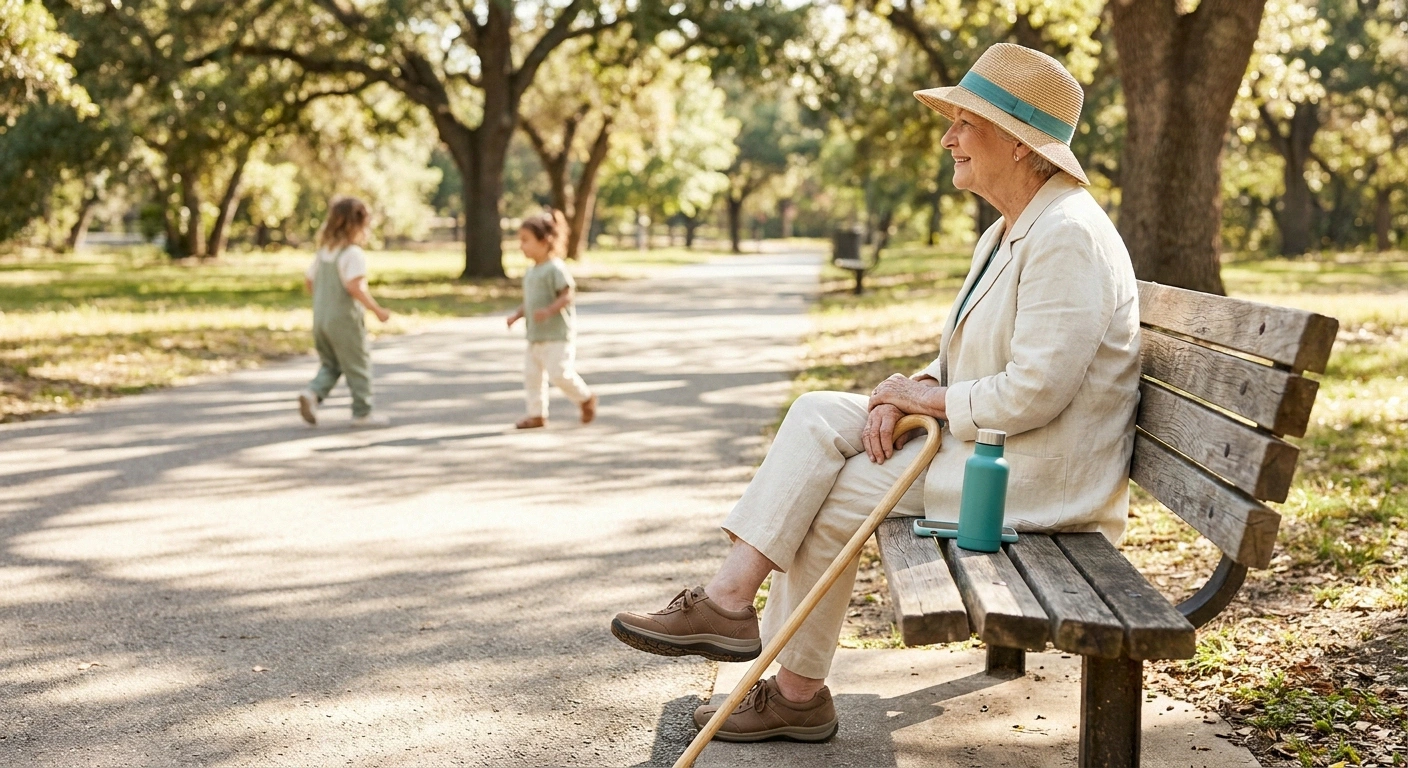
Outings are completely possible — they just need planning that other grandparents don't think about.
- Choose flat, paved paths. Park benches near the playground are better than the playground itself for you. Botanical gardens, library reading rooms, museum lobby spaces, community centers, and the public library are gold-standard outings — flat floors, seating everywhere, climate controlled.
- Always closed-toe shoes. A child stepping on an exposed toe with neuropathy can do real damage before you feel it. Good shoes belong on every outing — yours and theirs.
- Bring your walking aid without apology. If you use a cane on harder days, take it. Older grandkids quickly understand “Grandma's stick helps Grandma walk.” Younger ones don't notice. Falling because you left the cane home to look “more able” is a bad trade.
- Avoid playground equipment for your supervision. Pebbles, mulch, sand, and uneven surfaces underfoot are exactly what balance-impaired feet shouldn't navigate. Watch from the bench. The kids will be fine.
- Never the sole pool supervisor. Drowning happens silently and fast. If you're at the pool with a young grandchild, another adult is also at the pool. This is non-negotiable regardless of how able-bodied any of us are.
- Charged phone always. Always. On your person, not in a bag across the room.
Stairs, Cars, and Other Hard-Stop Decisions
A few situations call for clearer “no” answers than the rest.
The Four Hard “No” Situations
- Carrying a child down stairs alone — highest-risk neuropathy-grandparent task. Find another way.
- Driving without doctor clearance — pedal feel and reaction time can be affected.
- Solo pool supervision — drowning happens silently and fast. Always a second adult.
- Reach-and-lift from a deep crib — wait until the child can stand and reach up to you.
- Stairs while carrying a child. The general rule from physical therapists: don't. If you must, one hand is always on the railing, the child is held against your chest with both arms, and an able-bodied adult is either behind you (going up) or in front of you (going down). Most of the time, an older child can walk and hold your hand while you take the railing. Carrying a toddler down stairs is one of the highest-risk things a neuropathy grandparent can do — find another way.
- Driving with grandchildren. Only if your doctor has cleared you to drive. Foot numbness affects pedal feel, and it's a conversation to have honestly with your doctor and your adult kids. If you do drive them, installing a car seat correctly demands both hand strength and back flexibility — get a CPST-certified technician to do the install and inspect it at least annually. Local fire stations often do free car-seat checks.
- Lifting from a crib or pack-and-play. The reach-in-and-up motion is harder on your back than most grandparents anticipate. Lower the crib side if possible, or wait for the baby to be old enough to stand and lift their arms up to you.
- Solo supervision of very young children for very long stretches. An hour or two while parents run errands is usually fine. All-day, no-other-adult, can-they-call-you-if-you-fall situations deserve a real conversation about backup. Even healthy grandparents benefit from having a backup plan; we more so.
The Conversation With Your Adult Kids
This one's hard, but skipping it is harder. Your adult children would rather hear “I can't lift her up the stairs alone, but I can read with her for an hour” than discover one day that you tried and fell. The conversation usually goes better than we fear.
How the Honest Conversation Sounds
- Be specific about what you can do and what you'd rather not. “I love baking with her, I want story time, I'd rather not be the one taking her to the pool alone.”
- Frame limits as protection of the kids, not just yourself. “If I'm on the stairs holding her and my foot gives out, she gets hurt. I'd rather not put either of us in that spot.”
- Suggest the workarounds. “If we keep our visits on the main floor, I can do anything.” That's much easier for parents to plan around than vague worry.
- Update them as your situation changes. Good days, bad days, new prescriptions, balance changes. They can plan visits around what's true now.
Caring for Yourself So You Can Keep Showing Up
The grandparent who lasts is the one who tends to their own health between visits. A few habits that pay off.
A focused two-hour visit you can repeat next week beats a five-hour day that puts you in bed for two. Plan in shorter windows, sleep well the night before, and always plan a recovery day after.
- Sleep the day before a grandchild day. Energy is finite. A 1 pm to 4 pm visit on Saturday is bankable if Friday night was a real night's sleep.
- Don't push through pain to be the fun grandparent. A flare-up the next day is the price of pretending you weren't hurting in the moment. Sit. Take the break. They'll wait.
- Keep your foot care routine immaculate. Active days with grandkids mean more standing and more risk of small foot injuries. A nightly foot inspection is non-negotiable.
- Hydrate. Older adults under-drink, especially when busy. Have water beside you wherever you sit, every visit.
- Plan the recovery day. The day after a big grandparenting day is a low-demand day. Plan for it.
- Tell someone where you are. A spouse, an adult kid, a friend — someone knows you have the grandchildren today and could check in if you didn't answer the phone in the evening.
When Things Don't Go to Plan
Even with every precaution, something will eventually not go to plan. A grandchild will trip on a toy. You'll feel unsteady. The baby will spit up on the only outfit you brought. None of these is a failure. Have a plan.
- Know the parent's location and quickest-way-home time. “Mom and Dad will be back in 20 minutes” is a different scenario than “they're three hours away.”
- Know the child's allergies, current medications, and pediatrician phone number. Written down where you can find it without searching.
- Have the nearest urgent care address in your phone. Not the ER if it's not an ER situation — most kid scrapes are urgent-care or pediatrician-callback level.
- Know your own ER plan. If you are the one who needs help — chest pain, severe dizziness, a fall — what's the plan? Most grandparents haven't thought about this. Have a 911 protocol that includes the child's pickup arrangement.
- Forgive yourself the small stuff. Spit-up happens. Knee scrapes happen. Tears happen. Your job is to keep them safe, not perfect.
The Quiet Truth About Grandparenting With Neuropathy
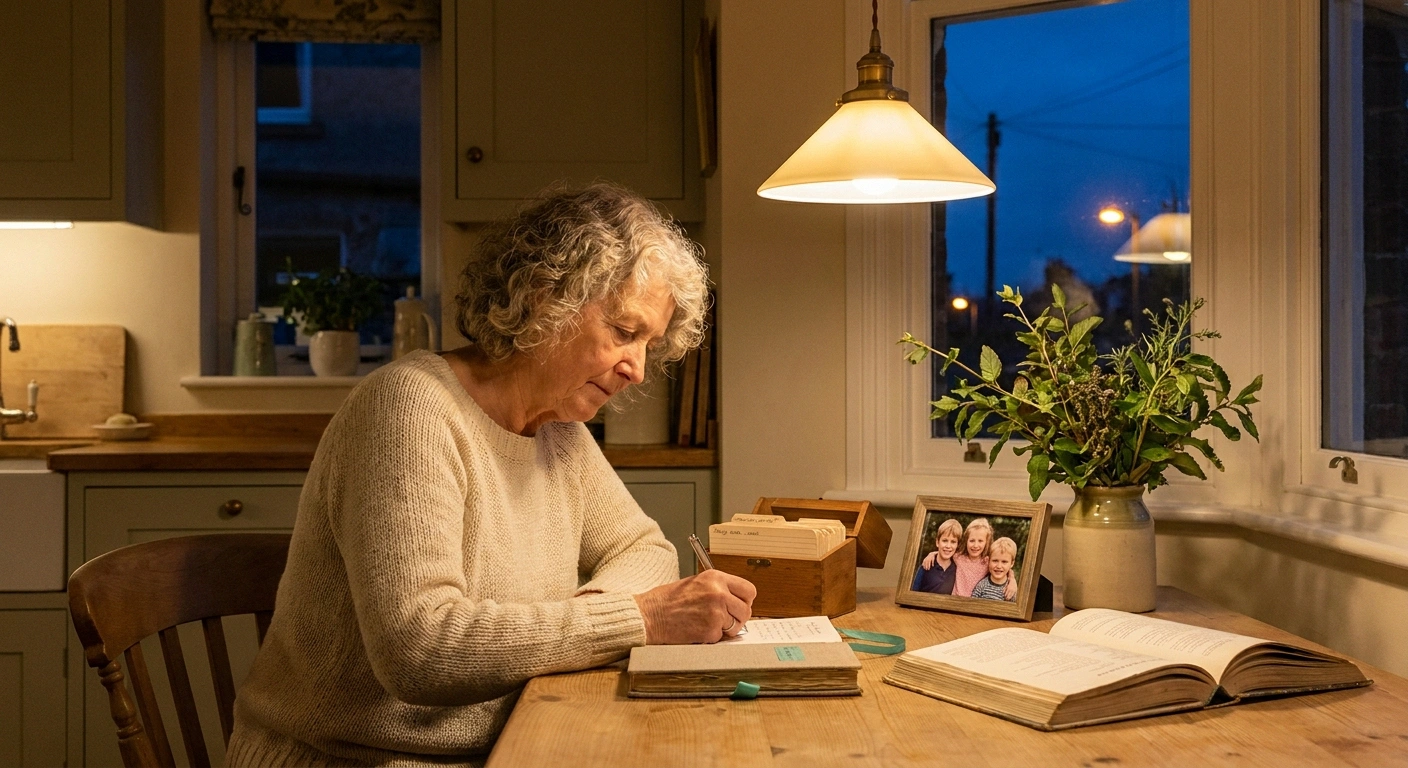
The grandparents in my support group who have done this best for the longest aren't the ones who pretended their bodies still worked the way they used to. They're the ones who matched their grandparenting to their reality — early. They built the storybook routines, the kitchen routines, the garden routines, the bedtime routines, the long-talk-on-the-couch routines, while they still had the energy to build them well. And then they invested in those routines for years.
By the time the kids are big enough to ask questions, they don't think of you as Grandma-with-neuropathy. They think of you as Grandma-with-the-cinnamon-roll-recipe, or Grandma-who-knows-every-bird-call, or Grandma-with-the-best-stories. Your neuropathy is invisible to them because the things you give them are what's visible.
You can do this. Sit when you need to sit. Bake on Saturday mornings. Read three Goodnight Moons. Plant a single tomato. Tell them the story of the time their dad came home with a frog in his pocket. Those things are the entire job, and you are entirely qualified for them.
Frequently Asked Questions
I'm afraid I'll drop the baby. How do I know if my hands are too numb to hold an infant?
Sit down and use the cradle of your forearm as the primary support, not your fingertips. Test your grip on a similarly weighted object — a five-pound bag of flour, a heavy book — before holding the baby. If you can confidently lift, hold for a minute, and set down without the grip feeling uncertain, you're cleared for holding while seated. Standing-and-holding is the higher-risk version; sit for it.
Is it safe for me to drive my grandchildren?
Only if your doctor has cleared you to drive in your current condition. Neuropathy can affect pedal feel and reaction time. Discuss it honestly with your doctor and your adult children. If you do drive grandchildren, make sure car seats are installed by a CPST-certified technician — local fire and police stations often do free installations and inspections.
What if I have a fall when I'm alone with the kids?
This is the scenario every grandparent worries about and the one most worth planning for. Always carry a charged phone on your person, not in a bag. Teach age-appropriate children “Grandma's number” and your address. If the children are old enough, teach them how to call 911. Have a backup adult on call. Many grandparents wear a medical alert device during grandchild visits as an extra layer.
My grandkids want me to play on the floor with them. How do I say no without disappointing them?
You don't have to. You redirect. “Floor isn't great for Grandma's body, but let's bring the train track up to the kitchen table — it's bigger up here anyway.” Or “Let's read on the couch — you pick the books, I'll do the voices.” Kids care about your attention, not the elevation of your seat.
I get exhausted after just a few hours. Is that normal?
Yes, especially when you're managing chronic nerve pain or numbness. Your body is doing extra work. Plan grandparenting visits in shorter, more focused windows rather than long marathon days. A two-hour visit done well beats a five-hour visit that puts you in bed for two days. Quality time, not quantity.
What's the best gift I can give grandchildren when I can't keep up physically?
Time and attention. Children remember adults who actually listened to them. They remember the grandparent who taught them to roll out pie crust, told them the same beloved story for the hundredth time, sat with them through a hard day. None of that requires running or lifting. It requires showing up and being there.
How do I talk to my adult children about what I can and can't do?
Be specific and forward-looking, not apologetic. “I can do anything on the main floor for a couple of hours. Stairs and pool supervision are not great for me right now.” Frame it as protecting the children, not just yourself. Most parents are relieved to have a clear picture — vague worry is harder to plan around than honest limits.
Should I tell my grandkids I have neuropathy?
For older kids, age-appropriate honesty usually goes well. “My feet don't always feel things, so sometimes I'm careful where I step” demystifies your cane or your slow stair-walking and lets them help instead of worry. Very young children don't need a medical label — they just understand “Grandma sits a lot” without explanation. Follow your instincts on age and child.
About the Author