The first time I stayed in a hotel after my neuropathy diagnosis, I was unprepared in every way it is possible to be unprepared. The bed was firmer than mine. There was nothing to elevate my legs on. The bathroom tile felt slick and unfamiliar under my numb feet. The HVAC clicked on and off all night. I came home from a four-day trip more wiped out than I had been from the entire previous year combined.
That trip taught me what I wish someone had told me first: a hotel room is not a smaller version of your bedroom, and the things that make your home liveable with neuropathy do not magically come bundled in a standard room. The good news is that almost all of the gap can be closed with a short list of advance calls, a slightly smarter suitcase, and a forty-five-minute arrival routine. This is the practical guide I would have wanted.
The Call to Make Before You Book
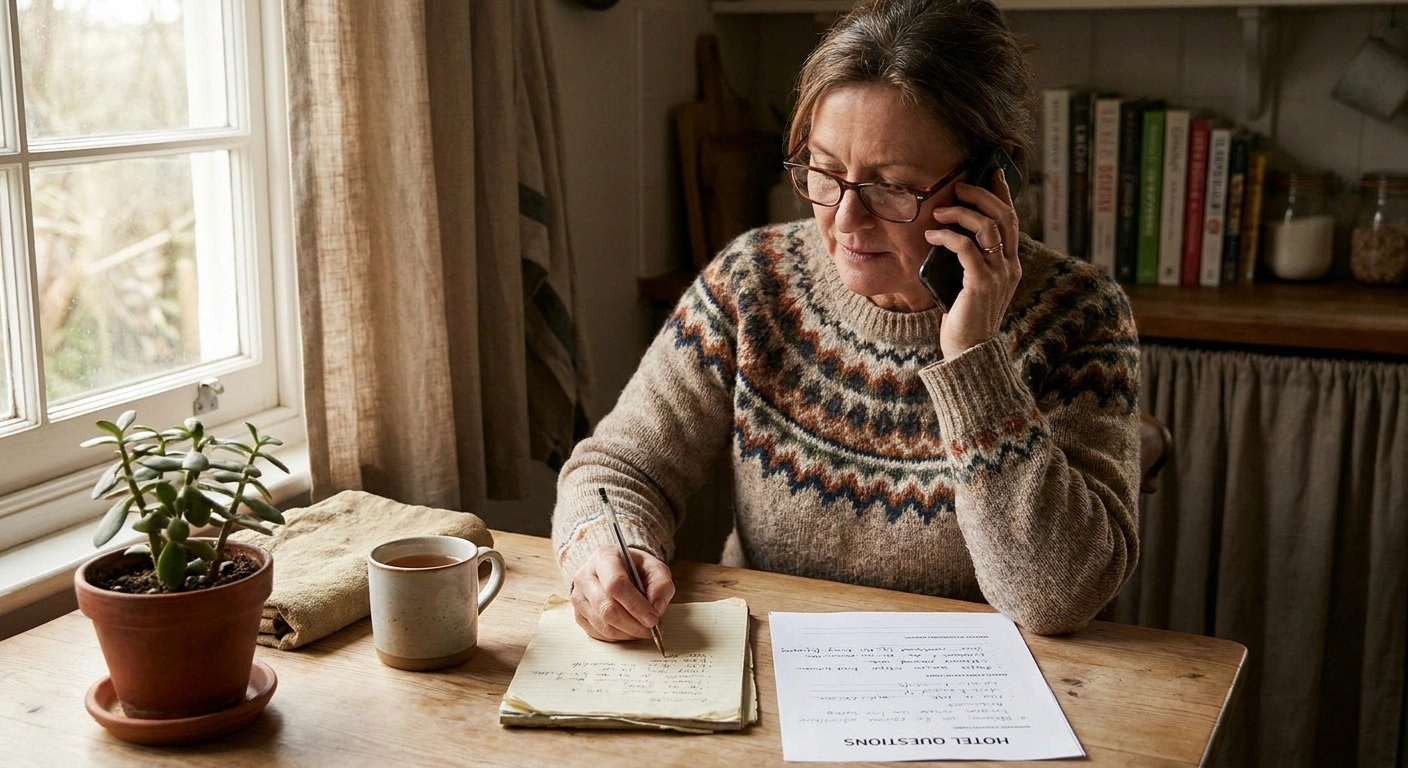
Most accessibility planning for hotels falls apart at the same point: people use the chain's 800 number to book, then assume the special requests will follow them to the property. They do not, reliably. The single highest-leverage habit is to call the hotel's local front desk directly — not the central reservations line — and have a real conversation with someone who is physically in the building you are going to sleep in.
Call the local front desk directly — never the chain 800 number. An eight-minute conversation with a person physically in the building reliably gets you closer rooms, grab bars, extra pillows, refrigerators, and quieter floors. It's the single highest-leverage habit for hotel travel with neuropathy.
Things to ask, in roughly this order:
- Do you have ADA-accessible rooms, and do they have grab bars in the shower and beside the toilet?
- If I am not in an ADA room, can grab bars or a shower bench be brought into a standard room?
- Is there an in-room refrigerator? (Useful for ice, cold drinks, and refrigerated medications.)
- What floor is the room on, and how far is it from the elevator and the parking?
- Are the rooms above the ice machine, the elevator shaft, or near the pool deck? (Noise = poor sleep = worse pain.)
- Can I request extra pillows in advance? (For leg elevation.)
- Is the bedding firm or pillow-top? (If you have a strong preference, this tells you whether to bring a topper.)
This call takes about eight minutes and changes the entire trip. If the property cannot or will not accommodate reasonable requests, you have information you would not have had otherwise — and time to choose a different hotel.
What to Pack That You Would Not Pack Otherwise
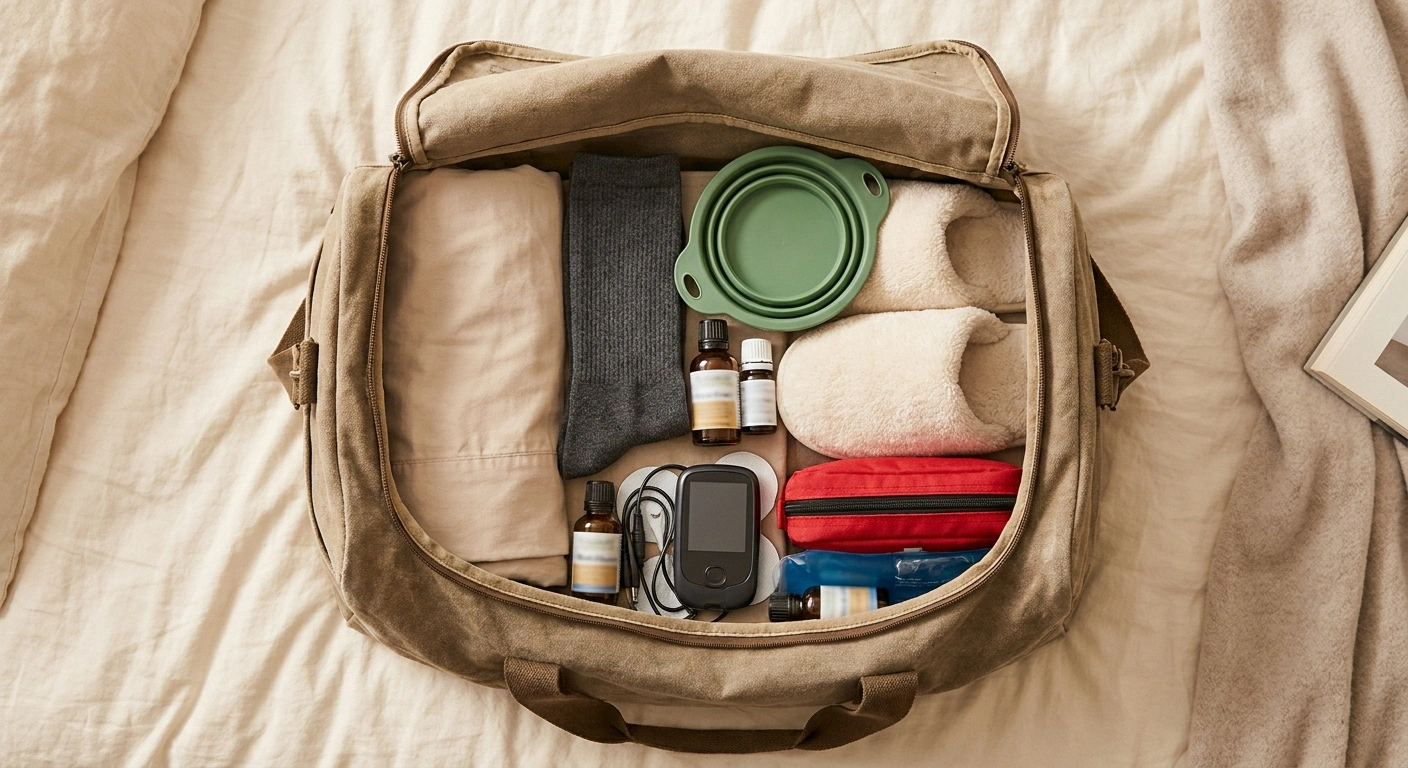
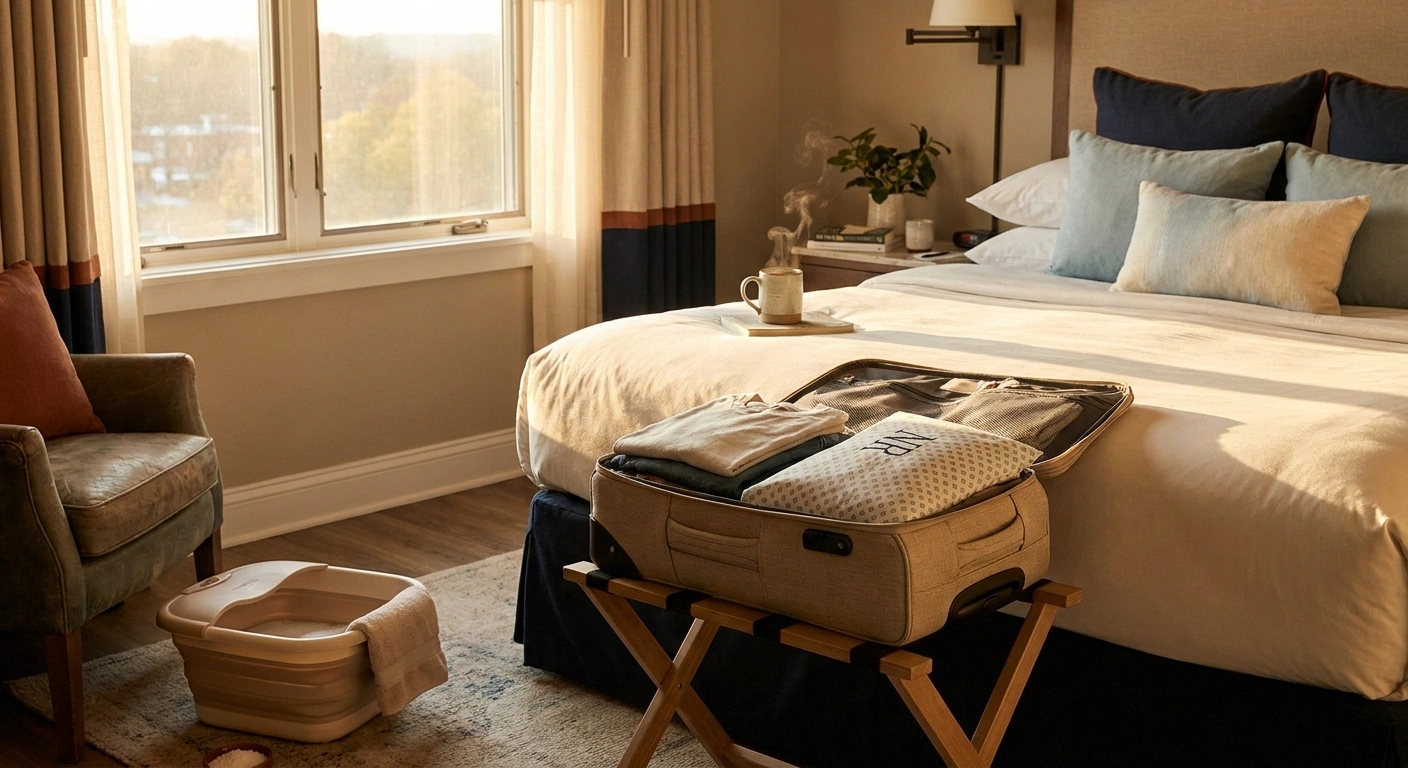
A standard travel suitcase, adapted for a neuropathy-friendly hotel stay, looks slightly different. Here is what I have learned to bring:
The Neuropathy-Friendly Hotel Packing List
- Your own pillowcase or a thin cotton sheet. Hotel sheets are often a polyester-cotton blend that can feel scratchy or hot on sensitive skin. A familiar pillowcase from home anchors sleep.
- An extra pillow or two, or a small folded blanket. For leg elevation. Hotels rarely have enough pillows for proper leg-under-the-knee support without strip-mining the bed.
- Compression socks. Worn during long days walking around a new city, they noticeably reduce evening swelling. See our guide to compression socks and gloves for neuropathy.
- A collapsible silicone foot soak basin. Mine folds flat and fits in a packing cube. A cool foot soak before bed in an unfamiliar room is one of the most reliable resets I know. Our guide to warm baths and foot soaks covers when warm vs. cool is the right choice.
- A small bottle of magnesium spray or Epsom salts. Light to pack, useful for the foot soak or for tense calves.
- TENS unit + spare batteries if you use one. Hotel rooms have unfamiliar outlets and your charger is the first thing you forget at home.
- A thin gel cold pack. Fill from the ice bucket on arrival.
- Extra slippers with cushioned soles. Hotel-room floors are often hardwood or thin carpet over concrete. Walking barefoot to the bathroom is asking for a flare.
- All medications, in original bottles, with extras. Pack at least three extra days of each in case of travel delays. Keep them in your carry-on, not checked baggage.
- A small portable nightlight for the bathroom path. Hotel bathrooms often lack good night-lighting, and stumbling on numb feet in the dark is dangerous.
None of this is exotic. Most of it adds up to about two extra packing cubes and a few ounces. The return on those few ounces is sometimes the difference between a trip you enjoy and a trip you survive.
The Arrival Routine That Changes Everything
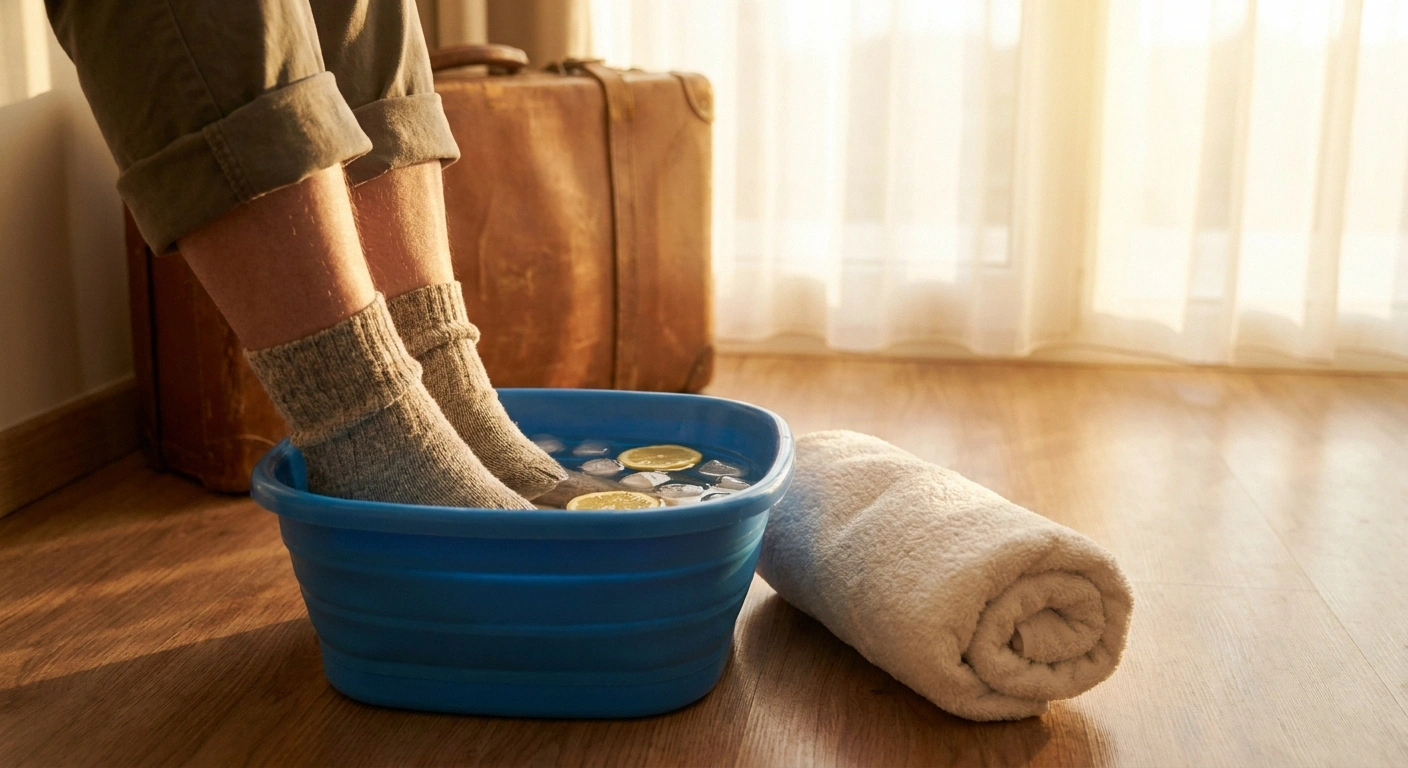
The temptation when you walk into a hotel room exhausted is to flop on the bed and worry about it later. Resist. Spending forty-five minutes on a deliberate arrival routine pays back across the whole stay.
The 45-Minute Arrival Routine
First, before unpacking, walk the room. Note: where the bathroom light switches are (you will be navigating in the dark later), how slippery the tile feels in stocking feet, whether the bedside lamp has an easily-reached switch, where the thermostat is and whether it works. If the carpet has any rolled edges or trip hazards, identify them now. Place a slipper or a folded towel near the bathroom path as a tactile marker if you need one.
Second, fill the ice bucket and use it to do an immediate cool foot soak — even ten minutes — sitting in the chair with your suitcase still closed. This is the single most useful thing you can do to take the inflammation out of a travel day before it has a chance to set up shop in your nerves overnight.
Third, build your sleep setup. Strip the decorative pillows off the bed and stack them, plus your packed extras, into a leg-elevation pile. Put your own pillowcase on the pillow you will actually use. Set the TENS unit, water glass, and any nighttime medications within arm's reach of the bed. Set your phone alarm to whatever wake-up time you need and verify the hotel alarm clock is off so it does not surprise you at 6 a.m.
Fourth, set the thermostat now. Most hotel rooms run too warm for neuropathy comfort, and they take an hour or two to actually reach a set temperature. If you like cool, 67°F is a reasonable starting target. If you tend to flare in cold, 70°F. Just do not arrive at bedtime and try to fix the temperature then.
Fifth, identify the nearest 24-hour pharmacy on your phone. You will probably not need it. The five minutes of looking now means you do not have to figure it out at 11 p.m. if you do.
Now you can unpack.
The Hotel Mattress Problem
Hotel mattresses are often firmer than what people sleep on at home — chains favor mattresses that wear evenly across many guests. For someone with neuropathy, an unfamiliar firmness can mean pressure-point pain at the hips, ankles, and heels that you do not feel at home.
The most useful single fix is the leg-elevation pillow stack mentioned above — taking weight off the heels and reducing the pull on the lower-back and hamstring areas changes the pressure distribution at every other contact point. If hotel pillows are flat and synthetic, two of them together approximate one good pillow.
If you know you sleep poorly on firm beds, a packable mattress topper exists (egg-crate foam rolls into a small bundle) but is bulky enough that most people only bring one for longer stays. A simpler hack is to drape a folded fluffy bath towel under your hips before lying down, which adds just enough cushion in the critical zone to take the edge off most hotel beds.
The Bathroom Is the Riskiest Room
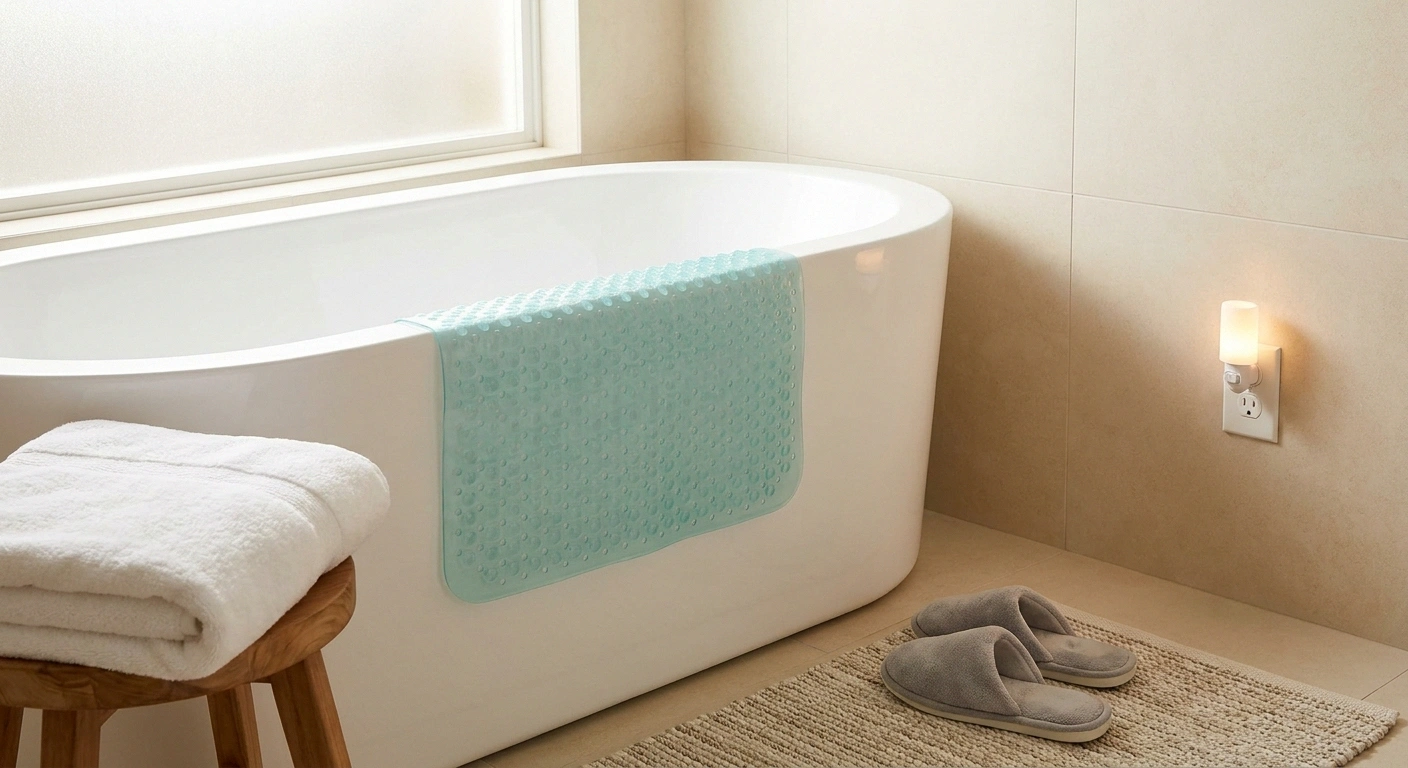
This is the part of the hotel that catches the most people. Unfamiliar bathroom tile, often slippery when wet, no grab bars in standard rooms, a tub-shower combo with a high step-over, and a bath mat that may or may not stay put. Most falls in hotels happen here. For people with numb feet who cannot fully feel the floor, the risk multiplies.
Most falls in hotels happen in the bathroom. Unfamiliar tile, no grab bars, slippery wet surfaces, high tub step-overs. Bring a suction non-slip mat, sit to dry off, never test the towel bar with your weight, and always wear cushioned slippers from bed to bath — never barefoot, never just socks.
A few habits that meaningfully reduce that risk:
- Pack a non-slip silicone shower mat that suctions to the tub floor. The hotel one is small and may not stay put.
- Sit down to dry off after the shower — never balance on one foot to dry the other while standing on wet tile.
- If there is no grab bar, hand-test the soap dish and towel bar before trusting them with weight (most are not load-bearing — assume nothing).
- Use the bedside slippers all the way to and from the bathroom — never barefoot, never just socks.
- If the bathroom is across the room from the bed, leave the bathroom light on for night trips, or pack a small nightlight to plug in.
Our guide to neuropathy and bathroom safety covers the home version of this — most of the same principles apply, just with less control over the environment.
Climate, HVAC, and the Noise Problem
Hotel HVAC systems are loud, on/off cyclical, and often drafty. All three are bad for neuropathy sleep. The on/off cycle in particular wakes light sleepers — and people in chronic pain are usually light sleepers — every time the compressor kicks on or off.
Find the HVAC's “fan on” setting (continuous fan, not cycling). It masks the compressor clicks that wake light sleepers. If your unit doesn't have it, a free white-noise app or the hairdryer on low pointed at the wall does the same job.
If the system has a “fan on” setting (continuous fan even when not cooling), use it. The fan masks the click of the compressor cycling and provides a constant white-noise floor that is far easier to sleep through than intermittent silence broken by sudden bursts. If your room does not have that option, a free white-noise app on your phone (or just the hotel hairdryer on low, pointed at the wall) does the same job.
For temperature, the principle is the same as at home: extremes make symptoms worse. A room that is too hot triggers burning and tingling in already-irritated nerves; a room that is too cold can trigger painful vasoconstriction. Find your number and hold it.
The Daily Rhythm of a Trip
One of the biggest hidden burdens of travel with neuropathy is that you walk much more than you do at home. New cities, sightseeing, conference floors, hotel lobby-to-room — it all adds up to step counts well above your baseline. The flare that hits you on day three is usually the cumulative bill from days one and two.
Some patterns I have learned the hard way:
- Break the day. A mid-afternoon return to the room for thirty minutes of leg elevation and a cool foot soak prevents the evening crash.
- Wear your best, broken-in shoes — not your dressier ones. A trip is not the place to debut new footwear. See our best shoes for neuropathy guide.
- Plan one rest day in three. Trying to maximize every day usually means cutting the trip short anyway because you crash.
- Compression socks during the activity, not just at night, do meaningfully more work than people expect.
- Hydrate. Hotels are dry — both the rooms and the cities you are flying into. Carry a water bottle and refill it.
The Wind-Down Routine
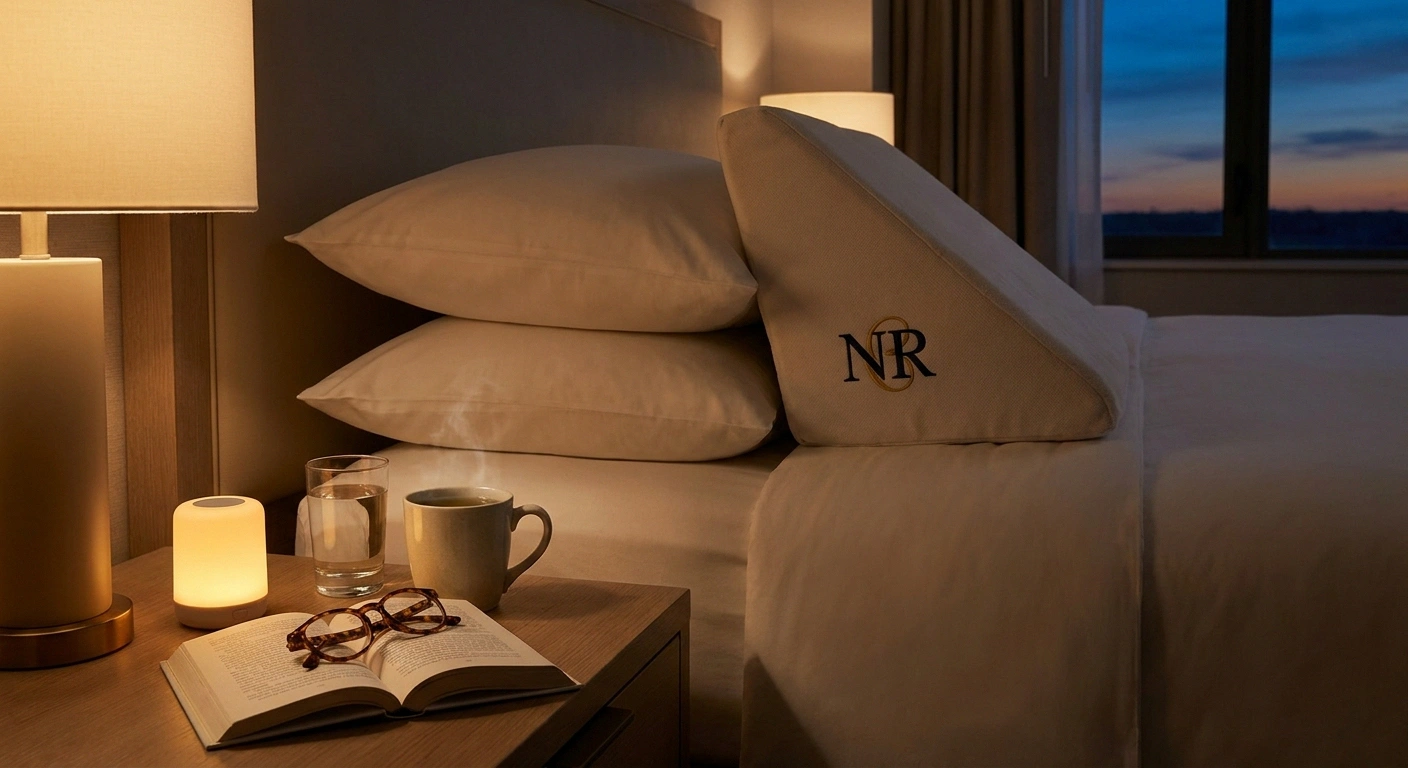
However you wind down at home — that is what you need a portable version of. For me it is a cool foot soak, fifteen minutes with my legs elevated, a hot tea, a chapter of a novel. The point is consistency: the body's pain-quieting systems lean heavily on familiar pre-sleep cues, and a hotel room offers none of them by default. You have to bring them.
The setup I built in the arrival routine — pillows in place, water at the bedside, slippers by the bed, nightlight in the bathroom path, thermostat already where I want it — exists so that this wind-down can happen without a lot of getting up. The less navigation you do between settling in and falling asleep, the better the sleep tends to be. Our guide to a neuropathy-friendly bedroom setup covers the home version of this same principle.
If You Travel a Lot, Build a Travel Kit Once
If hotels are a regular part of your life — for work, for family, for grandchildren in another state — the highest-leverage one-time investment is to build a packed “neuropathy travel kit” and leave it permanently packed. Mine lives in a soft-sided duffel that gets pulled off the closet shelf for every trip, restocked at home, and zipped shut again until the next one. Nothing to remember, nothing to forget. It contains the items in the packing list above plus a printed copy of my current medications, a one-page “what to do if my pain spikes” note in case I cannot reach my own resources, and a small laminated card with my emergency contacts. The kit takes ninety minutes to build the first time and saves an hour of pre-trip stress for every trip after.
Build the Kit Once — Use It Every Trip
A permanently-packed soft duffel for everything on the packing list, plus three additions:
90 minutes to build. Saves an hour of pre-trip stress every trip after.
The Bottom Line
A hotel stay with neuropathy does not have to be the disaster my first one was. The room itself is just a box; what you bring into it and how you set it up are the variables that matter. A pre-trip call, a slightly different suitcase, and a deliberate arrival routine close most of the gap between hotel and home. The trip you remember well is the trip you prepared for.
Frequently Asked Questions
What should I ask the hotel before booking?
Call the local front desk directly (not the chain 800 number) and ask about ADA-accessible rooms with grab bars, in-room refrigerators, how close the room is to the elevator and parking, whether the room is noisy from ice machines or elevators, whether you can request extra pillows in advance, and what the bedding firmness is like. Eight minutes of conversation with the actual property changes the entire trip.
How can I make a hotel bed more comfortable for neuropathy?
The biggest single fix is to build a leg-elevation pillow stack from the bed's existing pillows plus your own. If the mattress is uncomfortably firm, a folded fluffy bath towel under your hips adds just enough cushion to take the edge off. Bringing your own pillowcase keeps a familiar surface against your face and aids sleep in an unfamiliar room.
What should I pack for a hotel stay with neuropathy?
Your own pillowcase, extra pillows or a folded blanket for leg elevation, compression socks, a collapsible foot soak basin, magnesium spray or Epsom salts, your TENS unit and spare batteries, a thin gel cold pack, cushioned slippers, extra days of all medications in their original bottles, and a small nightlight for the bathroom path. None of this is exotic; most fits in two extra packing cubes.
How do I prevent falls in the hotel bathroom?
Pack a silicone non-slip shower mat with suction grips, sit to dry off after showering rather than balancing on one foot, never assume the soap dish or towel bar will hold weight, always wear cushioned slippers between bed and bathroom, and leave the bathroom light on or use a plug-in nightlight for night trips. Hotel bathrooms are the highest-risk room for falls with numb feet.
How can I sleep better in a hotel with neuropathy?
Set the thermostat on arrival (not at bedtime) and find the “fan on” setting if the HVAC has one — continuous fan noise covers the on/off compressor clicks that wake light sleepers. Use a free white-noise app if not. Build a leg-elevation pillow stack. Use your own pillowcase. Place water, slippers, and any nighttime medications within arm's reach. Avoid checking phones in bed.
What is the arrival routine for a hotel stay with neuropathy?
Before unpacking, walk the room to note tile slipperiness, light switch locations, and trip hazards. Do an immediate cool foot soak using ice from the bucket. Build your sleep setup (pillow stack, pillowcase, bedside water, slippers in place). Set the thermostat to your preferred temperature. Identify the nearest 24-hour pharmacy on your phone. Then unpack. The routine takes 45 minutes and changes the whole stay.
Are some hotel chains better than others for neuropathy travelers?
Chain matters less than the specific property. Newer hotels generally have better-padded carpet, more accessible bathroom designs, and quieter HVAC; older properties vary widely. Always call the local front desk directly and ask the specific questions above — this tells you more than the brand. Higher-tier chains tend to have more accessible rooms and more cooperative staff, but exceptions exist in both directions.
How do I avoid a neuropathy flare during a multi-day trip?
Break the day with a mid-afternoon return to the room for leg elevation and a cool foot soak. Wear broken-in shoes (a trip is not the place to debut footwear). Wear compression socks during the activity, not just at night. Plan one rest day in three. Hydrate aggressively — hotels and many destinations are drier than home. The flare on day three is usually the cumulative cost of overdoing days one and two.
About the Author