Browse all our types and causes of neuropathy guides for more articles like this one.
nnnnnnnnEveryone's hit their “funny bone” at some point — that sharp, electric jolt that shoots down your forearm into your ring and pinky fingers when you bang the inside of your elbow. What most people don't realize is that what they're actually hitting is the ulnar nerve, and for millions of people, that nerve isn't just annoying when bumped — it's a source of chronic pain, numbness, and hand weakness that can seriously impact daily life.
nnnnUlnar neuropathy is the second most common compressive neuropathy in the upper extremity, right behind carpal tunnel syndrome. Yet it doesn't get nearly the same attention. When I first started experiencing persistent numbness in my ring and pinky fingers, I assumed it was related to my general peripheral neuropathy. It took months before a neurologist identified the ulnar nerve as the specific culprit — and that distinction mattered for treatment.
nnnnWhether you're dealing with numbness in your last two fingers, a weakening grip, or that persistent electric sensation in your elbow, this guide will help you understand what's happening, why, and what you can do about it.
nnnnWhat Is Ulnar Neuropathy?
nnnnThe ulnar nerve is one of the three major nerves in your arm, running from the side of your neck all the way down to your hand. It's responsible for sensation in your ring and pinky fingers and controls most of the small muscles in your hand that let you do precise movements — like typing, playing piano, buttoning a shirt, or gripping a jar lid.
nnnnUlnar neuropathy occurs when this nerve becomes compressed, stretched, or irritated at some point along its path. While the nerve can be affected anywhere from the neck to the wrist, the two most common trouble spots are:
nnnn- n
- The elbow (cubital tunnel syndrome) — This accounts for the vast majority of ulnar neuropathy cases. The nerve passes through a narrow channel called the cubital tunnel, right behind that bony bump on the inside of your elbow (the medial epicondyle). This is your “funny bone” — and at this point, the nerve sits very close to the skin with almost no cushioning or protection. n
- The wrist (Guyon's canal syndrome) — Less common, but the nerve can also be compressed as it passes through a tunnel called Guyon's canal at the base of the palm. n
Understanding where the compression is happening is critical because it determines the symptoms you experience and the treatment approach that's most likely to help.
nnnnnnWhat Causes Ulnar Neuropathy?
nnnnUnlike some forms of neuropathy that develop from systemic conditions like diabetes, ulnar neuropathy is most often caused by mechanical factors — things that physically put pressure on or irritate the nerve.
nnnn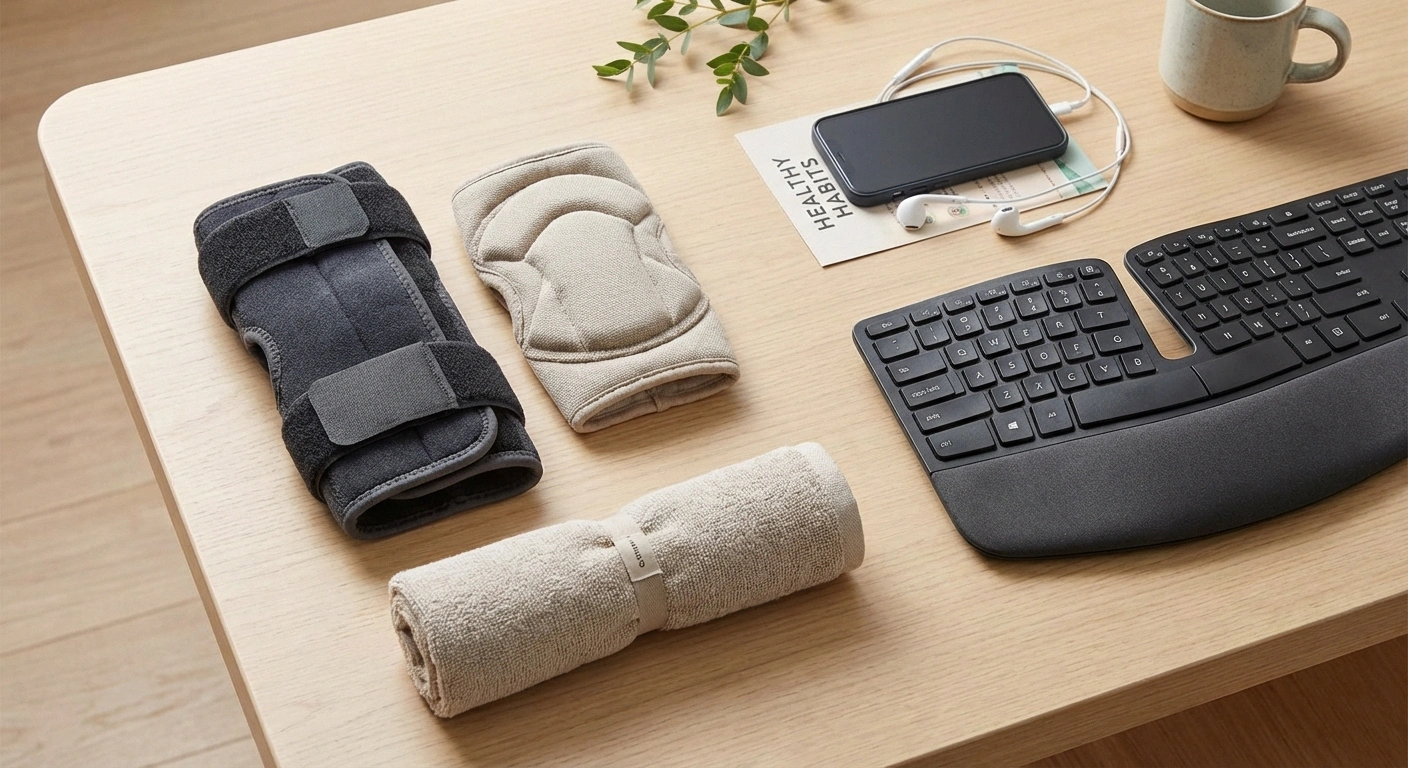
Prolonged or Repetitive Elbow Flexion
nnnnWhen you bend your elbow, the ulnar nerve stretches and its blood supply temporarily decreases. Brief bending is fine — your nerve is designed for it. But keeping your elbow bent for extended periods (sleeping with bent elbows, holding a phone to your ear, resting on your elbows while working) can irritate the nerve over time. This is one of the most common causes of cubital tunnel syndrome.
nnnn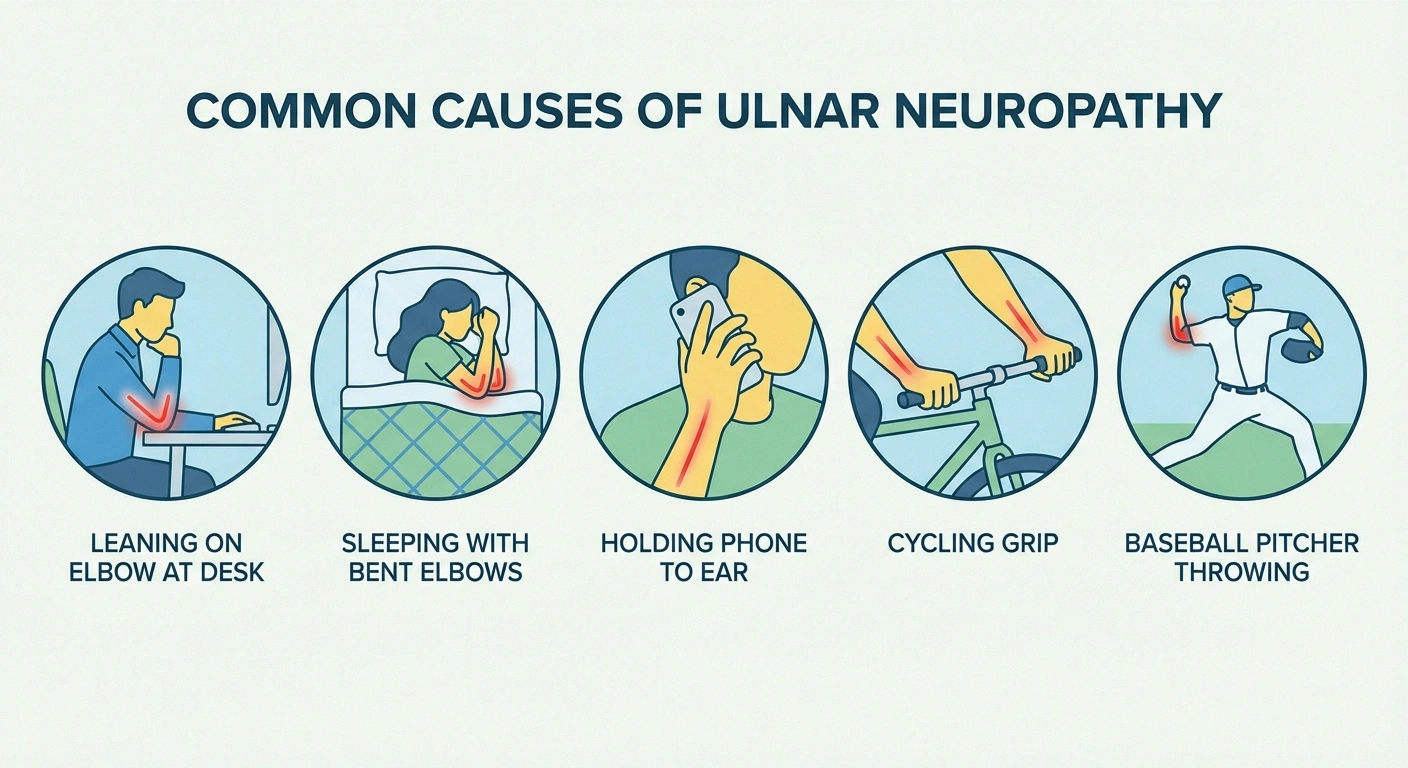 n
n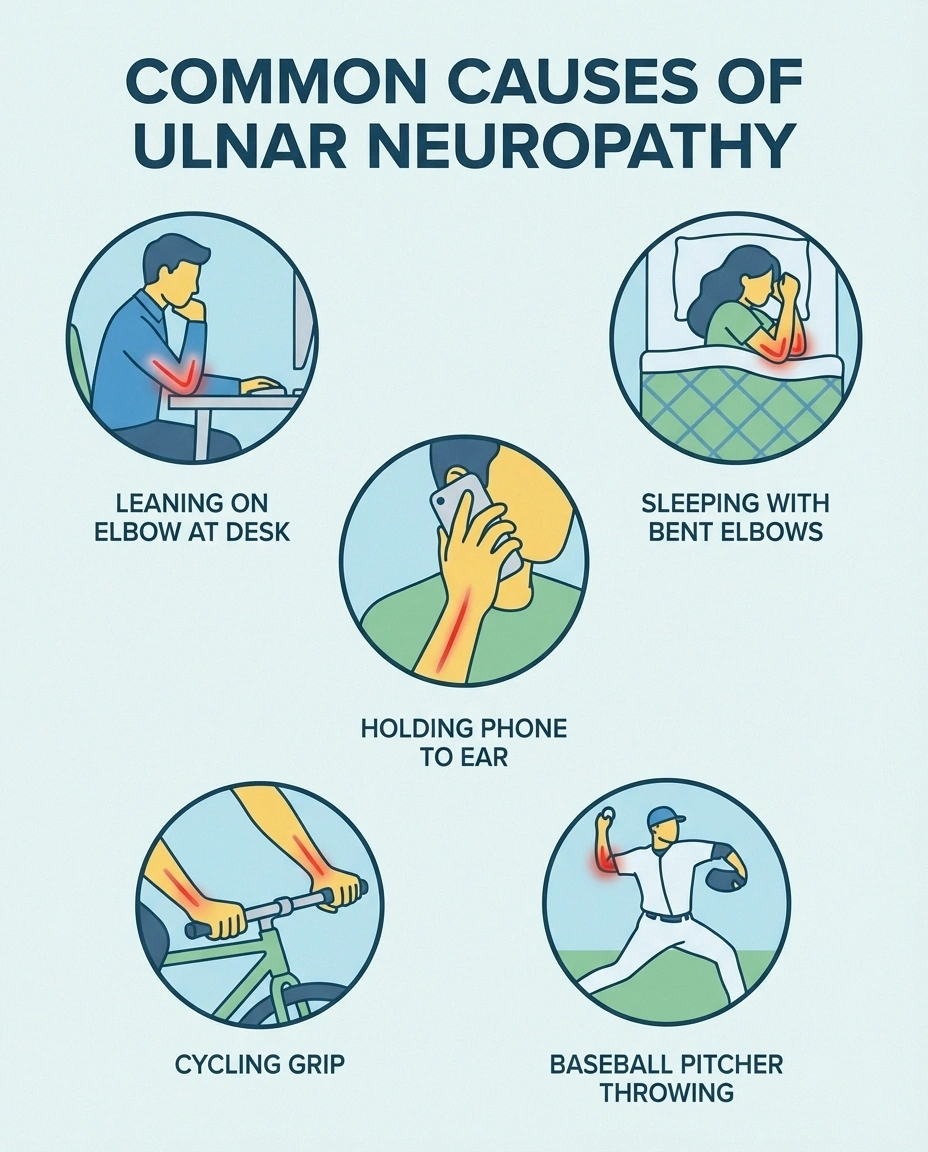 nnnn
nnnnDirect Pressure on the Elbow
nnnnLeaning on your elbow — on a desk, armrest, car window, or table — puts direct pressure on the unprotected nerve. Over time, this repeated compression can cause inflammation and nerve damage. This is why cubital tunnel syndrome is sometimes called “cell phone elbow” or “computer elbow.”
nnnn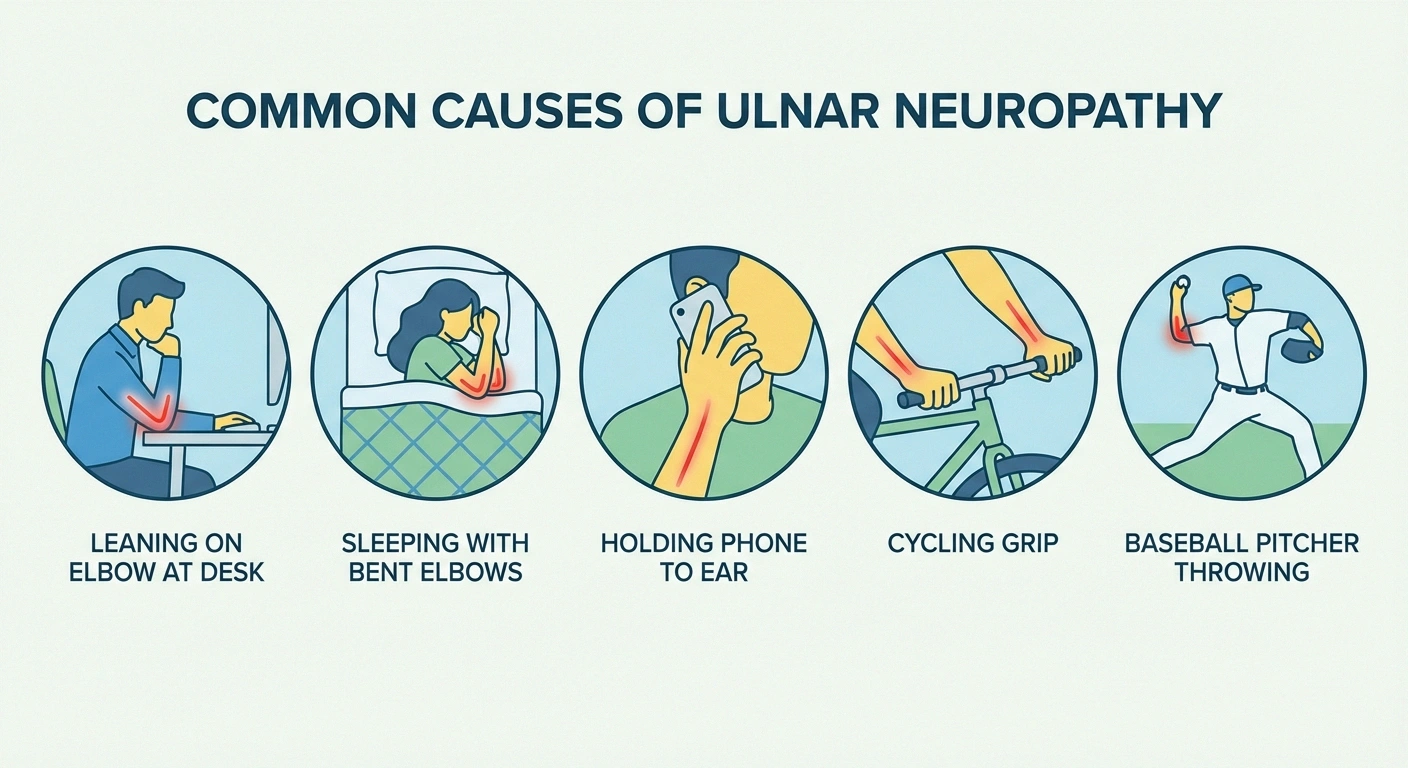
people are affected by ulnar neuropathy each year — the second most common compressive nerve condition
nAnatomy Variations
nnnnSome people's ulnar nerves naturally slide back and forth over the bony bump of the medial epicondyle when they bend and straighten their elbow. This subluxation creates friction that can gradually damage the nerve. Others may have a naturally narrower cubital tunnel, leaving less room for the nerve to move without compression.
nnnnTrauma and Injury
nnnnA broken elbow, dislocated elbow, or even a bad fall onto an outstretched hand can damage the ulnar nerve directly or create scar tissue that compresses it later. Previous elbow surgery can also create scarring around the nerve.
nnnnMedical Conditions That Increase Risk
nnnnSeveral systemic conditions make you more susceptible to ulnar neuropathy:
nnnn- n
- Diabetes — high blood sugar makes all nerves more vulnerable to compression injury n
- Rheumatoid arthritis — inflammation around the elbow joint can narrow the cubital tunnel n
- Thyroid problems — hypothyroidism can cause fluid retention that compresses nerves n
- Elbow arthritis or bone spurs — can physically narrow the space available for the nerve n
- Obesity — increases the risk of nerve compression throughout the body n
Occupational and Activity Risk Factors
nnnnCertain activities and occupations carry higher risk:
nnnn- n
- Manual laborers who perform repetitive elbow movements n
- Wheelchair users who lean on armrests n
- Desk workers who rest elbows on hard surfaces n
- Musicians, especially guitarists and pianists n
- Baseball pitchers (the throwing motion puts significant stress on the inner elbow) n
- Cyclists who grip handlebars for extended periods (wrist compression) n
Recognizing the Symptoms
nnnnUlnar neuropathy symptoms typically develop gradually, though they can start suddenly after an injury. The pattern of symptoms depends on where the nerve is compressed and how severely.
nnnn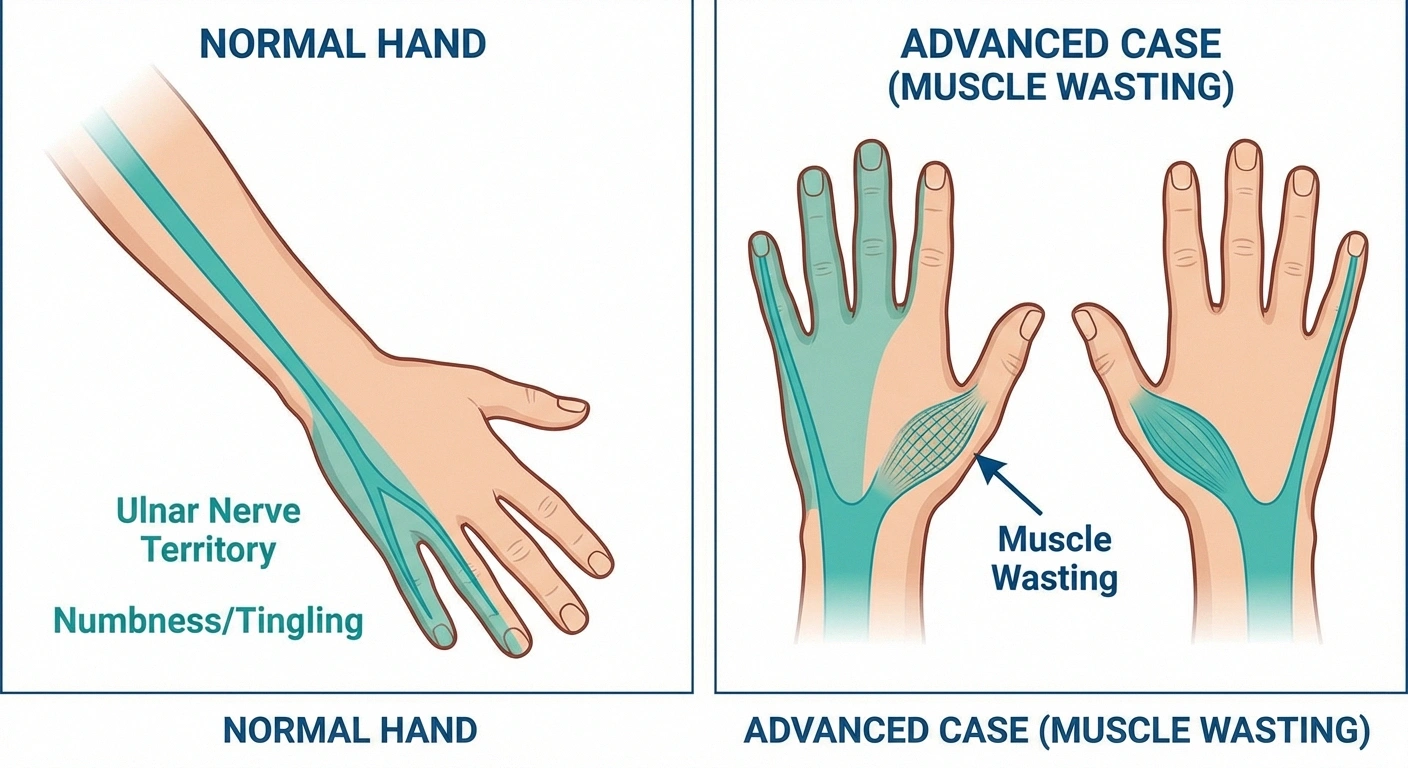 n
n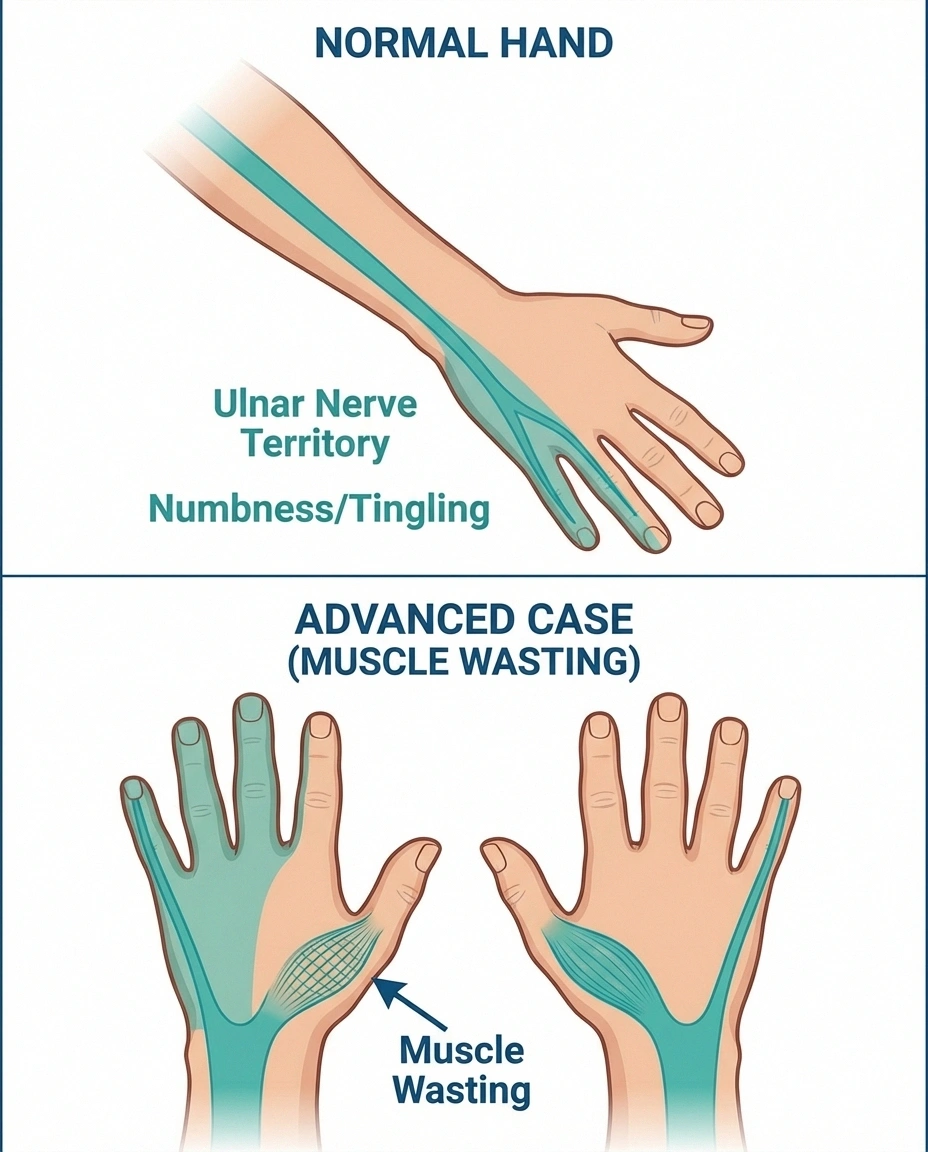 nnnn
nnnnEarly Symptoms
nnnn- n
- Numbness and tingling in the ring and pinky fingers — This is usually the first sign. It often comes and goes, worsening when your elbow is bent (driving, holding a phone, sleeping) n
- “Falling asleep” sensation — Similar to the feeling when a limb “falls asleep,” but localized to just those two fingers n
- Aching pain on the inner side of the elbow — Sometimes mistaken for tennis elbow (which affects the outer elbow) n
- Symptoms that wake you at night — Many people sleep with their elbows bent, which compresses the nerve for hours. Waking with numb or tingling fingers is a hallmark sign n
Progressive Symptoms
nnnn- n
- Weakened grip strength — Difficulty opening jars, turning doorknobs, or holding objects securely n
- Loss of fine motor coordination — Trouble typing, playing instruments, or manipulating small objects n
- Pain that radiates from the elbow down to the hand n
- Difficulty spreading fingers apart or bringing them together n
Advanced Symptoms
nnnn- n
- Visible muscle wasting in the hand — The spaces between the knuckles become hollow as the small hand muscles atrophy. Once this occurs, it's often not fully reversible. n
- “Claw hand” deformity — In severe, untreated cases, the ring and pinky fingers can curl into a fixed bent position n
- Constant numbness — Sensation loss that no longer comes and goes but is always present n
Important timing: If you have symptoms lasting more than 6 weeks, or if you notice any weakness or muscle wasting in your hand, see a doctor promptly. The longer the nerve is compressed, the harder it becomes to achieve full recovery.
nnnn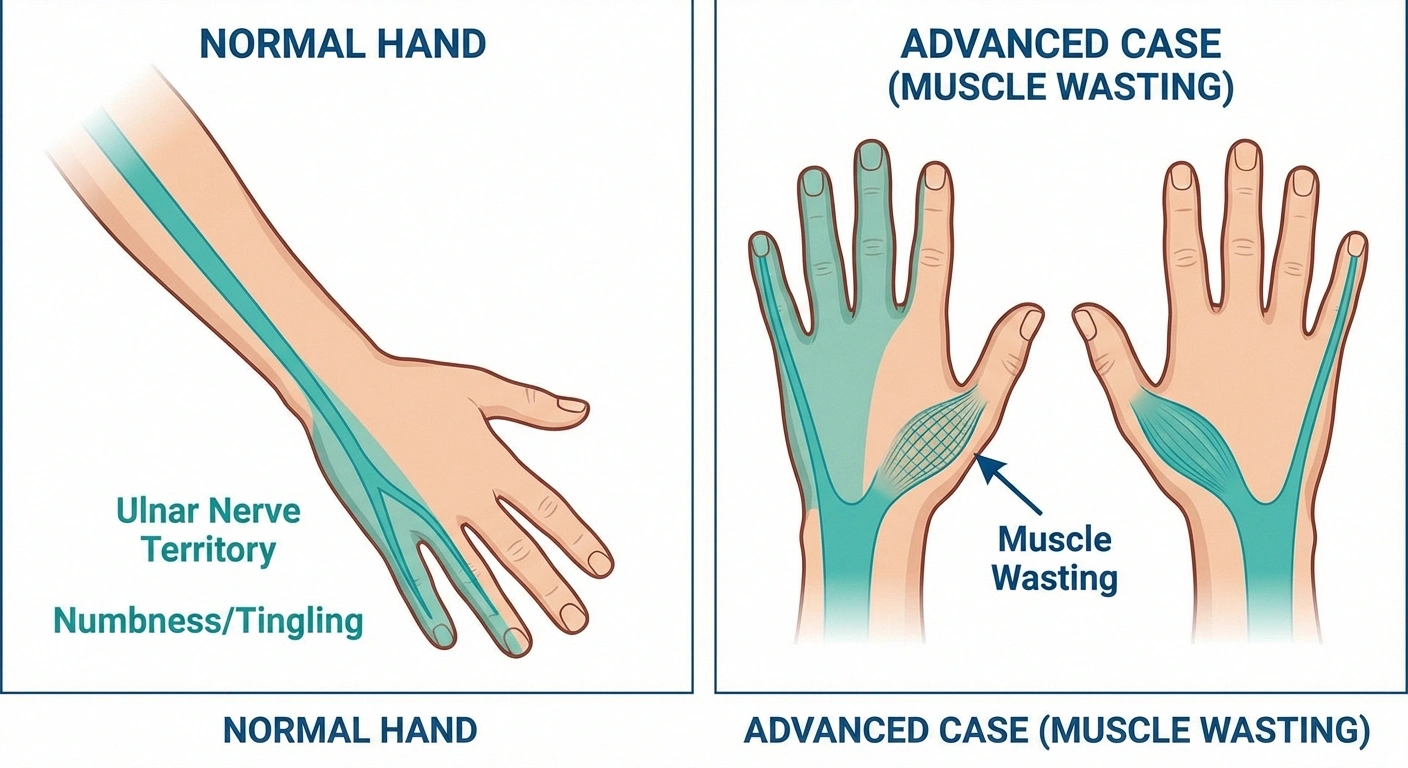
🟢 Early Stage
n• Intermittent tingling in ring & pinky fingers
n• “Falling asleep” sensation
n• Worsens with elbow bending
n🟡 Progressive
n• Weakened grip strength
n• Loss of fine motor skills
n• Radiating elbow-to-hand pain
n🔴 Advanced
n• Visible muscle wasting
n• “Claw hand” deformity
n• Constant, irreversible numbness
nHow Ulnar Neuropathy Is Diagnosed
nnnnGetting the right EMG for ulnar nerve testing is important because tingling hands differential diagnosis neuropathy can mimic other conditions — and the treatment approach depends on precisely where and how the nerve is affected. Your diagnostic workup will typically include:
nnnnTalk to Your Doctor
nIf you notice hand weakness or muscle wasting, seek medical evaluation promptly. Once significant muscle atrophy occurs from ulnar nerve compression, it may not be fully reversible — even with surgery. Early intervention gives the best chance of complete recovery.
nPhysical Examination
nnnnYour doctor will perform several specific tests:
nnnn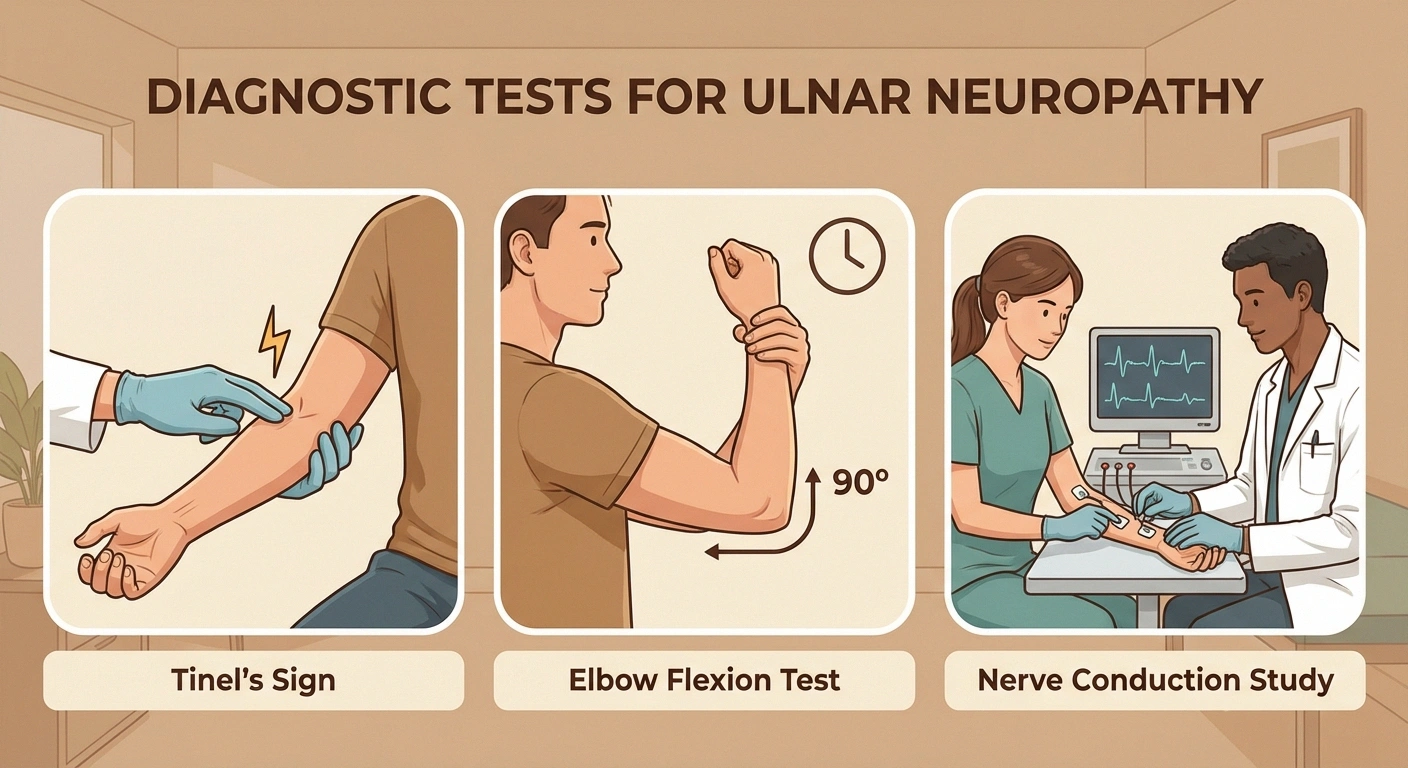 n
n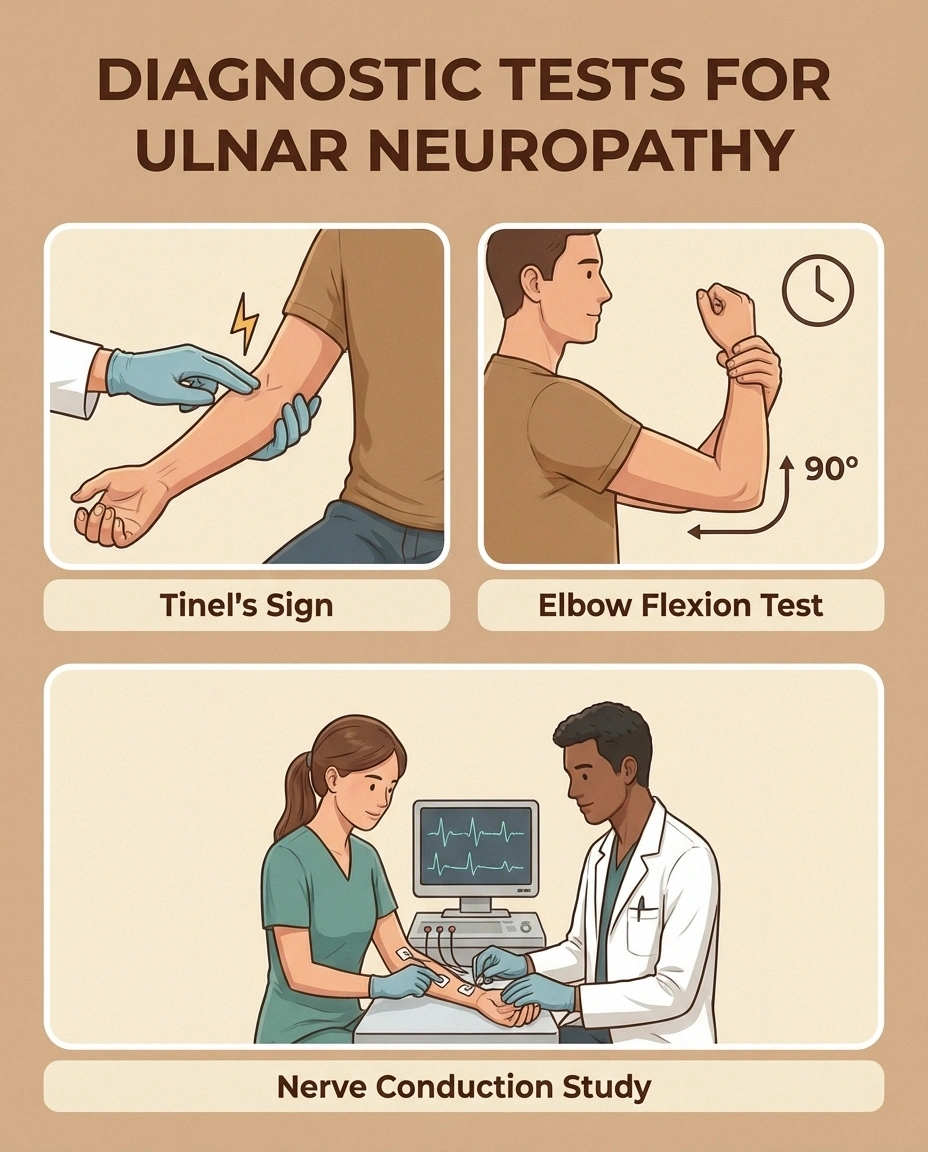 nnnnn
nnnnn- n
- Tinel's sign — Tapping over the nerve at the funny bone. If the nerve is irritated, this produces a tingling or shock sensation into the ring and pinky fingers. n
- Elbow flexion test — Holding the elbow fully bent for 60 seconds. If symptoms are reproduced, this suggests cubital tunnel syndrome. n
- Froment's sign — Tests for weakness in the adductor pollicis muscle (controlled by the ulnar nerve) by having you pinch a piece of paper between your thumb and index finger. n
- Grip strength and finger spread testing n
- Neck and shoulder examination — Pinched nerves in the cervical spine can cause similar symptoms and need to be ruled out n
Nerve Conduction Studies and EMG
nnnnElectrodiagnostic testing is the gold standard for confirming ulnar neuropathy and determining its severity. Nerve conduction studies measure how fast electrical signals travel through the ulnar nerve — a slowing at the elbow confirms cubital tunnel syndrome. EMG (electromyography) examines the muscles controlled by the ulnar nerve to assess whether the nerve damage has progressed to the point of affecting muscle function.
nnnnImaging
nnnn- n
- X-rays — Check for bone spurs, arthritis, or previous fractures that may be compressing the nerve n
- Ultrasound — Can visualize the nerve directly, showing swelling, compression, or subluxation n
- MRI — Sometimes used to look for masses, cysts, or other structural causes of compression n
Conservative Treatment: The First Line of Defense
nnnnThe good news is that many cases of ulnar neuropathy — especially when caught early — respond well to conservative (non-surgical) treatment. The goal is to reduce pressure on the nerve and give it time to heal.
nnnnActivity Modification
nnnnThe simplest and most important step is changing the habits that are compressing your nerve:
nnnn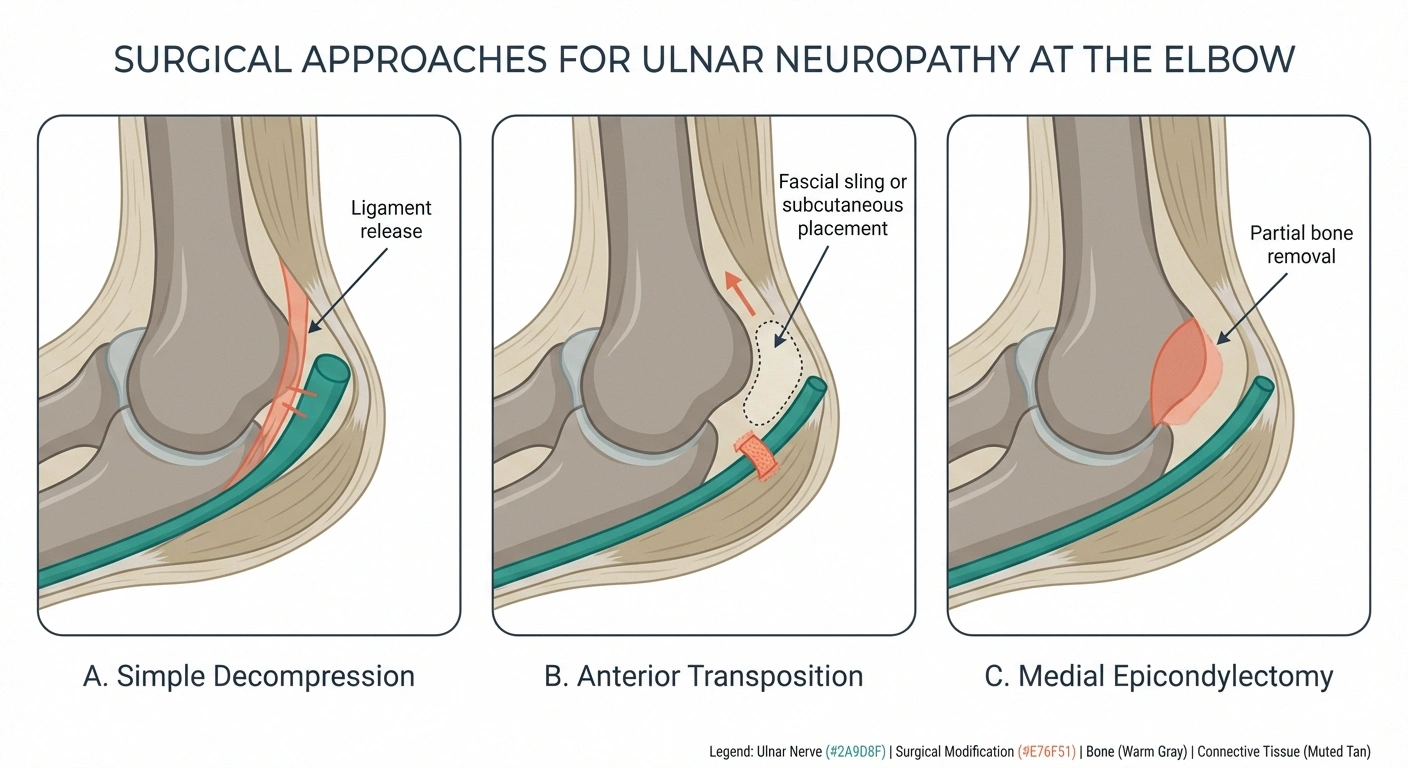 n
n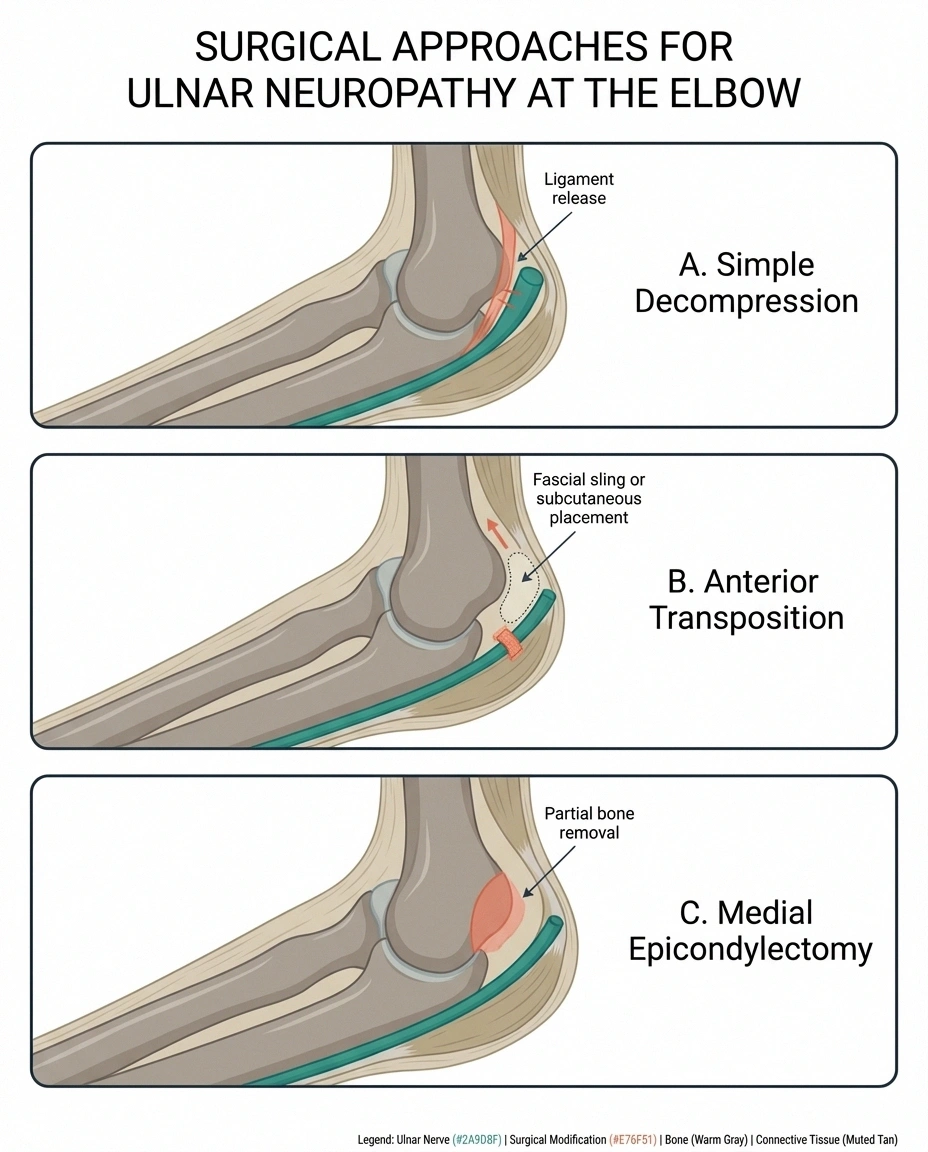 nnnnn
nnnnn- n
- Avoid leaning on your elbows — use a cushion or pad if you need armrest support n
- Hold your phone at chest level instead of bending your elbow to your ear (or use speakerphone/earbuds) n
- If you work at a desk, keep your arms at a comfortable angle — avoid resting your elbows on hard surfaces n
- Take breaks during repetitive activities that involve elbow bending n
Night Splinting
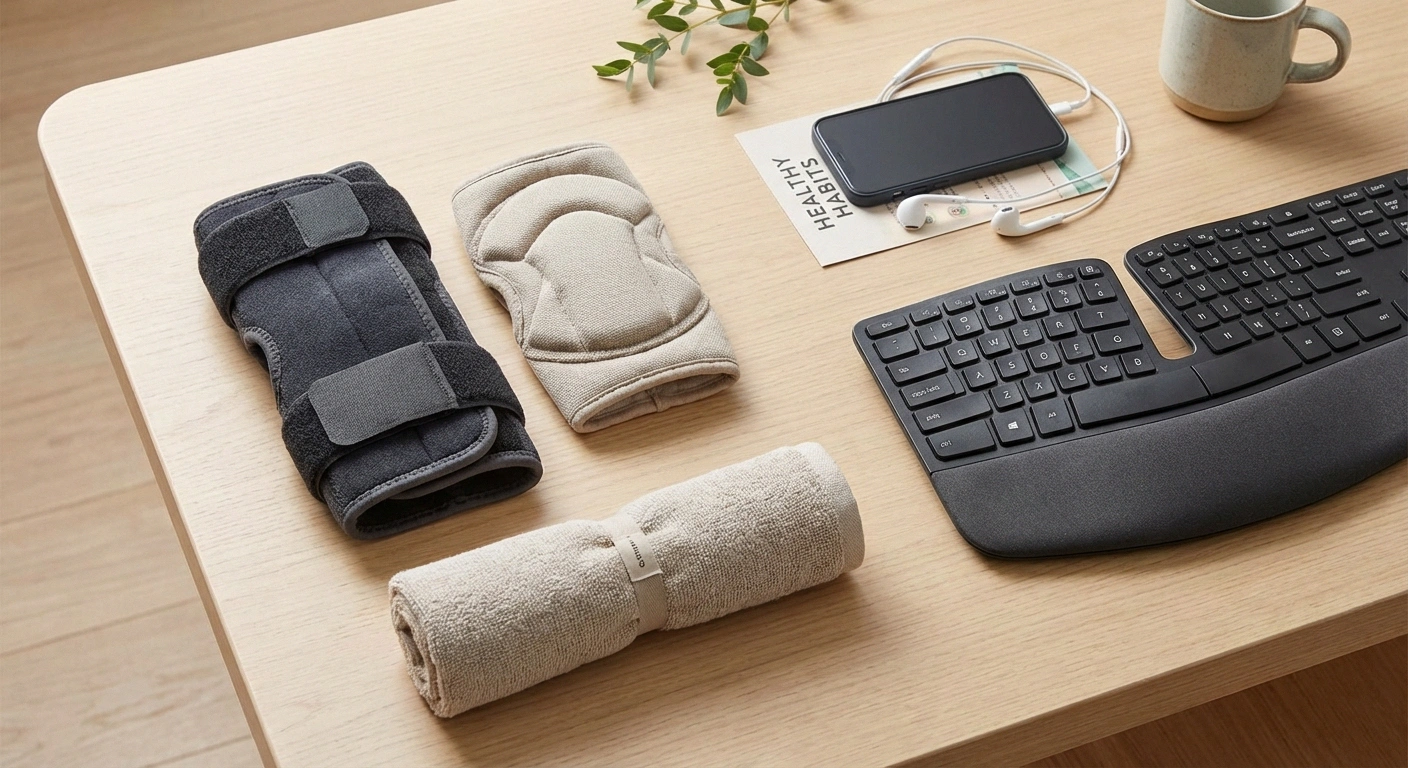
nnnnSince many people bend their elbows while sleeping — sometimes severely — wearing a splint or brace that keeps the elbow straight at night can provide significant relief. A simple approach is wrapping a towel around your elbow at bedtime to prevent bending, or wearing an elbow pad backwards (so the padding prevents full flexion).
nnnnnElbow Padding
nnnnWearing an elbow pad during the day protects the nerve from direct pressure. This is especially helpful for people whose work or hobbies involve resting on their elbows.
nnnn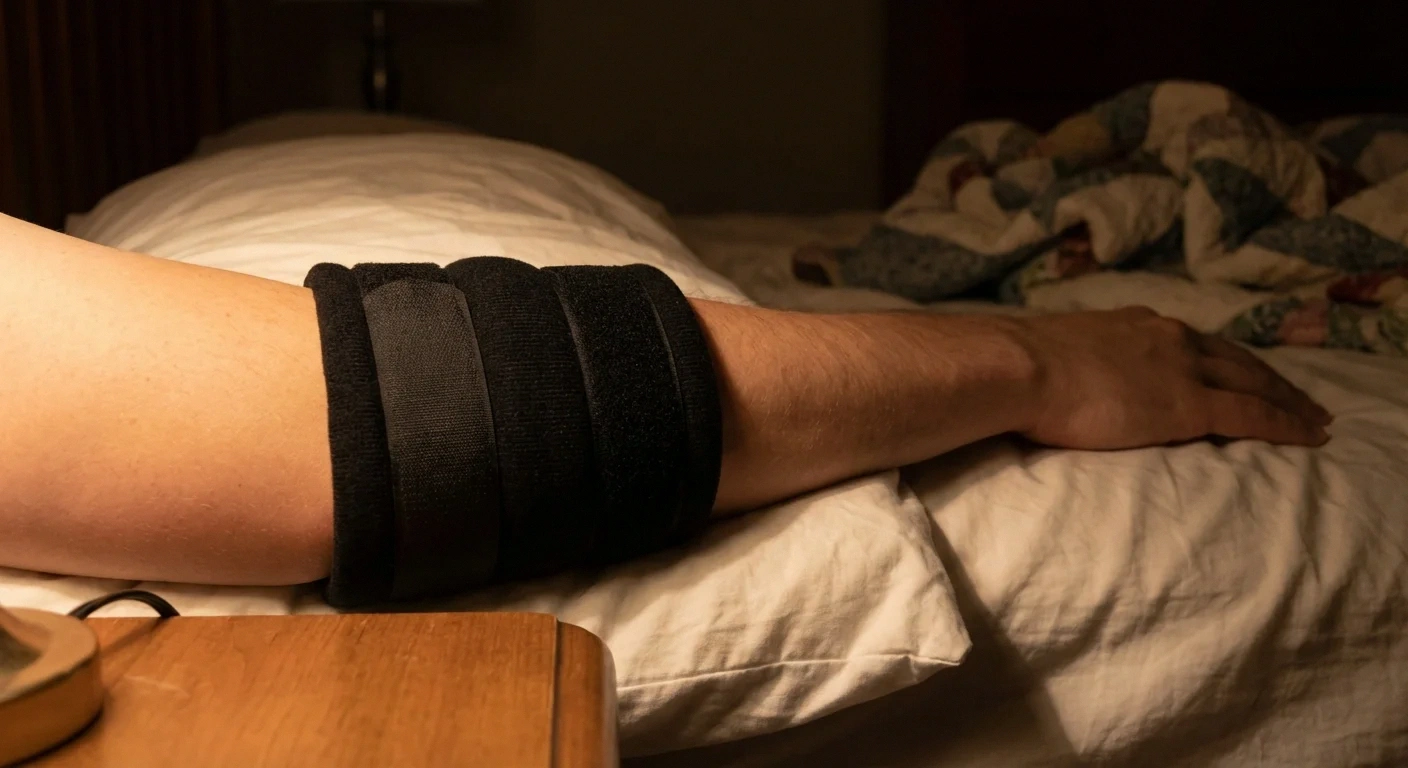
Nerve Gliding Exercises
nnnnPhysical and occupational therapists can teach you nerve gliding (neural mobilization) exercises that help the ulnar nerve move more smoothly through the cubital tunnel and reduce adhesions. These gentle movements are designed to improve the nerve's ability to slide within its tunnel without catching or being compressed. Talk to your healthcare provider before starting nerve gliding exercises, as they need to be performed correctly to avoid further irritation.
n