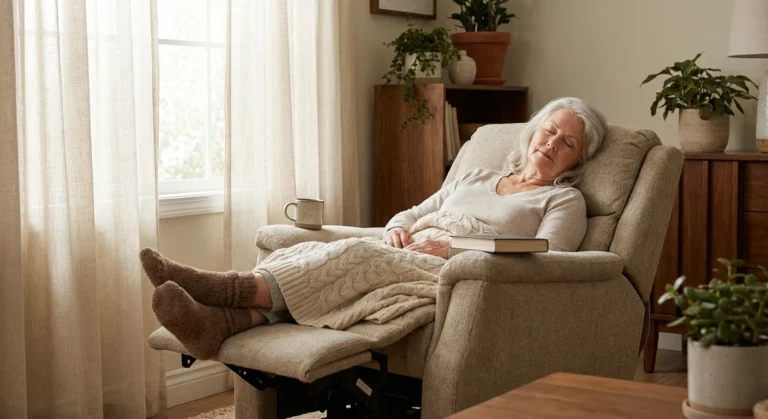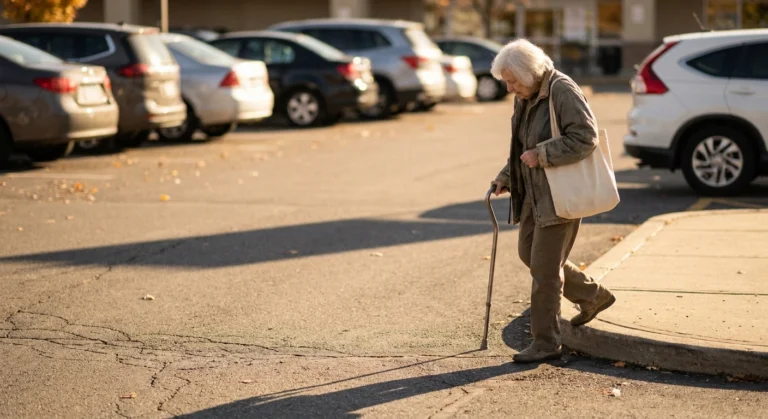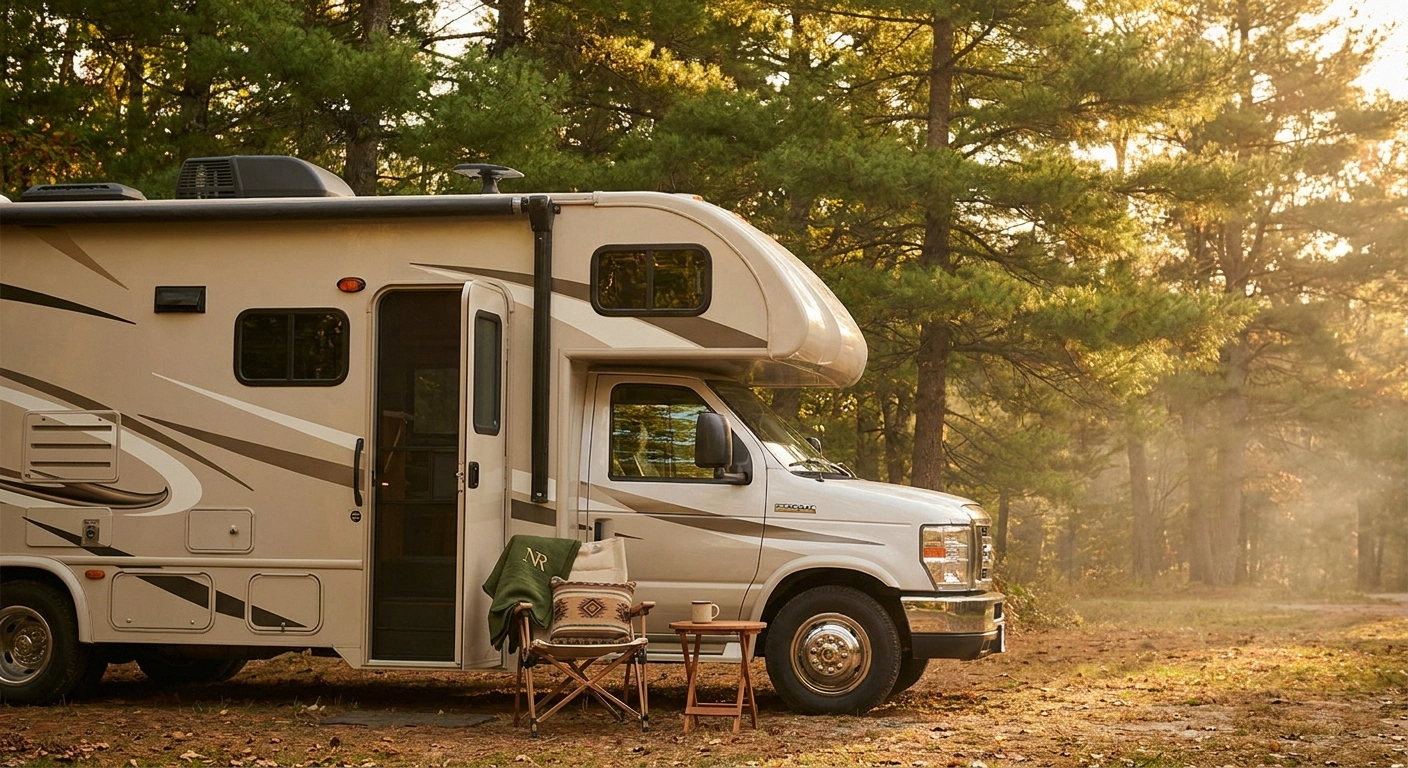
My friends Bob and Carol have been “the RV people” in our book club for twelve years now. They spend three months every summer in their Class C motorhome, chasing cooler weather north through the Blue Ridge and up into Vermont. Two summers ago, Bob was diagnosed with diabetic neuropathy, and for a minute they were sure the RV years were over.
They weren't. They're on the road right now, in fact. But they had to rethink how they set up the coach, how they take driving shifts, and how they handle the small daily rituals that used to be second nature — climbing in and out, hooking up water and electric at each site, standing at the tiny stove to fix dinner. None of the changes were dramatic. Most of them were small — a footrest here, a step stool there, a new pair of shoes for setup days. Together they gave Bob and Carol back the trip they thought they'd have to give up.
If you're heading into RV season with neuropathy — new or long-standing — this is a practical guide to the small adjustments that keep the road open. It's not about giving anything up. It's about setting the coach and the routine up in a way that respects your feet and hands and lets the good part of the trip come through.
Setting Up Your Driving Position for Long-Haul Comfort
The driver's seat in an RV is where a lot of foot trouble hides. Long hours with the same pedal pressure, subtle vibrations coming up through the floorboards, and reduced sensation in the foot make it easy to over-brake, under-accelerate, or hold tension without realizing it.
A few adjustments help.
Get the seat height and pedal reach right for your body. The knee should have a gentle bend at full pedal press, not full extension. If the seat is too far back, your foot has to reach — and reaching foot muscles fatigue fast with reduced sensation. Take a few minutes at the start of every trip to reset this even if you and your co-driver share the seat.
Use cruise control on any interstate stretch. This is one of the single biggest wins for a driver with foot neuropathy. Cruise control removes the constant pedal micro-adjustments that produce hidden fatigue and lets your foot rest in a neutral position. Just make sure you're not white-knuckling the wheel to compensate.
Wear a driving-friendly shoe with a firm sole. Big cushioned trail sneakers make it harder to feel the pedals. A firm, moderately cushioned shoe with a thin sole under the heel gives you the pedal feedback you need without punishing your foot. A pair of shoes you only drive in — kept in the coach — is a small but real quality-of-life upgrade.
Schedule stops every ninety minutes to two hours. Get out, walk around the rig, do a slow lap of the rest area. Long, unbroken driving stretches compound foot fatigue faster than most people expect. The stop is not a delay — it's what keeps you fresh for the next leg.
Know when to hand over the wheel. On a day when your feet are flaring, or after a rough night's sleep, or when heat is making you drowsy — that's the day the co-driver takes the shift. If you don't have a co-driver, plan a shorter drive that day and a longer rest at the destination.
Passenger Seat Comfort: The Forgotten Half
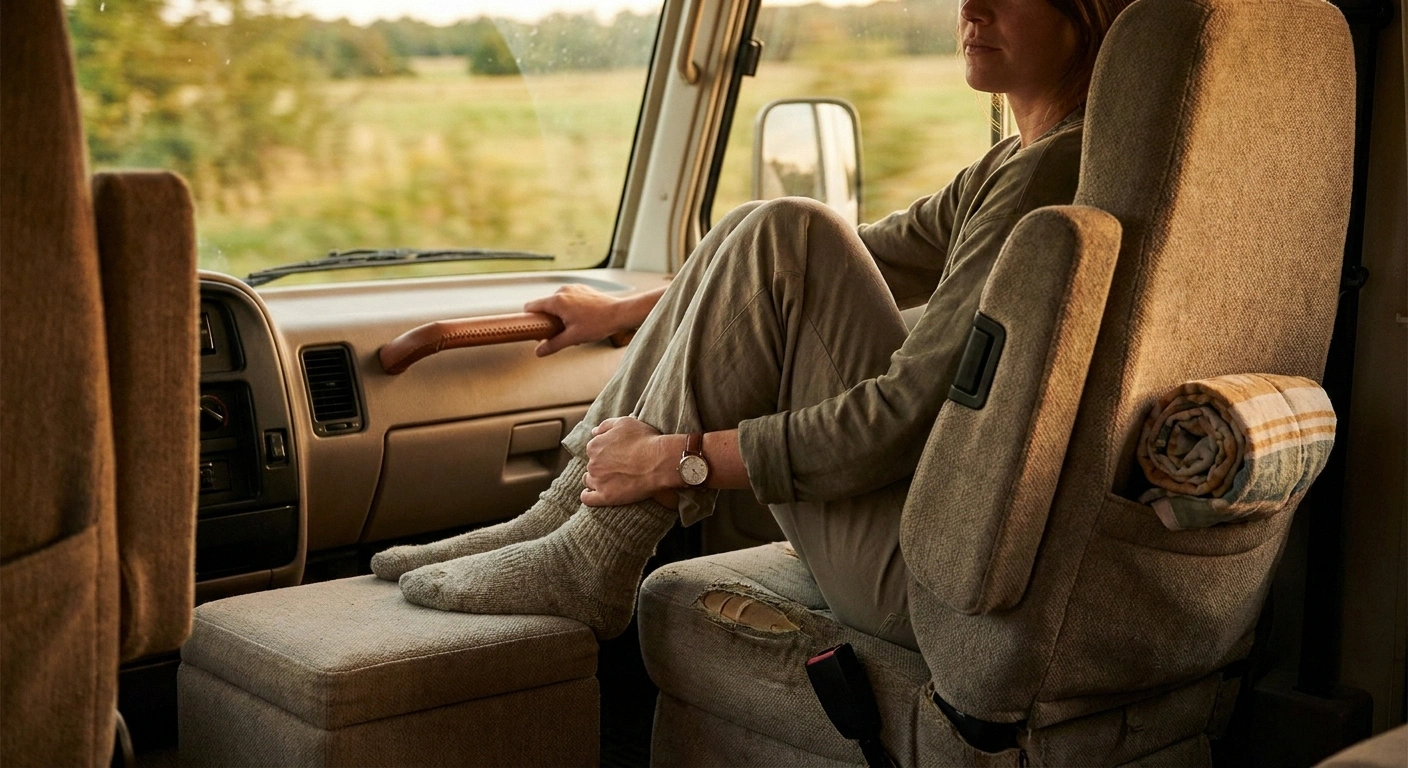
The passenger seat in most RVs is worse for neuropathy than the driver's seat. Same vibrations coming up through the frame, no active steering or pedal work to break the monotony, and often less-supportive foam.
Bob's fix, and it's one I've heard from a lot of RVers: a small firm ottoman or footrest sized to the passenger footwell. It elevates the feet an inch or two off the floorboard, which reduces the direct vibration transfer and gives the calves a change of angle. A rolled towel behind the low back adds spine support that most factory seats lack.
The other passenger-side trick is movement. If you're in a coach with a rear lounge or dinette, taking a break in a different seat every couple of hours changes the pressure points and keeps blood flowing. Standing up for a stretch when it's safe (not on winding roads) helps too — hand grabs by the passenger seat make this safer.
Getting In and Out of the RV Safely
The entry steps into most RVs are narrow, sometimes with a decent step-up height, and often folding or automated in a way that's not perfectly reliable. Every entry is a small balance moment, and repeat entries over a trip week add up.
Two adjustments that make a big difference:
Add a wider, stable step stool at the base of the built-in steps. A single-step stool with a rubber non-slip top divides the step-up height and gives you a broader surface to plant on. Retailers sell these specifically for RV use, but a heavy-duty household step stool works fine. Keep it in the entry storage bin and set it down as part of your camp setup routine.
Add or upgrade grab handles. Most RVs come with a single grab bar at the entry. Adding a second one on the opposite side of the door gives you two hands to work with. Aftermarket clamp-on and screw-in options are inexpensive and easy to install. This is one of the highest-value upgrades I hear about from readers with neuropathy.
At night, keep a small light on near the entry, or install a motion-activated LED strip. Coming back from a bathhouse walk in the dark to a dim entry is exactly where the falls happen.
Campsite Setup Without a Foot Flare
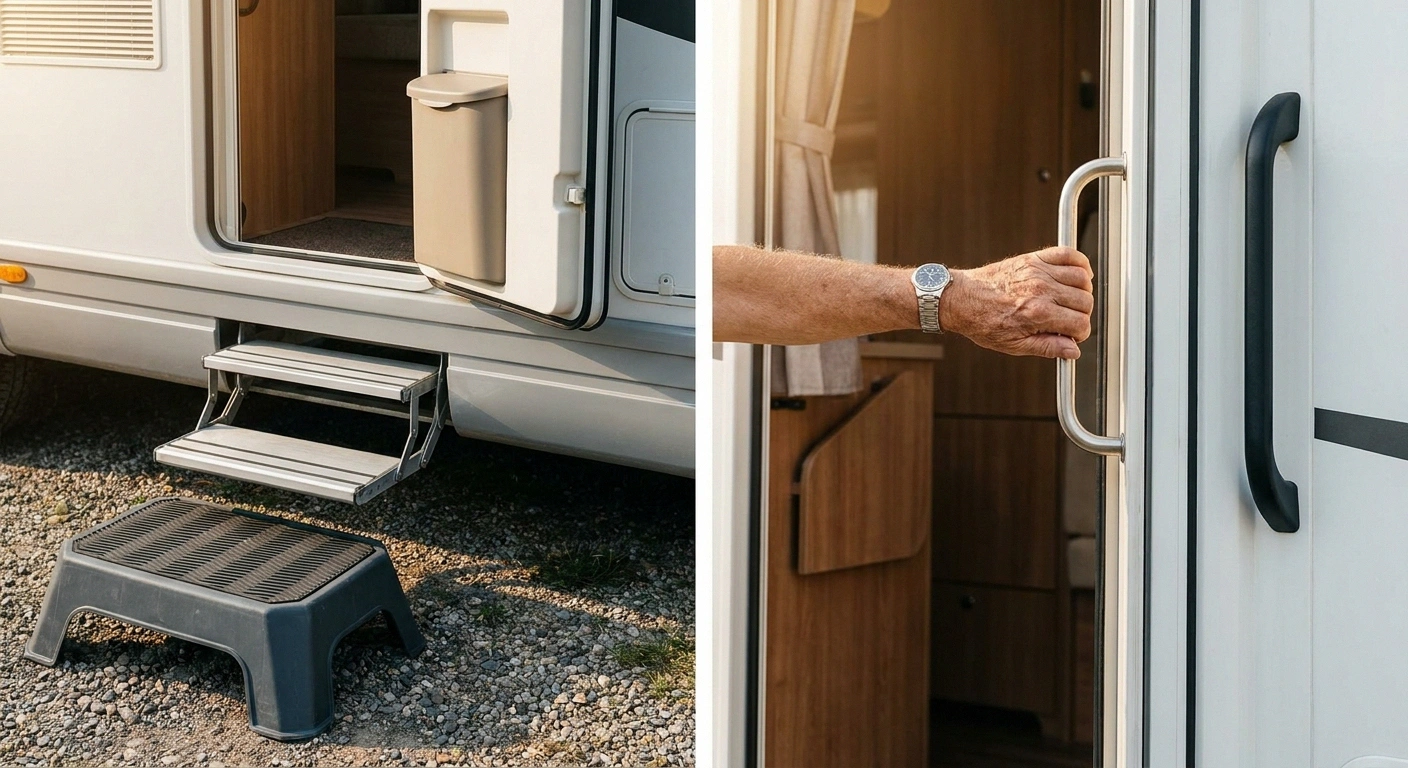
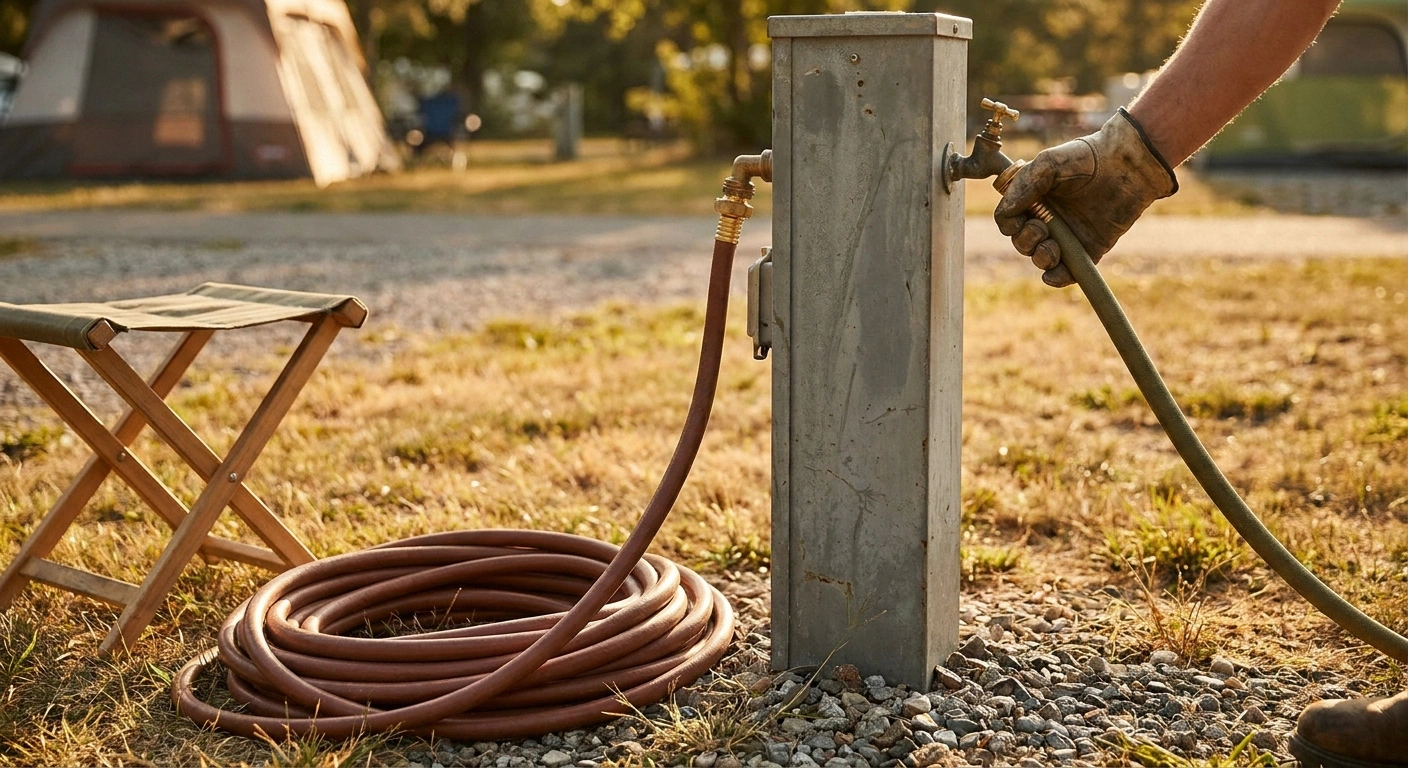
Setting up camp — leveling, hookups, awning, chocking the wheels — is a lot of standing, squatting, and walking on uneven ground. It's also often the first thing you do at the end of a driving day, which is exactly when you're most tired. Two hours of setup on tired feet with reduced sensation is where a lot of the trip's foot trouble comes from.
Some things that help:
Wear real shoes for setup, not campground flip-flops. A closed-toe, well-cushioned pair with a firm heel counter is what you want. The right shoe choice matters more here than during the actual leisure part of the trip, because setup is where the ground is roughest and the missed hazards are most common.
Break setup into smaller chunks with sitting breaks. Get leveled, sit down for five minutes. Hook up water, sit down for five. Sewer, chairs, awning, sit down. The temptation is to power through and be done — but the flare that follows lasts longer than the setup itself would have.
Bring a folding stool to campground hookups. Kneeling on gravel to hook up the sewer or plug in the shore power lands you on the ground exactly where you don't want to be. A small folding camp stool lets you sit for the low work.
Coil hoses and cords out of walking paths. The tripping hazard from a well-meant water hose across the entry stairs is real. When setup is done, do a slow walk around the site and move anything that crosses a foot-traffic line.
Ask for a full-hookup site if you have the choice. Full hookups mean less need to walk to a bathhouse in the dark, less need to hike to a dump station later, and fewer setup steps overall.
Bathroom and Shower Safety in a Tight Space
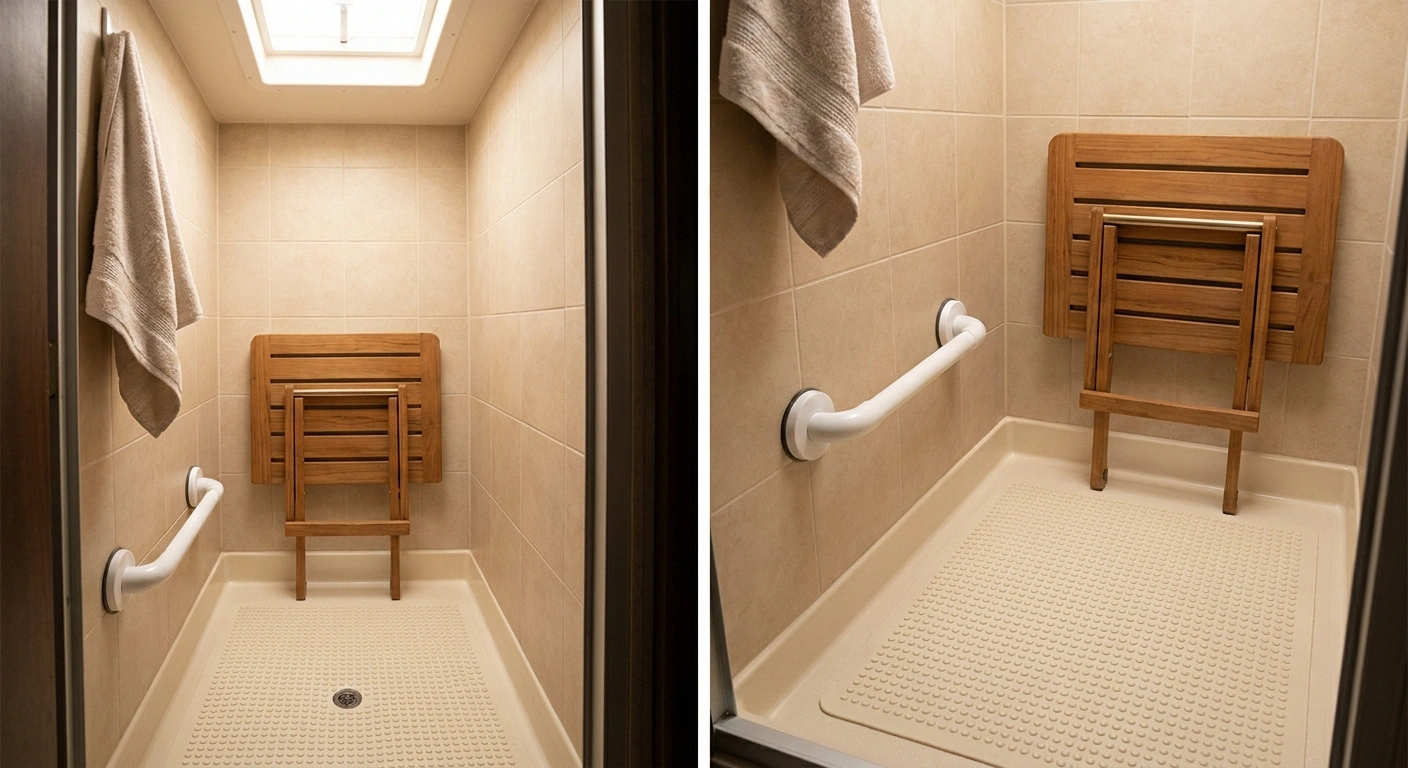
RV bathrooms are small and slippery. The shower stall is often a wet-floor room, the entry has a small threshold, and the water heater temperatures can be higher than a house's.
Install a suction-cup grab bar in the shower. Suction bars aren't a substitute for a hardwired one, but they're much better than nothing and don't require drilling into the RV wall. Position at hip-to-shoulder height.
Use a non-slip mat inside the shower. The rubber-backed silicone kind with drainage holes. Wet fiberglass floors are exactly the surface where a foot that can't feel the floor lands wrong.
Set the water heater conservatively. Many RV water heaters can be turned down. If your sensation is reduced, keep the tank at a temperature that won't scald if your reflex is delayed. Test the water with your elbow before stepping in — the elbow is more reliable than a numb foot for reading temperature.
Consider a folding shower seat. Some models fit even the tightest RV showers and let you rest in the stall instead of standing on wet fiberglass for the whole shower.
Kitchen and Cooking With Numb Hands
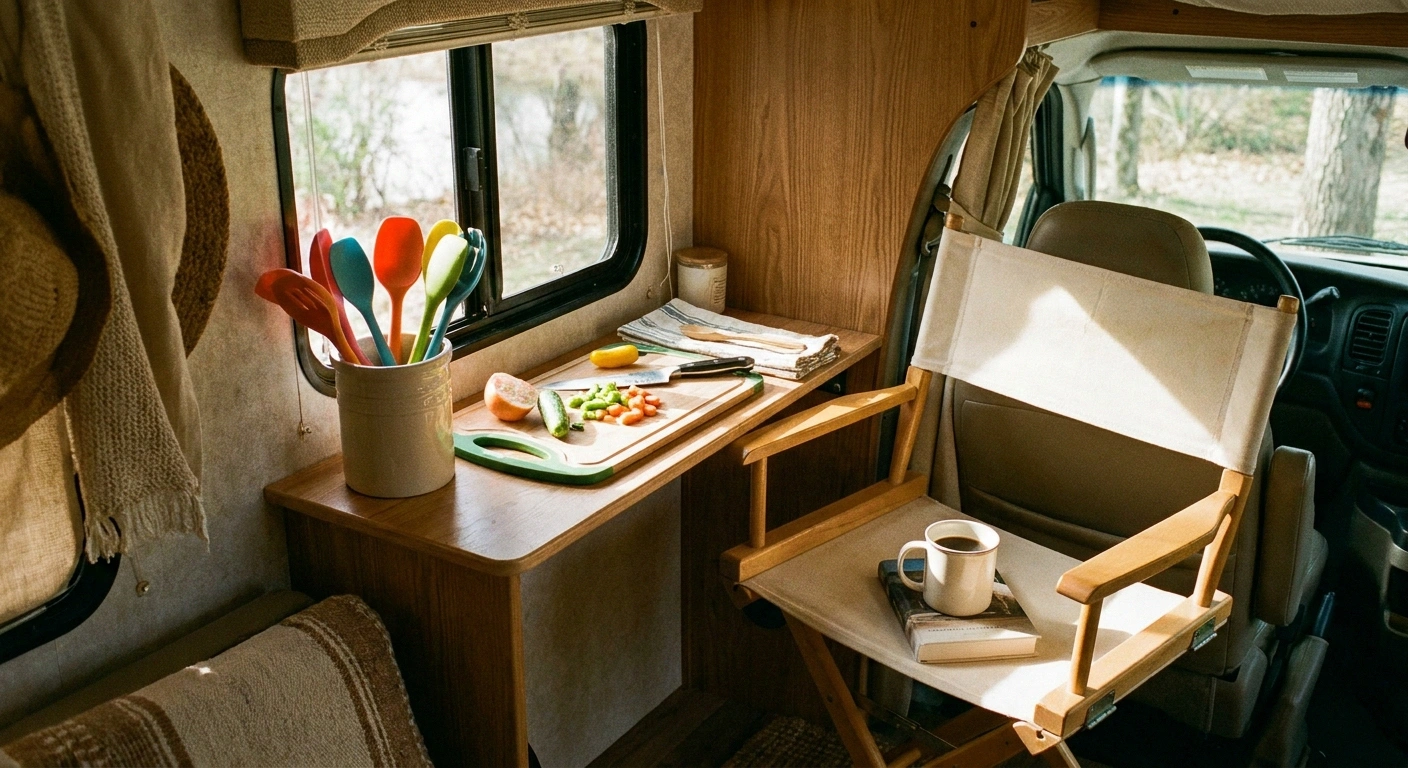
RV galleys are compact and gas-heavy, and cooking in one usually involves standing at a narrow stove without much counter space. Both are challenges for someone with foot or hand neuropathy.
Use silicone or rubberized-grip utensils. They stay in your hand more reliably than smooth metal handles and reduce the risk of dropping hot pans. A silicone oven mitt is worth more than a fabric one on a hand that can't feel a hot rim clearly.
Meal-prep before you leave. Cutting vegetables at home with a stable cutting board on a real counter is much lower risk than cutting on a narrow RV counter at the end of a driving day. Prep a few meals in advance and freeze them for the first days of the trip.
Sit for prep work when you can. Even a folding chair at the dinette to peel vegetables or make sandwiches turns the standing time into sitting time and saves your feet.
Watch propane and heat sources. Gas stoves in tight spaces can produce more radiant heat than you feel until you're touching something you shouldn't. A quick habit of pulling your hand back before reaching over an active burner helps.
Heat, Cold, and Temperature Control
RVs heat up and cool down faster than houses. Both extremes make neuropathy symptoms worse.
In hot weather, park with the side of the coach that has the most windows in the shade if you can, use reflective sunshades on windshields when parked, and set the AC to start cooling before you get back to the coach. A muggy, closed RV interior at 90 degrees is a symptom trigger for a lot of readers.
Because reduced sensation makes it easy to underestimate a hot floor or hot surface, be careful about walking on sun-baked black asphalt in sandals or bare feet — even if you feel fine, the tissue can be damaged before your sensation warns you. Keep proper shoes on until you're inside on cool flooring.
In cool weather, cold feet at night can trigger a flare — RVs cool down fast overnight, and cold peripheral tissue is a well-known symptom amplifier. Heavier socks, a warm bed, and a small dedicated heater for the sleeping area take care of most of this. Just as with home, be cautious about heating pads directly on the feet if sensation is reduced. If you find that your symptoms are worse at night in general, an RV bedroom is worth paying attention to.
Your On-the-Road Foot Care Routine
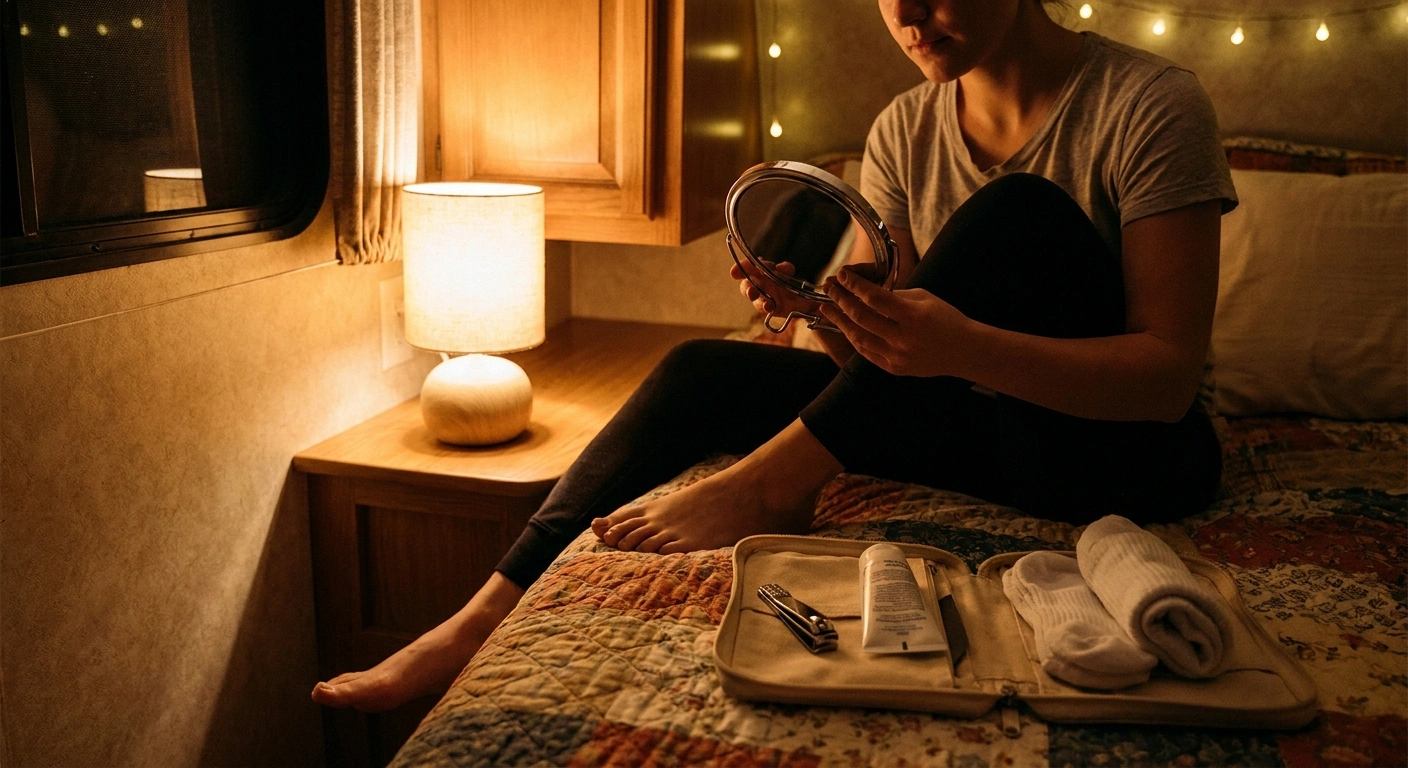
The daily foot inspection habit that good foot care depends on doesn't take a vacation just because you're on the road. If anything, the foot check matters more when you're walking on unfamiliar terrain, changing shoes more often, and spending more time barefoot on RV floors.
The two-minute nightly routine works in an RV bathroom exactly the way it does at home. Sit on the bed with a good light. Look at the top, bottom, sides, and between toes of both feet. Anything red, blistered, cut, or looking wrong that wasn't there yesterday? That's the flag. Check any pressure points from new hiking shoes, campground gravel, or shower thresholds.
Bring the supplies. A basic foot-care travel kit for the coach: nail clippers, emery board, moisturizer for the tops (never between toes — moisture there breeds trouble), a small hand mirror for checking the soles, a couple of pairs of clean cotton socks, and any prescription-strength cream or antibiotic ointment your doctor has you on. Bandaids and non-adherent gauze for the small stuff.
If any foot problem looks like it's getting worse over a day rather than better — hot, swollen, red, ulcerated, drainage — that's the moment to find urgent care rather than wait it out to your next home visit. Small problems in a numb foot become big problems fast.
Planning Your Route and Knowing When to Rest
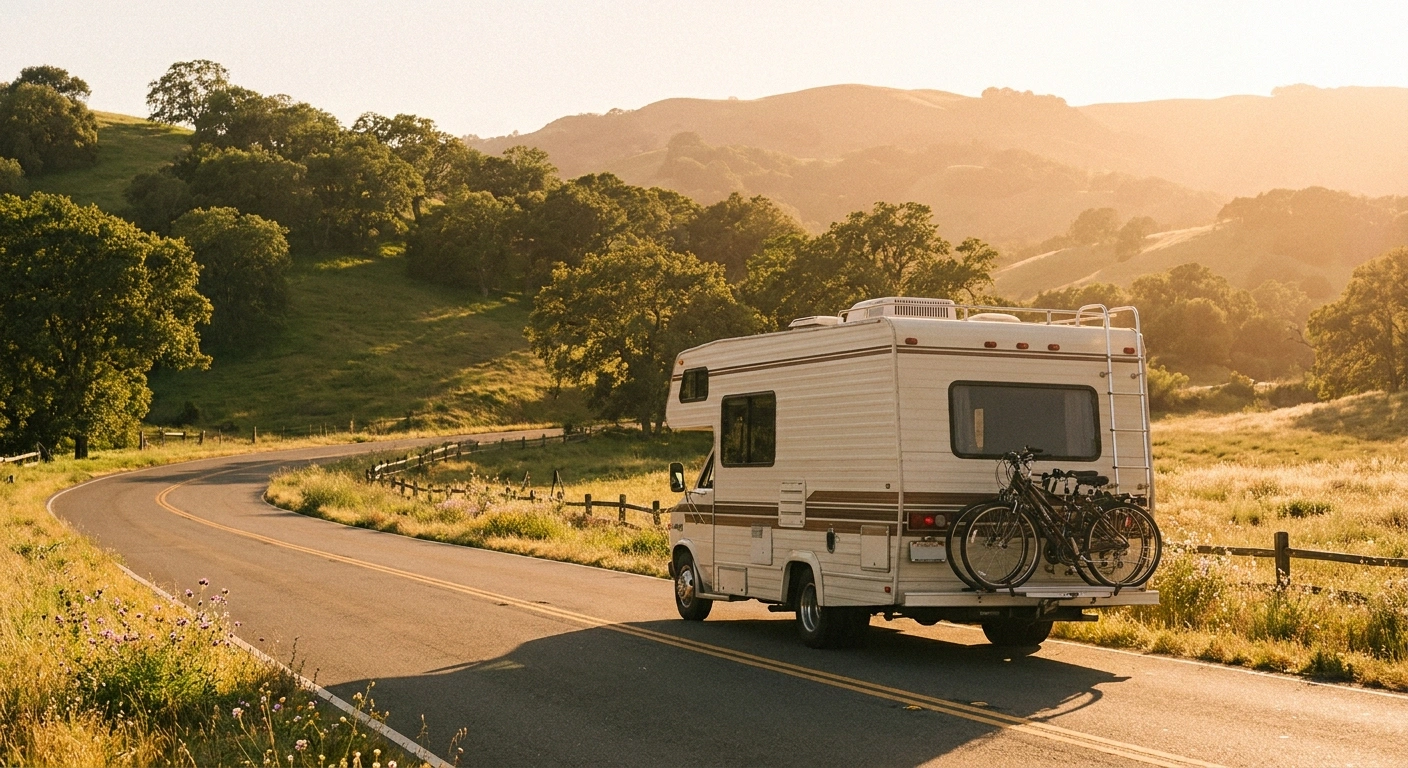
The trip planning stage is where a lot of the neuropathy-friendly work gets done, days before you turn the key.
| Before you leave | Why it matters |
|---|---|
| Shorter driving days (~250 mi) | Less pedal fatigue, less flare risk |
| Rest day between demanding days | Back-to-back exertion is what triggers flares |
| Nearest urgent care mapped per stop | Peace of mind — you probably won't need it |
| Meds packed with a week extra | Delays and detours happen |
| Full-hookup sites (at least early in trip) | Fewer setup steps, less walking |
Shorter driving days beat marathon days. 250 miles a day is a lot easier on your feet than 500. If you're used to marathon days, shrink them and add a night — the trip is more pleasant for both of you anyway.
Space the demanding days. A long driving day, then a long hookup-and-setup day, then a long hiking day, all back to back, is a formula for a flare. Alternate a demanding day with a rest day.
Map the medical stops. Before you leave, note the nearest urgent care and hospital to each planned overnight. Not because you plan to use them — you likely won't — but because knowing they're a phone call away is worth the fifteen minutes it takes to look up.
Bring meds with cushion. Pack at least a week more than the trip length of every regular medication. Refrigeration for injectables is worth double-checking — RV fridges lose ground fast in extreme heat, especially when you're driving with propane switched off.
Know your no-go signs. A day when your feet are flaring badly. A day the heat index is above what you can safely walk in. A day your co-driver is worried about you. Building the trip with days-off already scheduled, rather than pushing through and dealing with a crash later, is what makes the difference between a great trip and a hard one.
Bob and Carol will tell you their trips take a little more planning now than they used to. They also take fewer white-knuckle days and end with more good stories. That trade seems worth it, and it might for you too.
Frequently Asked Questions
Is it safe to drive an RV with neuropathy in my feet?
For most people with mild-to-moderate foot neuropathy who still have muscle strength and reasonable reaction time, yes — with some adjustments. Use cruise control on interstates, wear a firm-soled driving shoe that gives good pedal feedback, take regular breaks, and hand off to a co-driver on flare days. If your neuropathy has progressed to significant weakness (foot drop, difficulty lifting the toes, delayed pedal response), that's a conversation to have with your doctor before hitting the road.
What's the single best upgrade for an RV to make it more neuropathy-friendly?
If I had to pick one, an added second grab handle at the entry combined with a stable secondary step stool. Every entry and exit becomes safer, and over a trip that's dozens of entries you're de-risking every one.
Should I still walk when I'm on an RV trip?
Yes. Regular gentle walking supports circulation and balance for people with peripheral neuropathy, and RV trips can be a great way to build daily walking into a routine. Just watch for uneven ground, wear real shoes (not campground sandals), and pace yourself — the vacation instinct to walk twice as far as usual can cause a flare.
How do I handle temperature changes in an RV?
Park in shade when possible, use windshield sun reflectors, run the AC on a schedule so the coach is comfortable when you arrive, and turn down the water heater to reduce scald risk. In cool weather, keep the sleeping area extra warm — cold peripheral tissue is a symptom amplifier. Be cautious of hot black asphalt in campgrounds, which can burn feet before sensation warns you.
Are dry camping or boondocking a bad idea with neuropathy?
Not necessarily, but they're harder. Dry camping means more setup work (leveling, generator, water conservation), less predictable terrain, and often more distance to bathroom facilities. Full-hookup sites are more forgiving for a first neuropathy-adaptive trip. Once you know your energy budget and your daily routine works, you can revisit dry camping.
What if I have a foot problem develop while I'm on the road?
Small problems that aren't getting better within a day — redness, blistering, swelling, hot spots — deserve an urgent care visit rather than waiting until you get home. For anything that looks infected, drainage, or a wound you can see all the way through skin layers, that's ER-level. Foot injuries in reduced-sensation feet can get worse fast, and traveling makes the situation harder to manage. Know where the nearest medical care is at each overnight so you're not scrambling.
Any tips for shorter people or petite RVers?
Yes — a second step stool at the entry becomes even more important when the built-in steps have a higher rise than your leg is designed for. Also consider a small footrest at the driver's seat if your feet don't naturally reach the floor — dangling feet during a long drive fatigues faster and can amplify neuropathic symptoms.
About the Author