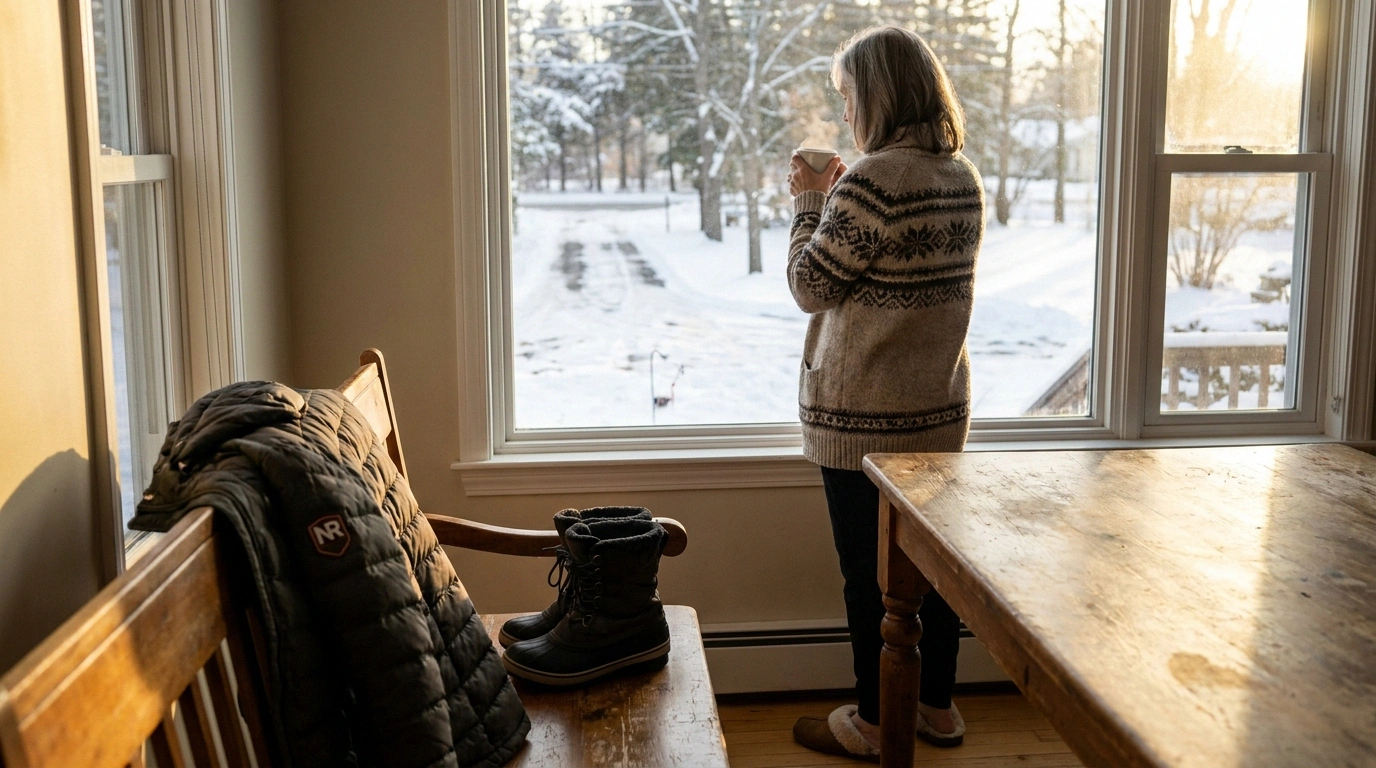
The first winter after my neuropathy became something I had to plan around, I stood at my kitchen window one Tuesday morning and watched six inches of fresh snow fill in the driveway. My husband was at work. My shovel was in the garage. And for the first time in my adult life, I did not know if I should pick it up.
I am Janet Ellis. I live with peripheral neuropathy, I am not a doctor, and I am the person in our support group who writes down what everyone else learned the hard way. What follows is the map I wish I had that Tuesday morning — what makes shoveling snow safer when your feet and hands are not what they were, and the equally important part: when the honest answer is to put the shovel down and call someone else.
The Two Real Risks of Shoveling With Neuropathy
Everything in this guide flows from two facts. The first is that snow shoveling is one of the most cardiac-stressful activities in ordinary domestic life. Cold air constricts blood vessels, sudden heavy exertion spikes blood pressure, and lifting a loaded shovel with the arms is a different demand on the heart than a walk. Emergency rooms see a documented rise in heart attacks in the hours after major snowfalls. That risk applies to everyone; it applies more with any cardiac history.
Shoveling snow with neuropathy is a stack of two separate risks — cardiac strain from cold-weather exertion, and cold injury to feet and hands you cannot fully feel. Managing both means the right gear and technique when you shovel, and the honest willingness to hire it out when the risk stack is too high.
The second is the risk stack unique to neuropathy. Cold plus numb feet equals frostbite risk you cannot feel coming, because the pain signal that warns most people to come inside is the signal your nerves are not sending. Cold plus numb or weak hands equals reduced grip on a metal handle you are swinging around your body. Reduced foot sensation plus icy driveway equals a fall you did not predict. Our fuller guide to neuropathy, balance, and falls covers the sensation-and-balance piece. On a shoveling day those risks are what the next twenty minutes are asking you to manage.
Should You Even Be Shoveling? — An Honest Self-Check
Before the shovel comes out of the garage, run this list. If you answer yes to any of it, skip to the “When Hiring It Out” section below. This is not a moral test — it is a risk-stack check.
- Any cardiac history at all? Prior heart attack, stent, bypass, arrhythmia, uncontrolled blood pressure, angina. If yes, do not shovel. The cardiac literature on this is not gentle.
- Active foot ulcer or open wound? Especially with diabetic neuropathy. A wet cold foot inside a boot for thirty minutes is how minor wounds become major. See our fuller guide to diabetic neuropathy.
- Balance having a bad day? Snowy, uneven, sloped footing is much riskier on the worse days.
- Blood pressure drops on standing? Autonomic neuropathy causes orthostatic hypotension. Bending and standing repeatedly to scoop snow is exactly what triggers it.
- Significant leg or grip weakness? A loaded shovel weighs more than you think. A grip that fails mid-lift is an injury.
- Alone, with no one who would notice if you did not come back inside? That changes the risk calculus.
If you passed the check, keep reading. If you did not, you have not failed anything — you have made a smart call.
Dressing for the Job — Feet and Hands First
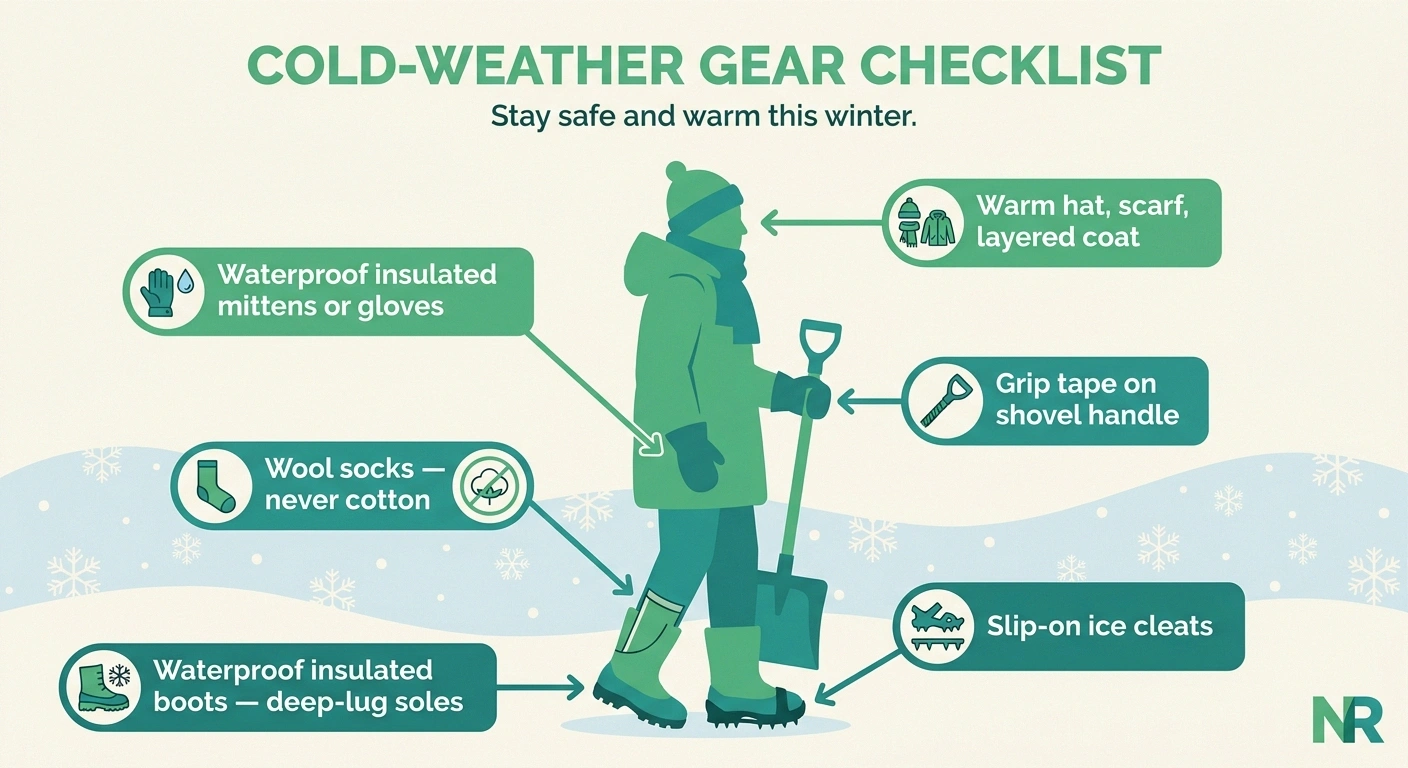
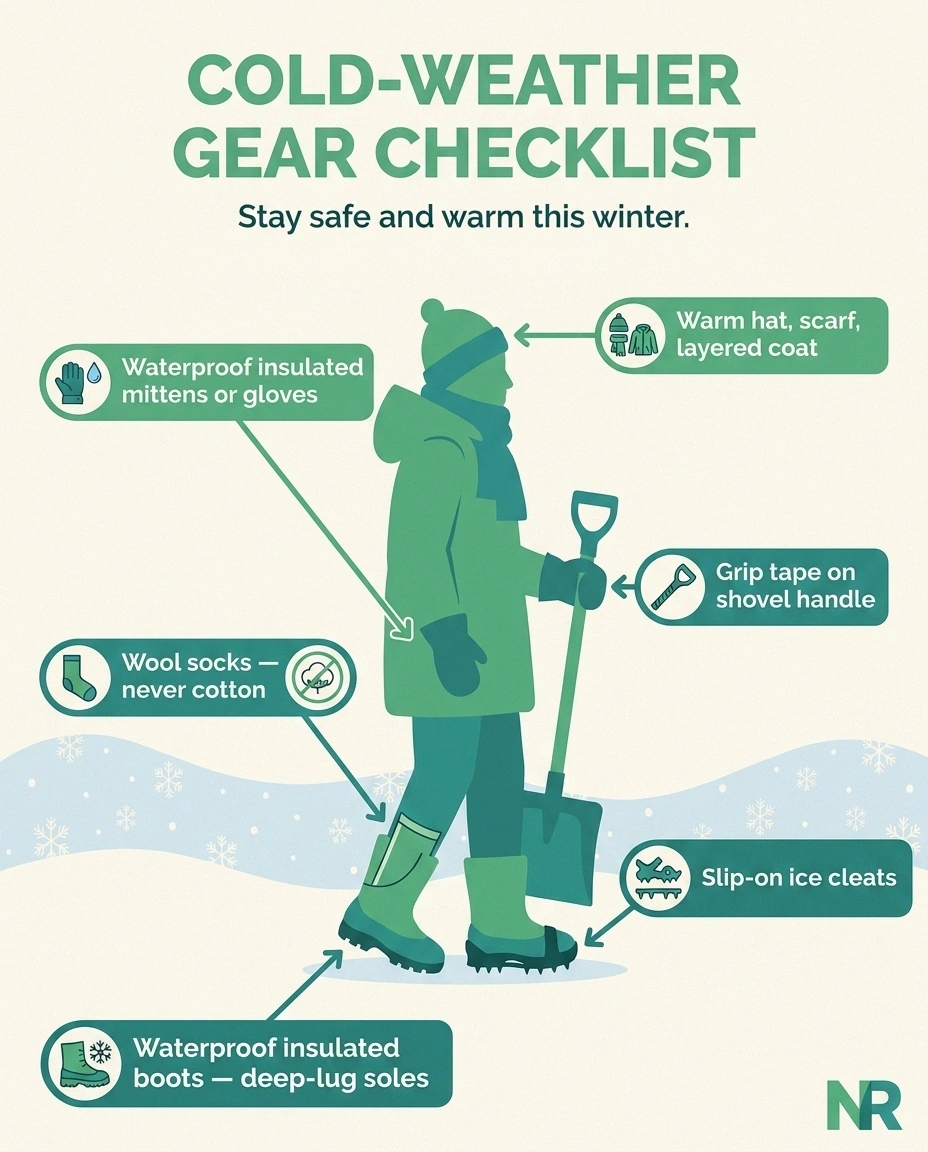
The feedback loop that tells most people “I’m getting cold, come inside soon” is muted for us. What you put on before you go out has to do the job that your sensation cannot. Start with the feet, because that is where neuropathy hits hardest and where cold does the most damage.
Cold-Weather Layers That Do the Job Your Sensation Cannot
- Waterproof insulated boots with deep-lug soles. Real winter boots with a stiff sole, aggressive tread, and insulation rated below the temperature you will be standing in. Our guide to the best shoes for neuropathy covers year-round criteria; the shoveling version adds waterproofing and heavy tread.
- Wool or wool-blend socks. Never cotton. Cotton holds moisture against your skin and offers zero insulation once wet. Wool wicks and stays warm even damp. Have a dry pair waiting inside.
- Room in the boot for the sock. A thick sock inside a boot sized for a thin one pinches the foot and cuts circulation. Winter boots should have half a size of room.
- Slip-on ice cleats for the driveway. Simple rubber-and-metal traction devices that stretch over the boot and grip ice the way bare rubber cannot. Take them off before stepping back inside — the metal is dangerous on smooth floors.
Hands are next. Look for waterproof insulated gloves or mittens — not the knit ones that came with your coat. Mittens keep fingers warmer; if your grip works with mittens, use them. If not, thick insulated gloves with a textured palm are the compromise. Cheap chemical hand warmers in a pocket make a real difference. If you have hand neuropathy — our piece on neuropathy in the hands gets into why grip is compromised — a wrap of hockey-stick tape or foam grip tubing on the shovel handle gives a weakened hand more purchase. For feet that run cold, a lighter compression sock as a base layer under the wool sock is worth an experiment.
Choosing a Shovel That Doesn’t Fight You
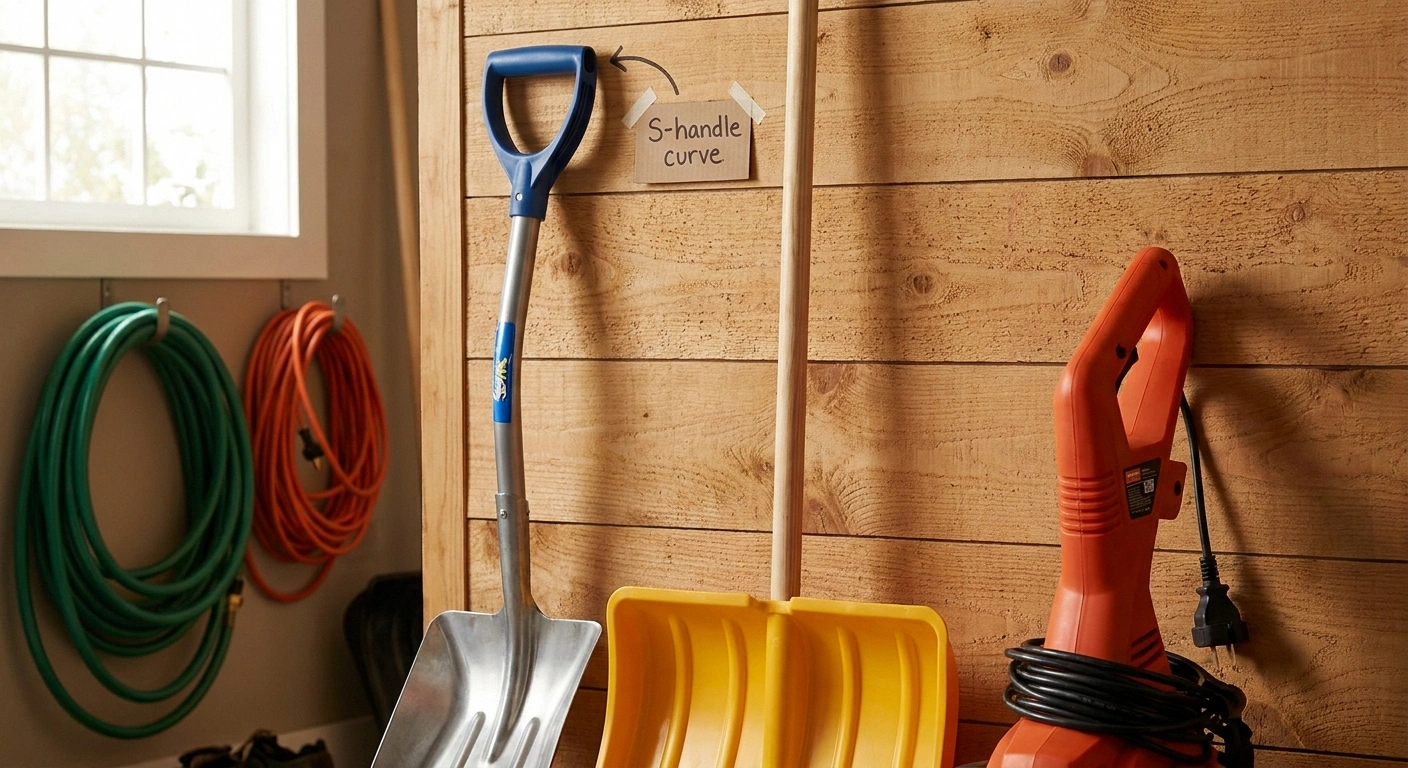
The shovel in most garages is the one that came with the house. It is almost certainly not the right shovel for someone with neuropathy. Better designs are inexpensive.
Shovel Features That Reduce Load on a Neuropathic Body
- A bent-shaft (S-shaped) handle. Keeps your back straighter through the lift and reduces strain on the lower back and shoulders. If you still own a straight-shaft shovel, this is where to spend twenty-five dollars.
- Lightweight blade material. Aluminum or heavy polymer instead of steel. A steel blade full of wet snow is genuinely heavy.
- D-grip on the handle. Surrounds the hand and gives a weakened or numb grip a physical stop. Losing a T-grip mid-lift is a common way to hurt yourself.
- A snow pusher over a shovel for light snow. A wide plow-style blade you push in front of you rather than lift. On a flat driveway with a few inches of dry snow, a pusher clears twice as fast with a fraction of the cardiac load.
- The honest alternative: a single-stage electric snow blower. If you shovel more than a handful of times per winter and you have any risk factor at all, this is not a luxury. It removes almost all of the lifting-and-tossing load that drives the cardiac and shoulder risk.
The Right Way to Move Snow With Neuropathic Hands and Feet
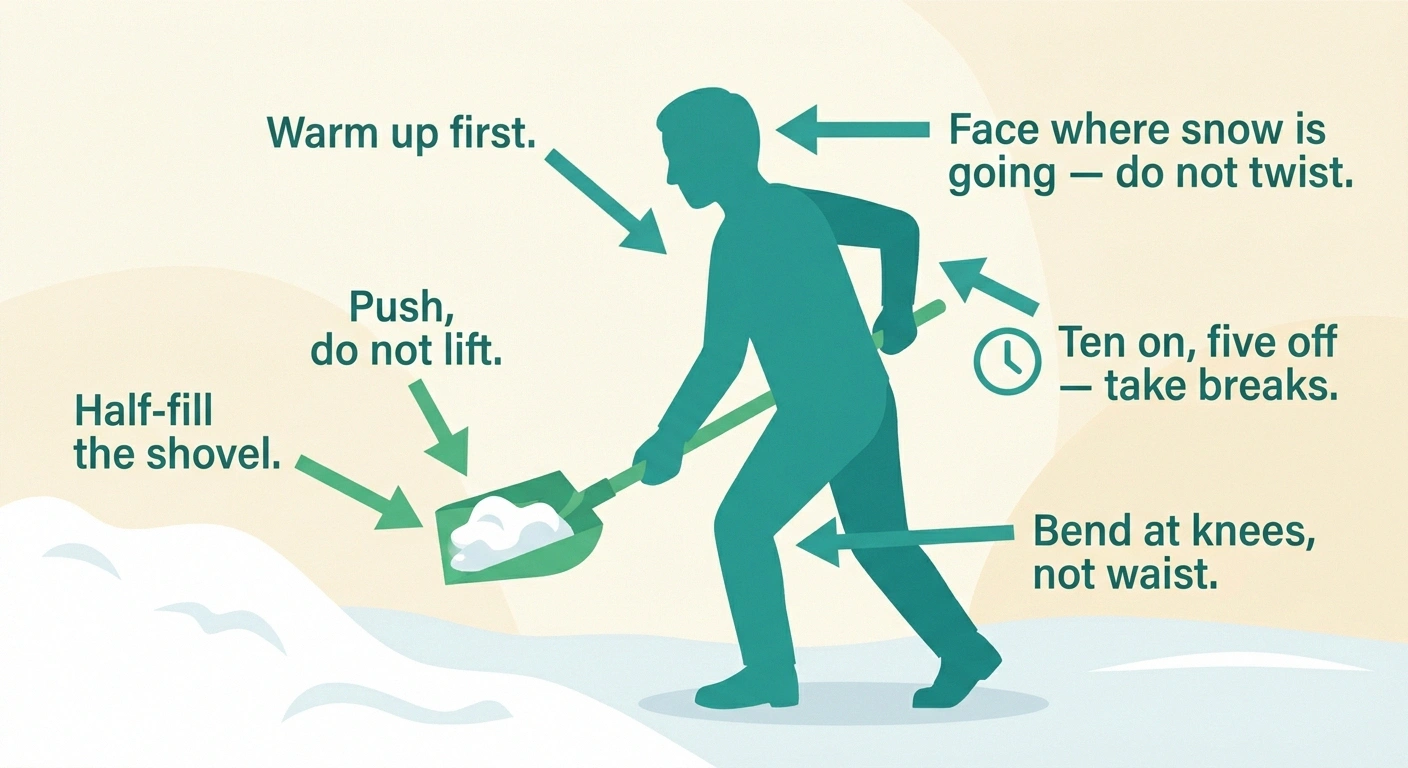
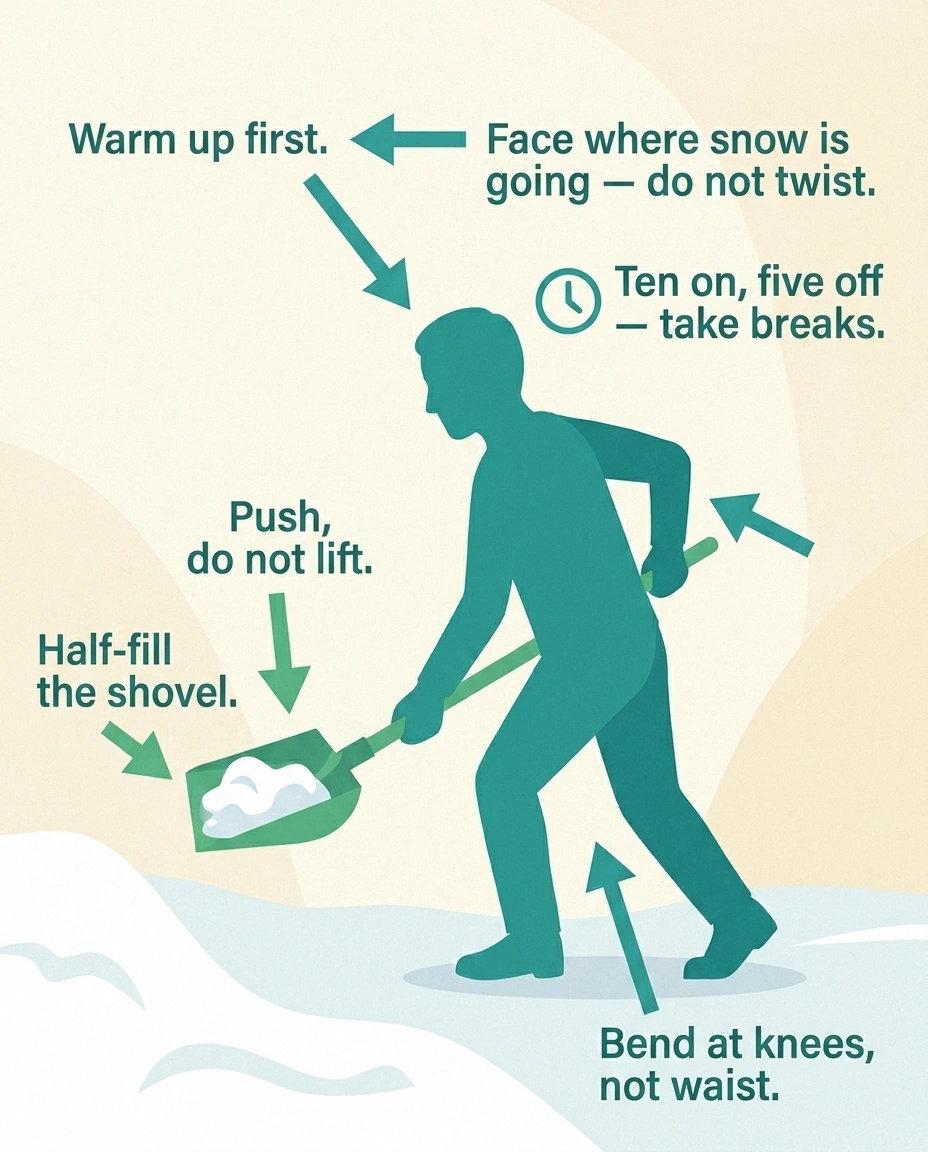
Technique reduces load. The way most people shovel — reach forward, load heavy, twist, throw — is what breaks backs and stops hearts. The way to shovel with a body that has less margin is deliberate and slow.
- Warm up first. Five minutes of walking around the house before you step outside. Going from a warm chair straight into full-effort cold exertion is the profile of the classic shoveling heart attack.
- Push, do not lift, whenever possible. A shovel angled forward becomes a pusher. Save lifting for the pile you cannot push.
- Small loads. Half-fill the shovel. Two half-loads are dramatically safer than one full one.
- Bend at the knees, not the waist. Squat, scoop, stand up with your legs.
- Do not twist to throw. Face the direction you are dumping the snow. Turn your feet, not your torso.
- Take breaks. Ten minutes on, five off. Even sixty seconds of warm indoor air resets a lot.
- Watch your feet. With reduced sensation you will not feel the driveway edge or packed ice under fresh powder. Look. Do not walk backwards. Do not step where you cannot see.
Warning Signs to Stop Immediately
Neuropathy dulls some of the warning signals that would send an ordinary person inside. That is why the warning list matters more, not less, for us. If any of the following happens, stop. Not “finish this section then stop.” Stop.
If any of these appear while shoveling, put the shovel down and go inside immediately. Do not finish the section. Do not drive yourself.
- Chest pressure, tightness, or radiating pain (jaw, arm, back, stomach) — call for help
- Breathlessness that does not settle when you stop moving
- Cold sweat, nausea, or lightheadedness
- Fingers or toes white, waxy, gray, or hard — frostbite is progressing
- Numbness that has replaced the initial ache — nerve signal is failing
- Any near-fall — the near-fall is the warning, not the fall
- Chest pressure, tightness, heaviness, or pain — including pain radiating to jaw, arm, upper back, or stomach. Call for help. Do not drive yourself.
- Breathlessness beyond the exertion. Being unable to catch your breath even standing still is different from working hard.
- Cold sweat, nausea, or lightheadedness. Could be cardiac, autonomic blood pressure, or blood-sugar. All mean stop and sit inside.
- Fingers or toes that look white, waxy, gray, or feel hard. Frostbite is progressing. Warm the area gradually with lukewarm (not hot) water. Do not rub.
- Numbness that has replaced the initial ache. Cold-and-painful becoming cold-and-no-longer-painful is nerve signal failing, not improvement.
- Any near-fall. The near-fall is the warning. Do not give the driveway a second chance.
- A sudden pain flare — burning, stabbing, or shooting pain worse than baseline. See our piece on why neuropathy tends to get worse at night after effort.
The Post-Shovel Foot Check You Cannot Skip
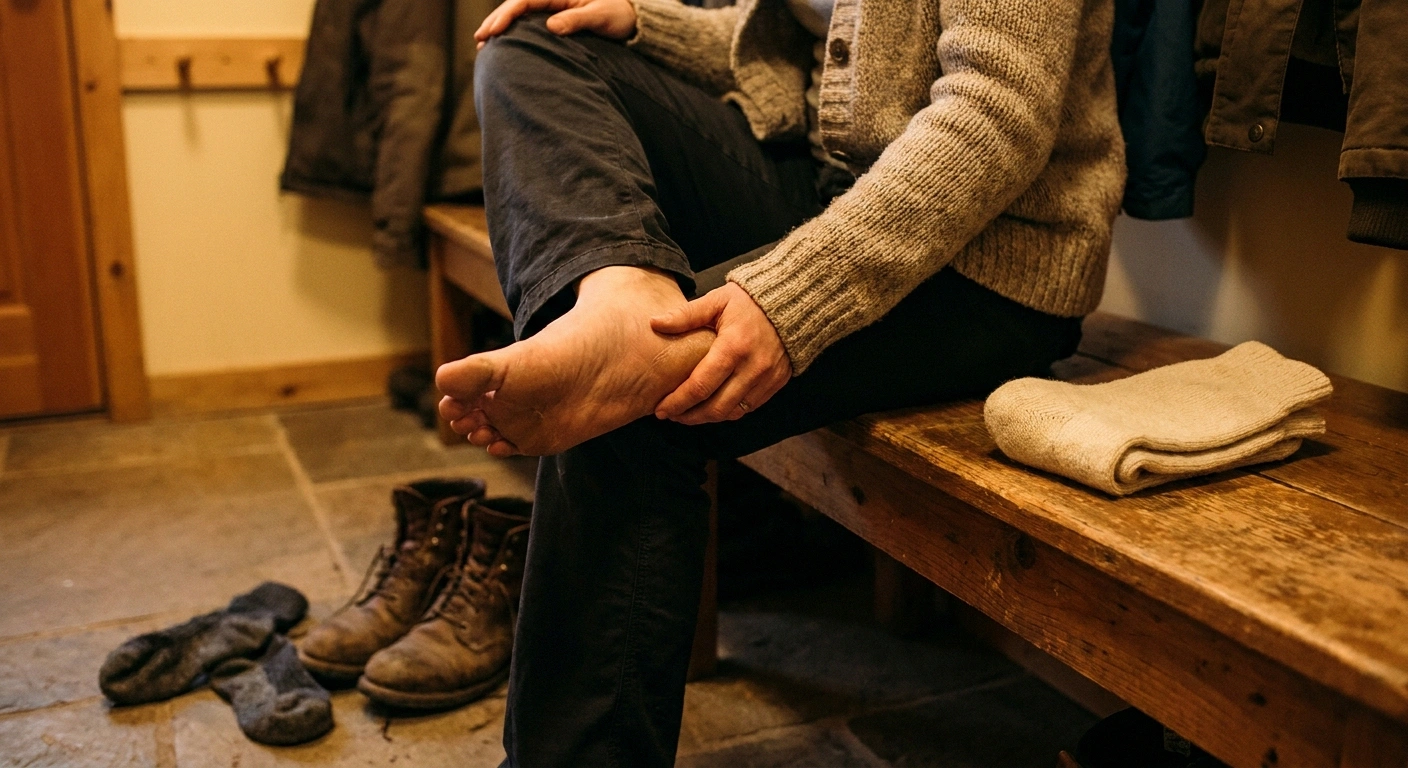
Everything you did outside just now happened to feet you could not fully feel. The check you do inside afterward is not optional — a five-minute ritual, not a chore.
The Post-Shovel Foot Check — 5 Steps
Take the boots off in the mudroom. Peel off the socks. Warm your hands under warm (not hot) water for a minute — cold hands are not reliable inspectors. In good light, look carefully at every surface of both feet. Tops, bottoms, sides, heels, between every toe. Compare left to right; asymmetry is often the first clue that something is wrong.
You are looking for any color change (white or waxy patches, gray, or unusually red), any new blister, any cracking, any wet skin between the toes, any sensation change compared to yesterday. With diabetic neuropathy, take this seriously — anything abnormal deserves a call to your primary care team within twenty-four hours. Our daily neuropathy foot-care guide covers the routine in detail. Change into dry wool socks. Put your feet up. Have something warm to drink.
When Hiring It Out Is the Smart Call
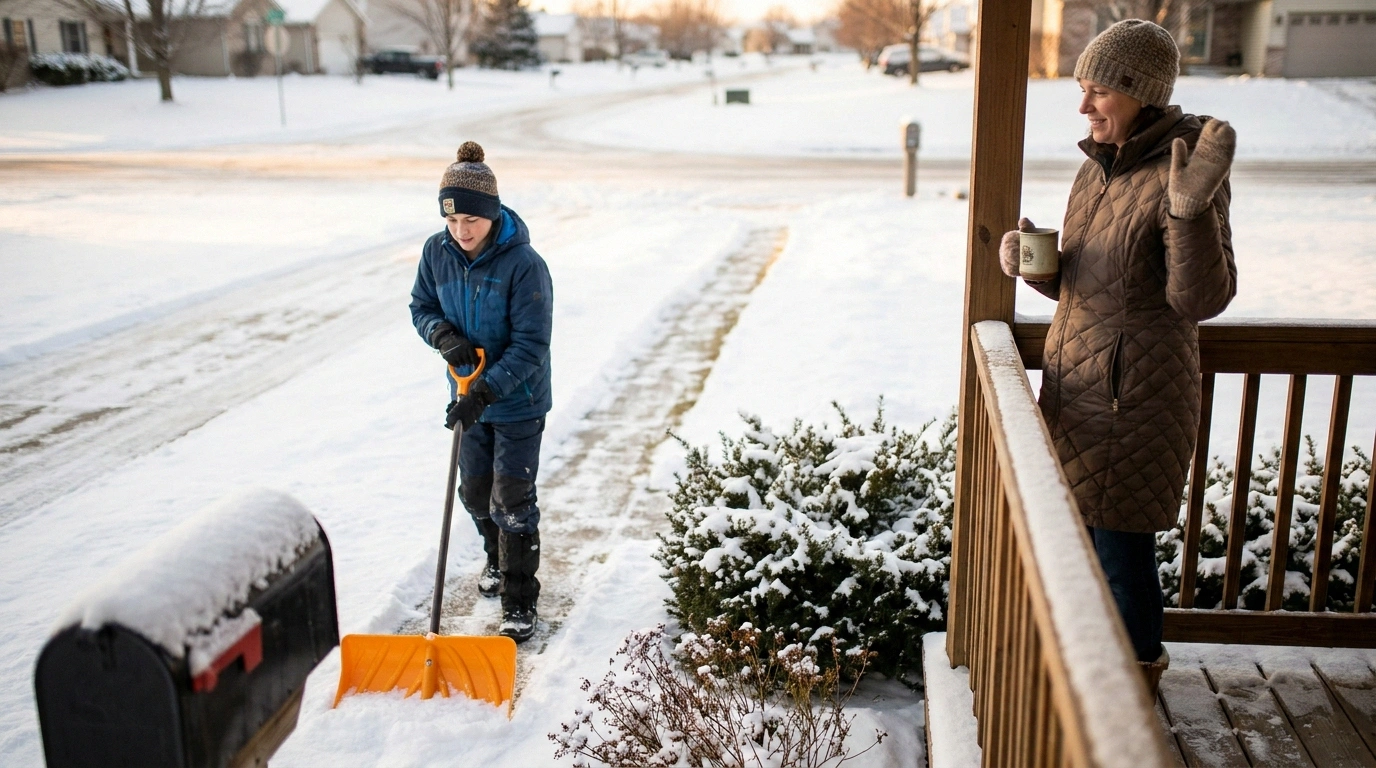
This is the section I want to be loudest about. There is a stubborn cultural expectation that adults clear their own snow — that hiring it out is somehow soft. That expectation is nonsense, and it costs people their health every winter. If your risk stack is real, the smart choice is to pay someone else. Options, roughly by cost:
Your Options for Getting the Driveway Cleared
| Option | Typical Cost | Best For |
|---|---|---|
| Neighbor teenager | $10-20 per snowfall | Occasional storms, informal help |
| Seasonal plow contract | $200-600 per winter | Set-and-forget, guaranteed clearing |
| Township senior program | Free or low-cost | Qualifying older / disabled residents |
| Church / community volunteers | Free (ask, give thanks) | Members and near-neighbors |
| Family or a specific friend | Trade a favor | When someone has already offered |
- The teenager next door. Cash per snowfall — usually ten to twenty dollars a job. Ask around before winter; most neighborhoods have kids who will happily add your driveway to their route. Pay well.
- A seasonal snow-plow contract. Many landscaping companies offer a flat winter rate — every snowfall over a certain depth gets plowed within a set number of hours. Sign up in October, not December.
- Township or municipal programs for seniors and disabled residents. Many towns run free or low-cost clearing programs. Check your township website, senior center, or Area Agency on Aging.
- Religious and community organizations. Many churches and synagogues run volunteer clearing programs. Most people are glad to help and are only waiting to be asked.
- Family or a specific friend. If someone has offered to help “if you ever need anything,” snow is the thing. Take them up on it.
That Tuesday morning years ago, I did not shovel. I called the kid two houses down and paid him thirty dollars. I felt oddly guilty and then, honestly, relieved. It turned out to be one of the best small decisions I made that winter. The driveway got clear. My feet stayed attached to my body. Both counted.
Frequently Asked Questions
Is it safe for someone with neuropathy to shovel snow?
For some people with mild neuropathy, no cardiac history, good balance on the day, and the right equipment, shoveling is manageable. For anyone with cardiac history, active diabetic foot wounds, significant balance issues, autonomic blood pressure changes, or hand weakness that compromises grip, the safer answer is to hire it out. The self-check earlier in this guide is the practical way to decide.
What is the best shovel for someone with neuropathy?
Look for a bent-shaft (S-shaped) handle to keep the back straighter, a lightweight aluminum or polymer blade to reduce lifting load, and a D-grip that gives a weakened hand a physical stop. For light snow on a flat driveway, a snow pusher is often better than a shovel. For anyone with real risk factors, a single-stage electric snow blower is a genuine safety upgrade, not a luxury.
What should I wear on my feet to shovel snow with neuropathy?
Waterproof insulated boots with deep-lug soles for traction, wool or wool-blend socks (never cotton), and slip-on ice cleats stretched over the boot for icy driveways. Boots should have half a size of extra room for the thick sock without pinching. Have a dry pair of wool socks waiting inside.
Why is snow shoveling so hard on the heart?
Cold air constricts blood vessels and raises blood pressure. Sudden heavy arm exertion is a sharp demand on the heart. Lifting a loaded shovel spikes heart rate and blood pressure at once. Emergency rooms see a documented rise in heart attacks in the hours after major snowfalls. Any cardiac history means this is not a task to take on personally.
How do I know if my fingers or toes are getting frostbite when I cannot feel them?
Look, do not rely on sensation. Fingers or toes turning white, waxy, gray, or feeling hard are progressing toward frostbite. Numbness that replaced an earlier ache is nerve signaling failing from cold, not improvement. Come inside, warm the area gradually with lukewarm (not hot) water, and do not rub. If skin stays discolored or blisters develop after rewarming, seek medical attention.
Should I take breaks while shoveling even if I feel fine?
Yes. Feeling fine mid-task is not a reliable signal when neuropathy dulls the warning cues. Ten minutes on, five minutes of standing rest works well. Break the driveway into small sections and use finishing one as a natural pause. The people who get hurt shoveling are almost always the ones who tried to power through in one push.
What is the safest alternative to shoveling for someone who has to clear a driveway?
In order of decreasing effort: a snow pusher for light snow, a single-stage electric or gas blower for regular snow, a hired teenager for occasional storms, and a seasonal snow-plow contract for set-and-forget. Township senior programs, religious volunteer clearing, and family help are also real options.
About the Author