You sit down to a normal lunch — nothing fancy, maybe a sandwich and some soup — and about thirty minutes later, the room tilts. Not dramatically. Just enough that you grip the arm of the chair when you stand up. A wave of tiredness washes over you that feels bigger than a food coma should. Your vision blurs for a second at the edges. Maybe you feel confused, like the afternoon has fogged over. If you have neuropathy — especially if it's diabetic or has any autonomic component — this isn't your imagination, and it isn't just “getting older.” It has a name: postprandial hypotension. It means “low blood pressure after eating,” and it's shockingly common in our community. It's also one of the quietest drivers of unexplained falls in older adults. The good news? Once you know what it is, there are real, evidence-backed things you can do — some of them as simple as a glass of cold water — that make a genuine difference.
What Is Postprandial Hypotension?
Postprandial hypotension is a measurable drop in your blood pressure that happens within two hours of eating a meal. The formal definition doctors use is a drop in your top number (systolic blood pressure) of 20 mmHg or more within 120 minutes of finishing a meal. There's also a second definition: if your top number falls below 90 mmHg after eating, when it started at 100 or higher, that counts too.
The peak drop usually happens 30 to 60 minutes after you eat. That's why the symptoms often feel like they “sneak up” — you finish lunch, you feel fine for a bit, and then somewhere between rinsing the plate and settling back down at your desk or in your chair, the floor feels a little less solid.
Here's the part that surprised me when I first learned about it: postprandial hypotension isn't a rare curiosity. Research in autonomic neuropathy populations has found it's roughly 4.83 times more prevalent in people with diabetic autonomic neuropathy compared to healthy controls. If you have peripheral autonomic damage — which is what most of us with diabetic neuropathy have — the drops tend to be more severe than in people with central autonomic conditions. This is our territory. And most of us have never heard the phrase.
Why It's Especially Common in Autonomic Neuropathy
To understand why eating drops our blood pressure, you have to understand what happens in a healthy body first. When food hits your stomach, your body diverts a huge amount of blood to your digestive system — this is called splanchnic pooling. Your gut essentially says, “I've got work to do here, send reinforcements.” In a healthy person, this pooling would cause blood pressure to fall everywhere else. But the body has a brilliant compensation system called the baroreflex: sensors in your neck and chest detect the pressure change and instantly tell your heart to beat a little faster, tell your blood vessels elsewhere to tighten up, and the whole system stays in balance. You never notice a thing.
Autonomic neuropathy damages the nerves that run this reflex. The signals get sluggish, blunted, or don't fire at all. So when eating pulls blood into your gut, the rest of your circulation doesn't get the memo to compensate. Your blood pressure drops — sometimes a little, sometimes a lot — and that's when you feel the wave.
The autonomic nervous system is the same system that controls your heart rate, sweating, digestion, and bladder — so if you're already dealing with things like sudden sweating, digestion problems, or lightheadedness when you stand up (orthostatic hypotension), postprandial hypotension is very likely part of the same picture. You can read more about the broader condition in my article on autonomic neuropathy, and if diabetes is what got you here, diabetic neuropathy covers the wider terrain.
How to Recognize It in Your Own Day
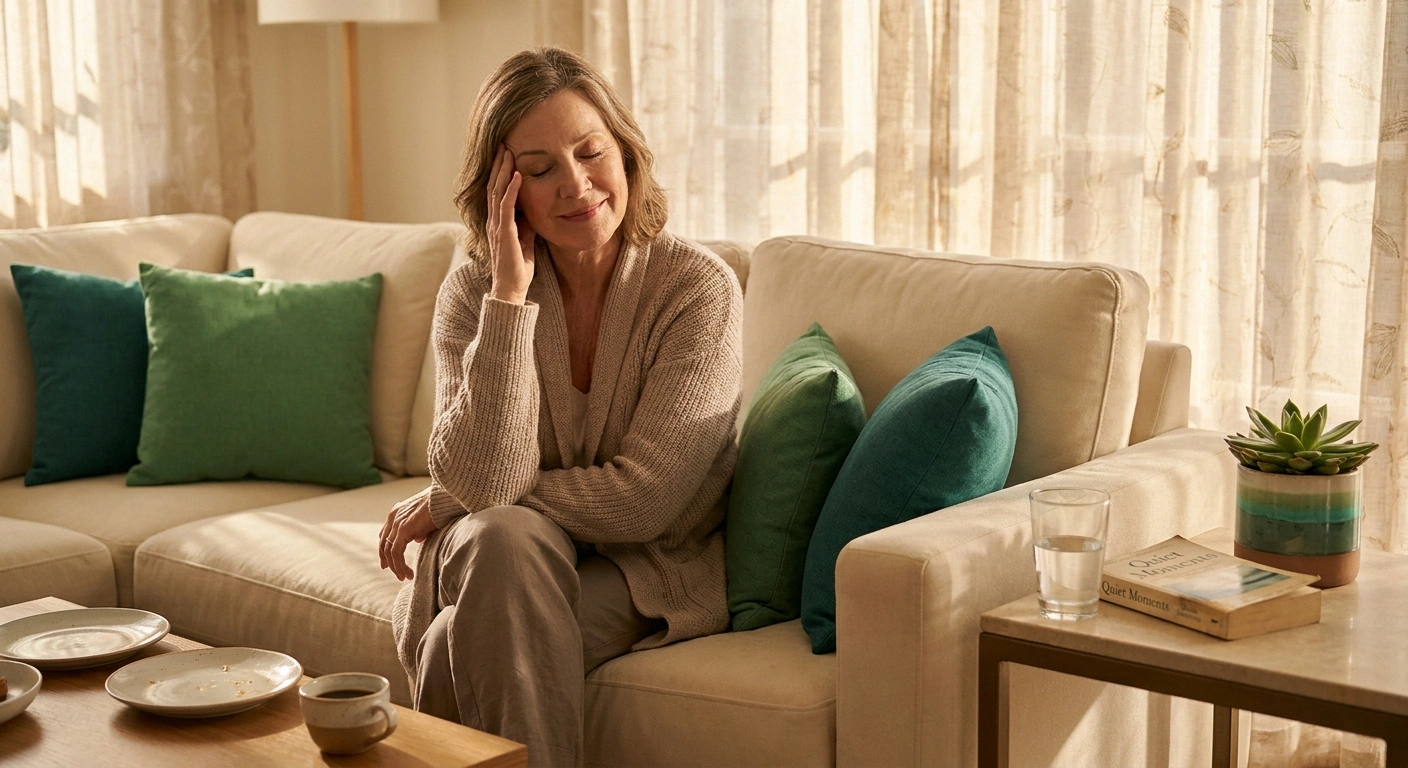
The classic symptoms show up 15 to 90 minutes after eating and can include:
- Lightheadedness or dizziness — especially when you stand up from the table
- A “wave” of tiredness or weakness that feels heavier than the usual after-lunch slump
- Blurred vision, sometimes just at the edges of what you see
- Confusion or brain fog — trouble finding words, difficulty focusing on a task you were about to do
- Nausea or a feeling of being generally “off”
- Falls — this is the one no one talks about. Research suggests postprandial hypotension is a silent driver of unexplained falls in older adults, particularly in the hour after a meal
- Fainting (syncope) — rare, but it can happen
The tricky part is that these symptoms look like a dozen other things. “I'm just tired.” “I got up too fast.” “I had too many carbs.” Each of those might be true. But if the pattern shows up reliably after meals, and especially after warm, carb-heavy meals, postprandial hypotension deserves a spot on your suspect list.
One pattern I want you to pay special attention to: if you've fallen or had a close call — a grab-for-the-counter moment — within an hour of eating, that's a signal. Falls in older adults with neuropathy are already a serious concern, and this can be an invisible contributor. My piece on neuropathy and balance goes deeper on fall prevention, but knowing about postprandial hypotension is a real piece of that puzzle.
Home Testing: A Simple 3-Reading Approach
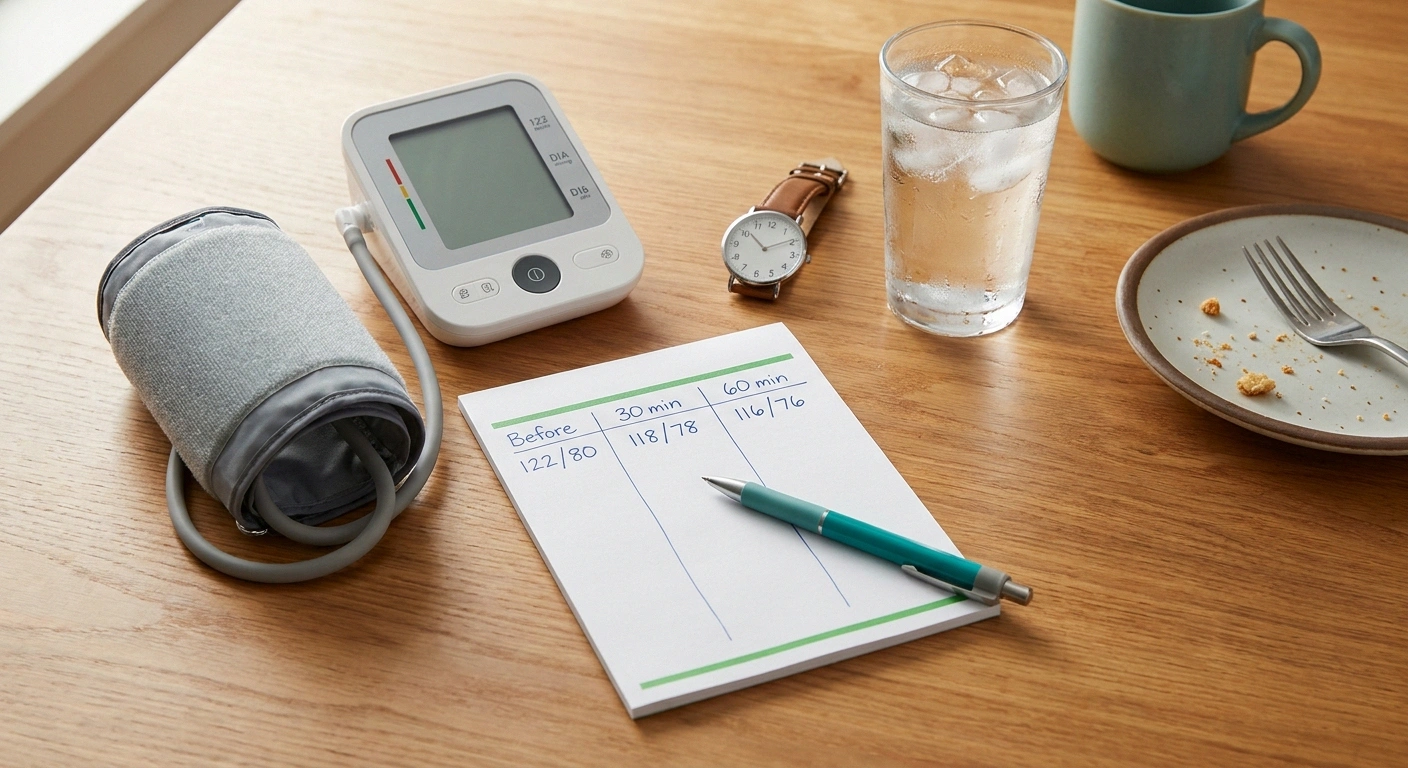
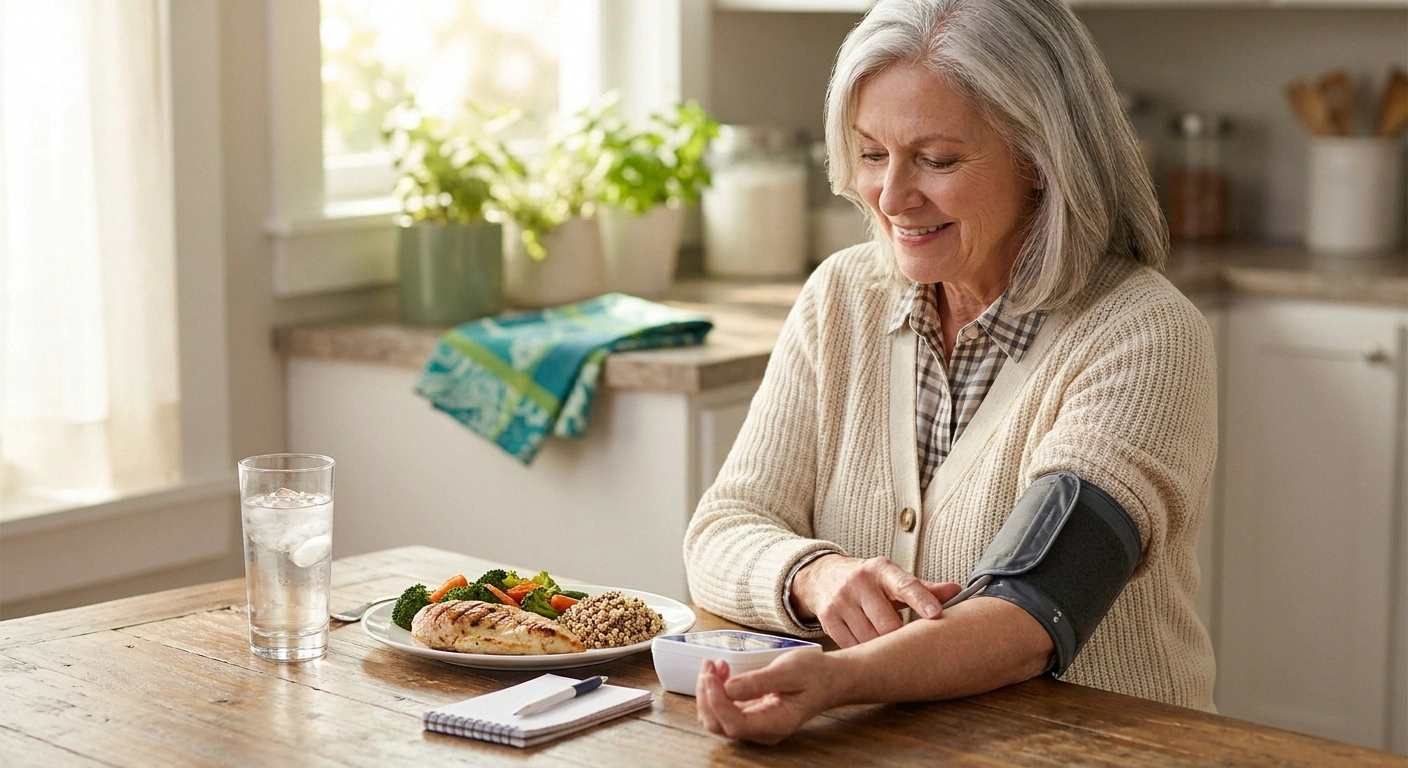
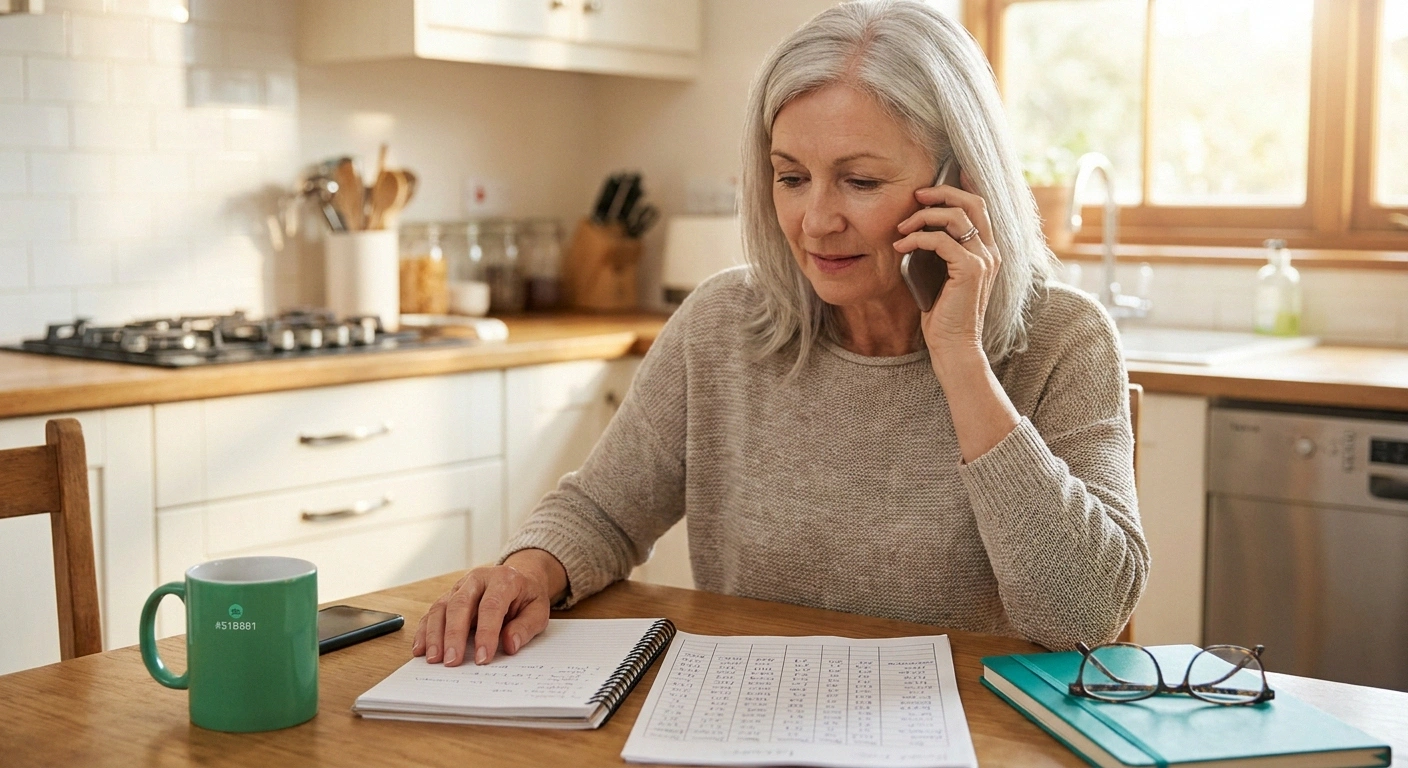
The gold-standard diagnosis is ambulatory 24-hour blood pressure monitoring, where you wear a cuff that takes readings automatically all day. That's a conversation for your doctor. But you can do a very useful home screen with just your own blood pressure monitor and about an hour of attention across two or three meals.
Here's the approach I've used and shared with friends. Please note: I'm a patient advocate, not a doctor. Bring these numbers to your physician and let them interpret what they mean for you — especially before making any changes to blood pressure medications.
The 3-Reading Method:
- Reading 1 — Before eating. Sit quietly for five minutes. Take your blood pressure. Write down the top number, bottom number, and pulse.
- Reading 2 — 30 minutes after finishing your meal. Same seated position, same arm. Record it.
- Reading 3 — 60 minutes after finishing your meal. Same setup. Record it.
Do this for at least two different meals — ideally one that's carb-heavy (a pasta lunch, a sandwich with chips) and one that's more balanced (a piece of grilled chicken with vegetables). If your top number drops by 20 points or more at either the 30-minute or 60-minute check, that's the postprandial hypotension threshold. Bring the paper to your doctor. This kind of concrete, at-home data is enormously helpful in a fifteen-minute appointment.
While you're at it, you might want to look at my article on neuropathy diagnosis for the broader picture of tests your doctor may want to run.
Meal Composition That Protects Your Blood Pressure
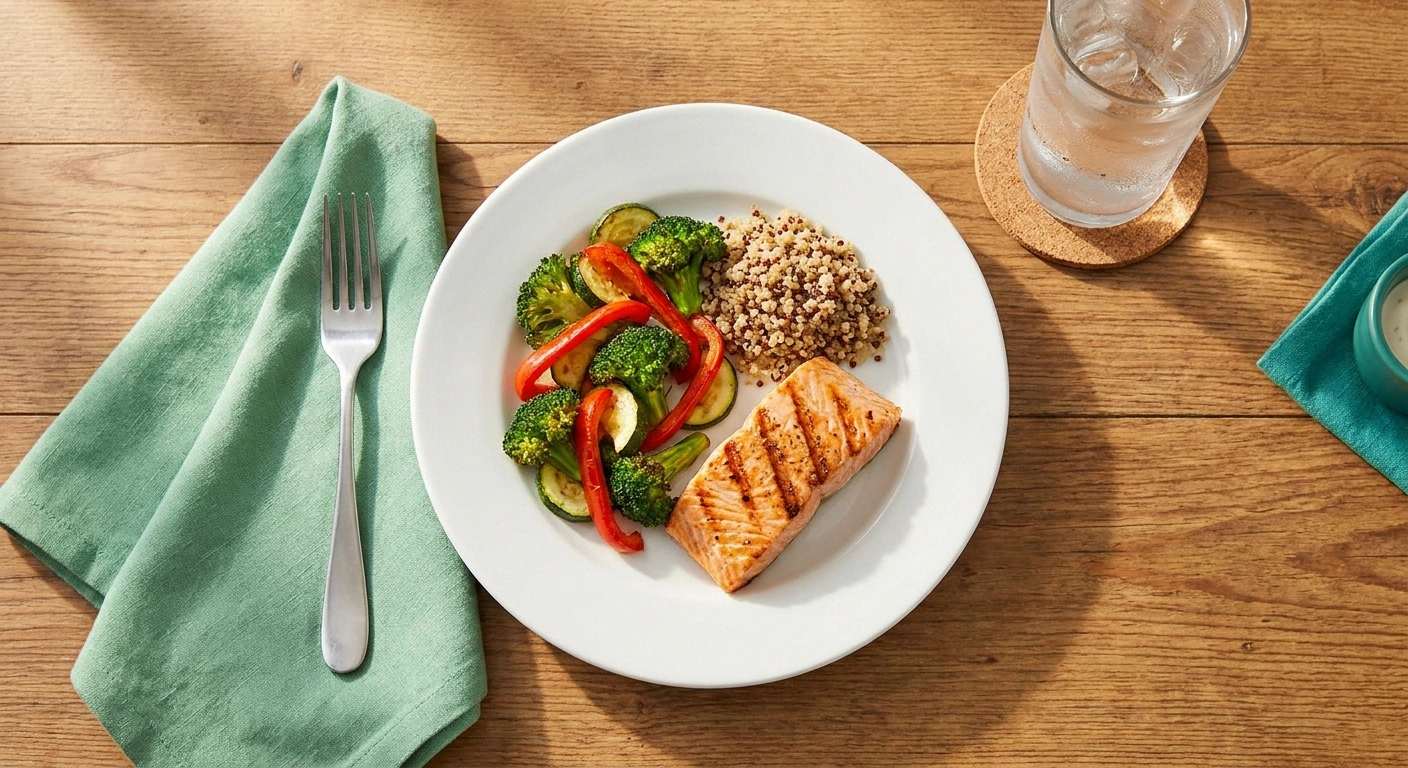
Not all meals drop your blood pressure equally. The two biggest culprits, backed by research, are simple carbohydrates and warm/hot meals. A big bowl of pasta on a cold day? That's the perfect storm. White rice, bread, sugary drinks, pastries — these hit your digestive system fast, pull blood into the gut quickly, and cause the sharpest pressure drop.
- Large pasta or rice bowls
- White bread sandwiches with chips
- Sugary drinks with meals
- Alcohol with dinner
- Hot soups as the whole meal
- Palm-sized protein + vegetables + small whole grain
- Six mini-meals instead of three large
- Room-temperature or slightly cool foods
- Water — not alcohol — with the meal
- Complex carbs (beans, oats) over simple carbs
What tends to protect blood pressure better:
- Smaller, more frequent meals. Six mini-meals across the day instead of three big ones. Each meal triggers a smaller splanchnic pooling response, so the drop is smaller too.
- More protein and healthy fats, fewer simple carbs. A palm-sized portion of chicken, fish, eggs, or tofu with vegetables and a small serving of whole grains is much gentler than a carb-dominant plate.
- Complex carbs over simple carbs. Whole grains, beans, and vegetables digest more slowly, spreading the digestive workload out.
- Room-temperature or slightly cool meals instead of piping hot ones, especially at lunch. This is a small hack that adds up.
- Avoid alcohol at meals. Alcohol dilates blood vessels and worsens the drop. If you drink, do it well away from meals.
If you're already thinking about food and neuropathy more broadly, my guide to the best neuropathy diet pulls together the wider nutritional picture, and my supplement hub covers the nutrients that support nerve health.
The Cold Water Trick That Actually Works
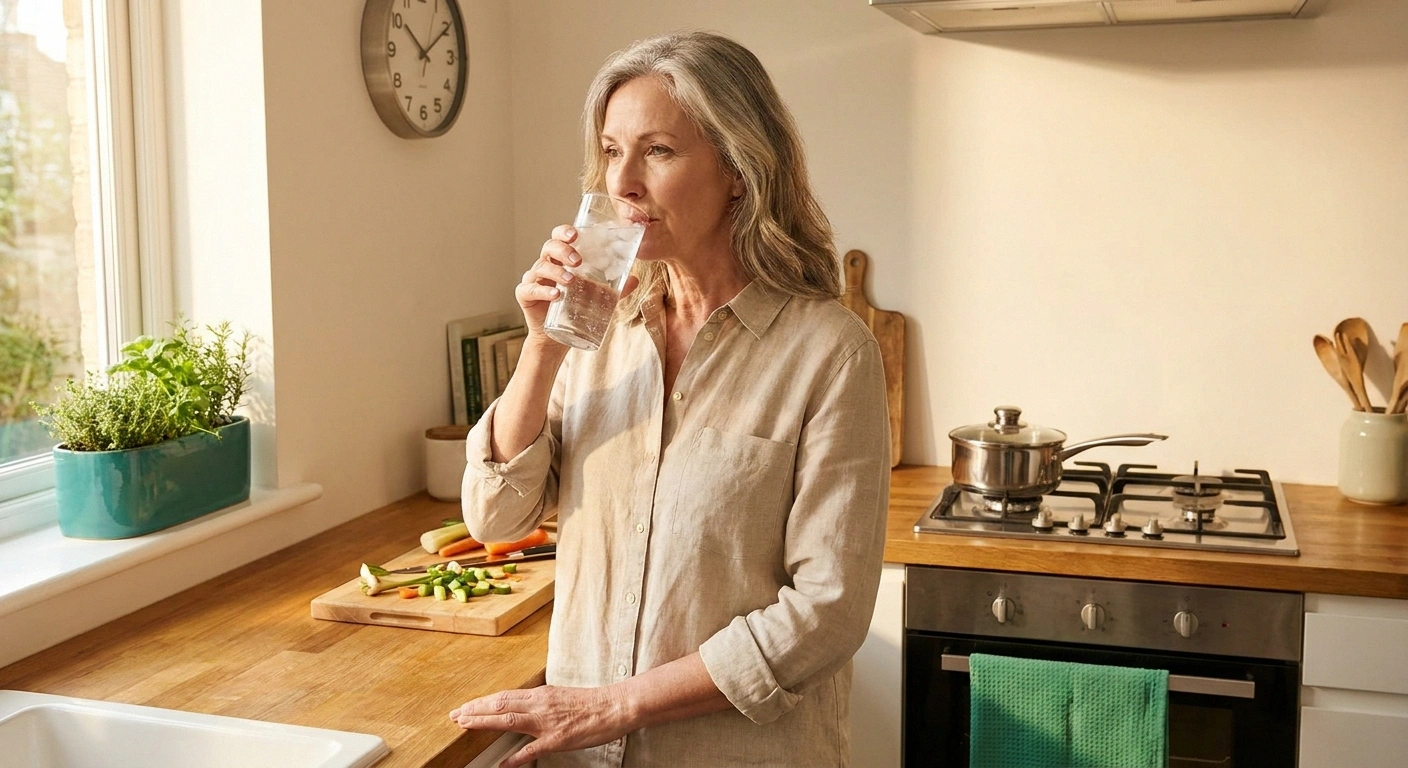
Of all the small habits I've learned about, this one surprised me the most because it sounds like folk medicine but is actually evidence-backed. It's called the osmopressor response, and it's remarkably simple:
Drink 300 to 500 milliliters (roughly 10 to 16 ounces) of cold water about 15 minutes before you eat.
That's it. Studies have shown that a bolus of cold water triggers a modest, sustained rise in blood pressure through the autonomic nervous system — even in people whose baroreflex is impaired. It's one of the few tools that works “around” the damaged reflex rather than through it. The effect lasts long enough to blunt the meal-induced drop.
A few practical notes: cold water works better than room-temperature. Drink it all at once (well, over a minute or two — don't choke), not sipped over an hour. And time it 15 minutes before the meal, not with the meal. If you have heart failure or your doctor has restricted your fluid intake, check with them before adding a routine like this.
I've had readers write to me about this one specifically, and the feedback is consistent: it's not a miracle, but it's a noticeable shift, especially at lunch.
Positioning, Timing, and Small Habits That Add Up
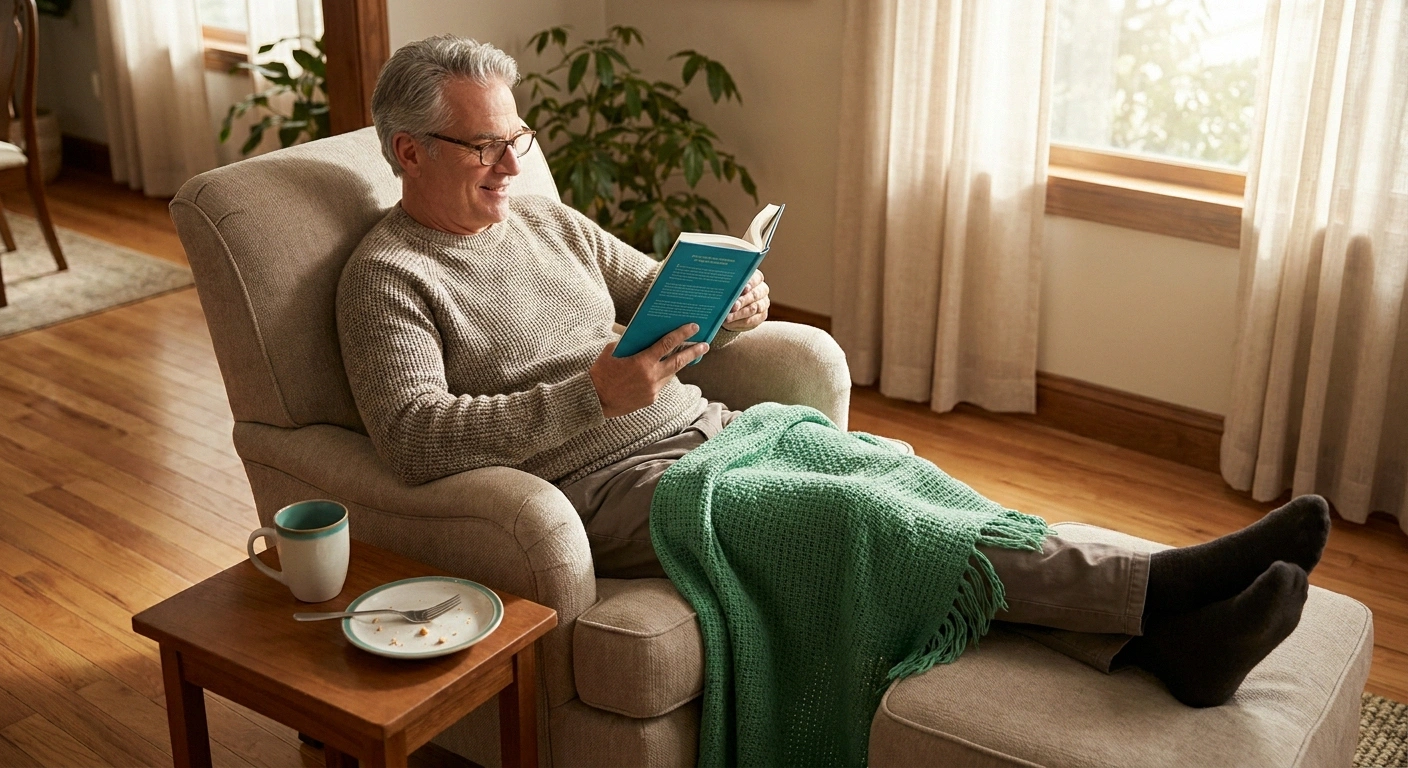
Beyond meal composition and the cold water routine, there are several small things that stack up into meaningful protection:
15 minutes before you eat
Recline slightly for 30 to 60 minutes after eating. Not flat on your back — a partial recline in a comfortable chair. This uses gravity to help keep blood in your upper body instead of pooling in your abdomen and legs. A recliner, a chair with a footrest, or even sitting with your feet up on an ottoman helps.
Don't stand for long periods right after a meal. Washing dishes at the sink, standing at the counter chatting, walking straight to the mailbox — these are the setups where postprandial hypotension turns into a fall. If you need to stand, stand for a few minutes, then sit.
Talk to your doctor about the timing of your blood pressure medications. This is a big one. If you take BP meds at the same time you eat, you're stacking two blood-pressure-lowering effects. Many people benefit from taking these medications well AFTER a meal instead of just before or with. But — and I cannot stress this enough — never change the timing of a prescribed medication without your prescriber's guidance. Bring your home BP log to your appointment and let them decide.
Consider waist-high compression stockings. Not the knee-high kind — those don't reach the splanchnic bed where the pooling actually happens. Waist-high or thigh-high compression can gently push blood back toward your core. Your doctor can prescribe medical-grade compression if it's warranted.
A small amount of caffeine after a meal may help. Coffee or tea after eating — not before or during — can trigger a small blood pressure rise. Skip this if caffeine gives you jitters or interferes with sleep, but for many people it's a gentle assist.
Some doctors prescribe acarbose off-label — a medication that slows carbohydrate absorption. This is a physician conversation, not a self-directed one, but it's worth knowing exists if the lifestyle changes don't do enough.
A gentle walk before a meal, not after. If you're building movement into your day, doing it before eating is generally kinder to your blood pressure than a brisk walk right after. My article on whether walking helps neuropathy covers the broader case for movement.
These habits aren't dramatic. They're the kind of small, quiet changes that don't feel like much day-to-day but add up to fewer wobbly afternoons and, most importantly, fewer falls.
Red Flags: When Postprandial Symptoms Warrant a Doctor Call
Most postprandial hypotension is manageable at home once you know what you're dealing with. But some symptoms cross the line into “call your doctor today” or even “go to the ER”:
- Fainting (syncope) after a meal — even brief loss of consciousness
- Chest pain, pressure, or shortness of breath after eating — call 911
- A fall with any injury, especially head impact — get evaluated
- New or worsening confusion in an older adult, particularly after meals
- Any new, dramatic, or scary symptom — trust your gut
- Fainting after a meal (syncope). Losing consciousness — even briefly — is a red flag. Same day.
- Chest pain, pressure, or shortness of breath after eating. These can signal cardiac issues, not just BP drops. Call 911 or go to the ER.
- Repeated falls, or a fall with injury. Especially any head impact — get evaluated same day.
- New or worsening confusion in an older adult, especially after meals. This can look like early dementia and isn't always — sometimes it's a treatable circulatory issue that has a name and a plan.
- Any symptom that's new, dramatic, or scary. If your gut says something's wrong, trust it.
Living with this condition can also weigh heavily on your mood — the constant vigilance, the worry about falls, the way social meals feel different. If any of that is landing hard on you, my article on neuropathy and mental health speaks to the emotional side of chronic symptoms. And if fatigue is bleeding into the evening — including sleep disruption — why neuropathy gets worse at night may be useful too.
You're not overreacting by naming what's happening to you. Postprandial hypotension is real, it's measurable, and it's manageable. Bringing it up with your doctor — armed with your home BP log and the questions below — is exactly the right move.
Frequently Asked Questions
Can postprandial hypotension go away on its own, or is it permanent?
When postprandial hypotension is caused by autonomic neuropathy, the underlying nerve damage doesn't reverse quickly, so the tendency toward post-meal drops usually persists. However, the symptoms and severity can be dramatically reduced — sometimes to the point that you barely notice them — with meal composition changes, the cold water routine, medication timing adjustments, and positioning habits. In cases where postprandial hypotension is caused by things like medication side effects rather than nerve damage, addressing that root cause can resolve it entirely. Work with your doctor to identify what's driving yours.
Is postprandial hypotension the same as orthostatic hypotension?
They're related cousins, not the same condition. Orthostatic hypotension is a drop in blood pressure when you stand up from sitting or lying down. Postprandial hypotension is a drop after eating, regardless of whether you change position. Both share the same underlying problem in autonomic neuropathy — a blunted baroreflex — and many people with neuropathy have both. If you have one, it's worth being tested for the other. The management strategies overlap significantly: hydration, gradual position changes, compression, and medication timing all help with both.
How long after a meal should I wait before driving?
If you know you have postprandial hypotension, the highest-risk window is 30 to 90 minutes after eating. Many people find waiting at least an hour before driving — especially after a larger or carb-heavy meal — is a sensible precaution. If you've had episodes of lightheadedness, brief blurred vision, or confusion after meals, please talk to your doctor before driving during that window. And if you've ever had post-meal syncope (fainting), driving needs to be a real conversation with your physician, not a solo call.
Does postprandial hypotension only affect older adults?
It's most common in older adults, but it can affect anyone with autonomic dysfunction — including younger people with diabetic autonomic neuropathy, Parkinson's disease, or certain other conditions. Age increases the risk because our baroreflex naturally becomes less responsive over time, and older adults are more likely to be on multiple medications that lower blood pressure. But if you're in your 40s or 50s with diabetic neuropathy and having wave-of-tiredness episodes after meals, don't dismiss it as “too young for this.” Bring it up.
Will eating less help, or will that make things worse?
The goal isn't to eat less overall — you need adequate nutrition — it's to eat smaller amounts more often. Six mini-meals across the day trigger smaller splanchnic pooling responses than three large meals, so each blood pressure drop is smaller. Skipping meals altogether can actually make things worse because when you finally do eat, you're likely to eat a larger volume and drop harder. Aim for regular, smaller, more balanced meals with less simple carbohydrate and more protein and vegetables. A registered dietitian can help you build a specific plan.
Can I just take extra salt to raise my blood pressure?
Increased salt intake is sometimes recommended for orthostatic and postprandial hypotension — but only under medical supervision. If you have kidney issues, heart failure, or certain other conditions, extra salt can be genuinely dangerous. Please don't start adding significant salt on your own. If your doctor recommends it, they'll usually give you a specific target and monitor how your body responds. Along with salt, adequate overall fluid intake (usually 1.5 to 2 liters a day, unless restricted) is often part of the plan.
Are there specific times of day when postprandial hypotension is worst?
For most people, lunch tends to produce the biggest drops, followed by dinner, with breakfast often the mildest. There are a few reasons: lunch is often the most carb-heavy meal in Western eating patterns, the mid-afternoon window overlaps with a natural circadian dip in blood pressure, and many people are already a bit dehydrated by midday. If you're going to focus your protective habits on one meal, lunch is often the highest-yield target — cold water 15 minutes before, keep it protein-forward and moderately-portioned, and plan to sit or recline after rather than rushing back to standing tasks.
About the Author