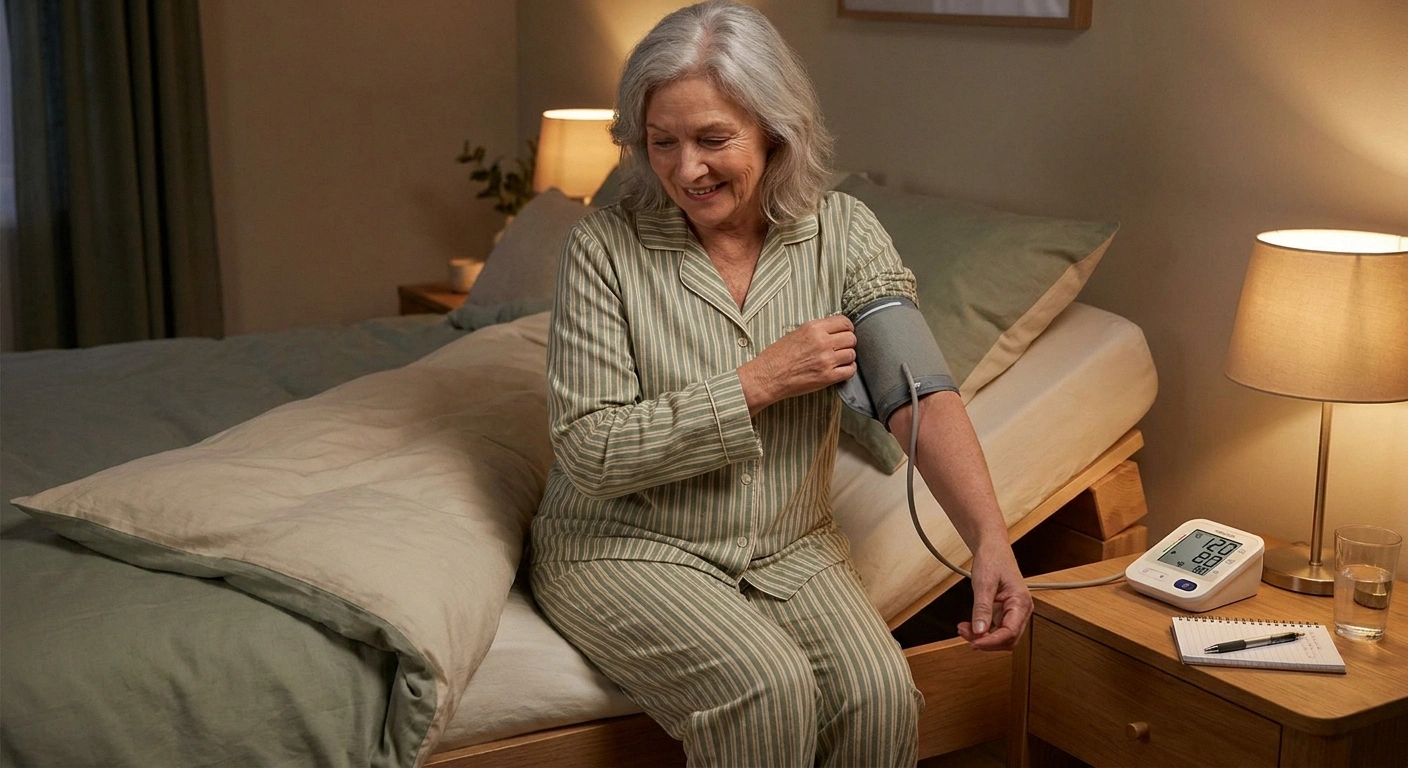
If you've been dealing with autonomic neuropathy, you probably know that gut-drop feeling when you stand up too fast — the dizziness, the tunneling vision, sometimes actually crumpling to the floor. So imagine my confusion the day my cardiologist told me my blood pressure was dangerously high — but only when I was lying down. High when I sleep, low when I stand? It felt like my body was playing some cruel joke.
Here's the thing: I wasn't alone. Not even close. What I was dealing with has a name — supine hypertension — and it turns out roughly half to two-thirds of people with orthostatic hypotension from autonomic neuropathy have it too. It's one of the least-talked-about, most-misunderstood complications of nerve damage that affects the “automatic” body systems, and if it's not caught and managed properly, it can quietly damage your heart, kidneys, and brain over years. Let's talk through what's actually happening, why it feels so paradoxical, and what you can safely do about it.
What Supine Hypertension Actually Is
Supine hypertension is exactly what it sounds like: high blood pressure when you're lying flat on your back. The medical definition most autonomic specialists use is a blood pressure reading of 140/90 mmHg or higher while you're lying down, usually measured after you've been supine for at least 5 minutes. Some centers use a stricter threshold — 150/90 — but 140/90 is the number most autonomic neurology clinics work from.
Key Takeaway
Supine hypertension is BP ≥140/90 mmHg while lying flat. It's not the same as regular high blood pressure — it's caused by the same broken baroreflex that gives you orthostatic hypotension standing up. The wiring is failing in both directions.
Here's what makes this so tricky: the very same people who get this — folks with autonomic neuropathy, multiple system atrophy (MSA), Parkinson's-related autonomic failure, or pure autonomic failure — often have the opposite problem when they stand up. Their blood pressure crashes. That's called orthostatic hypotension, and it causes the dizziness, weakness, and fall risk you probably know all too well.
So the paradox is real: low BP standing, high BP lying down, sometimes in the same person, sometimes within the same hour. When my cardiologist explained this, my first reaction was “how is that even possible?” That took me a while to wrap my head around, and honestly, it took some patient explanation from a specialist for me to really get it. Once I understood the underlying wiring problem, everything else made sense.
One more thing worth naming up front: supine hypertension isn't the same as “regular” high blood pressure. Regular hypertension usually shows up throughout the day and responds to standard antihypertensive medications. Supine hypertension in autonomic neuropathy is different — it often peaks overnight when you're horizontal for hours, and it needs a very different management approach. Getting these two confused (which even some general practitioners do) can lead to treatments that make things worse rather than better.
The Baroreflex Failure That Explains Both Extremes
Okay, let's talk about the wiring. Your body has this brilliant little reflex system called the baroreflex. Baroreceptors — tiny pressure sensors sitting in the walls of your carotid arteries and aortic arch — constantly measure your blood pressure. When they detect a change, they send a signal to your brainstem, which then adjusts your heart rate and blood vessel tone to keep pressure stable.
Never Stop Your Pressor Meds on Your Own
If you're taking midodrine, fludrocortisone, droxidopa, or any other pressor medication for orthostatic hypotension, stopping abruptly can cause dangerous falls, syncope while driving, or brain injury from severe BP crashes.
Bring your supine BP readings to your specialist. Let them adjust timing, dose, or add a bedtime countermeasure. This needs a prescriber — not a Google search, and not this article.
Here's how it's supposed to work when you stand up: gravity pulls blood toward your legs, blood pressure drops slightly, baroreceptors sound the alarm, and within seconds your heart speeds up and your blood vessels tighten. Pressure stabilizes. You feel nothing. Beautiful system.
Now — in autonomic neuropathy, the nerves that carry those signals are damaged. When you stand up, the “alarm” doesn't get through properly. Your blood vessels don't tighten, your heart doesn't speed up enough. Blood pools in your legs, pressure in your brain drops, and you feel dizzy or faint. That's orthostatic hypotension.
But here's the kicker: the baroreflex works in both directions. When your pressure gets too high, the same system is supposed to relax your vessels and slow your heart down. When those nerves are damaged, that dampening signal doesn't work either. So when you lie down at night and blood that was pooling in your legs redistributes to your chest and head, your body has no way to say “whoa, easy, tone it down.” Pressure just keeps climbing.
Add to that: many people with autonomic failure have elevated levels of a hormone called noradrenaline that gets released whenever they're horizontal (their body is trying to compensate for the daytime standing problem). Combine “no braking system” with “extra fuel on the fire” and you get nighttime BP that can spike into scary territory — I've seen my own readings hit 175/95 at 2 AM, and I've talked with patients whose overnight numbers have gone higher.
So the baroreflex is broken in both directions. It's not that your body has two separate problems — it's that one damaged system fails to respond to either extreme. Once you understand that, “high when lying, low when standing” stops feeling contradictory. It's the same broken switch, just in two different scenarios.
Why It's Especially Common with Diabetic Autonomic Neuropathy
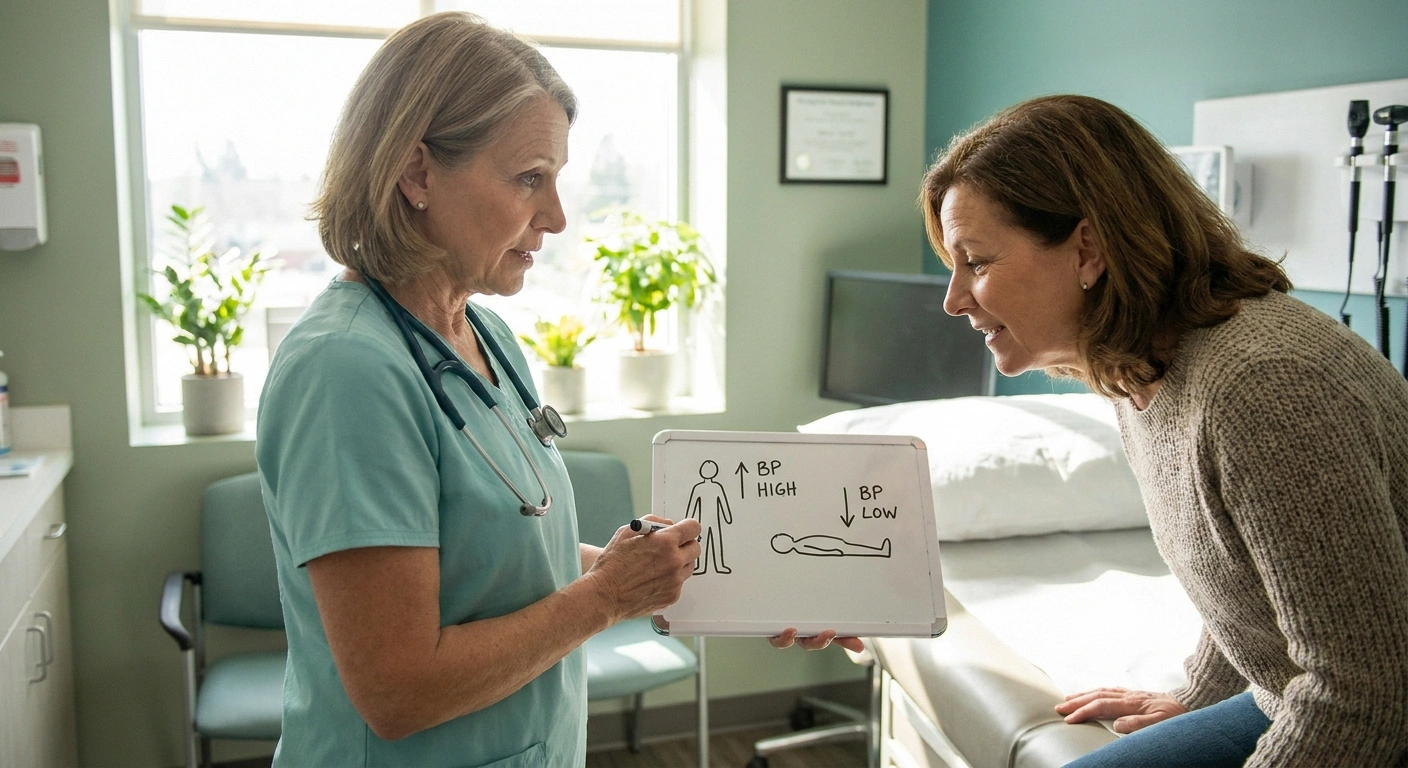
Supine hypertension can show up with any form of severe autonomic failure — MSA, pure autonomic failure, and Parkinson's-related autonomic dysfunction all commonly involve it. But for the neuropathy community specifically, the biggest source is diabetic autonomic neuropathy. Long-term diabetes damages small nerve fibers throughout the body, and the autonomic nerves controlling your cardiovascular system are unfortunately some of the first to go.
What the Research Says
Translation: if you've been diagnosed with OH and no one has looked for supine hypertension, it's more likely you have it than you don't.
Studies looking at people with symptomatic orthostatic hypotension have found that 50-70% of them also have supine hypertension. Read that again — that's most of them. If you've been diagnosed with OH and no one has ever mentioned supine hypertension, it doesn't mean you don't have it. It means it probably hasn't been looked for.
What frustrates me — and honestly it's why articles like this need to exist — is how often diabetic patients get treated for the standing-up problem without anyone thinking to check what's happening at night. The person is prescribed midodrine or fludrocortisone to help them get out of bed without fainting. The daytime dizziness gets a little better. Everyone calls it a win. Nobody knows the person is spending 8 hours a night with BP over 160/95, quietly straining their heart and kidneys.
If you have diabetes and any signs of autonomic involvement — the OH, but also things like resting tachycardia, sweating changes, digestive slowing, or urinary issues — this deserves a conversation with your care team. The good news is that once you know to look for it, you can measure it (more on that below) and manage it. The bad news is that it's still under-recognized even among specialists.
How the OH Treatment You're On Might Be Making Nighttime Worse
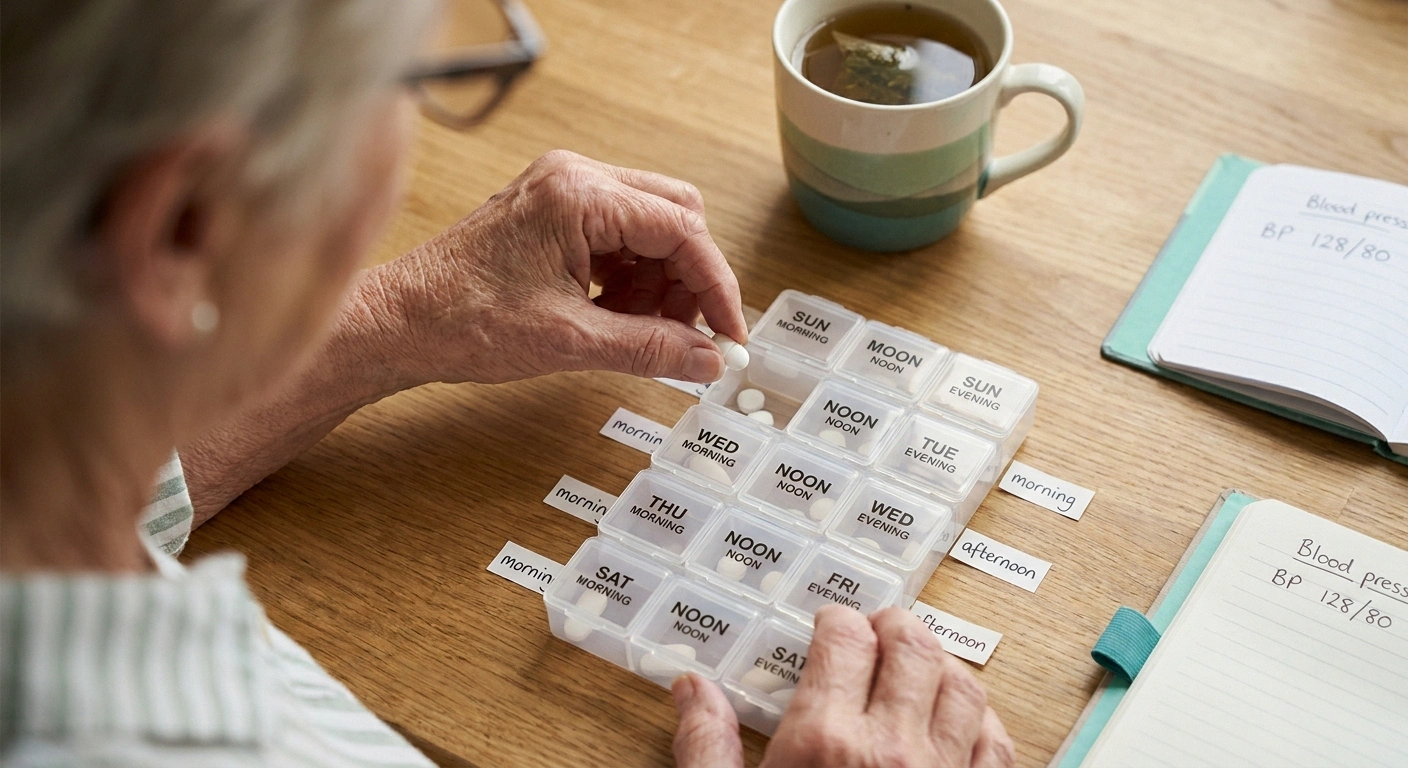
Now for the uncomfortable part. If you're taking medication to raise your blood pressure so you can stand up safely — most commonly midodrine or fludrocortisone — that medication is doing exactly what it's supposed to during the day. It's constricting your blood vessels or retaining fluid so pressure in your brain stays high enough for you to function. Without it, many people with severe OH can't even walk to the bathroom.
Baroreflex: How It's Supposed to Work vs. What's Broken
Same broken switch. Two opposite-looking problems.
Most autonomic specialists diagnose supine hypertension at this cutoff, measured after 5+ minutes lying down. Some centers use a stricter 150/90.
But here's what happens if the timing is off: those medications keep working after you lie down. Midodrine, for instance, has a peak effect around 1 hour after a dose and can still be actively raising pressure 4-5 hours later. If your last midodrine dose is at 6 PM and you're in bed by 10 PM, that drug is still very much on board when your baroreflex is already failing to keep supine pressure in check. The result: an even bigger nighttime spike.
Fludrocortisone works differently — it makes your body retain sodium and water, expanding blood volume. That helps daytime standing. But the extra fluid volume is also in your circulation when you lie down. Combine that with a broken baroreflex and you can imagine what happens.
This is not a reason to stop your medications. Please, please hear me on this: never adjust or stop pressor medications on your own. The consequences of untreated severe orthostatic hypotension — falls, head injuries, syncope while driving, cognitive impairment from chronic brain underperfusion — are genuinely dangerous. What you want to do is bring this pattern to your prescriber's attention and have a real conversation about timing and dose adjustments. Most autonomic specialists have several strategies for threading this needle. But the plan has to come from them.
What you can bring to that conversation is data — actual BP readings from a home monitor showing what your numbers are doing at bedtime and, if you wake up during the night, at 2 or 3 AM. Handing your specialist a two-week log with those readings gives them something concrete to work with. Without that, they're guessing.
Head-of-Bed Elevation: The First-Line Safe Fix
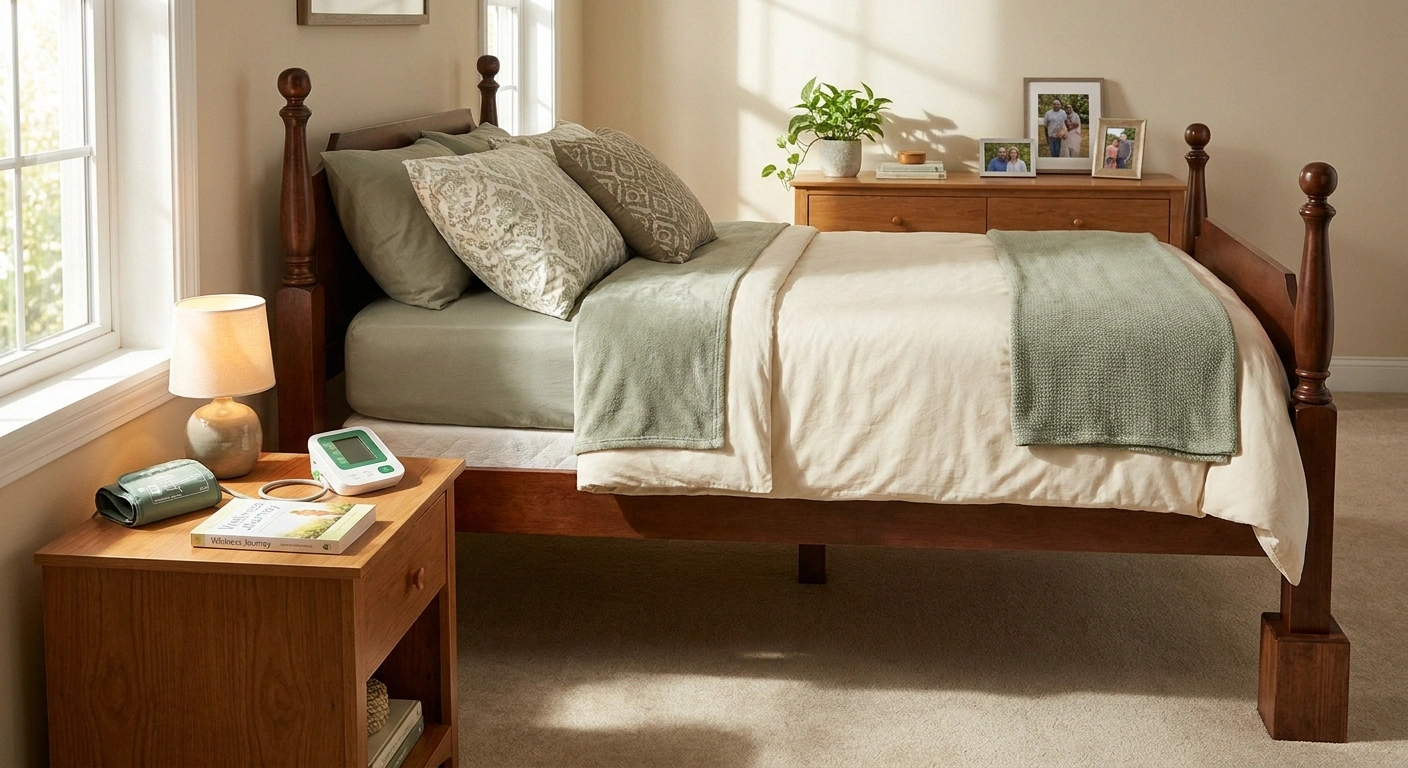
Here's the good news — there's one intervention that almost every autonomic specialist agrees on, it works, and it doesn't involve any medication changes. It's head-of-bed elevation: sleeping with the head end of your bed raised by roughly 10 to 30 degrees.
Head-of-Bed Elevation: The Setup
Target: 10–30 degree tilt of the whole bed, head end raised.
Why does this work? It's basically using gravity as your baroreflex. When your head is higher than your feet even during sleep, some blood pools in your lower body, so less pressure builds in your chest and head. The effect is modest but real — studies have shown drops of 10-20 mmHg in overnight supine BP with proper elevation, and as a bonus it also seems to help daytime OH (your body adapts to being tilted overnight and handles morning standing better).
How to actually do it:
- Blocks under the bedposts at the head of the bed — this is the gold-standard approach. Sturdy wood blocks 4-8 inches tall placed under the head-end bedposts create the tilt. The whole bed tilts, so you don't slide down during the night. This is what most autonomic clinics recommend.
- Adjustable bed frame — if you have one or can invest in one, you can set the head elevation precisely. This is the most comfortable option.
- Wedge pillow — a long foam wedge that elevates your torso from the waist up. Not as effective as tilting the whole bed (your hips are still flat), but useful if you can't modify your bed frame.
What doesn't work: stacking regular pillows behind your head. It bends you at the neck and doesn't do anything to redirect blood flow in your torso. You need the tilt to start at your hips or below.
Practical realities: it takes a few nights to get used to. Some people find it disrupts sleep initially, especially if they usually sleep on their side. If you share a bed with a partner, they'll need to be on board (they'll be tilted too). Some folks find their partner sleeps better in a spare room, others adjust fine. Talk it through.
One more thing — because this makes standing up in the morning easier (less severe pressure drop), it actually helps with neuropathy-related balance and fall prevention. Two benefits from one intervention.
Med Timing, Bedtime Snacks, and the Rest of the Toolkit
Head-of-bed elevation is the foundation, but there are several other levers your specialist may pull. I want to walk through these so you know what to ask about, but understand every single one of these needs to come from your prescriber. This is a “here's what exists” tour, not a DIY guide.
A Sensible Evening Routine (Ask Your Specialist to Personalize)
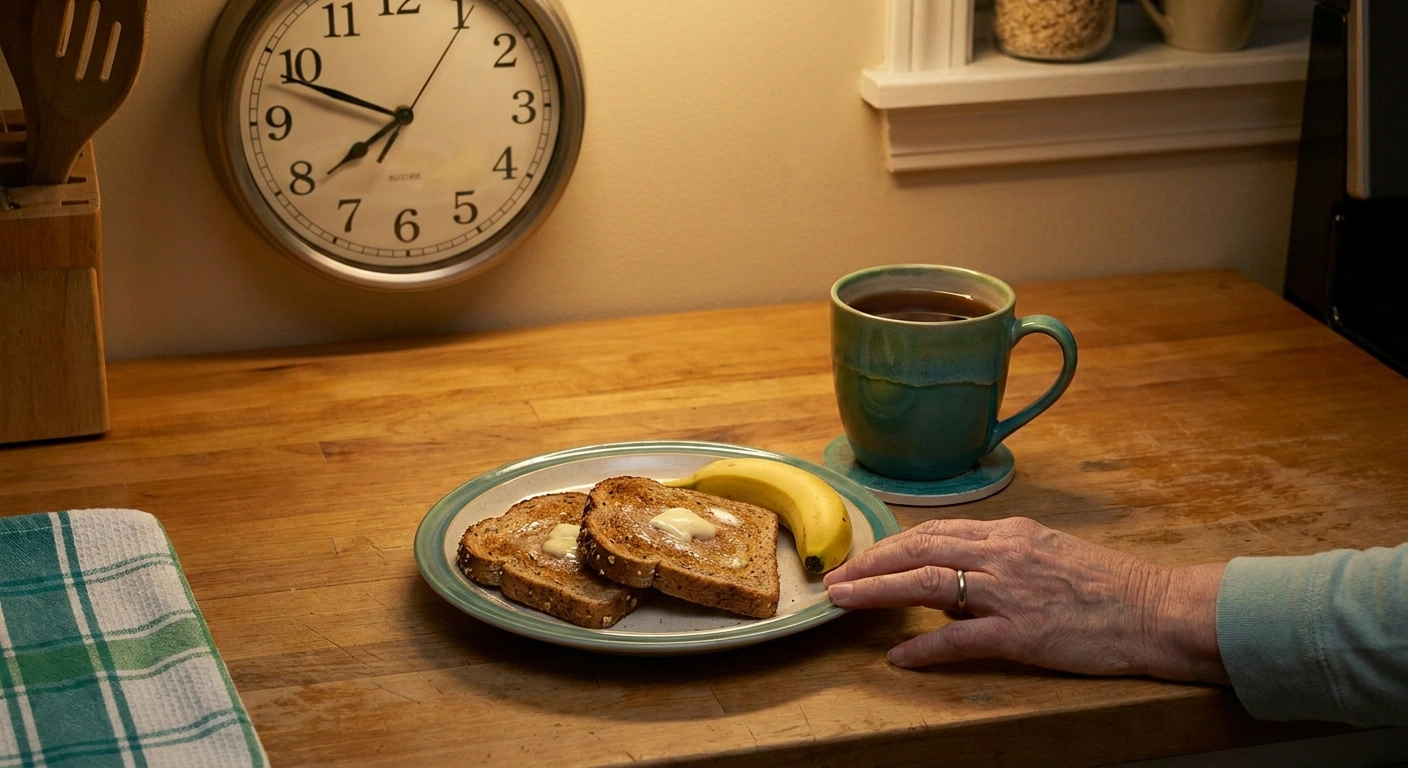
Timing your pressor medications differently. The general principle most autonomic specialists follow is to keep the last dose of midodrine no later than about 4-5 PM, giving the drug time to wear off before you're horizontal. If you take fludrocortisone, some specialists move dosing to earlier in the day. If you're finding you need a dose late in the day to make it through the evening, that's a conversation to have — sometimes the solution is a different medication schedule, sometimes it's a different medication entirely.
Bedtime carbohydrate snack. This one might sound weird but the physiology is fun. When you eat carbohydrates, blood is redirected to your digestive system — which naturally lowers systemic blood pressure. In people with autonomic failure, this “postprandial hypotension” is usually a nuisance during the day (it's why lunch sometimes leaves you feeling wobbly). But at bedtime it can be useful. A small carb-heavy snack right before you lie down can offset some of the supine surge. Some specialists specifically recommend this; check with yours. If you're already following a specific neuropathy diet plan for other reasons, you'll want to coordinate.
Avoiding daytime supine positions. This one's a habit change — try not to nap fully reclined during the day. If you nap, do it in a recliner tilted upward, not flat on the couch. Every extended horizontal stretch is an opportunity for supine hypertension.
Bedtime antihypertensive medication (specialist-directed only). In some cases specialists will prescribe a short-acting antihypertensive to take at bedtime — commonly clonidine, hydralazine, or losartan at low doses. The idea is to take the edge off the overnight peak without over-suppressing morning pressure (which would make OH worse when you try to get up). This is delicate work and it's absolutely not something to try on your own — the wrong drug, wrong dose, or wrong timing can cause a serious morning BP crash and a very dangerous fall.
Fluid timing. Some specialists advise front-loading fluid intake earlier in the day so you're not adding blood volume at night. Others feel this makes less difference than the medication timing. Ask what your specialist prefers.
What Testing Your Doctor May Order
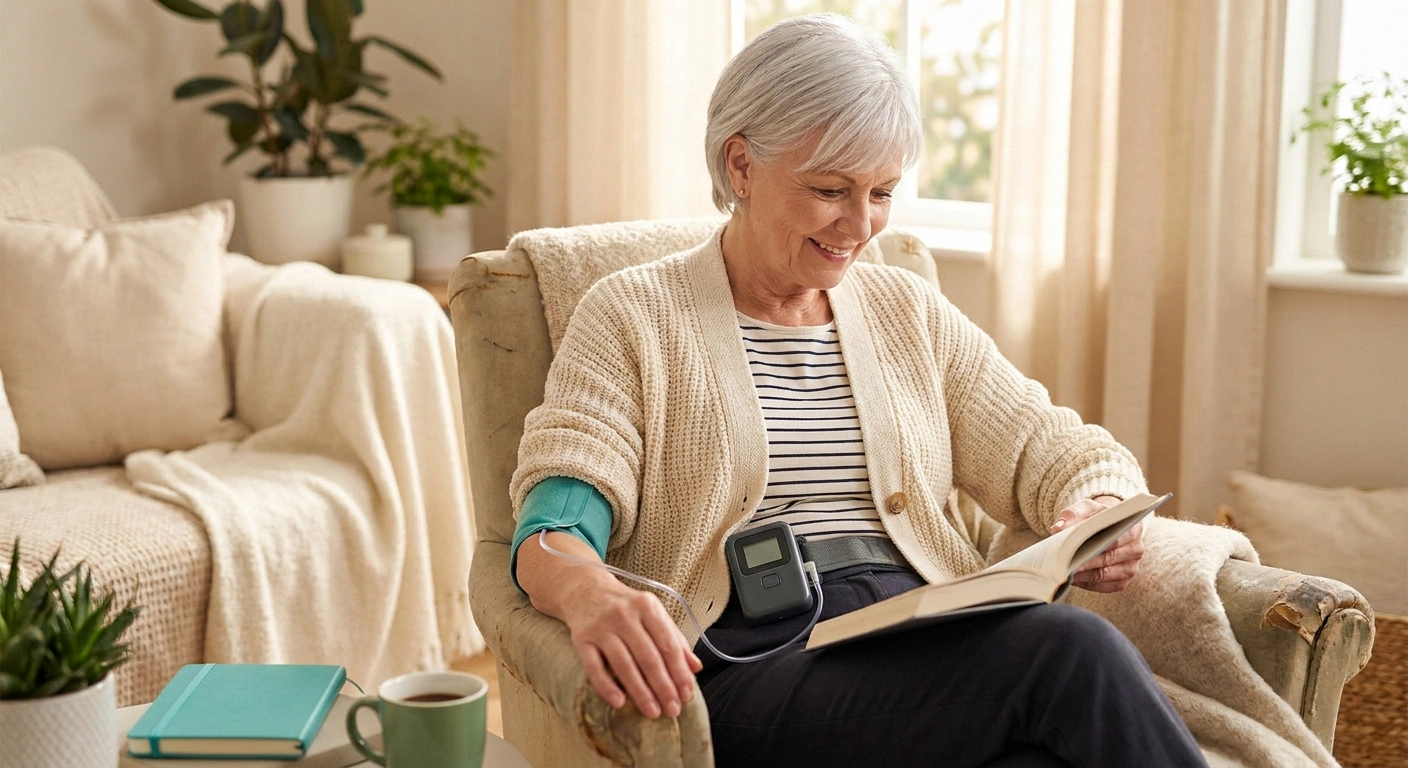
If supine hypertension is suspected, the gold-standard test is a 24-hour ambulatory blood pressure monitor, usually called ABPM. This is a small BP cuff you wear for a full day and night; it inflates automatically every 15-30 minutes during the day and every 30-60 minutes overnight, recording each reading. When your doctor downloads the data, they can see exactly what your pressure is doing while you sleep — which is information a single office visit will never reveal.
ABPM is genuinely a bit of a nuisance. The cuff wakes you up every time it inflates overnight, and if you're a light sleeper you'll be groggy the next day. But you only need to do it once, and the information can transform your management. Ask if your insurance covers it (most do when there's a clinical reason like documented OH). See our guide on neuropathy diagnosis tests for the broader picture of testing.
If ABPM isn't accessible in your area, a decent alternative is careful home monitoring with a validated upper-arm cuff monitor. Your specialist may ask you to take:
- A reading first thing in the morning while still lying in bed, before you get up
- Standing readings at 1 and 3 minutes after standing (to document OH)
- A reading at bedtime after lying down for 5 minutes
- If you naturally wake during the night, a reading then (don't set an alarm — that itself spikes BP)
Log these for a week or two and bring them in. Wrist monitors and finger monitors are not reliable for this — use an upper-arm cuff monitor validated by the American Heart Association or one of the international BP societies.
One thing to know: neuropathy symptoms often get worse at night for other reasons too, so if you're waking up with headaches or feeling awful in the morning, don't assume it's automatically supine hypertension. But do bring it up — it's one important thing to rule in or out.
Red Flags and When to Call

Most supine hypertension is a slow-burn problem — the damage happens over years of untreated overnight pressure. But there are signals that warrant faster action. Call your care team promptly if you notice:
Call Your Care Team Promptly If…
- Severe morning headaches, especially back-of-head or behind the eyes
- Blurred vision or floaters on waking
- New shortness of breath at rest or lying flat
- Kidney function labs drifting the wrong direction
- New confusion, memory changes, or “not feeling right” cognitively
- Chest pain or a pounding sensation while lying down
- Severe morning headaches — especially throbbing headaches at the back of the head or behind the eyes that resolve after you've been upright for a while. This can indicate very high overnight pressure.
- Blurred vision or floaters on waking — high overnight BP can affect the small blood vessels in your retina.
- New shortness of breath at rest or when lying flat — could indicate the heart is struggling with the overnight load.
- Changes in kidney function labs — if your doctor mentions your creatinine is drifting up or your kidney function estimate is declining, and you know you have autonomic failure, ask directly whether supine hypertension could be contributing.
- New confusion, memory changes, or “not feeling right” cognitively — long-term nocturnal hypertension is linked to cognitive decline. New cognitive symptoms deserve evaluation.
- Chest pain, palpitations you can feel while lying down, or a sensation of pounding at night — get this checked. It could be many things, but it needs a look.
And a general note about emotional weight — living with autonomic neuropathy is exhausting. You're managing something invisible that constantly shifts. If you're finding that the mental load of tracking BP, timing medications, and worrying about the future is wearing you down, please look at our piece on neuropathy and mental health. This condition takes a toll, and it's okay to ask for support.
You may also want to look at broader approaches — some folks find that combining medical management with well-chosen lifestyle strategies from our natural remedies hub gives them more control over the day-to-day. Just be careful with anything that affects blood pressure (licorice root, high-dose caffeine, certain supplements) — always run those past the same specialist who's managing your BP.
Frequently Asked Questions
Can I have supine hypertension without knowing it?
Absolutely, and this is actually the norm, not the exception. Supine hypertension happens while you're asleep, so you're not there to notice it. The daytime symptoms — the morning headaches, brain fog, gradually rising creatinine — are subtle and easy to blame on other things. Most people are shocked when they first see their ABPM results. If you have orthostatic hypotension, especially from diabetic autonomic neuropathy, MSA, or pure autonomic failure, you should assume it's possible until proven otherwise. Ask your care team to test for it. A single office BP measurement while you're upright tells you almost nothing about what happens at night.
Should I stop taking my midodrine or fludrocortisone if I have supine hypertension?
No — not without a specialist's guidance. This is one of the most dangerous mistakes patients make when they hear their nighttime pressure is high. Those medications are treating a condition (severe orthostatic hypotension) that can cause falls, syncope, head injuries, and permanent brain injury from repeated brain underperfusion. Stopping them abruptly can leave you unable to safely stand, drive, or even use the bathroom. What you should do is bring the supine hypertension pattern to your specialist and ask about timing adjustments, dose changes, or adding a bedtime countermeasure. Almost always there's a solution that keeps you safe standing without letting overnight pressure run wild.
Is head-of-bed elevation actually safe? What if it makes me dizzier during the day?
Head-of-bed elevation at 10-30 degrees is one of the safest interventions in autonomic medicine — it's on essentially every specialist's first-line list. In fact, it often improves daytime standing tolerance, not worsens it, because your body adapts to the tilted position and handles morning position changes more gracefully. That said, if you feel worse standing up after starting elevation, tell your care team. You may need to reduce the angle, or something else may be going on. It's also not a substitute for other measures — it's the foundation, not the whole plan.
Will regular blood pressure medication work for supine hypertension?
Standard daytime antihypertensives generally aren't the right tool here. If you took a long-acting BP medication in the morning, it would be actively lowering your pressure throughout the day — precisely when you need pressure to stay high enough to stand safely. That's why specialists usually use short-acting medications at bedtime instead, so the effect wears off by morning. This is delicate pharmacology and it needs specialist input. A general practitioner unfamiliar with autonomic failure may prescribe a standard antihypertensive without realizing the risk.
How high does my nighttime BP have to be before it's actually damaging?
There isn't a single agreed-on threshold, but most specialists get concerned when overnight supine BP is consistently above 140/90 and become more concerned as numbers climb higher. The bigger issue than any single number is duration — hours per night, night after night, year after year. Chronic nocturnal hypertension is associated with left ventricular hypertrophy (heart wall thickening), declining kidney function, and cognitive decline. This is why it's worth taking seriously even if your daytime numbers are fine. The stakes are real, even if the process is slow.
Can lifestyle changes alone manage supine hypertension, or do I need medication?
For milder cases, head-of-bed elevation combined with careful med timing and a bedtime carb snack sometimes gets numbers into acceptable range without adding new medications. For more severe supine hypertension — say, consistently over 160/95 overnight — most specialists will want to add a bedtime countermeasure. This isn't a failure on your part; it's just what the physiology needs. The lifestyle piece stays part of the plan either way. Don't skip head-of-bed elevation just because you're on medication too — they work together.
Who's the right specialist to manage this?
The gold standard is an autonomic neurologist — a subspecialty of neurology focused specifically on autonomic disorders. There aren't many of them, so you may need to travel to a larger academic medical center. A cardiologist with experience in autonomic disorders is a solid alternative. Endocrinologists sometimes handle diabetic autonomic neuropathy well. Whoever manages it, you want someone who understands the paradox and can coordinate the daytime OH treatment with the nighttime BP management. If your current doctors are treating one without acknowledging the other, that's a signal to ask about referral to someone who handles both.
About the Author