The first time someone in my support group asked me about saffron for neuropathy, I almost waved her off. I knew saffron as the spice my grandmother used in a Sunday rice dish — the one that turns everything that gorgeous sunset orange and costs more per gram than gold. Useful in the kitchen. Not, I thought, useful in the medicine cabinet.
Then I started reading. And what I found surprised me enough that I want to walk you through it honestly — what the trials actually show, what we still don't know, and how I'd think about saffron if I were sitting across from you with a cup of tea between us.
I'll say up front: saffron isn't a miracle. It isn't even, in the strict evidence-stack sense, a first-line treatment. But the picture is more interesting than I expected, and there's enough real science behind it now that I think it deserves a careful, grown-up conversation rather than a quick dismissal.
What Saffron Actually Is (And Why Researchers Got Interested)
Saffron comes from the crimson stigmas of Crocus sativus, a small purple flower grown mostly in Iran, Spain, and a handful of other regions. Each flower produces only three stigmas, and harvesters pick them by hand. That's why a gram costs what it costs.

For nerve-pain research, the most interesting compound inside saffron is crocin — the orange-red pigment that gives the spice its color. Crocin is a powerful antioxidant. In test tubes and in animal studies, it calms inflammation, reduces oxidative stress, and protects nerve cells from the kind of damage that drives neuropathy in the first place.
That's the mechanism story. The mechanism story for almost every neuropathy supplement is something like this. What separates the supplements that actually help from the ones that disappoint is whether the bench science translates into real symptom relief in real people. So I went looking for the human trials.
The Diabetic Neuropathy Trial That Got My Attention
In August 2025, a research group in Iran published the results of a triple-blind, randomized, placebo-controlled trial of crocin in adults with type 2 diabetes and confirmed peripheral neuropathy. The paper appeared in the Journal of Pharmaceutical Health Care and Sciences — a Springer Nature journal indexed in PubMed (PMID 40813999). “Triple-blind” means the patients, the doctors administering the pills, and the people analyzing the data were all blinded to who was getting what.
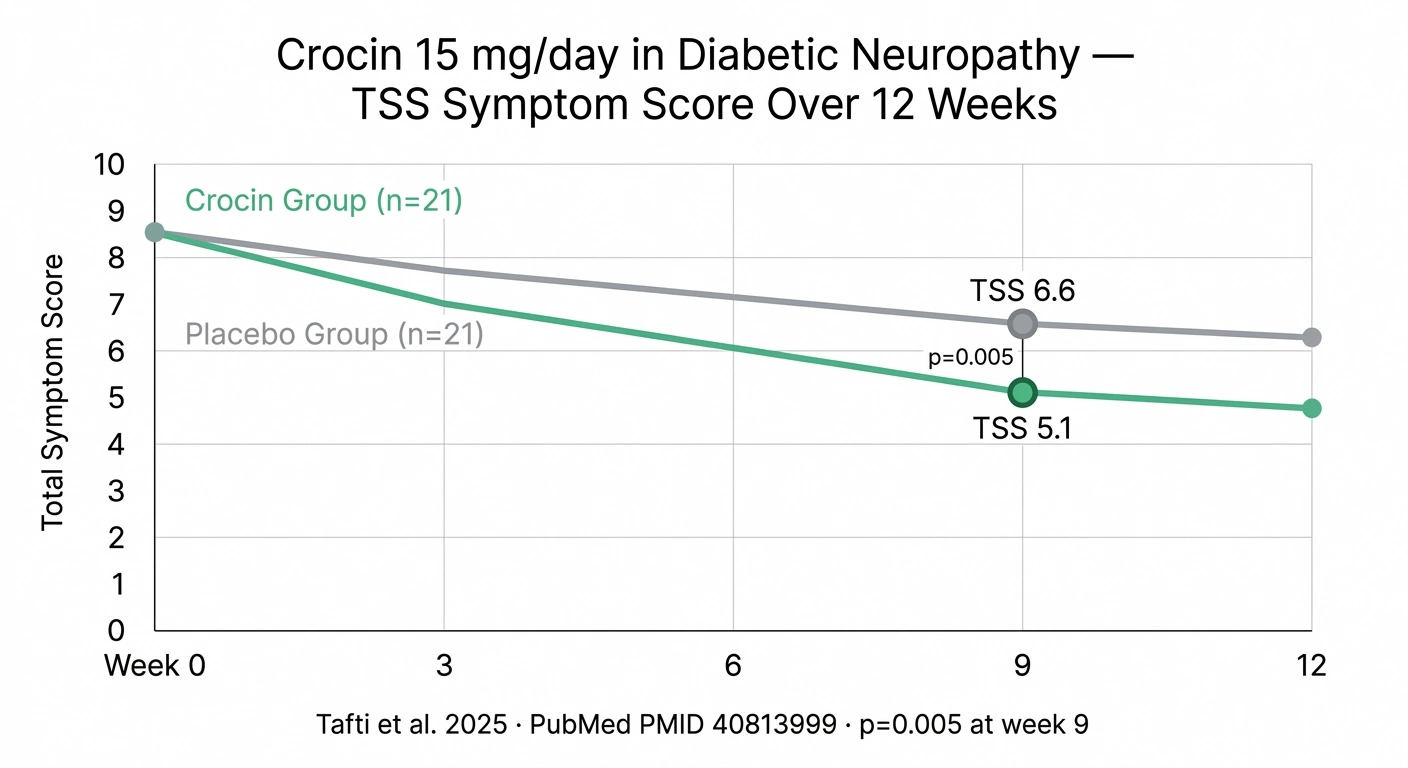
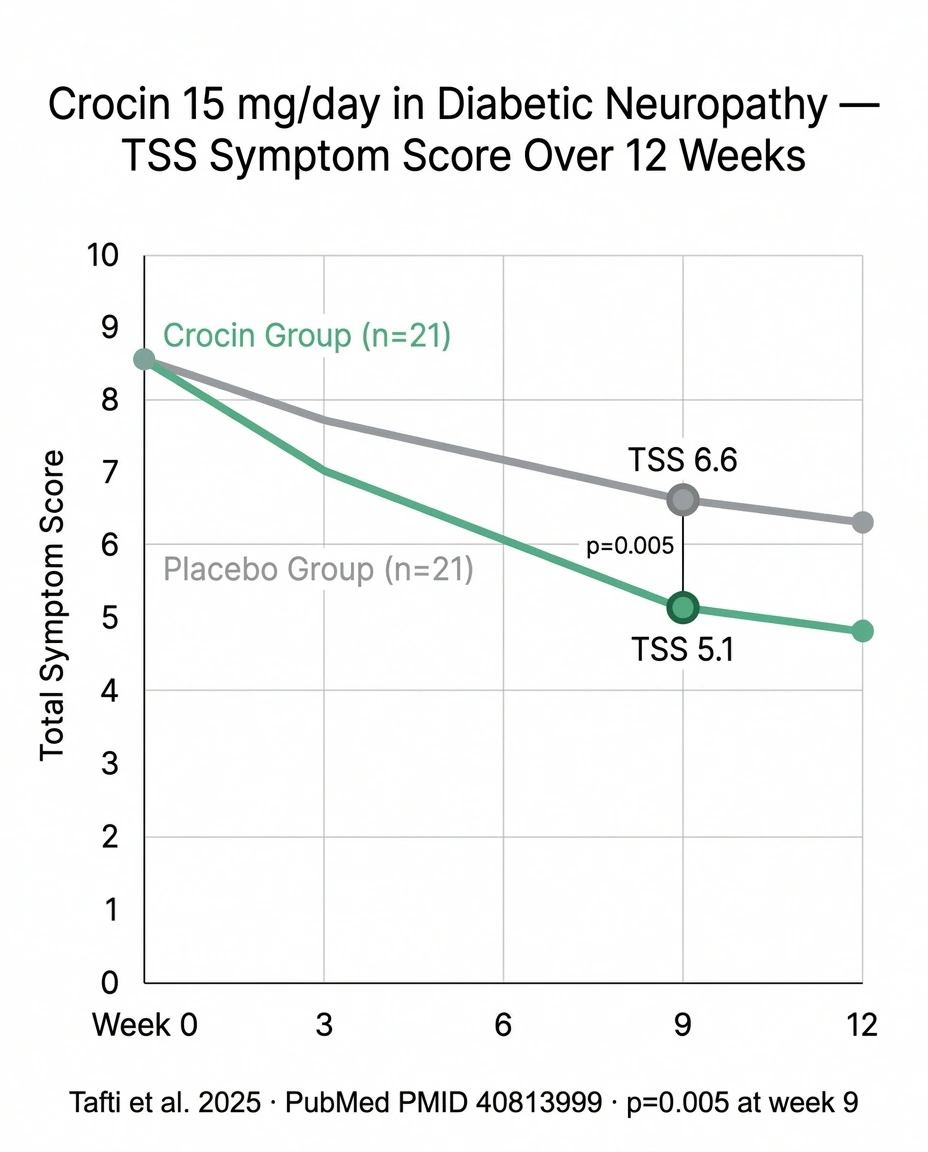
Forty-two patients completed the study. Twenty-one got 15 milligrams of crocin per day for 12 weeks. Twenty-one got an identical-looking placebo. Researchers measured symptoms at baseline and every three weeks using three standard tools: the Total Symptom Score, the Visual Analog Scale for pain, and the Michigan Neuropathy Screening Instrument.
By week 9, the crocin group's mean Total Symptom Score had dropped to 5.1 — versus 6.6 in the placebo group. That difference was statistically significant (p = 0.005). On the pain scale, crocin patients reported less pain at week 6 and week 9 (p = 0.019). The effect built gradually over the trial, which is what you'd expect from an antioxidant working at the cellular level rather than masking pain like a drug would.
Now — let me be honest about what that does and doesn't mean. Forty-two people is a small trial. It was done at a single center, in a single country, with a fairly short window. The authors themselves call it “preliminary” right in the title and explicitly say larger, longer, multi-center trials are needed before clinicians should start recommending saffron broadly.
That's the careful, scientifically honest framing. But I'd still pay attention. Statistically meaningful symptom reduction at a modest dose, with no serious safety signals, is more than most supplements ever achieve in a properly designed human trial.
The Chemo-Induced Neuropathy Trial You Should Also Know About
The diabetic neuropathy study wasn't the first time crocin had been tested against nerve pain. A 2021 randomized, double-blind, placebo-controlled trial published in Phytotherapy Research looked at saffron's crocin in patients suffering chemotherapy-induced peripheral neuropathy — the kind of nerve damage that develops as a side effect of taxane and platinum-based chemotherapy drugs.
In that study, patients took 30 milligrams of crocin daily for 12 weeks. By the end, the crocin group reported less severe neuropathic symptoms than the placebo group. The effect was modest, but it was real, and it pointed in the same direction as the diabetic neuropathy data.
Two small but rigorous trials, in two different neuropathy populations, both showing measurable symptom reduction with crocin. That's not enough to put saffron on the same shelf as alpha-lipoic acid or duloxetine — but it's enough to take seriously.
How Saffron Compares to the Supplements You Probably Already Know
If you've been reading about nerve supplements for any length of time, you've come across the heavy hitters. Alpha-lipoic acid has decades of trial data behind it for diabetic neuropathy. B vitamins — especially methylcobalamin B12 — matter when there's an underlying deficiency. Turmeric and curcumin bring solid anti-inflammatory evidence even if direct neuropathy trials are smaller. Acetyl-L-carnitine and CoQ10 have their own modest but real bodies of evidence.
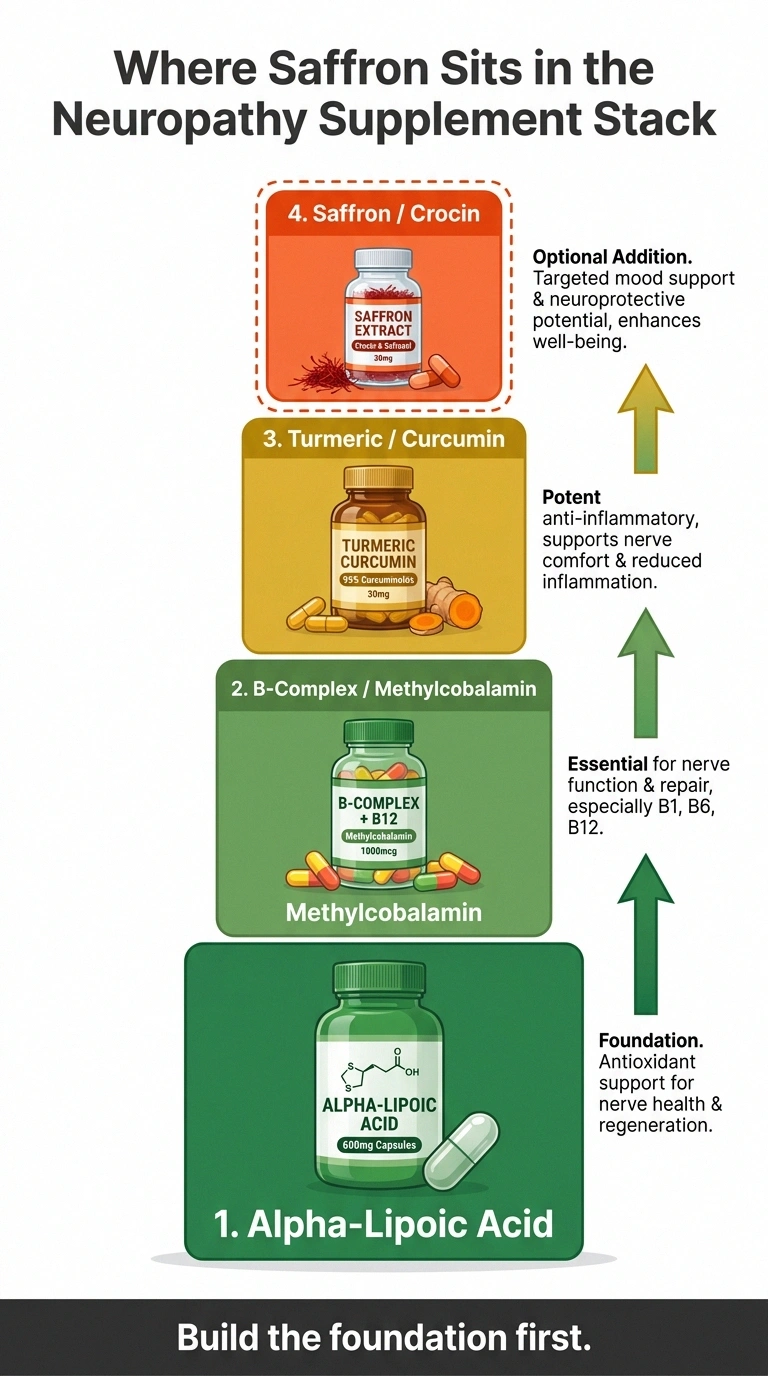
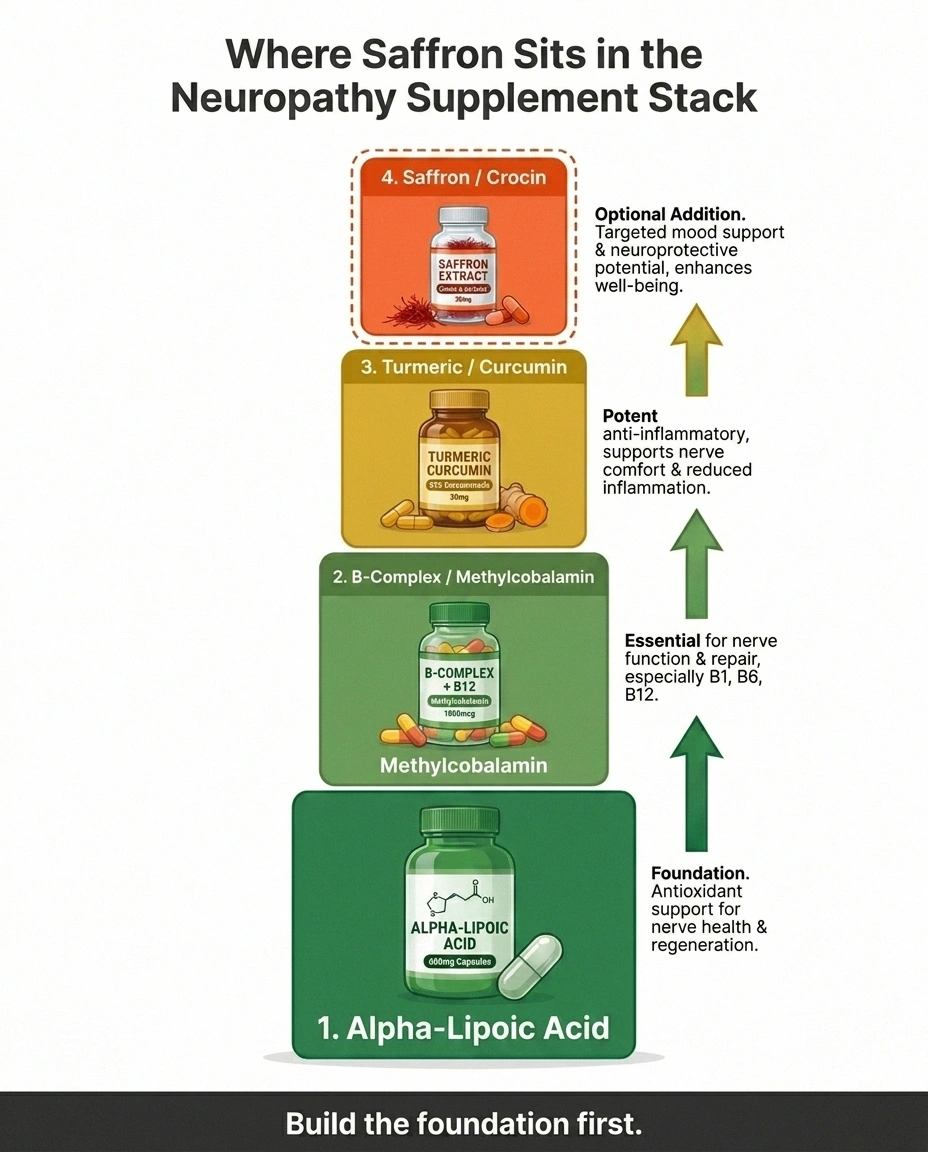
Compared to those, saffron is the newer kid. The trials are smaller. The follow-up is shorter. The total weight of evidence is lighter. If you were building a supplement stack from scratch, saffron wouldn't be the first thing I'd add — alpha-lipoic acid and a B-complex would.
Check The B6 Number On The Label
Vitamin B6 is the one B vitamin worth checking a dose on, because too much of it causes the same kind of sensory nerve damage this page is about. The NIH sets the upper limit for adults at 100 mg a day. Europe's food safety authority went considerably further in 2023, setting its own limit at 12 mg a day and naming peripheral neuropathy as the critical effect the limit exists to prevent.
Plenty of over-the-counter B-complex products carry well over 100 mg of B6 in a single capsule, and “high potency” on the front of the bottle usually means exactly that. Read the B6 line on the label, and if you are already taking a separate B6 supplement, add the two together before deciding. If you are taking B6 on a doctor's instruction for a diagnosed deficiency, that is a different situation and their number is the one to follow.
What saffron does have going for it is a secondary benefit that matters for our community: saffron has well-documented antidepressant effects in human trials. Several head-to-head studies have shown standardized saffron extracts performing comparably to standard SSRIs for mild-to-moderate depression. And here's the thing — if you've lived with neuropathy for any length of time, you know that depression and chronic nerve pain travel together. The mood lift is a real side benefit, not a bonus to dismiss.
The Dose That Actually Showed Up in the Trials
Here's where I want to slow down, because dose is where most supplement decisions go sideways. In the 2025 diabetic neuropathy trial, the working dose was 15 milligrams of crocin per day. In the 2021 chemotherapy-neuropathy trial, it was 30 milligrams per day. Most commercially available “saffron extract” supplements are standardized to deliver between 15 and 30 mg of crocin per capsule. That's the range that has actually been tested.
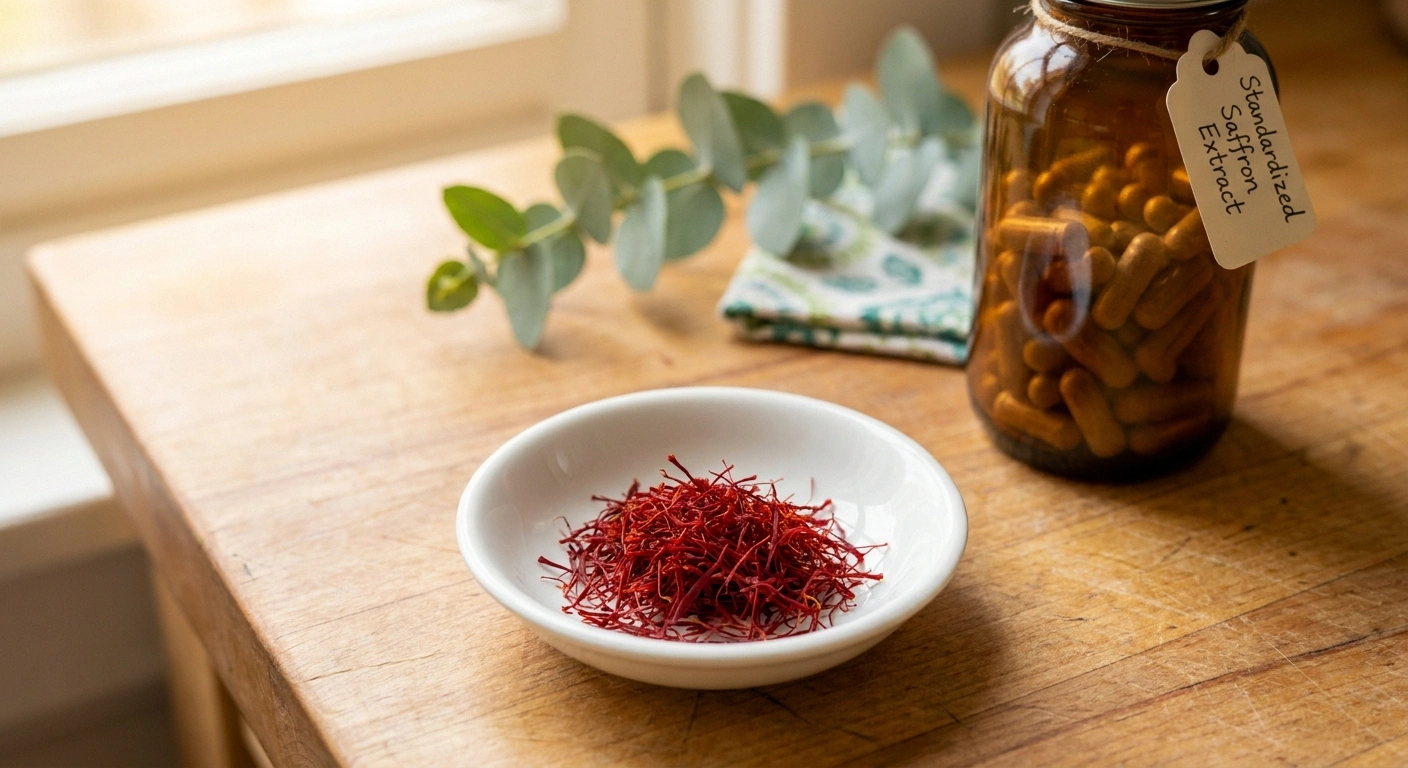
What's not the right path: cooking with raw saffron threads and hoping the dose is therapeutic. The crocin content of dried stigmas varies enormously by grade and freshness, and you'd have to eat a kitchen-economy-destroying amount to match the standardized-extract doses used in the trials. If you want the studied dose, you want a standardized extract. Read the label and look for “standardized to X% crocin” or “delivering X mg crocin per dose.”
One more practical note: in both trials, effects didn't show up overnight. The symptom curves separated from placebo around week 6 to 9. If you decide to try saffron, give it 8 to 12 weeks before you decide it's working or it isn't.
The Safety Conversation
Standardized saffron extract at the doses tested in nerve-pain trials — 15 to 30 mg of crocin per day — has been well tolerated. Side effects in the trials were minimal: occasional mild headache, mild stomach upset, the kind of background noise that shows up in placebo arms too. Doses up to 100 mg per day have appeared in shorter-term depression trials without major safety problems.
That said, there are real caveats I want you to know:
Pregnancy. Saffron has historically been used as a uterine stimulant, and high doses are linked to miscarriage in old toxicology reports. If you're pregnant or trying to become pregnant, this is a hard no.
Blood thinners. Crocin has mild antiplatelet activity in the lab. If you're on warfarin, a DOAC like apixaban or rivaroxaban, or even high-dose daily aspirin, talk to your prescriber or pharmacist before adding saffron. The interaction is theoretical more than catastrophic, but it's the kind of thing that should be discussed rather than ignored.
Antidepressants. Because saffron has its own antidepressant activity, layering it on top of an SSRI, SNRI, or MAOI could theoretically intensify serotonin effects. There aren't documented serotonin syndrome cases from saffron at supplement doses, but if you take any antidepressant, raise it with your prescriber before adding saffron.
Liver disease. Anything metabolized in the liver gets a second look in patients with cirrhosis or active hepatitis. Loop in your hepatologist or primary care doctor before starting.
The classic toxicology point. Doses of raw spice above about 5 grams a day are documented as toxic in old literature — bleeding, vomiting, severe distress. You will not get anywhere near 5 grams from a supplement capsule. But if someone tells you to take a tablespoon of saffron threads in milk every morning, please understand that's a recipe with real teeth.
Choosing a Saffron Supplement Without Getting Scammed
Saffron is expensive, which means saffron supplements get adulterated more than almost any other product in the natural-supplement world. Cheap “saffron extract” capsules are often padded with marigold, turmeric, dyed corn silk, or just empty filler. If a 90-day supply costs $9 at the corner pharmacy, that's not enough money to put real crocin in the bottle.
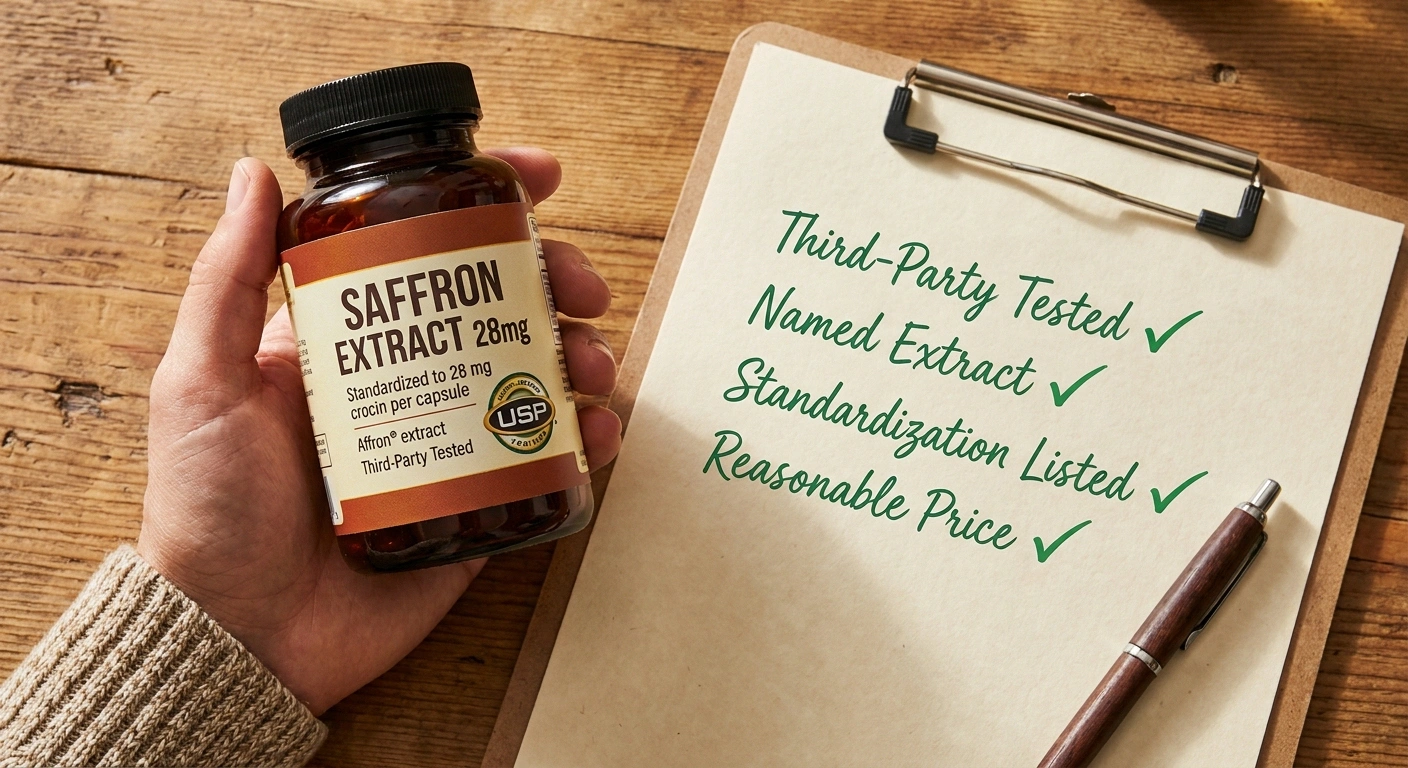
Here's what I look for when I'm vetting any supplement, and saffron especially:
Third-party testing. Look for a USP Verified seal, an NSF certification, or an independent certificate of analysis posted on the brand's website. These tests verify both content (you're getting what the label says) and contamination (no heavy metals, no microbial issues, no adulterants).
Named extract. The trials that found benefits used specific standardized extracts — Affron, Satiereal, and a few others. Generic “saffron extract” on a label tells you very little. A branded, clinically-studied extract tells you a lot more.
Standardization statement. The label should say something like “standardized to 3% crocin” or “delivering 28 mg crocin per capsule.” If the label only lists “saffron stigma 100 mg” with no standardization, you have no idea what dose you're actually taking.
A reasonable, not insane, price. Real standardized saffron extract isn't cheap. A 30-day supply from a reputable brand typically lands in the $20-40 range. If it's $7, walk away.
Where Saffron Fits in a Whole Plan
I want to be careful here, because this is the part where supplements often get oversold. Saffron is not a replacement for the things that actually move the needle on neuropathy — blood sugar control if you're diabetic, treating the underlying cause if there is one, prescription medications when the pain is bad enough to need them, and the lifestyle pieces that compound over months.
Think of saffron the way you might think of a thoughtful addition to an anti-inflammatory diet — a layer on top of an already-working foundation, not a substitute for the foundation. If your blood sugar is running in the 200s, sorting out your diabetes management will do vastly more for your nerves than any supplement on the shelf. If you haven't had the conversation about whether a full natural-treatment plan would help, that's the place to start.
For people who already have their foundation in place and are looking to layer in something gentle, with real (if modest) human evidence and the bonus of an antidepressant lift, saffron is a defensible addition. I wouldn't recommend it as your first supplement. I'd put it third or fourth on the list — after alpha-lipoic acid, after a B-complex if you have any deficiency, after addressing inflammation through diet.
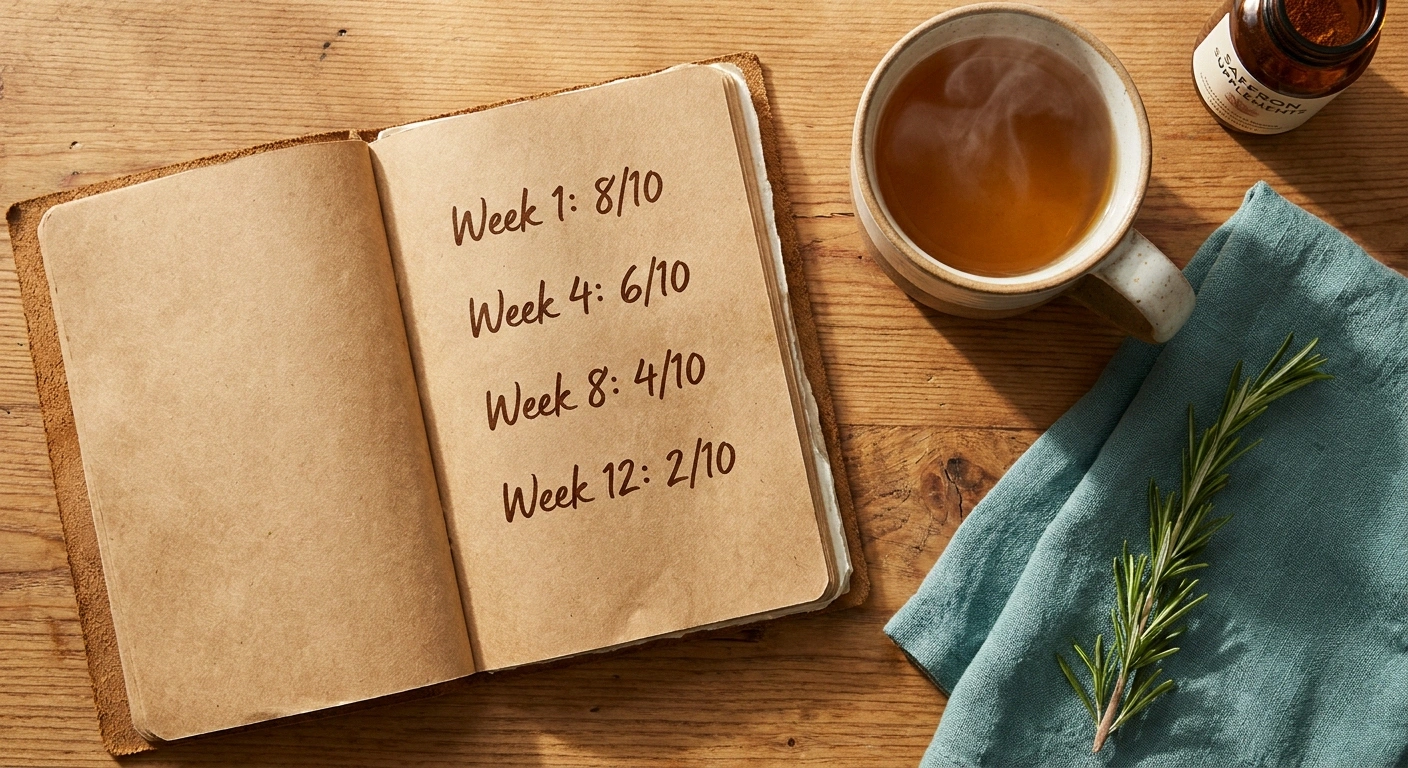
And I'd give it the 12-week trial it deserves. Track your symptoms — a simple symptom diary with a 0-to-10 scale, jotted before bed for three months, will tell you more about whether saffron is working for your specific nerves than any general guide ever could.
What I'd Tell a Friend Asking If They Should Try It
If you came to my kitchen tomorrow morning and asked me whether you should try saffron for your neuropathy, here's what I'd say.
I'd ask first whether you have the foundation in place. Blood sugar under control if you're diabetic, B12 levels checked, an anti-inflammatory eating pattern in place, decent sleep, gentle movement most days, and whatever prescription therapies your neurologist has recommended. Without those, no supplement is going to do much.
Then I'd ask whether you're on warfarin, a DOAC, or an SSRI. If you are, I'd want you to clear it with your prescriber before starting, not after.
If both of those check out, I'd say: pick a third-party-tested, standardized extract delivering 15 to 30 mg of crocin per day. Give it 12 weeks. Track your symptoms in writing. At the end of three months, look honestly at whether it's helping. If it is, great — keep going. If it isn't, stop. You'll have spent maybe $80 to find out, which in the supplement world is a pretty reasonable experiment.
That's the grown-up version of the saffron conversation. Not a miracle. Not snake oil. A real but modest addition to a thoughtful nerve-care plan, with enough human evidence behind it now to deserve more than a dismissive wave-off.
Frequently Asked Questions
How long does saffron take to work for neuropathy?
In the published trials, symptom improvement showed up around weeks 6 to 9 of daily use, not within the first few days. If you try saffron, plan on giving it a full 12 weeks before deciding whether it's helping. Antioxidant supplements work at the cellular level over time, which is slower than how a painkiller works but tends to last longer if it works at all.
Can I just cook with saffron instead of taking a supplement?
You can certainly enjoy saffron in food. But to reach the doses used in the clinical trials — 15 to 30 mg of standardized crocin daily — you would need to eat a kitchen-economy-breaking amount, and the crocin content of dried saffron varies a lot by grade and freshness. If you're using saffron as a supplement, use a standardized extract with a known crocin dose on the label.
Is saffron safe to take with gabapentin or pregabalin?
There are no documented serious interactions between saffron and gabapentinoids. Both work through different mechanisms — gabapentin affects calcium channels, saffron works as an antioxidant. That said, I always recommend running any supplement past your pharmacist or prescriber when you're already on a prescription nerve-pain medication, just so they have the full picture.
Will saffron interfere with my antidepressant?
Possibly. Saffron has its own documented antidepressant activity in human trials, which is part of what makes it interesting for the neuropathy community. But that means stacking it on top of an SSRI, SNRI, or MAOI could theoretically intensify serotonin effects. Serotonin syndrome from saffron supplements hasn't been reported, but it's the kind of stacking question that deserves a quick check with your prescriber before you start.
Can saffron reverse my nerve damage?
No. None of the trials showed nerve regeneration or reversal of established neuropathy. What the trials showed was reduction in symptom severity — less burning, less tingling, less pain. That's a meaningful quality-of-life change, and it's worth pursuing. But it's important to be clear-eyed about what saffron is doing: calming symptoms, not rebuilding nerves.
What's the difference between saffron and crocin?
Saffron is the whole dried stigma of the Crocus sativus flower. Crocin is one of the active compounds inside saffron — specifically, the carotenoid pigment responsible for saffron's orange-red color and most of its neuroprotective activity in the lab. Saffron also contains crocetin, safranal, and picrocrocin. Most clinical trials test either standardized saffron extracts or isolated crocin, and the doses given on labels typically refer to the crocin content.
Is saffron safe for people with diabetes?
Yes — the largest neuropathy trial of crocin was specifically conducted in adults with type 2 diabetes, and the patients tolerated 15 mg per day for 12 weeks well. Some small studies even suggest saffron may have mild blood-sugar-lowering effects, which is generally helpful but worth knowing if you're on insulin or sulfonylureas, in case it nudges your numbers low. As always, check your levels and tell your endocrinologist if you're adding it.
Why is saffron so expensive — and does the price affect what I should buy?
Each Crocus sativus flower produces only three stigmas, all picked by hand during a short autumn window. It takes about 150 flowers to produce one gram of dried saffron. That's why real saffron is pricey, and that's also why fake saffron is everywhere — the economics push manufacturers to adulterate. For supplements, the price signal matters: $7 bottles are almost always not delivering real crocin. Expect to pay $20 to $40 for a 30-day supply of a genuinely standardized, third-party-tested extract.
About the Author