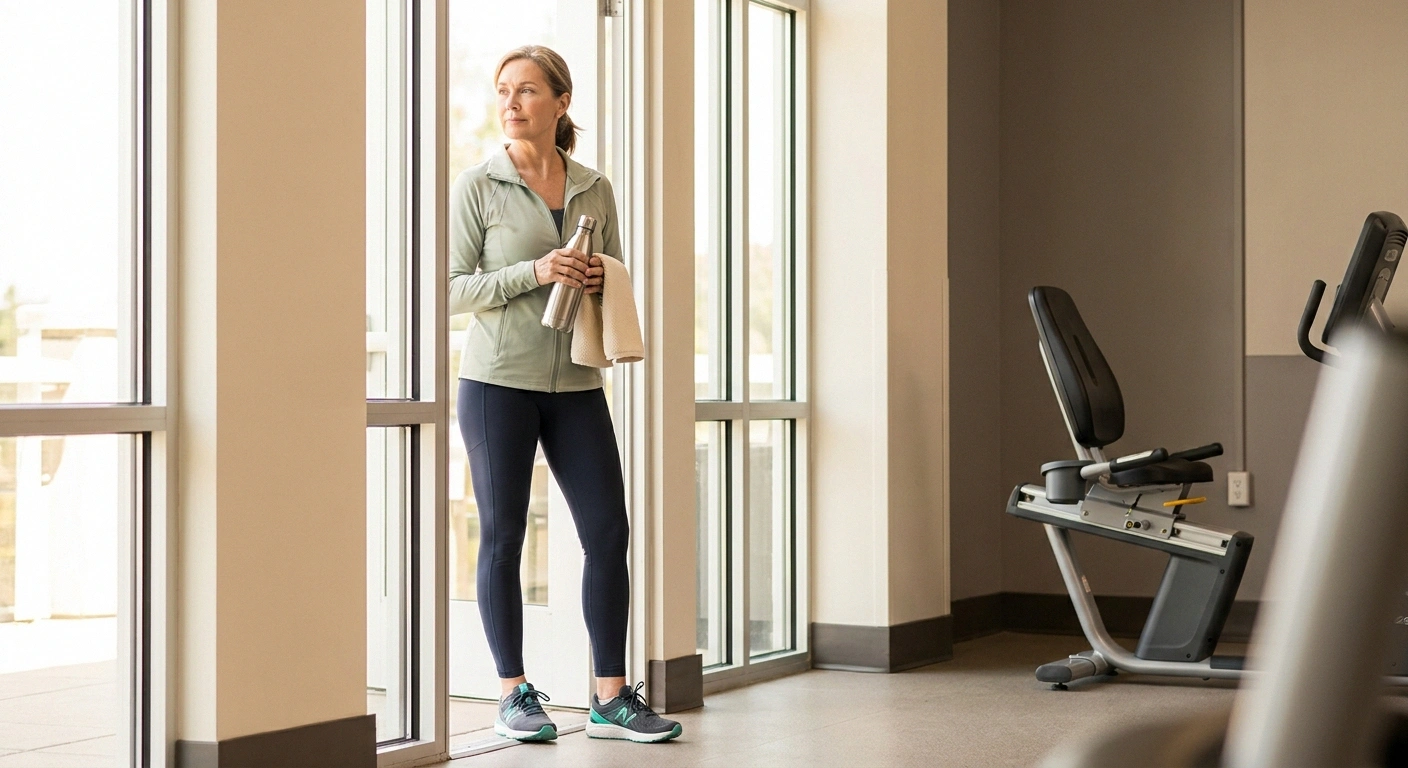
The first time I went back to a regular gym after my neuropathy diagnosis, I stood in the doorway for a good five minutes trying to remember which machines I had actually used before and which ones I had always meant to try. The treadmill belt looked faster than I remembered. The free weight rack looked heavier. The stair climber, which I'd happily used in my forties, now looked like a fall waiting to happen. The truth I had to make peace with right there in the doorway was that the gym wasn't going to be quite the same place it had been before — and that was okay, because I wasn't quite the same person either.
If you have neuropathy and you're thinking about getting back to the gym — or starting for the first time — I'd love to walk you through the machine-by-machine version of the conversation I wish someone had had with me that day. I'm Janet, and I write about living with neuropathy as a patient advocate, not a personal trainer or medical professional. What I have to share is the lived experience of figuring out which equipment is friendly, which equipment needs respect, and which equipment is best left for a different day.
The Truth About Going to the Gym With Neuropathy
Exercise is one of the best things you can do for nerve health. Blood flow improves, blood sugar stabilizes, mood lifts, and the muscles that support your balance get stronger. That part is unambiguous, and most neurologists, endocrinologists, and physical therapists will tell you the same thing if you ask. The trouble is that the gym is also full of equipment designed for fully sensate bodies — and a few pieces of that equipment have failure modes that are uniquely dangerous for someone whose feet, hands, or balance aren't sending normal signals.
Going to the gym with neuropathy is not about being braver — it's about being smarter. Pick the right machines, use a few practical adaptations, skip the ones that aren't worth the risk for your situation. You get most of the benefit with very little of the downside.
Going back to the gym with neuropathy is not about being braver. It's about being smarter. Pick the right machines. Use them with a few practical adaptations. Skip the ones that aren't worth the risk for your particular situation. The result is most of the benefit of a gym membership with very little of the downside.
Before You Step Foot in the Building
A short checklist of things worth doing before your first gym visit, or before returning after a long absence.
Your Pre-Gym Routine
- Get a green light from your doctor. Especially if your balance is significantly affected, if your diabetes runs unpredictable, if you have any heart issues, or if you've had a recent fall. One clinic visit and a five-minute conversation is the difference between a thoughtful return to exercise and a surprise emergency room visit.
- Wear shoes you actually trust. Supportive, closed-toe, well-fitting. Athletic shoes designed for stability, not minimalist or barefoot-style footwear. New shoes should be broken in at home first.
- Eat before you go if you're diabetic. Thirty to sixty minutes before exercise, with a snack that includes some complex carbohydrates. Bring a glucose tab or small juice box in your bag for emergencies.
- Bring water and drink it. Dehydration makes neuropathy symptoms worse and increases the risk of cramps and dizziness.
- Tell someone you're going. A spouse, a friend, a roommate. A simple text on arrival and on departure means an unwitnessed fall doesn't go undiscovered for hours.
- Introduce yourself to a staff member. Just once. Mention you have neuropathy and may need a hand if something goes wrong. Most front desk staff appreciate knowing.
The Treadmill: Friendly With Caveats
The treadmill is probably the single piece of equipment most people associate with the gym, and for many people with neuropathy it is genuinely one of the safer choices. The walking surface is predictable and flat. The handrails are right there if you need them. The speed is fully under your control. The belt moves in a single direction with no surprises.
The caveat, and it's an important one, has to do with how you start. The most common treadmill mishap for users with foot numbness is stepping onto a belt that is already moving when you didn't realize it. Always start on a stopped belt with the speed dial at zero. Step onto the belt while holding the handrails. Bring the speed up gradually — one click at a time — so your feet have a chance to find the rhythm. When you're done, slow the belt to a complete stop before stepping off. Resist the urge to just step off at the end of a song or set.
Use the handrails freely. There is no medal for treadmill walking without holding on. The rails are there to help, and using them is part of the safety design. If you have balance concerns, find a treadmill with longer handrails that run along the sides rather than just the front bar — they give you more options for hand placement.
For people with significant numbness in the feet, a slightly slower-than-comfortable pace is worth choosing on purpose. Falls on a moving belt produce road-rash-style abrasions even at low speeds, and the belt does not stop when you stumble. Slower walking is also more efficient for blood-sugar control and for getting the cardiovascular benefit of regular exercise.
The Recumbent Bike: My Personal Favorite
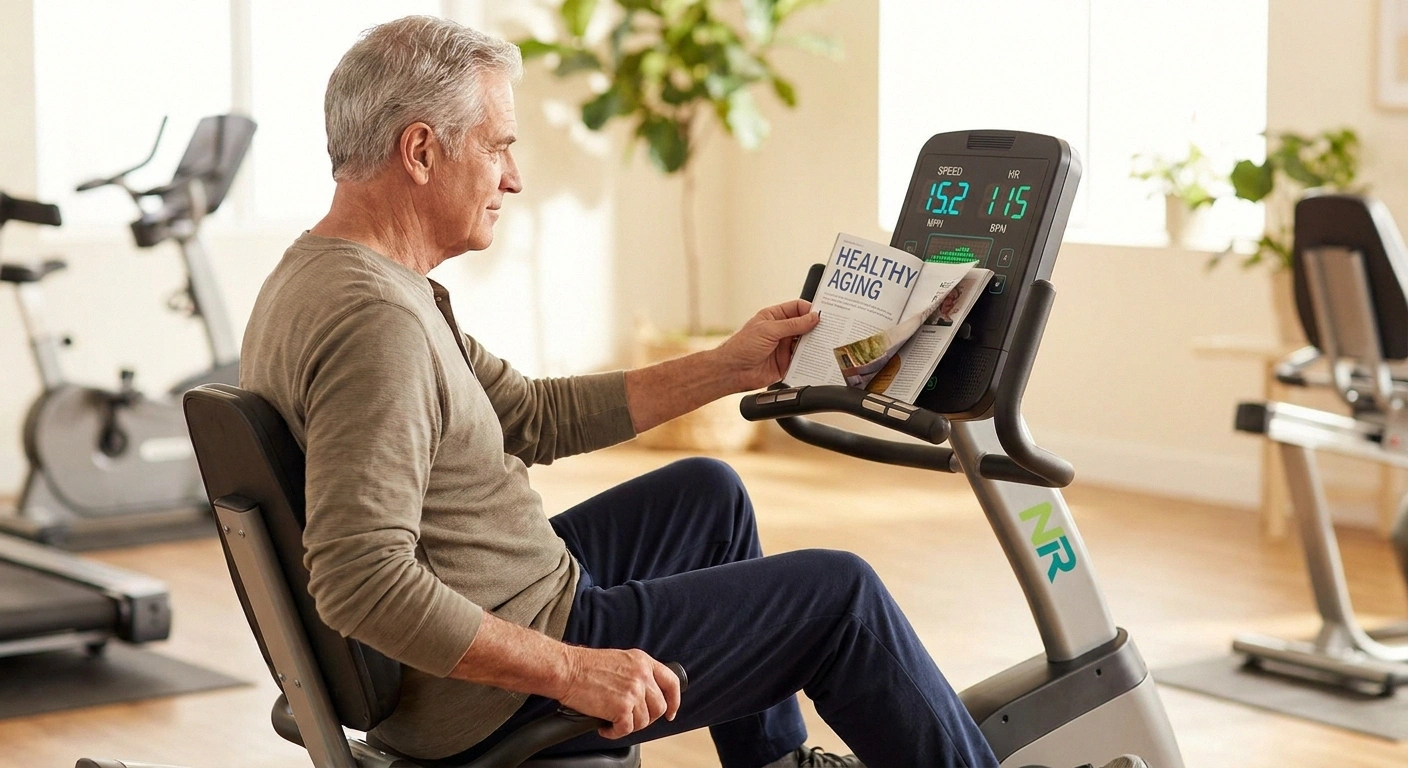
If I could only choose one piece of cardio equipment for someone with neuropathy, it would be the recumbent stationary bike — the kind with the chair-style seat and back support, where your legs extend in front of you rather than below. Recumbent bikes are almost ideal for neuropathy users. There is no impact on the joints or feet. There is no balance challenge because you're sitting securely. Getting on and off is straightforward. The resistance is easy to adjust. And you can read, watch a show, or chat with someone next to you while you ride.
A reasonable target for most neuropathy users — forty-five to sixty minutes per session, mixing seated cardio with seated weight machines. Consistency matters far more than intensity for long-term nerve health and balance.
The one thing to watch with any stationary bike is the foot straps. They should hold your feet snugly enough that they don't slip off the pedals, but not so tightly that they compress your feet or restrict circulation. If you cannot feel the straps clearly because of numbness, ask a trainer to help you set them properly the first time so you have a reference for future visits. Many neuropathy users prefer slip-on athletic shoes with the laces tied moderately rather than tightly when riding, because the constant pedaling motion can otherwise mask a too-tight lace.
Upright stationary bikes (the kind with a bicycle-style seat and the rider leaning forward) are also reasonable for neuropathy users with mild symptoms. They require slightly more balance during mounting and dismounting, and the seat can produce pressure points that you may not feel until you stand up. If you choose an upright bike, dismount fully and walk a few steps between sets to check whether anything is uncomfortable that you might not be feeling clearly.
The Elliptical: Smooth and Forgiving
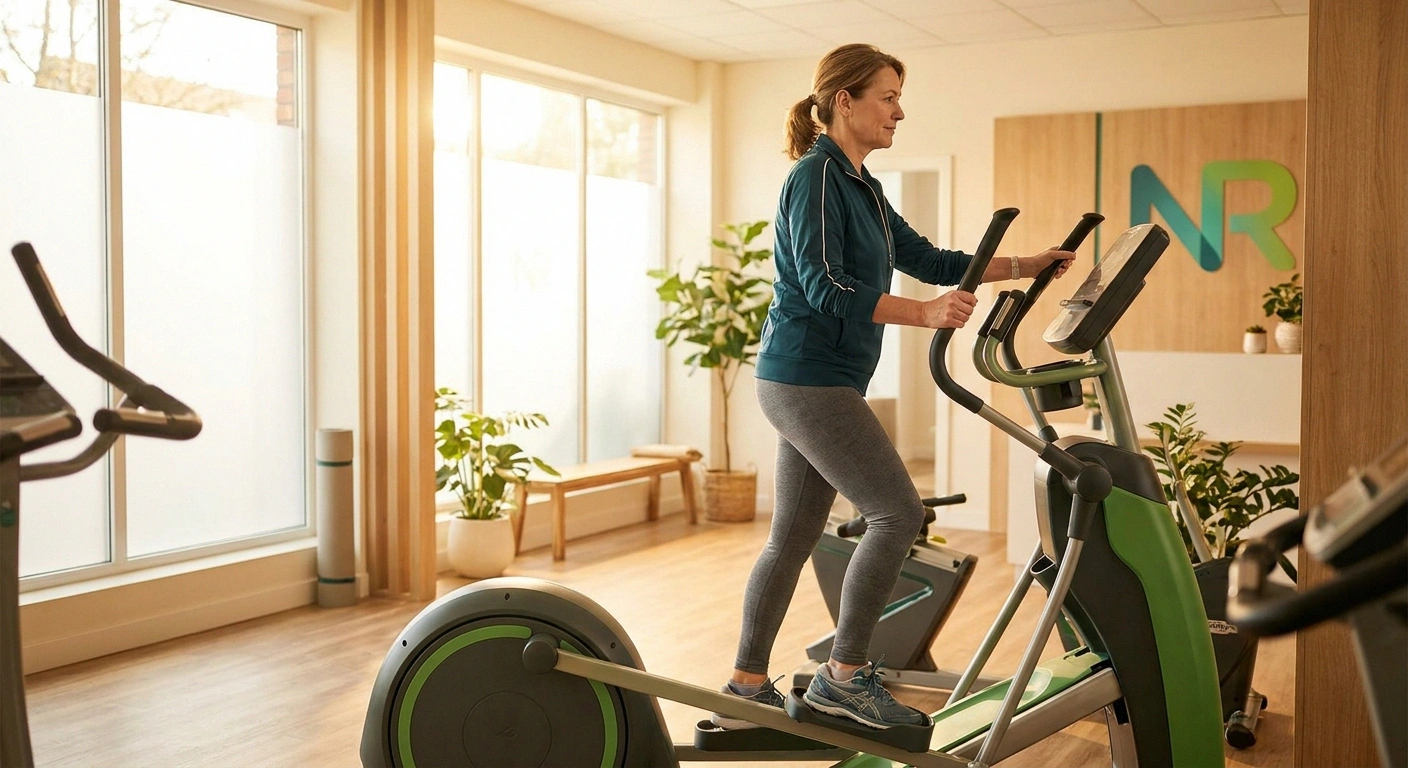
The elliptical trainer is another solid choice for neuropathy users. Your feet stay on the platforms throughout the motion, which eliminates the stepping-down concern that some other equipment has. The motion is low-impact. The handles can be used or ignored depending on what feels stable. And the smooth, gliding pattern is forgiving on cranky joints and tender feet.
Aquatic exercise improves balance, reduces fall risk, and produces significant cardiovascular and strength benefits with minimal joint or foot impact. The pool itself is the gold standard exercise environment for people with neuropathy — the transition zones (deck, locker room) are where the actual fall risk lives.
A few tips that I learned from experience. Mount the elliptical while it is stationary — most machines are paused when you step on, and they only start moving when you do. Find the platform with your stronger foot first, then bring the other foot up. Use the handles for balance the first several sessions even if you eventually graduate to going hands-free. The arm motion can be a nice addition for cardiovascular intensity, but if the handles have textured grips that are uncomfortable on numb hands, padded gloves help.
The one ergonomic note worth mentioning: some elliptical platforms slope slightly inward or outward depending on the machine. If you find that your feet feel like they're sliding sideways toward the inside or outside edges, try a different elliptical model at your gym. The right platform geometry can make a significant comfort difference.
The Rowing Machine: Great If You Can Get In and Out
The rowing machine is one of the most efficient pieces of cardio equipment ever invented — it works the legs, back, arms, and core simultaneously, with no impact. For neuropathy users with good balance and reasonable mobility, rowing can be excellent.
The catch is the entry and exit. Sitting down onto a rowing seat that's close to the floor requires good balance and the ability to lower yourself into a slightly squatting position. Getting back up at the end of a session requires the same skills in reverse, often after your legs are tired. If those movements are challenging, the rowing machine isn't worth the risk of a fall on the way down or up.
For neuropathy users who can manage the entry and exit, the same foot-strap considerations apply as on a bike — snug but not constricting. Choose a steady pace rather than a sprint pace. Rowing technique matters more than rowing speed for both safety and benefit; consider a brief lesson from a trainer your first time.
Strength Training: Machines Versus Free Weights
Strength training is one of the most valuable activities for neuropathy because it directly addresses the muscle weakness and balance loss that the condition produces. But the gym offers two very different paths into strength training, and the right choice for most neuropathy users is clear.
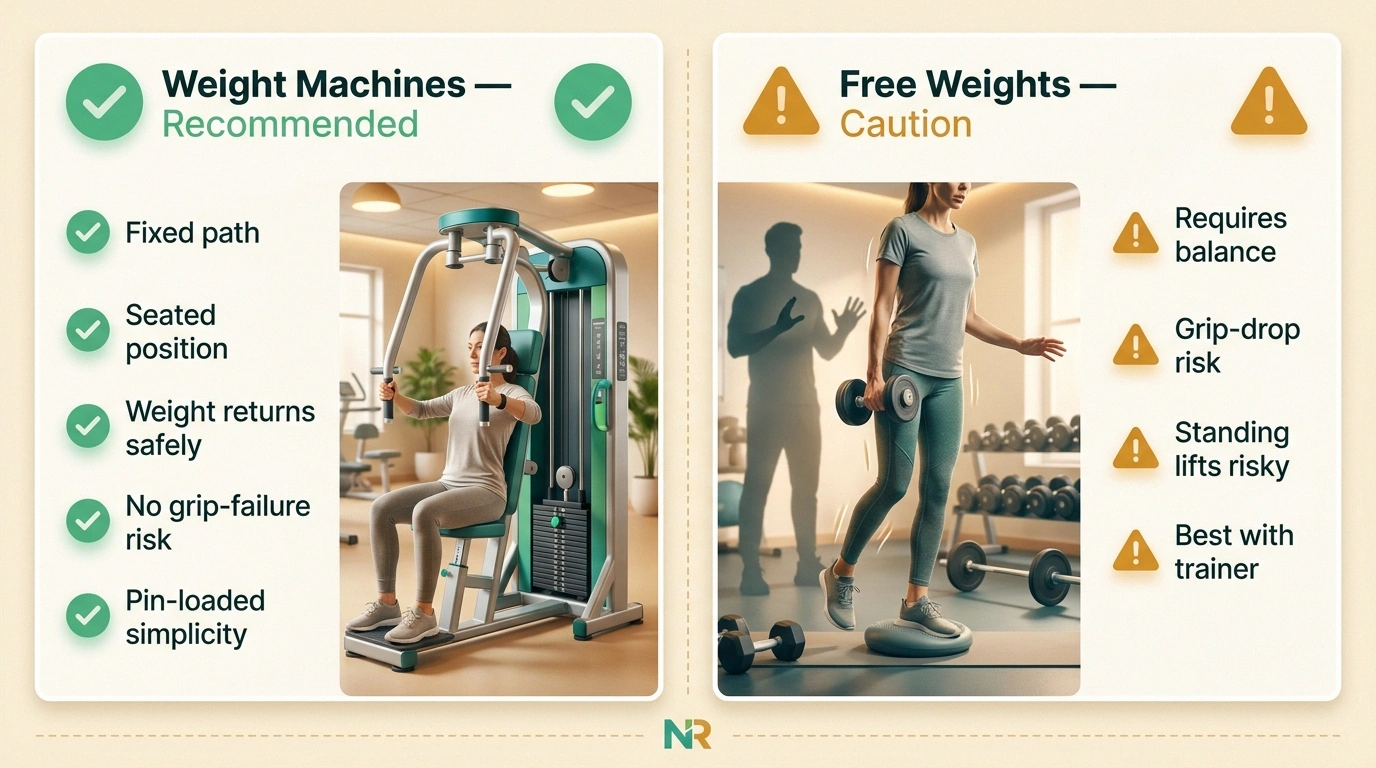
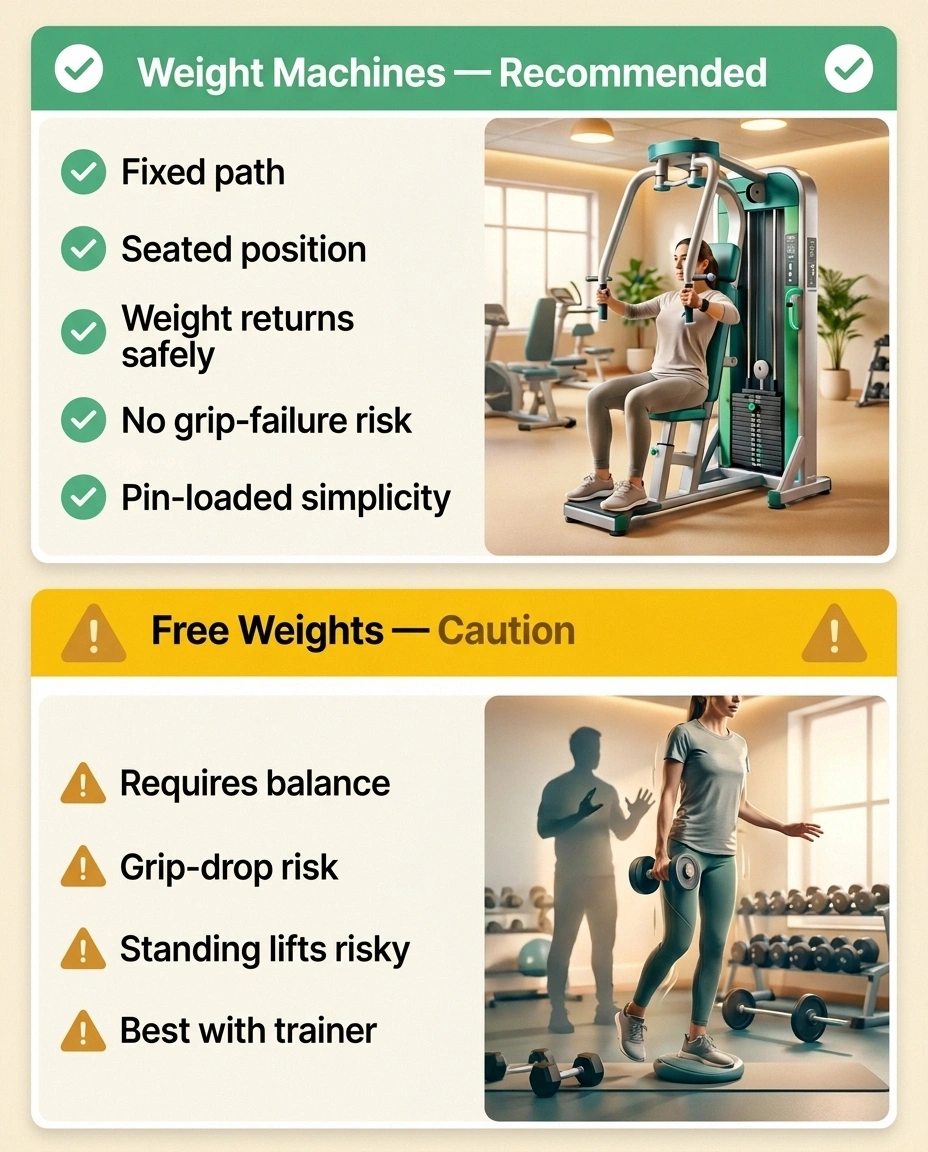
Weight machines — the seated devices with stacks of plates and a guided path of motion — are the friendlier option. The path of the weight is fixed, which removes the need for balance and stabilizer muscle engagement. You sit or lie on a padded seat, which eliminates standing-balance concerns. If your grip weakens mid-set because of hand numbness, the weight returns to the stack rather than landing on you. Pin-loaded weight machines are particularly forgiving — you change the weight by moving a single pin, no plates to handle.
Free weights — dumbbells, barbells, kettlebells — require more skill, more balance, and more grip security. They also build more functional strength and engage more stabilizing muscles. For someone with significant hand numbness, the risk of dropping a heavy weight on a numb foot is real and serious. For someone with significant balance impairment, standing with a heavy weight is risky.
My honest recommendation for most neuropathy users is to do most strength training on machines, especially when you're starting out or returning after a break. If you eventually want to incorporate free weights, do so under the guidance of a trainer experienced with older adults or with chronic conditions, use lighter weights with more repetitions, and stay seated for as much of the workout as possible. Never lift heavy weights standing if foot numbness is significant.
Resistance Bands: The Underrated Option
Resistance bands are quietly one of the best strength-training tools for neuropathy users, and many gyms have a small selection available even though they don't always feature them prominently. Bands cost nothing to drop on a foot. They scale to any strength level. They work seated, standing, or lying down. They build the kind of muscle endurance that helps with the daily activities most affected by neuropathy.
A simple seated band routine — chest press, row, shoulder raise, leg extension — covers most major muscle groups in twenty minutes and can be done either at the gym or at home. If your gym doesn't have a good band selection, a basic set of three or four bands of different resistances is inexpensive and lasts for years.
The Pool: The Gold Standard, With One Caveat
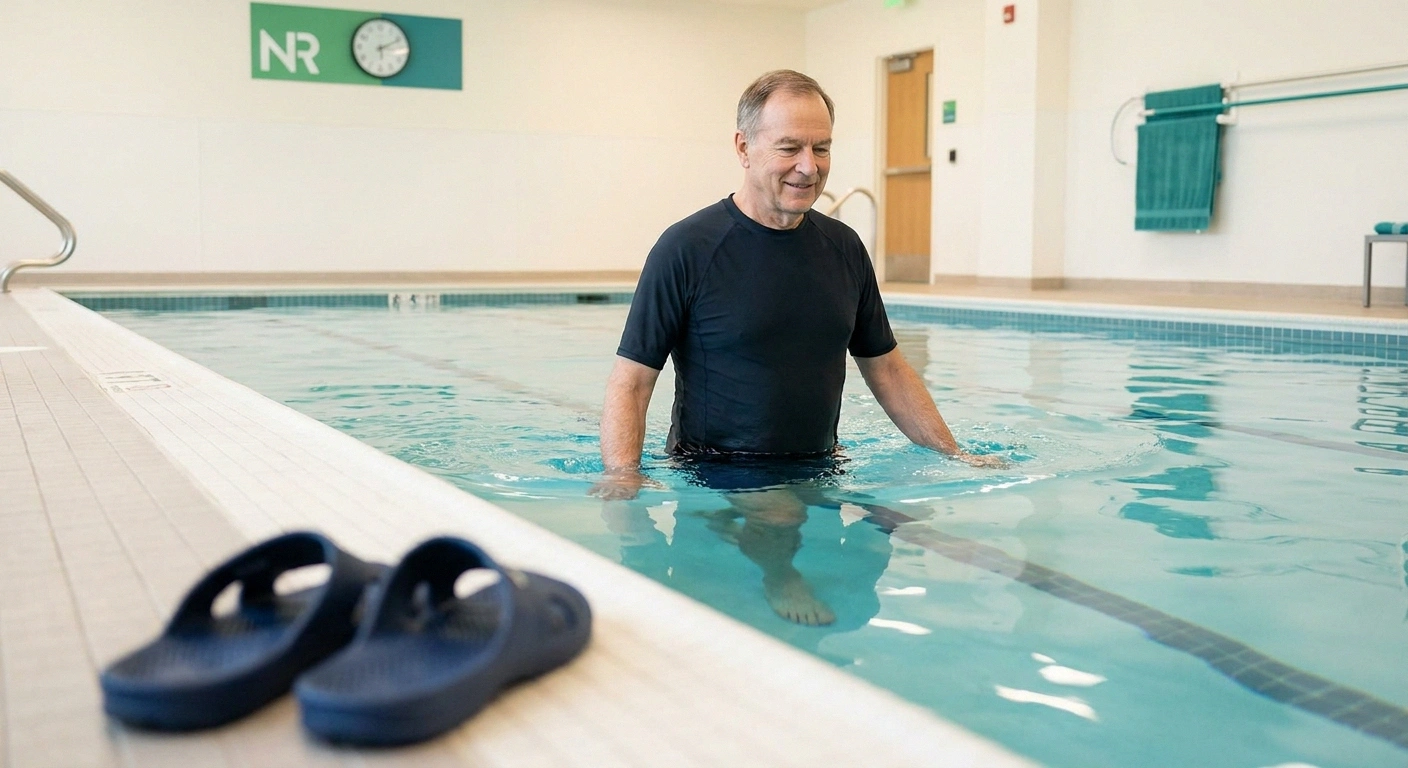
If your gym has a pool, you have access to what is arguably the single best exercise environment for neuropathy users. Water buoyancy supports your body weight, removes impact, and provides gentle resistance in every direction. The pool gives you cardiovascular work, strength work, and balance work simultaneously, and it does all of this with virtually no fall risk during the actual swim or water-walking session.
Stop, sit down, get help or call 911 for any of these during exercise:
- Chest pain, pressure, or sudden shortness of breath
- Sudden one-sided weakness or numbness
- Sudden severe headache, or loss of vision/double vision
- Dizziness not improving with rest
- Sweating, shaking, or confusion in a diabetic — possible hypoglycemia
The caveat is everything that happens before you get into the water and after you get out. Pool decks are typically wet, slick, and unforgiving. Locker rooms have hard floors, water hazards, and limited handholds. These transition zones are where neuropathy users have the most pool-related falls.
The fix is straightforward. Wear non-slip pool shoes or sandals from the moment you leave the locker room until the moment you get into the water, and from the moment you leave the water until you're back at your locker. Many pools allow appropriate footwear right up to the pool edge — ask. Use grab bars wherever they exist. Take stairs into the water rather than ladders if your pool has them. Move slowly on wet tile, and do not feel any embarrassment about doing so.
Equipment to Approach With Caution or Skip
A few common pieces of gym equipment deserve a more cautious look for many neuropathy users.
Take your shoes off and inspect your feet after every gym session. Top, bottom, between the toes, heels. Thirty seconds of attention catches a small problem before it becomes a wound — one of the highest-value habits in neuropathy self-care.
The stair climber and stair mill are excellent cardiovascular tools for fully sensate users, but they combine two of neuropathy's harder challenges — sequential foot placement and balance — into one continuous movement. If your balance is even moderately affected, the risk of a stair-climber fall is significant. For most neuropathy users with foot numbness, this is the piece I'd recommend skipping in favor of the bike or elliptical.
Box jumps, plyometric platforms, and balance-training boards require precise foot placement and rapid reaction times. They are not the right tools for most people with significant neuropathy.
Heavy barbell exercises performed standing — squats, deadlifts, overhead press — pose real risk if your foot sensation or grip is significantly affected. Substitute seated machine versions of these movements unless you're working closely with a trainer and your symptoms are mild.
Cardio classes with rapid changes of direction — Zumba, step aerobics, dance fitness — are great fun for sensate users but ask a lot of your proprioception. Many neuropathy users adapt happily to chair-based fitness classes or aquatic exercise classes instead. There's no shame in the substitution; the benefit is comparable and the safety much better.
The Post-Workout Foot Check You Must Not Skip
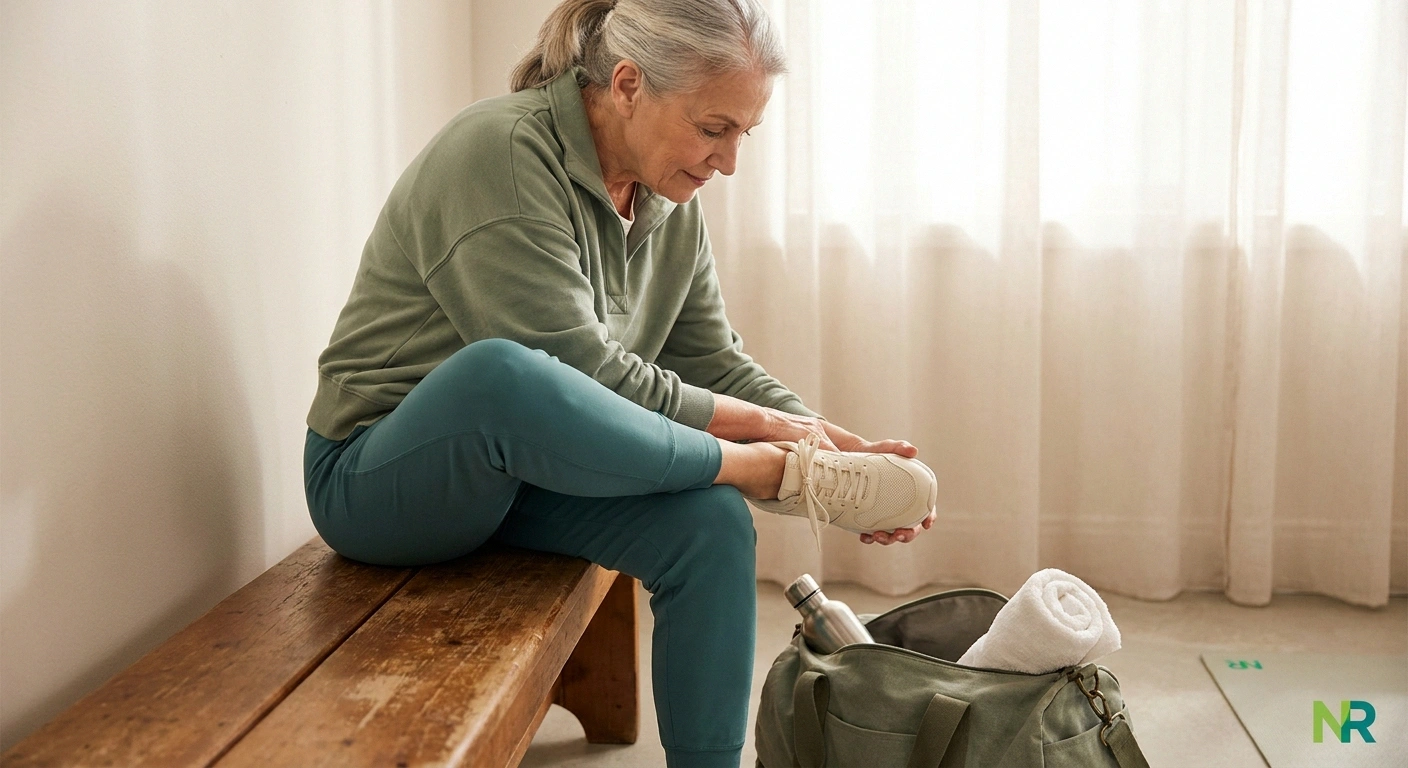
One habit that I want to emphasize separately because it is so important: after every gym session, take your shoes off and look at your feet. Top, bottom, between the toes, heels. Look for new redness, blisters forming, raw spots, anything that wasn't there in the morning.
The reason this matters: a shoe that didn't fit quite right, a sock with a wrinkle, a pebble that worked its way in, or a pressure point from gripping a pedal can produce a sore that you do not feel until it has already become a problem. Catching it the same day means a cleaned-up small spot. Catching it three days later means an infected wound that takes weeks to heal. The thirty seconds of visual inspection after each workout is genuinely one of the most valuable habits you can build.
Signs to Stop Immediately
Some symptoms during exercise mean stop now, not finish the set:
- Chest pain, pressure, or sudden shortness of breath
- Sudden weakness or numbness on one side of the body
- Sudden severe headache
- Dizziness or lightheadedness that does not improve with stopping
- Sweating, shaking, or confusion in a diabetic patient — possible low blood sugar
- Sudden severe new pain anywhere
- Loss of vision or sudden double vision
Any of these mean stop, sit down, and either call for staff help or, for the more serious signs, call 911. Working out at the gym is not worth pushing through a real emergency.
Finding Your Routine
A balanced gym session for most neuropathy users might look something like this. Fifteen to twenty minutes of cardio on a recumbent bike or elliptical, at an effort level where you can still hold a conversation. Twenty to thirty minutes of seated weight-machine work covering legs, chest, back, and shoulders, with light weights and higher repetitions. Five minutes of stretching, seated when possible. A short walk around the gym to cool down. Total time: under an hour, two to four times a week.
Add aquatic exercise if your gym has a pool. Add a brief resistance-band session at home on non-gym days for extra benefit without leaving the house. Add balance work — single-leg stands holding a wall, weight shifts in standing — as a small daily habit. None of this needs to be heroic to make a real difference.
What I have learned over the years is that the people with neuropathy who stay strong and mobile are not the ones who train the hardest. They're the ones who train consistently in ways that are actually safe for their bodies. The gym, used thoughtfully, can absolutely be part of that picture. Walk in. Pick your machines. Skip what isn't right for you today. Come back next week. Repeat for the rest of your life. That is the version of fitness that pays you back over decades, not weeks.
Frequently Asked Questions
Can I use a treadmill if I have neuropathy?
For most people with mild to moderate neuropathy, yes, with adjustments. Start on a fully stopped belt, hold the handrails throughout, increase speed gradually, and slow to a complete stop before stepping off. Choose a pace slightly slower than what feels challenging. Skip the treadmill if your balance is significantly impaired, if you have fallen at home in the past year, or if you cannot feel your feet well enough to know when the belt is moving.
What is the safest cardio machine for neuropathy?
The recumbent stationary bike is generally the safest cardio option for people with neuropathy. There is no impact, no balance challenge, no fall risk, and easy on-off mechanics. The elliptical is a close second for users with reasonable balance, since the feet stay on the platforms throughout the motion. Aquatic exercise in a pool is the gold standard when available, with the caveat that pool decks and locker rooms require careful attention to footing.
Can I lift weights with neuropathy in my hands or feet?
Most people can, with the right approach. Use weight machines rather than free weights, especially when starting out. Stay seated whenever the exercise allows. Choose lighter weights and higher repetitions over heavy weights and low repetitions. Skip standing exercises with heavy weights — squats, deadlifts, overhead press with significant load — unless you're working closely with a trainer and your symptoms are mild. Resistance bands are an excellent low-risk alternative for nearly anyone.
Should I avoid the elliptical with neuropathy?
No — the elliptical is one of the friendlier machines for neuropathy users. Your feet remain on the platforms throughout the motion, the impact is low, and the handles provide balance support if needed. Mount the elliptical while it is stopped, use the handles for stability the first several sessions, and watch for any platform geometry that causes your feet to slide sideways uncomfortably. Try a different model if one feels wrong.
Is the stair climber safe with neuropathy?
For most people with significant foot neuropathy, the stair climber is the piece of equipment I would recommend skipping. The combination of sequential foot placement on small steps with the balance demands of continuous climbing produces higher fall risk than other cardio options. The recumbent bike or elliptical offers similar cardiovascular benefit with much less risk. If you want the leg-strengthening benefit of stair work, seated leg-press machines accomplish the same goal more safely.
How often should I go to the gym with neuropathy?
Two to four sessions a week of forty-five to sixty minutes each is a reasonable target for most people with neuropathy. Consistency matters far more than intensity. Many people do best with a mix of gym days and lighter home days — walking, gentle stretching, simple resistance band work — rather than trying to do everything at the gym. Talk to your doctor about your specific situation, especially if you have diabetes that affects exercise tolerance or any cardiovascular conditions.
Do I need a trainer to start exercising with neuropathy?
Not necessarily, but a few sessions with a trainer who has experience with older adults or chronic conditions can be valuable when you're starting out or coming back after a long break. They can show you which machines fit your goals, set the resistances and seat positions appropriately, and teach you proper form. After a few sessions you will have what you need to continue independently. A physical therapist with whom you have a few visits early on is another excellent option, especially if balance work is a priority.
Should I tell the gym I have neuropathy?
A brief mention to a single staff member — a front desk person or a trainer you see regularly — is worth the small awkwardness. You don't owe anyone a medical history; “I have a condition that affects my balance and sensation in my feet” is plenty. The benefit is that someone in the building knows to check on you if you're suddenly gone from your usual machine, and to respond appropriately if you ever need help. Most fitness staff appreciate the heads-up rather than feeling burdened by it.
About the Author