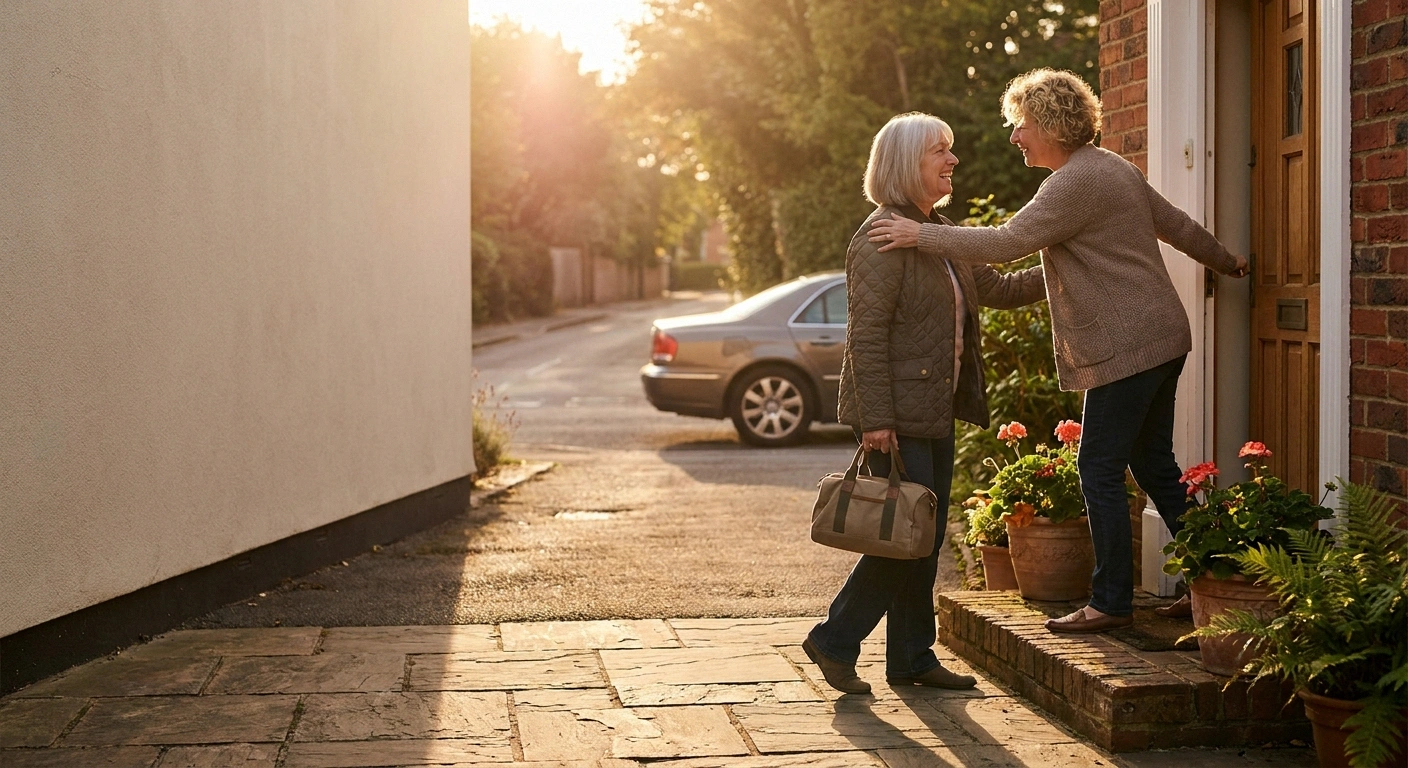
“Don't get a hotel. Stay with us. The room's already made up.”
It is a generous sentence and it is almost impossible to answer honestly. Because the honest answer is often something like: that would be lovely, and also I need to know how many stairs are between that room and a bathroom, whether there is a rug in the hallway, and whether the shower is a tub you have to step over.
So most people say yes, pack a bag, and figure it out on arrival in the dark.
A few minutes of planning turns that into an easy visit for everyone, including your hosts, who would genuinely rather know in advance than find out at midnight. Here is what actually makes the difference.
Why a Guest Room Is Harder Than a Hotel
This is worth naming, because people feel unreasonable for finding it difficult and they should not.
A hotel is anonymous. You can move the furniture, ask for extra pillows, request a different room, and nobody's feelings enter into it. It also comes with grab bars, non-slip strips in the tub, a night light in the bathroom, and a bathroom roughly six feet from the bed.
A guest room is somebody's pride. The room was offered with love, possibly cleaned for two days beforehand, and it may be the den with the air mattress or the basement room down four steps. Declining any part of it feels like declining the gesture.
On top of that, the layout is unfamiliar. At home you could walk to the bathroom at 3am with your eyes shut, because you have twenty years of memory in your feet. In someone else's house at 3am you have none of that, and reduced sensation means your feet cannot supply the missing information in real time.
That single moment, the middle-of-the-night walk to an unfamiliar bathroom, is the highest-risk part of most visits. Nearly everything below is designed around it.
The Ask, and How to Make It Small
The trick is to ask early, and to make it logistical rather than medical.
Four requests, phrased so they land in two seconds
Both versions of each pair are true. The one on the right gets the thing sorted without turning into a discussion about your health, which is the version most people would rather have on a phone call in July.
“My neuropathy makes stairs dangerous at night.”
“I need to be on the same floor as a bathroom.”
“That rug is a fall risk for someone like me.”
“Would you mind if I rolled this back while I'm here? I catch my feet on rugs.”
“I get too tired to keep up with a full day.”
“I'll disappear for an hour after lunch most days. That's just how I run.”
“I can't get in and out of a tub safely anymore.”
“Is the shower a walk-in or a tub? Just so I know what to pack.”
The pattern in all four: name the thing you need, not the reason you need it. Hosts act on the first and worry about the second.
“I need to be on the same floor as a bathroom” is a sentence anyone can absorb in two seconds and act on without worrying about you. “My neuropathy makes stairs dangerous at night” invites a conversation about your health that you probably did not want to have on the phone in July.
Both are true. One of them gets the room sorted.
Ask while the sleeping arrangements are still being decided, not after. Once your host has told three people you are having the upstairs room, moving is a much bigger deal than it needed to be.
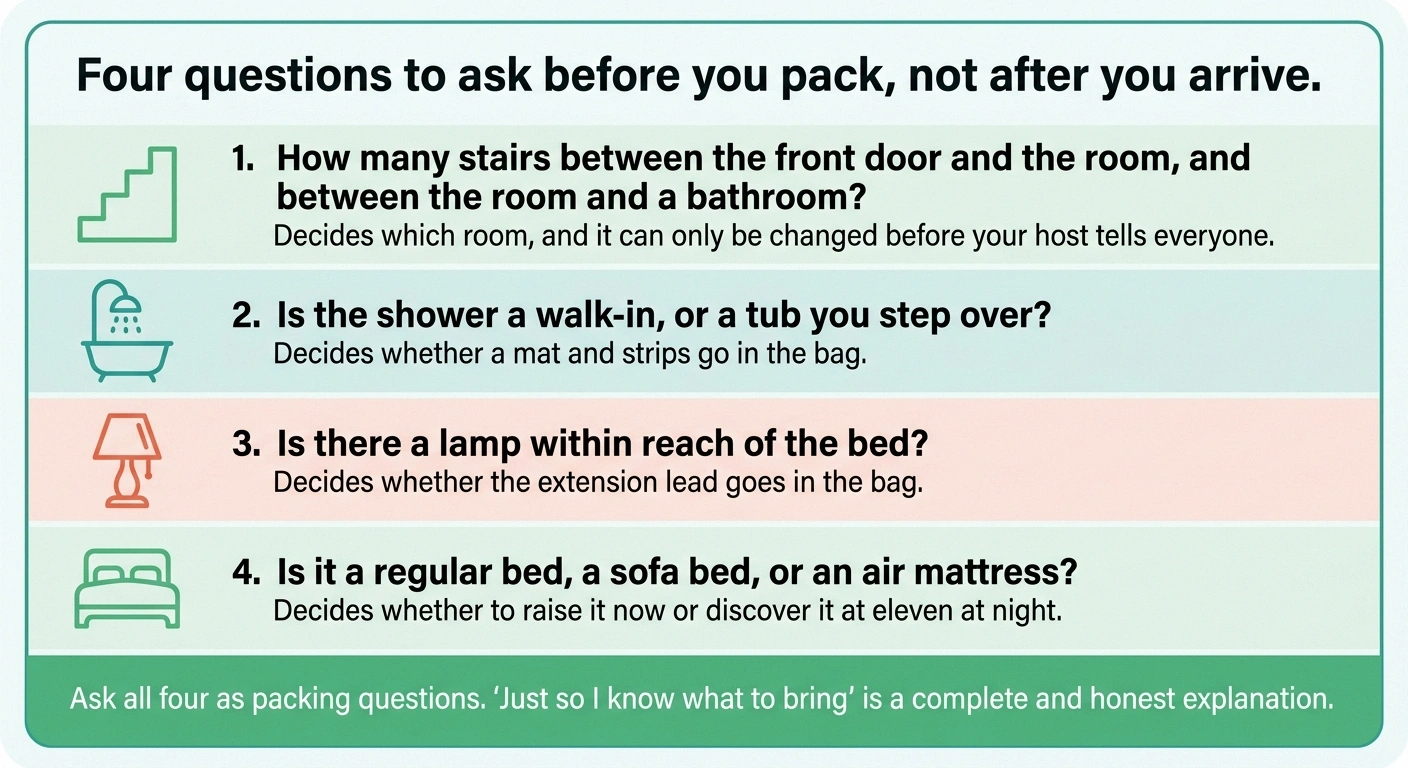
Questions worth getting answers to before you pack:
- How many stairs between the front door and the room, and between the room and a bathroom?
- Is the shower a walk-in, or a tub you step over?
- Is there a lamp within reach of the bed?
- Is the bed a regular bed, a sofa bed, or an air mattress?
Frame all four as packing questions, because they are. “Just so I know what to bring” is a complete and honest explanation, and it makes the whole exchange feel like planning rather than negotiation.
What to Pack That a Hotel Would Have Supplied
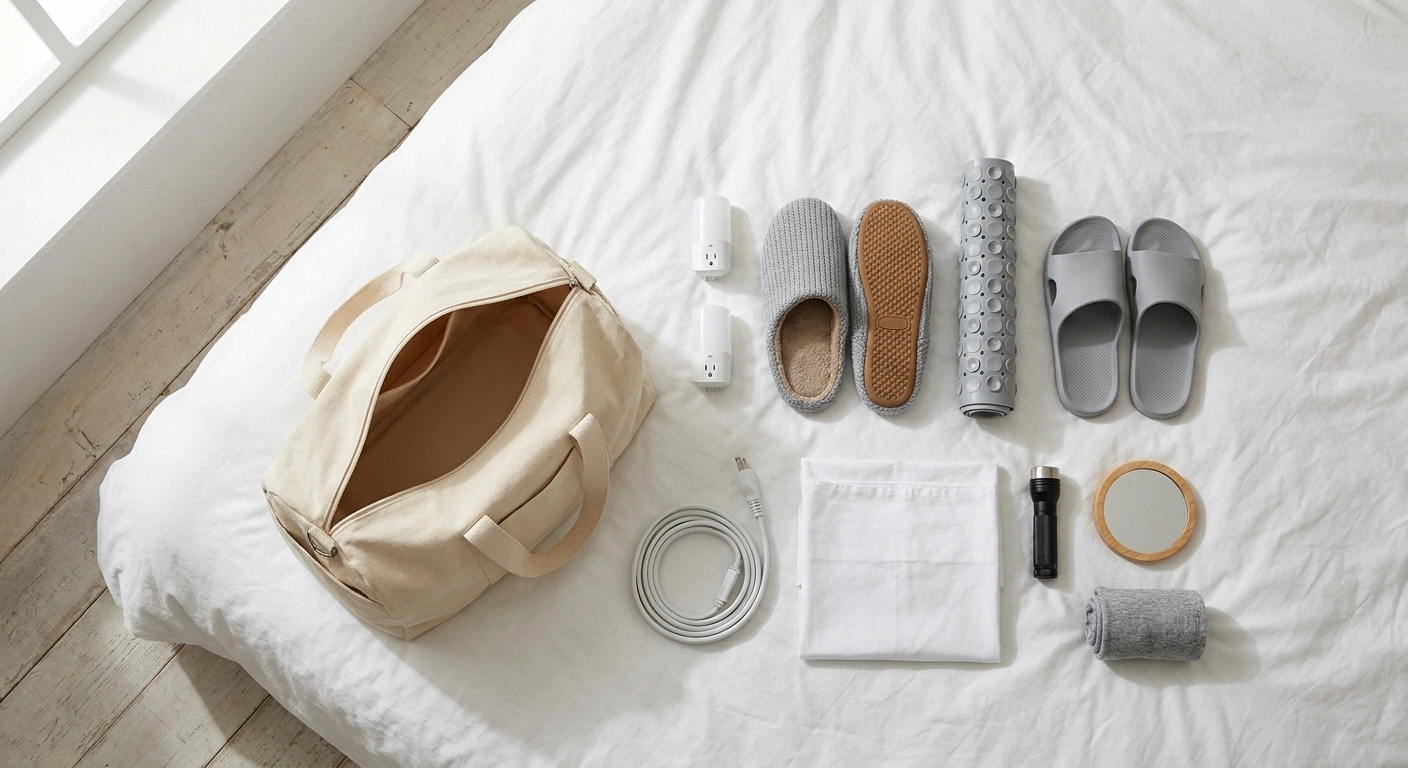
The packing list is short and the first item does more than the rest combined.
Nine items, and what each one replaces
Read the right-hand column and the list stops looking like fussing. Every item here is standard equipment in a hotel room and absent from almost every guest room in the country.
Two motion-sensor night lights
Replaces the hotel bathroom night light. Highest-value item on the list by a distance.
House shoes with a real sole
Satisfies the shoes-off rule without putting you in socks on hardwood for four days.
Non-slip mat or tub strips
Replaces the strips already fitted in every hotel tub. Strips peel off cleanly when you leave.
Shower shoes
For the shower and the wet floor either side of it, which is the part people forget.
Extension lead or power strip
Keeps the phone beside the bed instead of across a dark unfamiliar room.
One extra pillow
For legs. Guest rooms rarely have a spare and asking on night three feels harder than it should.
Meds in original bottles, plus a list
In the bag that stays with you, never the one that lives in the car boot.
Small torch and a compact mirror
The nightly foot check does not pause because you are somebody's guest.
Roomier shoes for the trip home
Feet swell over a multi-day visit. The shoes that fit on Friday may not on Monday.
Two plug-in motion-sensor night lights. These cost very little, weigh nothing, and solve the actual problem. One goes in the hallway between the bedroom and the bathroom, one goes in the bathroom itself. They come on when you move and go off again, so nobody else in the house is disturbed and nobody has to remember anything. If you pack one thing from this article, pack these.
House shoes with a real sole. Most households ask guests to take shoes off at the door, and thin socks on polished hardwood is the classic way to lose your footing. A pair of slippers with a proper grippy sole satisfies the house rule and keeps you upright. Bring them out of the bag on arrival, not on night two. The same principles that apply to everyday footwear apply here, and they are covered in the guide to choosing shoes for neuropathy.
Non-slip bath mat or adhesive tub strips. A rolled rubber mat takes up almost no room. Strips are lighter still and peel off cleanly when you leave.
Shower shoes. Rubber-soled, worn in the shower and on the way there and back.
An extension lead or a short power strip. Guest room outlets are never near the bed. This is how your phone ends up charging across the room, which is how you end up walking across a dark unfamiliar room at 3am.
Your own pillow, or one extra. Mostly for propping legs. Guest rooms rarely have a spare, and asking for one on night three feels harder than it should.
Medications in original bottles, plus a written list, in a bag that stays with you rather than in the car.
A small flashlight and a compact mirror for the nightly foot check, which does not pause because you are on holiday.
Compression socks, if you wear them, and roomier shoes for the journey home. Travel days swell feet, and the shoes that fit on Friday may not on Monday. There is more on sizing and when they help in the guide to compression socks and gloves for neuropathy.
Ten Minutes in Daylight
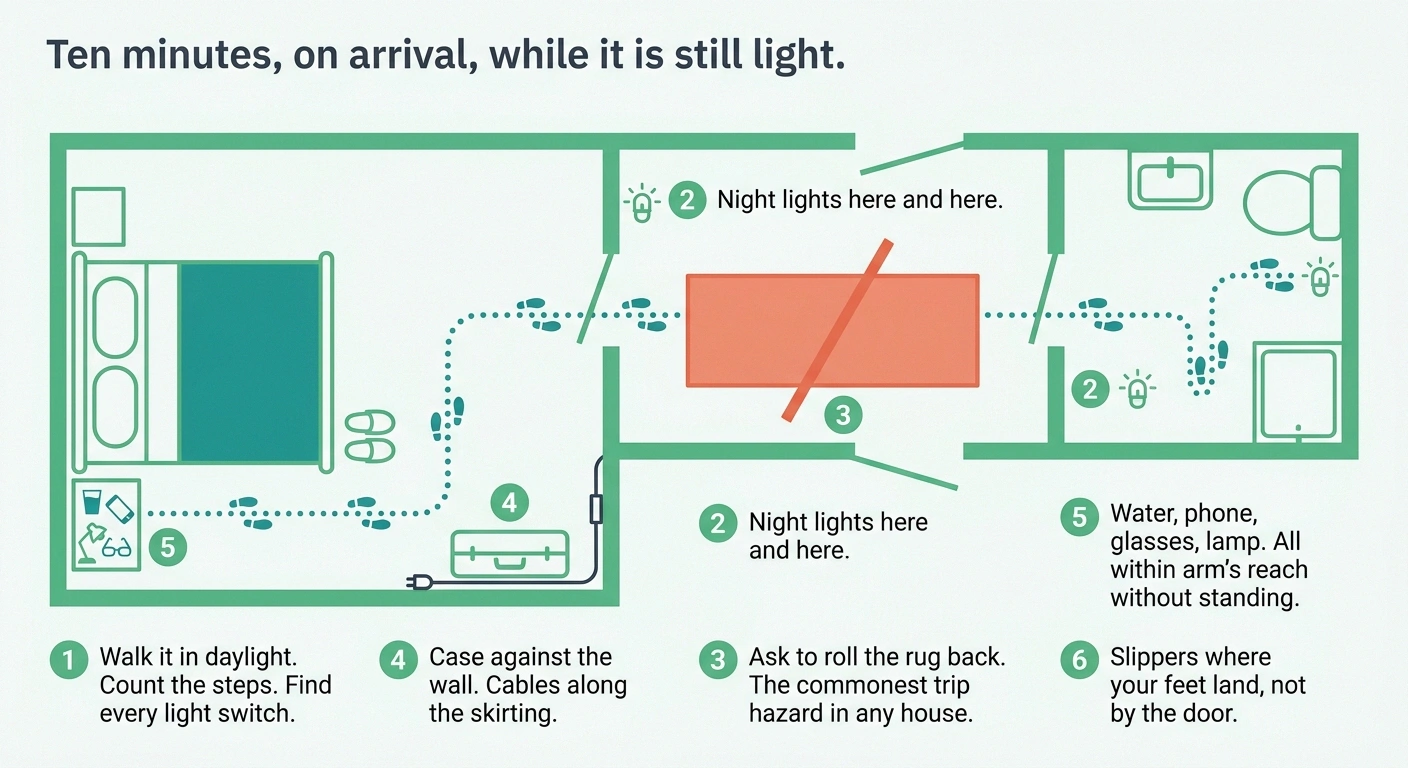
Do this on arrival, while it is light and while everyone is still carrying bags around and nobody notices you wandering off. It is the highest-value ten minutes of the entire visit.
- Walk from the bed to the bathroom. Actually walk it. Count the steps. Find every light switch on the route and notice which door swings the wrong way.
- Place the night lights along that path and in the bathroom.
- Deal with the rug. Loose runners and throw rugs in a hallway are the most common tripping hazard in any house, and they are especially unhelpful when your feet cannot feel an edge lifting. Ask, do not just move it: “Would you mind if I rolled this back while I'm here? I catch my feet on rugs.” Nobody has ever said no to that.
- Clear the route. Suitcase flat against a wall, not in the walkway. Shoes under the bed. Charger cables run along the skirting rather than across the floor.
- Set up the bedside. Water, phone, glasses, light, all within arm's reach without standing up.
- Put your slippers where your feet land when you sit up on the edge of the bed. Not neatly by the door.
Every one of those is invisible to your hosts and takes the risk out of the one moment that matters. The general principles behind this, and why the hazards are what they are, are set out in the guide to neuropathy and balance.
The Bathroom Is the Whole Problem
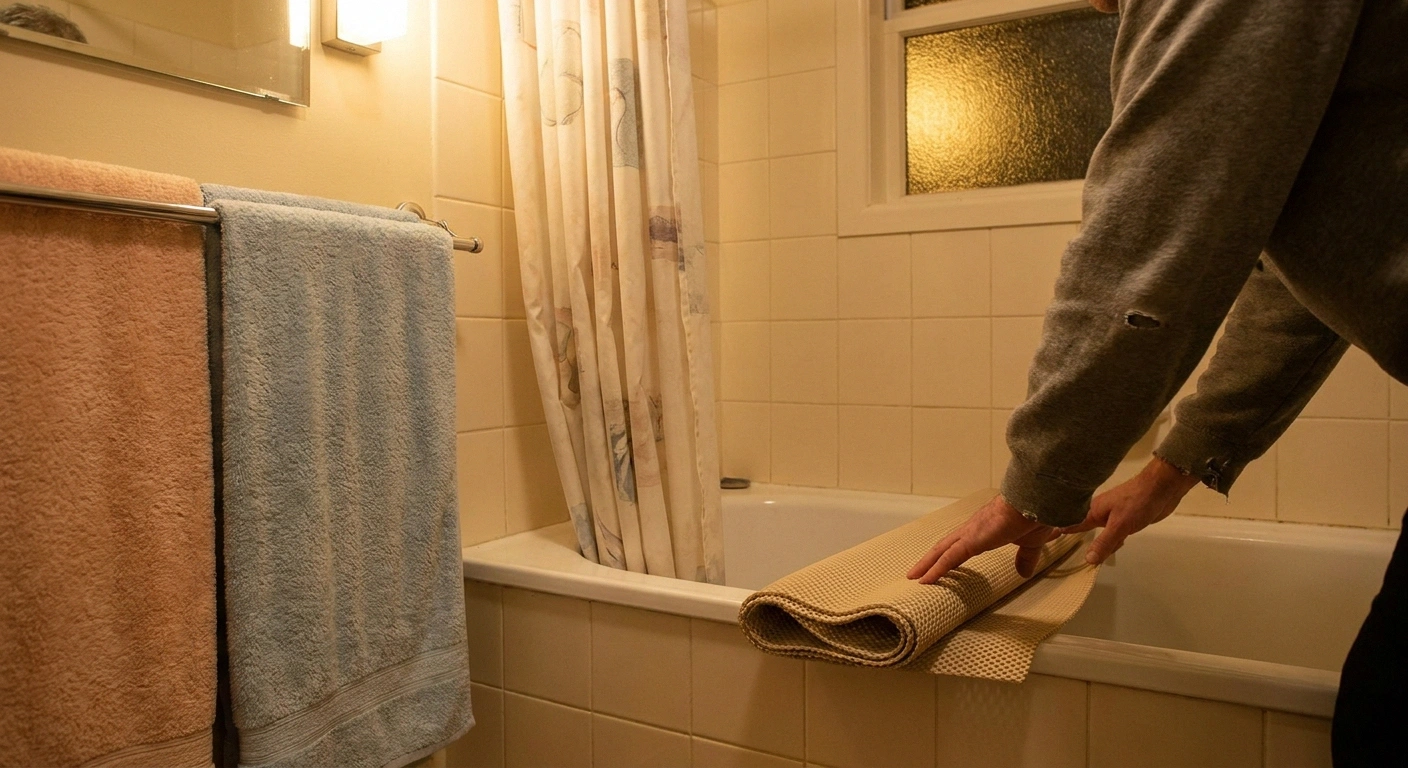
An unfamiliar bathroom concentrates every difficulty at once: a slick surface, a high step over a tub wall, nothing solid to hold, wet feet that report even less than dry ones, and a door you would rather keep closed.
In an unfamiliar bathroom, only two things are load-bearing
Will take your weight
- A wall, with a flat palm against it. Not gripped, just braced.
- The rim of the tub or a solid vanity top, with a flat hand.
Will not, and will come off the wall if you try
- Towel bars. Mounted in plasterboard, rated for a damp towel.
- Shower curtain rails. Tension-fitted in most homes. They come down with you.
- Soap dishes and built-in shelves. Tiled in, and they break rather than bend.
- A pedestal sink. Looks solid, is bolted through a hollow wall.
So plan the movement to need no handhold at all. Face the tub wall, one flat palm against it, step over one foot at a time, both feet down before you move again. Then sit to dry your feet, because standing on one leg to reach between your toes is a balance task nobody needs to attempt on a wet floor in a strange house.
What helps, in order of how much difference it makes:
Put the mat or the strips down before the first shower, not after the first slip.
Sit down to dry your feet. Standing on one leg to dry between the toes is a genuinely difficult balance task and it is completely unnecessary. Use the closed toilet lid or a chair.
Do not trust the towel bar. Towel bars are mounted into plasterboard and are designed to hold a towel. Grabbing one on the way down pulls it out of the wall. Same for shower curtain rails and soap dishes. If there is nothing solid to hold, plan the movement so you do not need to hold anything: face the tub wall, one hand flat against it, step over slowly, both feet down before you move again.
Take the whole thing at half speed. Not because you are frail, but because a slow step gives your eyes time to do the job your feet used to do.
If the shower genuinely is not safe, say so plainly and pick an alternative. A sponge bath for two nights is fine. Asking whether there is another bathroom with a walk-in shower is fine. Both are better than the alternative, and neither is worth being brave about.
Air Mattresses, Sofa Beds, and the Shoes-Off Rule
Three specific things that catch people out.
Copy, adjust, send
A message to your host, a week before
Sending this once, in writing, ahead of time does more than any conversation on arrival. It arrives while the room can still be changed, it lets your host be helpful rather than caught out, and it saves you from making four separate requests over four days.
“So looking forward to this. Two boring logistics things so I can pack properly: is the room I'm in on the same floor as a bathroom, and is the shower a walk-in or a tub you step over? My feet are unreliable on stairs at night, so ground floor is easier if there's a choice, but honestly whatever's simplest is fine and I'll bring my own bits. Also, I'll probably vanish for an hour after lunch each day. That's normal for me, not a comment on the company.”
Three things are doing the work: it asks in writing while there is still time to act, it gives your host an easy out so the request does not feel like a demand, and it books the rest hour before anyone has planned the afternoon around you.
Air mattresses sit very low and move under you. Getting up from one with unreliable feet means pushing off a surface that gives way, which is exactly the kind of unstable rise that ends badly. If you are offered one, a firm chair placed beside it gives you something solid to push against, and it costs your host nothing to put one there.
Sofa beds are usually a thin mattress over a metal support bar, which tends to sit right where your hips go. If sleep is already difficult, a night on that bar will not help. Worth mentioning before you arrive rather than discovering at 11pm, when the only remaining option is the sofa itself.
The shoes-off rule is nearly universal and rarely negotiated. You do not need to break it. Bring indoor shoes and put them on at the door as you take your outdoor ones off. Most hosts see that as a guest being tidy rather than a guest making an exception, and it removes the barefoot-on-hardwood problem entirely for the whole visit.
Say the Rest Hour Out Loud on Day One
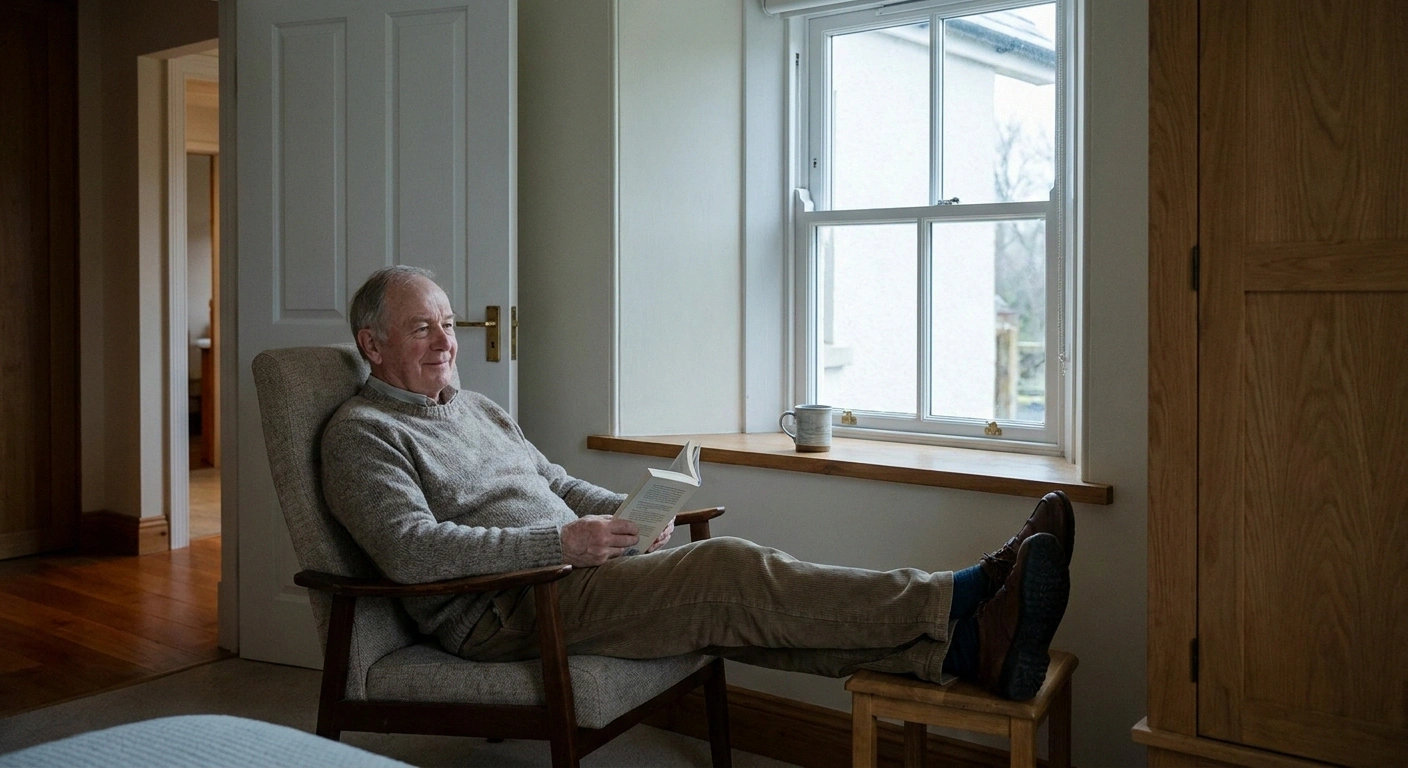
Hosts plan continuously. Breakfast becomes a walk becomes lunch becomes the garden becomes dinner, all offered with real warmth, and there is no natural gap in it.
The move that works is to say it once, cheerfully, on the first day, before anyone has planned around you.
Something like: “I'll disappear for an hour after lunch most days, that's just how I run. Don't take it personally.”
Said early and lightly, it becomes a normal feature of the visit that nobody thinks about again. Said on day three, after you have already skipped something, it turns into a conversation about how you are doing and whether they have been overdoing it, which is a conversation everybody would rather avoid.
The same approach works for anything else you need: an earlier night, a chair instead of the garden bench, skipping the second outing of the day. Once, early, lightly. It works the same way at larger gatherings, and there is more on pacing a multi-day event in the guide to attending a family reunion with neuropathy.
Feet, Sleep, and the Trip Home
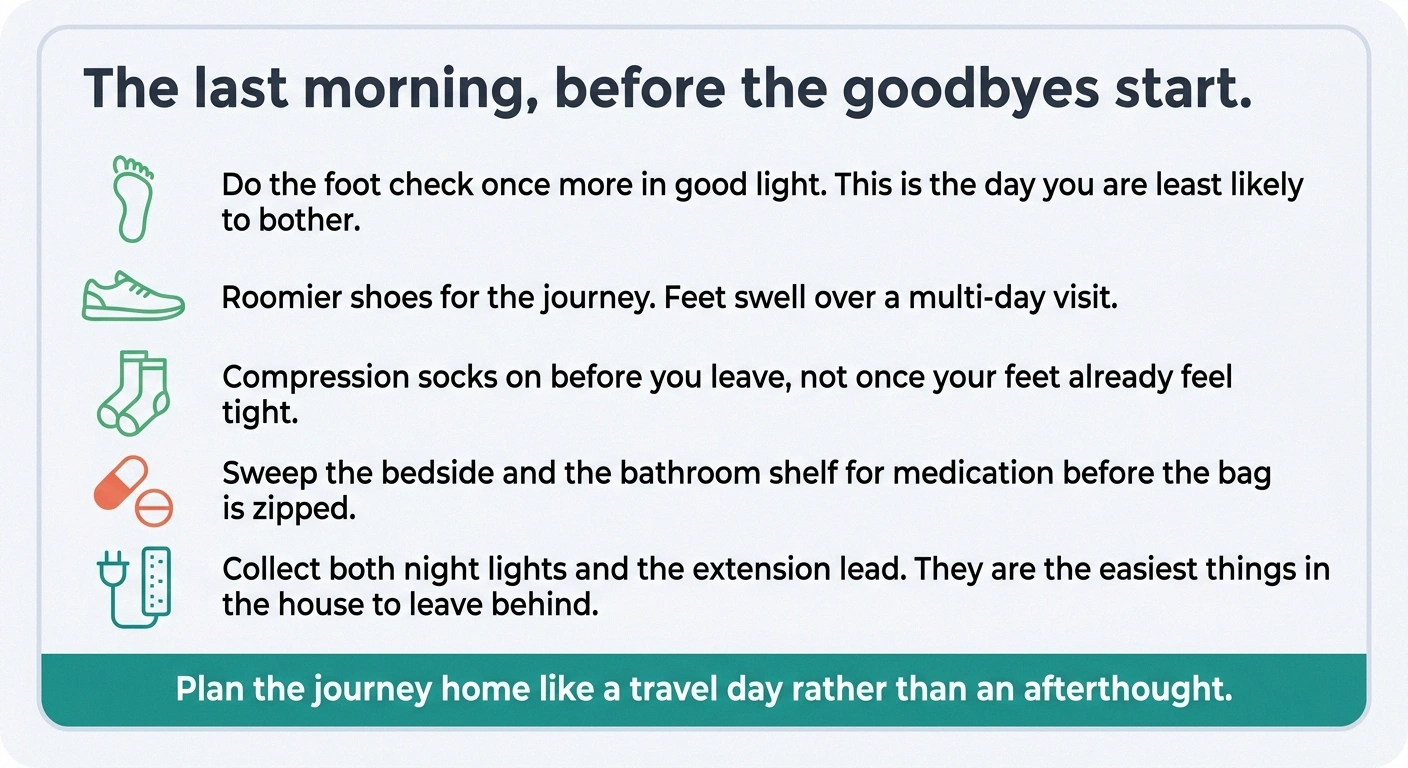
Three loose ends worth closing.
The nightly foot check does not pause. Visits mean more standing than usual, unfamiliar floors, and shoes on and off all day. A blister found on night two is nothing. The same blister found on night five is a problem, and this is the week you are least likely to look. Attach the check to something you are already doing, like sitting on the bed to take your slippers off, and use the flashlight you packed. What you are looking for is in the guide to neuropathy foot care.
Nights are often worse away from home. A different mattress, a warmer room, a long day on your feet, and an unfamiliar quiet all tend to make evening symptoms louder. Knowing that in advance takes the alarm out of it. Bring whatever normally helps at home, and keep the bedding untucked at the foot end so nothing presses down on your toes. The wider pattern is covered in why neuropathy gets worse at night.
Plan the journey home like a travel day, not an afterthought. Feet swell over a multi-day visit, so pack the roomier shoes for the trip back and put the compression socks on before you leave rather than when your feet already feel tight. If the drive or the flight is long, the same principles apply as on any extended seated journey, which are set out in the guide to travelling by coach with neuropathy.
None of this is much work. A packing list with four extra items, ten minutes on arrival, and one sentence said out loud on day one. What it buys is a visit where you are thinking about the people rather than about the floor.
Frequently Asked Questions
How do I ask for a different room without making it about my health?
Keep it logistical. “I need to be on the same floor as a bathroom” is easy to say, easy to act on, and does not open a conversation about how you are doing. Ask while the sleeping arrangements are still being decided rather than after your host has already told everyone which room you have.
What is the single most useful thing to pack?
Two plug-in motion-sensor night lights, one for the hallway between the bedroom and the bathroom and one for the bathroom itself. They cost very little, weigh nothing, and address the highest-risk moment of the visit, which is walking an unfamiliar route in the dark at three in the morning.
Is it rude to ask to move a rug?
No, and hosts almost always say yes immediately. Phrase it as your quirk rather than their hazard: “Would you mind if I rolled this back while I'm here? I catch my feet on rugs.” Loose runners and throw rugs are the most common trip hazard in any house.
What do I do about the shoes-off-at-the-door rule?
Bring indoor shoes or slippers with a real grippy sole and put them on at the door as you take your outdoor shoes off. That respects the rule and removes the risk of thin socks on hardwood, and most hosts read it as a guest being considerate rather than making an exception.
The shower is a tub with no grab bar. What are my options?
Put down a non-slip mat or adhesive strips before the first shower, sit down to dry your feet rather than balancing, and never use a towel bar or curtain rail for support since neither is fixed to hold weight. If it still does not feel safe, a sponge bath for a couple of nights or asking about another bathroom are both entirely reasonable.
How do I get a rest period without offending anyone?
Announce it once on the first day, cheerfully, before anyone plans around you. Something like “I'll disappear for an hour after lunch most days, that's just how I run” becomes an accepted rhythm. Raised on day three, after you have already skipped something, it turns into a discussion about your health instead.
What if they offer me an air mattress?
The difficulty is getting up from a low surface that moves under you. Ask for a firm chair to be placed beside it so you have something solid to push against, which costs your host nothing. If sleep and rising are already difficult, it is worth raising the sleeping arrangements before you arrive rather than on the first night.
About the Author