
A reader named Diane wrote to me with a story I've heard variations of before. Two years of escalating, baffling symptoms — sudden severe abdominal pain attacks, weakness in her arms that came and went, dark urine after one episode that her ER doctor brushed off as “dehydration,” then a stretch of intense burning and weakness in her hands and feet that landed her in a neurologist's office. After a battery of tests, the answer was a word she had never heard: porphyria. Specifically, a type of porphyria that had been quietly attacking her peripheral nerves alongside everything else.
Porphyria neuropathy is rare. It is also one of the most under-recognized causes of unexplained nerve damage in young and middle-aged adults — particularly women, particularly those who have been told their “abdominal pain attacks” are anxiety or IBS. This article exists for the reader who has heard the word porphyria for the first time, for the reader whose family member has been diagnosed, and for the reader whose nerve symptoms have never quite fit any other label.
We are going to walk through what porphyria actually is, why it attacks nerves the way it does, the distinctive symptom pattern that should make a doctor consider it, the testing pathway, and the modern treatments that have transformed the outlook for what used to be a frightening diagnosis.
What Porphyria Actually Is — The Heme Production Problem
Your body makes a molecule called heme. Heme is the part of hemoglobin that carries oxygen, and it also serves dozens of other functions including detoxification in the liver. Heme is built through an eight-step assembly line of enzymes — each enzyme adding or modifying one piece of the molecule before passing it to the next.
In porphyria, one of those enzymes is genetically defective. The assembly line gets backed up. Half-finished heme precursors — molecules called porphyrins and their immediate precursors — accumulate in the body. Those precursors are toxic, especially to two systems: peripheral nerves and skin.
There are several types of porphyria depending on which enzyme is faulty, and they fall into two big buckets:
Acute porphyrias — these primarily affect the nervous system. They cause sudden, severe attacks of abdominal pain, neurological symptoms, and peripheral neuropathy. The four main acute porphyrias are acute intermittent porphyria (AIP, the most common), variegate porphyria, hereditary coproporphyria, and the very rare ALAD-deficiency porphyria.
Cutaneous porphyrias — these primarily affect the skin, causing photosensitivity, blistering, and skin fragility. Porphyria cutanea tarda is the most common. These types usually do not cause neuropathy.
This article is about the acute porphyrias, because they are the ones that cause nerve damage. When you read “porphyria neuropathy,” it is almost always one of the acute forms.
Why Acute Porphyria Attacks Nerves Specifically
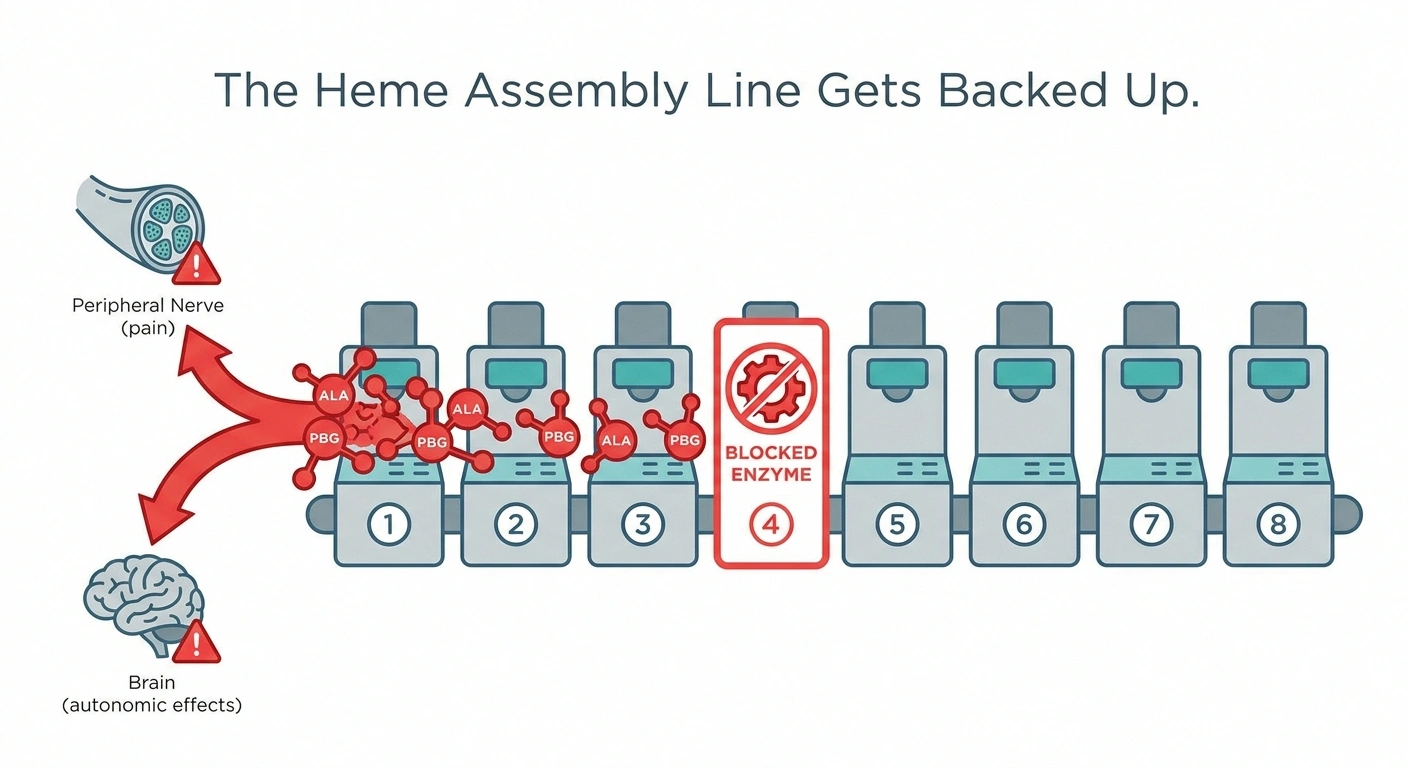
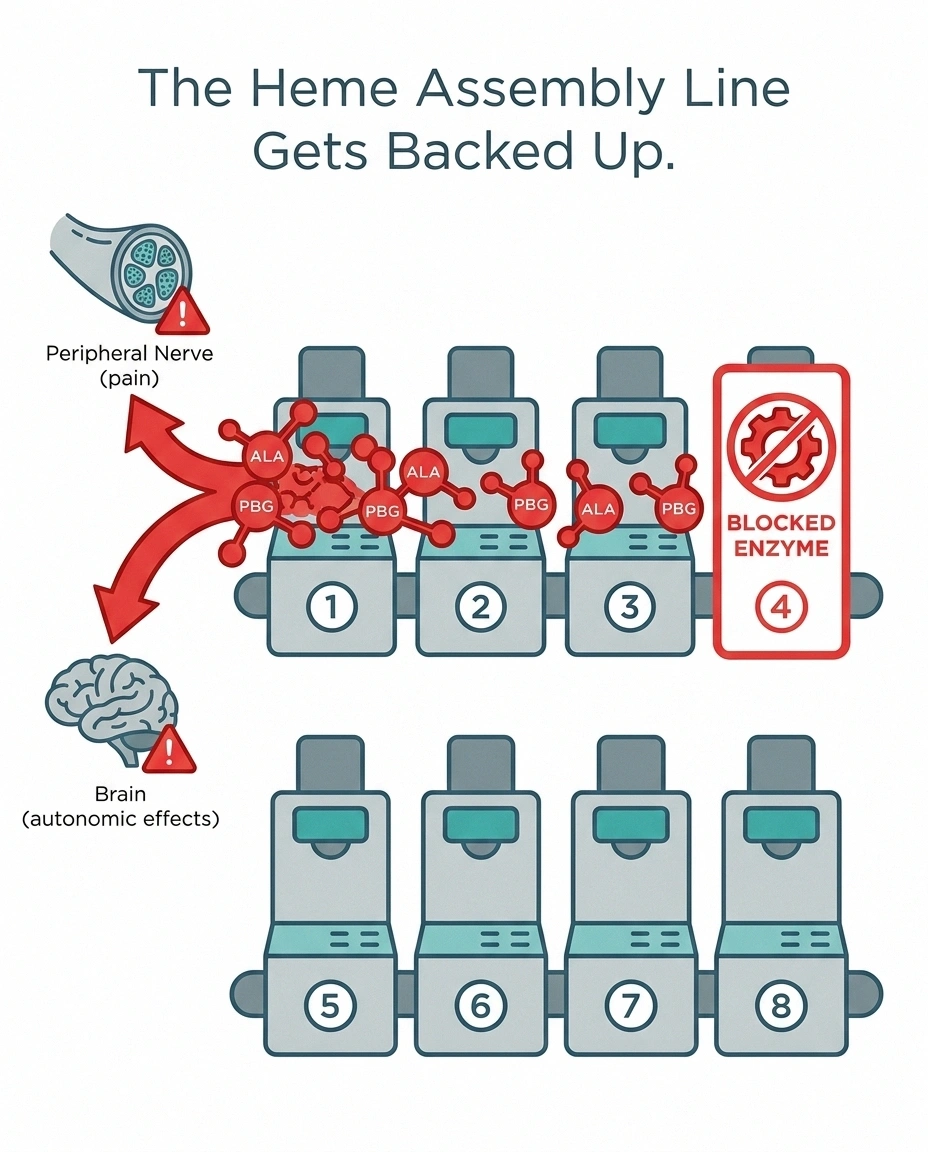
The two main toxic precursors that build up during an acute porphyria attack are called delta-aminolevulinic acid (ALA — not to be confused with alpha-lipoic acid) and porphobilinogen (PBG). When these accumulate, they appear to be directly neurotoxic — damaging both the long axons of peripheral nerves and the autonomic nervous system that controls heart rate, blood pressure, and gut motility.
The result is a pattern that looks unlike most other neuropathies. Where diabetic neuropathy is a slow, length-dependent dying back from the toes, porphyria neuropathy can come on suddenly during an acute attack, can be more pronounced in the arms than the legs, and tends to be predominantly motor (weakness) rather than purely sensory (numbness and tingling).
The other clue is the systemic context. Porphyria neuropathy almost never shows up by itself. It typically arrives alongside or shortly after one of the classic acute attacks — severe abdominal pain, nausea and vomiting, dark or reddish urine, confusion or agitation, racing heart, and high blood pressure. If a doctor only sees the nerve symptoms in isolation, the diagnosis is easy to miss. If the doctor takes a full history and learns about the pattern of attacks, the answer often clicks into place.
The Classic Acute Attack — What It Looks Like
If you understand the acute porphyria attack, you understand the disease. The textbook attack has five components, and most patients have at least three:
Severe abdominal pain. Diffuse, crampy, often described as the worst pain of the person's life. Usually no fever. Often no localized tenderness on examination — which is part of why so many patients get sent home from ERs with a diagnosis of “anxiety” or “irritable bowel.” Pain can last for days. Nausea and vomiting are common.
Neurological symptoms. Weakness in the arms or legs, sometimes severe enough to mimic Guillain-Barré syndrome. Numbness, tingling, or burning. Cranial nerve symptoms (facial weakness, difficulty swallowing). In severe attacks, paralysis of the breathing muscles can occur — this is the most feared complication.
Psychiatric symptoms. Agitation, confusion, hallucinations, insomnia, depression, paranoia. Patients are often initially admitted to psychiatry before the underlying diagnosis is made.
Autonomic symptoms. Tachycardia (racing heart), hypertension, sweating, constipation, urinary retention. These reflect the porphyrins attacking the autonomic nervous system.
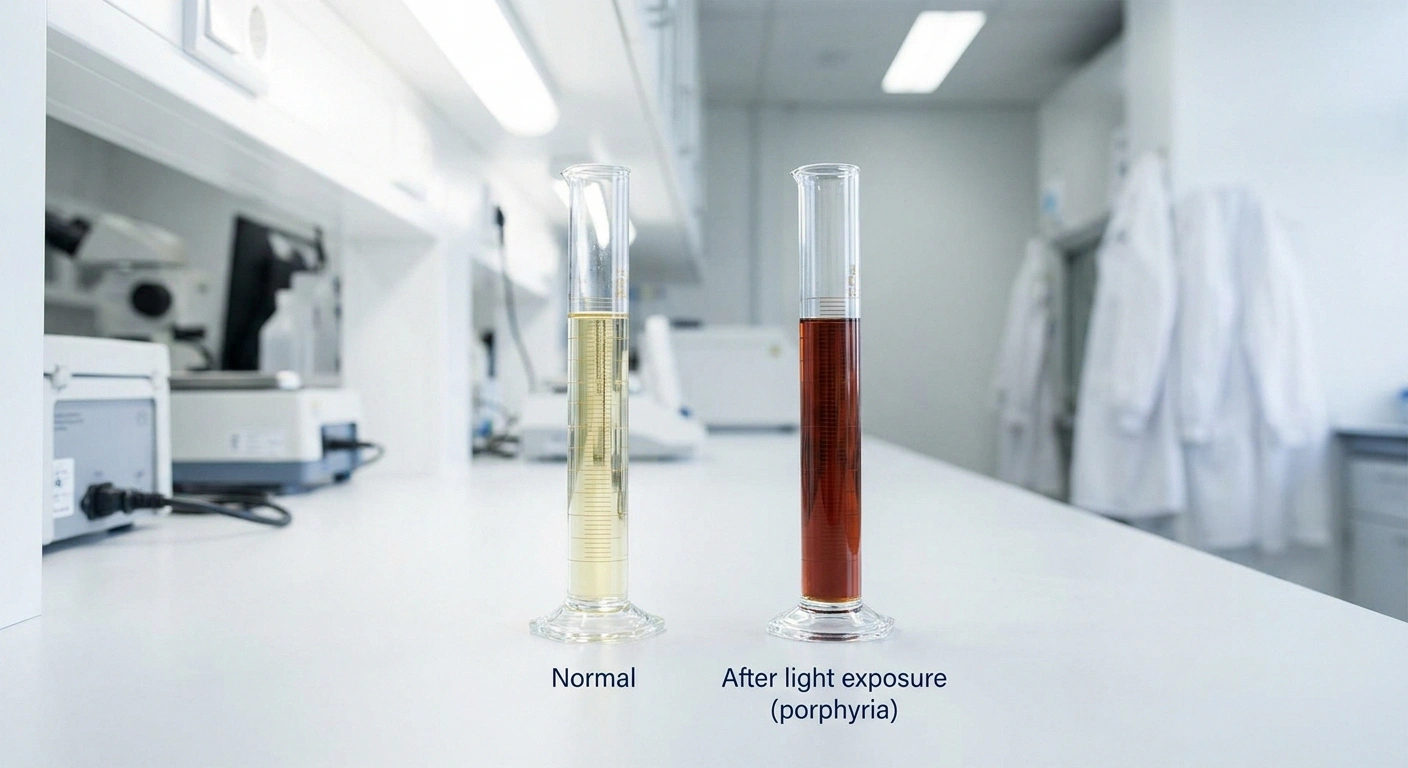
Dark urine. Urine that turns red-brown or “port wine” colored after sitting in light for an hour. This is one of the most distinctive findings and an easy bedside clue — if a patient with severe abdominal pain has urine that darkens in the light, porphyria belongs on the differential.
Between attacks, most patients with acute porphyria feel reasonably normal. The disease cycles. Some patients have one attack in their lives. Others have recurrent attacks every few weeks for years. The triggers determine the pattern.
What Triggers an Attack
Many acute porphyria patients carry the genetic defect their entire lives without ever having a symptomatic attack. Something has to push the heme synthesis pathway hard enough to back up the assembly line. Common triggers:
Certain medications. A long list of common drugs can precipitate attacks — barbiturates, sulfa antibiotics, certain anti-seizure medications, some birth control pills, certain antifungals. The American Porphyria Foundation maintains a continuously updated drug safety database, and any patient with a confirmed diagnosis should consult it before starting any new prescription.
Hormonal shifts. Many women have attacks tied to specific points in the menstrual cycle, particularly the week before menstruation. Pregnancy can trigger attacks. Hormonal birth control can trigger or prevent attacks depending on the formulation.
Calorie restriction. Fasting, crash dieting, or significant unintended weight loss can precipitate an attack. The heme synthesis pathway is upregulated when carbohydrate intake drops below a certain threshold.
Alcohol. Heavy drinking or binge episodes are classic triggers.
Infections, surgery, and other physiological stressors. Anything that activates the liver's detox machinery can push the pathway.
Stress. Major life stressors, sleep deprivation, and emotional upheaval are real triggers, though they are often used as a too-easy explanation when the actual trigger is one of the above.
Knowing the trigger pattern is half of long-term management. A patient who learns that fasting triggers attacks can structure their eating accordingly. A patient who learns that sulfa antibiotics trigger attacks can carry a medical alert card. The disease becomes much more manageable once the personal pattern is mapped.
The Neuropathy Specifically — What It Feels Like
Porphyria neuropathy has several distinguishing features that separate it from more common causes of nerve damage:
It tends to be predominantly motor. Weakness, often more in the arms than the legs, is typical. This is the opposite of small fiber neuropathy or early diabetic neuropathy, where sensory symptoms come first.
It is often proximal more than distal. The classic length-dependent “feet first” pattern of most neuropathies does not always hold. Porphyria neuropathy can affect the muscles of the shoulders, upper arms, and thighs before — or instead of — affecting the hands and feet.
It can come on rapidly during an attack. Weakness that develops over days, sometimes hours, during an acute attack. This is much faster than most other neuropathies, which evolve over months or years.
It can be severe but is often reversible. With proper treatment of the underlying attack, much of the neuropathy can resolve over weeks to months. Some patients recover completely. Others have residual weakness or sensory changes, especially after severe or repeated attacks.
It often coexists with autonomic neuropathy. The same toxic precursors attacking somatic peripheral nerves also attack the autonomic nervous system, causing racing heart, blood pressure swings, and gut motility problems. Autonomic neuropathy is one of the more challenging features for long-term management.
Between attacks, some patients have persistent low-grade neuropathy symptoms. Others feel normal until the next attack triggers a new round. The pattern is highly individual.
Getting the Diagnosis — The Tests That Matter
Acute porphyria is famously underdiagnosed. The average patient sees 5–6 doctors and waits years for a correct diagnosis. The reason is simple: the symptoms look like a lot of other conditions, the disease is rare, and the right test is rarely ordered.
The good news: the right tests are inexpensive, widely available, and decisive when ordered during an attack.
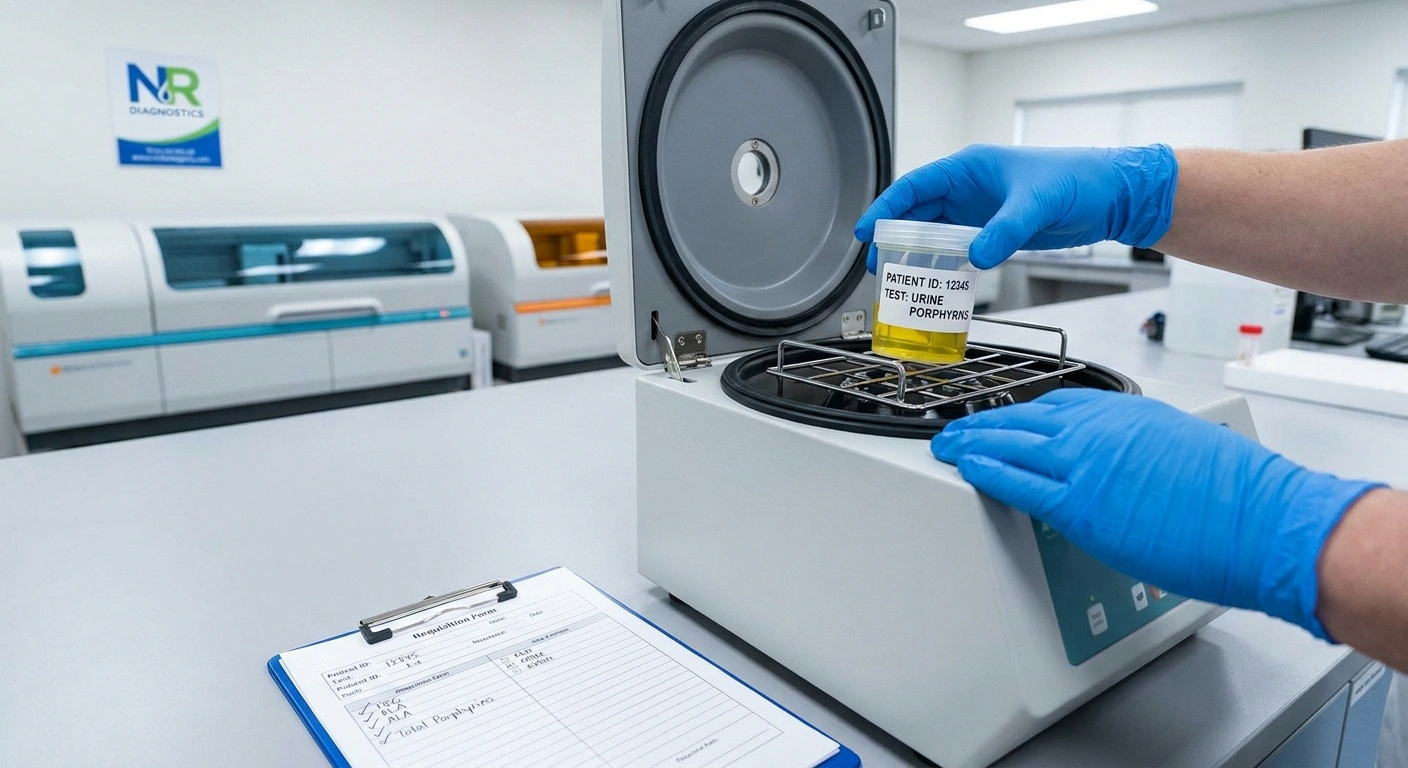
Urine porphobilinogen (PBG) during an attack. This is the single most important test. A spot urine sample collected during an acute attack will show massively elevated PBG in any of the acute porphyrias. The test is cheap and available at most labs. The catch: it must be ordered while the patient is symptomatic. Between attacks, PBG may normalize.
Urine delta-aminolevulinic acid (ALA). Also elevated during attacks. Often ordered alongside PBG.
Total urine porphyrins. Elevated during attacks. Less specific than PBG but useful as a confirmatory test.
Plasma fluorescence scan. A specialized test that helps distinguish between the different types of acute porphyria once an acute diagnosis is suspected.
Stool porphyrins. Used to distinguish hereditary coproporphyria and variegate porphyria from acute intermittent porphyria.
Genetic testing. Once an acute porphyria is confirmed biochemically, genetic testing identifies the specific enzyme defect. This matters for family screening and for connecting the patient with the correct condition-specific treatment and registry.
The key practical advice: if you have ever had an unexplained acute attack with severe abdominal pain, neurological symptoms, dark urine, or psychiatric symptoms — and especially if any combination of those has happened more than once — ask for a urine PBG during the next attack. If the test is negative during a symptomatic episode, acute porphyria is largely ruled out. If positive, you have an answer for the years of mystery symptoms.
Modern Treatment — How the Outlook Has Changed

The treatment of acute porphyria has been transformed in the last decade. What used to be a frightening, frequently disabling disease is now manageable for most patients with proper care.
For an acute attack:
The standard treatment is intravenous hemin (Panhematin or Normosang). Giving heme directly tells the body to stop overproducing precursors. Most attacks respond within a few days. Hemin is typically given as a 4-day course.
Alongside hemin, supportive care matters: IV glucose to suppress the heme pathway, pain control, treatment of nausea, careful attention to autonomic instability (which can be dangerous), and avoidance of any medications that worsen the attack. Hospitalization is usually required for severe attacks.
For mild attacks caught early, oral glucose loading at home can sometimes abort the attack. Patients with established disease often have a written attack action plan.
For recurrent attacks:
The biggest single advance has been givosiran (Givlaari), an RNA-interference therapy approved by the FDA in 2019 for adults with acute hepatic porphyria. Given as a monthly subcutaneous injection, it dramatically reduces the production of the toxic precursors at their source — and the result has been a steep drop in attack frequency for patients who were having repeated severe attacks. For many patients, it has been life-changing.
Other options for patients with recurrent attacks include hormonal suppression for cycle-triggered attacks, regular prophylactic hemin infusions in some centers, and a careful trigger-avoidance plan built around the individual's pattern.
For the neuropathy specifically:
Treating the underlying porphyria attacks is the most important nerve-protective measure. When the heme precursors come down, the neuropathy stops progressing. Recovery of nerve function can take weeks to months and may be partial.
Standard neuropathic pain medications — gabapentin, pregabalin, and duloxetine — are generally safe in porphyria and can help with residual pain. Some medications classically used for neuropathic pain (like carbamazepine) are unsafe in porphyria and should be avoided. The drug safety database is essential here.
Physical therapy and rehabilitation matter enormously after a severe attack with significant weakness. Most patients regain substantial function with focused rehab, particularly when started early.
Living with Acute Porphyria Long-Term

Once the diagnosis is made and the patient is connected with a porphyria specialist (often through a regional academic center), long-term management has a fairly standard playbook:
Carry a medical alert. A card or bracelet identifying the diagnosis is essential. In an emergency, the wrong medication can precipitate a severe attack.
Check every new medication against the safe-drug database. The American Porphyria Foundation's drug database is the gold standard. Any new prescription — including from a dentist or specialist — should be checked before filling.
Map your personal triggers. Keep a journal during the first year after diagnosis. Note attacks, what preceded them, what the cycle phase was for women, what medications you took, what stress you were under. Patterns usually emerge.
Eat regularly. Skipping meals or fasting can trigger attacks. Most patients do best with three meals plus snacks, never going more than 4–5 hours without eating, especially carbohydrate.
Limit or avoid alcohol. A glass of wine with dinner is usually fine. Binge drinking is asking for trouble.
Manage stress and sleep deliberately. Stress reduction is not a feel-good aspiration — it is part of the medical management. Sleep matters too.
Family screening. Acute porphyrias are inherited in an autosomal dominant pattern. First-degree relatives (parents, siblings, children) have a 50% chance of carrying the same genetic mutation. Many of those relatives will be “latent carriers” — they have the gene but have never had an attack. Knowing they carry it lets them avoid triggers and prevents the kind of dangerous diagnostic delay that the index patient went through.
Connect with a center of expertise. Porphyria is rare enough that local clinicians often have little experience with it. Most major academic medical centers have a porphyria specialist or referral pathway, and the American Porphyria Foundation and similar organizations maintain referral networks.
The Mental and Emotional Side

Honest section. Living with a rare, painful, intermittent disease takes a toll. So does the diagnostic odyssey that most porphyria patients endure — years of being told the symptoms are anxiety, IBS, or “in your head” before someone finally orders the right test.
The psychological residue is real. Many patients struggle with anxiety about the next attack, depression, hypervigilance, and the loss of trust in the medical system that built up during the years of being dismissed. These are not weakness. They are predictable consequences of years of being sick and not being believed.
Finding a therapist familiar with chronic illness — even if not specifically with porphyria — is one of the highest-leverage things newly diagnosed patients can do. Support groups, both online and in person through the porphyria patient organizations, are valuable. Talking to someone else who has lived this is medicine that pills cannot deliver. Our broader piece on the mental health side of nerve disease applies here too.
Realistic Outlook for the Newly Diagnosed
If you have just been diagnosed with acute porphyria — or you suspect you have it and the testing is in progress — the path forward looks something like this:
First weeks: Education. Read everything from a reputable source. Get connected to a porphyria specialist. Order a medical alert card or bracelet. Familiarize yourself with the safe-drug database.
First 6 months: Map triggers. Learn what your personal patterns are. Build the basics of trigger avoidance into daily life — regular meals, careful medication choices, alcohol management, sleep.
Year 1: If you are having recurrent attacks, talk with your specialist about givosiran or other preventive options. If your nerve symptoms persist between attacks, work with your provider on neuropathic pain management and rehab.
Year 2 and beyond: For many patients, life stabilizes. Attacks become rare. The neuropathy improves. With givosiran, some patients go years without an attack. The disease becomes something you manage rather than something that runs your life.
Diane — the reader who wrote me — was diagnosed about 18 months ago. She had three more attacks before her specialist started her on givosiran. Since then, no attacks. Her hand weakness has resolved completely. The burning in her feet has substantially improved. She still gets occasional tingling. She has built a careful trigger-avoidance routine and rarely thinks about porphyria day-to-day anymore. She told me her main feeling now is anger at the years of being dismissed before someone listened — and gratitude that the answer, once found, has actually been treatable.
That arc is increasingly common. Porphyria neuropathy is still rare, still serious, still under-recognized — but it is no longer the disabling mystery it was a generation ago.
Frequently Asked Questions
How rare is acute porphyria?
Acute intermittent porphyria — the most common acute form — affects an estimated 1 in 75,000 people in the general population, though the prevalence of the underlying gene mutation is much higher (perhaps 1 in 1,500 to 1 in 2,000 carry the gene but most never have attacks). It is far more common in some populations, including some Scandinavian groups.
Can the neuropathy of porphyria be reversed?
Often substantially yes, especially when the underlying attacks are treated promptly and prevented going forward. Nerve recovery happens over weeks to months and may be partial. Patients who have had severe or repeated attacks may have residual weakness or sensory changes, but for most patients, neuropathy is one of the most improvable aspects of the disease once the precursors come down.
Is porphyria the disease that “made King George III mad”?
This is a popular historical claim, with mixed evidence behind it. Some historical researchers have argued that the British king's recurrent attacks of abdominal pain, neurological symptoms, dark urine, and psychiatric symptoms fit acute porphyria. Other modern reassessments dispute the diagnosis. The historical case is interesting but not settled, and it is fair to say acute porphyria remains the leading retrospective diagnosis even if it cannot be confirmed.
Is genetic testing useful if I have already been diagnosed biochemically?
Yes — for two reasons. First, knowing the exact type of acute porphyria you have can affect treatment decisions. Second, knowing the specific mutation lets first-degree relatives be tested with a simple blood test rather than having to wait for biochemical evidence during an attack. Family screening is one of the most important secondary benefits of a confirmed genetic diagnosis.
What medications should I always avoid if I have acute porphyria?
The list is long and continuously updated. Common categories that frequently cause problems include barbiturates, sulfa antibiotics, certain anti-seizure medications including carbamazepine and phenytoin, some antifungals like griseofulvin, and certain hormonal contraceptives. Always check any new prescription against the American Porphyria Foundation drug database or the European Porphyria Network database before starting it.
Can I have children if I have acute porphyria?
Yes. Pregnancy can sometimes trigger attacks, but with good prenatal care and a porphyria-knowledgeable obstetrician, most patients have healthy pregnancies and healthy babies. Each child has a 50% chance of inheriting the gene mutation. Discuss family planning with a porphyria specialist and consider genetic counseling.
Is givosiran a cure?
Not a cure but the biggest single advance in treatment in decades. It dramatically reduces attack frequency in patients who have recurrent attacks. The underlying genetic defect remains. Patients on givosiran still need to avoid known triggers, but the disease becomes much more manageable. Long-term safety data is still accumulating.
Why does my urine turn dark sometimes but not always?
The dark or “port wine” urine of acute porphyria comes from porphyrin breakdown products oxidizing in light. It is most pronounced during severe attacks. Between attacks, urine usually looks normal. If you notice your urine darkening when left out in light during a symptomatic episode, that is an important observation to share with your provider — and one of the simplest bedside clues to the diagnosis.
About the Author