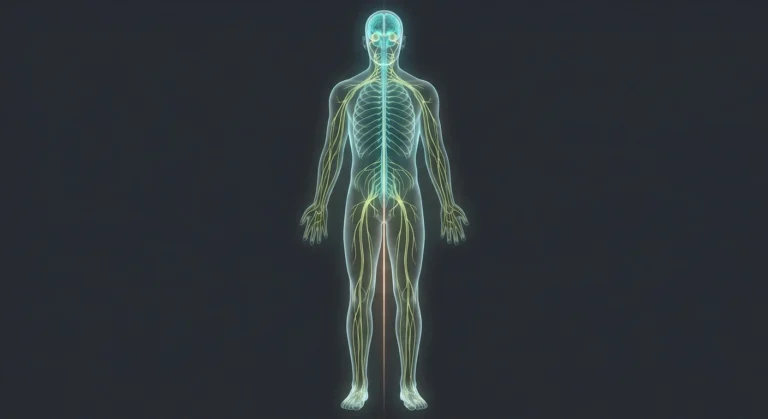
If you or someone you love is taking Keytruda, Opdivo, Yervoy, Tecentriq, or any of the other newer cancer immunotherapy drugs, this is an article worth reading before you need it. These medications have changed the trajectory of cancer treatment in remarkable ways. They've also introduced a new kind of nerve damage that even seasoned oncologists are still learning to recognize quickly.
Immune checkpoint inhibitors are a different beast than traditional chemotherapy. They don't poison cancer cells directly. Instead, they unleash your own immune system to attack the tumor. For most patients, that's exactly what's supposed to happen, and only the cancer is targeted. For a small but important minority, the unleashed immune system also turns on healthy tissues — including peripheral nerves. The result is a form of neuropathy that's mechanistically and clinically different from anything chemotherapy used to cause.
I want to walk you through what these drugs do, how often they cause nerve problems, how to recognize the warning signs, and what happens when treatment is needed. If you take only one thing from this article, let it be this: any new neurological symptom in someone on immunotherapy is urgent. Call your oncology team the same day, not next week.
What Immune Checkpoint Inhibitors Actually Do
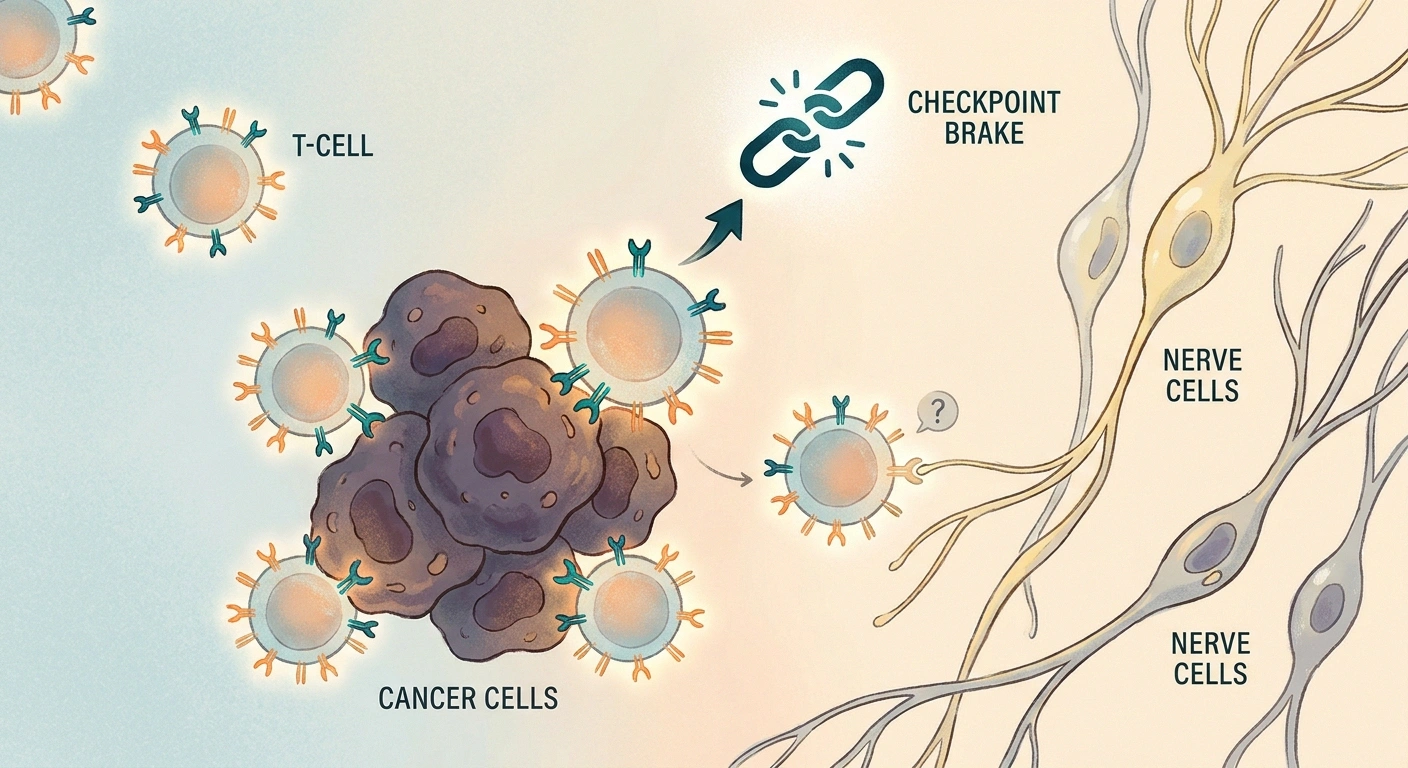
Your immune system has built-in brakes. They exist because, left unchecked, the immune system would attack your own tissues — which is how autoimmune diseases happen. The brakes are called “checkpoints,” and they're proteins on the surface of T-cells that tell those cells to stand down when they encounter your own body's cells.
Any new neurological symptom in someone on immunotherapy — weakness, tingling, balance loss, swallowing trouble, double vision — is urgent. Most oncology practices have a 24-hour on-call line. The single biggest factor in good outcomes is how quickly treatment starts.
Cancer cells exploit this. Many tumors learn to display the molecules that activate these checkpoint brakes, essentially saying “nothing to see here, move along” to passing T-cells. The tumor is hiding behind the immune system's safety mechanism.
Checkpoint inhibitor drugs block this trick. They target one of three pathways:
- PD-1 inhibitors — pembrolizumab (Keytruda), nivolumab (Opdivo), cemiplimab (Libtayo), dostarlimab (Jemperli)
- PD-L1 inhibitors — atezolizumab (Tecentriq), durvalumab (Imfinzi), avelumab (Bavencio)
- CTLA-4 inhibitors — ipilimumab (Yervoy), tremelimumab (Imjudo)
When the brakes come off, T-cells start attacking the cancer. Often the response is dramatic. Melanomas that would have been fatal 15 years ago now go into long-term remission. Lung cancers that had no good treatment now respond. Patients who would have died are alive years later.
But sometimes the brakes that come off are the ones that would have prevented your own T-cells from attacking your nerves.
How Common Is This Side Effect?
Let me give you the real numbers, because the answer is genuinely reassuring even though the diagnosis is serious when it happens.
Across all neurological side effects of checkpoint inhibitor therapy combined, roughly 1 to 6 percent of patients will experience some kind of neurological event during or after treatment. Most of these are mild and self-limited. Peripheral neuropathy specifically affects about 0.5 to 1.5 percent of patients on a single checkpoint inhibitor, and that rate goes up to 3 to 4 percent when patients are on combination ipilimumab plus nivolumab — the regimen used for advanced melanoma and a few other cancers.
Severe nerve damage, the kind that requires hospitalization or causes lasting disability, hits about 1 to 3 patients per 1,000. It's rare. But when it happens, it can be devastating, and early recognition is what makes the difference between full recovery and permanent damage.
The Many Faces of Checkpoint-Inhibitor Neuropathy
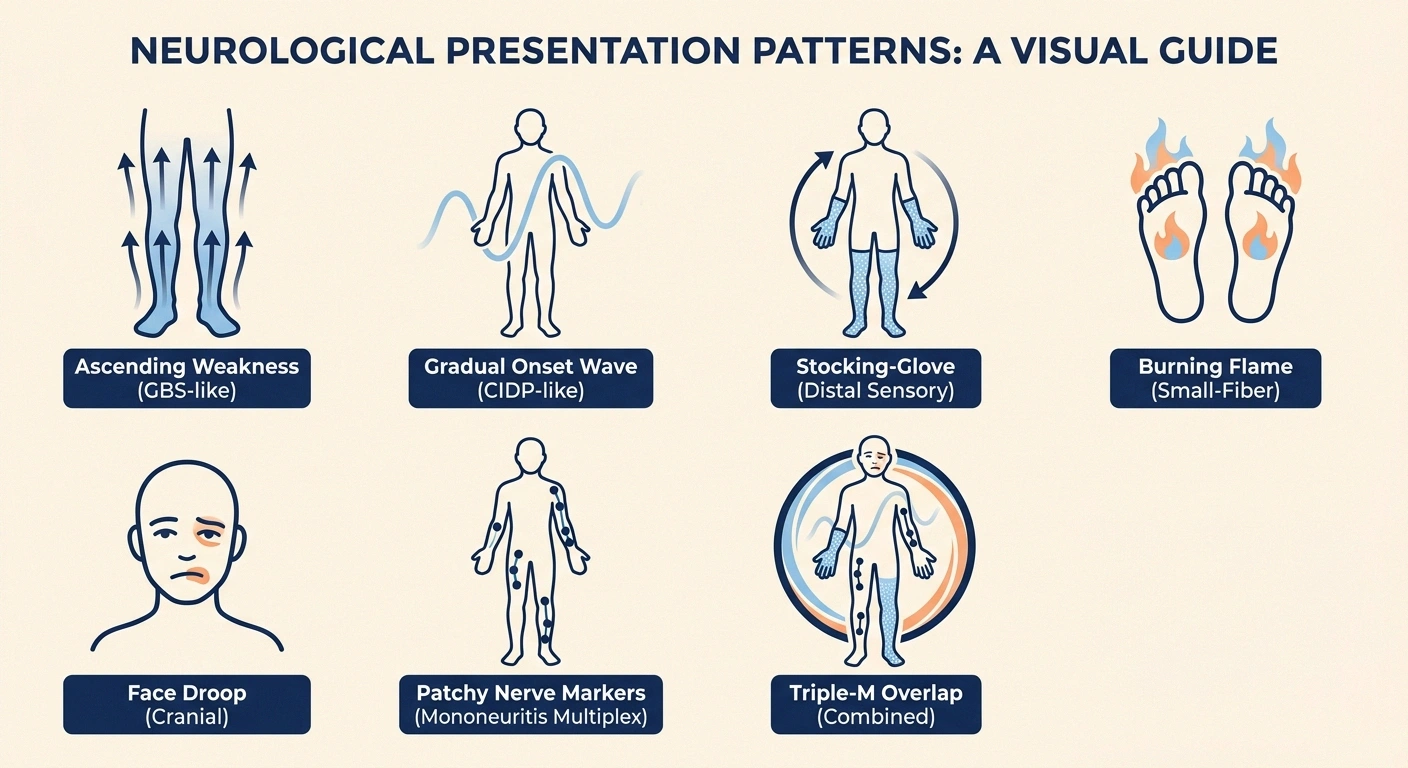
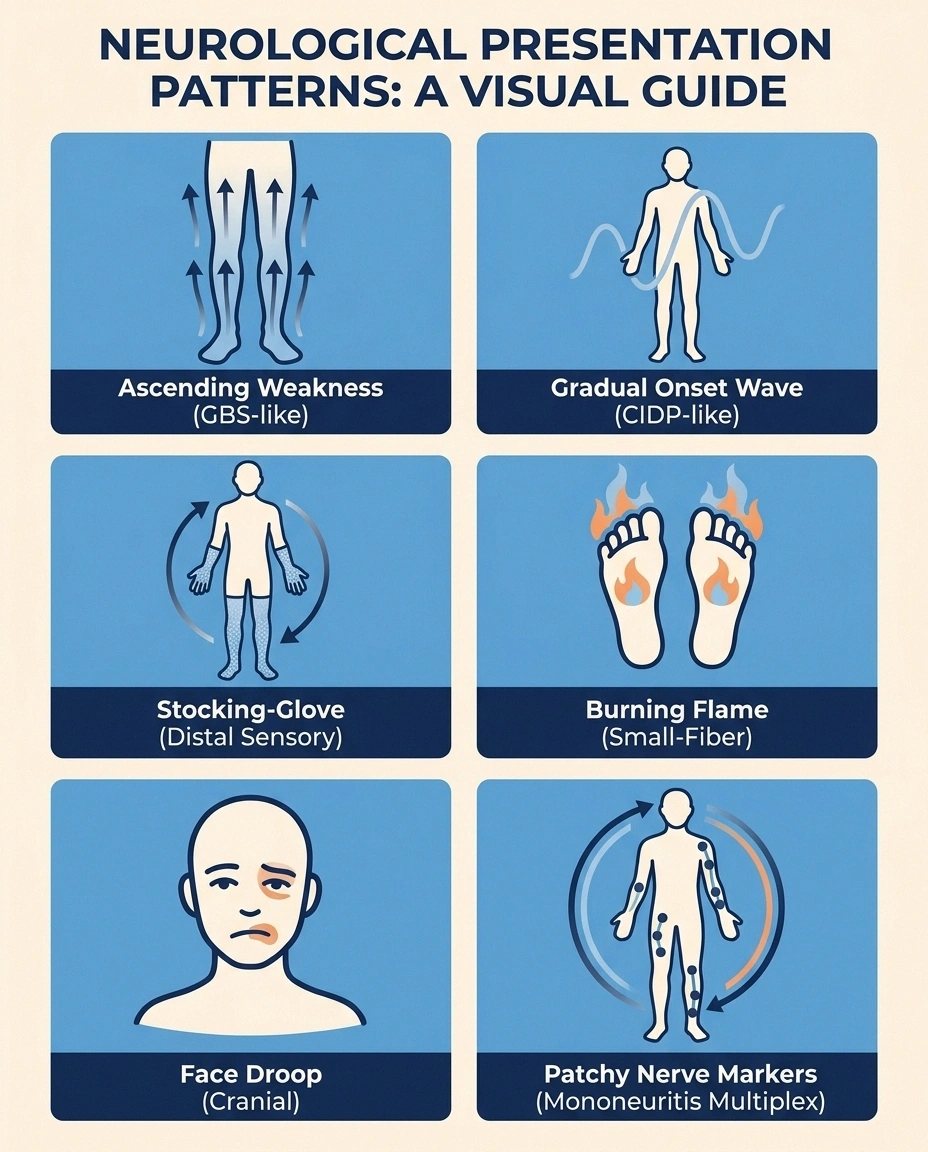
Unlike chemotherapy-induced neuropathy, which tends to follow a predictable pattern of glove-and-stocking numbness in feet and hands, immune-mediated neuropathy from checkpoint inhibitors can show up in several distinct forms. Knowing the patterns helps you recognize what's happening sooner.
The Guillain-Barré-Like Presentation
This is the most feared form. It looks just like classic Guillain-Barré syndrome — weakness that starts in the feet and ascends upward over days to a week or two, with loss of reflexes, tingling, and in severe cases trouble breathing or swallowing. About 30 percent of patients with this presentation need ventilator support. Mortality, even with treatment, runs around 10 to 15 percent. This form demands ICU-level care.
The CIDP-Like Presentation
A slower-onset relative of Guillain-Barré, this version comes on over more than 8 weeks. It causes progressive weakness and sensory loss that doesn't reach the dramatic pace of the GBS-like form but causes significant disability. It's more often associated with nivolumab and is what your neurologist may call chronic inflammatory demyelinating polyradiculoneuropathy.
Distal Sensory Neuropathy
This is the mildest end of the spectrum and the most common form. Numbness, tingling, and burning in the feet and hands — the classic stocking-and-glove pattern. It usually doesn't progress to weakness. It often resolves with treatment or even spontaneously after the drug is held.
Small-Fiber Neuropathy
Burning pain, sensitivity to touch, sometimes autonomic symptoms like changes in sweating, blood pressure swings on standing, or gastrointestinal issues. Skin biopsy may be needed to confirm. Often missed in the early stages because nerve conduction studies look normal in small-fiber damage.
Cranial Neuropathies
Sudden facial drooping that looks like Bell's palsy. Double vision from eye-muscle weakness. Vision changes from optic nerve inflammation. These can occur in isolation or with other neurological symptoms.
Mononeuritis Multiplex
Patchy, asymmetric nerve damage — one nerve in one arm, another nerve in the opposite leg. It's an inflammatory pattern that suggests the immune system is attacking specific nerves rather than all of them at once.
The Dreaded Overlap Syndrome
The most dangerous presentation isn't neuropathy alone — it's neuropathy combined with myasthenia gravis (a different autoimmune nerve-muscle connection disease) and inflammatory muscle damage. Doctors call it the “triple-M overlap.” It carries the highest mortality of any checkpoint inhibitor neurological side effect. Anyone with neuropathy on these drugs needs to be screened for the myasthenia and muscle pieces too.
When Does It Show Up?
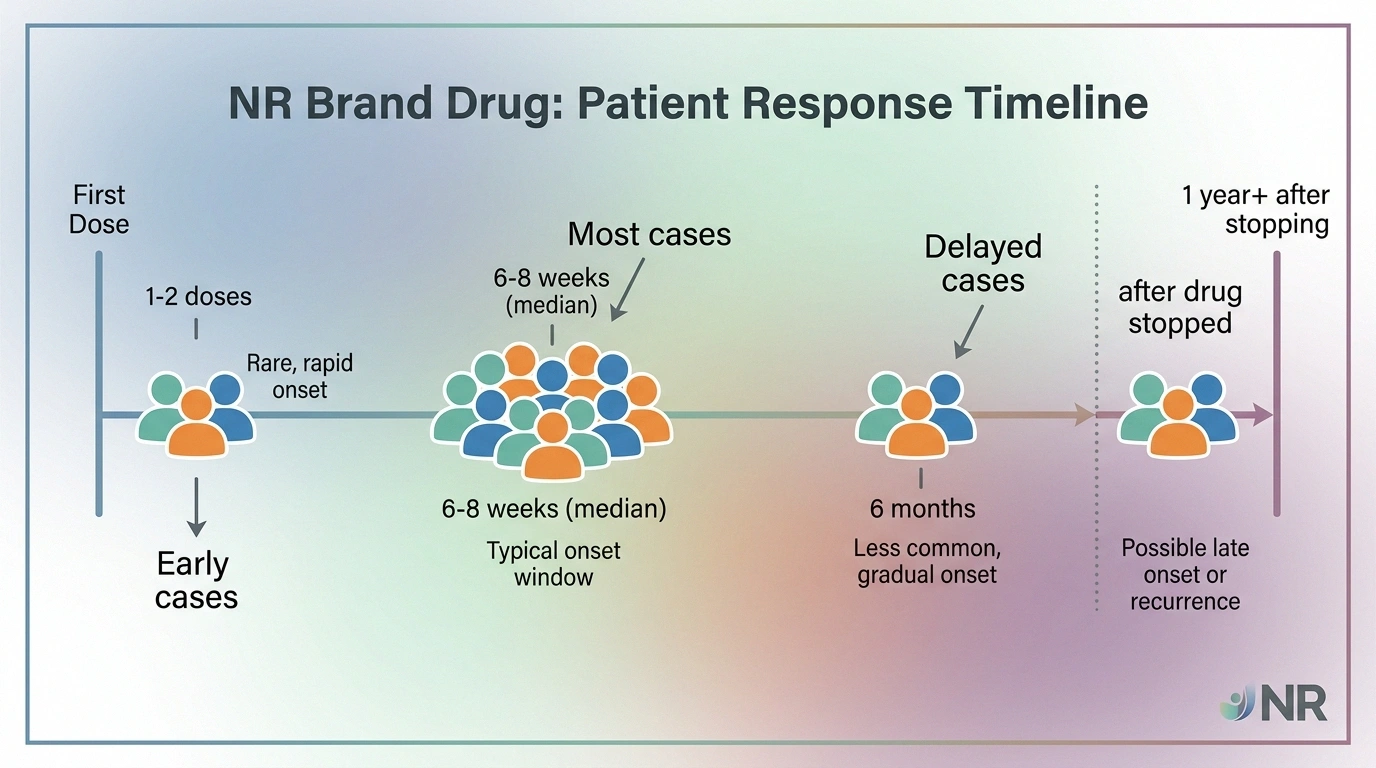
The median time from starting checkpoint inhibitor therapy to developing neurological symptoms is about 6 to 8 weeks. That's after roughly 2 to 4 doses for most patients. But the range is huge. Some patients develop symptoms after a single dose. Others develop them after a year of treatment. About 15 percent of cases appear after the drug has already been stopped, sometimes weeks to months later. This delayed presentation is one of the trickiest parts of the diagnosis — patients and their families don't always make the connection between a drug they stopped taking months ago and new nerve symptoms.
A 10-year European post-marketing surveillance review found that chronic forms of checkpoint inhibitor neuropathy were predominantly associated with nivolumab (Opdivo), while acute Guillain-Barré-like presentations occurred with the full range of available checkpoint inhibitors. About 15 percent of cases appeared after treatment had already been stopped — sometimes weeks to months later.
This is also why the medical record matters. If you've ever been on a checkpoint inhibitor, that history needs to follow you to every doctor you see for nerve symptoms, even years later.
What Symptoms to Report Immediately
Anyone on immunotherapy needs to know which symptoms require an urgent call. These aren't “let's see how it goes” symptoms. These are “page the on-call oncologist now” symptoms:
- New weakness in the legs, feet, hands, or arms — especially if it's getting worse over hours or days
- Trouble walking, balance loss, frequent stumbling
- Tingling, numbness, or burning that started recently and is spreading
- Trouble swallowing, choking on food or liquids
- Slurred or unclear speech
- Trouble breathing, especially when lying flat
- Double vision or sudden vision changes
- Facial drooping or weakness on one side
- Loss of reflexes (your knee jerk doesn't work like it used to)
- New dizziness on standing, fainting episodes
- New bowel or bladder problems
I'm going to repeat this because I've watched families wait when they shouldn't have: do not wait for your next scheduled appointment. Call the same day. Most oncology practices have 24-hour on-call lines for exactly this reason.
How Doctors Make the Diagnosis
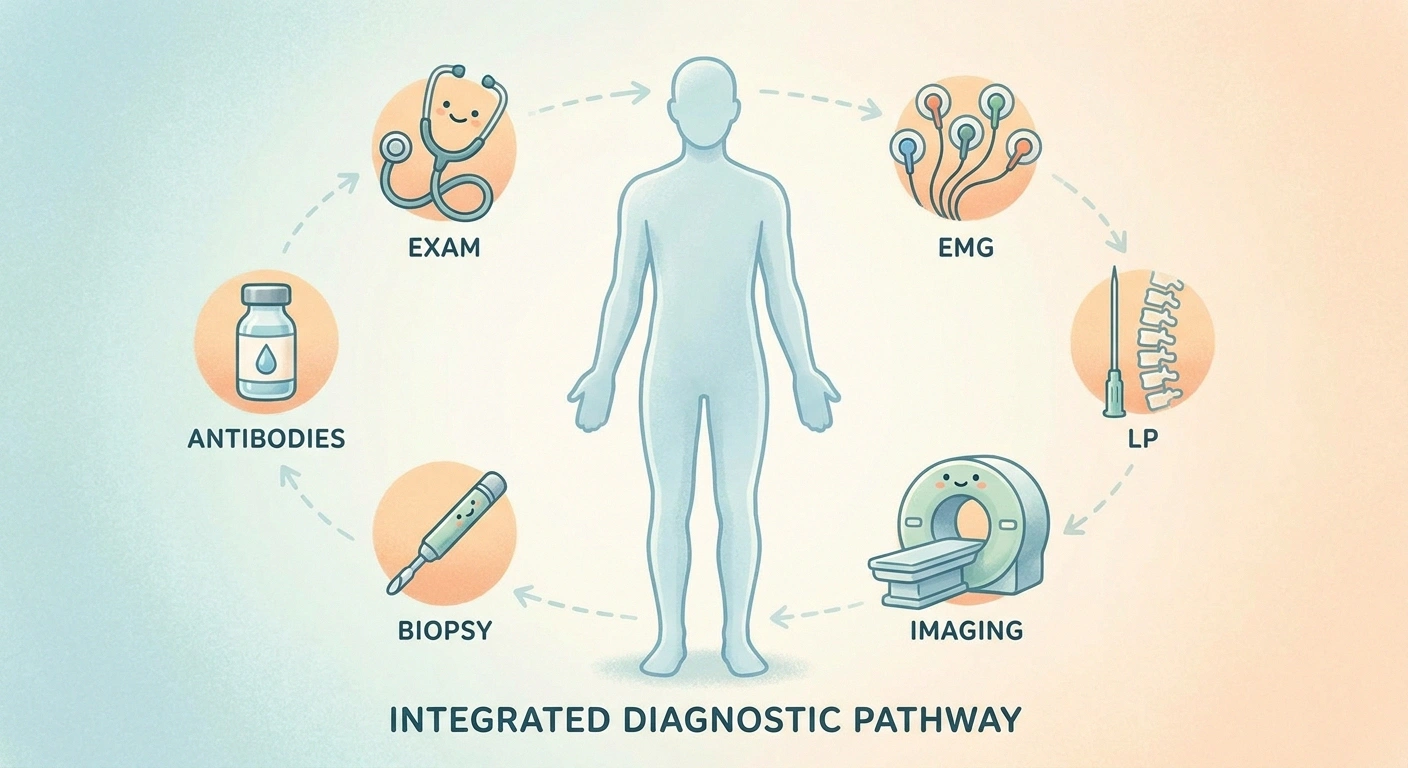
The diagnostic workup for suspected checkpoint inhibitor neuropathy usually includes:
Detailed neurological exam — Strength testing, reflex testing, sensory mapping, cranial nerve check, gait assessment. This is the foundation, and an experienced neurologist can often suggest the diagnosis from the exam alone.
EMG and nerve conduction studies — These test how your nerves and muscles are electrically functioning. They can distinguish demyelinating patterns (typical of GBS-like and CIDP-like presentations) from axonal patterns (the nerve fiber itself damaged). They also help rule out alternatives.
Lumbar puncture (spinal tap) — Often shows what doctors call “cytoalbuminologic dissociation” in the GBS-like cases — elevated protein with few cells. May also show inflammatory cells in other presentations.
MRI of the brain and spine — Rules out other causes like cord compression, brain metastases, or leptomeningeal disease.
Antibody panels — Tests for paraneoplastic antibodies, GBS-associated antibodies, and myasthenia gravis antibodies. Often negative in checkpoint inhibitor cases but ordered to rule out alternatives.
Skin biopsy — For suspected small-fiber neuropathy. Looks at the density of small nerve fibers in the skin.
How It's Treated
Treatment follows a graded approach based on severity, codified in ASCO and NCCN guidelines.
Grade 1 (Mild)
Mild sensory symptoms only — tingling, numbness, no weakness, no impact on daily activities. The checkpoint inhibitor is often continued under close monitoring. Symptomatic treatment with gabapentin, pregabalin, or duloxetine can help with discomfort.
Grade 2 (Moderate)
Symptoms that interfere with daily activities. The drug is held. Oral steroids — usually prednisone at 0.5 to 1 mg per kilogram of body weight per day — are started. Neurology consultation is non-negotiable. Symptoms are reassessed in 1 to 2 weeks.
Grade 3 to 4 (Severe to Life-Threatening)
Significant weakness, inability to walk independently, breathing problems, swallowing problems, or rapidly progressive symptoms. This is hospital-level care. The drug is permanently discontinued. Treatment typically involves:
- IV methylprednisolone at 1 gram per day for 5 days, then a slow oral taper
- IVIG (intravenous immunoglobulin) at 2 grams per kilogram over 5 days, OR
- Plasma exchange — the patient's blood plasma is filtered to remove the rogue antibodies
- ICU monitoring if there's any respiratory or autonomic involvement
- Second-line immunosuppression with rituximab, infliximab, or other agents for steroid-refractory cases
What Recovery Looks Like

The honest numbers, because false reassurance helps nobody:
- About 60 to 70 percent of patients recover to baseline or near-baseline function with timely, appropriate treatment.
- About 20 to 30 percent have some persistent neurological deficits — residual numbness, weakness, or balance issues that don't fully resolve.
- About 5 to 10 percent have severe permanent disability or, in the worst cases, die from the complication.
The single biggest factor that shifts a patient from the third group to the first group is time to treatment. Every day that passes between symptom onset and starting steroids/IVIG matters. This is why the “call the same day” rule is so important.
Can You Restart Immunotherapy After Recovering?
This is one of the hardest conversations in oncology, because the drug that nearly killed you may also be the drug that was keeping your cancer at bay.
For mild Grade 1 events, continuing or restarting the drug is often reasonable with close monitoring. For Grade 2 events, restarting is a case-by-case decision made between the oncologist and a neurologist, weighing how the cancer is responding against the risk of a more severe neurological recurrence. For Grade 3 or 4 events, the standard recommendation is permanent discontinuation. The risk of a worse second event is too high.
If your cancer requires further treatment after a severe immune-related event, alternative treatment options — different drug classes, targeted therapies, traditional chemotherapy — are usually pursued. Some patients can switch to a different checkpoint inhibitor class with a different target, though this remains controversial.
How This Differs From Chemo-Induced Neuropathy
If you've already gone through chemotherapy and developed nerve symptoms, you may have heard the term CIPN — chemotherapy-induced peripheral neuropathy. The two conditions look similar on the surface but are mechanistically different:
Chemotherapy neuropathy is direct nerve toxicity — steroids and IVIG don't fix it. Checkpoint inhibitor neuropathy is an autoimmune attack — it often responds dramatically to steroids and IVIG when treated early. The distinction matters because the treatments are completely different.
- CIPN is direct nerve toxicity. The chemotherapy drug damages the nerve fibers themselves. The damage is usually dose-cumulative. Steroids and IVIG don't fix it.
- Checkpoint inhibitor neuropathy is an autoimmune attack on the nerves driven by your own T-cells. It often responds dramatically to steroids and IVIG, especially if treated early.
The distinction matters because the treatments are completely different. If you're being treated for cancer and have a history of CIPN from earlier chemotherapy, and then you start immunotherapy and develop new or worsening nerve symptoms, that's almost certainly a new immune-mediated problem layered on top — and it needs to be evaluated as such, not dismissed as “your old neuropathy acting up.”
Practical Steps For Anyone on These Drugs
If you or a family member is on a checkpoint inhibitor, here's what I'd want you to have in place:
Drug name: ___________________
Last dose: ___________________
Oncologist: ___________________
24-hour line: ___________________
New neurological symptoms may represent an immune-related adverse event requiring urgent evaluation for steroid therapy, IVIG, or plasma exchange. Please contact my oncology team and consider neurology consultation.
- A written list of warning symptoms on your refrigerator and in your phone.
- The 24-hour on-call number for your oncology team programmed into your phone, not buried in paperwork.
- A baseline neurological note in your chart so any change can be compared against where you started.
- A trusted family member or friend who knows you're on these drugs and what to watch for. Patients in the middle of a neurological event sometimes minimize their symptoms.
- A clear emergency-room briefing card — small laminated card in your wallet that says “I am being treated with [drug name], a checkpoint inhibitor immunotherapy. New neurological symptoms may represent an immune-related adverse event requiring urgent steroid or IVIG treatment.” This single card has changed outcomes in real ER visits.
The Bigger Picture

Checkpoint inhibitors are genuinely one of the most important advances in cancer treatment in the last 30 years. They've turned what used to be terminal diagnoses into manageable conditions for thousands of patients. The neurological side effects are real, but they're also rare. And when caught early, most patients recover.
The goal here isn't to scare anyone off these life-saving medications. It's to make sure that patients and their families know the warning signs so the rare cases that do happen get treated fast. The patients who do best are the ones whose families recognized something was wrong on day two and called immediately. The patients who do worst are the ones who waited a week hoping it would pass.
You're a partner in this. Your oncology team can't watch you 24 hours a day. Knowing what to watch for and what to do about it is one of the most important things you can bring to your own cancer care.
Frequently Asked Questions
Can checkpoint inhibitor neuropathy happen years after stopping the drug?
About 15 percent of cases appear after the drug has been stopped, sometimes months later. The delayed presentations are usually milder than the ones that show up during treatment, but they still need evaluation. If you've ever been on one of these drugs, that history matters for any future neurological workup, no matter how much time has passed.
Is this the same as chemotherapy-induced neuropathy?
No. Chemotherapy neuropathy is direct nerve toxicity from the chemo drug. Checkpoint inhibitor neuropathy is an autoimmune attack on the nerves by your own immune system. The treatments are very different. Checkpoint inhibitor neuropathy often responds well to steroids and IVIG, while chemotherapy neuropathy generally does not.
Will my neuropathy go away if I stop the immunotherapy?
Often yes, but not always quickly. Mild cases may resolve over weeks to a few months after the drug is stopped, sometimes without other treatment. Moderate to severe cases usually need steroids, IVIG, or plasma exchange to recover, and even with treatment about 20 to 30 percent of patients have some persistent symptoms.
How quickly should I call if I notice new symptoms?
The same day. Not tomorrow, not at your next appointment. Most oncology practices have a 24-hour on-call line specifically for immune-related adverse events. Calling promptly when symptoms first appear is the single biggest factor in good outcomes.
Can I restart the drug if I recover?
Sometimes, but it depends on how severe the event was. Mild events often allow continuation or restarting with close monitoring. Severe events usually mean permanent discontinuation, with the cancer treatment plan switching to a different approach. This is a conversation between you, your oncologist, and a neurologist.
Do all checkpoint inhibitors have the same neuropathy risk?
Not quite. The risk is higher with the CTLA-4 drug ipilimumab than with PD-1 or PD-L1 drugs alone, and highest of all with the ipilimumab plus nivolumab combination. Chronic, slowly-progressive neuropathy patterns are more often seen with nivolumab. Acute Guillain-Barré-like presentations can occur with any of them.
What should I tell an emergency room doctor if I go in with new symptoms?
Tell them you're on a checkpoint inhibitor immunotherapy and that new neurological symptoms can be an immune-related adverse event. Many ER doctors are less familiar with these complications than oncologists are. A wallet card stating your treatment and the typical management can speed up the right workup.
Should I avoid checkpoint inhibitors because of this risk?
Almost certainly not, if your oncologist is recommending them. The benefits of these drugs in the right cancers are enormous, and the neurological risk, while serious when it happens, is low. The right approach is informed vigilance — take the drug, know the warning signs, call early if anything changes. That combination produces the best of both worlds.
About the Author