
A reader named Eleanor wrote to me last fall with a question I have heard variations of a dozen times. She had gone fully plant-based two years earlier, mostly for heart health and partly because of how she felt about animal welfare. She felt great for the first eighteen months — more energy, easier digestion, lower cholesterol, a few pounds off. Then, slowly, her feet started tingling. Then her hands. Then she developed an odd balance problem on stairs. Her doctor ran labs and her vitamin B12 came back at 142 pg/mL — well below the threshold where neuropathy starts.
Eleanor was confused, then frustrated, then a little angry. She had been told a plant-based diet was the gold standard for nerve and heart health. Now her nerves were the thing getting hurt. Was she wrong to go plant-based? Did she have to start eating meat again?
The answer is that Eleanor was not wrong about the diet — and she did not have to abandon it. What she needed was an honest conversation about the single biggest blind spot of a well-intentioned plant-based diet and what it takes to do this safely for the long term. Plant-based eating, done well, is genuinely good for nerves. Done without attention to B12, it is one of the easiest ways to give yourself a preventable neuropathy. Both things are true, and this article is going to walk through both.
The Real Benefits — Why Plant-Based Eating Can Help Nerves
Let me start with the upside, because it is real and worth understanding. A well-constructed plant-based diet supplies the conditions in which nerves are most likely to stay healthy long term.
The first benefit is glucose control. The single biggest preventable cause of peripheral neuropathy in the developed world is type 2 diabetes and prediabetes. Diets centered on vegetables, beans, lentils, whole grains, nuts, and fruit are consistently associated with lower fasting glucose, lower A1C, lower insulin resistance, and lower rates of progressing to diabetes. A person who manages their glucose well is protecting their nerves every single day. This is the most powerful nerve-protective effect of plant-based eating — and it gets less attention than it should.
The second benefit is anti-inflammatory loading. Vegetables, fruits, legumes, whole grains, seeds, and nuts deliver polyphenols, fiber, omega-3s (from flax, chia, walnuts, and some algae oils), and a constant low dose of plant compounds that down-regulate inflammation. Chronic low-grade inflammation is a real factor in nerve damage, particularly in diabetic and idiopathic neuropathy. A diet that lowers it gives the nerves a calmer environment to work in.
The third benefit is cardiovascular protection. Healthy circulation is healthy nerve supply. Nerves depend on tiny capillaries to deliver oxygen and remove waste. When those capillaries are compromised by atherosclerosis or vascular disease, the nerves they supply start to die back. Diets high in plants and low in saturated fat consistently improve markers like LDL cholesterol, blood pressure, and triglycerides. Healthier blood vessels means healthier nerve supply.
The fourth benefit is weight management. Excess body weight, particularly visceral fat, drives insulin resistance and systemic inflammation. Most well-constructed plant-based diets make it easier to maintain a healthy body weight without constant calorie counting, because the fiber and water content of the foods are filling.
None of this is hypothetical. Studies in diabetic populations have shown nerve function measurements improve over months on properly designed plant-based diets, particularly when paired with consistent exercise. The frame “plants are bad for nerves” is wrong. The honest frame is: plants are good for nerves if the one vulnerability is addressed. That vulnerability is vitamin B12.
The B12 Problem — Why Plant-Based Eaters Are at Risk
Vitamin B12 (cobalamin) is the single nutrient that creates a genuine, non-negotiable risk for people on plant-based and vegan diets. Understanding why takes a minute of biochemistry — but the practical implication is simple.
B12 is made by bacteria. Not by plants. Not by animals. By microorganisms, specifically. Animals get B12 either by eating other animals that have it stored in their tissues, or by ingesting it incidentally from bacteria in soil, water, or their gut. The B12 that ends up in your steak, your egg yolk, or your milk is bacterial in origin — concentrated and stored by the animal you ate.
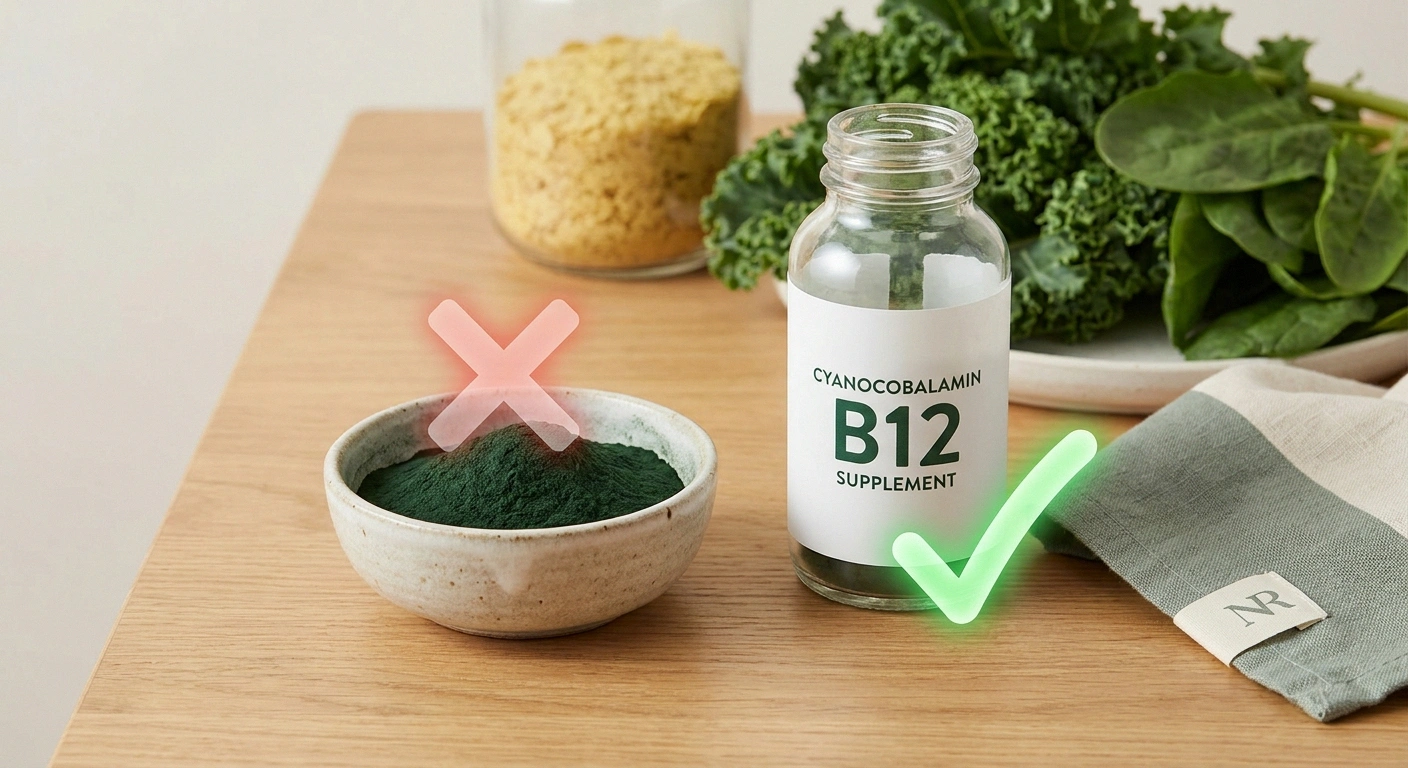
Plants do not synthesize B12. They do not need it for their own biology. Crops grown in modern agriculture, washed clean of soil bacteria and treated for storage, contain essentially zero B12. The traditional answer that “spirulina has B12” or “nutritional yeast naturally contains B12” is mostly wrong — spirulina contains B12 analogs that the human body cannot use, and nutritional yeast only contains B12 if it has been deliberately fortified with synthetic cyanocobalamin during production.
This means that a person eating a strictly plant-based diet who does not supplement or eat fortified foods will, over time, run out of B12. The body has substantial liver stores — typically three to five years' worth — so the consequences are delayed. Plant-based eaters often feel great for the first one to two years, then experience a slow decline as stores deplete. This is exactly the pattern Eleanor described.
What does B12 do in the nervous system? It is essential for myelin maintenance — the fatty insulation around nerve fibers. Without enough B12, myelin starts to degrade, particularly in the long sensory tracts of the spinal cord and the long peripheral nerves of the legs. The result is a distinctive condition called subacute combined degeneration, which causes:
- Tingling, burning, or numbness in the feet and hands (length-dependent pattern)
- Loss of balance and coordination, particularly noticeable on stairs and in the dark
- Weakness in the legs that progresses if untreated
- In severe cases, cognitive symptoms — confusion, memory problems, depression, even psychiatric changes
- Macrocytic anemia (large red blood cells), though this often shows up later than the neurological symptoms
The cruelest aspect of B12 deficiency neuropathy is that the longer it goes untreated, the less reversible it becomes. Early deficiency caught and corrected within months is often fully reversible. Deficiency that has been silently progressing for years can leave permanent nerve damage even after B12 levels are normalized. This is why early detection and prevention matter so much.
This is not theoretical. B12 deficiency neuropathy is one of the most common preventable causes of nerve damage, and the population at highest risk includes long-term plant-based eaters who never thought to supplement.
How to Supplement B12 Correctly
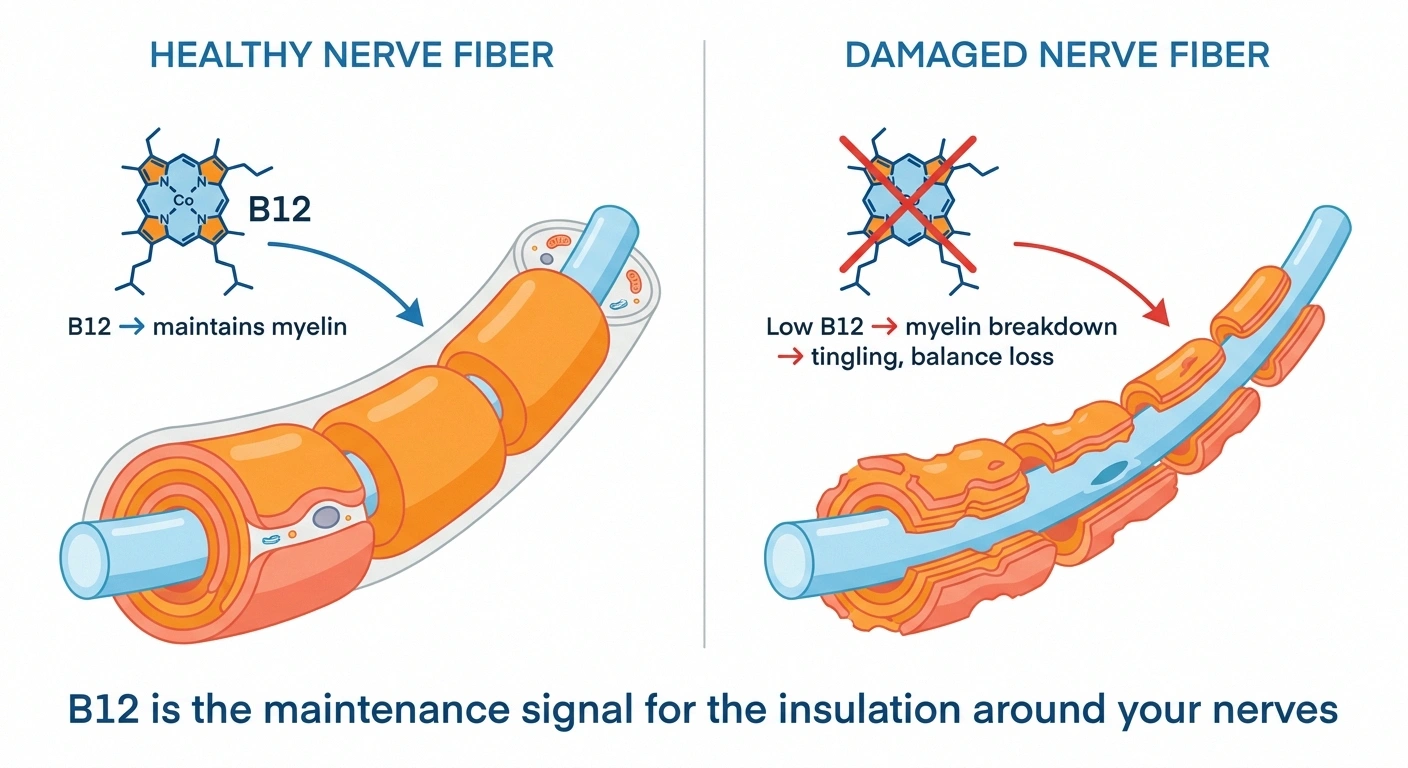
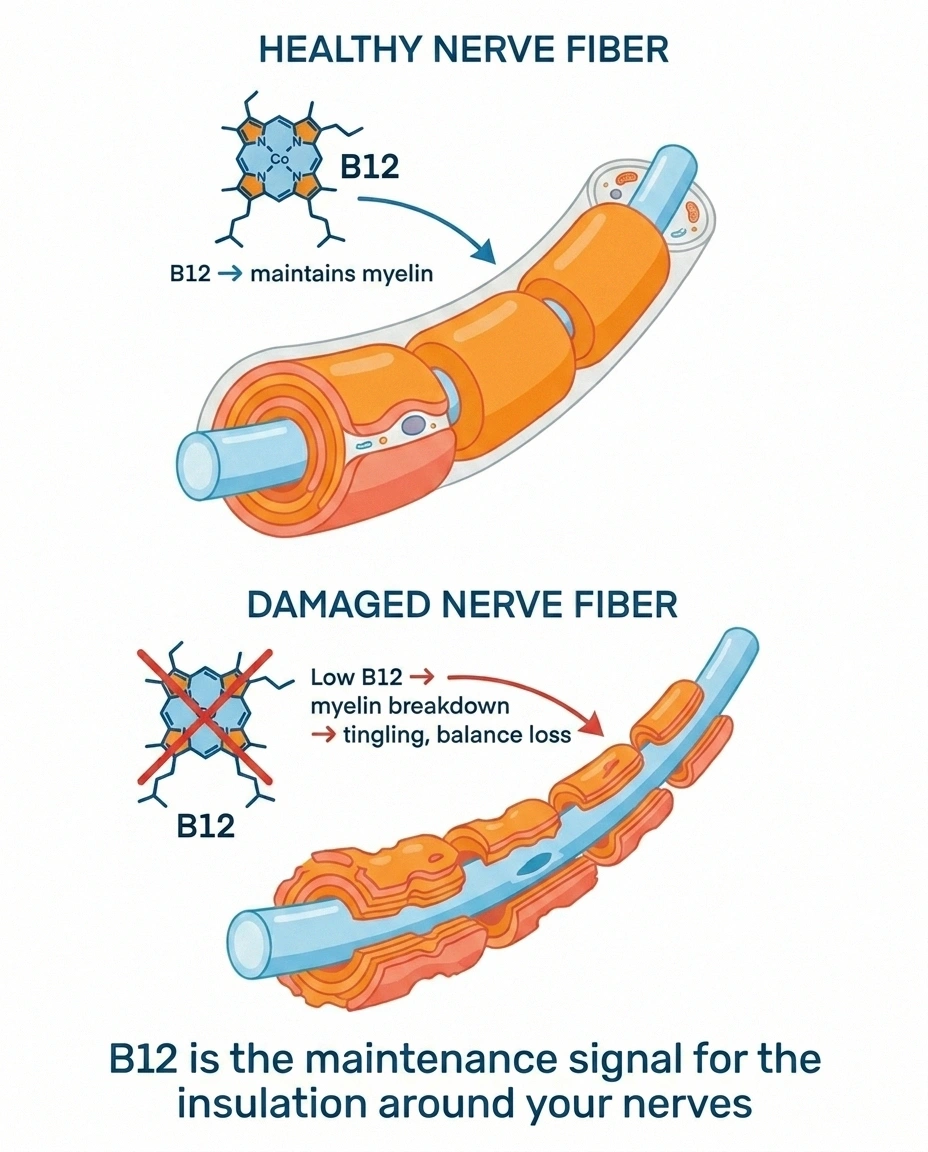
The fix is genuinely simple and inexpensive. There is no reason a person on a plant-based diet should ever develop B12 deficiency in the modern era. The strategy:
Supplement reliably with cyanocobalamin or methylcobalamin. Both forms work. Cyanocobalamin is more stable, cheaper, and has the most evidence behind it for supplementation. Methylcobalamin is the activated form and is sometimes preferred for people with absorption issues or specific gene variants — but for most people, cyanocobalamin is fine.
Dose: the absorption physiology matters. The intrinsic factor pathway that delivers B12 to your bloodstream is saturable — it can only absorb about 1.5 micrograms of B12 at a time. Higher doses spill over into a passive absorption pathway that captures about 1% of the dose. This is why supplement labels look so different from your daily requirement.
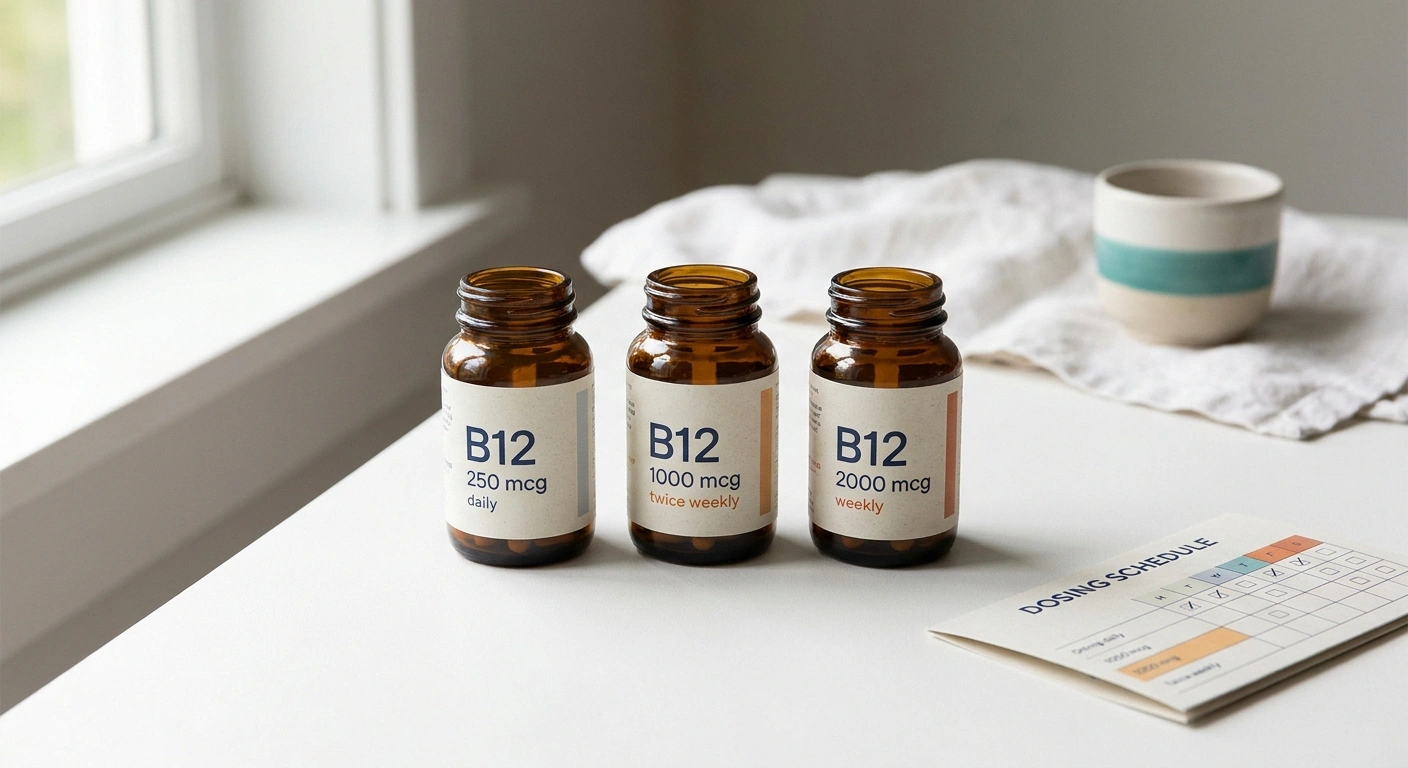
- Daily option: 250 micrograms of cyanocobalamin per day. About 4-5 micrograms gets absorbed by the combined pathways. Easy if you are good at remembering daily pills.
- Twice-weekly option: 1000 micrograms (1 mg) of cyanocobalamin twice a week. About 10 micrograms gets absorbed each dose. Good middle ground.
- Weekly option: 2000 micrograms (2 mg) of cyanocobalamin once per week. Some absorption efficiency is lost but total weekly intake remains adequate. Good for people who forget daily routines.
Sublingual tablets (dissolved under the tongue) and oral tablets work about equally well in most people — the “sublingual is better” claim is largely marketing. What matters is taking it consistently.
Get your B12 level checked annually. A simple serum B12 test runs $20-50 if your insurance does not cover it, and any provider will order it on request. Healthy levels are typically above 400 pg/mL. Levels between 200 and 400 are in the gray zone — sometimes adequate, sometimes not, depending on individual physiology. Below 200 is clear deficiency.
If your B12 is low, ask for additional testing. Methylmalonic acid (MMA) and homocysteine levels are markers of functional B12 deficiency at the cellular level. They can show deficiency before serum B12 drops. If serum B12 is borderline (200-400) and MMA or homocysteine is elevated, you have functional deficiency and need to act.
Severe deficiency may need injections initially. If your B12 is very low or you already have neurological symptoms, your provider may start you on a course of intramuscular B12 injections to rapidly restore levels. After the loading phase, oral supplementation can usually maintain levels just as well.
Consider the other absorption issues. Even people on plant-based diets who supplement can have low B12 if their absorption is compromised. Common culprits: long-term proton pump inhibitor or H2-blocker use (acid reduces B12 absorption), metformin (lowers B12 over time), pernicious anemia (autoimmune destruction of intrinsic factor), gastric bypass surgery, age-related decline in stomach acid production. If you are on any of these medications or have any of these conditions, your supplementation needs may be higher.
Other Nutrients to Watch — Beyond B12
B12 is the biggest single risk, but a well-constructed plant-based diet should keep an eye on a few other nutrients that matter for nerve health.
Vitamin D. Most people in northern latitudes — plant-based or not — run low on vitamin D, particularly in winter. Vitamin D plays a role in nerve function and possibly in modulating neuropathic pain. A daily supplement of 1000-2000 IU is reasonable for most adults; ask your provider to check your level and adjust.
Omega-3 fatty acids. Specifically the long-chain forms EPA and DHA, which the body makes in tiny amounts from plant-source ALA (in flax, chia, walnuts). The conversion is inefficient — typically 1-10% from ALA to EPA, less from ALA to DHA. Plant-based eaters who want robust EPA and DHA intake should take an algae-based omega-3 supplement (300-500 mg combined EPA/DHA daily). This supports nerve membrane structure and may help with the inflammation side of neuropathy.
Iron. Plant sources of iron are non-heme and absorbed less efficiently than the heme iron in meat. Most plant-based eaters do fine, but iron deficiency anemia can cause its own neurological symptoms (fatigue, “restless legs,” cognitive fog) that complicate the picture. Pair iron-rich foods with vitamin C sources to improve absorption.
Iodine. Plant-based diets that minimize iodized salt and avoid dairy can run low on iodine. Iodine deficiency can affect thyroid function, and thyroid problems can cause peripheral neuropathy independently. Consider iodized salt in moderate amounts or a low-dose iodine supplement.
Zinc. Some plant-based eaters run low on zinc, which can affect immune function and indirectly nerve health. Pumpkin seeds, cashews, lentils, and chickpeas are good sources.
Choline. Important for brain and nerve function. Lower in plant-based diets than omnivorous diets. Soybeans, tofu, quinoa, broccoli, and Brussels sprouts contribute. A multivitamin that includes choline is reasonable for plant-based eaters who do not eat these foods regularly.
Calcium. Important for nerve signal transmission. Tofu (calcium-set), fortified plant milks, leafy greens like kale and collards, and almonds are good sources.
None of these are emergency-level issues for most plant-based eaters. They are simply things to be aware of and check periodically. The point is not to scare anyone away from plant-based eating — it is to make sure plant-based eating is done with eyes open.
What a Nerve-Protective Plant-Based Diet Actually Looks Like
If I were writing the prescription for someone who wants to eat plant-based for the long term and protect their nerves, it would look something like this:
The Foundation: Daily Eating Pattern
Breakfast. Steel-cut oats or oatmeal with ground flax, walnuts, and berries. Or whole-grain toast with mashed avocado, tomato, and hemp hearts. Or a smoothie with frozen berries, spinach, plant protein powder (pea or soy), banana, and a tablespoon of nut butter. Coffee or tea is fine.
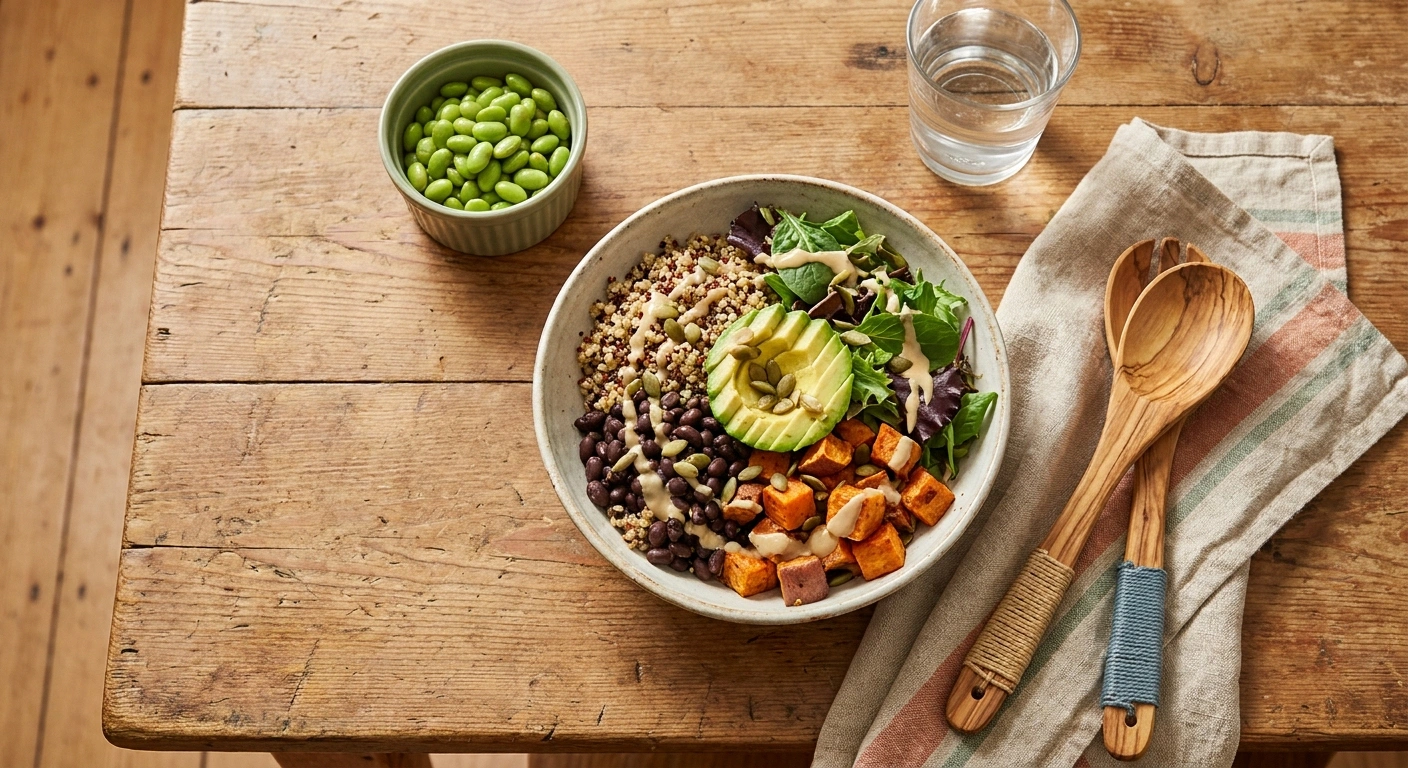
Lunch. A grain bowl built on quinoa, farro, or brown rice with a generous serving of beans or lentils, lots of vegetables (raw and roasted), and a flavorful dressing made with olive oil, lemon, and herbs. Tofu, tempeh, or edamame add protein and stay satisfying.
Snack. A handful of nuts and an apple. Or hummus and carrot sticks. Or whole-grain crackers with avocado.
Dinner. Bean-based main dish (lentil shepherd's pie, chickpea curry, black bean tacos, three-bean chili) with non-starchy vegetables and a moderate portion of slow-carb grain or starchy vegetable. Olive oil drizzled freely.
This pattern delivers protein (40-80 grams daily depending on portions), fiber, anti-inflammatory plant compounds, and the major nutrients except for the ones that require supplementation.
The Supplementation Stack
For a well-constructed plant-based diet, the minimum reasonable supplementation list:
- Vitamin B12: 250 mcg cyanocobalamin daily, or 1000 mcg twice a week (non-negotiable).
- Vitamin D: 1000-2000 IU daily, adjusted based on blood test.
- Algae omega-3 (EPA/DHA): 300-500 mg combined daily.
- Iodine through iodized salt or a multivitamin with iodine.
- Optional: a basic multivitamin that includes iron, zinc, B6, choline, and selenium for backup.
Annual blood work to check B12, vitamin D, iron, ferritin, and a complete blood count is reasonable maintenance. Add MMA or homocysteine if you have any neurological symptoms or B12 is borderline.
For People Already Diagnosed With Neuropathy

If you already have neuropathy — whether B12-related or from another cause like diabetes, chemotherapy, or idiopathic causes — the question of plant-based eating becomes practical: would it help or hurt?
For diabetic neuropathy: a well-constructed plant-based or near-plant-based diet is one of the most evidence-supported dietary interventions. It improves glucose control, reduces inflammation, often reduces the medication burden, and frequently leads to nerve function improvement over months. The B12 supplementation rules apply with extra urgency because the underlying neuropathy raises the stakes.
For chemotherapy-induced peripheral neuropathy: the diet itself does not affect the chemotherapy damage directly, but a nutrient-rich anti-inflammatory pattern supports nerve repair. Supplementation for B12 and omega-3s is particularly important.
For idiopathic neuropathy: a thoughtful plant-based diet supports the underlying conditions of nerve health — glucose stability, anti-inflammatory tone, vascular health, healthy weight. It is unlikely to harm and may help.
For B12-deficiency neuropathy that has already happened: you need to fix the B12 deficiency aggressively first (usually with high-dose oral supplementation or injections), then maintain levels properly going forward. Continuing a plant-based diet is fine once supplementation is solid — but the cause of your neuropathy is now an obvious red flag to monitor lifelong.
The Common Mistakes I See
From years of conversations with readers, the patterns of what goes wrong are familiar:
Believing certain plant foods are reliable B12 sources. Spirulina, chlorella, fermented foods, sea vegetables — none reliably supply absorbable B12. The B12 analogs in spirulina may actually compete with real B12 for absorption. Do not rely on these.
Assuming “I've been vegetarian for years and I'm fine.” Lacto-ovo vegetarians who eat eggs and dairy regularly usually get enough B12. Strict vegans without supplementation eventually do not. The slow depletion of liver stores means that “I've been fine for two years” is not evidence you will be fine in year four.
Taking a multivitamin and assuming that covers it. Most general-population multivitamins contain only 6-25 micrograms of B12. That is enough to prevent overt deficiency in an omnivore who is also getting B12 from food. For a strict plant-based eater, it is often borderline. Check the label and decide whether the dose is enough for your situation.
Confusing “natural” with “adequate.” The B12 in supplements is synthetic — produced industrially by bacteria in fermentation tanks. It is identical to the B12 in animal foods and works exactly the same way in your body. The “natural sources only” preference is not protecting you from anything and is putting you at risk.
Ignoring early symptoms. Tingling in the feet, balance changes, brain fog, fatigue, mood changes — these are often dismissed as “getting older.” If you eat plant-based and you have any of these, get your B12 checked.
When to Loop in Your Doctor
For anyone going plant-based or already eating that way, the routine touchpoints with your doctor should include:
Tell them. Many physicians assume their patients eat a standard mixed diet. If you are plant-based, say so explicitly and ask for the appropriate monitoring.
Get baseline labs. Before starting a strict plant-based diet, or as soon as possible after starting, get B12, vitamin D, iron, ferritin, and a basic metabolic panel checked. This gives you a reference point.
Recheck annually. Particularly B12 and vitamin D. If anything is borderline, add MMA or homocysteine to clarify.
Bring up any neurological symptoms early. Tingling, balance problems, brain fog, mood changes, fatigue — these warrant investigation even if you think they are unrelated to diet.
Talk to a registered dietitian if you can. Particularly if you have a chronic condition like diabetes, kidney disease, or an established neuropathy. A dietitian who specializes in plant-based nutrition can help you build a meal pattern that protects everything that matters.
The Honest Bottom Line

Plant-based eating done well is one of the better choices a person concerned about long-term nerve health can make. It improves the upstream conditions — glucose, inflammation, vascular health, weight — that drive most preventable neuropathy.
Plant-based eating done without B12 supplementation is one of the easier ways to give yourself a preventable neuropathy.
Both statements are true. The difference is whether you take the B12 question seriously. If you do, plant-based eating is an excellent long-term nerve-protective strategy. If you do not, you are running a clock that you cannot see, with consequences that get less reversible the longer you wait.
Eleanor, by the way, recovered most of her function. Her B12 was corrected with three months of injections followed by daily oral supplementation. Her tingling resolved, her balance came back, and she stayed plant-based — this time, with B12 firmly in her routine and a calendar reminder to check her levels every year. Her story is the encouraging version. The discouraging versions are the readers who waited too long.
Frequently Asked Questions
How long can I be plant-based before B12 deficiency becomes a problem? The body typically holds three to five years' worth of B12 in the liver. People who go strict plant-based without supplementation usually do not see deficiency-related neuropathy for at least 18 months and sometimes not for several years. But by the time you have neurological symptoms, the deficiency has been silently progressing. The right answer is to supplement from day one of going plant-based, not to wait for symptoms.
Is nutritional yeast a reliable B12 source? Only if it has been specifically fortified with B12, which most commercial nutritional yeast brands are. Check the label. Two tablespoons of fortified nutritional yeast typically contains your daily B12 requirement. If you eat nutritional yeast regularly, you can use it as part of your strategy — but a dedicated B12 supplement is more reliable.
Do I need to take methylcobalamin instead of cyanocobalamin? For most people, no. Cyanocobalamin is converted to the active forms by the body, is more stable, less expensive, and has the longest track record of safety and efficacy. Methylcobalamin can be preferable for people with certain genetic variations (MTHFR mutations are sometimes cited) or specific metabolic conditions, but the practical difference for most plant-based eaters is minimal.
Can I get enough protein on a plant-based diet to support nerve and muscle health? Yes, with intention. Beans, lentils, tofu, tempeh, edamame, seitan, quinoa, nuts, seeds, and plant protein powders can easily get most people to 1.0-1.4 grams of protein per kilogram of body weight per day. Combining several protein sources across the day covers the full amino acid profile.
If I add eggs and dairy back, will that solve the B12 problem? A lacto-ovo vegetarian who eats eggs and dairy regularly usually gets enough B12 from food. One large egg has about 0.5 micrograms, and 8 ounces of milk has about 1.2 micrograms. Most lacto-ovo vegetarians who consume both daily are fine. Strict vegans cannot rely on this.
How quickly will my neuropathy improve after correcting B12? Symptoms that have been present for weeks to a few months often improve substantially within weeks of correction. Symptoms present for many months may take six to twelve months to improve and may not be fully reversible. Severe long-standing B12 deficiency neuropathy can leave permanent damage. The earlier the correction, the better the outcome.
Will eating plant-based slow down my diabetic neuropathy? A well-constructed plant-based diet that improves glucose control can substantially slow or even partially reverse early diabetic neuropathy. This requires consistent meal planning, attention to glycemic load (favoring slow carbs over fast), adequate protein, and coordination with your diabetes care team — particularly if you are on insulin or sulfonylureas, where doses may need adjustment as the diet improves glucose levels.
Is keto better than plant-based for neuropathy? Both can work for diabetic neuropathy — they both improve glucose control by different mechanisms. Plant-based has more evidence for long-term cardiovascular safety and is easier for most people to sustain. Strict keto can produce faster glucose improvements but carries its own risks (cholesterol changes in some people, sustainability issues). The “better” diet is the one you will actually follow consistently for the long term.
About the Author