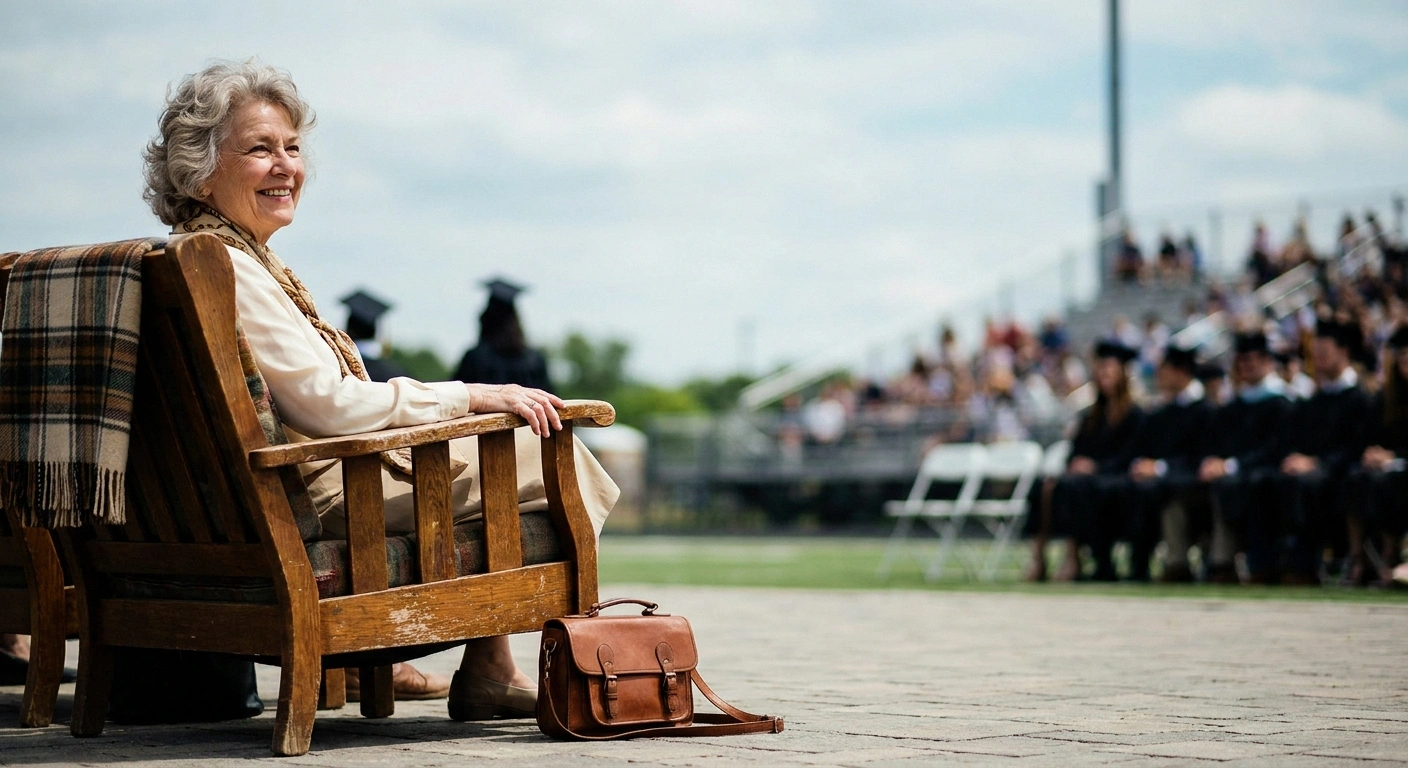
Graduations are two hours long and the part you came for lasts about eight seconds.
That is the whole problem in one sentence. Almost every other event lets you step out, walk around, find a wall to lean on, go home early if the day turns against you. A graduation does not, because leaving means risking the one moment that made the trip worth taking, and nobody can tell you exactly when in the alphabet that moment will land.
Everything below is organized by when it happens, from the phone call two weeks out to the recovery day afterward. Most of it costs nothing. One item, the call, changes the day more than everything else combined.
Why Graduation Is Harder Than It Looks
It stacks conditions that rarely appear together.
Seating is adversarial by design. Backless aluminum bleachers, or hard folding chairs on grass, packed close, with no armrest to push against when you want to stand.
Temperature runs to extremes. Outdoor ceremonies mean sun on metal and heat radiating off a field. Indoor ones mean a hot crowded gymnasium. Both aggravate nerve symptoms, and they do it in opposite directions.
The walk in is long because overflow parking is far away, and the walk out is worse because you cannot set your own pace in a crowd of two thousand.
And the whole thing is immovable. You cannot arrive late, you cannot slip out at the halfway point, and you cannot know in advance which minute of the second hour holds the name you are waiting for.
Then there is the part people forget to plan for: the photographs afterward, standing on a lawn, for as long as the family wants. That is where most people actually run out, not during the ceremony.
The Phone Call Two Weeks Out
Call the venue and ask for accessible seating. This is the single highest-value thing on this page.
The whole call, start to finish
You say
“I'm attending the ceremony on the fourteenth and I can't manage bleacher seating. Is there accessible seating, and how do I reserve it?”
Then, while you have them
- Which parking area is closest to that seating?
- Where is the nearest restroom to it?
- Can a companion be seated with me?
- If a chair is not available, may I bring my own folding chair?
No diagnosis, no paperwork, no placard. Venues treat this as a scheduling question, not a medical one. Make the call two weeks out, because the seats are limited and they are usually gone by the final week.
Nearly every graduation venue has it. Chairs with backs, on a flat surface, near an aisle and an exit, usually with a seat for one companion. It is almost never advertised, it rarely requires documentation, and it is frequently sitting empty because nobody asked.
Most people skip this because they assume they do not qualify. You do not need a diagnosis on paper or a placard to say the true thing, which is that standing and sitting on bleachers for two hours is not something you can do.
The script is short. “I'm attending the ceremony on the fourteenth and I can't manage bleacher seating. Is there accessible seating, and how do I reserve it?” That is the entire call. Ask two follow-ups while you have them: where is the nearest accessible parking to that seating area, and where is the nearest restroom.
Do it two weeks out. Accessible seating is limited and it goes.
What to Wear on Your Feet
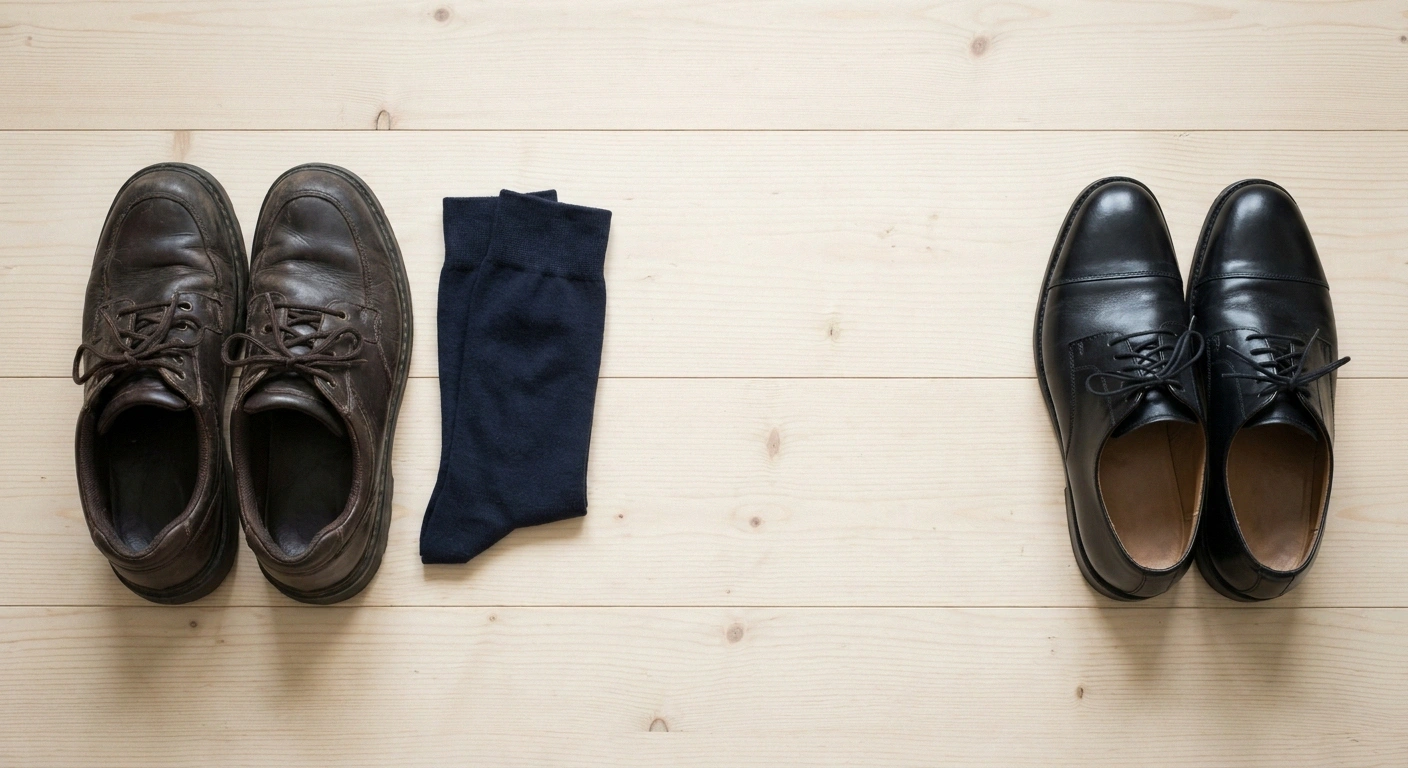
This is not the day for new shoes. It is not the day for dress shoes you wear twice a year, either.
Wear the pair you already trust. If they are too casual for the occasion, a dressier sock and a longer trouser leg solve more than most people expect, and nobody at a graduation is looking at your feet. Broad, cushioned, and already broken in beats formal every time.
Take the seam and pressure-point questions seriously in advance, because you will be sitting still for a long stretch and a seam that is merely annoying at minute ten is a real problem at minute ninety. Our guidance on choosing shoes with neuropathy goes deeper on fit and construction.
Bring a spare pair of socks in the car. Feet swell over a long hot afternoon, and dry socks on the drive home is a small comfort that costs nothing to arrange.
Packing a Small Bag
Keep it to one bag you can carry on a shoulder, so both hands stay free.
One shoulder bag, both hands free
| Item | What it is actually for |
|---|---|
| Firm seat cushion | Spreads pressure and raises you slightly, which makes standing up easier. Firm, not soft. |
| Small towel | Goes between skin and hot metal, and doubles as a cool damp cloth for the back of the neck. |
| Water, more than you think | Dehydration makes nerve symptoms louder and raises the odds of feeling faint in heat. |
| Snack with protein | Ceremonies overrun. Low blood sugar turns a manageable afternoon into a hard one. |
| Light layer | Indoor venues over-cool and outdoor evenings turn cold fast. Cold hands and feet are worse hands and feet. |
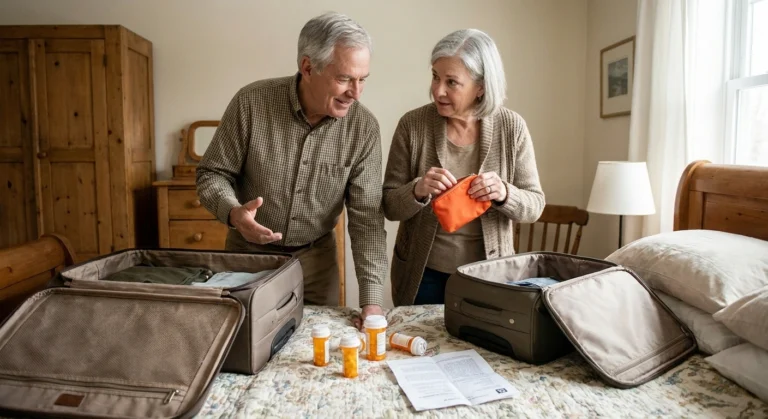
| Medication, plus a phone alarm | An unusual day breaks the routine that normally reminds you. Set the alarm the night before. |
| Spare socks, left in the car | Feet swell across a long hot afternoon. Dry socks for the drive home cost nothing to arrange. |
Water, more than you think. A firm seat cushion. A light layer, because indoor venues over-air-condition and outdoor evenings turn cold fast. A snack with some protein in it, since ceremonies run long and low blood sugar makes nerve symptoms louder. Any medication on your usual schedule, set as an alarm on your phone rather than trusted to memory in an unusual day. Sunglasses and a brimmed hat for outdoor venues.
On the cushion: choose a firm one. A soft cushion feels better for the first ten minutes and then lets you sink, which concentrates pressure under the sit bones and the backs of the thighs. Firm keeps you level and keeps the pressure spread out.
If you use a cane, bring it even on a good day. A folding one lives in a bag unnoticed until the crowd exit, which is exactly when you will want it.
Parking and the Walk In
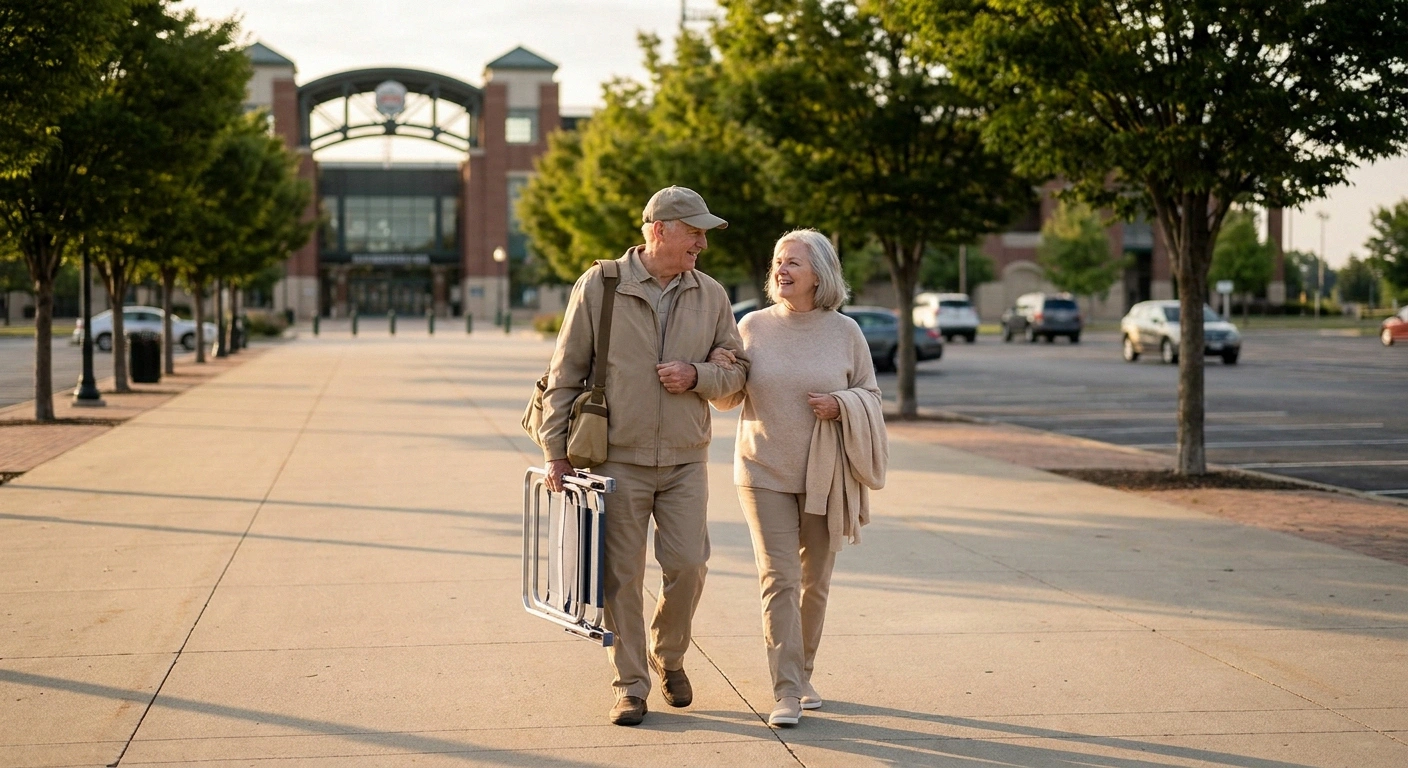
Arrive earlier than feels necessary. Not to get a better seat, but to walk in slowly rather than fast.
The difference between a relaxed walk from the car and a hurried one is the difference between arriving neutral and arriving already flared. Ninety minutes early is not excessive for a graduation, and the extra time in a seat is much cheaper than the extra time on your feet.
Get dropped at the entrance if anyone in your group is driving. Let them park and walk. This is the most obvious accommodation available and the one people are most reluctant to ask for.
Note where you parked and take a photo of the nearest row marker. In a full lot after a long afternoon, a wrong guess about which row costs several hundred extra steps at the exact moment you have the fewest left.
Surviving the Bleachers
If accessible seating did not work out, bleachers are manageable with a few decisions made in advance.
Sit at the end of a row rather than the middle. You get one free side, an easier exit, and something to turn toward when you want to change position.
Get your back against something if there is any upright available. Sitting unsupported for two hours costs more than people expect, and the fatigue shows up in the legs rather than the back.
Keep your feet flat and supported. Feet dangling off a bleacher tier compress the backs of the thighs and reduce blood flow to legs that already need all they can get. If your feet do not reach the tier below comfortably, a folded jacket under them fixes it.
Change position on a schedule rather than in response to pain. Every fifteen minutes, whether or not you feel you need it. Waiting until it hurts means you have already spent time in the position that caused the problem.
Moves You Can Do Without Anyone Noticing
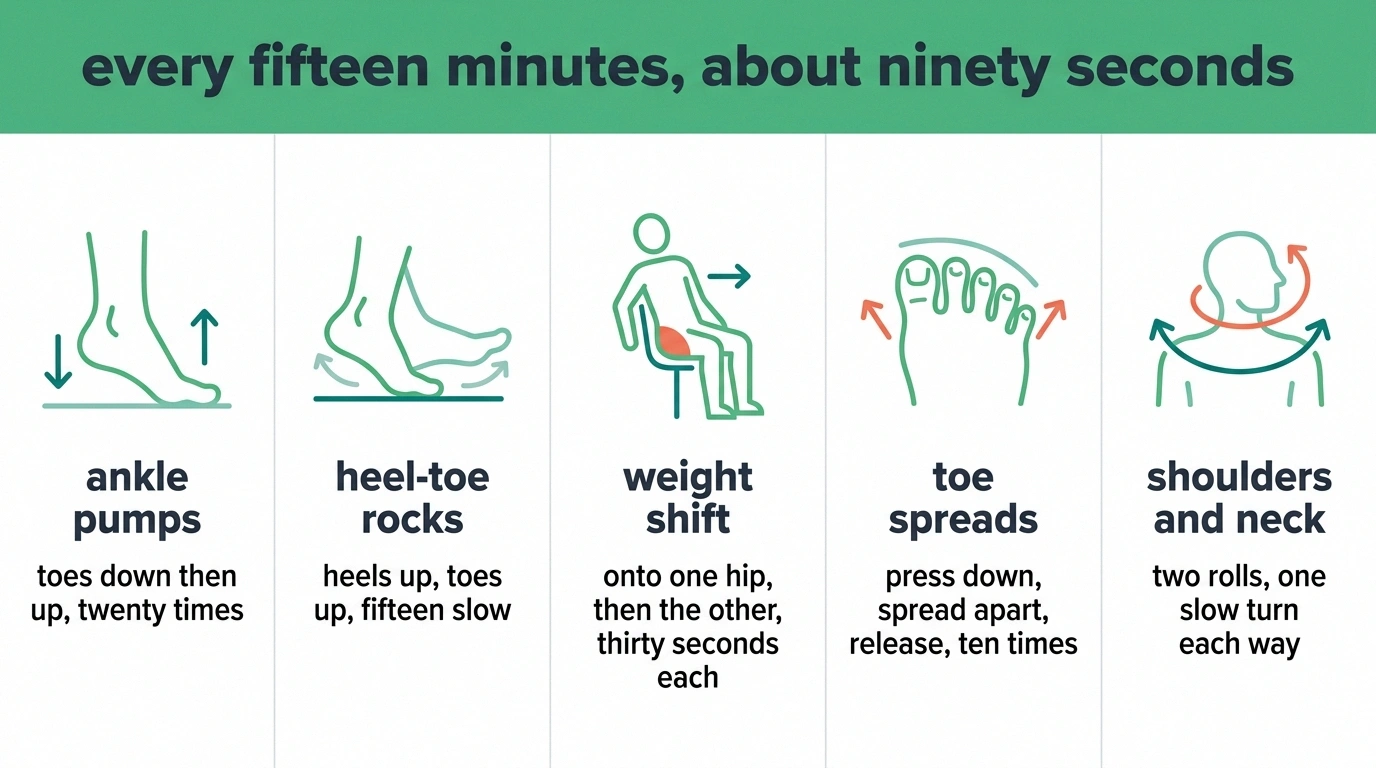
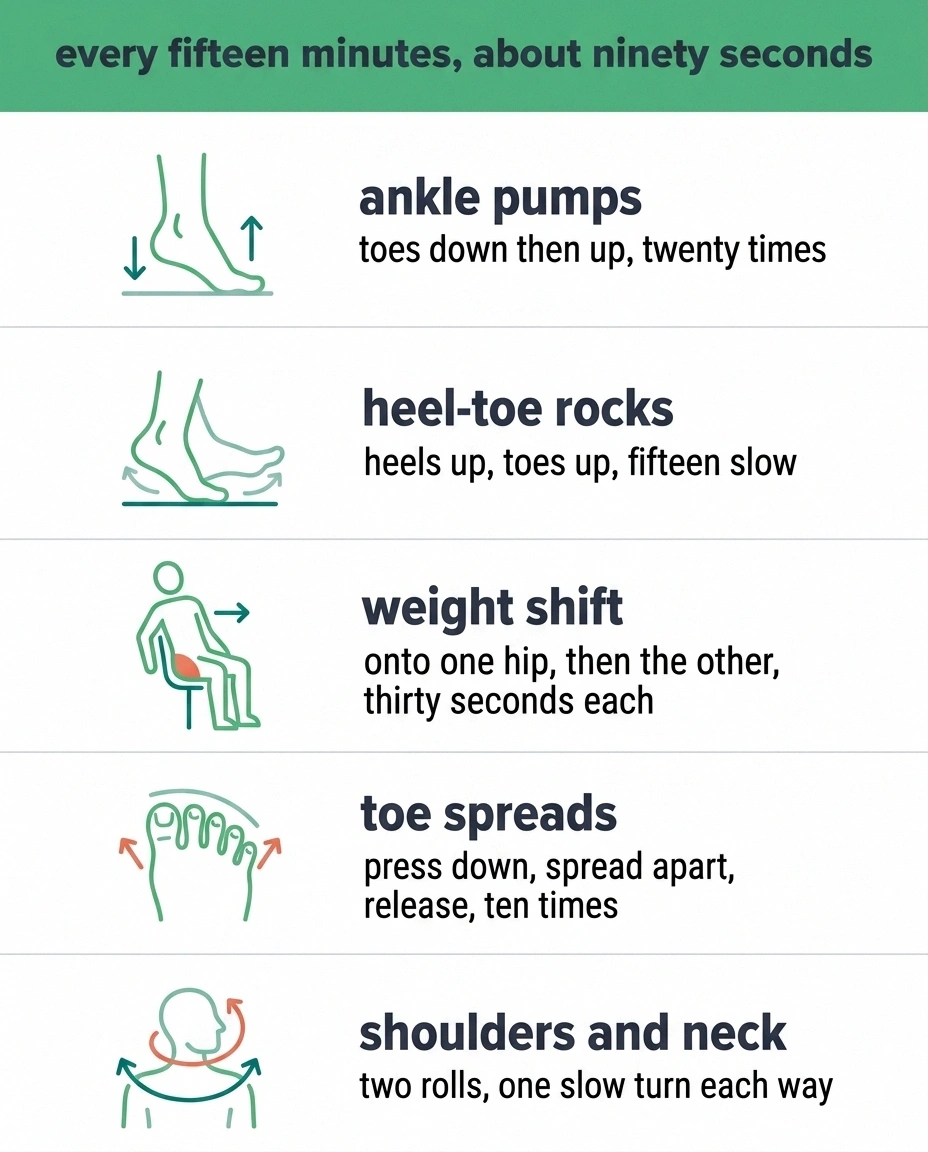
All of these work seated, in a crowd, without drawing a single glance.
Run this every fifteen minutes, not when it starts hurting
The whole rotation takes about ninety seconds and is invisible to everyone around you. Set a repeating vibrate alarm so you are not relying on noticing.
Ankle pumps ×20
Toes down, then up toward the shin. The calf is the pump that returns blood from the foot.
Heel-toe rocks ×15
Lift heels, set down, lift toes, set down. Slowly, alternating.
Weight shift, 30s each
Lean onto one hip, then the other. Relieves the build-up under the sit bones.
Toe spreads ×10
Press the toes down into the shoe, spread them apart, release.
Shoulders and neck
Two slow rolls, one slow turn each way. An hour in one posture tightens more than the legs.
Ankle pumps: point the toes down, then pull them up toward the shin, twenty times. The calf muscle is the pump that returns blood from the foot, and using it is the fastest way to change how the feet feel.
Heel-toe rocks: lift the heels, set them down, lift the toes, set them down, alternating slowly.
Weight shifts: lean slightly onto one hip for thirty seconds, then the other. This relieves the pressure that builds under the sit bones on a hard surface.
Toe spreads: press the toes down into the shoe, then spread them apart, then release.
Shoulder rolls and a slow neck turn each way, since holding one posture for an hour tightens more than the legs.
None of these are a workout. They are circulation, and doing them every fifteen minutes reliably beats doing them once when things get bad. The same principle drives our seated movement routines, which are worth practicing before the day so they feel automatic.
Water Versus the Bathroom Line
There is a real tradeoff here and pretending otherwise leads people to arrive dehydrated, which is worse.
Drink normally through the morning and up until about an hour before the ceremony starts, then taper. Dehydration makes nerve symptoms louder, thickens the blood, and increases the odds of feeling faint in the heat. Going in dry to avoid a bathroom trip is a bad trade.
Use the restroom immediately before you sit down, even if you do not feel you need to. Find out where the accessible restroom is on the way in rather than at the moment you need it, since the accessible one usually has a far shorter line and, more importantly, has a grab bar.
If you do need to go mid-ceremony, go during a speech rather than during the name-reading. Speeches run long and nobody remembers them.
Heat, Metal, and Skin That Cannot Feel It
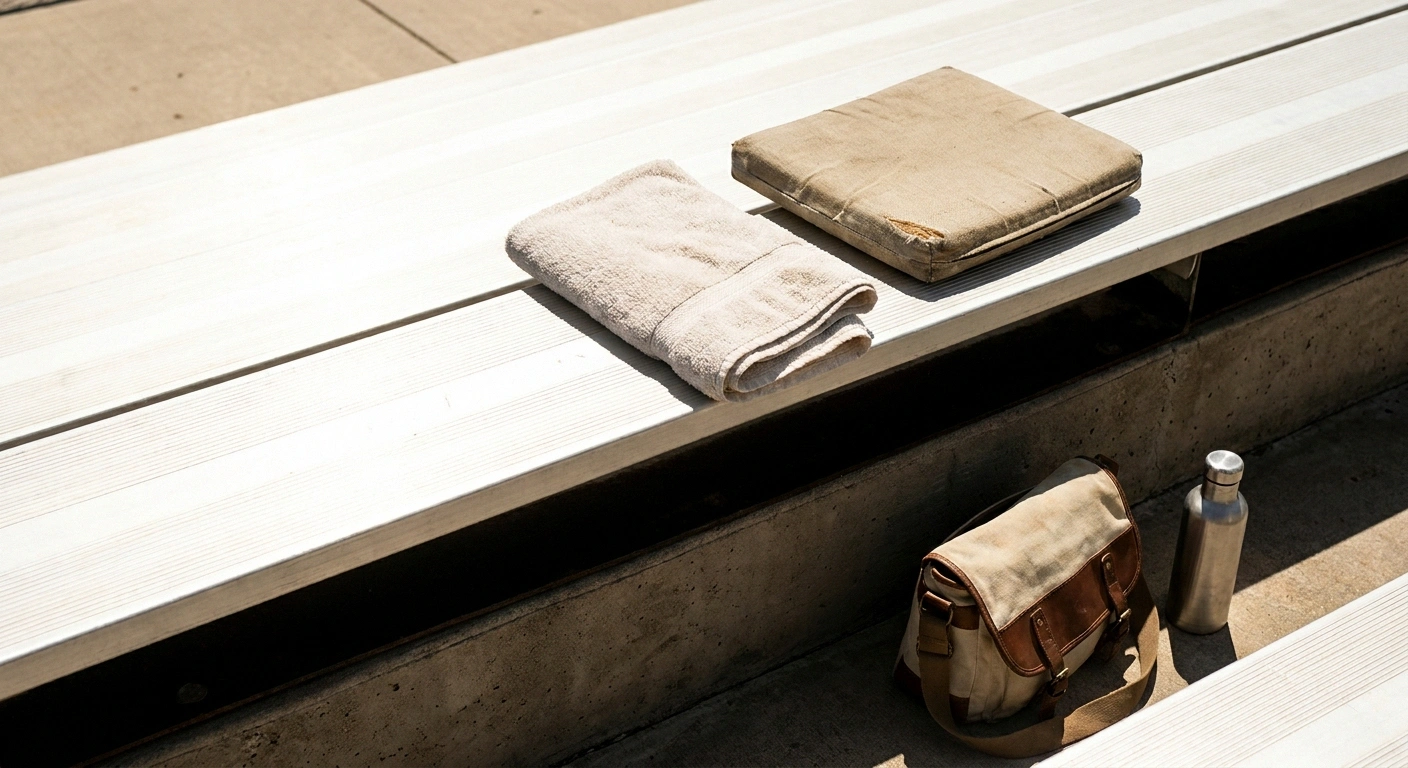
An aluminum bleacher in direct sun gets hot enough to burn skin, and a foot or a thigh with reduced sensation will not reliably tell you that in time.
Put something between you and the metal. A towel, the cushion, a folded jacket. Do this even if the surface feels fine to your hand, because your hand is not the part sitting on it for two hours.
The same applies to pavement and pool decks at outdoor venues. Shoes stay on, always, including on grass.
Find shade for the waiting period before things start, and use the hat rather than saving it for later. A cool damp cloth on the back of the neck is one of the most effective heat interventions there is and it fits in a sandwich bag.
Heat expands the picture in both directions: some people find their burning feet get dramatically worse in warmth, while others find cold air conditioning makes numbness and stiffness worse. Know which one you are and pack for it.
The Moment Their Name Is Called
Decide in advance who is filming, and make it somebody else.
Standing up quickly, raising a phone overhead, holding it steady, and tracking a moving person across a stage is a balance task, done in a crowd, on an uneven surface, at exactly the moment your legs have been still for ninety minutes. It is the single riskiest thirty seconds of the day and it is entirely avoidable.
Give the camera to a grandchild or a cousin who is delighted to have a job. You watch with your eyes. You will remember it better anyway.
If you do want to stand, stand up two names early rather than on cue. Getting up slowly with a hand on something solid, before the rush, is a completely different physical event than launching out of a seat in a hurry. Standing after a long period of stillness is when blood pressure drops and balance is least reliable, so give it a few seconds before you move.
And sitting down during a standing ovation is fine. Nobody is looking at you. They are all looking at the stage.
The Photo Crush Afterward
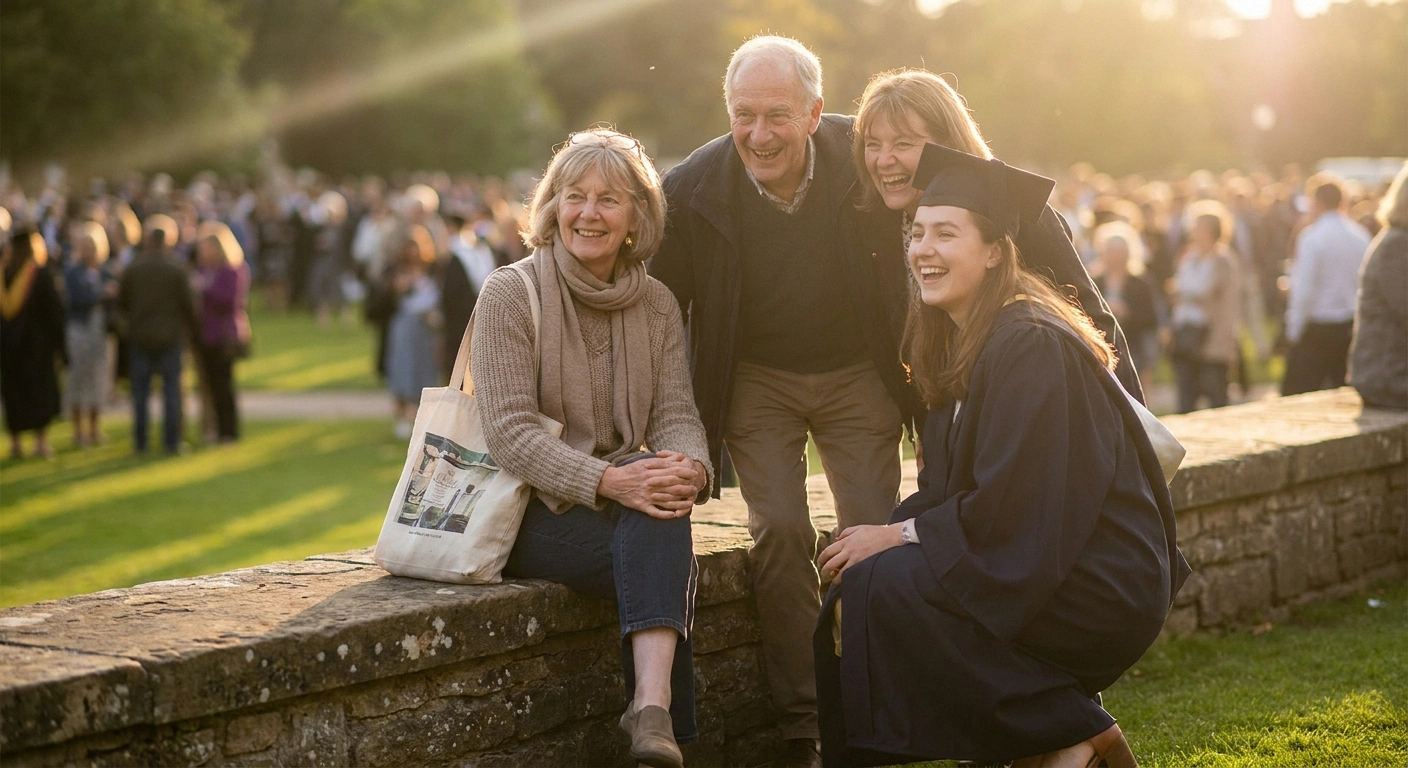
This is the part that undoes people, because it is unscheduled and it feels rude to cut short.
Say the number out loud before it starts. “I'm good for about fifteen minutes of standing, then I need to sit.” Said cheerfully, in advance, it lands as information. Said after forty-five minutes, through gritted teeth, it lands as a problem.
Find a wall, a low planter, or a bench and make that the photo spot. People will come to you, and you can be sitting in most of the pictures without anyone thinking twice about it.
Plan the exit before the ceremony rather than during it. Agree that you will wait ten minutes in a seat while someone brings the car around instead of joining the crowd funneling out of a single gate. Ten minutes of sitting saves considerably more than ten minutes of standing in a slow-moving line.
The Day After
Block it. Do not schedule anything.
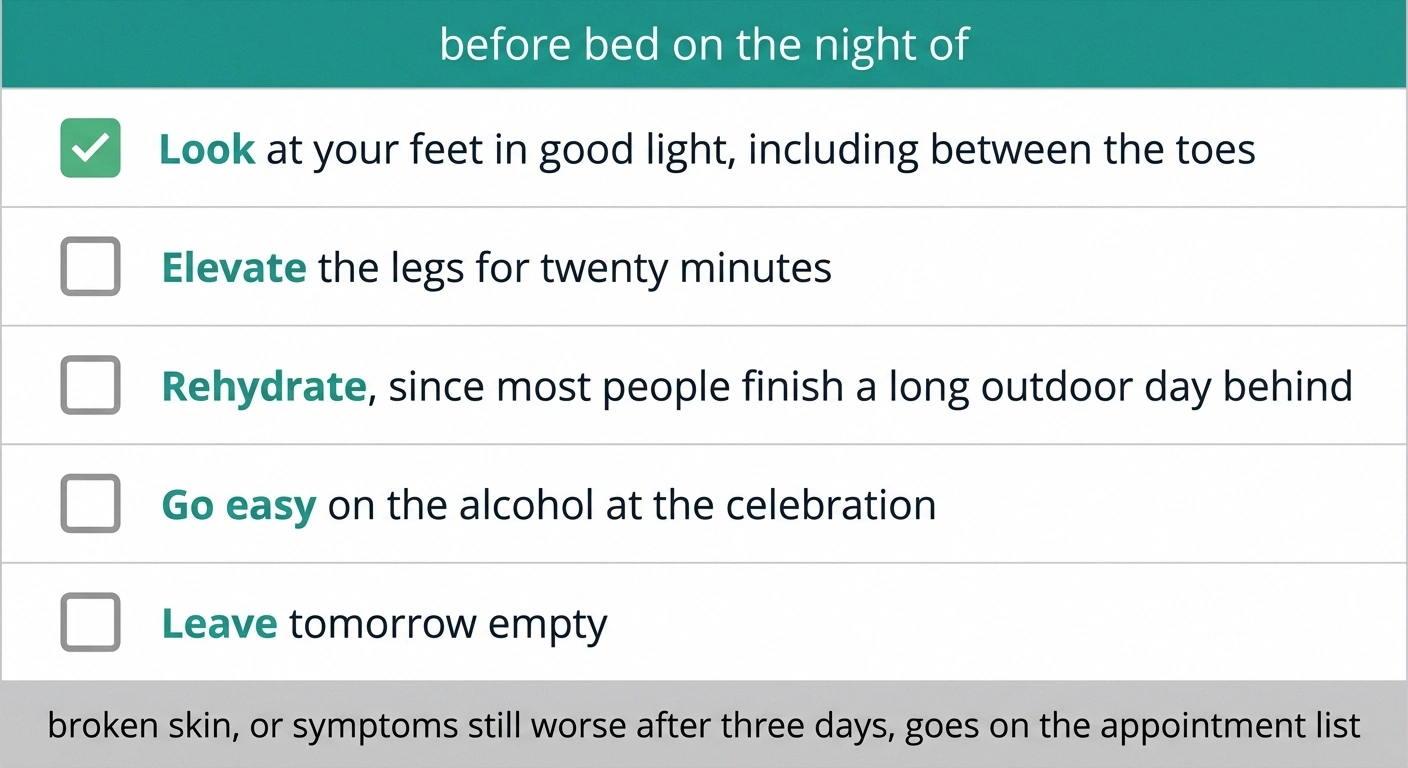
Before bed on the night of
Fifteen minutes of attention tonight is the difference between one quiet recovery day and three.
If anything you find on your feet is broken skin rather than a pressure mark, or if symptoms are still noticeably worse three days later, that goes on the list for your next appointment rather than getting absorbed and forgotten.
Expect a flare and plan around it rather than being surprised by it. A long day of heat, sitting, standing, and walking will cost something, and knowing that in advance turns it from a setback into a line item.
Check your feet that evening, visually, in good light, including between the toes and on the soles. A day like this produces blisters, pressure marks, and small injuries that a foot with reduced sensation will not report, which is why a proper look rather than a feel is the habit that matters here.
Elevate the legs for twenty minutes in the evening, above the level of the heart if you can manage it comfortably. Some people find light compression socks help on travel days like this one; if you have not worn them before, a graduation is not the day to try.
Go easy on alcohol at the celebration. It worsens balance and nerve symptoms at the end of a day that has already spent both.
One more thing. The cost is real and so is the thing you went for. Managing the day well is what makes it possible to be present for the eight seconds you actually came for, and being present for those is the entire point. If church services or long ceremonies are a regular part of your life, our piece on sitting and standing through worship services covers the version of this you face every week.
Frequently Asked Questions
Can I request accessible seating at a graduation without a disability placard?
Usually yes. Most venues handle accessible seating as a scheduling matter rather than a documentation matter, and a phone call two weeks ahead is normally all that is required. You do not need to give a diagnosis. Saying that you cannot manage bleacher seating for two hours is enough.
What kind of seat cushion is best for a long ceremony?
A firm one. Soft cushions feel better initially and then let you sink, which concentrates pressure under the sit bones and the backs of the thighs, exactly where you least want it during a long sit. A firm cushion keeps you level and spreads the load, and it also raises you slightly, which makes standing up easier.
How do I keep my feet from flaring during a two-hour ceremony?
Move on a timer instead of in response to pain. Ankle pumps, heel-toe rocks, and weight shifts every fifteen minutes, done seated and unnoticed, keep circulation going before symptoms build. Keep feet flat and supported rather than dangling, and put something between your skin and a hot metal bench.
Is it rude to sit during a standing ovation?
No, and essentially nobody notices. Every audience contains people who stay seated for all kinds of reasons. If it helps, clap enthusiastically from your seat, which reads as participation to anyone glancing your way.
Should I drink less water to avoid the bathroom during the ceremony?
No. Dehydration makes nerve symptoms worse and raises the risk of feeling faint in heat, which is a much bigger problem than a bathroom trip. Drink normally, taper about an hour before it starts, and use the restroom immediately before sitting down.
What if the venue has no accessible seating available?
Take an end-of-row bleacher seat, bring your own firm cushion, and get your back against an upright if one exists. Ask whether you can bring a folding chair, since many outdoor venues allow it on grass. And ask about a seat near an exit, which is often available even when designated accessible seating is not.
How long should I expect the recovery to take?
Most people find one quiet day is enough after a long ceremony, with the flare peaking that evening and settling over the following day. Elevating the legs and checking the feet for pressure damage the same evening shortens it. If symptoms are still noticeably worse three days later, that is worth mentioning at your next appointment rather than absorbing.
About the Author