
Search this question anywhere and you will get a confident answer. Iron overload damages nerves. Excess iron deposits in tissue, tissue includes nerve, therefore the tingling in your feet is the iron.
The confident answer is not well supported. The literature on peripheral nerve involvement in hereditary hemochromatosis is thin enough that one review states plainly that a systematic study of it is lacking. What exists is a scattering of case reports and small series, not a body of evidence you could build a treatment plan on.
That sounds like a disappointing place to start an article. It is actually the most useful thing on this page, because the shaky part of the story is the part everybody repeats, and the solid part is the part nobody mentions.
Here is the solid part. Hemochromatosis causes diabetes. Hemochromatosis causes liver disease. Both of those are established, common, well-understood causes of peripheral neuropathy, with mechanisms nobody argues about. So if you have hemochromatosis and numb feet, the most likely explanation is not iron sitting inside your nerves. It is one of the complications the iron already caused, doing damage by a route that has a name, a test, and something you can do about it.
The rest of this page separates what is well established from what is genuinely uncertain, explains why hand symptoms in this disease confuse almost everyone, covers the numbers that define diagnosis and treatment, and ends with the one supplement warning that applies to this group and almost nobody else.
What Iron Overload Actually Does to the Body
Human beings have no mechanism for getting rid of excess iron. We absorb what we need and hold onto it. There is no route for dumping a surplus, which works fine in a world where iron is scarce and becomes a serious problem when the regulation of absorption breaks.
Why nothing happens for forty years, then something does
A typical Western diet delivers a small daily surplus when absorption is unregulated. It takes decades of that to reach a load heavy enough to injure an organ, which is why this is a midlife diagnosis rather than a childhood one.
Men, 40s to 50s
Symptoms usually surface here. No regular iron losses means the surplus accumulates uninterrupted from adolescence onward.
Women, after menopause
Menstruation removes iron for decades, delaying the picture by roughly ten to twenty years. A woman can carry the same genotype and present much later.
Anyone, accelerated
Regular alcohol speeds loading and adds its own liver injury on top of the iron's. The two compound rather than simply adding.
Practical consequence: a sibling or adult child of someone diagnosed carries a meaningful chance of the same genotype, and finding it before organ damage happens is the single highest-value thing this diagnosis makes possible for a family.
In hereditary hemochromatosis, that regulation is broken by genetics. The gut keeps absorbing iron long past the point of sufficiency, and because there is no exit, it accumulates. Over decades the total body iron load can climb to many times normal, and the surplus is stored in organs.
Where it lands determines what goes wrong. Liver, which explains the fibrosis and cirrhosis. Pancreas, which explains diabetes and gave the disease its old name of bronze diabetes, from the combination of high blood sugar and skin that darkens. Heart, which explains rhythm problems and cardiomyopathy. Joints, which explains the arthritis. Pituitary, which explains the hormonal effects.
Two features of that list matter for anyone reading this with nerve symptoms. First, the damage is slow and cumulative, which is why symptoms typically appear in midlife rather than in youth, and later in women, whose iron stores are lowered for decades by menstruation. Second, the two most common complaints in the entire disease are chronic fatigue and joint pain. Neither one is a nerve symptom, and both get mistaken for one.
The Honest Answer About Iron and Nerves
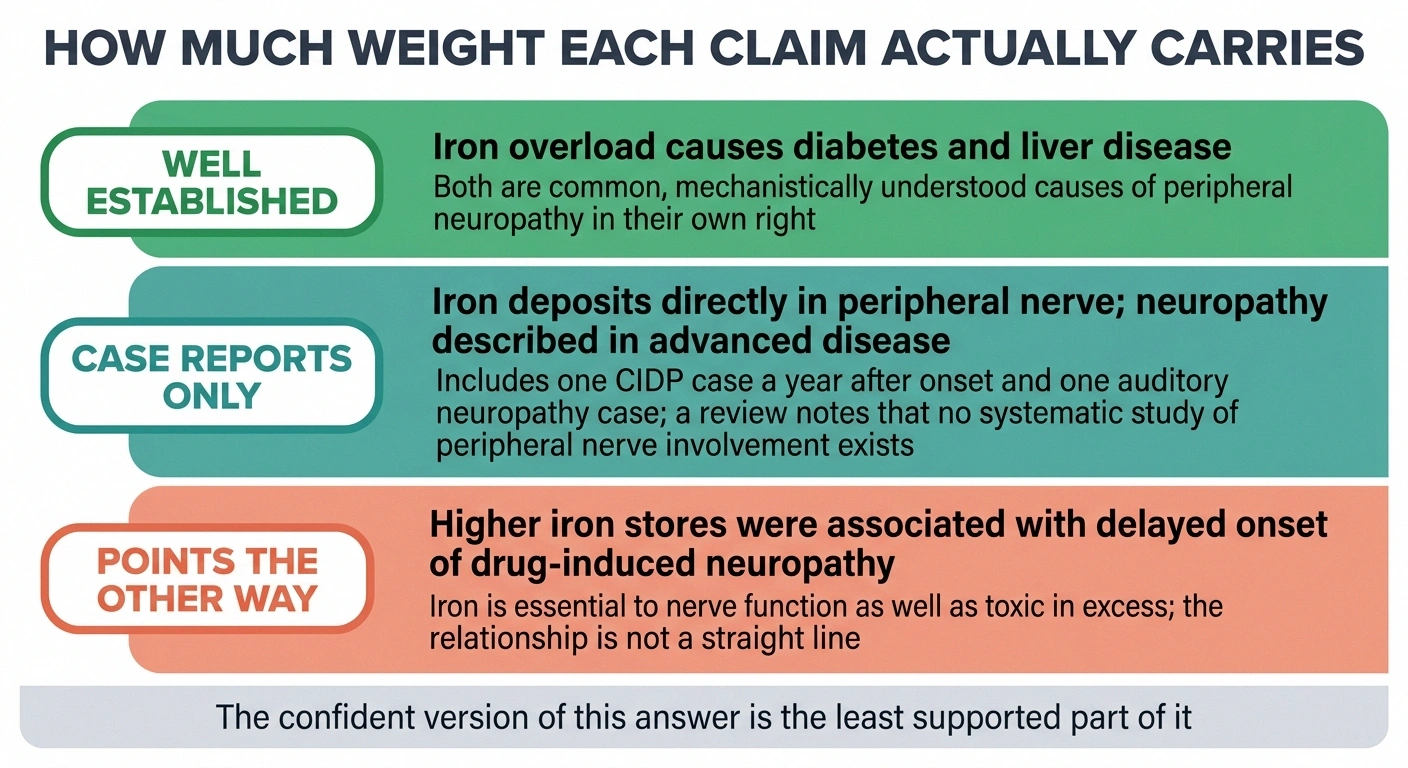
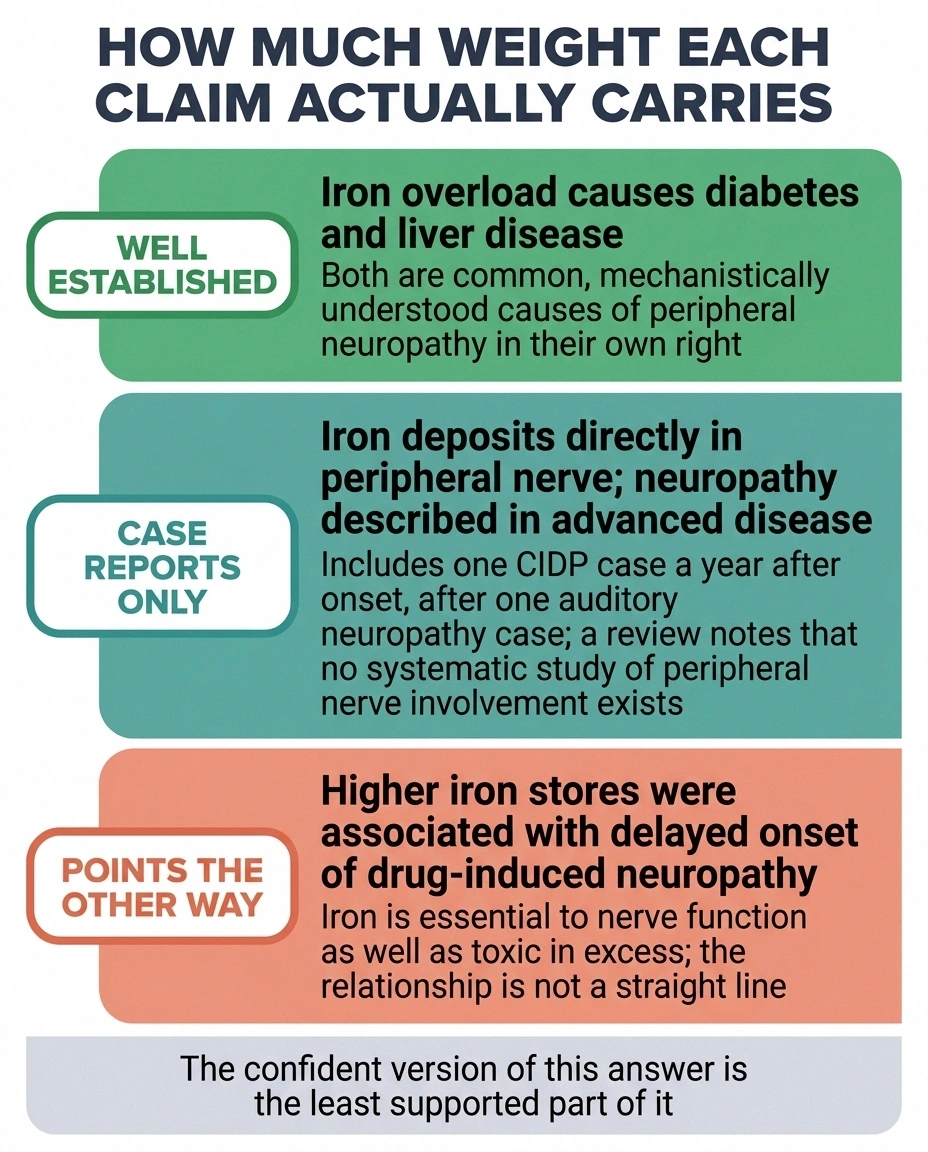
The case for iron damaging peripheral nerves directly rests on a handful of observations, and they deserve to be laid out with their actual weight rather than summarised as a fact.
Iron does deposit in peripheral nerve and skeletal muscle, and in the brain it accumulates in neurons and glial cells, where it is linked to an encephalopathy in advanced disease. In people with advanced hereditary hemochromatosis, a dementia-like illness and peripheral neuropathy have both been described. A case report documents chronic inflammatory demyelinating polyneuropathy developing a year after the onset of hemochromatosis, with multifocal demyelination on testing, and the authors suggested that iron-driven changes in immune function might have contributed. Another describes auditory neuropathy in a person with the disease.
That is the whole case: mechanism that is plausible, findings in advanced disease, and individual reports. It is not nothing. It is also not the kind of evidence that lets anyone tell you your neuropathy is from iron.
Then there is a finding that runs the other way, and it is worth knowing precisely because it complicates the tidy story. In people taking older antiretroviral drugs known to cause nerve damage, higher iron stores and a particular variant in the same gene family involved in hemochromatosis were associated with a delayed onset of peripheral neuropathy. More iron, later nerve damage. Iron is essential to nerve function as well as toxic in excess, and its relationship with nerve health is not a straight line where more is always worse.
So the defensible position is this. Iron overload probably can injure peripheral nerves, most likely in long-standing, heavily loaded, advanced disease. It is unlikely to be the explanation for new numbness in someone whose hemochromatosis was caught reasonably early and is being managed. And in either case it is not the first thing to check.
The Two Routes That Explain Most Cases

If you have hemochromatosis and neuropathy, two explanations sit well ahead of iron-in-the-nerve, and both are worth ruling in or out before anything else.
Five tests worth asking for before anyone blames the iron
- HbA1c. Nerve damage begins in the prediabetic range, so a result of 5.9 or 6.1 that earns no diagnosis label can still be the answer.
- Liver function and, if abnormal, fibrosis assessment. Advanced liver disease produces its own neuropathy and drives the malabsorption behind the next two items.
- B12 with methylmalonic acid. A borderline B12 alone reads falsely reassuring; methylmalonic acid catches deficiency at the tissue level.
- Folate, thyroid function, and vitamin E if malabsorption is established. All three damage nerves, all three are correctable.
- Nerve conduction studies. Establishes whether this is nerve at all, and whether the pattern is the slow symmetric one that fits blood sugar or something focal that does not.
If every one of these comes back clean and the neuropathy is real and progressing, that is the point at which iron becomes a reasonable suspect rather than the starting assumption.
The first is diabetes. Iron deposits in the pancreas destroy the beta cells that produce insulin, and diabetes is one of the classic complications of the disease. Diabetes is also the single most common cause of peripheral neuropathy in the developed world, with a mechanism that is thoroughly understood and a symptom pattern that fits what most people with hemochromatosis describe: numbness and burning starting in the toes, symmetric, creeping slowly upward over years. If that is your pattern, diabetic neuropathy is a far better fit than iron toxicity, and it comes with decades of research on what slows it down.
What makes this route easy to miss is that the diabetes can be mild, recent, or not yet formally diagnosed. Nerve damage begins during the prediabetic range in many people, well before anyone starts talking about diabetes as a condition you have. An HbA1c of 6.1 does not get a diagnosis label attached, and it is entirely capable of damaging small nerve fibres.
The second route is liver disease. Advanced liver disease produces its own neuropathy through a combination of impaired metabolism, poor nutrient handling and accumulated toxins. It also produces malabsorption, and malabsorption produces vitamin deficiencies, and several of those deficiencies damage nerves independently. B12, B1, B6 and vitamin E all have established roles here, and deficiency-related nerve damage is among the most treatable neuropathy there is.
There is a third contributor that nobody enjoys discussing. Alcohol accelerates iron loading and independently damages nerves, and the two effects compound. If alcohol is part of the picture, it is doing more harm in this disease than in almost any other, and alcohol-related nerve damage looks similar enough to confuse the question further.
The Iron Fist and Why Hand Symptoms Confuse Everyone
Hemochromatosis has one physical sign that is relatively specific to it, and it lives in the hands.
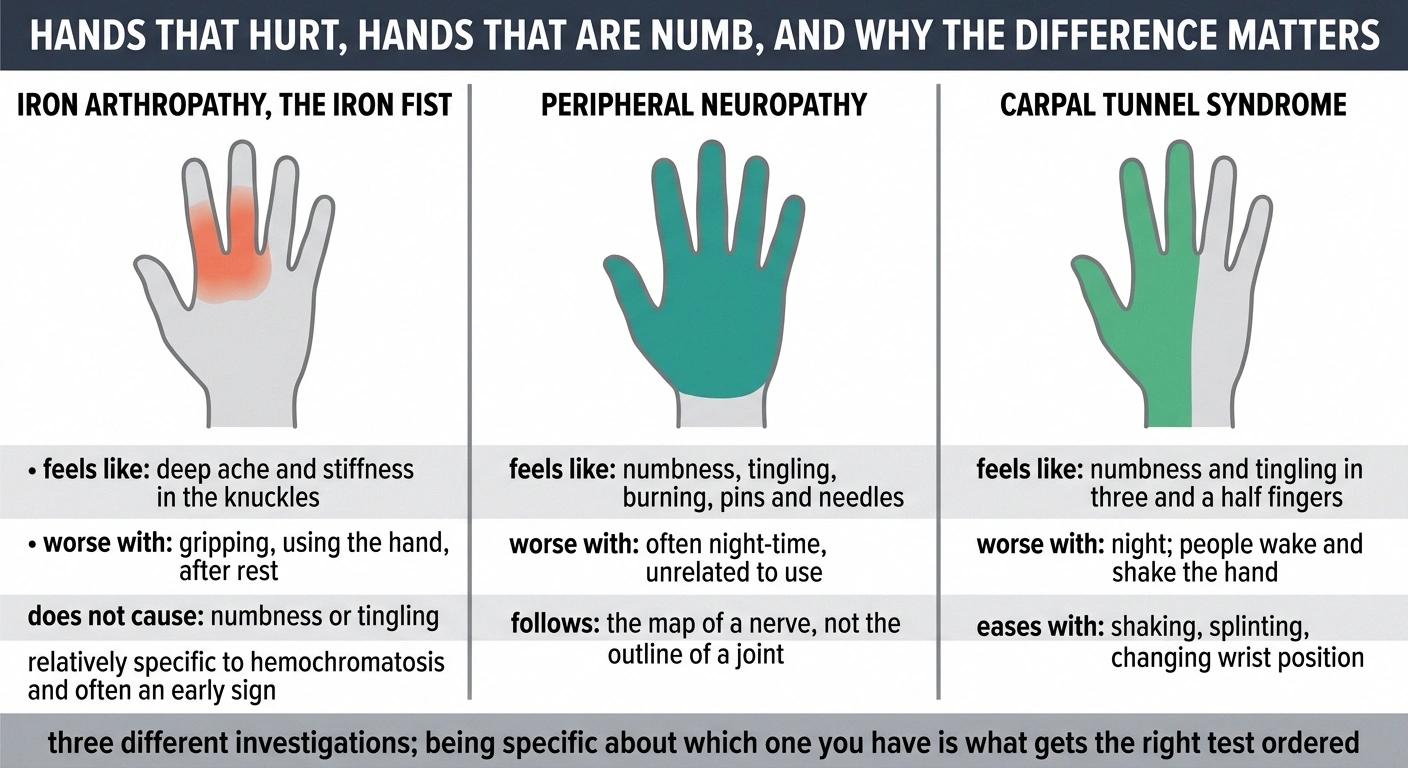
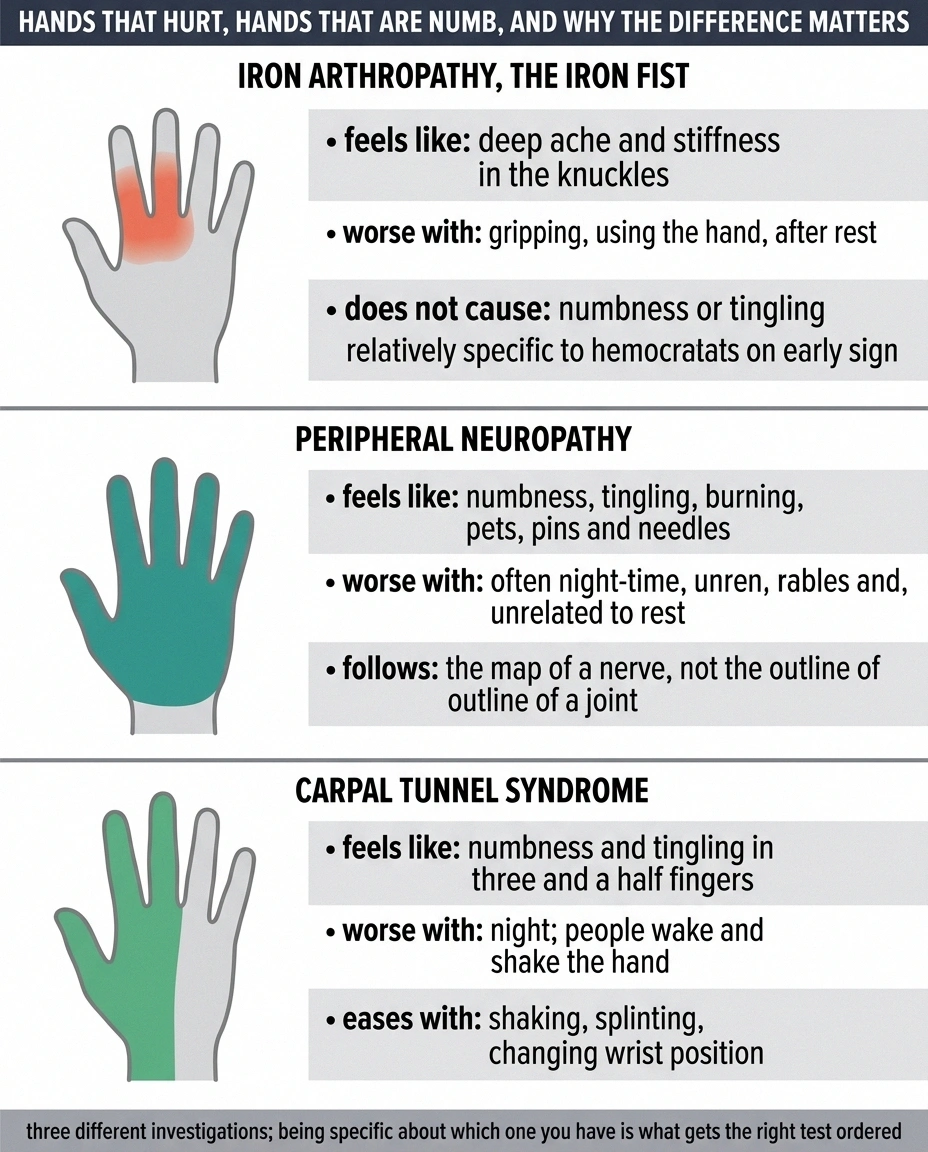
Iron deposits in joints cause a characteristic arthritis, and it favours the knuckles at the base of the index and middle fingers. The pattern is distinctive enough that it has been nicknamed the iron fist, and it is one of the few findings that should make a doctor think of this diagnosis rather than of ordinary osteoarthritis. It often appears early, sometimes before anything else.
Here is where it causes trouble. A person with hemochromatosis says their hands hurt and feel bad. That description could be joint disease, nerve disease, or both, and the three lead to entirely different investigations.
The separation is not difficult once you know what to listen for. Joint pain is worst in the knuckles themselves, worse with gripping and use, often stiff after rest, and it does not produce numbness. Nerve symptoms produce numbness, tingling, burning and pins and needles, and they follow the map of a nerve rather than the outline of a joint. Carpal tunnel syndrome adds a third possibility, with numbness in the thumb, index and middle fingers that wakes people at night and eases when they shake the hand.
Being specific about which one you have changes what happens next. Describing the difference well is genuinely part of getting the right test, and the vocabulary for nerve symptoms in the hands is worth having ready before the appointment rather than assembling it during one.
The Numbers That Define Diagnosis

Hemochromatosis is diagnosed on blood tests and confirmed genetically, and the thresholds are specific enough to be worth carrying.
A high ferritin on its own proves very little
| Also raises ferritin | How it is told apart |
|---|---|
| Any active infection or inflammation | Transferrin saturation stays normal or low; CRP is up; ferritin settles once the illness resolves |
| Fatty liver disease and alcohol use | Very common cause of a raised ferritin with normal saturation; genetic testing is negative |
| Metabolic syndrome and obesity | Ferritin mildly raised, saturation normal, iron stores on imaging are not high |
| Genuine iron overload | Transferrin saturation at or above roughly 45 to 50 percent, sustained, with HFE genotyping to confirm |
Transferrin saturation is the discriminator, which is why it is the screening test rather than ferritin. It also rises earlier, so it catches loading before storage numbers move.
Transferrin saturation is the screening test, measuring what fraction of your iron-transport protein is currently carrying iron. A fasting value at or above roughly 45 to 50 percent is the threshold that prompts further investigation. It rises before ferritin does, which makes it the more sensitive early signal.
Ferritin measures stored iron. Levels above about 200 micrograms per litre in premenopausal women, and above about 300 in men and postmenopausal women, point toward iron overload, particularly alongside high transferrin saturation and any evidence of liver involvement. Ferritin has a well-known flaw worth understanding: it also rises with inflammation, infection and liver injury of any cause, so a high ferritin on its own does not establish iron overload. This is exactly why the two tests are interpreted together rather than separately.
Genetic testing looks at the HFE gene. Two copies of the C282Y variant, one from each parent, is the principal genotype behind clinically significant disease. One C282Y paired with one H63D variant, called compound heterozygosity, contributes to disease expression but generally produces milder loading. Carrying a single C282Y copy rarely causes overload on its own.
If nerve symptoms are present, the work-up should widen beyond iron. HbA1c, liver function, B12 with methylmalonic acid, folate, thyroid function and a standard neuropathy work-up including nerve conduction studies all belong in the same round of testing. Given how much stronger the diabetes and deficiency routes are than the direct-iron route, skipping them to focus on iron gets the priorities backward.
Does Removing the Iron Help the Nerves?
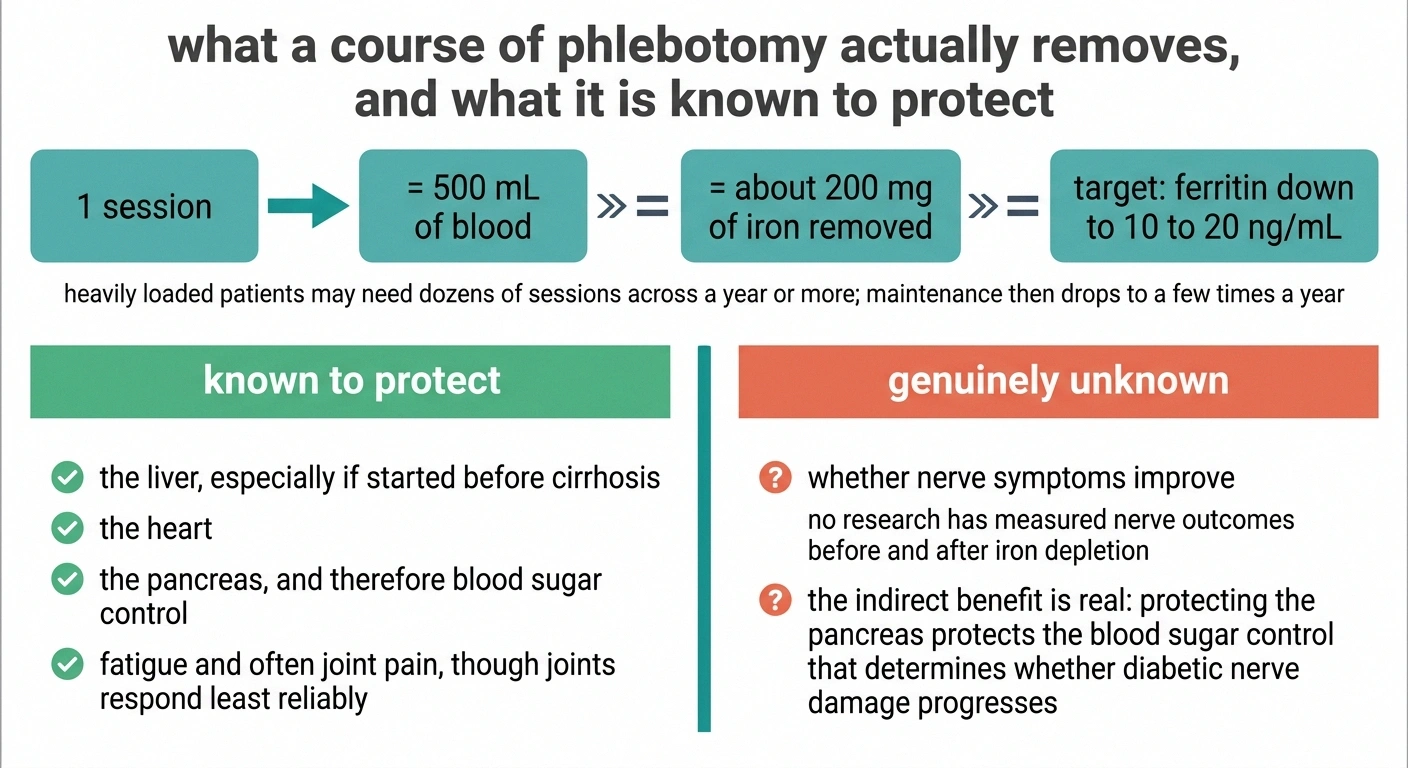
Treatment is phlebotomy, which is the deliberate removal of blood, and it is one of the more satisfying treatments in medicine because it directly reverses the underlying problem rather than managing around it.
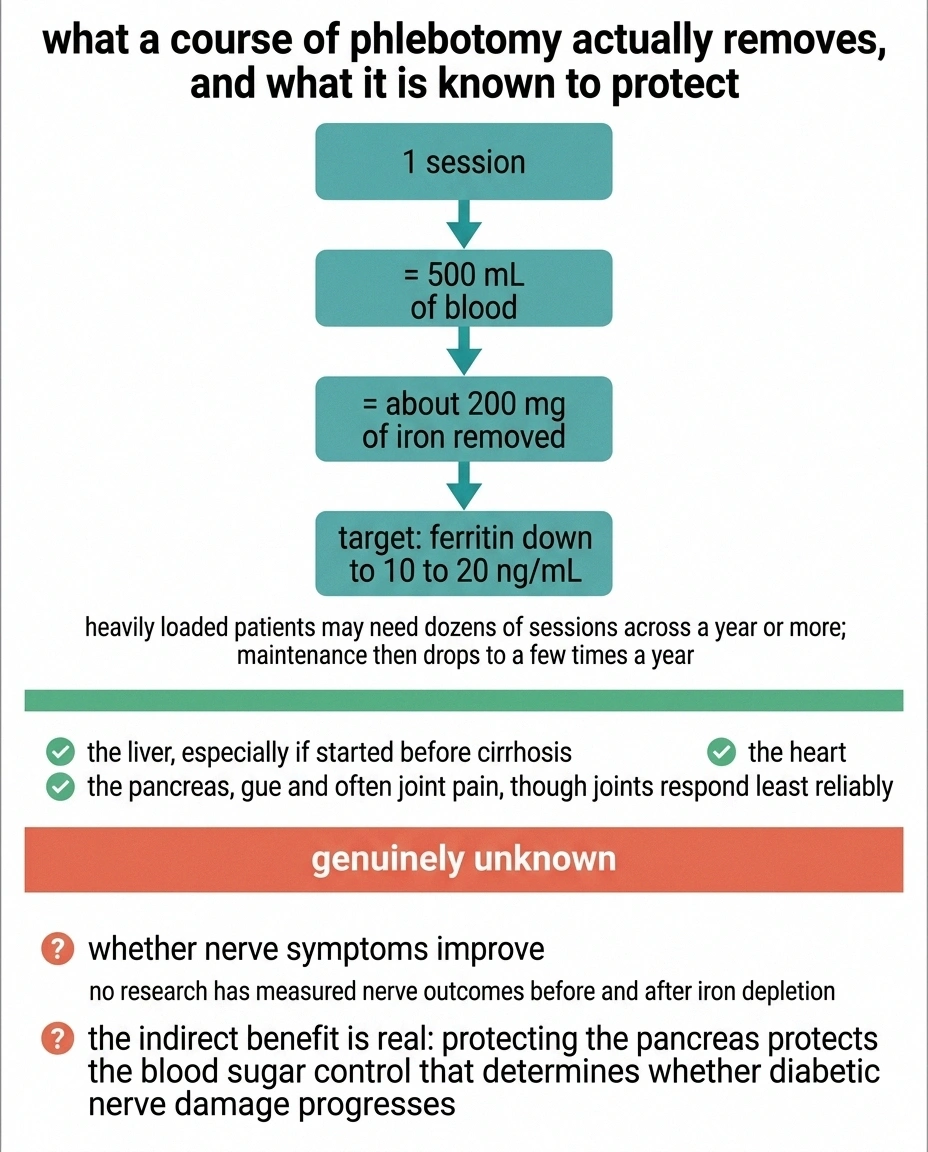
The arithmetic is simple. One unit is roughly 500 millilitres of blood and carries about 200 milligrams of iron out of the body with it. Sessions run weekly or twice weekly during the depletion phase, then drop to a maintenance schedule of a few times a year. Depletion is considered complete when ferritin falls to somewhere in the range of 10 to 20 nanograms per millilitre. Someone heavily loaded may need dozens of sessions across a year or more to get there.
Phlebotomy clearly protects the liver and the heart, and starting it before cirrhosis develops substantially changes the outlook for the disease as a whole. Fatigue and joint pain often improve, though joint symptoms are the least reliable responder and can persist or progress even after iron levels normalise.
For nerves, the honest answer is that nobody knows, and for a specific reason: there is no body of research measuring nerve outcomes before and after iron depletion, because the question has never been studied systematically.
What can be said is indirect and still useful. Phlebotomy protects the pancreas from further damage, which protects blood sugar control, which is the single largest determinant of whether a diabetic neuropathy progresses. It protects the liver, which protects nutrient absorption. If your neuropathy is travelling by either of those two routes, iron removal helps by removing the cause of the cause. That is a real benefit even if it is not the direct nerve repair people are hoping for.
Nerve fibres that have already been lost recover slowly at best, and the realistic goal in most nerve disease is stopping progression rather than reversing damage. Understanding what recovery does and does not look like ahead of time prevents a lot of disappointment about a treatment that is genuinely working on everything else.
The Supplement Warning That Applies Only to You
Most nerve-health advice is broadly safe for most people. One category is actively dangerous for this group, and it is worth stating without hedging.
Where the iron hides
Nobody with this diagnosis reaches for an iron tablet on purpose. The exposures that matter are the ones nobody reads the back of.
- Daily multivitamins. Many standard formulations include iron. Versions labelled for men or for people over 50 more often omit it, but the panel is the only way to know.
- Combination nerve-support blends. The main reason to prefer single-ingredient products here: a blend can carry both iron and high-dose vitamin C without either appearing on the front.
- Fortified breakfast cereals. Routinely fortified to a substantial share of the daily reference intake per serving.
- Tonics and greens powders marketed for energy. Fatigue is this disease's commonest symptom, which makes these the most likely thing to be reached for and among the worst choices.
- High-dose vitamin C taken with meals. It sharply increases absorption of the iron in the meal itself. Vitamin C from ordinary food is not the issue.
Tea and coffee with meals do the opposite, reducing absorption of non-heme iron. That is a small effect and not a treatment, but it is a free one and it points the right direction.
Do not take iron supplements. This seems obvious until you notice how many multivitamins, fortified foods and general wellness formulas contain iron without advertising it, and how often fatigue prompts someone to reach for an iron tonic. Fatigue is the most common symptom of hemochromatosis, and it is also the symptom people most reflexively self-treat with the exact thing making it worse.
Be careful with high-dose vitamin C. Vitamin C substantially increases the absorption of dietary iron, which is precisely why it is recommended alongside iron for people with anaemia. In iron overload it works against you. Ordinary amounts from food are not the concern. High-dose supplements, particularly taken with meals, are.
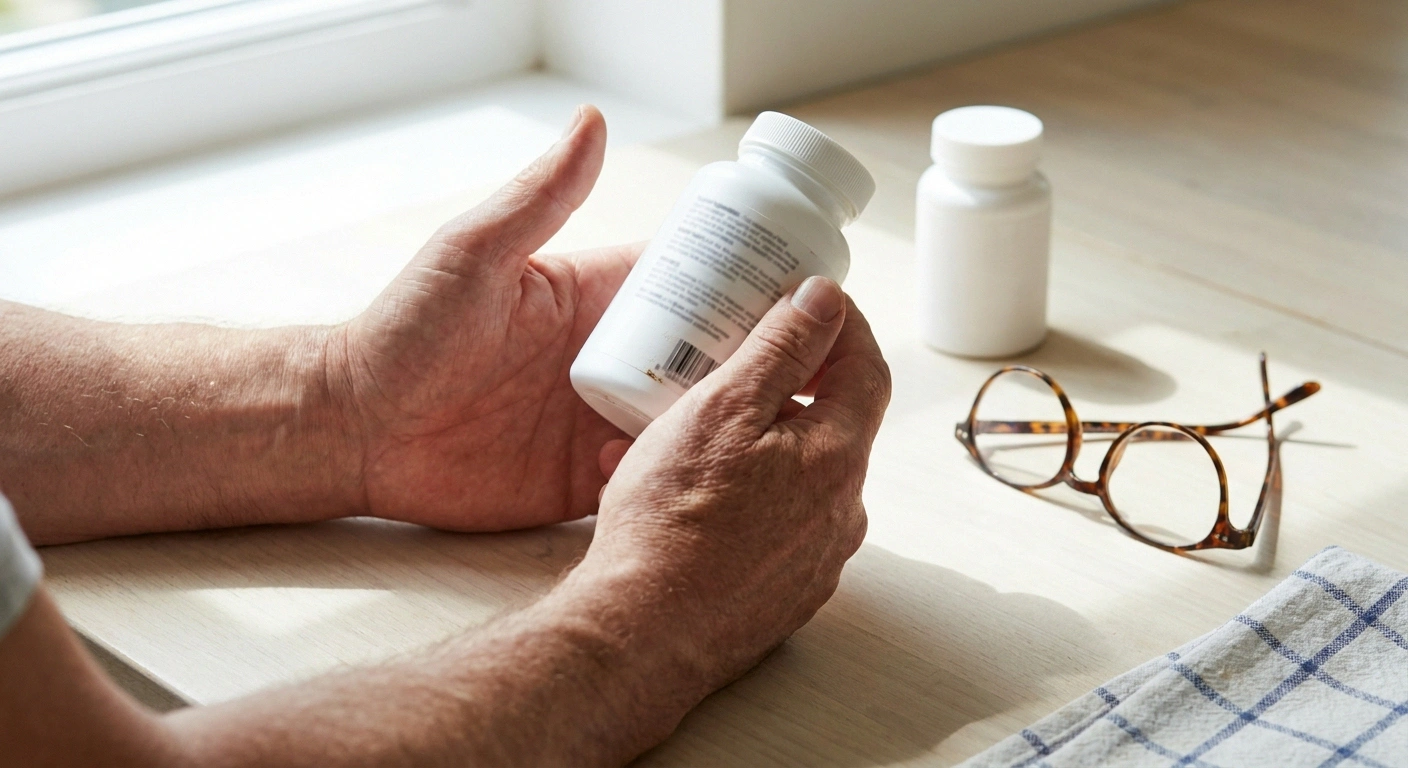
This matters more than usual because several supplements commonly taken for nerve health come in blends, and blends are where unwanted ingredients hide. Anyone shopping for nerve support supplements should read the full label for iron content and for vitamin C dosing rather than the front of the bottle. Single-ingredient products are easier to control than combination formulas for exactly this reason.
Alcohol deserves the same directness. It increases iron absorption, adds its own liver injury on top of iron-driven liver injury, and damages nerves independently. There are few conditions where reducing it pays off across so many separate systems at once.
Beyond that, the ordinary measures apply. Protecting numb feet with daily inspection and sensible footwear matters as much here as anywhere, and it matters more if diabetes is part of the picture, because that combination is what turns a small unnoticed injury into a serious one.
Frequently Asked Questions
Can hemochromatosis cause peripheral neuropathy?
Probably, but the direct evidence is limited to case reports and findings in advanced disease, and one review notes that a systematic study of peripheral nerve involvement has not been done. Far more commonly, neuropathy in someone with hemochromatosis comes from the diabetes or liver disease the iron overload caused, rather than from iron inside the nerve itself.
What should I get tested first if I have hemochromatosis and numb feet?
HbA1c and liver function, before anything iron related. Diabetes and liver disease are established complications of hemochromatosis and established causes of neuropathy. B12 with methylmalonic acid, folate and thyroid function belong in the same round, since malabsorption makes deficiencies more likely.
Does phlebotomy improve nerve symptoms?
There is no research measuring nerve outcomes before and after iron depletion, so no direct answer exists. It clearly protects the liver, heart and pancreas, and by protecting the pancreas it protects blood sugar control, which is the main thing determining whether diabetic nerve damage progresses. That is an indirect benefit rather than nerve repair.
What is the iron fist?
It is arthritis affecting the knuckles at the base of the index and middle fingers, considered relatively specific to hemochromatosis and often an early sign. It is a joint problem rather than a nerve problem: it causes pain and stiffness with gripping, not numbness or tingling.
Can too much iron cause tingling in the hands and feet?
Iron does deposit in peripheral nerve tissue, and neuropathy has been described in advanced hereditary hemochromatosis. But tingling in someone with well-managed iron levels is more likely to be coming from blood sugar, a vitamin deficiency, or nerve compression than from iron deposition, and those are all worth checking first.
Which blood levels indicate iron overload?
Fasting transferrin saturation at or above roughly 45 to 50 percent is the screening threshold. Ferritin above about 200 micrograms per litre in premenopausal women, or 300 in men and postmenopausal women, supports it. Ferritin also rises with inflammation and liver injury, so the two tests are read together and confirmed with HFE genetic testing.
Is hemochromatosis nerve damage reversible?
If the nerve damage is coming from a vitamin deficiency, correcting the deficiency can produce real recovery. If it is coming from diabetes, controlling blood sugar slows progression more reliably than it reverses damage. Nerve fibres already lost recover slowly and often incompletely, whatever the cause.
Should I avoid iron and vitamin C supplements?
Avoid iron supplements entirely, and check multivitamins and blended formulas, which frequently contain iron without featuring it on the front label. Be cautious with high-dose vitamin C, which markedly increases iron absorption, especially taken with meals. Vitamin C from ordinary food is not the concern.
About the Author