Summer means theme parks. Grandkids begging for one more ride, family reunions with day-of admission tickets, road trips built around a Disney or Six Flags anchor day. And for a lot of us who love the idea but live with neuropathy, the same thought shows up: can my feet actually do this?
Twenty thousand steps on hot pavement. Standing in lines that don't move. Sudden temperature changes going from 95 degrees outside to a walk-in freezer of an indoor ride. Uneven queue floors. Long slow walks between attractions with nowhere to sit. It sounds like a neuropathy nightmare — and honestly, without preparation, it can be. But with the right planning, it doesn't have to be.
I've spent enough years walking parks alongside people with neuropathy — including some remarkable folks who go to Disney every year despite advanced diabetic neuropathy — to know that a good theme-park day is genuinely possible. It just takes different planning than most people are used to. Today I want to walk you through everything I've learned about making a theme-park day work when your feet don't behave like they used to.
Why Theme Parks Are Uniquely Challenging With Neuropathy
Before we get into the tips, it helps to understand what makes a park day so hard on neuropathic feet — because knowing the actual challenge lets you plan around it instead of white-knuckling through it.
✓ Key Takeaway
A theme-park day with neuropathy is completely doable — but it takes different planning than a park day would have twenty years ago. The winning formula: right shoes broken in early, real mid-day break, disability access services when they help, and end-of-day foot inspection every night.
The core issue is cumulative small stress. A theme-park day is rarely a single big challenge. It's ten thousand small ones. A hot walkway. A standing line. A ride that jostles. A quick change in temperature. A long walk from parking. Half a mile to a bathroom. Two flights of stairs to a shaded overlook. Individually, none of these are dangerous. Together, over a 10-hour day, they add up to a level of foot stress most people with neuropathy don't encounter in their normal lives.
Layered on top of that:
- Heat. Hot pavement, hot vinyl seats, hot restroom floors when barefoot for a moment. Neuropathic skin doesn't warn you when it's getting too hot — you can burn without knowing until you see the redness later.
- Standing in lines. Prolonged standing without walking loads your feet in a way that amplifies neuropathy symptoms, and lines don't let you walk it off.
- Uneven surfaces. Cobblestone-effect walkways, drainage grates in the queue floor, rubber mats over bare concrete, and step-ups onto ride vehicles all challenge balance in ways that flat sidewalks don't.
- Distraction. You're focused on the kids, the map, the show times — not on your feet. Small warning signs get missed until they've become bigger warning signs.
- Distance from your comfort zone. You're not near your normal shoes, your normal chair, your normal ice pack. If something goes wrong, you're managing it in a hotel room hours from home.
None of this makes theme parks off-limits. It just means you can't wing it the way you might have twenty years ago.
Start With the Right Shoes (This Is Not Negotiable)
If you take one thing from this article, take this: your theme-park day is going to be won or lost on your shoe choice. Every experienced park-goer with neuropathy I've talked to says the same thing.
The 5-Point Theme-Park Shoe Test
What to look for:
- Broken-in, not brand new. Never wear brand-new shoes to a theme park. Ever. If you're planning a park trip, buy your park shoes at least a month ahead and put a minimum of 30–40 miles of walking on them first. The break-in reveals hot spots and blisters at home where you can address them — not at the top of Space Mountain where you're stuck for the next six hours.
- Stable support with cushioning, not extreme cushioning. The maximalist “cloud” shoes feel great in the store but many neuropathy patients find that too much cushioning reduces the ground-contact feedback their brain needs for balance. Stable, supportive, moderately cushioned tends to work better for a full park day. Neuropathy-specific shoe recommendations generally point this direction.
- Enough room at the toe box. Feet swell after hours of walking in heat. Shoes that fit perfectly at 8 AM can be pressing painfully by 4 PM. Go a half-size up for park days, and choose shoes with generous toe-box room.
- Closed-toe. Always. No matter how much you love your sandals. In parks, feet get stepped on. Strollers roll over toes. Ride vehicles catch a foot that slid forward. Closed-toe shoes are basic foot armor.
- Firm heel counter. The back of the shoe should support your heel without pushing on it. A soft, floppy heel counter contributes to fatigue and blister risk.
Bring a second pair to change into at midday if possible. Even the best shoes benefit from a two-hour break, and shifting to a different sole angle for the afternoon can reset your feet in a way that single-shoe park days can't.
Sock Strategy That Prevents Blisters
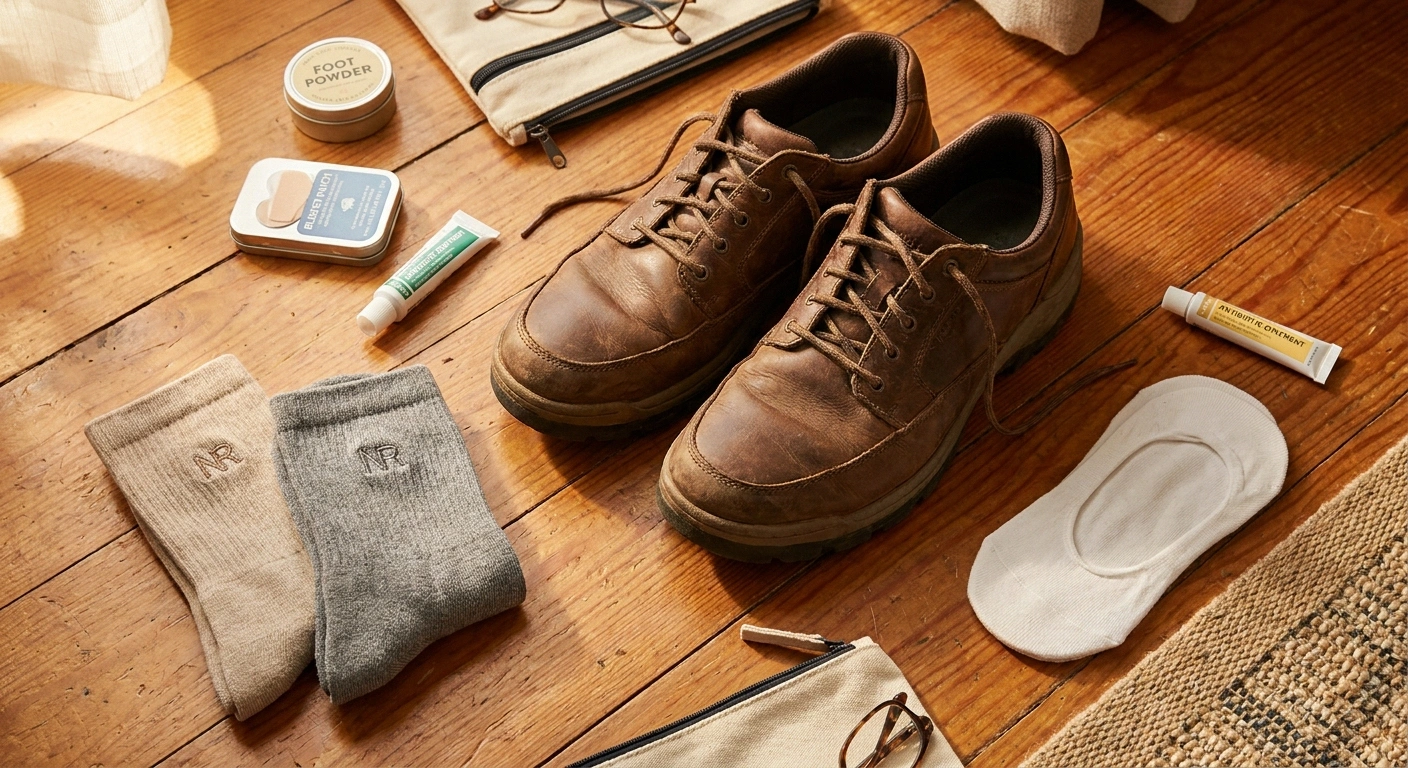
Socks matter almost as much as shoes on a park day, and they're much cheaper to get right.
- Moisture-wicking synthetic or wool. Not cotton. Cotton holds sweat against your skin all day, and wet skin blisters far more easily than dry skin.
- Seamless. Seams over the toes are a blister factory in a full-day walking scenario. Diabetic or neuropathy-friendly socks with flat or seamless toe closures are worth the extra dollars.
- Fresh mid-day change. Bring a spare pair in your park bag. Changing socks at lunch — even if the first pair feels fine — resets the moisture level and adds hours of comfort.
- Consider double-sock technique. Some long-distance walkers wear a thin liner sock under a thicker cushioning sock. The layers slide against each other instead of your skin sliding against the sock, dramatically reducing friction-blister risk over long distances.
- Have a foot-care emergency kit. Blister patches, antibiotic ointment, a small pair of scissors for hot spot management. You will not find these in park gift shops, and by the time a blister has formed, prevention is over.
Plan the Day Around Your Feet, Not Against Them
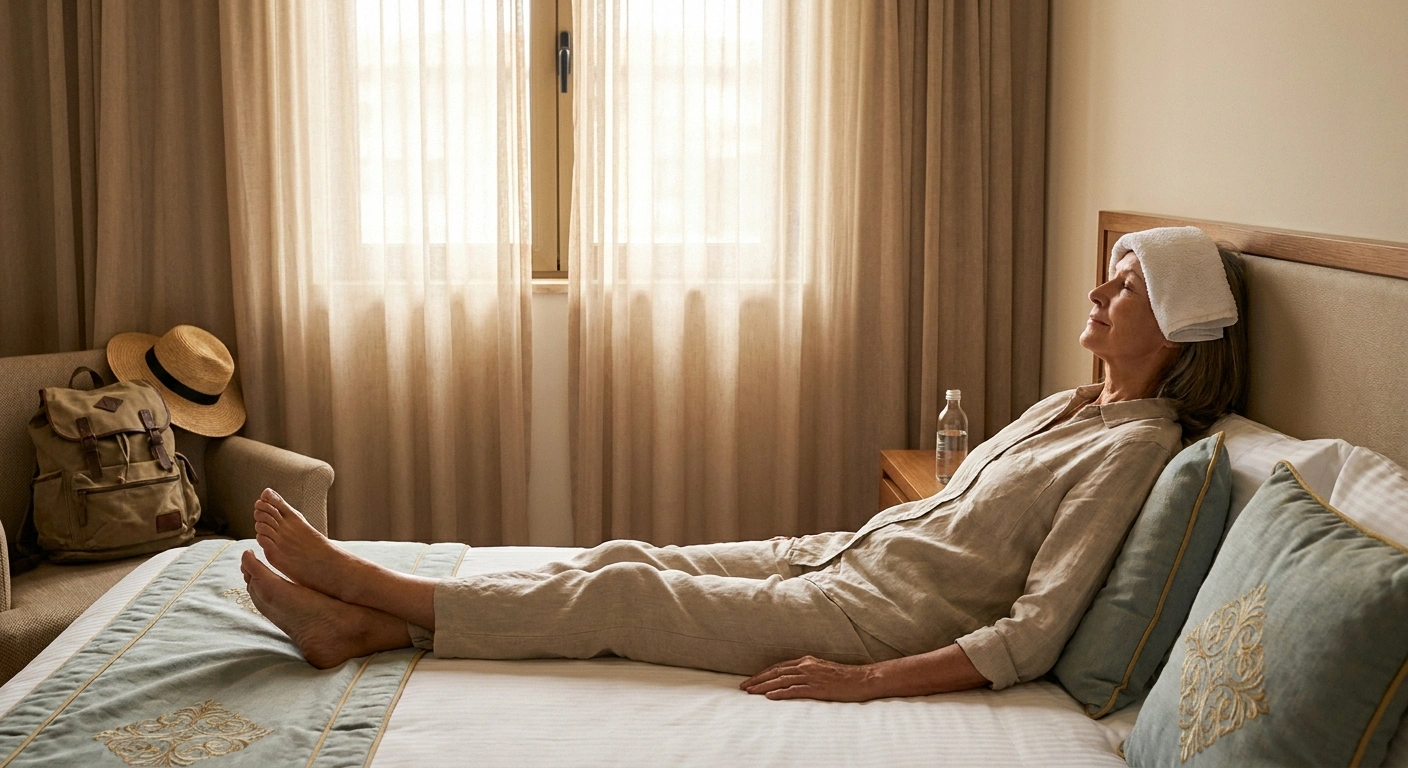
This is where most people go wrong on a theme-park trip with neuropathy: they try to do a full-abled park day and hope their feet will hold up. Better strategy — plan the day around foot-friendly pacing from the start.
Arrive at park opening. The first two hours are the coolest, least crowded, and the time your feet are freshest. Prioritize the walking-heaviest attractions or ones you most want to do in the first block.
Build in a mid-day break. Not a “sit for 20 minutes at lunch” break. A real break. Go back to the hotel from 11:30 AM to 3:00 PM. Lie down. Elevate your feet. Change socks. Take neuropathy medications on their normal schedule (do not skip them because you're excited). Come back refreshed for the evening and stay through fireworks or the closing show.
Sit whenever you can. If there's a bench, sit. If there's a shaded curb, sit. If a show is starting in ten minutes, sit through the pre-show. Park benches don't sell out — take advantage.
Space out the ride commitments. Roller coasters jostle. Wait times mean standing. Chaining three big rides back-to-back is asking for accumulated foot fatigue. Alternate a big walk-heavy attraction with a low-impact one (a slow-moving indoor ride, a sit-down show, an indoor exhibit).
Use the shuttles and trams. Even if the walk to the entrance is “only ten minutes.” Save those steps.
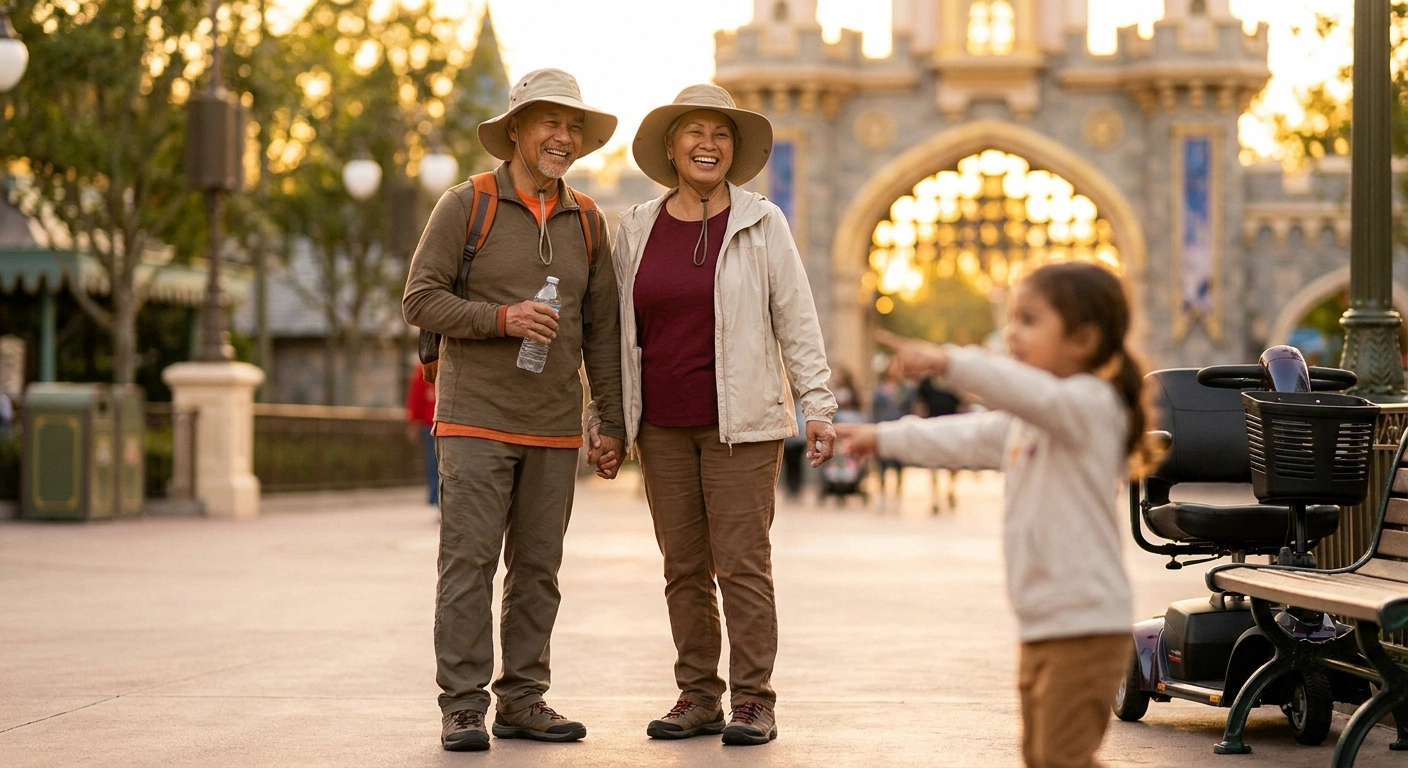
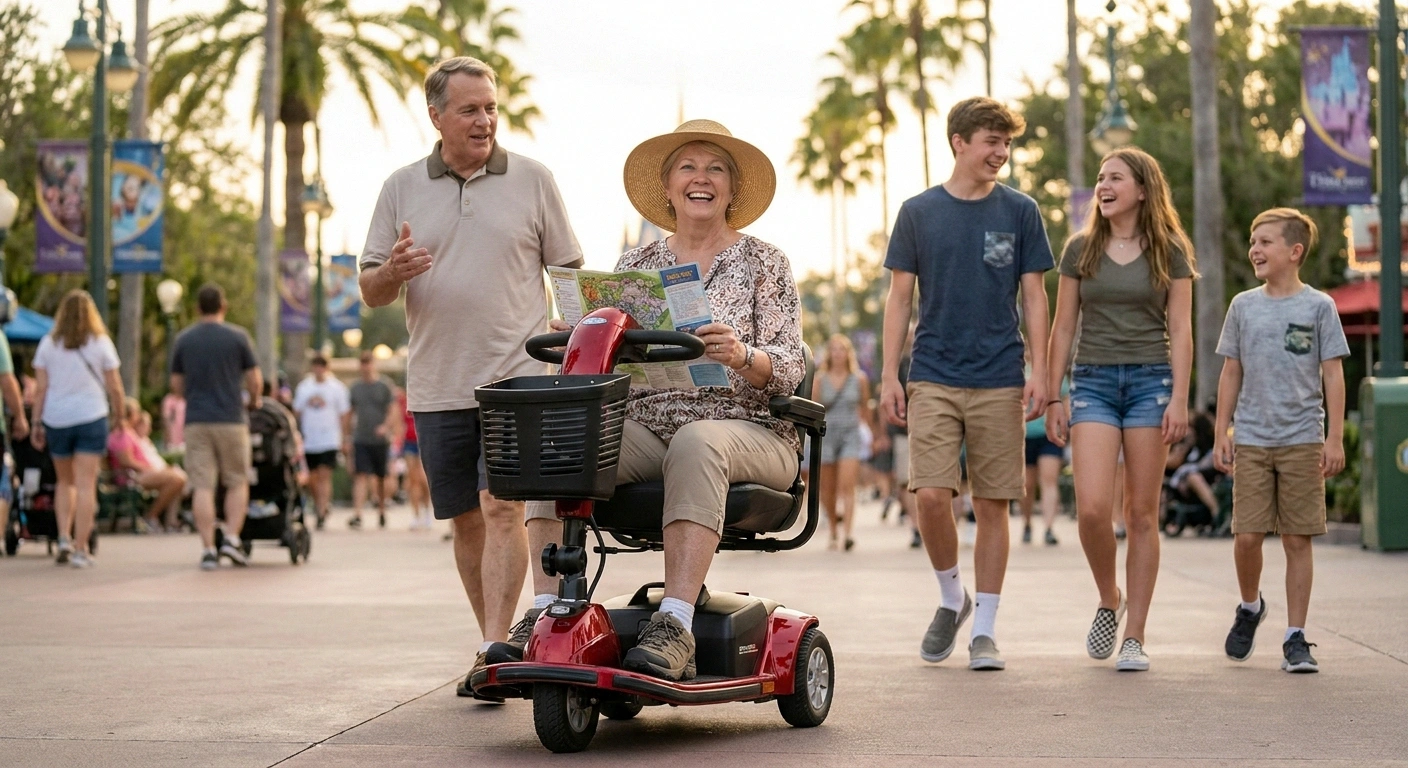
Consider a wheelchair or ECV rental. This is not giving up. This is common sense. Many, many people with neuropathy who wouldn't consider themselves “disabled” rent a scooter for park days and swear by it. You can walk when you want to walk and ride when you need to ride. The scooter goes on most attractions' load queues and lets you access more of the park than you would on foot. Rental is typically $50-70 per day. That's cheap insurance for the rest of the trip.
Managing the Heat
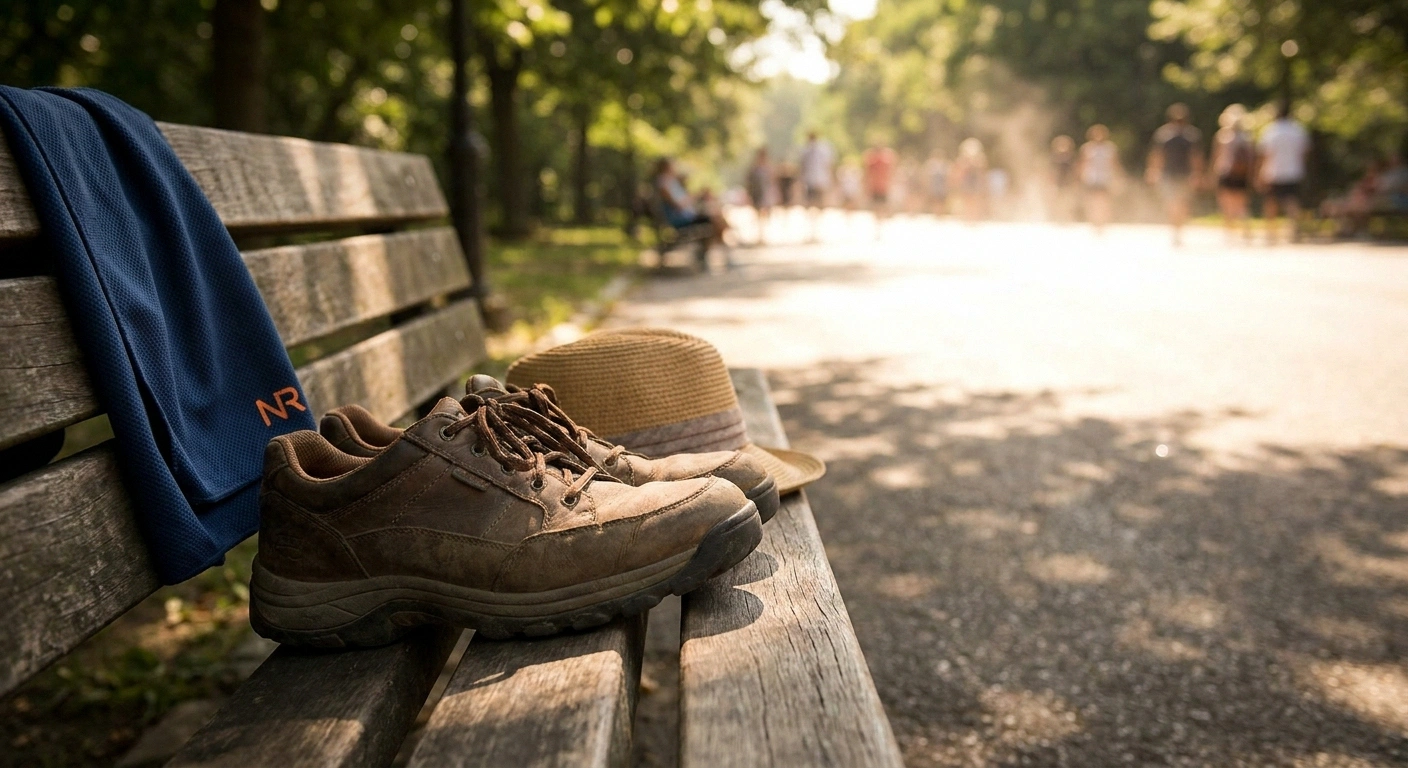
Summer parks are hot. Really hot. And people with neuropathy have three additional heat challenges most park-goers don't think about.
⚠️ The Heat Numbers That Matter
Neuropathic skin doesn't reliably sense these temperatures until after the burn. Wear closed shoes always. Test seats with your hand before sitting bare-legged.
First, heat amplifies most neuropathy sensations. Burning feet get worse in hot weather. Compression sensations get louder. Small-fiber symptoms flare. This isn't just uncomfortable — it can turn a manageable day into a miserable one.
Second, you may not sense hot pavement or hot ride seats until they've caused damage. Vinyl ride seats sitting in the sun can hit temperatures over 130 degrees. Metal railings the same. Pavement in direct sun in July peaks around 140 degrees. Neuropathic skin doesn't reliably feel these temperatures until after the burn has occurred. Wear closed shoes always. Test seats with your hand before sitting down bare-legged. Don't lean bare skin against dark metal in direct sun.
Third, heat exhaustion and dehydration hit people with neuropathy differently. Some neuropathy medications (particularly gabapentin and pregabalin) can amplify feelings of dizziness or reduced sweat response, and blood-sugar swings in diabetic neuropathy patients compound the risk.
What to do:
- Hydrate before you think you're thirsty. Two full bottles of water before noon, not because you feel dehydrated but because you'll be dehydrated before you notice.
- Use cooling towels around your neck. They're cheap, they work, and they reduce the total heat load on your body.
- Take breaks in air conditioning every 60-90 minutes. Not just for you — for your foot skin's chance to cool down between hot-pavement segments.
- Wear a wide-brimmed hat. A baseball cap doesn't cut it. A real sun hat lowers your total heat exposure meaningfully.
- Know the signs of heat exhaustion. Nausea, dizziness, unusual fatigue, cool clammy skin. If you or a family member has any of these, get to air conditioning, drink water, and sit down. Don't push through.
Standing in Lines Without Wrecking Your Feet
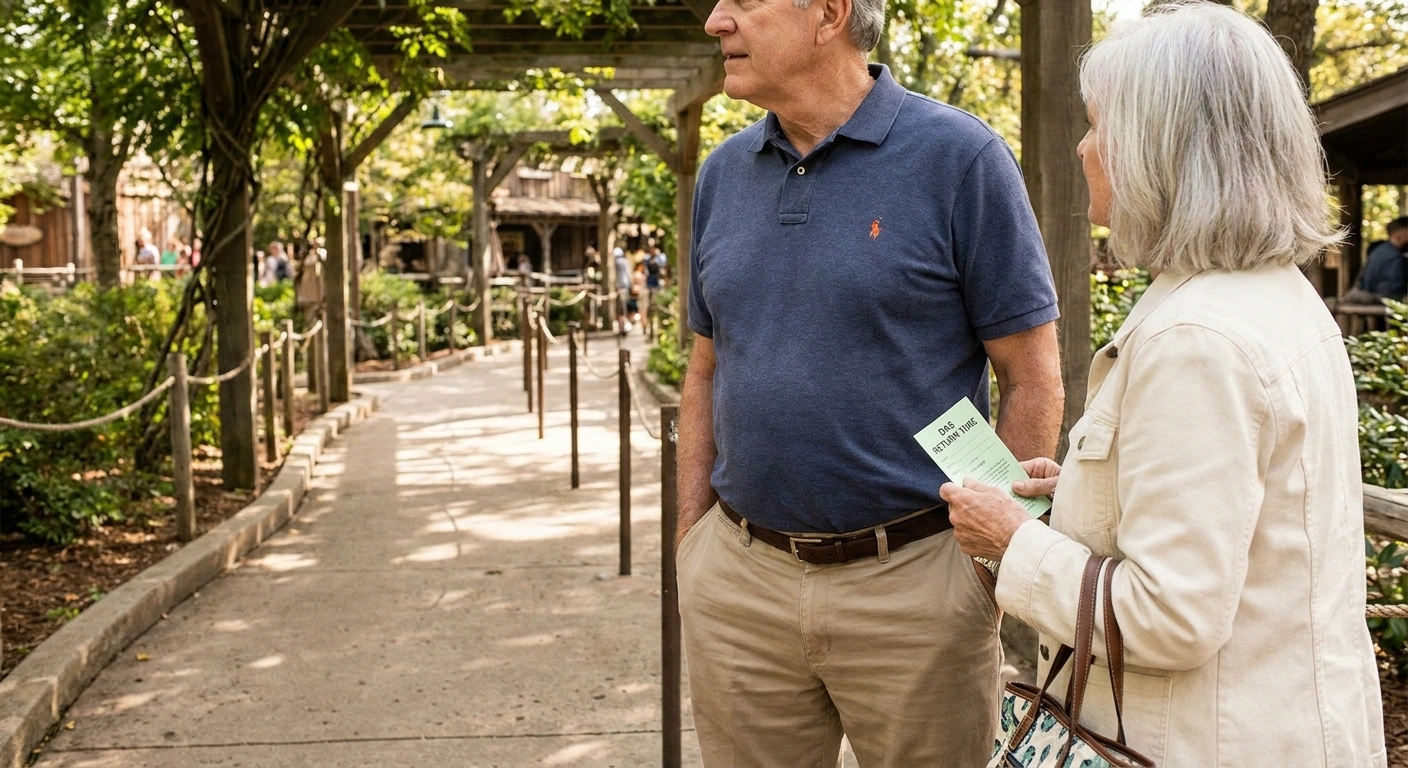
Standing in lines is one of the hardest parts of a park day for neuropathic feet. Not moving is different from walking — it loads specific pressure points continuously instead of distributing pressure over each step.
4 Techniques for Long Queues
Techniques that experienced park-goers with neuropathy use:
- Weight-shifting. Rock gently side to side, forward and back. Shift weight from one foot to the other every 20-30 seconds. This isn't nervous fidgeting — it's active blood-flow maintenance.
- Calf raises in the line. Rise up on your toes and back down, subtly, a few times every couple of minutes. Pumps venous blood back up and reduces the pooling that intensifies neuropathy sensations.
- Sit whenever possible. Some queues have benches partway through. Some have handrails you can lean against. Take every seat and every lean opportunity.
- Ask about disability access services. Every major park has a program (Disney's is called Disability Access Service, DAS, and equivalents exist at Universal, Six Flags, Cedar Fair, and others). These programs let people with medical conditions that make traditional queuing difficult get a return time rather than standing in the line. Neuropathy that meaningfully limits your ability to stand is a completely legitimate reason to use this service. You'll usually need to sign up in advance online, and requirements vary by park. It's not queue-jumping — it's accommodation. Use it if you qualify.
What to Pack in Your Park Bag
A well-stocked park bag is the difference between a good day and a rescued day. What experienced neuropathy park-goers carry:
The Neuropathy Park-Bag Checklist
- Fresh spare socks in a ziplock bag
- Blister patches (Compeed, Band-Aid Hydro Seal) — 5-6 packs
- Small container of foot powder for reducing sweat
- Small antibiotic ointment for hot spots
- Antifungal foot cream — some parks have wading areas or splash zones and foot fungus is real
- Any prescribed neuropathy medications in a proper labeled container (not loose pills)
- Snacks with protein and moderate carbs to prevent blood sugar crashes if diabetic
- Blood glucose meter and test strips if diabetic
- Glucose tablets for fast correction
- Two full water bottles or a hydration pack
- Cooling towel that activates with water
- Sunscreen — reapplied at 11 AM and 2 PM, not just morning
- Hand-held battery-powered fan
- Cash for scooter rental if you decide to add one mid-day
Some parks require clear-bag policies. Check ahead. If your park does, use a clear medical-supply bag and be prepared to explain the medications at security if asked — they're used to it.
Rides You Can Safely Do (and Ones to Skip)
Most rides at most parks are compatible with neuropathy. Very few are actually risky. But some are worth thinking about ahead of time:
Ride Choice at a Glance
- Slow-moving dark rides
- Boat rides
- Indoor omnimovers
- Family coasters
- Simulators
- 3-D shows
- Very intense coasters
- Standing configurations
- Unstable loading platforms
- Water rides (soaked shoes)
Usually fine: Slow-moving dark rides, boat rides, indoor omni-movers, most family coasters, most simulators, most 3-D shows. These are the backbone of a neuropathy-friendly park day.
Consider carefully:
- Very intense roller coasters — the g-forces and jostling can amplify neuropathy pain for hours after. Not dangerous, just unpleasant. Some enthusiasts push through anyway; some skip.
- Standing rides — a few coasters have standing configurations. If prolonged standing is already hard for you, avoid these.
- Rides with unstable loading platforms — some rides (river rapids, log flumes) have moving load platforms that require balance you may not have. Ask a cast member if you can use a stationary loading area.
- Water rides where you'll get soaked — wet socks and shoes for the rest of the day are a blister nightmare. Either bring a full change or skip.
Nearly every park has a guide (usually available online) with restrictions for each ride. Some parks separately publish a neuropathy or diabetes considerations sheet. Look these up before you go.
Diabetic-Specific Considerations at Theme Parks
If your neuropathy is from diabetes, a park day adds specific blood-sugar considerations to the general foot-care ones:
- Test more often than usual. Heat, unusual meals, adrenaline from rides, and unpredictable meal timing all make park days blood-sugar unpredictable.
- Keep insulin cool. A small insulated pouch with an ice pack is essential — parks are hot and insulin degrades quickly in high heat. Most parks now allow small coolers for medications.
- Prepare for both high and low. Bring glucose tablets for lows AND correction insulin per your doctor's plan for highs.
- Eat on a schedule even if you're not hungry. Roller-coaster adrenaline suppresses appetite in a way that can lead to accidentally skipping a meal and crashing hours later.
- Rings on swollen fingers. Heat causes hand swelling. Rings can cut off circulation. If you notice your fingers puffing up, remove rings early.
End-of-Day Foot Care Is Non-Negotiable
The single most important thing you'll do after a park day happens in the hotel room, not the park. Here's the post-park protocol:
Post-Park Foot Protocol
- As soon as you're inside, get shoes and socks off. Get bare feet on a cool (not cold) surface for a few minutes.
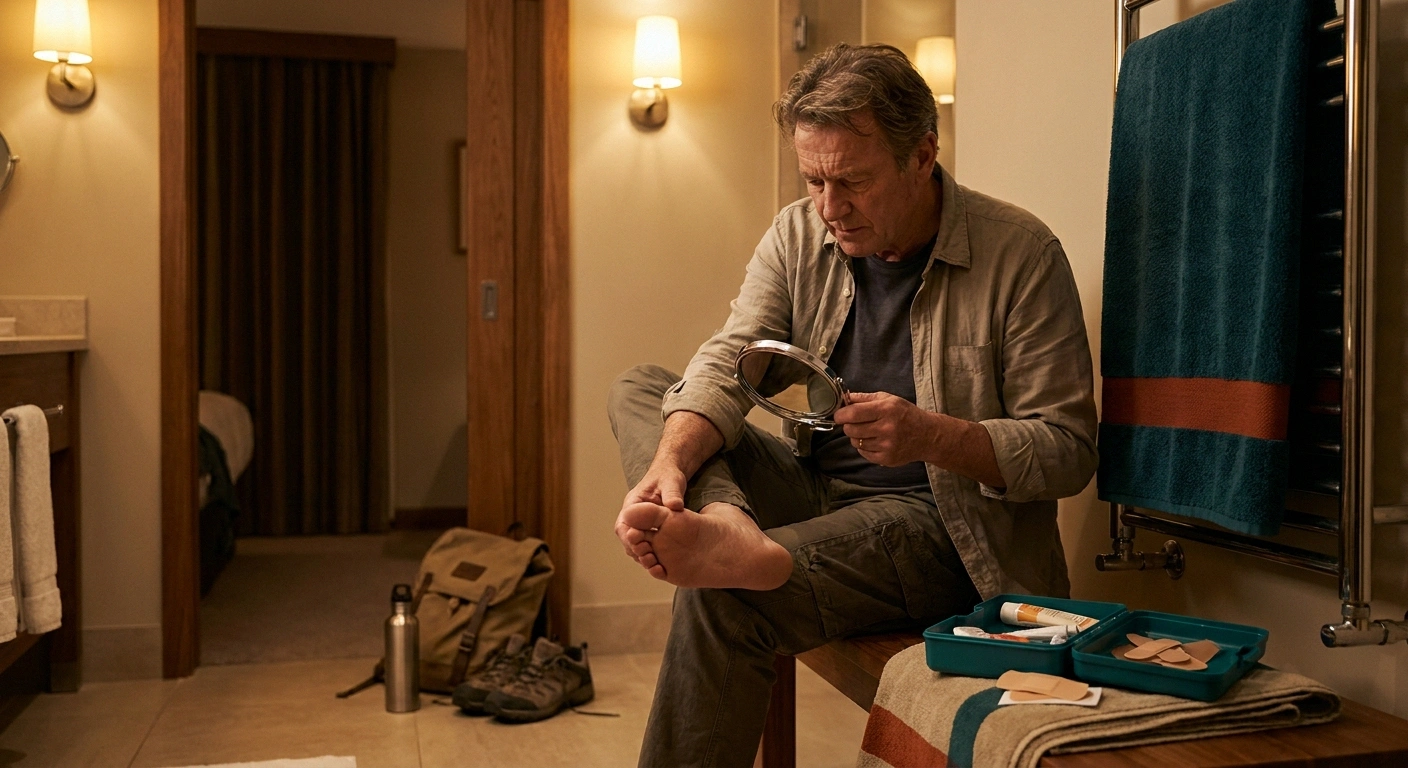
- Inspect every inch of both feet. Bottoms, tops, between toes, heels. Look for red spots, blisters, hot spots that haven't blistered yet, unusual color, cuts you didn't feel. Get someone else to look at the parts you can't see, or use a small mirror.
- Address anything you find immediately. Hot spot? Blister patch on it now. Actual blister? Clean it, cover it, don't pop it unless it's under tension and about to burst on its own. Cut or abrasion? Clean it with soap and water, antibiotic ointment, non-stick pad.
- Elevate your feet for 20-30 minutes. On pillows, above heart level if you can. Reduces the swelling that would otherwise build overnight and make tomorrow's shoes fit worse.
- Fresh dry socks for sleeping if you'd normally sleep in socks. Wet or slightly damp socks from the day are a bad idea.
- Reassess for tomorrow. If your feet are in bad shape, tomorrow needs to be a lighter day. Push through mentality is exactly what leads to real injury with neuropathic feet. Better to have a low-park-day tomorrow and a great park-day the day after than to compound damage across three days.
If you find anything concerning during your foot check — a wound that's not obviously superficial, unusual color, significant swelling — that's a call to your primary care doctor's on-call line or, if severe, a visit to urgent care. Neuropathic foot injuries can escalate faster than expected because you can't feel them progressing.
The Emotional Side of Adapting
I want to close with something I don't see enough of in park-planning articles. Going to a theme park with adaptations can feel loss-flavored the first few times. You watch other adults just breeze through the day without a plan and you think about the trip you'd have made 15 years ago.
That's real. I'm not going to pretend it isn't. But here's what I've heard over and over from the folks who've been doing this for years: the adapted park day, done right, is genuinely enjoyable. The scooter isn't defeat. The mid-day break isn't wimping out. The DAS pass isn't cheating. The wider shoes aren't ugly.
What they are, all of them, is the difference between the trip happening and the trip not happening. And most people who make peace with the adaptations discover that they can go to parks more often than they were, spend more of the day actually enjoying attractions instead of managing pain, and come home tired-in-a-good-way instead of wrecked.
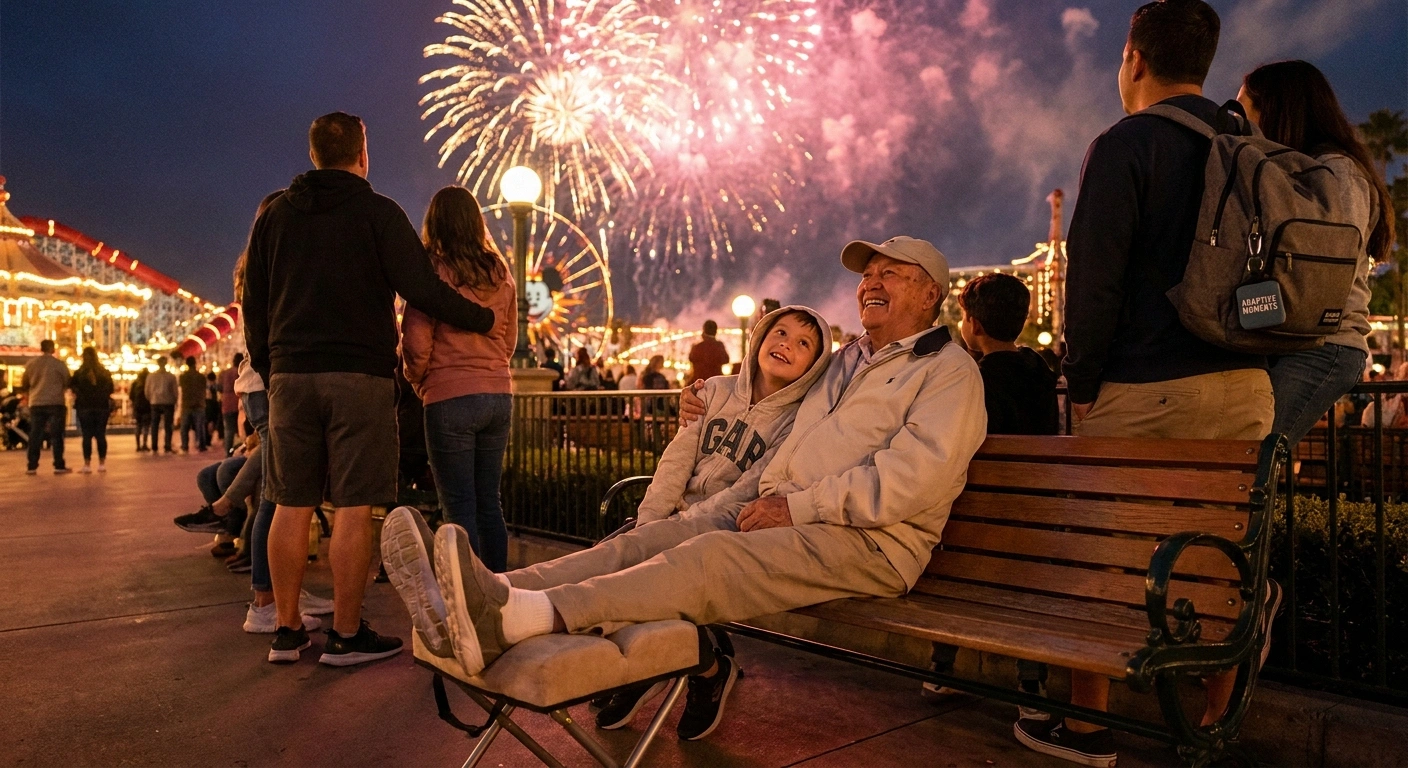
Take the adaptations. Bring the good shoes. Rent the scooter if it helps. Take the mid-day break. Ride the rides you love. Skip the ones you don't. Watch the fireworks with your feet elevated on a bench. Take the shuttle. Take the shortcut. Say yes to the ice cream in the shade instead of pushing to one more attraction in the heat.
Neuropathy took a lot of things away from a lot of people. But it doesn't have to take away Space Mountain with your grandkids or the parade with your spouse. It just changes how you get there.
Frequently Asked Questions
Can I go to a theme park with peripheral neuropathy?
Yes, absolutely, with planning. Many people with peripheral neuropathy including diabetic neuropathy visit theme parks every year and have great days. The key is treating it as an active adaptation project rather than hoping for the best. Right shoes, right pacing, mid-day breaks, hydration, disability access services, and possibly a scooter rental transform the experience from an endurance test into an enjoyable day. The people who struggle most are the ones who try to do a park day the same way they would have twenty years ago before neuropathy.
What are the best shoes for a theme park day with neuropathy?
The best theme-park shoes are stable, supportive walking shoes with moderate cushioning, generous toe-box room, a firm heel counter, and closed toes. They must be broken in for at least 30-40 miles before the trip. Avoid extreme maximalist cushioning shoes and thin flexible barefoot-style shoes for a park day. Bring a second pair to change into midday if possible. Sandals of any kind are a bad choice for a park day regardless of how comfortable they feel because your feet will be stepped on and rolled over by strollers.
Should I rent a scooter or wheelchair at the theme park?
For many people with neuropathy, yes. A scooter or ECV rental typically costs $50-70 per day and dramatically extends how much of the park you can enjoy. It is not giving up and it is not defeat. You can still walk when you want to and ride when you need to. Most attractions accommodate ECVs. Many long-time park-goers with neuropathy say the scooter changed their park experience from something they dreaded to something they look forward to. Reserve in advance because scooters routinely sell out at major parks in high season.
How do I handle standing in long lines at a theme park with neuropathy?
Every major theme park offers a disability access service that provides return times instead of traditional queuing for people with medical conditions that make prolonged standing difficult. Neuropathy qualifies. Sign up in advance online because requirements vary by park. When you are in a line, actively shift weight from foot to foot, do subtle calf raises every couple of minutes, and take advantage of any bench or handrail lean opportunity. Sit whenever the option exists. Skip lines that look longer than 20-30 minutes and come back later.
What should I pack in my theme park bag for neuropathy?
The essentials: a spare pair of moisture-wicking socks, blister patches, foot powder, small antibiotic ointment, all prescribed medications in labeled containers, snacks with protein for blood sugar stability if diabetic, a blood glucose meter if diabetic, glucose tablets, at least two full water bottles or a hydration pack, a cooling towel, sunscreen, a wide-brimmed hat, and a hand-held battery fan. If your park has a clear-bag policy, use a clear medical bag and be prepared to briefly explain your medications at security.
Are theme park rides safe for people with diabetic neuropathy?
Most rides at most parks are perfectly safe for people with diabetic neuropathy. The exceptions to consider are very intense roller coasters that can amplify neuropathy pain for hours afterward, standing-style coasters that require prolonged standing, rides with unstable moving loading platforms that require balance you may not have, and water rides where you will get soaked and end up with wet shoes and socks for the rest of the day. Every park publishes ride restriction guides online. Look those up before your trip and plan around them.
How do I protect my feet from hot pavement at a theme park in summer?
Always wear closed-toe shoes with adequate sole thickness. Never test ride seats or metal railings with bare skin in direct sun. Wear light-colored socks that reflect rather than absorb heat. Take air-conditioning breaks every 60 to 90 minutes to let foot skin cool. Choose parks with more indoor attractions during peak-heat July and August visits. If pavement temperatures reach dangerous levels, some parks post warnings and provide additional cooling stations. Do not rely on your feet to warn you that pavement is too hot because neuropathic skin often does not sense heat until damage has occurred.
What should I do at the hotel after a theme park day with neuropathy?
Get shoes and socks off immediately. Inspect every inch of both feet including the bottoms, tops, between toes, and heels for red spots, blisters, hot spots, or unusual color. Address anything you find right away with blister patches, cleaning, antibiotic ointment, or non-stick padding as appropriate. Elevate your feet for 20 to 30 minutes on pillows above heart level. Take a look at what tomorrow needs to look like based on what you find. If your feet are in bad shape, tomorrow should be a lighter day. Never push through a foot injury with neuropathy because the injury can escalate faster than expected when you cannot feel the progression.
About the Author