
The first thing most people reach for when a new pain shows up is a bottle of Tylenol. That is exactly what I did the first winter my toes started burning at night — two tablets before bed, a heating pad, and a hopeful sigh. Two hours later my toes were still on fire and the only thing that felt any different was a mild headache easing that I had not really noticed I had.
If that scene sounds familiar, you are in very good company. Acetaminophen — sold under Tylenol, Panadol, and about a thousand generic labels — is one of the most-used medications on Earth. It is quietly effective for a range of pains. Nerve pain, however, is not one of them. This article walks through the honest reason why, what to reach for instead, and when a small dose of Tylenol still has a modest role in a broader plan.
The Short Answer
Acetaminophen does not work well for nerve pain because nerve pain is not the type of pain acetaminophen was built to quiet. The drug was designed to blunt the pain of tissue injury and inflammation-driven signals from muscles, joints, headaches, and fever. Neuropathic pain — the burning, electric, tingling, cold-sting, sock-crushing kind — comes from nerves that are damaged and misfiring on their own. Acetaminophen has no meaningful effect on the specific ion channels, receptors, or spinal-cord amplification loops that produce that misfiring.
Acetaminophen was designed for tissue-injury pain, not for damaged-nerve pain. Every major neuropathic pain guideline lists it as not recommended as a stand-alone treatment for chronic nerve pain. That is not a flaw in your body — it is a limitation of the drug for this specific type of pain.
Major pain-medicine guidelines have quietly reflected this for a long time. The International Association for the Study of Pain and consecutive Cochrane reviews list acetaminophen as not recommended for chronic neuropathic pain because well-controlled studies show no meaningful benefit above placebo. The first-line drugs are gabapentin and pregabalin, duloxetine, and the tricyclic antidepressants (amitriptyline, nortriptyline). Acetaminophen simply is not on that list.
Two Very Different Kinds of Pain
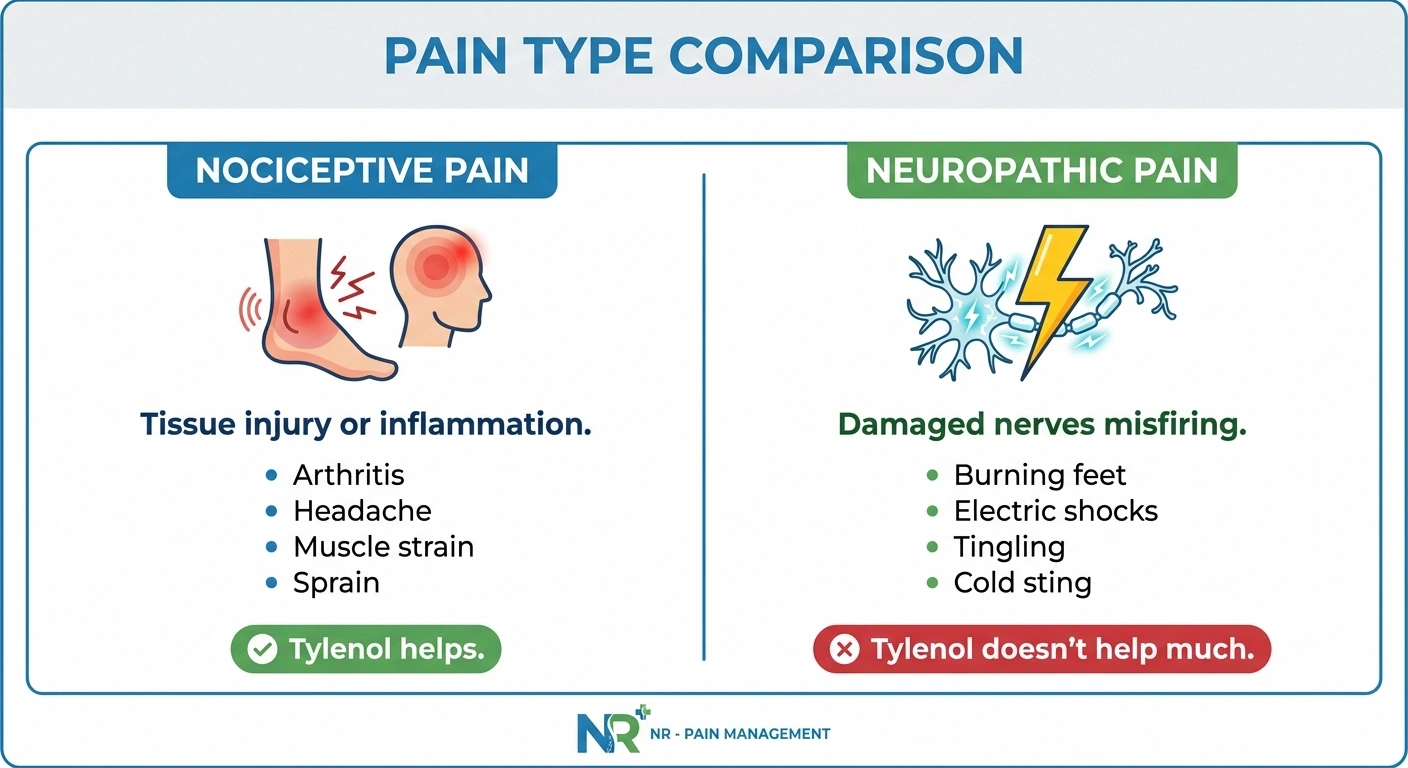
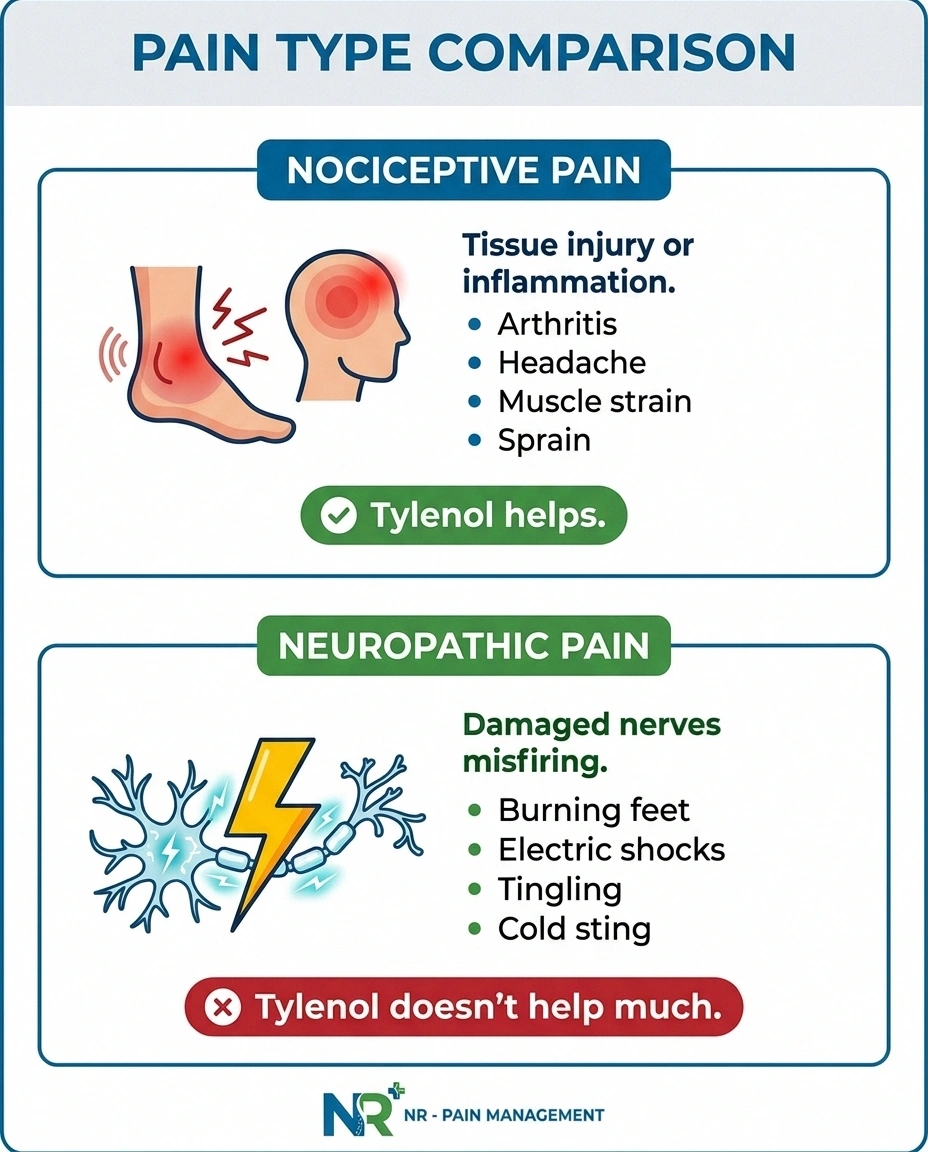
To understand why one drug can be brilliant for a knee and useless for a burning foot, it helps to know that “pain” is not a single thing. Doctors group it into families that behave differently.
Two Very Different Pain Systems
- Headache
- Arthritis
- Muscle strain
- Sprain, bruise
- Burning feet
- Electric shocks
- Tingling / pins & needles
- Cold sting, numbness
Nociceptive pain is the kind you feel when tissue is being injured or inflamed. Stub your toe, sprain an ankle, tear a muscle, get a headache — nerves in the tissue detect the damage and send a very well-organized alarm to the brain. Acetaminophen quiets this alarm at multiple levels.
Neuropathic pain is what happens when the nerves themselves are damaged. The alarm circuit stops behaving like an alarm and starts behaving like a broken smoke detector — chirping at random, sensitive to nothing, then sensitive to everything, sending burning and electric signals up to the brain without any tissue injury to justify them. This is what most people with peripheral neuropathy live with.
Pain that comes from damaged nerves does not stop when you quiet inflammation, because inflammation is not what is driving it. Drugs that only address the inflammatory arm — like acetaminophen — leave the abnormal nerve firing untouched.
What Acetaminophen Actually Does
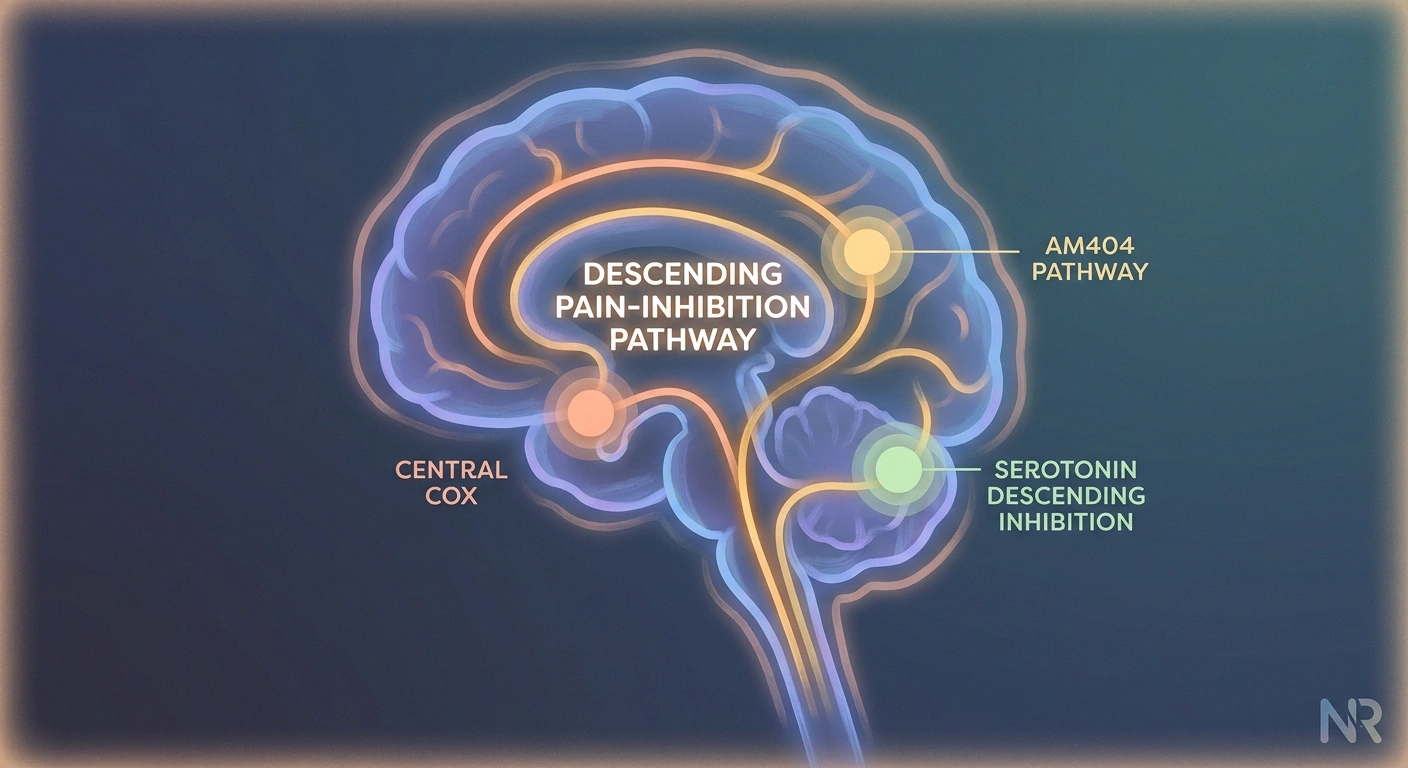
The mechanism of acetaminophen is genuinely fascinating and, honestly, still not fully worked out even after decades of use. The current picture looks something like this:
- Central COX inhibition. Acetaminophen weakly inhibits cyclooxygenase enzymes in the brain and spinal cord, reducing prostaglandins that amplify pain and fever signals centrally.
- The AM404 pathway. The body converts acetaminophen to a metabolite called AM404, which acts on the endocannabinoid system and on TRPV1 receptors in the brain — dampening pain perception at a central level.
- Serotonin descending inhibition. Acetaminophen appears to enhance the natural pain-suppressing pathway that comes down from the brainstem, using serotonin as its signaling molecule.
You will notice a theme: almost every mechanism is central — happening in the brain and spinal cord. Very little of what acetaminophen does happens out at the peripheral nerve. It quiets how much pain the brain notices from ordinary tissue signals, but it does very little to change what a damaged peripheral nerve is doing at the ankle or the fingertip.
Why Neuropathic Pain Is a Different Problem
Neuropathic pain has its own unique biology, and once you see it, it becomes obvious why a very different set of medications is needed.
- Ectopic firing. Damaged nerves develop abnormal sodium channels along their length and start firing on their own — spontaneous bursts of “PAIN” without a stimulus. Drugs that block those specific sodium channels (like carbamazepine, lidocaine patches, and the newer Nav1.8 blockers) can quiet them. Acetaminophen does not.
- Central sensitization. Repeated abnormal signals from damaged nerves change how the spinal cord processes pain, turning up the gain on everything downstream. Gabapentin and pregabalin work partly by dampening this amplification through the alpha-2-delta calcium channel subunit. Acetaminophen does not touch it.
- Loss of inhibition. The natural braking system in your spinal cord — GABA-based interneurons — weakens after nerve injury. Tricyclic antidepressants and SNRIs like duloxetine partly restore this brake through their action on serotonin and norepinephrine. Acetaminophen does not.
- NMDA receptor upregulation. Damaged nerves lead to more NMDA glutamate receptors becoming active in the spinal cord, driving chronic pain. Ketamine and, indirectly, some anticonvulsants target this. Acetaminophen does not.
The list could go on. The point is not the biochemistry, it is the shape of it: neuropathic pain uses a completely different toolkit of molecules than nociceptive pain. Every medication that works well for neuropathic pain acts on at least one of the pathways above. Acetaminophen acts on none of them meaningfully.
The Studies Actually Support This
You might reasonably say, “That is all mechanism talk. But if it works in real patients, who cares about the mechanism?” A fair question. The problem is that when it has been tested in real patients with real neuropathic pain, it mostly has not worked.
Major neuropathic-pain guidelines and Cochrane reviews consistently place acetaminophen outside the recommended treatment list for chronic neuropathic pain:
- International Association for the Study of Pain (NeuPSIG)
- European Federation of Neurological Societies
- Canadian Pain Society
- Cochrane systematic reviews on acetaminophen for neuropathic pain
First-line drugs across every guideline: gabapentin, pregabalin, duloxetine, and tricyclic antidepressants.
Cochrane reviews of acetaminophen for neuropathic pain — the gold standard for pooling clinical trial evidence — have consistently concluded that there is no evidence acetaminophen alone is any better than placebo for chronic neuropathic pain. Some trials show a very small benefit; most show none. Combination products (acetaminophen with opioids, for instance) show benefit that comes almost entirely from the opioid.
The clinical practice guidelines that summarize this evidence — from the International Association for the Study of Pain’s Special Interest Group on Neuropathic Pain, from the European Federation of Neurological Societies, from the Canadian Pain Society — all list acetaminophen as not recommended for chronic neuropathic pain as monotherapy. This is not fringe opinion. It is mainstream neurology.
Why It Sometimes Feels Like It Works Anyway
If Tylenol never helped anyone with neuropathy, no one would keep taking it. There are honest reasons some people feel benefit, and it helps to know what they are.
Placebo effect is real and measurable. In pain trials, placebo response rates commonly run 20 to 40 percent. Taking a familiar medication in a moment of pain, with the belief and ritual of “medicine coming,” activates the brain’s own pain-suppression circuits. That is a real physiological effect, not imagination — but it is not the drug.
Symptom fluctuation. Neuropathy pain waxes and wanes over hours, days, and weeks. If you take Tylenol at your worst moment, the symptoms are statistically likely to be better an hour later regardless of what you took, because they were peaking. This is called regression to the mean, and it fools all of us.
Overlapping nociceptive pain. Many people with peripheral neuropathy also have musculoskeletal pain — a stiff back from favoring one leg, an aching shoulder from a cane, arthritis in a knee. Acetaminophen can genuinely quiet those pains, and the total pain “load” feels lower.
Overall pain background. Acetaminophen has a mild central effect on how much pain the brain registers overall. It may nudge the whole day down a notch, without truly touching the nerve pain itself.
Combined use. Many people take Tylenol on top of gabapentin, pregabalin, or another neuropathic medication. The relief they feel is coming mostly from the neuropathic medication; the Tylenol is a small add-on.
What Actually Works for Neuropathic Pain
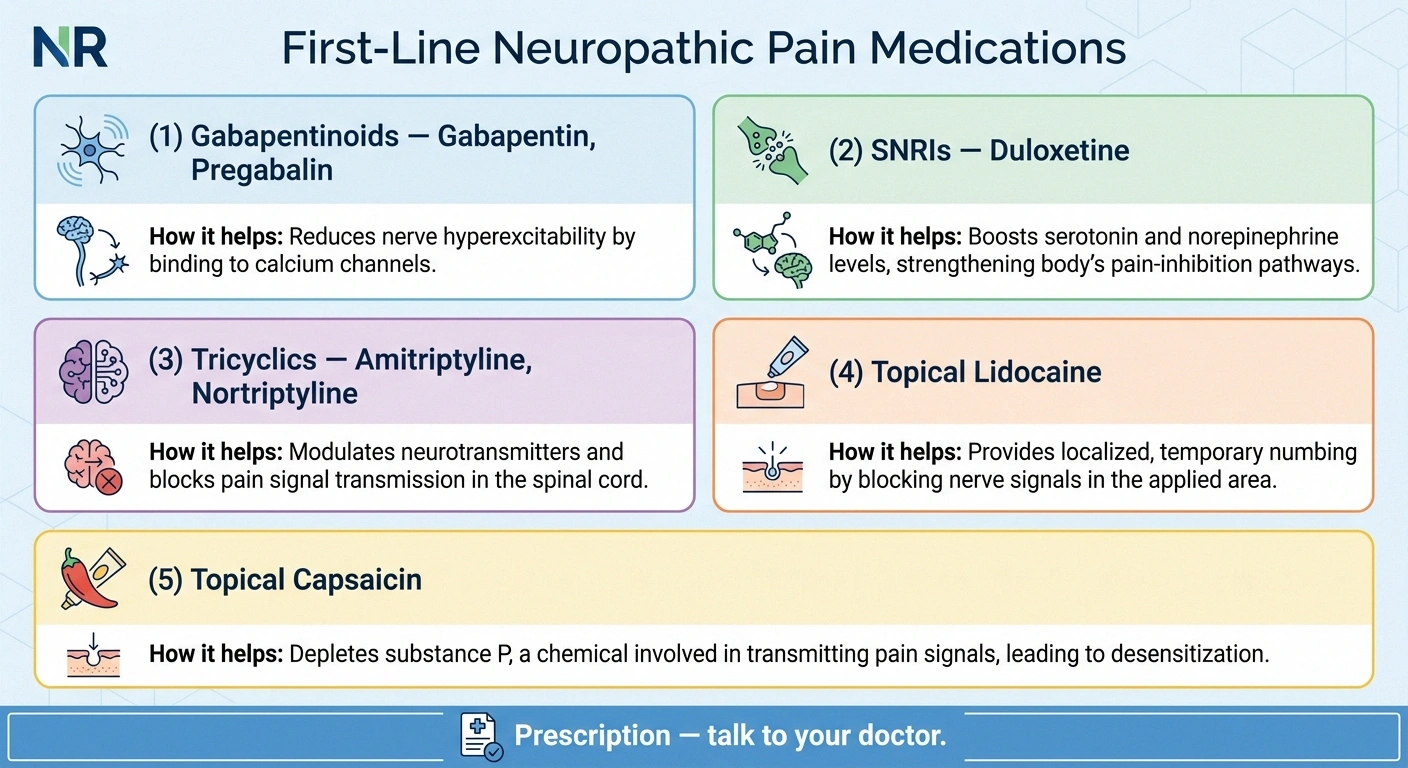
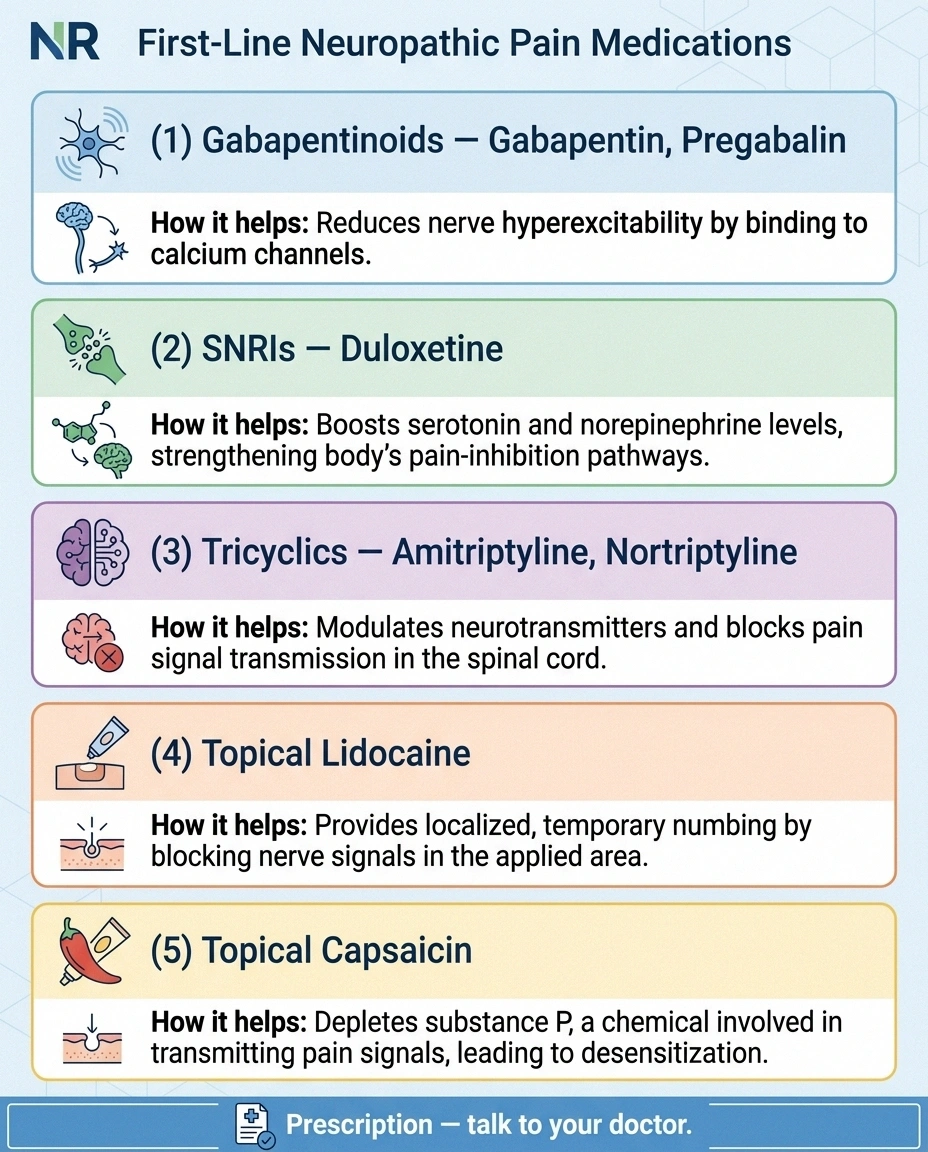
The medications that are supported by strong evidence for neuropathic pain fall into a few families. They are usually prescription-only because they need careful dose titration and monitoring, but knowing what they are helps you have a specific conversation with your doctor.
First-Line Neuropathic Pain Medications
- Gabapentinoids. Gabapentin and pregabalin (Lyrica) quiet abnormal calcium signaling in over-firing nerves. First-line for most peripheral neuropathic pain.
- SNRIs. Duloxetine (Cymbalta) restores descending pain inhibition. Especially useful in diabetic neuropathy and often preferred when depression or fatigue co-exist.
- Tricyclic antidepressants. Amitriptyline and nortriptyline in low doses work through similar descending-inhibition pathways. Often useful for nighttime symptoms.
- Topical lidocaine 5% patches. Cover focal areas of nerve pain, block ectopic sodium channel firing locally. Minimal systemic effect. Reasonable to try before oral drugs for focal problems.
- Topical capsaicin. Repeated application desensitizes the local pain-signaling nerves. Prescription 8% patch is highly effective for some; over-the-counter 0.025 to 0.075% creams are gentler and worth trying.
Beyond medication, non-drug approaches — physical therapy, TENS units, mindfulness-based pain programs, sleep repair, blood-sugar control, and vitamin repletion for deficiencies — do the quieter background work that reduces how much medication anyone needs.
When Acetaminophen Still Has a Role
I am not going to tell you to throw the bottle in the trash. Acetaminophen still has a small, honest place in a neuropathy plan — just not as the main tool.
- Overlapping musculoskeletal pain. If you have arthritis, back pain, or muscle strain layered on top of nerve pain, acetaminophen can genuinely help the non-nerve part.
- Fever and headaches. Same reasons any of us reach for it — colds, headaches, low-grade fever.
- An add-on when a first-line drug is not quite enough. Some prescribers will add a scheduled small dose of acetaminophen alongside gabapentin or duloxetine for a modest top-up. This is reasonable; just be honest about how much it is actually helping.
- Bridging. During dose titration of a new neuropathic drug — when you are not yet at a therapeutic dose but are already living with pain — a limited course of acetaminophen can help you get through the ramp-up period.
What acetaminophen should not be is the whole plan for chronic burning, electric, or tingling nerve pain. If that is where you are, the workup has not delivered its answer yet.
The Safety Piece Most People Miss

Acetaminophen has a well-earned reputation for being gentle, but that reputation depends on staying within a reasonable dose. A few numbers to keep in mind:
- Chronic daily use: stay under 3 grams (3,000 mg) per day — that’s 6 regular-strength or 3 Extra Strength tablets total.
- Alcohol: even moderate drinking raises liver risk. Discuss dose limits if you drink regularly.
- Hidden acetaminophen: cold, flu, and combination prescription pain products often contain it. Read every label.
- Liver disease: get personalized dose guidance if you have any liver problem or take other liver-stressing medications.
- Chronic daily use: most modern guidance suggests keeping under 3 grams per day (six regular-strength or three Extra Strength tablets), not the older 4-gram maximum, when using it regularly over months.
- Alcohol: even moderate drinking increases liver toxicity risk. If you have more than a rare drink, discuss dose limits with your doctor or pharmacist.
- Hidden acetaminophen: combination cold, flu, and prescription pain medications often contain acetaminophen. Read every label. Accidental double-dosing from a NyQuil-plus-Tylenol overlap is a common ER story.
- Liver disease: if you have any liver problem or take other medications that stress the liver, get personalized dosing advice.
Chronic pain conditions make it easy to slowly creep the dose up because the current dose “is not doing enough.” That is a signal to change the strategy, not to add more of a drug that was never quite the right tool.
How to Talk to Your Doctor About This

A pattern I see over and over in my support group: someone has been taking Tylenol for months, it never really worked, but they never explicitly told the doctor because it seemed too basic to bring up. Doctors then assume the current plan is roughly holding, and no one revisits it.
One honest sentence to open the conversation:
That framing signals three things at once: real ongoing pain, some homework done, and openness to a different approach.
The conversation does not have to be long or awkward. A single honest sentence usually opens the door:
“I have been taking Tylenol for my nerve pain and it does not really help. I know it is not a first-line neuropathic drug. Can we talk about what would actually be appropriate for burning-feet-type pain?”
That framing signals three things at once: you are experiencing real ongoing pain, you have done some homework on treatment classes, and you are open to a different approach. Most primary care doctors and neurologists respond well to that. If yours does not, it may be time for a fresh set of eyes — a neurologist, a pain-medicine specialist, or a second opinion.
The Bigger Picture
Living with nerve pain is a marathon, not a sprint, and it is unfair how few of the tools that helped our parents with their arthritis actually do anything for the burning-electric-tingling flavor of pain that neuropathy delivers. Reaching for Tylenol when a nerve pain flare hits is not wrong — it is a completely reasonable first instinct. It just is not enough. And the sooner you and your doctor land on a plan built around drugs and strategies that actually target neuropathic pain, the better the years ahead will be.
Frequently Asked Questions
Can I take Tylenol with gabapentin or pregabalin?
Generally yes. Acetaminophen does not have a significant interaction with gabapentin or pregabalin, and the two are commonly used together. If you find yourself relying on the acetaminophen daily, it is worth revisiting your gabapentinoid dose with your doctor — often the neuropathic medication needs more room to work rather than more OTC on top. As always, check with your pharmacist if you take multiple medications, since combinations vary.
How much Tylenol is safe to take every day for chronic pain?
Current guidance is to stay under 3 grams (3,000 mg) per day when using acetaminophen chronically — that is six regular-strength (500 mg) tablets or three Extra Strength (1,000 mg) tablets total. Lower if you drink alcohol regularly, have any liver issue, or take other medications that stress the liver. Watch out for hidden acetaminophen in combination cold and flu products. If you are consistently at the upper limit and still hurting, that is a signal to change the plan, not the dose.
Is Advil (ibuprofen) or Aleve (naproxen) better than Tylenol for nerve pain?
Not really. NSAIDs like ibuprofen and naproxen are strong for inflammatory pain but are similarly weak for pure neuropathic pain. They can help if there is a musculoskeletal component (arthritis, radiculopathy with muscle spasm), but they will not quiet burning, electric, or tingling nerve pain any better than acetaminophen does. They also carry stomach, kidney, and cardiovascular risks that acetaminophen does not.
What is the strongest over-the-counter medication for nerve pain?
Honestly, there is no strong OTC option that specifically targets neuropathic pain. The best OTC-adjacent options are topical: 0.025 to 0.075 percent capsaicin cream applied consistently, over-the-counter lidocaine 4% patches or gels (though the prescription 5% is stronger), and menthol-based creams for temporary relief. For real, ongoing neuropathic pain, prescription first-line drugs are usually needed. The absence of a good OTC option is not a personal failing — it is a limit of the class of pain.
Why does my doctor keep prescribing Tylenol #3 (with codeine) if opioids do not work well?
Opioids as a class are considered third-line for neuropathic pain — not because they cannot help at all, but because the benefit is modest, tolerance develops, and the long-term risks outweigh the modest gain for most people. A short course of Tylenol with codeine for a flare, a post-surgical situation, or a bridge to a working long-term medication can be reasonable. Long-term monotherapy with an opioid for chronic neuropathic pain is out of favor in modern pain medicine, and it is fair to ask about better options.
If Tylenol does not work, does that prove my pain is neuropathic?
Not by itself, but it is a soft clue. Pure neuropathic pain (burning, electric, cold-sting, tingling) is typically poorly responsive to acetaminophen and NSAIDs, and responsive to gabapentinoids, TCAs, and SNRIs. Mixed pain that responds partly to acetaminophen and partly to gabapentin often has both nociceptive and neuropathic components. Poor response to Tylenol plus a positive response to a first-line neuropathic drug is one of the practical patterns doctors use to confirm the pain is nerve-driven.
Can I use Tylenol just at bedtime for the worst nerve pain?
You can, but it usually will not make much difference for pure neuropathic pain. If nighttime nerve pain is your worst symptom — and it often is for people with neuropathy that worsens at night — an evening dose of a low-dose tricyclic antidepressant (like nortriptyline or amitriptyline) is usually a far more targeted choice. It also helps with sleep, which itself lowers pain. Discuss the option with your doctor rather than layering more Tylenol on a problem it is not built for.
Does taking Tylenol regularly mask worsening neuropathy?
This is a thoughtful concern. In general, acetaminophen at recommended doses does not blunt the specific signals that would tell you neuropathy is progressing — pattern changes, new areas of numbness, new weakness, new autonomic symptoms. Those are the changes to watch for and report, regardless of what you take for symptom control. What Tylenol can do is give a false sense that things are stable if you attribute daily pain fluctuation to the medication rather than to the natural fluctuation of neuropathy. Keeping a simple symptom diary helps separate the two.
About the Author