The first time a neurologist handed me a printout titled “Neuropathy Workup — Recommended Tests,” I felt like I had opened a menu written in another language. EMG. NCS. QSART. SPEP. IENFD. HbA1c. I nodded along, went home, and quietly cried at my kitchen table with a cup of tea getting cold in front of me, because I did not have the first idea what any of it meant or why I was going to need most of it.
That was a long time ago now. I have since had almost every one of these tests, sat with dozens of readers in my support group as they got their own results back, and read more about diagnostic accuracy than I ever expected to at this point in my life. So here is the map I wish someone had drawn for me back then — a clear side-by-side of the tests your doctor may order, what each one actually looks at, and how they fit together.
Why Neuropathy Needs More Than One Test
The nervous system is layered. It has large, fast-conducting fibers wrapped in fatty myelin that carry precise touch, vibration, and muscle commands. It has smaller, slower fibers that carry burning, temperature, and pinprick pain. It has the tiniest unmyelinated fibers that control sweat, blood pressure, gut motility, and pupil dilation. And every one of those fiber types can be damaged independently of the others.
No single test rules out neuropathy. Each test looks at a specific fiber type or anatomical layer. A normal EMG rules out large-fiber problems but tells you nothing about small fibers. A normal skin biopsy rules out one small-fiber pattern but not autonomic dysfunction. Understanding what each test measures — and misses — is the first step to a workup that actually finds the cause.
No single test looks at all of them. EMG is beautiful for the big fibers, blind to the small ones. Skin biopsy catches the smallest, misses the big. Blood work tells you the metabolic why but nothing about the how much. A complete workup is really a small stack of tests, each answering one specific question. Understanding what each answers — and what it cannot — is the difference between a workup that finds the cause and one that stalls at “we’re not sure.”
EMG and Nerve Conduction Studies (The Workhorse)
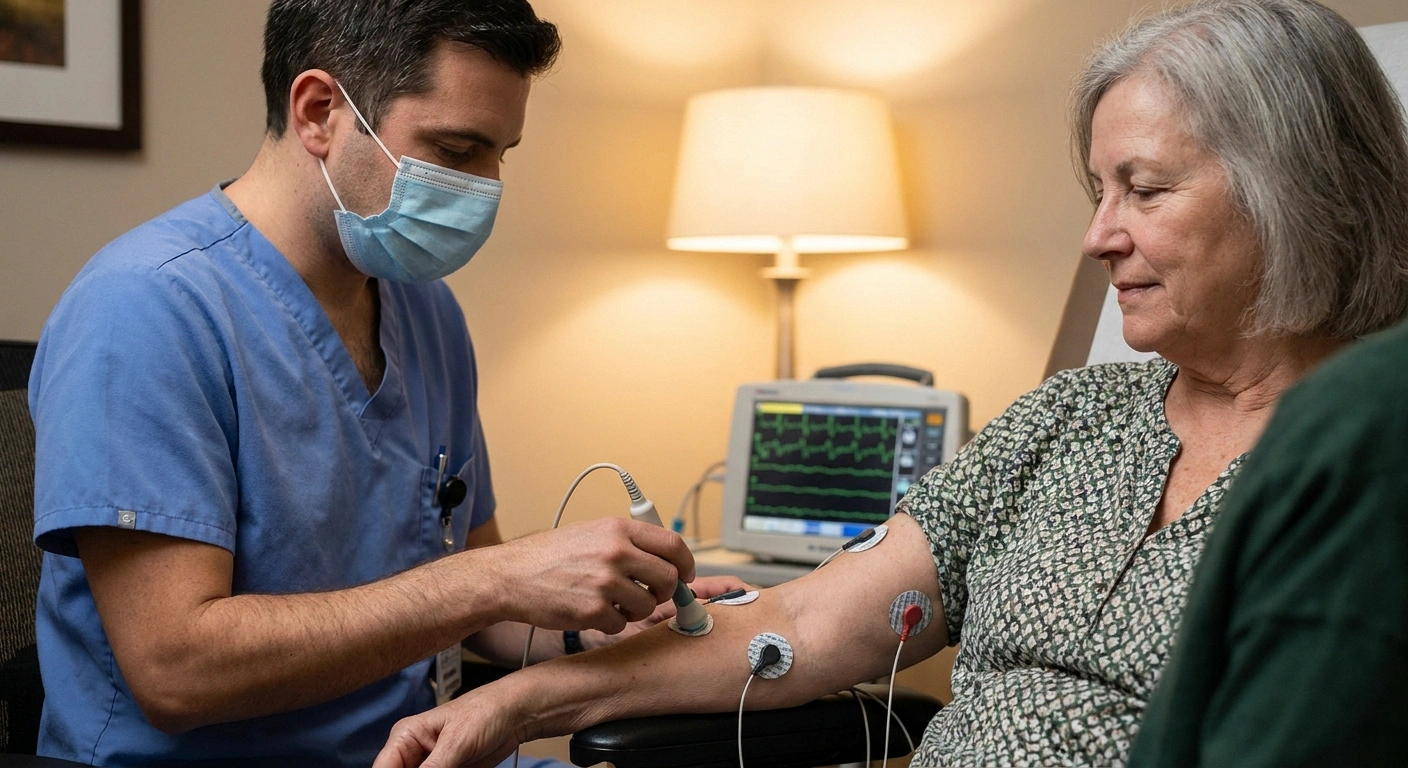
Electromyography (EMG) and nerve conduction studies (NCS) usually come as a package. They are almost always the first specialized test ordered.
What they measure: NCS sends small electrical pulses along a nerve and measures how fast and how strongly the signal travels. EMG uses a fine needle inserted into muscle to listen to electrical activity at rest and during voluntary contraction.
What they can tell you: Whether large sensory or motor fibers are damaged; whether the damage is in the myelin sheath (demyelinating) or the axon itself (axonal); whether the damage is diffuse (all nerves, like typical diabetic polyneuropathy) or focal (one nerve, like carpal tunnel); and whether the muscles have been chronically starved of nerve input.
What they cannot tell you: Anything about the smallest fibers. If you have burning, temperature abnormalities, or autonomic symptoms and your only workup was EMG/NCS, a negative result does not rule out neuropathy — it just rules out a large-fiber problem. This is one of the most important sources of misdiagnosis in small fiber neuropathy.
What it feels like: The nerve conduction part feels like a series of small static shocks — surprising but not truly painful. The needle EMG part is more uncomfortable — a very fine needle goes into several muscles and the electromyographer listens while you gently contract them. Most people describe it as unpleasant but not intolerable. Bruising is common, complications are rare.
Cost: Widely covered by insurance when ordered by a neurologist. Self-pay ranges from around $300 to over $1,500 depending on how many nerves and muscles are studied.
Skin Biopsy (The Small-Fiber Gold Standard)
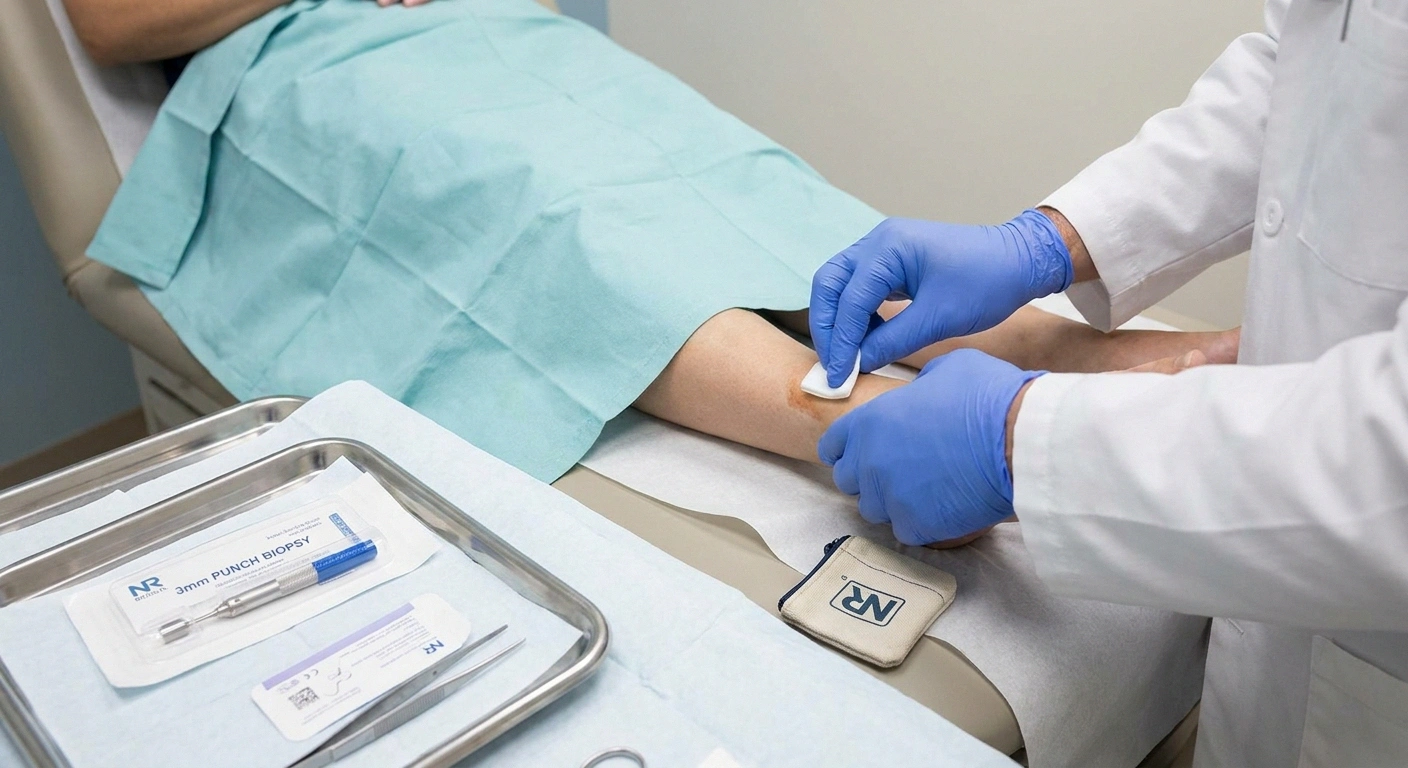
Skin biopsy for intraepidermal nerve fiber density (IENFD) is the test that finally proves — or disproves — small fiber neuropathy. It is endorsed as the gold standard by the Peripheral Nerve Society, the American Academy of Neurology, and the European Academy of Neurology.
The Four Foundational Tests
| Test | Detects | Sensitivity | Typical Cost |
|---|---|---|---|
| EMG / NCS | Large-fiber function | High for LFN | $300 – $1,500 |
| Skin biopsy (IENFD) | Small-fiber density | ~80% for SFN | $400 – $800 |
| QSART | Sudomotor function | 73 – 80% for distal SFN | $250 – $500 |
| Core blood panel | Metabolic causes | ~50% of cases | $50 – $300 |
What it measures: The number of tiny unmyelinated nerve fibers per millimeter of skin, counted under a microscope after a stain that lights them up. Reduced density is the diagnostic finding.
What it can tell you: Whether small-fiber neuropathy is present with roughly 80% sensitivity and 90% specificity. It can also tell you whether the pattern is length-dependent (worse in the distal leg than the thigh) or non-length-dependent, which points to different underlying causes.
What it cannot tell you: Why the small fibers are dying. It confirms the diagnosis; it does not name the cause. Blood work, autonomic testing, and clinical history do that.
What it feels like: Three tiny 3-millimeter punches, usually one at the ankle, one at the mid-thigh, and sometimes one at the trunk for comparison. Local numbing shot first — a small pinch — then the punches themselves are mostly pressure. A few stitches or Steri-Strips close each site. Heals in about two weeks with a small scar.
Cost: Roughly $400 to $800 depending on how many sites and how many labs process the tissue. Most insurance covers it when ordered for suspected SFN, though prior authorization is common.
QSART (The Sweat Test)
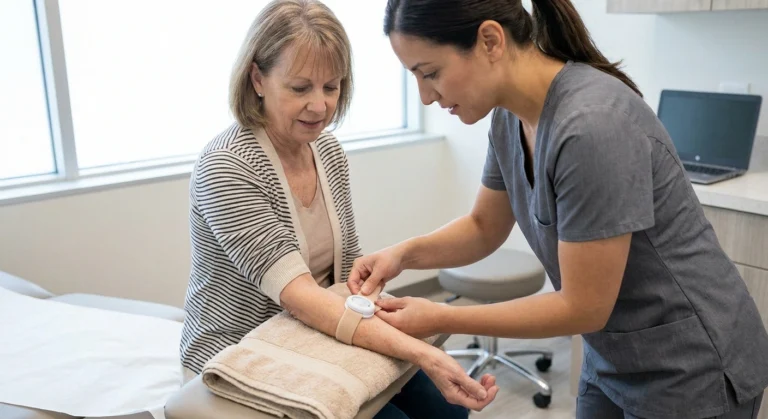
The Quantitative Sudomotor Axon Reflex Test — QSART, mercifully shortened — measures whether the tiny autonomic nerves that control sweating are working.
“Your EMG is normal, so it’s probably not neuropathy” is one of the most common wrong things patients hear. EMG is blind to small fibers. If your symptoms are burning, temperature-based, or autonomic (dizziness, sweating changes, gut issues) and your workup stopped at a normal EMG — the workup is not finished. The next step is small-fiber testing.
What it measures: The volume of sweat produced at four skin sites (usually forearm, proximal leg, distal leg, foot) after acetylcholine is driven through the skin with a small electrical current.
What it can tell you: Whether small autonomic fibers are working normally. Reduced or absent sweat output supports a diagnosis of small fiber neuropathy with autonomic involvement. Sensitivity for distal small fiber neuropathy runs around 73 to 80%.
What it cannot tell you: Anything about large fibers, sensory-only small fiber neuropathy, or the cause. It also isn’t available everywhere — you often need a neuromuscular clinic or an autonomic lab.
What it feels like: Small capsules taped to the skin, a mild electrical tingle for about 5 minutes at each site, and time spent lying still. Not painful. The room stays cool. The whole session takes 45 minutes or so.
Cost: Roughly $250 to $500. Not always covered — insurance sometimes flags it as investigational despite decades of clinical use. Documentation of specific autonomic symptoms in the referral helps coverage.
Blood Work (The Cause Hunt)
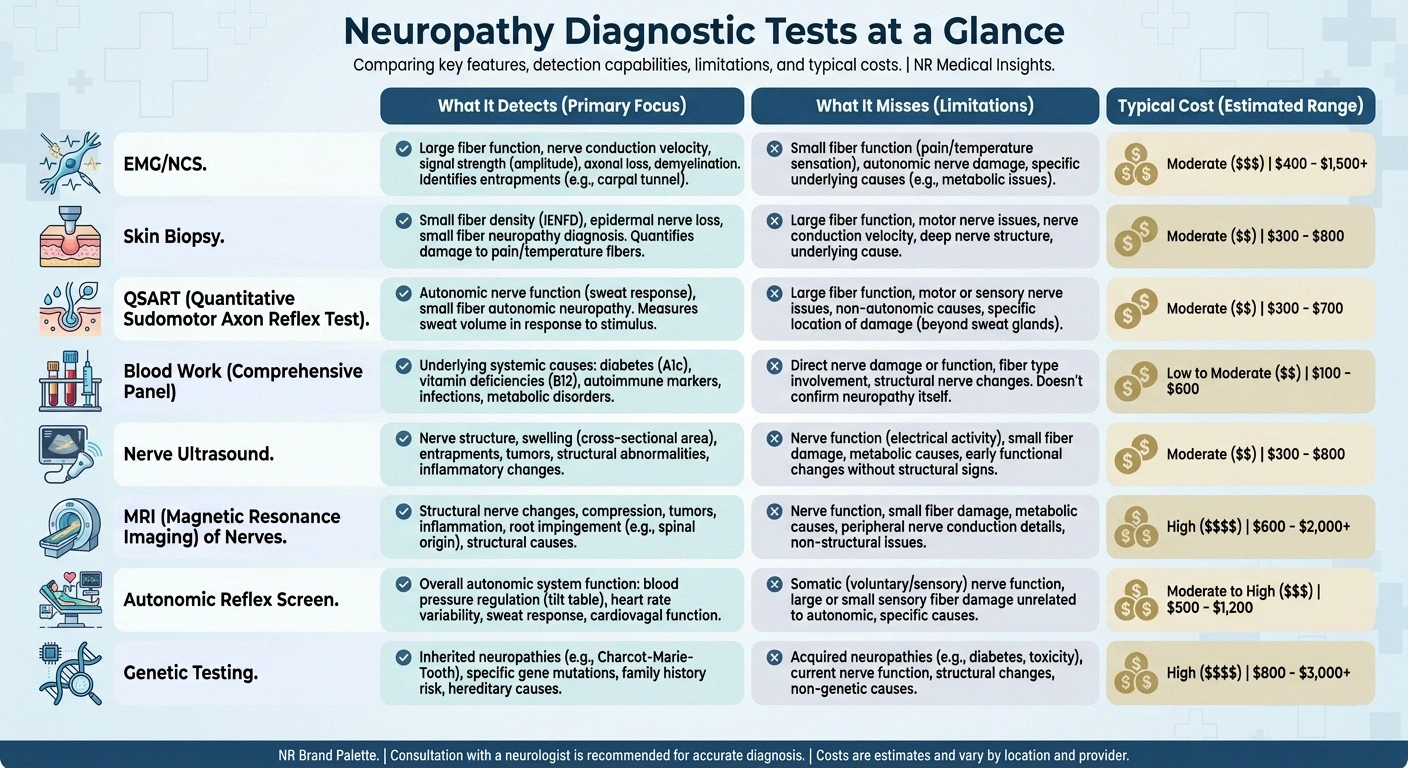
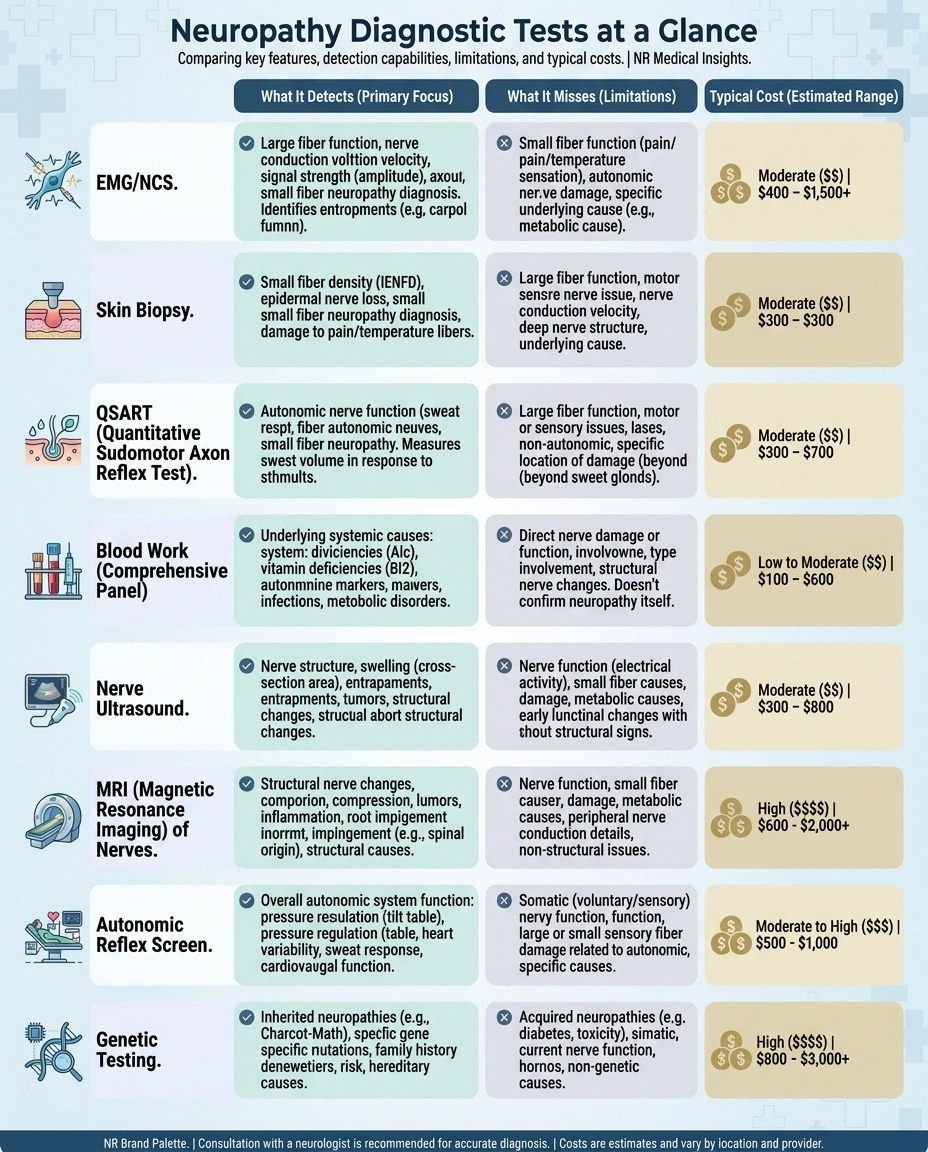
Blood work is the least glamorous piece of the workup and often the most valuable. Roughly half of neuropathy cases have a metabolic, nutritional, autoimmune, or infectious cause hiding in a blood tube.
The core neuropathy blood panel — print this and bring it in:
- Fasting glucose + HbA1c (diabetes screen)
- Vitamin B12 + methylmalonic acid (deficiency)
- TSH (thyroid function)
- Comprehensive metabolic panel (kidney, liver, electrolytes)
- Complete blood count (anemia, macrocytosis)
- Serum protein electrophoresis + immunofixation (paraprotein screen)
- ESR or CRP (inflammation)
- Vitamin D level
The core panel every neuropathy workup should include:
- Fasting glucose and HbA1c — the single most common cause of neuropathy in the developed world.
- Vitamin B12 (with methylmalonic acid and homocysteine if B12 is borderline) — a fixable cause hiding behind a “low-normal” number.
- TSH — thyroid dysfunction is a well-known nerve toxin.
- Comprehensive metabolic panel — kidney and liver function, electrolytes.
- Complete blood count — anemia, macrocytosis (which points at B12).
- Serum protein electrophoresis with immunofixation — for paraproteins (MGUS, myeloma, amyloid).
- ESR or CRP — inflammation markers.
- Vitamin D — increasingly recognized as relevant to nerve health.
Second-tier tests your doctor may add based on your history: a 2-hour oral glucose tolerance test (catches early metabolic problems the HbA1c misses), ANA and other autoimmune panels, celiac panel, Sjögren’s antibodies (SS-A, SS-B), heavy metal screen, HIV, hepatitis B and C, Lyme titers, and vitamin B6 level (both deficiency and toxicity matter).
What it costs: The core panel runs $50 to $300 with insurance, more without. It is the highest-yield test in the entire workup — a fixable deficiency is worth catching even if the rest of the workup is normal.
Nerve Ultrasound (The Anatomic Picture)
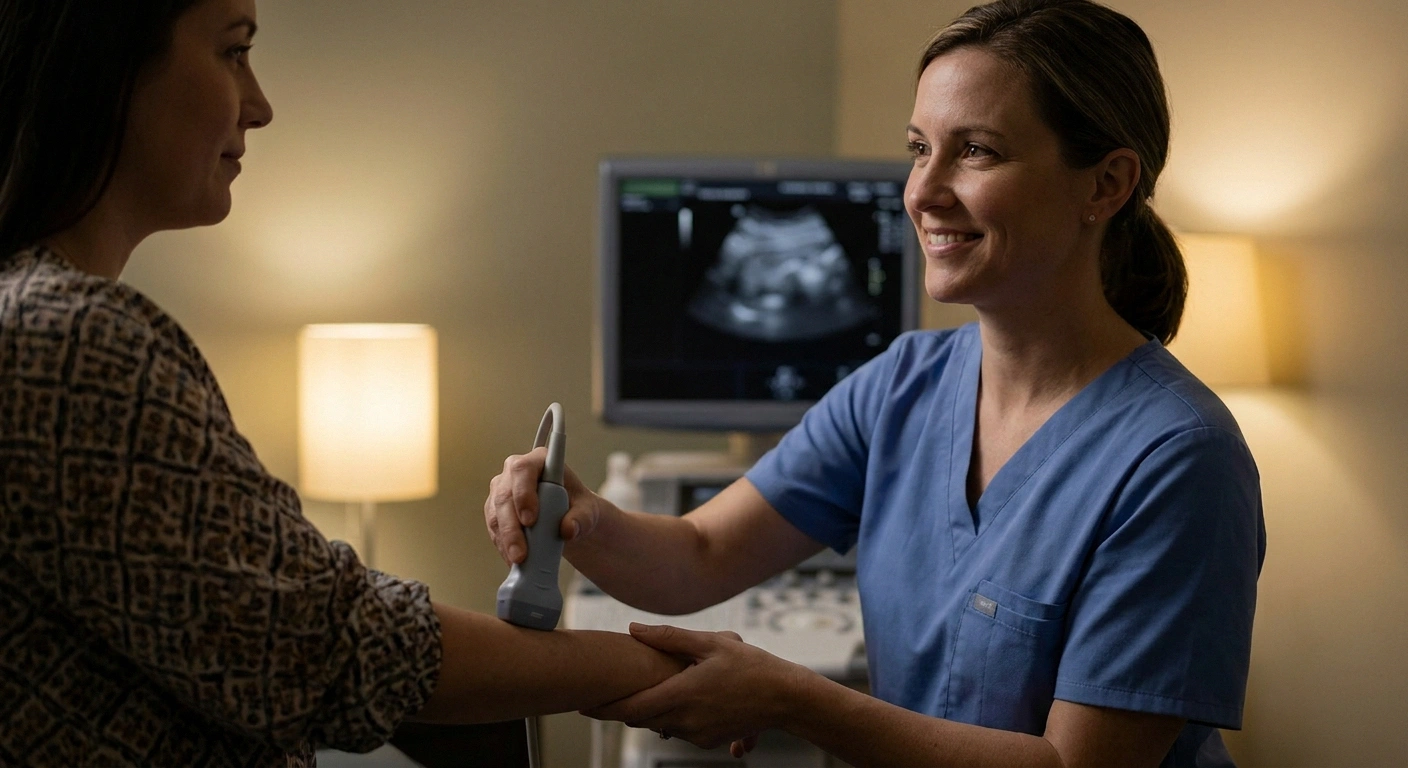
Nerve ultrasound uses high-frequency sound waves to picture peripheral nerves in cross-section. It has emerged over the last 15 years as an important complement to EMG.
What it can tell you: Nerve enlargement (a sign of entrapment, inflammation, or hereditary conditions), a mass compressing the nerve, focal thickening in CIDP or multifocal motor neuropathy, and whether the nerve glides normally.
What it cannot tell you: Anything functional. And it cannot see small fibers, deep nerves like the plexus or sciatic in the buttock, or nerve roots inside the spine.
What it feels like: Warm gel and a small handheld probe. No needles, no radiation, no discomfort. Usually 15 to 45 minutes.
Cost: $150 to $600 typical range. Covered by most insurance for specific indications.
MRI Neurography (For the Deep Nerves)
Standard MRI can image nerve roots, plexuses, and deep peripheral nerves. Specialized MR neurography sequences take this further with dedicated nerve-imaging protocols.
What it can tell you: Compression of nerve roots inside the spine, brachial plexus abnormalities (behind the collarbone), lumbosacral plexus problems, tumors, inflammation, and structural lesions in areas ultrasound cannot reach.
What it cannot tell you: Anything about the smallest fibers or about the function of the nerves it does see. It also cannot be done real-time or dynamically like ultrasound.
What it feels like: Standard MRI — lying still in a tube for 30 to 60 minutes, loud, sometimes claustrophobic, occasionally requires IV contrast. Nothing painful, but not everyone tolerates the enclosed space.
Cost: $1,500 to $3,500 typical, often much more before insurance. Almost always requires prior authorization.
Autonomic Reflex Screen (The Broader Autonomic Panel)
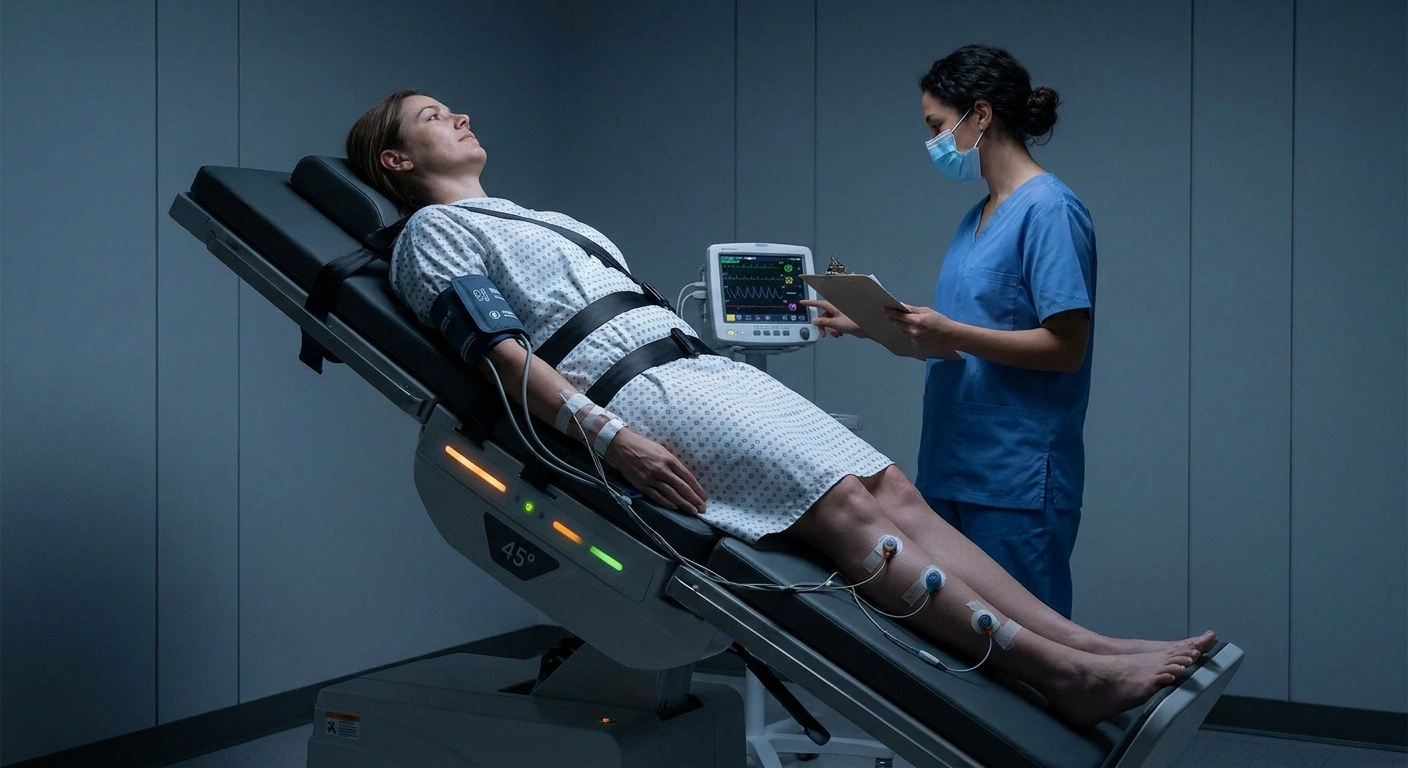
Where QSART only tests sweating, a full autonomic reflex screen adds a few more layers — usually the Valsalva maneuver, deep-breathing heart rate variability, and a tilt table test.
What it can tell you: How well the parasympathetic and sympathetic nervous systems regulate heart rate and blood pressure across body positions and stresses. Especially useful for suspected POTS, orthostatic hypotension, cardiac autonomic neuropathy, and complex autonomic failure.
What it cannot tell you: Whether the underlying cause is central or peripheral, and whether large or small fibers dominate. It measures function, not structure.
What it feels like: Two to three hours, involving lying and standing on a tilt table, deep breathing on cue, blowing into a pressure gauge for Valsalva, and the QSART portion at the end. Not painful. Sometimes dizzying — that is the point.
Cost: $500 to $1,500. Availability is limited to autonomic labs (mostly academic medical centers).
Genetic Testing (When Family History Points a Finger)
If neuropathy runs in your family, if your feet developed high arches or hammer toes in childhood, or if the age of onset was unusually young, genetic testing is often the highest-yield next step.
Rough Cost of a Complete Neuropathy Workup
Most tests are covered when medically indicated; prior authorization is common for advanced imaging and specialty labs.
What it can tell you: Whether you carry a known mutation for one of the Charcot-Marie-Tooth subtypes, hereditary ATTR amyloidosis, hereditary neuropathy with liability to pressure palsies (HNPP), Fabry disease, or dozens of rarer inherited conditions.
What it cannot tell you: Anything about how severe your condition will become or how quickly it will progress. It gives a diagnosis, not a prognosis.
What it costs: Ranges wildly — a targeted single-gene test can be $300; a large hereditary neuropathy panel can run $2,000 to $3,000. Genetic counseling is highly recommended before and after.
Corneal Confocal Microscopy (Emerging and Rare)
Corneal confocal microscopy is a relatively new tool for evaluating small-fiber neuropathy without a biopsy. It uses a specialized microscope to image the corneal sub-basal nerve plexus at the front of the eye.
What it can tell you: Small-fiber nerve density noninvasively. Growing evidence supports its use in diabetic small-fiber neuropathy in particular.
What it cannot tell you: The cause, or anything about large fibers. Also, it is only available at a handful of specialized centers as of this writing.
What it feels like: Numbing eye drops, chin in a rest, brief microscope contact with the front of the eye. Uncomfortable but quick.
Which Test For Which Symptom Pattern
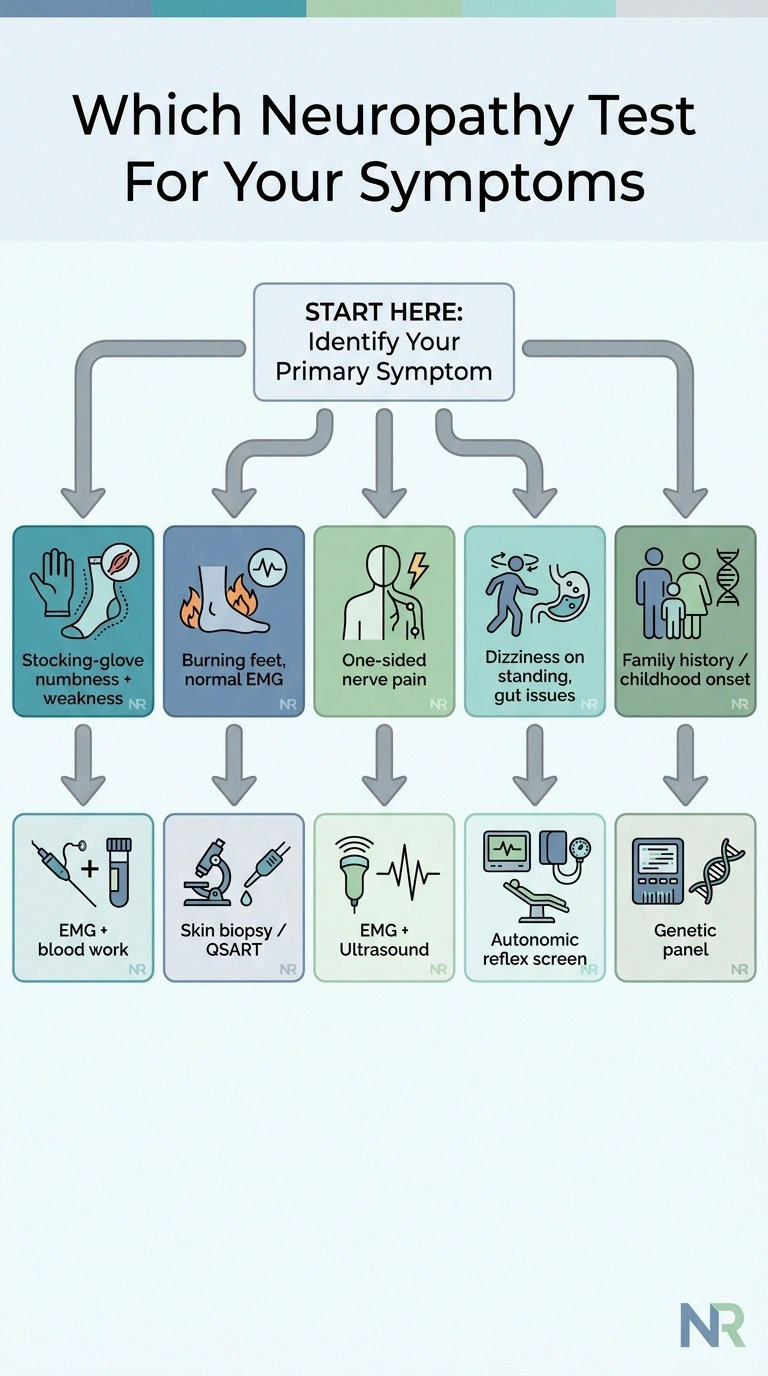
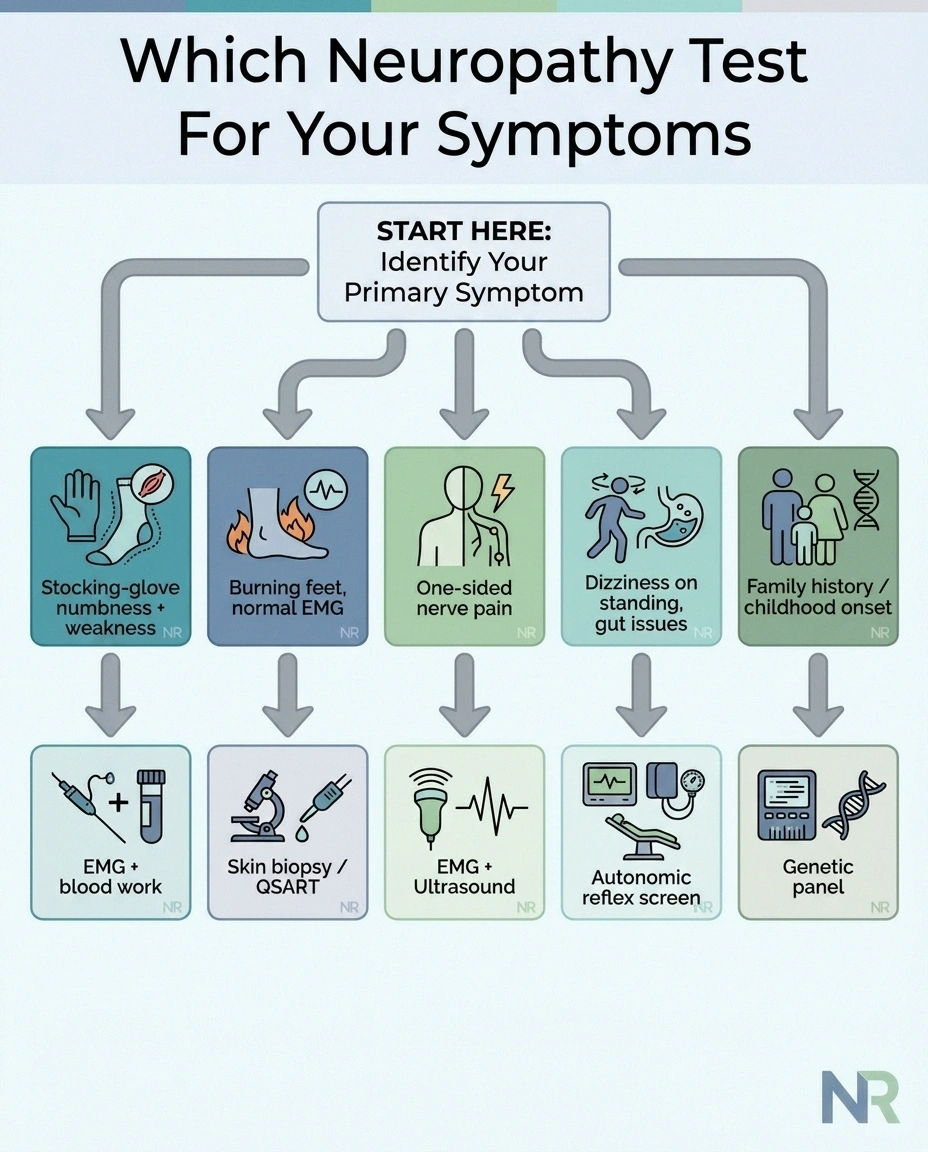
Here is the rough clinical logic — the pattern-matching that experienced neurologists use to choose what to order. This is not a substitute for a real workup, but it will help you understand why your doctor picks the tests they pick.
Symptom Pattern → First Test to Ask About
- Numbness and weakness in a stocking-glove pattern with reduced ankle reflexes: classic large-fiber neuropathy — start with EMG/NCS and the core blood panel.
- Burning feet, temperature intolerance, normal reflexes, normal EMG: classic small-fiber neuropathy — skin biopsy is the confirming test, QSART if autonomic symptoms are present.
- Sudden focal weakness or numbness confined to one nerve territory: think entrapment or focal mononeuropathy — EMG plus ultrasound.
- Progressive weakness with reduced reflexes and slowed conduction: think CIDP or another inflammatory neuropathy — full EMG/NCS, nerve ultrasound, and a lumbar puncture may follow.
- Lightheadedness on standing, gut motility issues, sweat abnormalities: think autonomic neuropathy — autonomic reflex screen with QSART.
- Family history of neuropathy, high arches, or childhood onset: think hereditary — genetic panel.
- Neuropathy plus known cancer, chemotherapy, or unexplained weight loss: add paraneoplastic antibodies and imaging.
What a Good Workup Actually Looks Like
A well-run neuropathy workup unfolds in a logical sequence, not a shotgun blast. Here is what a thorough one usually looks like from start to finish:
The one sentence that has restarted more stalled workups than any other:
That question forces the workup to be explicit about what has and hasn’t been ruled out — and often reveals the missing piece.
- Careful history and neurologic exam. This is 60% of the diagnosis. Pattern, timing, associated symptoms, family history, medications, alcohol, occupational exposures.
- Core blood panel. Fixable deficiencies and metabolic causes should be caught before any expensive testing.
- EMG and nerve conduction study. Almost always the next step. Confirms large-fiber involvement, characterizes the pattern.
- Targeted follow-up based on what the first three showed. Skin biopsy if small fibers are suspected. Ultrasound for focal or inflammatory patterns. Autonomic testing for autonomic symptoms. Second-tier blood work for autoimmune or infectious causes.
- Imaging (MRI or ultrasound) for deep or focal problems. When roots, plexus, or a specific nerve are suspected.
- Genetic or specialty testing. When the pattern points that way.
If you have been given multiple normal test results but your symptoms are real, ask this specific question: “Which fiber type or which anatomical area have we not tested yet?” That single sentence has restarted more workups than I can count.
Frequently Asked Questions
What is the gold standard test for peripheral neuropathy?
There is no single gold standard for all neuropathy — different tests are gold standards for different subtypes. Nerve conduction studies with EMG are the standard for large-fiber neuropathy. Skin biopsy for intraepidermal nerve fiber density is the standard for small-fiber neuropathy. Genetic testing is the standard for hereditary types. Blood work is the standard for identifying metabolic causes. The workup you need depends on the pattern of your symptoms.
Can I have neuropathy with normal blood work and normal EMG?
Yes, absolutely. This is one of the most common and frustrating scenarios. It usually points to small-fiber neuropathy, which requires a skin biopsy or QSART to detect. A normal EMG rules out large-fiber problems, not small-fiber ones. If your symptoms are burning, temperature-based, or autonomic and your workup so far has been normal, ask specifically about small-fiber testing.
How much do these tests cost together?
A basic first-line workup (core blood panel plus EMG/NCS) can be under $500 with insurance, or $500 to $2,000 self-pay. Adding a skin biopsy and second-tier blood work brings the total to $1,000 to $3,500. A full workup with imaging, autonomic testing, and specialty labs can run $3,000 to $10,000. Insurance almost always covers medically indicated tests when documentation is clear.
What order should these tests be done in?
Generally: history and exam first, then core blood work, then EMG and nerve conduction studies. What comes after depends on what those show. A normal EMG with burning feet should prompt skin biopsy. Focal weakness should prompt ultrasound or MRI. Autonomic symptoms should prompt autonomic testing. Sequencing tests logically saves both money and time.
How long does the whole workup take?
Most first-line tests can be done in 1 to 3 visits over a few weeks. A complete workup including specialty testing may take 2 to 4 months, largely limited by scheduling availability at specialty centers and turnaround for skin biopsy and genetic results. Communicating that you want to move promptly and being flexible with scheduling can shorten this considerably.
What if all my tests come back normal but I still have symptoms?
This happens more often than doctors like to admit. Options include: reviewing whether small-fiber testing was done properly, revisiting whether autonomic testing is warranted, considering rarer causes (paraneoplastic, autoimmune, hereditary), a second opinion at an academic neuromuscular center, and monitoring over time — some small-fiber and immune-mediated neuropathies declare themselves gradually. A normal workup does not mean nothing is wrong; it means the specific tests done did not detect the problem.
Do I need to see a neurologist for these tests?
For the core blood work, no — your primary care doctor can order that. For EMG and nerve conduction studies, yes — these are almost always done by a neurologist or physiatrist. For skin biopsy, QSART, autonomic reflex screen, and specialty testing, a neuromuscular subspecialist at an academic medical center is usually the best fit. Getting referred appropriately from the start saves time and reduces the need for repeat appointments.
About the Author