
There’s a particular silence that follows the sentence “I’d like to refer you to a pain psychologist.”
Most people hear it as a translation. What they think they’ve just been told is: I can’t find anything more to do for you, and I suspect this is in your head. Some walk out and never make the call. Others make it, sit in the waiting room feeling vaguely accused, and spend the first session defending the reality of their symptoms to somebody who never doubted them.
That reading is wrong, and it costs people one of the better-evidenced tools available for living with nerve pain. So it’s worth taking apart properly — what these clinicians actually do, when the referral genuinely makes sense, what the results honestly look like, and how to get one when your area doesn’t seem to have any.
Why the Referral Isn’t What It Sounds Like
Start with a piece of physiology.
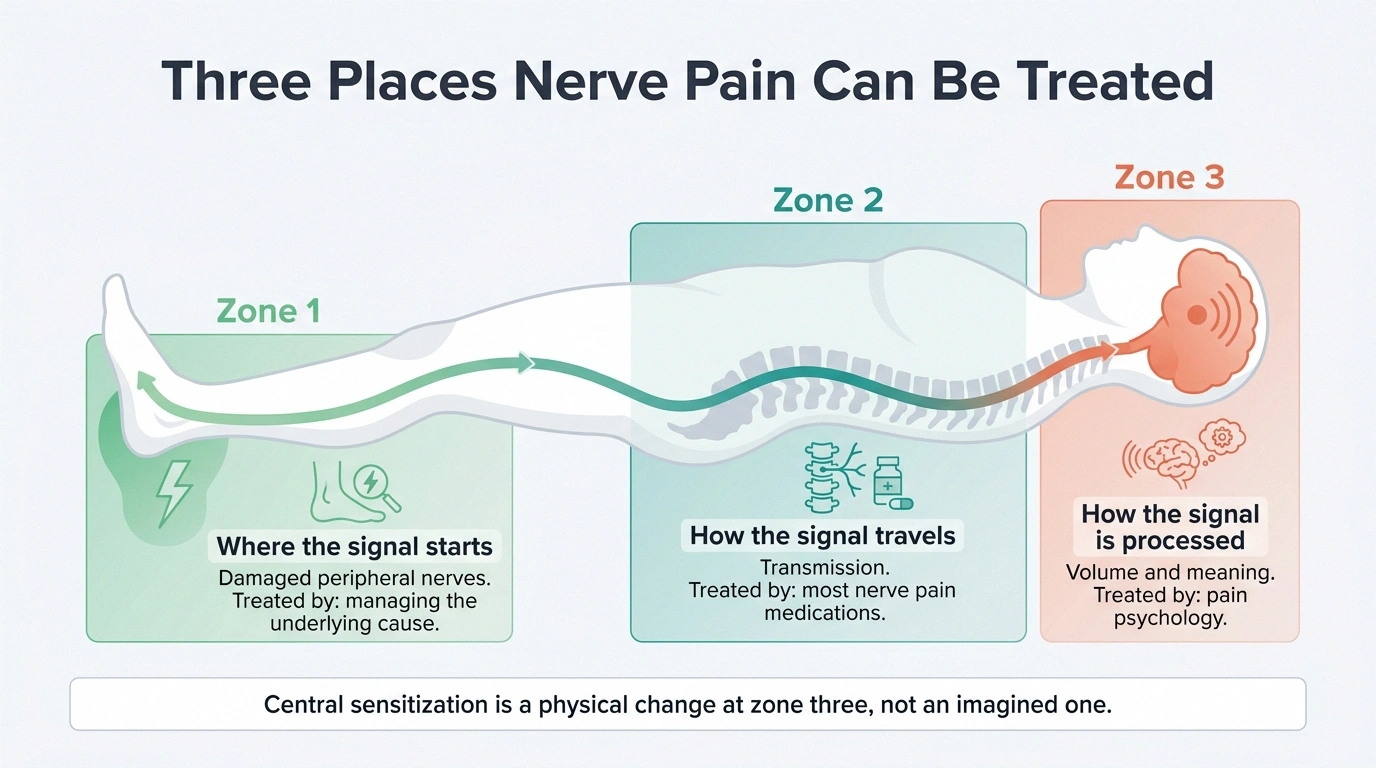
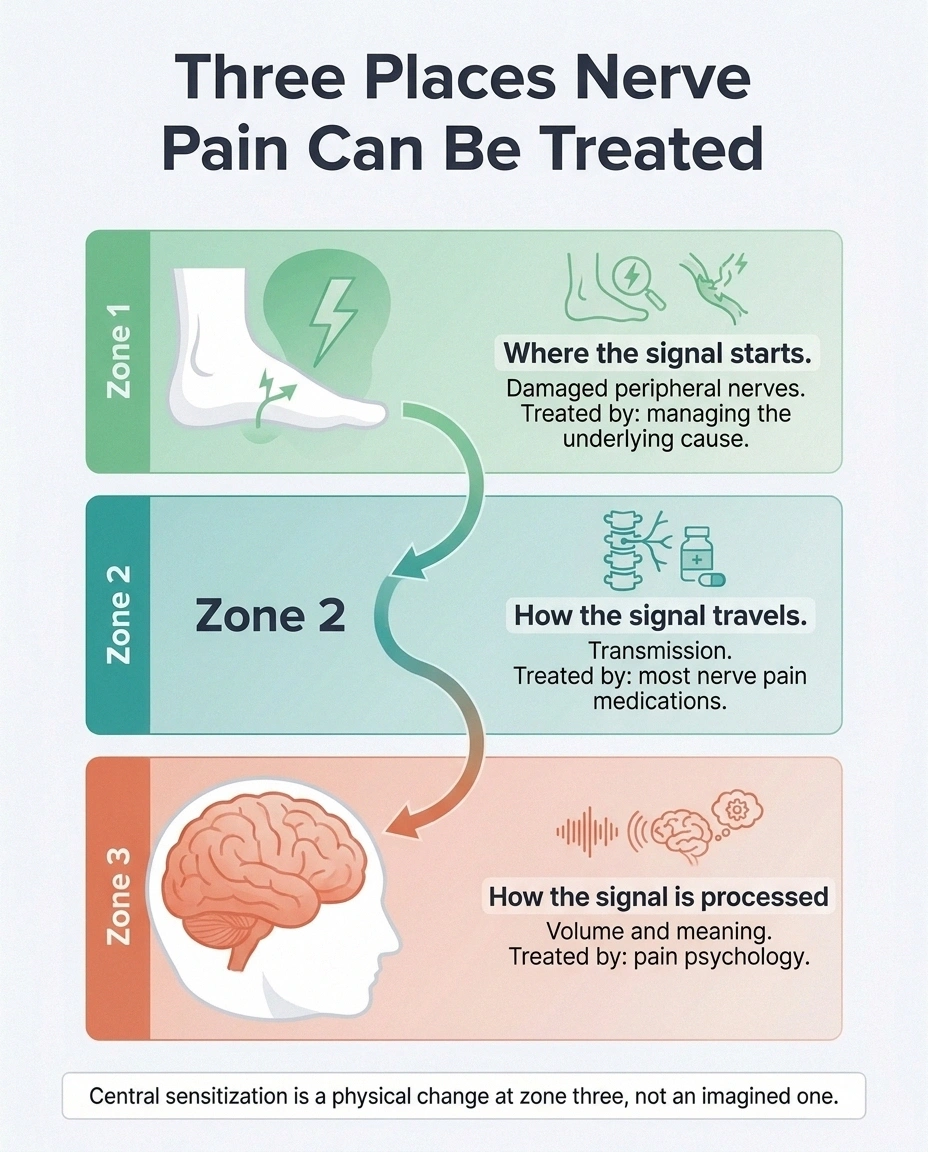
Nerve pain is generated by damaged peripheral nerves, but it is not experienced there. Every signal those nerves send travels up the spinal cord to the brain, and the brain decides how much of it reaches awareness, how loud it is, and what it means. That processing stage is not optional and it is not imaginary. It’s the part of the system where the volume knob lives.
In long-standing neuropathy, that processing stage often changes. The spinal cord and brain become more responsive to incoming signals, so ordinary input produces amplified output. Clinicians call this central sensitization, and it’s a physical change in a physical system — it’s why a bedsheet on the toes can be unbearable, and why pain sometimes spreads beyond the area of actual nerve damage.
Once you know that, the referral stops sounding like a dismissal. Your neurologist works on the peripheral end. Your medications work mostly on transmission. A pain psychologist works on the processing end, which is the third piece of the same machine. Nobody suggesting it thinks your feet are fine.
The person who most needs this reframe is the person most likely to reject it, which is exactly the problem.
What a Pain Psychologist Actually Is
A pain psychologist is a clinical or health psychologist, holding a PhD or PsyD, who specializes in chronic pain. Many work inside multidisciplinary pain clinics alongside physicians, physical therapists and pharmacists.
Knowing which one you have been referred to tells you what will happen at the appointment, and whether a prescription is even on the table.
| Who | Training | Prescribes | What the visits look like |
|---|---|---|---|
| Pain psychologist | PhD or PsyD in psychology, pain specialisation | No | Structured skills work with homework, typically 6 to 12 sessions |
| Psychiatrist | Medical doctor | Yes | Medication review and adjustment, shorter and less frequent |
| Counselor or therapist | Master’s level, general mental health | No | Often open-ended and broader; may or may not use pain protocols |
| Pain-trained physiotherapist | Physical therapy plus pain neuroscience training | No | Graded movement and exposure, overlapping with the behavioural half of CBT |
A few clarifications that save confusion:
They don’t prescribe. Prescribing is a psychiatrist’s role. A pain psychologist does behavioral and cognitive work, not medication management.
They aren’t treating a mental illness. You don’t need a psychiatric diagnosis to be referred, and having one isn’t the point. The target is the relationship between you and a pain signal that isn’t going away.
The work is structured and finite. This isn’t open-ended talk therapy. Typical courses run somewhere between six and twelve sessions, with defined goals, homework between visits, and a plan for what happens after.
The goals are usually about function first. Getting back to activities that matter, managing flares without losing a week, sleeping, moving without fear of causing damage. Pain intensity reduction is on the list, and it’s usually not the headline.
That last point is the one to get straight before the first appointment, because expecting a pain-intensity result and receiving a function result feels like failure when it isn’t.
The Two Main Approaches
Two treatment models dominate this field, and they have genuinely different philosophies. Good clinicians blend them.
Cognitive behavioral therapy for chronic pain works on the loops connecting thoughts, feelings, behavior and pain. A common one runs like this: pain flares, you conclude that activity caused damage, you stop doing the activity, you decondition and lose confidence, the world gets smaller, mood drops, and pain feels worse in a smaller life. CBT interrupts that at several points. Graded activation rebuilds activity in doses small enough not to trigger the cycle. Graded exposure walks back the avoidance of specific feared movements. Cognitive work targets the interpretation step — the leap from “this hurts” to “this is causing harm” — which is where a lot of the disability actually comes from. The article on CBT for neuropathy pain covers the evidence base in detail.
Acceptance and commitment therapy starts from a different premise. Instead of trying to change the thoughts, ACT works on your relationship to them. It asks you to accept the parts of the pain that genuinely cannot be changed right now, and to spend the energy freed up by that acceptance on acting in line with what you actually value. It explicitly does not aim to eliminate pain. Studies show improvement in pain interference, disability, depression and quality of life, which is a fair summary of what it’s for.
Acceptance is a badly chosen word, because it sounds like surrender. It isn’t. The practical version is closer to: stop spending the entire day fighting a signal that doesn’t respond to fighting, and spend it on your grandchildren instead. People who have exhausted the treatment list often find this lands better than CBT does, precisely because it stops asking them to believe things will improve.
Seven Situations Where the Referral Is Genuinely Warranted
“If you’re struggling” is too vague to act on. These are the specific patterns where pain psychology tends to earn its place.
Answer for the past month rather than for your worst week. Count the yes answers.
- I have given up an activity I used to look forward to, and not replaced it.
- I am at or near the limit of what medication can reasonably offer me.
- When a flare starts, my mind goes to the worst outcome within minutes.
- I am sleeping badly more nights than not.
- I avoid a specific movement because I believe it will cause damage.
- I have turned down invitations more than once in the past month.
- I no longer expect anything to help.
Zero to one: a referral is unlikely to be the highest-value next move. Revisit if things change.
Two to three: worth raising at your next appointment, without urgency.
Four or more: this is the pattern the treatment was designed for, and waiting tends to make the work harder rather than shorter.
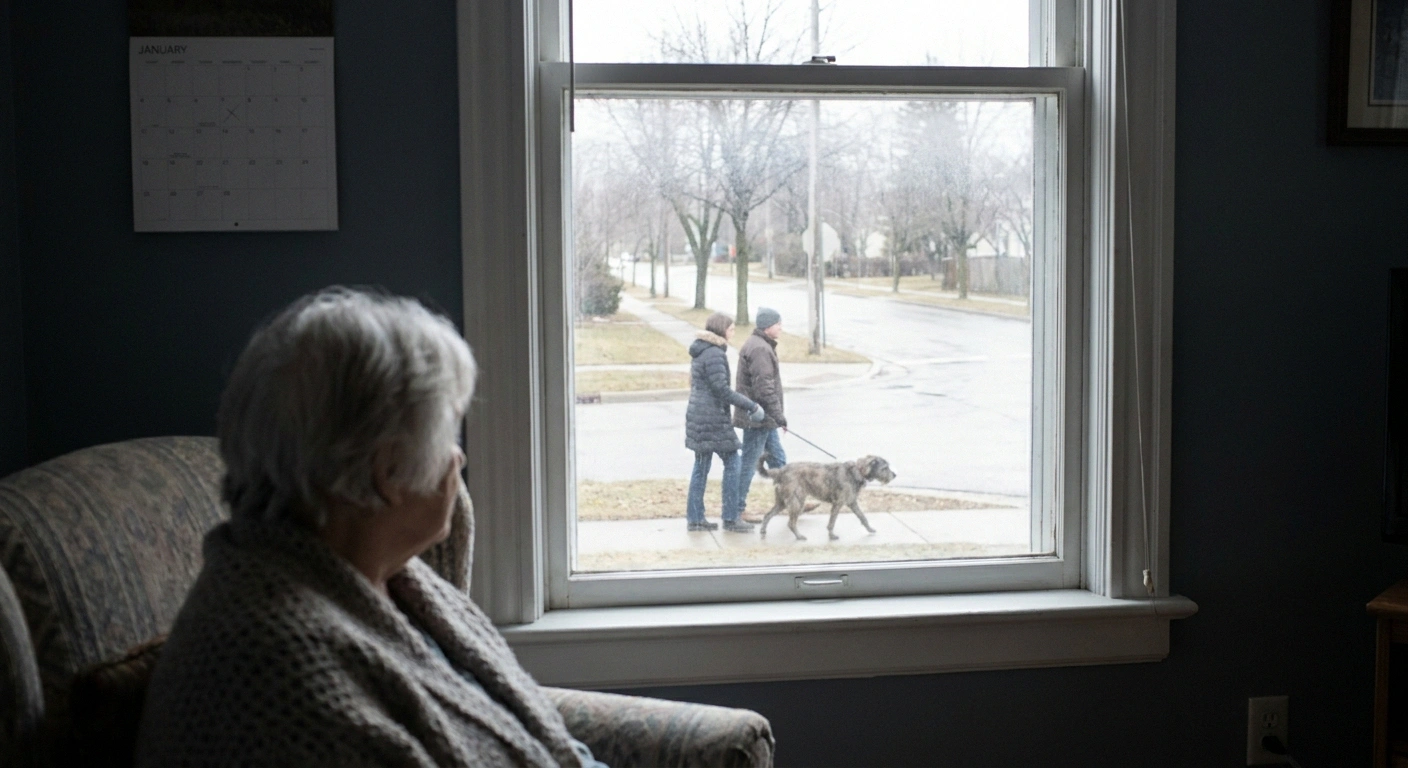
Your life keeps narrowing. You stopped the walking group, then the volunteering, then dinners out. Each individual decision was reasonable. The cumulative result is a life the size of your living room, and that’s the exact pattern graded activation was built to reverse.
You’ve hit the medication ceiling. You’ve tried the standard agents, the side effects cost as much as the relief, and the next option is worse than the last. That’s the point where working on the processing end offers something the pharmacy no longer can.
Your mind runs ahead to the worst version. A flare starts and within minutes you’re at wheelchairs and amputation. This has a name and a substantial research base, and it independently predicts worse outcomes. The dedicated piece on pain catastrophizing covers it, and it’s one of the most directly treatable targets in the whole field.
Sleep has collapsed. Pain wrecks sleep and poor sleep amplifies pain, and once that loop is running it sustains itself. CBT for insomnia is often folded into pain psychology work and it’s one of the higher-yield interventions available.
You’re facing a procedure that requires an evaluation. Spinal cord stimulator implantation and some surgical procedures require psychological evaluation beforehand. Knowing this in advance turns a bureaucratic hurdle into something useful — and being told at the last minute that you need clearance is a bad way to find out.
You’ve withdrawn from people. Chronic pain isolates, isolation worsens mood, and worse mood worsens pain. The piece on support groups approaches the same problem from a different direction, and the two work well together.
You’ve stopped believing anything will help. This one matters most and gets raised least. Researchers describe a state of mental defeat that goes beyond low mood into a loss of self, and it predicts poor outcomes strongly. If you recognize yourself in the article on mental defeat in chronic pain, that’s a reason to go, not a reason it won’t work.
What Actually Happens in the Room

The first appointment is an assessment, usually sixty to ninety minutes. Expect questions about your pain history, your sleep, your daily activity, your mood, what you’ve stopped doing, what you’d want back, and what you believe is happening in your body. Some clinics send questionnaires beforehand.
You’ll be asked to set functional goals, and vague ones get pushed back on. Pain intensity can absolutely be tracked, and usually is, with the familiar zero to ten scale. It just moves slowly and for many reasons at once, which makes it hard to steer by week to week. Something like walking to the mailbox and back without paying for it the next day gives both of you a marker you can actually act on.
Sessions after that are working sessions. Skills get taught, practiced, and reviewed. There’s homework — activity logs, paced walking schedules, breathing or attention exercises, sleep timing changes. People who do the homework get results and people who don’t, largely don’t. It has more in common with physical therapy than with the therapy people picture from films.
Most courses run six to twelve sessions, often with a check-in some months later. Telehealth is now widely available for this work, which matters enormously given how thinly these clinicians are spread.
An Honest Account of What It Delivers
The audience for this article has been oversold to before, so here’s the unvarnished version.
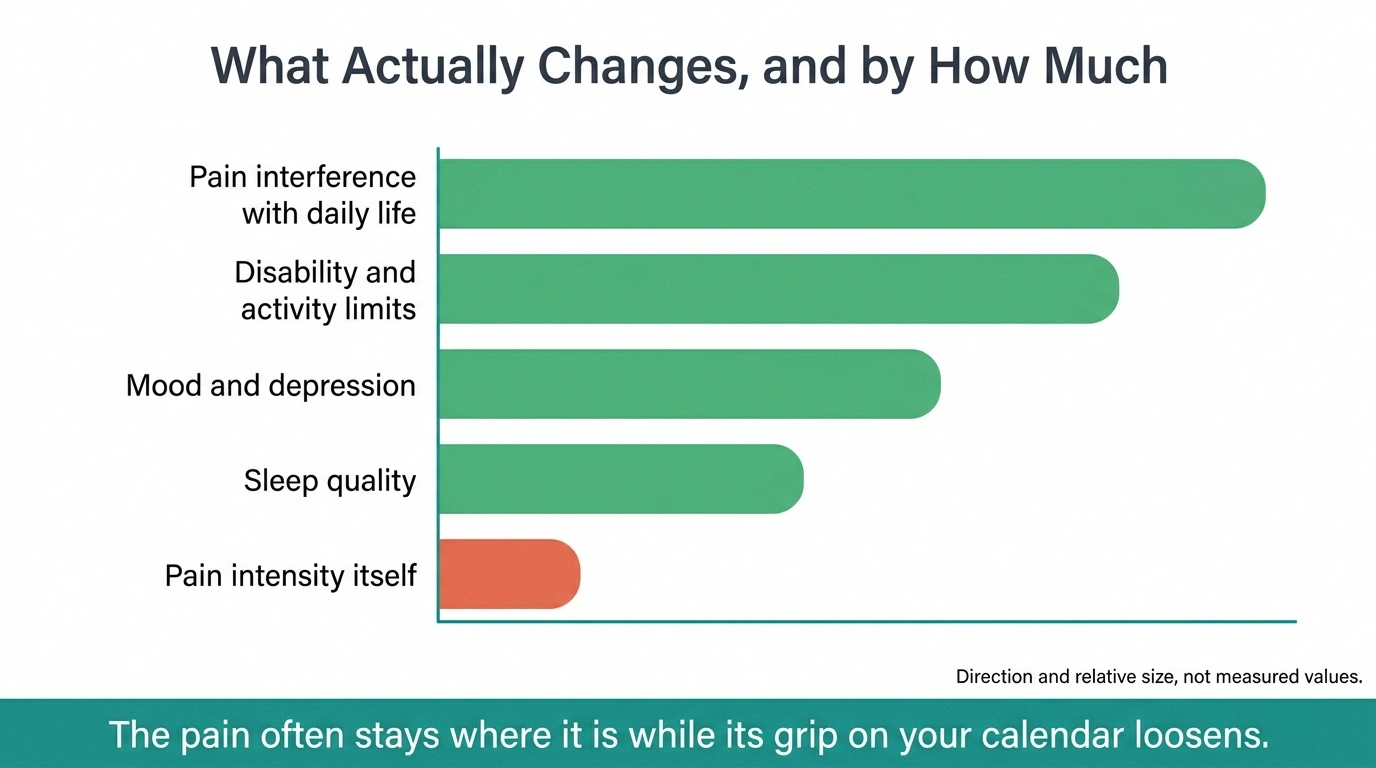
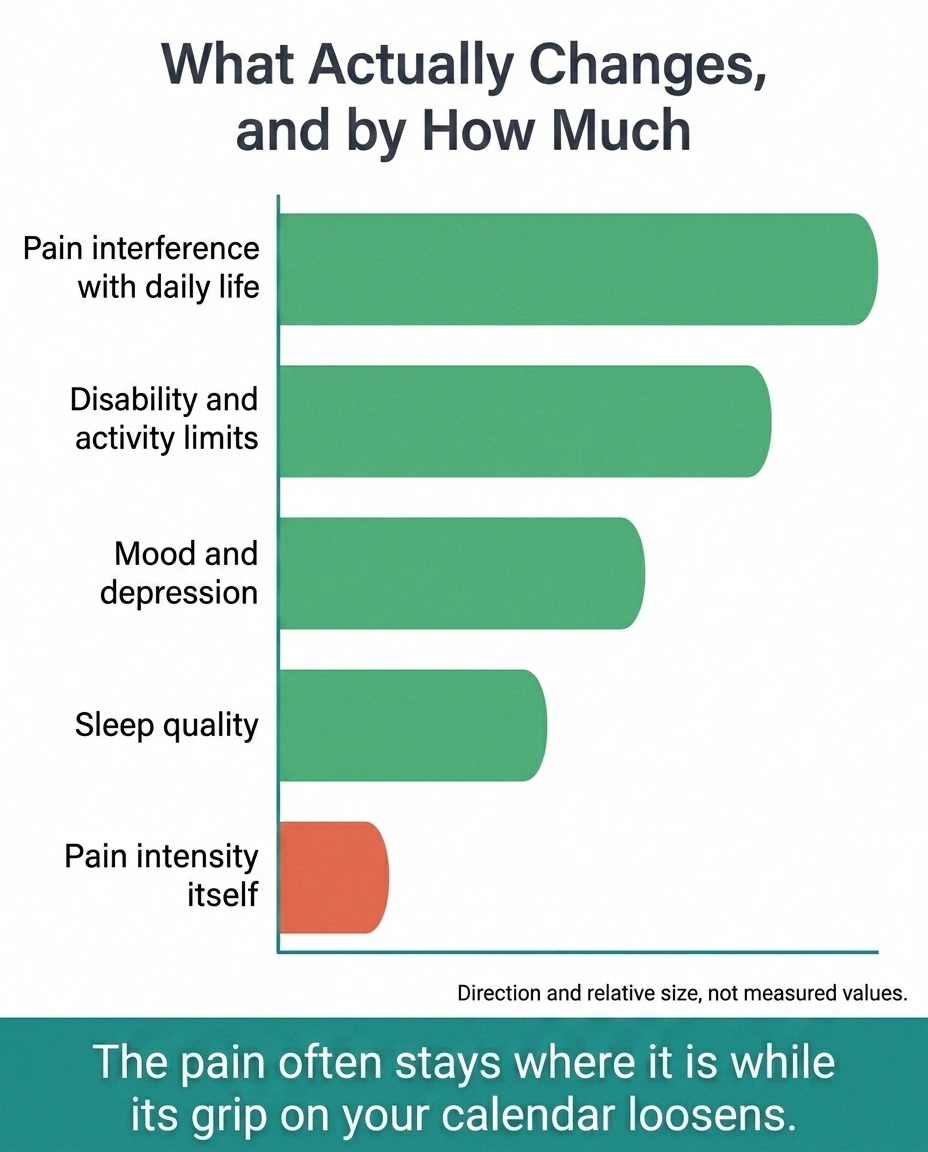
Effects on pain intensity are modest. If you’re expecting your seven out of ten to become a three, that is not what the research supports, and any clinician promising it should be treated with suspicion.
Effects on pain interference, disability, mood and quality of life are larger and more consistent. In plain terms, the pain often stays roughly where it is while its grip on your calendar loosens considerably. Both CBT and ACT show this pattern across trials.
It requires effort, over weeks, when you’re already tired. Dropout in these programs is real, and it isn’t a character flaw.
It doesn’t repair nerves. Nothing in this article addresses the underlying nerve damage, and continuing whatever medical treatment targets that remains important.
Weigh that honestly and it’s still a favorable trade for most people, mostly because the alternative on offer is another medication with another side effect profile. But you should walk in knowing which currency you’re being paid in.
How to Actually Get the Referral
Referrals typically come through primary care, a neurologist, or a pain clinic. Physical therapists working in pain rehabilitation often know who’s good locally, and they’re an underused source of names.
To your doctor: “The pain is not changing much and I want help with how much of my life it is taking. Is there a pain psychologist or a pain program you would send me to?”
To the practice, before booking: “Do you bill health behavior assessment and intervention codes, or mental health codes? And do you take self-referral or do you need one from my physician?”
To your insurer, if you get a denial: “This is psychological treatment of a diagnosed physical condition, not a mental health diagnosis. Can you confirm which benefit applies?”
The billing question matters because the two code families sit under different benefits on many plans, and a practice that bills the physical-health codes may sidestep a mental health visit limit entirely.
If you’re raising it yourself, phrasing helps. Something like: “The pain isn’t changing much and I want help with how much of my life it’s taking. Is there a pain psychologist or a pain program you’d send me to?” That’s clear, it’s function-focused, and it forecloses the awkward misunderstanding on both sides.
Where to look when nobody offers a name:
Academic medical centers almost always have multidisciplinary pain programs, and they’ll often see patients referred from outside. The Veterans Affairs system runs a formal CBT for Chronic Pain program with trained providers at facilities nationwide, which is one of the most accessible routes available to anyone eligible. University psychology departments sometimes run low-cost clinics staffed by supervised doctoral students. And professional directories let you filter by specialty, though “chronic pain” as a listed interest varies a lot in what it means.
On cost, two things are worth knowing. Psychologists treating a physical health condition frequently bill under health behavior assessment and intervention codes rather than mental health codes, which changes how the visit is covered and sometimes avoids mental health benefit limits entirely. And Medicare Part B does cover outpatient psychological services with the usual coinsurance. Ask the practice which codes they bill before the first visit rather than after; the general insurance coverage guide covers how to phrase that question and what to do with a denial.
If You Genuinely Can’t Get One

Large parts of the country have no pain psychologist within a sensible drive, and telehealth licensure still stops at state lines. The fallback ladder is better than it used to be.
Every step down this list is easier to reach and asks more of you to work. That trade is worth making with your eyes open rather than by default.
| Option | How hard to get | What it asks of you |
|---|---|---|
| Pain psychologist in person | Hardest, often a waitlist | Travel, appointments, homework |
| The same, by telehealth | Easier, limited by state licensure | A device and a private room |
| Group pain program | Moderate, usually hospital-based | A fixed weekly commitment |
| Structured MBSR course | Widely available online | Eight weeks and daily practice |
| Self-guided CBT workbook | Immediate, inexpensive | All of the discipline, none of the accountability |
Structured self-guided programs. Workbooks based on the same CBT protocols exist and are inexpensive. They demand more self-discipline and deliver a smaller effect than working with a clinician, and they are considerably better than nothing.
Mindfulness-based stress reduction. An eight-week structured course with a real evidence base in chronic pain, widely available in person and online, and often far easier to access than a pain psychologist. Details are in the piece on MBSR for neuropathy.
Pain-informed physical therapy. Some physical therapists are trained in pain neuroscience education and graded exposure, which overlaps substantially with the behavioral half of CBT. If you’re already in physical therapy, ask directly whether they do this work.
Occupational therapy. Different discipline, complementary target — activity modification, energy management and adapting tasks rather than avoiding them, as covered under occupational therapy for neuropathy.
Treating the anxiety directly. Where anxiety is a major driver, general anxiety treatment is far more available than pain-specialized care and addresses a real part of the loop. The wider picture, including how anxiety and nerve pain feed each other, sits in the neuropathy and mental health overview.
One Last Thing About That Silence

The instinct to hear the referral as an accusation is understandable. Plenty of people with neuropathy spent years being told their symptoms were stress, or menopause, or nothing, before anyone found the actual nerve damage. When you’ve been disbelieved once, an offer of psychological support looks exactly like being disbelieved again.
But the referral usually arrives from the opposite direction. It tends to come from clinicians who take the pain entirely seriously and have run out of things to do at the peripheral end, and it’s a recognition of how much of your life this is consuming rather than a comment on whether it’s real.
You can take a course of pain psychology and still believe every word you’ve said about your feet. Those two things have never been in conflict.
Frequently Asked Questions
Does a referral to a pain psychologist mean my doctor thinks the pain is imaginary?
No. Pain signals from damaged nerves are processed in the spinal cord and brain, and that processing stage affects how intense and how intrusive the pain becomes. Pain psychology works on that stage. It is a third component of treatment alongside medical management of the nerve damage itself and medication, not a replacement for either, and it does not imply doubt about the physical cause.
What is the difference between a pain psychologist and a psychiatrist?
A pain psychologist holds a doctorate in psychology and provides structured behavioral and cognitive treatment. A psychiatrist is a medical doctor who can prescribe medication. Some people see both. A pain psychologist referral is not a referral for psychiatric medication.
How many sessions does pain psychology usually take?
Most courses run between six and twelve sessions, sometimes with a follow-up check-in months later. It is structured and time-limited rather than open-ended, with specific goals set at the start and homework between appointments.
What is the difference between CBT and ACT for pain?
CBT works on changing unhelpful thought and behavior cycles, using techniques such as graded activation and graded exposure to rebuild activity and reduce avoidance. ACT works on accepting what cannot currently be changed about the pain and redirecting energy toward personally meaningful activity, without aiming to reduce pain itself. Both improve function, mood and disability. Many clinicians use elements of each depending on the person.
Will it actually reduce my pain?
Effects on pain intensity are generally modest. Effects on how much the pain interferes with daily life, on disability and on mood are larger and more consistent across studies. The realistic expectation is that the pain level changes somewhat while its impact on activity, sleep and mood changes more.
Does Medicare cover a pain psychologist?
Medicare Part B covers outpatient psychological services with standard coinsurance. Psychologists treating pain often bill health behavior assessment and intervention codes, which apply to psychological work on a physical health condition and are handled differently from mental health codes by some plans. Confirming which codes a practice bills before the first appointment avoids surprises.
Why do I need a psychological evaluation before a spinal cord stimulator?
Pre-implant psychological evaluation is standard practice for spinal cord stimulation and is often required by insurers. It assesses expectations, mood, coping and understanding of what the device does and does not do, all of which are associated with how well people do afterward. It is a screening step in a normal pathway rather than a judgment about the person.
What if there is no pain psychologist near me?
Telehealth has widened access considerably, though providers generally must be licensed in the patient’s state. Academic medical centers, VA facilities and university training clinics are the most reliable sources. Where none of those work, structured self-guided CBT workbooks, mindfulness-based stress reduction courses and physical therapists trained in pain neuroscience education cover a meaningful part of the same ground.
About the Author