I want to talk about something we don't talk about enough — even in our support group, where we're supposed to be the people who talk about it. The piece nobody mentions when they hand you a neuropathy diagnosis is what chronic nerve pain does to your mind over time. Not just having a hard day. Not just being frustrated. I mean the slow, quiet shift in how you see yourself, the future, and whether the effort of all this is worth it.
About eight months into my own neuropathy, I caught myself sitting in my kitchen one Tuesday morning, fully dressed, with the coffee made, and I just couldn't make myself stand up. Not from physical weakness — from something I didn't have a word for. I sat there for about an hour. Then I went back to bed. I told myself it was the pain, but the pain wasn't worse that day. What was worse was the part of me that had started asking, very quietly, what the point of any of this was.
If you've had a moment like that — or a string of them — you're not weak, you're not broken, and you're not alone. You're experiencing one of the best-documented patterns in chronic illness medicine: the bidirectional, mutually reinforcing relationship between persistent nerve pain and depression. It's so common that pain clinics now screen for it routinely. And it's important enough that I want to write about it directly, with the kind of honesty I wish someone had given me earlier.
This is not a substitute for talking to a doctor or a therapist — and at the end of this article, I'll be very clear about when professional help is needed urgently. But it's the conversation I want to have with you first, friend to friend, before we get to the clinical part.
Why Chronic Nerve Pain Hits Mental Health So Hard
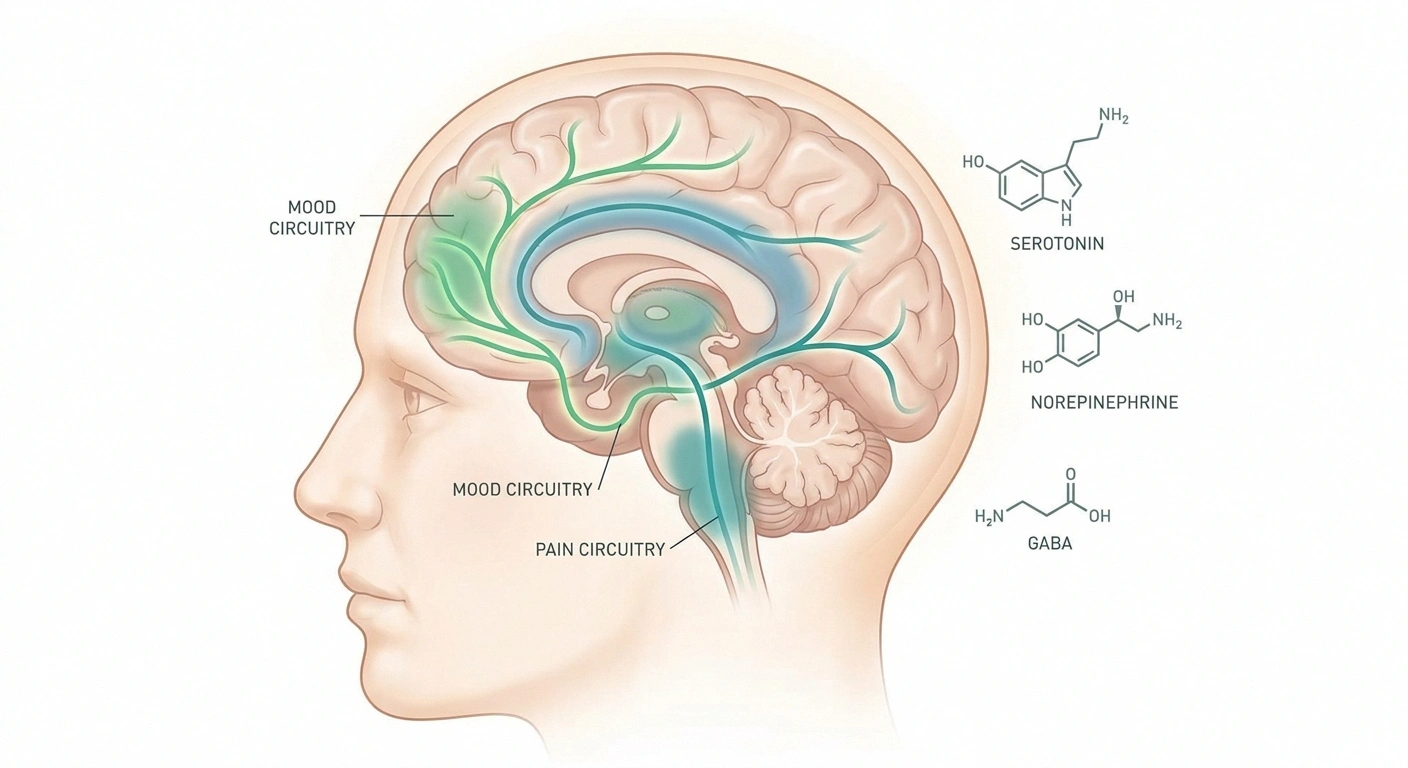
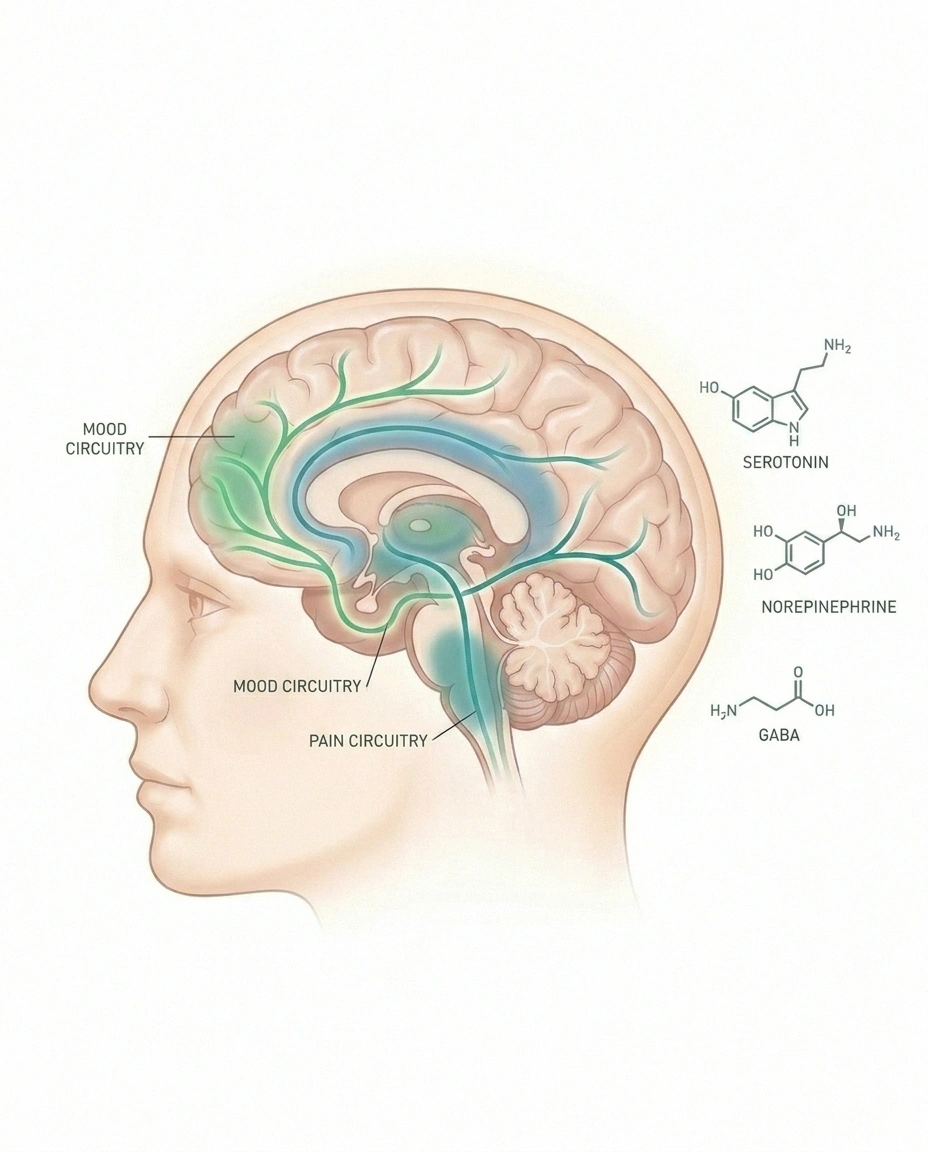
Chronic pain and depression share more than overlap — they share neural pathways, neurotransmitters, and even brain regions. The same chemicals (serotonin, norepinephrine, GABA) that are involved in mood are also involved in how your nervous system processes pain signals. When one system is dysregulated, the other often follows.
It's a Treatable Medical Pattern, Not a Character Failure
Between one third and one half of people with peripheral neuropathy meet criteria for clinically significant depression at any given time. That's not a fringe minority — it's a huge slice of us. Recognizing the pattern is what unlocks treatment. Having a reason to feel rotten doesn't make the rotten part less treatable.
Add the actual lived experience: sleep disrupted night after night by burning feet, energy depleted by the constant background noise of pain, things you used to love now reframed around what they cost you, social plans canceled because “what if my feet act up,” and the slow accumulation of small losses — and you have an environment that would test anyone's mental health. Estimates vary, but in studies of patients with peripheral neuropathy, somewhere between a third and a half meet criteria for clinically significant depression at any given time. That's not a fringe minority. That's a huge slice of us.
The other piece — the part that's harder to talk about — is the meaning we attach to chronic pain. Acute pain has a story: you fell, you broke it, it'll heal. Chronic pain doesn't have a story like that. It just is. And the brain, which is a meaning-making machine, will write a story for it if you don't give it one. Sometimes the story it writes is “I'm broken, I'll always be broken, and trying isn't going to change that.” That story is depression dressed up as realism, and it's one of the most common patterns I see in people who've been managing pain for more than a year.
None of this is your fault. It's the predictable consequence of a nervous system under sustained load, in a body that doesn't get to take a break. Recognizing it for what it is — a treatable medical pattern, not a character failure — is the first step in doing something about it.
The Warning Signs Worth Recognizing
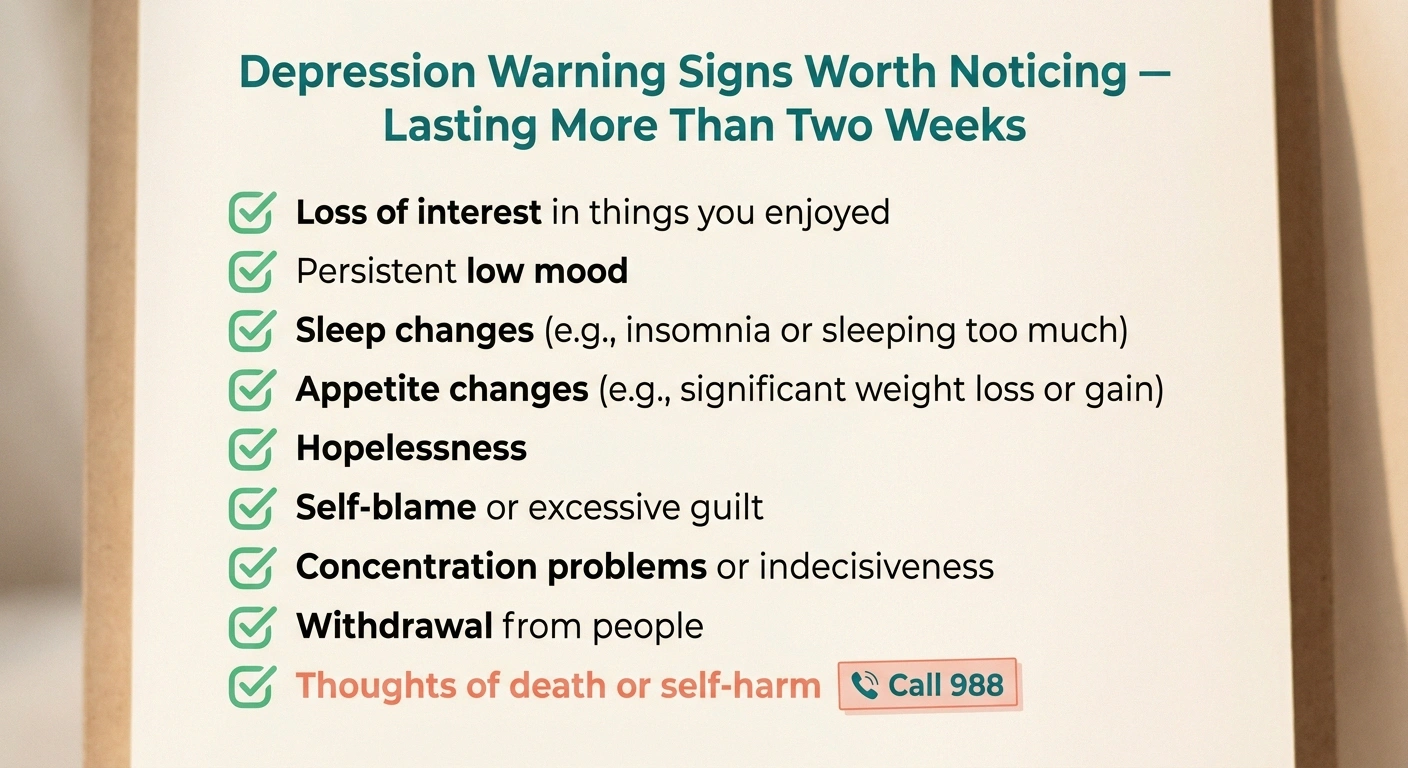
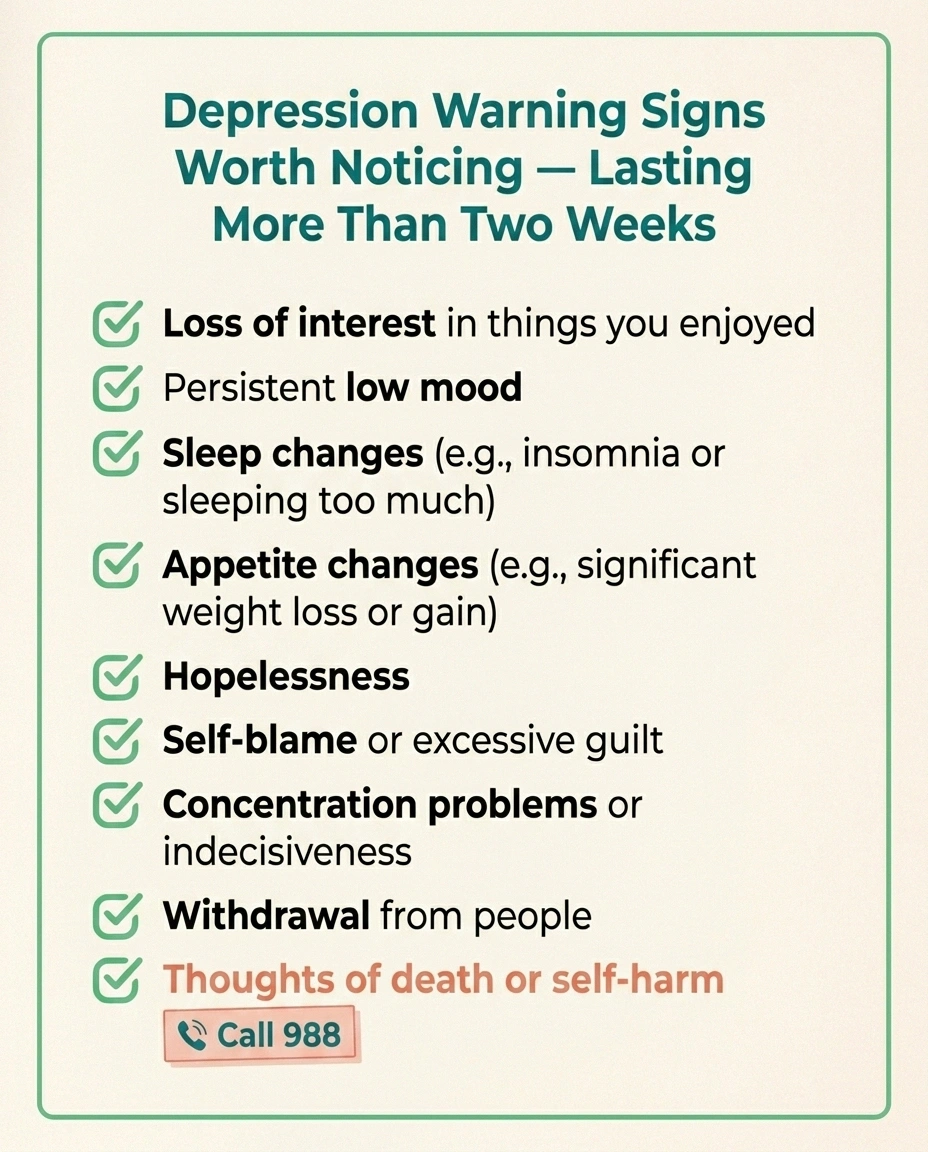
If you're going to take one thing from this article and post it on your refrigerator, make it this list. These are the patterns that distinguish a hard week from a clinical depression that deserves treatment. The line between them is blurry — and you don't have to wait until you're sure to ask for help — but here's what to watch for:
The Threshold for Asking for Help
You don't need all the warning signs to have depression worth treating. Three or four of them, lasting more than two weeks, is well above the threshold any provider would take seriously. The worst response is to dismiss it because “I have a reason to feel this way.” Reasons don't make conditions untreatable. Patients with treatable cancer have a reason to feel rotten — we still treat the rotten part.
- Loss of interest in things you used to enjoy, lasting more than two weeks. Not “I'm tired tonight.” More like “I haven't wanted to do my crossword in a month, and I used to live for it.”
- Persistent low mood — sad, empty, numb, or irritable — most of the day, most days, for more than two weeks.
- Sleep changes beyond what the pain itself causes. Either you can't sleep even when the pain is manageable, or you're sleeping ten or twelve hours and still exhausted.
- Appetite changes — eating much less or much more than usual, weight changes you didn't intend.
- Hopelessness — a settled belief that things will not get better and effort is pointless. This is different from frustration. Frustration says “I want this to be different.” Hopelessness says “It won't be.”
- Self-blame and worthlessness — a pattern of thoughts about being a burden, having let people down, or not deserving help.
- Concentration problems that go beyond “brain fog” — losing track of conversations, can't follow a TV show, can't read.
- Withdrawal from people. Not the protective rest you take after a hard day, but a persistent retreat from connection. Calls unreturned. Visits declined. The world getting smaller week by week.
- Increased reliance on alcohol or other substances to take the edge off. This is one of the most common — and most easily dismissed — warning signs.
- Thoughts of death, self-harm, or that others would be better off without you. This one I'm going to come back to. If you're having these, please don't put this article down without reading the resources section at the end.
You don't need all of these to have depression worth treating. A pattern of any three or four of them, lasting more than two weeks, is well above the threshold that any provider would take seriously. And the worst response — the one I made for too long — is to dismiss it because “I have a reason to feel this way.” Having a reason doesn't make it less treatable. People with treatable cancer have a reason to feel rotten. We still treat the rotten part.
The Pain-Depression Loop — and How It Locks In
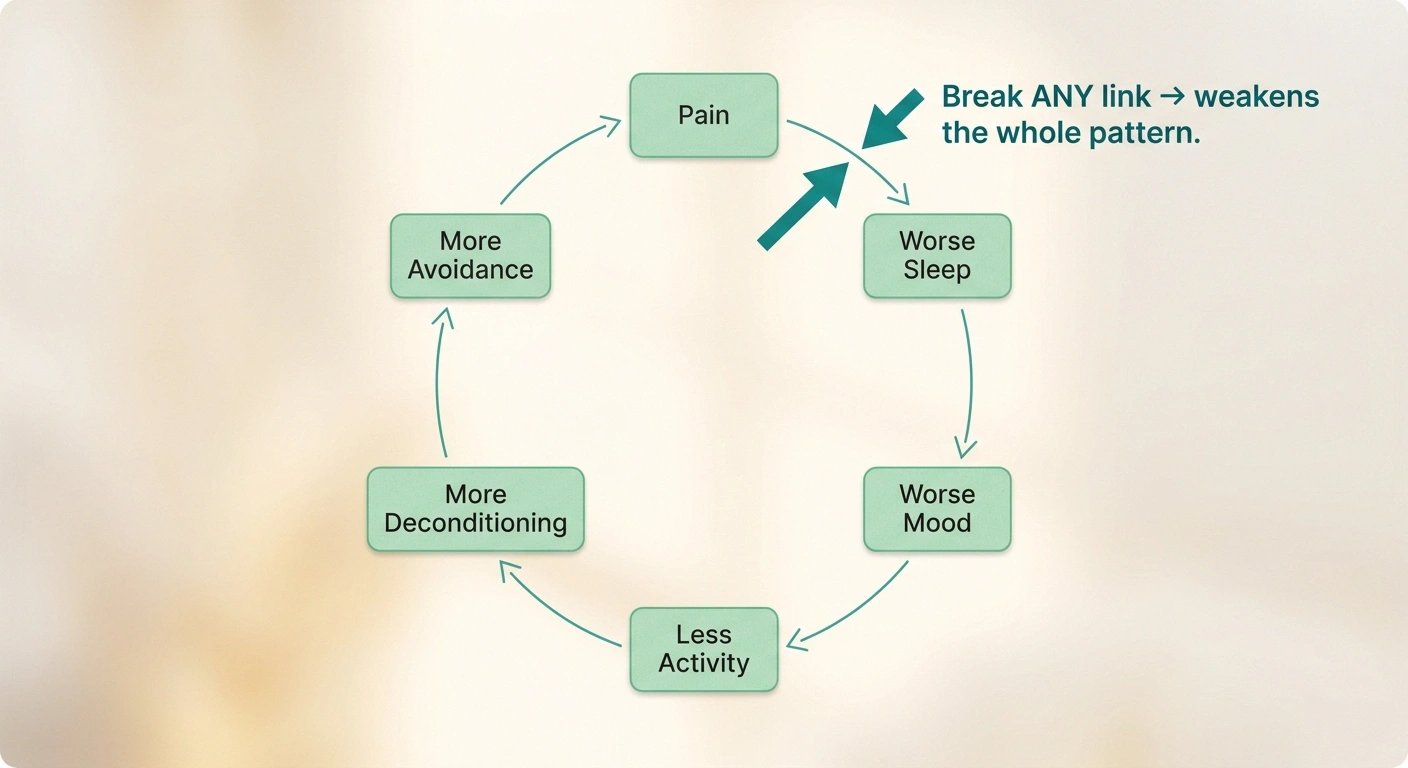
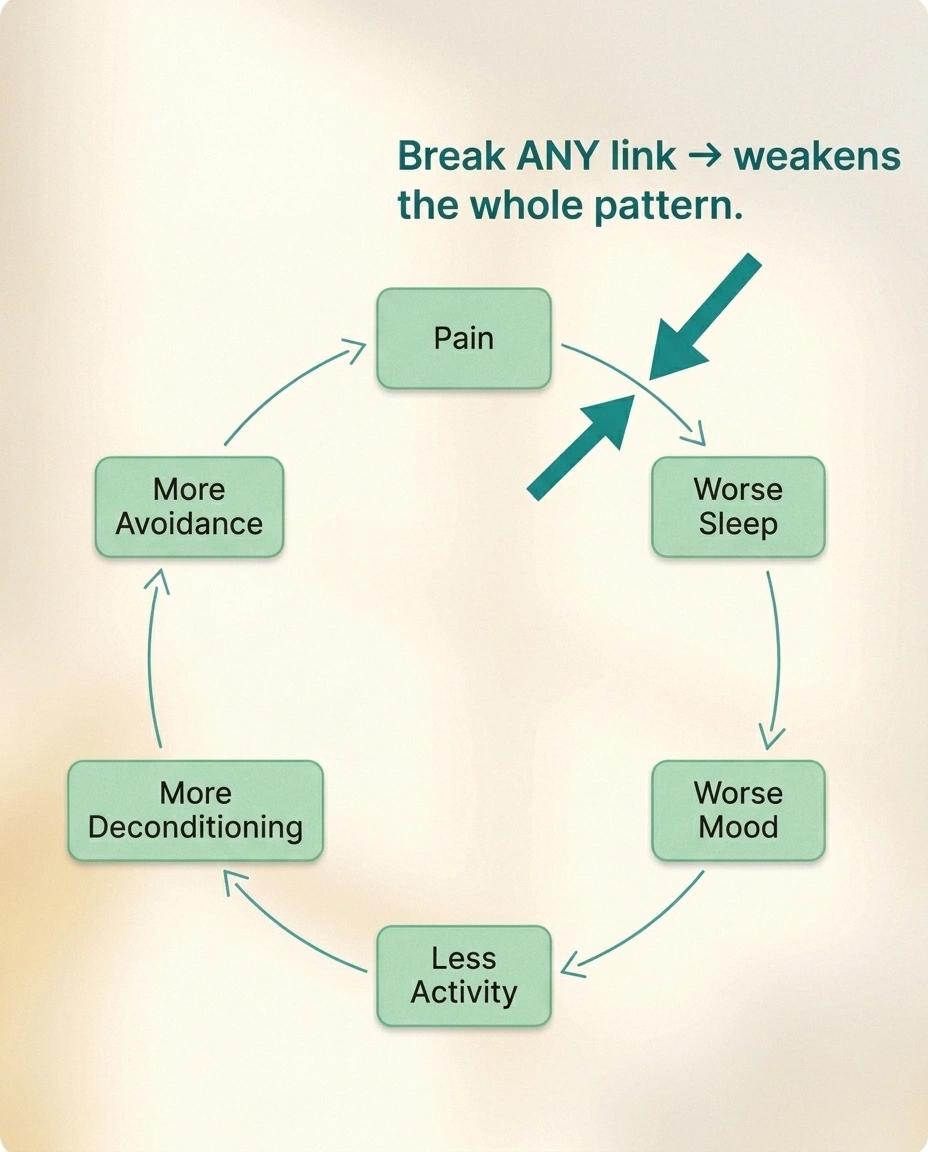
What makes chronic pain plus depression so hard to break out of is the feedback loop between them. Each amplifies the other in ways that aren't obvious until you map them out.
CBT-CP Has Decades of Evidence
Cognitive behavioral therapy for chronic pain (CBT-CP) is a structured, 8 to 12-session protocol with solid evidence for improving both pain intensity and depression at the same time — not by talking it out, but by identifying the specific thought-behavior loops keeping you stuck and introducing small concrete changes that interrupt them. Most insurance covers it. Available through pain clinics, neurology practices, and increasingly through telehealth.
Pain makes sleep worse. Worse sleep makes pain feel worse, lowers your pain threshold, and worsens mood. Worsened mood makes you less likely to do the activities — walking, swimming, social contact — that release the body's natural mood and pain regulators (endorphins, BDNF, serotonin). Less activity means more deconditioning and stiffness, which means more pain on movement when you do try. More pain on movement reinforces the belief that activity makes things worse, which leads to more avoidance. Avoidance shrinks your world, which reinforces the hopelessness, which deepens the depression, which heightens the pain perception. Around and around it goes.
The good news in this map: because each loop reinforces the others, breaking any one link tends to weaken the whole pattern. You don't have to fix everything at once. Improving sleep — even modestly — improves pain and mood. Adding a small amount of activity — even ten minutes of gentle walking — improves mood and lowers pain sensitivity. Reconnecting with one person, even one short phone call a week, weakens the isolation half of the loop.
The clinical name for the toolkit that intentionally targets this loop is cognitive behavioral therapy for chronic pain (CBT-CP). It's not “talk it out and feel better” — it's structured, time-limited (usually 8 to 12 sessions), and focused on identifying the specific thought-behavior loops that are keeping you stuck, then introducing small concrete changes that interrupt them. CBT-CP has been studied in chronic pain populations for decades and has solid evidence for improving both pain intensity and depression at the same time. It's offered through pain clinics, through some neurology practices, and increasingly through telehealth — and most insurance covers it.
What Actually Helps — A Realistic Toolkit
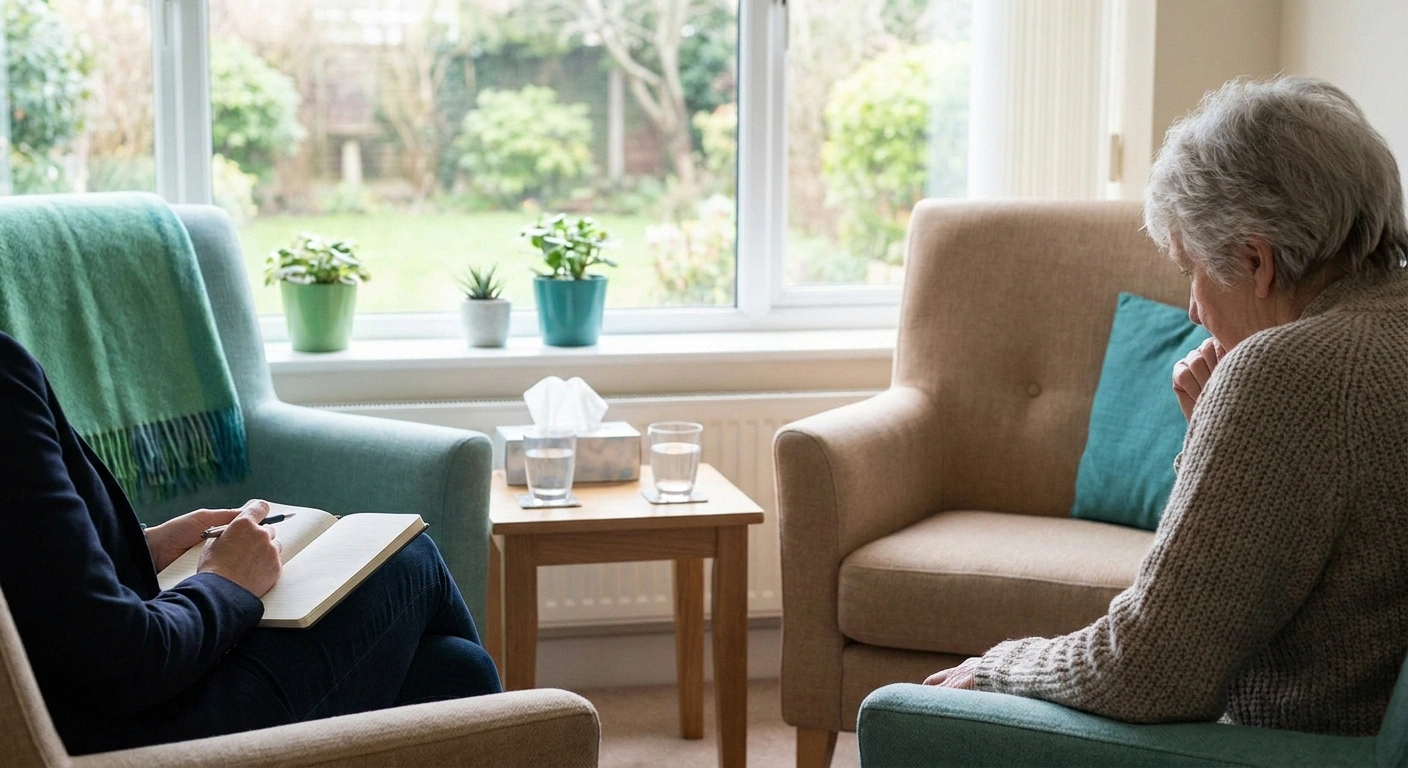
The toolkit for chronic-pain-related depression has several layers. None of them is a magic bullet. All of them work together. Here's what the evidence and my own experience point to, in rough order from “talk to your doctor first” to “you can start tonight”:
The Realistic Toolkit — Start Where You Can
Some neuropathy drugs (duloxetine, venlafaxine, tricyclics) treat both pain and mood at the right doses.
Specifically pain-trained. 8-20 sessions. Most insurance covers. Telehealth widely available.
Even modest improvement weakens every other loop in the pattern.
Five minutes done beats forty-five planned. Break the avoidance, not hit a fitness target.
Rebuild one connection the depression has eroded. Fifteen minutes is enough.
Depression unstructures everything. A modest morning routine pushes back.
Talk to your prescriber about whether your current medications are working for both pain and mood. Several medications used for neuropathic pain — particularly duloxetine (Cymbalta), venlafaxine (Effexor), and the tricyclics like nortriptyline and amitriptyline — also have meaningful antidepressant effects at therapeutic doses. If you're on one of these for pain, your prescriber can assess whether the dose is in the right range to also address mood. If you're on gabapentin or pregabalin (which don't have antidepressant effects), the conversation might be about adding an SNRI like duloxetine in addition. This is exactly the kind of “two birds, one stone” calibration a thoughtful prescriber can do.
Ask for a referral to a therapist who works with chronic pain. Specifically a therapist trained in CBT-CP, Acceptance and Commitment Therapy (ACT) for chronic pain, or Mindfulness-Based Stress Reduction (MBSR). The “trained in chronic pain” part matters — a general therapist may treat the depression but miss the pain-specific loops. Many medical centers have pain psychologists on staff; if yours doesn't, telehealth has opened access dramatically. Insurance usually covers 8 to 20 sessions.
Address sleep deliberately. This is the highest-leverage single change for most people. Even modest sleep improvement weakens every other loop in the diagram above. Standard sleep-hygiene advice helps, but talk to your provider about whether your pain medication regimen is timed right for night — sometimes shifting a dose by a few hours dramatically improves sleep without changing what you take.
Re-engage with movement at the smallest scale that works. Not “start exercising again.” That goal sets people up to fail. The goal is more like “five minutes of intentional movement, three days this week.” Five minutes you actually do beats forty-five minutes you keep meaning to start. The five minutes can be a slow walk to the mailbox, gentle stretching in a chair, a few minutes in the pool. The point is to break the avoidance pattern, not to hit a fitness target.
Reconnect with one person, intentionally. Pick one friend, family member, or person from your support group. Tell them, even in general terms, that you've been struggling. Ask if you can talk to them once a week, even for fifteen minutes, even just by text. You're not asking them to fix you — you're rebuilding one connection that the depression has been quietly eroding. Connection is medicine for depression in a way that's underrated.
Build a small daily structure. Depression unstructures everything; structure pushes back. A modest morning routine — get up at roughly the same time, get dressed (yes, even on rough days), eat something — is harder than it sounds and more protective than it sounds. Start small. One thing done by 10am is more than zero things done all day.
Identify and challenge the “I'll always be broken” story. When that thought shows up, notice it. Write it down on a piece of paper if it helps. Then ask yourself what evidence you actually have for it — and what evidence you have against it. The story is often based on the worst recent weeks generalized into “forever.” The reality usually contains more variability and more good days than the depression-narrator wants you to remember. This is the foundational move of CBT, and you can practice it without a therapist while you're waiting for one.
When to Get Help Today, Not Next Week
Most of what I've described above is for the steady, grinding kind of depression that develops over months. There's another category — acute crisis — that needs a different response, and I want to be specific about it because vagueness here costs lives.
Crisis Resources — Available Right Now
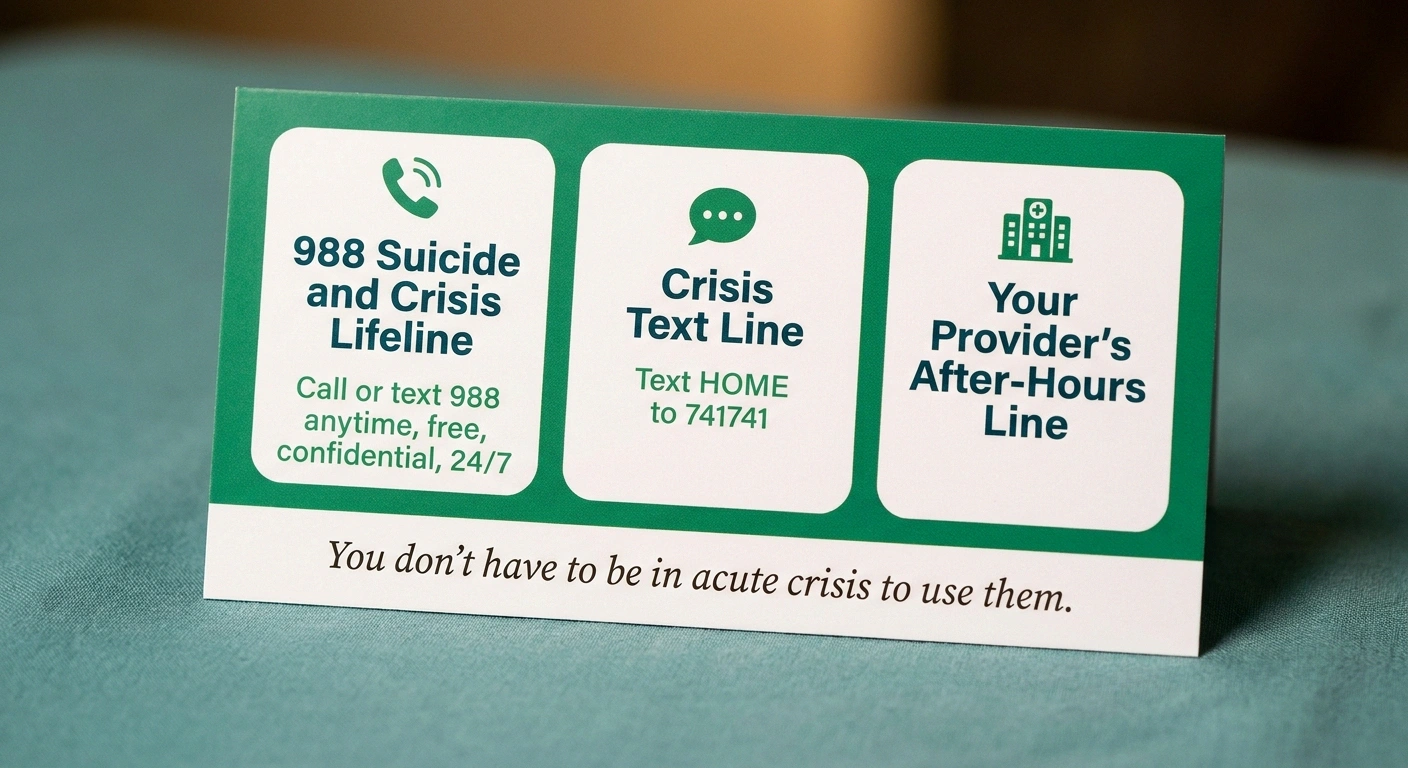
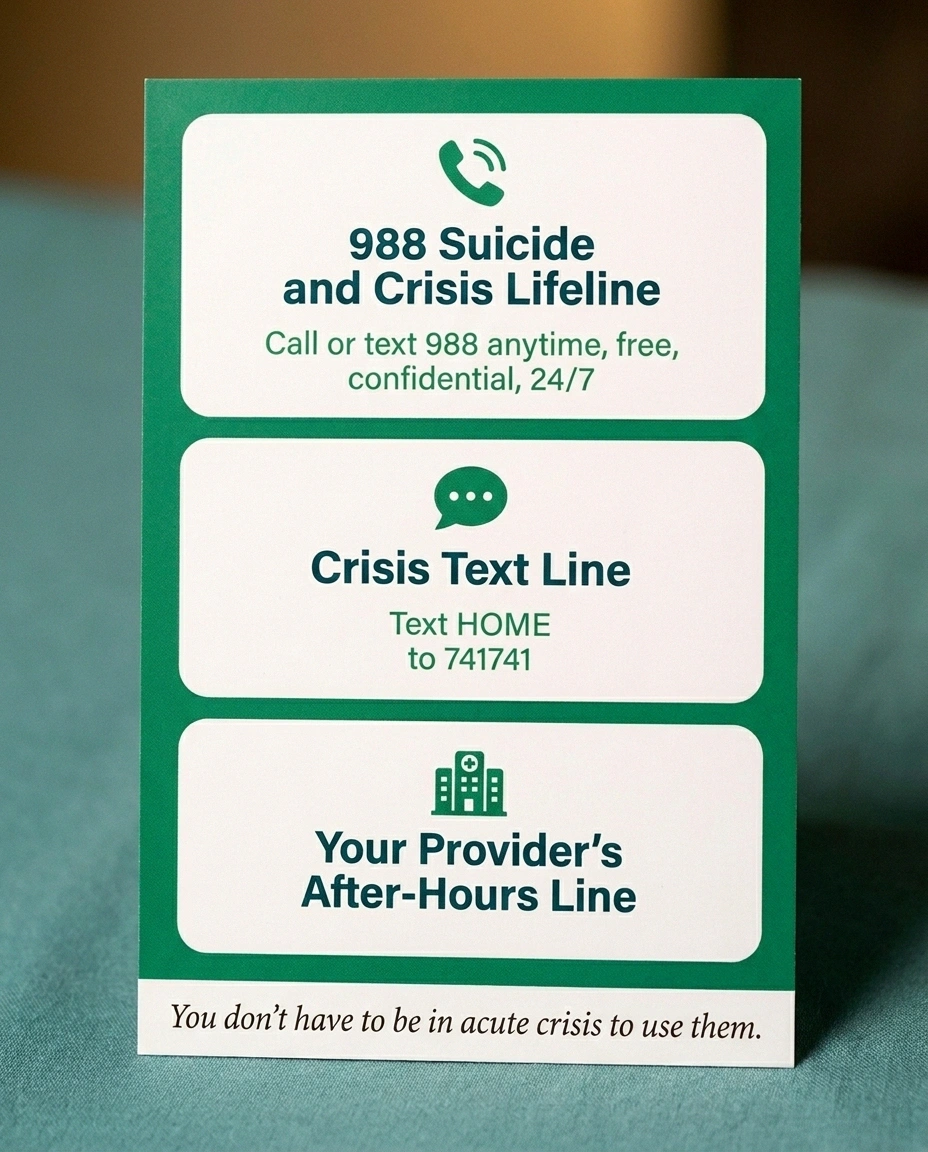
Call or text 988. Free, confidential, 24/7. You don't have to be in acute crisis to call.
Text HOME to 741741. Same kind of help, by text, 24/7.
Most practices have one. Use it. That's what it's for.
Asking for help isn't weakness. Crisis lines are for anyone struggling — not reserved for the “really bad” cases.
Call your provider today, not next week, if:
- You're having thoughts of harming yourself, even passively (“It would be easier if I weren't here”). Passive suicidal ideation is still suicidal ideation and your provider needs to know.
- You've made any plan for self-harm, even a vague one.
- You're saving up medication, getting rid of belongings, or saying goodbye to people in ways that feel final.
- You've started using significantly more alcohol or other substances to cope.
- You haven't eaten or gotten out of bed for several days.
- You're feeling psychotic symptoms (hearing voices, paranoid thoughts) that weren't part of your baseline.
Crisis resources that are available right now:
- 988 Suicide and Crisis Lifeline — call or text 988 from anywhere in the US. Free, confidential, 24/7. You don't have to be actively suicidal to call. They handle “I'm really struggling and don't know what to do” just as well as acute crisis.
- Crisis Text Line — text HOME to 741741. Same kind of help, by text.
- Your provider's after-hours line. Most primary care, neurology, and mental health practices have one. Use it. That's what it's for.
- Your nearest emergency room. If you genuinely feel unsafe, this is the right place to go, the same way you'd go for chest pain.
Asking for help isn't weakness, and using a crisis line isn't reserved for the “really bad” cases — those lines are for anyone struggling, including the version of you that's been telling yourself for weeks that you're handling it.
What Recovery Actually Looks Like — A Realistic Picture

I want to close with something honest about what gets better, because the “you can beat this” pep talks often skip over what recovery actually feels like in chronic illness.
Recovery in Chronic Illness — A Realistic Picture
Recovery from depression alongside ongoing neuropathy doesn't look like “I feel great and the pain is gone.” It looks like the pain becoming background noise instead of the soundtrack. More days where you do the thing you planned than days where you don't. The hopelessness narrator quieter — not gone — and the rest of you having room to think, feel, and want things again. Pain alone is much more manageable than pain plus depression. They're separable. Separating them is what proper treatment does.
Recovery from depression in the context of ongoing nerve pain usually doesn't look like “I feel great now and the pain is gone.” It looks like the pain becoming background noise instead of the soundtrack. It looks like more days where you do the thing you planned to do than days where you don't. It looks like the hopelessness narrator quieting down — not disappearing — and the rest of you having more room to think and feel and want things again.
For me, recovery looked like slowly rebuilding a Tuesday morning where I could stand up from the kitchen chair and start the day. Not because the pain was gone — it's still there. But because the depression that had attached itself to the pain had been treated. The pain alone, it turns out, is much more manageable than pain plus depression. They're separable, even though they're tangled. And separating them is what proper treatment does.
If you've been carrying both for a while, you don't have to keep carrying both. The mental-health half of this is one of the most treatable things in medicine — once it's recognized. The hard part, often, is letting yourself recognize it. If this article has done one thing, I hope it's given you permission to call it what it is. The next step from there is a phone call. Your prescriber, a therapist, the 988 line if today is hard. One phone call. That's it.
You've already done the hardest part of chronic illness, which is keeping going through it. Adding “and now I'm going to take care of my mind too” isn't a heavier load. It's the part that makes the rest of the load possible to carry.
Frequently Asked Questions
Is it normal to feel depressed with neuropathy, or is something extra wrong with me?
It's extremely common — in studies, somewhere between a third and a half of people with peripheral neuropathy meet criteria for clinically significant depression at any given time. The shared biology (overlapping neurotransmitters, brain regions, and neural pathways for pain and mood) plus the lived experience of disrupted sleep, limited activity, and chronic discomfort make this a predictable medical pattern, not a character flaw. Nothing extra is wrong with you. What's “wrong” is a treatable medical condition that develops on top of the neuropathy, and it deserves the same direct care that the neuropathy itself does.
Will treating my mental health make my nerve pain hurt less?
Often, yes — sometimes substantially. The pain-depression loop is bidirectional, so improvements in depression typically reduce how intensely pain is perceived and how disabling it feels day-to-day. This isn't because the nerve damage changed; it's because the brain's pain processing is sensitive to mood, sleep, attention, and stress. Patients who complete a course of CBT for chronic pain commonly report 20–40 percent reductions in pain interference (the degree to which pain limits their activities) without the underlying nerve damage changing at all. Treating one half usually pays dividends on the other half.
I'm already on gabapentin (or pregabalin) for my neuropathy. Does that also treat depression?
No, not meaningfully. Gabapentin and pregabalin work on calcium channels and primarily treat neuropathic pain, with secondary effects on anxiety in some cases — but they don't have the antidepressant effects that some other neuropathy medications do. If you have significant depression alongside your nerve pain, a conversation with your prescriber about adding (or switching to) a medication that treats both is worth having. Duloxetine, venlafaxine, and the tricyclic antidepressants all have evidence for both neuropathic pain and depression, which is why they're often a thoughtful prescriber's first move when depression is part of the picture.
What if I can't afford therapy?
Several options exist for low-cost or no-cost care. Federally Qualified Health Centers (FQHCs) offer mental health services on sliding-scale fees based on income — search “FQHC near me” or “community health center” to find one. Many therapists offer reduced-fee slots; Open Path Collective (openpathcollective.org) lists therapists who charge $40–$80 per session for self-pay clients. University training clinics, where supervised graduate students provide therapy, often charge $20–$40 per session. Most large insurers now cover telehealth therapy, which dramatically expands the pool of available providers. And for immediate, free, evidence-based help: the 988 Suicide and Crisis Lifeline is staffed 24/7 and is for anyone struggling, not just people in acute crisis. NAMI (nami.org) also offers free peer support groups specifically for chronic illness and depression.
Should I tell my doctor I'm depressed if they didn't ask?
Yes, directly. Many providers will screen with the PHQ-9 questionnaire if they think to, but plenty of clinic visits get focused on the presenting physical complaint and the mental health side never gets brought up. You don't have to use technical language — saying “I've been feeling really hopeless and I'm not sure I'm coping well anymore” is enough to open the conversation. Most providers respond gratefully to a patient who raises it themselves, because they know how often it goes unaddressed. If your provider doesn't take it seriously, that's a sign to ask for a referral to someone who specializes in mental health alongside chronic illness.
Can mindfulness or meditation actually help, or is it just trendy advice?
The evidence for mindfulness-based approaches in chronic pain and depression is robust at this point — it's not trendy advice, it's well-studied medical intervention. Mindfulness-Based Stress Reduction (MBSR) is the most-studied 8-week structured program, and Mindfulness-Based Cognitive Therapy (MBCT) is similar but explicitly designed for depression. Both have meta-analyses showing meaningful effects on pain interference, depression, and anxiety. The catch: like physical therapy, mindfulness only works if you do it consistently. Five minutes of daily practice over months tends to outperform an occasional hour-long meditation. There are free apps (Insight Timer is solid) and free guided audio recordings online if you want to try it without committing to a class. If you do want a class, MBSR is offered at many medical centers and increasingly through telehealth.
How do I tell the difference between a bad pain day and depression?
A bad pain day is typically time-limited — you have it, you get through it, the next day you feel more like yourself. Depression doesn't have that recovery pattern. The hopelessness, low interest, and disconnection persist regardless of how the pain is on any given day, and they last weeks rather than hours. Another distinction: a bad pain day still leaves you wanting things — wanting it to be over, wanting comfort, wanting tomorrow to come. Depression dulls the wanting itself. If you find yourself indifferent to outcomes — not just resigned, but flat — that's the depression marker that's worth taking to a provider. Two weeks of that, especially with sleep or appetite changes added, is well past the threshold for treatment.
What if my family doesn't understand why I'm struggling so much?
This is one of the harder pieces — chronic illness depression often comes with the isolation of feeling unseen by the people who know you best. Two things tend to help. First, naming it directly: telling a trusted family member “I have depression on top of the nerve pain, it's a treatable medical condition, and I'm getting help for it” reframes the conversation from “you should cheer up” to “this is a health issue we're managing.” Most families respond differently when they understand it's a medical pattern rather than a mood. Second, finding people who do understand — chronic illness support groups (in-person or online), other patients in your neurology practice's network, or community groups for specific conditions — gives you somewhere to bring the parts of the experience that family can't fully share. Both connections are worth investing in. They serve different needs.
About the Author