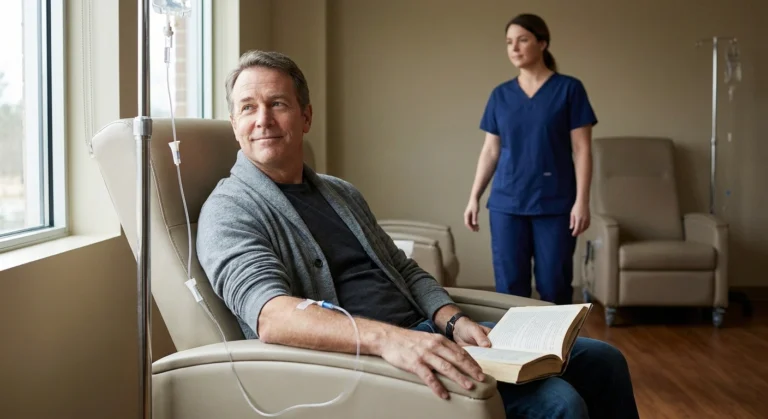
When Margaret first heard her neurologist suggest therapy for her neuropathy pain, she almost laughed. “I don't need a therapist,” she told me. “I need something that stops the burning in my feet.” Six months later, she called to say it was the single best thing she'd done for her pain — not because the burning disappeared, but because she finally felt like she had some control over it.
Cognitive Behavioral Therapy — CBT — isn't about convincing yourself the pain isn't real. It's about changing how your brain processes and responds to pain signals, which directly affects how much those signals disrupt your life. For people with neuropathy, where pain can feel relentless and unpredictable, that shift can be genuinely life-changing.
What Is CBT and How Does It Apply to Nerve Pain?
Cognitive Behavioral Therapy is a structured, evidence-based form of talk therapy that focuses on the relationship between your thoughts, emotions, and behaviors. Originally developed for depression and anxiety, CBT has been adapted over the past two decades into a powerful tool for chronic pain management — including neuropathic pain specifically.
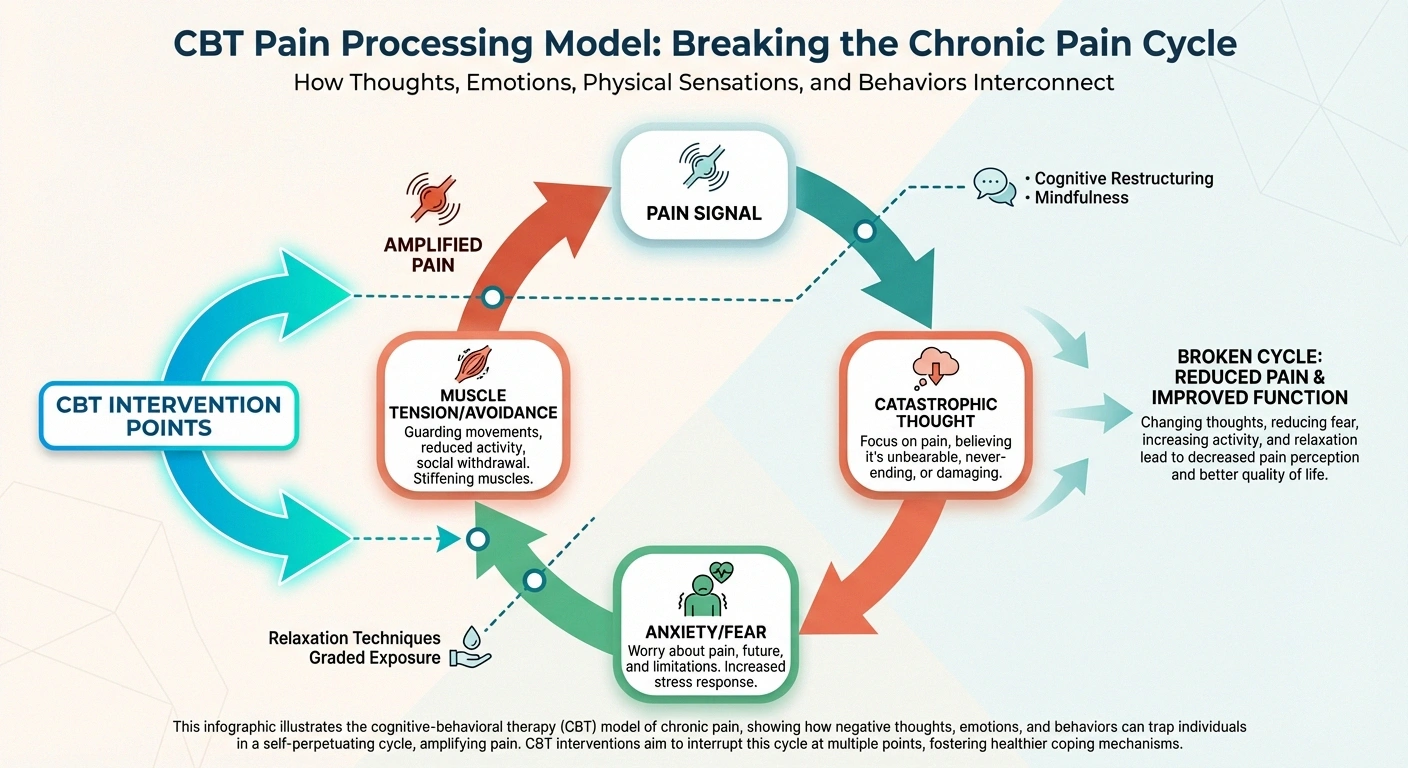
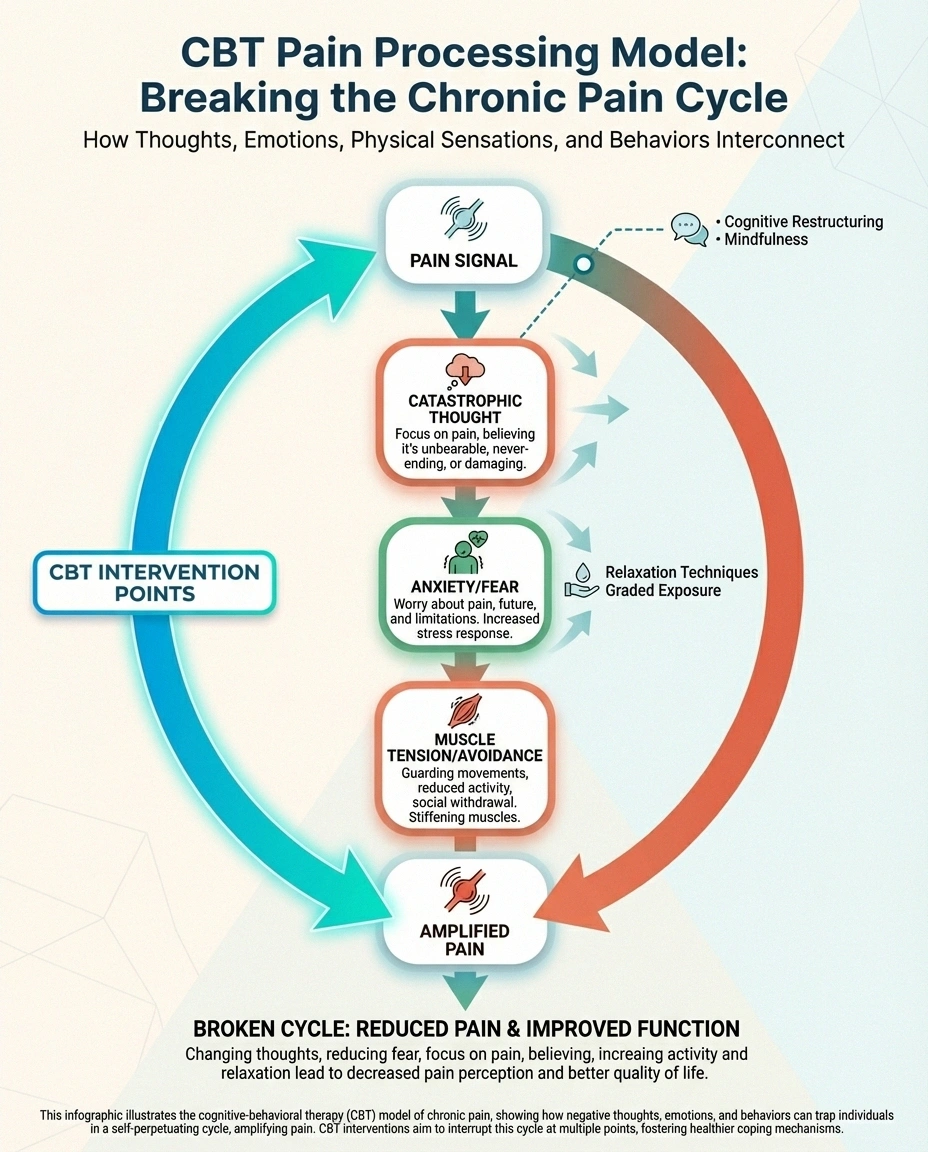
The core principle is straightforward: the way you think about pain influences how intensely you experience it. When neuropathy sends a burning or tingling signal, your brain doesn't just register the sensation — it interprets it. If your brain labels that signal as dangerous, catastrophic, or never-ending, it amplifies the pain response. CBT teaches you to recognize those automatic thought patterns and replace them with more accurate, less fear-driven interpretations.
This isn't positive thinking or wishful optimism. It's neuroscience. Research shows that chronic pain physically changes how the brain processes signals — a phenomenon called central sensitization. CBT works to reverse some of those changes by building new neural pathways that interpret pain signals differently.
The Science Behind CBT for Neuropathic Pain
The evidence for CBT in neuropathic pain has grown substantially. A 2022 systematic review and meta-analysis published in Pain Management Nursing found that CBT is effective for treating pain in patients with diabetic peripheral neuropathy, improving quality of life, and reducing depressive symptoms.
A landmark pilot study at the VA medical system specifically tested CBT for painful diabetic peripheral neuropathy. The randomized controlled trial found that CBT participants showed meaningful reductions in pain severity and pain interference compared to treatment-as-usual groups, with benefits lasting through the four-month follow-up period.
More recently, a 2025 systematic review in Frontiers in Psychology concluded that CBT demonstrates “moderate effectiveness in reducing neuropathic pain and improving psychological well-being” in chemotherapy-induced peripheral neuropathy patients. The researchers highlighted cognitive reframing, enhanced coping, and modulation of central pain processing as the key therapeutic mechanisms.
What's particularly interesting is that CBT appears to work through measurable brain changes. Functional MRI studies show that after CBT, patients' brains respond differently to pain stimuli — with reduced activity in areas associated with fear and catastrophizing, and increased activity in regulatory regions.
How CBT for Neuropathy Works: The Core Techniques
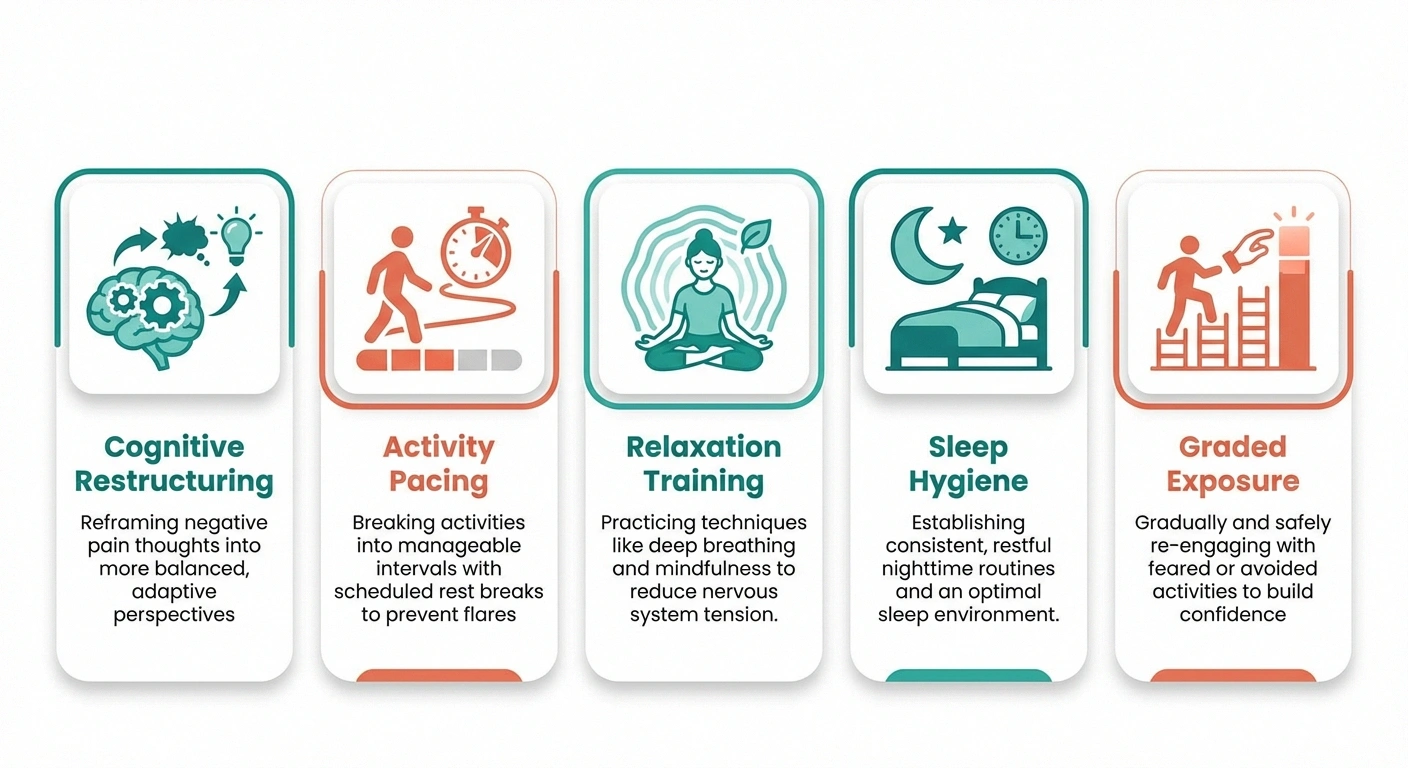
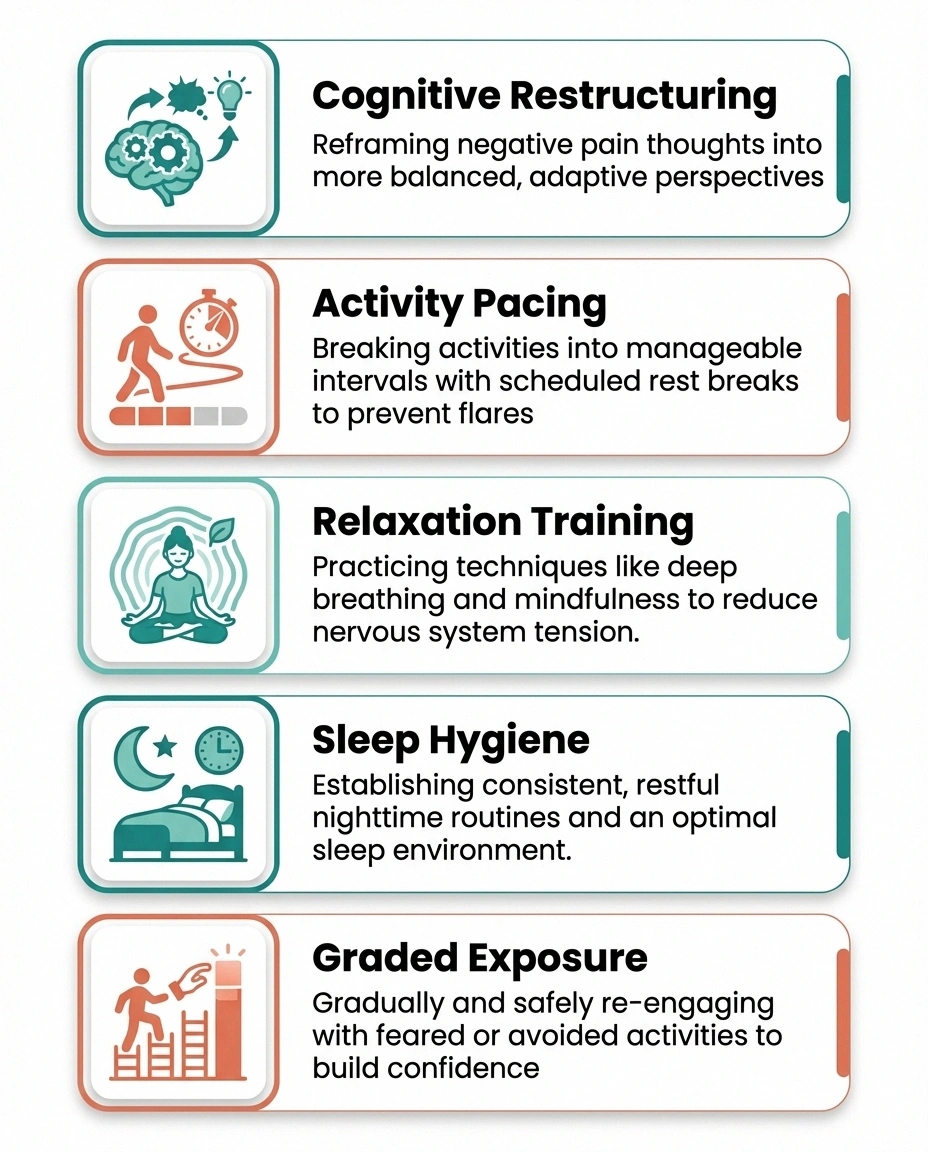
CBT for chronic pain isn't one technique — it's a toolkit. A typical program runs 8 to 12 weekly sessions, each building on the last. Here are the primary skills you'll learn:
Cognitive Restructuring
This is the “cognitive” part of CBT. You learn to identify automatic negative thoughts about your pain — things like “this will never get better,” “I can't do anything anymore,” or “something must be seriously wrong.” Your therapist helps you examine whether these thoughts are accurate and replace them with more balanced alternatives. Not “everything is fine” — but “I've had bad days before and gotten through them.”
Behavioral Activation and Activity Pacing
Many people with neuropathy fall into a boom-and-bust cycle: they avoid activity on bad pain days, then overdo it when they feel better, which triggers a flare-up. CBT teaches activity pacing — breaking tasks into manageable chunks and maintaining consistent activity levels regardless of daily pain fluctuations. This prevents both deconditioning and flare-ups.
Relaxation Training and Stress Management
Stress directly amplifies neuropathic pain by activating the sympathetic nervous system. CBT includes practical relaxation techniques — progressive muscle relaxation, diaphragmatic breathing, and guided imagery — that you can use when pain spikes. These aren't just calming exercises; they actively reduce the neurochemical cascade that intensifies pain signals. For more on relaxation approaches, see our guide to mindfulness and meditation for neuropathy.
Sleep Hygiene Strategies
Neuropathy and poor sleep create a vicious cycle — pain disrupts sleep, and poor sleep lowers your pain threshold. CBT incorporates sleep hygiene education and, in some programs, elements of CBT for insomnia (CBT-I), which is considered the gold-standard treatment for chronic insomnia. Improving sleep quality often produces meaningful reductions in daytime pain levels. If sleep problems are a major issue, your therapist may dedicate extra sessions to this area.
Fear and Avoidance Reduction
When nerve pain becomes unpredictable, it's natural to start avoiding activities that might trigger it. Over time, this avoidance shrinks your world — you stop exercising, socializing, even walking. CBT uses graded exposure to help you gradually re-engage with activities you've been avoiding, building confidence that movement and engagement are safe.
What to Expect During CBT for Neuropathy
If you've never done therapy before — or if your only experience is traditional “talk about your feelings” counseling — CBT will feel different. It's structured, goal-oriented, and homework-heavy. Here's what a typical program looks like:
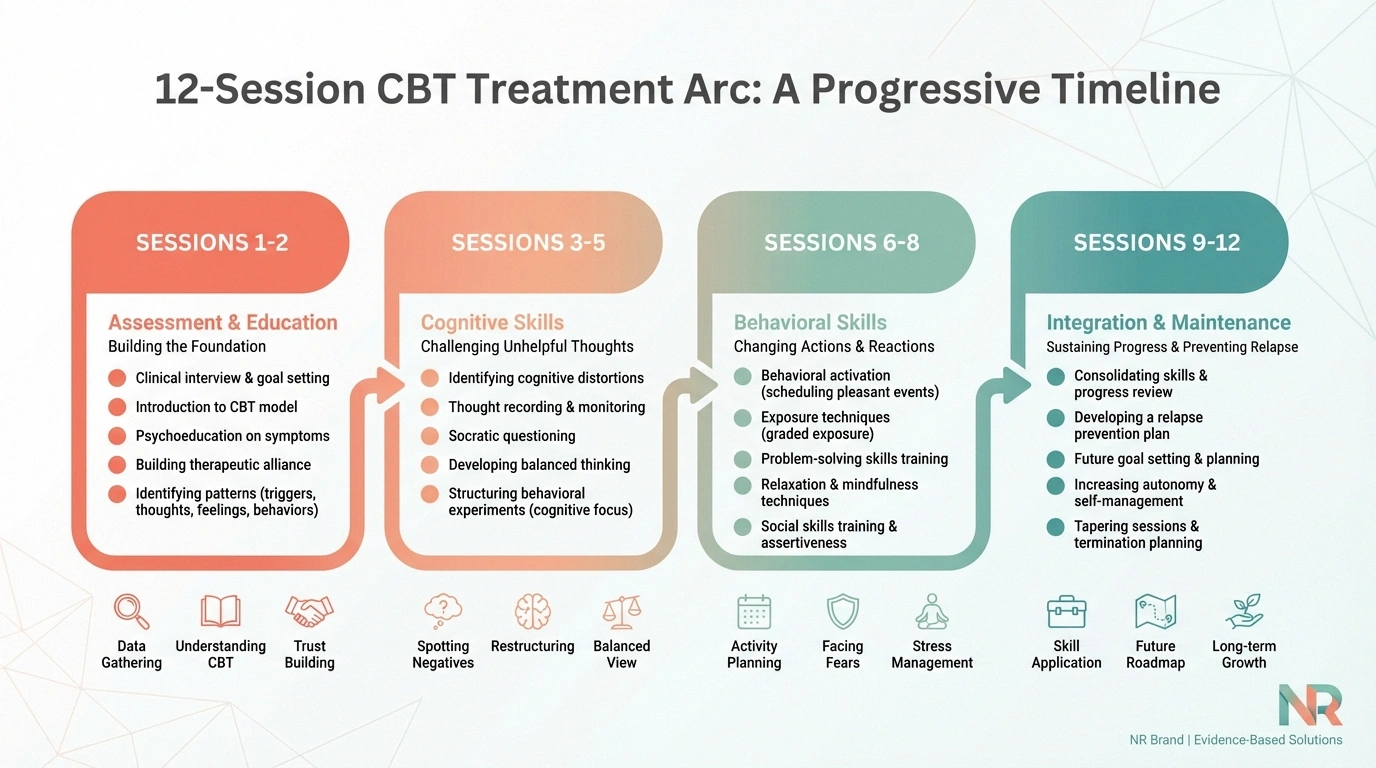
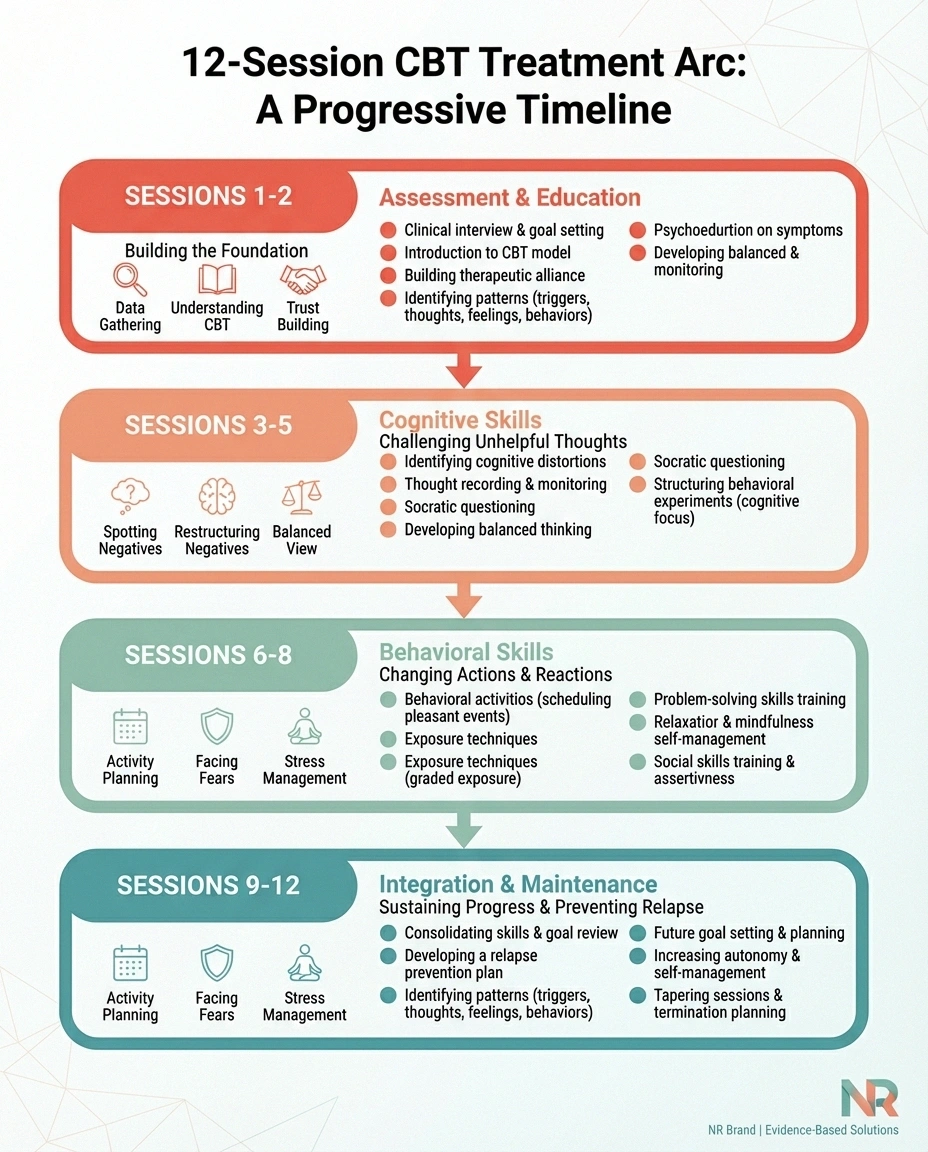
Sessions 1-2: Assessment and education. Your therapist evaluates your pain patterns, identifies your biggest challenges, and explains the CBT model. You'll set specific, measurable goals — not “feel better,” but “walk 20 minutes three times a week without canceling due to pain anxiety.”
Sessions 3-5: Cognitive skills. You start identifying and challenging unhelpful thought patterns. You'll keep a thought diary between sessions, recording pain-related thoughts and practicing alternatives.
Sessions 6-8: Behavioral skills. Activity pacing, relaxation training, and graded exposure. This is where you start applying the cognitive skills to real-life situations.
Sessions 9-12: Integration and maintenance. You consolidate skills, develop a long-term self-management plan, and prepare for setbacks. Good CBT programs include relapse prevention — because pain flare-ups will happen, and having a plan prevents them from undoing your progress.
Between sessions, expect homework. This isn't optional — the research consistently shows that patients who complete homework assignments get better outcomes. Homework might include thought records, relaxation practice, or gradually increasing physical activity.
CBT vs. Other Pain Therapies: How It Compares
CBT doesn't replace your medications or physical therapy — it works alongside them. But understanding how it compares to other approaches helps you see where it fits in your overall pain management plan.
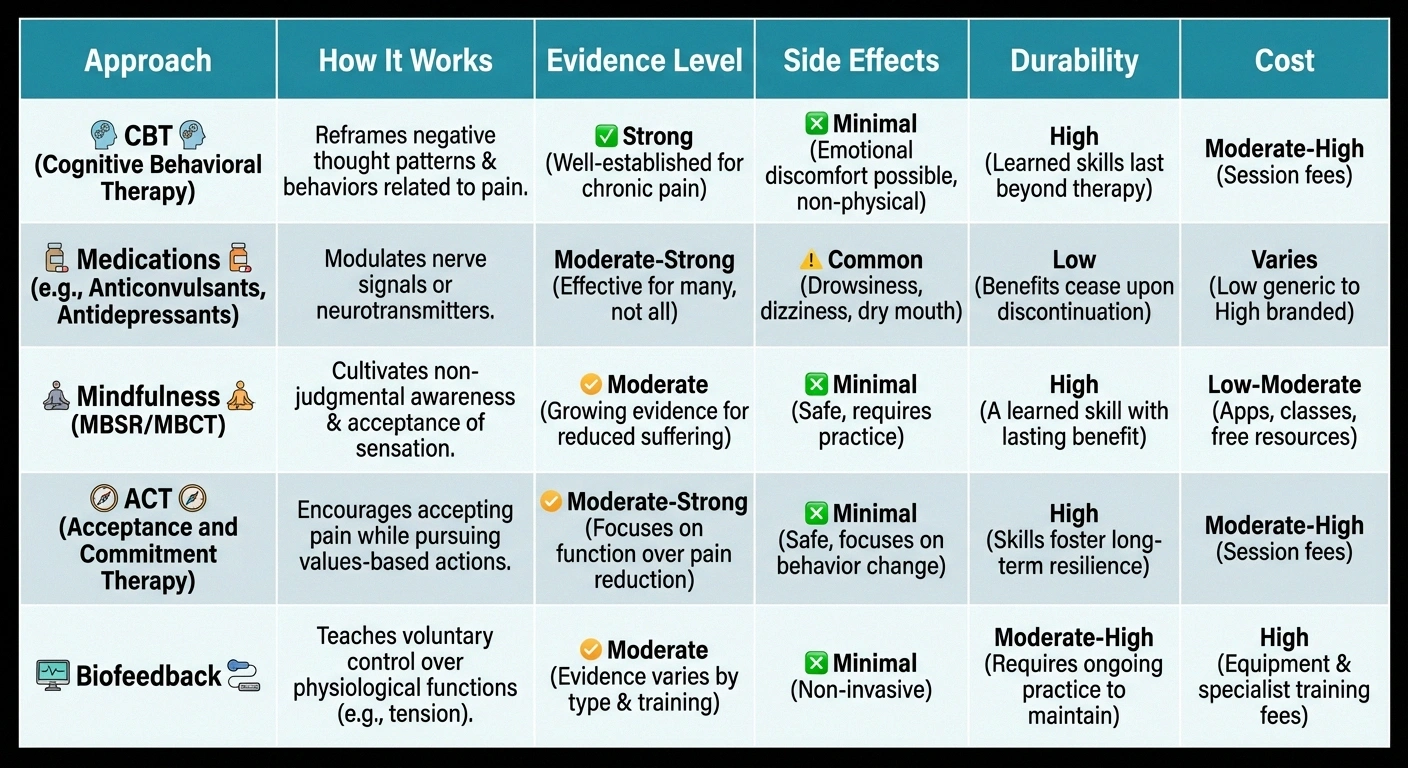
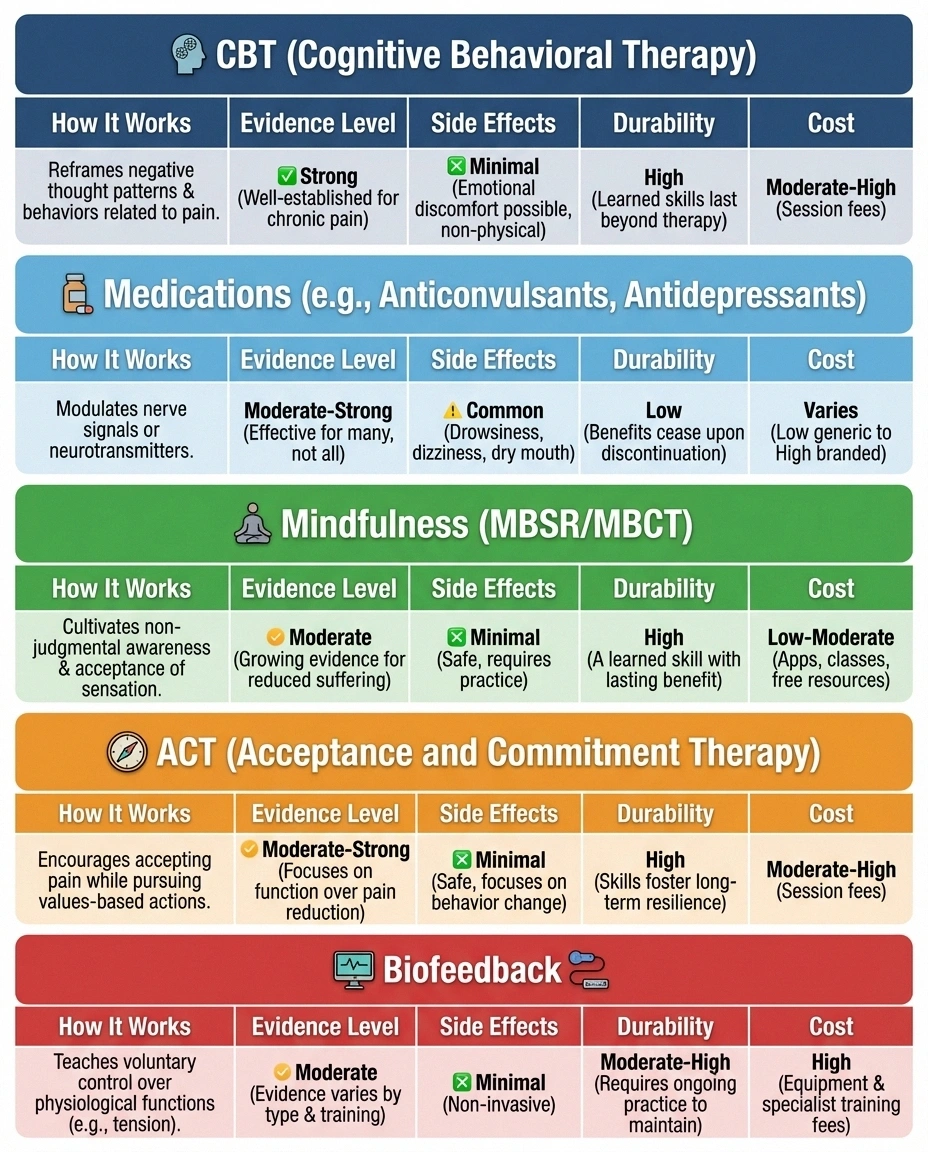
CBT vs. Medications alone: Medications like gabapentin and duloxetine address pain signals chemically. CBT addresses how your brain processes those signals. Using both together often produces better results than either alone — the medication reduces the raw signal intensity while CBT reduces the brain's amplification of it.
CBT vs. Mindfulness-Based Stress Reduction (MBSR): Both are effective for chronic pain. The 2022 meta-analysis found comparable effectiveness between CBT and mindfulness therapy approaches for neuropathy-related relationship challenges for diabetic neuropathy. CBT is more structured and skill-based; mindfulness is more about present-moment awareness. Some people prefer one approach; many benefit from elements of both.
CBT vs. Acceptance and Commitment Therapy (ACT): ACT is sometimes called “third-wave CBT.” While traditional CBT focuses on changing unhelpful thoughts, ACT focuses on accepting pain while committing to valued activities despite it. Both have evidence for chronic pain; ACT may be preferable for people who find thought-challenging frustrating.
CBT vs. Biofeedback: Biofeedback teaches you to control physiological responses using real-time data. CBT works at the thought and behavior level. They complement each other well — biofeedback gives you tools for the body, CBT gives you tools for the mind.
Who Benefits Most from CBT for Neuropathy?
CBT isn't equally effective for everyone, and understanding who benefits most helps set realistic expectations.
☑️ You notice catastrophizing thoughts about your pain
☑️ You've been avoiding activities out of fear of triggering pain
☑️ Anxiety or depression are making neuropathy harder to manage
☑️ You want active strategies alongside your medical treatment
☑️ Sleep problems are a significant part of your pain experience
You're likely to benefit if:
- Pain is significantly affecting your daily functioning, mood, or relationships
- You notice catastrophizing patterns — assuming the worst about your pain
- You've been avoiding activities because of fear of triggering pain
- Anxiety or depression are making your neuropathy harder to manage
- You want active strategies to complement your medical treatment
- Sleep disruption is a major part of your pain experience
CBT may be less effective if:
- Your pain is well-managed and isn't significantly impacting your life
- You're looking for a passive treatment (CBT requires active participation)
- You're not willing to do homework between sessions
- Cognitive impairment makes it difficult to engage with the concepts
Most neuropathy patients fall somewhere in between. Even if you're skeptical, the structured nature of CBT means you'll know within 4-6 sessions whether it's working for you.
Finding a CBT Therapist for Pain Management
Not all therapists do CBT, and not all CBT therapists specialize in chronic pain. Finding the right match matters. Here's how to search effectively:
Where to look:
- Psychology Today's therapist directory — filter by “CBT” and “chronic pain” specialties
- Your pain clinic or neurologist's office — many multidisciplinary pain programs include CBT
- Veterans Affairs — the VA offers CBT-CP (CBT for Chronic Pain) system-wide, with trained providers at most facilities
- Academic medical centers — university hospitals often have chronic pain psychology programs
- Your insurance provider directory — search for psychologists with chronic pain experience
Questions to ask a potential therapist:
- “Have you completed specific training in CBT for chronic pain?” (General CBT training isn't the same)
- “How many chronic pain patients have you treated?”
- “What does a typical treatment plan look like?”
- “Do you assign homework between sessions?”
- “How do you measure progress?”
If in-person options are limited, telehealth CBT has shown equivalent effectiveness to in-person sessions for chronic pain. Several online platforms now offer CBT programs specifically designed for pain management, making it accessible even in areas without specialized providers.
Combining CBT with Your Neuropathy Treatment Plan
The most effective approach to neuropathy pain management is multimodal — combining several treatments that work through different mechanisms. CBT fits naturally into this framework.
A comprehensive treatment plan might include:
- Medication for baseline pain signal reduction
- Physical therapy or exercise for physical function and nerve health
- CBT for pain processing, coping, and quality of life
- Dietary modifications for reducing inflammation and supporting nerve health
- Supplements where evidence supports their use
Talk to your neurologist or primary care provider about integrating CBT. Many pain specialists now consider psychological approaches a standard part of neuropathy treatment, not an afterthought. The VA's adoption of CBT-CP as a system-wide program reflects this shift — recognizing that treating neuropathic pain effectively means treating the whole experience, not just the nerve signals.
Practical CBT Techniques You Can Start Today
While formal CBT with a trained therapist produces the best results, several core techniques can be practiced on your own to start building pain management skills.

The Thought Record: When pain spikes, write down: (1) What happened, (2) What went through your mind automatically, (3) How that thought made you feel, (4) What a more balanced thought would be. Over time, you'll notice patterns — and the balanced thoughts will come more naturally.
The 3-3-3 Grounding Exercise: During a pain flare-up, name 3 things you can see, 3 things you can hear, and 3 things you can touch. This interrupts the pain-catastrophizing loop by redirecting your brain's attention.
Activity Baseline Setting: Pick an activity you've been avoiding (walking, cooking, gardening). Do it for half the time you think you could manage — not until pain forces you to stop. Gradually increase by 10% each week. This builds tolerance without triggering boom-and-bust cycles.
The Relaxation Response: Spend 5-10 minutes daily practicing diaphragmatic breathing: breathe in for 4 counts, hold for 4, exhale for 6. This activates the parasympathetic nervous system, which directly counteracts the stress response that amplifies neuropathic pain.
What the Research Says About Long-Term Results
One of CBT's biggest advantages over many other treatments is durability. Unlike medications that only work while you take them, the skills you learn in CBT continue working long after treatment ends.

Follow-up studies consistently show that CBT benefits for chronic pain persist at 6-month and 12-month follow-ups. The VA's pilot study for diabetic neuropathy specifically showed maintained benefits at 4 months post-treatment — and this was without booster sessions.
The evidence mapping review in Neural Plasticity (2023) examined systematic reviews covering CBT for all types of neuropathic pain and found consistent positive effects across pain intensity, disability, mood, and catastrophizing. The researchers noted that while effect sizes are “moderate” rather than “large,” this is comparable to or better than many pharmacological treatments — with no side effects.
That's an important perspective. A moderate, durable improvement in pain and functioning, with no side effects, that you control — compared to medications with side effects, tolerance issues, and effectiveness that disappears when you stop. For many neuropathy patients, that trade-off makes CBT one of the most valuable treatments available.
Cost, Insurance, and Access
CBT is generally covered by health insurance when provided by a licensed psychologist or clinical social worker. Under mental health parity laws, most insurance plans cover therapy for chronic pain-related psychological distress.
While you wait: Start a simple thought diary. When pain spikes, write down what you were thinking. Just noticing the pattern is the first step.
A typical course of CBT for chronic pain runs 8-12 sessions. At standard copay rates, your total out-of-pocket cost might range from $200 to $600 — significantly less than many medical procedures and comparable to a few months of prescription medications.
If cost is a barrier, several options exist: community mental health centers offer sliding-scale fees, some academic training clinics provide low-cost CBT from supervised graduate students, and digital CBT programs are emerging that cost a fraction of in-person therapy. The VA provides CBT-CP at no cost to eligible veterans.
For comprehensive guidance on navigating treatment costs, see our article on insurance coverage for neuropathy treatment.
Frequently Asked Questions
Does CBT actually reduce neuropathy pain, or just help you cope with it?
Both. Research shows CBT produces measurable reductions in pain intensity scores, not just improvements in coping. The 2022 meta-analysis found statistically significant pain reductions in diabetic neuropathy patients. The mechanism appears to involve actual changes in how the brain processes pain signals, which means the pain experience itself changes, not just your reaction to it.
How long does it take for CBT to start working for nerve pain?
Most patients begin noticing changes within 4 to 6 sessions, typically around the one-month mark. The initial changes are usually in mood, sleep, and sense of control. Pain intensity reductions tend to follow as skills become more automatic. Full benefits typically emerge by the end of the 8-12 session program.
Can I do CBT online, or does it need to be in person?
Telehealth CBT has been shown to be as effective as in-person sessions for chronic pain. Several studies conducted during and after the pandemic confirmed that video-based CBT produces equivalent outcomes. This is particularly good news for neuropathy patients who may have mobility or transportation challenges.
Will my doctor think I'm making up my pain if I agree to CBT?
No. Referring a patient to CBT is a sign that your doctor takes your pain seriously and wants to give you every available tool. Modern pain management recognizes that chronic neuropathic pain involves both peripheral nerve signals and central nervous system processing. Treating both components is better medicine, not a suggestion that the pain is in your head.
Is CBT for chronic pain the same as regular CBT for depression?
No. While they share the same theoretical framework, CBT for chronic pain (sometimes called CBT-CP) has been specifically adapted for pain management. It includes pain-specific techniques like activity pacing, graded exposure to feared movements, and pain-focused cognitive restructuring that standard CBT for depression does not cover. Look for a therapist with specific chronic pain training.
Can CBT help with the emotional side of neuropathy too?
Absolutely. Research consistently shows that CBT improves depression, anxiety, and overall quality of life alongside pain reduction. For many neuropathy patients, the emotional burden — frustration, grief over lost abilities, fear of progression — is as debilitating as the physical pain. CBT addresses all of it through one integrated approach.
Moving Forward: Your Next Steps
If neuropathy pain is limiting your life despite medication and other treatments, CBT deserves serious consideration. It's one of the few therapies that gives you tools you keep forever — no refills, no side effects, no diminishing returns.
Start by mentioning CBT to your neurologist or primary care provider at your next appointment. Ask for a referral to a psychologist who specializes in chronic pain CBT. While you wait, try the thought record and breathing exercises described above — they're simplified versions of what you'll learn in therapy, and they'll give you a preview of how the approach works.
Your pain is real, your nerves are damaged, and no amount of positive thinking changes that. But the research is clear: how your brain responds to those pain signals is something you can change. And for many people with neuropathy, that change makes all the difference between surviving with pain and actually living well despite it. Browse all our treatment guides for more options.
About the Author