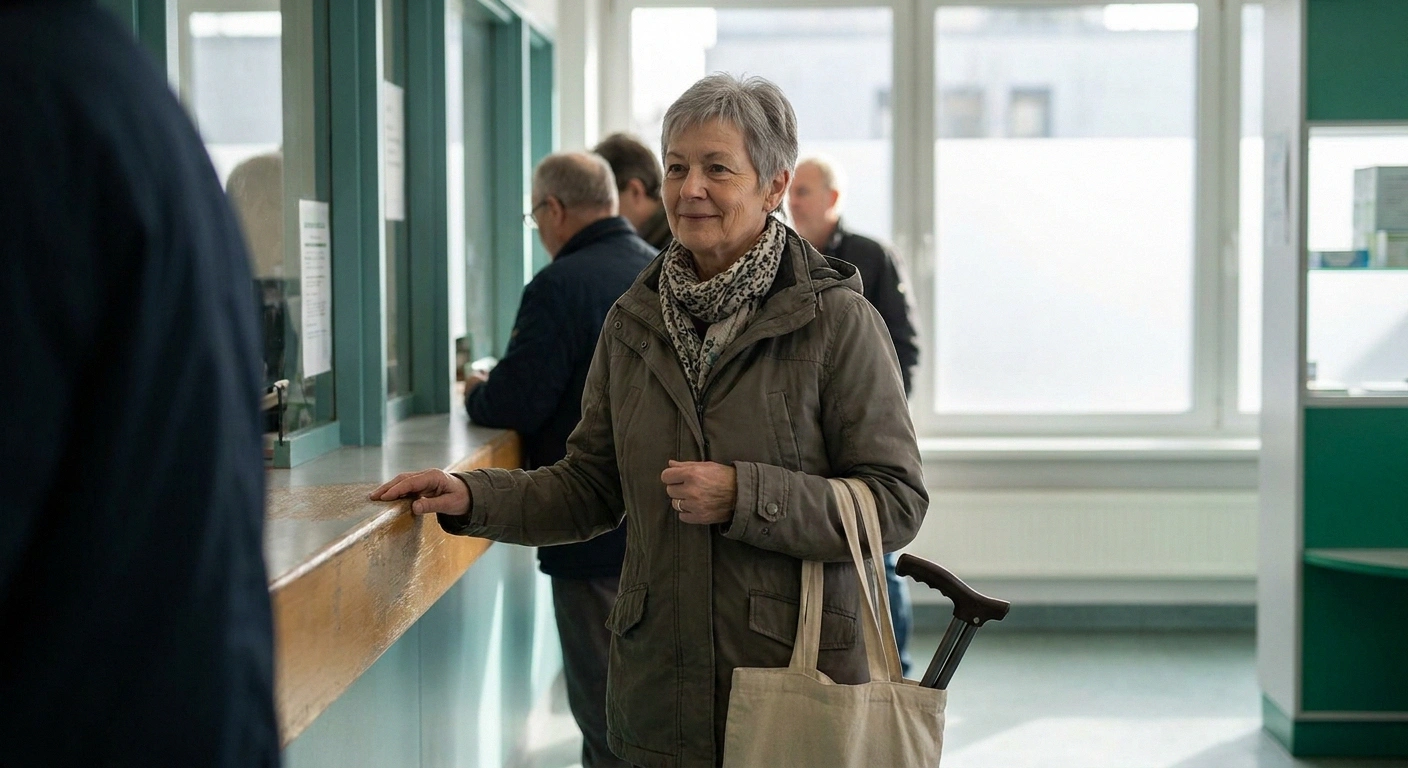
There is a particular kind of dread that healthy people do not understand. It is the moment you walk into the DMV, or the pharmacy, or the post office two weeks before the holidays, and you see the line. Not a long walk — a long stand. On a hard floor. With no idea how long it will take and no chair in sight.
I'm Janet Ellis, a community advocate who lives with neuropathy, and I have stood in that line with burning feet more times than I can count. Static standing — staying in one spot without moving — is often harder on neuropathic feet than walking is, because nothing is pumping the blood, the same pressure points get loaded the entire time, and your nerves have nowhere to go but louder. The good news is that the line is one of the most manageable problems we face, once you stop treating it as something that just happens to you. Here is how I handle it now.
Before You Leave the House
Most of whether a line goes badly is decided before you ever get in it. The single biggest mistake is heading out to a known line-errand in whatever shoes were by the door. If you are going somewhere you might have to stand, treat your footwear like the equipment it is: cushioned, supportive, broken-in, with any orthotic inserts you use already in them. The wrong shoes turn a ten-minute wait into a two-day flare. Our guide to the best shoes for neuropathy goes into what to look for.
Static standing is harder on neuropathic feet than walking. Most of whether a line goes badly is decided before you leave home — right shoes, compression socks on early, errands not stacked. In the line, small constant movement and a seat within reach do the rest.
If compression socks are part of your routine, put them on before the errand, not after your feet are already swollen. Compression does its best work preventing the pooling and swelling, not fixing it once it has happened. And do a small bit of planning: a known DMV-day is not the day to also do the grocery run and the pharmacy pickup. Stacking standing-errands back to back is how a manageable day becomes a lost one — pace it the way you would pace any demanding activity.
Move While You Stand
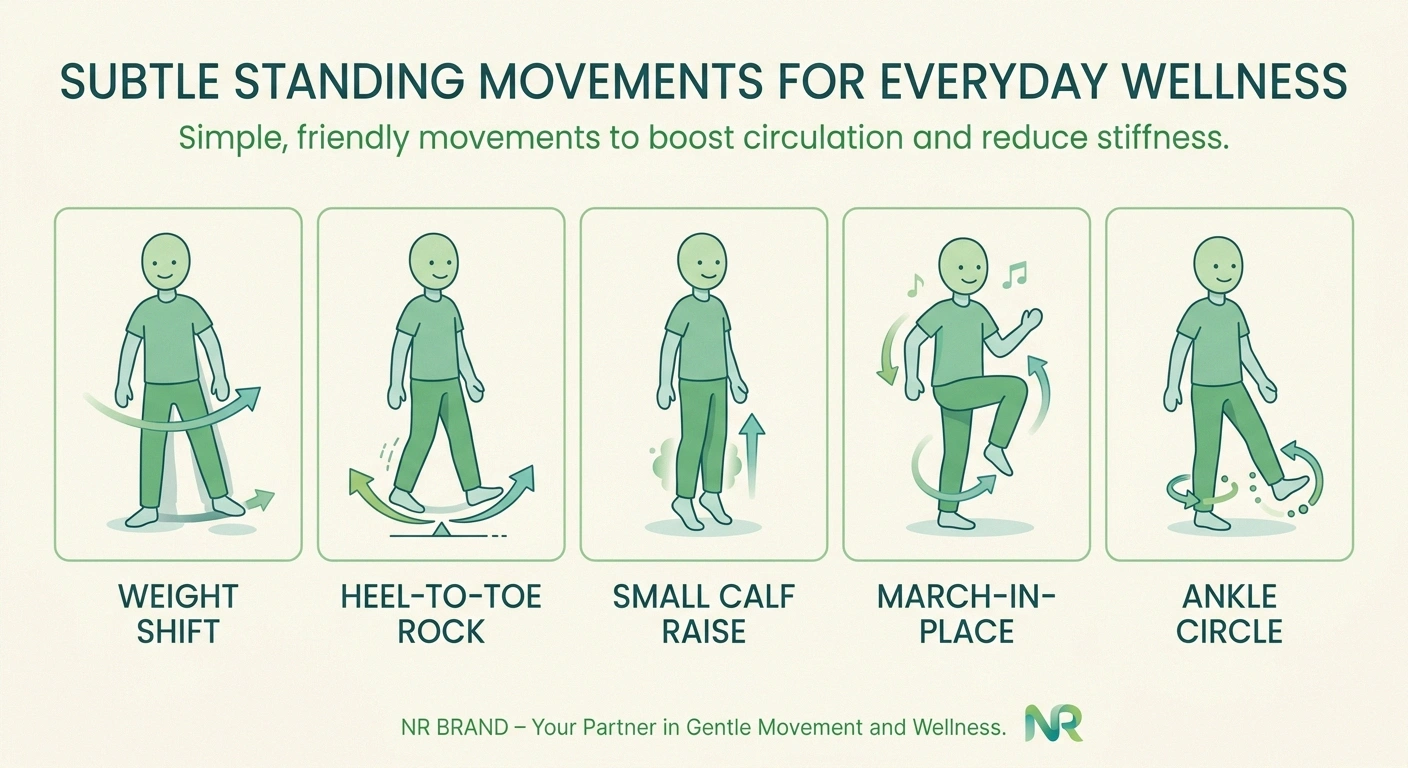
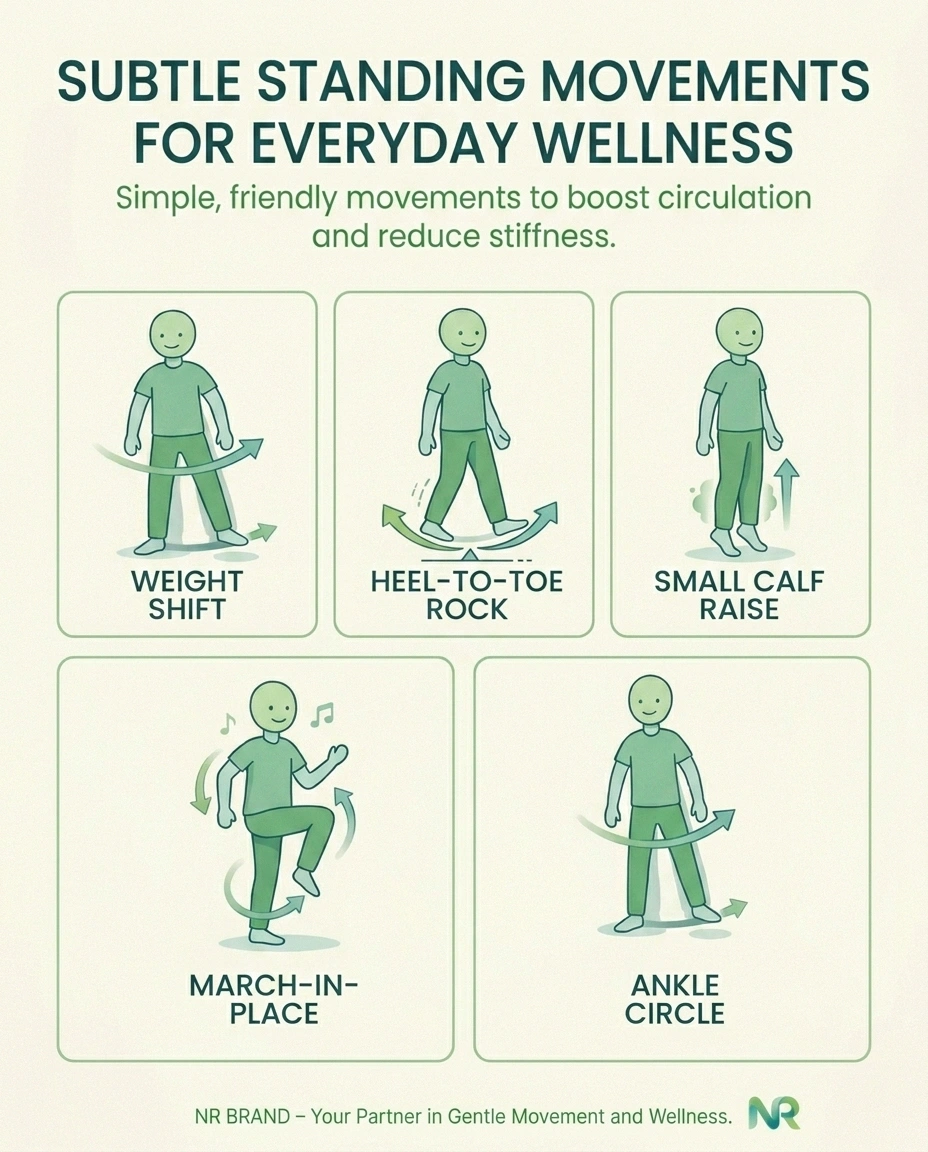
This is the trick most people never get told, and it is the most important one in this whole article. Standing still is the enemy. Standing while making small, constant movements is dramatically more tolerable, because gentle movement keeps blood circulating and stops the same nerves and pressure points from bearing the load the entire time.
Invisible Movements That Keep the Blood Pumping
While you wait, quietly cycle through small motions, none of which look strange in a line:
- Shift your weight slowly from one foot to the other every 20 to 30 seconds.
- Rock gently heel-to-toe, rolling through the whole foot.
- Do slow, small calf raises — rise onto the balls of your feet and lower back down.
- March almost imperceptibly in place, just enough to unload each foot in turn.
- Circle your ankles one at a time if there is room.
None of this draws attention, and all of it works. Think of it as keeping the muscle pump running so your feet are not just static weight-bearing posts. This is the same principle behind getting through any prolonged stand, and it pairs with the broader balance and stability work in our piece on neuropathy and fall prevention — moving in place also keeps you from the stiff, locked-knee stance that makes a stumble more likely.
Find Something to Lean On — or Sit On
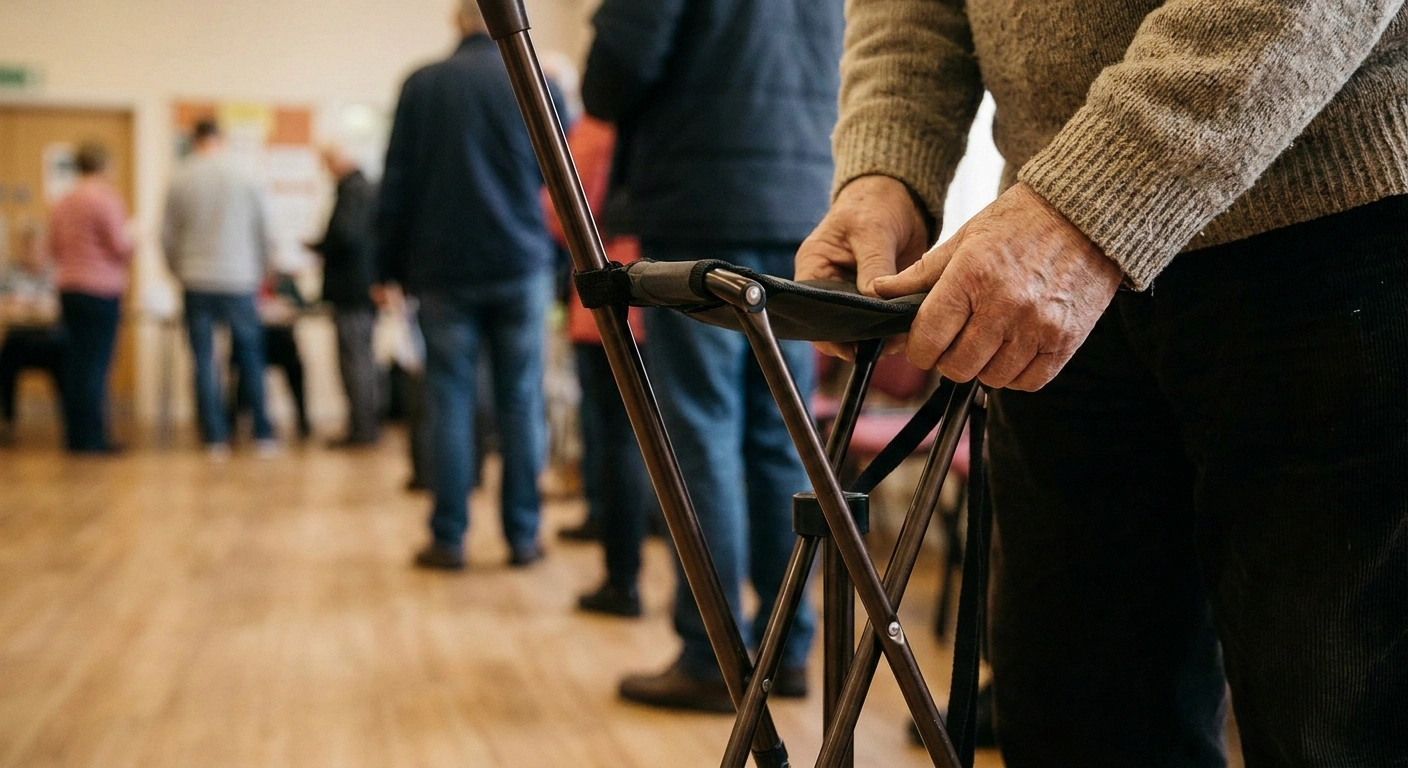
Lines almost always offer something to take weight off your feet, if you are looking for it. A wall, a counter edge, a railing, the handle of your own cart — leaning even part of your weight against a stable surface gives the small nerves and joints in your feet real relief without giving up your place in line.
Better still, bring your own seat. A folding cane-seat — a sturdy walking cane that opens into a small tripod stool — is one of the most quietly life-changing tools for people who dread lines. It doubles as walking support and means you are never more than a second away from sitting down, anywhere, line or not. If you already use or are considering a cane, our guide to walking aids and canes for neuropathy covers the seated-cane options. Even a lightweight folding stool in a tote bag can change your entire relationship with the pharmacy queue.
You're Allowed to Ask for a Chair
I want to say this part plainly, because so many of us were raised not to make a fuss. You are allowed to ask for accommodation, and a disability does not have to be visible to be real. Neuropathy is exactly the kind of invisible condition these courtesies exist for.
“I have a nerve condition and can't stand for long — is there a chair I could use, or could I sit until I'm called?”
A disability does not have to be visible to be real. You do not owe anyone a medical history, and you are not being difficult — this is exactly what these accommodations are for.
Most pharmacies, government offices, and service counters will, if you ask, either bring you a chair, let you sit nearby until you are called, or move you forward so you are not standing the whole time. The script can be simple and calm: “I have a nerve condition and can't stand for long — is there a chair I could use, or could I sit until I'm called?” You do not owe anyone a medical history. You are not being difficult; you are doing exactly what these accommodations are for. The first few times feel awkward. After that, it becomes one more ordinary tool, like asking for a cart.
Skip the Line Entirely

The best way to survive a line is to not be in it. A surprising amount of standing is now optional if you plan around it:
Ways to Not Be in the Line at All
- Use appointment systems. Many DMVs now take appointments that bypass the walk-in line almost entirely. Booking one can turn a two-hour stand into a ten-minute visit.
- Use “text when ready” and order-ahead. Most pharmacies will text you when a prescription is filled so you arrive to a pickup, not a wait. Many stores let you order ahead and pick up without standing in the main line.
- Go off-peak. Mid-morning on a Tuesday is a different universe from a Saturday or a lunch hour or the first of the month. Ask staff when their slow times are; they will usually tell you.
- Call ahead. A two-minute phone call to ask whether something can be handled by phone, mail, or online saves the trip entirely more often than you would expect.
This is the same logic that makes other outings survivable — reducing the standing before you ever leave home. We apply it to errands in our guide to getting through public transportation with neuropathy and to fixed-seating situations in neuropathy and church or worship services.
Distraction Is a Real Tool

Pain gets louder the more attention it has. A line is a perfect storm: nothing to do but stand and notice your feet. Giving your mind a job genuinely turns the volume down. Have something queued before you are in the line — an audiobook, a podcast, a phone game, a playlist, a friend to text. Slow, paced breathing helps too: a long, quiet exhale, repeated, settles the nervous system enough to take a real edge off.
None of this makes the nerve damage smaller. It changes how much of your attention the pain gets to occupy while you wait, and in a fifteen-minute line that is the difference between miserable and merely annoying.
After the Line: Recover, Don't Push

What you do in the thirty minutes after a hard stand matters as much as the stand itself. The instinct is to power through the rest of the to-do list. Resist it. When you can, sit with your feet elevated for a little while to help the swelling settle. A warm foot soak or some gentle self-massage once you are home can take the edge off an aggravated flare. And give yourself permission to not do the next standing-errand today. Treating recovery as optional is how one bad line becomes a bad week. The same after-care logic shows up in our piece on getting through stairs safely with neuropathy — the recovery is part of the activity, not separate from it.
When you can, sit with your feet elevated for a while, then a warm soak or gentle self-massage at home. Just as important: do not stack another standing-errand on the same day. Treating recovery as optional is how one hard line becomes a hard week.
Lines will always be part of life. But “I have to stand there and suffer until it's over” is a story, not a fact. With the right shoes on, a seat within reach, small movements running, a way to skip the worst of it, and permission to ask for what you need, the line stops being the thing you dread about leaving the house.
Frequently Asked Questions
Why is standing still in a line worse than walking the same amount of time?
When you walk, your muscles act as a pump that keeps blood circulating and constantly shifts the load across different parts of your feet. Standing still removes that pump and keeps the same pressure points and nerves loaded the entire time, so static standing often provokes more burning and pain than active movement does.
What is the single most useful thing to do while stuck in a line?
Keep moving in small ways — shift your weight foot to foot, rock heel to toe, do small calf raises, march almost imperceptibly in place. These motions are invisible to others, keep circulation going, and stop any one area from bearing the load the whole time. It is the highest-impact thing you can do in the moment.
Is it really okay to ask for a chair when I don't look disabled?
Yes. A disability does not have to be visible to be real, and neuropathy is exactly the kind of invisible condition these accommodations exist for. A calm, brief request — that you have a nerve condition and cannot stand for long — is enough. You are not required to share medical details, and you are not being difficult by asking.
What should I bring with me to make lines easier?
Supportive, broken-in shoes with your usual inserts, compression socks put on before you leave, and ideally a folding cane-seat or lightweight portable stool. Having something queued for distraction — an audiobook, podcast, or playlist — also helps significantly.
How can I avoid the worst lines altogether?
Use appointment systems where they exist (many DMVs offer them), opt into “text when ready” and order-ahead at pharmacies and stores, go at off-peak times like mid-morning on a weekday, and call ahead to check whether the task can be handled by phone, mail, or online instead.
My feet are flaring badly after waiting — what should I do?
Once you are able, sit with your feet elevated for a while to help swelling settle, and consider a warm foot soak or gentle self-massage at home. Just as important, do not stack another standing-errand on top of it the same day. Treating recovery as part of the outing, not an afterthought, is what keeps one hard line from becoming a hard week.
About the Author