There's a particular kind of misery that lives at 2 AM, and I bet you know it. Your bedroom is comfortable. Your spouse is sleeping fine next to you. Every other part of you is warm. But your feet feel like blocks of ice, and they won't warm up no matter what you do. You pile blankets on. They make the rest of you sweat. The feet still feel cold. You eventually drag yourself out of bed at three in the morning to find a hot water bottle, and you don't sleep right for the rest of the night.
I've lived this version of nighttime. So have most of the people I sit with in my support group. The peripheral nerve damage that causes neuropathy doesn't just cause burning and tingling — it also messes with the body's ability to regulate temperature, especially at the extremities, especially at night. The result is that strange, frustrating combination of feet that feel ice-cold but won't warm up easily, paired with the very real risk that the standard ways most people warm cold feet can cause real injuries when sensation is reduced.
This guide is the practical version of that conversation. What's safe, what isn't, what actually works, and the pre-bed routine that breaks the 2 AM cycle.
Why Neuropathy Makes Feet Feel Cold at Night
A quick mechanism check, because understanding why this is happening makes the solutions make more sense.
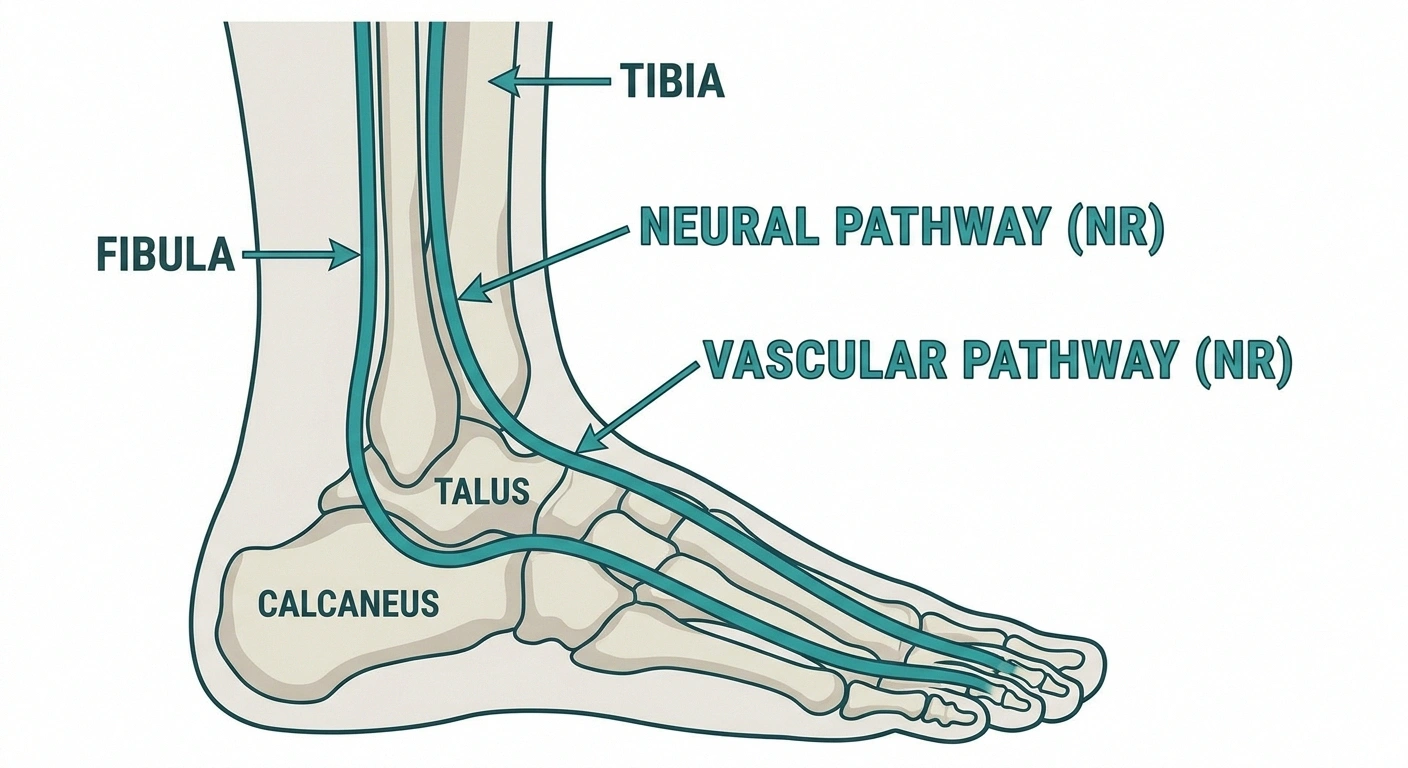
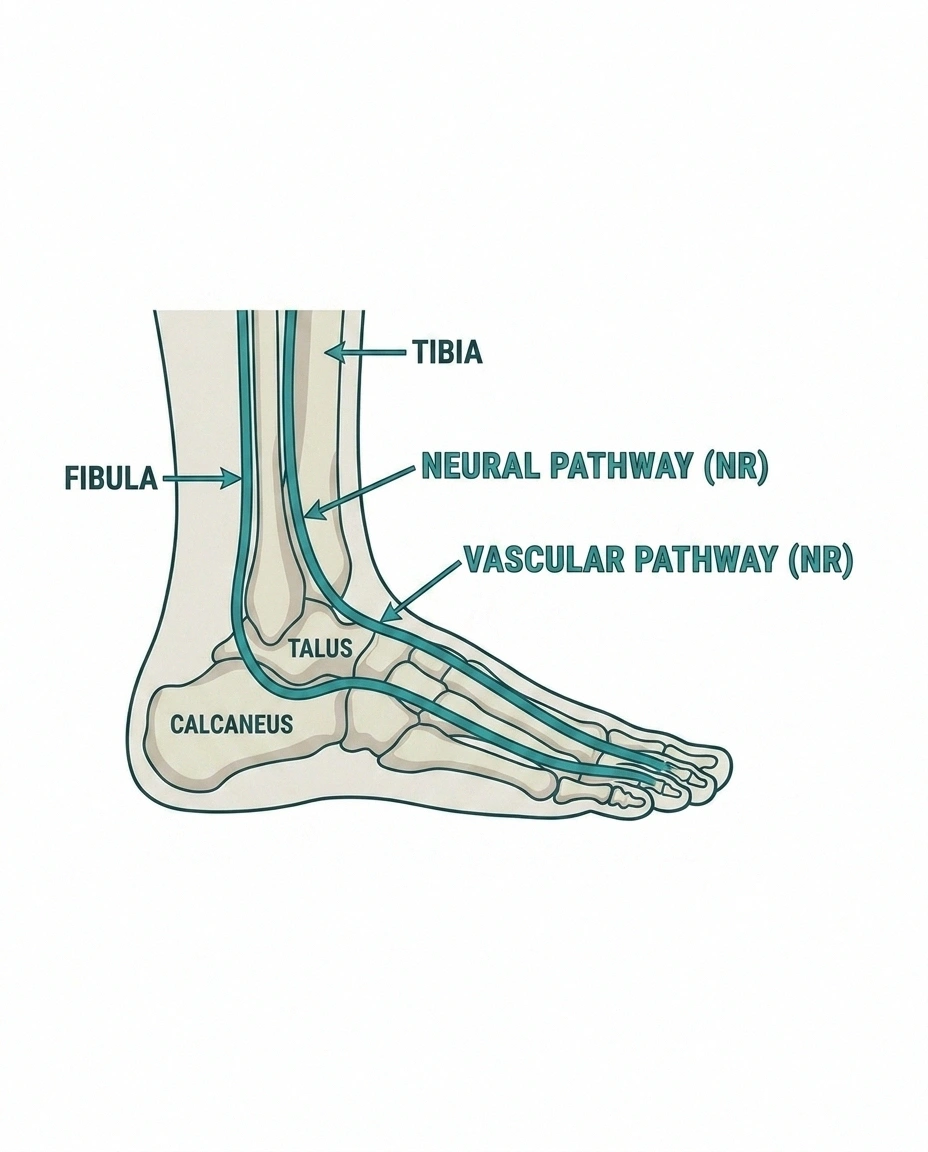
Your body normally regulates the temperature of your feet through a reflex that opens and closes tiny blood vessels in the skin. When you're cold, those vessels constrict, conserving heat in your core. When you're warm, they dilate, releasing heat. Neuropathy — especially the small-fiber and autonomic kind — damages the nerves that control this reflex. The signal doesn't get through. Your feet stop regulating themselves correctly.
Layered on top of that, lots of people with neuropathy also have reduced peripheral circulation — sometimes from diabetes, sometimes from peripheral artery disease, sometimes just from aging. Less blood flow means less warmth delivery.
And then there's the strange one: in some people, the feet feel ice-cold even when they actually aren't. The nerves are misreporting. Sensation gets scrambled, and a foot that's at perfectly normal skin temperature can feel like it's been in a snowbank. This is real, it's not in your head, and it's surprisingly common. It also explains why some of us pile blankets on and still feel cold — the warmth is there; the nerves just aren't reading the signal.
At night, all of this gets worse. Your core body temperature naturally drops in the early hours of sleep, and the cooler your core gets, the more your already-broken vasomotor reflex struggles. By 2 AM, you've hit the low point. Which is exactly when you wake up.
Before Anything Else: The Burning-Feet Test
This is the most important thing in this whole article. Some people with neuropathy have cold-feeling feet that respond well to warmth. Other people with neuropathy have burning-feeling feet that get dramatically worse with warmth. Many people have both, on different nights or in different parts of the foot.
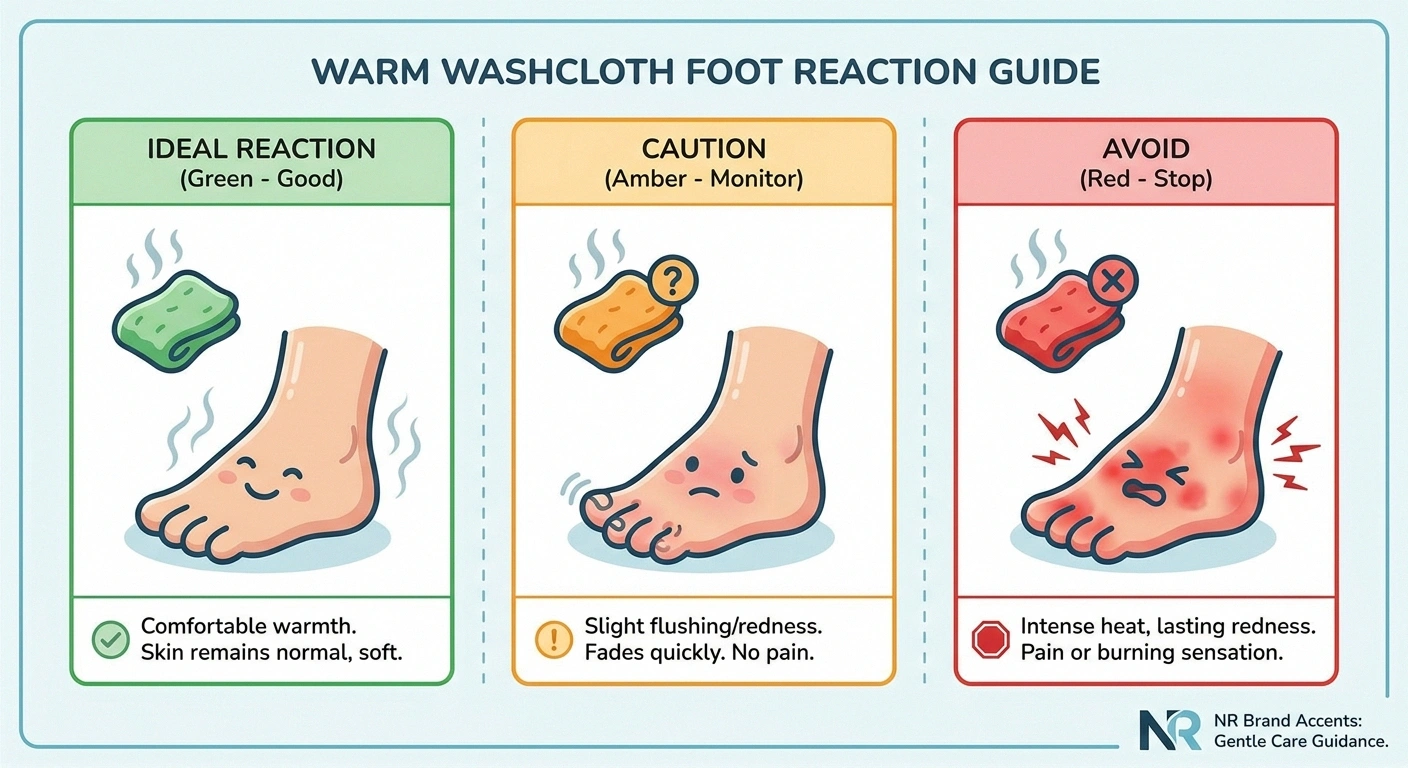
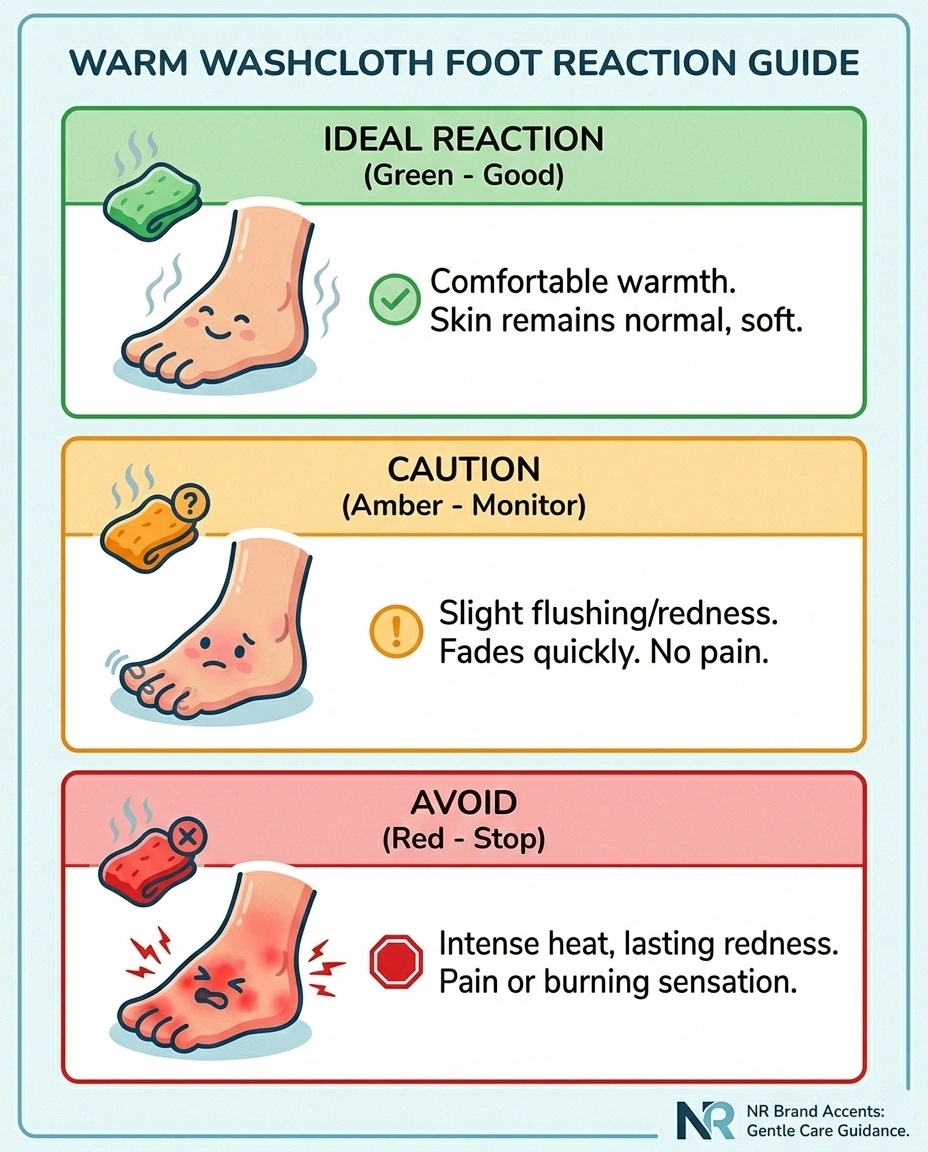
Before you build a whole warming routine, do a careful test. Take a warm — not hot — washcloth and lay it over the top of your foot for 30 seconds. If the warmth feels good and the discomfort eases, you're in the cold-sensitive camp and warming will help. If the warmth triggers burning, makes tingling louder, or feels worse rather than better, you're in the heat-sensitive camp and the strategies in this article are not for you. Cooling and cold management strategies are a different conversation.
If your foot feels cold AND burns at the same time — which is a real, frustrating combination — the answer is usually gentle warmth, not heat. Layered insulation that traps body warmth without adding external heat is your friend; heated pads and electric blankets are not.
The Rules That Can Save You From Burn Injuries
I want to spend a full section on safety because emergency rooms see neuropathy patients with second- and third-degree burns from well-intentioned overnight warming all the time. The burns are particularly nasty for two reasons: with reduced sensation, you can't feel the burn happening, and impaired circulation means the burns heal poorly once they do happen. A “small” burn on a diabetic foot can turn into months of wound care.
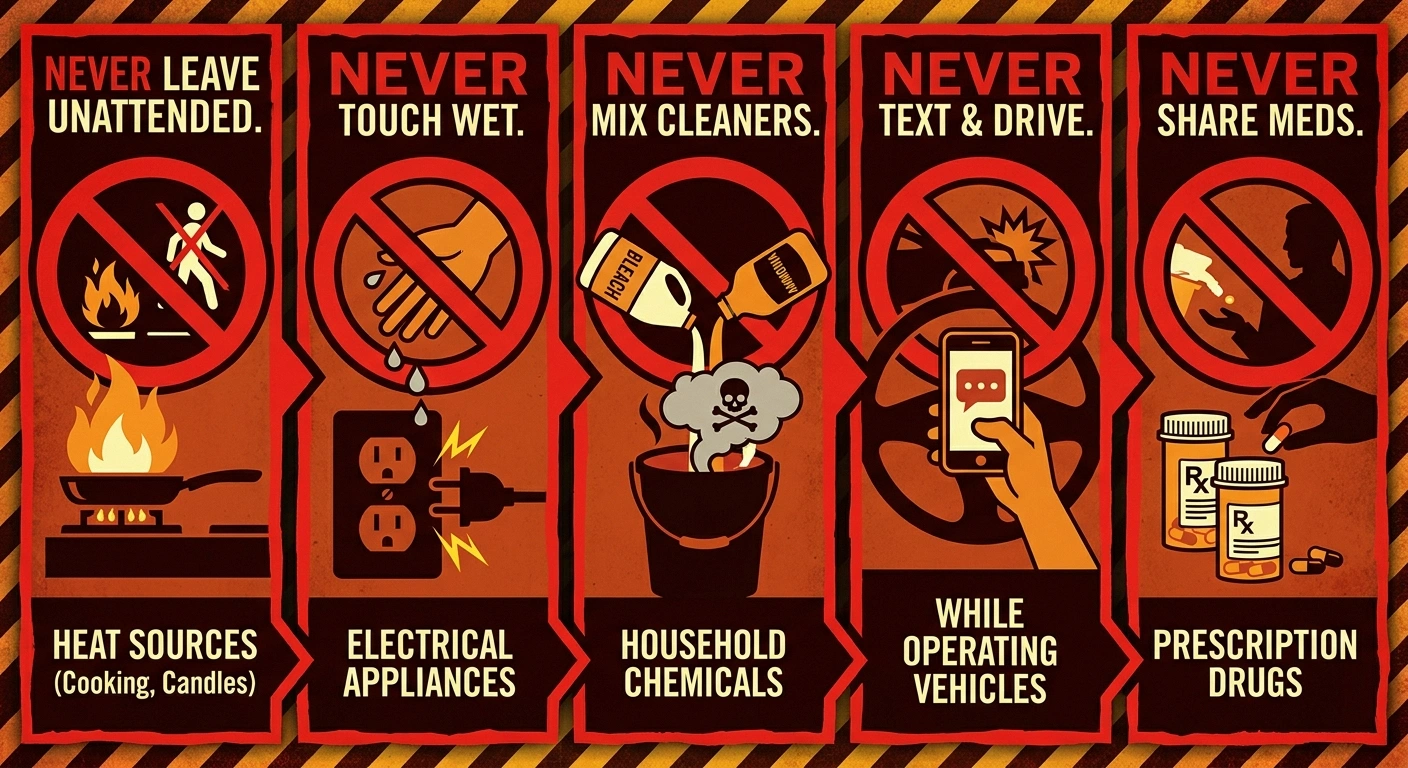
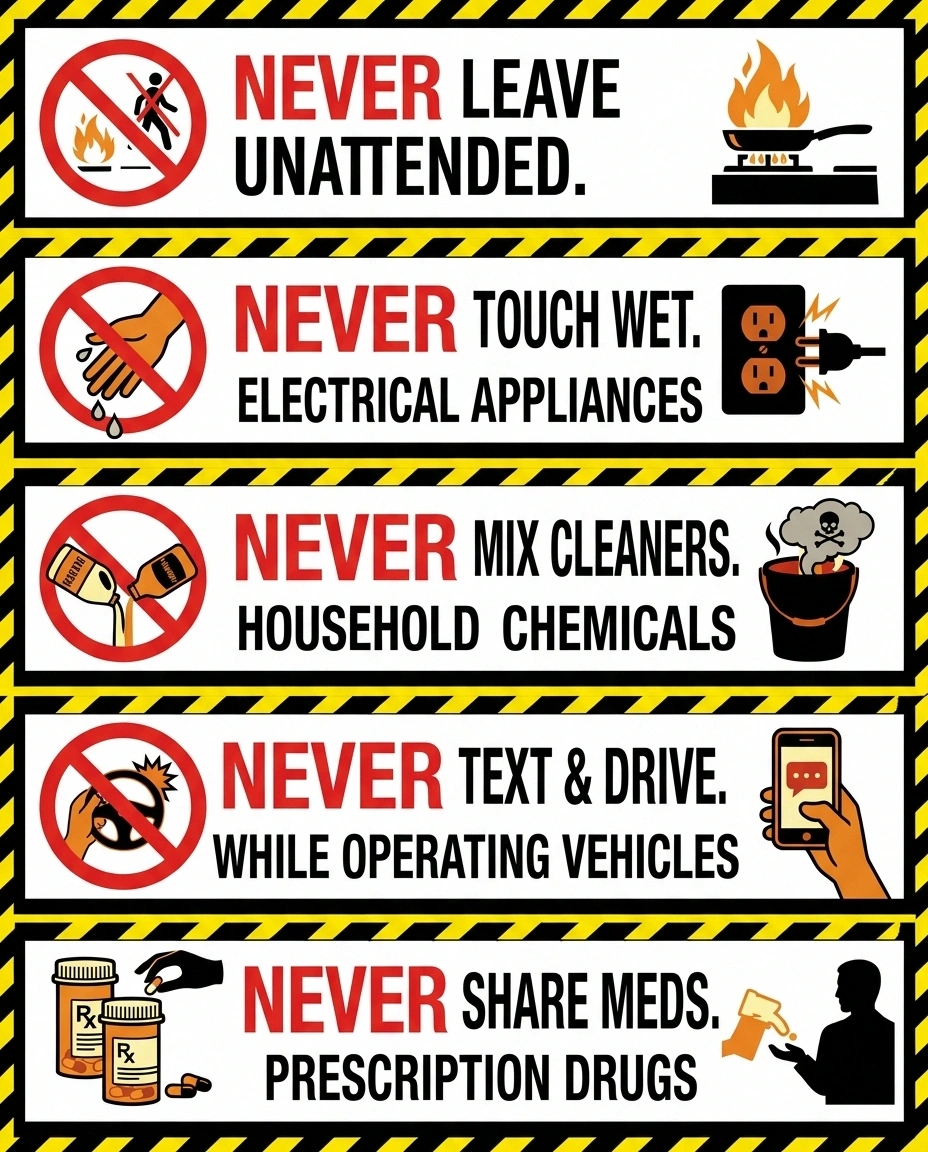
Here are the firm rules.
Never sleep with an electric heating pad on your feet. Not on low. Not under a blanket. Not “just for an hour.” If you fall asleep with it on — and you will — you cannot feel it overheating. There's a full guide on heating pad safety that walks through this in more detail, but the headline rule is this one: never overnight, period.
Never put an electric blanket directly on or under your feet for sleeping. Even if it has an auto-off timer. Even if it's set to low. The combination of reduced sensation and uninterrupted contact for hours is the burn-injury setup.
Never leave a microwavable rice or wheat bag in bed with you when you sleep. These hold heat unevenly and can develop hot spots. Use them to warm yourself up before bed and remove them before lights out.
Never use hot water for a pre-bed foot soak. Cleveland Clinic and most diabetes-care guidelines recommend keeping water below 95 degrees Fahrenheit (about 35 degrees Celsius) for anyone with reduced foot sensation. Test the water with your elbow, your wrist, or a thermometer — never with the foot whose sensation you can't trust. This isn't optional. Even one too-hot soak can cause significant injury you won't feel for hours.
Heated electric socks are use-with-caution territory. If you choose them, use only the lowest heat setting, confirm the auto-off timer works before you trust it overnight, and ideally only wear them while you're falling asleep — not throughout the night. Some people are perfectly fine with them; others have been burned.
If you ever notice a red mark, blister, change in skin color, or unusual warmth on a foot the morning after using any warming device — call your doctor or get to urgent care the same day. Don't wait to see if it heals on its own.
The Safe Warmth Toolkit
Now for what actually works. These are the strategies that warm cold feet without putting them at risk.
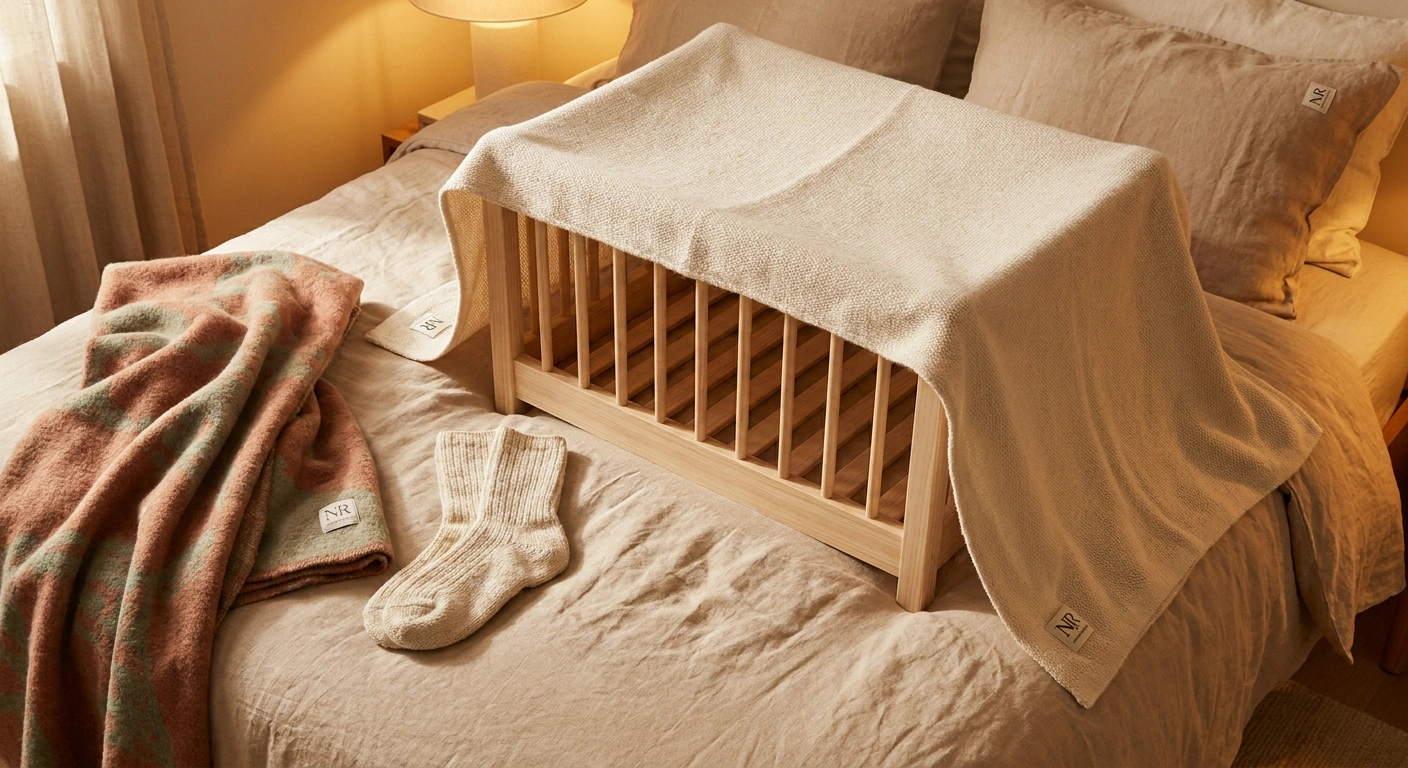
Merino wool socks. If you read only one product recommendation in this article, make it this one. Merino wool wicks moisture (your feet sweat at night, more than you'd think), holds warmth even when slightly damp, and breathes well enough not to overheat. Cotton socks lose their warmth the moment they get damp. Polyester athletic socks wick but don't breathe. Merino is the material that does all three jobs at once. Brands like Smartwool, Darn Tough, and Bombas all make versions designed for sleep; Heat Holders makes a thicker thermal sock if you need more insulation. Look for loose, non-binding ankles — anything that compresses will worsen the cold.
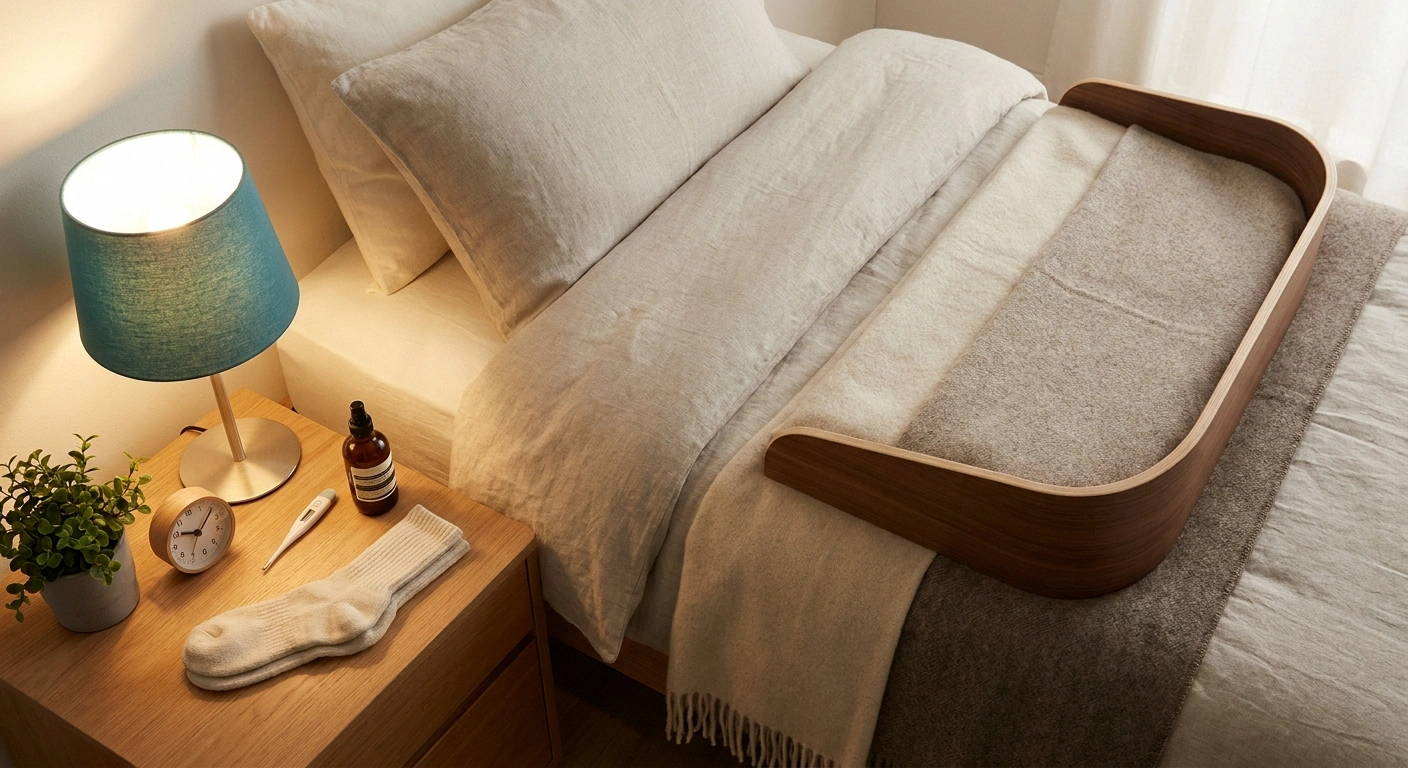
A bed cradle or blanket lifter. This is a simple frame that sits between your mattress and your blankets, holding the blankets off your feet. It does two things at once: it traps a pocket of warm air around your feet rather than pressing fabric against them, and it eliminates the touch sensitivity that drives some people's burning. A basic metal or wooden cradle costs $20 to $40. In our full neuropathy-friendly bedroom guide, this is consistently the highest-leverage purchase we recommend, and it's the same logic here.
A pre-warmed bed. An electric mattress pad set on a timer can preheat the bed for 20 to 30 minutes before you get in, then turn itself off completely before you fall asleep. The bed stays warm for a while from the residual heat; you sleep through the night without any active heating device in contact with you. This is the version of bed-warming that's safe.
A warmed rice bag or buckwheat pillow — placed in the bed, not under your feet. Microwave it for the recommended time, set it under the blankets where your feet will be for 15 to 20 minutes before bedtime, then remove it before you actually get in. The bed pocket stays warm for a while; the bag isn't in contact with you while you sleep.
A warmer bedroom. The standard sleep-temperature recommendation of 65 to 68 degrees Fahrenheit is built for people without temperature-regulation problems. For neuropathy patients, 68 to 72 degrees often sleeps much better. It's not glamorous advice and your spouse may grumble, but cranking the thermostat up a few degrees in winter is one of the simpler fixes that often works.
Layered sleepwear. Pajamas that cover your ankles, long enough to tuck into your socks, are warmer than the same pajamas plus bare ankles. Long pajama bottoms layered over thermal underwear, with merino socks reaching up to mid-calf, can solve a lot of cold-feet problems without any active warming at all.
The 60-Minute Pre-Bed Warming Routine
Most of the cold-feet-at-night battle is won before you actually get in bed. Here's a sequenced routine that consistently helps the people in my support group.
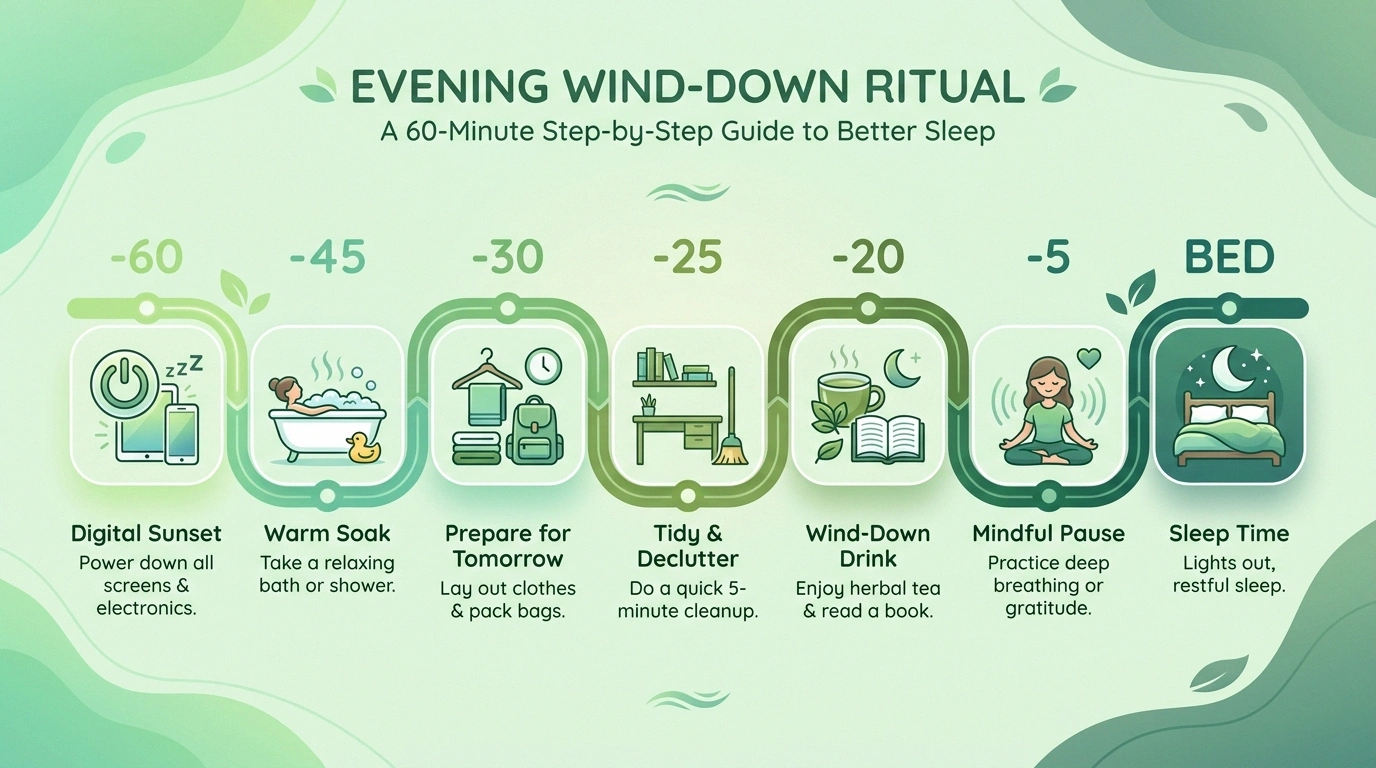
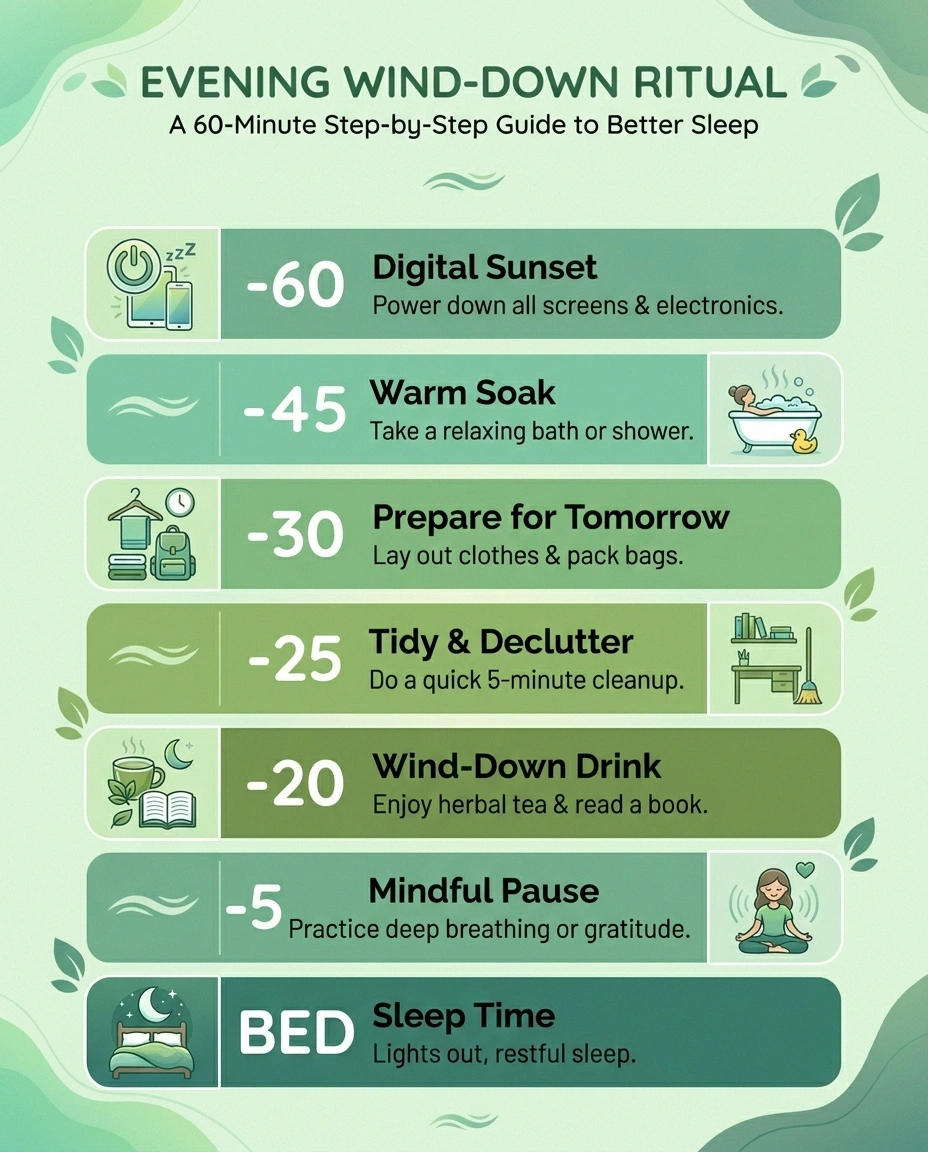
60 minutes before bed: A 10-to-15-minute warm foot soak. Water below 95 degrees Fahrenheit, tested with a thermometer or with your elbow — never with your feet. A handful of Epsom salts is optional. This warms your feet thoroughly, signals to your body that bedtime is coming, and starts the wind-down.
45 minutes before bed: Pat your feet dry — and I mean really dry, between every single toe. Trapped moisture between the toes is a setup for fungal infections, and skin breakdown on a neuropathy foot is exactly the problem you don't want. Use a clean towel and take your time.
30 minutes before bed: Apply a light moisturizer to the tops and soles of your feet — but NOT between your toes (same fungal risk). If your skin tends to crack in winter, this 30-second habit prevents a lot of trouble. Many people find that gentle self-massage during moisturizing also helps circulation.
25 minutes before bed: Start preheating the bed if you're using a mattress pad, a warmed rice bag, or just an extra blanket folded in place.
20 minutes before bed: Put on layered sleep socks. Thin merino base layer, optional thicker outer layer for very cold nights. Make sure both layers are loose at the ankle — no compression.
15 minutes before bed: Add slippers or warm house shoes if you're still up. Keep moving on warm surfaces (carpet, slippers) rather than standing on a cold tile floor.
5 minutes before bed: Remove anything that's been preheating the bed. Pull back the covers, get in quickly so you don't lose the trapped warmth, position the bed cradle so the blankets don't press down on your feet.
Bed. Slow, deep breathing. Most of the work has already been done — you're not trying to warm cold feet now, you're trying to keep already-warm feet warm.
The 3 AM Wake-Up Protocol
Even with the best pre-bed routine, sometimes you wake up at 3 AM with cold feet anyway. Here's the protocol I use — it's adapted from cognitive behavioral therapy for insomnia and matches a lot of the broader sleep-with-neuropathy guidance.
1. Don't try to force sleep cold. Lying in bed shivering for an hour, hoping you'll fall back asleep, almost never works. It also pairs your bed with frustration in ways that hurt sleep on future nights. Get up briefly and address the cold.
2. Sit on the edge of the bed and do a 2-minute gentle foot rub. Use your hands, not vigorous massage. Cup each foot in turn, squeeze gently, work the toes. This increases blood flow without trauma. Skip if your feet are in a burning rather than cold phase.
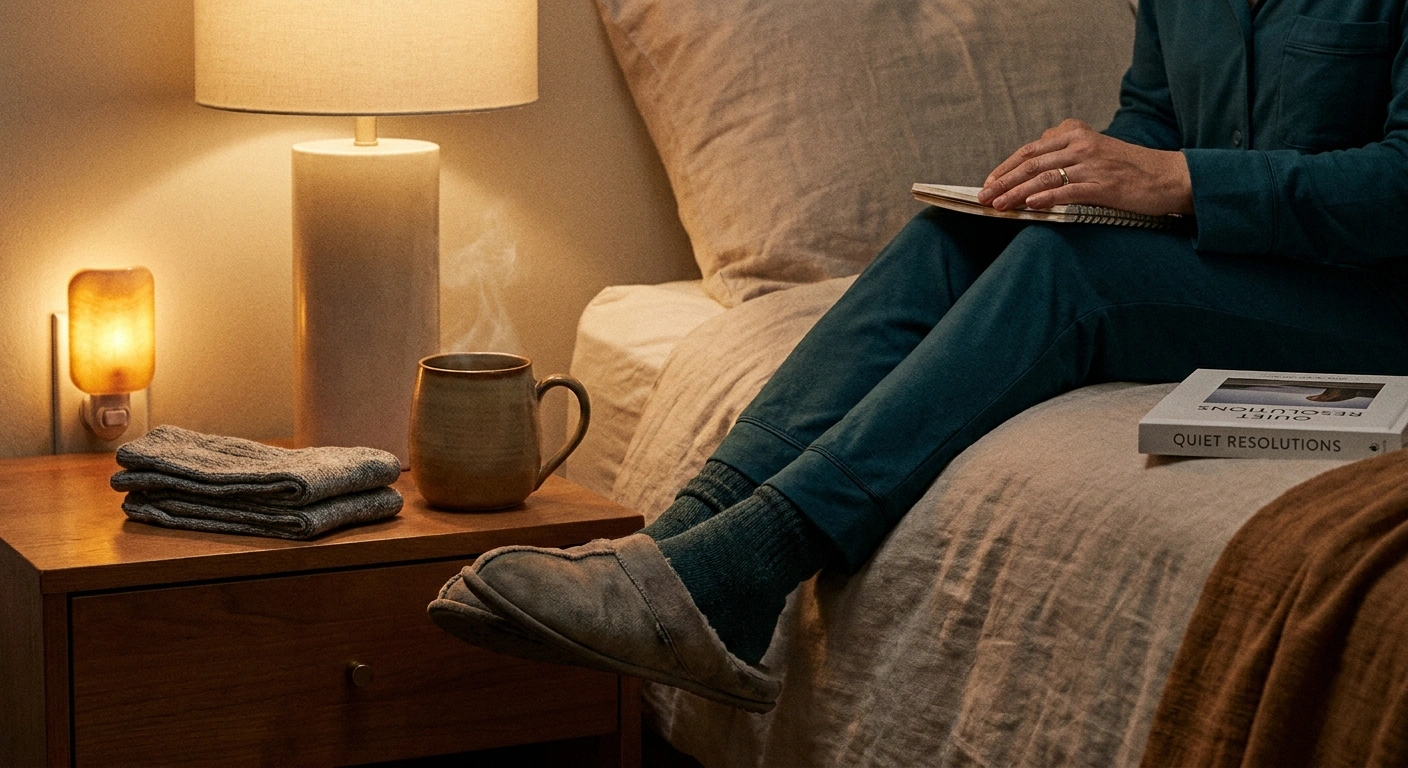
3. Put on fresh, warm socks. Keep a clean dry pair on the nightstand specifically for this purpose. Trade the maybe-slightly-damp socks you've been sleeping in for fresh dry ones.
4. Sip something warm — not hot, not caffeinated. A few sips of warm water, decaf herbal tea, or warm milk. The point is internal warming and a gentle signal to the body that it's still nighttime.
5. Walk around the house briefly. Two or three minutes of gentle movement gets blood circulating in a way that just sitting cannot.
6. Back to a pre-warmed spot. A few minutes with a warmed rice bag at the foot of the bed before you get back in, then remove the bag before settling. Bed cradle in place. Lights stay off.
If you're awake more than 20 minutes after working through this, get out of bed entirely, read something boring in low light for 15 minutes in another room, and then try again. Lying in bed awake more than half an hour is a sleep-conditioning problem that's worth avoiding.
When Cold Feet Mean Something More Serious
Most cold feet at night with neuropathy are uncomfortable but not dangerous. A few patterns are worth bringing to a doctor's attention, because they can signal a vascular problem that needs attention rather than just a comfort problem.
Sudden, new, severe cold in a foot that was previously fine — especially with color changes (white, blue, or purple) — needs evaluation. This can be a vascular event, not just a neuropathy symptom.
One foot dramatically colder than the other — especially if it's also paler or has weaker pulses — needs evaluation. Symmetric cold-feeling is more typical of neuropathy; one-sided cold is more typical of a vascular problem.
Pain in the calves when walking that improves with rest — called intermittent claudication — combined with cold feet at rest points toward peripheral artery disease and should prompt a vascular workup.
Episodes of fingers and toes turning white, then blue, then red in response to cold or stress — Raynaud's phenomenon — is its own condition that responds to different management than neuropathy.
Bringing any of these to your primary care doctor or your neurologist is the right move. A simple bedside test of pulses and blood pressure in your feet, and possibly an ankle-brachial index, sorts out a lot of these questions quickly.
What Works for Me, in One Paragraph
For what it's worth, here's what I personally use most nights. The bedroom is set to 70 degrees. I wear loose merino socks and long pajama bottoms. A bed cradle has been in place for about three years now and I won't sleep without one. I do the foot soak about three times a week — not every night, just when I need it. I keep an extra pair of socks on the nightstand for the 3 AM exchange. I haven't used a heating pad in bed in over a decade. The combination quietly took my worst nights from regular events to occasional, and it cost a total of maybe $80 to set up. Not a miracle. Just a working system.
Frequently Asked Questions
Should I wear socks to bed if I have neuropathy?
For most people with cold-feeling neuropathy, yes. Loose, breathable socks — ideally merino wool — help warm feet without the burn risk of electric warming devices. Avoid tight, compressive socks at bedtime; they can restrict circulation and worsen cold. If your feet tend to burn rather than feel cold, socks may make things worse, so test before committing.
Are heated socks safe for neuropathy?
Use with caution. If you choose heated socks, use only the lowest heat setting, verify that the auto-off timer works, and ideally wear them only while falling asleep rather than throughout the night. Because reduced sensation means you cannot feel a burn happening, the risk margin is smaller than for someone without nerve damage. Check the feet every morning for any redness or skin changes after using heated socks.
What's the safest way to warm cold feet at bedtime?
The combination that wins for most people: a warm — not hot — foot soak below 95 degrees Fahrenheit about 60 minutes before bed, thorough drying including between toes, layered merino wool socks, a pre-warmed bed (using a mattress pad on a timer that turns off before you sleep, or a warmed rice bag removed before you get in), a bed cradle to lift blankets off your feet, and a bedroom set to 68-72 degrees.
Can I use a hot water bottle?
A traditional rubber hot water bottle filled with warm (not boiling) water can be used to preheat the bed if it's removed before you get in. It should not be left in bed against your skin while you sleep. The water gradually cools and the bottle eventually feels lukewarm, but during the early hours the water can be hot enough to cause burns when sensation is reduced.
Why are my feet cold but the rest of me is warm?
Two things are usually happening together. First, the autonomic nerves that regulate temperature in the small blood vessels of your feet aren't sending the right signals, so your feet don't dilate and warm themselves the way the rest of your body does. Second, if you also have reduced peripheral circulation from diabetes or peripheral artery disease, less warm blood is reaching the feet to begin with. The result is the classic neuropathy pattern: a warm torso, warm hands, and feet that feel like ice no matter how many blankets you pile on.
Do warm baths before bed actually help cold feet?
Yes, for many people — when done safely. A short warm bath before bed with water below 95 degrees Fahrenheit can warm the feet thoroughly and set up a nice carryover into sleep. The keys are checking the water temperature with a thermometer (not your foot), keeping the soak to 10 to 15 minutes, and drying carefully between every toe afterward. Skip if your feet are burning rather than cold.
Will exercise during the day help cold feet at night?
It often does. Regular gentle exercise improves circulation throughout the body, including the small vessels of the feet. Walking, swimming, gentle cycling, and balance exercises all help. You probably won't see the result the same night, but several weeks of consistent daily movement often quietly improves nighttime foot temperature.
When should I see a doctor about cold feet?
If your cold feet are sudden, new, severe, one-sided (much colder on one side than the other), accompanied by color changes (white, blue, or purple), or paired with pain in your calves when you walk that improves with rest, see your doctor promptly. These patterns can indicate vascular problems that need treatment rather than just comfort strategies. Persistent gradual cold without those red flags is generally not urgent but is still worth discussing at your next routine visit.
About the Author