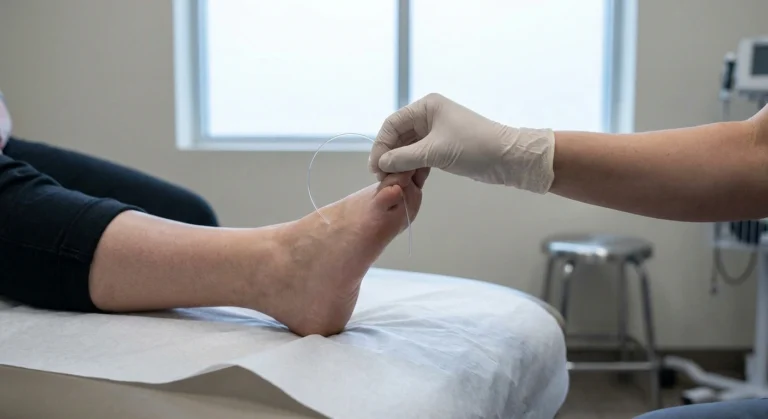
A woman in my support group, let’s call her Renee, mentioned at our last meeting that her feet had been burning at night for almost two years. She figured it was just part of getting older. She is 58. When she finally brought it up with her primary care doctor, the conversation turned in a direction she did not expect. Renee has been living with HIV since the late 1990s. Her doctor asked her about a medication she had taken back then, a drug called stavudine, and suggested she see a neurologist.
I am not a doctor. I am a patient advocate who has lived with peripheral neuropathy since my mid-fifties, and I spend a lot of my time translating medical research for people who are tired of feeling lost. HIV-related neuropathy is one of those topics that almost never gets a friendly, plain-language explanation. So let’s sit with a cup of coffee and walk through it.
What HIV-Related Neuropathy Actually Is
The medical name is a mouthful. HIV-related neuropathy is most often called distal sensory polyneuropathy, shortened to HIV-DSP. You may also see it written as HIV-SN. They mean essentially the same thing.
Distal means it starts at the parts of your body farthest from your spine, the toes and feet. Sensory means it affects the nerves that carry feeling, not the ones that move your muscles. Polyneuropathy means many nerves are involved, usually on both sides of the body in a roughly symmetric pattern. Put it together and you get a condition where the small nerve fibers in your feet, the ones that handle pain, temperature, and light touch, are damaged or dying.
HIV-DSP is one of the most common neurologic complications of HIV. Studies from different eras and using different assessment methods suggest somewhere between 30 and 50 percent of people living with HIV develop some form of peripheral neuropathy during their lifetime. That is a startling number, and it deserves a real explanation.
It belongs to a broader family of conditions called small-fiber neuropathy, where the tiny unmyelinated nerve endings get damaged before the larger nerves do. That distinction matters because it shapes how doctors diagnose it.
Two Causes That Often Overlap
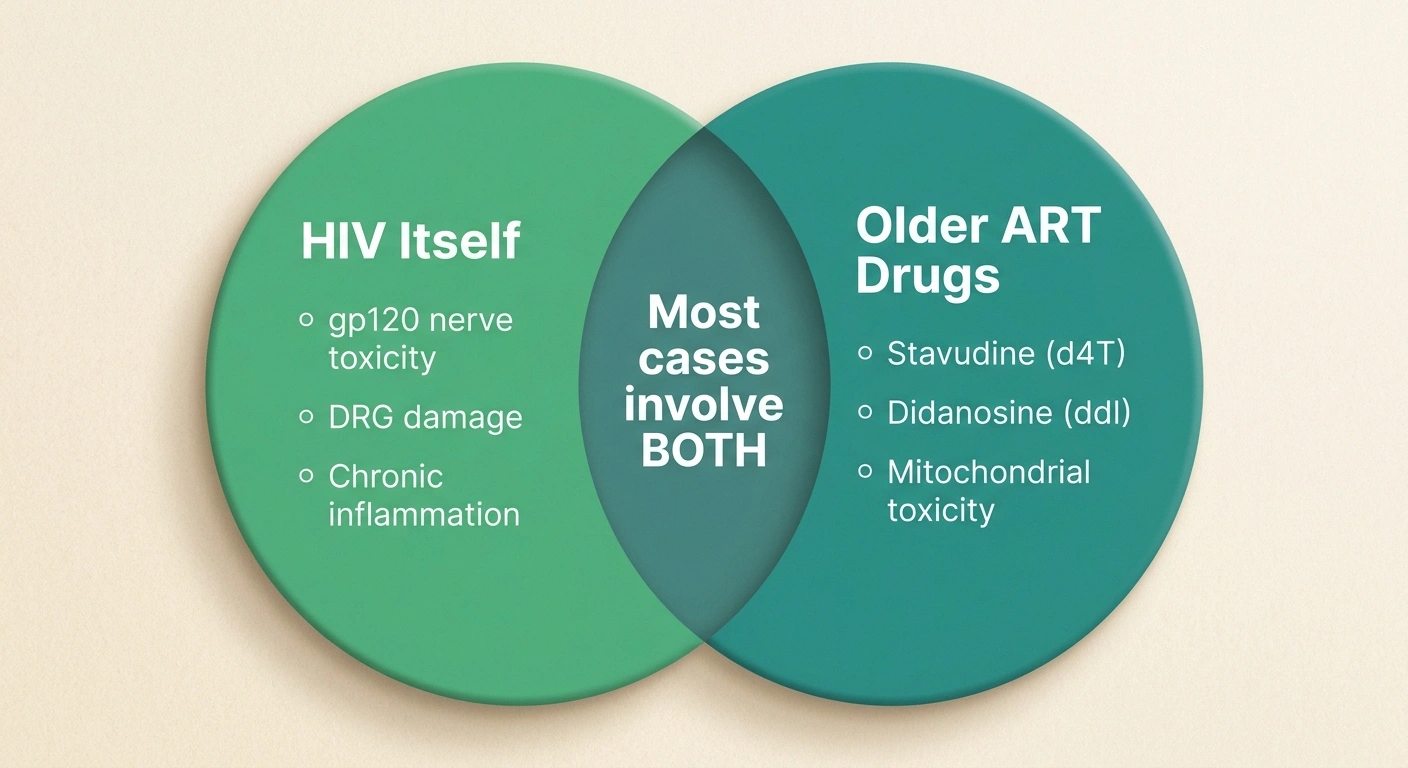
HIV-related neuropathy has two main mechanisms, and most people who develop it have a mix of both.
The first cause is HIV itself. The virus can damage nerves directly, even when it is well controlled by medication. A protein on the surface of the virus called gp120 appears to be toxic to a specific cluster of nerve cells called the dorsal root ganglia, which sit just outside the spinal cord and act as the first relay station for sensory information from the body. The immune response to HIV also creates ongoing low-level inflammation, and HIV interferes with how nerve cells produce energy at the mitochondrial level. Even people whose viral load has been undetectable for years can carry residual damage from the months or years before they started treatment, especially if their CD4 count dropped low.
The second cause is the medications themselves, specifically a class of older antiretroviral drugs. These were lifesaving when they came out, but we now know they were toxic to the small nerve fibers in the feet and hands. We will spend the next section on these.
For many people, it is impossible to fully separate the two causes. The virus did some damage. The early-era drugs did some damage. The combination produced the neuropathy they live with today.
The Older d-Drugs and Why They Mattered
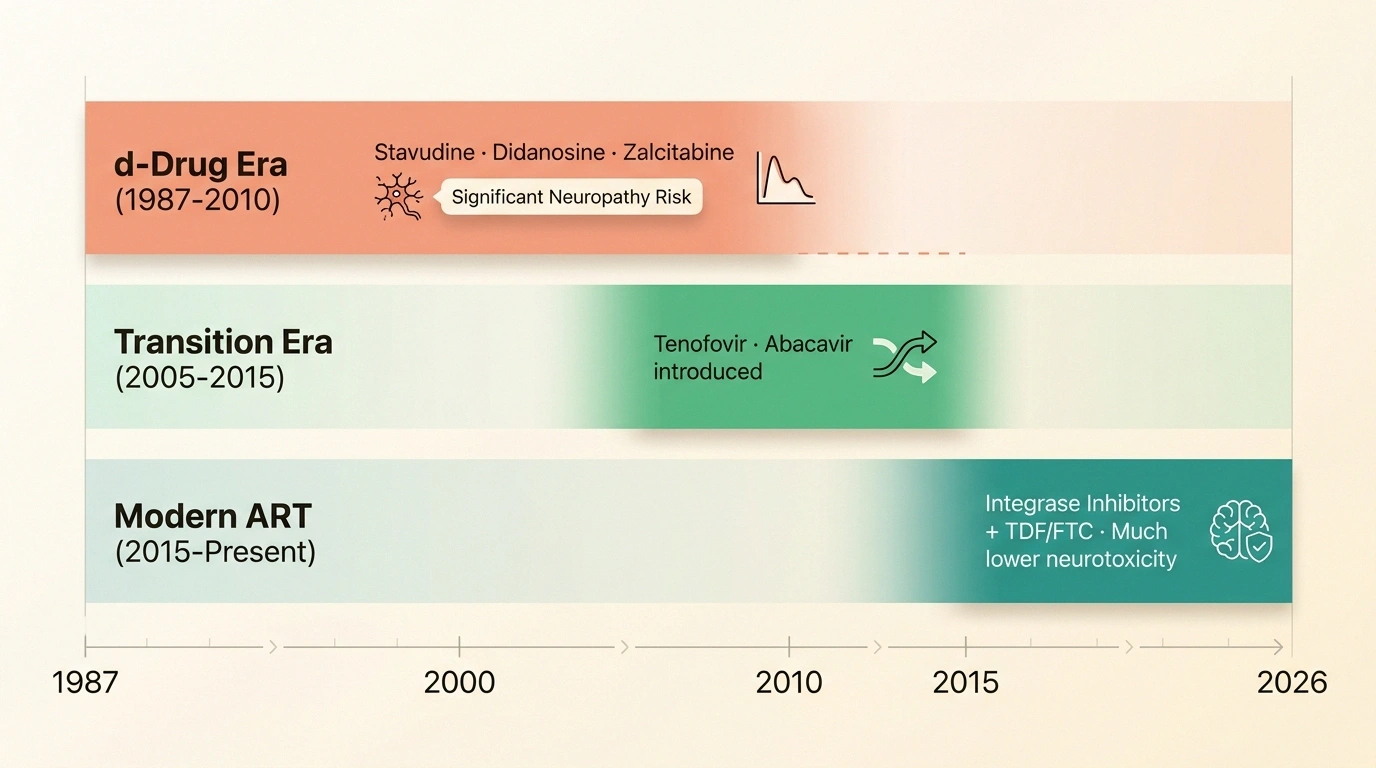
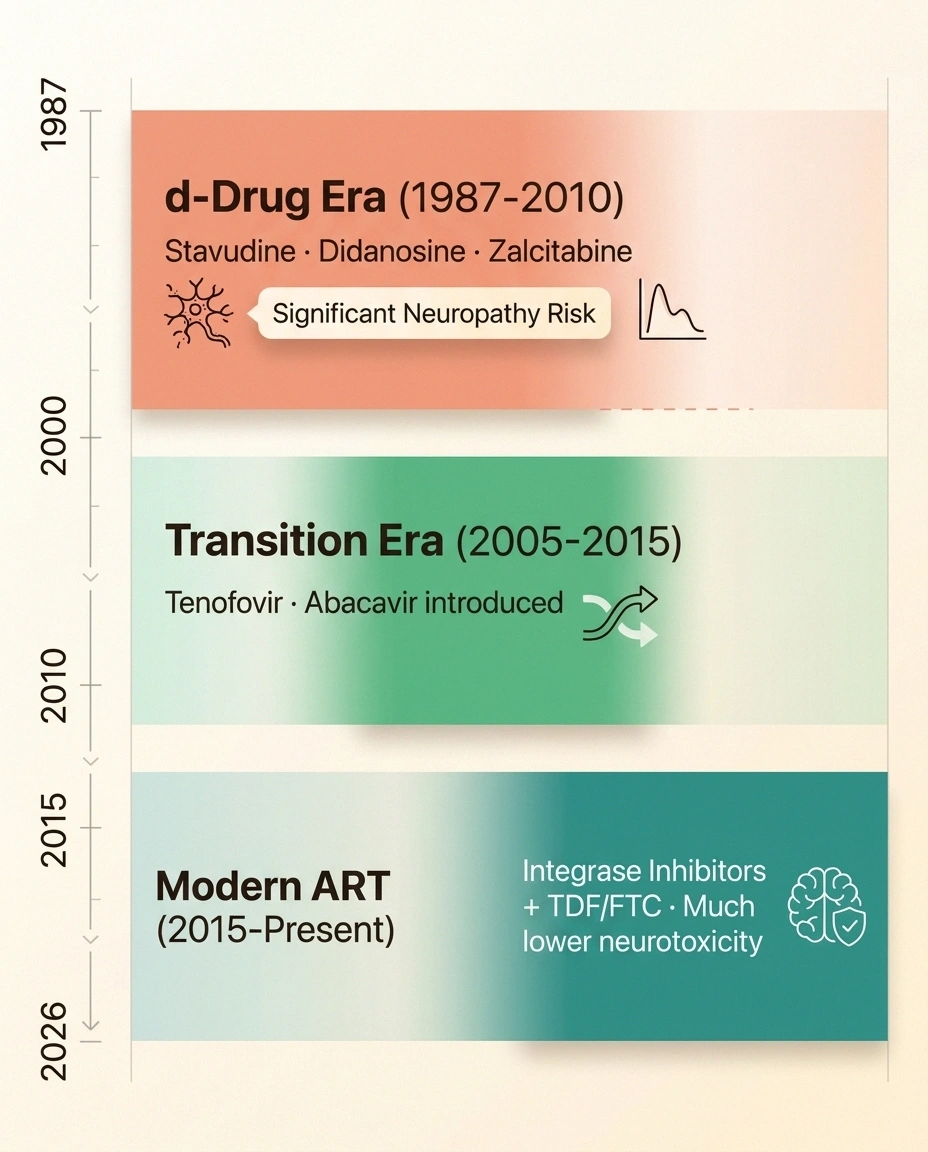
If you or someone you love took HIV medication in the 1990s or early 2000s, you may have heard of three drugs in particular: stavudine (brand name Zerit, also called d4T), didanosine (Videx, ddI), and zalcitabine (Hivid, ddC). In the HIV community they are sometimes called the d-drugs. They belong to a class of antiretrovirals called nucleoside reverse transcriptase inhibitors, or NRTIs.
These drugs worked, and for the people who took them in the worst years of the AIDS epidemic, they were the difference between life and death. But over time, researchers noticed that many people on these medications developed painful neuropathy in their feet. The mechanism turned out to be mitochondrial. These older NRTIs interfered with how nerve cells, especially the long ones running down to the feet, generated energy. Damage built up slowly, and once it happened, it did not always go away when the medication was stopped.
By around 2010, treatment guidelines in the United States and Europe had largely moved away from the d-drugs. Newer NRTIs like tenofovir, emtricitabine, and abacavir were much gentler on nerve tissue. In wealthier countries, prescribing stavudine or didanosine today would be unusual. In some lower-resource settings, the older drugs are still in use because of cost and supply.
What this means in practice: if you started HIV treatment in the late 1990s or early 2000s and you have burning feet today, the medications you took twenty years ago may still be part of your story. The damage from that era does not always reverse, even when the offending drug was discontinued long ago.
What HIV Neuropathy Feels Like in Plain Language

Renee described it to me this way. Imagine putting your feet on a heating pad that is just slightly too hot, then leaving them there. The discomfort never quite turns into a clear pain. It is more like a constant, distracting, sometimes maddening sensation that you cannot escape.
develop neuropathy
phased out d-drugs
(self-reported)
The most common descriptions I hear, both from her and from medical literature, include:
- Burning, especially in the soles of the feet and across the tops of the toes
- Tingling or what some people describe as a constant pins-and-needles feeling
- Numbness in patches, sometimes alongside the burning
- Allodynia, which is medical-speak for when something that should not hurt (like bedsheets touching your feet) suddenly does
- A sensation of walking on glass or stepping on pebbles even on smooth floors
- Sharp electric jolts that come and go without warning
The pattern is almost always the same. It starts in the toes and moves up. Over months or years it may climb to the ankles or shins. In more advanced cases, the hands start to feel similar symptoms, and the pattern is sometimes called length-dependent neuropathy because it tracks the longest nerves first. Doctors sometimes call it a stocking-glove distribution because of how it covers the feet and hands.
One detail that surprises many people: the burning is almost always worse at night. Lying still, with no other input to distract the brain, the nerve signals seem to amplify. Plenty of people in my circle keep a fan running, or sleep with their feet uncovered, just to manage the heat sensation. The symptom pattern often overlaps with what people call burning feet syndrome in everyday language.
Why Modern HIV Treatment Helps but Doesn’t Always Prevent It
Modern antiretroviral therapy is dramatically less neurotoxic than the regimens of twenty years ago. Today’s first-line treatments usually combine an integrase inhibitor like dolutegravir or bictegravir with two NRTIs, most often tenofovir plus emtricitabine, or abacavir plus lamivudine. These combinations do not have the mitochondrial-toxic profile that the d-drugs did.
So why does neuropathy still show up in people whose viral load has been undetectable for years? A few reasons:
- Nadir CD4 count. If your CD4 dropped into the low hundreds or below before treatment, your nerves likely sustained damage during that period that never fully repaired.
- Duration of HIV infection. The longer the virus was active, the more cumulative damage it could do to nerve tissue.
- Residual inflammation. Even with an undetectable viral load, low-level immune activation continues, and that ongoing inflammation appears to affect nerve health.
- Co-infections and co-morbidities. Diabetes, hepatitis C, syphilis, B12 deficiency, and alcohol use can each independently cause neuropathy. When they layer on top of HIV, the effect is additive.
When a friend tells me they are undetectable and still have burning feet, I do not see that as a failure of their treatment. Nerve damage has its own timeline, separate from the virus itself.
Risk Factors: Who Develops HIV Neuropathy
Researchers have been studying this for decades, and a fairly consistent picture has emerged. The risk factors with the strongest evidence include:
- Older age, particularly over 50
- Lower nadir CD4 count (how low your CD4 dropped before treatment)
- Longer duration of HIV infection
- Prior exposure to d-drugs (stavudine, didanosine, zalcitabine)
- Diabetes or impaired glucose tolerance
- Heavy or sustained alcohol use
- Hepatitis C co-infection
- Vitamin B12 deficiency
- Taller height, because the longest nerves are most vulnerable to length-dependent damage
Notice how many of those overlap with risks for other forms of neuropathy. That is not a coincidence. The same biological vulnerabilities that affect people with diabetic neuropathy or alcoholic neuropathy are amplified when HIV enters the picture. This is why a thorough neuropathy workup in someone living with HIV usually involves screening for several of these conditions at once.
How Doctors Diagnose It

When Renee finally saw a neurologist, she expected a single test. There is no single test. The diagnosis of HIV-related neuropathy is pieced together from your story, your exam, and a careful effort to rule out other causes.
A typical workup, similar to any thorough neuropathy diagnosis evaluation, usually includes:
- A detailed history. When did the symptoms start? Which medications have you taken? What is your nadir CD4? Any history of opportunistic infections, diabetes, alcohol use, or B12 issues?
- A physical and neurologic exam. The doctor will check pinprick sensation, vibration sense, light touch, and reflexes in the feet and ankles. In HIV-DSP, ankle reflexes are often diminished or absent.
- Blood work to rule out other causes. Fasting glucose or HbA1c, B12 and folate, thyroid panel, syphilis screening, and hepatitis C antibody.
- Skin biopsy for intraepidermal nerve fiber density (IENFD). A small, relatively painless biopsy from the lower leg. The lab counts the number of small nerve fibers per millimeter of skin. A low count confirms small-fiber neuropathy.
- EMG and nerve conduction studies. These measure the larger nerves. In pure small-fiber neuropathy, these tests can come back normal, which sometimes confuses patients into thinking nothing is wrong. The skin biopsy is what catches it.
A normal EMG does not mean you are imagining things. If your doctor stops the workup at a normal EMG, it is reasonable to ask about a skin biopsy.
Treatment Options That Actually Help
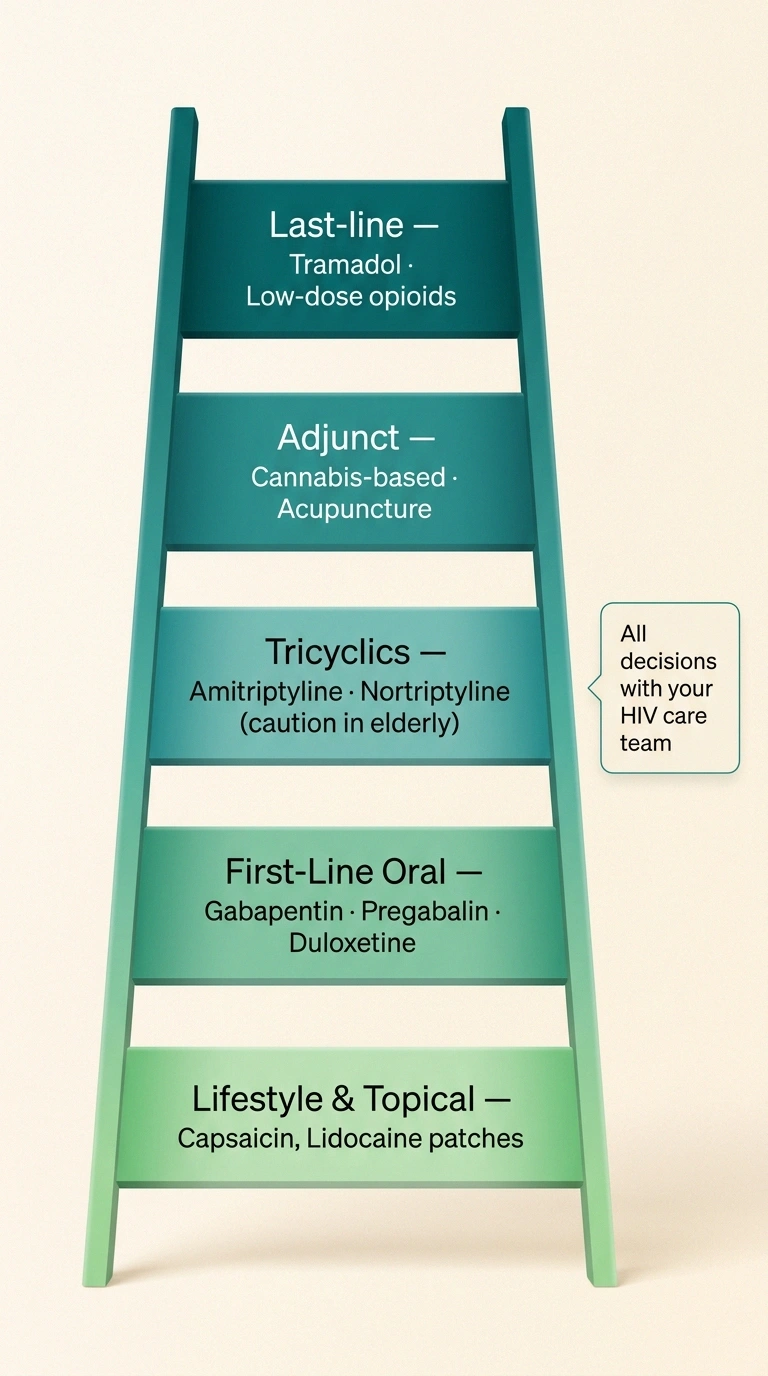
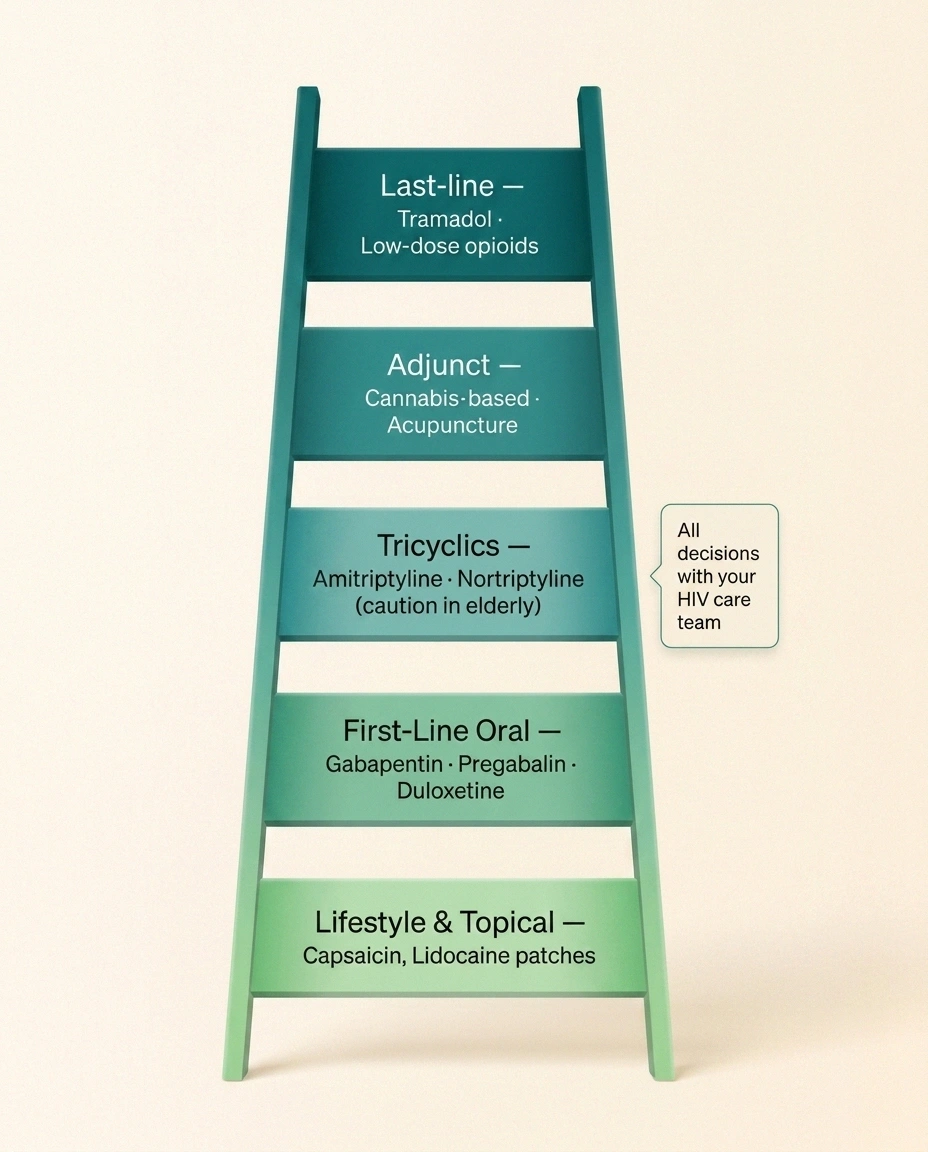
There is no medication that reverses HIV-related neuropathy. What we have are treatments that help manage the symptoms, and some work quite well. Guidelines overlap heavily with painful diabetic neuropathy treatment, because the symptom pattern is similar.
Main options, roughly in the order they are tried:
- Gabapentin (Neurontin) and pregabalin (Lyrica). Often first-line. They calm overactive nerve signaling. Gabapentin requires slow titration; drowsiness and ankle swelling are common. Pregabalin is similar in mechanism, often dosed twice daily.
- Duloxetine (Cymbalta). A serotonin-norepinephrine reuptake inhibitor with strong evidence for painful neuropathy. Duloxetine sits alongside gabapentinoids as first-line.
- Tricyclic antidepressants. Amitriptyline and nortriptyline can be effective at low bedtime doses, but anticholinergic side effects (dry mouth, constipation, dizziness) make doctors cautious in older patients.
- Topical capsaicin 8 percent patch (Qutenza). One of the few treatments with HIV-DSP-specific evidence. Applied in a clinical setting for about half an hour, a single application can reduce symptoms for several weeks. OTC capsaicin is gentler and used at home.
- Lidocaine 5 percent patches. Numb the skin locally; useful for focal allodynia. Lidocaine patches are well tolerated.
- Cannabis-based therapies. Early trials of smoked cannabis in HIV-related neuropathy (San Francisco, mid-2000s) showed modest benefit. CBD oil has less clinical evidence. Laws vary by state.
- Tramadol or low-dose opioids. Reserved for severe pain. Last-line.
- Acupuncture. Small RCTs in HIV-DSP show mixed results. Generally safe and worth discussion if other options have stalled.
Guidelines note that combining gabapentinoids with opioids does not add much beyond what either provides alone, while adding side effects.
Working With Your HIV Specialist on ART Decisions
I want to be very direct about this section, because it is the area where I see the most well-meaning misinformation.
Do not change your HIV medication on your own. Not by lowering a dose. Not by skipping pills. Not by switching to something a friend or an online forum recommended. Antiretroviral therapy is a precisely balanced regimen, and changes have to be made with viral load testing and resistance testing in hand. Stopping or interrupting therapy can let the virus rebound, which can damage your immune system and create drug resistance that limits future options.
That said, if you suspect your current regimen, or a past one, is part of your neuropathy story, you can and should bring it up with your HIV specialist. Specifically, if you are still on a d-drug-containing regimen (extremely rare in the US today but not impossible), there may be a strong case for a switch. Even on modern regimens, your doctor may have alternatives that fit your situation better.
Questions to bring to your HIV provider:
- What was my nadir CD4 count? When did I reach undetectable?
- Was I ever on stavudine, didanosine, or zalcitabine? For how long?
- Are there alternative regimens that might be gentler on my nervous system?
- Should we screen for hepatitis C, syphilis, or B12 deficiency as contributors?
- Can you refer me to a neurologist familiar with HIV-related neuropathy?
Other Causes to Rule Out
A thorough workup identifies other neuropathy causes layered on top of HIV. Treating those can sometimes meaningfully reduce symptoms even when the HIV-related component cannot be reversed.
- Diabetes. Roughly one in five adults with HIV also has diabetes or prediabetes. Tight glucose control does not undo existing damage but can slow further progression.
- Vitamin B12 deficiency. Common in HIV. Vitamin deficiency neuropathy can present similarly to HIV-DSP. B12 injections may be needed if oral supplementation does not raise levels.
- Hepatitis C. Co-infection rates remain meaningful. Hepatitis C-related neuropathy is well documented, and modern hep C cure rates exceed 95 percent.
- Alcohol use. Sustained heavy alcohol consumption damages nerves directly and worsens nutritional status.
- Thyroid disorders and syphilis. Both can affect the nerves and are easy to screen for.
If you are wondering whether nerve damage is permanent, the answer is layered. Some causes, like B12 deficiency caught early, can produce real improvement. See our piece on whether neuropathy can be reversed.
Living With HIV-Related Neuropathy: Daily Strategies
Medication is only part of the picture. People who do best with HIV-DSP build a small set of daily habits that protect their feet and reduce flare-ups:
- Foot inspection every day. Numb feet hide injuries. Look at the soles, between the toes, and at the heels. Treat small cuts and blisters quickly.
- Shoes that fit well, with cushioned soles. Tight or thin shoes amplify allodynia. Many people swear by extra-depth shoes from diabetic-footwear lines.
- Cool, not cold. A fan blowing across the feet at night helps many people sleep.
- Loose bedding. A bed cradle that lifts the sheet off your feet can be transformative for severe allodynia.
- Gentle movement. Walking, stretching, low-impact exercise. Movement improves circulation and reduces pain over time.
- Sleep hygiene. Pain at night feeds insomnia, which feeds pain. Treating one helps the other.
- Mental health and community. People living with HIV often carry an extra layer of stigma, and chronic pain piles onto that. Connecting with peers makes a real difference. See our piece on neuropathy and mental health.
When to Get Same-Day Medical Help

Most HIV-related neuropathy is slow-moving and chronic. But some symptoms should never be brushed off. Call your doctor or get same-day evaluation if you notice:
- Sudden, sharp worsening of pain or numbness over hours or a couple of days
- New muscle weakness, especially if you trip, drop things, or feel your legs giving out
- Fever alongside neurologic symptoms
- Vision changes, particularly blurred or double vision
- Loss of bowel or bladder control
- Pain that follows a clear belt-like or band-like pattern around the trunk
These can be signs of rare but serious complications, including CMV polyradiculitis or immune reconstitution inflammatory syndrome, which respond best when caught quickly. The general framework for when symptoms are urgent versus when they reflect gradual progression is something we cover more broadly in our piece on the stages of neuropathy, but anything in the list above earns a same-day call.
Frequently Asked Questions
Can HIV cause peripheral neuropathy even if I am undetectable?
Yes. Even with an undetectable viral load, HIV can leave residual nerve damage from earlier untreated periods, and ongoing low-level inflammation seems to play a role. Being undetectable dramatically protects your overall health and prevents transmission, but it does not always reverse existing neuropathy.
Which HIV medications are most likely to cause neuropathy?
The older nucleoside reverse transcriptase inhibitors known as d-drugs are the main culprits. These include stavudine, didanosine, and zalcitabine. They have been largely phased out of US and European guidelines since around 2010, but anyone who took them in the 1990s or 2000s may still carry residual damage. Modern regimens with integrase inhibitors plus tenofovir or abacavir are much gentler on nerve tissue.
Is HIV-related neuropathy reversible?
The honest answer is that the HIV-related component itself is usually not reversible, but symptom control can be very effective, and identifying and treating other contributing causes like B12 deficiency or hepatitis C can sometimes produce real improvement.
How is HIV-DSP diagnosed?
Diagnosis is clinical and based on your medical history, a neurologic exam, and blood work to rule out other causes such as diabetes, B12 deficiency, hepatitis C, and syphilis. A skin biopsy that measures intraepidermal nerve fiber density is often used to confirm small-fiber neuropathy, since standard nerve conduction studies can come back normal in this pattern.
What treatments work best for HIV neuropathy?
First-line options include gabapentin, pregabalin, and duloxetine. Tricyclic antidepressants like amitriptyline or nortriptyline are also used, with caution in older patients. The prescription capsaicin 8 percent patch has specific evidence in HIV-DSP. Lidocaine patches and cannabis-based therapies are additional options that some people find helpful. Treatment is symptomatic, meaning it manages pain and discomfort rather than reversing the underlying damage.
Should I ask my doctor to change my HIV medication if I have neuropathy?
Bring it up, but do not change anything on your own. ART changes require careful planning with viral load testing and resistance considerations, and only your HIV specialist can make that call. If you are on an older d-drug regimen, which is rare in the US today but does still happen in some settings, a conversation about switching is reasonable.
Can someone with HIV develop neuropathy from another cause too?
Absolutely, and this is one of the most important parts of a workup. Diabetes, vitamin B12 deficiency, hepatitis C, alcohol use, and thyroid problems can each independently cause neuropathy, and they often layer on top of HIV. Treating those layered causes can sometimes meaningfully reduce symptoms, which is why a thorough evaluation looks at the whole picture, not just the HIV.
About the Author