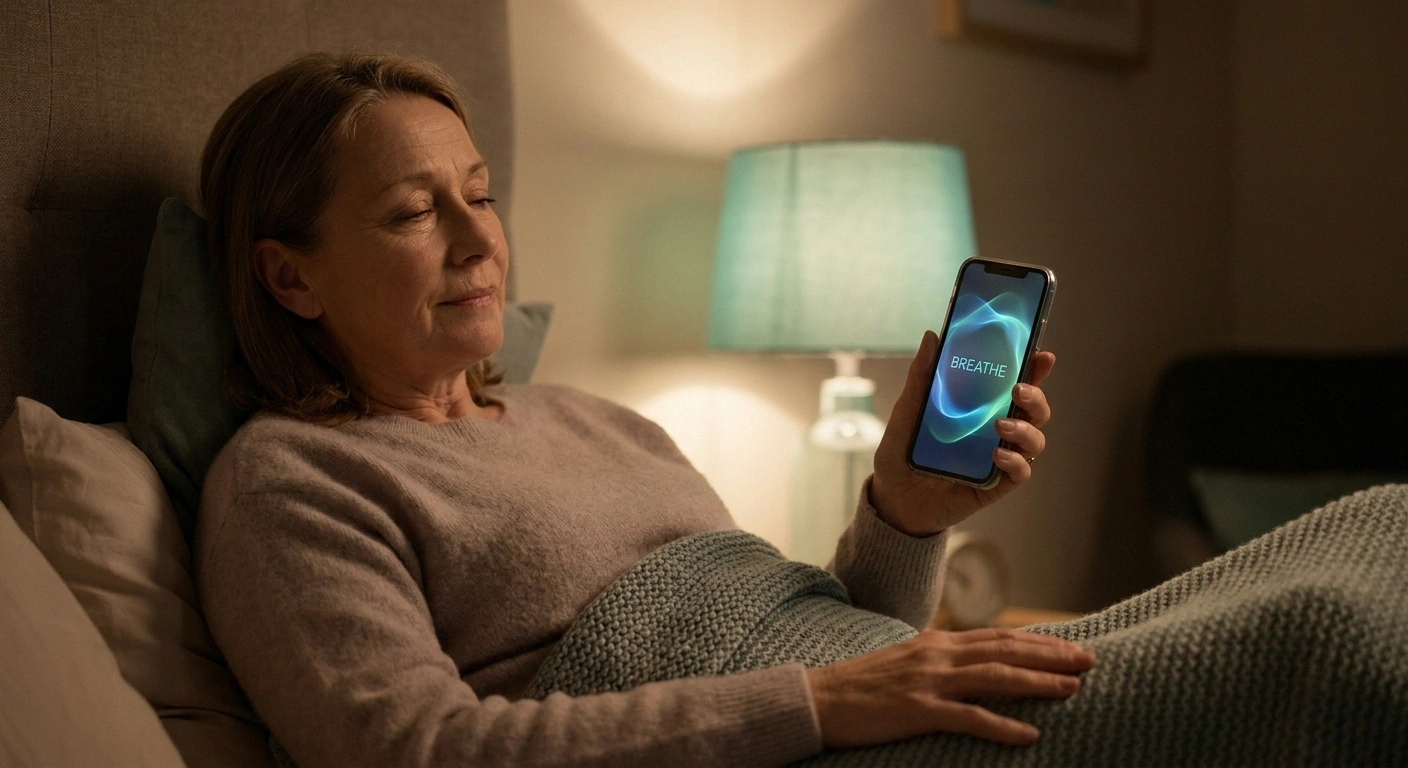
It is 2 a.m. and your feet are burning. You have already tried the things on the nightstand. The pills are doing what they are going to do, which tonight is not enough. And so, like a lot of us, you reach for your phone — not to scroll, but because somewhere on it is an app that someone in a support group swore changed their nights.
I’m Janet Ellis, and I write here as a community advocate who lives with neuropathy, not as a medical professional. I have tried more of these apps than I would like to admit. Some helped me in ways I did not expect. Some were beautifully designed and did nothing for my nerves. This is an honest tour of the ones worth your time, what each is actually good at, and — just as important — what no app on earth can do for a damaged nerve.
What These Apps Can — and Can’t — Do for Nerve Pain
Let me say the hard part first, because it matters and because the app stores will not. No meditation app repairs a nerve. None of them reverses neuropathy, regrows fibers, or replaces a treatment your doctor prescribed. If an app’s marketing implies otherwise, close it.
No app repairs a nerve. What the good ones do is turn down the volume on the pain-anxiety-insomnia loop that makes neuropathy worse at night. The benefit is modest, real, and only shows up after several weeks of consistent practice — not after two desperate sessions during a flare.
What the good ones do is work on a different layer of the problem: the way your nervous system processes, amplifies, and reacts to pain signals. Chronic nerve pain rarely travels alone. It drags along poor sleep, a constant low hum of anxiety, muscle guarding, and the exhausting mental loop where pain makes you anxious, anxiety makes the pain louder, and the louder pain keeps you awake. That loop is real, it is physical, and it is the part these apps can actually reach.
The evidence here is modest but genuine. Reviews of mindfulness-based interventions for chronic pain have found meaningful reductions in pain intensity in a majority of studies, along with better sleep and less of what researchers call “pain catastrophizing” — the spiral of worst-case thinking that turns a bad night into a hopeless one. That is not a cure. It is a turned-down volume knob, and on a 2 a.m. night, a volume knob is worth a great deal. If you want the deeper science behind why this works, our guide to mindfulness meditation for neuropathy pain relief goes through the mechanism in plain language.
One more honest note: these apps ask for consistency before they give anything back. The people who get the most out of them are not the ones who meditate hardest on the worst night. They are the ones who did ten quiet minutes on ordinary days for six or eight weeks, so the skill was already there when the bad night came.
Curable: Best for Understanding Why Your Pain Persists
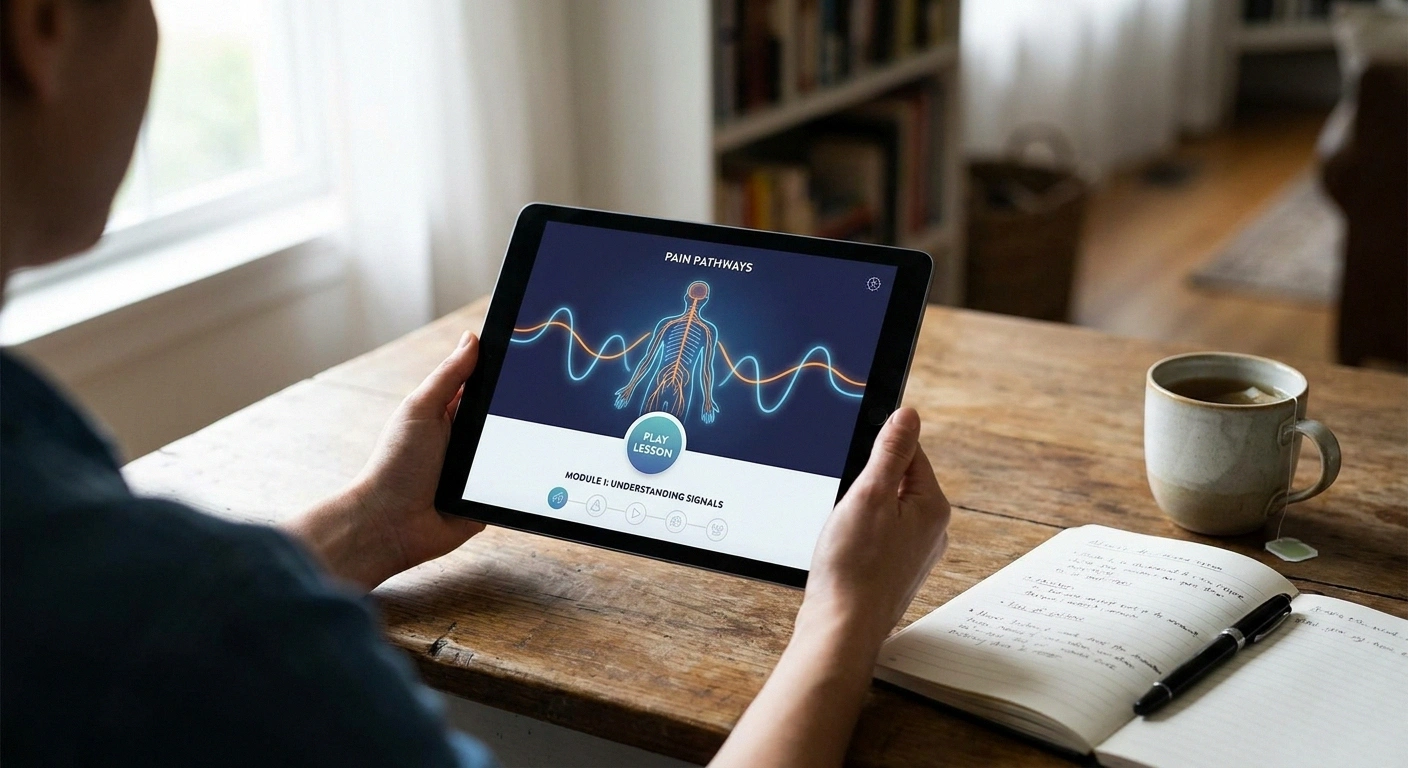
Curable is the one I recommend first to people who are skeptical, because it does not start by asking you to relax. It starts by teaching you how persistent pain works in the nervous system. Through short audio lessons, a friendly virtual coach, and a mix of guided meditations, visualizations, expressive-writing prompts, and brain-training exercises, it builds the case that a sensitized nervous system can keep sounding an alarm long after the original signal has changed.
Reviews of mindfulness-based interventions for chronic pain have found significant reductions in pain intensity in a majority of studies, alongside improved sleep and reduced “pain catastrophizing.” This is a turned-down volume knob — not a cure — and on a 2 a.m. night, a volume knob is worth a great deal.
For neuropathy that matters, because so much of the night-time misery is amplification, not fresh damage. Curable’s own figures suggest a large share of users report some degree of relief within the first month. Treat any company’s self-reported number with healthy caution — but the underlying approach, sometimes called pain reprocessing, has real research behind it for chronic pain conditions.
Best for: people who need to understand the “why” before they will trust the “how.” Cost: subscription, with a free trial period. Watch out for: it leans educational; if you only want a 10-minute calm-down track, this is more program than you need.
Headspace: Best for Building a Daily Mindfulness Habit
Headspace is the gentle on-ramp. Its strength is not any single track but the way it builds a habit — short, friendly, structured sessions that make ten minutes a day feel doable rather than like one more chore. It also offers a dedicated pain-management collection, so you are not trying to retrofit a generic “stress” meditation onto burning feet.
If you have never meditated, or if past attempts ended with you lying there cataloguing every pain in your body and deciding meditation “doesn’t work for you,” Headspace’s beginner courses are the most forgiving way back in. The skill it builds — noticing a pain sensation without immediately bracing against it — is exactly the skill that takes the edge off a flare. It pairs naturally with the broader emotional work in our piece on neuropathy and mental health.
Best for: beginners and habit-builders. Cost: subscription, with free intro content. Watch out for: breadth over depth; some users want more pain-specific programming than the general library provides.
Calm: Best for the Neuropathy-Insomnia Connection
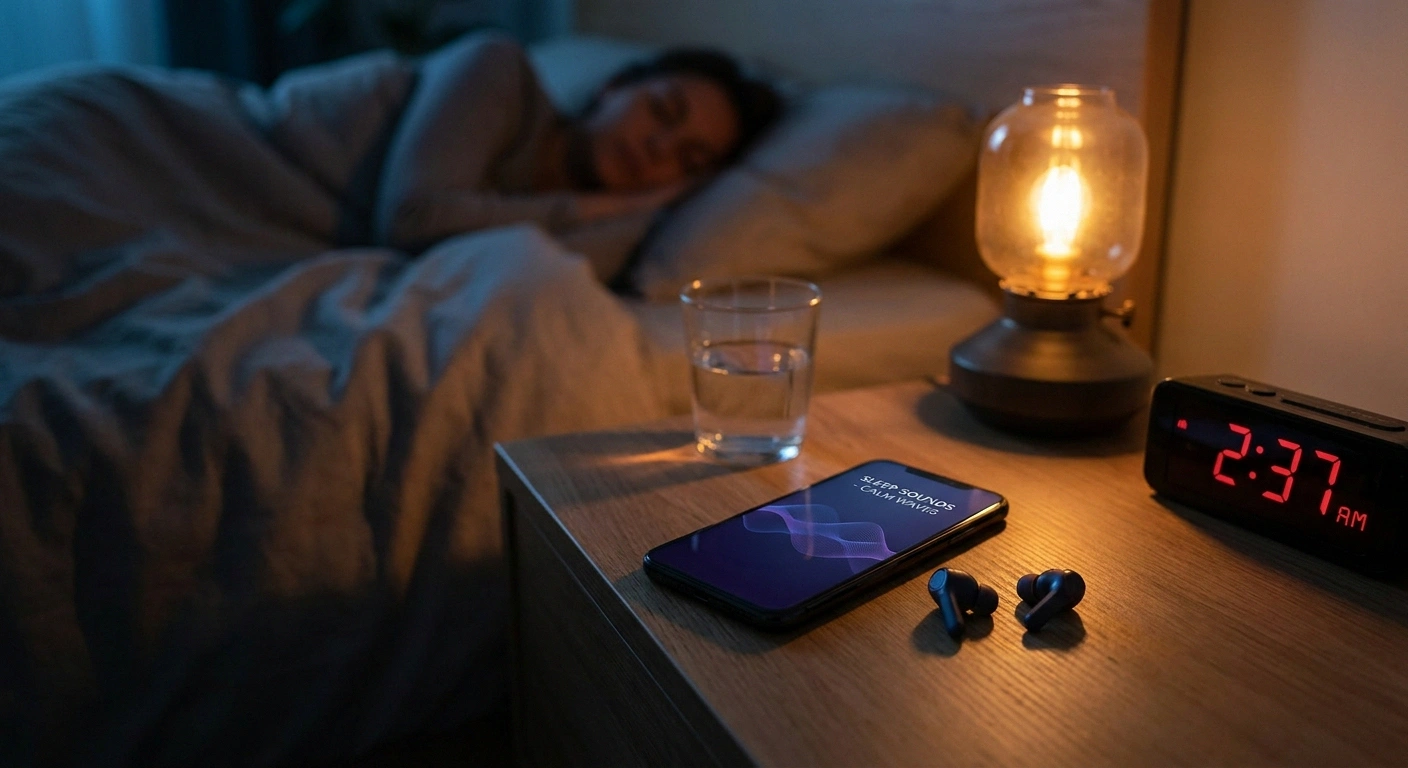
If your single worst symptom is that nerve pain steals your sleep, Calm earns its place. Its meditation library is solid, but the reason I keep it on my phone is the sleep content — long, low, narrated “Sleep Stories,” ambient soundscapes, and wind-down sessions designed to give a restless mind somewhere to go that is not your feet.
The Loop These Apps Interrupt
flares at night
threshold next day
Anything that reliably gets you back to sleep is also doing real work on the next day’s pain.
Neuropathy and sleep are tangled together: pain wrecks sleep, and poor sleep lowers your pain threshold the next day, so the two feed each other. Anything that reliably gets you back to sleep after a 3 a.m. wake-up is doing real work on your daytime pain too. Use Calm alongside the practical environment changes in our neuropathy-friendly bedroom setup guide, and if your sleep disruption is severe or new, read neuropathy and sleep disorders so you can rule out the things an app cannot fix.
Best for: the can’t-fall-back-asleep problem. Cost: subscription, with some free content. Watch out for: it is a sleep and relaxation app first; the chronic-pain programming is lighter than Curable’s or Pathways’.
Insight Timer: Best Free Option

Not everyone can add another monthly subscription, and you should not have to in order to find out whether meditation helps your nerves at all. Insight Timer is the most generous free option — an enormous library of guided meditations, including a dedicated pain-management section, plus a plain timer for unguided practice once you find your footing.
The trade-off for “free and huge” is “uneven.” Tracks vary in quality and style because they come from many different teachers, so the first session you try may not be the one that works for you. Give it three or four different guides before you judge it. For a no-risk way to test whether this whole category is worth pursuing, Insight Timer is where I send people first.
Best for: trying before you buy; budget-conscious users. Cost: robust free tier; optional paid upgrade. Watch out for: variable quality; you have to do a little searching to find your people.
Pathways Pain Relief: Best Structured Pain Program
Pathways was built for chronic pain specifically, not adapted to it. It offers a structured program of guided sessions that blend pain education, mind-body techniques, gentle movement, and relaxation, organized so you are progressing through something rather than picking a random track each night.
That structure is the point. For people who do better with a path than a buffet — “today is day fourteen, here is today’s session” — Pathways removes the small daily decision that quietly kills a lot of well-intentioned meditation habits. It sits comfortably next to a structured anxiety approach; if the pain-worry spiral is your dominant problem, also work through how to break the neuropathy pain-worry cycle.
Best for: people who want a guided program, not a library. Cost: subscription. Watch out for: the program format is its strength and its constraint — it is less useful as a grab-a-quick-track app.
PainScale: Best for Tracking (Not Meditating)
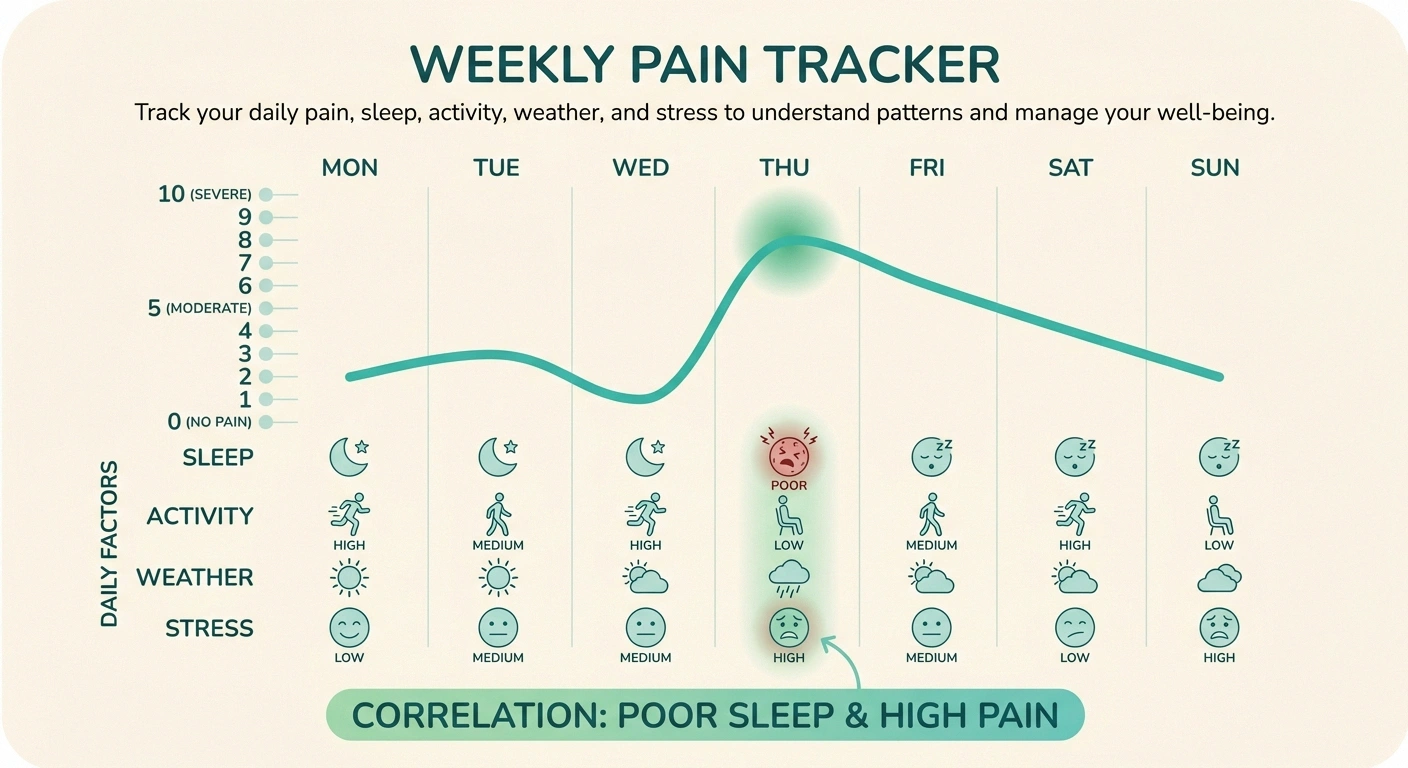
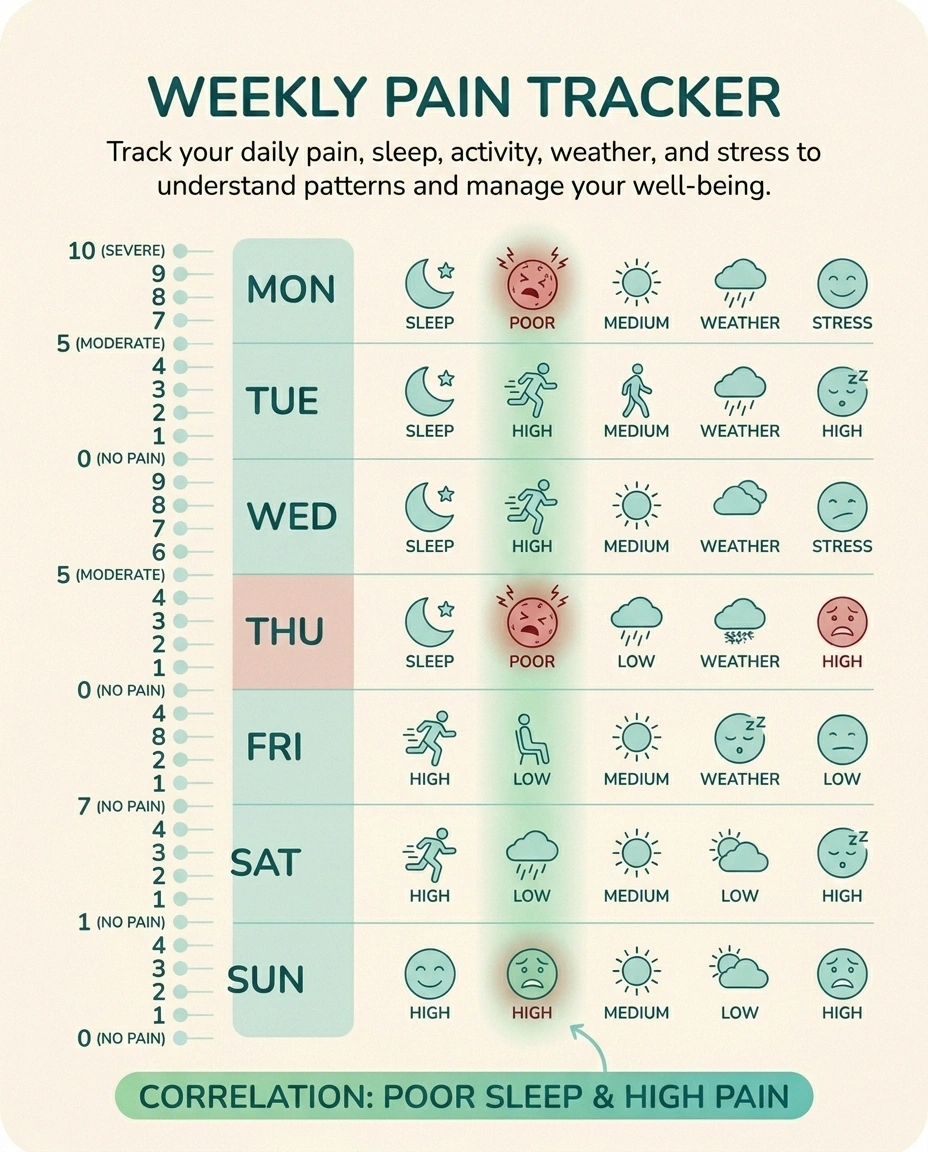
PainScale is the odd one out here, because it is not a meditation app — it is a free pain-management app. It lets you log pain levels, symptoms, triggers, and medications over time, and it includes educational content and a community of other people living with chronic pain.
Pick By Your Loudest Problem
I include it because “managing” neuropathy is not only calming the nervous system; it is also seeing your own patterns clearly. A few weeks of honest logging often reveals what a single bad night never could — that your flares track with poor sleep, a skipped walk, weather, or a stressful week. That is exactly the kind of insight that makes a doctor’s appointment more productive. If tracking appeals to you, pair PainScale with the broader system in our neuropathy pain management toolkit.
Best for: pattern-spotters; people preparing for appointments. Cost: free. Watch out for: it complements a meditation app, it does not replace one.
How to Actually Stick With an App
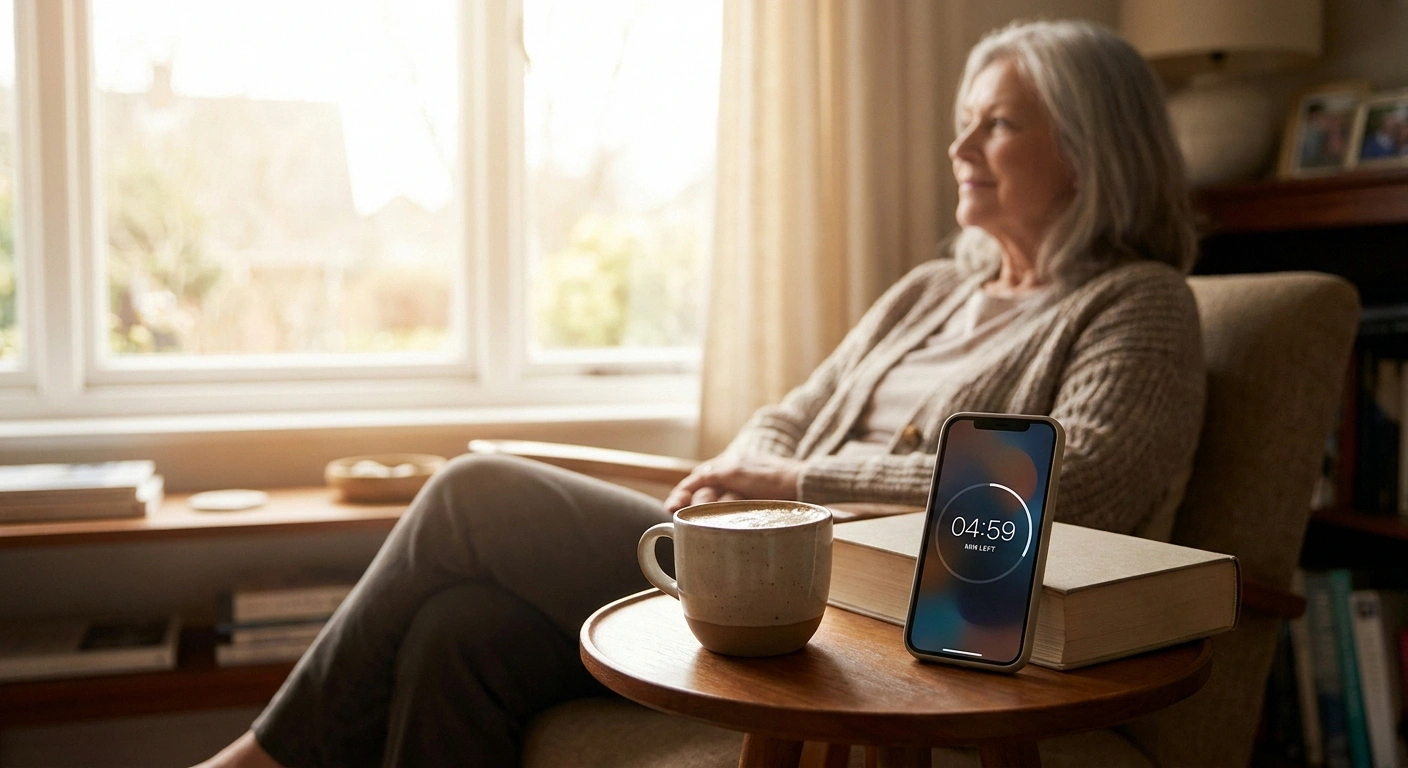
The most common reason these apps “don’t work” is that they were used the way most of us use them: downloaded in desperation during a flare, opened twice, abandoned by the following week. The skill they teach is a little like physical therapy for your nervous system, and like physical therapy, it pays out on a delay.
The Six-Week Habit, Not the One-Night Rescue
A few things that have helped me and the people I talk with:
- Pick one app, not four. App-hopping feels like progress and is actually avoidance. Choose based on your main problem and commit for at least six weeks.
- Practice on good days, not just bad ones. You are building a skill to have ready, not an emergency tool to discover mid-crisis.
- Make it small and fixed. Ten minutes, same time, attached to something you already do — after morning coffee, before the bedside lamp goes off. Tiny and consistent beats long and sporadic.
- Lower the bar for a “successful” session. A session where your mind wandered the whole time and you noticed once still counts. Noticing is the rep.
- Track one thing. Sleep, or a 0–10 evening pain number. Six weeks of data tells you far more than how any single night felt.
A Simple Way to Choose
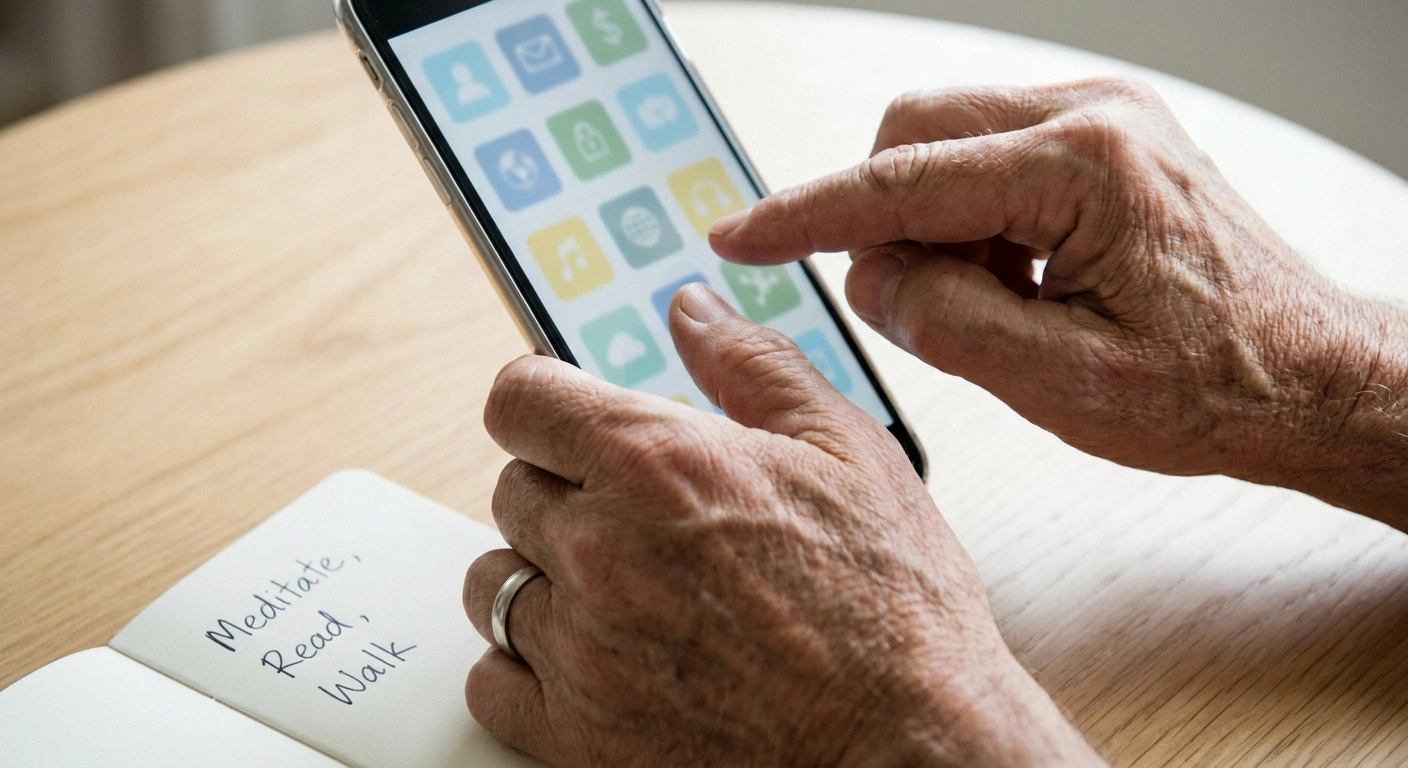
If you are standing in the app store right now, do not overthink it. Start from your loudest problem. If you cannot get past skepticism, start with Curable. If you have never meditated, start with Headspace. If pain is stealing your sleep, start with Calm. If money is the deciding factor, start with Insight Timer. If you want a program to follow, start with Pathways. And whatever you choose, add PainScale alongside it so that in six weeks you have real data instead of a vague impression.
These apps are an addition to medical care, never a replacement. Do not stop or change any prescribed neuropathy medication based on how an app makes you feel — that conversation belongs with your prescriber first.
None of these will fix the nerve. All of them, used patiently, can change how loudly the nerve gets to run your night. For many of us, that is the difference between a hard night and an unbearable one — and on the 2 a.m. clock, that difference is everything. When you are ready to go deeper into structured practice, the 8-week MBSR program for neuropathy is the natural next step beyond any single app.
Frequently Asked Questions
Do meditation apps actually help nerve pain, or is it just a placebo?
They do not repair nerves, but reviews of mindfulness-based programs for chronic pain show real, if modest, reductions in pain intensity, better sleep, and less anxiety for many people. The benefit comes from changing how the nervous system processes and reacts to pain signals, not from healing the underlying nerve damage. It works best as an addition to medical care, not a replacement.
Which app is best if my main problem is not being able to sleep?
Calm is usually the best starting point for sleep-dominant neuropathy because of its large library of sleep-specific content. Pair it with practical bedroom changes and, if your sleep disruption is severe or new, talk to your doctor to rule out causes an app cannot address.
Are any of these apps free?
Insight Timer has the most generous free library, and PainScale, which is a tracking app rather than a meditation app, is free. Curable, Headspace, Calm, and Pathways are subscription-based but typically offer free trials or some free introductory content so you can test them before paying.
Can an app replace my neuropathy medication?
No. These apps are tools for managing the pain experience and the stress, sleep, and anxiety that surround it. They are not a substitute for prescribed treatment. Never stop or change a medication based on how an app makes you feel — talk with your prescriber first.
How long before I know if an app is helping?
Most people need consistent practice — roughly ten minutes most days for six to eight weeks — before the benefit is clear. Judging an app after two or three uses during a flare almost always undersells it. Tracking sleep or an evening pain score over those weeks gives you a far more honest answer than memory does.
I tried meditating once and just lay there focused on my pain. Am I doing it wrong?
No — that experience is the starting line, not a failure. The skill being built is noticing a pain sensation without immediately bracing against it, and that takes practice and guidance. Beginner courses, like those in Headspace, are designed specifically for people whose first attempts went exactly that way.
Is tracking my pain in an app worth the effort?
For many people, yes. A few weeks of honest logging often reveals patterns a single bad night hides — links between flares and sleep, activity, stress, or weather. That information also makes medical appointments more productive, because you arrive with data instead of a vague impression.
About the Author