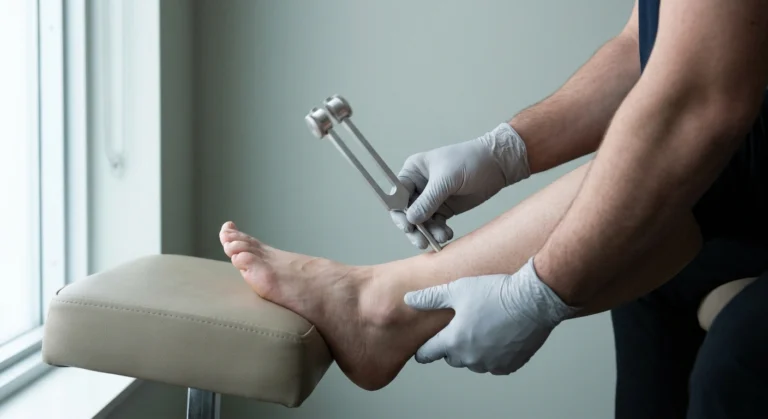
If you have neuropathy in your feet, there’s one habit that does more to protect you from serious complications than almost anything else: looking at your feet every single day. Not weekly. Not when something hurts. Every day.
I know — it sounds simple to the point of being annoying. But the reason it matters is exactly because your feet can no longer tell you when something is wrong. A cut from a pebble in your shoe, a blister from new socks, a thin spot of skin starting to break down — these are things you used to feel before they became problems. With neuropathy, you may not. The first you’d know about it is when the wound is bigger, infected, or already a serious problem.
That’s the whole reason for daily foot inspection: your eyes have to do the job your nerves can’t anymore. And the good news is, it really can be done in about two minutes. I want to walk you through how to make it a real, sustainable daily habit — not a once-in-a-while resolution that fades after three weeks.
Why Daily — and Why It’s Worth Two Minutes
The math is simple. A small foot wound — a blister, a small cut, a hot spot — caught in the first 24 to 48 hours usually heals quickly with basic home care. The same wound noticed five days later, when it’s already become infected or developed into an ulcer, may require antibiotics, weeks of wound care, off-loading footwear, and in serious cases, hospitalization or surgery.
The CDC, ADA, and every podiatric organization with a position on diabetic and neuropathic foot care recommends daily inspection for exactly this reason. The podiatry literature commonly cites that timely intervention reduces severe complications — including amputations — by a substantial margin (often quoted as up to 85% with consistent foot care practices). The single biggest variable in that equation is how early problems are caught.
For broader context on protecting feet from neuropathy, see our piece on neuropathy foot care basics. For the related habit of safely managing toenails, see cutting your toenails safely with neuropathy.
The 2-Minute Routine (Step by Step)
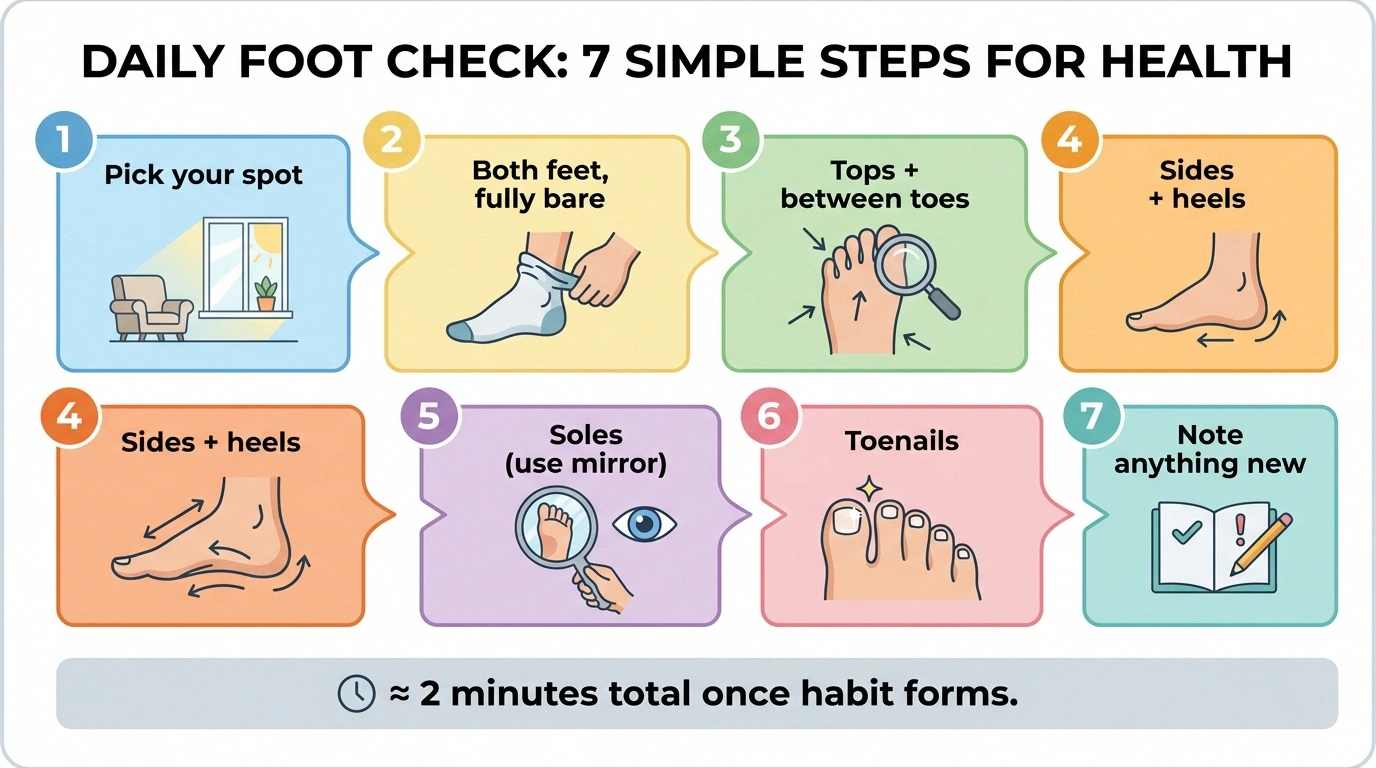
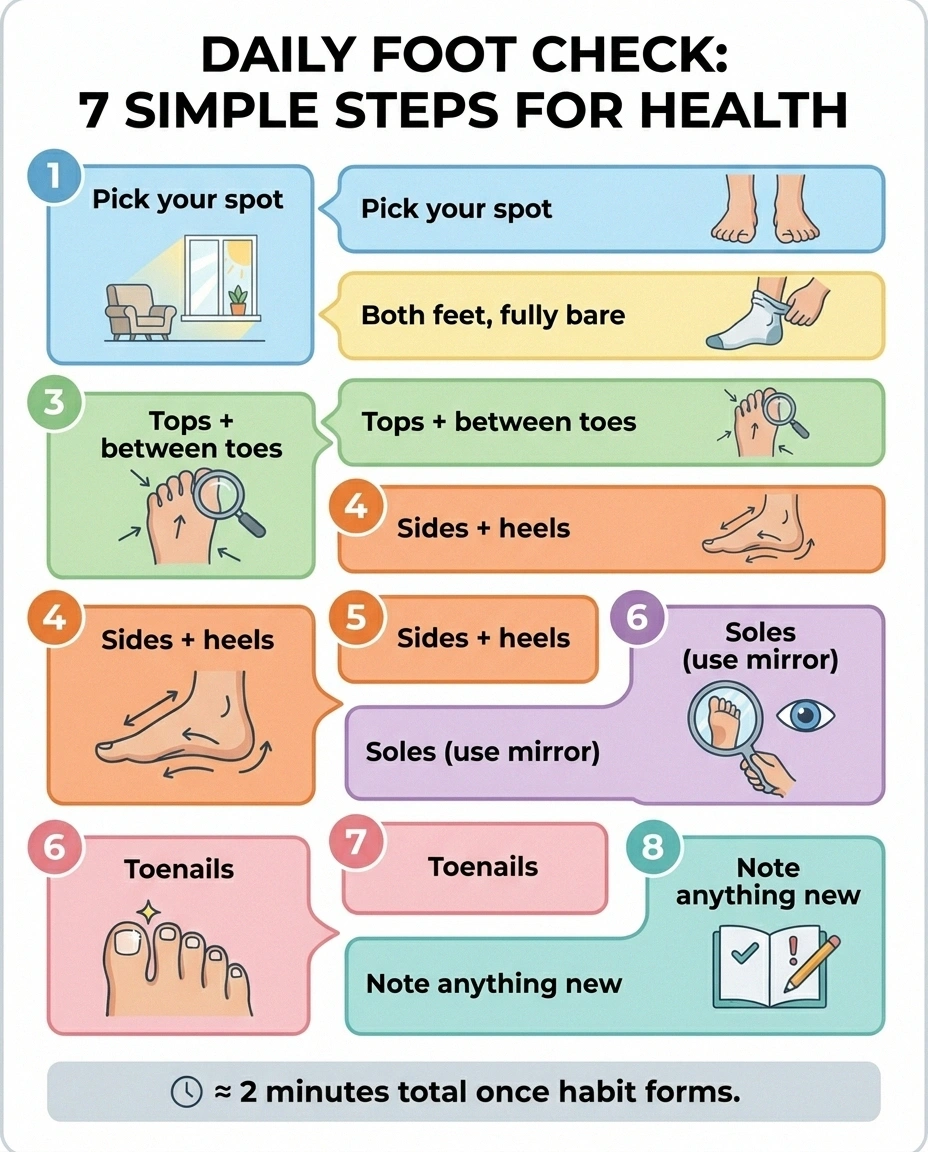
The routine isn’t complicated. The key is doing it consistently, in the same way, at the same time, every day.
Step 1: Pick your spot and your time. Sit down somewhere with good light — natural daylight is best. A chair near a window in the morning, the edge of the bed at the end of the day, or the side of the bathtub after washing your feet all work well. Pair the inspection with another existing routine so you don’t have to remember it as a separate task. After your morning coffee, after evening shower, before bed — whatever locks it into a habit anchor.
Step 2: Take off socks and shoes — both feet, fully. No “I’ll check after I get my socks back on” shortcuts. The whole foot, both feet, every day.
Step 3: Look at the tops, including between the toes. Spread the toes gently and check the skin between them. Athlete’s foot, fungal infections, and moisture problems hide there. Look for redness, peeling, cracking, or unusual moisture.
Step 4: Check the sides and heels. Pay particular attention to bony prominences — the bunion joint, the outside of the foot, the heel pad. These are pressure points where calluses, blisters, and ulcers tend to form.
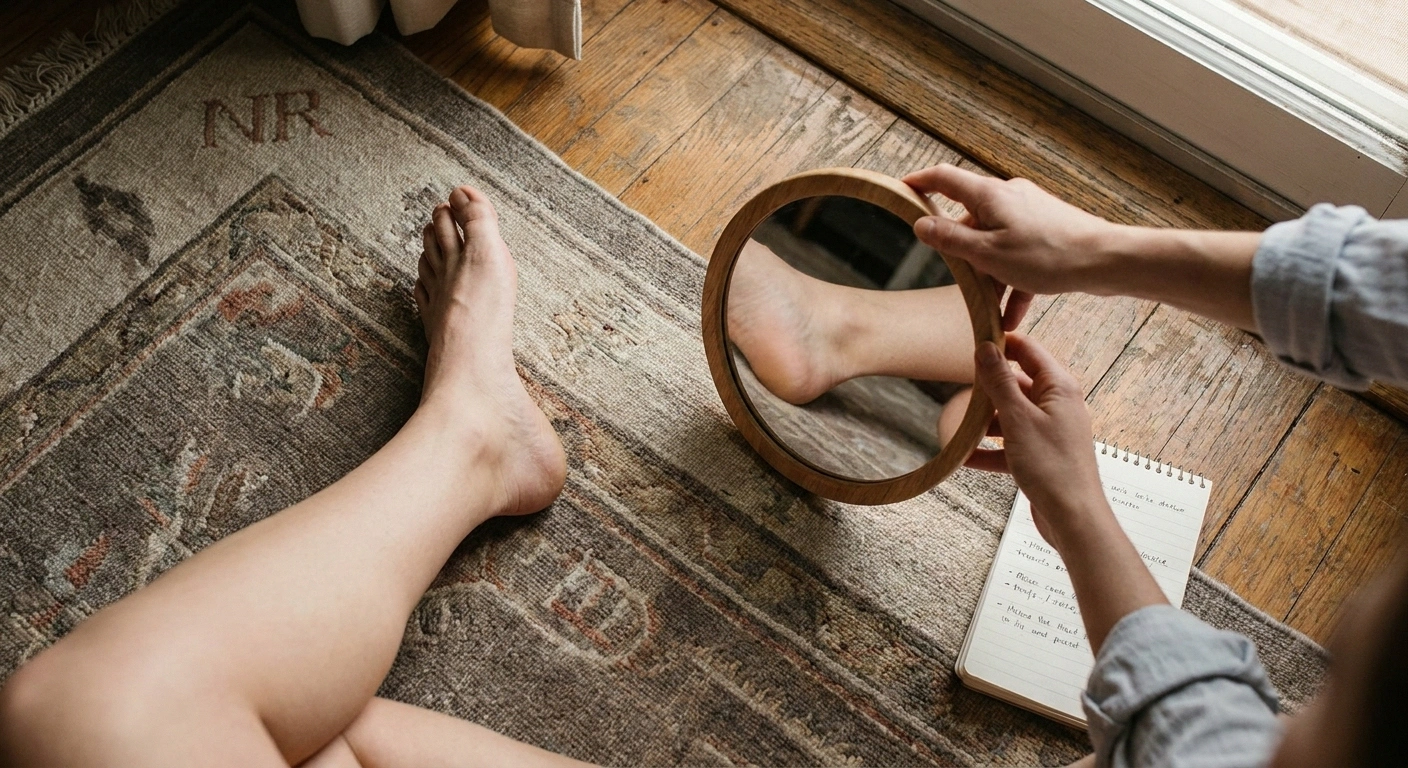
Step 5: Look at the soles. This is the part most people skip because it’s hard to see. If you can lift your foot to look, do it. If you can’t, use a small mirror on the floor — angle it so you can see the bottom of your foot. A long-handled cosmetic mirror works perfectly. If you live with someone, asking them to look once a day takes about 30 seconds of their time and is a meaningful safety habit for both of you.
Step 6: Check your toenails. Look for changes in color, thickness, ingrown edges, or anything that wasn’t there yesterday.
Step 7: Note anything new or different. If something looks new, mentally compare to yesterday or last week. Most “new” things are normal — but a new red spot, a new bruise, a new blister, or a small open area is exactly what you’re looking to catch.
Total time, once you’ve done it a few weeks: about 2 minutes. Sometimes faster.
What You’re Looking For (the Watch List)
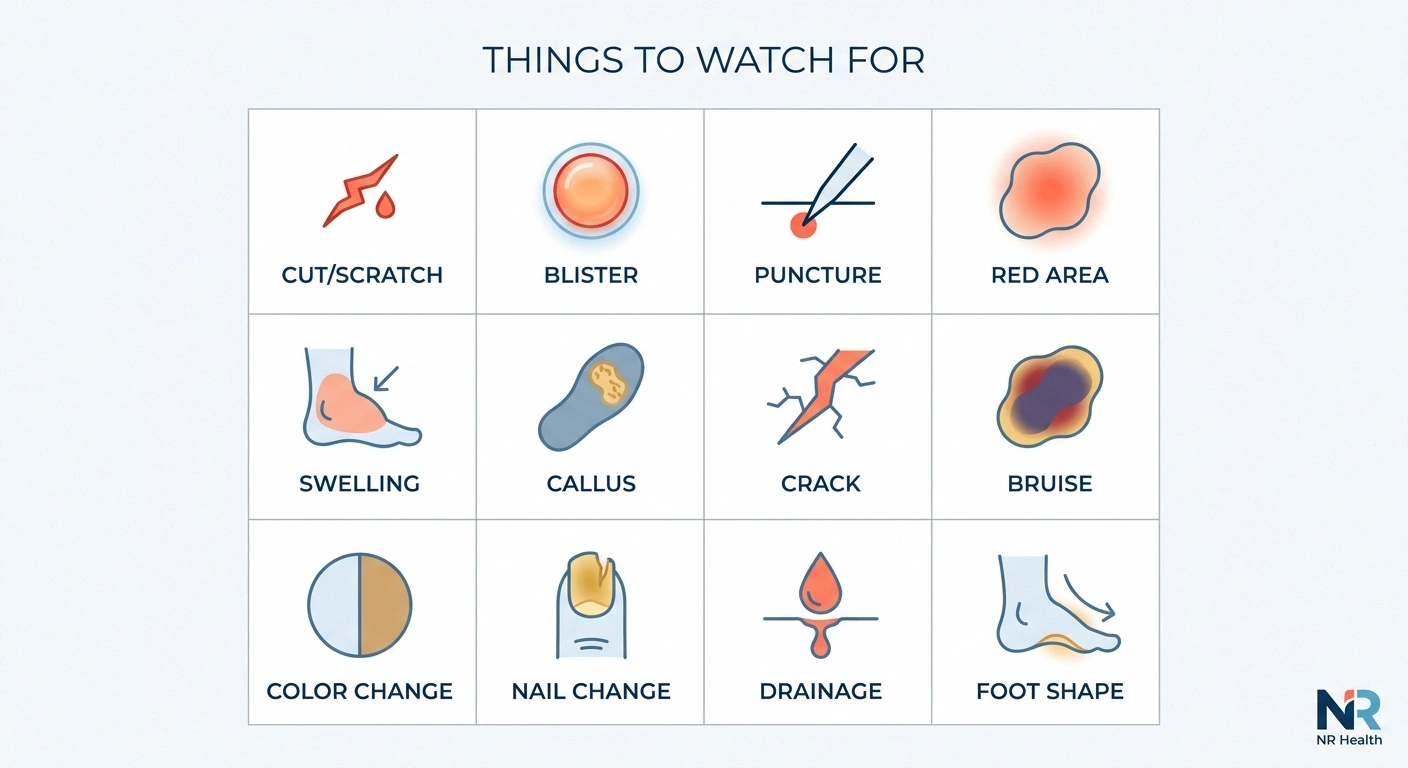
Here’s the practical list of things to scan for. Don’t memorize all of it — let it become familiar over time. You’ll start to know your feet, and any change will stand out.
- Cuts and scratches — even small ones matter when sensation is reduced.
- Blisters — especially in areas where new shoes, socks, or pressure may have rubbed.
- Puncture wounds — splinters, glass, small thorns, staples. Often invisible until you look carefully.
- Red areas — especially red spots that are warm to the touch (a sign of inflammation or early infection).
- Swelling — one foot looking puffier than the other.
- Calluses — thickened skin from pressure. New calluses suggest a fit problem with your shoes.
- Corns — small pressure-related thickenings, often on toe tops or between toes.
- Cracks — particularly on heels. Open cracks can become entry points for infection.
- Bruises — purple or dark areas you don’t remember bumping into something to cause.
- Color changes — pale, blue, dusky, or unusually dark spots.
- Nail changes — color, thickness, separation, ingrown edges.
- Drainage or odor — anything wet, smelly, or producing fluid is urgent.
- Hair loss on toes and feet — a circulation marker worth mentioning at appointments.
- Foot shape changes — collapsed arches, new bunions, oddly shaped toes (these can signal Charcot foot — a serious complication of diabetic neuropathy).
The Tools That Make It Easier

You don’t need much, but the right small tools turn a maybe-I’ll-do-it routine into an easy habit:
- A good light. A bright lamp by your inspection chair. A bathroom with strong lighting. Natural daylight near a window. Bad lighting hides everything you’re looking for.
- A small handheld mirror. The kind with a long handle, designed for hairstyling or makeup. You’ll use it to see the bottoms of your feet without having to twist around painfully.
- A floor mirror. Even simpler — a small mirror laid on the floor that you can step over or hold your foot above to see the sole. Some people use the mirror in a slim makeup compact propped up against a chair leg.
- Reading glasses, if you wear them. Put them within arm’s reach of where you do your inspection. Small details matter.
- A small notebook or note on your phone. If you notice something worth tracking — a callus, a spot, a slight color change — jotting the date helps you decide later if it’s improving or worsening. Our neuropathy symptom journal piece covers tracking habits more broadly.
- A clean, dry towel. If you inspect after washing, having a dedicated towel right where you sit makes the post-bath ritual smooth.
That’s it. No expensive equipment. The cheapest version of this routine — a mirror from the dollar store and a bedside lamp — works as well as a $200 set up.
What to Do When You Find Something
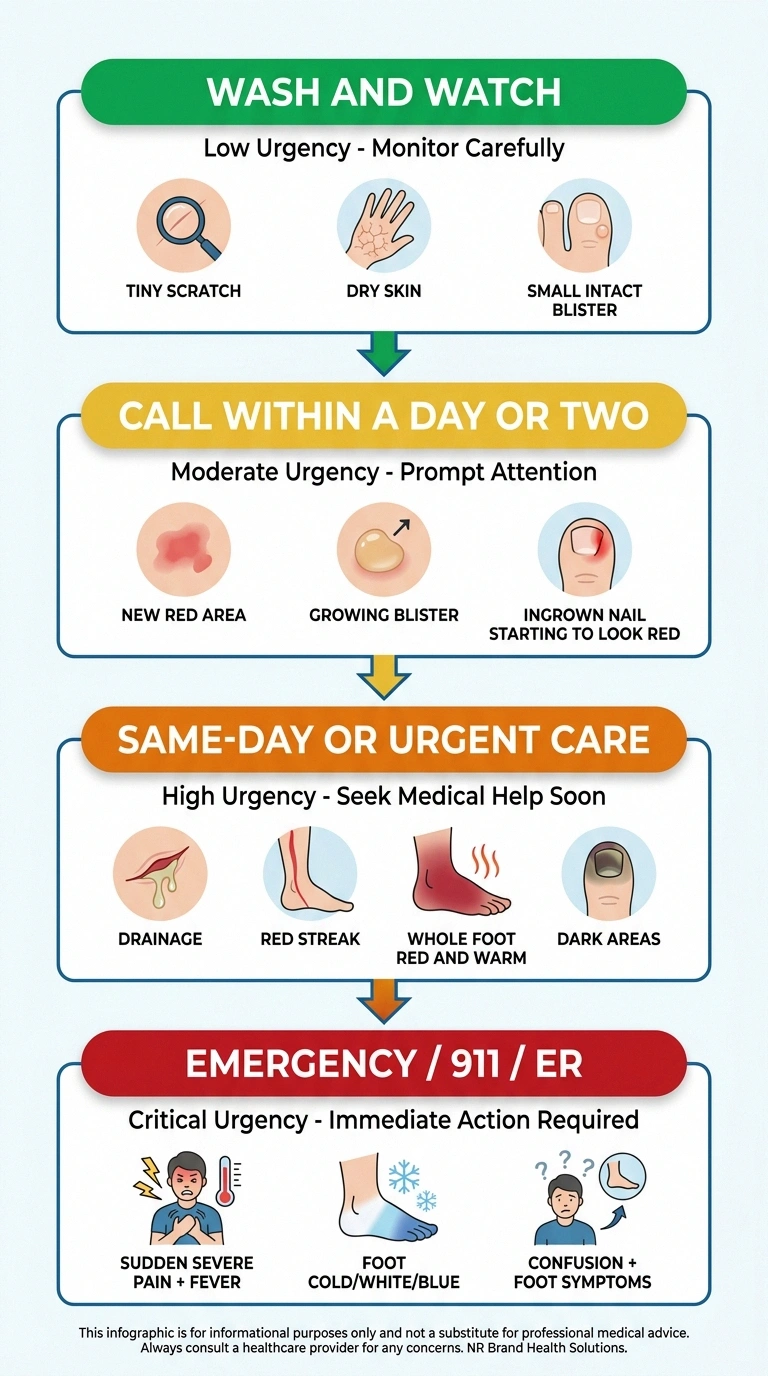
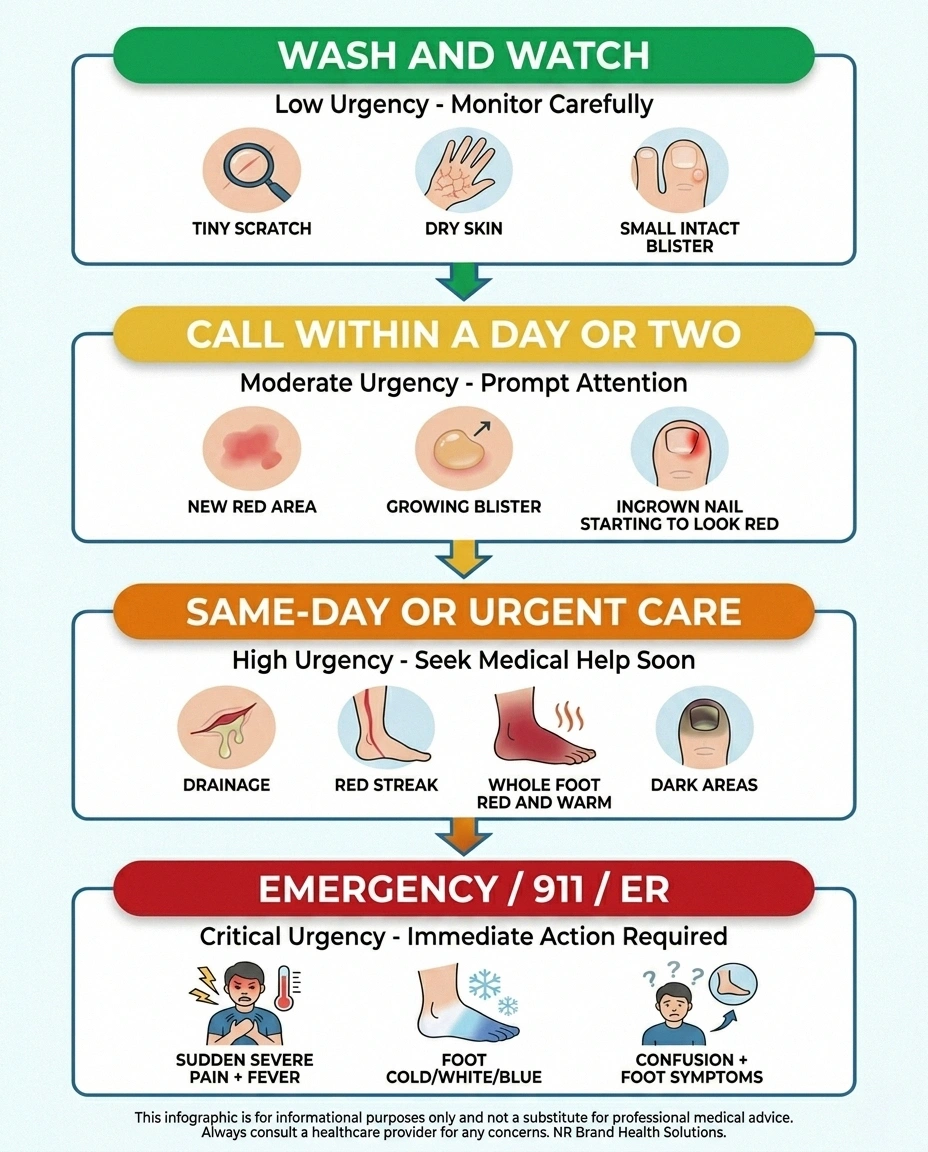
Here’s the practical decision framework for what you spotted.
Minor things — wash and watch:
- A tiny scratch with no redness around it.
- A small callus that’s been there forever and hasn’t changed.
- Dry, intact skin without cracks.
- A small intact blister with clear fluid (do not pop — protect with a clean bandage).
Wash with mild soap and warm (not hot) water, dry gently, apply unscented lotion (avoid between toes), and check again tomorrow.
Worth a call to your doctor’s office — within a day or two:
- A new red area that wasn’t there last week.
- A blister that’s bigger or fluid-filled with cloudy content.
- A callus growing thicker quickly or changing color underneath.
- An open area, even small, that’s not healing in a few days.
- An ingrown toenail starting to look red.
Call your primary care provider, endocrinologist, or podiatrist. Send a photo if your office has a patient portal that supports it.
Same-day or urgent — call today, or go to urgent care:
- An open wound with any drainage, pus, or bad smell.
- A red streak going up the foot or leg from a wound.
- An entire foot becoming red, warm, swollen, or painful in a way that’s new.
- Black or dark areas of skin (could indicate poor circulation or tissue death).
- Any new puncture wound, even if it doesn’t hurt.
Emergency — call 911 or go to the ER:
- Sudden, severe foot pain combined with fever or chills.
- A foot that’s cold, white, or blue and has no pulse (a sign of acute circulation failure).
- Confusion or altered mental state alongside any foot symptom (in someone with diabetes — could be infection-related sepsis).
When in doubt about whether to call: call. Doctors and nurses much prefer a “this is probably nothing but I wanted to check” call than a worse problem two days later.
Making It a Habit That Sticks
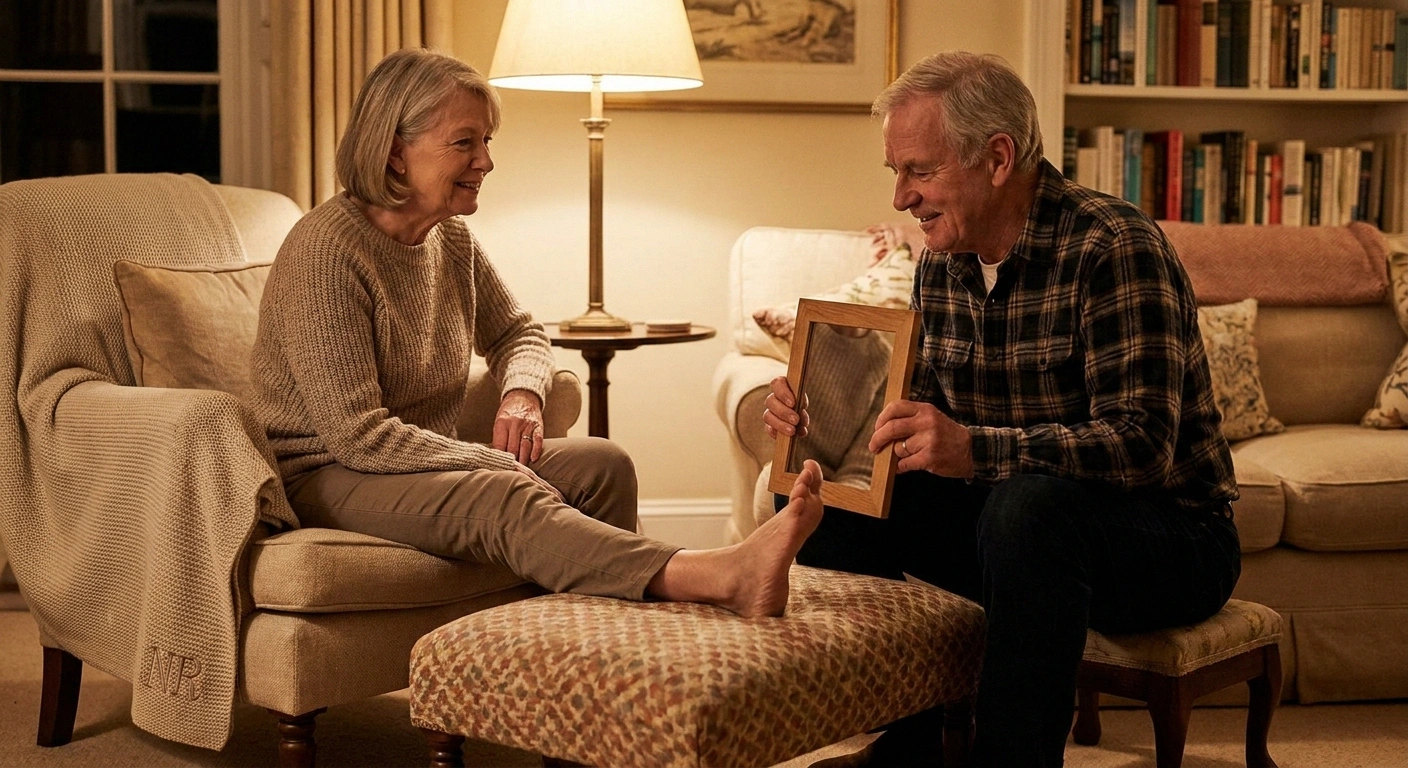
The hardest part of foot inspection isn’t the inspection. It’s remembering to do it on day 30, day 60, day 365. Habit research tells us what actually works:
Anchor it to an existing routine. “Right after my morning coffee” or “right after evening shower” or “before I put on my pajamas.” A habit attached to an existing one is far more durable than a free-floating intention.
Keep the tools where the habit happens. Mirror and good light at your chair. Towel and lotion right there. Friction is the enemy of habit. Make it impossibly easy to start.
Do it the same way every day at first. The brain is building a sequence. Variation is the enemy of automation. Once the habit is locked in, you can vary the time and place — but not for the first two months.
Forgive missed days. If you forget a day, just do it tomorrow. Streaks-or-nothing thinking makes habits collapse. One missed day means nothing. The goal is doing it most days for the rest of your life.
Pair with someone. If you live with a spouse, partner, or adult child, ask them to do a quick second check once a week. Their eyes catch what yours miss. They also become an automatic reminder system.
Adaptations for Common Challenges
Not every patient can do the standard routine. Here are common adaptations:
If you can’t reach your feet: Use a long-handled mirror. Lay a floor mirror at the side of your chair. Ask a family member, friend, or home-health aide to help — even three or four times a week is far better than none. Many home-health programs include foot inspection as a standard task.
If your vision is impaired: Use bright, focused light. Use a magnifying mirror. Have someone with better vision do the visual check; you do the manual check (feeling for new bumps, areas of warmth, swelling). If you live alone with significant vision loss, ask your primary care office or community health resources about home-care services — this is exactly the kind of safety task that justifies the help.
If you have arthritis or joint stiffness: Use the floor mirror method so you don’t have to lift your foot toward your face. Keep a small adjustable stool that lets you rest the foot comfortably at a height you can see.
If you have emotional resistance: Some people find foot inspection emotionally hard. Looking at the part of the body that’s been causing pain — or that’s been changing in worrying ways — is genuinely difficult. Two thoughts: First, knowing is almost always better than not knowing. A small problem found is a small problem fixed; a small problem ignored becomes a big one. Second, you can start small. Inspect just one foot today. Or just look in the mirror without examining closely. Build up. The goal is the habit, not perfection.
What This Habit Buys You
Two minutes a day, every day, gives you:
- The single most reliable way to catch problems early enough to handle them at home.
- A growing familiarity with what’s normal for your feet, so changes stand out.
- Calmer, more confident foot care — less “I wonder if something’s wrong” anxiety.
- Better information for your medical appointments — when you’ve been tracking, you can describe changes precisely.
- A meaningful piece of agency in a condition that often takes agency away.
I won’t pretend daily foot inspection is exciting. It’s not. It’s just the small, steady, unglamorous habit that protects you in a way no medication or device can replicate. Many of the people who do best with neuropathy long-term have this routine locked in. Many of the worst outcomes start with a wound that wasn’t noticed until it was too late.
If you don’t currently have a daily foot-check habit, today is a good day to start. Sit down, grab a mirror, turn on a lamp, and take the two minutes. Tomorrow, do it again. By the end of next week, it’ll feel natural. By next month, it’ll be automatic.
That’s the whole project. Small, daily, consistent. Your feet are worth it.
Frequently Asked Questions
How long should a daily foot check take?
Once you’ve established the habit, about 2 minutes per session. The first few weeks may take a bit longer as you learn what’s normal for your feet and where you tend to develop calluses, dry patches, or other features. The goal is brief, consistent, and thorough — not exhaustive. Catching most things requires looking carefully, not looking forever.
What’s the best time of day to inspect my feet?
The best time is whenever you’ll consistently do it. Many patients find evening (after a shower, before bed) works best because socks and shoes are already off and the feet are clean. Morning works well if you pair it with another existing routine like having coffee or putting on socks. The time matters less than the consistency.
Do I really need to check both feet every day?
Yes. Problems can develop on either foot independently. It only takes a few extra seconds to check both, and missing one foot defeats the purpose. Always check both, every day.
What if I find something but I’m not sure it’s a problem?
Take a photo with your phone, jot the date in a notebook or note app, and check again in 24 hours. If it’s the same or improving, keep watching. If it’s worse, larger, redder, or starting to drain, contact your medical office. When in doubt, calling is better than waiting. Healthcare offices much prefer to be called about something minor than to see a serious problem two days later.
Can my spouse or family member do the inspection for me?
Yes, and many people find this is the most practical approach if reaching their feet is difficult. The key is consistency — same time, same routine. Train them on what to look for using the watch list. A second pair of eyes also catches things you might miss yourself. Even if you can do most of the inspection, having someone check once or twice a week adds a real layer of safety.
What if my feet always look the same and I never find anything?
Then the routine is working as intended. Daily inspection is not about finding problems — it’s about catching them on the rare days when they appear. Most days, your feet will look fine, you’ll spend 2 minutes confirming that, and you’ll move on with your day. That’s success. The day you do find something, the early catch will make all the difference.
Should I use lotion after the inspection?
Yes, most days. Unscented moisturizing lotion on the tops, sides, and soles helps prevent cracking and dryness that can become entry points for infection. Avoid putting lotion between the toes — the extra moisture there encourages fungal growth. Apply a thin layer, rub it in, and you’re done.
How do I know if a wound is healing or getting worse?
A healing wound becomes smaller, less red around the edges, and forms a scab or new skin. A worsening wound gets larger, redder, warmer to the touch, develops drainage or odor, or starts to hurt more (even if you have neuropathy, severe infections can produce pain). When in doubt, photograph it daily and compare the photos side by side — small changes are easier to see in pictures than in real time.
About the Author