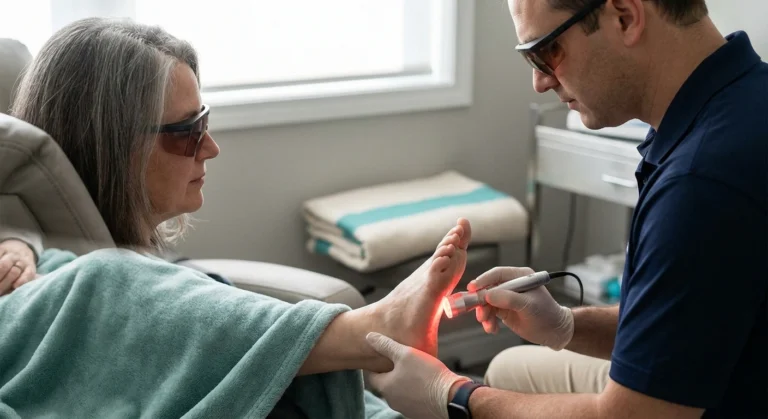
The first time a patient in our community asked me about castor oil packs for her neuropathy, she had three different bottles of organic cold-pressed castor oil in her kitchen and a stack of unbleached cotton flannel cut into neat eight-by-ten-inch squares, and she was waiting for me to tell her either that this was going to change her life or that she had wasted her grocery money. I told her neither was quite right. The honest answer about castor oil packs sits between the two extremes most internet content suggests — neither the “this will cure your neuropathy” claim from the wellness corners of social media nor the dismissive “this is unproven nonsense” from skeptical-blogger pushback. The truth is more useful than either, and it might actually help her.
Castor oil packs are a traditional folk-medicine practice that has been around for at least a century — popularized in the United States by Edgar Cayce in the early 1900s but with roots in herbal traditions much older than that. They have come and gone from popular wellness culture in waves. The current wave, driven heavily by social media, has produced both genuine interest from patients who could use an inexpensive at-home option and an exhausting flood of claims that go well past what the evidence supports. This article is meant to be a clean version of the middle ground — what castor oil packs actually are, what they might reasonably do for neuropathy, what they definitely will not do, and how to use them safely.
What a Castor Oil Pack Actually Is
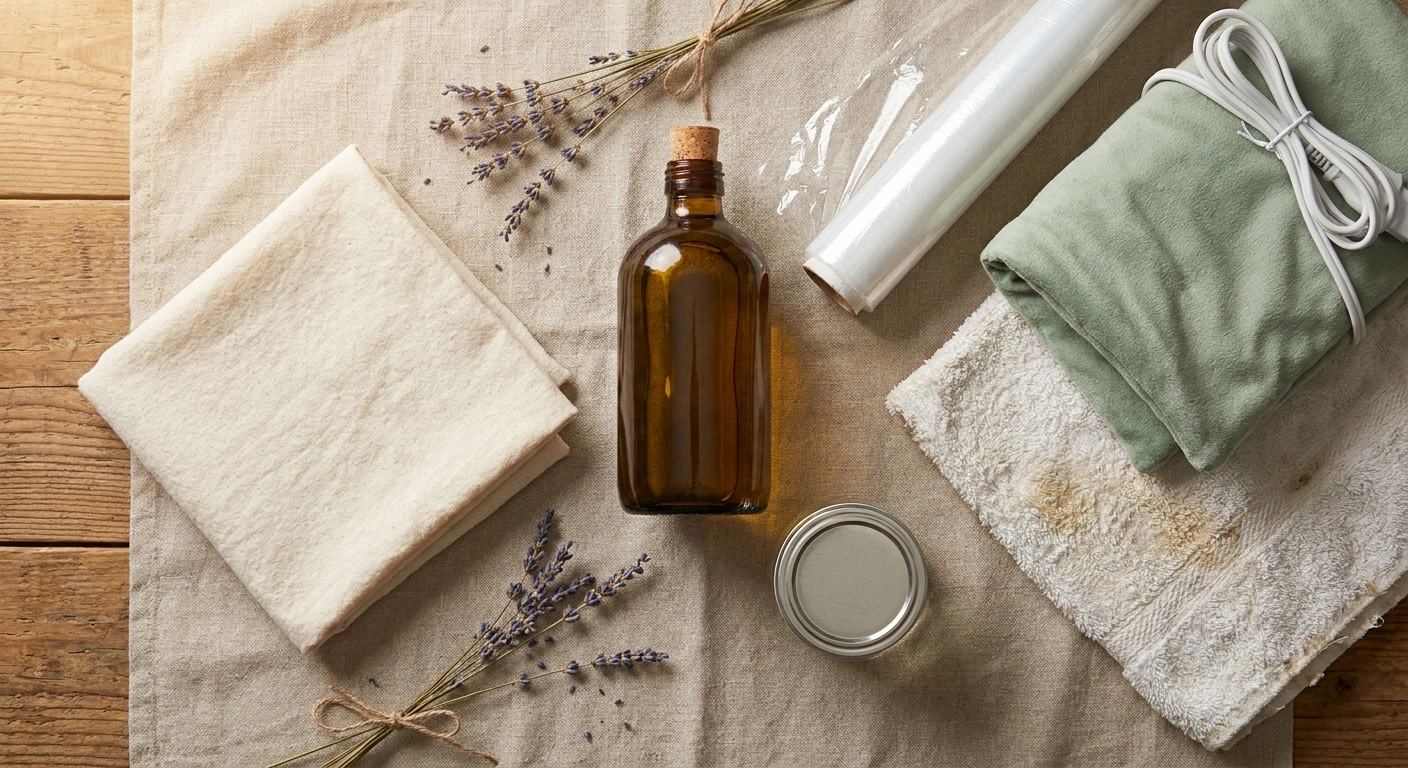
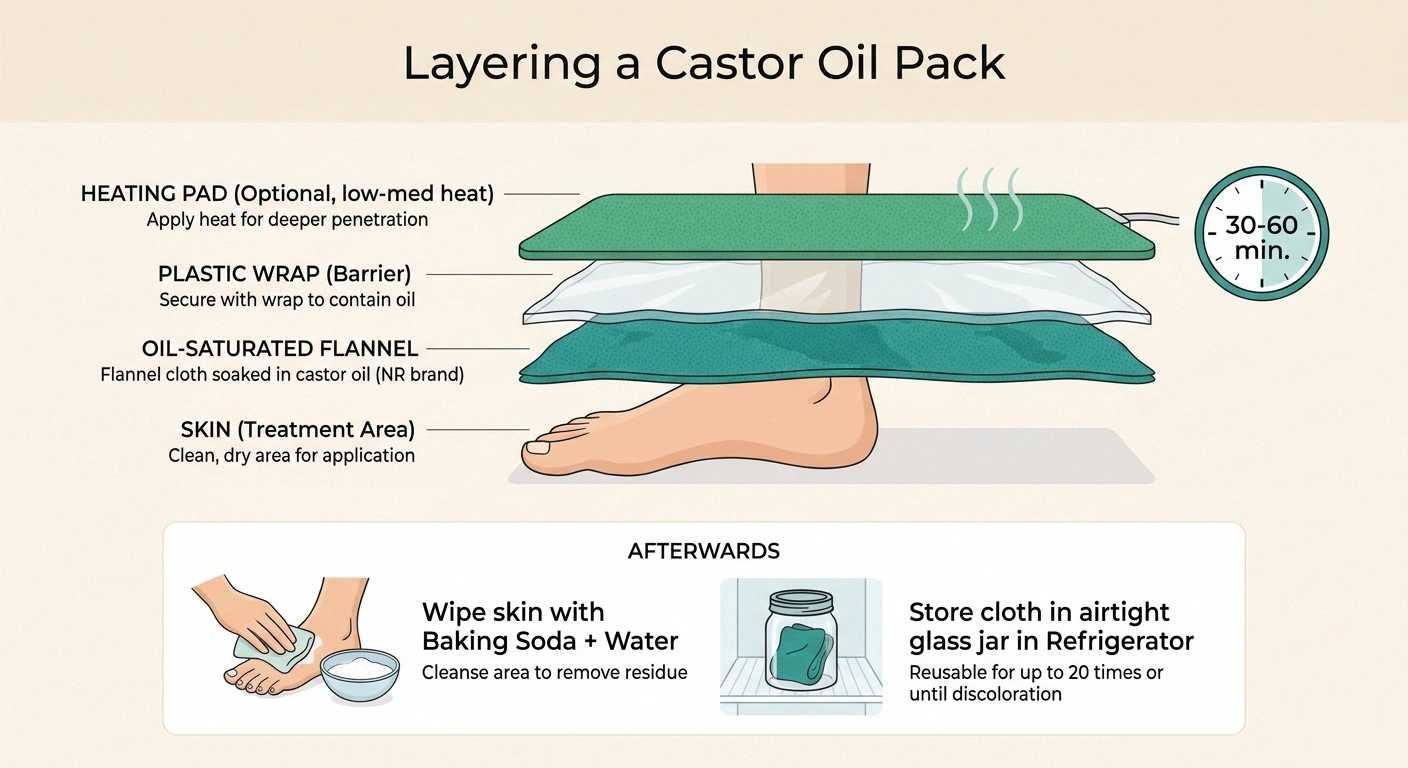
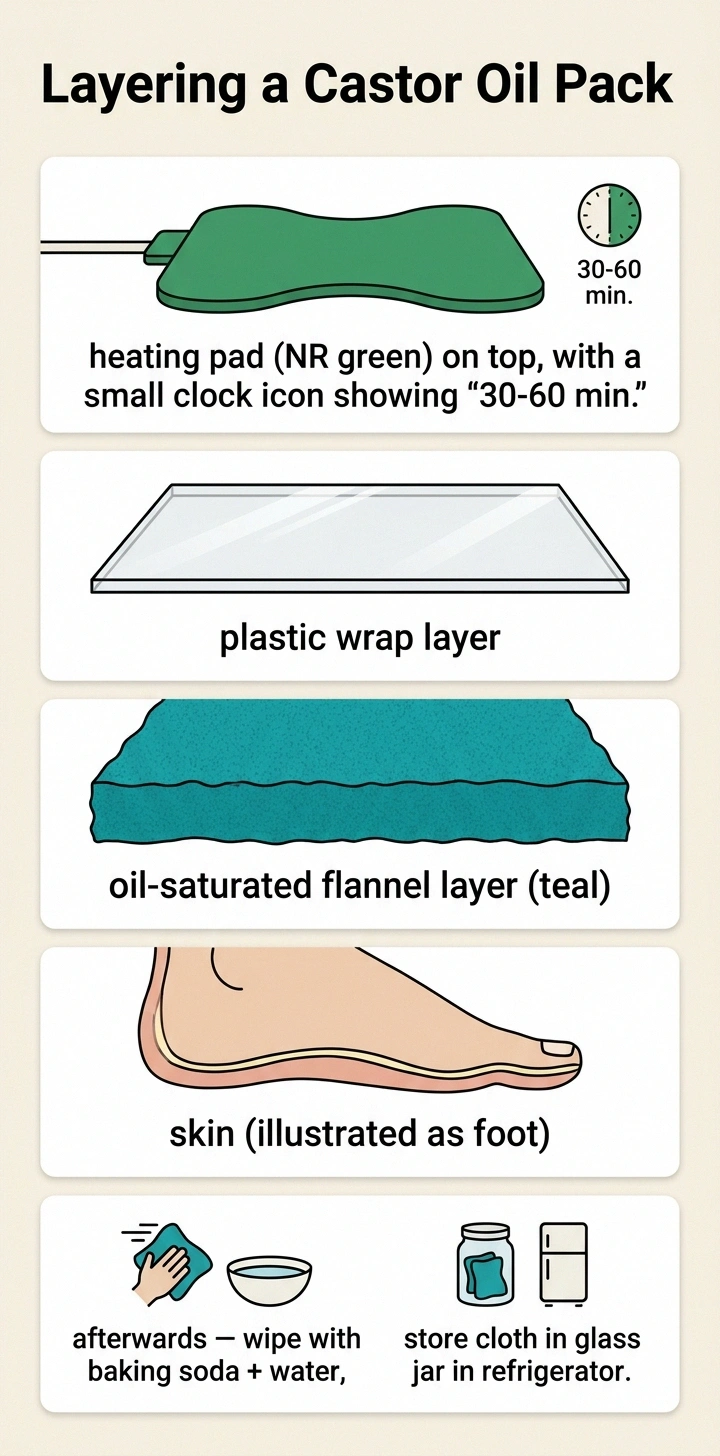
The practice is simple. You take a piece of natural-fiber cloth, usually unbleached cotton or wool flannel cut to a size that covers the area you want to treat. You saturate it with castor oil — not drench it to the point of dripping, but soak it through. You apply it to the skin over the affected area. You cover it with plastic wrap or wax paper to keep the oil contained. You put a warm heating pad or hot water bottle over the top. You lie down with it for 30 to 60 minutes. Then you remove it, wipe the area clean with a diluted baking soda solution or mild soap and water, and store the oil-soaked cloth in a glass container in the refrigerator. The same piece of flannel typically lasts 20 to 30 uses before it needs to be replaced.
The whole apparatus costs about $15 to $30 to set up — a 16-ounce bottle of cold-pressed organic castor oil, a yard or two of flannel from any fabric store, a glass jar, and whatever heating source you already own. The supplies last for months. Patients who do this routinely tell me the most useful purchase is a dedicated old towel underneath everything because castor oil stains anything it touches.
For neuropathy specifically, the typical application is over the feet and lower legs, sometimes over the hands, and occasionally over the lower abdomen if there is autonomic neuropathy involvement. The patient finds a comfortable place to lie down — most do it in bed in the evening — and gives themselves the better part of an hour with the warm pack in place. The practice is at least as much a quiet, restorative ritual as it is a topical treatment, and for some patients that ritual is itself meaningful.
What the Science Actually Says
Castor oil is pressed from the seeds of the castor bean, Ricinus communis, and its main active component is ricinoleic acid. Ricinoleic acid has documented anti-inflammatory effects in laboratory and small animal studies. The mechanism appears to involve inhibition of prostaglandins — the same biochemical pathway that aspirin and other NSAIDs target — though through a somewhat different molecular interaction. There is real chemistry here, not just folklore.

A handful of small human studies have looked at topical castor oil in pain conditions. A 2000 study by Vieira and colleagues compared topical castor oil to topical capsaicin in arthritis patients and found similar pain relief. A 2014 study by Singh and colleagues found that castor oil applied with a heat pack helped knee osteoarthritis pain. Animal models from Almeida and colleagues in 2009 confirmed ricinoleic acid’s anti-inflammatory and mild analgesic activity. The total clinical evidence is modest — small studies, mostly in arthritis rather than neuropathy, no head-to-head trial against placebo with proper blinding — but it is not nothing.
What does not exist is any human trial of castor oil packs specifically in peripheral neuropathy. The application of ricinoleic acid plus heat plus a quiet hour of lying still is the closest thing to a “treatment package” the practice offers, and that combined intervention has never been studied formally in nerve pain. The patients who report benefit are reporting from personal experience, often supplemented by community testimony in support groups. That is real data of a kind, but it is not the kind of evidence that puts a treatment on the standard-of-care list.
The claim you will hear most often online — that castor oil packs “draw out toxins” or perform “lymphatic drainage” — is not supported by any meaningful evidence. The body has its own systems for processing waste products, primarily the kidneys and liver, and topical applications do not change those systems. When patients feel better after a castor oil pack, the most plausible explanations are anti-inflammatory effects of ricinoleic acid, the well-documented pain-relieving effects of heat application, and the relaxation response from spending an hour lying quietly. Each of those is real. The toxin-drawing claim is not.
Why It Might Help Neuropathy Symptoms
If you put aside the inflated claims and focus on the plausible mechanisms, castor oil packs for neuropathy have three reasonable theoretical pathways to symptom relief.

Anti-inflammatory effect at the skin and underlying tissue. Neuropathy is partly an inflammatory condition. Damaged peripheral nerves attract inflammatory cells and release inflammatory mediators that contribute to ongoing pain. A topical anti-inflammatory applied directly over affected areas — for example, on the soles of the feet in patients with diabetic neuropathy — could plausibly reduce some of that inflammation. The depth of penetration of topical castor oil is modest; this is not going to reach deep nerve roots. But superficial small-fiber inflammation in the skin itself is potentially within reach.
Heat application. Heat is one of the oldest pain treatments in medicine and one of the most consistently effective. Heat increases local blood flow, relaxes surrounding musculature, and produces direct pain-modulating effects through the same neural gates that control how pain signals reach the brain. The 30 to 60 minutes of warmth from the heating pad portion of a castor oil pack is, by itself, a real treatment. Many of the benefits attributed to the castor oil are probably attributable to the heat.
Relaxation and ritual. Lying still for an hour, breathing evenly, with no obligation to do anything else, is something many neuropathy patients almost never give themselves. The autonomic nervous system shifts from sympathetic to parasympathetic dominance. Stress hormones fall. Sleep that night is often easier. None of this is specific to castor oil. All of it is real. A patient who establishes a 3-times-a-week castor oil pack practice is also, incidentally, establishing a 3-times-a-week meditative-rest practice. Both contribute.
These are modest mechanisms. They add up to a plausible but not dramatic effect for some patients. Some people will feel meaningfully better after several weeks of consistent practice; others will feel nothing different. Both outcomes are within the range of what the evidence and the mechanisms would predict.
How to Set Up a Castor Oil Pack the Right Way
If you decide to try castor oil packs for neuropathy, the practice is forgiving but a few details matter.
Buy quality castor oil. Look for organic, cold-pressed, hexane-free castor oil. Industrial-grade castor oil sold for other purposes may contain solvents or contaminants you do not want absorbing through your skin. Reputable brands include Heritage Store, Now Foods, Sky Organics, and Pure Body Naturals. A 16-ounce bottle runs about $12 to $20 and lasts months.
Use natural-fiber flannel. Unbleached cotton or wool flannel from any fabric store works. Avoid synthetic fabrics. Pre-cut “castor oil pack” kits sold commercially are usually overpriced for the same basic materials, though they can be convenient. A yard of flannel cut into multiple eight-by-ten-inch pieces gives you a full kit for around $5.
Saturate but do not soak. You want the cloth fully damp with oil but not dripping. A dripping cloth is messy without being more effective. If you over-saturate, you can squeeze excess oil back into the bottle.
Layer for cleanliness. Put an old towel under wherever you will lie down. Apply the oil-saturated flannel directly to the skin. Cover with plastic wrap or wax paper. Place a warm (not hot) heating pad or covered hot water bottle on top. The plastic prevents the oil from soaking into your heating pad.
Apply heat carefully — especially with neuropathy. This is the part where the practice gets nuanced for neuropathy patients specifically. If you have substantial numbness in the area you are treating, you may not feel a burn developing. Use the lowest comfortable heat setting. Check the skin under the pack every 10 to 15 minutes for the first few sessions to be sure no redness or hot spots are developing. Set a timer; do not fall asleep with the heating pad on.
Duration: 30 to 60 minutes. Shorter is fine. Longer is not better and increases burn risk. Many patients find 45 minutes comfortable.
Clean the area afterward. Wipe with a solution of one teaspoon of baking soda in a cup of warm water, or use a mild soap and warm water. The skin should feel clean rather than oily after.
Store the soaked cloth. Place the oil-saturated flannel in a glass jar with a lid and keep it in the refrigerator. The same cloth can be reused 20 to 30 times before it needs replacement. Replace when the cloth becomes discolored or develops any odor.
Frequency. A typical practice is three to four times per week. Daily is unnecessary. Once a week is probably too infrequent to see effect. Most patients trial the practice for four to six weeks before deciding whether it is helping them.
Safety: The Burn Risk Most Articles Skip
The safety profile of topical castor oil itself is excellent. Allergic reactions are rare. Skin irritation is uncommon. The active ingredient does not have systemic absorption that produces meaningful side effects when used topically.
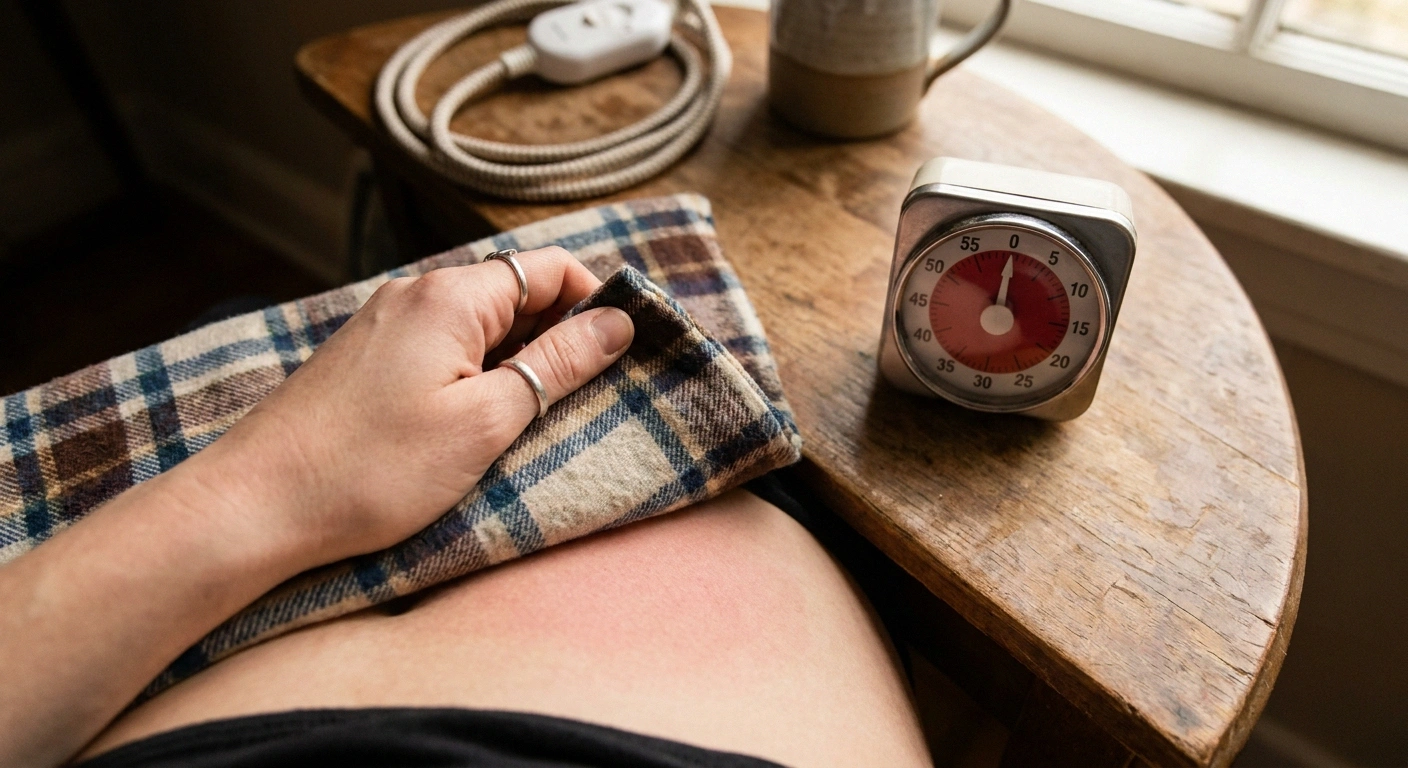
- Use the LOWEST comfortable heat setting
- Check skin under the pack every 10-15 minutes for the first several sessions
- Use a heating pad with an automatic shutoff
- Never combine with topical lidocaine at the same site
- Skip if there are any open sores, blisters, or skin breakdown
- Do not fall asleep with the heating pad on.
The safety issue worth taking seriously is the burn risk from applying heat to skin with diminished sensation. Diabetic patients with severe foot neuropathy have suffered second-degree burns from heating pads they could not feel getting too hot. The numb feet that benefit most from improved circulation are the same numb feet that cannot warn you when a heating pad is overheating. This risk is real and underdiscussed in social media content about castor oil packs.
Practical protections include: use the lowest comfortable heat setting; check the skin every 10 to 15 minutes for the first several sessions; use a heating pad with an automatic shutoff; never combine with other topical preparations like lidocaine patches at the same site; do not apply if there are any open sores, infections, or skin breakdown.
Other safety considerations are straightforward. Do not use during pregnancy — castor oil has been used historically to induce labor, and the topical route, while less risky than oral, is still best avoided. Do not take castor oil orally for neuropathy; it is a strong laxative not meant for chronic use. Stop if you develop skin irritation, redness, or itching that does not resolve with cleansing. Discontinue if no benefit after four to six weeks of consistent use — there is no point persisting indefinitely with a treatment that is not helping you.
Where It Fits in the Bigger Picture
I want to be clear about where I place castor oil packs in the broader landscape of neuropathy treatment.
for months of use
(traditional cadence)
before deciding
They are not a primary treatment. They are an adjunct — something a patient might add alongside the rest of their care to see if it helps. The evidence base does not support recommending them as a substitute for any of the standard-of-care interventions: blood sugar management for diabetic neuropathy, address of any underlying causes (vitamin deficiencies, autoimmune contributors, medication-induced neuropathy), the first-line medications when they are indicated, physical activity, weight management, and the social and emotional support that comes with chronic-condition care.
Within the broader category of natural remedies for neuropathy, castor oil packs sit alongside other modest at-home options — warm foot soaks, topical essential oils, gentle stretching, and the like — that contribute incrementally without replacing the foundation of care. Patients who do best with these adjuncts are usually doing several of them in modest combination rather than relying on any single one to do all the work.
The reason to try castor oil packs, in my read, is fourfold: they are inexpensive, they are safe when done thoughtfully, the practice itself is restorative regardless of any specific topical effect, and they may produce modest symptom relief through several plausible mechanisms. The reason not to try them is that any time and energy you spend setting them up is time and energy not spent on the higher-yield foundational care. For most patients with the bandwidth to add a 3-times-a-week ritual, the trade-off is reasonable. For patients already overwhelmed by their care regimen, adding another layer may not be the right call.
What to Expect — Honestly
If castor oil packs are going to help you, you should know within four to six weeks of consistent practice. Patients who benefit typically describe some combination of: less burning in the feet by evening; easier sleep on the nights they have done a pack; a more general sense of bodily relaxation; less stiffness in the hands or feet first thing in the morning; and a feeling of being more in connection with their body rather than in opposition to it. None of these are dramatic. None of them are nerve regeneration. They are quality-of-life improvements at the modest end of the scale.

What you should not expect is a reversal of established neuropathy. The damaged nerves in your feet cannot be regrown by a topical application. The numbness that has been there for years is not going to come back to normal sensation. The structural changes in long-standing neuropathy are not within reach of any topical practice. Castor oil packs are a symptom-modulating adjunct, not a regenerative treatment.
If, after a fair trial, you notice no difference, the appropriate response is to stop. Persisting with an ineffective practice does not turn it into an effective one. Many adjuncts help some patients and not others; there is nothing wrong with you if castor oil packs are not part of your useful set.
The Bottom Line
Castor oil packs are a traditional practice with real but modest scientific underpinning, a clean safety profile when done thoughtfully, and a reasonable chance of producing incremental symptom relief in some neuropathy patients through several plausible mechanisms. They are not a cure, they do not “draw out toxins,” and they will not regenerate damaged nerves. The wellness-marketing version oversells them. The skeptical-blogger version dismisses too much. The honest position is in the middle.
If you are a patient with bandwidth to add an inexpensive at-home practice to your overall care, castor oil packs three or four times a week for four to six weeks is a reasonable trial. Buy quality castor oil and natural-fiber flannel, apply heat carefully because of your altered sensation, and assess honestly at the end of the trial whether you are noticing real benefit. If yes, keep going. If no, stop and put the energy elsewhere. The decision is straightforward once the claims around the practice are sized correctly.
Frequently Asked Questions
Do castor oil packs really help neuropathy?
Possibly — modestly, through several plausible mechanisms. Castor oil contains ricinoleic acid, which has documented anti-inflammatory effects, and the heat applied over the pack is itself a real treatment for many pain conditions. No clinical trial has tested castor oil packs specifically in peripheral neuropathy. Patient reports range from meaningful improvement to no effect. A four-to-six-week trial is reasonable if you have the bandwidth and budget for it.
How often should I do a castor oil pack for nerve pain?
Three to four times per week is the traditional rhythm. Daily is unnecessary and may risk skin irritation. Once a week is probably too infrequent to see effect. Most patients trial the practice for four to six weeks before deciding whether it is helping them.
Where should I apply the castor oil pack for neuropathy in my feet?
Directly over the affected area — most commonly the tops and bottoms of the feet and the lower legs for peripheral neuropathy. The pack can be sized to wrap over a foot or laid flat across both feet at once. Some patients find it more comfortable to focus on one foot at a time.
Is it safe to use a heating pad with neuropathy?
Yes, but carefully. Numb skin cannot warn you that a heating pad is too hot, and second-degree burns from heating pads on insensate feet do occur. Use the lowest comfortable heat setting, check the skin every 10 to 15 minutes for the first several sessions, use a heating pad with an automatic shutoff, and do not fall asleep with the heating pad on. Do not use over open sores, blisters, or broken skin.
Can I take castor oil orally for neuropathy?
No. Oral castor oil is a strong laxative and is not appropriate for chronic use for any nerve condition. The topical application via castor oil packs is the relevant practice for neuropathy. Oral castor oil has historically been used in single doses to induce labor and is not safe in pregnancy.
What brand of castor oil should I buy?
Look for organic, cold-pressed, hexane-free castor oil from any reputable brand. Heritage Store, Now Foods, Sky Organics, and Pure Body Naturals are widely available and consistent quality. A 16-ounce bottle runs about $12 to $20 and lasts months of regular use. Avoid industrial-grade castor oil sold for non-personal uses.
Do castor oil packs really detox the body?
No. The body has its own systems for processing waste products through the kidneys and liver, and topical applications do not change those systems. When patients feel better after a castor oil pack, the most plausible explanations are the anti-inflammatory action of ricinoleic acid, the pain-relieving effects of heat application, and the relaxation response from spending an hour lying quietly. The “drawing out toxins” claim is not supported by evidence.
Are there any times I should not do a castor oil pack?
Yes. Avoid during pregnancy. Avoid over open wounds, infected skin, recent surgical incisions, or active skin conditions like eczema flares. Skip if you are on a topical medication at the same site (such as a lidocaine patch). Stop if you develop skin irritation, redness, or itching that does not resolve. Discontinue if no benefit after four to six weeks of consistent practice.
About the Author