
When I was deep in my research phase — the one that followed me everywhere after my diagnosis — I kept seeing the same handful of supplements mentioned over and over. Alpha lipoic acid. B vitamins. Magnesium. And then, tucked into the corners of medical journals I was stumbling through at midnight, a different name kept appearing: N-acetyl cysteine, or NAC.
It wasn’t a name I recognized from the supplement aisle. It sounded more like something from a chemistry class. But the more I read, the more curious I got. Here was a compound with a surprisingly robust body of research, a fascinating mechanism that targeted one of the core drivers of nerve damage — and almost nobody in the neuropathy community was talking about it.
Today I want to change that. Let’s take a clear-eyed look at what the research actually shows about NAC for neuropathy: how it works, what the clinical trials found, who might benefit most, and how it compares to more well-known supplements like alpha lipoic acid.
What Is NAC (N-Acetyl Cysteine)?
N-acetyl cysteine is a modified form of the amino acid cysteine. It’s been used in medicine for decades — most famously as the antidote for acetaminophen (Tylenol) overdose, and as a mucus-thinning treatment for lung conditions. But its role in neuropathy comes from a completely different set of properties.
Key Takeaway
NAC works by replenishing glutathione — your body’s master antioxidant.
High blood sugar depletes glutathione in peripheral nerve cells. NAC provides the raw material to restore it — directly targeting one of the core drivers of diabetic neuropathy progression.
At its core, NAC is a glutathione precursor. Glutathione is often called the body’s “master antioxidant” — it’s produced naturally in your cells and works to neutralize oxidative stress. The problem is that neuropathy, particularly diabetic neuropathy, is heavily driven by oxidative damage. When blood sugar stays elevated over time, it generates a cascade of free radicals that literally corrode nerve fibers from the inside out.
Your body’s glutathione reserves get depleted trying to manage this damage. And that’s where NAC comes in — it provides the raw material your cells need to produce more glutathione, effectively helping to restore your body’s own antioxidant defenses.
How NAC Works in the Nervous System: Four Key Mechanisms
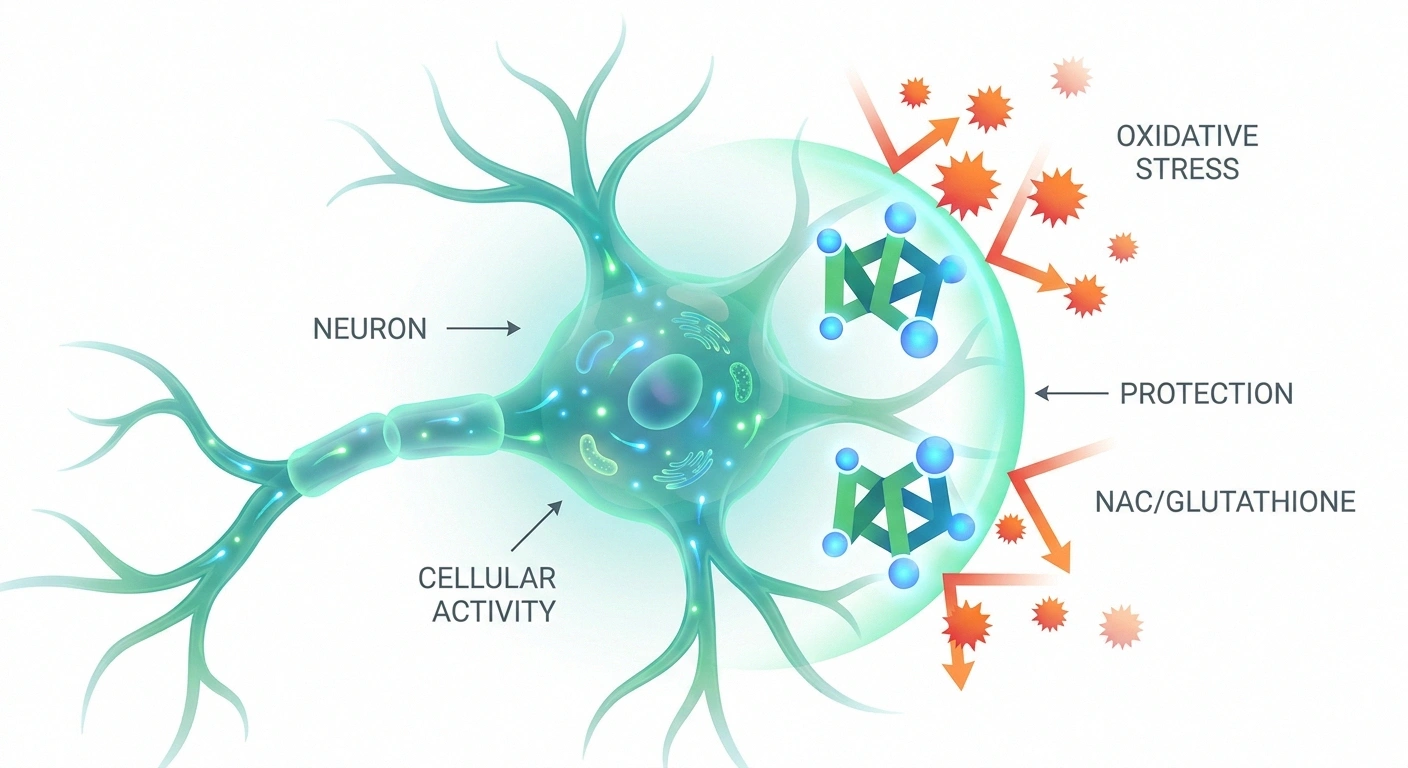
The research on NAC for neuropathy isn’t just about glutathione, though that’s the headline. Scientists have identified at least four distinct ways NAC may protect and support damaged nerves:
How NAC Protects Nerves: 4 Mechanisms
1. Glutathione Boost
Replenishes the master antioxidant depleted by oxidative stress in nerve cells
2. Free Radical Scavenging
Directly neutralizes reactive oxygen species that damage peripheral nerve fibers
3. TNF-α Inhibition
Reduces the pro-inflammatory cytokine that drives pain sensitization and nerve injury
4. MMP Suppression
Preserves the protective matrix around nerve fibers — a mechanism ALA doesn’t share
1. Glutathione replenishment
As described above, NAC provides cysteine — a rate-limiting substrate for glutathione synthesis. When peripheral nerve cells are under oxidative attack, having adequate glutathione is essential for their survival. Studies show that patients with diabetic neuropathy have significantly lower glutathione peroxidase (GPx) activity, and NAC supplementation has been shown to restore it.
2. Direct free radical scavenging
NAC doesn’t just help make glutathione — it also directly neutralizes certain reactive oxygen species (ROS) itself. This dual action makes it more versatile than supplements that work through only one pathway.
3. TNF-alpha inhibition
Tumor necrosis factor-alpha (TNF-α) is a pro-inflammatory cytokine that’s significantly elevated in neuropathy. It drives pain sensitization and nerve fiber injury. Research shows NAC can inhibit TNF-α production — which means it’s working as an anti-inflammatory agent as well as an antioxidant.
4. Matrix metalloproteinase (MMP) suppression
This mechanism gets the least attention, but may be one of the most interesting. A 2016 study published in PubMed found that NAC suppresses matrix metalloproteinases — enzymes that, when overactivated, degrade the protective extracellular matrix around nerve fibers. Keeping MMPs in check may help preserve the structural integrity of peripheral nerves. It’s a mechanism that alpha lipoic acid doesn’t share, which is part of why NAC deserves attention as a distinct option rather than just an ALA alternative.
What the Clinical Trials Actually Show

Let me be honest about something: the research on NAC for neuropathy is growing but still developing. You’ll find some studies with impressive results and at least one meta-analysis with more cautious conclusions. Here’s what we know.
Research Says
“In a 2024 head-to-head trial, NAC reduced neuropathic pain comparably to pregabalin — a first-line pharmaceutical — over 8 weeks.”
Source: Clinical Pharmacology & Biopharmaceutics, 2024 (102 patients, painful diabetic peripheral neuropathy)
The 2025 high-dose RCT (most compelling)
A 2025 randomized controlled trial published in PMC enrolled 90 patients with diabetic peripheral neuropathy. Participants received 2,400 mg of NAC daily for 12 weeks alongside standard diabetes care, while controls received standard care alone. The results were striking: the NAC group showed significant improvements in neuropathy pain scores, quality of life measures, and — crucially — blood markers of oxidative stress. TNF-α levels dropped, while GPx and NRF2 (a master antioxidant regulator) both increased. This was a well-designed trial with meaningful clinical endpoints.
The 2024 head-to-head comparison with pregabalin
Perhaps the most clinically relevant study for neuropathy patients was published in 2024. It pitted NAC (600 mg twice daily) directly against pregabalin (150 mg/day) in 102 patients with painful diabetic neuropathy. The headline finding: pain score reductions were comparable between the two groups. NAC — a supplement — performed similarly to a first-line pharmaceutical drug for neuropathic pain. That’s a result worth paying attention to.
Earlier adjunct therapy research
A smaller earlier trial found that adding NAC (600 mg twice daily) to existing medication improved neuropathic pain compared to placebo in patients who weren’t fully responding to standard treatment. This positions NAC as a potentially useful add-on rather than just an either/or choice.
The meta-analysis caveat
One meta-analysis found no statistically significant pain reduction across the studies it pooled. However, it’s important to understand why: the meta-analysis included older, lower-dose studies, and pooled very different patient populations. Heterogeneity in neuropathy research is a real problem. The more recent, better-designed trials with higher doses consistently show more positive results.
Which Types of Neuropathy Has NAC Been Studied In?
The strongest evidence for NAC is in diabetic peripheral neuropathy (DPN). This makes biological sense — high blood sugar creates the exact oxidative environment that NAC is designed to address. Multiple RCTs have specifically targeted DPN patients, and the 2024 pregabalin comparison was conducted entirely in this population.
For chemotherapy-induced peripheral neuropathy (CIPN), the picture is murkier. NAC has appeared in broader antioxidant trials for CIPN, but there’s no large dedicated NAC-CIPN trial yet. Some researchers have proposed that NAC’s antioxidant properties could help, but the concern with some antioxidants during chemotherapy is that they might interfere with treatment efficacy — a nuanced topic worth discussing with your oncologist.
For other forms of neuropathy — idiopathic, alcoholic, or nutritional — NAC hasn’t been studied in large dedicated trials. That doesn’t mean it wouldn’t help, but the evidence base is much thinner.
Understanding NAC Dosage: Why More Matters (and Why)
One of the most underappreciated facts about oral NAC is its bioavailability problem. When you swallow NAC in capsule form, only about 4 to 9 percent of it actually makes it into your bloodstream. The rest is metabolized during first-pass liver processing.
NAC Dosage at a Glance
Minimum effective threshold (600 mg twice daily) — used in pregabalin comparison trial
Dose used in strongest 2025 RCT — best outcomes for pain & quality of life
Oral bioavailability is only 4–9%. This is why dosage matters more than it appears — and why sub-1,200 mg doses may be insufficient.
This is why dosage matters more than it might seem. A 200 mg capsule might sound like a meaningful dose, but with 4-9% absorption, you’re potentially getting the equivalent of just 8-18 mg of bioavailable NAC. This explains why the studies showing the best results used higher doses:
- 600 mg twice daily (1,200 mg/day): The minimum dose that appears consistently effective across trials. This is the dose used in the pregabalin comparison study.
- 2,400 mg/day: The dose used in the strongest 2025 RCT, producing the best outcomes.
- Duration: Most trials ran 8–12 weeks. This isn’t a supplement where you’ll notice a difference in a few days.
It’s also worth noting that specialized formulations — liposomal NAC or effervescent NAC — may improve bioavailability, though research specifically comparing these formulations in neuropathy is limited.
NAC vs. Alpha Lipoic Acid: Which Is Better for Neuropathy?
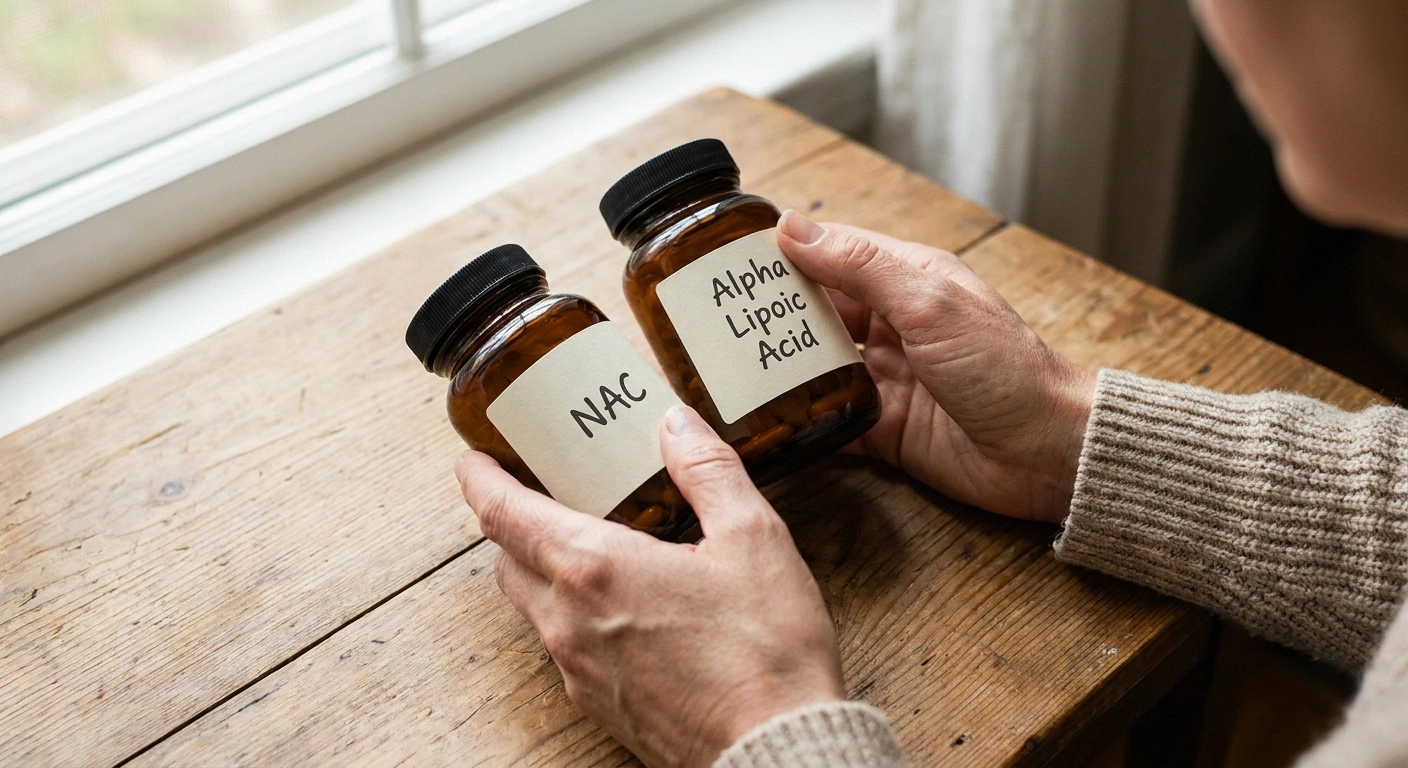
This is the question I get most often when I bring up NAC with people in my support group. Alpha lipoic acid (ALA) is the better-known antioxidant supplement for neuropathy, and it deserves that reputation — it has a large body of research behind it, including some evidence for improving nerve conduction velocity. So why consider NAC at all?
Here’s how they compare:
Similarities: Both work primarily through antioxidant pathways. Both have meaningful RCT evidence for diabetic neuropathy. Both are available as affordable supplements without a prescription.
Where ALA has an edge: ALA has more total neuropathy-specific research, including studies showing improvements in nerve conduction velocity. It also improves insulin sensitivity — a meaningful bonus for people with diabetic neuropathy. ALA has been studied in Europe specifically for diabetic neuropathy management for decades.
Where NAC may have an edge: NAC has a unique mechanism (MMP suppression) that ALA doesn’t share. NAC has a more recent head-to-head comparison with a pharmaceutical drug. Some people find ALA causes significant GI side effects (nausea, heartburn) at therapeutic doses — NAC is generally better tolerated. NAC is often less expensive than high-quality ALA formulations.
Can you take both? There’s no known harmful interaction between NAC and ALA. Some integrative practitioners recommend both as part of a broader neuropathy supplement protocol. As always, discuss with your doctor before combining supplements.
Safety, Side Effects, and Drug Interactions

NAC has a well-established safety profile. It’s been used in clinical settings for decades and is generally considered well-tolerated at the doses studied for neuropathy.
Important Drug Interaction
NAC + Nitroglycerin = Dangerous
If you take nitroglycerin for chest pain or heart conditions, do not use NAC without explicit medical supervision. The combination can cause severe, potentially dangerous drops in blood pressure.
Common side effects are primarily gastrointestinal and dose-dependent:
- Nausea (most common at higher doses)
- Vomiting or stomach upset
- Diarrhea
Taking NAC with food typically reduces GI side effects. Starting at a lower dose and gradually increasing can also help with tolerance.
Drug interactions to know about:
- Nitroglycerin: This is the most important one. NAC combined with nitroglycerin (used for chest pain/angina) can cause severe, dangerous drops in blood pressure. If you take nitroglycerin, do not use NAC without explicit medical supervision.
- Blood thinners: NAC may have mild antiplatelet effects; use caution with warfarin or other anticoagulants.
- Immunosuppressants: NAC’s antioxidant activity could theoretically interact with certain immunosuppressant mechanisms — discuss with your prescribing physician.
- Chemotherapy agents: As mentioned above, antioxidants during active chemotherapy is a nuanced topic. Always discuss with your oncologist.
If you’re reviewing your full neuropathy diagnosis and treatment plan with your doctor, bringing a list of any supplements you’re considering — including NAC — is always a good idea. Your doctor can flag any specific interactions relevant to your other medications.
How to Choose a NAC Supplement
Not all NAC supplements are created equal. Here are a few things to look for:
- Third-party testing: Look for products certified by NSF International, USP, or ConsumerLab. These verifications confirm that what’s on the label is actually in the capsule.
- Dose clarity: Choose products that clearly list elemental NAC content per serving, and make sure you can hit the 1,200–2,400 mg/day range studied in trials.
- Formulation: Standard capsules or powder are the most studied forms. Effervescent formulations may offer better absorption, though this hasn’t been directly studied in neuropathy.
- Additives: Some NAC products include unnecessary fillers or allergens. Check the inactive ingredients list if you have sensitivities.
You can check current prices and independent lab test results at ConsumerLab.com, which periodically tests NAC supplements for purity and label accuracy.
Practical Considerations Before Starting NAC
A few things I’d encourage anyone considering NAC to think through:
It’s not a quick fix. NAC works on underlying oxidative and inflammatory processes — these don’t turn around overnight. The studies that showed meaningful results ran for 8–12 weeks. If you try NAC for two weeks and don’t feel a dramatic difference, that’s not a signal that it isn’t working.
Managing the underlying cause still matters. For diabetic neuropathy, nothing replaces blood sugar management as the foundation of any treatment plan. NAC addresses some of the damage that oxidative stress causes, but it can’t outrun continued high glucose. The best outcomes in the trials came when NAC was added to, not substituted for, appropriate diabetes management.
Combine thoughtfully, not randomly. It can be tempting to take NAC plus ALA plus acetyl-L-carnitine plus magnesium plus everything else you’ve read about. But more isn’t always better, and a thoughtful supplement protocol reviewed with your doctor is safer and more sustainable than piling on everything at once. Check resources like the best supplements for nerve repair for a broader view of the evidence landscape.
Track your results. Keep a simple log of your pain levels, sleep quality, and daily function before you start NAC and through the 8–12 weeks of use. This is the only way to know whether it’s actually helping you specifically.
What NAC Cannot Do
Let me close this section with something important: NAC is not a cure for neuropathy. It doesn’t regenerate axons that have already been lost. It doesn’t reverse established nerve damage in the way that treating the underlying cause early can. The most optimistic reading of the research is that NAC supports the nerve cell environment — reducing ongoing damage and possibly slowing progression — while also providing meaningful pain relief in some patients.
For people who are exploring every reasonable option, who want something that’s grounded in research rather than wishful thinking, NAC is worth a conversation with your doctor. It’s one piece of a larger picture that might also include appropriate medications like gabapentin, physical therapy, dietary changes, and other evidence-informed approaches.
The fact that a supplement performed comparably to a first-line pharmaceutical in a 2024 RCT is genuinely noteworthy — not a reason to throw out your prescription, but a reason to take the research seriously. And for those of us who’ve learned the hard way that no single thing fixes neuropathy, having more tools that actually work is worth knowing about.
FAQ: NAC for Neuropathy
Does NAC help with nerve pain?
Clinical trials suggest NAC may reduce neuropathic pain, particularly in diabetic peripheral neuropathy. A 2024 RCT found NAC (600 mg twice daily) produced pain relief comparable to pregabalin over 8 weeks. Results vary by individual, and the strongest effects appear at doses of 1,200–2,400 mg daily over 8–12 weeks.
How much NAC should I take for neuropathy?
The dosage range used in most neuropathy trials is 1,200–2,400 mg per day, typically divided into two doses. Starting at the lower end (600 mg twice daily) and assessing tolerability before increasing is a reasonable approach. Always discuss dosage with your doctor, especially if you take other medications.
Is NAC good for diabetic neuropathy?
The strongest evidence for NAC is in diabetic peripheral neuropathy. High blood sugar generates the exact type of oxidative stress that NAC targets through glutathione replenishment. Multiple RCTs, including a well-designed 2025 trial, have specifically studied NAC in DPN patients with positive results.
Can NAC repair nerve damage?
NAC has not been shown to directly regenerate severed axons or reverse established structural nerve damage. Its primary benefits are reducing ongoing oxidative damage and inflammation that contribute to pain and functional decline. It may help slow progression and reduce symptoms, but it is not a cure or a nerve regeneration agent.
Is NAC safe to take long-term?
Short-term use (up to 3–6 months) at doses studied for neuropathy is generally considered safe based on available evidence. Long-term safety data beyond this window is more limited. Side effects are primarily gastrointestinal and dose-dependent. Those taking nitroglycerin for heart conditions should avoid NAC due to a severe drug interaction risk.
NAC vs alpha lipoic acid — which is better for neuropathy?
Both have meaningful evidence for diabetic neuropathy. ALA has more total research, including studies on nerve conduction velocity, and also improves insulin sensitivity. NAC has a unique MMP-suppression mechanism, more recent head-to-head pharmaceutical comparisons, and may be better tolerated by those who experience GI side effects with ALA. Some practitioners recommend both as part of a comprehensive supplement approach. The choice depends on individual response, tolerability, and cost.
What’s the difference between NAC and glutathione supplements?
NAC is a precursor that your cells convert into glutathione internally. Taking NAC allows your own cells to synthesize glutathione where it’s needed. Direct oral glutathione supplements have historically had poor bioavailability because glutathione is broken down in the digestive tract before absorption — though newer liposomal formulations may improve this. Most research on antioxidant support for neuropathy has focused on NAC rather than direct glutathione supplementation.
Does NAC interact with neuropathy medications?
The most important interaction is with nitroglycerin, which can cause severe blood pressure drops when combined with NAC. Mild antiplatelet effects mean caution is warranted with blood thinners. If you’re taking gabapentin, pregabalin, duloxetine, or other common neuropathy medications, no major interaction has been established in the literature, but always confirm with your pharmacist or prescribing doctor.
About the Author