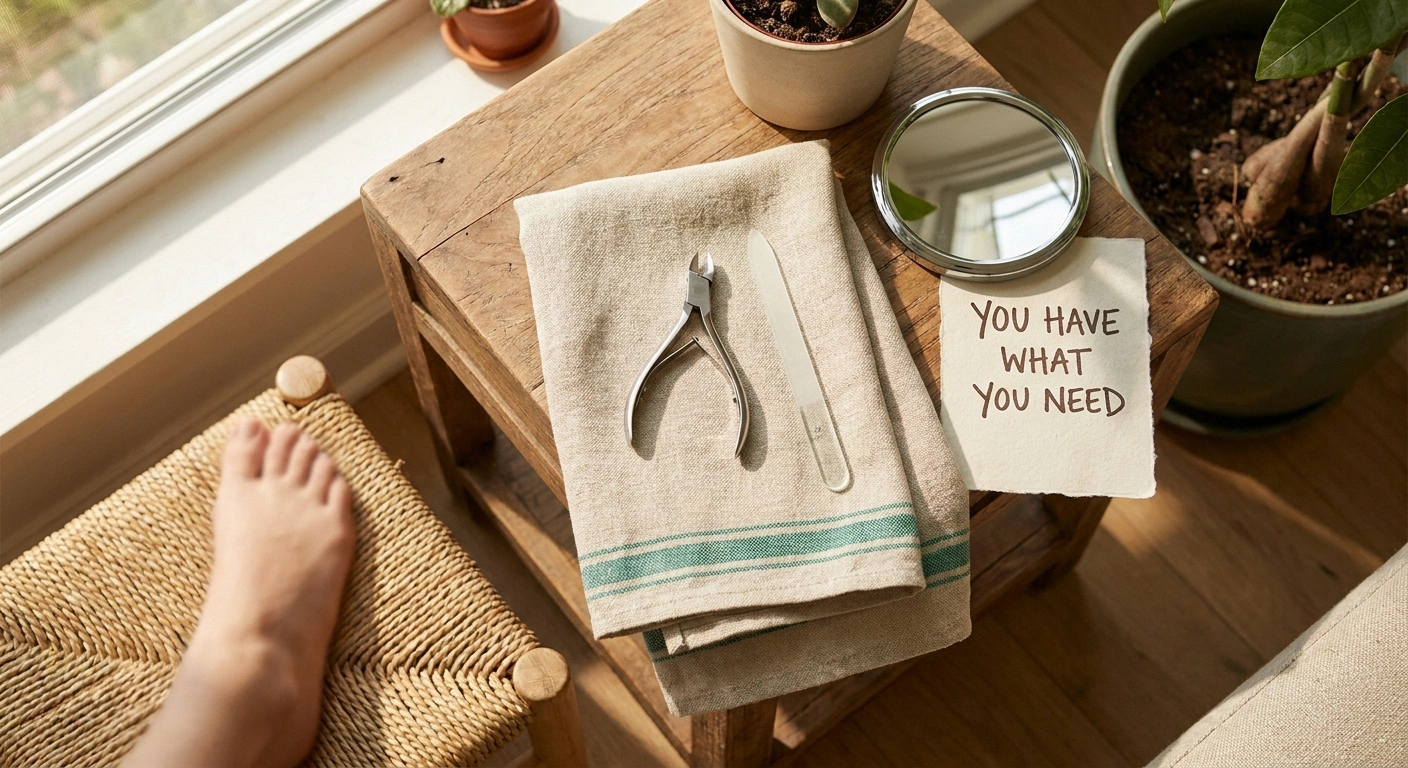
Cutting your toenails sounds like the kind of thing that doesn’t need a guide. For most of your life, it probably wasn’t. You sat on the edge of the bed, leaned over your foot, and it was a thirty-second task.
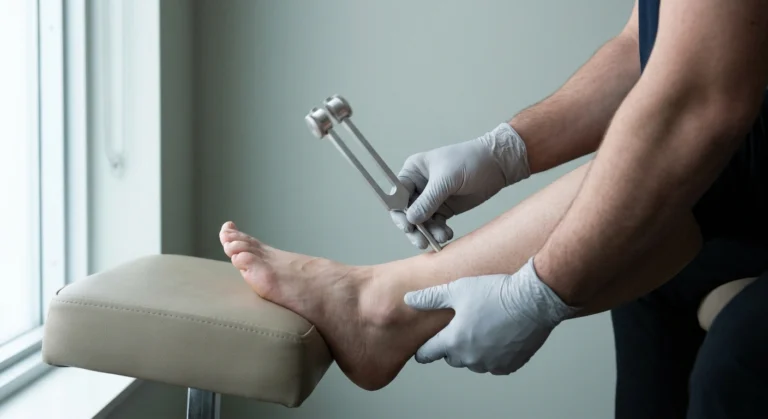
When you have neuropathy, that simple task becomes a different category of activity — one that needs care, the right tools, and a small habit of vigilance. The reason is straightforward: numb feet can’t tell you when you’ve cut yourself. A nick from clippers that you don’t even notice can turn into an infection. With neuropathy from diabetes especially — where wound healing is already slower — a tiny cut can become a serious problem before it shows up on your radar at all.
This isn’t a guide to scare you. It’s a guide to walk you through a safe routine so you can take care of your feet confidently, and so you’ll know when it’s time to hand the clippers over to a podiatrist instead.
Why Toenail Care Is a Bigger Deal With Neuropathy Than People Realize

When sensation in your feet is reduced, you lose the small feedback signals that most people take for granted. You can’t always feel the corner of a nail digging into the skin next to it. You may not feel the sting of a slight clip into the skin. You might not notice a hangnail forming until it has already gotten irritated.
Three things make this matter:
- Small cuts you don’t feel can get infected. Skin is the body’s barrier. Any break in it lets in bacteria, and feet pick up plenty of bacteria from socks, shoes, and floors.
- Wound healing is often slower in people with diabetic neuropathy because the same problems that damage nerves — high blood sugar, poor circulation — also impair healing.
- What starts small can escalate. The Centers for Disease Control and Prevention notes that people with diabetes are far more likely to require a lower-extremity amputation than people without, and most of those serious outcomes start with a foot injury that was minor and unnoticed.
That’s the case for taking nail care seriously. It’s not because the routine is hard. It’s because the stakes are higher than they used to be. Good news: a careful routine is genuinely simple once you know what it is.
What You Need Before You Start
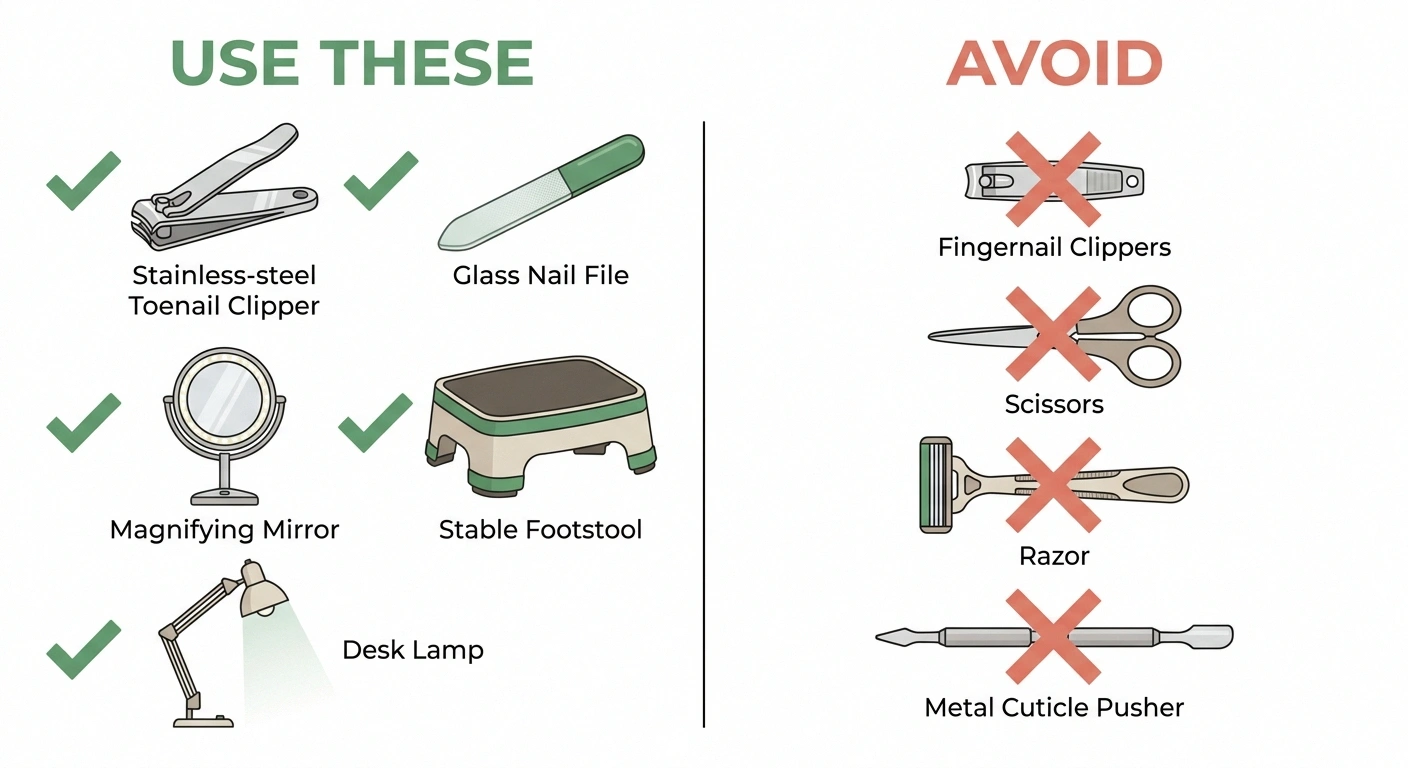
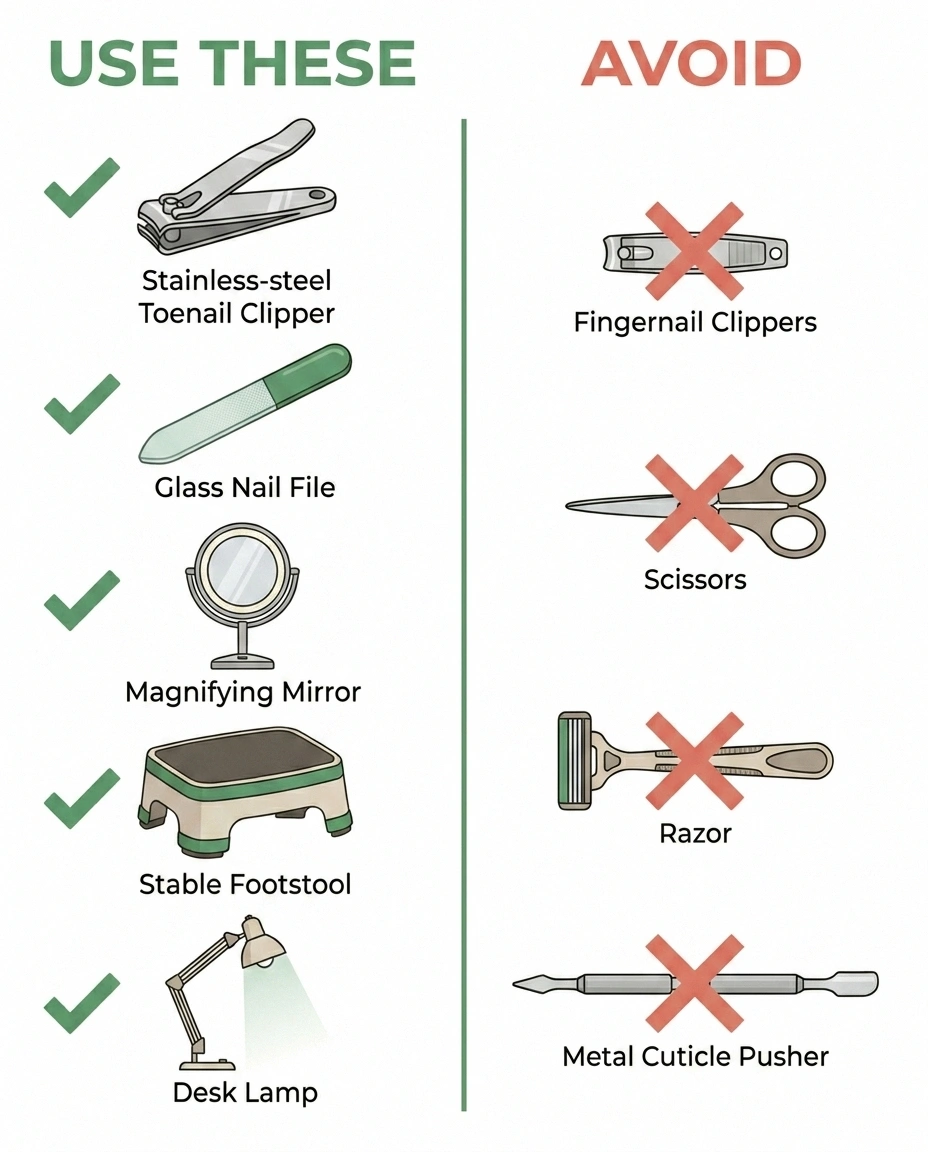
Having the right tools and setup makes the whole difference. Here’s the short list:
- ✓ Stainless-steel toenail clipper (wider jaw than fingernail clippers)
- ✓ Glass nail file or fresh emery board
- ✓ Bright overhead light + desk lamp
- ✓ Reading glasses or a magnifying mirror
- ✓ Stable chair with footstool — never balance on one foot
- ✓ Clean towel and a wastebasket nearby
- A quality toenail clipper — not the small fingernail kind. Toenail clippers have a wider, sturdier jaw and a sharper, smoother cut. Look for stainless steel and a comfortable grip.
- An emery board or a glass nail file. The file is what smooths sharp edges after you’ve cut. Glass files tend to be gentler and last longer than emery boards, but either works.
- Good lighting — bright overhead light plus a desk lamp if you have one. Shadows hide jagged edges and small nicks.
- A magnifying mirror or a magnifying glass if your vision isn’t sharp. Even reading glasses help.
- A stable seat — a chair with a footstool, or sitting on the edge of a bed with your foot supported. Never trim while balancing on one foot.
- Clean towel for drying and a wastebasket nearby.
If you can’t reach your feet comfortably, there are long-handled toenail clippers that an occupational therapist can recommend. For some people, this is enough to make safe self-trimming possible. For others, it’s a sign that a podiatrist should be doing the trimming instead — and there is no shame whatsoever in that.
The Best Time to Cut Your Toenails
Trim your nails after a bath or shower. Five to ten minutes of warm water softens nails so they cut more easily and are less likely to split or splinter. Don’t soak for longer than that — and don’t soak at all if you have an open wound, blister, or recent cut on your foot. Dry your feet thoroughly when you finish, paying close attention to the spaces between your toes.
Some people prefer to trim in the morning when their hands are steadier and the light is better. Others find it easier in the evening after a relaxing shower. Either is fine — what matters is that you’re rested, the light is good, and you can sit comfortably.
The Step-by-Step Safe-Trim Routine
Once you’re set up, the actual trimming is straightforward. Here’s a step-by-step routine you can follow every time.
- Wash and dry your feet thoroughly. Clean feet reduce infection risk, and dry nails are easier to see and grip.
- Sit comfortably with good light. Bring your foot to a position where you can see the entire nail clearly — don’t strain or hunch. If you need to prop your foot on a low stool, do.
- Take a slow look at each toe first. Before you cut anything, check for redness, swelling, blisters, cuts, color changes, or any unusual softness. If anything looks wrong, don’t trim that nail today — call your doctor or podiatrist.
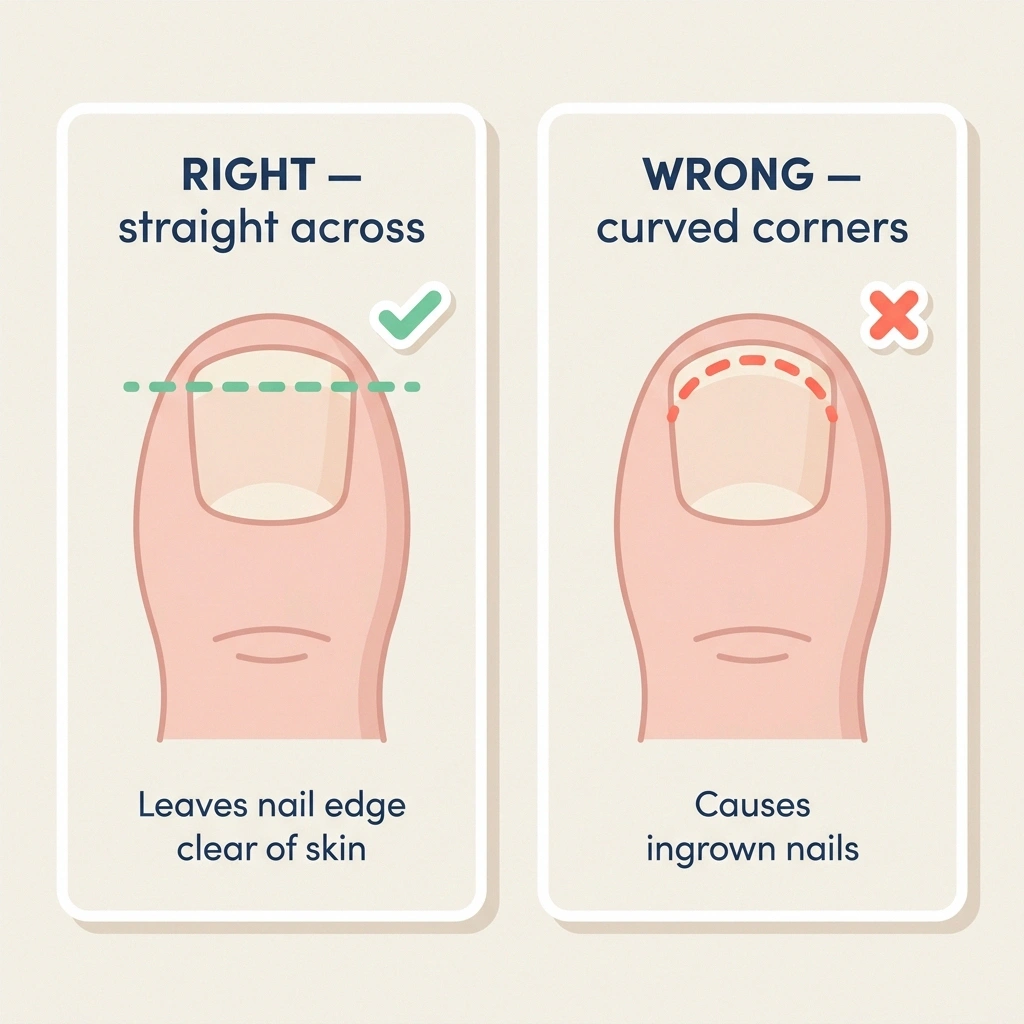
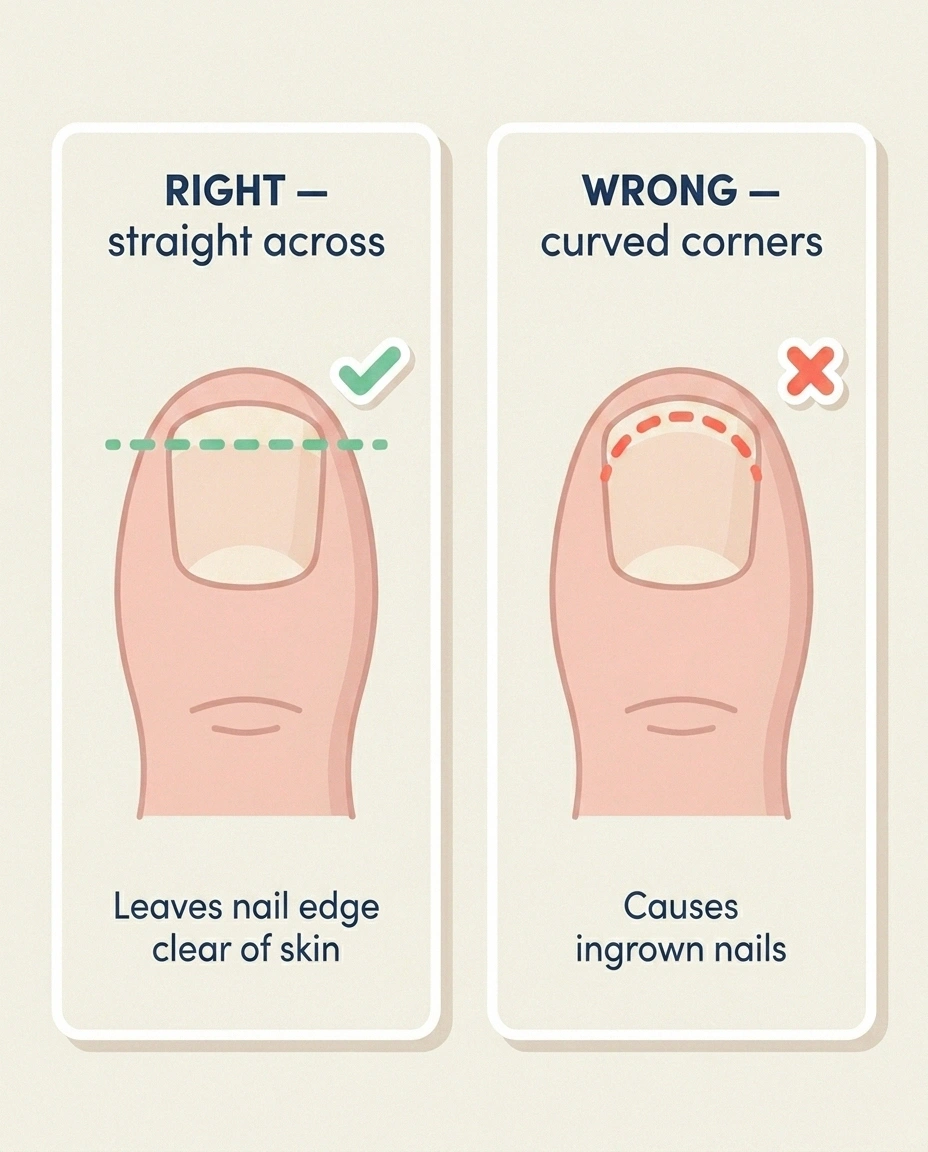
- Cut straight across. Position the clipper so the cut goes in a straight line, not curved into the corners of the nail. Curving the corners is the single most common cause of ingrown toenails.
- Don’t cut too short. Leave a small strip of white visible at the end of the nail. Cutting flush to the skin is what lets nails grow back into the skin or expose the nail bed to injury.
- Make small cuts. Trim a little at a time rather than trying to take off the whole length in one bite. Small cuts give you more control and less risk of slipping.
- File the edges smooth. Use the emery board or glass file to round off the sharp corners and smooth any jagged edges. This is what prevents the snag-and-tear cycle that creates problems later.
- Inspect each toe again. Check the whole foot, the spaces between your toes, and the bottoms of your feet. Use a mirror or your phone camera if you can’t see directly. Look for anything new — a small cut, a developing hangnail, redness from the trimming process itself.
That’s the routine. It usually takes about ten to fifteen minutes once you’re set up, and most of that time is the slow inspection rather than the cutting itself.
What Not to Do

A few habits are especially risky with neuropathy. Worth naming directly:
- Don’t cut your cuticles. Cuticles are a bacterial barrier. Cutting them creates a direct entry point for infection. If you want to manage them, gently push them back with a soft towel after a bath.
- Don’t use scissors or razors. Scissors don’t give you the control of a proper clipper. Razors should never be used to remove thick skin, calluses, or anything else from your feet at home — bathroom surgery causes ulcers.
- Don’t tear hangnails with your fingers. A hangnail you pull at becomes a wound. Trim it carefully with clean clippers and file the area smooth.
- Don’t share clippers. Fungal and bacterial infections spread this way. Have your own pair, and clean them with rubbing alcohol every few weeks.
- Don’t go to a regular nail salon with neuropathy unless you’ve confirmed the salon practices diabetic-safe foot care. Improperly sterilized tools cause serious infections, and the technician can’t feel pain feedback you can’t feel either. If you want professional foot care, see a podiatrist instead.
- Don’t trim if you notice anything unusual. A new redness, swelling, warmth, or any open spot is a sign to stop and call your doctor — not to keep trimming.
When to Skip Self-Trimming and See a Podiatrist
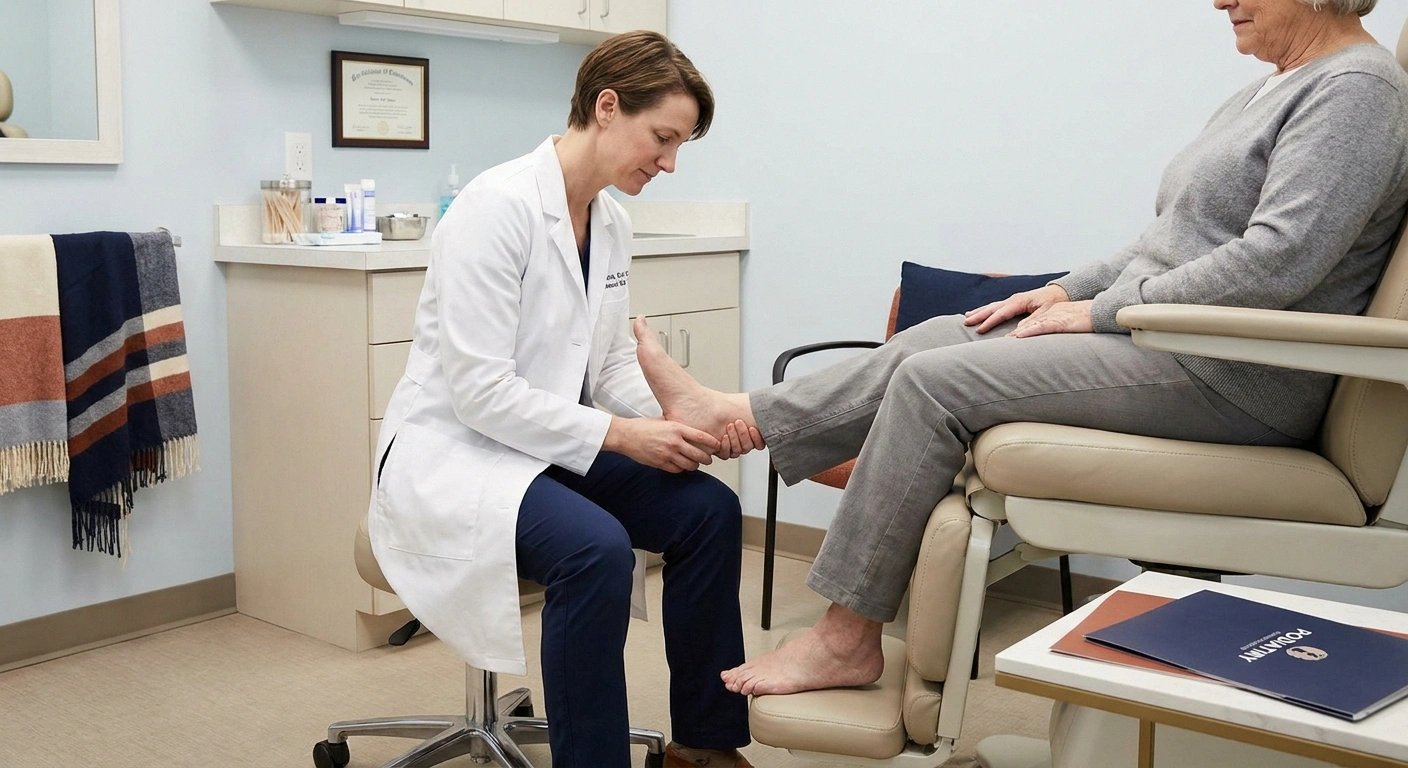
This is the part people are most reluctant to hear, and it’s also the most important. Some toenails should not be trimmed at home if you have neuropathy. Here are the clear cases:
- ! Thick, yellowed, or fungal nails that resist cutting
- ! Deeply curved or ingrown toenails
- ! Open sores, redness, swelling, warmth, or any sign of infection
- ! Vision changes, limited mobility, or trouble reaching your feet
- ! Bleeding when you trim — even a small amount
- Thick or fungal nails — yellowed, brittle, layered, or much thicker than they used to be. Thick nails require specialized trimming tools to avoid cracking and splitting.
- Deeply curved or ingrown nails. Trying to dig out an ingrown nail at home almost always makes it worse.
- Open sores, redness, swelling, or any sign of infection on the toe or surrounding skin.
- Difficulty seeing or reaching your feet. Vision changes, limited mobility, balance problems, or back stiffness all make safe self-trimming harder than it’s worth.
- Bleeding when you trim. If you’ve cut yourself trimming once, it’s a sign to take the routine more carefully — and if it happens repeatedly, hand the job over.
Here’s something many people don’t know: Medicare Part B covers podiatric foot care for diabetic patients with documented neuropathy, typically every 60 days. If you’re on Medicare and your neuropathy is in your medical records, ask your primary care doctor for a referral to a podiatrist. It’s a benefit you’ve paid for, and using it is much smarter than risking a serious complication at home.
How Often to Trim
For most people, every six to eight weeks is about right. Some nails grow faster than others. Set a reminder on your phone or mark it on a paper calendar so it doesn’t slip — if nails are left too long, they snag on socks and blankets, which is its own injury risk. If they’re cut too often, you can’t see what you’re cutting and the margins for error shrink.
Pair the trimming with another routine you already do — say, the first weekend after a doctor’s appointment, or the day after a haircut. Anchoring to something stable makes it easier to keep up with.
The Two-Minute Daily Foot Check
Toenail care is one piece of a larger habit that I want to mention here, because it’s the single most important foot-care habit anyone with neuropathy can adopt: look at your feet every single day.
Every evening before bed, take two minutes to look at the top, bottom, and between every toe. Use a mirror for the bottom if you can’t see it directly. Lightly touch each spot to check for warmth or swelling. You’re looking for anything new: a small cut, a blister, redness, a hot spot, a color change.
If you find anything that wasn’t there yesterday — a new redness, an unexplained blister, a small cut, any warmth or swelling — call your doctor within 24 hours. Not next week. Not when it gets worse. Within 24 hours. Catching problems early is the difference between a quick treatment and a serious complication.
This habit is covered in more detail in our companion article on your daily foot-inspection routine. It pairs naturally with safe toenail care — they’re both small habits that prevent very large problems.
Bringing It All Together
If toenail care has gotten complicated since your neuropathy showed up, you’re not unusual. Many people feel a quiet anxiety about it because they know the stakes have changed, and they’re not sure what to do differently. The answer is simple but specific: the right tools, a careful routine, honest awareness of when to ask for help, and a daily foot check that catches problems early.
Pair the toenail routine with the rest of your foot-care habits. Our comprehensive guide to foot care for neuropathy covers the full picture. Choosing the right shoes matters as much as how your nails are cut. So does how you soak and care for your skin. And for people with diabetic neuropathy, the broader story of preventing serious complications is covered in our piece on diabetic foot ulcers and how to prevent them.
The single most important thing I can say is this: when in doubt, see a podiatrist. There is nothing about asking for help that means you’re failing at self-care. It means you’re doing the smart thing for feet that have a different set of needs than they used to.
Frequently Asked Questions
Can I cut my own toenails safely if I have neuropathy?
Often yes, with the right tools and a careful routine. You need a quality toenail clipper, an emery board or glass file, good lighting, a stable seat, and the willingness to inspect your feet before and after. If you have thick or ingrown nails, vision or mobility issues, or any signs of infection, a podiatrist should handle the trimming instead.
How short should I cut my toenails?
Leave a small strip of white visible at the end of the nail. Cutting flush to the skin or below it is what allows nails to grow into the skin or expose the nail bed to injury. The nail should be short enough not to snag on socks or blankets, but not cut so short that you can see pink nail bed at the tip.
Should I cut my toenails straight or curved?
Straight across. Curving the corners is the single most common cause of ingrown toenails. After you cut straight, use a file to gently smooth the corners so they don’t snag, but don’t try to round them by cutting.
How often should I trim my toenails with neuropathy?
For most people, every six to eight weeks is about right. Set a reminder so you don’t forget — overgrown nails snag on socks and blankets, which is its own injury risk. If you notice your nails growing faster or slower than that, adjust the schedule.
What should I do if I accidentally cut myself trimming?
Wash the area gently with soap and water, apply an antiseptic, and cover with a clean bandage. Then watch the spot for the next several days for any signs of infection — redness, warmth, swelling, discharge, or increased pain. If anything develops, call your doctor right away. Don’t wait. Even small cuts can escalate quickly with neuropathy.
Is it safe to go to a nail salon with neuropathy?
Most standard nail salons are not the safest choice. Improperly sterilized tools can cause serious infections, and the technicians can’t feel pain feedback you also can’t feel. If you want professional foot care, see a podiatrist instead. Medicare Part B often covers podiatric foot care every 60 days for diabetic patients with documented neuropathy.
What kind of clipper should I buy?
A true toenail clipper made of stainless steel with a wider jaw than fingernail clippers. Look for sharp, clean cutting edges and a comfortable grip. If you can’t reach your feet easily, long-handled toenail clippers are available — an occupational therapist or podiatrist can point you to options that work for your hands and reach.
Can a podiatrist trim my toenails regularly?
Yes, and for many people with neuropathy this is the safest choice. Medicare Part B covers podiatric foot care for diabetic patients with documented neuropathy, typically every 60 days. Ask your primary care doctor for a referral. Other insurance plans vary — call your insurer to confirm coverage.
About the Author