
I want to start this article with a story, because the science gets dense quickly and I think the story is what most people remember. A man in his late 60s — a smoker for forty years, otherwise reasonably healthy — develops numbness in his feet over the course of about three months. He goes to his primary care doctor. They check his blood sugar (normal), his B12 (normal), his thyroid (normal). They start him on gabapentin and tell him it's likely “idiopathic” — meaning, we don't know the cause. Six months later he can barely walk. His arms are starting to go too. He's losing weight. He gets sent to a neurologist who orders one specific blood test, then a CT scan of his chest. The CT shows a small mass in his lung. The blood test comes back positive for an antibody called anti-Hu. He has small cell lung cancer. The neuropathy was the first sign.
This is the world of paraneoplastic neuropathy — where the nerves give out before the cancer announces itself, sometimes by months, sometimes by years. It's rare. It's serious. And it's underdiagnosed. Most people, even most patients in neuropathy support groups, have never heard of it. I want to change that, gently, because the people who need this information most are often the ones who don't know to ask.
This is a hard article in places. I won't pretend otherwise. But if you, or someone you love, has rapidly progressive nerve damage and a story that just doesn't fit the usual causes, this is worth reading carefully. I'll walk you through what paraneoplastic neuropathy is, how it presents, how doctors find it, how it's treated, and — most importantly — when you should push for the workup that catches it.
What Paraneoplastic Neuropathy Actually Is
The word “paraneoplastic” literally means “alongside the neoplasm” — alongside the tumor. It describes a category of conditions that happen when a cancer triggers an immune response that, in trying to attack the tumor, also attacks healthy tissue elsewhere in the body. In paraneoplastic neuropathy, the immune system attacks the peripheral nerves or, more often, the nerve cell bodies that sit in clusters called dorsal root ganglia just outside the spinal cord.
Here's what makes it different from most neuropathies you'll read about. With diabetic neuropathy, the cause is metabolic damage from sustained high blood sugar. With chemotherapy-induced neuropathy, the cause is direct toxicity from cancer-fighting drugs. With paraneoplastic neuropathy, the cancer itself isn't damaging the nerves. The body's own immune response, marshaled against the tumor, is the agent of harm. The immune system mistakes proteins on healthy neurons for proteins on cancer cells, and the friendly fire damages the nerves.
This matters because it tells you something hopeful: paraneoplastic neuropathy is the body recognizing the cancer. The antibodies you'll hear about — anti-Hu, anti-CV2, anti-Yo and others — are signs that the immune system has noticed something wrong, even if you haven't. Treating the cancer often calms the immune response. Catching the cancer early, before it spreads, is often possible specifically because the neuropathy showed up first.
How Common Is It, Really
Paraneoplastic neuropathy is rare. Estimates suggest fewer than one in a hundred cancer patients develops a paraneoplastic neurological syndrome of any kind. Among all peripheral neuropathy diagnoses, paraneoplastic causes account for well under one percent. So in absolute terms, it's uncommon.

develop neuro symptoms
BEFORE their cancer is found
for underlying cancer
(usually small cell lung)
But here's the catch: among people with rapidly progressive sensory neuropathy of unclear cause — particularly older adults, particularly those with risk factors for cancer — paraneoplastic causes become much more important. In the subgroup of patients with what's called subacute sensory neuronopathy (sensory loss that develops over weeks to months), paraneoplastic mechanisms drive a significant fraction of cases. Up to 70 to 80 percent of paraneoplastic neuropathy patients develop the neurological symptoms BEFORE the cancer is found. That means a neurologist who recognizes the pattern can catch a cancer months earlier than it would otherwise have been diagnosed.
This is why the topic matters out of proportion to its overall rarity. When it's the right diagnosis, missing it means missing a cancer at a stage when treatment could have made the most difference.
Which Cancers Are Most Often Linked
Not all cancers cause paraneoplastic neuropathy with the same frequency. Some have a strong association; others are much rarer. Knowing the pattern can help your neurology team focus the cancer hunt.
The most common offender by far is small cell lung cancer. This particular cancer accounts for the majority of anti-Hu antibody cases and is the cancer most likely to present with neuropathy as the first sign. Heavy smoking history is the dominant risk factor. Among lung cancers, small cell is more closely tied to paraneoplastic syndromes than non-small cell varieties.
Other cancers commonly associated with paraneoplastic neuropathy include breast cancer (often linked to anti-Yo or anti-Ri antibodies), ovarian cancer (anti-Yo), thymoma (anti-CV2/CRMP5 and other antibodies), lymphoma (both Hodgkin's and non-Hodgkin's), and testicular cancer (anti-Ma2). Less commonly, gastrointestinal cancers, prostate cancer, and neuroendocrine tumors can be involved.
The pattern of antibodies your blood shows often points toward which cancer to look for. A neurologist familiar with these syndromes will use the antibody result to focus the imaging — chest CT for lung, mammography for breast, pelvic ultrasound for ovarian, scrotal ultrasound for testicular, and so on. The right antibody plus the right cancer match is often what cracks the case.
The Most Important Antibodies to Know
I'm going to do a quick tour of the major antibodies involved, not because you need to memorize them but because you may see them on test results and not know what to make of them.
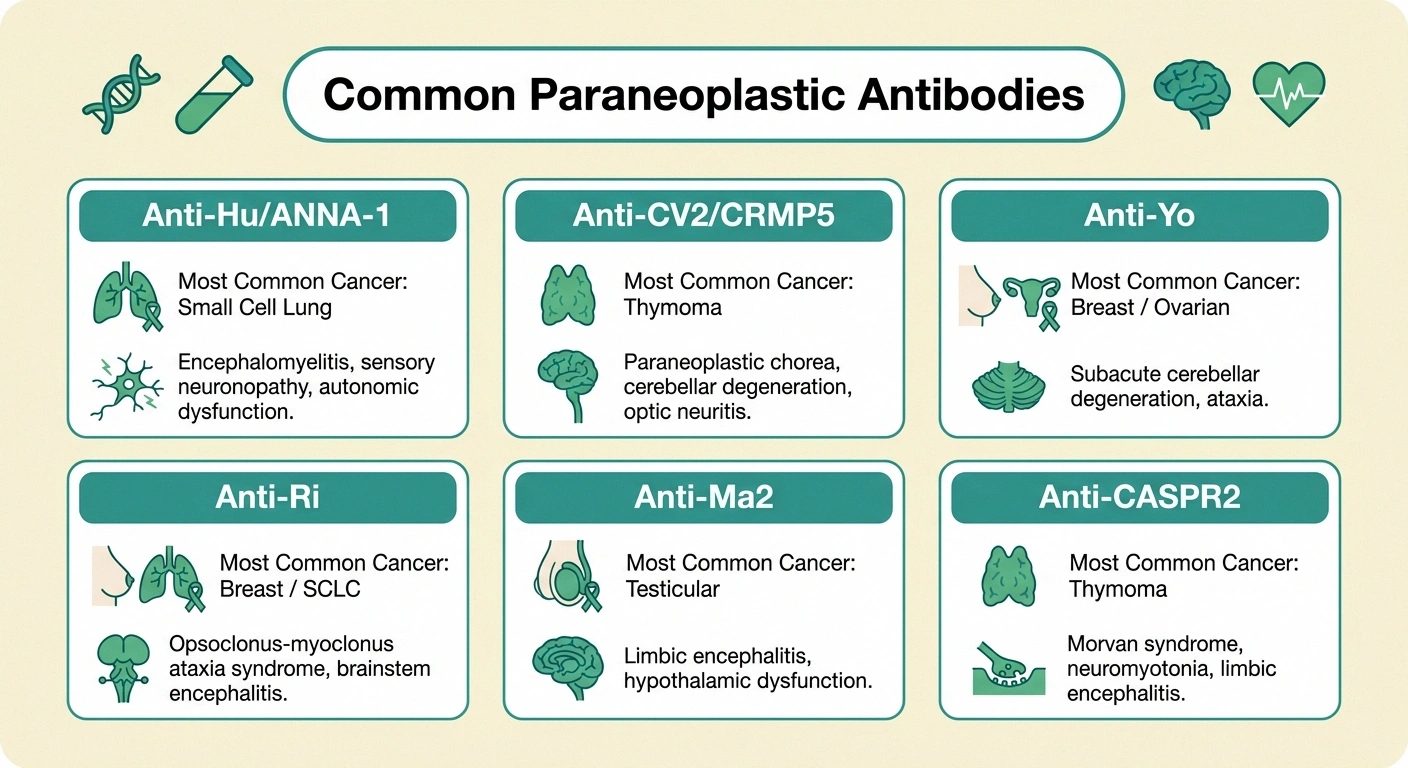
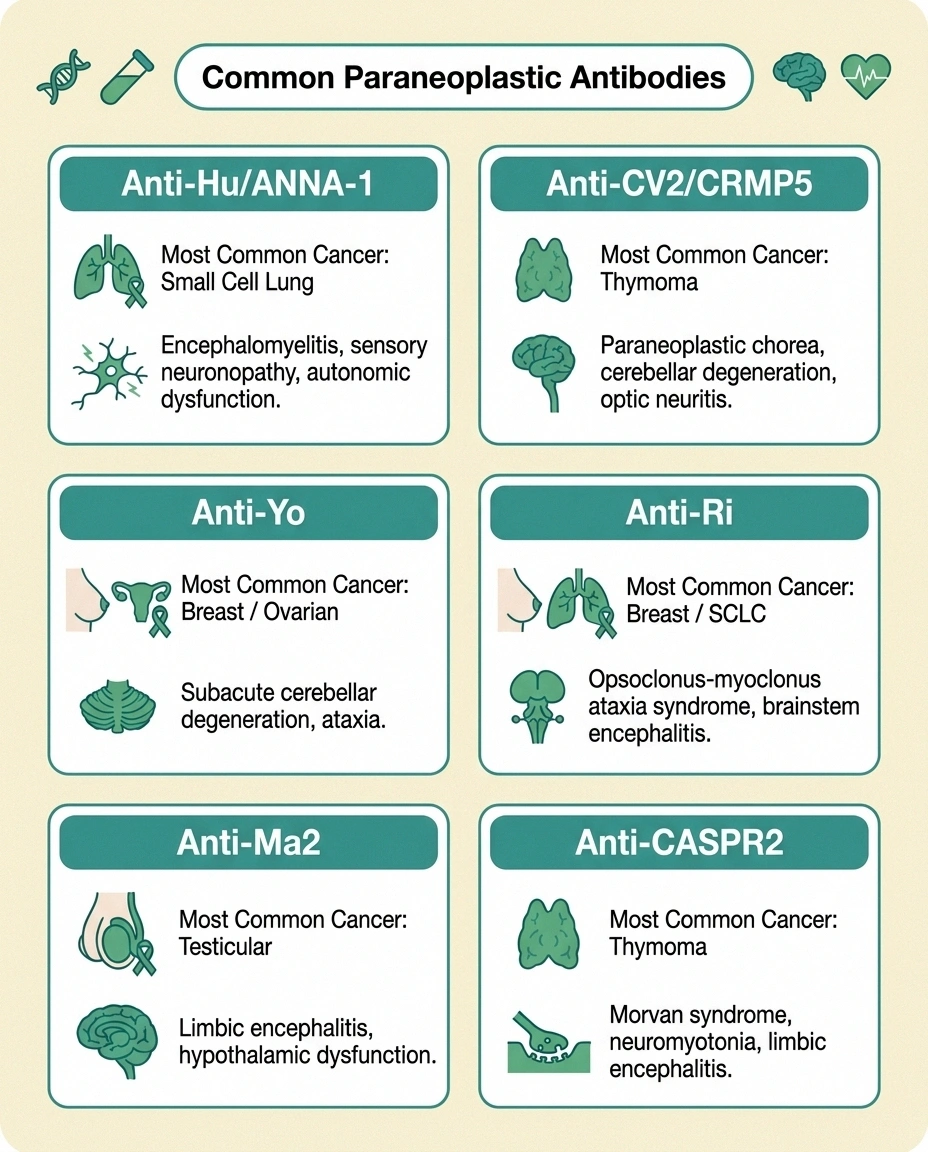
Anti-Hu (also called ANNA-1): This is the most important one for our purposes. It has roughly 99 percent specificity for cancer — meaning that if it's positive, the chance of an underlying cancer (usually small cell lung) is extremely high. It causes a sensory neuronopathy that attacks the dorsal root ganglia, producing severe loss of position sense and proprioception, often with painful sensory symptoms layered on top.
Anti-CV2 / Anti-CRMP5: Most often associated with thymoma and small cell lung cancer. Tends to cause a mixed sensorimotor neuropathy with cerebellar involvement.
Anti-Yo (PCA-1): Strongly associated with breast and ovarian cancer. Causes cerebellar degeneration more often than peripheral neuropathy, but neuropathy can occur.
Anti-Ri (ANNA-2): Linked to breast cancer and small cell lung cancer. Causes a variable syndrome that can include neuropathy.
Anti-Ma2: Most commonly associated with testicular cancer in younger men, lung cancer in older patients. Usually causes a limbic and brainstem syndrome with neuropathy as a secondary feature.
Anti-CASPR2: Causes Morvan syndrome — a combination of neuropathy, muscle twitching, insomnia, and autonomic dysfunction — often with underlying thymoma.
A critical note: roughly 30 to 40 percent of paraneoplastic neuropathy patients are antibody-negative. A negative panel does NOT rule out the diagnosis. If the clinical picture strongly suggests paraneoplastic neuropathy, your neurology team may pursue the cancer hunt even with a negative antibody result. The clinical pattern matters more than the panel.
How Paraneoplastic Neuropathy Presents
The classic paraneoplastic neuropathy looks quite different from the slow-burning, length-dependent diabetic neuropathy most of us are familiar with. The differences matter — they're often what alerts a sharp neurologist to look harder.
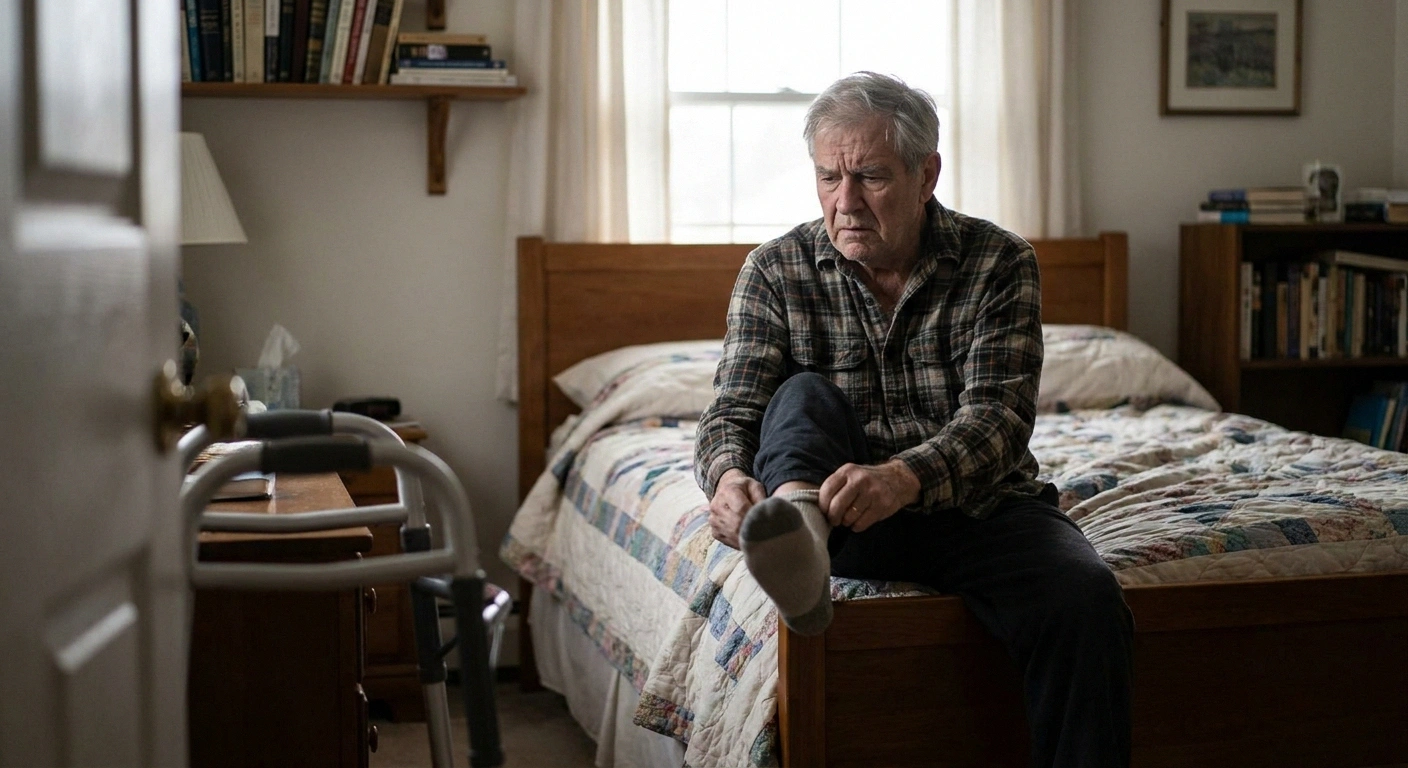
- Neuropathy symptoms developing over weeks to months (NOT years)
- Severe loss of balance and coordination disproportionate to weakness
- Heavy smoking history — current or former, especially over age 50
- Unintended weight loss, night sweats, persistent fatigue
- Neuropathy that starts in arms, face, or trunk — not just the feet
- Standard workup (B12, glucose, thyroid) all came back normal
Subacute onset. Most paraneoplastic neuropathies develop over weeks to a few months. This is faster than diabetic neuropathy (years) but slower than Guillain-Barré (days). When someone goes from normal sensation to severe numbness and ataxia inside three to six months without an obvious cause, paraneoplastic should be on the list.
Severe ataxia disproportionate to weakness. In anti-Hu sensory neuronopathy, the damage is to the dorsal root ganglion neurons, which carry proprioception — your sense of where your body is in space. Patients often have profound loss of joint position sense, leading to a stumbling gait, especially in the dark or with eyes closed. They may develop pseudoathetosis — uncontrolled writhing of the fingers when the hands are held out and the eyes are closed. This is a tell-tale finding.
Asymmetric or non-length-dependent pattern. Diabetic and most other common neuropathies start in the feet and creep up. Paraneoplastic neuropathies can be asymmetric, can start in the arms or face, can involve the trunk early — patterns that should make a clinician think “this isn't the usual stuff.”
Severe pain alongside numbness. Some paraneoplastic syndromes cause intense burning, electric, or shooting pain — out of proportion to what you'd expect from the degree of sensory loss.
Constitutional symptoms. Unintentional weight loss, fatigue beyond what the neuropathy alone explains, night sweats, persistent low-grade fever — these are systemic warning signs that should prompt cancer workup regardless of the neuropathy.
Autonomic involvement. Some paraneoplastic syndromes also damage autonomic nerves — leading to lightheadedness on standing, gastrointestinal motility problems, urinary issues, or abnormal sweating.
If your story includes several of these — especially the combination of subacute progression, ataxia out of proportion to weakness, and any constitutional symptoms — paraneoplastic neuropathy belongs on the differential.
How the Diagnosis Gets Made
Diagnosing paraneoplastic neuropathy is a multi-step puzzle. No single test confirms it. Your neurology team usually works through layers of evidence.

The journey usually starts with the same workup as any progressive neuropathy of unclear cause — what we cover in our piece on neuropathy diagnosis. Blood work for diabetes, B12, thyroid, liver, kidney function, and inflammation markers. An EMG and nerve conduction study to characterize the type and pattern of nerve damage. Sometimes a nerve biopsy.
If the standard workup doesn't explain things and the clinical picture has red flags, a paraneoplastic antibody panel is ordered — a blood test (and sometimes also a spinal fluid test) checking for the antibodies I described above. Major reference labs offer comprehensive panels covering the most clinically important antibodies. A positive result is highly informative; a negative result does not rule the diagnosis out.
If antibodies are positive, or if clinical suspicion remains high despite a negative panel, the cancer hunt begins. This usually means CT imaging of the chest, abdomen, and pelvis. An FDG-PET scan, which highlights metabolically active tissues, is often added because it can pick up small cancers that conventional CT misses. Mammography for women. Pelvic ultrasound or MRI for women. Scrotal ultrasound for men. Testicular exam. Colonoscopy if age-appropriate. Sometimes bone marrow biopsy if lymphoma is suspected.
And here's something important to know: if the initial cancer hunt comes up empty but the antibodies are positive, scanning continues. Occult tumors — cancers too small to see on initial imaging — can take six months to two years to become visible. Many guidelines recommend repeat imaging every three to six months for at least two years in antibody-positive patients. This sometimes catches cancers at very early, very treatable stages.
Treatment: The Cancer First, Then the Neuropathy
The single most effective treatment for paraneoplastic neuropathy is treatment of the underlying cancer. When the cancer is found and treated — surgery, chemotherapy, radiation, immunotherapy, depending on the type and stage — the immune response that's damaging the nerves often calms down. The neuropathy may improve, stabilize, or at least stop progressing.

The timing of intervention matters significantly. Early treatment generally produces better neurological outcomes. Once enough dorsal root ganglion neurons are dead, the sensory loss may be permanent regardless of how aggressively you treat the cancer. This is why catching it early is so consequential.
Alongside cancer treatment, neurologists often add immunotherapy targeting the antibody response itself. This may include intravenous immunoglobulin (IVIG), plasma exchange (plasmapheresis), corticosteroids, rituximab, cyclophosphamide, or combinations of these. The evidence base for these immunotherapies in paraneoplastic syndromes is mixed — they help some patients, fail to help others, and the specific approach varies by antibody type and clinical pattern. This is not a do-it-yourself area. Treatment decisions belong with a neuro-oncology or neuro-immunology specialist.
For symptomatic pain control, the medications used are similar to other neuropathies — gabapentin, pregabalin, duloxetine, tricyclic antidepressants, and sometimes opioids in carefully selected cases. These don't treat the underlying mechanism, but they can help quality of life while the cancer treatment and immunotherapy do their work.
The Realistic Prognosis
I want to be honest with you about outcomes, because this is an area where false hope and false despair both do harm. The realistic picture depends heavily on which paraneoplastic syndrome you have, which cancer is involved, and how early treatment starts.
For anti-Hu sensory neuronopathy with small cell lung cancer, the goal of treatment is often stabilization rather than full recovery. The dorsal root ganglion neurons, once destroyed, don't regenerate well. Patients typically don't return to baseline sensory function. But progression often slows or halts with successful cancer treatment and immunotherapy. And — this is important — the prognosis of the cancer itself is sometimes better in paraneoplastic cases because the immune recognition of the tumor seems to limit its growth. Some small cell lung cancers presenting with paraneoplastic syndromes are caught at very early, more curable stages.
For other paraneoplastic syndromes — thymoma-associated, antibody-negative cases, lymphoma-related — outcomes vary widely. Some patients improve substantially. Others stabilize. A minority continue to worsen despite treatment.
What matters most for your individual situation is connecting with a neurologist who actively cares for patients with paraneoplastic syndromes. These are not the kinds of cases most general neurologists see often. Academic medical centers, neuro-oncology programs, and large multidisciplinary cancer centers usually have the most experience. Asking for a referral is reasonable and often necessary.
When to Push for the Workup
Here is what I want you to take from this article above all else. If you, or someone you love, has neuropathy and any of the following — push for further workup:
Subacute progression — symptoms going from mild to severe over weeks to a few months, rather than the slow years-long creep typical of common neuropathies.
Profound loss of balance or coordination that's worse than the muscle weakness or sensory loss alone would explain.
Heavy smoking history — current or former — especially over age 50.
Unintentional weight loss, persistent fatigue, night sweats, or any other systemic symptoms accompanying the neuropathy.
Asymmetric, non-length-dependent, or unusual patterns — neuropathy that starts in the hands or face, or that's much worse on one side than the other.
A standard neuropathy workup (blood sugar, B12, thyroid, basic labs) that comes back negative or “idiopathic” without much further investigation.
If any of these apply, ask your neurologist explicitly: “Could this be paraneoplastic? Should we order a paraneoplastic antibody panel?” Most general neurologists will know the answer; some will need to refer you to someone with more specific experience. Either way, the question is reasonable and the workup, when warranted, can change your life.
Living With a Paraneoplastic Diagnosis
If you receive this diagnosis, the emotional weight is heavy. You're often dealing with two diagnoses at once — the cancer and the neuropathy — and they both demand attention. The neurology team and the oncology team need to coordinate, and that coordination is sometimes harder than it should be. Ask for a case manager or patient navigator if your cancer center offers one.

Practically, the neuropathy management overlaps with other forms of neuropathy: fall prevention if your balance is significantly affected, careful foot care if sensation in the feet is reduced, working with physical and occupational therapists to maintain function, and addressing pain through the medications we discussed above.
The emotional toll of this diagnosis is significant. Many patients describe feeling betrayed by their body — first the cancer, then this. Support is not optional. Look into oncology-specific counselors, neuropathy support groups, and connections with others who've walked this road. Many cancer centers offer integrated mental health services that understand the specific weight of paraneoplastic syndromes.
If Your Cancer Workup Is Negative
One scenario that comes up frequently: paraneoplastic antibodies are positive, but the initial cancer hunt finds nothing. What happens then?
The standard recommendation is continued surveillance. Most guidelines suggest repeat imaging — usually FDG-PET combined with CT — every three to six months for at least two years. The reasoning is that very small tumors can be invisible early but become detectable as they grow. Catching them early in this surveillance window is one of the best things that can happen, because it means treatment can start before the cancer spreads.
Sometimes the cancer never appears. The antibody could be a false positive, the tumor could remain too small to detect, or the immune system could have suppressed the tumor so effectively that it never grows. In these cases, immunotherapy alone (IVIG, steroids, rituximab) may be the only treatment available, with ongoing surveillance.
The frustrating reality is that this surveillance period is psychologically hard. You're waiting for a diagnosis that may or may not arrive. Stay connected to your neurology team. Don't skip the scheduled scans, even if you feel fine in between. The whole point of the surveillance is catching something early — that only works if you keep showing up.
Frequently Asked Questions
Can paraneoplastic neuropathy occur without cancer?
By definition, paraneoplastic syndromes are caused by an underlying cancer. However, the cancer may be very small, very early, or hidden for months to years after the neuropathy appears. In rare cases, the immune response may suppress the tumor so effectively that the cancer remains undetectable. If antibodies are positive but no cancer is found, ongoing surveillance is the standard approach.
How long after paraneoplastic neuropathy symptoms appear does the cancer usually show up?
The cancer is usually found within a year of neurological symptom onset, but the range is wide. Some cancers are found within weeks of starting the workup; others take two years or more to become detectable on imaging. Antibody-positive patients without an initial cancer diagnosis typically have repeat scans every three to six months.
What is the difference between paraneoplastic neuropathy and chemotherapy-induced neuropathy?
They are completely different mechanisms. Chemotherapy-induced neuropathy is caused by direct toxicity from cancer-fighting drugs — the chemo damages the nerves directly. Paraneoplastic neuropathy is caused by the body's immune response to the cancer itself, often before any cancer treatment has been given. The two can sometimes coexist in patients who develop a paraneoplastic syndrome and then receive chemotherapy.
Is paraneoplastic neuropathy reversible?
Partial recovery is possible, especially with early treatment of the underlying cancer combined with immunotherapy. Full reversal is uncommon, particularly in anti-Hu sensory neuronopathies where dorsal root ganglion neurons are destroyed. The realistic goal is usually stabilization and prevention of further progression. The earlier treatment starts, the better the outcome tends to be.
Does a negative paraneoplastic antibody panel rule out the diagnosis?
No. Roughly 30 to 40 percent of patients with paraneoplastic neuropathy have negative antibody panels. If the clinical picture strongly suggests a paraneoplastic process — subacute onset, profound ataxia, smoking history, unexplained weight loss — your neurology team may continue the cancer workup despite a negative panel.
What kind of doctor should I see if I suspect paraneoplastic neuropathy?
A neurologist is the appropriate starting point. If paraneoplastic neuropathy is confirmed or strongly suspected, referral to a neuro-oncology specialist or to a major academic medical center with experience in paraneoplastic syndromes is often valuable. These cases are uncommon enough that specialized centers see more of them and have refined treatment approaches.
Are there any new treatments on the horizon for paraneoplastic neuropathy?
Research into more targeted immunotherapies for paraneoplastic syndromes is ongoing. Newer biologic agents that target specific components of the immune response are being studied. Clinical trial enrollment, when available at academic centers, is one way to access investigational treatments. Discuss this with your neurology team if standard treatments aren't producing adequate response.
Can the cancer be cured if it's caught because of paraneoplastic neuropathy?
Sometimes, yes. Catching cancers earlier than they would otherwise have been found can shift them from late-stage to early-stage at diagnosis, which often improves cure rates. Small cell lung cancer found at an early stage thanks to paraneoplastic symptoms may be more treatable than the same cancer found later. The neuropathy, while devastating in its own right, can be the alarm that allows for earlier cancer intervention.
A Final Word
I started this article with a story, and I want to end it with another one. A woman in her late 50s — never smoked, mother of three, a long-time church choir director — develops sudden severe ataxia and numbness over the course of about two months. Her doctors are stumped. She gets sent to a tertiary referral center. The neurology team orders the right panel. Anti-Yo antibodies come back positive. A pelvic ultrasound finds a small ovarian mass. Surgery, chemotherapy, and IVIG. Today, two years later, she still can't button her shirt as easily as she used to, but she's walking with a cane, conducting her choir again, and her cancer scans are clean.
The neuropathy didn't disappear. But it stopped progressing, and the cancer was caught early because the nerves spoke first. That's the version of this story that we don't tell often enough. Paraneoplastic neuropathy is rare, serious, and underdiagnosed. It's also, sometimes, the body doing exactly what it's supposed to do — sounding an alarm loud enough that we finally pay attention.
If anything in this article matches your story or someone else's, please don't sit on it. Get the workup. Ask the questions. Push for the referral if you need to. This is the kind of diagnosis where speed matters, and where the people who get the right workup early have meaningfully better outcomes than those who don't.
About the Author