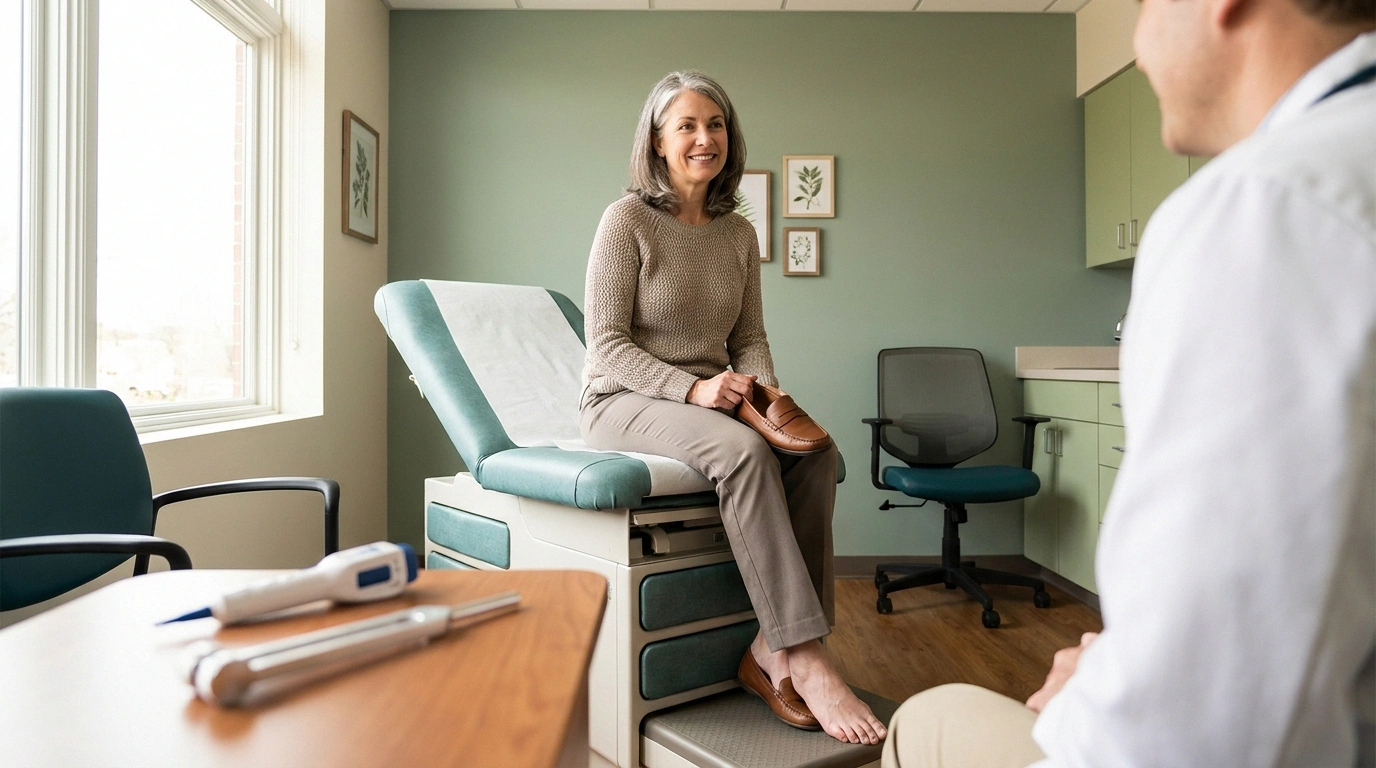
The first time I sat in a podiatrist's office, I was clutching a shoebox like it held state secrets. Inside were two pairs of sneakers I'd been rotating for months, plus a pair of navy flats I loved but couldn't feel my toes in anymore. My primary care doctor had said, almost as an aside, “You should probably see a podiatrist about those feet.” I nodded like I understood. I didn't. I remember thinking a podiatrist was for bunions and ingrown nails, not for whatever this burning-then-numb-then-electric feeling was that had been slowly rewriting my nights.
What I learned in that first appointment changed how I care for my feet forever. And it changed the questions I ask now, every time someone in our community writes in asking, “Should I even see a podiatrist? What do they actually do for neuropathy?”
So let's sit down together with a cup of coffee and go through it, the way I wish someone had gone through it with me. Because if you have neuropathy, or you think you might, a podiatrist is not optional add-on care. In many cases they are the person who is going to catch a problem three months before it becomes an emergency.
What a Podiatrist Actually Does for Neuropathy
A podiatrist, or DPM (Doctor of Podiatric Medicine), is a foot-and-ankle specialist. When you have peripheral neuropathy, your feet are the frontier where nerve damage and daily life collide. The podiatrist's job is not to cure the nerve damage. Their job is to keep the feet themselves healthy, functional, and injury-free while the rest of your care team addresses the underlying cause.
Key takeaway
A podiatrist is not there to cure your neuropathy. They are there to keep your feet healthy, catch pressure points and skin changes before they become wounds, and coordinate with your primary care doctor, neurologist, and endocrinologist. Their scope is the feet themselves — and that scope is what most directly determines whether you keep walking safely for the next twenty years.
Practically, that means the podiatrist watches for the things you might not feel: a callus building over a pressure point, a shoe rubbing a hot spot into a sore, a subtle change in the arch or the way the toes are sitting. They look at your gait. They test your sensation with a small nylon filament and a tuning fork. They check your pulses to be sure blood is reaching the tissue that's supposed to heal. They fit orthotics, trim nails safely, treat corns and calluses before they become wounds, and, when necessary, they step in for the kind of care that would be dangerous to attempt at home with numb feet and a pair of drugstore clippers.
If you already have a good routine going with daily neuropathy foot care, think of the podiatrist as the person who audits your routine, catches what your eyes miss, and adjusts course before small things become large ones.
What Happens at a Diabetic Foot Exam (and Why It Applies to Non-Diabetic Neuropathy Too)
The exam that most podiatrists build their neuropathy visits around is called a comprehensive diabetic foot exam. Don't be thrown by the name if you don't have diabetes. The same exam is exactly what you want for any neuropathy — post-chemo, idiopathic, chemo-induced, alcohol-related, autoimmune, or from a spinal issue — because the risk profile of a numb foot is the same regardless of what caused the numbness.
Research says
The 10-gram monofilament test is one of the most well-studied early-warning tools in foot care. Loss of protective sensation identified this way is one of the strongest predictors of future foot ulcers — which is why guidelines recommend the exam annually at minimum for anyone with neuropathy, and every 3 to 6 months for those with existing sensation loss or deformity.
Here's what a thorough exam includes:
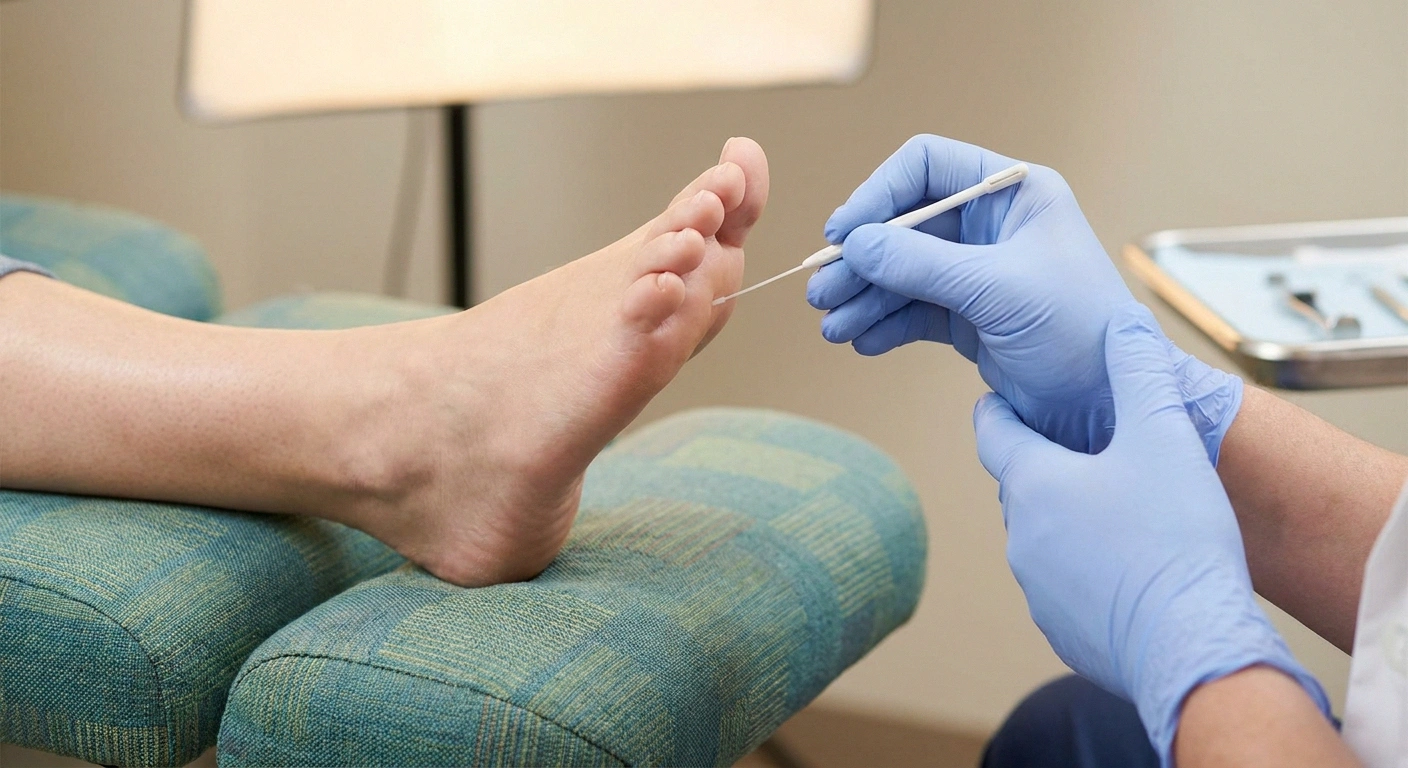
- Sensation testing. A monofilament (a thin nylon strand that bends at a set pressure, usually 10 grams) is pressed at several spots on the sole. If you can't feel it, that spot has protective sensation loss — a red flag for future ulcers.
- Vibration and position sense. A tuning fork is placed on a bony prominence like the big toe joint. You tell the podiatrist when the buzzing stops. Loss of vibration sense often shows up before loss of monofilament sensation.
- Pulse and circulation check. The podiatrist feels for the dorsalis pedis (top of foot) and posterior tibial (behind the ankle bone) pulses. If they're faint or absent, they may order a Doppler or ABI (ankle-brachial index) test.
- Skin, nail, and structure exam. They look between every toe, at pressure areas, under the ball of the foot, and at the heel. They check nails for thickening, ingrowth, and fungal issues. They assess the arch, the toe alignment, and any deformity.
- Biomechanical assessment. They watch you walk, sometimes barefoot and sometimes in your usual shoes. They're looking for subtle limps, uneven wear, and pressure areas that shoe design might be creating or worsening.
The whole exam is painless. It takes 20 to 30 minutes. And it gives the podiatrist a baseline they can compare to at every future visit, so a small change actually gets noticed instead of quietly getting worse.
When to Call the Podiatrist RIGHT NOW
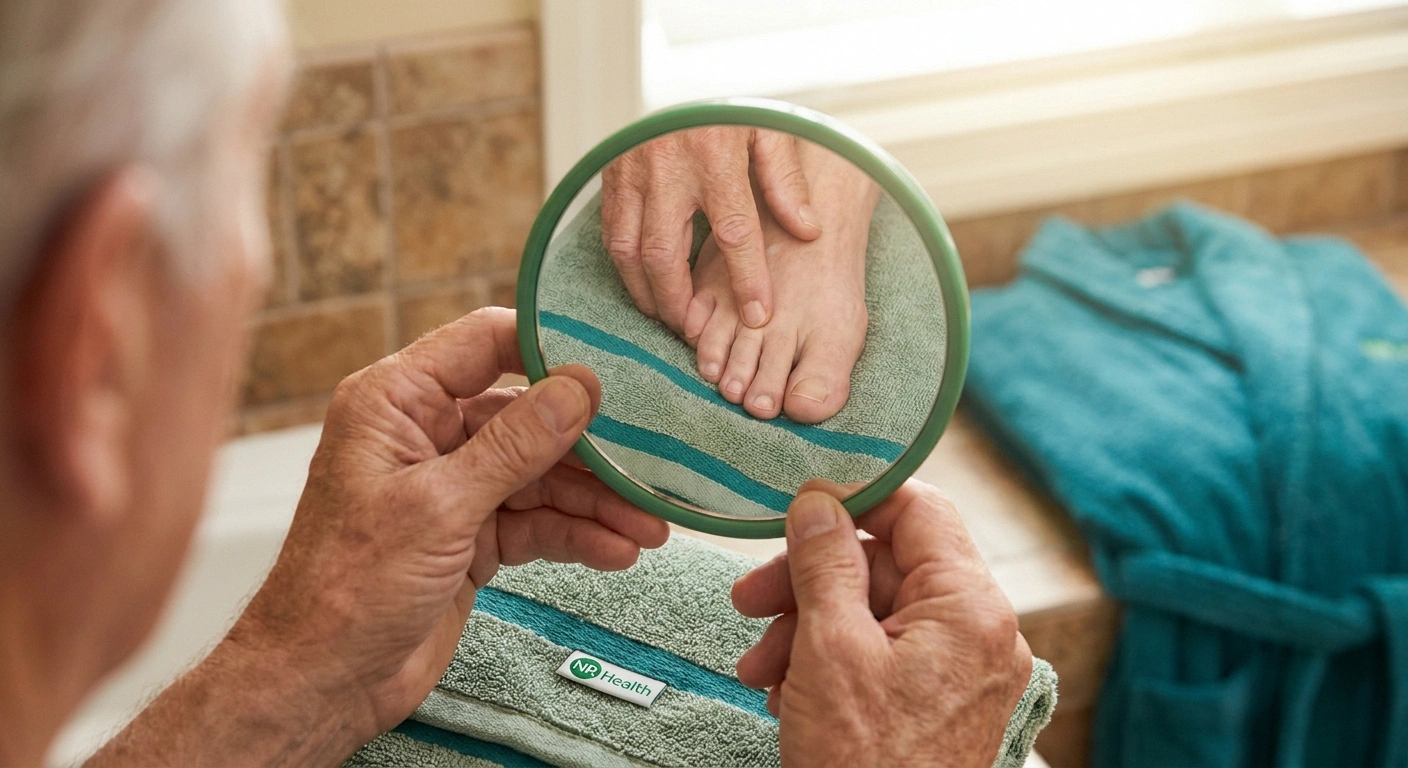
Some things do not wait. If you have neuropathy and you notice any of the signs below, do not wait for your next scheduled appointment. Call your podiatrist's office the same day, and if it's after hours, go to urgent care or the ER. This is where the “I didn't want to be dramatic” instinct genuinely gets people hurt.
Call today if you notice any of these
- An open wound, blister, or sore of any size on a numb foot.
- Sudden hot, red, swollen foot with no obvious injury (possible Charcot).
- Spreading redness, red streaking, drainage, or foul odor.
- Any black, gray, or purple tissue on toes or foot.
- Fever paired with any foot symptom.
- Sudden severe pain in a foot that was previously numb.
After hours, go to urgent care or the ER. This is where “I didn't want to be dramatic” genuinely gets people hurt.
- An open wound of any size. Even a small blister on a neuropathic foot is a wound that needs professional evaluation, not a Band-Aid and time.
- A sudden hot, red, swollen foot — especially without an obvious injury. This can be a sign of Charcot foot, a serious complication where the bones weaken and can collapse without you feeling it.
- Spreading redness, streaking, or foul odor. Signs of infection that can move fast in tissue with poor sensation and sometimes poor circulation.
- Any black, gray, or purple discoloration on the toes or foot. This can indicate tissue death and is an emergency.
- Fever with any foot symptom. Combined systemic and local symptoms mean the infection may already be moving.
- Sudden severe pain in a foot that was previously numb. A change in pain pattern in a neuropathic foot always deserves same-week evaluation, but severe onset means same-day.
Please write these down and stick them somewhere visible. Neuropathy has a cruel way of turning “I'll wait and see” into a much bigger problem, because you can't feel what you should be alarmed about. Your eyes and your instincts have to do the alarm-raising the nerves aren't doing.
When to Book Soon, When to Schedule, When to Skip
Not every foot change is a five-alarm fire. Here's how I think about the levels, based on what my own podiatrist has taught me over the years and what our community has shared.
Book within the next week or two:
- A new callus, corn, or thickened area of skin. Especially at the ball of the foot, on the pinky toe, or on the heel.
- Cracked, dry heels that aren't responding to moisturizer, particularly if you can see fissures deeper than a paper cut.
- Shoes that suddenly seem to fit differently — one tighter than the other, a spot that keeps rubbing, or a heel slipping when it never used to.
- A toenail that has thickened, discolored, or started curving into the skin.
- Numbness that has expanded to a new area, or areas where you can no longer feel your socks or the seam of your shoe.
- Any recent fall or stumble, even without an obvious injury — many balance issues linked to neuropathy are worth reviewing with the person who sees your feet.
Schedule at your next regular check-in (typically 3–6 months out):
- A general “things feel a little different” but no visible skin change and no new numbness.
- A shoe review because you're planning to try a new type — trail shoes, dress shoes for a wedding, sandals for summer.
- Discussion of orthotic wear-out (they typically last 1–2 years for daily wear).
- Routine nail care if you can't safely trim your own.
Probably skip the extra visit if:
- You had a good exam within the last six months, nothing has changed visually or sensorially, and you're doing your daily self-checks. Save the visit for when something actually shifts.
The reason I lay it out this way is that many people either bounce from crisis to crisis with no baseline, or they schedule so cautiously that they never build a working relationship with the person who could catch problems early. Aim for the middle: a real annual exam, plus responsive visits when something changes.
Podiatrist vs. Primary Care vs. Neurologist vs. Endocrinologist: Who Owns What

This is one of the most common questions I get, and it's a fair one, because neuropathy sits at the crossroads of four specialties and it's not always obvious who to call for what.
Here's the mental model I use, and my care team has confirmed it works:
Primary care (family medicine or internal medicine) is the quarterback. They coordinate referrals, manage your medications, watch for interactions, and handle the everyday things — labs, blood pressure, general wellness. If you're not sure who to call first, this is usually where to start.
The neurologist owns the nerves themselves. They order and interpret nerve conduction studies and EMGs, they hunt for the root cause of neuropathy when it isn't obvious, and they manage the neurological aspect of your care. If you don't have a diagnosis yet, or your neuropathy is progressing in ways your primary care can't explain, this is the specialist. Our page on neuropathy diagnosis and the tests your doctor may order walks through what the neurologist visit often looks like.
The endocrinologist owns the metabolic causes — most commonly diabetes, but also thyroid issues and other hormonal factors. If your neuropathy is diabetic in origin, the endocrinologist and your primary care are the two people most responsible for tightening the underlying condition so the nerve damage doesn't keep progressing.
The podiatrist owns the feet — the skin, the nails, the structure, the shoes, the pressure points, the wounds, the everyday consequences of numbness meeting a hard world. They are the specialist who sees your feet more closely and more often than anyone else on your team, and their scope is precisely what happens between the ankle and the toes.
The best care I've seen in our community happens when these four are talking to each other. Ask your primary care office how they share notes with your podiatrist. Ask your podiatrist if they'll send a summary to your neurologist. It's not overstepping — it's how coordinated care works.
What to Bring to Your First Podiatrist Appointment

The single most useful thing you can do for that first visit is come prepared. It shortens the visit, it makes the podiatrist's picture of you far more complete, and it gets you concrete guidance instead of generic reassurance.
Your 5-step first-visit prep
What I bring to every visit now:
- The shoes you actually wear most. Not your “good” shoes. The everyday pair. The podiatrist wants to see the wear pattern on the sole and how the inside is holding up.
- A pair of the socks you wear daily. Sock seams, thickness, and material matter more than people realize. If you wear compression socks, bring a pair.
- Any orthotic inserts or arch supports you use, even the drugstore kind. If you've tried something and abandoned it, bring that too and tell them why.
- A short symptom diary. Even one page. When did the numbness start? When is it worse — morning, evening, after standing? Any burning, tingling, electric-shock feelings? Any times you noticed a callus or cut you didn't remember getting?
- Your full medication list, including supplements. Some medications affect wound healing, circulation, and sensation.
- Your questions, written down. This is the one people skip. Do not skip it.
If you're bringing shoes and socks and a diary, ask ahead of time for a slightly longer new-patient slot. Most offices are used to it. If you say “I have neuropathy and I'd like a thorough baseline foot exam,” you'll usually be scheduled into a longer appointment window.
Questions to Ask Your Podiatrist
Copy these. Take them in with you. Use the ones that apply.
- “What did my monofilament test show, and are there any areas where I've lost protective sensation?”
- “How are my pulses on both feet? Do you have any concerns about circulation?”
- “Are the shoes I brought in a good fit for my current foot structure and sensation level? If not, what type should I be looking at?”
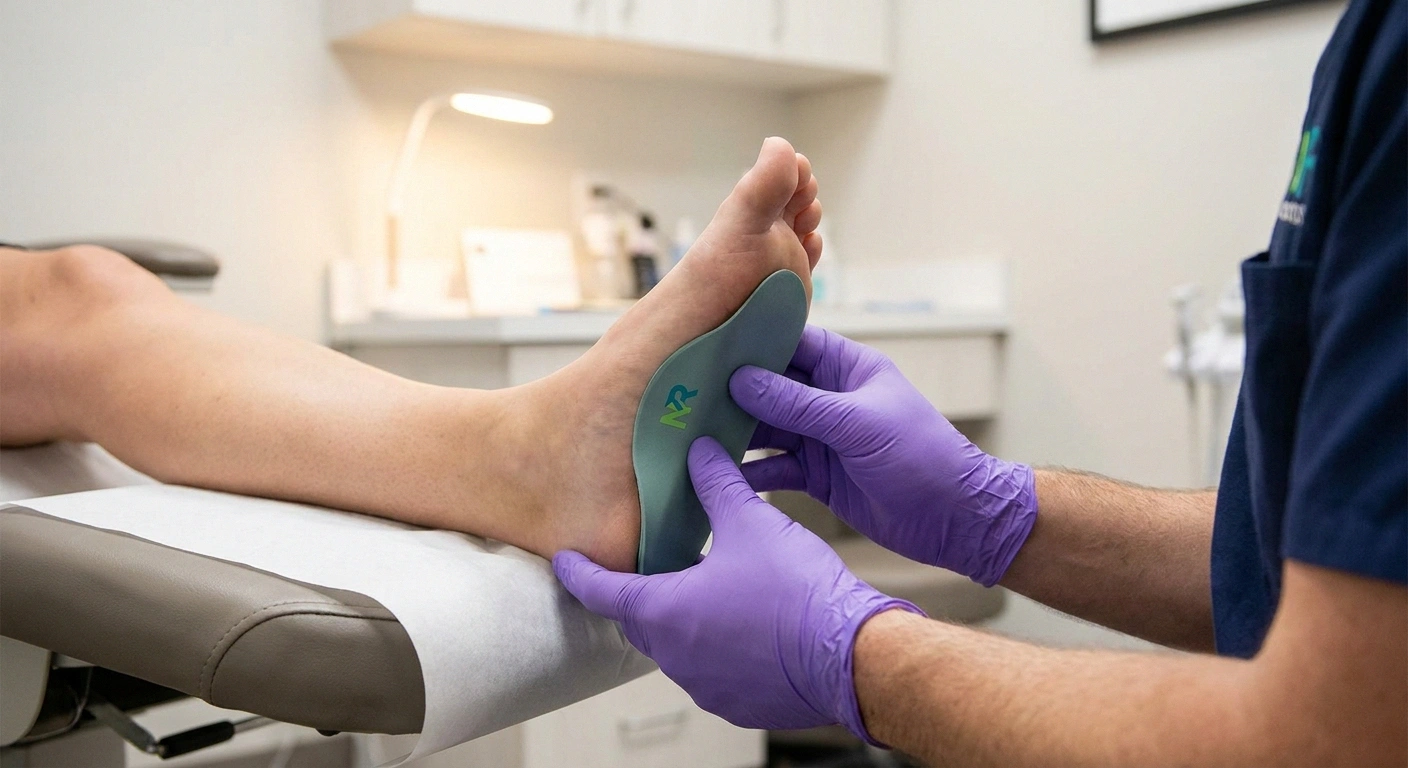
- “Do I need orthotics? If yes, do you recommend custom or over-the-counter, and why?”
- “How often should I be checking my own feet at home, and what specifically am I looking for?”
- “What is the earliest sign I should call your office rather than wait for my next appointment?”
- “How often do you want to see me based on where my feet are right now?”
- “Who else on my care team would you like a note sent to after today's visit?”
- “Is there anything about my gait or how I'm walking that concerns you?”
- “If I develop a blister, cut, or sore between visits, what is your protocol for handling that?”
Not every question will apply every visit. But if a podiatrist can't or won't answer these, they aren't the right one for you. There are plenty of DPMs who genuinely love this work and will happily spend the extra ten minutes making sure you leave with a plan.
How Often You Should Follow Up
The general framework, based on what most guidelines recommend and what my own podiatrist has told me:
- Annually, at minimum, for anyone with neuropathy who is otherwise stable, has intact protective sensation, no wounds, no deformities, and no history of foot ulcers.
- Every 3 to 6 months if you have lost protective sensation, if you have foot deformity (bunions, hammertoes, Charcot changes), if you have any history of ulcer or amputation, or if your circulation is compromised.
- Every 1 to 2 months, or as directed, if you are currently being treated for a wound, an ulcer, or a nail or skin issue.
- Immediately (same week or same day) for any new change — new callus, new numbness, new pain, new discoloration, any wound.
The follow-up schedule is not a bureaucratic hoop. It's how your baseline gets maintained. The podiatrist can only notice that “this callus is a little thicker than last time” if there was a last time and it was recent enough to compare.
Insurance and Cost Realities
Here's the practical layer, because it matters and nobody explains it well.
If you have Medicare and diabetes-related neuropathy with documented loss of protective sensation, Medicare Part B typically covers a comprehensive diabetic foot exam once every six months, plus therapeutic shoes and inserts through the Medicare Therapeutic Shoe program once per calendar year. This is one of the most under-used benefits in Medicare. Ask your podiatrist's billing office about it directly if it hasn't been offered.
If your neuropathy is not diabetic, coverage varies more. Most commercial insurance covers medically necessary podiatry visits, but “medically necessary” is the phrase to listen for. Documentation of neuropathy in your chart, ideally with a diagnosis code from your neurologist or primary care, is what makes the podiatrist visit clearly medical rather than cosmetic.
Custom orthotics are the biggest wildcard. Some plans cover them fully with medical necessity documentation. Some cover a percentage. Many don't cover them at all and treat them like an out-of-pocket expense (often $300–$600 for a custom pair). Ask before the fitting appointment. Ask specifically: “If I'm fitted for custom orthotics today, what is my out-of-pocket cost, and what is the code you'll bill?”
Routine nail care — trimming, callus care — is often not covered unless you meet specific criteria (usually loss of protective sensation, poor circulation, or a systemic condition like diabetes). If you qualify, it's covered every 61 days by Medicare. Worth asking about.
What a Podiatrist Can't Do (and Where They'll Refer You)

Being honest about scope matters. A podiatrist is not going to cure your neuropathy. They can't restore lost sensation. They aren't going to manage the medication that's controlling your burning feet or the anticonvulsant your neurologist prescribed for nerve pain. And they aren't the one who's going to work out where you sit in the stages of neuropathy — that's the neurologist's territory.
Remember
The podiatrist is one member of your care team — the specialist for the feet themselves. The primary care doctor quarterbacks, the neurologist owns the nerves, the endocrinologist owns the metabolic side, and the podiatrist owns what happens between the ankle and the toes. The best care happens when all four are talking. Ask each of them how they share notes with the others. It isn't overstepping — it's how coordinated care actually works.
What a podiatrist will do is refer you when refer is the right verb. A good DPM has a network. If your circulation looks off, they'll refer to a vascular specialist. If your pain is spiking and out of control, they'll loop in your neurologist. If a wound needs advanced care, they'll get you to wound care. If your gait suggests something structural at the ankle or up the chain, they may refer to orthopedics or physical therapy.
The mistake I see people make is expecting the podiatrist to be the whole answer, or dismissing them because they aren't. Neither is fair. The podiatrist is one member of a team, and their piece — the feet themselves — is the piece that most directly determines whether you keep walking safely for the next twenty years.
Sitting in that first appointment years ago, holding my shoebox, I didn't know any of this. I thought I was there for a checkup and I'd be out in fifteen minutes. Instead, I left with a fitted pair of orthotics, a rewritten shoe strategy, three concrete red flags to watch for at home, and the phone number of a nurse who takes same-day calls if I ever needed to speak to someone between visits. It felt like being handed a map.
If you haven't yet found your podiatrist, I hope this helps you walk in with a plan. And if you're overdue for a visit, this is your gentle nudge from a friend who's been there: call today, and make sure to ask about a comprehensive foot exam when you do. Your feet are quiet workers, and they deserve a specialist looking after them. Please discuss any of this, especially anything that feels urgent or new, with your own care team. They know you, and they'll know what fits your specific picture best.
Frequently Asked Questions
Do I need a referral to see a podiatrist for neuropathy?
It depends on your insurance. Traditional Medicare typically does not require a referral for podiatry. Many commercial HMO plans do. PPO plans usually don't. Call your insurance and ask, or call the podiatrist's office and ask them to verify your benefits before your appointment.
Can a podiatrist diagnose neuropathy on their own?
A podiatrist can identify the physical signs of neuropathy in your feet — loss of sensation, changes in pulses, skin and nail changes — and often is the first clinician to suspect it. But formal diagnosis usually involves your primary care doctor and often a neurologist, who can order the specific nerve tests that confirm what type of neuropathy you have and help identify the cause.
What's the difference between a podiatrist and an orthopedic foot specialist?
A podiatrist (DPM) trained specifically in foot and ankle care, including surgery, from podiatric medical school and residency. An orthopedic foot and ankle specialist is a medical doctor (MD) who did a general orthopedic residency and then a fellowship in foot and ankle. For neuropathy care, wound prevention, orthotics, and routine specialty foot care, a podiatrist is usually the right first stop.
How long does a first neuropathy podiatry visit take?
Plan for 45 minutes to an hour for a new-patient visit that includes a comprehensive foot exam, gait review, shoe assessment, and time to discuss a plan. Follow-up visits are shorter, often 15 to 30 minutes.
Should I go to a podiatrist or a wound care center for a foot sore?
For a small, brand-new wound with no signs of infection, call your podiatrist first — they may want to see you the same day. For anything with spreading redness, drainage, odor, fever, or that has been present for more than a few days without healing, go to a wound care center or the ER, whichever your podiatrist advises.
Are custom orthotics really worth it for neuropathy?
For many people, yes — especially if you've lost protective sensation, have foot deformity, or have areas of high pressure that keep forming calluses. Custom orthotics distribute pressure more evenly and reduce the risk of ulcers at those high-pressure points. Over-the-counter inserts help some people too, but a custom fit is what a good podiatrist recommends when the stakes are higher.
Can I trim my own toenails if I have neuropathy?
This is a judgment call based on your sensation, your vision, your circulation, and how steady your hands are. If you have full sensation, good circulation, straight nails, and no diabetes, you can usually trim your own carefully with straight cuts and gentle filing. If any of those factors are off, please have a podiatrist or a trained caregiver do it. A bad clip on a numb foot can turn into a much bigger problem quickly.
What if I don't have insurance or my plan doesn't cover podiatry?
Ask the podiatrist's office about their cash-pay rate for a new-patient comprehensive foot exam — many offer a straightforward price. Community health centers and teaching hospitals often have podiatry services on a sliding scale. If custom orthotics are out of budget, a good podiatrist can also recommend specific over-the-counter inserts and shoes that will help meaningfully at a lower cost. Choosing the right pair of shoes designed for neuropathy alone can make a real difference.
About the Author