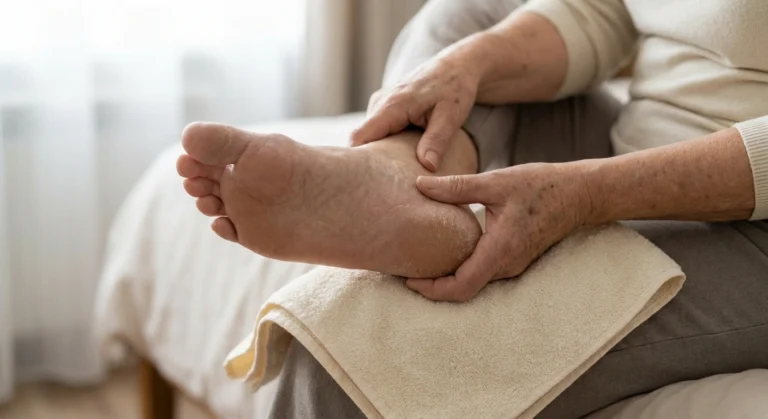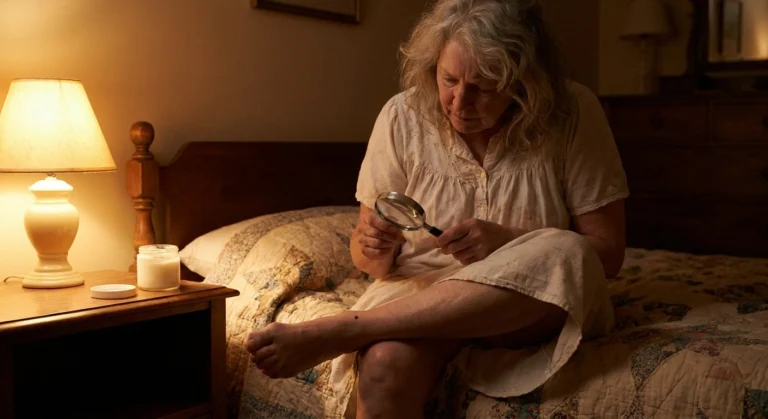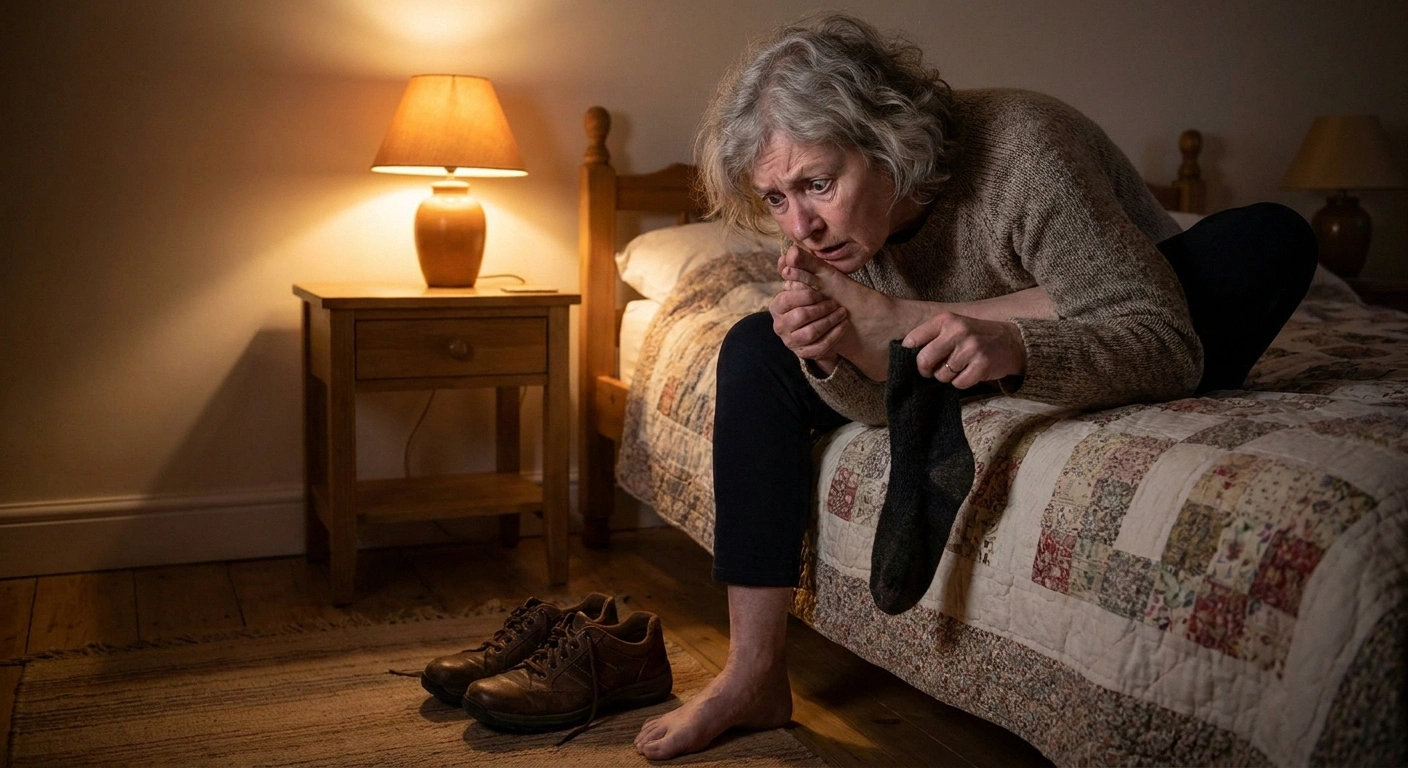
You peel off a sock before bed and there it is: a blister the size of a nickel on the side of your heel. You didn’t feel it form. You don’t feel it now. You’ve apparently been walking on it for hours.
If your feet had full feeling, that blister would have announced itself by lunchtime and you’d have stopped, adjusted your shoe or stuck on a bandage. With neuropathy, the announcement never came. That’s the whole problem in one picture — the injury is small, but the warning system that keeps small injuries small is switched off.
The good news is that most blisters heal without drama when they’re handled well from the first evening. This is the routine I follow myself and share with my support group: what to do right away, what never to do, how to pad and cover it, and the signs that mean a phone call can’t wait. I’m a fellow patient, not a podiatrist, and if you have diabetes or poor circulation, your foot doctor’s advice comes ahead of anything here.
Why a Small Blister Is a Bigger Deal on a Numb Foot
A blister is a pocket of fluid that forms between layers of skin, usually after rubbing or heat. The fluid is your body’s own cushion, and the thin skin over the top (the roof) works like a sterile bandage. Left alone and protected, most blisters heal on their own in one to two weeks, according to the American Academy of Dermatology.
That tidy process depends on one thing: the rubbing has to stop. Pain is what normally makes it stop. Without pain, you keep walking, the same shoe keeps grinding the same spot, and the roof tears open. Now there’s raw skin on a foot that may not heal quickly, pressed into a warm, damp shoe for most of the day.
International diabetic foot guidelines put blisters on a short list of what they call pre-ulcerative lesions, meaning small problems with a high chance of turning into a foot ulcer if nobody deals with them. Their advice is plain: treat every one. I’ve written about where that road can lead in my article on neuropathy and diabetic foot ulcers. A blister caught on day one is a minor chore. The same blister ignored for a week can become a months-long project.
The First Ten Minutes: What to Do When You Find One
Don’t touch it yet. Sit down somewhere with good light and work through this in order.
Jot this down while it’s fresh
Found: date and time
Where: which foot, which spot (inner heel, tip of second toe, ball of foot)
Size: pea, dime, nickel, quarter or bigger
Roof: intact, leaking or torn
Fluid: clear, bloody or cloudy
Last 24 hours: which shoes and socks, how far you walked, any heat on your feet
Those six lines are the first things a podiatrist’s nurse will ask on the phone. Having them ready turns a ten-minute call into a two-minute one.
- Wash your hands with soap and water.
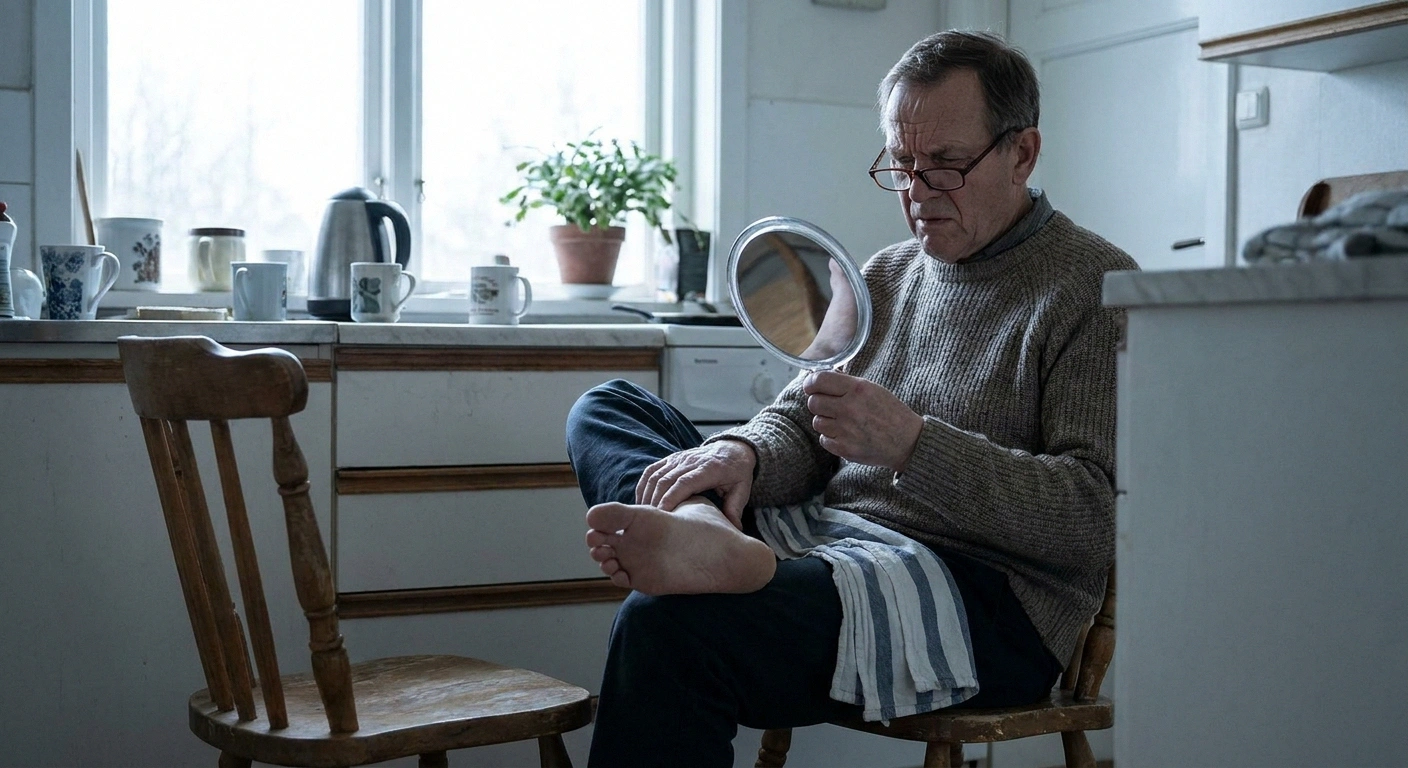
- Look at it properly. Use a hand mirror for the sole or the back of the heel, or ask someone at home to look. Note where it is, roughly how big, whether the roof is intact, and what color the fluid is. Clear or pale yellow is typical. Bloody or cloudy fluid is worth mentioning to a professional.
- Take a photo with a coin beside it for scale. You’ll want it for comparison tomorrow, and your podiatrist’s office may ask you to send it.
- Wash the area gently with mild soap and lukewarm water, then pat it dry. Don’t scrub and don’t soak.
- Check the other foot and the rest of this one. Whatever rubbed here may have rubbed elsewhere. This is the same head-to-toe look I describe in my guide to a daily foot inspection.
- Cover and cushion it (details below), and stay off that spot as much as you can for the rest of the evening.
Then make one decision: does this need a call? If you have diabetes, known circulation problems or a history of foot ulcers, my answer is yes, every time, the next business morning at the latest. A blister on a high-risk foot is exactly the kind of small thing podiatrists want to hear about early.
To Pop or Not: Why the Answer Is Almost Always No
I understand the urge. It looks like it wants to be popped. Resist.
An intact blister is a closed, clean wound. The moment you put a needle through it, it’s an open one, and you’ve done it with household tools in a bathroom. The American Academy of Dermatology advises against popping or draining blisters because of the infection risk, with a narrow exception for ones that are large and very painful. The Royal College of Podiatry in the UK says the same and adds that people with diabetes should take a blister to a podiatrist, since theirs may not heal as easily.
Think about that exception for a second. “Large and very painful” is the reason to drain. If you have neuropathy, pain usually isn’t the issue. So the main argument for draining at home doesn’t apply to us, while the main argument against it, infection in a slow-healing foot, applies double.
If a blister is so big or so badly placed that it’s sure to burst when you stand on it, that’s a job for a podiatrist, who can drain it under clean conditions, leave the roof in place and dress it correctly. It takes them five minutes. And never peel or trim the roof off yourself, even after it has flattened. That skin is protecting the new layer growing underneath.
How to Cover and Cushion It Properly
A blister needs two things from a dressing: a clean cover, and relief from pressure. An ordinary adhesive strip slapped flat across the top gives you the first but not the second.
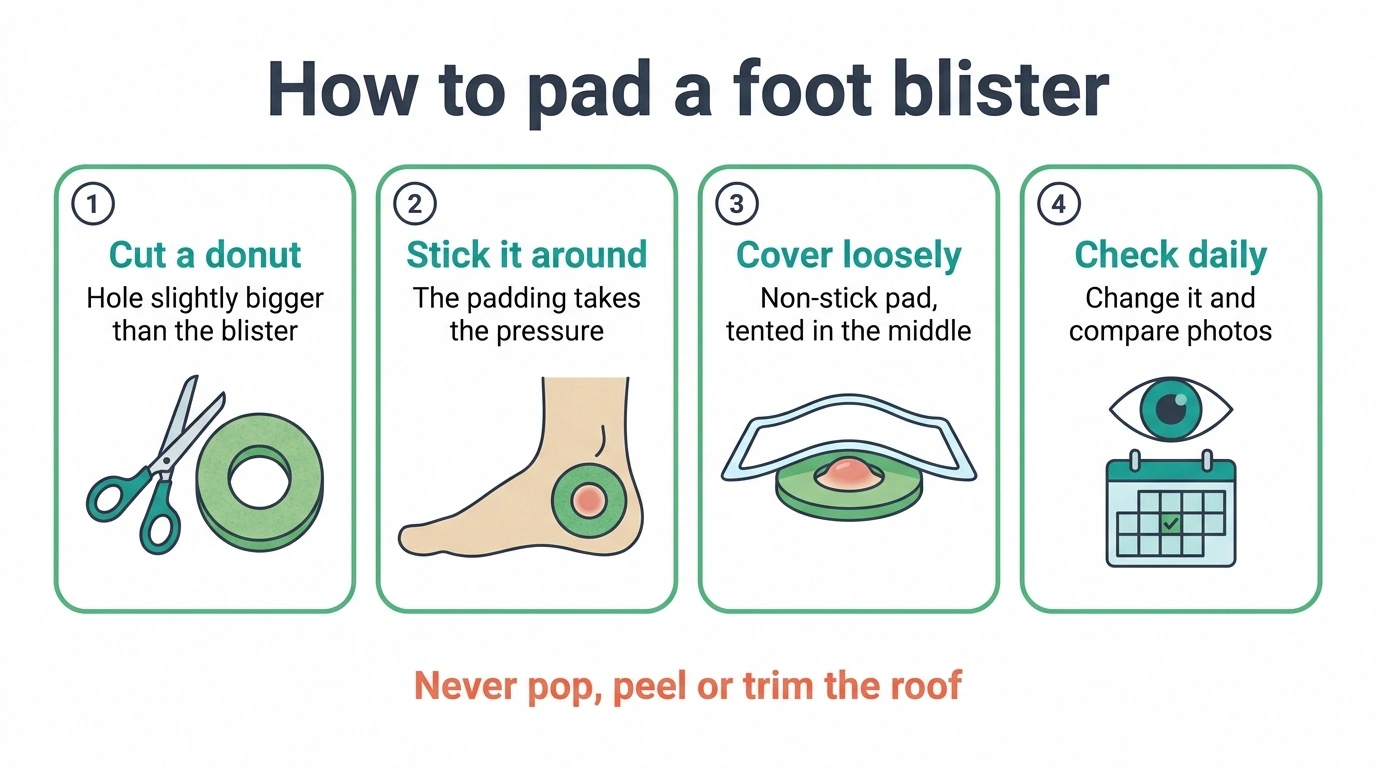
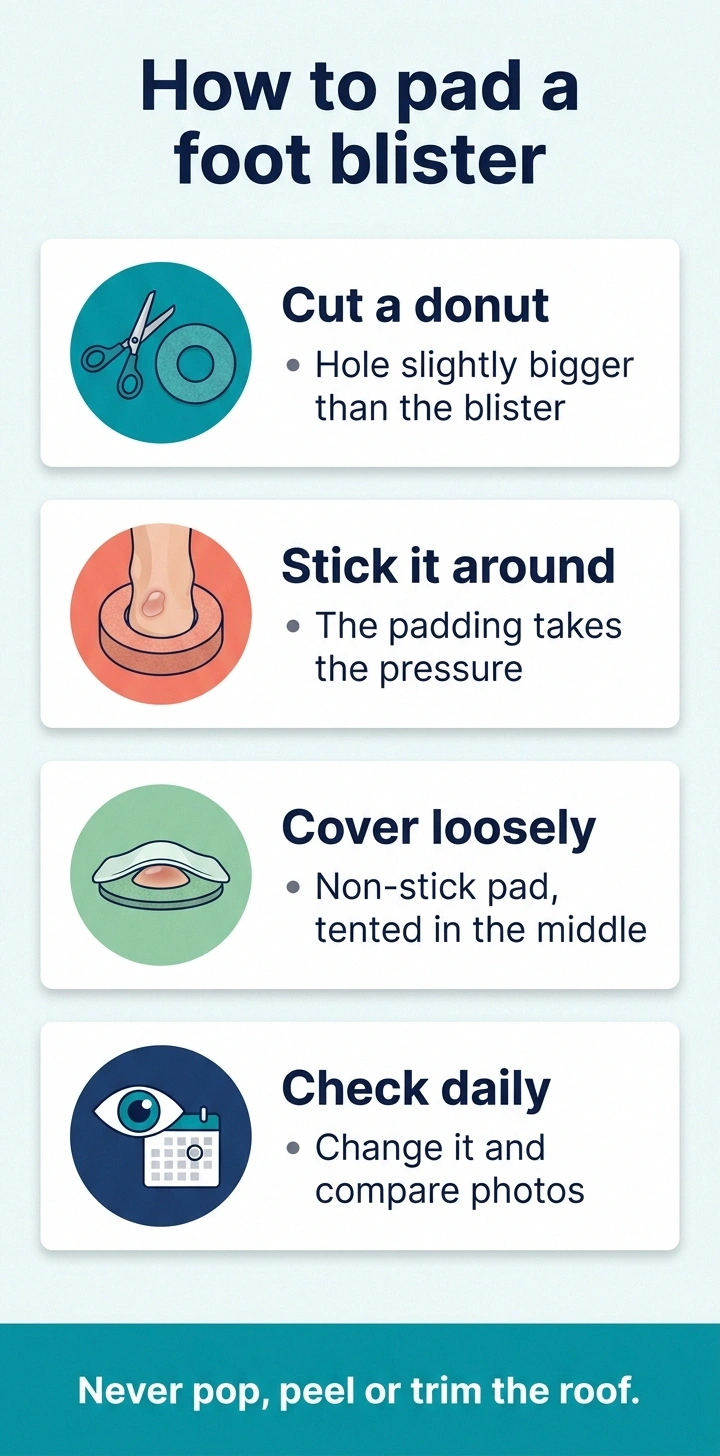
The cover. Use a non-stick sterile pad or a bandage with a non-stick center. The dermatology academy’s tip is to apply it loosely and pinch the sides in a little so the middle tents up over the blister instead of pressing on it. Secure it with paper tape, which is kinder to fragile skin than the plastic kind.
The cushion. For a blister on the sole, the heel or anywhere a shoe presses, cut a piece of moleskin or adhesive felt into a donut shape, with a hole slightly bigger than the blister. Stick the donut around the blister, not on it, so the padding takes the pressure and the blister sits in the hollow. Then put the cover over the whole thing.
Change the dressing once a day and any time it gets wet or dirty. Each change is your chance to look. Compare what you see with yesterday’s photo.
A caution about the thick gel-type blister plasters sold for hikers. They’re designed to stay on for days, which means days without seeing what’s happening underneath, and they can tear the roof off when they’re finally removed. On a foot that can’t feel, I’d pick a dressing I can lift and check every day.
If the Blister Has Already Broken
Often you’ll find it already torn — a flap of loose skin and a pink, damp patch underneath. That changes the job from protecting a closed blister to caring for a small open wound.
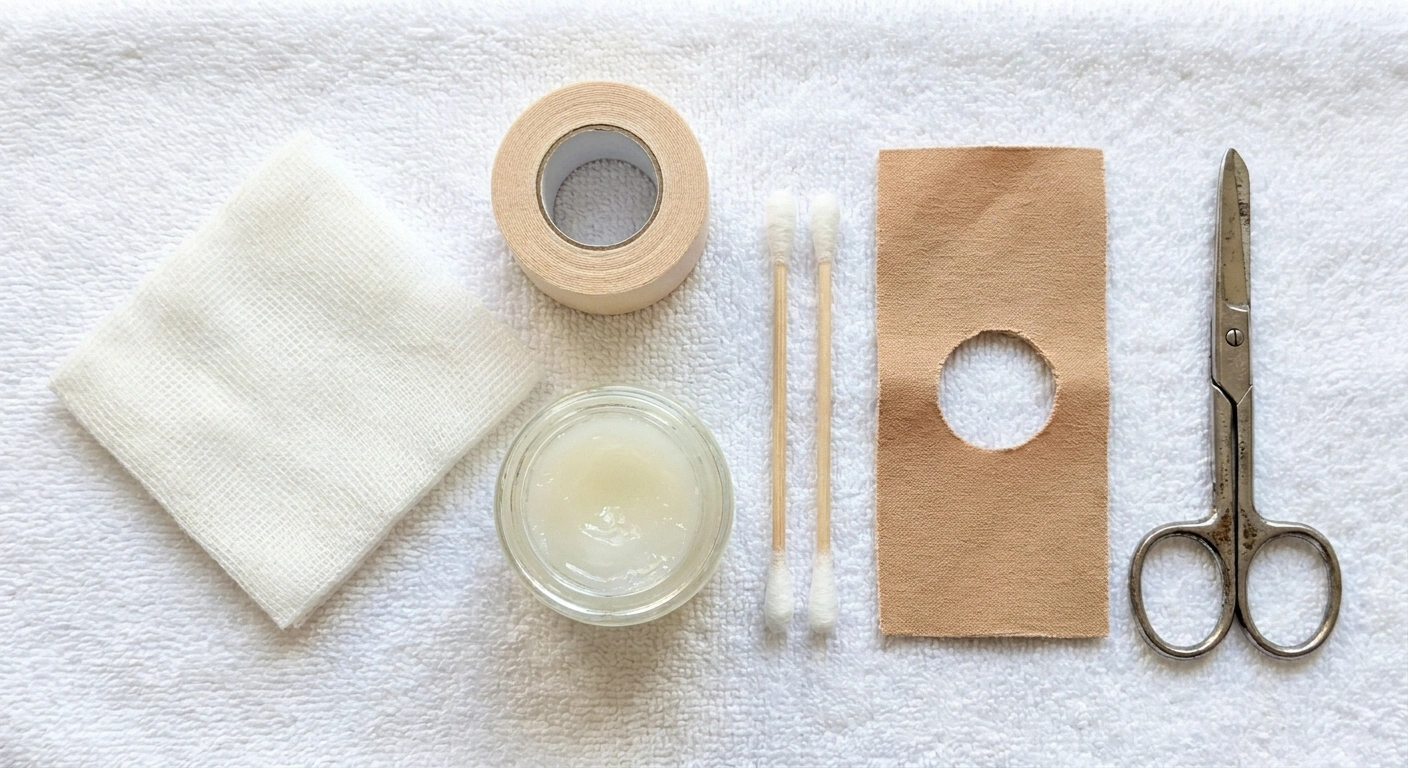
- Wash your hands, then rinse the area with lukewarm water and mild soap. Skip harsh antiseptics like hydrogen peroxide, which can irritate healing skin.
- Leave the flap of skin where it is and smooth it gently back over the raw area. Don’t cut it away.
- Put a thin layer of plain petroleum jelly over it to keep it from drying out and sticking to the dressing. Some doctors prefer an antibiotic ointment, so go with what yours recommends.
- Cover with a non-stick pad, add a donut cushion if it’s on a pressure spot, and change it daily.
Much of this is the same routine I laid out for splinters and small cuts on numb feet, and the same rule applies: an open area on a foot with poor sensation gets a professional look if it isn’t clearly better within a few days.
Find What Caused It Before You Put Shoes Back On
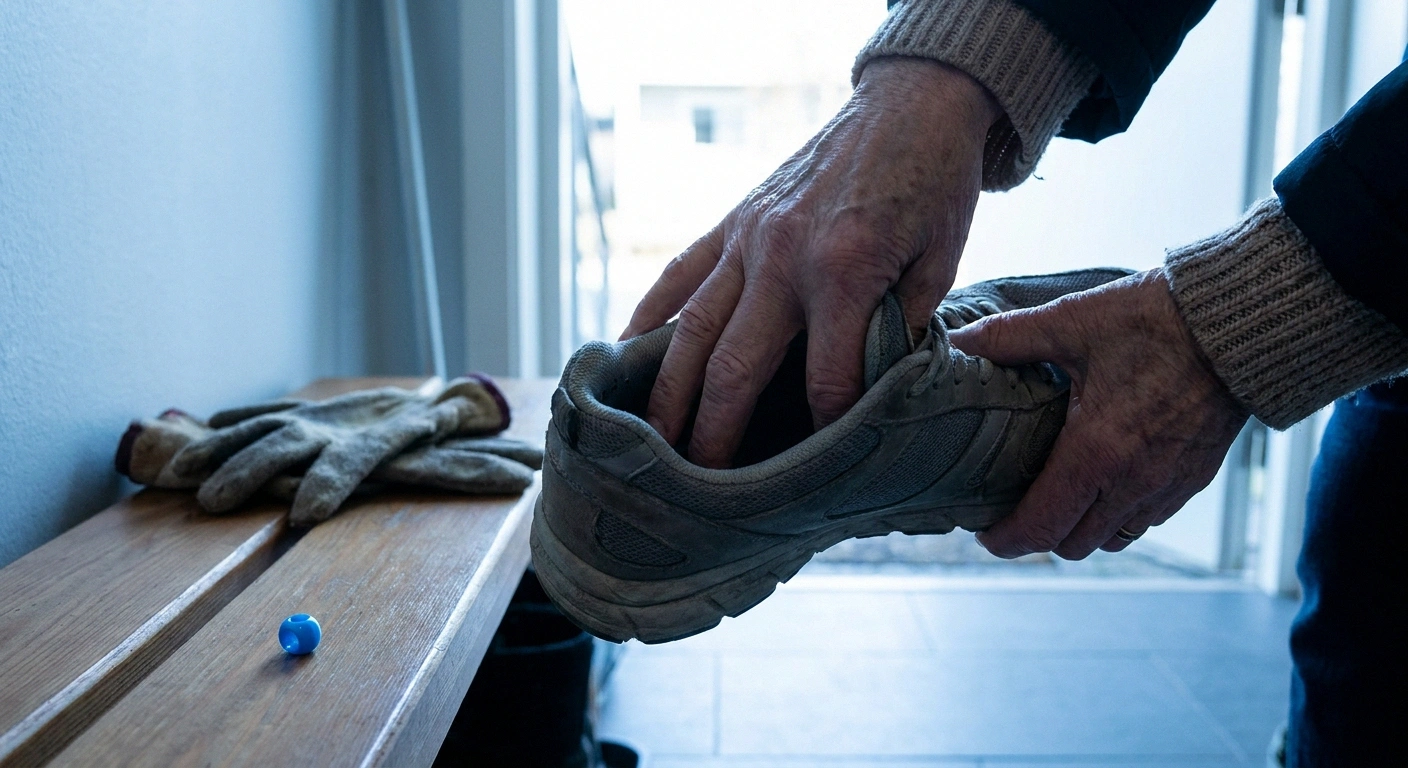
This is the step almost everyone skips, and it’s the one that prevents a second blister on top of the first.
A blister is evidence — something rubbed, pressed or burned that exact spot. Play detective:
- Run your hand inside both shoes. Feel for a wrinkled insole, a raised seam, a worn-through lining at the heel, or a pebble. I once found a grandchild’s plastic bead in the toe of my walking shoe after a full day in it.
- Turn the sock inside out. Look for a thick toe seam, a hole, or a fold that sat under the blister.
- Ask what was different. New shoes? A longer walk than usual? Damp socks? Shoes worn without socks? Swollen feet at the end of a hot day?
- Consider heat. Not every blister comes from rubbing. A heating pad, a hot water bottle, a too-hot foot bath or sun-baked pavement can blister skin that can’t feel the temperature. I cover those traps in my articles on heating pad safety and safe warm baths.
Once you’ve found the culprit, retire it until the blister heals. Wear a roomier, softer pair of shoes that doesn’t touch the spot. If you can’t find any cause at all, tell your podiatrist. That’s useful information in itself.
What Normal Healing Looks Like
It helps to know what you’re hoping to see, because “is this getting better?” is hard to judge without pain as a guide.
| When | On track | Off track |
|---|---|---|
| Days 1 to 3 | Same size or smaller, fluid clear | Growing, or fluid turning cloudy |
| Days 4 to 7 | Flattening, roof drying out | Refilling after each day on your feet |
| Week 2 | Roof peeling, pink skin underneath | Still open, wet or ringed with red |
A blister that refills every evening is telling you the pressure hasn’t been removed. Recheck the shoe and the padding before anything else.
In an ordinary friction blister that’s healing well, the fluid stays clear and slowly disappears over several days as the body reabsorbs it. The roof flattens, dries and darkens a little, then peels away by itself to show pink new skin. The skin around the blister stays its normal color, or the faint redness right at the edge shrinks day by day. The whole thing runs one to two weeks.
Healing can take longer with diabetes or reduced blood flow. Slower is acceptable. What isn’t acceptable is going backward — more redness, more swelling, more fluid, or a blister that’s been open for several days with no sign of new skin.
Signs That Mean Call Today
Because you can’t count on pain to warn you, your eyes, your nose and a thermometer have to do the job. Call your podiatrist or primary care office the same day if you notice any of these:
The pen-line trick for redness you can’t feel
If there’s a rim of redness around the blister and you can’t tell whether it’s spreading, take a ballpoint pen and gently trace the outer edge of the red area on your skin. Write the time next to it.
Look again in six to eight hours and once more the next morning. Redness that has crossed the line is spreading — that’s a same-day call, and the pen mark shows the nurse exactly how far it moved and how fast.
- Redness spreading outward from the blister
- Skin around it that feels warmer than the same spot on the other foot
- Swelling of the toe or foot
- Fluid that has turned cloudy, white, yellow or green, or any pus
- A bad smell from the dressing
- A blister filled with blood, or a dark patch under the skin
- A broken blister that isn’t improving after a few days of home care
- New pain or throbbing in a foot that’s normally numb
That last one deserves a note. When a numb foot starts to hurt, something has changed, and it’s rarely for the better.
Go to urgent care or the emergency room instead of waiting for a callback if you have a fever or chills, red streaks running up the foot or leg, or redness that’s spreading quickly. Those can be signs of an infection that’s moving, and with neuropathy, hours matter. If you’re unsure which kind of visit you need, my guide on when to see a podiatrist sorts the routine from the urgent.
Blisters That Appear for No Reason
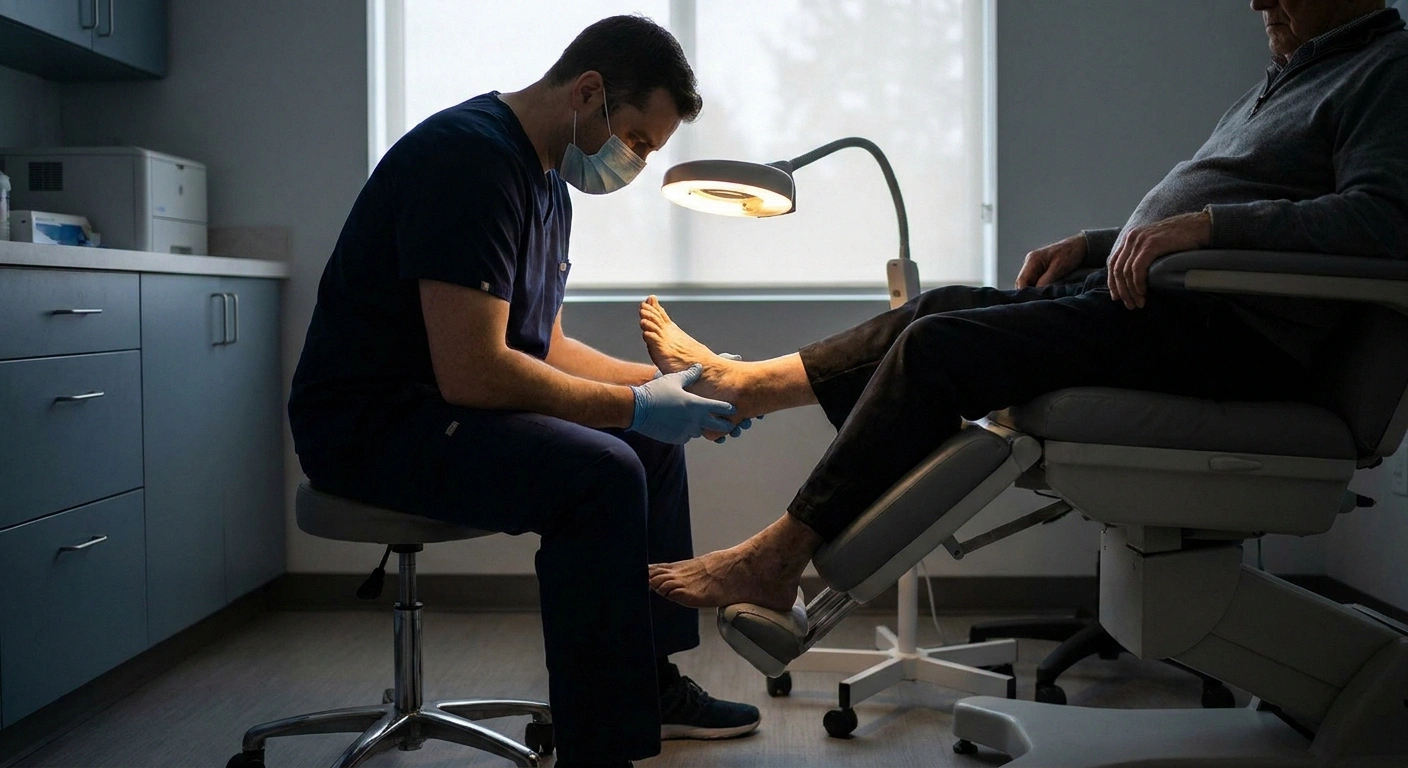
Every so often, someone in my group describes a blister that showed up overnight with no new shoes, no long walk and no heat. If they have diabetes, there’s a name for one possibility: diabetic blisters, or bullosis diabeticorum.
These are blisters that form without any injury, most often on the feet, toes and lower legs. They can look alarming — sometimes large, sometimes several at once — but they’re usually painless, and podiatrists say they generally heal by themselves within a few weeks. The home rules are the same: don’t poke, pop or peel, keep them covered and protected, and watch for infection.
Even so, I’d get any unexplained blister looked at instead of assuming that’s what it is. A blister with no obvious cause can also come from a burn you never felt, from swelling, from a reaction to a medication or from a skin infection, and sorting those out takes a trained eye. Take your photos along.
Keeping the Next One From Forming
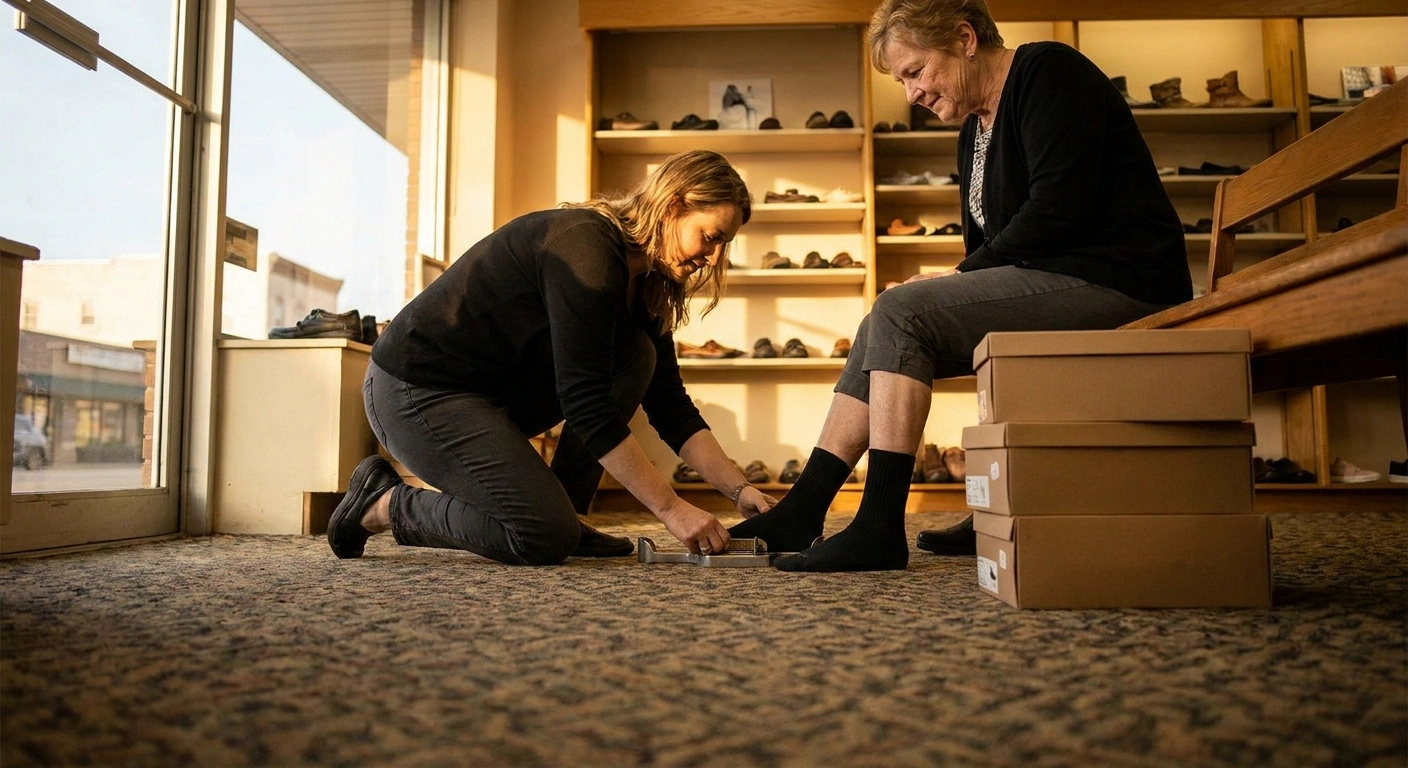
Prevention is mostly about removing friction, moisture and surprises.
My own break-in schedule for a new pair
- Days 1 and 2
- One hour, indoors, then shoes off and a full look at both feet.
- Days 3 and 4
- Two hours, including a short walk outside.
- Days 5 to 7
- Half a day, with the old pair in the car as a backup.
- Week 2
- A full day, but only if no check so far has shown a red mark that lasted past twenty minutes. Any lasting mark sends the schedule back to the start, or the shoes back to the store.
Fit shoes to your feet as they are now. Shop in the afternoon, when feet are at their largest, and have both feet measured. You can’t judge fit by feel, so judge it by looking: after an hour in a new pair, take them off and check for red marks. My guide to shoes for neuropathy goes through what to look for.
Break new shoes in slowly. An hour or two a day at first, with a foot check afterward, adding time over a week or two.
Choose socks that stay dry and smooth. Moisture-wicking fabric, no thick toe seam, no holes, changed daily and any time they get damp. There’s more in my sock guide.
Feel inside your shoes before every wearing. It takes three seconds — and it would have saved me from that plastic bead.
Treat redness as a blister in waiting. A red patch that’s still there twenty minutes after you take your shoes off is a hot spot. Pad it, change shoes and rest it now, and the blister may never form.
Keep something on your feet. Guidelines for at-risk feet are firm that walking barefoot, even indoors, invites injury you won’t feel.
None of this is complicated. It’s a few small habits stacked together, doing the work your nerves used to do for you.
Frequently Asked Questions
Should I pop a blister on my foot if I have neuropathy?
No. An intact blister is protected by its own skin, and opening it at home raises the risk of infection in a foot that may heal slowly. If a blister is very large or sure to burst under pressure, a podiatrist can drain it safely.
How long does a foot blister take to heal with neuropathy?
Most ordinary friction blisters heal in one to two weeks when protected from further rubbing. Healing can take longer with diabetes or poor circulation. A blister that is getting worse, or an open one that is not improving after a few days, should be checked.
What is the best way to cover a blister on a numb foot?
Use a non-stick sterile pad applied loosely so it does not press on the blister, held with paper tape. On pressure areas, add a donut-shaped piece of moleskin or felt around the blister. Change the dressing daily and inspect the skin each time.
When should I call a doctor about a foot blister?
Call the same day for spreading redness, warmth, swelling, cloudy or colored fluid, pus, a bad smell, a blood-filled blister or new pain. Seek urgent care for fever, chills, red streaks or rapidly spreading redness. People with diabetes, poor circulation or past foot ulcers should report any foot blister.
What are diabetic blisters?
Diabetic blisters, also called bullosis diabeticorum, are blisters that appear without an injury, most often on the feet, toes and lower legs. They are usually painless and generally heal within a few weeks, but any unexplained blister should be examined to rule out other causes.
Can I keep walking on a blister I cannot feel?
Limit walking on it as much as possible until it heals. Continued pressure and rubbing can tear the blister open and turn it into a wound. Cushion the area and switch to shoes that do not touch the spot.
What should I do if a blister on my foot has already burst?
Wash it gently with mild soap and lukewarm water, leave the loose skin in place, apply a thin layer of petroleum jelly or the ointment your doctor recommends, and cover it with a non-stick dressing. Change the dressing daily and have it checked if it is not clearly better in a few days.
About the Author