
A woman in my Tuesday-night support group — I'll call her Karen — spent nearly nine years tethered to an infusion chair. Every three weeks, she'd drive forty minutes to the infusion center, park, check in, get an IV started, and settle in for five or six hours while immunoglobulin dripped into her arm. She'd bring a book she rarely opened, a lunch she rarely finished, and a headache that usually showed up around hour four. Karen has CIDP — chronic inflammatory demyelinating polyneuropathy — and for almost a decade, IVIG infusions were what kept her walking.
Then last summer, her neurologist told her about a new option. A subcutaneous injection she could give herself at home. Once a week, thirty to ninety seconds. No infusion chair. No IV. No four-hour headaches. The drug had a peculiar name — efgartigimod alfa and hyaluronidase-qvfc, branded Vyvgart Hytrulo — and it worked in a completely different way from IVIG. Instead of flooding her system with donor antibodies, it removed her own. Six months in, Karen told the group she'd forgotten what a Tuesday afternoon looked like when you didn't have to plan around an infusion.
Efgartigimod isn't the right choice for everyone with CIDP, and it isn't usually the first thing a neurologist reaches for. But for people who've been living inside the IVIG cycle — or whose disease has stopped responding well — it represents something the CIDP community hasn't had before: a genuine, mechanism-different alternative that fits into a normal week. This is the article I wish Karen had found a few years earlier.
What CIDP Actually Is (Refresher)
CIDP is an autoimmune disease of the peripheral nervous system. In plain terms, the body's own immune system starts attacking the insulation around peripheral nerves — a fatty coating called myelin. Myelin is what lets nerve signals travel quickly from the brain and spinal cord out to muscles and back. Strip away the insulation, and the signals slow down or get scrambled. That's the physical basis of most CIDP symptoms: progressive numbness, weakness, unsteady gait, sometimes tingling or nerve pain, sometimes trouble with fine motor tasks like buttoning a shirt.
Key takeaway
Efgartigimod (Vyvgart Hytrulo) is an FDA-approved, first-in-class FcRn antagonist for CIDP. It reduces circulating IgG antibodies — including the pathogenic ones attacking peripheral nerves — by blocking the receptor that normally rescues IgG from destruction. It doesn't cure CIDP, but for patients who respond, it reduces disease activity and prevents relapse using a weekly home injection that takes thirty to ninety seconds instead of a multi-hour infusion.
The “chronic” part of the name matters. Unlike Guillain-Barré syndrome, which develops over days to weeks and often resolves, CIDP evolves slowly over months and years. It relapses and remits, or it steadily progresses, and without treatment it tends to keep worsening. The full picture of how demyelinating neuropathies differ from axonal ones is worth reading if you're new to the diagnosis — CIDP is the classic demyelinating autoimmune condition and behaves differently from the axonal neuropathies that cause most cases of diabetic or chemotherapy-induced nerve damage.
Roughly two to seven people in every hundred thousand carry a CIDP diagnosis. It's uncommon, but it isn't vanishingly rare, and it's very treatable — which is one of the reasons an accurate diagnosis matters so much. If you're still working through the diagnosis process, our piece on how peripheral neuropathy gets diagnosed walks through the standard workup, including the nerve conduction studies and spinal fluid tests that specifically point toward CIDP rather than something else.
Why Antibodies Are the Problem — Understanding IgG's Role in CIDP
To understand efgartigimod, you first have to understand why the immune system matters in this disease. In a healthy person, immunoglobulin G — IgG for short — is the workhorse antibody that identifies bacteria, viruses, and other threats and marks them for destruction. IgG is helpful and necessary. Most of us have grams of it circulating in our blood at any moment, and it's what a lot of our vaccine-driven immunity is made of.
The FcRn recycling loop, in three steps
Effect is selective — IgG only. Albumin, IgM, IgA, IgE, and clotting factors are unaffected.
In CIDP, something goes wrong with that system. A small but disruptive fraction of a person's IgG antibodies stop recognizing outside threats and instead start binding to structures on peripheral nerves — the myelin sheath, the nodes where nerves conduct signals, and specific proteins that keep myelin attached to the nerve fiber. Once those autoantibodies latch on, they trigger inflammation and immune-cell attack against the nerve. The insulation breaks down, and nerve conduction fails.
This is why treatments for CIDP look the way they do. IVIG floods the bloodstream with donor IgG to overwhelm and dilute the harmful antibodies. Steroids and other immunosuppressants dial down the immune system broadly. Plasma exchange physically removes antibodies from the blood. Every one of these approaches is really about the same underlying problem: too many of the wrong antibodies attacking nerves. For a fuller look at how the immune system drives autoimmune neuropathies, we've got a dedicated piece that's worth the read.
How Efgartigimod Works — The FcRn Antagonist Approach
Here's where efgartigimod gets genuinely clever. Rather than replacing bad antibodies or suppressing the immune system, it exploits a housekeeping mechanism your body already uses to manage IgG levels.
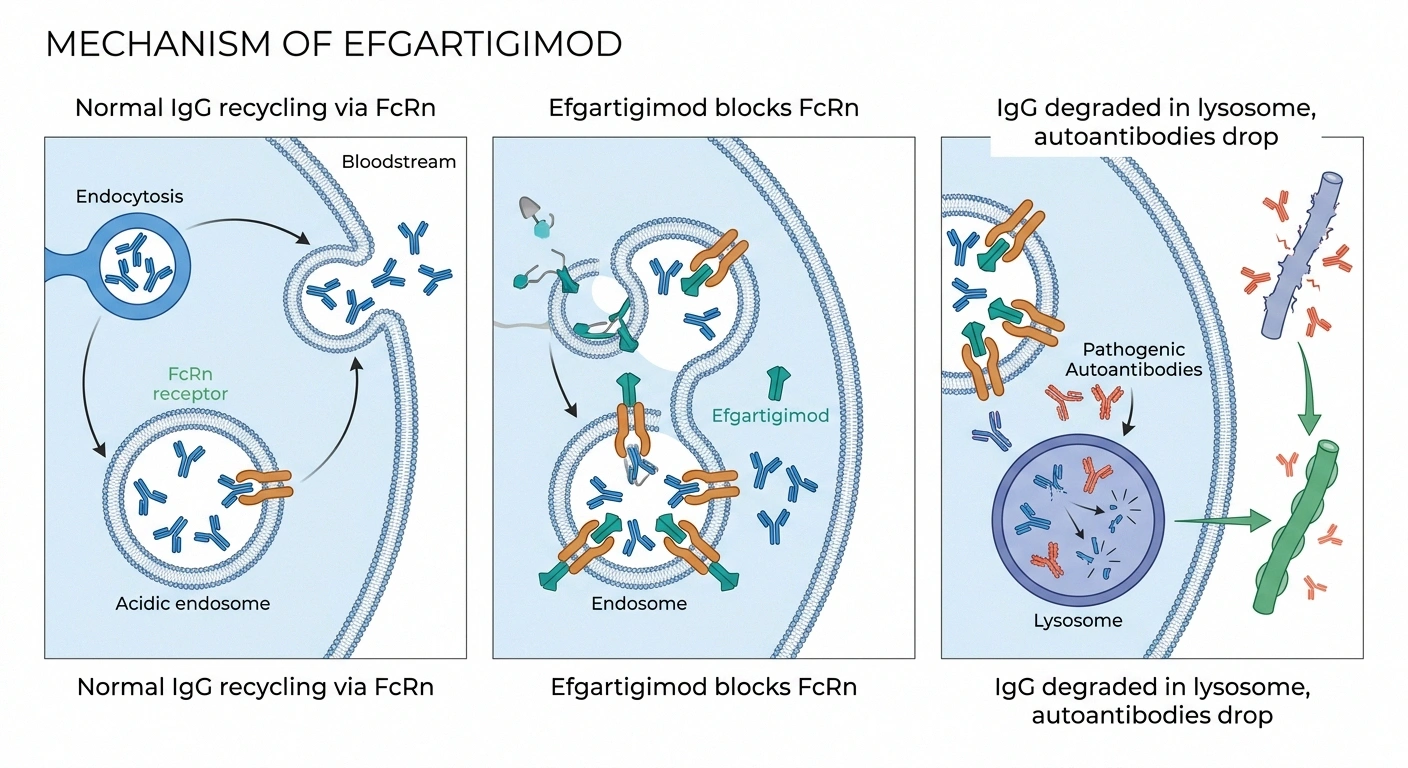
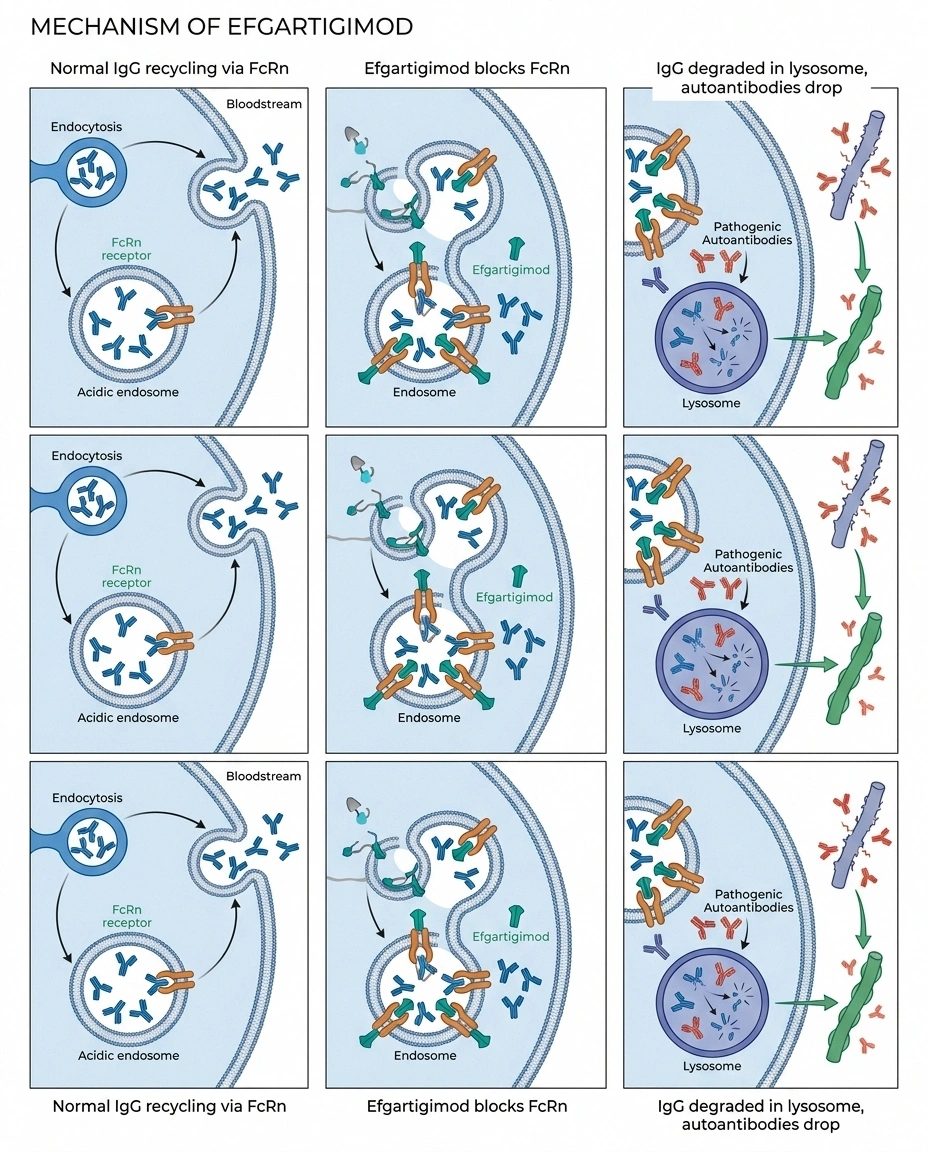
Normally, IgG antibodies have an unusually long lifespan in the bloodstream — about three weeks each — thanks to a specialized rescue receptor called the neonatal Fc receptor, or FcRn. Think of FcRn as a recycling loop. When cells sweep IgG antibodies out of circulation and pull them inside for disposal, FcRn intercepts them, binds them tightly, and shuttles them back out to the bloodstream to continue their work. Without FcRn, IgG would get broken down in cellular garbage bins called lysosomes within a day or two. With FcRn doing its job, IgG lives long enough to fight infections effectively.
Efgartigimod is a specially engineered fragment of a human IgG antibody, designed to bind FcRn with extraordinary strength — much more strongly than natural IgG does. When you inject it, efgartigimod races through your circulation and grabs onto the available FcRn receptors, blocking them. Without free FcRn to catch and rescue your own IgG, your antibodies stop getting recycled. They go to the lysosome instead, and they get broken down.
The result: circulating IgG levels drop by roughly sixty to seventy percent within two to three weeks. And crucially, that drop includes the pathogenic autoantibodies driving CIDP. The immune assault on your nerves weakens because there simply isn't as much bad antibody around to do the damage.
A few important design details. Efgartigimod is highly selective — it only affects IgG. It leaves alone the other antibody classes (IgM, IgA, IgE), albumin, and the clotting factors, so it doesn't wreck the rest of your immune system or your blood chemistry. And because the effect wears off between doses, IgG levels partially recover, then fall again with the next weekly injection. It's a tightly controlled ratchet, not a permanent knockout.
The “Hytrulo” part of the brand name refers to the formulation. Vyvgart Hytrulo pairs efgartigimod with an enzyme called hyaluronidase that briefly loosens the tissue under your skin so a larger volume of medication can be injected quickly. That's why the shot takes thirty to ninety seconds rather than the fifteen or twenty minutes a similar volume would otherwise require. The original Vyvgart product is intravenous; Vyvgart Hytrulo is the subcutaneous version that lives at home.
What the ADHERE Trial Actually Showed
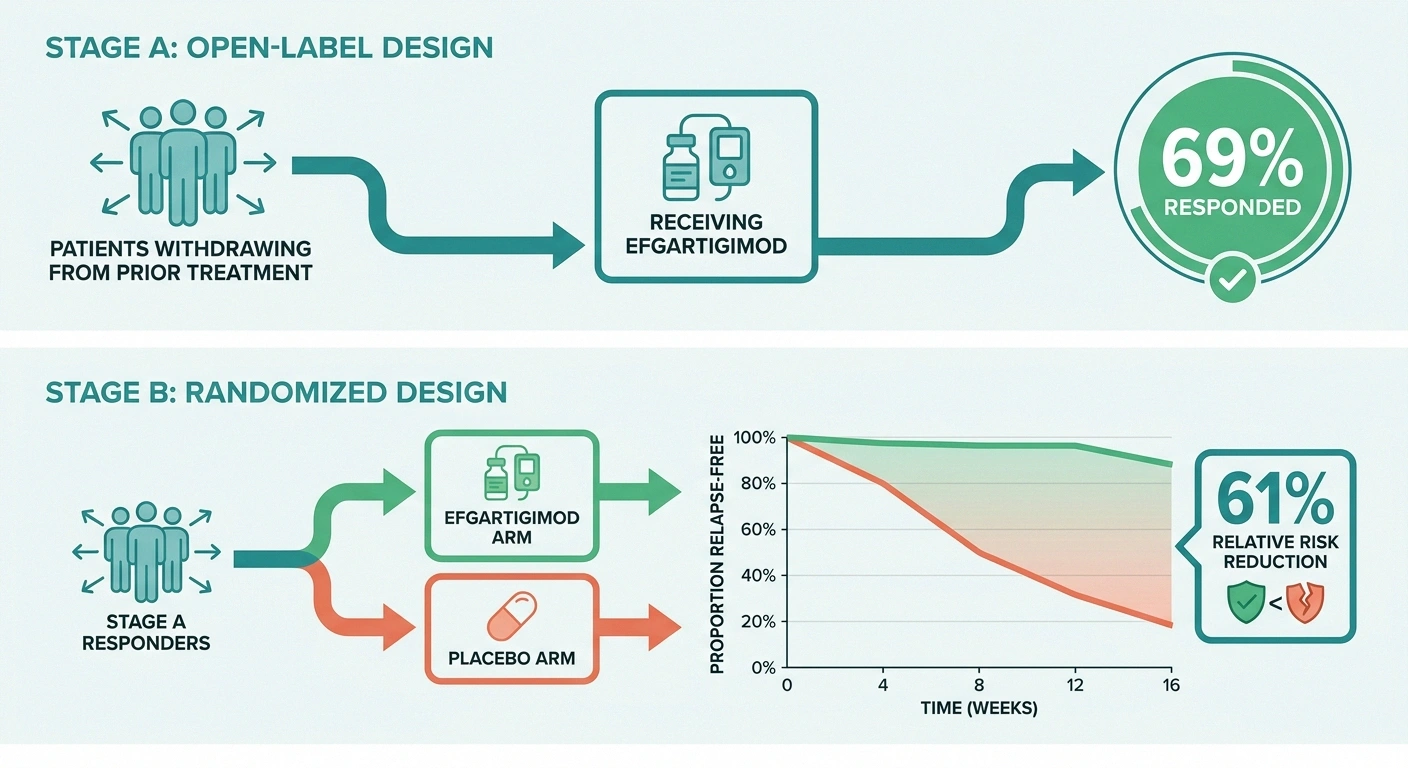
Efgartigimod's approval for CIDP rests primarily on a phase 3 study called ADHERE — the largest randomized trial ever conducted in CIDP. It had an unusual two-stage design that deserves a walk-through, because the design itself explains a lot about how the drug is used.
Research says
The phase 3 ADHERE trial — the largest randomized CIDP trial to date — used a two-stage design. In Stage A (open-label), about 69% of participants showed clinical improvement on efgartigimod within roughly twelve weeks, including patients previously treated with IVIG, PLEX, or steroids. In Stage B (randomized, placebo-controlled), Stage A responders continuing efgartigimod had a 61% lower risk of relapse compared with placebo (hazard ratio 0.39). Improvement was measured on the aINCAT disability score — the yardstick CIDP specialists actually use in clinic.
In Stage A, patients with active CIDP — some previously treated, some not — stopped their existing therapies (IVIG, plasma exchange, or steroids) and received open-label efgartigimod. The researchers watched to see who responded clinically. About sixty-nine percent of participants showed measurable improvement in their CIDP over roughly twelve weeks. That's a striking response rate for a disease this complex, and it included patients who had failed or plateaued on prior treatments.
In Stage B, only the Stage A responders continued into a randomized, placebo-controlled phase. They were randomly assigned to either keep receiving efgartigimod or to switch to a placebo injection. The main question was whether efgartigimod would prevent relapse. The answer was a decisive yes: patients who stayed on efgartigimod were about sixty-one percent less likely to experience a clinical relapse than patients who received placebo (hazard ratio 0.39). The relapse curves separated early and stayed apart throughout the study.
The primary yardstick for improvement and relapse was the aINCAT score — an “adjusted Inflammatory Neuropathy Cause and Treatment” disability rating that assesses how limited a patient is in ordinary tasks like walking, buttoning a shirt, or holding utensils. That's the metric that translates into real-world function, and it's the one CIDP specialists actually watch in the clinic.
What the trial didn't do is compare efgartigimod head-to-head against IVIG. That comparison doesn't exist yet, and it's a gap the CIDP community would love to see closed. What ADHERE established is that efgartigimod works in a broad CIDP population — including patients who'd already been through other treatments — and that continuing it prevents relapse in the majority of responders.
How Efgartigimod Compares to IVIG, PLEX, and Steroids
CIDP has a fairly well-established treatment ladder, and understanding where efgartigimod fits requires understanding the other rungs.
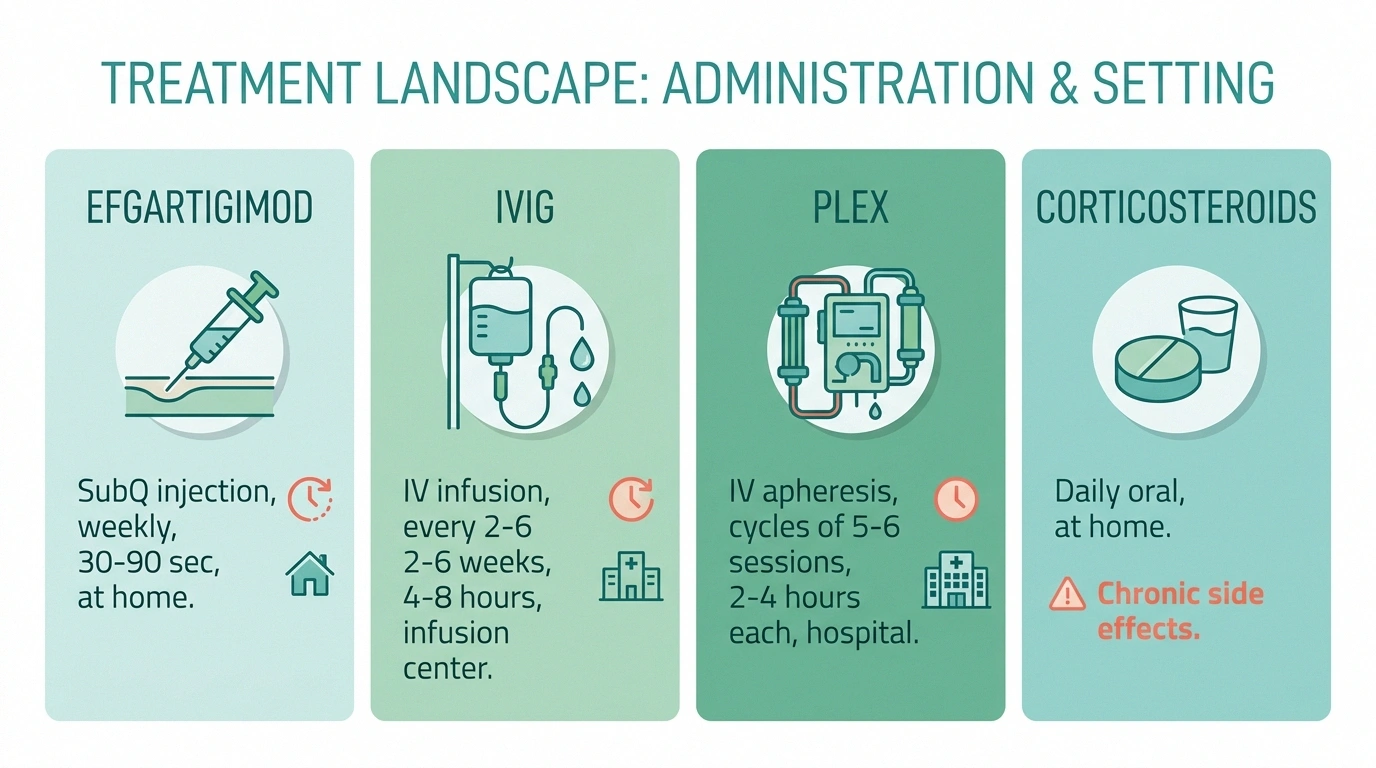
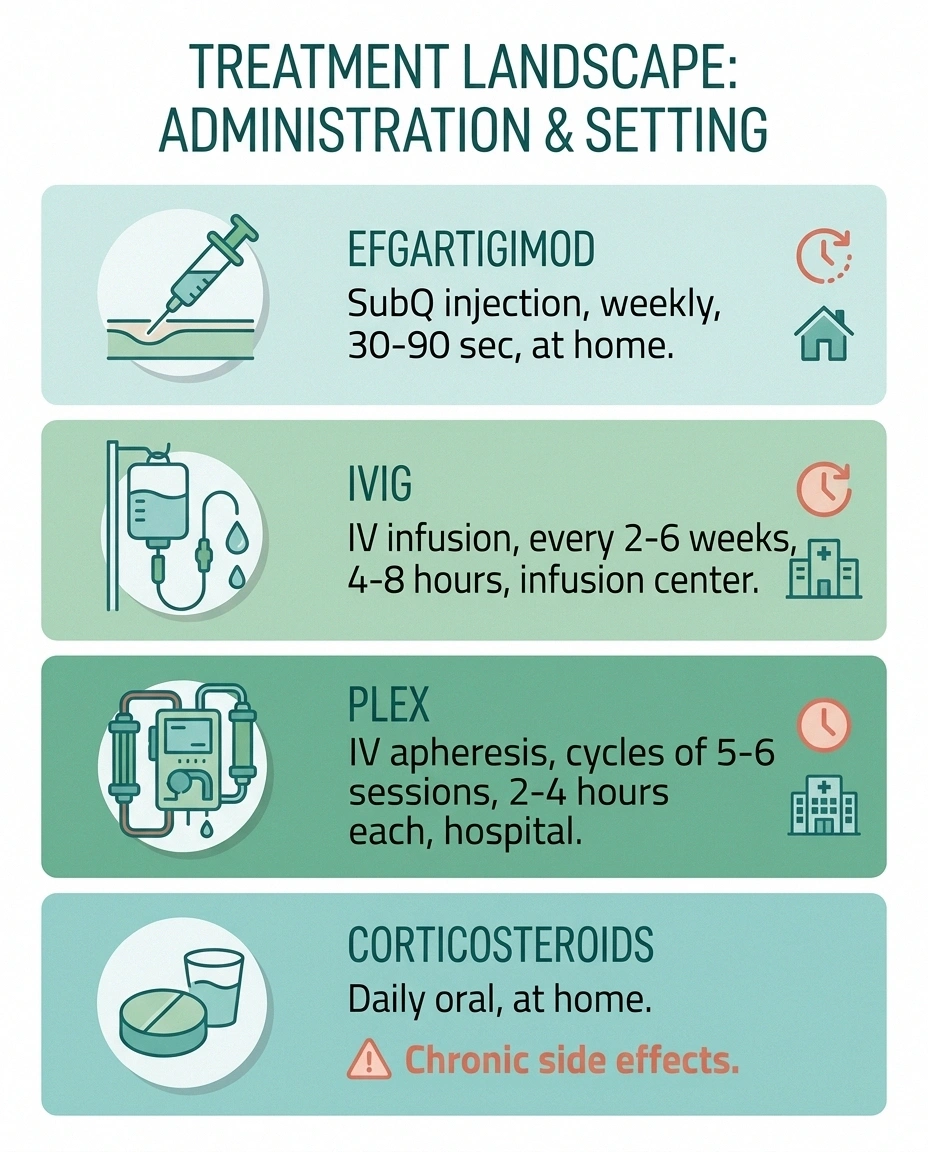
CIDP treatment options at a glance
Route: Subcutaneous injection
Frequency: Once weekly, 30–90 sec
Setting: Home
Route: IV infusion
Frequency: Every 2–6 weeks, 4–8 hours
Setting: Infusion center or home nurse
Route: IV apheresis
Frequency: Cycles of 5–6 sessions
Setting: Hospital
Route: Oral pill
Frequency: Daily
Setting: Home
Efgartigimod is typically not first-line — most CIDP patients start with IVIG or steroids. Efgartigimod comes into play when tolerance, response, or quality-of-life burden pushes the conversation.
IVIG (intravenous immunoglobulin) is usually the first-line treatment for most people with CIDP. It's donor IgG collected from thousands of blood donors, given as an infusion every two to six weeks depending on the maintenance schedule. Sessions run four to eight hours in an infusion center or, for some patients, at home with a nurse. IVIG works well for a lot of people — but it's expensive, time-consuming, sometimes causes bad headaches or infusion reactions, and carries a small risk of blood clots. Some patients respond incompletely. Some develop tolerance over time.
Plasma exchange (PLEX or plasmapheresis) is another first- or second-line option. It uses a specialized apheresis machine to physically pull the plasma — antibodies and all — out of the blood and replace it with a substitute fluid. Cycles typically involve five or six sessions over two weeks, and it's usually done in a hospital. It works well, and it works quickly, but the logistics are heavy and it typically has to be repeated periodically. For a full walk-through of the procedure, see our companion piece on plasma exchange for autoimmune neuropathies.
Corticosteroids — usually prednisone at moderate doses — are the third pillar of traditional CIDP treatment. They're cheap, easy to take, and often effective. But the side-effect profile of long-term steroid use is nobody's favorite: bone thinning, weight gain, elevated blood sugar, mood changes, cataracts, and more. Many neurologists try to taper steroids to the lowest possible dose or off entirely if another treatment can carry the load.
Efgartigimod (Vyvgart Hytrulo) sits alongside those three as a distinct option with a different mechanism. It's a subcutaneous injection given once weekly, at home, in thirty to ninety seconds. There's no infusion center, no premedication, no apheresis machine, and no chronic corticosteroid burden. Its main tradeoff is a raised infection risk from the IgG reduction, plus a substantial price tag. In practice, it's used most often in patients who don't tolerate IVIG well, who fail to maintain a good response on IVIG, or who prioritize the quality-of-life shift of home injection over the familiarity of the infusion chair.
The Home Self-Injection Experience — What Changes Day-to-Day
The day-to-day reality of being on Vyvgart Hytrulo is different in ways that patients find hard to overstate.

After a training session with a nurse or specialty pharmacy educator — usually one or two visits to make sure you're comfortable with the technique — you take the injection at home, once a week, on your own schedule. The current formulation ships as a prefilled syringe (approved in 2025) which streamlines things further. You pull the syringe out of the refrigerator, let it come to room temperature for about thirty minutes, choose an injection site on your abdomen (avoiding the area right around the belly button), pinch a fold of skin, and inject. The whole thing is done in under two minutes, and the injection itself is thirty to ninety seconds.
The most common local reaction is a bit of redness, mild soreness, or brief itching at the injection site. It usually fades within a day and doesn't need treatment. Patients rotate injection sites weekly to minimize skin reactions.
What changes practically: no more four-to-eight-hour infusion appointments. No driving to the infusion center. No pre-infusion tests or premedication. Vacation planning gets simpler — many patients travel with a small insulated bag containing the next dose or two. Work schedules stop revolving around an every-three-weeks calendar block. For patients who've spent years in the IVIG rhythm, that shift alone can feel like getting a piece of their life back.
The tradeoff is that you have to remember. IVIG's schedule was enforced by an appointment. Vyvgart Hytrulo's schedule lives in your own head, and consistency matters — the FcRn blockade needs weekly dosing to keep pathogenic IgG levels low. Most patients pick the same day each week and set a phone reminder. Support programs offered by the manufacturer include shipping reminders, refill coordination, and access to a nurse navigator.
Side Effects and What to Watch For
The most common side effects in the ADHERE trial were headache, injection-site reactions, upper respiratory infections, and urinary tract infections. Most were mild, and most improved without stopping treatment.
Before starting: infection risk and vaccine timing
- Efgartigimod lowers total IgG by roughly 60–70%, which reduces your background antibody defense against infection.
- Get vaccinations up to date before starting — flu, pneumococcal, shingles (if eligible), COVID-19 boosters.
- Live-attenuated vaccines are typically deferred during treatment.
- Any active serious infection is a reason to hold or delay a dose.
- Contact your neurologist promptly if fever, persistent cough, painful urination, or unusual fatigue appear.
A pre-treatment vaccine review with your neurologist and primary-care doctor is standard practice, not paranoia.
The more important safety topic is infection risk. Because efgartigimod lowers total IgG, it also lowers your background level of infection-fighting antibodies. That means a somewhat higher chance of catching colds, respiratory infections, and other common bugs. Serious infections are less common but do occur, and any active serious infection is a contraindication to starting or continuing therapy. Patients are asked to watch for signs of infection — fever, persistent cough, painful urination, unusual fatigue — and to contact their neurologist or CIDP specialist promptly if they show up.
Vaccination status matters here. Because live vaccines carry a small risk in someone whose IgG defenses are dampened, and because vaccine-driven immunity itself depends on IgG production, most CIDP specialists want vaccinations up to date before starting efgartigimod. That typically includes the flu shot, the pneumococcal vaccines, shingles vaccine for eligible patients, and COVID-19 boosters as recommended. Live-attenuated vaccines are generally deferred during treatment. This is a specific conversation to have with your neurologist and primary-care doctor before starting therapy.
Unlike IVIG, efgartigimod has not shown a signal for blood clots. That's a real advantage for patients whose IVIG history included worrisome clotting concerns.
Cost, Insurance, and Access
Efgartigimod is expensive. The wholesale acquisition cost lands in the neighborhood of $400,000 to $450,000 per year, priced as a specialty biologic for a chronic autoimmune disease. Very few patients ever pay anything close to that.
In practice, access works through a specialty pharmacy pathway. The prescription gets sent to a designated specialty pharmacy, which handles prior authorization with the insurance plan, coordinates delivery to the patient's home, and provides education and support. Medicare and most commercial insurance plans cover Vyvgart Hytrulo when there's documentation of a CIDP diagnosis and clinical rationale (often, though not always, prior treatment with IVIG). The manufacturer, argenx, runs a patient support program called Vyvgart Path that helps navigate prior authorization, offers copay assistance for eligible commercial patients, and provides a free-drug program for eligible uninsured patients meeting income criteria.
The paperwork can be significant, and prior authorization sometimes gets denied on a first attempt. Most CIDP specialists have staff experienced in appeals, and the manufacturer's patient support team can help. If cost or coverage feels like a hard wall, tell the specialist's office — the workarounds that exist are usually invisible to individual patients.
When to Ask Your Neurologist About Switching
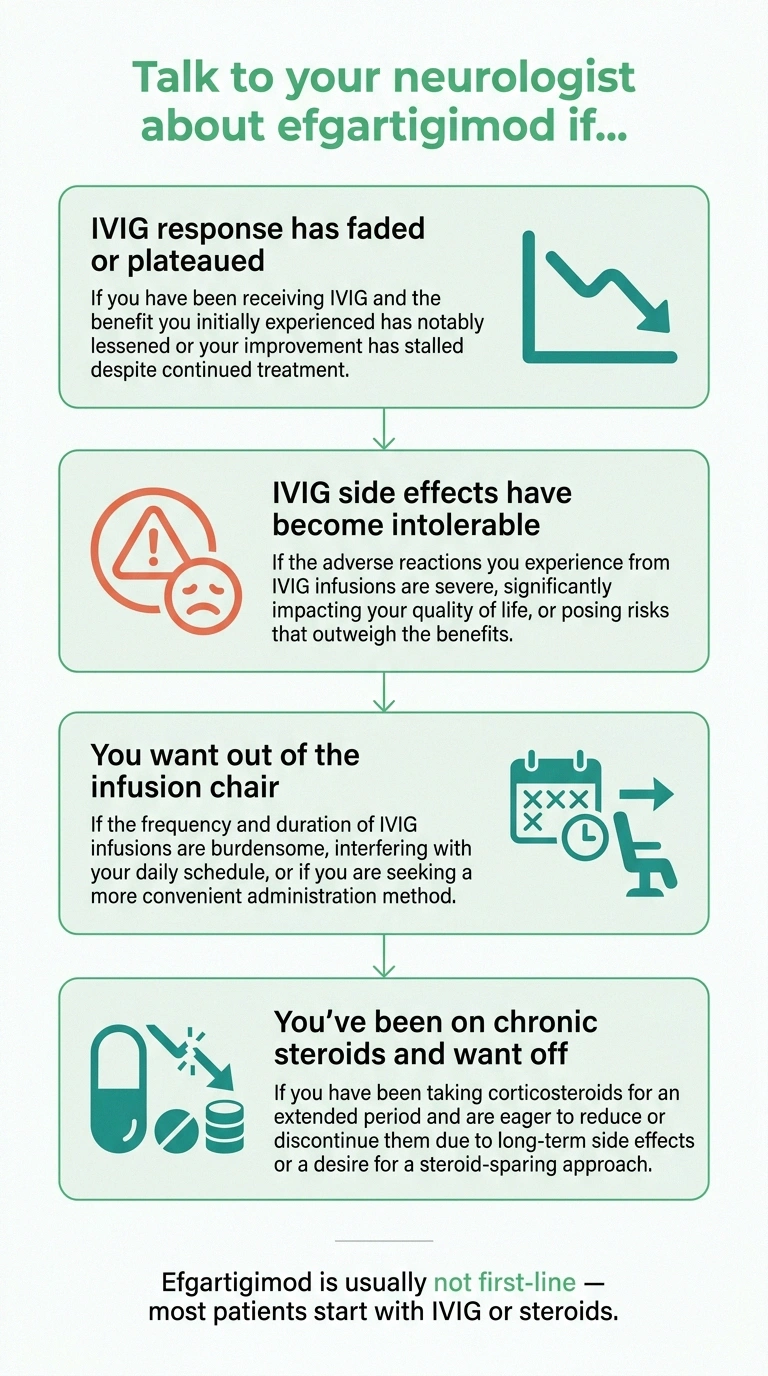
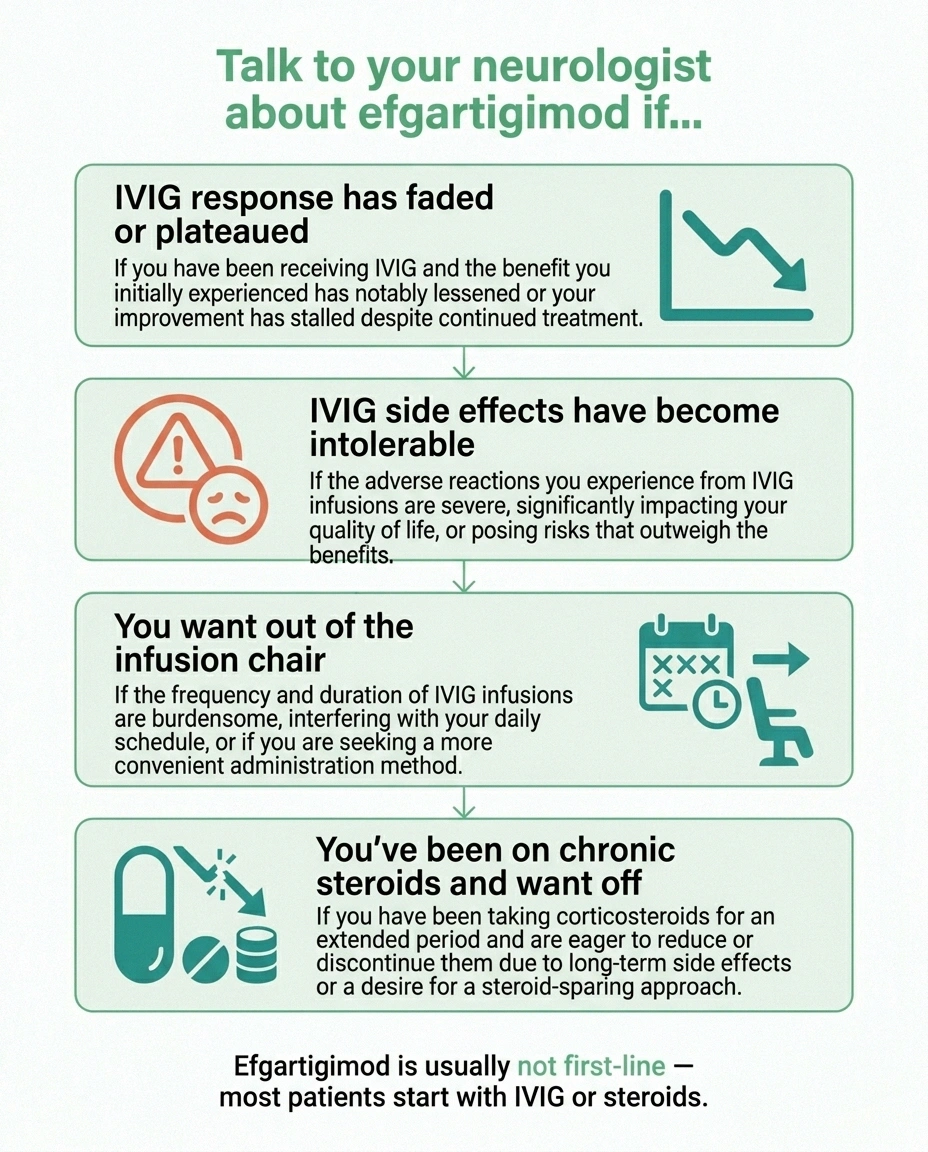
Efgartigimod is a real option, but it isn't the right move for everyone with CIDP. A conversation with your neurologist or CIDP specialist is worth having if any of these patterns fit.
The bigger picture
Efgartigimod is the first mechanism-different CIDP treatment approved in decades. For patients whose lives have revolved around IVIG appointments — or whose disease has stopped responding well — it opens a genuinely different door. Not first-line, not a cure, not for everyone. But for the right patient, a weekly thirty-second injection at the kitchen table is a very different life from a bi-monthly infusion chair. If the current plan isn't working the way you want, this is the conversation to bring to your neurologist or CIDP specialist.
Your response to IVIG has faded or plateaued. If maintenance IVIG isn't holding your symptoms as well as it used to, or if you're needing shorter intervals or higher doses to feel stable, that's a signal to explore other options. The ADHERE data specifically included patients who had been on prior treatments, and many of them responded to efgartigimod.
IVIG side effects have become intolerable. Bad headaches, aseptic meningitis reactions, or a history of blood clots during infusion can all make the IVIG cycle miserable or unsafe. Efgartigimod's side-effect profile is different and, for some patients, more livable.
You want out of the infusion chair. This is a legitimate reason, not a frivolous one. Quality of life shapes long-term treatment success. If the four-to-eight-hour every-few-weeks rhythm is grinding down your work life, your relationships, or your mental health, that's medically relevant. Our piece on neuropathy and mental health lays out how the treatment burden itself can worsen outcomes if it isn't addressed.
You've been on chronic steroids and want off. A long-term steroid course carries real costs. If you and your neurologist are looking for a steroid-sparing option, efgartigimod is one of the alternatives worth weighing.
Efgartigimod is generally not the first drug tried for a newly diagnosed patient. Most CIDP treatment still starts with IVIG or steroids, and most patients do well enough on those that a switch never comes up. But if you're in a spot where the current plan isn't working, or working well enough, this is the conversation to have.
Frequently Asked Questions
Is efgartigimod a cure for CIDP?
No. Efgartigimod reduces disease activity and prevents relapse in most patients who respond to it, but it does not cure the underlying autoimmune process. If treatment stops, IgG levels rise back toward baseline and the immune attack on nerves typically returns. What efgartigimod does — for people it works for — is hold CIDP quiet on a week-by-week schedule with much less logistical burden than IVIG. It's a maintenance therapy, not a fix.
How is efgartigimod different from IVIG?
They work in opposite directions. IVIG floods your bloodstream with donor IgG to overwhelm the pathogenic antibodies attacking your nerves. Efgartigimod removes your own IgG — including the pathogenic antibodies — by blocking the FcRn recycling receptor. IVIG is an intravenous infusion every few weeks that takes several hours in an infusion center. Efgartigimod is a subcutaneous injection at home once a week that takes thirty to ninety seconds. Both can be effective in CIDP; they don't fit every patient the same way.
How quickly does efgartigimod start working?
IgG levels drop measurably within a couple of weeks, and clinical improvement in CIDP symptoms typically becomes evident over the first four to twelve weeks of treatment. In the ADHERE trial, most responders showed measurable improvement in disability scores within twelve weeks. That said, response varies from person to person, and some patients respond earlier or later than the average.
Do I need to stop IVIG before starting efgartigimod?
This is a conversation to have with your neurologist. In the ADHERE trial, participants withdrew from prior treatments before starting efgartigimod. Whether and how quickly to taper IVIG in your specific situation depends on how well-controlled your CIDP currently is, how you've responded to IVIG historically, and how your specialist wants to sequence the transition. There's no one-size answer, and the transition is managed carefully.
Does efgartigimod raise my infection risk?
Yes, modestly. Because it lowers total IgG, your background antibody defense is reduced during treatment. Common infections like colds, respiratory infections, and urinary tract infections are the most frequent, and serious infections are less common but do occur. Patients are asked to keep vaccinations up to date before starting, avoid live vaccines during treatment, and contact their neurologist promptly if signs of infection appear. Any active serious infection is a reason to hold or delay treatment.
Is efgartigimod approved for other diseases besides CIDP?
Yes. The intravenous form (Vyvgart) was originally approved for generalized myasthenia gravis (gMG) in 2021. The subcutaneous form (Vyvgart Hytrulo) is approved for both gMG and CIDP. All of them work through the same FcRn-blocking mechanism. This article focuses specifically on the CIDP indication and dosing.
Can I give the injection myself at home?
Yes, after training. Self-administration is approved once a healthcare professional confirms you can do it correctly. Most patients complete one or two training sessions with a nurse or specialty pharmacy educator before switching to full self-injection. The prefilled-syringe formulation approved in 2025 makes the process even simpler. Your specialty pharmacy will coordinate training, refills, and access to a nurse for questions.
How much does efgartigimod cost out of pocket?
The list price is around $400,000 to $450,000 a year, but almost no patient pays that. Medicare and most commercial insurance plans cover Vyvgart Hytrulo for CIDP after prior authorization. The manufacturer's Vyvgart Path program provides copay assistance for eligible commercial patients and a free-drug program for eligible uninsured patients meeting income criteria. If cost feels prohibitive, the specialist's office and the manufacturer's support team should be your first two calls — the workarounds are real and worth the paperwork.
About the Author