A woman I met at a support group last spring — I’ll call her Doreen — went to her twice-yearly dental cleaning six months after her small-fiber neuropathy diagnosis. She left in tears. Nothing dramatic had happened. No bad news, no cavity. She’d spent 45 minutes in a reclined chair, jaw held open, trying to stay still through what felt like little electric shocks every time the hygienist rinsed her mouth. Then the chair snapped upright and she nearly fainted on the walk to the front desk.
The truth is, dental appointments and peripheral neuropathy interact in about six different ways nobody bothers to warn patients about. Your medications change your mouth. Your nerves fire in ways they didn’t before. Your blood pressure doesn’t handle chair changes the way it used to. Your hands may not floss the way they used to, either. Any one on its own is manageable. All of them stacked into one 60-minute appointment can be exhausting.
The good news is that once you know what’s coming, almost every item has a straightforward workaround. Building the plan once — with a dental team that gets it — is what makes twice-a-year cleanings feel like a small thing again. This is the article I wish Doreen had read before her first post-diagnosis appointment.
Why Dental Visits Are Different When You Have Neuropathy
The chair, the length, the medications, and the anatomy of the mouth all conspire to make a dental appointment more demanding for someone with peripheral neuropathy. Not everyone experiences every issue, and most are subtle enough that the dental team won’t notice unless you speak up. Knowing the shape of the terrain before you’re already reclined is half the battle.
Three things every neuropathy patient should tell the dental team before the visit starts
- You have peripheral neuropathy, and sensations in your mouth may not match what is actually happening (louder or quieter than they should be).
- Your medication list, so the team knows which of them cause dry mouth and can adjust cleaning and rinse recommendations accordingly.
- Any accommodations that help — slower chair movement, bite blocks by default, shorter appointment blocks, and a raised-hand pause signal.
Ask the dentist to add these to your chart. Every future visit will start from there.
The most common intersections are: dry mouth from your medications, orthostatic dizziness with chair movement if you have any autonomic neuropathy, exaggerated oral sensations if your small-fiber nerves are involved, prolonged jaw fatigue, altered response to local anesthesia, and harder home care because of hand numbness or weakness. None of these makes dental care impossible. Together, they mean the appointment needs a little advance planning.
Dry Mouth: The Medication Side Effect That Costs Teeth
This is the one that quietly does the most damage. Almost every medication commonly prescribed for peripheral neuropathy causes some degree of xerostomia, the medical word for dry mouth. Gabapentin and pregabalin both dry the mouth. Duloxetine does, and so do the tricyclics like amitriptyline. Opioids are among the worst offenders. Add anything for blood pressure or sleep and the effect stacks.
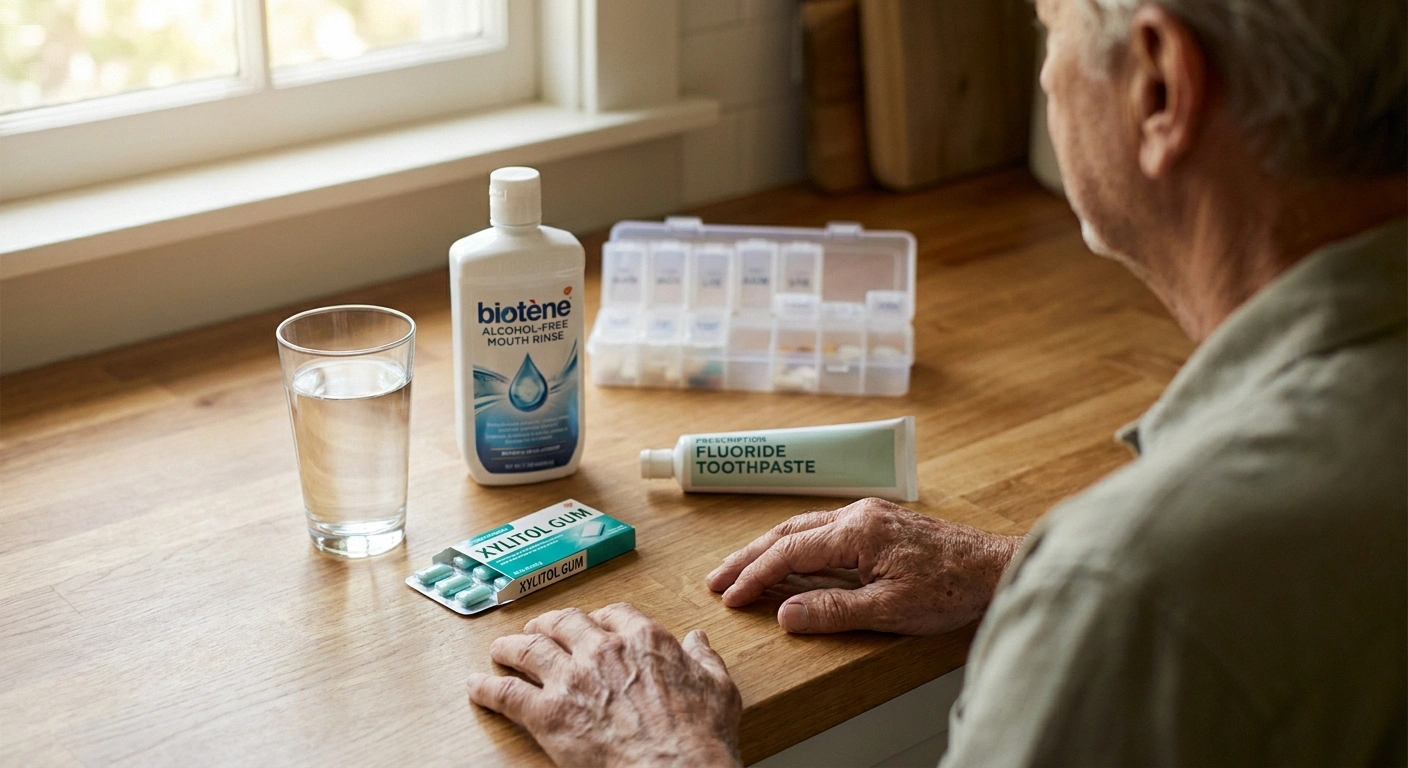
Common neuropathy medications that cause dry mouth
- Gabapentin (Neurontin) — mild to moderate xerostomia, dose-dependent.
- Pregabalin (Lyrica) — similar profile to gabapentin.
- Duloxetine (Cymbalta) — SNRI class, commonly reported dry mouth.
- Amitriptyline / nortriptyline — tricyclics, some of the strongest offenders.
- Opioid pain medications — significant xerostomia with regular use.
- Blood pressure medications, sleep aids, antihistamines — often stacked on top, effects compound.
Bring your full medication list to your next dental visit. Dry-mouth cavity prevention starts with the dentist knowing what you take.
Saliva is your mouth’s cleaning system. It neutralizes acid, rinses food off the teeth, delivers minerals that keep enamel intact, and controls the bacteria on the gums. When saliva drops, all of those protective systems drop with it. The result, over months and years, is dramatically higher rates of cavities — especially at the gum line — plus more gum disease and oral yeast. Many patients don’t connect the two until they arrive at a checkup with three new cavities where there hadn’t been any in decades.
Strategies that help: sip water frequently, use xylitol gum after meals (xylitol stimulates saliva and starves cavity-causing bacteria), ask your dentist about prescription fluoride toothpaste, and try alcohol-free rinses like Biotene before bed. For severe cases, ask about pilocarpine (Salagen). Skip alcohol-based mouthwashes.
Chair Positioning, Blood Pressure, and Autonomic Neuropathy
If you have any degree of autonomic neuropathy — the type that affects nerves controlling blood pressure and heart rate — the dental chair is a mild orthostatic challenge waiting to happen. You spend 30 to 90 minutes fully reclined. Blood pools comfortably in your lower body. Then the chair snaps upright in about four seconds, and your autonomic system is supposed to instantly constrict leg vessels and speed up your heart to keep pressure in your head. In healthy nerves that response is effortless. In neuropathic nerves it can be slow or absent, and the result is light-headedness or a near-faint on the way out of the chair.
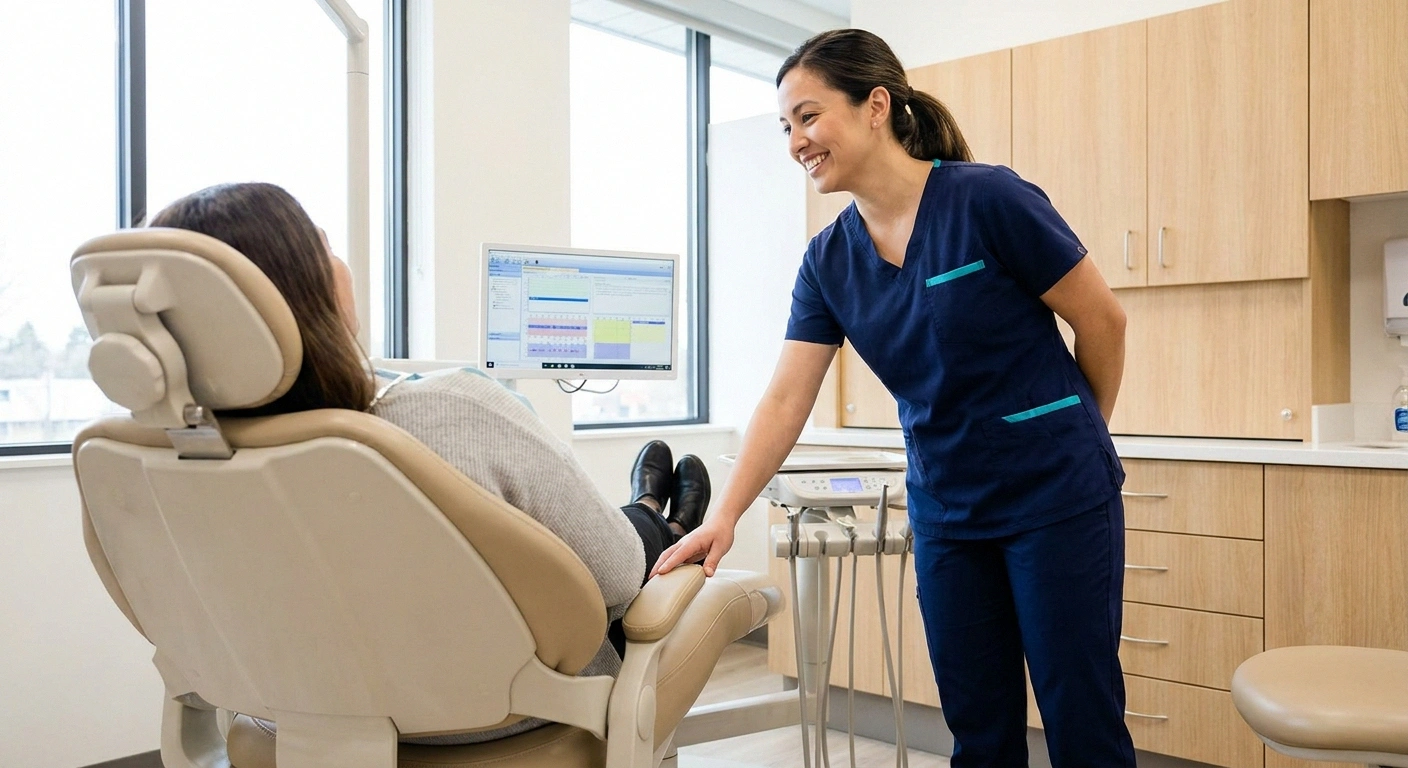
The safe chair-rise sequence to request
Costs the hygienist about 60 extra seconds. Prevents the walk-out near-faint.
The workaround costs the hygienist about 60 extra seconds. Ask the dental team, at the start of the appointment, to raise the chair slowly at the end — over 30 to 60 seconds — and to pause at roughly 45 degrees before bringing you fully upright. Then sit for two or three minutes with your feet on the floor before standing. If you’re prone to falls, mention it the same way you’d mention it to any other provider — the fall risk in a dental office is real, and our guide on neuropathy, balance, and fall prevention covers it further.
Anesthesia and Small-Fiber Neuropathy: What to Say Ahead of Time
Here’s a fact many patients don’t hear until it surprises them: small-fiber neuropathy can make local dental anesthesia behave unpredictably. Some patients need more anesthetic than they used to — the nerves don’t quiet down as easily. Other patients feel injections more sharply, because the same disrupted signaling that misreports pain from the feet can misreport pain from the gums. Both come from the same underlying issue: nerve signaling is less reliable in either direction.
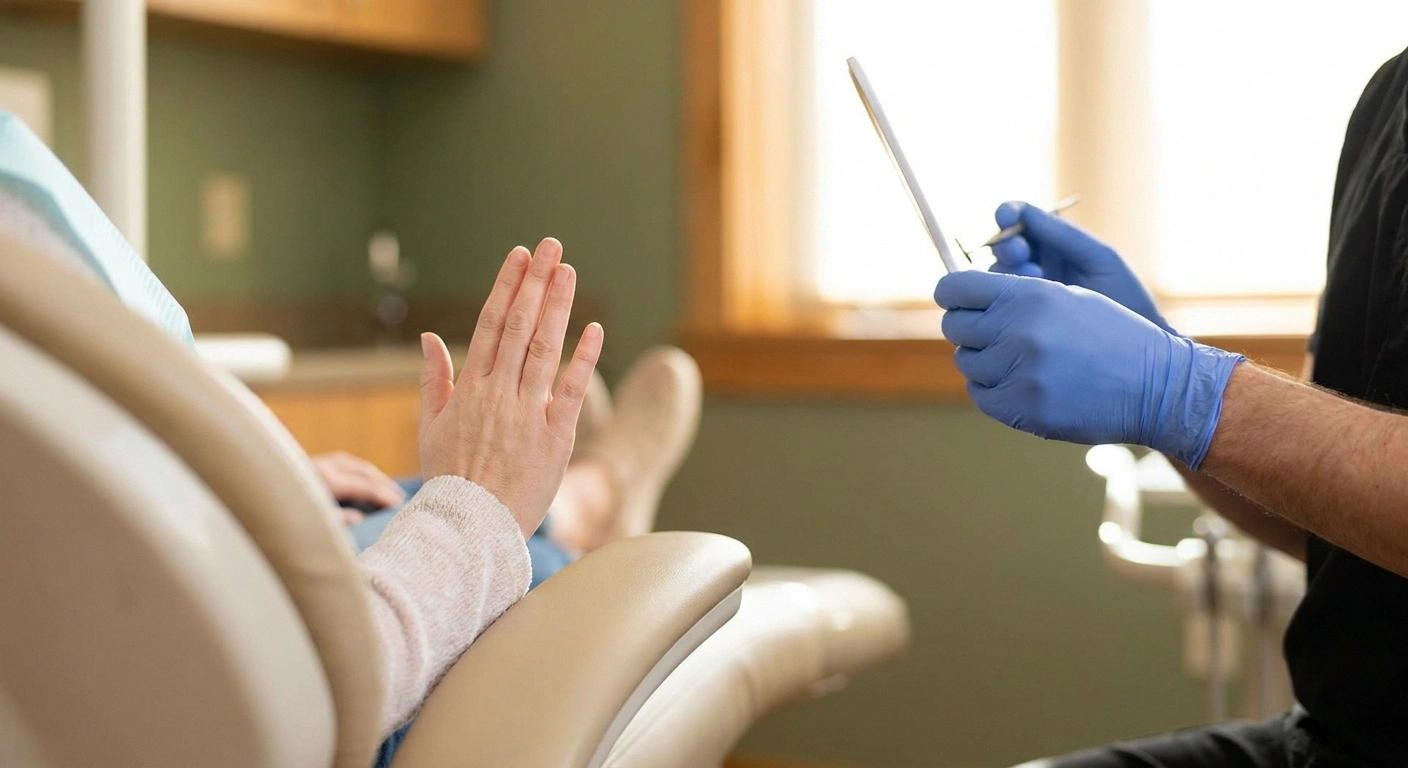
The one-sentence script for the dentist
“I have peripheral neuropathy, and my mouth sometimes reports sensations that don’t match what’s actually happening. If I raise my hand, please pause.”
Nearly every dentist will honor that immediately. Establish the raised hand as a pause signal, not a stop signal — you keep the low-stakes option to catch your breath without ending the procedure early.
The trigeminal nerve — the big cranial nerve supplying sensation to the face and mouth — has its own small fibers, and in some patients those are affected too. The result can be an exaggerated response to drilling vibration, water suction, or the pressure of cotton rolls. Nothing is actually going wrong. The signal is just louder than the stimulus warrants.
The single most useful thing you can do is tell the dentist, before the appointment starts: “I have peripheral neuropathy, and my mouth sometimes reports sensations that don’t match what’s actually happening. If I raise my hand, please pause.” Nearly every dentist will honor that immediately. Establish the raised hand as a pause signal, not a stop signal, so you have a low-stakes way to catch your breath without ending the procedure early.
Jaw Fatigue, Bite Blocks, and Splitting Long Appointments
Holding the jaw open for an extended period is muscular work most healthy people barely register. When you have neuropathy, especially paired with the general fatigue that comes with chronic nerve disease, that same work can leave your jaw sore for a day or two. Some patients develop TMJ tenderness that flares specifically after long dental visits.
For any appointment likely to run longer than about 20 minutes, ask for a bite block — a small soft rubber wedge the dentist places between your teeth so your jaw rests on it rather than actively holding open. Almost every practice has them; most just don’t offer unless asked. For longer procedures like crown work or deep cleaning, ask whether the work can be split into two shorter visits. Two 45-minute appointments are almost always better tolerated than one 90-minute session. Schedule during your highest-energy part of the day, and if anesthesia is involved and you have chronic dizziness, arrange a ride home.
Home Care When Your Hands Don’t Cooperate
Dental hygiene at home was designed for people whose hands work the way hands are supposed to work. If you have numbness or weakness in your hands, brushing and flossing effectively can quietly become one of those tasks that just doesn’t get done as well as it used to — and the dentist notices six months later. The fix isn’t more willpower. It’s better tools.
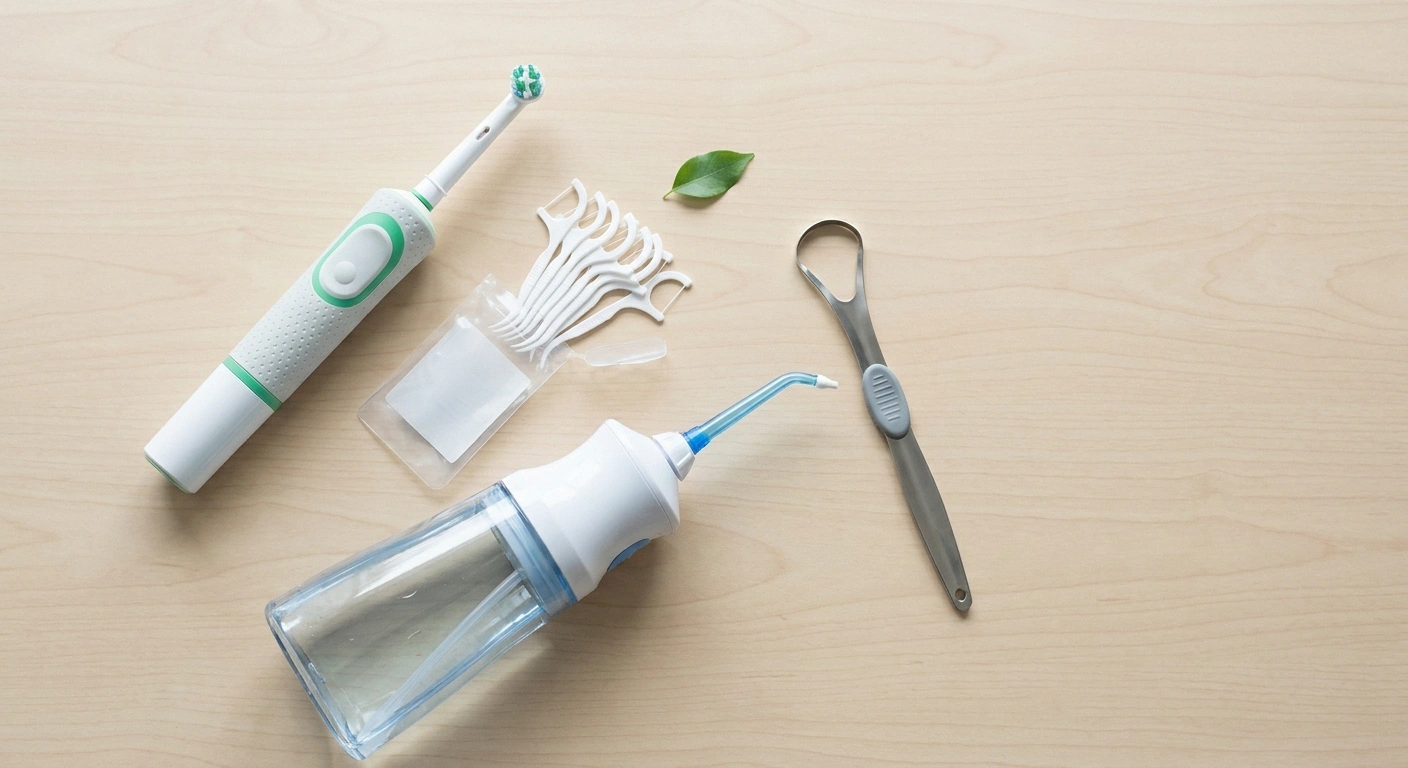
Adaptive home care tools for hand neuropathy
Buy them once. Your next dental visit will show the difference.
An electric toothbrush is the biggest single upgrade: wider handle, the head does the scrubbing, and a built-in timer keeps each quadrant honest. The $40 models are fine. Look for a wide padded handle rather than a slim one. For flossing, traditional string floss requires more fine finger dexterity than most neuropathic hands can manage — floss picks (pre-strung Y-shaped tools) are much easier, and a water flosser (Waterpik and similar) is easier still. For tongue scrapers, choose one with a wide silicone grip. All inexpensive, all at any drugstore. Buy them once; your next dental visit will show the difference.
Building a Plan With Your Dental Team
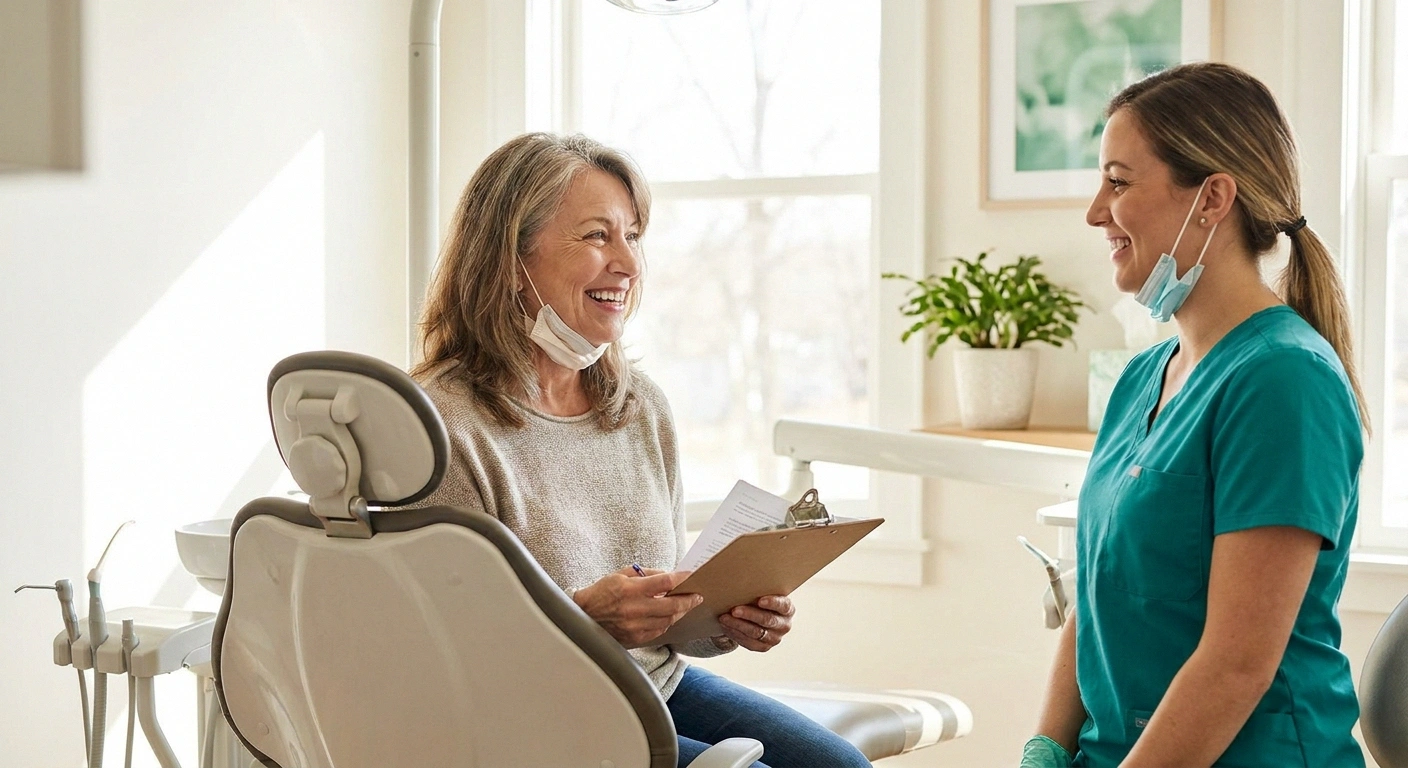
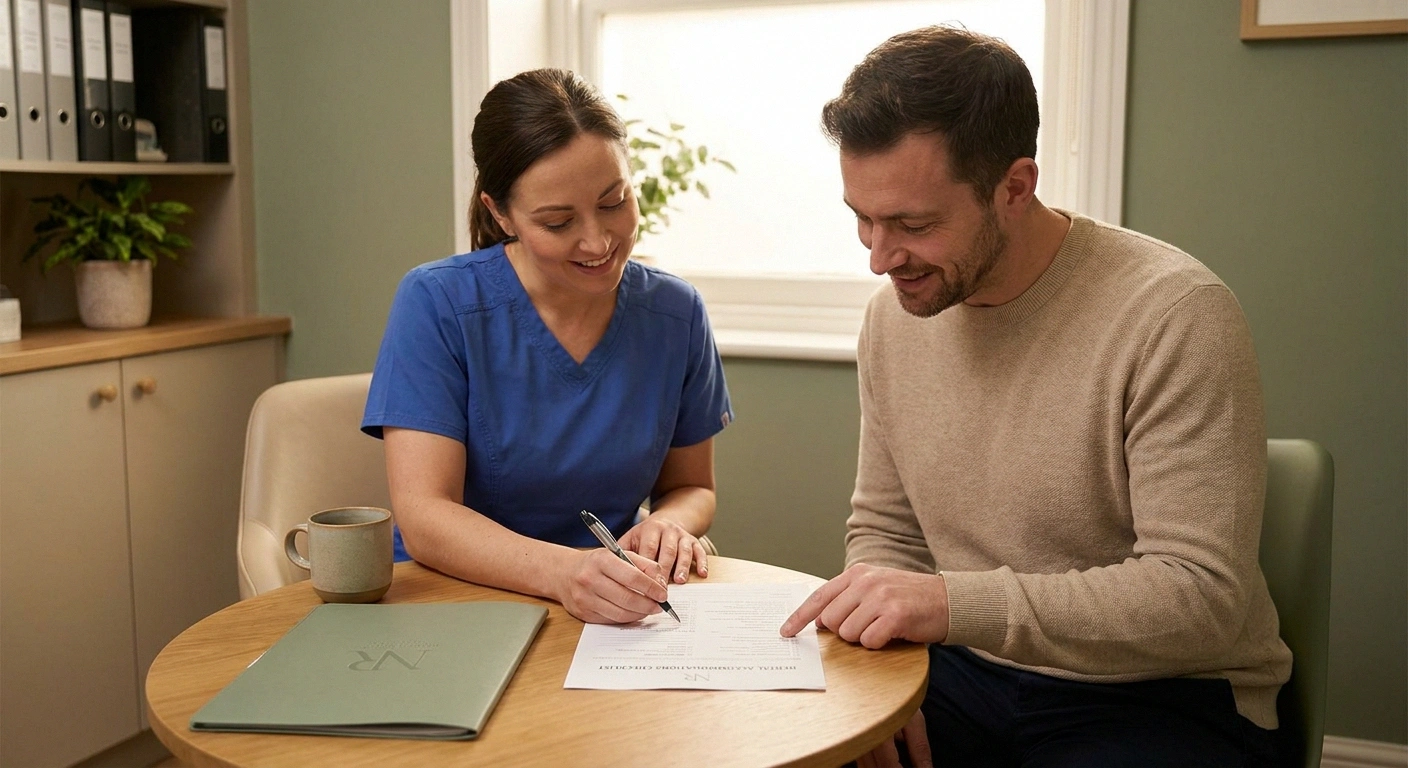
The single highest-leverage thing you can do is have one focused conversation with your dentist at the start of a routine appointment, and turn the results into a note in your chart. Once the plan is charted, every future appointment starts from there — no re-explaining. Dentists and hygienists are trained to accommodate patient needs; most just don’t know what to accommodate until you tell them.
The bigger picture
Twice-yearly dental cleanings feel like a small thing until they don’t. The intersection of neuropathy medications, autonomic changes, small-fiber sensitivity, and hand numbness turns a routine visit into something that needs a plan. The good news is the plan is short, the accommodations are simple, and every dental team worth staying with will honor them without hesitation. Have the conversation once. Put it in the chart. Then let the routine be routine again.
Three things to communicate upfront: (1) that you have peripheral neuropathy and it may affect oral sensations or chair tolerance, (2) the list of medications you take that cause dry mouth, so the team can adjust cleaning approach and rinse recommendations, and (3) accommodations that help — slower chair movement, bite blocks by default, shorter appointment blocks, a raised-hand pause signal. If dental anxiety is also part of the picture, and it often is for patients whose whole nervous system is on higher alert, our guide on neuropathy and mental health covers strategies that help.
If a dentist responds to that conversation dismissively, that’s useful information — a different practice will treat the same request as basic, sensible care. Twice-yearly cleanings feel like a small thing until they don’t. Building the plan once with the right team is what keeps them small.
Frequently Asked Questions
Should I tell my dentist I have neuropathy?
Yes, and the best time is at the start of a routine cleaning, not once you’re already reclined and mid-procedure. A one-minute conversation about your medications, chair preferences, and anesthesia history lets the dentist put a note in your chart that shapes every future visit. Most dentists appreciate patients who tell them what they need upfront.
Are there any dental procedures I should avoid?
No procedures are off-limits because of neuropathy alone. That said, longer procedures like crown work, deep periodontal cleaning, and extractions are much better tolerated when split into two shorter visits. If a procedure would normally take 90 minutes, ask whether it can be delivered as two 45-minute appointments. Most practices will accommodate this if you request it in advance.
What if my dentist doesn’t seem to take my concerns seriously?
Try one clear direct conversation first. Say something like, “I have peripheral neuropathy and these accommodations help me tolerate dental visits. Can you note this in my chart?” If the response is dismissive or the practice ignores the plan, look for a new dentist. Practices vary widely in patient-centered care, and switching is worth the small effort.
How often should I see the dentist if I have neuropathy?
Twice a year is the general recommendation, but if you take medications that cause significant dry mouth, your dentist may suggest cleanings every three or four months. More frequent cleanings catch cavities and gum disease earlier, when they are still small and easy to address. Ask your dentist what cadence fits your specific medication list and cavity history.
Is dental anxiety worse with neuropathy?
For many patients, yes. When your nervous system is already on higher alert from chronic pain, the dental setting amplifies baseline anxiety. Strategies that help: morning appointments when energy is highest, arriving 10 minutes early to sit quietly, headphones with calming audio during the procedure, and a clear raised-hand pause signal. Some patients benefit from asking their physician about mild pre-procedure anti-anxiety options.
Can I use over-the-counter dry mouth products?
Yes. Xylitol gum, alcohol-free rinses like Biotene, and salivary substitute sprays are all available without a prescription and safe for regular use. Skip alcohol-based mouthwashes, which make dryness worse. If over-the-counter options do not give enough relief, ask your physician about pilocarpine.
What is the best way to floss with hand numbness?
Traditional string floss requires more fine finger dexterity than many neuropathic hands can manage. Floss picks (inexpensive pre-strung Y-shaped tools) are much easier to hold. A water flosser is even simpler because you just aim and the water does the cleaning. Any of the three beats skipping flossing because it has become physically frustrating.
About the Author