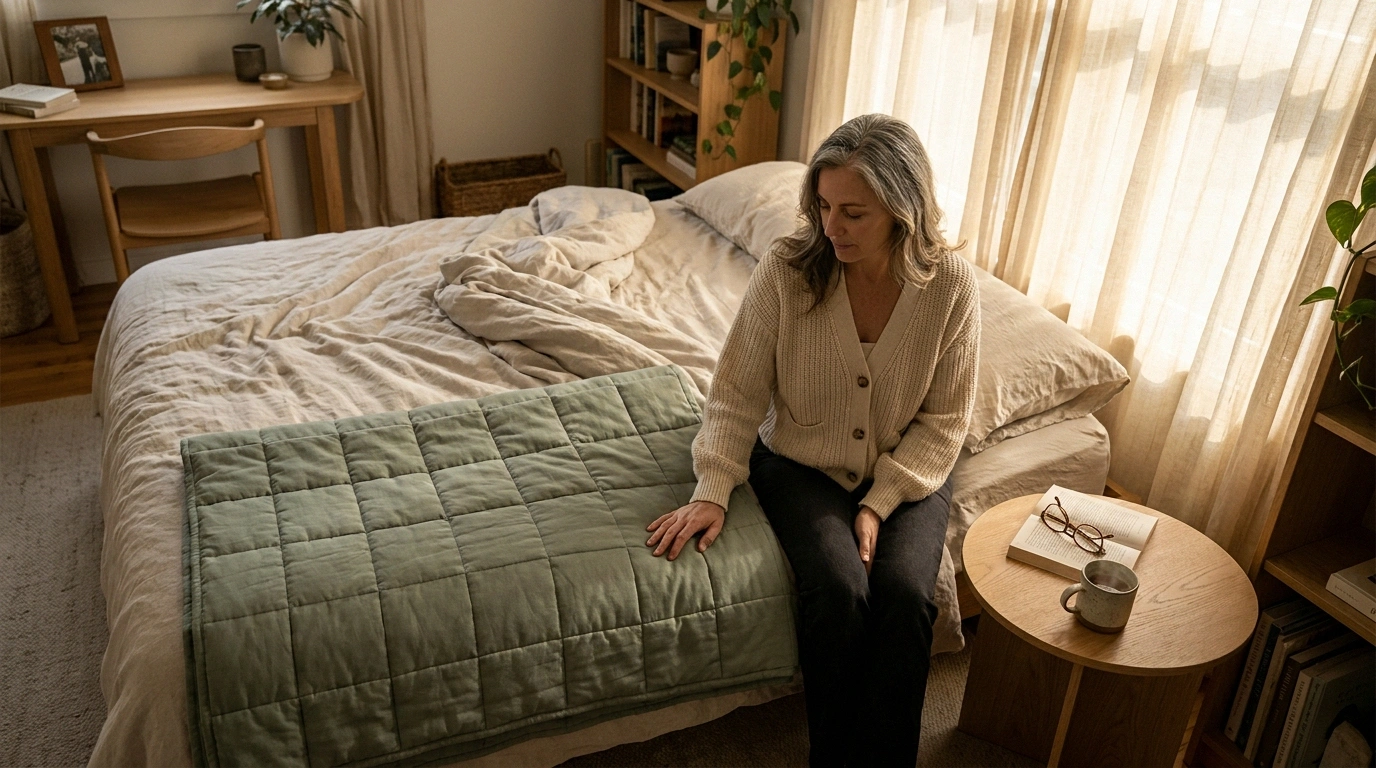
My granddaughter gave me a weighted blanket for my birthday last spring. Twelve pounds, soft bamboo cover, small glass beads, muted sage green. She had read online that weighted blankets help with sleep, and she watched me struggle through evenings on the couch with feet that would not settle. It was a kind gift, and it deserved a fair trial. The first night I used it, I slept better than I had in months. The second night, my feet felt strange in a way I could not name until morning. This is the practical guide I wish someone had handed me the day the box arrived — what weighted blankets do, when they help, when they do not, and how to use one safely if you have neuropathy in your feet, your hands, or both.
I am Janet Ellis. Nothing here is medical advice, and every neuropathy is different. What follows is a plain conversation about the tradeoffs.
What a Weighted Blanket Is Supposed to Do
Weighted blankets are heavier than ordinary bedding, typically 5 to 25 pounds. The weight comes from small glass beads or plastic pellets stitched into pockets inside the blanket, spread evenly across the surface. The claim, generally, is that the even distribution of gentle pressure — sometimes called deep pressure touch stimulation, or DPTS — calms the nervous system.
Weighted blankets help some neuropathy patients sleep better and hurt others by masking pressure or overheating. Personal response is unpredictable. Try lighter than the standard 10-percent-of-body-weight chart, start with legs only, check skin every morning, and have a return policy before you buy.
The idea is not new. Occupational therapists have used weighted vests and lap pads for decades with children and adults on the autism spectrum, with sensory-processing differences, and with anxiety. What is newer is the general-market availability of large blankets sized for adult beds, and the widespread marketing of them for sleep, stress, restless legs, and pain.
The theory behind why DPTS might help: deep pressure appears to promote the release of serotonin and melatonin (the neurotransmitters involved in mood and sleep regulation), and to reduce cortisol (the stress hormone). For some people, that adds up to easier sleep onset, deeper sleep, and less nighttime tossing.
What the Research Actually Shows for Neuropathy
The evidence base for weighted blankets is small overall, and much smaller specifically for neuropathy.
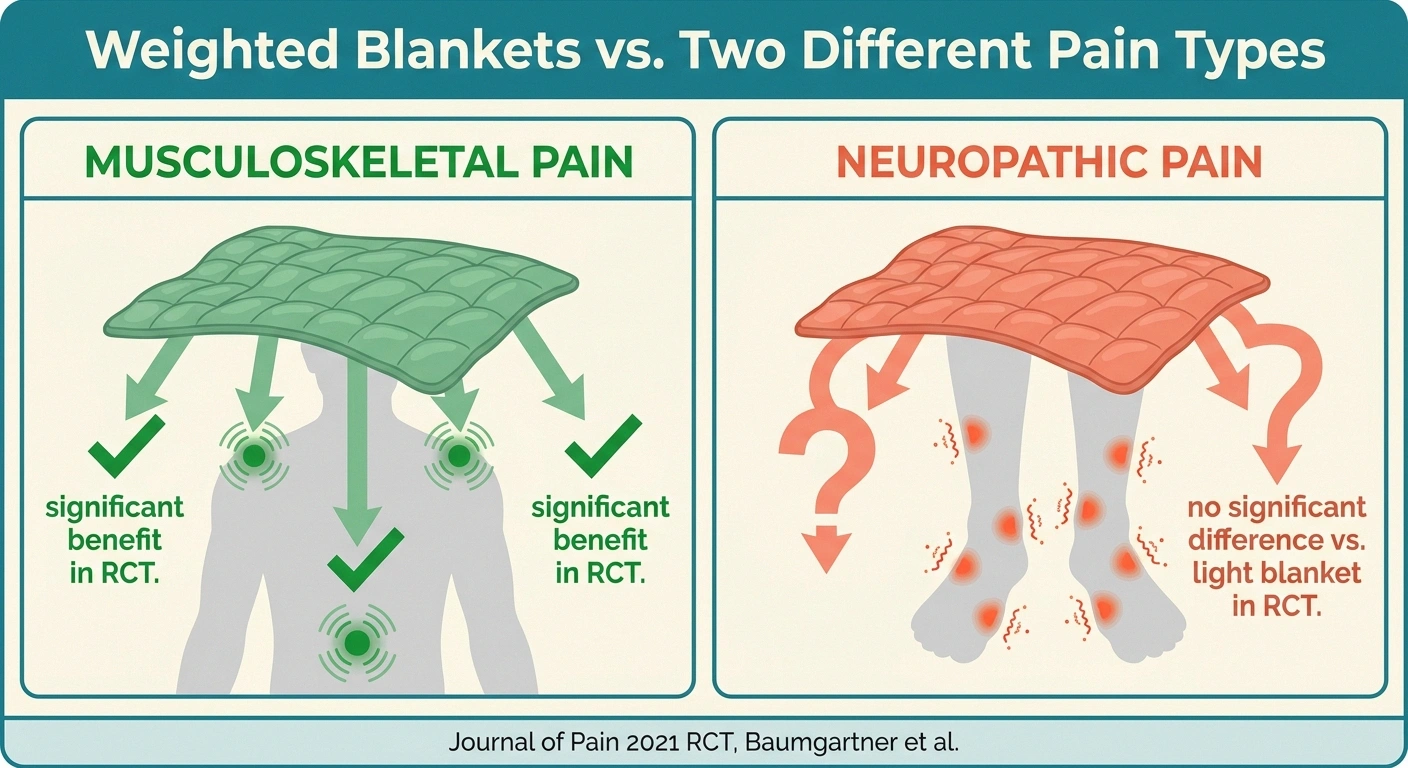
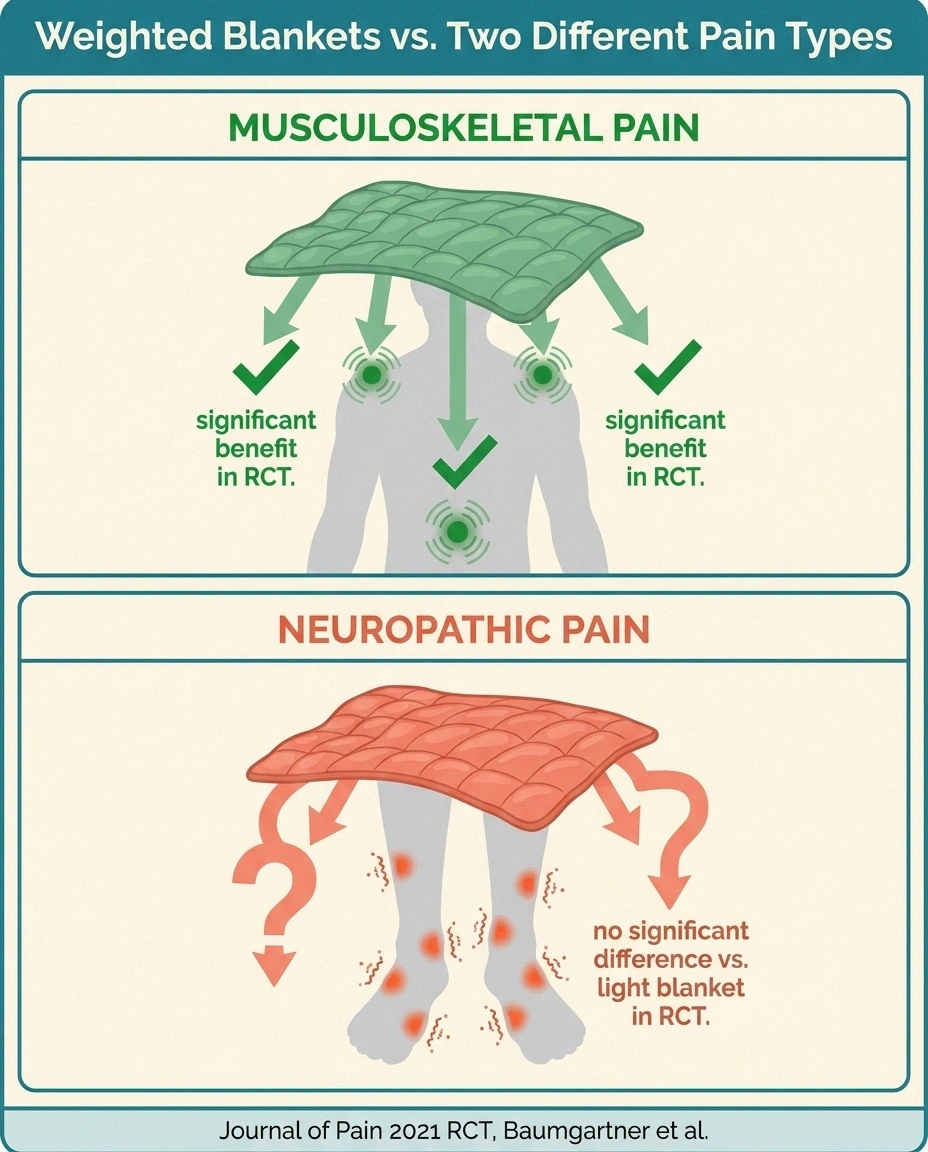
A 2021 randomized controlled trial in The Journal of Pain compared heavy and light weighted blankets in patients with chronic pain. Musculoskeletal-pain patients reported meaningful benefit from the heavy blanket. Neuropathic-pain patients showed no significant difference between heavy and light blankets.
Translation: the pressure-based mechanism that helps sore joints does not reliably translate to nerve-generated pain. Weighted blankets may still help neuropathy patients via sleep quality, but do not expect them to reduce pain directly.
A 2021 randomized controlled trial published in The Journal of Pain looked at heavy versus light weighted blankets in patients with chronic pain. Patients with musculoskeletal pain (joints, muscles, back) reported meaningful benefit from the heavy blanket compared to the light one. Patients with neuropathic pain — pain generated by nerve damage — did not show a significant difference between heavy and light blankets. That distinction matters. Neuropathic pain and musculoskeletal pain behave differently, and the pressure-based mechanism that seems to help sore joints does not appear to translate as reliably to nerve-generated pain.
Smaller studies and case reports suggest weighted blankets may improve sleep quality in people with generalized anxiety, insomnia, and restless leg syndrome. Restless legs overlap significantly with peripheral neuropathy — many people have both — so the sleep-quality benefit can carry over indirectly.
There is no randomized trial that I have found specifically showing pain reduction from weighted blankets in diabetic peripheral neuropathy, chemotherapy-induced neuropathy, or idiopathic small-fiber neuropathy. What we have is a mixed picture: many patients report better sleep, some report reduced restlessness in the legs, few report meaningful pain reduction, and a small group finds that weighted blankets make their symptoms worse.
Where Weighted Blankets Can Help People With Neuropathy
Sleep is the biggest one. Neuropathy is famously worse at night — restless feet, burning sensations, allodynia to bedding, the toss-and-turn that erodes the depth of sleep. Our page on why neuropathy gets worse at night walks through the reasons. Anything that reduces the tossing may improve the sleep. For some patients, the steady pressure of a weighted blanket reduces the sensation that bedding is sliding, bunching, or tickling — and that lets sleep deepen.
Restless legs, when they overlap with neuropathy, sometimes respond to the pressure. Not always. Not everyone. But for those it helps, the effect is noticeable within a night or two.
Anxiety and sleep-onset difficulty. Living with chronic neuropathy is stressful. Anything that helps a nervous system settle before sleep is worth trying. Weighted blankets are one of several options — others include compression at the feet (see our page on compression socks and gloves), warm foot soaks (our foot soak recipes page), and simple sleep-hygiene changes.
Where Weighted Blankets Can Cause Problems
This is the part that matters most for anyone with neuropathy, and it is the part that marketing materials rarely address well.
Sensory neuropathy mutes the feedback that normally prompts you to shift position at night. Someone with intact sensation feels the low-level discomfort and rolls over. Someone with reduced sensation may not — and a weighted blanket concentrated over the same skin area for 8 hours can produce pressure-related injury with no warning sign until morning.
Morning skin checks are not optional. Look for lingering redness, pressure marks, color changes, or new numbness. If any appear, stop using the blanket.
Allodynia. If light touch already registers as pain on your feet or hands (a classic small-fiber neuropathy feature), a heavy blanket resting on the affected area may either provide relief or make things dramatically worse. It is hyper-individual. Some people find that steady, distributed pressure feels better than the intermittent brush of a sheet. Others find that any additional weight on the skin is intolerable. There is no way to predict which you will be without trying, ideally with a return policy in place.
Skin pressure and pressure injuries. This one is under-discussed and important. People with sensory neuropathy — meaning reduced sensation in the affected area — cannot feel prolonged pressure the way people with normal sensation can. In someone with intact sensation, a too-heavy blanket produces the low-level discomfort that prompts shifting position. In someone with sensory neuropathy, that feedback loop is muted. A weighted blanket concentrated over the same area for 8 hours can produce pressure-related skin injury without any warning sign. This is a smaller risk in ambulatory patients who shift positions naturally in their sleep, and a larger risk in patients who are bedridden, immobile, or who take sedating medications that reduce nighttime movement.
Circulatory compression. Neuropathy often overlaps with peripheral arterial disease and diabetes, both of which can reduce blood flow to the feet and legs. A heavy blanket over legs with compromised circulation can further reduce peripheral perfusion. Signs to watch for in the morning: colder feet than usual, mottled or bluish skin color, worsened tingling in the hours after waking. If those appear, the blanket is doing more harm than good on those legs.
Overheating and sweating. Autonomic neuropathy affects thermoregulation. Many people with neuropathy sweat less than they used to, or sweat unevenly. Weighted blankets — especially those with warm fleece or minky covers — trap heat. That can make sleep worse, not better, for a patient whose autonomic system is already struggling to keep the body cool.
Restricted movement and fall risk. A 12- to 20-pound blanket is heavy enough to slow you down when you need to get up at 2 a.m. to use the bathroom. Combined with the balance issues common in neuropathy (see our page on neuropathy and fall prevention), that added friction between “I need to go” and “I am on my feet” is a small but real fall-risk factor.
Standard weight advice may be too heavy. Most weighted-blanket marketing recommends 10 percent of body weight. For a healthy adult, that is reasonable. For an older adult with neuropathy, PAD, arthritis, or reduced muscle mass, 10 percent may be more than the body can shift under safely. Consider starting at 5 to 7 percent of body weight and working up only if needed.
Who Should Probably Skip Weighted Blankets Entirely
Some situations are firm no’s rather than tradeoffs.
- Active foot ulcer or wound on the covered area.
- Bedridden or unable to shift position independently.
- Severe peripheral arterial disease.
- Uncontrolled congestive heart failure or severe respiratory disease.
- Uncontrolled or untreated sleep apnea.
- Recent surgery on the covered area.
- Dementia or significant cognitive impairment (the patient may not remember to remove or ask for help).
- Severe allodynia where any pressure is intolerable.
- Any situation where the person cannot independently remove the blanket if they need to.
For any of these, the risks outweigh the potential benefit, and a lighter regular blanket or a different comfort tool is the safer choice.
Choosing the Right Weight for You
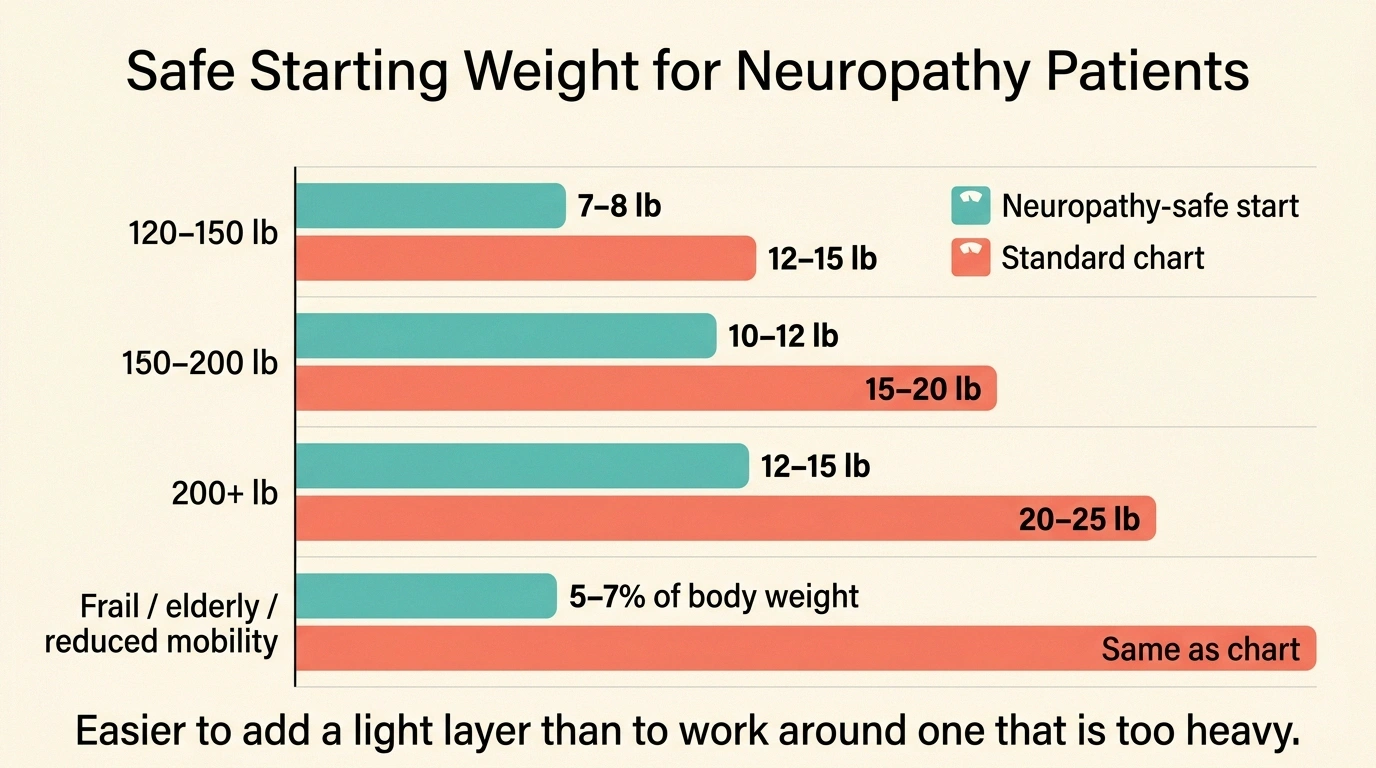
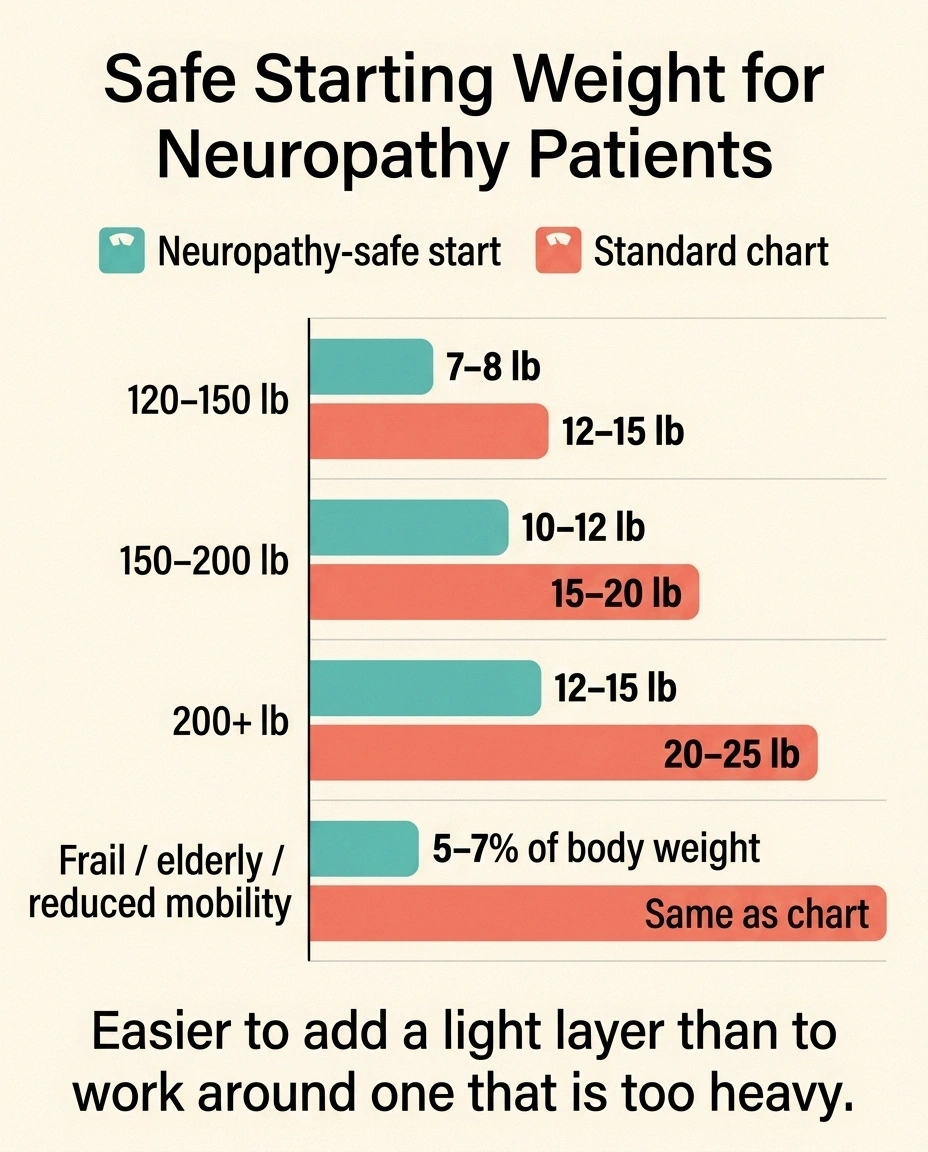
General guidance for a healthy adult is 10 percent of body weight, plus or minus a pound. For someone with neuropathy, I would suggest starting lighter.
| Body weight | Suggested starting blanket | Standard (non-neuropathy) chart |
|---|---|---|
| 120–150 lb | 7–8 lb | 12–15 lb |
| 150–200 lb | 10–12 lb | 15–20 lb |
| 200+ lb | 12–15 lb | 20–25 lb |
| Frail / elderly / reduced mobility | 5–7% of body weight, regardless of chart | Same as general chart |
Easier to add a second light layer if the initial blanket feels too light than to work around one that is too heavy.
- 120–150 lb body weight: start with a 7 or 8 lb blanket, not the “standard” 12 or 15.
- 150–200 lb body weight: start with a 10 or 12 lb blanket.
- 200 lb and above: start with 12 to 15 lb.
- Frail, elderly, or reduced mobility: stay at 5 to 7 percent of body weight regardless of the general chart.
Better to go lighter and add a second lightweight layer on top than to buy a blanket that turns out to be too heavy. Weighted blankets are expensive; return policies matter.
Choosing the Right Fabric
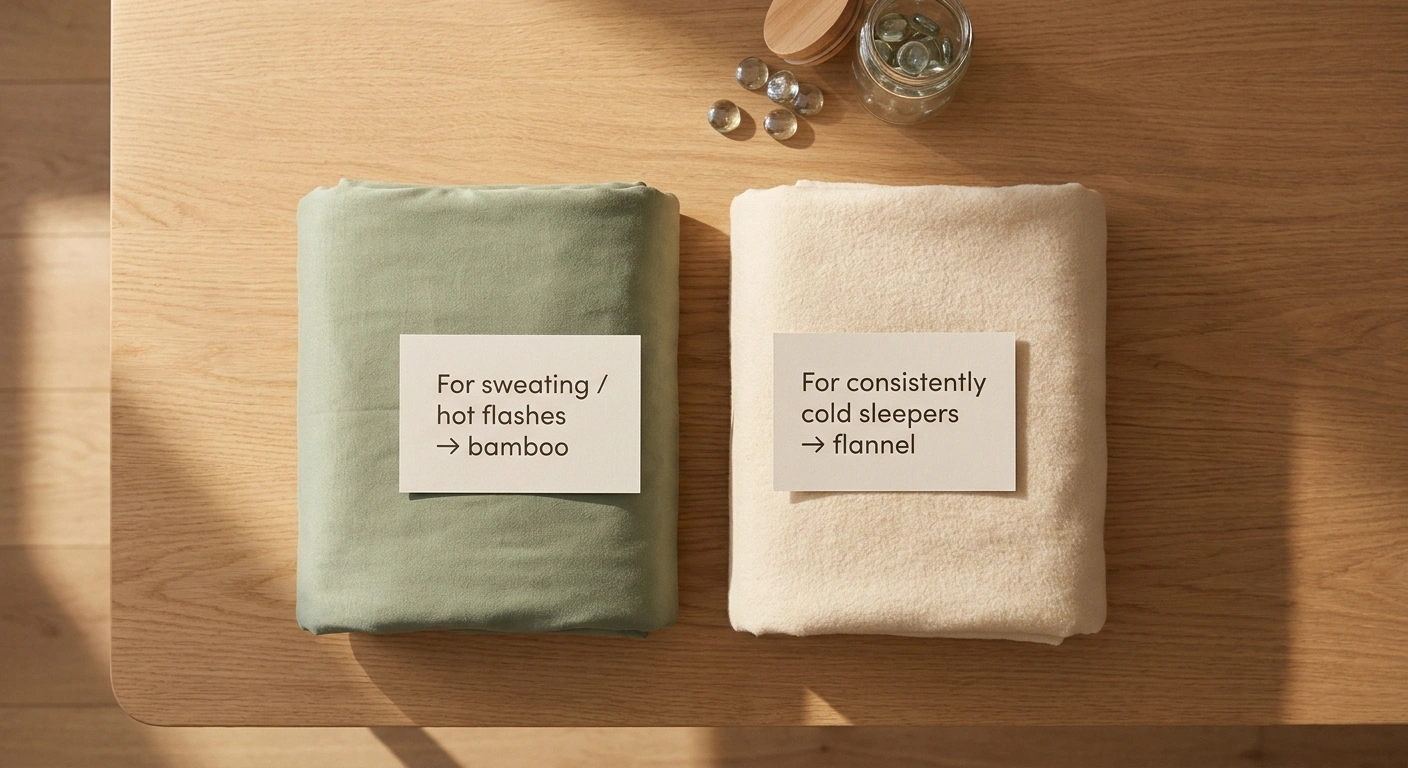
Fabric affects heat, feel, and durability. For neuropathy patients, the top considerations:
- Bamboo, cooling minky, or cotton with a cooling weave. Best for patients with autonomic sweating or hot flashes. Wicks moisture. Feels cooler to the skin.
- Cotton flannel or fleece. Warmer. May be too hot for people with any thermoregulation issues.
- Small glass beads inside. Preferred. Denser than plastic pellets, quieter, distribute weight more evenly, feel less “lumpy.”
- Plastic pellets inside. Cheaper. Noisier. Less even distribution. Can feel like sleeping under a beanbag chair.
- Chunky knit (open weave). Aesthetically popular; drafty in cold rooms; may not provide even pressure.
- Removable cover with zipper. Essential for cleaning. Weighted blankets are not easy to wash whole; a removable cover solves that.
How to Trial a Weighted Blanket Safely
If you decide to try one, here is the sequence that minimizes the downside.
- Verify the return policy before you buy. 30 days minimum, no restocking fee if possible.
- Start with a lighter weight than the standard chart suggests. 5 to 7 percent of body weight, not 10 percent.
- First night: use it only from the waist down. This tests the tolerance of your feet and legs, which is where most neuropathy patients feel changes first. Keep the upper body under a regular light blanket.
- Second and third nights: expand coverage gradually. If your feet tolerated night one, cover a bit more. If they did not, stop.
- Check your skin in the morning. Look for pressure marks, redness that lingers, color changes, or any new numbness. If any of those appear, the blanket is doing damage you cannot feel in real time.
- Track sleep quality for a week. How long to fall asleep, how many wake-ups, morning grogginess. Compare to your baseline.
- Track your neuropathy symptoms in the morning. Same tools you use to track flares generally — pain scale, tingling severity, “how did the feet feel getting out of bed.”
- Never cover the head or upper chest. Weighted blankets belong from the shoulders down.
- Never combine with an electric blanket or heating pad. Weight plus heat under compromised sensation is a burn risk. Same principle applies to hot water bottles.
- Ask someone in the house before your first trial. Make sure a spouse, roommate, or adult child knows you are trying a weighted blanket, so if you need help getting up in the night, there is someone to call.
If sleep improves, pain does not worsen, and morning skin looks normal after a week, the blanket is a keeper. If any of those change for the worse, return it.
When to Take the Blanket Off Mid-Night
A few specific signals that mean “remove now”:
- Active foot ulcer or wound on the covered area
- Bedridden or unable to shift position independently
- Severe peripheral arterial disease
- Uncontrolled congestive heart failure or severe respiratory disease
- Uncontrolled or untreated sleep apnea
- Recent surgery on the covered area
- Dementia or significant cognitive impairment
- Severe allodynia where any pressure is intolerable
- Any situation where the person cannot independently remove the blanket if needed
- Feet feel unusually cold or numb compared to typical.
- Any sharp, throbbing, or new pain in the covered area.
- Palpitations or shortness of breath (a warning sign in patients with sleep apnea or cardiovascular disease under any heavy bedding).
- Sweating that soaks through the top layer.
- Difficulty moving legs to shift position or get up.
- Any sense of being trapped or unable to breathe fully.
The blanket should be removable with one hand from any position. If it is not, you are using something too heavy.
Alternatives If a Weighted Blanket Is Not Right for You
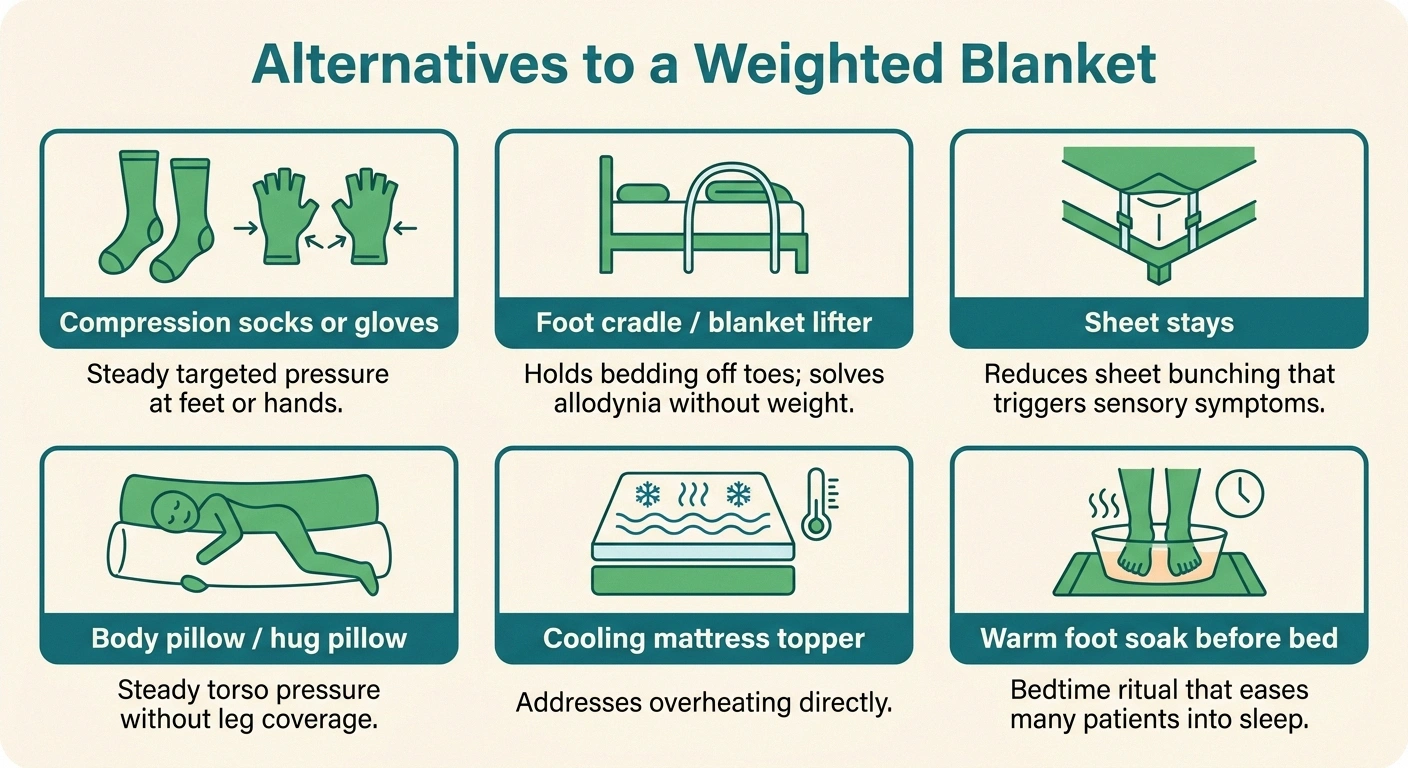
Not everyone with neuropathy is a candidate for a weighted blanket. There are gentler tools that address some of the same problems.
- Compression socks or gloves. Provide steady, even pressure in a very targeted way, and are usually well-tolerated by people who cannot tolerate a full blanket. See our compression sock guide.
- Foot cradle or blanket lifter. A wire or plastic frame that holds bedding off the toes. Solves the allodynia-to-sheet problem without adding any weight at all.
- Sheet stays or suspenders. Small clips that hold the fitted sheet corners down, reducing sheet bunching that can trigger sensory symptoms overnight.
- Body pillow or hug pillow. Provides steady pressure to the torso and arms without covering the legs.
- Cooling mattress topper. If overheating is your main sleep disruptor, addressing that directly may help more than adding weight.
- Silk or bamboo pillowcase. Reduces friction if allodynia affects hands or face.
- Warm foot soak before bed. Not a comfort tool per se, but a bedtime ritual that eases many neuropathy patients into sleep. Our foot soak recipes covers Epsom, ginger, and other approaches.
- Bedtime CBD oil or topical menthol. Some patients find that a topical treatment on the feet before bed reduces the sensations that a weighted blanket would otherwise be trying to mask. See our CBD oil for neuropathy page.
Care and Cleaning
Weighted blankets are heavy, and washing them whole is often too much for a home washer or dryer. A blanket with a removable cover solves this — the cover goes in the wash, the weighted interior stays folded. For blankets without a removable cover, most manufacturers recommend spot cleaning between full washes and, when a full wash is needed, taking the blanket to a large-capacity commercial machine (many laundromats have them).
Air dry when possible. High heat can weaken stitching and damage glass-bead pockets.
A Word on Where I Landed With Mine
My granddaughter’s sage-green blanket lived at the foot of my bed for two weeks. I liked it for the first hour and disliked it by morning. My feet felt heavier and slower on the way to the bathroom. Skin looked fine, but the sensation was not right. I ended up gifting it back to my daughter, who does not have neuropathy and who sleeps under it happily.
What worked for me instead was less exciting and more effective: a foot cradle to lift the top sheet off my toes, thin bamboo pillowcase, and a warm ginger foot soak most evenings. Together those three things quieted my feet more reliably than the blanket had. Your solution may be different. The point is to know what you are testing, to test it thoughtfully, and to notice honestly whether it is helping or making things worse.
Nothing on this page is medical advice, and your prescriber and your primary-care team should hear about any new tool that affects your sleep, your feet, or your daily comfort. But if a well-meaning family member has just handed you a weighted blanket, or the ads have you curious, this is the framework I would use in your shoes.
Frequently Asked Questions
Do weighted blankets help neuropathy pain?
The evidence is mixed. A 2021 randomized trial found that weighted blankets did not significantly reduce neuropathic pain compared to a lighter placebo, though the same trial found meaningful benefit for musculoskeletal pain. Some patients with neuropathy report improved sleep quality and reduced nighttime restlessness with a weighted blanket, which can indirectly improve pain perception. Others find that the added pressure worsens allodynia or contributes to skin problems. Personal response varies widely.
What weight of weighted blanket is safe for someone with neuropathy?
General guidance is 10 percent of body weight for a healthy adult. For someone with neuropathy, particularly if elderly, frail, or with reduced mobility, starting at 5 to 7 percent of body weight is safer. It is easier to add a second light layer if the initial blanket feels too light than to work around a blanket that is too heavy.
Can a weighted blanket damage skin in people with neuropathy?
Yes, in some cases. Sensory neuropathy reduces the feedback that normally prompts position shifts during sleep. A weighted blanket concentrated over the same skin area for 8 hours can produce pressure-related skin injury without any warning sign. Morning skin checks and starting with lighter weights reduce this risk. Anyone who is bedridden, immobile, or takes sedating medications should generally avoid weighted blankets.
Are weighted blankets safe for people with diabetes?
Diabetes commonly overlaps with peripheral neuropathy, reduced peripheral circulation, and sometimes autonomic thermoregulation issues, all of which affect weighted-blanket safety. Weighted blankets can be safe for some diabetic patients but require extra caution: starting with lighter weights, using breathable fabrics to avoid overheating, checking feet daily for pressure marks or color changes, and avoiding electric blankets or heating pads in combination.
Which is better for neuropathy — a weighted blanket or compression socks?
Compression socks provide steady, targeted pressure at the feet and lower legs and are generally better tolerated by neuropathy patients than a full weighted blanket. Compression can help both with sensory symptoms and with venous return. A weighted blanket addresses a different problem — sleep quality and general sensory calming. Some patients use both. Neither replaces the other.
Can I use a weighted blanket with a heating pad or electric blanket?
No. Combining weight with heat under compromised sensation is a burn risk. If sensory nerves cannot report skin temperature reliably, a heating pad or electric blanket beneath a weighted blanket can cause thermal skin injury before you notice. If warmth at night is the goal, use warmed bedding briefly before getting into bed and remove any heat source before falling asleep, or discuss with your prescriber safer approaches like warm foot soaks earlier in the evening.
How long does it take to know if a weighted blanket is working?
Most people know within 3 to 7 nights whether a weighted blanket is helping or hurting. Sleep-quality improvements often show up in the first few nights. Skin problems from pressure typically show up within the first week. If a week of nightly use has produced neither better sleep nor visible skin changes, the blanket is either right for you or genuinely neutral — and worth keeping only if the initial cost still feels justified.
About the Author