
One of the women in my support group used to call it her “swim move.” She’d stand up from her recliner, take a slow half-second to steady herself on the arm of the chair, and then deliberately tip her body forward as if she were about to dive into a pool. She’d been doing it for years before her cardiologist asked the right question, ran the right test, and put a name to it: neurogenic orthostatic hypotension. Her blood pressure was crashing every time she stood up. Her autonomic nerves — the ones that are supposed to squeeze her blood vessels when she goes vertical — had stopped doing their job.
I’m Janet. I’m a patient advocate, not a doctor. And midodrine is one of those medications that doesn’t get talked about much outside of cardiology and neurology clinics, but it can be a quiet game-changer for people whose autonomic neuropathy is making it dangerous to simply stand up from a chair. This is what I’ve learned from years of conversations with people who take it, plus the clinical reality that’s worth understanding before you talk to your own doctor about it.
What Midodrine Actually Does
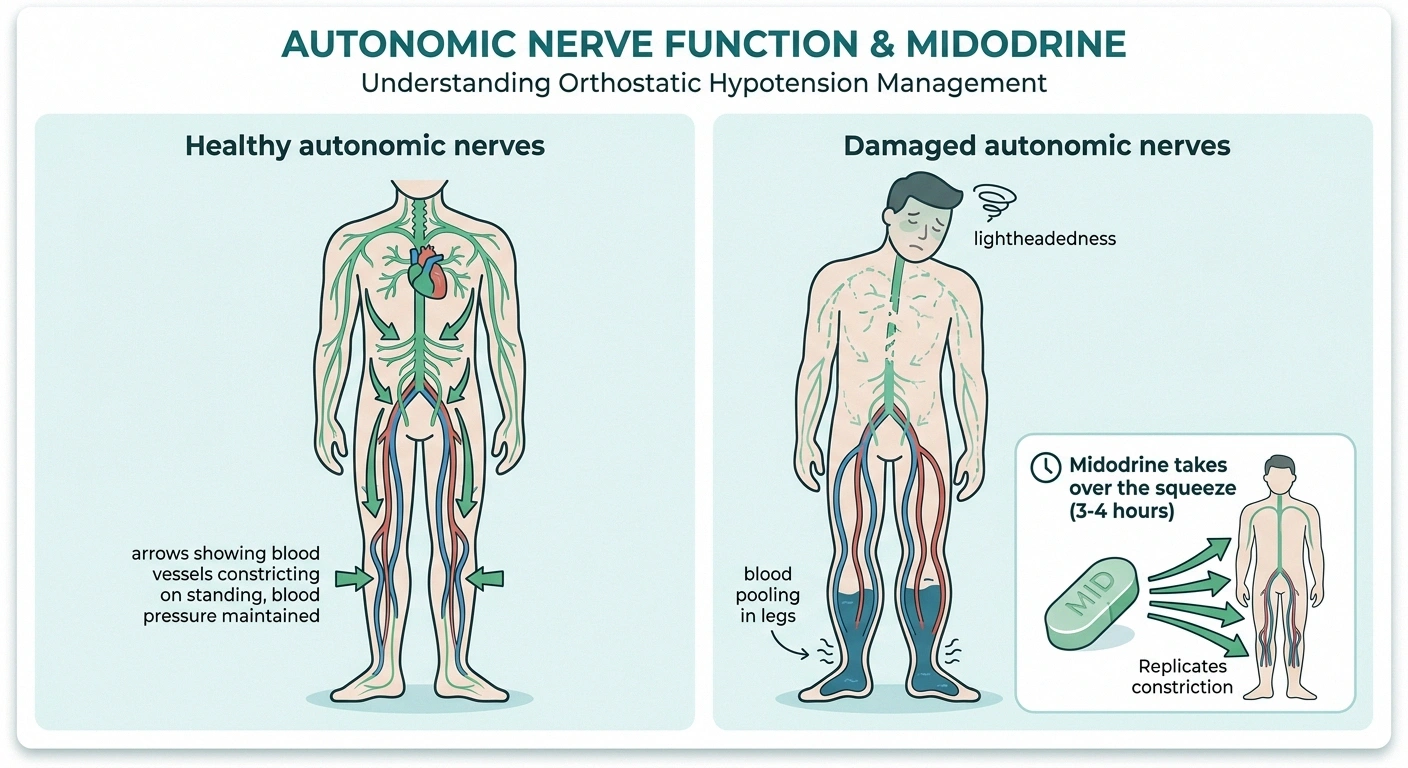
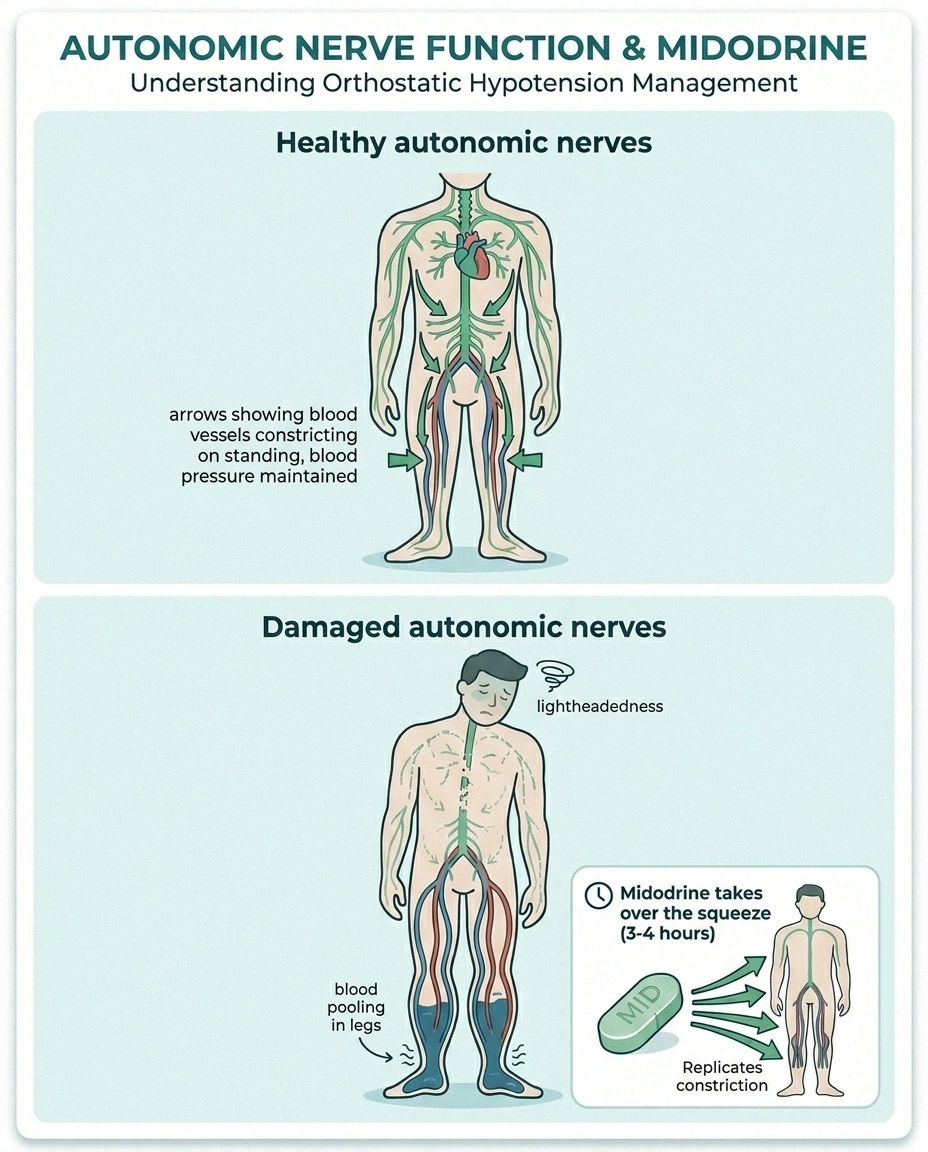
Midodrine (brand name ProAmatine, though the brand version was largely discontinued and almost everyone takes generic) is a pill that gently squeezes your blood vessels. That’s it. That’s the whole job. When you stand up, gravity pulls about a liter of blood downward into your legs and belly. Healthy autonomic nerves respond immediately by tightening the smooth muscle in your blood vessel walls — the medical term is vasoconstriction — which pushes blood back up to your brain. You don’t notice it because it works so fast.
Key Takeaway
Midodrine gently squeezes your blood vessels to take over the job damaged autonomic nerves can no longer do — raising standing blood pressure by 10-30 points for 3-4 hours per dose. The single most important safety rule: never take the last dose within 4 hours of lying down, or you risk dangerously high blood pressure overnight.
In autonomic neuropathy, that reflex is damaged. The nerve signal to constrict gets weaker, slower, or fails entirely. So when you stand up, blood pools in your lower body, your blood pressure drops, less blood reaches your brain, and you get the classic symptoms: lightheadedness, dizziness, foggy vision, the room “going gray” or “going black,” sudden ringing in the ears, and sometimes a hard fall to the floor before your body can react.
Midodrine takes over the job your autonomic nerves can no longer do. It’s converted in your body to a molecule that grabs onto a specific receptor (the alpha-1 adrenergic receptor) on the smooth muscle around your blood vessels. The result is a controlled, modest squeeze that bumps your blood pressure up by about 10 to 30 points and keeps it there for three to four hours. That’s enough to get you through breakfast, an errand, a doctor visit, or whatever else you need to do upright.
Who It’s Actually For
Midodrine is approved by the FDA for one specific condition: symptomatic orthostatic hypotension that interferes significantly with daily life. In practice, your doctor may prescribe it for any of the following situations, which often overlap in autonomic neuropathy:
- Neurogenic orthostatic hypotension — the autonomic-nerve-damage version, most common in diabetic autonomic neuropathy, Parkinson’s-related dysautonomia, multiple system atrophy, pure autonomic failure, and some chemotherapy-induced or amyloid neuropathies.
- Postural orthostatic tachycardia syndrome (POTS) — not strictly orthostatic hypotension, but midodrine is sometimes used off-label for the subset of POTS patients with low standing blood pressure.
- Dialysis-related hypotension — patients whose blood pressure crashes during dialysis sessions sometimes take a dose 30 minutes before treatment.
- Severe vasovagal syncope — rare; usually only after other treatments have failed.
If you have diabetic neuropathy and you’ve been feeling lightheaded standing up — especially after meals or in the morning — that’s the most common neuropathy population where midodrine comes up. It’s also one of the medications that can help when other medications have caused or worsened orthostatic symptoms but can’t be stopped.
How It’s Dosed (And Why the Schedule Matters)
Midodrine has an unusual dosing schedule for one reason: it works fast and wears off quickly. Most blood pressure medications are taken once a day and stay in your system around the clock. Midodrine is the opposite — it works in about 30 to 45 minutes, peaks at one to two hours, and is essentially gone by four hours. That’s by design.
A Typical Midodrine Day
Most patients do well on 7.5-15 mg total per day. Maximum is 30 mg/day across all doses.
The standard schedule:
- First dose: 30 to 45 minutes before getting out of bed, usually 2.5 to 5 mg.
- Second dose: midday, usually with lunch, same dose.
- Third dose (if needed): late afternoon, usually no later than 4 hours before bedtime.
The cardinal rule: do not take midodrine within 4 hours of lying down to sleep. If you take it close to bedtime and then lie flat, the medication is still squeezing your blood vessels but gravity is no longer pulling blood down. The result is a phenomenon called supine hypertension — high blood pressure while you’re lying down — which can be just as dangerous as the low pressure you’re treating. We’ll come back to this because it’s the single most important safety point.
The maximum daily dose is usually 30 mg total, divided across the day. Most people do well at 7.5 to 15 mg total per day. Your doctor will start low and increase slowly.
What It Feels Like When It’s Working
I’ve talked with a lot of people about what midodrine actually feels like, and the consistent description is: “I just don’t think about my blood pressure anymore.”
That’s the win. The dizziness when you stand up gets quieter or goes away. The morning fog lifts. You can walk to the mailbox without that flash of gray vision halfway down the driveway. You can stand at the kitchen counter to make a sandwich without holding on. It doesn’t feel like a stimulant — your heart isn’t racing, you’re not “energized” — you just have a more normal relationship with gravity again.
What people also notice, because midodrine works on alpha-1 receptors throughout the body:
- Goosebumps and a tingling, itchy scalp about 30 to 60 minutes after a dose. This is the most reported side effect by far and is usually mild. It tells you the medication is working.
- Cool or pale fingers as small blood vessels in the skin constrict.
- A modest urge to urinate as bladder neck smooth muscle responds (this can be a problem in men with prostate enlargement — more on that below).
These effects fade as your body adjusts over the first few weeks, though some persist mildly. None of them are dangerous; they’re a signal that the receptors are responding the way they’re supposed to.
The Supine Hypertension Problem (Read This Section Twice)

Here’s the part of the midodrine conversation that does not get enough attention in casual reading. If you treat orthostatic hypotension with midodrine, you may create high blood pressure while lying down. Studies show that up to half of people on midodrine have supine blood pressures over 150/90 at some point overnight, and a meaningful number have pressures over 180.
Supine Hypertension — The Hidden Risk
Up to half of midodrine patients have blood pressures over 150/90 at some point while lying down. Chronically high overnight pressure can cause stroke, kidney damage, and heart strain.
Five non-negotiables to manage it:
- Last dose 4+ hours before lying down. Not “close enough.” 4 hours minimum.
- Head of bed elevated 4-6 inches with risers or a wedge pillow.
- Carbohydrate bedtime snack — the post-meal pressure dip works in your favor.
- Home BP cuff — supine reading at bedtime for the first month, then weekly.
- Pressures repeatedly above 160 supine? Doctor adds a low-dose nitrate patch or hydralazine at bedtime.
Why is this a big deal? Because chronically high blood pressure while you’re lying down for eight hours a night can cause:
- Cardiac strain and left ventricular hypertrophy over time
- Stroke risk, especially in the morning hours when pressure spikes are common
- Kidney damage
- Increased risk of heart failure
Your doctor should know about this risk and should monitor for it. Things that help manage supine hypertension:
- Last midodrine dose no later than 4 hours before bedtime. Not 3 hours. Not “close enough.” 4 hours minimum.
- Head of bed elevated 4 to 6 inches with risers or a wedge pillow. This uses gravity to keep some downward pressure on circulation while you sleep, partially offsetting supine hypertension.
- A bedtime snack with carbohydrates can help — the post-meal blood pressure dip works in your favor at night.
- Home blood pressure monitoring lying down at bedtime. Most cardiologists treating autonomic neuropathy ask patients to take a supine reading once a night for the first month.
- If pressures are repeatedly above 160 supine, your doctor may add a short-acting medication at bedtime (often a low-dose nitrate patch or hydralazine), specifically to manage overnight pressure.
This is the kind of thing that’s easy to gloss over when a new prescription gets handed to you in a busy office. Don’t gloss over it. Ask your prescriber specifically: “How are we going to watch my supine blood pressure?” If the answer is vague, ask again or get a second opinion. A good cardiologist or neurologist treating autonomic dysfunction will have a clear answer.
Who Should NOT Take Midodrine
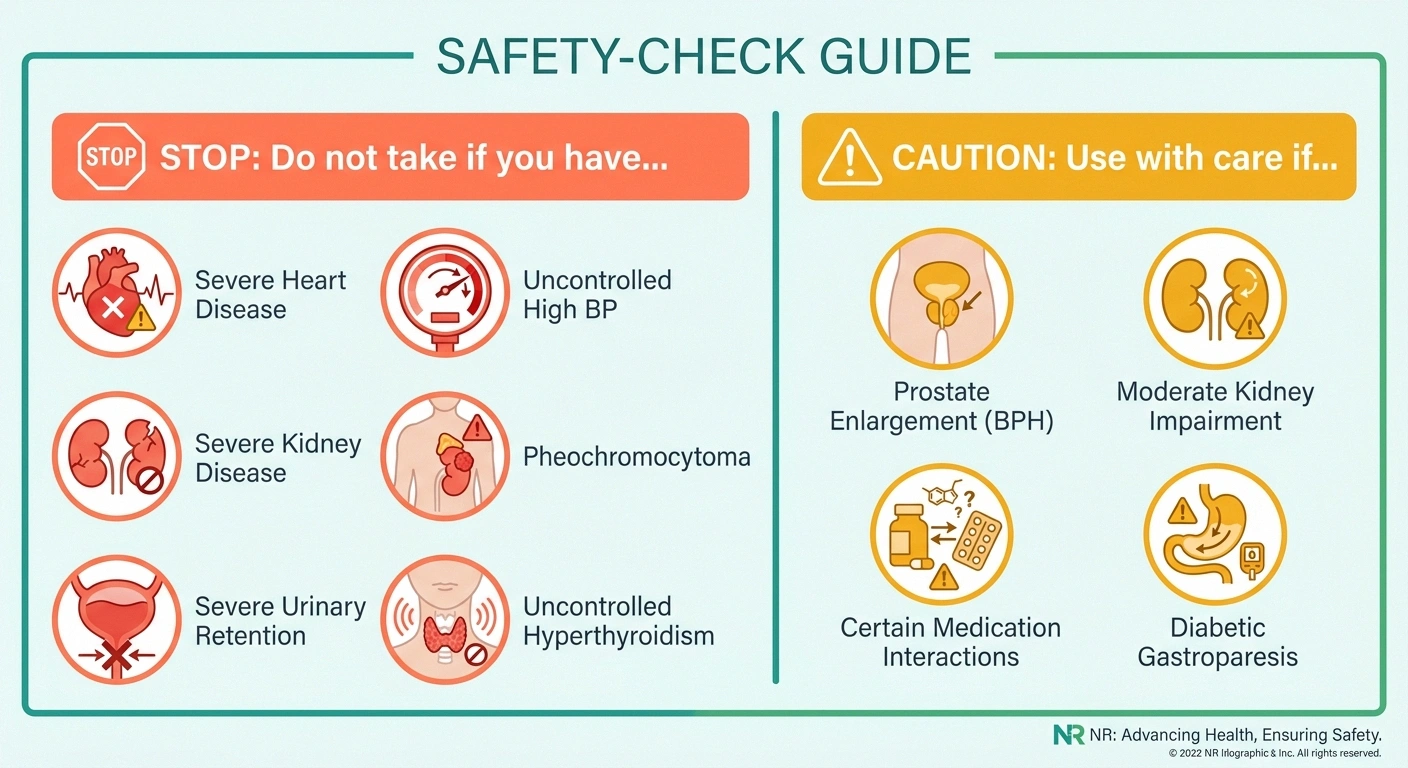
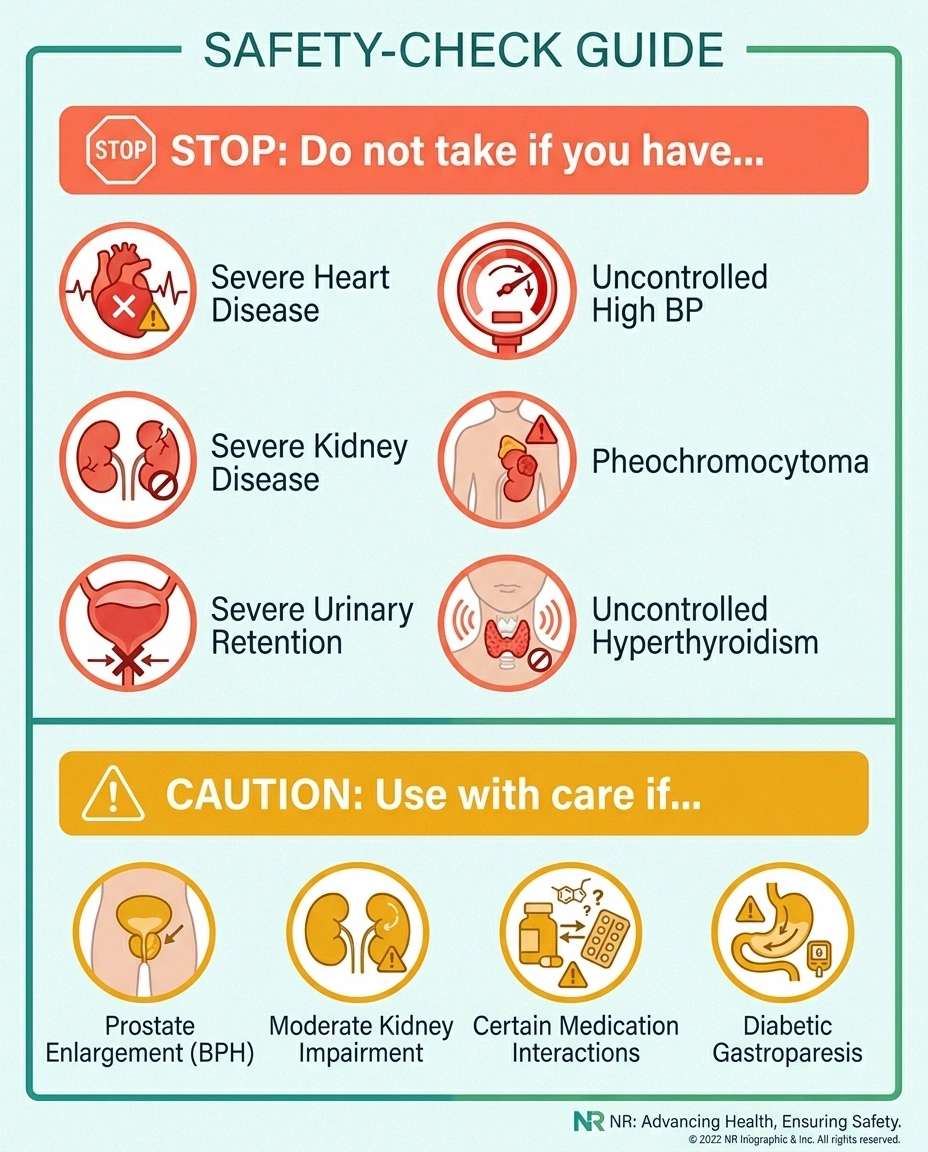
Midodrine isn’t right for everyone with orthostatic symptoms. The clear contraindications and cautions:
Midodrine Contraindications & Cautions
- Severe heart disease
- Uncontrolled high blood pressure
- Severe kidney/liver disease
- Pheochromocytoma
- Severe urinary retention
- Uncontrolled hyperthyroidism
- Older men with prostate enlargement (BPH)
- Moderate kidney impairment
- Taking pseudoephedrine, MAOIs, or migraine drugs
- Diabetic gastroparesis (absorption unpredictable)
Do not take midodrine if you have:
- Severe heart disease (severe coronary artery disease, severe valve disease, advanced heart failure)
- Significant uncontrolled high blood pressure already (lying or sitting BP regularly above 160/100)
- Acute kidney injury or severe kidney disease
- Severe liver disease
- Pheochromocytoma (a rare adrenal tumor)
- Severe urinary retention (often related to prostate enlargement in men)
- Thyroid storm or uncontrolled hyperthyroidism
- A known allergy to midodrine
Caution and dose adjustment needed if:
- You’re an older man with benign prostatic hyperplasia (BPH) — midodrine can worsen urinary hesitancy and retention. Many men still tolerate it, but the dose should be conservative and symptoms watched closely.
- You have moderate kidney impairment — doses cleared slower; start lower.
- You take other medications that raise blood pressure or constrict blood vessels (pseudoephedrine, certain migraine medications, some asthma inhalers, monoamine oxidase inhibitors).
- You have diabetic gastroparesis — your absorption may be unpredictable, requiring dose timing experimentation.
If you’re on multiple medications, ask your pharmacist to run a full interaction check. This is one of those conversations that can save you weeks of confusion later.
How It Compares to the Other Options
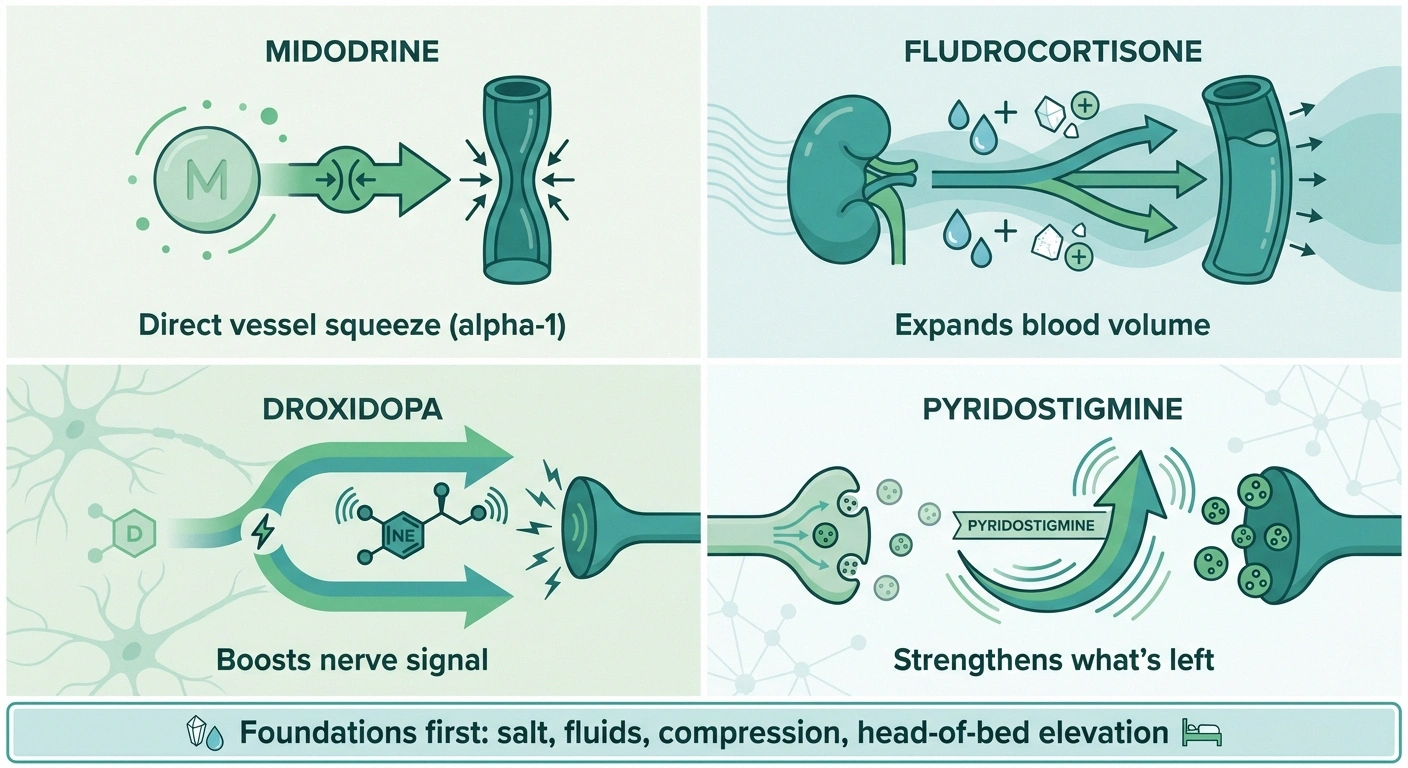
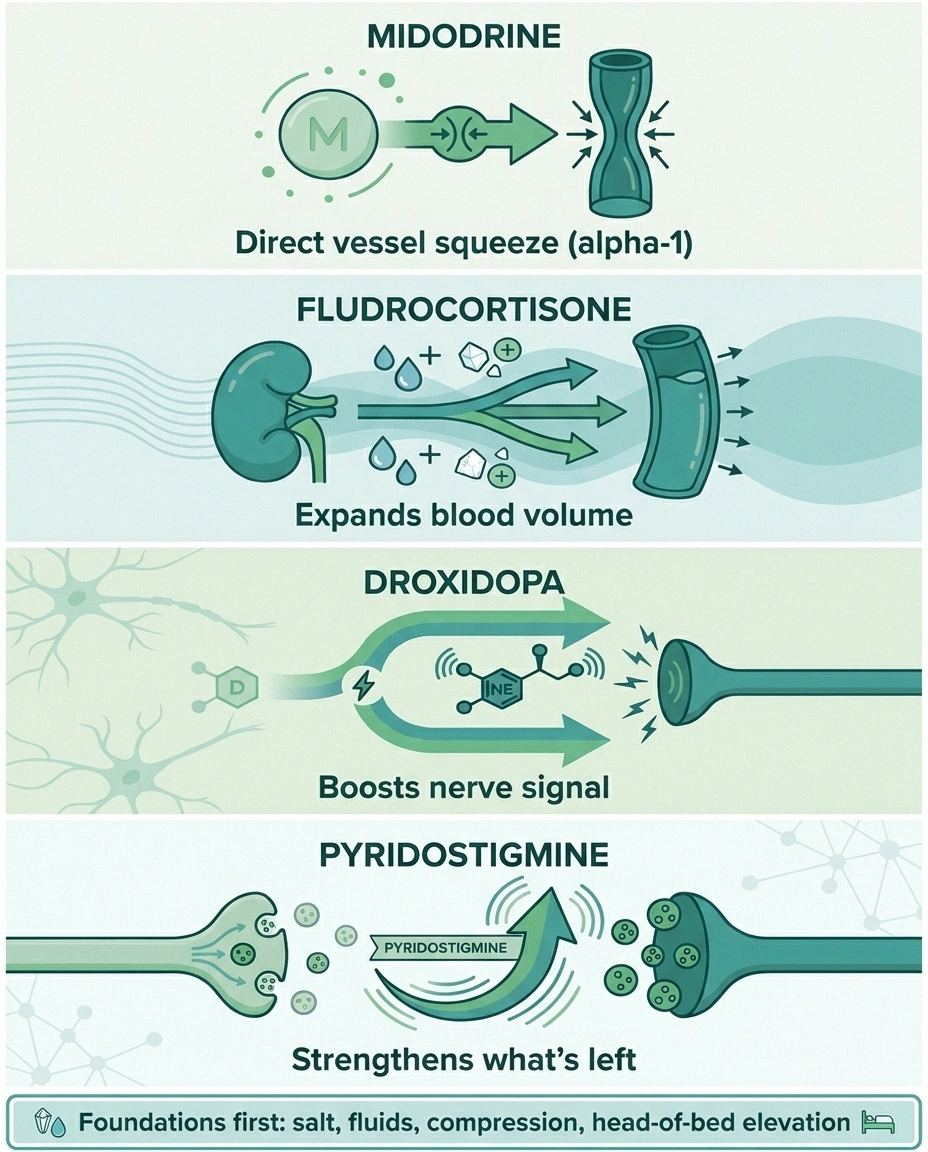
Midodrine isn’t the only medication for neurogenic orthostatic hypotension. The main alternatives:
Medications for Neurogenic Orthostatic Hypotension
| Medication | How it works | Pros | Watch for |
|---|---|---|---|
| Midodrine | Squeezes blood vessels (alpha-1) | Predictable, cheap, fast on/off | Supine hypertension, urinary effects |
| Fludrocortisone | Holds onto sodium + water | Once daily, cheap | Low potassium, fluid retention |
| Droxidopa | Converts to norepinephrine | Targets the root signal pathway | Cost, headaches, supine hypertension |
| Pyridostigmine | Boosts remaining nerve signals | Less supine hypertension | GI side effects (sweating, diarrhea) |
Non-medication foundations come first: salt + fluid intake, compression stockings, head-of-bed elevation, slow rises, smaller meals.
Fludrocortisone (Florinef). A steroid that helps your kidneys hold onto sodium and water, expanding blood volume so there’s more to pump around. Cheaper than midodrine, longer-acting (once-daily dosing). Downsides: potassium loss (often requires a potassium supplement), modest weight gain, fluid retention, mild blood pressure elevation that can worsen supine hypertension just like midodrine, and a long list of small steroid-related effects. Often used alongside midodrine rather than instead of it.
Droxidopa (Northera). Converted in the body to norepinephrine, which signals the autonomic nervous system from a different direction. Approved specifically for neurogenic orthostatic hypotension. Tends to be more expensive and has a more complex side-effect profile, including headache and supine hypertension at least as significant as midodrine’s. Often tried when midodrine isn’t tolerated or doesn’t work.
Pyridostigmine. A cholinesterase inhibitor that boosts the autonomic nerve signals you still have. Modest blood pressure boost on standing without significant supine hypertension — that’s its main advantage. Gastrointestinal side effects (increased salivation, sweating, occasional diarrhea) are common.
Non-medication options first. Before any of these prescriptions, your care team should be working on the foundations: aggressive salt and fluid intake (2 to 3 grams of sodium daily plus 2 to 3 liters of fluid for most patients, unless your kidneys or heart can’t tolerate it), compression stockings at 20-30 or 30-40 mmHg up to mid-thigh or higher, sleeping with the head of the bed elevated, smaller-and-more-frequent meals to avoid postprandial pressure drops, slow rises from chairs and beds, and physical countermaneuvers like leg crossing or buttock-clenching when symptoms hit. Medications work better on top of these foundations, not as a replacement for them.
What to Expect in the First Month
If you and your doctor decide midodrine is worth trying, the first month usually looks something like this:
Your First Month on Midodrine
Week 1: Start at 2.5 mg before breakfast and 2.5 mg at midday. Watch for the goosebumps-and-scalp-tingling signal that the medication is working. Take your blood pressure sitting, then standing, two or three times a day and write it down. Take a bedtime supine reading. Don’t lie down within 4 hours of the last dose.
Weeks 2-3: If you’re tolerating it and still getting orthostatic symptoms, the dose typically goes up to 5 mg twice daily, then possibly a small third dose in the late afternoon. Some patients do best on 5 mg three times a day; others find 10 mg twice daily works better. The right schedule is individual.
Week 4: A follow-up appointment to review your logged blood pressures, symptom diary, and supine readings. Adjustments are common at this visit.
By the one-month mark, most people who are going to benefit from midodrine know it. If you’re at a reasonable dose and still feeling significant orthostatic symptoms, your doctor will discuss adding fludrocortisone, switching to droxidopa, or layering in pyridostigmine.
The Honest Trade-Offs
I want to be straight about this, because midodrine isn’t a miracle and shouldn’t be sold as one.
What it does well: it reliably and predictably raises standing blood pressure by 10 to 30 points for three to four hours. For many people with autonomic neuropathy, that’s the difference between being homebound and being able to leave the house.
What it doesn’t do: fix the underlying nerve damage. The autonomic nerves don’t heal because of a vasoconstrictor pill. Midodrine is a workaround — a useful one, but a workaround. The root work — blood sugar control if you’re diabetic, treatment of the underlying autoimmune or amyloid process if that’s the cause, removal of offending medications, physical therapy for deconditioning — is what changes the trajectory.
The other honest piece: midodrine adds complexity to your day. You have to remember to take it before you stand up. You have to plan the last dose carefully around bedtime. You have to monitor your supine blood pressure for at least a while. For some people, the gain is worth the complexity. For others, simpler measures — better salt and water habits, better supportive footwear for steadier walking, and aggressive use of balance and fall-prevention strategies — are enough.
Questions Worth Asking Your Doctor

If you’re considering midodrine, these are the questions I’d bring to the appointment:
- What blood pressure measurements are we aiming for, standing and supine?
- How are we going to monitor my supine blood pressure at home?
- What dose schedule are we starting with, and when do we re-evaluate?
- What’s the latest dose I can take in relation to my usual bedtime?
- Are any of my other medications going to interact with midodrine?
- If midodrine doesn’t work or I can’t tolerate it, what are we going to try next?
- How are we addressing the underlying cause of my autonomic neuropathy alongside this?
A prescriber who can answer all of those clearly is the kind of partner you want for autonomic management. If they can’t, ask for a referral to a cardiologist or neurologist who specializes in autonomic disorders. Some academic medical centers have dedicated autonomic clinics — they’re worth the drive if your symptoms are significant.
A Final Note from the Support Group
The woman with the “swim move” I mentioned at the beginning is doing well. She takes 5 mg of midodrine at 6:30 a.m., before she gets out of bed. She takes a second 5 mg dose at noon. Her last dose is at 3 p.m. — well before her 9 p.m. bedtime. Her bed is elevated. Her standing blood pressures have come from the 80s/50s up to the 110s/70s most mornings. She drinks a full glass of water before each dose. She still wears compression stockings every day. She still uses her cane for tricky surfaces. But she doesn’t have to dive into a swim move anymore. She can stand up and go.
That’s the win. Not a cure. Not a return to her thirties. Just a quieter relationship with gravity, built on a careful medication plan and the patient, ordinary work of measuring and adjusting and partnering with a doctor who pays attention. If autonomic neuropathy has been narrowing your world, this is one of the conversations worth having.
Frequently Asked Questions
What is midodrine used for in autonomic neuropathy?
Midodrine is used to treat neurogenic orthostatic hypotension — low blood pressure when standing up — caused by damaged autonomic nerves. It works by gently constricting blood vessels to keep blood from pooling in the legs, which helps prevent dizziness, lightheadedness, gray vision, and fainting when you stand. It is FDA-approved for symptomatic orthostatic hypotension and is one of the most commonly prescribed medications for this condition in diabetic and other autonomic neuropathies.
How fast does midodrine work?
Midodrine starts working in about 30 to 45 minutes, peaks in the bloodstream at one to two hours, and is largely cleared by four hours. That fast on-off action is why it is taken multiple times a day rather than once. The first dose is typically taken before getting out of bed in the morning.
Why can’t I take midodrine before bedtime?
Midodrine raises blood pressure by constricting blood vessels. When you lie flat, gravity no longer pulls blood downward, so the medication can drive your blood pressure too high while you sleep. This is called supine hypertension and can cause stroke, heart strain, and kidney damage over time. The cardinal rule is to take the last midodrine dose at least four hours before lying down for the night.
What are the most common side effects of midodrine?
The most commonly reported side effects are goosebumps, a tingling or itchy scalp, cool fingers, and a stronger urge to urinate. These reflect the medication binding to alpha-1 receptors throughout the body and usually fade with continued use. Supine hypertension is the most serious side effect to monitor for. Older men with prostate enlargement may develop or worsen urinary hesitancy.
Can midodrine be taken with fludrocortisone?
Yes, this combination is common in clinical practice. Fludrocortisone expands blood volume while midodrine constricts blood vessels, so the two medications work through different mechanisms and are often used together when one alone is not enough. The combination does require closer monitoring of supine blood pressure and potassium levels.
How is midodrine different from droxidopa?
Both medications are used for neurogenic orthostatic hypotension, but they work differently. Midodrine directly constricts blood vessels by stimulating alpha-1 receptors. Droxidopa is converted in the body into norepinephrine, which then activates the autonomic nervous system. Midodrine is generally tried first because it is older, cheaper, and well-understood; droxidopa is often used when midodrine is not tolerated or not effective.
Will midodrine fix my autonomic neuropathy?
No. Midodrine treats the symptom of low standing blood pressure but does not reverse the underlying nerve damage. Treating the root cause — strict blood sugar control in diabetes, addressing autoimmune or amyloid drivers if relevant, removing offending medications, and physical reconditioning — is what changes the long-term trajectory. Midodrine is a workaround that buys you function while the deeper work is being done.
What should I do if I miss a dose?
If it is still well before your next scheduled dose and you are upright, you can take the missed dose. If you are within an hour or two of the next scheduled dose, skip the missed one and take the next dose at the usual time. Never double up. Never take a dose if you are going to lie down within four hours.
Is midodrine safe long-term?
Midodrine has been used clinically since the 1980s and is generally considered safe for long-term use when supine hypertension is monitored and managed. The greatest long-term concerns are cumulative blood pressure damage from unrecognized overnight pressure spikes and worsening urinary retention in older men. Regular monitoring of supine blood pressure, kidney function, and prostate symptoms is the safeguard.
About the Author