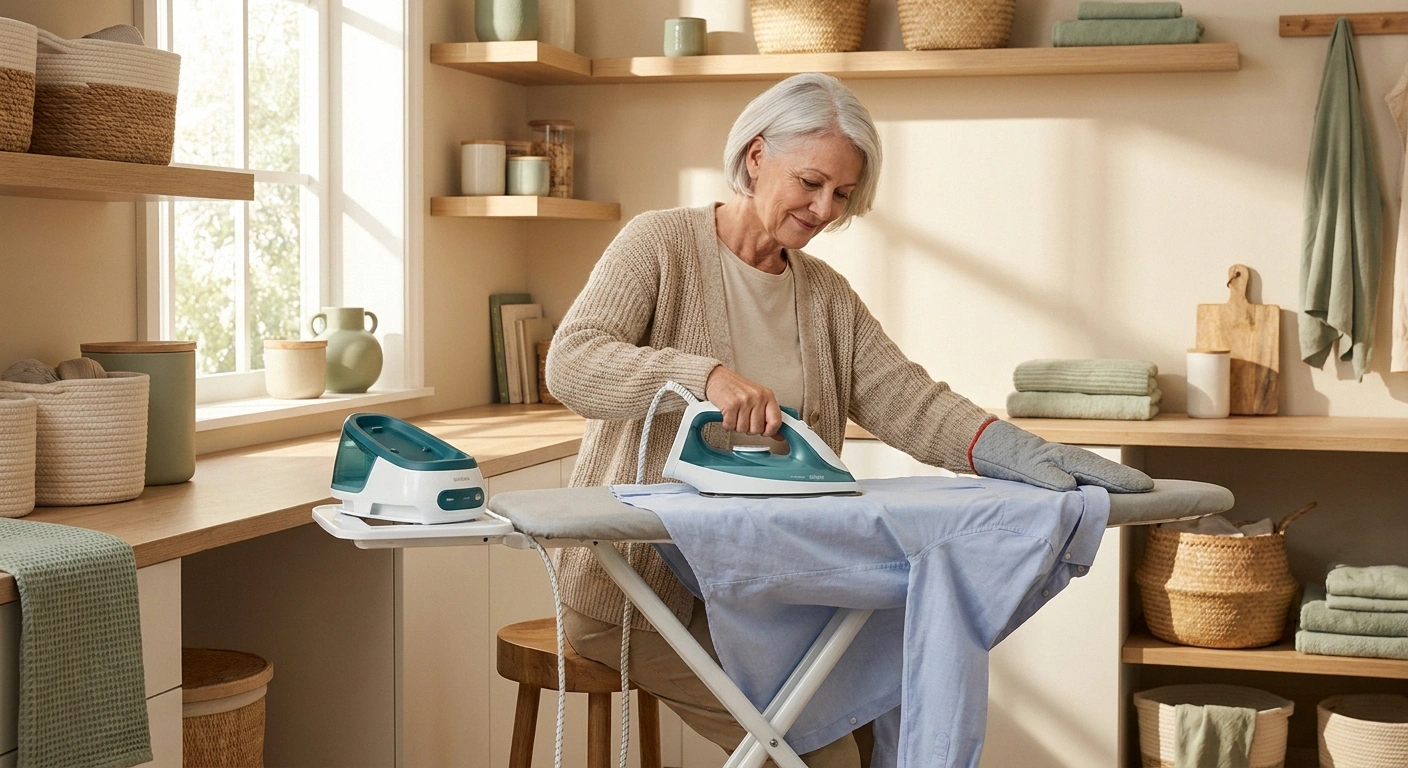
Last winter I was ironing a linen blouse before a family lunch and my thumb brushed the soleplate. Fully brushed it — the way you'd swipe a finger across a hot pan to check if it's warm. I registered nothing at first. About two seconds later my brain caught up and told me I'd just burned myself. There was already a white mark forming across the pad of my thumb.
If you have neuropathy in your hands, you know exactly that pause — the gap between what your skin is experiencing and what your brain gets around to reporting. Under most circumstances it is a nuisance. In front of a 400-degree iron, it is a real hazard.
What I want to do in this article is walk through the whole ironing setup — the iron, the board, the space, the routine — and share every adjustment I have made to keep this a task I can do safely. Not just to prevent the dramatic accident, but to head off the slow accumulation of little burns and drops that add up to “forget it, I'll wear it wrinkled.”
Why Ironing Deserves a Second Look When You Have Neuropathy
For most of my life ironing was a quiet weekly ritual — warm iron, steady rhythm, folded pile at the end. I never thought about it as risky, any more than washing dishes.
Ironing with hand neuropathy is not about being “more careful.” The warning signal your body was designed to send never arrives. Safety comes from rebuilding the equipment and the environment so most accidents cannot physically happen — a cordless iron, a seated station, heat-resistant gloves, and a routine that removes hot-decision moments.
Then neuropathy showed up in my hands, and the abilities that made ironing automatic quietly eroded: heat sensation, grip strength for a heavy iron, fine control around buttons. I noticed the first time the iron tipped when I set it down, the first time I dropped it, and the day my thumb touched the plate.
Ironing sits at an unusual intersection for people like us: high heat plus poor temperature sensation, a heavy object plus weakened grip, a long session plus standing balance, and a cord you cannot feel tangling around your feet. Any one is manageable. Together, they make ironing one of the most quietly dangerous household tasks in the neuropathy world — but absolutely doable if you rebuild the setup from the ground up, not just try to be “more careful.” Careful does not work when the warning signal never arrives.
The Three Ways an Iron Actually Hurts People Like Us
Before we get into the fixes, let's be honest about what we are preventing.
A soleplate at 400°F causes a full-thickness burn in about one second of contact.
In a neuropathic hand, the reflex that would normally pull you back is delayed by two to four seconds. Do not test iron temperature with your skin, ever. Use the indicator light and, if you want extra confidence, an infrared thermometer.
Contact burns. In a nerve-typical hand, a spinal-cord reflex pulls the hand back the moment your skin gets near heat, before your brain decides anything. In small fiber neuropathy and similar conditions, that reflex is degraded or missing. Your hand stays in contact for two, three, four seconds before you register anything. Two seconds against a 400-degree soleplate is a serious burn.
Dropped irons. A standard household iron weighs about three pounds. A steam iron with a full reservoir can weigh close to four. If your grip has changed, holding that weight through a twenty-minute session is a slow-motion negotiation with fatigue. When the iron slips, it goes straight down — onto a bare foot, your leg, the pet under the board, or the cord that whips it sideways.
The setup falls over. A wobbly board tips when you press hard on the far edge. An iron on an unstable rest topples if you nudge it. The cord catches on the corner and pulls the whole thing down. None of these are dramatic on their own — but all of them get more dangerous when you cannot feel the heat that is now on the floor next to your feet.
The rest of this article is about designing an ironing session that removes as many of these hazards as possible — not by asking you to work around them, but by changing the equipment and environment so most cannot happen.
Cordless Irons: The Single Best Upgrade for Numb Hands
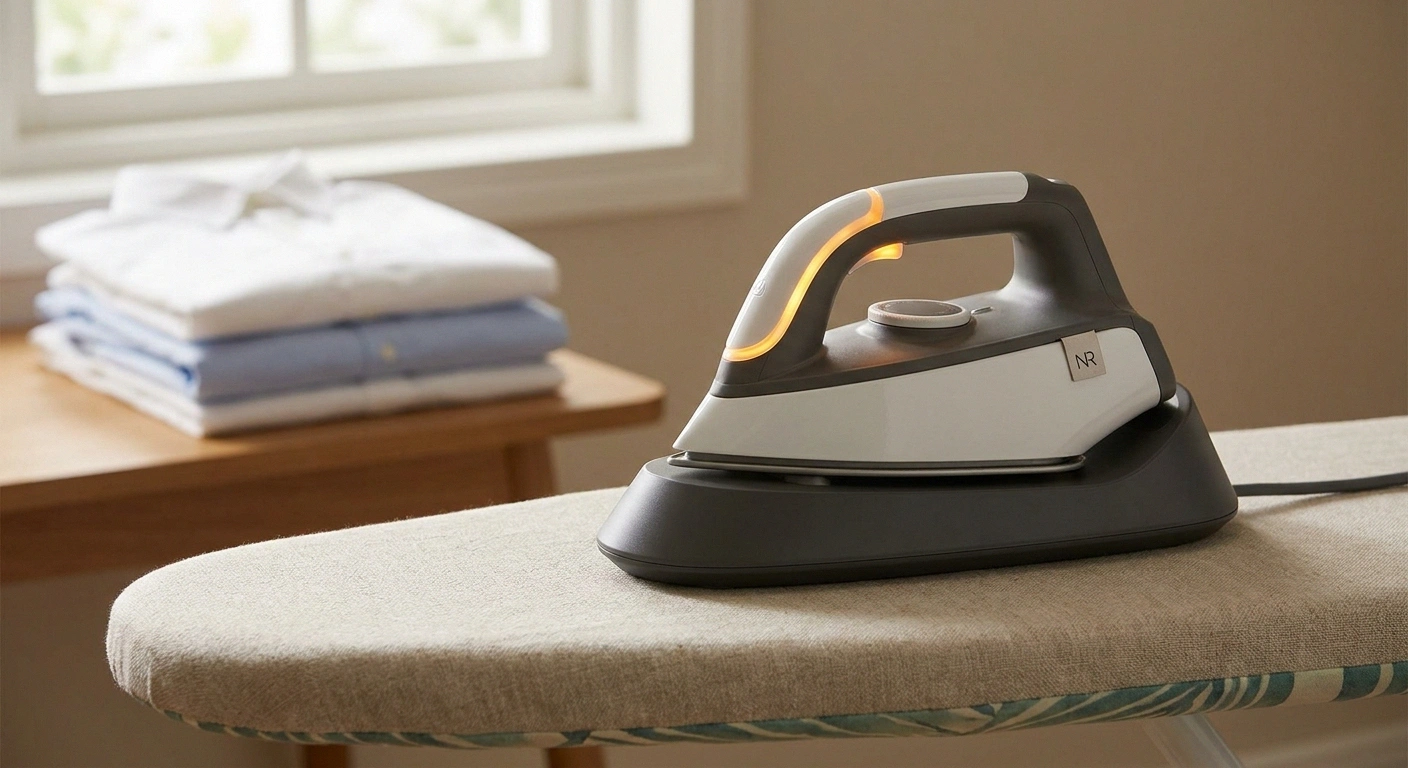
If you take one thing from this article, let it be this: replace your traditional corded iron with a cordless model. It is the single biggest safety upgrade available.
- Zero cord-catch risk — the number one path to a sideways hot iron
- The dock is the iron's permanent home — no balancing on a wobbly board
- Lighter in hand than a full-reservoir steam iron, easier on tired grip
- $60–$120 range — Panasonic and Rowenta make well-reviewed models
- Ceramic soleplates glide with less arm force than steel
A cordless iron sits on a heated dock that provides the electricity. You lift it off to use, and it stays hot for a few minutes; you return it to the dock to reheat between passes. There is no cord attached to the iron.
Why this matters for us:
- No cord to catch your feet or hand. The number one way a hot iron ends up sideways on a person is a cord snag. That risk simply disappears.
- The iron always has a home. You are not balancing a hot iron on the narrow front of a wobbly board.
- Muscle memory takes over. In an old-style setup you constantly choose where to set the hot iron, and every choice is a chance to make the wrong one.
- Lighter in hand than a full-reservoir steam iron.
Look for a cordless iron in the $60 to $120 range — Panasonic and Rowenta make well-reviewed models. Prioritize a stable dock, a clear ready-indicator light, and auto-shutoff (covered next). Ceramic soleplates glide with less arm force than steel, which matters more than you would think when your grip is already tired.
Auto-Shutoff: The Feature That Saves Houses
Every iron worth buying in 2026 has auto-shutoff. If you are using an old iron that predates it, replace it — this is not optional in a neuropathy household.
Auto-shutoff typically works in two modes:
- Motion-based. The iron shuts off if it has not moved for 30 seconds to 8 minutes depending on position — face-down triggers fast (about 30 seconds), heel or dock triggers slower (8 to 15 minutes).
- Tip-over shutoff. A sensor cuts power the instant the iron falls onto its soleplate. This is the feature that prevents house fires.
Even with every other precaution in this article, you will occasionally get distracted and walk away from a hot iron. Auto-shutoff is your last line of defense. Test it when you buy a new iron — leave it sitting for the specified time and confirm it actually powers off. Not every iron does what the box claims.
Setting Up a Seated Ironing Station
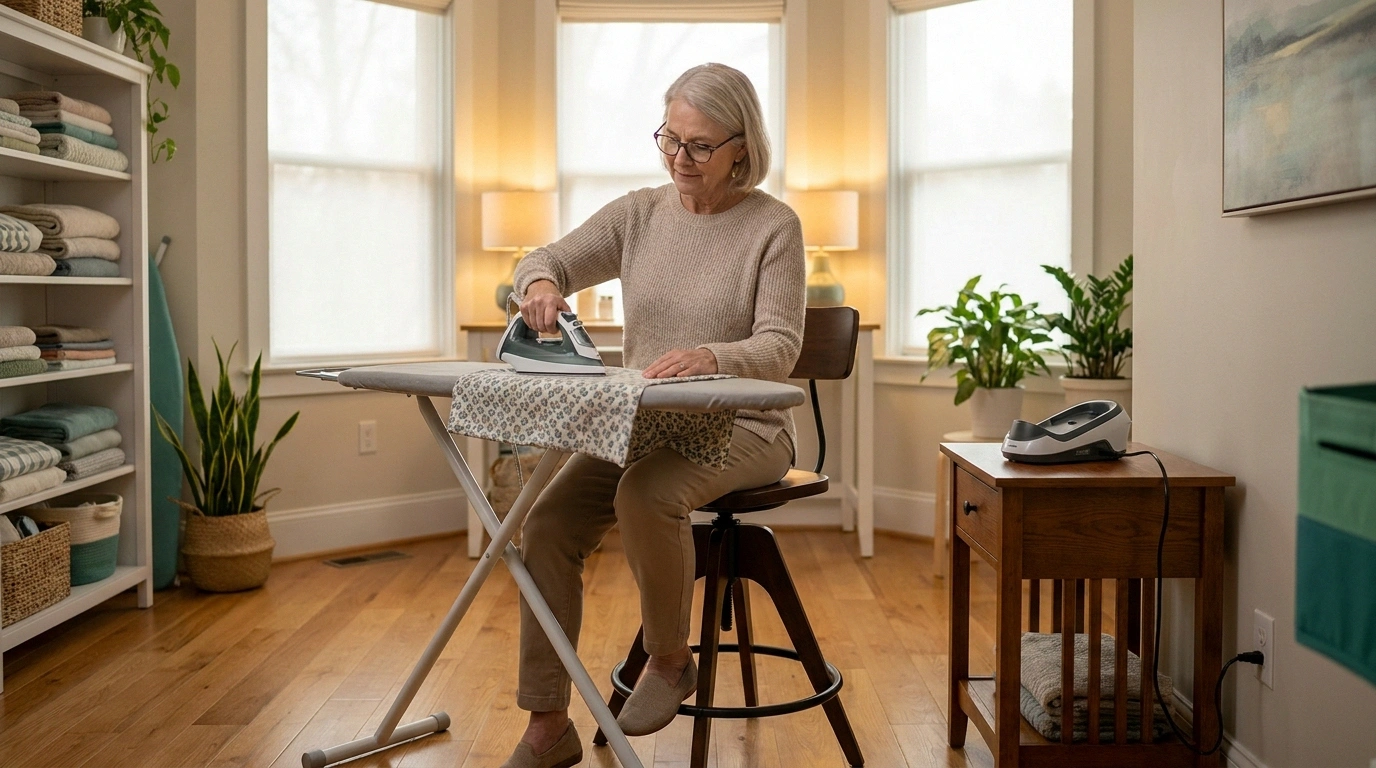
Standing at an ironing board for thirty minutes is hard on anyone. If your neuropathy affects your feet — balance, sensation, standing tolerance — it becomes exhausting fast, and fatigue is where most accidents happen.
Seated ironing is a legitimate professional setup used by tailors and quilters. To build one:
Get an adjustable-height board. Most boards go as low as 26 inches, which works for a tall stool but is too high for a chair. Look for models that drop to 22 or 24 inches (Reliable 200IB and similar).
Use a proper stool or chair. A drafting-height stool with a footring lets you shift without standing. If you use a regular chair, get the height right so your forearms rest at board level and your elbows sit near 90 degrees.
Position the iron dock on your dominant-hand side. Never reach across your body — that swings a hot object over your lap.
Keep the floor around your chair clear. You will get up during a session, and you should not be stepping over baskets, cords, or the cat.
The bonus: your grip does not have to hold the iron against gravity as long, you can rest your elbow on the board between passes, and your legs are not running the fatigue clock. Sessions get longer and safer at the same time.
Heat-Safe Gloves Are a Real Thing (and You Should Own a Pair)
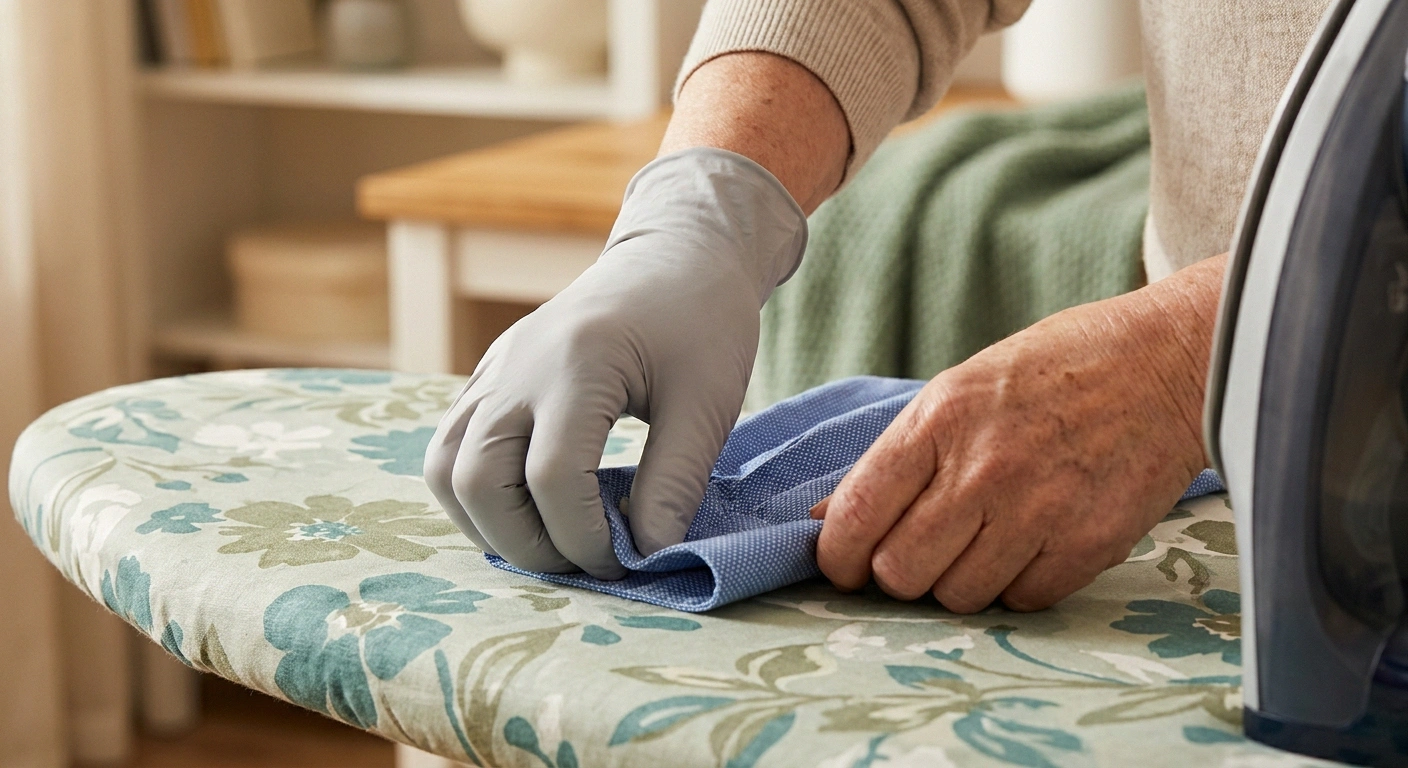
This suggestion always gets a laugh, but heat-resistant gloves designed for hair styling — the ones stylists use with 400-degree flat irons — are one of the best purchases I have made. They are thin silicone or Nomex, rated for brief contact with hot metal, under $15 online. Close-fitting enough to handle fabric normally, but a real thermal barrier between your fingertips and the iron.
I do not wear them for the whole session. I put one on my non-dominant hand — the one guiding fabric near the plate — and leave my dominant hand bare for full control of the iron. If my guiding hand brushes the soleplate, I feel warmth through the glove instead of a burn.
Two caveats: they protect against brief contact, not extended holding (do not rest your gloved hand on the plate), and they can slip on fabric under pressure, so you learn to guide rather than grip.
Rethinking How You Test Temperature
Old habits: hover your hand over the plate, wave a wet finger to see if it sizzles, touch briefly to check. Every one of those depends on temperature sensation, and every one is dangerous in a hand where that sensation is unreliable.
The replacement is dead simple: trust the dial, not your fingers. Every modern iron has clear settings for cotton, linen, wool, synthetic, plus an indicator light that turns off when the plate reaches the set temperature. Set the dial, wait for the light, start ironing. Never test with your skin.
For extra confidence, buy a small infrared thermometer (the same kind used for cooking) — ten or fifteen dollars. Point it at the plate, read the temperature in a second, no contact. And give yourself extra wait time: if the box says three minutes to full heat, give it five. There is no cost to being early, and a big cost to starting on a plate a hundred degrees hotter than the setting suggests because you were impatient.
Steamers, Spray Bottles, and When the Iron Isn't the Right Tool
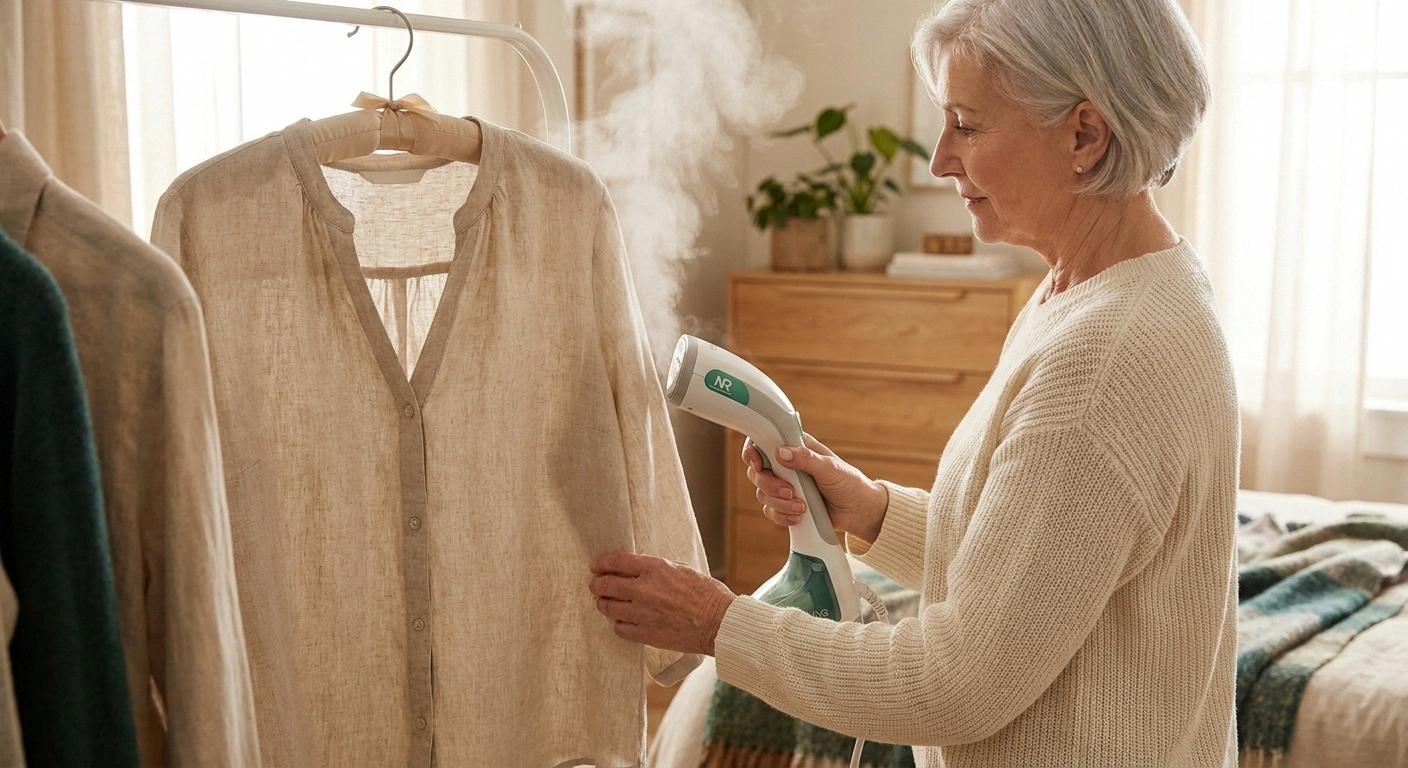
One of the most freeing realizations I have had is that the iron is not the only way to get wrinkles out of clothes. For many garments, it is not even the best way.
- Handheld garment steamers are excellent for anything hanging. The garment stays on the hanger, you glide the steamer head down the fabric, wrinkles relax, no pressure required. The head is not hot enough to cause an instant contact burn. Conair, Rowenta, and Steamery models run $40 to $150.
- A spray bottle of water on a slightly wrinkled cotton shirt, hung to air-dry twenty minutes, smooths out most casual wrinkles with no heat involved.
- Wrinkle-release sprays (Downy is the widely available one) do the same work chemically — spray, smooth by hand, hang.
- Pressing cloths — thin cotton or muslin between the iron and garment — add insulation so your hand can pass near the fabric without touching the plate. Any cotton dish towel works in a pinch.
Reserve the iron for what genuinely needs it. Crisp cotton shirts, pressed seams for sewing, and formal linens really do want a hot iron. Casual t-shirts, jeans, most polyester blends, and anything hanging in the closet do not.
Managing the Cord, the Board, and Everything That Trips You
Even with a cordless iron, the environment around your setup matters:
- Board stability. Push down hard on all four corners before starting. If it wobbles, tighten the legs or replace it. A tipped board with a hot iron on it is the worst-case scenario.
- Nothing on the floor around you. No laundry basket at your feet, no cord snaking from a nearby outlet, no rug that slides. Your feet may not tell you they have caught on something until you are already off balance.
- Shoes on, not slippers. If you are standing, wear real shoes with structure. A dropped iron on a bare foot is a burn plus a bruise, and a burn on a foot with reduced sensation is exactly the injury that shows up too late — same principle behind good neuropathy foot care. Yes, this feels ridiculous to type. I have seen enough burned toes in our community to insist on it.
- Empty the water reservoir before storage. A leaking iron onto a hot surface below is a scalding hazard nobody expects.
If You Quilt, Sew, or Iron Every Day
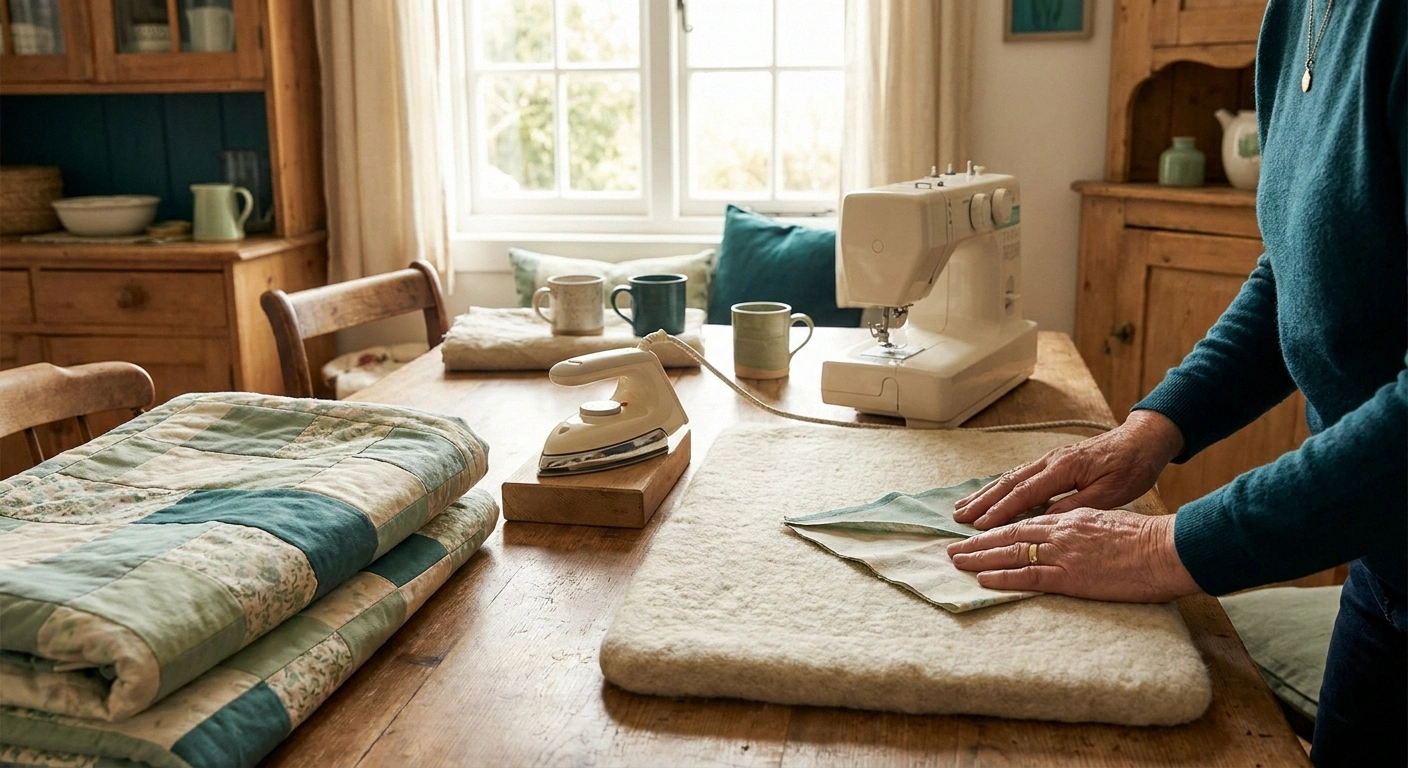
Ironing hobbyists do more pressing in a week than most people do in a month, and every risk compounds with volume. A few adjustments:
- Use a small “quilter's” iron instead of a full-sized household iron. Lighter (often under a pound), designed for detail work, easier on the grip. The Oliso Mini is widely used in quilting communities.
- Use a pressing mat instead of a full board for small pieces. A dense wool mat sits on your table, absorbs heat, and eliminates board-tip risk entirely.
- Break up sessions. Twenty minutes on, five off, prevents the fatigue accidents that happen in the last stretch of an hour-long session.
- Rethink whether every seam needs pressing. Finger-pressing, a seam roller, or a wooden clapper accomplish 80% of what a hot iron does — without a hot iron.
The Fabrics Worth Handing Off
Not every garment in your closet needs to be ironed at home. Handing it off is not defeat — it is smart. Fabrics I have stopped ironing at home:
- Silk blouses (scorch marks are permanent and dry-cleaning is $6)
- Formal dress shirts for important events ($3 at a dry cleaner presses better than I can)
- Wool suits and pants (steam-only pressing is a specialty skill)
- Anything embellished, pleated, or lined that requires care
For everyday cotton and linen I do it myself. For specialty stuff, I hand it off. That combination keeps ironing enjoyable rather than a source of anxiety, and removes the highest-consequence garments from my personal risk pool. If a partner, adult child, or paid helper is willing to do the ironing altogether, that is a legitimate option too. There is no moral requirement to iron your own clothes. Delegating disproportionately risky tasks is one of the smartest things you can do at any stage of neuropathy.
When It's Time to Retire the Iron (or a Particular Fabric)
Neuropathy progresses for many of us. What was safe last year may not be safe next year. Being willing to reassess is part of living with this well. Signs it may be time to stop, or to stop ironing certain fabrics:
Do a two-minute honest self-check this week.
- Have I burned myself while ironing in the last 12 months? How many times?
- Have I dropped the iron, or felt my grip slip mid-session?
- Can I reliably tell whether the plate is warming up or already hot?
- Is my balance steady when I stand at the board for 15 minutes?
- Have I ever set the iron down and forgotten where it went?
Any two “yes” answers → time to escalate the safety setup, delegate the highest-risk fabrics, or bring the whole question to your OT. There is no prize for muscling through.
- Two or more contact burns in the past year, even mild ones
- Dropping the iron regularly, or grip failing partway through a session
- Not being able to reliably tell whether the plate is warming up or already hot
- Standing balance at the board has become unreliable
- Finding the iron somewhere you do not remember setting it down
Any two of these and it is worth talking with your physical or occupational therapist about alternatives. Steamers only, dry-cleaner outsourcing, or a transition to wrinkle-friendly clothing (jersey knits, travel-technical fabrics) are all reasonable adaptations.
I want to say this carefully because I know it can sting: giving up a routine task is emotional. Ironing feels like something a competent adult does; handing it off can feel like admitting something. Please hear it the other way — you are choosing to protect your hands, your feet, your independence, and the years of task-doing still ahead. Every task retired thoughtfully is a resource preserved.
A Safe Ironing Session from Start to Finish
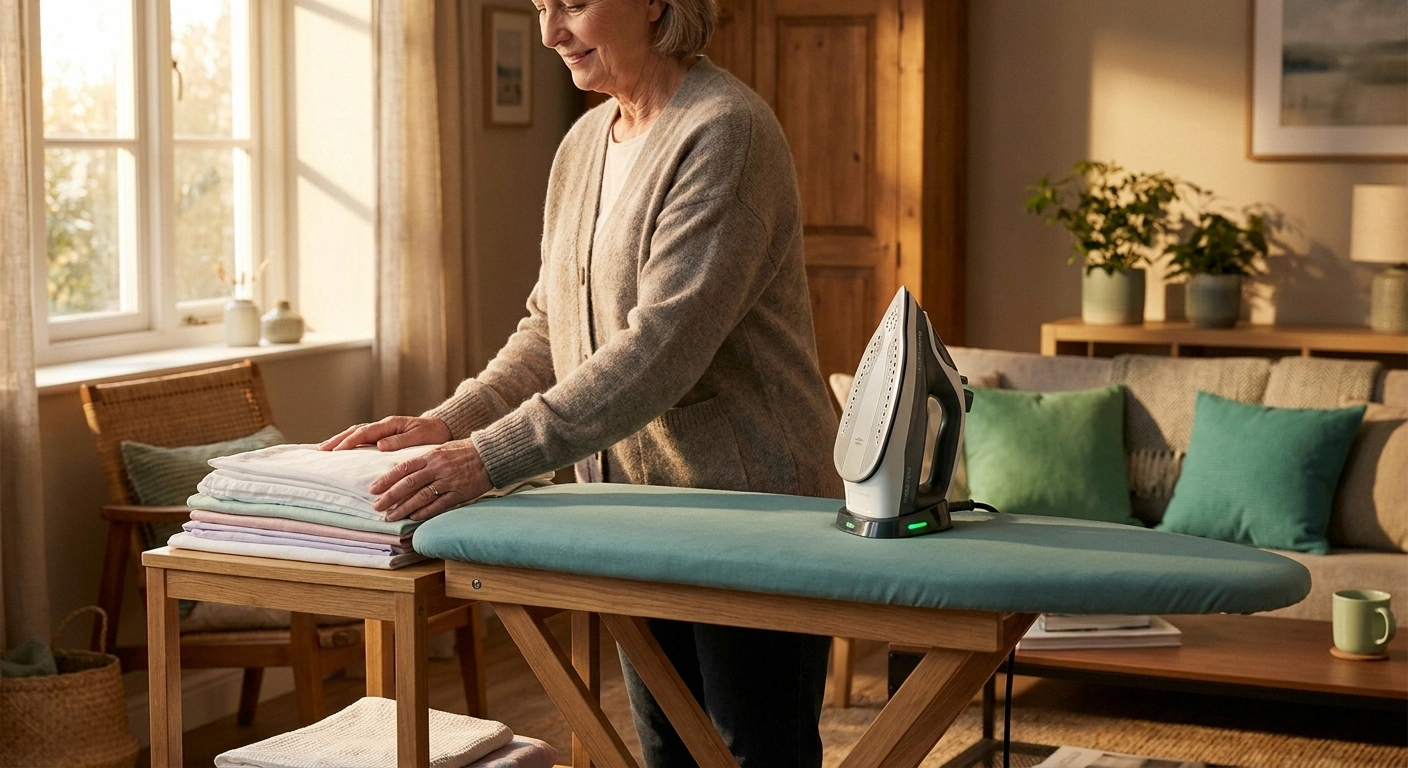
To pull it all together, here is what my typical session looks like now.
I set up before I plug anything in: board at seated height, stool positioned, basket within reach but not underfoot, cordless iron on its dock, spray bottle and pressing cloth on the corner of the board, heat glove on my non-dominant hand.
I dial to the coolest fabric in the pile (usually synthetic) and let it heat five minutes. Indicator light off means ready. I do the coolest items first, then dial up for cotton, then linen. Working coolest to hottest means the plate only ever gets hotter — I am never guessing whether it has cooled.
Between garments the iron goes back on its dock. Every time. If I am reaching for a hanger or answering the phone, the iron is on the dock. Not the heel. Not the board corner. The dock.
I work in twenty-minute blocks with a five-minute stand-up and stretch. Grip stays stronger, attention stays on the iron instead of on the ache.
When I am done, I unplug the dock, empty the reservoir, and only fold everything after the iron has completely cooled. That last step is where I used to burn myself most often — reaching past a “cooling” iron. None of these moves are dramatic. Together they have meant zero burns in the last four years.
Frequently Asked Questions
What temperature does an iron actually reach?
A typical household iron on its highest setting hits about 445 degrees Fahrenheit (230 Celsius) — hotter than a stovetop pan searing meat. Even the “synthetic” low setting reaches around 220 degrees, well past the temperature that causes an instant contact burn. No ironing temperature is safe to touch briefly.
Are cordless irons as effective as corded ones?
For most household ironing — shirts, pants, table linens — yes. They stay hot enough for the pass, and returning to the dock takes seconds. They fall a little short on very stiff fabrics like heavy linen or thick cotton canvas, where a corded iron delivers continuous heat. For 95% of home users the tradeoff strongly favors cordless.
Is it dangerous to iron sitting down?
Not at all. Seated ironing is safer for most people with neuropathy because it removes standing fatigue, gives you a stable base, and lowers the drop distance if the iron slips. It is standard practice among professional tailors and quilters. Just be sure the ironing board is at proper seated height and your chair is stable.
What should I do if I burn myself while ironing?
Cool the burn under cool (not cold) running water for 20 minutes. Do not use ice, butter, or ointments. If the burn is larger than a quarter, blisters immediately, appears on the palm or fingertip, or involves the face, call your doctor. In a neuropathy hand, any burn deserves a look because you cannot reliably self-assess as recovery progresses. Watch for infection over the following days — redness, swelling, drainage, or fever means see a doctor.
Are heat-resistant gloves the same as oven mitts?
No. Oven mitts are too bulky to safely handle an iron or the fabric around it. What you want is a thin heat-resistant glove — the same design used by professional hair stylists with 400-degree flat irons. Rated for brief contact with hot metal, dexterous enough to guide fabric. Ten to fifteen dollars a pair online.
Should I stop using steam if my grip is weak?
Steam adds weight (the water reservoir) and complexity (burst buttons). If your grip is struggling, a lightweight dry iron or handheld steamer is a better option than fighting a heavy steam iron. A spray bottle of water applied to fabric works well as a substitute for most household ironing.
What's the single most important thing I can do to iron more safely?
Replace your corded iron with a cordless model that has auto-shutoff. That one change removes the cord-catch risk, guarantees the iron has a designated resting place, prevents fires if you get distracted, and typically comes with a lighter body that is easier on your grip. Everything else in this article is supplementary to that one upgrade.
About the Author


