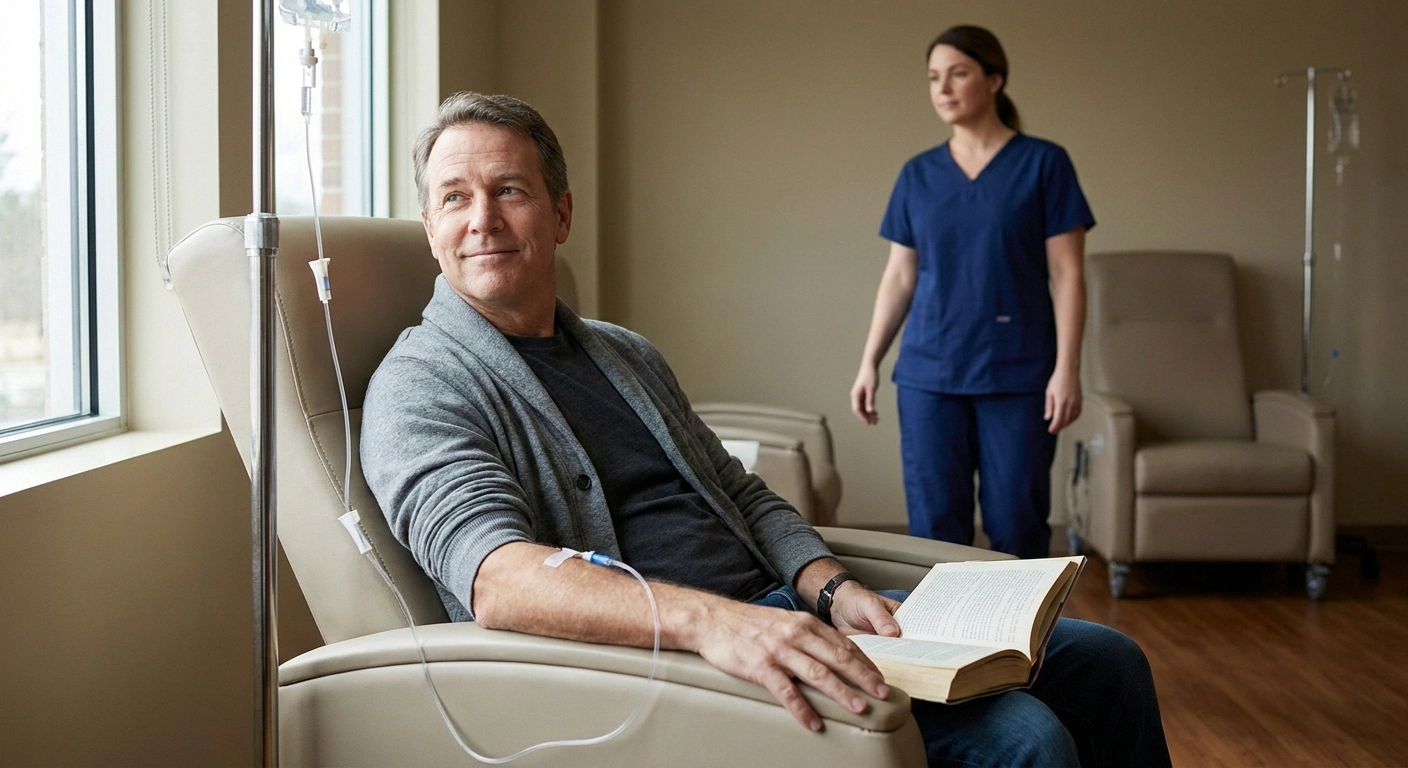
Twelve weeks. That is the median point at which peripheral neuropathy shows up in people receiving brentuximab vedotin, and knowing that one number changes how the whole treatment course feels.
It means the tingling that starts around your third or fourth infusion is not a fluke and not bad luck. It is the expected behavior of this drug. It also means the first two cycles going smoothly tells you very little about the cycles ahead, because this particular side effect builds with total exposure rather than arriving all at once.
Brentuximab vedotin, sold as Adcetris, is used in Hodgkin lymphoma, systemic anaplastic large cell lymphoma, and several other CD30-positive cancers. It works well. It also causes nerve damage in the majority of the people who take it, and the way that damage is managed depends almost entirely on what you report and when you report it.
This is a walk through what happens to the nerves, what the grading language means in plain terms, why grade 2 is the number that changes the conversation, and what recovery actually looks like after the last infusion.
Why a Targeted Drug Still Reaches Your Feet
Brentuximab vedotin is an antibody-drug conjugate, which is a delivery system more than a drug. Three pieces are bolted together: an antibody that recognizes CD30, a chemical linker, and a payload called monomethyl auristatin E, usually shortened to MMAE.
Four words you will hear at the infusion suite
- Antibody-drug conjugate
- A delivery system. An antibody that recognizes a target, a chemical linker, and a chemotherapy payload attached to it.
- CD30
- The surface marker the antibody looks for. Present on certain lymphoma cells and almost nowhere else in a healthy adult, which is what makes the targeting possible.
- MMAE
- Monomethyl auristatin E, the payload. It disrupts microtubules, and the small fraction that escapes into circulation is what reaches your nerves.
- Cumulative toxicity
- A side effect driven by total exposure rather than by any single dose. It is the reason cycle two tells you little about cycle six.
The antibody is the address label. CD30 sits on the surface of certain lymphoma cells and almost nowhere else in a healthy adult, so the antibody carries its cargo to the tumor and largely leaves everything else alone. Once attached, the whole package is pulled inside the cancer cell, the linker breaks, and MMAE is released where it does the most good.
MMAE is a microtubule poison. Microtubules are the internal scaffolding of a cell, the tracks that pull chromosomes apart during division. Disrupt them and a dividing cell cannot finish dividing. That is the entire point.
The complication is that some MMAE escapes. It leaks from dying cells and circulates at low levels, and your peripheral nerves happen to be uniquely exposed to that leakage for a structural reason. A single nerve cell running from your spinal cord to your big toe can be three feet long, and it has no way to move proteins and mitochondria down that enormous length except by hauling them along microtubule tracks. Interfere with the tracks and the far end of the cell starts running short on supplies.
The far end of the longest cells fails first. That is why the symptoms start in the toes and fingertips rather than randomly, and why they climb in a stocking-and-glove pattern rather than following any particular nerve. It is the same structural logic behind most chemotherapy-induced peripheral neuropathy, arriving by a more precisely aimed route.
It also explains the cumulative timing. One dose disrupts transport briefly. Repeated doses over months keep disrupting it before the axon has caught up on its deliveries, and the deficit compounds cycle over cycle.
How Common This Is, in Real Numbers
Across the trial program, peripheral neuropathy affects up to two-thirds of people treated with brentuximab vedotin. Real-world numbers from frontline treatment run higher still.
In a multisite cohort of patients receiving brentuximab vedotin combined with AVD chemotherapy for newly diagnosed classical Hodgkin lymphoma, 80 percent developed some degree of peripheral neuropathy. Of the whole group, 39 percent reached grade 1, 31 percent reached grade 2, and 10 percent reached grade 3.
In the phase II pivotal trial, peripheral sensory neuropathy occurred in 42 percent of participants and peripheral motor neuropathy in 11 percent. That second figure deserves attention, and it gets its own section below.
The timing figures are the most useful thing to carry into treatment:
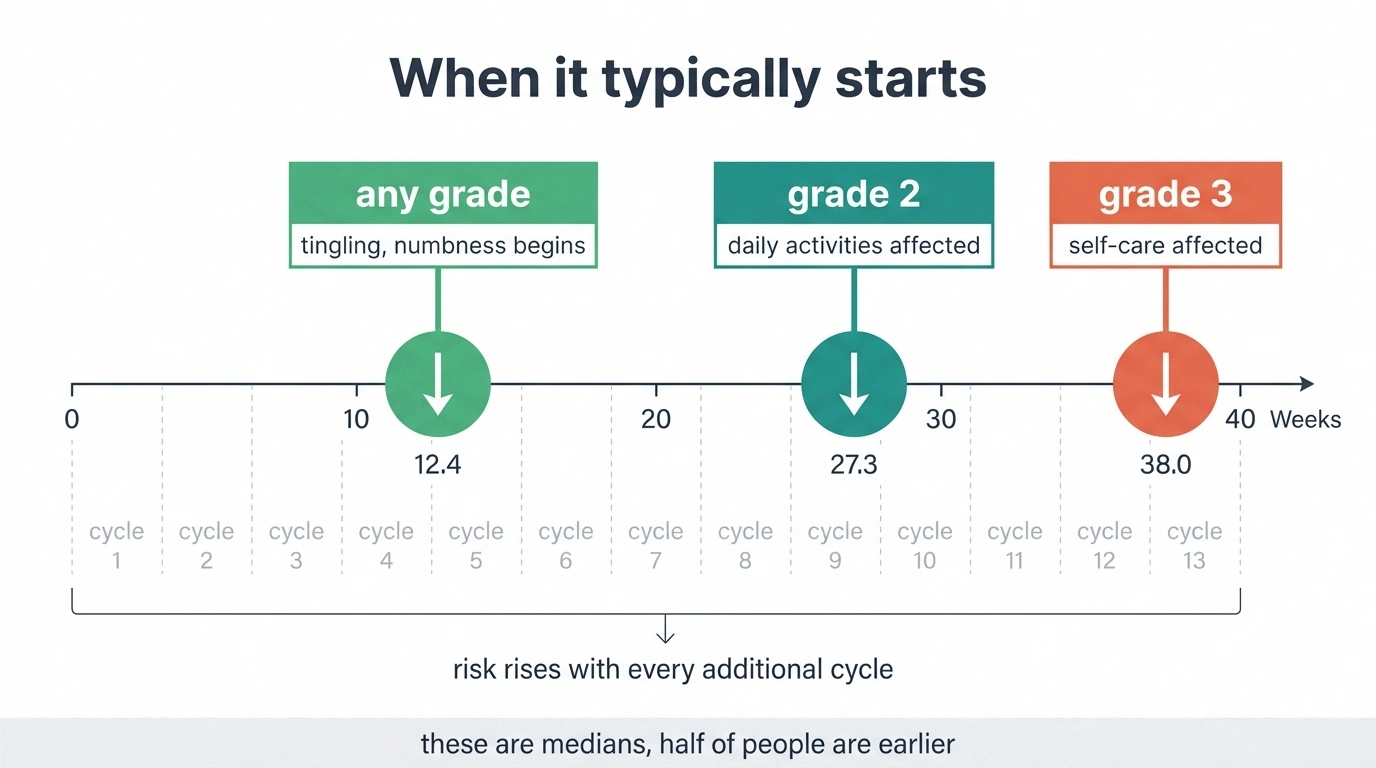
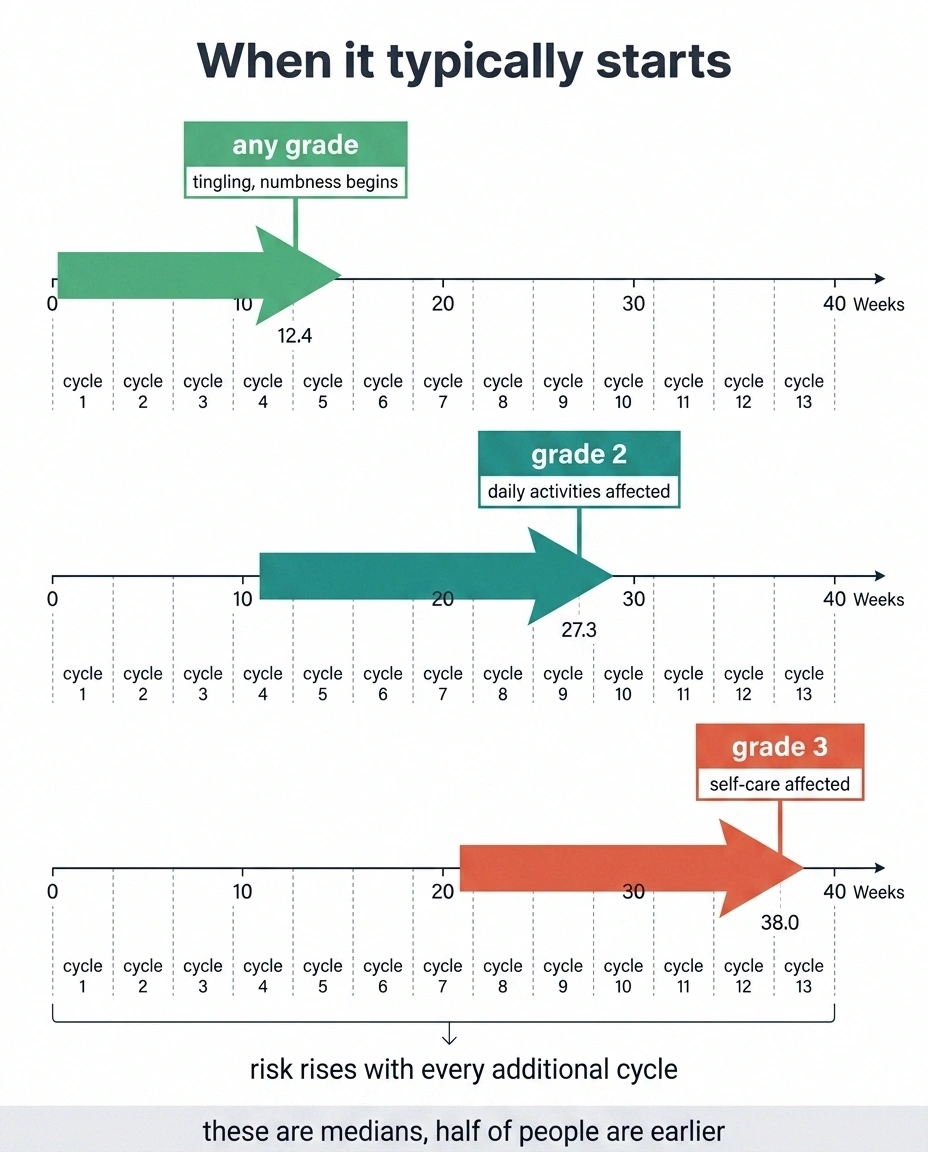
- Median time to any grade of neuropathy: 12.4 weeks. For a three-week cycle, that lands somewhere around cycle four or five.
- Median time to grade 2: 27.3 weeks. Roughly cycle nine.
- Median time to grade 3: 38.0 weeks. Deep into an extended course.
Medians mean half of people are earlier than that and half later. Some people notice tingling after the first infusion. Others finish six cycles with nothing at all. But the shape of the curve is consistent: risk rises with each additional cycle, and the first onset of symptoms climbs steadily with cycle number.
The practical takeaway is that vigilance should increase as treatment goes on, not relax. A clean cycle two is not a forecast.
What the Grades Actually Mean

Your oncology team grades neuropathy on a scale that runs one through four. The words behind those numbers are worth knowing, because the grade is not a description of how much it hurts. It is a description of how much it has taken from you.
Grade 1 means symptoms are present but have not changed what you do. Tingling in the toes. A slight numbness in the fingertips. You notice it, you might mention it, life proceeds.
Grade 2 means symptoms have started limiting the practical activities of daily life. Buttons take longer. You are holding the rail on stairs. You have stopped wearing certain shoes. Handwriting has changed. You are avoiding the driveway in the dark.
Grade 3 means symptoms limit self-care. Dressing, bathing, and eating have become genuinely difficult, or walking requires assistance.
Grade 4 means life-threatening consequences, which in practice means severe motor involvement.
The critical line sits between grade 1 and grade 2, and it is a line about function rather than intensity. A person with mild-sounding numbness who has quietly stopped using the stairs is grade 2. A person with dramatic-sounding tingling who is doing everything they did in January is grade 1.
This matters because standard prescribing information recommends modifying the brentuximab vedotin dose at the onset of grade 2. Your description of what you can and cannot do is the input to that decision. If you describe sensations without describing lost function, you may be graded lower than you actually are.
Getting specific about sensations helps too, and there is a whole vocabulary for it. If you have never had to put nerve symptoms into words before, the language people use to describe what neuropathy feels like is a useful starting point.
The Motor Component That Sets This Drug Apart
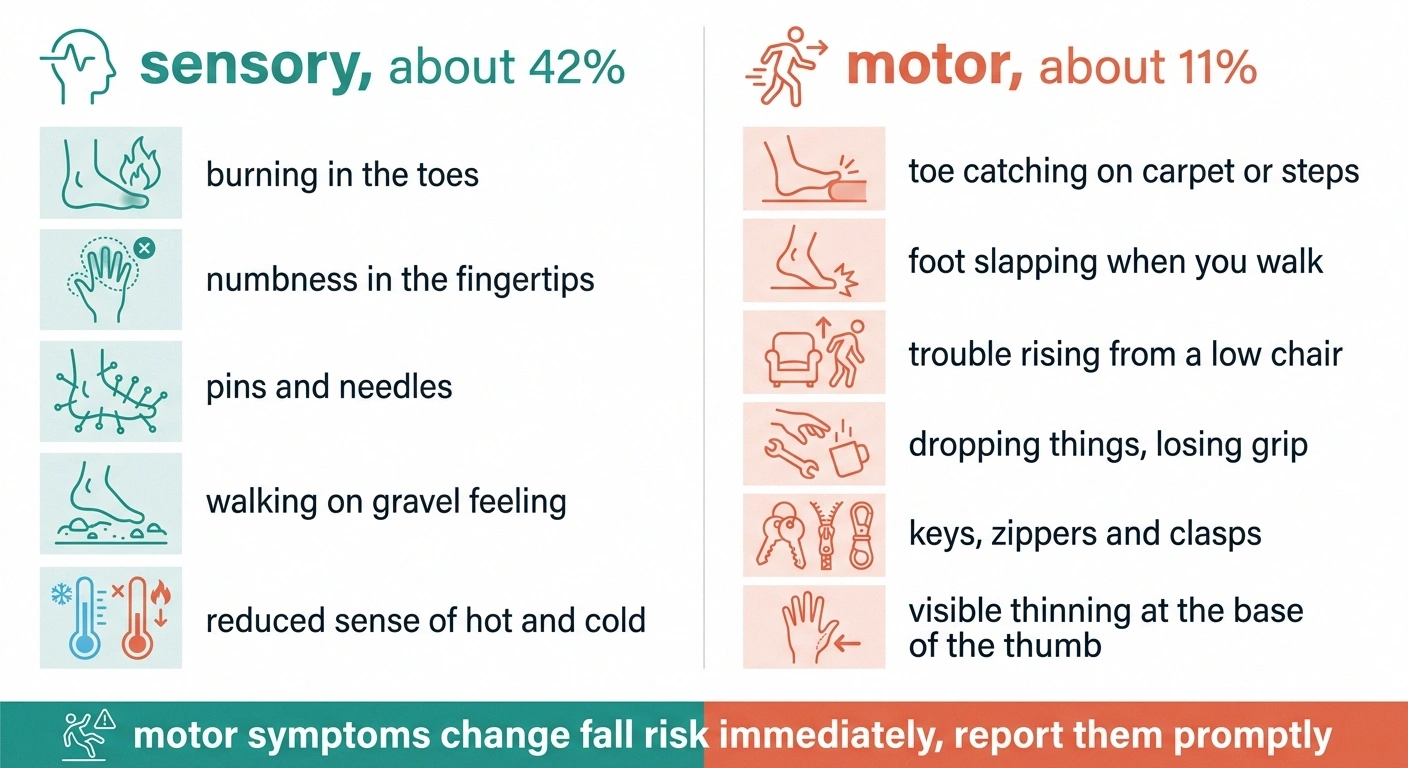
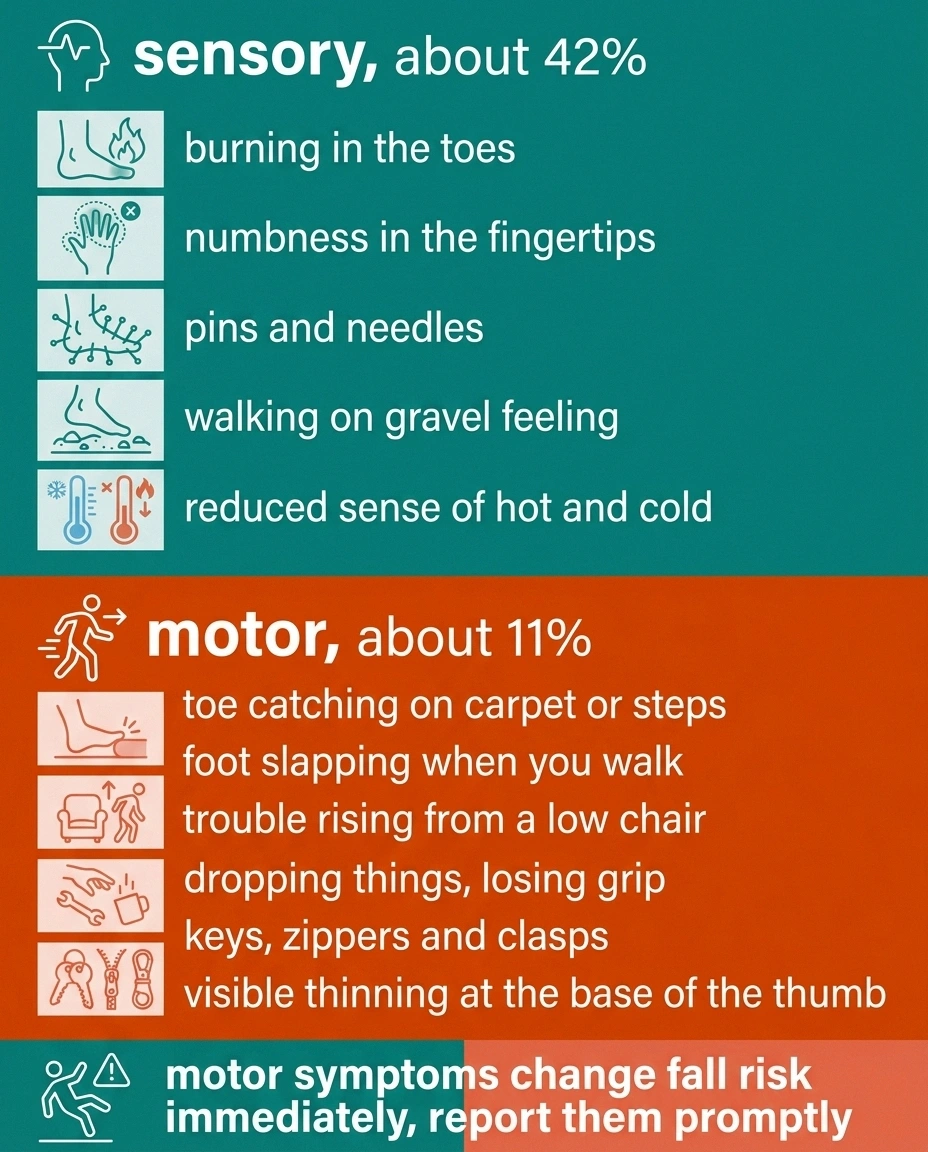
Most chemotherapy neuropathy is sensory. You lose feeling, you gain unpleasant sensation, but strength stays roughly intact. Brentuximab vedotin is different in a way that does not get enough airtime: about 11 percent of people in the pivotal trial developed peripheral motor neuropathy.
Motor involvement means the nerves carrying signals out to muscle are affected, not just the ones carrying sensation back. It shows up as weakness rather than numbness, and it announces itself differently.
Signs worth reporting promptly:
- Catching your toe on carpet, thresholds, or the edge of a step
- A foot that slaps rather than rolls when you walk
- Difficulty rising from a low chair without pushing off with your arms
- Dropping objects, or losing grip on a jar you opened easily last month
- Trouble with keys, zippers, or the clasp of a watch
- Visible thinning of the muscle at the base of the thumb or the arch of the foot
Weakness carries different stakes than numbness because it changes fall risk immediately and directly. Combine reduced sensation underfoot with reduced strength to correct a stumble and you have the two ingredients that make a fall likely. The strategies in our guide to neuropathy and fall prevention apply here with more urgency than usual, and they are worth putting in place before you need them rather than after.
If motor symptoms appear, your team may order an EMG and nerve conduction study to separate drug-related nerve damage from other causes. That testing does not usually change the immediate management, but it establishes where you are, which matters for tracking recovery later.
What Dose Modification Actually Involves
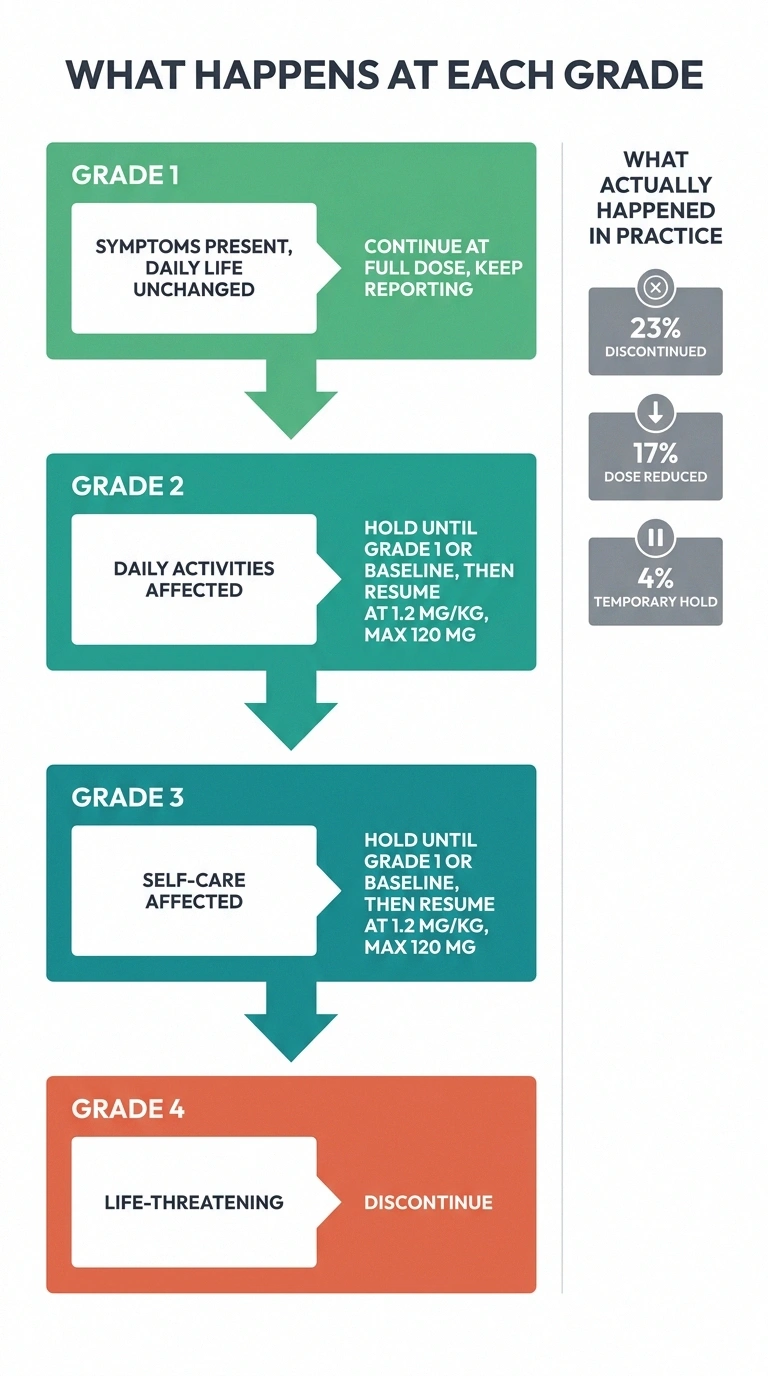
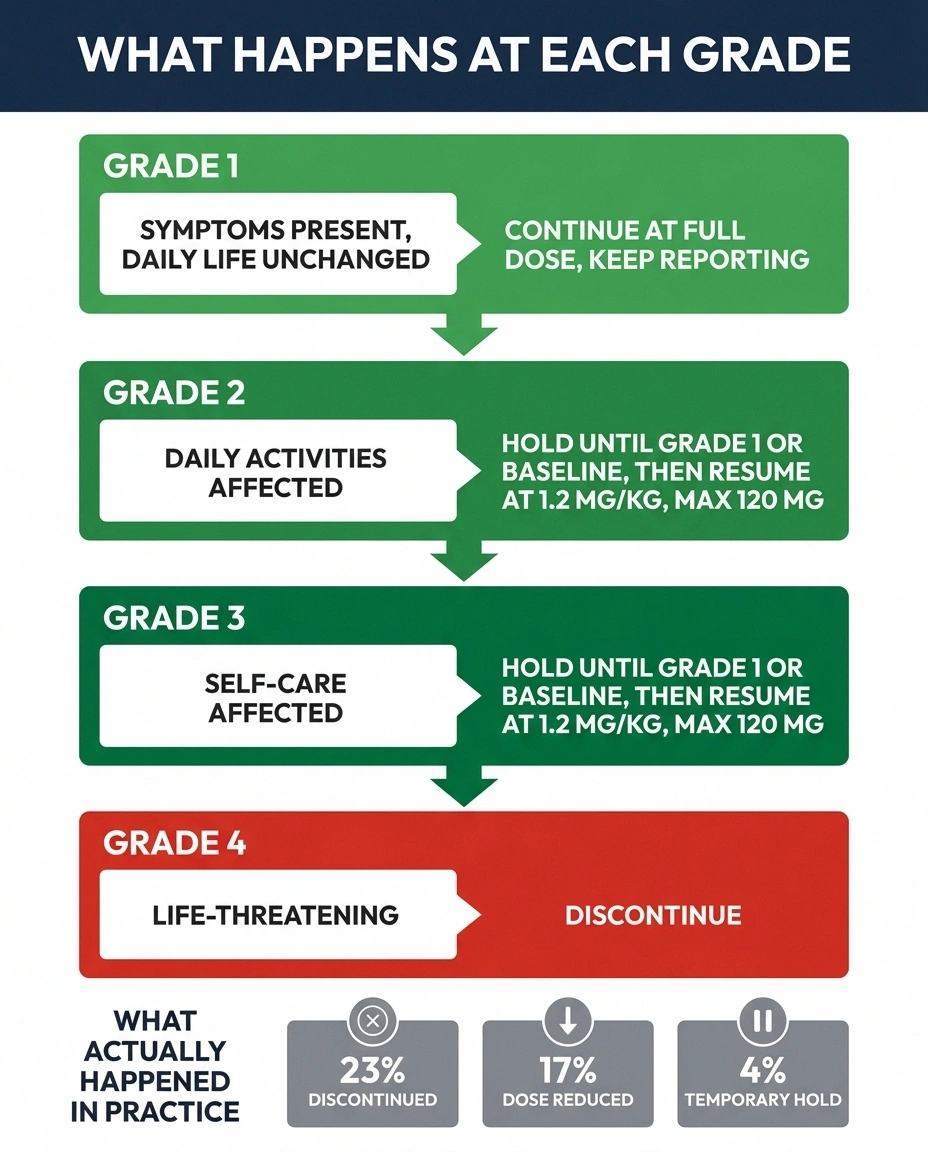
The prescribing information lays out a specific ladder, and knowing it in advance takes some of the fear out of the conversation.
For grade 2 or grade 3 peripheral neuropathy, treatment is held until symptoms improve to grade 1 or back to baseline. Treatment then resumes at a reduced dose of 1.2 mg/kg, with a maximum of 120 mg per dose.
For grade 4, brentuximab vedotin is discontinued.
Real-world practice follows this reasonably closely. In the multisite cohort, brentuximab vedotin was modified because of neuropathy in 44 percent of patients. Of the total group, 23 percent discontinued the drug, 17 percent had a dose reduction, and 4 percent had a temporary hold.
That discontinuation figure surprises people. Nearly a quarter of patients in that cohort stopped brentuximab vedotin because of nerve symptoms, and that is a normal, planned part of how this regimen is run rather than a failure of treatment. Combination regimens are built with the expectation that this component may need to come out.
Dose reduction is not a downgrade to a lesser treatment. It is the mechanism by which the regimen is kept tolerable long enough to finish. The alternative to a timely reduction is usually a later, larger interruption from worse neuropathy.
The Reporting Problem
Here is the difficult part, and it is worth saying plainly.
Say the change, not the sensation
Grading runs on function. These two columns describe identical nerves; only the right-hand version reaches the threshold that triggers a dose conversation.
Reads as grade 1
“My feet are a bit tingly.”
“My hands feel a little numb.”
“It's a bit worse than last time.”
Reads as grade 2
“I've stopped wearing two pairs of shoes because I can't feel where my foot lands.”
“Buttons take me about three times as long, so I've switched to pullovers.”
“I've been holding the rail on the stairs since cycle four, both directions.”
Neither column exaggerates. The right one just reports the part that is measurable.
Many people minimize nerve symptoms during cancer treatment. The reasoning is understandable and goes something like this: the drug is fighting the cancer, a lower dose might fight it less well, and numb toes are a small price. So the tingling gets described as “a little” when it is more than a little, and the difficulty with buttons never comes up at all.
Two things are worth weighing against that instinct.
First, the dose-modification thresholds were built from the trials that established how well this drug works. Patients in those trials had their doses modified at grade 2. The efficacy numbers you were quoted already have dose modification baked into them.
Second, nerve damage does not queue politely. Underreporting at grade 2 does not hold the line at grade 2. It tends to produce a later conversation at grade 3, where the options are worse, the hold is longer, and the recovery is less complete.
Bring specifics to each infusion appointment. Not “my feet are a bit funny,” but the concrete change: which shoes you stopped wearing, which stair you now hold the rail on, how long it takes to fasten a shirt, whether you have started avoiding the garden path after dark. Function is the currency of grading, so speak in function.
A short running note on your phone works better than memory. Symptoms shift between infusions, and by appointment day the bad week has usually blurred.
What You Can Do While Treatment Continues
There is no proven way to prevent brentuximab vedotin neuropathy. That is the honest state of the evidence, and any source telling you otherwise is ahead of the data. Research into protective strategies is active, including work on agents designed to shield nerves during chemotherapy, and our overview of neuropathy prevention during chemotherapy covers where that stands.
The five-test check, done the night before each infusion
Each test has a pass condition you can write down. A change from last cycle is the finding, not the raw result.
| Test | How | Write down |
|---|---|---|
| Buttons | Time yourself fastening four shirt buttons | Seconds |
| Chair rise | Stand from a dining chair without using your arms | Yes, hard, or no |
| Numb line | Run a fingertip up the shin until sensation feels normal | Ankle, mid-calf, knee |
| Toe lift | Seated, lift the front of each foot off the floor ten times | Both equal, or one weaker |
| Skin | Look at both soles, between toes, and both heels | Anything new |
What you can do is protect the tissue you cannot feel and stay ahead of the injuries that numbness invites.
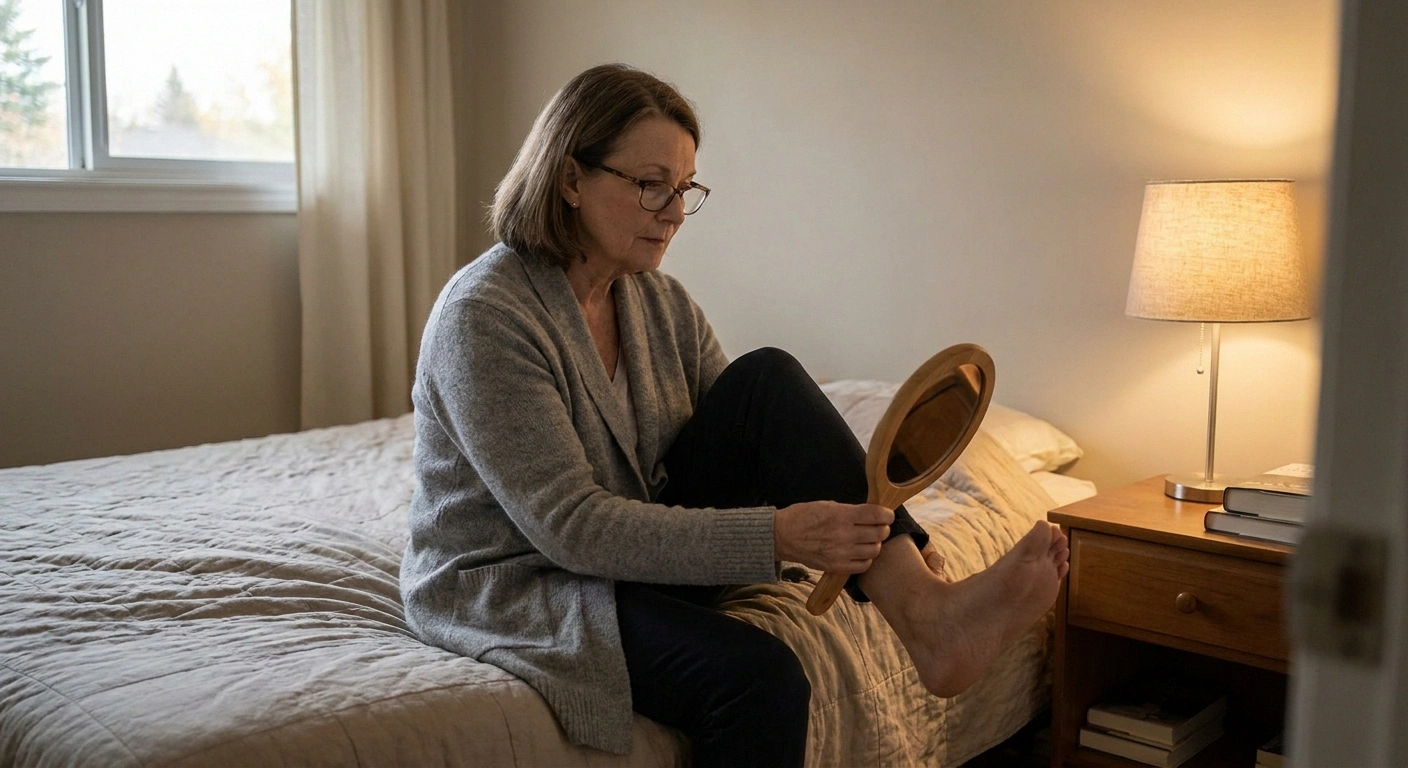
Look at your feet every day. Reduced sensation means a blister, a cut, or a pressure sore can develop and progress without registering. During cancer treatment, when immune function may also be reduced, a small unnoticed wound is a bigger problem than usual. Daily inspection is the single highest-value habit here, and the routine in our daily foot care guide takes about two minutes.
Test water temperature with an elbow or a thermometer. Numb hands and feet report heat badly. Scalds happen at temperatures that feel merely warm.
Rethink footwear early. Shoes that fit fine in month one can create pressure points you no longer feel in month four. Roomy toe boxes, seamless socks, and a check inside the shoe before putting it on.
Keep moving within your limits. Activity supports circulation and balance. It does not reverse the drug's effect, but deconditioning on top of neuropathy compounds the fall risk considerably.
Ask before adding supplements. This one has a sharp edge during active cancer treatment. Several supplements taken for nerve health, including antioxidants such as alpha-lipoic acid, are studied specifically for chemotherapy neuropathy, but there is an unresolved theoretical concern that antioxidants could interfere with treatments that work partly through oxidative mechanisms. Your oncology pharmacist is the right person to clear anything you plan to take, and that is a conversation to have before the bottle is opened rather than after.
Mention new symptoms between visits. Rapidly worsening weakness, new difficulty walking, or symptoms climbing quickly above the ankle are not wait-until-next-cycle events.
Recovery After the Last Infusion
Brentuximab vedotin neuropathy is broadly reversible, and that word carries more nuance than it appears to.
Six things that earn a phone call the same day
- New weakness anywhere, or weakness that has clearly worsened within a week
- The front of your foot dragging or slapping when you walk
- Numbness climbing above the ankle or above the wrist
- Any break in the skin on a numb foot, including a blister that has not opened
- A fall, or a stumble you only just caught
- New difficulty with bladder or bowel control, or lightheadedness on standing
The last item is on this list because autonomic nerves can be involved and that pattern is easy to attribute to something else entirely.
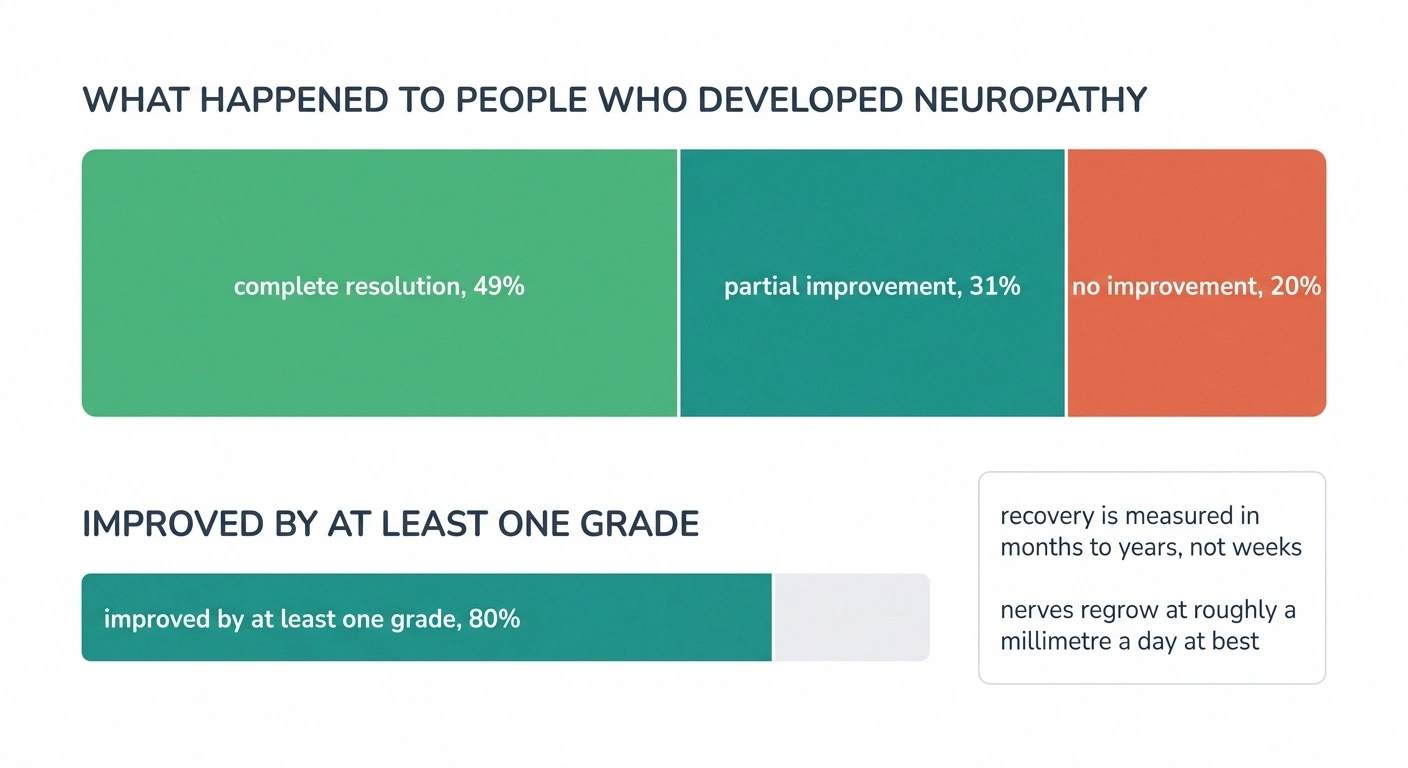
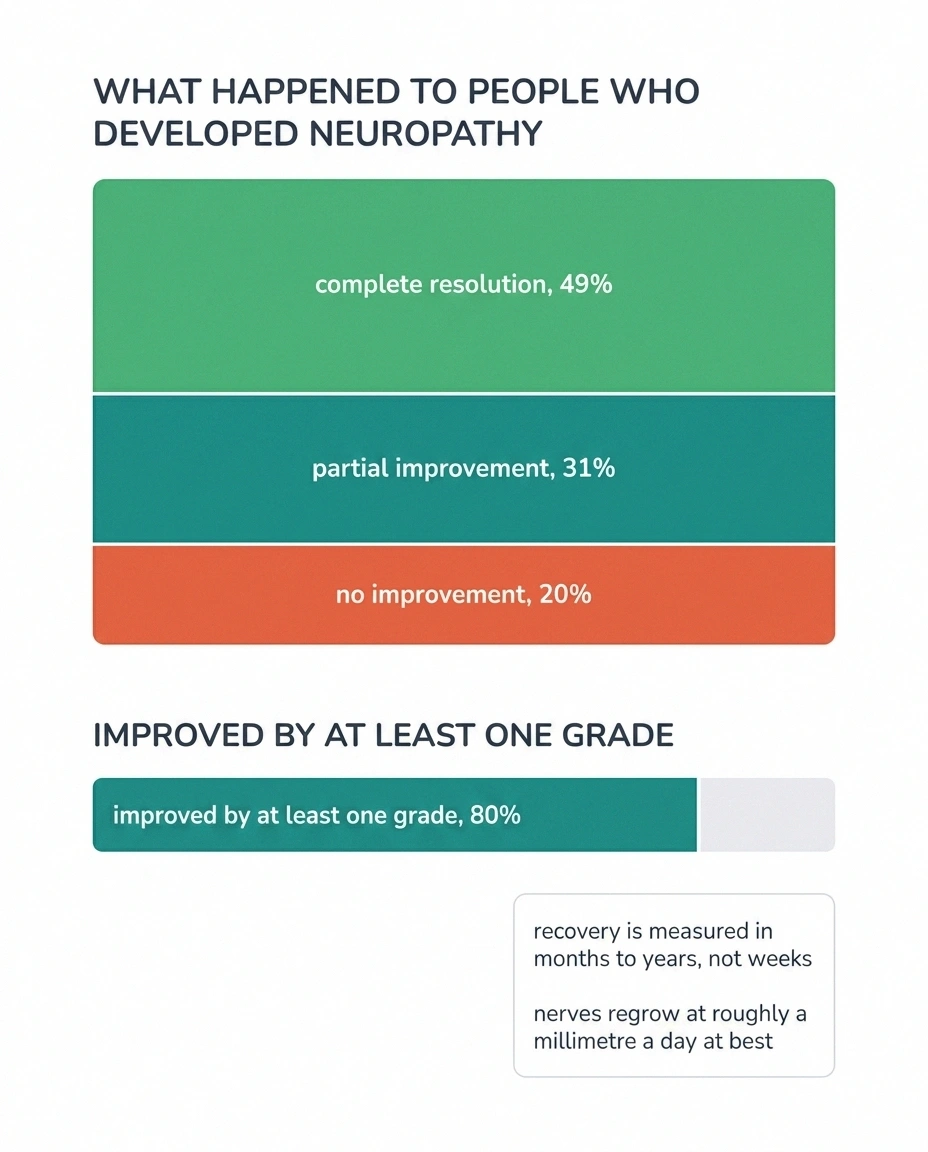
The encouraging figures first. In the multisite cohort, neuropathy improved by at least one grade in 80 percent of those affected and resolved completely in 50 percent. In another dataset, 91 percent of affected patients had resolution or improvement at last follow-up.
Now the figures that get left out. In one analysis of patients who developed any grade of neuropathy, 49 percent had complete resolution, 31 percent had partial improvement, and 20 percent had no improvement at all. Roughly one in five people is still carrying what they were carrying.
And the timeline is slow. Axons regrow at a pace measured in millimeters per month, and the damage sits at the end of the longest cells in your body. Symptoms can persist for months or years after treatment ends. Improvement over an eighteen-month window is ordinary. Judging your outcome at week six after the final infusion tells you almost nothing.
What seems to predict better recovery is lower peak grade and earlier intervention, which loops back to reporting. The person whose dose was reduced at grade 2 generally has a better long-term outlook than the person who reached grade 3 before anyone adjusted anything.
If symptoms are still meaningfully present a year out, that is the point to ask for a referral to a neurologist or a rehabilitation specialist rather than continuing to wait. Persistent chemotherapy neuropathy has its own management approaches, and the same considerations apply to nerve damage from other cancer treatments, including the neuropathy that shows up in multiple myeloma from both the disease and its therapies.
Bringing This to Your Infusion Appointment
A few questions that tend to produce useful answers:
- Which grade would you put me at today, and what would move me to the next one?
- How many cycles are planned, and where does my current grade put me on that timeline?
- At what point would you reduce the dose, and what would that reduction be?
- If brentuximab vedotin comes out of my regimen, what stays in?
- Is anything I am taking, including supplements and over-the-counter products, worth reviewing with the pharmacy?
- What symptoms should prompt a call before my next scheduled visit?
Brentuximab vedotin is worth understanding in this level of detail because it belongs to a small group of treatments where the patient's own reporting drives a dosing decision in near real time. That is unusual. Most medications that cause neuropathy do their damage quietly and the conversation happens afterward. Here, the conversation happens during, and you are holding one end of it.
Frequently Asked Questions
How common is peripheral neuropathy with brentuximab vedotin?
Up to two-thirds of patients across the trial program develop some degree of peripheral neuropathy. In a real-world multisite cohort of frontline treatment for classical Hodgkin lymphoma, 80 percent of patients experienced it: 39 percent at grade 1, 31 percent at grade 2, and 10 percent at grade 3. Sensory symptoms are far more common than motor symptoms, though roughly 11 percent of patients in the pivotal trial developed motor neuropathy as well.
When does brentuximab vedotin neuropathy usually start?
The median time to onset of any grade of neuropathy is 12.4 weeks, which for a three-week cycle falls around the fourth or fifth infusion. The median time to grade 2 is 27.3 weeks and to grade 3 is 38.0 weeks. Because the effect is cumulative, the chance of new symptoms increases with each additional cycle rather than staying constant.
Why does a targeted drug cause nerve damage at all?
Brentuximab vedotin delivers a chemotherapy payload called MMAE to CD30-positive cancer cells. Some MMAE escapes into general circulation. MMAE disrupts microtubules, which are the transport tracks that peripheral nerve cells use to move supplies along their length. Because some nerve cells extend from the spinal cord all the way to the toes, their far ends are the first to run short, which is why symptoms begin in the feet and hands.
Will my dose be reduced if I report symptoms?
Possibly, and that is by design. Prescribing information recommends dose modification at the onset of grade 2 neuropathy, meaning symptoms that limit everyday activities. For grade 2 or 3, treatment is held until symptoms improve to grade 1 or baseline, then resumed at 1.2 mg/kg with a maximum of 120 mg. For grade 4, the drug is discontinued. Dose modification was part of the trials that established how well this drug works, so the effectiveness figures already account for it.
Is the neuropathy permanent?
Usually not, but recovery is incomplete for a meaningful minority. Neuropathy improved by at least one grade in about 80 percent of affected patients and resolved completely in about 50 percent. In one analysis, 49 percent had complete resolution, 31 percent partial improvement, and 20 percent no improvement. Recovery is slow because peripheral nerves regrow at a rate of roughly a millimeter per day at best, and symptoms can persist for months or years after the last infusion.
What is the difference between grade 1 and grade 2 neuropathy?
Grade 1 means symptoms are present but have not changed what you are able to do. Grade 2 means symptoms have started limiting practical daily activities such as fastening buttons, managing stairs, writing, or walking on uneven ground. The distinction is about function rather than how intense the sensation feels, which is why describing what you can no longer do matters more than describing how much it tingles.
Can I prevent it with supplements?
No supplement has been shown to prevent brentuximab vedotin neuropathy. Several agents including alpha-lipoic acid, acetyl-L-carnitine, and vitamin E have been studied for chemotherapy-induced neuropathy generally, with mixed and largely disappointing results. There is also an unresolved theoretical concern about antioxidant supplements during active treatment. Clear anything you plan to take with your oncology pharmacist before starting it.
What symptoms should prompt a call rather than waiting for the next infusion?
New or rapidly worsening weakness, difficulty lifting the front of your foot, a change in your ability to walk safely, symptoms climbing quickly up the leg above the ankle, or any wound, blister, or area of redness on a numb foot. Falls, or near-falls, are also worth reporting rather than absorbing quietly.
About the Author